
Post updated May 18, 2026
▶ Table of Contents
- What Is Local SEO?
- Why Local SEO Matters More Than Ever in 2026
- How Google Ranks Local Businesses
- Optimize Your Google Business Profile
- Reviews Are Now a Major Ranking Signal
- Build Location-Specific Website Pages
- Keep Your Business Information Consistent Everywhere
- Create Local Content That Actually Helps People
- Mobile Optimization Is Essential
- Local SEO and AI Search in 2026
- Common Local SEO Mistakes Small Businesses Make
- A Simple Local SEO Checklist
- Final Thoughts
When people need a service nearby, they usually do not browse through ten pages of Google results. They search things like “best accountant near me,” “emergency plumber in Chicago,” or “coffee shop open now in Toronto” — then choose from the businesses Google puts directly in front of them.
That is why local SEO matters.
For small businesses, local search visibility often determines who gets the call, the booking, the foot traffic, or the sale. Whether you run a law firm in New York, a dental clinic in Sydney, a bakery in Paris, or a landscaping company in Austin, showing up in local search is no longer optional.
And the numbers back it up. In 2026, roughly 46% of all Google searches have local intent, while 76% of people who search for something nearby visit a business within 24 hours.
The good news? Most small businesses still do local SEO poorly. That creates a huge opportunity for businesses willing to get the fundamentals right.
This guide covers exactly how local SEO works in 2026 — and how your business can use it to attract more customers organically.
What Is Local SEO?
Local SEO is the process of improving your online presence so your business appears in local search results.
These results typically appear in:
- Google Maps
- Google’s Local Pack (the top 3 map listings)
- “Near me” searches
- Mobile searches
- Voice searches
- AI-generated search summaries
For example:
- “best pizza in New York”
- “family lawyer in London”
- “pet groomer near me”
- “roof repair in Dallas”
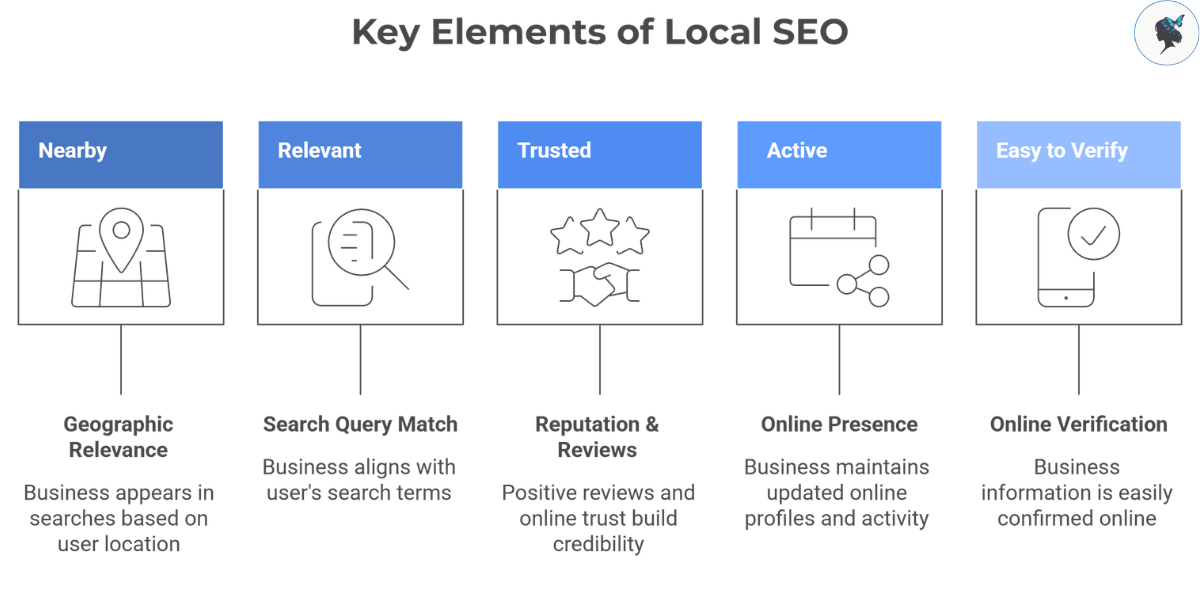
Unlike traditional SEO, local SEO focuses heavily on geography, trust, reputation, and real-world business signals.
Google wants to recommend businesses that are:
- nearby,
- relevant,
- trusted,
- active,
- and easy to verify online.
More about trust signals here.
Why Local SEO Matters More Than Ever in 2026
Local search has changed dramatically over the last few years.
Google now relies more heavily on:
- business reputation,
- review quality,
- entity consistency,
- customer engagement,
- structured data,
- and behavioral signals.
In other words, Google no longer ranks businesses based only on keywords.
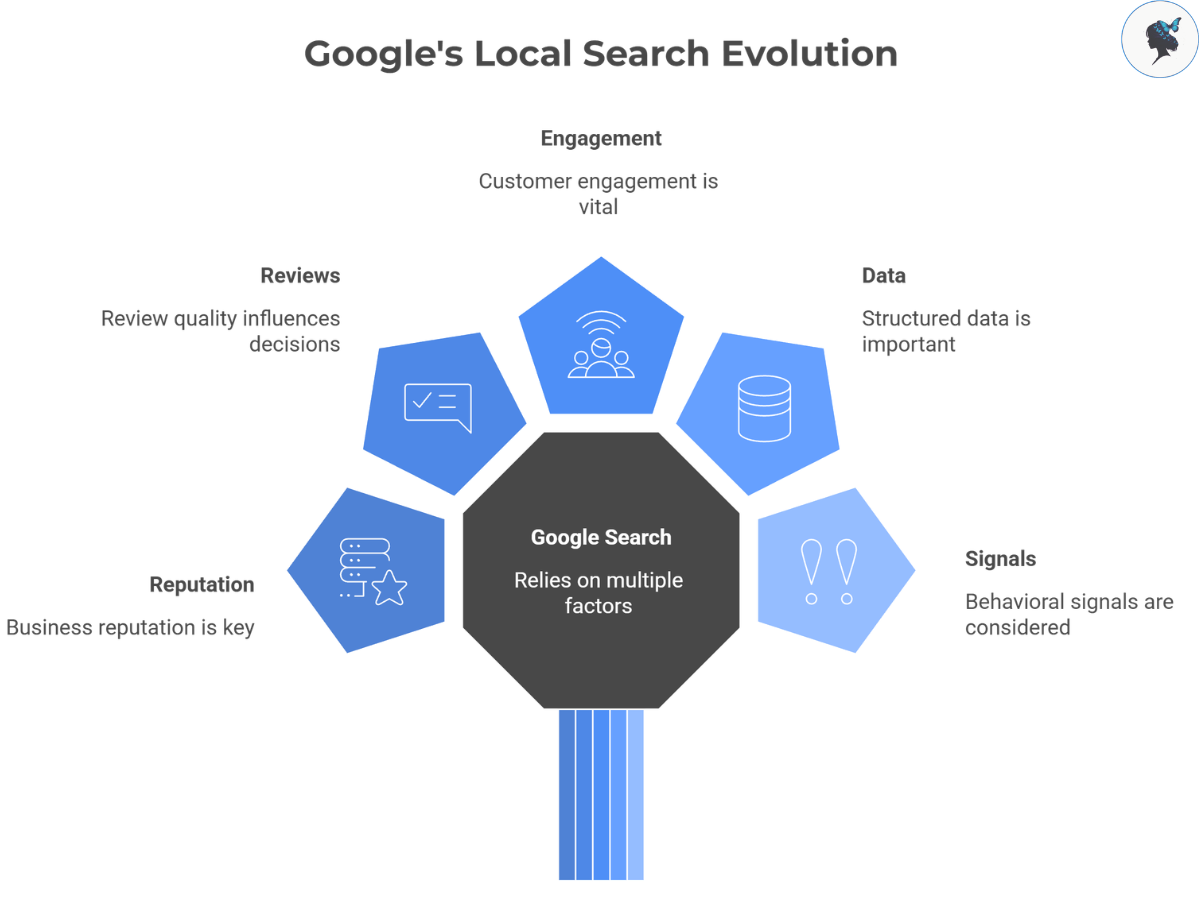
It tries to understand whether your business is legitimate, trusted, and locally relevant.
Recent research shows that online reviews heavily influence local purchasing decisions, with 85% of consumers saying positive reviews make them more likely to use a business. Studies also show that local mobile searches frequently lead to in-store visits, calls, and purchases — especially when businesses maintain complete and active Google Business Profiles.
A restaurant in Boston with hundreds of recent reviews, updated photos, accurate hours, and consistent information across the web will almost always outperform a neglected competitor — even if the competitor has a larger website.
That shift is one of the biggest local SEO trends of 2026.
How Google Ranks Local Businesses
Google primarily evaluates local rankings using three factors:
1. Relevance
Does your business match what the user is searching for?
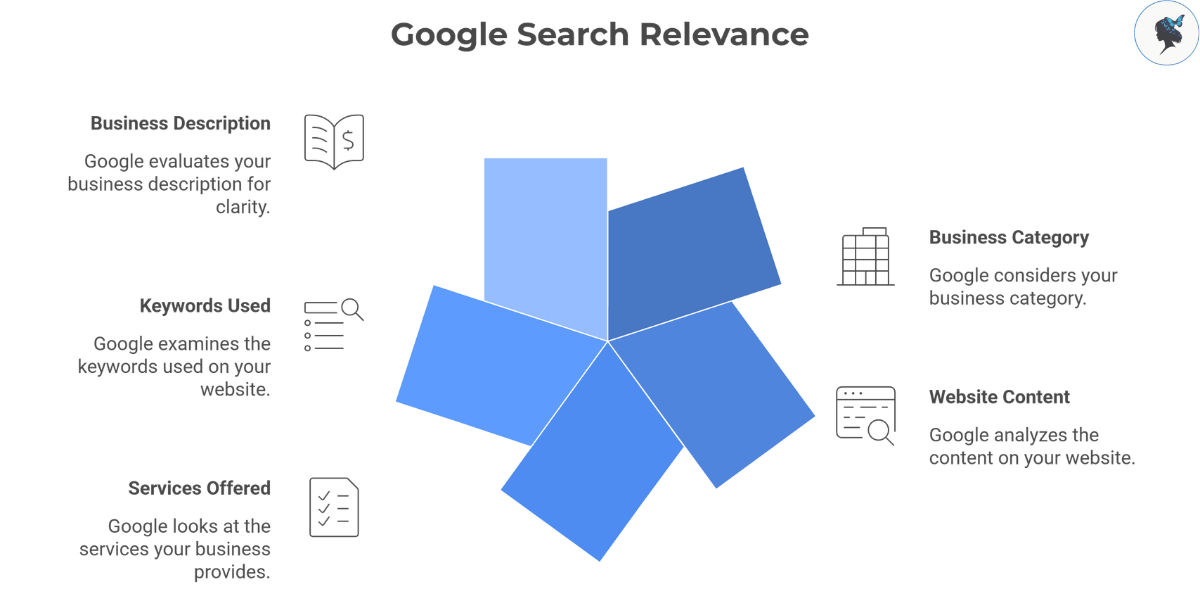
If someone searches “emergency electrician,” Google looks at:
- your business category,
- website content,
- services,
- keywords,
- and business description.
A business that clearly explains its services usually performs better than one with vague messaging.
For example, an HVAC company in Atlanta that has dedicated service pages for:
- AC repair,
- furnace installation,
- duct cleaning,
- and emergency service
is more likely to rank than a one-page generic website.
2. Distance
How close is the business to the searcher?
Local SEO still depends heavily on proximity. A dentist in downtown Seattle may rank differently depending on where the searcher is physically located.
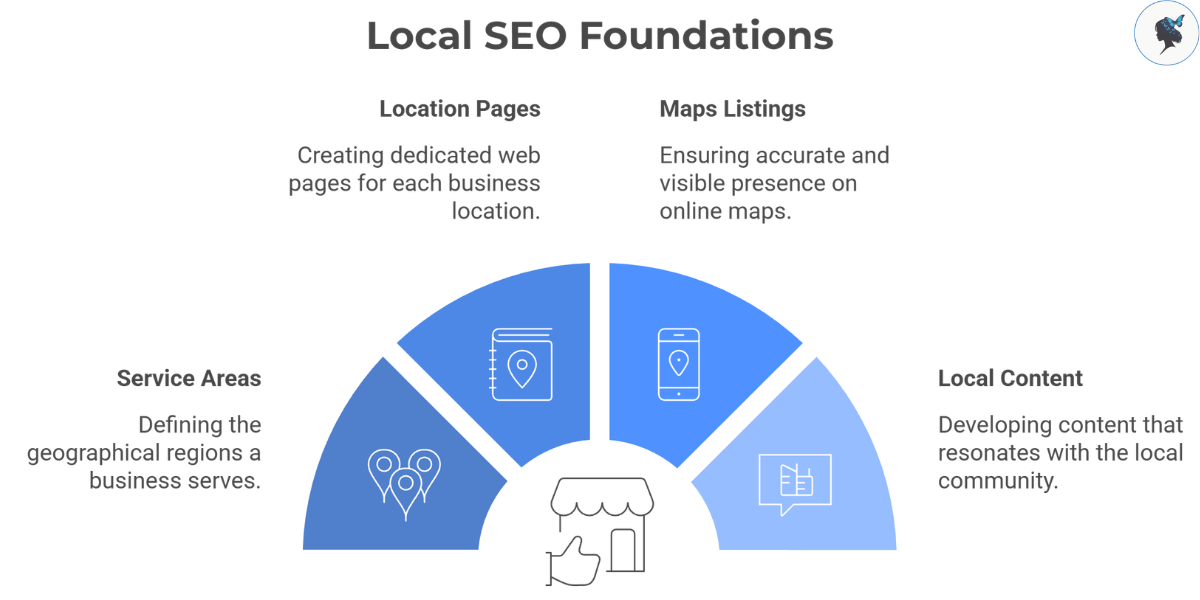
That is why businesses should optimize:
- service areas,
- location pages,
- maps listings,
- and local content.
3. Prominence
How trusted and established is the business online?
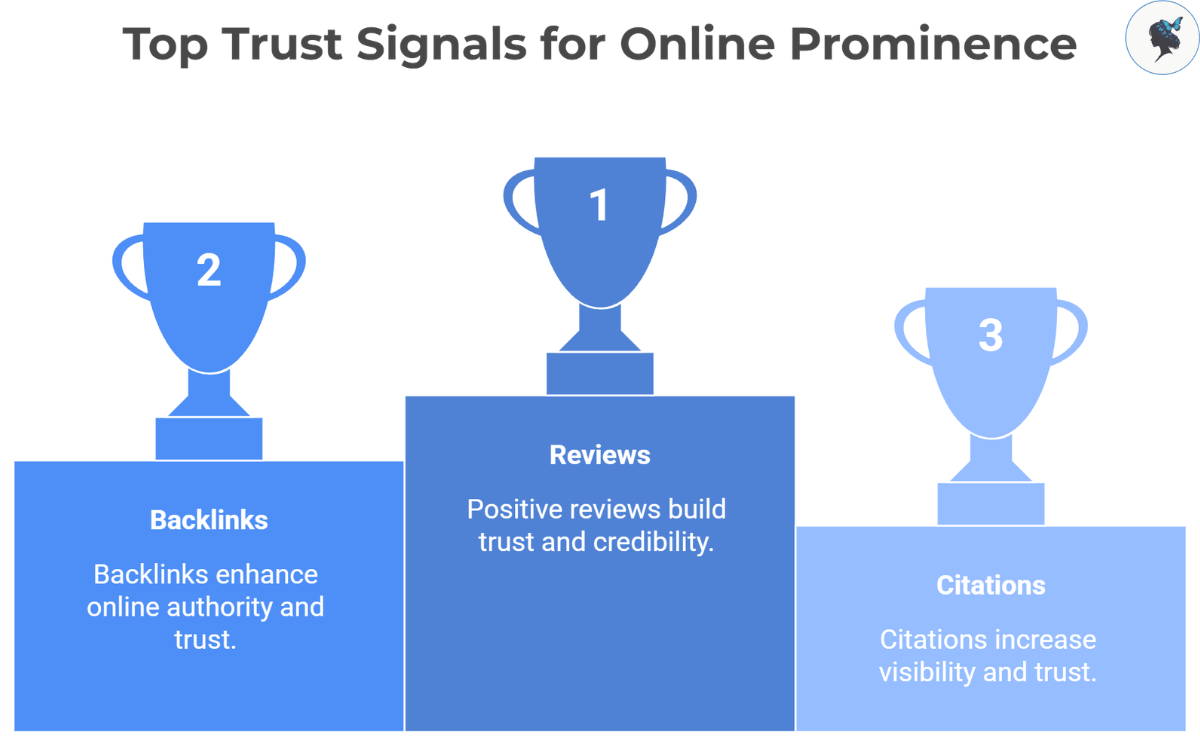
Google evaluates signals like:
- reviews,
- backlinks,
- citations,
- brand mentions,
- engagement,
- and overall online authority.
A well-reviewed bakery in Melbourne with strong local press coverage and active customer engagement sends stronger trust signals than a competitor with almost no digital presence.
Optimize Your Google Business Profile
Your Google Business Profile (GBP) is the single most important local SEO asset you own.
Many businesses spend thousands on websites and ads while leaving their GBP incomplete or outdated.
That is a mistake.
Recent local SEO research suggests Google Business Profile optimization remains one of the strongest local ranking factors in 2026.
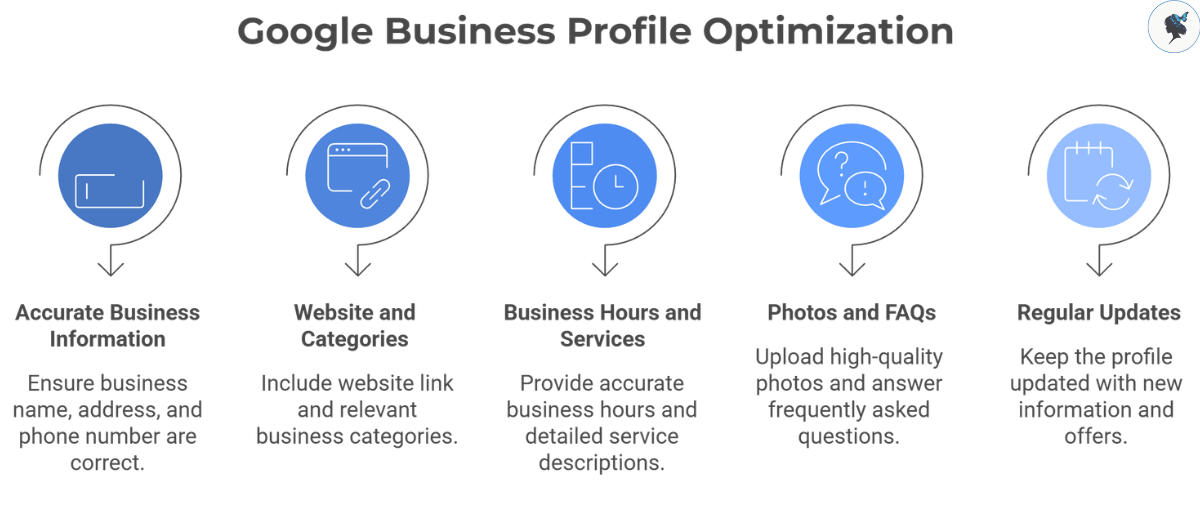
An optimized profile should include:
- accurate business name,
- address,
- phone number,
- website,
- categories,
- business hours,
- services,
- photos,
- FAQs,
- and regular updates.
For example, a yoga studio in Vancouver should not simply list “fitness” as a category. It should include:
- yoga studio,
- meditation classes,
- prenatal yoga,
- wellness workshops,
- and detailed service descriptions.
The more clearly Google understands your business, the better your chances of ranking.
Reviews Are Now a Major Ranking Signal
Reviews influence both rankings and conversions.
Google evaluates:
- review quantity,
- review quality,
- recency,
- keywords inside reviews,
- and owner responses.
A hotel in Singapore with 300 recent, detailed reviews will usually outperform a competitor with outdated or inconsistent feedback.
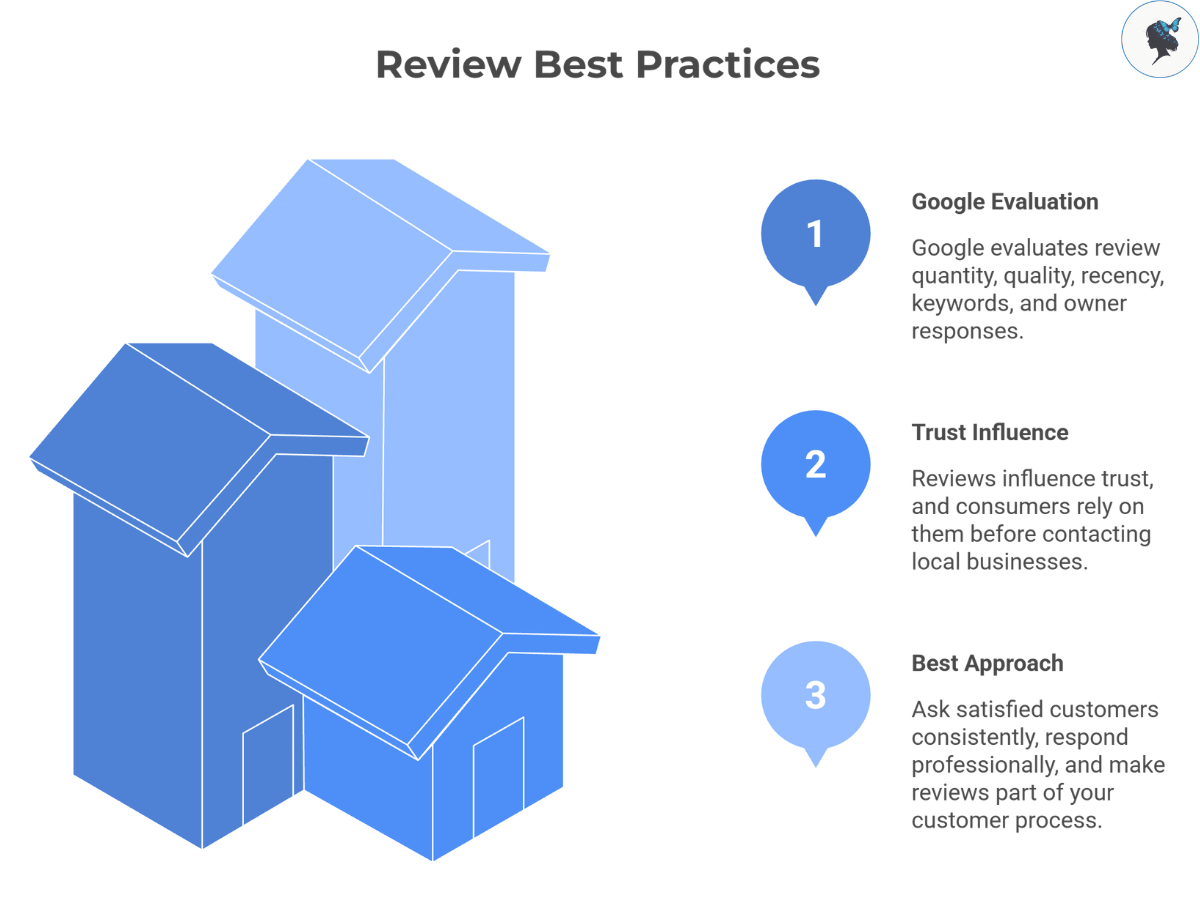
But reviews are not only about rankings. They influence trust.
In 2026, consumers rely heavily on reviews before contacting local businesses.
The best approach is simple:
- ask satisfied customers consistently,
- respond professionally,
- and make reviews part of your customer process.
Businesses that treat reviews as an afterthought usually lose visibility over time.
Build Location-Specific Website Pages
Your website still matters.
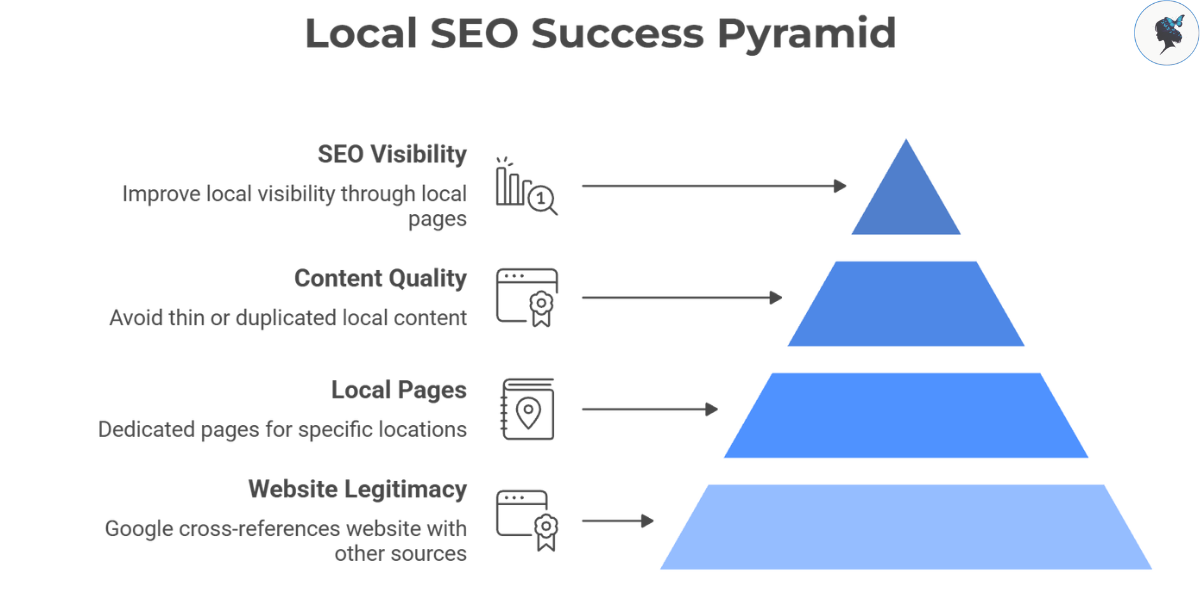
Google cross-references your website with your Google Business Profile, citations, reviews, and directory listings to confirm legitimacy and consistency.
One of the best ways to improve local visibility is through dedicated local pages.
Examples:
- “Personal Injury Lawyer in Miami”
- “Wedding Photographer in Nashville”
- “Commercial Cleaning Services in Toronto”
These pages should include:
- location-specific information,
- local customer examples,
- service details,
- FAQs,
- testimonials,
- and clear calls-to-action.
Avoid copying the same text across dozens of city pages. Google is much better at detecting thin or duplicated local content now.
Keep Your Business Information Consistent Everywhere
Your business details must match across the internet.
This includes:
- Google Business Profile,
- your website,
- social profiles,
- directories,
- and review platforms.
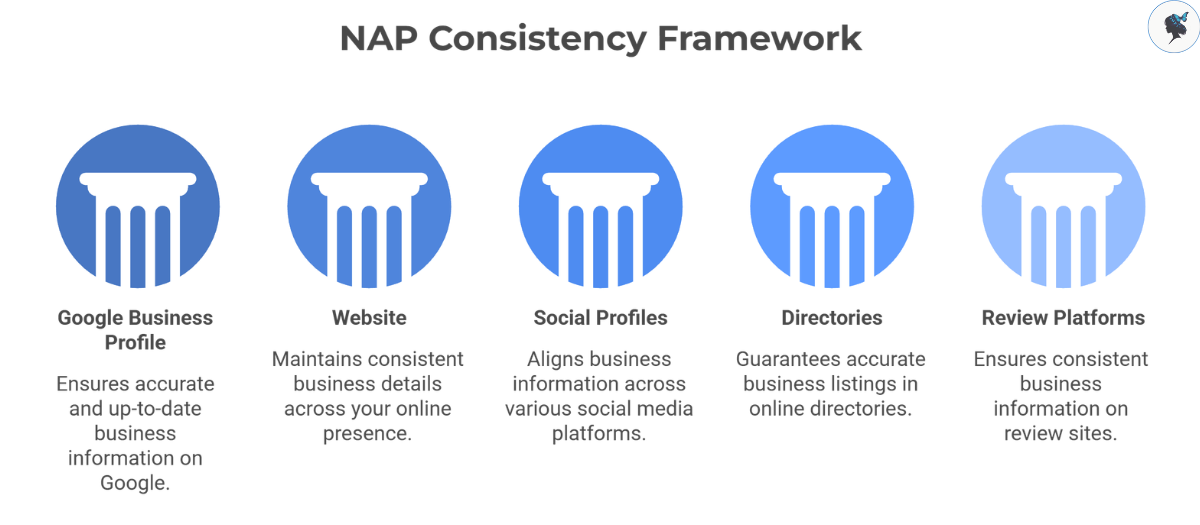
This consistency is often called NAP consistency:
- Name
- Address
- Phone Number
If your information differs across platforms, Google may lose confidence in your business data.
For example:
- “Smith & Sons Plumbing”
- “Smith and Sons Plumbing LLC”
- “Smith Plumbing”
may accidentally appear like different businesses if handled inconsistently.
Consistent business information across platforms has become increasingly important, as search engines rely on structured data and entity signals to understand and verify businesses — particularly in AI-driven search results.
Create Local Content That Actually Helps People
Many businesses misunderstand content marketing.
Local SEO content should not exist only to rank. It should answer real customer questions.
Good examples:
- “How Much Does Roof Repair Cost in Denver?”
- “Best Neighborhoods for First-Time Homebuyers in Chicago”
- “What to Do After a Car Accident in Houston”
- “How Often Should You Service an HVAC System in Phoenix?”
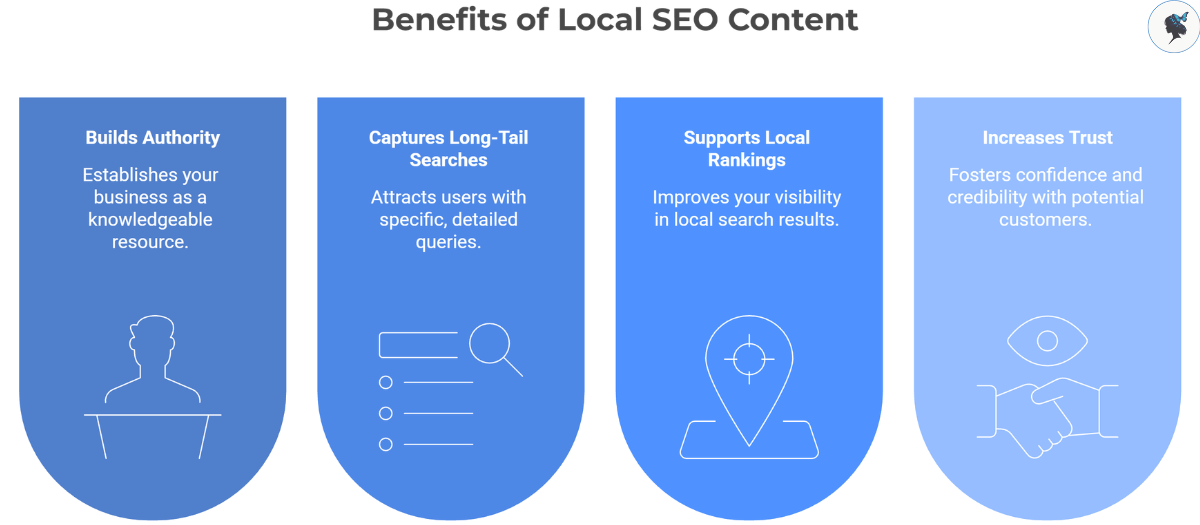
This type of content:
- builds authority,
- captures long-tail searches,
- supports local rankings,
- and increases trust.
A veterinary clinic in Dublin that publishes useful pet-care guides will usually outperform a competitor with a thin five-page website.
Mobile Optimization Is Essential
Most local searches happen on mobile devices.
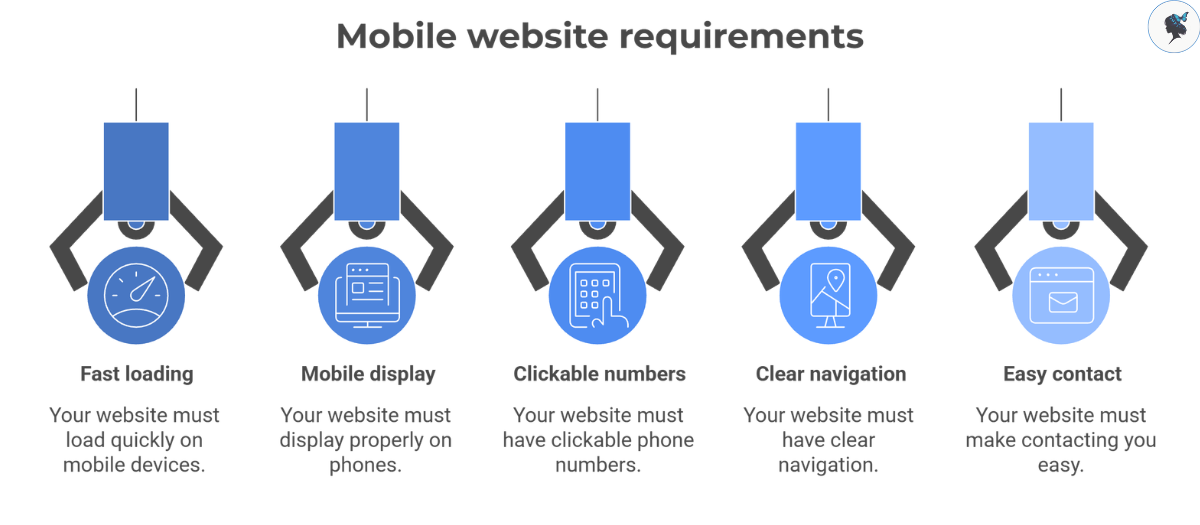
That means your website must:
- load quickly,
- display properly on phones,
- have clickable phone numbers,
- include clear navigation,
- and make contacting you easy.
Google also tracks user behavior.
If visitors quickly leave your website because it is slow or confusing, rankings may suffer.
A restaurant in Los Angeles with:
- slow menus,
- broken mobile formatting,
- and hard-to-find reservation buttons
creates friction that hurts both conversions and search visibility.
More about mobile optimization here.
Local SEO and AI Search in 2026
AI-generated search experiences are changing local SEO, but not in the way many marketers expected.
Google’s AI Overviews, conversational search tools, and AI-assisted recommendations increasingly pull information from:
- reviews,
- business profiles,
- structured data,
- and trusted local sources.
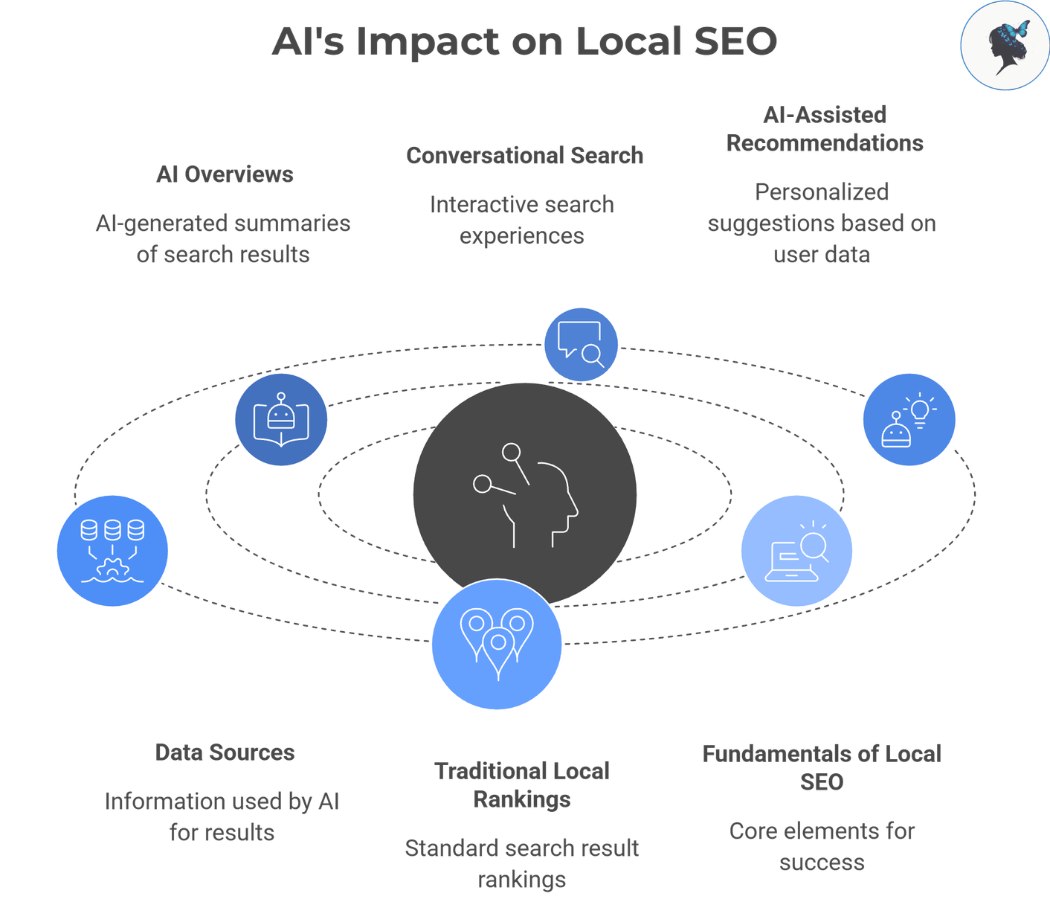
That means businesses with complete and consistent online information are more likely to appear in AI-driven results.
At the same time, traditional local rankings still matter enormously.
Studies consistently show that Google’s Local Pack and Maps results capture the majority of user attention and clicks in local search, making them a primary driver of leads, calls, and in-store visits for small businesses.
The fundamentals still win:
- relevance,
- reviews,
- trust,
- consistency,
- and strong local signals.
AI has not replaced local SEO. It has reinforced it.
More about AI overviews here.
Common Local SEO Mistakes Small Businesses Make
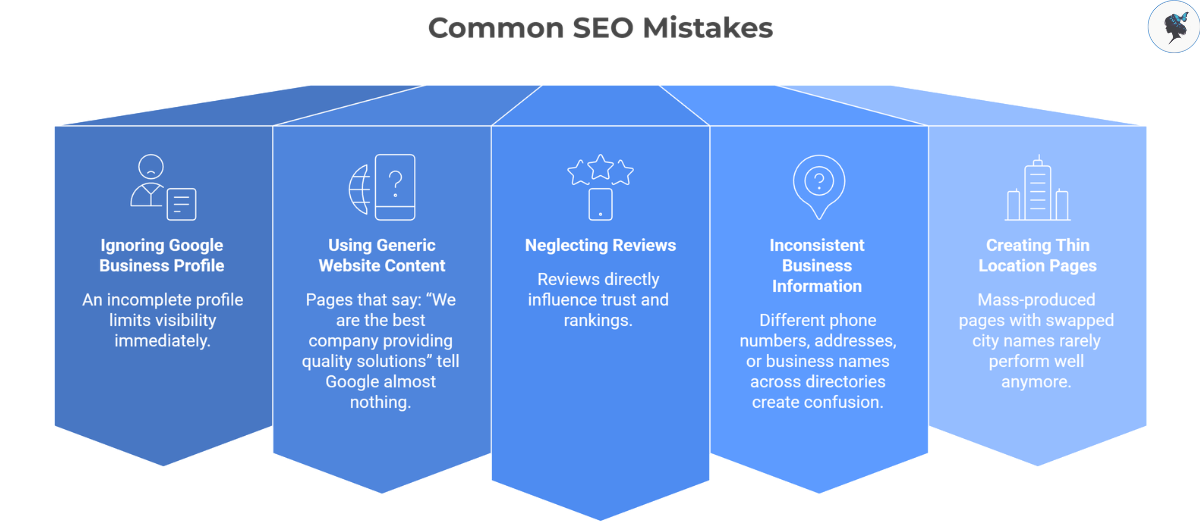
Ignoring Google Business Profile
An incomplete profile limits visibility immediately.
Many businesses still fail to:
- upload photos,
- update hours,
- add services,
- or respond to reviews.
Using Generic Website Content
Pages that say:
“We are the best company providing quality solutions”
tell Google almost nothing.
Specificity performs better.
Neglecting Reviews
Reviews directly influence trust and rankings.
Businesses that never ask for reviews often lose ground to competitors with active review strategies.
Inconsistent Business Information
Different phone numbers, addresses, or business names across directories create confusion for both users and search engines.
Creating Thin Location Pages
Mass-produced pages with swapped city names rarely perform well anymore.
Local pages should provide real value.
A Simple Local SEO Checklist
If you want a practical starting point, focus on these essentials:
- Claim and optimize your Google Business Profile
- Use consistent business information everywhere online
- Collect and respond to customer reviews
- Create strong local service pages
- Improve mobile website performance
- Add local keywords naturally
- Publish useful local content
- Build local backlinks and community mentions
- Add structured data/schema markup
- Keep your business information updated regularly
Most businesses do not need advanced SEO tactics first. They need consistent execution of the basics.
Final Thoughts
Local SEO is no longer just about rankings.
It is about trust, visibility, and being the obvious choice when customers search for services nearby.
The businesses winning local search in 2026 are usually not the biggest brands. They are the businesses that:
- maintain accurate information,
- build strong reputations,
- create genuinely useful content,
- and stay consistently active online.
For small businesses, that creates a real opportunity.
Because while many competitors still neglect local SEO entirely, even modest improvements can dramatically increase calls, bookings, leads, and walk-in traffic.
And unlike paid ads, strong local visibility continues working long after the initial optimization is complete.
Need help? Contact us today!
Discover more from Wander Women Strategies
Subscribe to get the latest posts sent to your email.

13 thoughts on “The Ultimate Guide to Local SEO for Small Businesses”
Comments are closed.