
▶ Table of Contents
Destination guides are one of the most powerful types of content for travel businesses. Not only do they serve as valuable resources for your audience, but they also play a critical role in improving your website’s SEO and driving more bookings. By creating destination guides that are both informative and optimized for search engines, you can attract potential travelers, engage them with compelling content, and increase the likelihood of conversion.
In this blog post, we’ll walk you through the process of creating destination guides that rank well in search engines and convert website visitors into loyal customers.
Need some help with your SEO, Content and Social Media strategies? Check out our services to start moving in the right direction!
Why Destination Guides Are Essential for Travel Businesses
Before diving into the creation process, it’s important to understand why destination guides are so valuable for travel businesses:
- SEO Benefits: Well-optimized destination guides have the potential to rank for highly relevant keywords, driving organic traffic to your website. These guides often target long-tail keywords like “best things to do in Dublin” or “hidden gems in Hawaii,” which are less competitive but highly specific.
- Engagement and Trust: A comprehensive destination guide builds trust with your audience by showcasing your expertise in a particular location. When potential travelers see that you understand a destination inside and out, they’re more likely to turn to you for their booking needs.
- Conversion Potential: Destination guides can lead directly to conversions. For example, a guide about “Top 5 Family-Friendly Activities in Bali” can seamlessly guide a user to your tour booking page or hotel reservation system.
Now that we understand the importance of destination guides, let’s take a closer look at how to create guides that rank and convert.
Step 1: Conduct Thorough Keyword Research
Keyword research is the foundation of any successful SEO strategy, including creating destination guides. If you want your guides to rank well in search engine results pages (SERPs), it’s essential to identify the right keywords that will attract your target audience.

How to Do It:
- Use SEO Tools: Tools like Google Keyword Planner, Ahrefs, SEMrush, or Ubersuggest can help you identify keywords related to the destination you’re writing about. Look for both primary and secondary keywords (e.g., “things to do in Melbourne,” “best tours in Melbourne,” “family activities in Melbourne”).
- Focus on Long-Tail Keywords: Long-tail keywords (phrases that are more specific and often longer) are highly valuable for destination guides. These keywords tend to have lower competition, which makes them easier to rank for. Examples include “best luxury hotels in Paris” or “adventure tours in Costa Rica for families.”
- Check Search Intent: Understanding search intent is key. If a user is searching for “best places to visit in Rome,” they likely want a list of top attractions, while someone searching “how to travel to Rome on a budget” might be looking for tips on affordable transportation and accommodations. Make sure your destination guide matches the search intent behind the keywords you target.
Step 2: Create Comprehensive and Engaging Content
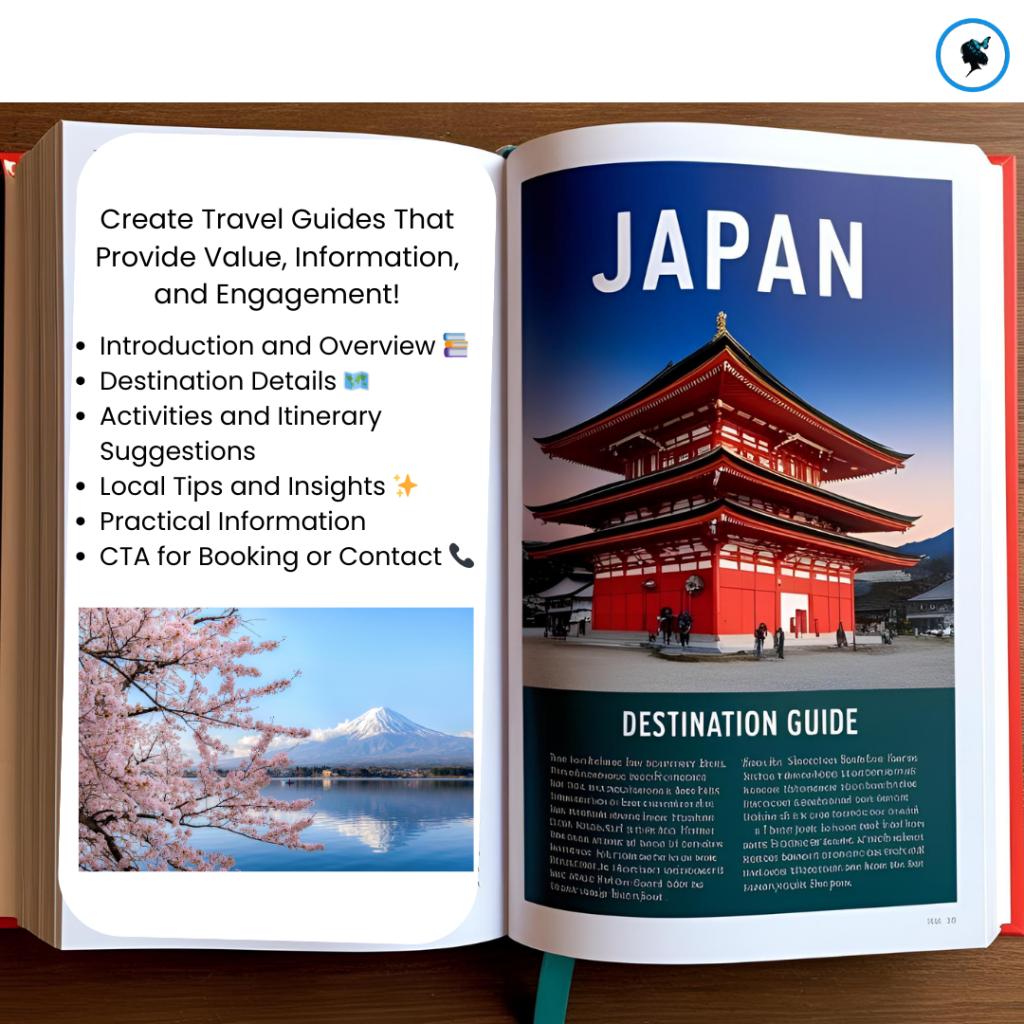
A destination guide needs to be more than just a list of attractions. To rank well in search engines and convert visitors, your guide must be comprehensive, engaging, and highly useful to your audience.
How to Do It:
- Provide In-Depth Information: Include details on a variety of topics such as top attractions, best activities for different types of travelers (families, solo travelers, couples, etc.), local dining recommendations, cultural tips, hidden gems, and practical information like transportation options, weather, and local customs.
- Use Compelling Storytelling: Instead of just listing facts, try to weave storytelling into your content. For example, describe a day trip to a popular tourist spot in a way that makes the reader feel as if they are experiencing it themselves. This will engage your audience and make them more likely to continue reading and ultimately book your services.
- Break the Content Into Digestible Sections: Keep your audience’s attention by organizing the guide into well-structured sections with clear headings and subheadings. This makes it easier for users to find the information they need quickly. Use bullet points, lists, and bold text for key points.
- Use High-Quality Visuals: Incorporate images, videos, and maps to enrich your destination guide. High-quality photos of landmarks, local food, scenic landscapes, and happy travelers will make your guide more appealing and increase engagement.
- Provide Actionable Recommendations: Make your guide actionable by recommending specific hotels, tours, restaurants, or local experiences. Include links to your booking system or affiliate partners for easy conversion.
Check out our post on how storytelling can transform your travel brand’s blog.
Step 3: Optimize for SEO
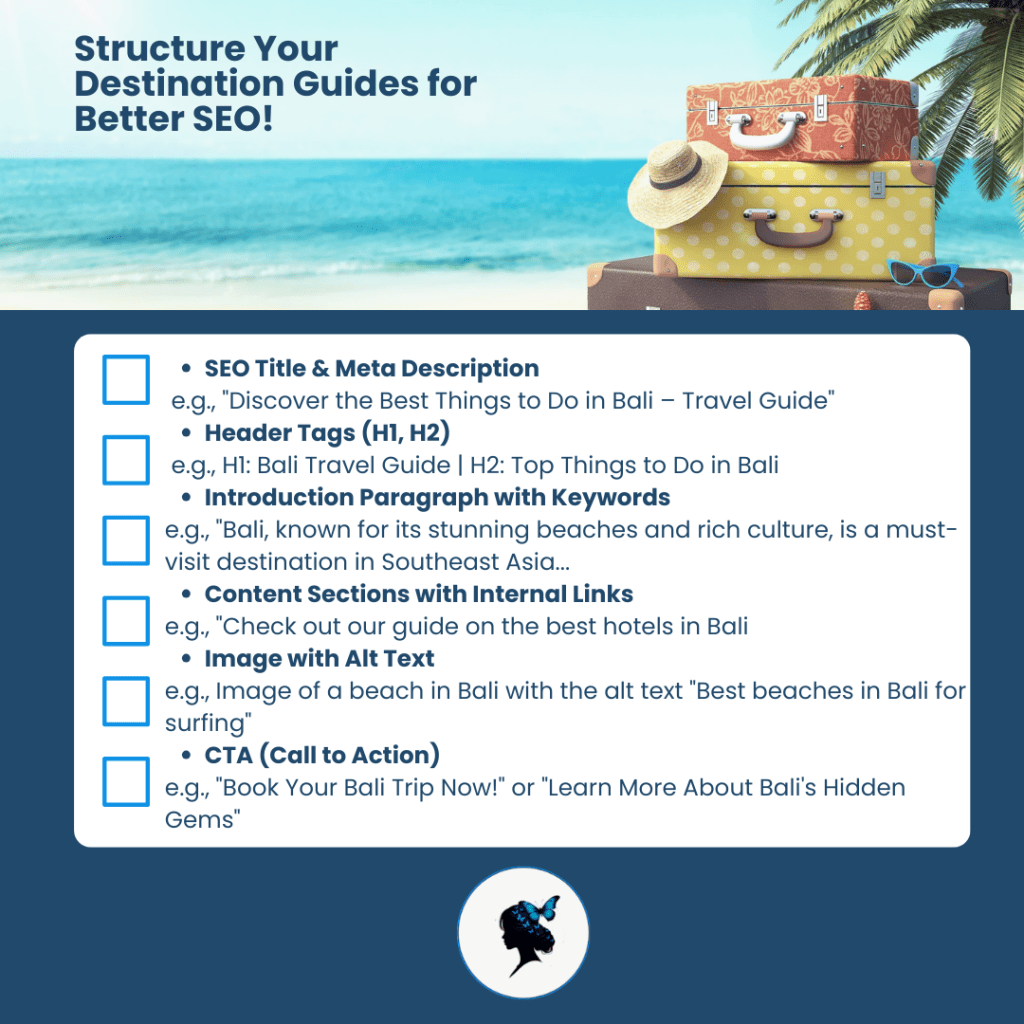
Once your content is created, the next step is optimizing it to rank well in search engines. SEO is about ensuring that both users and search engines can find, understand, and appreciate the content of your destination guide.
How to Do It:
- Optimize On-Page SEO:
- Title Tags and Meta Descriptions: Write a compelling title and meta description that include your primary keyword and encourage users to click through to your guide. For example, a title like “Top 10 Things to Do in Bali: A Comprehensive Travel Guide” will grab attention and clearly indicate what the page is about.
- URL Structure: Use a clean and descriptive URL, like “/things-to-do-in-bali” instead of something generic like “/guide12345.” This helps search engines understand the content of the page.
- Keyword Placement: Place your target keyword naturally in the first paragraph, headings, and throughout the guide. However, avoid keyword stuffing—focus on readability and user experience first.
- Internal Linking: Link to relevant pages or blog posts on your site, such as booking pages, related guides, or customer testimonials. Internal links help search engines crawl your site and encourage visitors to explore more of your content.
- Mobile Optimization: Ensure that your destination guide is optimized for mobile devices. Google’s mobile-first indexing prioritizes the mobile version of your site, and a poor mobile experience could negatively affect your rankings. Ensure fast load times, easy navigation, and responsive design for all screen sizes.
- Schema Markup: Use schema markup (structured data) to help search engines understand your content better. For example, using schema for local attractions or events can help your destination guide appear as a rich snippet in search results, which can increase visibility and click-through rates.
Step 4: Promote Your Destination Guide
Creating an excellent destination guide is only half the battle. To drive traffic and conversions, you must actively promote it across various channels.

How to Do It:
- Social Media: Share your destination guide on your social media profiles, including Facebook, Instagram, Pinterest, and LinkedIn. Use relevant hashtags and geotags to increase discoverability. You can also use paid ads to target specific demographics who are likely to be interested in the destination.
- Email Marketing: If you have an email list, send out a dedicated email highlighting the destination guide. Personalize the email to make it more engaging, and include a call to action (e.g., “Read our guide to plan your perfect trip to Bali!”).
- Collaborate with Influencers: Reach out to influencers or bloggers in the travel niche to help promote your destination guide. Influencers can help share your content with a wider audience and lend credibility to your brand.
- Backlink Building: Promote your guide by reaching out to relevant travel blogs, industry websites, or local tourism boards. Ask for backlinks to your guide, which can improve your SEO rankings and drive traffic.
Check out our guide for the best social media platforms for travel companies in 2025.
Step 5: Monitor Performance and Make Improvements
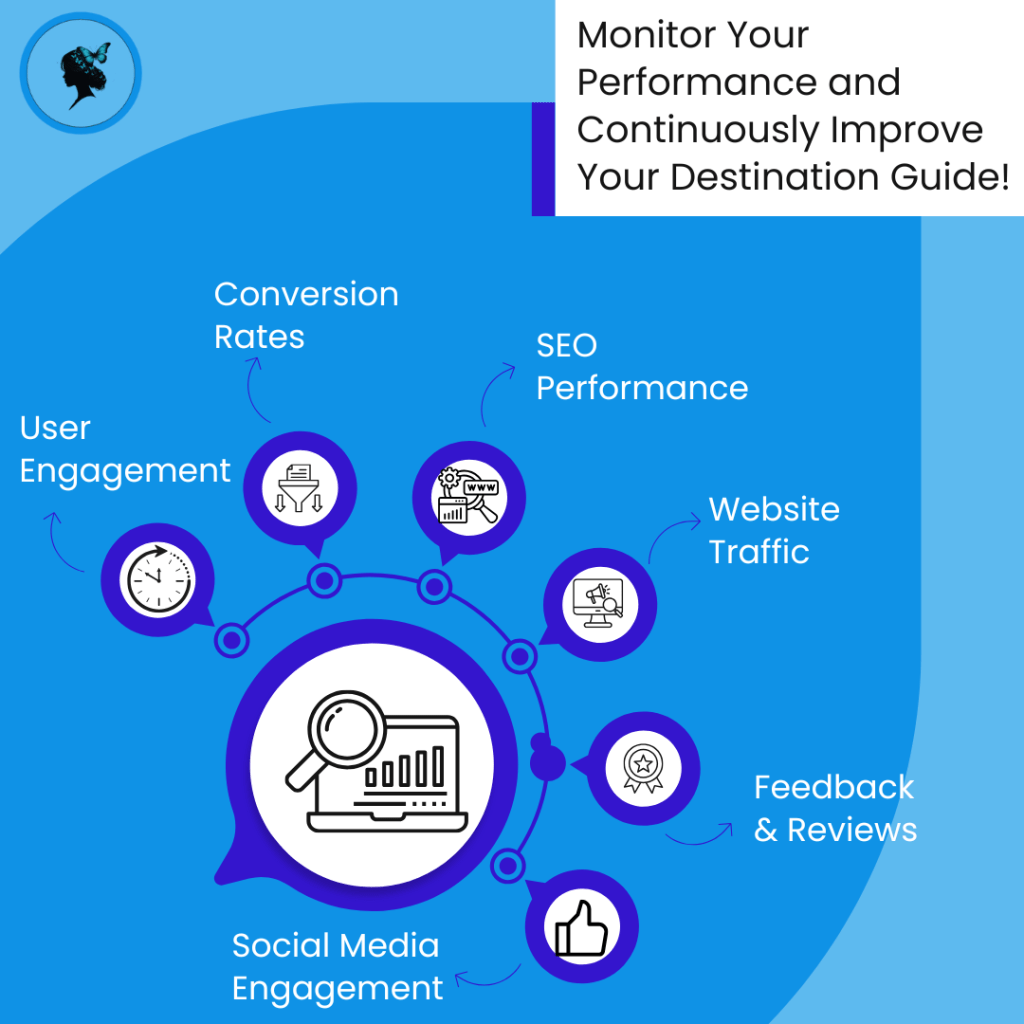
Once your destination guide is live and gaining traction, it’s important to monitor its performance and make adjustments as needed.
How to Do It:
- Track Analytics: Use Google Analytics and Google Search Console to track how well your guide is performing. Monitor metrics such as traffic, bounce rate, time on page, and conversions (bookings or inquiries). This data will help you understand how users are interacting with the guide and where improvements can be made.
- Test and Update Regularly: Keep your destination guide up-to-date with new information, travel tips, or changing conditions. Regularly update the guide to keep it relevant, and test different headlines, images, or call-to-action buttons to improve conversions.
Conclusion
Creating destination guides that rank and convert is a combination of solid SEO practices, high-quality content, and effective promotion strategies. By focusing on keyword research, providing engaging and actionable information, optimizing your content for search engines, and promoting your guides, you can build resources that not only drive organic traffic but also convert visitors into paying customers.
Whether you’re a travel agency, tour operator, or destination marketer, well-crafted destination guides are an essential tool in your content marketing strategy. Follow these steps, and you’ll be well on your way to creating destination guides that help your business grow and thrive in the competitive travel industry.
Trouble getting started? Contact us to see how we can help!
Discover more from Wander Women Strategies
Subscribe to get the latest posts sent to your email.

9 thoughts on “Creating Destination Guides That Rank and Convert: A Step-by-Step Guide for Travel Businesses”
Comments are closed.