
▶ Table of Contents
Introduction
In this article, we’ll dive deep into On-Page Optimization and Keyword Optimization, explain how to effectively implement them, and highlight why they are vital for travel companies.
In the ever-evolving travel industry, having an online presence that ranks high on search engines is crucial to attracting customers. One of the fundamental aspects of SEO that influences rankings is On-Page Optimization, particularly Keyword Optimization. If your travel business isn’t optimizing the keywords on your website, you may be missing out on valuable organic traffic that could drive bookings, inquiries, and brand awareness.
What is On-Page Keyword Optimization?
On-Page Keyword Optimization refers to the strategic placement of relevant keywords within your website’s content and HTML source code to enhance its search engine ranking. These keywords are the words and phrases your target audience uses when searching for services like yours.

For travel businesses, keyword optimization means identifying the right travel-related terms such as “luxury vacation in Hawaii”, “adventure tours in Costa Rica”, or “budget-friendly European getaways” and optimizing web pages, blog posts, and other content around those terms.
On-Page optimization goes beyond just throwing in keywords. It’s about using those keywords strategically, ensuring that your content provides value to users, while also signaling to search engines that your page is relevant for the search query.
How to Implement On-Page Keyword Optimization
Implementing on-page keyword optimization requires careful planning and execution.
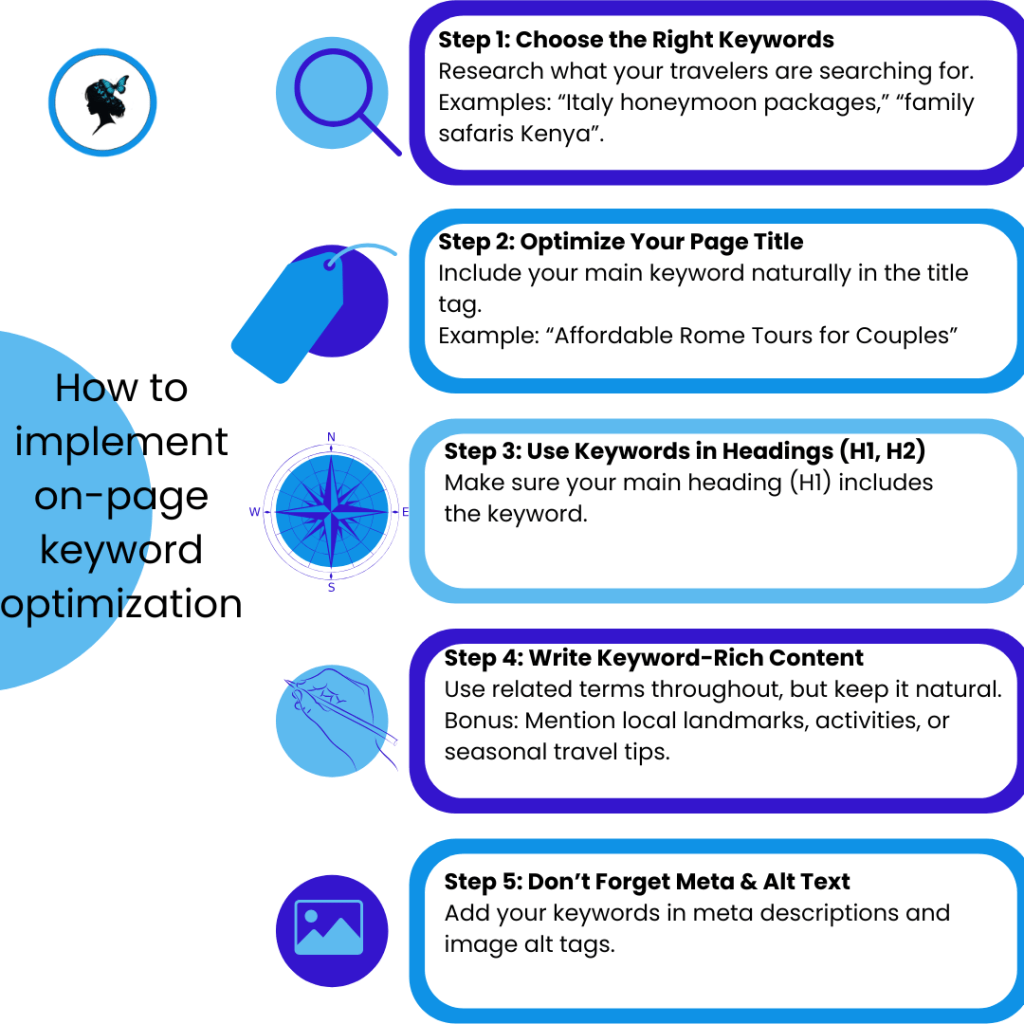
Here’s a step-by-step guide to optimize your travel website effectively:
Step 1: Conduct Keyword Research
Before you can optimize your website for keywords, you need to know which ones to target. Effective keyword research involves finding the terms that your ideal customers are searching for.
- Use Tools: Leverage keyword research tools such as Google Keyword Planner, Semrush, and Ahrefs to identify relevant search terms with a good balance of search volume and low competition.
- Consider User Intent: Keyword research isn’t just about finding high-volume terms. You need to think about user intent: Are users looking for travel inspiration, booking services, or specific activities? Target keywords that align with your business goals (i.e., transactional or informational queries).
- Look for Long-Tail Keywords: For travel businesses, long-tail keywords like “luxury cruises to Alaska for families” or “best time to visit Bali with kids” are valuable. They typically have lower search volume but higher conversion rates.
Step 2: Incorporate Keywords in Strategic Areas
Once you’ve identified your target keywords, it’s time to incorporate them in the key on-page elements of your website. Here are the areas to focus on for keyword placement:
- Title Tags: Your title tag is one of the most important SEO elements. It should accurately describe the page content while including your target keyword. For example, instead of just “Vacation Packages,” use a title like “Best Family Vacation Packages in Florida – Wander Ready”.
- Meta Descriptions: While meta descriptions don’t directly impact rankings, they do influence whether users click on your website in search results. Include your primary keyword and make the description compelling. Example: “Discover the best family vacation packages in Florida. Explore kid-friendly resorts and activities for an unforgettable holiday.”
- Headings (H1, H2, H3): Structure your content by including keywords in your headings (H1, H2, and H3). The H1 tag should contain your primary keyword, while H2 and H3 tags can have variations or related keywords. For example: H1: “Top Family-Friendly Vacation Spots in Florida” and H2: “Best Resorts for Family Vacations in Florida”.
- URLs: Create clear and descriptive URLs that include keywords. For example, instead of “www.example.com/package1,” use “www.example.com/family-vacation-florida.”
- Content Body: Naturally incorporate your keywords within the body of the content. Aim for high-quality, informative content that answers the user’s query. Avoid keyword stuffing, which can negatively impact readability and SEO.
- Image Alt Text: Images on your travel site should be optimized with descriptive alt text that includes keywords. For example, an image of a beach resort can have alt text like “Luxury beach resort in Bali”.
- Internal Linking: Add internal links to other relevant pages on your website. This helps with SEO and also enhances the user experience by guiding them to related content. For instance, linking to other resort pages or tour packages on your website will keep visitors engaged.
Step 3: Focus on Content Quality
Keyword optimization doesn’t mean just inserting keywords into every corner of your page. The content needs to be valuable and engaging for users. Here’s how to maintain quality while optimizing for keywords:
- Answer User Questions: Craft content that directly answers the questions your target audience has. For example, if your target keyword is “best eco-tourism destinations in Costa Rica,” you should provide detailed answers about eco-friendly travel options in Costa Rica.
- Avoid Keyword Stuffing: Keyword stuffing—repeating keywords unnaturally in content—can result in penalties from search engines. Instead, aim for a natural, conversational tone that provides real value to your audience.
- Use LSI Keywords: Latent Semantic Indexing (LSI) keywords are related terms that reinforce your primary keywords. For example, if your target keyword is “adventure tours in Costa Rica,” related terms might include “Costa Rica hiking tours” or “outdoor adventure vacations.”
Step 4: Optimize for Mobile and Site Speed
Search engines like Google prioritize websites that offer a great user experience. Since most users access websites via mobile devices, it’s essential that your site is mobile-friendly.
- Responsive Design: Make sure your website has a responsive design, meaning it adjusts seamlessly to different screen sizes. This is especially important for travel websites, as potential customers may browse on mobile while planning trips on the go.
- Site Speed: Page speed is another ranking factor. Slow-loading pages can hurt both user experience and SEO. Use tools like Google PageSpeed Insights to check your website’s speed and make improvements where needed.
Read our post on website speed optimization for more information.
Why On-Page Keyword Optimization is Important for Travel Companies
For travel businesses, on-page keyword optimization is critical for attracting the right audience, standing out from competitors, and driving qualified traffic to your website. Here are a few reasons why it’s particularly important for the travel industry:

1. Enhanced Visibility in Search Engines
Travel is one of the most competitive industries online, with thousands of websites targeting similar keywords. Properly optimized pages are more likely to rank higher in search engine results, increasing your visibility.
2. Attracts the Right Audience
By targeting keywords that align with user intent, on-page keyword optimization ensures that you attract visitors who are genuinely interested in what your travel business offers. For example, targeting “affordable luxury tours in Paris” will bring in visitors who are actively looking for that specific service.
3. Improves User Experience
Effective on-page optimization improves the user experience by ensuring that content is easy to find, relevant, and engaging. When your website answers the questions and needs of your target audience, they’re more likely to stay on your page and take action, whether that’s booking a tour, subscribing to your newsletter, or reaching out for more information.
4. Increases Conversions
When you target specific long-tail keywords with transactional intent, you’re likely to see higher conversion rates. A user searching for “best all-inclusive resorts in Mexico” is more likely to book than someone just searching for “vacation destinations.”
Ready to take your travel business to new heights? Contact us today to get started!
Discover more from Wander Women Strategies
Subscribe to get the latest posts sent to your email.

2 thoughts on “On-Page Optimization: Keyword Optimization for Travel Companies”
Comments are closed.