
In the highly competitive world of travel and tourism, the speed of your website can make or break your online presence. With travelers increasingly using mobile devices to research their next vacation, a slow website can lead to high bounce rates, poor user experience, and ultimately lost business. At Wander Women Strategies, we understand the importance of website speed optimization for travel companies and how it can impact everything from SEO rankings to conversion rates.
In this article, we’ll walk you through everything you need to know about website speed optimization, including what it is, how to optimize your site, and why it’s crucial for travel businesses.
▶ Table of Contents
What is Website Speed Optimization?
Website speed optimization refers to the process of improving the loading times of your website’s pages. It involves reducing the time it takes for your website to load fully and become interactive for users. Website speed is a critical ranking factor for search engines, as well as a key element in providing a seamless user experience.
A website that loads quickly ensures users stay engaged, can access the information they need, and are more likely to convert—whether that’s making a booking, signing up for a newsletter, or sharing content.
Why Website Speed Matters
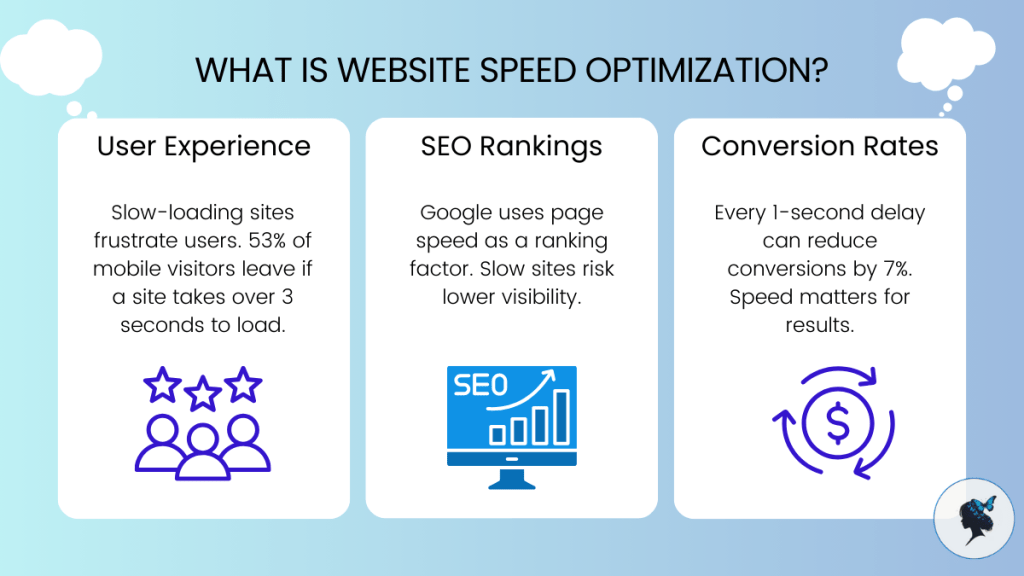
- User Experience: A slow-loading website leads to frustration. Users expect fast-loading pages, especially on mobile devices, and they may leave if your website takes too long to load. According to Google, 53% of mobile users will abandon a site if it takes more than 3 seconds to load.
- SEO Rankings: Google and other search engines prioritize websites with fast load times. Search engines use page speed as one of the ranking factors, and websites that load slower may suffer from lower rankings, making it harder for potential customers to find you.
- Conversion Rates: The faster your website loads, the more likely users are to take action—whether that’s making a booking or interacting with your content. Studies show that even a 1-second delay in page load time can reduce conversion rates by 7%.
Website speed is not just about having a faster website—it’s about creating an experience that keeps users engaged and satisfied.
How to Optimize Website Speed for Travel Websites
Optimizing website speed involves several techniques and tools.
Let’s look at some key areas where you can improve performance:
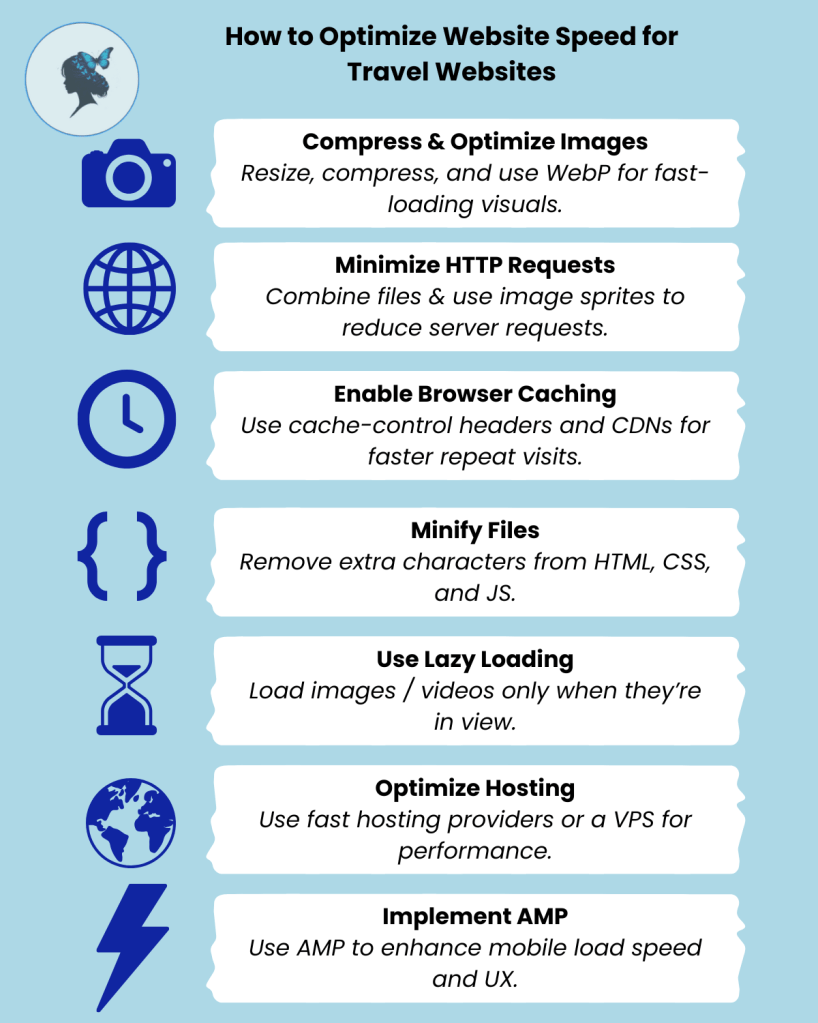
Compress and Optimize Images
Travel websites are often image-heavy, featuring breathtaking landscapes, hotels, and destinations that require high-quality visuals. However, high-resolution images can slow down your website if they aren’t properly optimized.
How to Optimize Images:
- Resize Images: Make sure images are only as large as they need to be. Don’t upload high-resolution images that exceed the required dimensions for your site.
- Image Compression: Use compression tools to reduce the file size without sacrificing image quality. Tools like TinyPNG, ImageOptim, and JPEG-Optimizer can help compress images without noticeable quality loss.
- Use Next-Gen Formats: Consider using modern image formats like WebP, which offer superior compression and quality compared to traditional formats like JPEG or PNG.
Optimizing images is one of the most effective ways to speed up your website, as images often account for the largest portion of a page’s total size.
Minimize HTTP Requests
Every element on a page (images, CSS, JavaScript, etc.) requires an HTTP request to the server. The more elements your page has, the more HTTP requests it will need to load, which increases the loading time.
How to Minimize HTTP Requests:
- Combine CSS and JavaScript Files: Instead of loading multiple CSS and JavaScript files, combine them into one or two files to reduce the number of requests.
- Use Sprites for Images: If your site uses many small images (like icons), consider using CSS sprites. A sprite combines multiple images into one file, reducing the number of requests.
Enable Browser Caching
Caching is a method of storing static resources like images, CSS, and JavaScript in the user’s browser. When a user visits your site again, the browser doesn’t need to reload these resources, leading to faster load times.
How to Enable Browser Caching:
- Leverage Cache-Control Headers: Set cache expiration dates for resources that don’t change often, like images and stylesheets.
- Use a CDN: A Content Delivery Network (CDN) can store copies of your website’s content in multiple locations worldwide. This helps reduce latency by delivering content from the nearest server.
Minify CSS, JavaScript, and HTML Files
Minification is the process of removing unnecessary characters (like spaces, line breaks, and comments) from your code without affecting functionality. Minified code is smaller, which reduces loading time.
How to Minify Code:
- CSS and JavaScript Minifiers: Tools like UglifyJS (for JavaScript) and CSSMinifier can help you minify these files.
- HTML Minification: Use HTMLMinifier to compress your HTML files and remove unnecessary whitespace and comments.
Use Lazy Loading
Lazy loading is a technique that delays the loading of images and other media until they are needed, i.e., when they appear in the user’s viewport (visible part of the page). This helps reduce initial load time and saves bandwidth for users.
How to Implement Lazy Loading:
- Lazy Load Images: Implement lazy loading for images using JavaScript libraries like lazysizes or IntersectionObserver.
- Lazy Load Embeds and Videos: Apply lazy loading to embedded content, like YouTube videos or maps, to speed up your site.
Optimize Web Hosting
Your website’s hosting environment plays a crucial role in website speed. Poor hosting can cause slow page load times regardless of how optimized your site is.
How to Optimize Hosting:
- Choose a High-Quality Web Host: Ensure that your web hosting provider offers fast and reliable servers. Managed WordPress hosts like Kinsta or WP Engine are optimized for speed and performance.
- Use a Dedicated Server or VPS: If your website experiences high traffic volumes, a shared hosting plan may not be sufficient. A VPS (Virtual Private Server) or dedicated server provides better resources and faster performance.
Implement AMP (Accelerated Mobile Pages)
For travel companies, mobile optimization is essential. AMP is an open-source framework that helps create mobile-friendly pages that load extremely fast.
How to Implement AMP:
- Install AMP Plugin: If you use WordPress, there are AMP plugins available to help set up AMP pages.
- Follow AMP Guidelines: AMP pages have strict guidelines, so ensure that your content and design comply with AMP standards.
Why Website Speed Optimization is Crucial for Travel Companies
Higher Search Engine Rankings
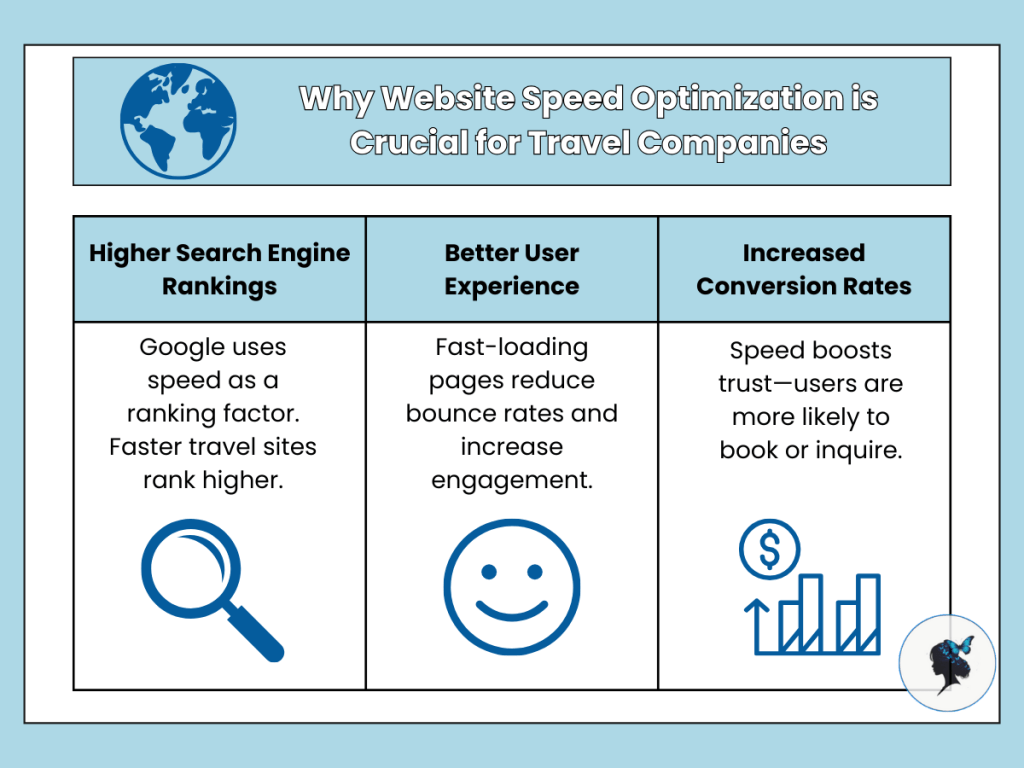
Google has explicitly stated that website speed is a ranking factor. A faster website not only improves the user experience but also helps with SEO. With more travel websites entering the digital space, a faster site has a competitive edge.
Better User Experience
For travel companies, providing a positive user experience is essential. Slow websites frustrate potential customers, and they may abandon your site in favor of faster competitors. Optimizing your site for speed ensures that users can access information quickly, which is especially important for travel-related searches.
Increased Conversion Rates
As mentioned earlier, a faster website means higher conversion rates. Whether it’s booking a flight, reserving a hotel, or simply reading about a travel destination, faster loading speeds mean users are more likely to complete their desired actions. For travel companies, this can directly translate into more bookings and higher revenue.
Mobile Optimization for On-the-Go Travelers
Travelers are often on the go, and mobile optimization is crucial. A slow-loading mobile site can be detrimental to your business, especially considering that mobile traffic accounts for a large portion of web visits. With Google’s mobile-first indexing, ensuring fast mobile load times is more important than ever.
Is your website ready to load faster and rank higher?
Contact us today to learn how we can help you optimize your website for better SEO, enhanced user experience, and increased conversions.
Discover more from Wander Women Strategies
Subscribe to get the latest posts sent to your email.

6 thoughts on “Website Speed Optimization for Travel Companies”
Comments are closed.