
▶ Table of Contents
- Introduction
- Section 1: Understand the Power of Internal Linking for SEO
- Section 2: Use Topic Clusters to Create a Logical Link Structure
- Section 3: Use Anchor Text Strategically (Without Being Spammy)
- Section 4: Link to Evergreen and High-Converting Posts
- Section 5: Track Internal Link Performance and Optimize Regularly
- Conclusion
Introduction
When it comes to growing your travel blog, most people think of writing more content, targeting trending keywords, or sharing posts on social media. But there’s a powerful SEO tactic that many travel bloggers overlook: internal linking. Not only is it free, but it’s also one of the most effective ways to improve your blog’s visibility on Google, keep readers engaged longer, and guide them through your content like a well-planned itinerary.
Internal linking is the practice of linking one page of your website to another. For a travel blogger, this means connecting your Bali packing list to your Bali itinerary post or linking your digital nomad visa guide to your article about working remotely in Portugal. Done strategically, internal linking boosts your site’s structure, helps search engines understand your content hierarchy, and improves keyword rankings.
In this post, we’ll break down how to increase organic traffic to your travel blog using internal linking. We’ll walk you through five key strategies, provide real travel blog examples, and share stats to show just how impactful this technique can be.
So grab your metaphorical backpack—we’re going on an SEO journey!
Section 1: Understand the Power of Internal Linking for SEO
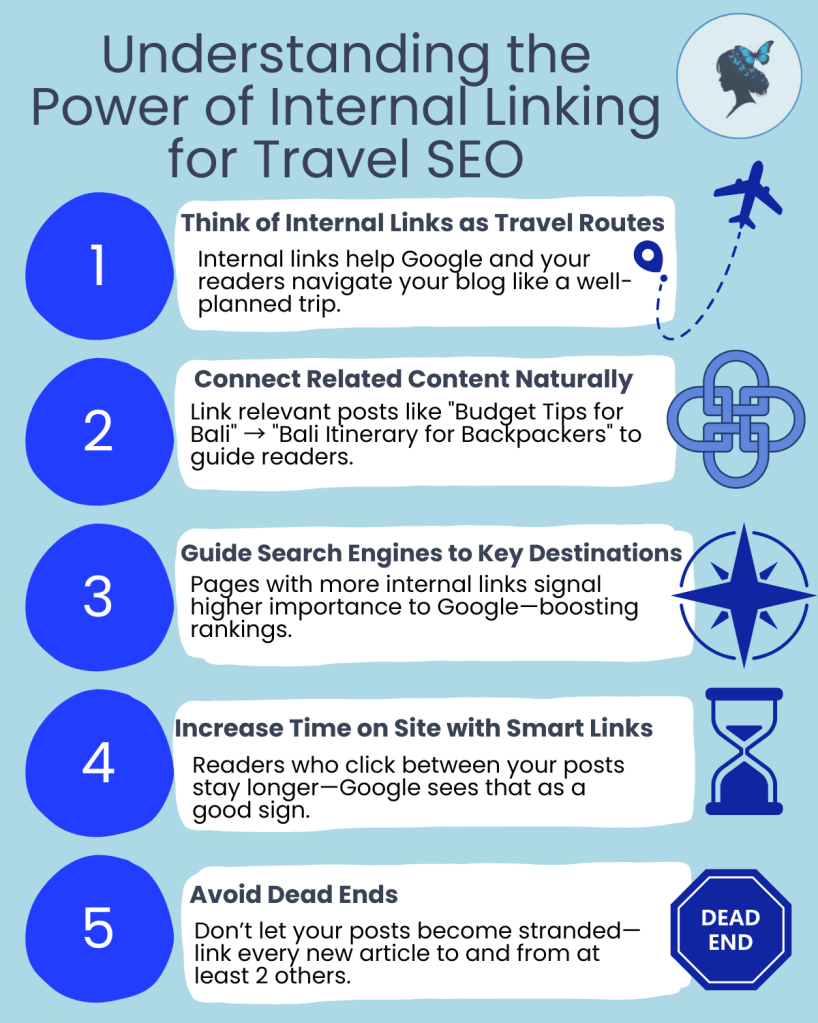
The SEO Backbone of Your Travel Blog Internal linking plays a vital role in helping search engines crawl your site and understand the relationship between your content. When Google finds consistent links pointing to a specific post—say, “10 Things to Do in Tulum”—it begins to view that post as authoritative. Think of internal links as the roads that connect your blog posts into a navigable map. Without them, your blog becomes a maze of isolated pages, harder for both readers and bots to explore.
From One Destination to Another
Imagine you’ve written a post on “Backpacking Through Southeast Asia.” If you mention Thailand in that post, it’s a golden opportunity to link to your guide on “Island Hopping in Thailand.” Not only does this improve SEO by linking relevant content, but it also increases the time readers spend on your site—a signal Google loves.
In fact, Backlinko’s comprehensive guide on internal linking highlights its importance in helping Google discover, index, and understand all the pages on your site. Strategic internal linking can also distribute page authority to important pages, enhancing their visibility in search results.
Why Travel Blogs Benefit More Than Most
Travel content is naturally interconnected. A post about Rome can link to packing tips, gelato recommendations, or rail passes in Italy. This kind of structure mimics the planning process of real travelers. By creating clusters of related posts and linking between them, you’re not just pleasing search engines—you’re enhancing the user experience by making your blog feel like a personal travel assistant.
Section 2: Use Topic Clusters to Create a Logical Link Structure
What Are Topic Clusters?
A topic cluster is a group of related articles built around a core “pillar” post. For example, a “Complete Guide to Japan Travel” could be your pillar page, supported by linked posts on Tokyo food tours, Kyoto temples, and navigating the Shinkansen. This approach creates a strong semantic relationship between your articles, which helps search engines understand your niche expertise.
Japan Cluster
Let’s say your pillar post is “Ultimate Japan Travel Itinerary.” Under that, you’ve written supporting posts like “What to Eat in Osaka,” “Cherry Blossom Season in Japan,” and “How to Use a Japan Rail Pass.” By linking each supporting post back to the main itinerary—and vice versa—you’re signaling to search engines that this is a comprehensive, well-structured topic.
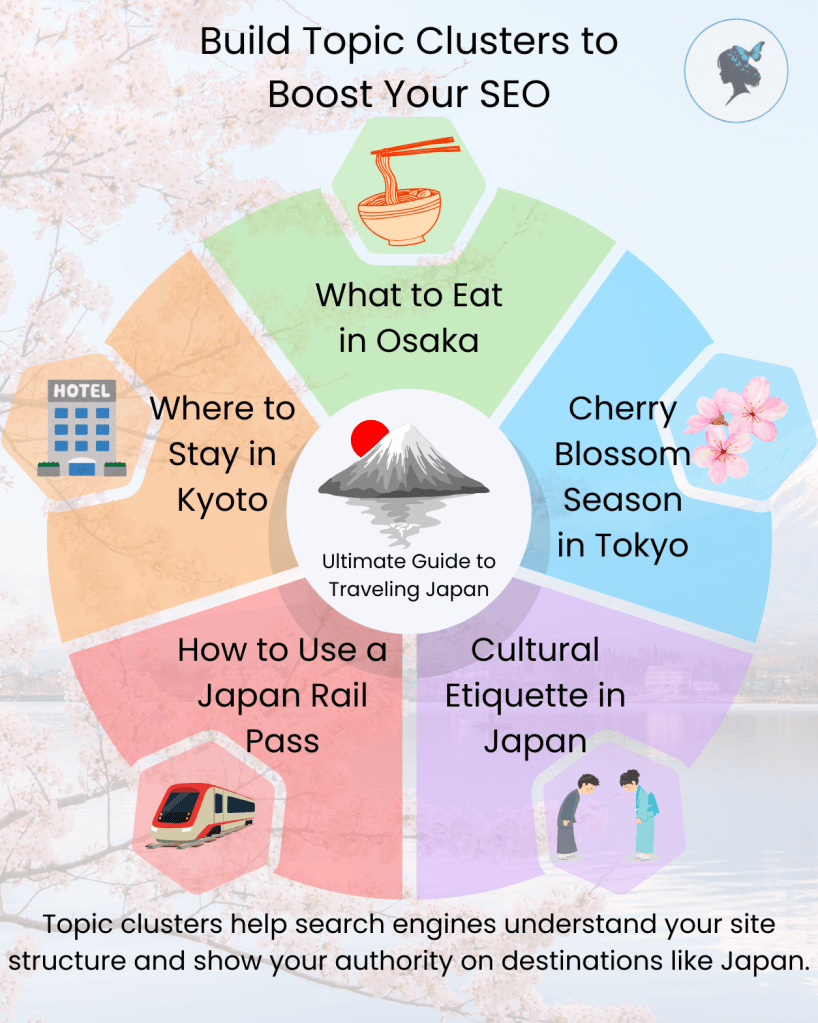
HubSpot reports that topic cluster strategies can improve organic traffic by up to 51% over three months.
Keep It Natural, Not Forced
While it’s tempting to link every time you mention a related destination, overdoing it can feel spammy. Instead, think about how readers actually plan trips. If someone’s reading about budget hostels in Paris, would they also benefit from a link to your post on how to use public transit in France? If the answer is yes, link it! Keep the connections logical and helpful.
You also might be interested in our post: content every travel website should have.
Section 3: Use Anchor Text Strategically (Without Being Spammy)
What Is Anchor Text and Why It Matters
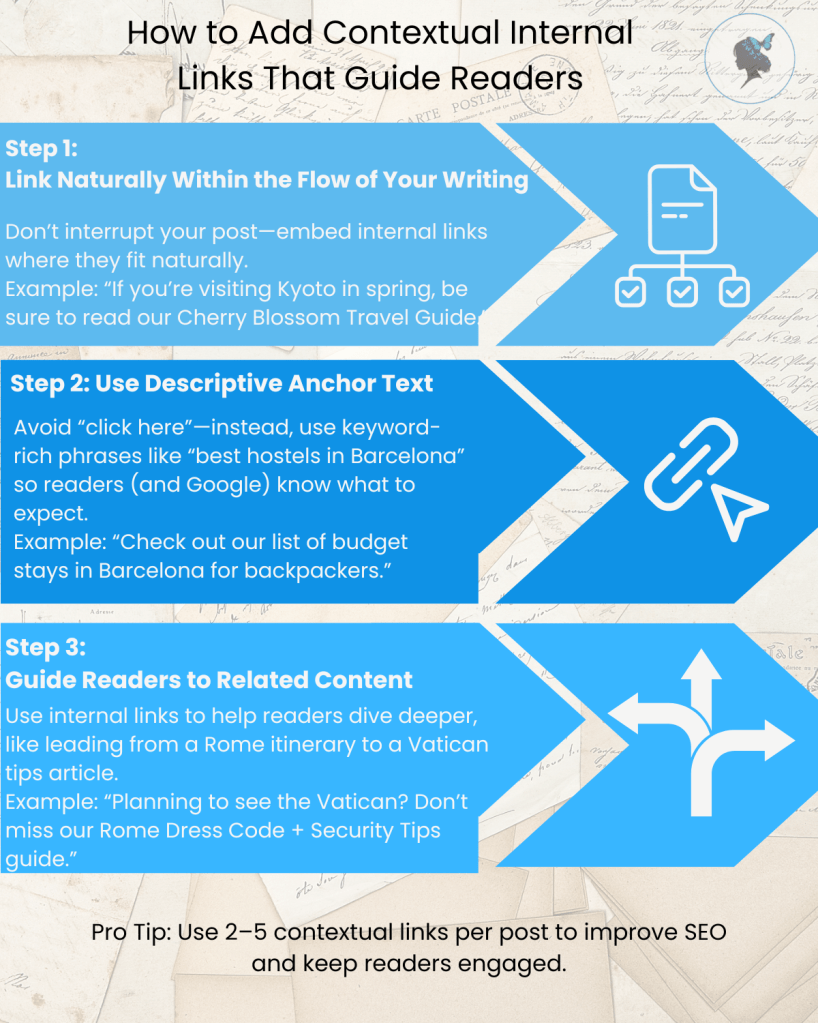
Anchor text is the clickable word or phrase that links to another page—like when you write, check out this Italy itinerary. It tells both users and search engines what kind of content they can expect. Using keyword-rich anchor text can boost SEO rankings for the target page, but only when done naturally.
Smart Anchor Text for Travel Content
Instead of linking phrases like “click here” or “this post,” use descriptive text. For example, rather than writing “read more about it here,” link with “guide to the Amalfi Coast.” This tells Google exactly what the page is about. In the travel niche, strong anchor text might look like: best time to visit Iceland, things to do in Marrakech, or digital nomad visa for Portugal.
According to Google, good anchor text is descriptive, reasonably concise, and relevant to the page that it’s on and to the page it links to.
Avoid Over-Optimization
While using keywords in anchor text is great, don’t use the exact same phrase repeatedly across your blog. Google could view this as manipulative. Mix it up: use variations like “where to stay in Bali,” “top Bali hotels,” or “Bali accommodations.” This keeps your content fresh and user-friendly while avoiding potential penalties.
Section 4: Link to Evergreen and High-Converting Posts
Why Some Posts Deserve More Links
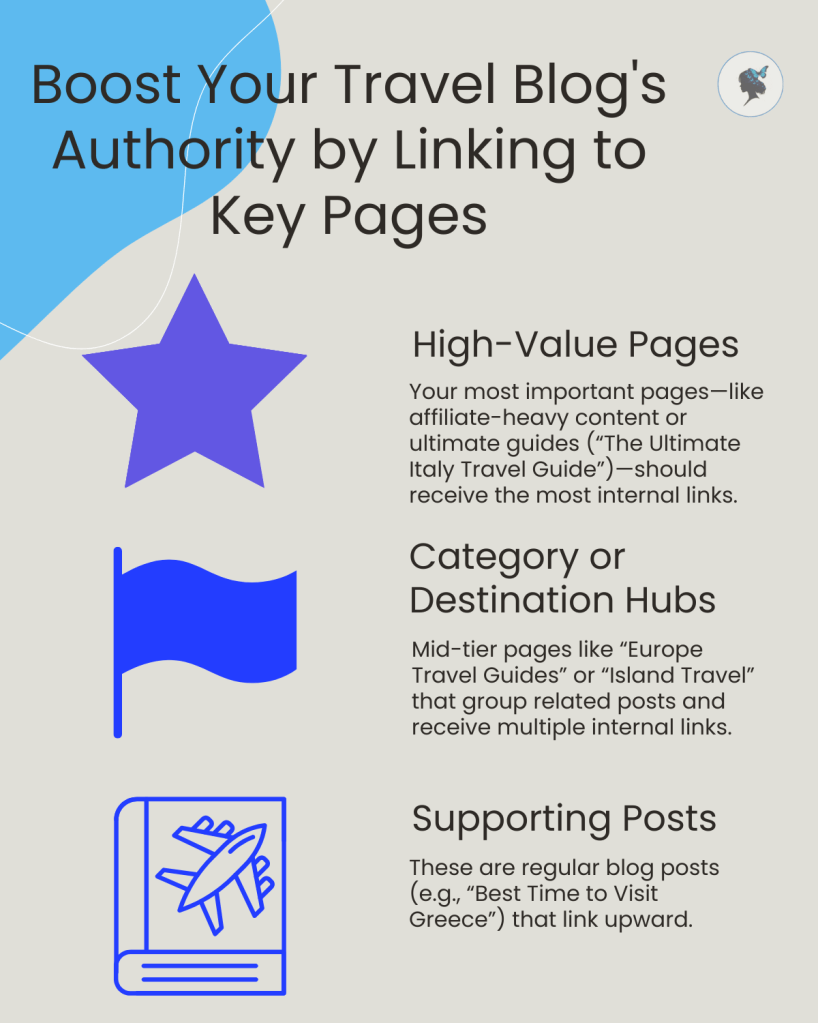
Not all blog posts are created equal. Some consistently bring in traffic, generate email sign-ups, or lead to affiliate conversions. These are your “high-value” pages, and internal linking can help amplify their performance. For example, if your “Ultimate Carry-On Packing List” gets consistent Pinterest traffic, link to it often from other related content.
Monetizing with Affiliate Travel Guides
Let’s say you wrote a post on “Best Travel Backpacks for Europe.” If that post includes affiliate links and converts well, you should link to it from other relevant posts like “2-Week Interrail Itinerary” or “Packing Tips for Hostels.” Every internal link increases the chances of clicks and conversions.
According to a 2021 study by Orbit Media, internal links can increase affiliate page revenue by up to 20%.
Create an Internal Linking Habit
Each time you publish a new travel post, review older posts and look for logical places to insert links. For instance, if you just published “Weekend Getaway in Prague,” go back to your “Best European Cities for Foodies” post and add a link. This ongoing linking habit builds authority across your blog and keeps old content fresh.
Section 5: Track Internal Link Performance and Optimize Regularly
Use Google Search Console for Insight
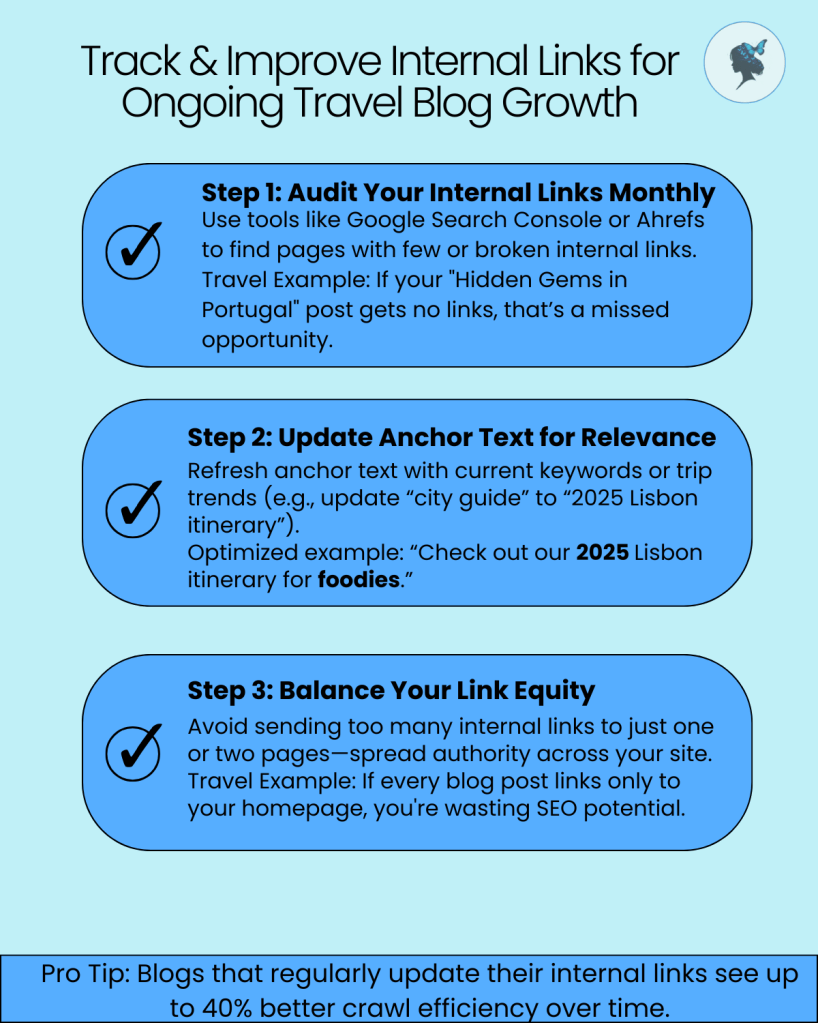
You don’t have to guess whether your internal links are working. Google Search Console shows which pages are getting the most clicks and which internal links lead to traffic increases. Look at which posts rank well and check their “linked pages” to see where you might be missing opportunities.
Adjusting Based on Data
Let’s say your post on “Hiking Cinque Terre” starts ranking higher after you added five internal links pointing to it. That’s no accident—it’s proof that linking strategy works. Over time, you’ll spot patterns. Maybe posts linked in the first paragraph perform better than links buried at the bottom. Keep tweaking!
Use Plugins to Automate and Audit
If you’re on WordPress, plugins like Link Whisper can help automate internal linking suggestions and even show you orphaned posts (pages with no links pointing to them). This is especially useful for larger travel blogs.
According to Search Engine Journal, cleaning up and optimizing internal links can boost traffic by up to 40%. Set a reminder to review and optimize links quarterly—it’s an easy SEO win.
Conclusion
Internal linking might not be as flashy as writing about the latest trending destinations or snapping perfect Instagram photos, but it’s one of the most reliable and scalable ways to grow your organic traffic. By guiding your readers from one helpful post to another, you’re not just boosting your SEO—you’re creating a thoughtful, intuitive travel experience.
Think of it this way: every internal link is like a footpath between two points on a map. The more paths you create, the easier it is for your readers (and Google!) to explore everything your travel blog has to offer. Whether you’re sharing packing tips, destination guides, or digital nomad resources, linking your content together creates a cohesive ecosystem that builds trust and authority.
So next time you hit “publish,” don’t stop there. Revisit old posts. Add meaningful links. Build topic clusters. Track what’s working. These small efforts, done consistently, can lead to big results—like higher Google rankings, more email sign-ups, better affiliate revenue, and a loyal community of readers who stay for the journey.
Need more help with internal linking? Contact us today!
Discover more from Wander Women Strategies
Subscribe to get the latest posts sent to your email.

18 thoughts on “How to Increase Organic Traffic to Your Travel Blog with Internal Linking”
Comments are closed.