
▶Table of Contents
Introduction
In today’s competitive digital landscape, optimizing your meta title and meta description is a critical part of on-page SEO for your travel business. These two elements not only help search engines understand your content but also influence whether users will click on your site when it appears in search results.
1. What is Meta Title & Description Optimization?
Meta Title and Meta Description are HTML elements embedded in the head section of your website. They provide search engines and users with a brief understanding of the content of a page. While they are not visible on the page itself, they are crucial for SEO.
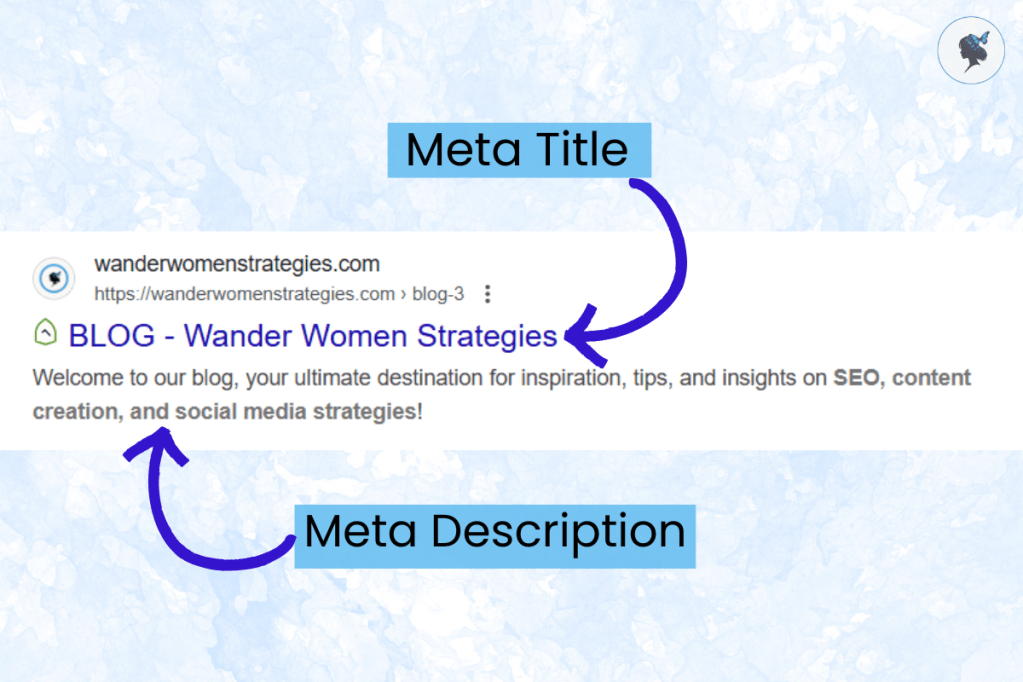
Meta Title
The meta title is the clickable headline that appears in search results. It serves as the first impression a user has of your page, and it plays a vital role in SEO. It must accurately reflect the content of the page while also incorporating your target keywords. The meta title is one of the first factors search engines consider when ranking a page.
For example, for a page on luxury tours to Europe, your meta title might be:
“Luxury Europe Tours – Best Vacation Packages with Wander.”
Meta Description
The meta description is a short, concise snippet that summarizes the content of the page. While it doesn’t directly impact search rankings, it influences the CTR, which indirectly affects rankings. A well-written meta description can convince users that your page has what they’re looking for.
For example, the meta description for the same page might read:
“Explore Europe in style with Wander’s luxury tours. Book now for an unforgettable European vacation featuring personalized experiences and expert guides.”
2. How to Optimize Meta Titles & Descriptions for Travel Websites
Meta title and meta description optimization is an integral part of on-page SEO.
Follow these actionable steps to optimize these elements for better performance on search engines:
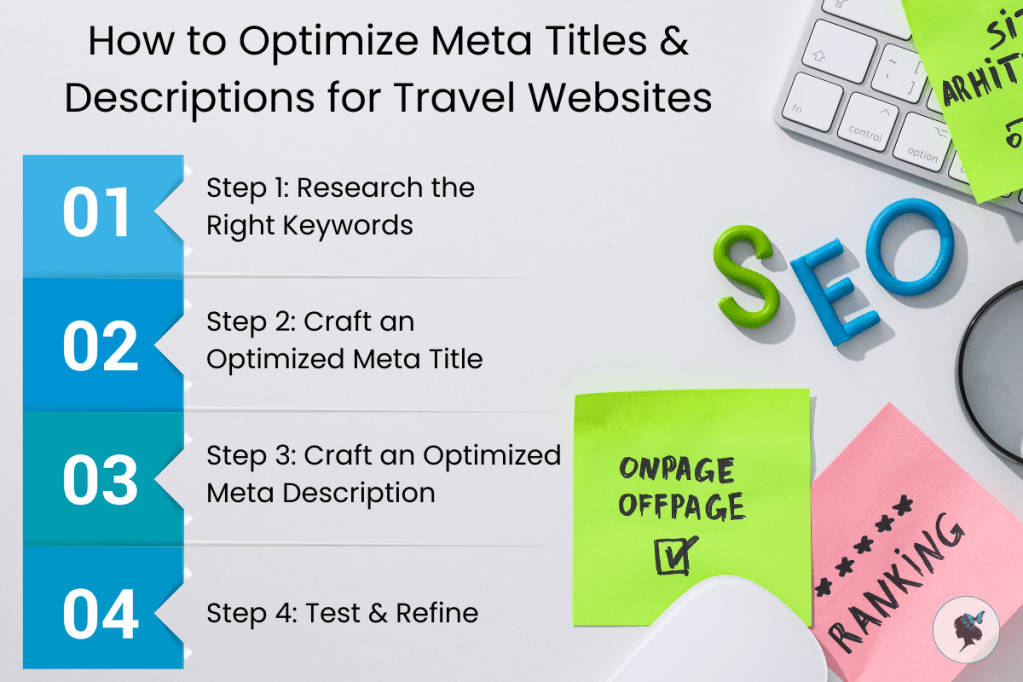
Step 1: Research the Right Keywords
Before you can optimize your meta title and description, you need to identify the right keywords. Use tools like Google Keyword Planner, Semrush, or Ahrefs to find relevant keywords that align with what your target audience is searching for.
- Focus on long-tail keywords for better targeting. For example, “best luxury tours in Italy” is more specific and likely to attract high-intent visitors than a generic keyword like “luxury tours.”
- Ensure the keyword is highly relevant to the content of the page and aligns with searcher intent.
For more about long-tail keywords, check out our post: Identifying long-tail keywords.
Step 2: Craft an Optimized Meta Title
Your meta title should be clear, concise, and compelling. Here’s how you can optimize it for better results:
- Keep it under 60 characters: Search engines typically display only the first 50-60 characters of the meta title, so make sure your important keywords appear within this limit.
- Incorporate primary keywords early: Place your main keyword near the beginning of the title for better visibility and relevance.
- Branding: If there’s room, include your brand name. This helps with brand recognition, especially for travel companies.
- Create a sense of urgency or value: Phrases like “Book Now”, “Discover Today”, or “Exclusive Deals” can prompt users to click your link.
Step 3: Craft an Optimized Meta Description
The meta description is your opportunity to summarize the value of the page. Here’s how to optimize it:
- Keep it under 160 characters: Google typically displays only the first 150-160 characters, so it’s essential to keep it concise while still conveying the value.
- Use relevant keywords: Incorporate your target keywords but avoid keyword stuffing. The meta description should read naturally.
- Make it compelling: Highlight the unique value your travel business offers, such as “exclusive deals”, “personalized tours”, or “expert guides”. Include a strong call to action like “Book Today” or “Get Started.”
- Accurate summary: Ensure the meta description accurately reflects the content of the page to avoid bounce rates.
Step 4: Test & Refine
Once your meta titles and descriptions are optimized, it’s essential to track how they perform. Monitor key metrics like CTR (click-through rate) and make adjustments as needed. If one meta title or description is underperforming, A/B test variations to see which resonates best with your audience.
3. Why Meta Title & Description Optimization is Important for Travel Companies
Effective meta title and meta description optimization isn’t just about improving rankings; it’s about getting the right travelers to click through to your website.
Here’s why it’s crucial for travel companies:
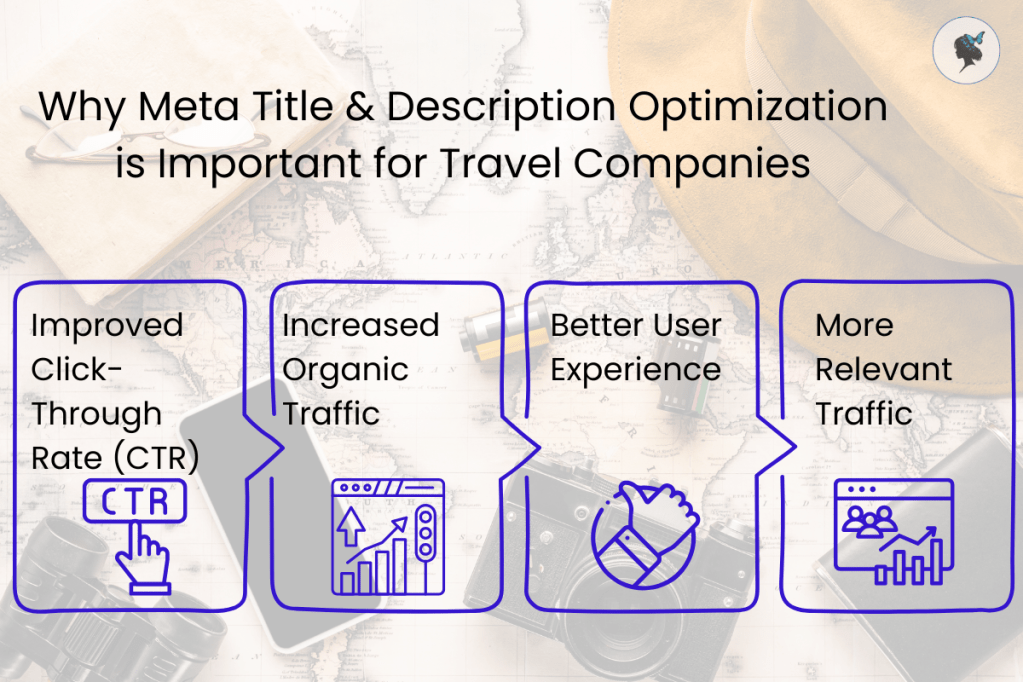
1. Improved Click-Through Rate (CTR)
The meta title and description are the first things a potential customer sees in the search engine results. If they’re engaging, users are more likely to click on your link. An optimized meta title and description can make your travel website stand out among your competitors, increasing your CTR.
2. Increased Organic Traffic
A higher CTR signals to Google that your page is relevant to users, which can result in improved rankings over time. By optimizing your meta tags, you’re more likely to attract organic traffic, leading to increased bookings, inquiries, and leads.
3. Better User Experience
Well-crafted meta titles and descriptions help set clear expectations for the user. They ensure the content is relevant to what the searcher is looking for, reducing bounce rates and improving overall user satisfaction.
4. More Relevant Traffic
By targeting the right keywords and addressing the specific needs of travelers in your meta title and description, you’ll attract a more relevant audience. This can lead to higher conversion rates since you’re reaching people who are genuinely interested in your services.
Contact us today to get started and let us help you create compelling meta tags that drive results!
Discover more from Wander Women Strategies
Subscribe to get the latest posts sent to your email.

19 thoughts on “Meta Title & Description Optimization: On-Page SEO for Travel Companies”
Comments are closed.