
▶ Table of Contents
Introduction
Understanding search intent is essential for creating content that meets users’ needs and drives conversions, especially in the travel industry. Search intent reflects what a user wants to achieve with their query — whether it’s learning something new, finding a specific site, making a purchase, or comparing options before deciding.
This article explores the four main types of search intent: informational, navigational, transactional, and commercial investigation. For each, we’ll define what it is, explain what buyers are searching for, discuss the best types of content to match intent, provide specific travel industry examples, and suggest appropriate phrasing to optimize content.
We’ll also show how one content subject can be repurposed to target all four types of search intent effectively. Whether you run a travel blog, agency, or booking platform, mastering search intent can elevate your SEO and user engagement to new heights.
Informational Search Intent
What is Informational Search Intent?
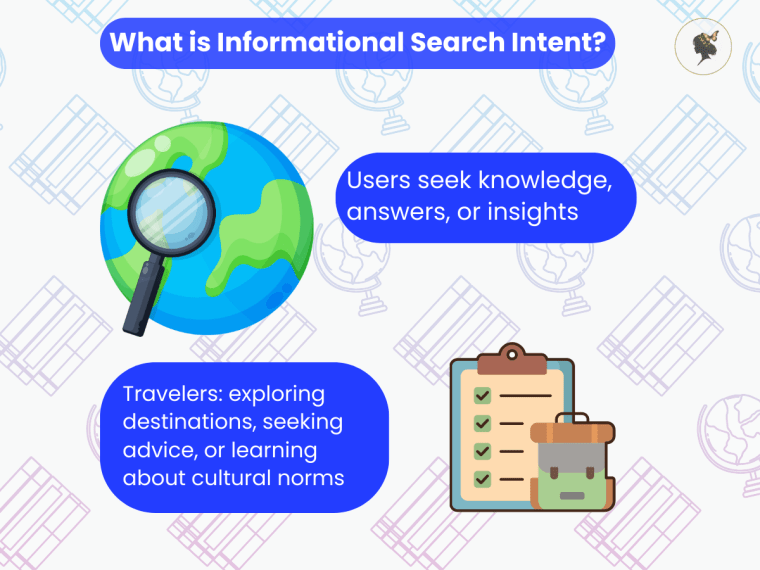
Informational search intent is when users seek knowledge, answers, or insights without necessarily wanting to make a purchase or visit a specific site immediately. These queries are driven by curiosity or a need to solve a problem, making them an essential first step in the travel research process. Typical informational queries often include question words like “how,” “what,” “why,” or “tips,” and they aim to educate or inform.
This type of intent is crucial for travel brands aiming to build authority and trust, as users often rely on the information found to make future travel decisions. Informational queries also help brands identify emerging travel trends and traveler concerns, allowing them to tailor their content accordingly. Optimizing content for informational intent can also capture a larger share of organic traffic early in the travel planning funnel.
What the Buyer is Searching For in Travel
Travelers with informational intent might be exploring potential destinations, seeking advice on packing, or learning about cultural norms. For example, a traveler may search for “best time to visit Bali,” “how to get a visa for Japan,” or “what to do in Paris for first-timers.” They are gathering facts and planning, but are not yet ready to book.
Other popular informational queries include understanding local customs, safety tips, or discovering unique experiences such as “traditional festivals in Thailand” or “family-friendly attractions in Orlando.” This stage is often longer in the travel industry due to the complex decision-making involved with logistics, budgets, and preferences. Travel brands that provide comprehensive and engaging informational content can nurture potential customers and keep them returning to their site.
Types of Content for Informational Intent
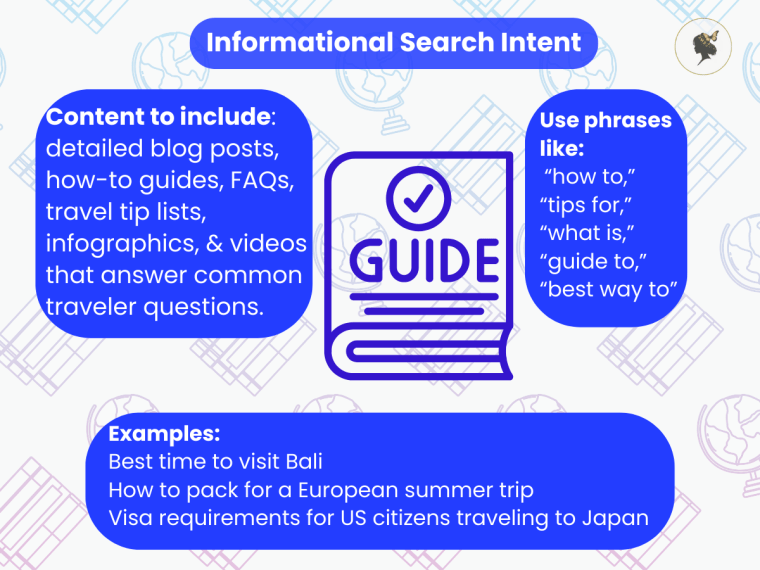
Content that performs well here includes detailed blog posts, how-to guides, FAQs, travel tip lists, infographics, and videos that answer common traveler questions. For example, an airline might publish a blog titled “How to Navigate Airport Security Quickly” or a travel agency could create an infographic on “Top 10 Beaches in the Caribbean.”
Podcasts interviewing travel experts or virtual tours showcasing destinations also engage users with informational intent. Content that addresses frequently asked questions related to travel documentation, health precautions, or currency exchange rates can be particularly useful. Ensuring content is easy to read and visually engaging will help retain visitor attention and reduce bounce rates.
Specific Travel Industry Examples
- Best time to visit Bali
- How to pack for a European summer trip
- Visa requirements for US citizens traveling to Japan
- What to expect during a safari in Kenya
- Travel health tips for South America
- How to find vegetarian restaurants in Barcelona
Appropriate Phrasing to Use
Use phrases like “how to,” “tips for,” “what is,” “guide to,” and “best way to” in your titles and metadata. Examples tailored to travel include “How to choose the best travel insurance,” “Tips for solo travel in Europe,” or “Guide to budget-friendly flights to Asia.”
Incorporate long-tail keywords and question-based queries that match conversational search patterns. Using geographic modifiers (e.g., “in Bali,” “for families”) helps capture localized search intent. Titles that promise clear benefits or solutions tend to perform better with informational intent users.
Navigational Search Intent
What is Navigational Search Intent?
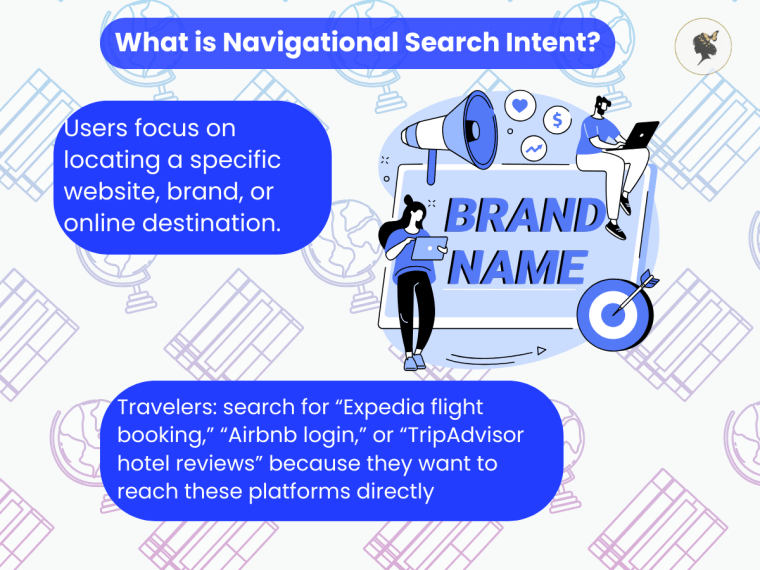
Navigational intent is focused on locating a specific website, brand, or online destination. Users already have a brand or service in mind and are looking to find its official webpage or app. This is common when travelers want to book through a known platform or check their booking status.
Often, these queries include brand names combined with specific services or actions, such as “booking” or “customer support.” A strong brand presence in navigational searches reflects customer loyalty and recognition in the travel market. Failing to optimize for navigational intent can result in missed opportunities from highly motivated users.
What the Buyer is Searching For
Travelers might search for “Expedia flight booking,” “Airbnb login,” or “TripAdvisor hotel reviews” because they want to reach these platforms directly. This intent reflects brand recognition and a desire for easy access to specific services.
Sometimes navigational searches include queries for local offices, mobile apps, or loyalty program pages to manage bookings or rewards. Users expect fast-loading pages and mobile-friendly interfaces when navigating to these sites. Search engines prioritize authoritative branded pages for these queries, making SEO for branded terms critical.
Types of Content for Navigational Intent
The content that satisfies navigational intent includes homepages, branded landing pages, login portals, and mobile app download pages. A travel agency’s homepage optimized for branded searches or a cruise line’s member login portal are prime examples.
Additionally, FAQs, customer support pages, and account management portals support navigational intent by providing user-focused pathways. Ensuring metadata and page titles include brand keywords helps reinforce navigational relevance. Clear calls to action like “Sign In” or “Book Now” enhance user experience on these pages.

Specific Travel Industry Examples
- Expedia flight booking
- Airbnb login
- TripAdvisor hotel reviews
- Hilton Honors login
- Delta Airlines check-in
- Booking.com customer service
Appropriate Phrasing to Use
Include exact brand names, product names, and terms like “official site,” “login,” “customer support,” or “app download.” Examples: “Official Hilton Hotels website,” “Delta Airlines check-in,” or “Marriott Rewards login.”
Branded keywords combined with specific service words improve click-through rates and user satisfaction. Ensure consistency in brand naming conventions and terminology across all digital assets. Localizing branded pages (e.g., “Expedia Canada login”) can also capture region-specific navigational searches.
Transactional Search Intent
What is Transactional Search Intent?
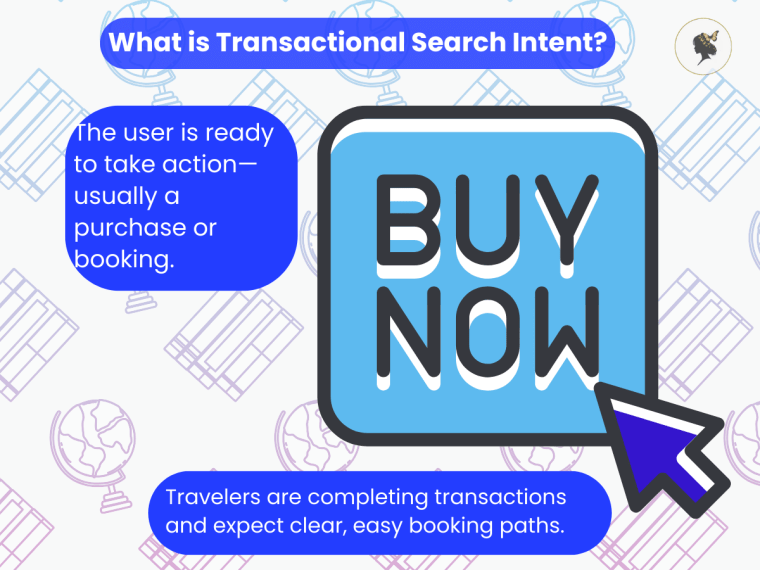
Transactional intent signals that the user is ready to take action—usually a purchase or booking. In travel, this often means buying tickets, reserving hotel rooms, or purchasing travel packages. These queries indicate a strong buying intent.
This intent is characterized by urgency or intent to complete the transaction quickly, often including price sensitivity or desire for deals. Travel brands must provide clear, frictionless pathways to conversion to capitalize on transactional queries. Mobile optimization and trust signals like secure checkout icons increase conversion rates for transactional searches.
What the Buyer is Searching For
Examples include “book flights to Paris,” “cheap hotel deals in New York,” or “car rental discounts at LAX.” Travelers at this stage are focused on completing transactions and expect clear, easy booking paths.
Searches may also include filters like dates, class preferences, or package inclusions to find the best options available. Limited-time offers and promotional codes often appear in these queries as travelers hunt for savings. Brand names combined with booking terms (e.g., “Expedia Paris flight deals”) are common transactional searches.
Types of Content for Transactional Intent
This intent is served by booking pages, product or service pages, checkout flows, and pages promoting limited-time offers or discounts. For example, an airline’s flight booking interface or a travel agency’s deals page.
Dynamic pricing tools and customer reviews on booking pages also help users feel confident in their purchase decisions. Offering flexible cancellation policies and highlighting trust badges can alleviate buyer hesitation. Prominent call-to-action buttons like “Reserve Now” or “Buy Tickets” are crucial.

Specific Travel Industry Examples
- Book flights to Paris
- Cheap hotel deals in New York
- Car rental discounts at LAX
- All-inclusive Caribbean resort packages
- Last-minute cruise deals
Appropriate Phrasing to Use
Use verbs like “buy,” “book,” “reserve,” “discount,” “deals,” “tickets,” and “offers” in the travel context. Examples: “Book cheap flights to Rome,” “Reserve beachfront hotels in Cancun,” or “Discounted ski resort packages.”
Including urgency phrases such as “today,” “now,” or “limited time” can increase click-through and conversions. Using price qualifiers (e.g., “under $500”) also attracts budget-conscious travelers. Clear and concise calls to action paired with promotional language resonate well with transactional intent users.
Commercial Investigation Search Intent
What is Commercial Investigation Search Intent?
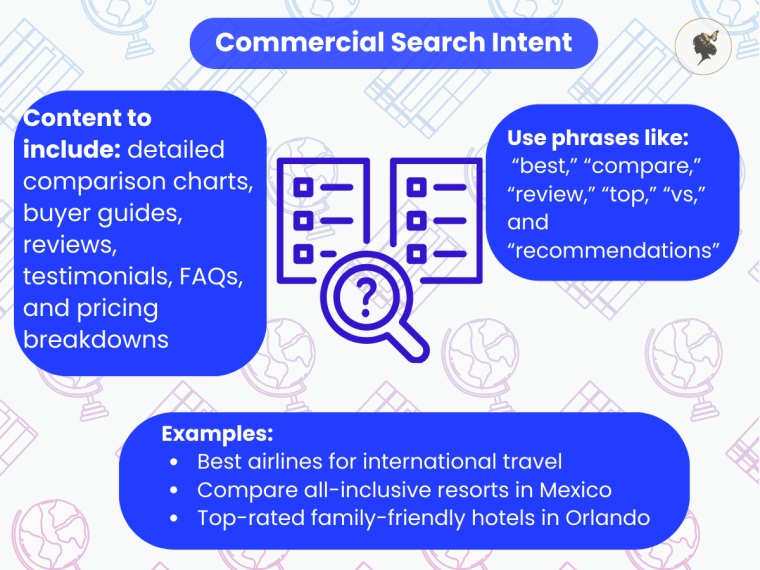
Commercial investigation indicates users are evaluating options before making a purchase decision. This is a mid-funnel intent where travelers compare brands, services, prices, or reviews to inform their choice. These queries show intent to buy but require more information first.
Travelers in this phase may be narrowing down destinations, comparing airline classes, or reviewing hotel amenities. Brands that provide detailed comparisons, customer testimonials, and transparent pricing gain an advantage. Investing in interactive content like calculators or quizzes can engage users performing commercial investigations.

What the Buyer is Searching For
Examples include “best airlines for international travel,” “compare all-inclusive resorts in Mexico,” or “top-rated family-friendly hotels in Orlando.” Buyers want detailed insights to weigh their options carefully.
Other searches include “reviews of budget airlines,” “car rental insurance options,” and “travel credit card comparisons.” Searchers expect impartial, data-driven content that aids their decision-making. Including user-generated content such as ratings and real traveler photos helps build trust.
Types of Content for Commercial Investigation Intent
Helpful content includes detailed comparison charts, buyer guides, reviews, testimonials, FAQs, and pricing breakdowns. For example, a travel blog comparing flights on major airlines or a site featuring resort reviews.
Video testimonials or influencer travel vlogs can personalize recommendations and increase trust. Creating downloadable checklists or guides aids users in evaluating options offline. Providing clear links to booking pages once users decide simplifies their journey.
Specific Travel Industry Examples
- Best airlines for international travel
- Compare all-inclusive resorts in Mexico
- Top-rated family-friendly hotels in Orlando
- Best travel insurance for seniors
- Compare budget vs luxury cruises
- Top-rated travel backpacks for hiking
Appropriate Phrasing to Use
Use words like “best,” “compare,” “review,” “top,” “vs,” and “recommendations.” Examples: “Best travel credit cards for rewards,” “Compare airlines for comfort,” or “Top-reviewed beachfront hotels.”
Incorporate both branded and generic terms to capture broad and specific comparisons. Utilize long-tail keywords with geographic or demographic qualifiers for targeted traffic. Phrases that suggest thorough evaluation and user trust are effective here.
How to Repurpose Search Intent Content in Travel Marketing
Repurposing Informational Content
Travel companies can transform informational blog posts into engaging video tutorials, infographics, or podcasts. For instance, a blog post titled “How to Pack Efficiently for a Two-Week Trip” can be converted into a step-by-step video guide showing packing hacks. This format appeals to visual learners and is highly shareable on social media platforms like Instagram or TikTok.

Another approach is creating downloadable checklists or e-books from popular informational articles, offering added value and lead generation opportunities. Additionally, webinars or live Q&A sessions based on informational topics can foster community engagement and position the brand as an expert resource. This diversified content format ensures that the travel brand reaches audiences across multiple platforms, increasing overall engagement.
Repurposing Navigational Content
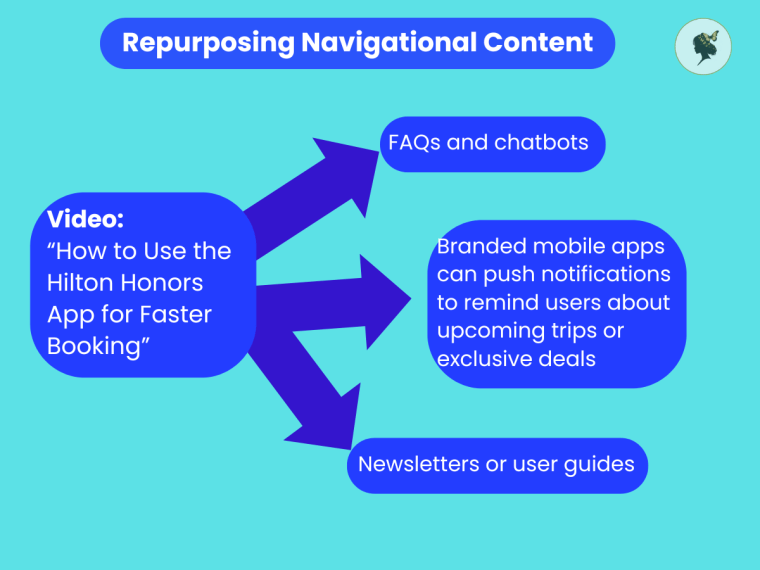
Branded navigational content such as login portals or booking pages can be enhanced with user-friendly tutorials and walkthrough videos demonstrating how to use the platform. For example, a video titled “How to Use the Hilton Honors App for Faster Booking” can reduce user friction and increase loyalty. FAQs and chatbots built around navigational queries help users find answers quickly without leaving the website.
Furthermore, branded mobile apps can incorporate push notifications that remind users about upcoming trips or exclusive deals, encouraging repeat visits. Repurposing this content into newsletters or user guides can keep customers informed about new features or policies, improving overall user satisfaction.
Repurposing Transactional Content
Transactional content like booking pages or deal promotions can be repurposed into flash sale announcements, email campaigns, and social media countdown posts to create urgency. For example, a “48-hour flight deal to Rome” can be promoted via Instagram Stories with swipe-up booking links, driving immediate conversions. Incorporating customer testimonials and real-time reviews into transactional pages can also boost confidence and reduce hesitation.
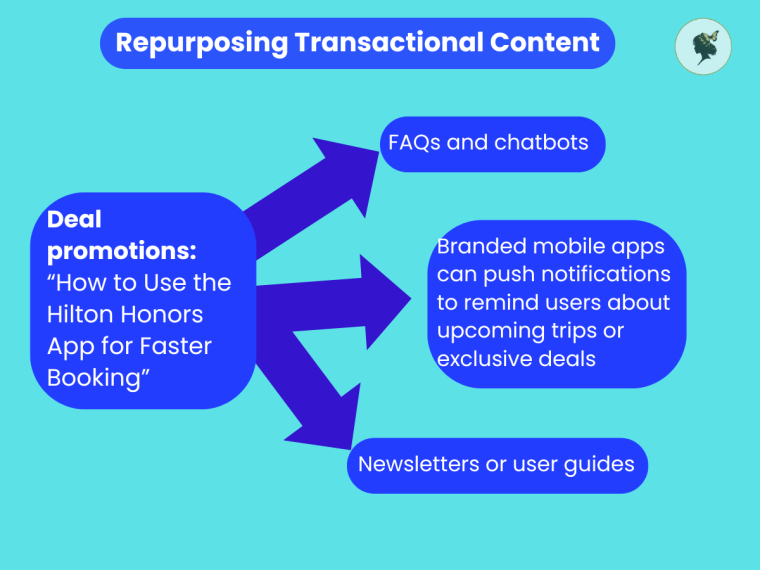
Interactive pricing calculators or comparison widgets help travelers find the best options directly on transactional pages. Offering downloadable vouchers or promo codes through transactional content increases perceived value and encourages users to finalize purchases promptly.
Repurposing Commercial Investigation Content
Comparison articles and buyer guides can be turned into interactive quizzes or decision trees that help travelers choose the best airline or hotel based on their preferences. For example, a quiz like “Which Caribbean Resort Fits Your Vacation Style?” makes the evaluation process engaging and personalized.

Video comparisons featuring side-by-side pros and cons of different travel packages appeal to visual decision-makers. Creating podcast episodes where experts discuss various travel options or interview satisfied customers adds credibility and depth. Detailed email drip campaigns based on commercial investigation content can nurture leads by providing timely tips and exclusive offers tailored to the user’s interests.
Creating content that addresses each search intent is crucial to capturing travelers at every stage of their journey. One highly effective strategy is repurposing a single content subject to serve informational, navigational, transactional, and commercial investigation intents. This approach maximizes content value, boosts SEO, and creates a seamless user experience. Here are four travel-related examples showcasing this technique in action.
Visiting Paris
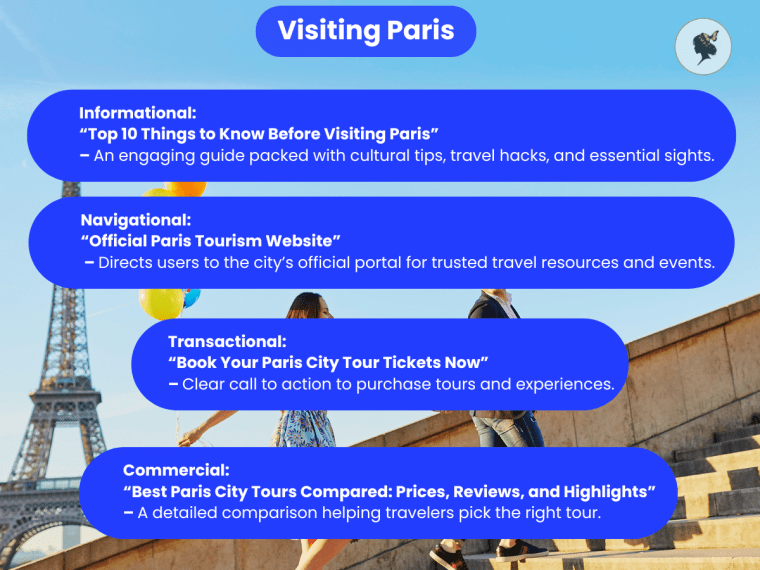
- Informational: “Top 10 Things to Know Before Visiting Paris” – An engaging guide packed with cultural tips, travel hacks, and essential sights.
- Navigational: “Official Paris Tourism Website” – Directs users to the city’s official portal for trusted travel resources and events.
- Transactional: “Book Your Paris City Tour Tickets Now” – Clear call to action to purchase tours and experiences.
- Commercial Investigation: “Best Paris City Tours Compared: Prices, Reviews, and Highlights” – A detailed comparison helping travelers pick the right tour.
Exploring Bali

- Informational: “Ultimate Guide to Exploring Bali: Attractions, Culture, and Tips” – Comprehensive information on must-see spots and travel advice. (23)
- Navigational: “Official Bali Tourism Board Website” – The authoritative source for Bali travel details and updates.
- Transactional: “Book Bali Adventure Tours and Activities Online” – Enables easy booking of popular excursions.
- Commercial Investigation: “Best Bali Adventure Tours Compared: Prices, Reviews & Highlights” – A thorough comparison to help travelers decide.
Travel Insurance for Europe
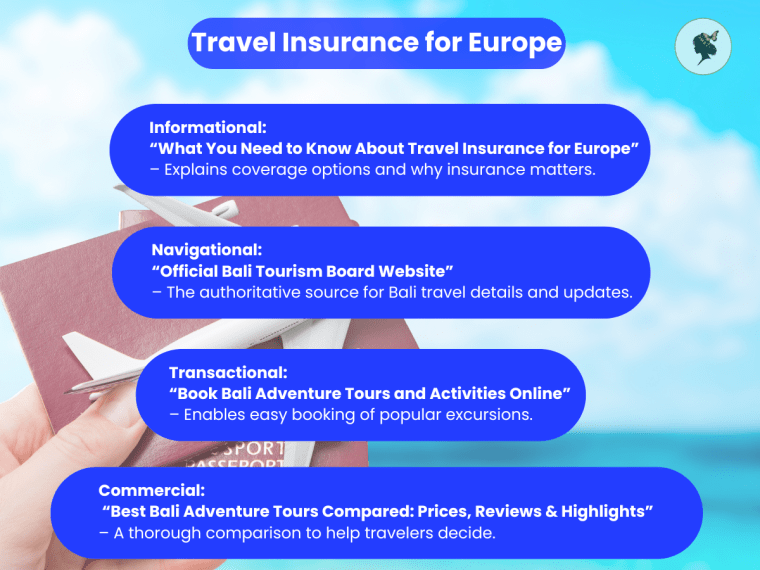
- Informational: “What You Need to Know About Travel Insurance for Europe” – Explains coverage options and why insurance matters.
- Navigational: “Official Travel Insurance Provider Portal” – Direct access to the provider’s website.
- Transactional: “Buy Travel Insurance for Europe Trips Today” – Encourages purchase with straightforward messaging.
- Commercial Investigation: “Top Travel Insurance Plans for Europe: Reviews and Comparison” – Offers an unbiased overview of options.
Packing Tips for a Caribbean Cruise

- Informational: “Essential Packing Tips for Your Caribbean Cruise” – Helps travelers prepare for weather, excursions, and onboard needs.
- Navigational: “Official Cruise Line Packing Checklist Page” – Provides a trusted packing list on the cruise line’s site.
- Transactional: “Shop Cruise Travel Essentials and Packing Gear” – Links to products suited for cruise travel.
- Commercial Investigation: “Best Travel Bags and Gear for Caribbean Cruises: Buyer’s Guide” – Reviews and recommends gear options.
Conclusion
Mastering search intent is a game-changer for travel marketers aiming to connect with their audience at every stage of the buyer’s journey. By understanding the unique needs behind informational, navigational, transactional, and commercial investigation queries, you can craft tailored content that resonates deeply and drives meaningful engagement.
Whether you’re educating travelers with rich guides, guiding them to your branded platforms, facilitating seamless bookings, or helping them compare options before deciding, aligning your content strategy with search intent maximizes both traffic and conversions. Additionally, repurposing content across these intent types not only broadens your reach but also ensures you meet travelers wherever they are in their planning process. In a competitive travel market, a nuanced approach to search intent isn’t just smart—it’s essential for sustained growth and loyal customer relationships.
Contact us today if you’re ready to sail to SEO success!
Discover more from Wander Women Strategies
Subscribe to get the latest posts sent to your email.

17 thoughts on “Mastering Search Intent in the Travel Industry: A Comprehensive Guide”
Comments are closed.