
▶ Table of Contents
Introduction
In the competitive landscape of the travel industry, staying ahead of the SEO curve is not just a strategy; it’s a necessity. Whether you’re a boutique tour operator or a global booking platform, discovering high-value keywords is foundational to achieving strong organic search visibility. This blog will walk you through the process of Initial Keyword Discovery and why it matters for travel businesses.
Why Initial Keyword Discovery Matters
Before creating content or optimizing existing pages, it’s critical to understand what your audience is searching for. Keyword discovery enables you to:
- Identify what drives traffic to your competitors.
- Understand search intent.
- Focus on keywords with commercial value.
- Build a robust SEO strategy rooted in data.
This process is particularly relevant for travel companies, where customer journeys vary from research to booking.
Initial Keyword Discovery
Step 1: Define Business Goals and Target Audience
Start by clarifying your niche within the travel sector:
- Adventure travel?
- Luxury escapes?
- Budget backpackers?
- Family holidays?
Understanding this helps narrow your keyword research to queries with high intent and relevance.

Step 2: Use Tools to Discover Data
Semrush
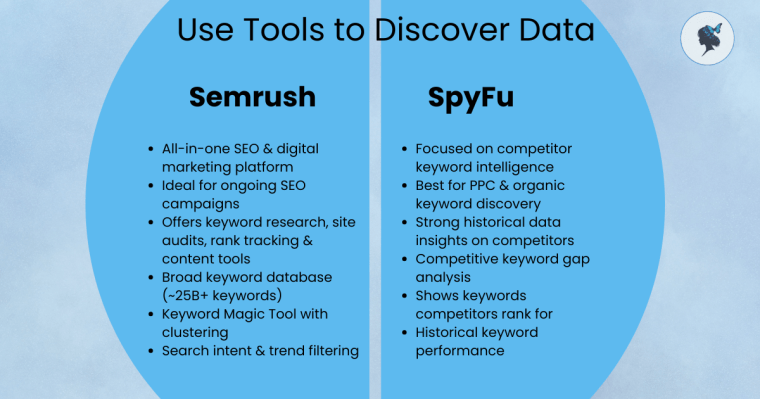
Understanding and leveraging keyword data is crucial for travel companies aiming to enhance their online visibility and attract more organic traffic. Tools like Semrush provide comprehensive insights into keyword rankings, organic search traffic, and SERP features, enabling businesses to make informed decisions.
Semrush’s Organic Research tool allows travel companies to identify the total number of keywords their website ranks for in Google’s top 100 results. This metric offers a snapshot of the site’s organic search visibility. For instance, a travel website might discover it ranks for over 50,000 keywords, indicating a broad reach across various search queries. Understanding this breadth helps in assessing the site’s authority and identifying areas for content expansion or optimization. By analyzing which keywords are driving traffic, companies can tailor their content strategies to focus on high-performing topics and fill gaps where potential customers are searching.
To learn how to do this, read Semrush’s Manual: Organic Research Positions Report
Monitoring monthly organic traffic provides insights into the effectiveness of SEO efforts and content performance. Semrush estimates the number of visitors arriving at a site through organic search, allowing travel companies to track trends over time. For example, a spike in traffic during a particular month could correlate with seasonal travel interests or successful marketing campaigns. Conversely, a decline might signal the need to update content or address technical SEO issues. Regularly reviewing this data helps businesses stay agile, adapting their strategies to maintain and grow their online presence.
SERP features, such as featured snippets, image packs, and local packs, enhance the visibility of search results beyond traditional listings. Semrush enables travel companies to identify which SERP features their site appears in and how these features impact traffic. Appearing in a featured snippet, for instance, can significantly increase click-through rates by positioning the content at the top of the search results. A study analyzing over 67,000 keywords found that SERP features can significantly influence click-through rates, either enhancing or diminishing them, depending on the feature type and placement. By optimizing content to target specific SERP features, travel companies can improve their chances of capturing user attention and driving more traffic to their sites.
SpyFU
SpyFu is a powerful tool that enables travel companies to identify the keywords driving the most organic traffic to their websites. By analyzing metrics such as keyword rank, search volume, estimated organic traffic, and competition level, businesses can gain valuable insights into their SEO performance. This information helps in understanding which search terms are most effective in attracting potential travelers, allowing for more targeted and efficient marketing strategies.
For travel companies, this data is crucial in a highly competitive digital landscape. Knowing which keywords are performing well allows businesses to optimize their content, focus on high-performing areas, and identify opportunities for growth. For instance, if a particular destination or travel package is attracting significant traffic through specific keywords, companies can create more content around those topics to capitalize on the interest. This targeted approach not only improves search engine rankings but also enhances user engagement and conversion rates.
The importance of keyword research is underscored by industry statistics. According to a study by BrightEdge, 53% of all website traffic comes from organic search, highlighting the critical role of SEO in online visibility. Furthermore, 75% of users never scroll past the first page of search results, emphasizing the need for travel companies to rank highly for relevant keywords. By leveraging tools like SpyFu to analyze and refine their keyword strategies, travel businesses can improve their online presence, attract more potential customers, and ultimately drive bookings and revenue.
Step 3: Discover Current Ranking Keywords
Identifying and leveraging their current top-ranking keywords is essential for travel companies aiming to enhance their online visibility and attract potential travelers. By focusing on high-performing keywords, businesses can tailor their content strategies to meet user intent, improve search engine rankings, and drive organic traffic.
By creating content around these keyword topics—such as blog posts, detailed destination guides, or time-sensitive promotional offers—travel companies can effectively target specific search intents and address the diverse needs of their audience. For example, a blog titled “Top 10 Affordable Beach Vacations for 2025” not only captures search traffic for that exact phrase but also speaks directly to budget-conscious travelers actively planning their trips. Similarly, publishing a comprehensive guide on “Family-Friendly Resorts in the Caribbean” helps position the brand as an authority and resource for family travel, increasing dwell time and user engagement. Promotional content optimized for terms like “Luxury Safari Tours 2025 Deals” can attract high-intent users ready to book. This type of content, when mapped to user queries and supported by keyword research tools, increases the chances of appearing in SERP features like featured snippets or “People Also Ask” sections, further boosting visibility and click-through rates.
The importance of targeting high-ranking keywords is underscored by SEO statistics. According to Backlinko, the top five organic search results on Google account for 67.6% of all clicks. This highlights the critical need for travel businesses to secure top positions in search engine results pages (SERPs) to maximize visibility and traffic. By consistently monitoring keyword performance and adjusting content strategies accordingly, travel companies can maintain a competitive edge in the digital marketplace.
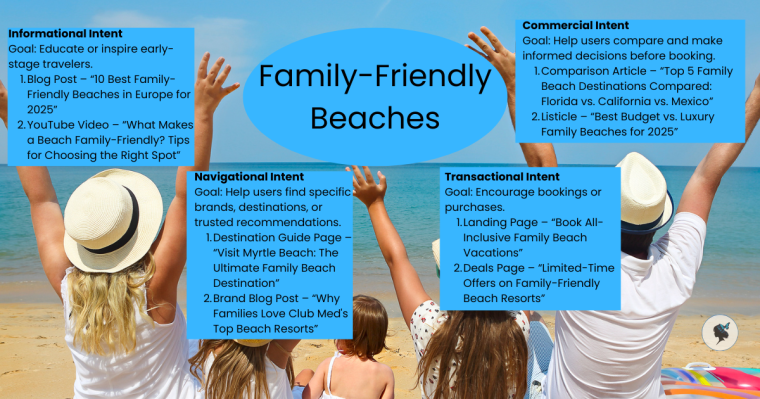
Wander Women Hot Tip: Filter and group keywords by intent: informational, transactional, commercial and navigational.
- Informational content targets users in the research phase—such as “How to travel solo safely in 2025.”
- Navigational content helps users find a specific brand or service, such as “XYZ Travel’s Europe Tours.”
- Transactional content is geared toward users ready to make a booking, like “Book luxury safari tours in Kenya.”
- Commercial intent sits between informational and transactional—these users are considering their options but haven’t made a decision yet. Content like “Best travel insurance for digital nomads” or “Top-rated tour companies for Costa Rica” caters to this group.
For example, you might be ranking for “family friendly beaches”. Here are some content ideas:
Step 4: Discover Rising Keywords
Identifying and capitalizing on rising keywords is crucial for travel companies aiming to stay ahead in the dynamic digital landscape. Emerging search terms reflect evolving traveler interests and behaviors, offering opportunities to tailor content strategies accordingly. By focusing on these trends, businesses can enhance their online visibility, attract targeted traffic, and ultimately drive bookings.
For travel companies, these rising keywords offer a roadmap to align content strategies with current traveler interests. By creating targeted content—such as blog posts, destination guides, and promotional offers—centered around these terms, businesses can improve their search engine rankings and attract a more engaged audience. For instance, a blog post titled “Top 10 Solo Travel Destinations for 2025” can cater to the increasing number of individuals seeking solo adventures, providing valuable information and positioning the company as a trusted resource.

The significance of adapting to these trends is underscored by recent statistics. According to a report by Pinterest, interest in “quiet life travel” has surged, reflecting a broader desire for serene and less crowded destinations. Additionally, the concept of “destination dupes” has gained traction on platforms like TikTok, where travelers share alternatives to popular destinations, influencing travel choices and search behaviors. By staying attuned to these emerging trends and incorporating relevant keywords into their content, travel companies can enhance their online presence, meet evolving traveler needs, and drive sustained growth.
Step 5: Optimize Content
Optimizing existing content based on keyword research is one of the most effective ways for travel companies to increase visibility, traffic, and conversions. Once you’ve identified your top-performing content, map that content against both current and rising keywords.
For instance, if you already have a blog post titled “Top 10 Beaches in Thailand” ranking for “Thailand beach vacations,” and you’ve discovered that “affordable beach vacations” is a rising keyword, you can enhance the post by incorporating affordability tips, travel hacks, or budget-friendly resort recommendations. Updating the title and meta description to include these keywords can also improve click-through rates in the SERPs.
Next, focus on keyword placement within the content itself. Incorporate both high-ranking and trending keywords naturally in the introduction, headers (H2, H3), image alt text, and conclusion. For example, if “eco-friendly travel packages” is trending, and your company offers tours in Costa Rica, update your related page to highlight sustainable features such as local partnerships, carbon offsetting, and green accommodations. Use the keyword in section headers like “Eco-Friendly Tour Options in Costa Rica” and in internal links that guide users to booking or more detailed information. This not only enhances SEO but also aligns your content with users’ current search intent.
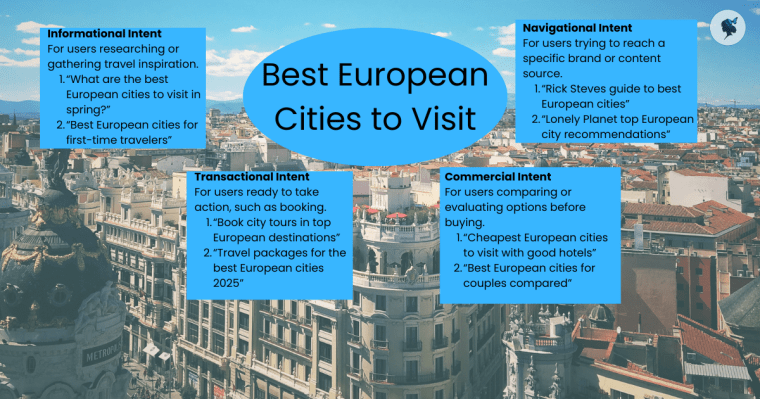
Don’t overlook the importance of content freshness. Search engines prioritize content that’s both relevant and current. Review older content and update travel dates, prices, visa information, and seasonal recommendations. Let’s say you published an article in 2022 on “Best European Cities to Visit.” With 2025 here and “solo travel destinations 2025” trending, revise the article to include sections for solo travelers, add current travel safety tips, and include new keywords like “solo travel-friendly” or “hidden gems for solo adventurers.”
These updates help retain rankings, regain traffic lost to competitors, and serve new audience interests.
Step 6: Create Content
Creating new content based on keyword research is a proactive way for travel companies to capitalize on current search trends and meet emerging customer demands. Once you’ve identified high-opportunity keywords—those with solid search volume, low to medium competition, and relevance to your audience, you can start organizing your content based around these keyword ideas. Building new content around these topics can help you rank early before they become saturated.
When planning new content, segment it by user intent: informational, navigational, transactional, and commercial.
Including all four types ensures you cover the full customer journey, from awareness to decision-making. This intent-based approach not only boosts visibility in search engines but also improves engagement by delivering the right message at the right stage of the buyer’s journey. For example, if “digital nomad visa countries 2025” is trending, you might create an informational blog titled “What is a Digital Nomad Visa?” followed by a commercial guide comparing the top five countries offering them, and finally, a transactional landing page for booking travel packages to those destinations. This layered content structure encourages return visits and nurtures users toward conversion.
Format also matters. Consider content types that match the format most likely to earn clicks in your niche. Listicles, itineraries, travel guides, and comparison posts perform well in the travel industry. A well-structured article titled “Top 10 Quiet Life Travel Destinations for Mindful Escapes” can include sub-sections on wellness activities, remote locations, and accommodation tips—each aligned with keyword insights. Embedding rich media like photos, videos, and interactive maps further enhances engagement and dwell time, both of which contribute positively to SEO performance.

Check out our post: 5 content types for travel websites.
Lastly, make use of SERP features and structured data. Tools like Semrush and SpyFu can tell you if your target keywords commonly trigger “People Also Ask” boxes, featured snippets, or image packs. Incorporate relevant questions as H2 or H3 subheadings in your new content to increase the chance of being selected for those features. For example, if “eco-friendly travel packages” often appears with FAQs, include sections like “What makes a travel package eco-friendly?” or “Are sustainable trips more expensive?” Optimizing for SERP features can greatly increase your click-through rate—even if you aren’t the number one result. In essence, by creating content based on keyword trends, travel companies can capture attention, build trust, and grow traffic in a targeted, measurable way.
Wanderlust Keywords
Now that you understand the importance of initial keyword discovery, it’s time to take action!
The Wanderlust Keywords package is designed to help travel companies like yours discover the most valuable, relevant, and high-converting keywords for your business.
By partnering with us, you’ll receive:
- Initial Keyword Discovery: Top 5 current keywords, top 5 rising keywords, SERPs features, a free keyword checklist & more.
- Long-Tail Keyword Identification: 20+ long-tail keywords, divided into search intent
- Local Keyword Focus: 10-20 local keywords related to your niche, with metrics including search volume and keyword difficulty.
- Keyword Prioritization and Strategy: current keywords, rising keywords, long-tail keywords, and local keywords are divided into search intent, and ideas for new content is provided.
Don’t let your travel business get lost in the noise of the online world. Get started with Wanderlust Keywords today and unlock the power of SEO to drive more qualified leads and increase your bookings!
Contact us to learn more about how we can help you embark on your journey to SEO success with the Wanderlust Keywords package.
Discover more from Wander Women Strategies
Subscribe to get the latest posts sent to your email.
