
▶Table of Contents
Introduction
In the fast-paced digital world, travel websites must capture visitor attention immediately and guide them effortlessly towards booking or inquiry. One of the most powerful tools to do this is a clear, compelling Call to Action (CTA). CTAs serve as signposts, encouraging visitors to take the next step—whether it’s booking a trip, signing up for a newsletter, or requesting a quote.
But travel is diverse, and so are traveler needs. From families to solo adventurers, luxury seekers to budget travelers, the way you design and place CTAs can dramatically impact conversions. This article breaks down how to tailor CTAs for different travel segments, supported by data-driven insights on what works best.
Family Travel
What Family Travelers Are Looking For
Family travelers seek convenience, safety, and experiences that cater to all ages. Their priorities often include kid-friendly accommodations, flexible cancellation policies, and activities that entertain children and adults alike. Parents want assurance that their trip will be stress-free and fun for the entire family, so clear communication of family-oriented amenities and packages is critical.
How to Use CTAs with Family Travelers
CTAs for family travel should emphasize simplicity and reassurance. Examples include:
- “Book Your Family Adventure Now”
- “See Our Kid-Friendly Packages”
- “Check Availability for Family Suites”
Placing CTAs near information about family perks—like free breakfasts for kids, playground access, or babysitting services—helps build trust. Using bright, inviting buttons and positioning them right after engaging family-focused content increases click-through rates.
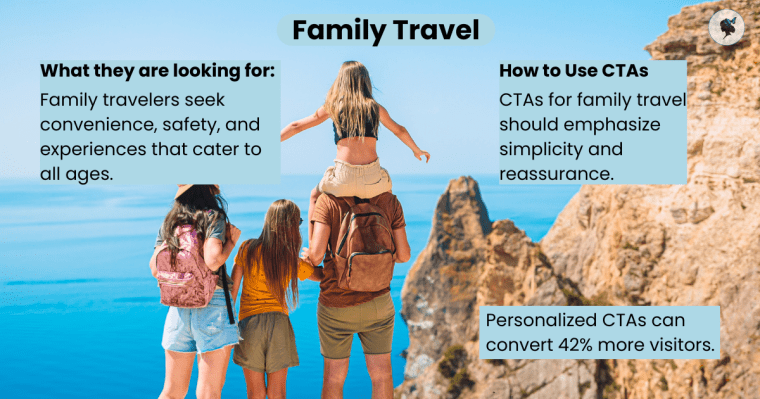
According to Sixth City Marketing, personalized CTAs can convert 42% more visitors compared to generic ones. By addressing the specific needs of traveling families, these personalized messages can create a more engaging experience and significantly boost booking conversions.
Solo Travel
What Solo Travelers Are Looking For
Solo travelers often seek independence, self-discovery, and unique experiences. Safety is a top concern, but so is the opportunity to meet new people or explore destinations at their own pace. Many look for flexible itineraries, affordable options, and solo-friendly accommodations such as shared dorms, boutique hotels, or social hostels.
How to Use CTAs with Solo Travelers
CTAs aimed at solo travelers should emphasize empowerment and community. Examples include:
- “Plan Your Solo Journey Today”
- “Discover Solo-Friendly Stays”
- “Join Our Solo Travel Community”
Incorporating CTAs within stories or testimonials from solo travelers encourages action. Highlighting special offers or group meet-ups designed for solo guests can also boost conversion. Buttons with dynamic language like “Start Your Adventure” invite exploration and personal growth.
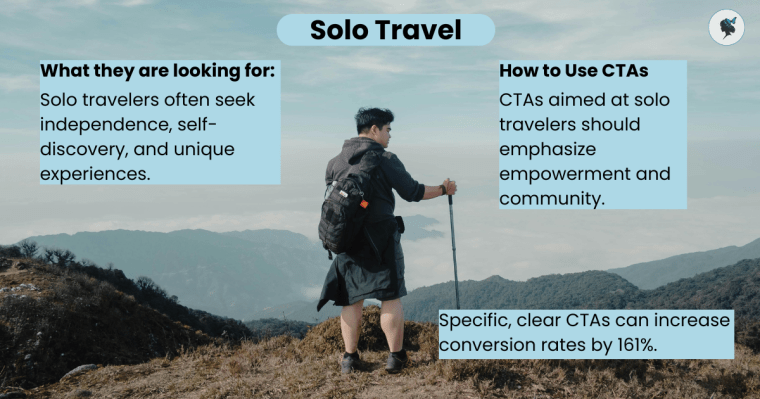
Wisernotify’s compilation of CTA statistics note that using specific, clear CTAs can increase conversion rates by 161%. Applying this to solo travel, CTAs that directly address solo travelers’ needs can be more effective.
Eco Travel
What Eco Travelers Are Looking For
Eco travelers prioritize sustainability, environmental responsibility, and authentic local experiences. They seek accommodations that minimize their ecological footprint, such as eco-lodges or certified green hotels. Additionally, they want transparency about a company’s green initiatives, including waste reduction, renewable energy use, and community involvement.
How to Use CTAs with Eco Travelers
CTAs for eco travelers should highlight sustainability and impact. Examples include:
- “Explore Our Eco-Friendly Tours”
- “Book a Green Stay Today”
- “Join Our Sustainable Travel Movement”
Position CTAs near content describing your environmental practices or certifications to reinforce credibility. Words like “Join,” “Support,” and “Discover” create a sense of community and purpose. Adding badges or icons to CTAs can visually emphasize your commitment to sustainability.
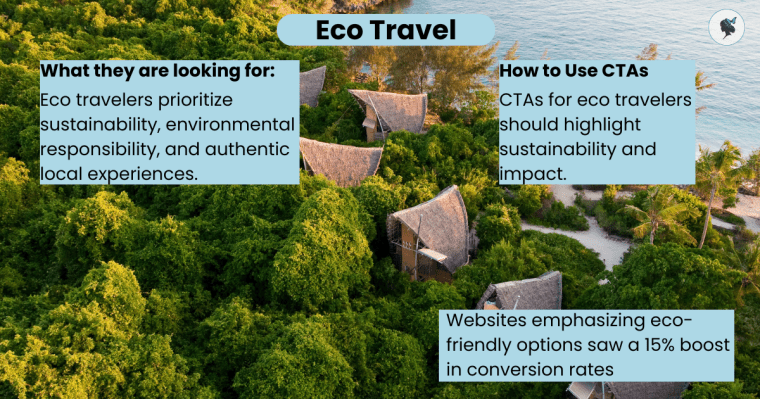
A survey by Booking.com found that 70% of global travelers want to make more sustainable choices and that websites emphasizing eco-friendly options saw a 15% boost in conversion rates after updating CTAs to focus on sustainability.
Couple Travel
What Couples Are Looking For
Couple travelers often seek romantic, intimate experiences that foster connection and relaxation. They look for cozy accommodations, private dining options, and activities that allow for quality time together—like spa treatments, sunset cruises, or scenic dinners. Personal touches and exclusive offers resonate deeply with this group.
How to Use CTAs with Couples
CTAs targeting couples should evoke romance and exclusivity. Examples include:
- “Book Your Romantic Getaway”
- “Discover Couples’ Retreats”
- “Reserve Your Private Escape”
Place CTAs near imagery and content that highlight romantic settings or special couple’s packages. Using emotionally evocative language—words like “Escape,” “Indulge,” and “Unwind”—helps create desire. Limited-time offers with countdown timers can also prompt immediate bookings.
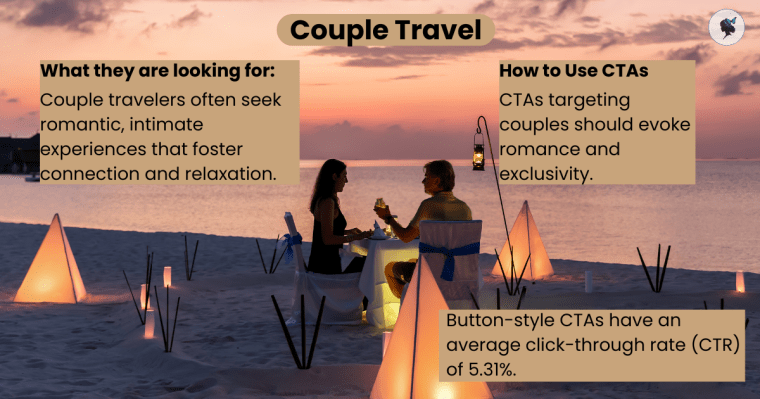
An article by Vye Agency suggests that button-style CTAs consistently perform the best, with an average click-through rate (CTR) of 5.31%. For travel websites targeting couples, using clear, visually distinct button CTAs—such as “Plan Your Romantic Getaway” or “Book Your Couple’s Escape Now”—can significantly boost engagement.
Small Group Travel
What Small Group Travelers Are Looking For
Travelers in small groups—whether friends or family—value shared experiences combined with flexibility. They look for accommodations that can comfortably host everyone, group discounts, and activities that promote bonding. Clear information about group-friendly amenities and customization options is essential for their planning.
How to Use CTAs with Small Group Travelers
CTAs for small groups should emphasize collaboration and personalization. Examples include:
- “Plan Your Group Adventure”
- “Get Group Discounts Now”
- “Customize Your Group Trip”
Place CTAs alongside content describing group-friendly lodging or tours that allow personalization. Using action verbs like “Plan,” “Save,” and “Join” motivates groups to take the next step. Offering quick quote requests or instant booking options can simplify the process and reduce friction.
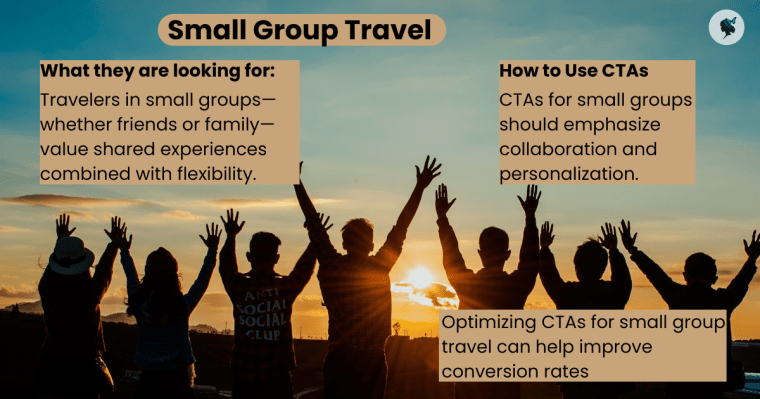
The median conversion rate for travel and hospitality landing pages is 4.8%, which is roughly 37% lower than the 6.6% baseline for all industries. Optimizing CTAs for small group travel can help improve these conversion rates by making the booking process more intuitive and appealing.
Large Group Travel
What Large Group Travelers Are Looking For
Large group travelers—think corporate retreats, reunions, or tour groups—seek streamlined booking processes, bulk discounts, and venues that can accommodate everyone comfortably. They also value clear communication about logistics, amenities, and group-specific policies to ensure a smooth experience for all attendees.
How to Use CTAs with Large Group Travelers
CTAs for large groups should emphasize simplicity and support. Examples include:
- “Request a Group Booking Quote”
- “Book Your Corporate Retreat”
- “Plan Your Large Group Event”
Place CTAs near detailed descriptions of group packages, event spaces, and amenities like conference rooms or group dining options. Offering direct contact options or quick inquiry forms helps large groups get personalized assistance quickly. Use reassuring language like “Easy,” “Hassle-Free,” and “Tailored” to reduce booking anxiety.
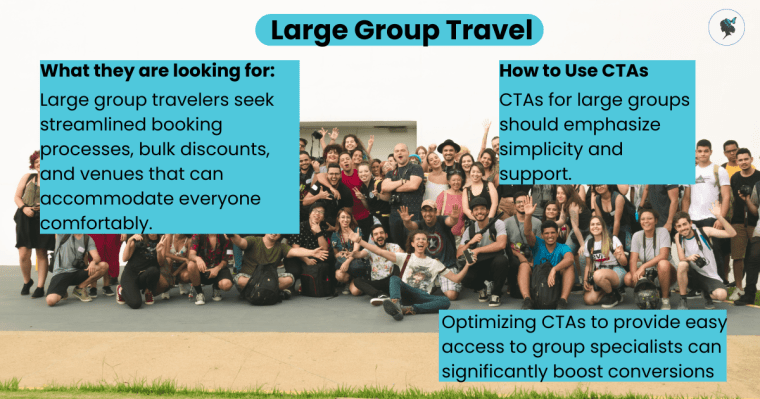
Cvent’s 2023 Travel Manager Report highlights the importance of tailored marketing strategies in enhancing engagement and conversion rates. For instance, the report emphasizes that providing easy access to group specialists can significantly boost conversions, aligning with the notion that personalized CTAs can drive higher engagement.
Luxury Travel
What Luxury Travelers Are Looking For
Luxury travelers seek exclusivity, personalized service, and high-end amenities. They prioritize privacy, unique experiences, and flawless customer service. Whether it’s a private villa, gourmet dining, or bespoke excursions, these travelers expect a seamless, premium experience from start to finish.
How to Use CTAs with Luxury Travelers
CTAs for luxury travel should convey exclusivity and sophistication. Examples include:
- “Reserve Your Luxury Escape”
- “Experience VIP Treatment”
- “Book Your Private Villa Now”
Position CTAs near content highlighting upscale features, personalized concierge services, and testimonials from high-profile guests. Elegant design with understated yet clear buttons—using words like “Reserve,” “Indulge,” and “Experience”—helps convey the premium nature of the offer.
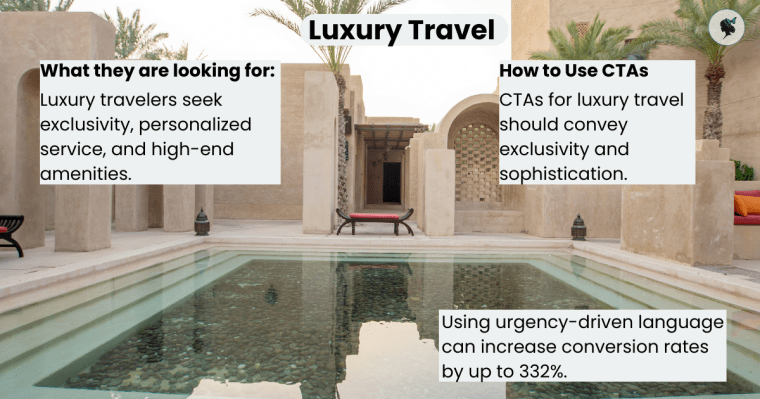
Research indicates that using urgency-driven language like “Limited Time Offer” or “Ending Soon” can increase conversion rates by up to 332%. This heightened urgency taps into the psychological principle of “fear of missing out” (FOMO), compelling users to act swiftly to avoid missing exclusive opportunities. In the context of luxury travel, where exclusivity and time-sensitive offers are highly valued, integrating such urgency into CTAs can effectively drive immediate bookings.
Budget Travel
What Budget Travelers Are Looking For
Budget travelers prioritize affordability without sacrificing quality. They seek deals, discounts, and transparent pricing. Many look for budget-friendly accommodations, economical transport options, and value-packed experiences that fit their limited spending plans while still allowing meaningful travel.
How to Use CTAs with Budget Travelers
CTAs aimed at budget travelers should emphasize savings and value. Examples include:
- “Find Best Budget Deals”
- “Save on Your Next Trip”
- “Explore Affordable Options”
Placing CTAs near pricing breakdowns, special offers, or discount codes captures their attention. Use action-oriented language like “Save,” “Book Now,” and “Grab Your Deal” to encourage immediate response. Highlighting limited-time offers or last-minute deals adds urgency.
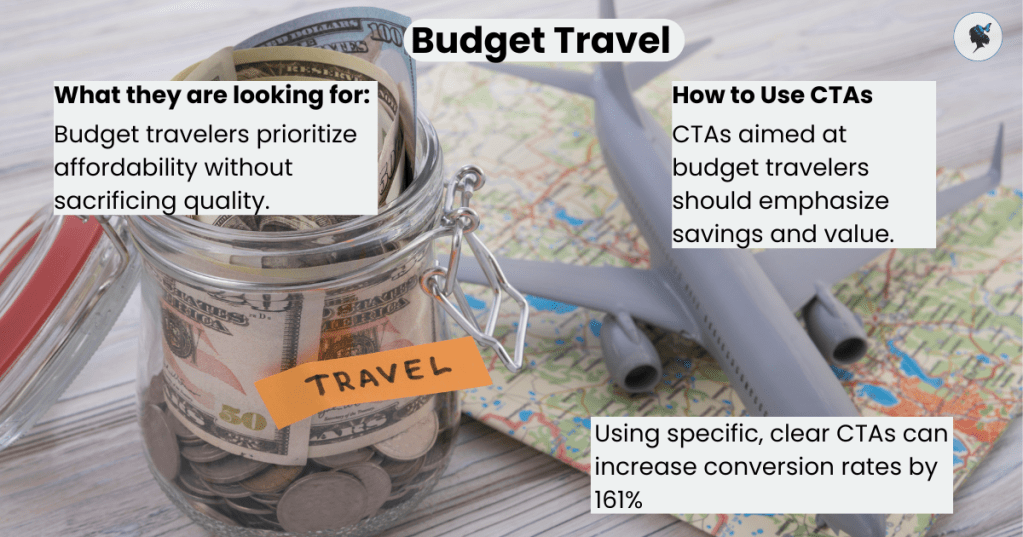
Remote Marketers highlight that using a specific, clear CTA like “Save”, “Exclusive offer”, and “Discount” can increase conversion rates by 161%, with these CTAs performing 202% better than generic ones.
Honeymoon Travel
What Honeymoon Travelers Are Looking For
Honeymoon travelers seek romantic, unforgettable experiences that celebrate their new life together. They prioritize privacy, luxury, and personalized touches like couples’ spa treatments, private dinners, and unique excursions. Their ideal trip combines relaxation with special moments tailored to their relationship.
How to Use CTAs with Honeymoon Travelers
CTAs targeting honeymooners should evoke romance and exclusivity. Examples include:
- “Plan Your Dream Honeymoon”
- “Discover Romantic Getaways”
- “Book Your Private Escape”
Place CTAs alongside emotional storytelling, beautiful imagery, and detailed descriptions of honeymoon packages. Using heartfelt and inviting language like “Celebrate,” “Escape,” and “Indulge” draws in couples looking for a meaningful experience.
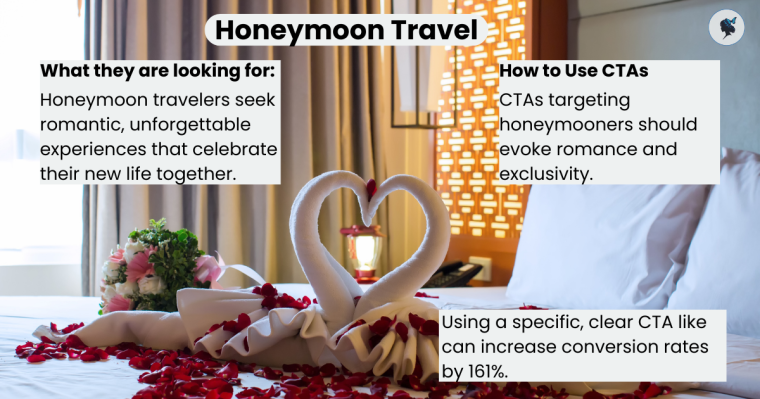
Placing CTA buttons at the end of product pages can increase conversions by 70% is supported by research from WiserNotify. Their 2025 report indicates that using a specific, clear CTA can also increase conversion rates by 161%.
Conclusion
Clear and strategically crafted Calls to Action (CTAs) are the cornerstone of any successful travel website. Understanding the unique needs and desires of different traveler segments—from families and solo adventurers to luxury seekers and honeymooners—allows you to design CTAs that resonate deeply and drive meaningful engagement.
By tailoring your messaging and placement, you not only guide visitors smoothly through the booking journey but also build trust and excitement around the experiences you offer. Incorporating data-backed strategies, such as emphasizing convenience for families or exclusivity for luxury travelers, helps maximize conversions and boosts overall business performance.
In the competitive travel industry, where every click counts, clear CTAs ensure your website stands out and turns browsers into loyal customers. Prioritize clarity, relevance, and emotional connection in your CTAs—and watch your travel business thrive.
Contact us today to see how we can help your travel website soar!
Discover more from Wander Women Strategies
Subscribe to get the latest posts sent to your email.

13 thoughts on “The Importance of Clear CTAs for Travel Websites and How to Use Them”
Comments are closed.