

▶ Table of Contents
In the competitive world of online travel marketing, ensuring your website is optimized for both search engines and users is essential. When it comes to on-page SEO, header tags—H1, H2, and H3—play a pivotal role in structuring your content and improving both visibility and readability.
For travel companies, optimizing these header tags is crucial not only to enhance SEO but also to provide a seamless user experience. A well-structured website that incorporates effective header tags makes it easier for potential travelers to navigate your content and find exactly what they’re looking for.
As part of our Wander-Ready Web package, we help you master header tag optimization to improve your website’s SEO performance and create a user-friendly structure. Let’s dive into what header tag optimization is and why it matters for your travel company’s website.
What is Header Tag Optimization (H1, H2, H3)?
Header tags, also known as HTML headings, are used to define the headings and subheadings in the content of your website. These tags help organize content, improve readability, and convey the hierarchy of information to both users and search engines.
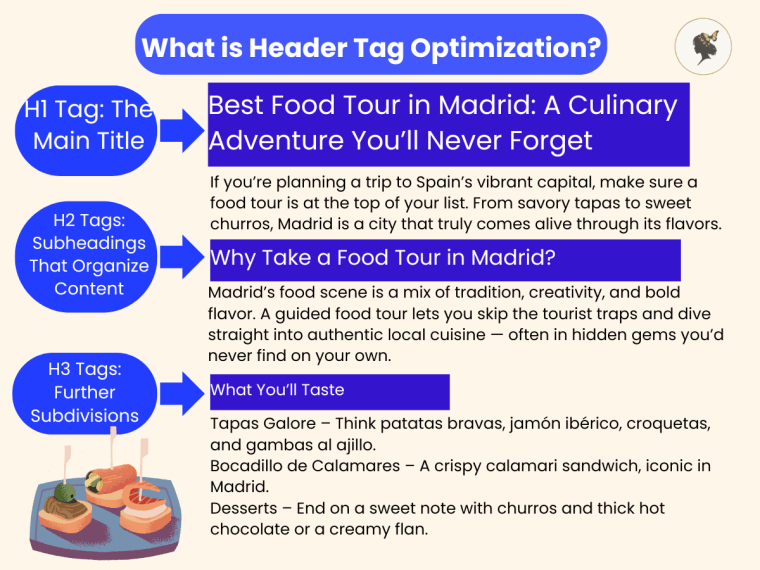
H1 Tag: The Main Title
The H1 tag is typically the most important header tag and should be used to represent the primary heading of your page. It often describes the main subject of the page and appears prominently at the top of the content. There should only be one H1 tag per page to maintain clarity and prevent confusion for search engines.
For example, for a page offering vacation packages to Italy, an optimized H1 tag might be: Luxury Italy Vacation Packages for Unforgettable Experiences
H2 Tags: Subheadings That Organize Content
The H2 tags are used to break down your content into sections. These subheadings should be relevant to the content beneath them and help guide the reader to different sections of your page. You can use multiple H2 tags per page to organize and structure your content.
For example, subheadings like:
Top Destinations for a Luxury Italian Tour
Customizable Itineraries for Your Perfect Italian Getaway
H3 Tags: Further Subdivisions
The H3 tags are used to divide the content under H2 sections into smaller subsections. These are great for breaking down information into digestible chunks. You might have multiple H3 tags under each H2 for even further clarity.
For example, under the H2 “Top Destinations for a Luxury Italian Tour,” you could use H3 tags for specific cities or attractions like:
Florence: The Heart of Renaissance Art
Rome: Ancient History Meets Modern Luxury
How to Optimize Header Tags (H1, H2, H3) for Travel Websites
Header tag optimization is a straightforward but crucial part of on-page SEO. Here’s a step-by-step guide to optimizing these tags for better user experience and improved SEO:
Use a Clear, Descriptive H1 Tag
The H1 tag should accurately represent the main theme or purpose of the page. For travel websites, it should incorporate your primary target keyword (like “luxury Italy tours,” “best tropical vacations,” or “adventure travel in Africa”) while clearly conveying the page’s intent.

- Be descriptive: The H1 tag should explain the topic of the page clearly. It’s the first thing users see, and it gives them an immediate idea of what your page offers.
- Include keywords: Include relevant keywords that reflect the content of the page and what users are likely to search for.
- Limit the length: Keep your H1 tag under 60 characters, as search engines tend to truncate longer titles in the search results.
For example: Book Your Dream European Vacation with Wander Ready Tours
Organize Content with H2 Tags
Once your H1 tag sets the stage for the page, use H2 tags to organize the content into meaningful sections. Each H2 should address a topic or subcategory related to the main theme.
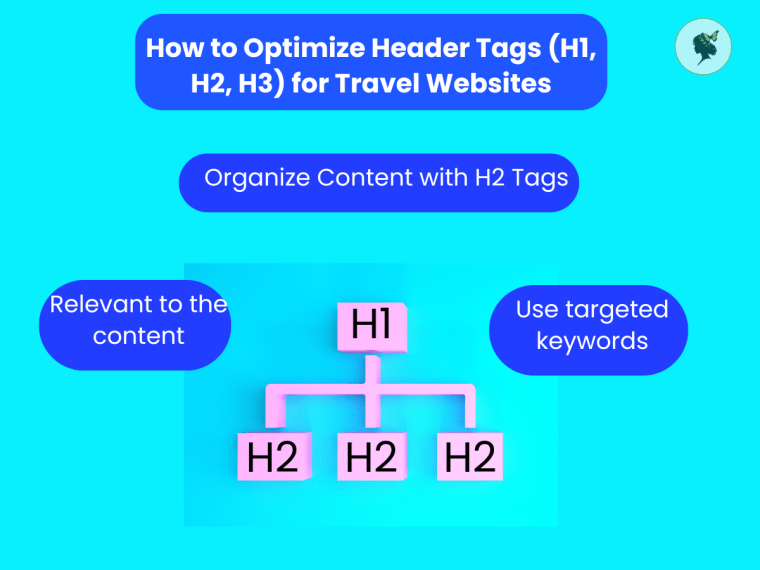
- Relevant to the content: Each H2 tag should reflect the content it introduces, making it easier for readers to find information quickly.
- Use targeted keywords: Incorporate relevant secondary keywords or phrases that users may be searching for, such as “luxury vacations,” “adventure travel,” or “best vacation spots in Europe.”
For example, under the main theme of “European Vacation Packages,” H2 tags could be: Best Vacation Destinations in Europe, or Exclusive Travel Deals for European Tours
Utilize H3 Tags for Further Structure
Use H3 tags to break down the content under H2 headings into smaller, more specific subsections. This ensures that the content is organized logically and is easy to scan. These tags are especially useful when there are multiple ideas within a section that need to be clarified.
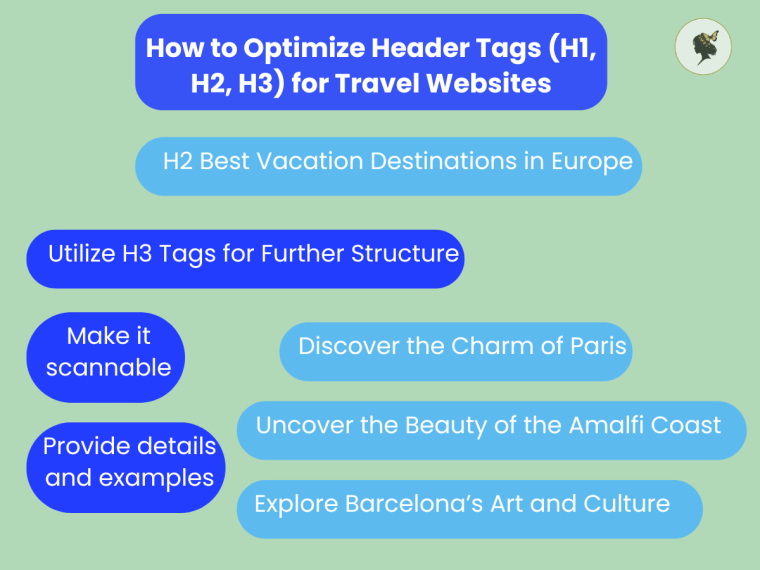
- Make it scannable: When a user scans the page, they should be able to find the exact information they need by reading the H3 subheadings.
- Provide details and examples: H3 tags can highlight individual cities, specific tour packages, or unique features of a travel experience.
For example, under the H2 tag “Best Vacation Destinations in Europe,” you could break it down into H3 tags like:
Discover the Charm of Paris
Uncover the Beauty of the Amalfi Coast
Explore Barcelona’s Art and Culture
Step 4: Maintain a Hierarchical Structure
The key to effective header tag optimization is creating a logical, hierarchical structure. Start with an H1 tag that encapsulates the main topic, followed by H2 tags for major sections, and H3 tags for sub-sections. Avoid skipping header levels (e.g., going straight from H1 to H3), as this can confuse both users and search engines.
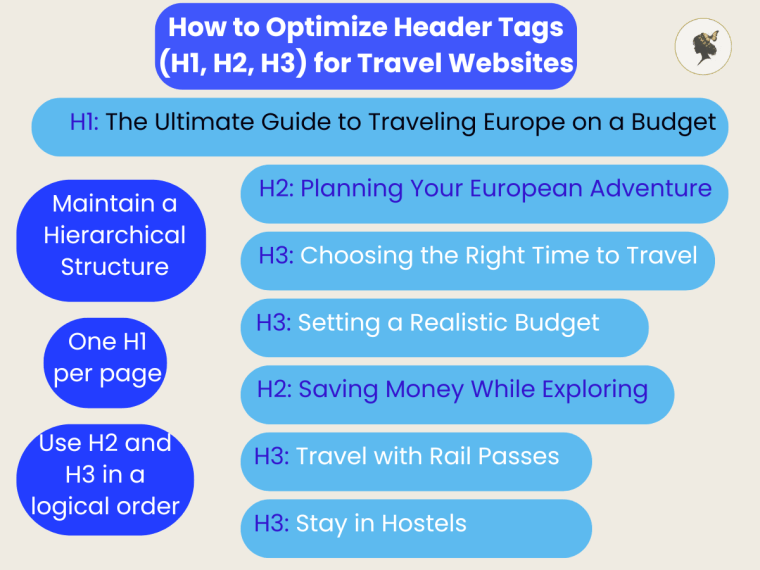
- One H1 per page: There should only be one H1 tag to maintain focus and clarity.
- Use H2 and H3 in a logical order: Don’t jump from H1 to H3 without an H2 in between.
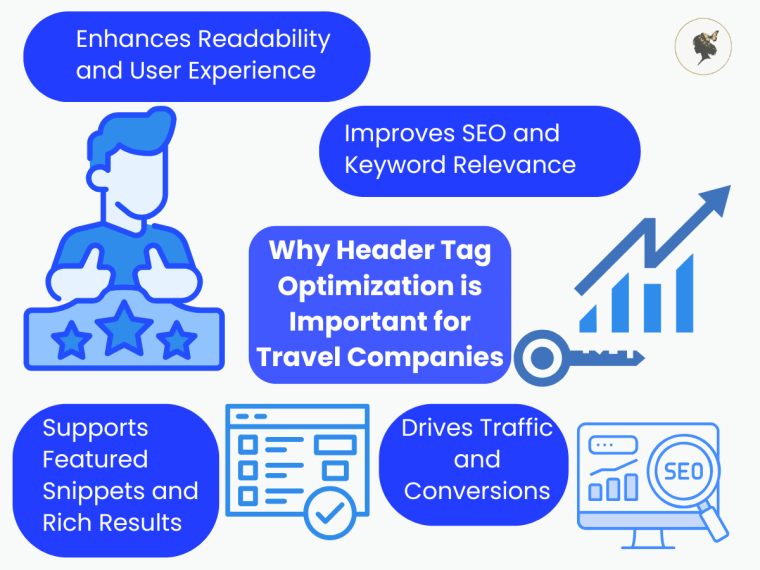
Why Header Tag Optimization is Important for Travel Companies
Properly optimized header tags are critical for both SEO and user experience, especially for travel companies looking to attract tourists and travelers.
Here’s why:
1. Enhances Readability and User Experience
A well-organized website structure helps visitors quickly find the information they’re looking for. By using H1, H2, and H3 tags to structure your content, you create a user-friendly experience that keeps visitors engaged and reduces bounce rates.
2. Improves SEO and Keyword Relevance
Search engines like Google use header tags to understand the structure of a page and its relevance to search queries. Properly optimized H1, H2, and H3 tags can boost your page’s SEO by signaling keyword relevance and content organization. This helps your page rank higher for related search queries, especially in the competitive travel industry.
3. Supports Featured Snippets and Rich Results
In search engine results, properly structured header tags can help your content appear in featured snippets or rich results. Travel companies that use header tags effectively may have a better chance of securing prominent positions on the search results page, which can lead to more visibility and more clicks.
4. Drives Traffic and Conversions
When your website is organized and optimized with appropriate header tags, it makes it easier for potential customers to navigate your services, learn more about your travel packages, and ultimately make bookings. Clear, engaging headings encourage conversions and enhance the overall effectiveness of your content.
Maximize Your Website’s Potential with Wander-Ready Web
Optimizing header tags is just one part of creating a Wander-Ready Web for your travel business. At Wander Women Strategies, we take a comprehensive approach to on-page SEO, including header tag optimization, keyword strategy, and content structuring, to ensure that your website is fully optimized for search engines and visitors alike.
Here’s how Wander-Ready Web can help:
- Keyword Optimization: We conduct keyword research to identify high-traffic, relevant keywords related to your travel services.
- Meta Title & Description Optimization: We provide optimization suggestions for your top 5 pages focusing on best practices.
- Header Tag Optimization: We provide suggestions for optimizing your header tags for the same 5 pages, with expert insights for future strategy to enhance readability and help search engines better understand your travel offerings.
- Image Optimization & Alt Text: We provide tips for image optimization and alt text for 5 images from the same 5 pages, with expert advice for future image strategy.
Ready to optimize your meta title and description for higher rankings and more bookings?
Contact us today to get started and let us help you create compelling meta tags that drive results!
Discover more from Wander Women Strategies
Subscribe to get the latest posts sent to your email.
