
▶ Table of Contents
Introduction
In the competitive world of travel, your website needs to stand out to potential travelers who are searching for the very services you provide. Whether you’re a luxury hotel in Paris, a local tour company in Bali, or a destination-focused travel agency, your SEO strategy is crucial for visibility and success. One of the cornerstones of an effective SEO campaign is keyword prioritization and strategy.
In this article, we will explore the concept of keyword prioritization and how travel companies can build an SEO strategy that attracts more visitors, engages potential clients, and ultimately leads to increased bookings.
What is Keyword Prioritization and Strategy?
At its core, keyword prioritization refers to the process of determining which keywords are the most valuable to your business and then focusing your efforts on ranking for those keywords. Keyword strategy, on the other hand, is a broader approach that involves identifying, grouping, and targeting keywords that align with your business goals. Together, keyword prioritization and keyword strategy form the foundation of an SEO campaign that is both targeted and effective.

Keyword Prioritization
Prioritizing keywords means choosing the right keywords that will deliver the highest return on investment (ROI) in terms of traffic, conversions, and brand visibility. You can’t go after every keyword out there. Instead, you should focus on keywords that:
- Have significant search volume
- Align with user intent
- Are achievable based on your website’s current authority (keyword difficulty)
- Are most relevant to your niche or specific travel services
For example, if you’re a boutique hotel in Venice, you might want to prioritize terms like “luxury hotels near Rialto Bridge” over broad terms like “Venice hotels.” The latter is highly competitive, whereas the former offers a more specific, targeted audience who is looking for exactly what you offer.
Keyword Strategy
Keyword strategy is a comprehensive plan that defines how you will use prioritized keywords throughout your website and content. Your strategy should cover:
- Keyword Research: Finding the right keywords to target based on search volume, intent, and competition.
- Keyword Mapping: Assigning specific keywords to pages of your website (e.g., homepage, blog, landing pages).
- Content Creation: Crafting blog posts, product pages, and other content pieces around these keywords.
- On-Page Optimization: Using the keywords effectively in your meta tags, headings, body content, and URLs.
- Link Building: Getting high-quality backlinks to improve your rankings for the selected keywords.
A solid keyword strategy ensures that your efforts are focused and organized, maximizing the impact of your SEO campaigns.
How to Do Keyword Prioritization and Strategy?
Now that we have a clear understanding of what keyword prioritization and strategy are, let’s dive into how to implement them effectively, especially for travel businesses.
Step 1: Understand Your Audience and Business Goals
Before diving into keyword research, it’s important to understand your target audience and business objectives. As a travel company, your target audience may vary widely depending on the services you offer. Are you targeting solo travelers, family vacationers, adventure seekers, or luxury travelers?

You should also define the goals of your SEO campaign. Are you trying to increase:
- Brand visibility?
- Direct bookings?
- Traffic to your blog or landing pages?
- Engagement with your social media or reviews?
By aligning your SEO strategy with business goals and customer intent, you will be able to identify keywords that are more likely to drive traffic and conversions.
Step 2: Perform Comprehensive Keyword Research
Once you’ve defined your audience and objectives, it’s time to conduct keyword research. This involves using keyword research tools like Google Keyword Planner, Semrush, or Ahrefs to find keywords that are relevant to your business.
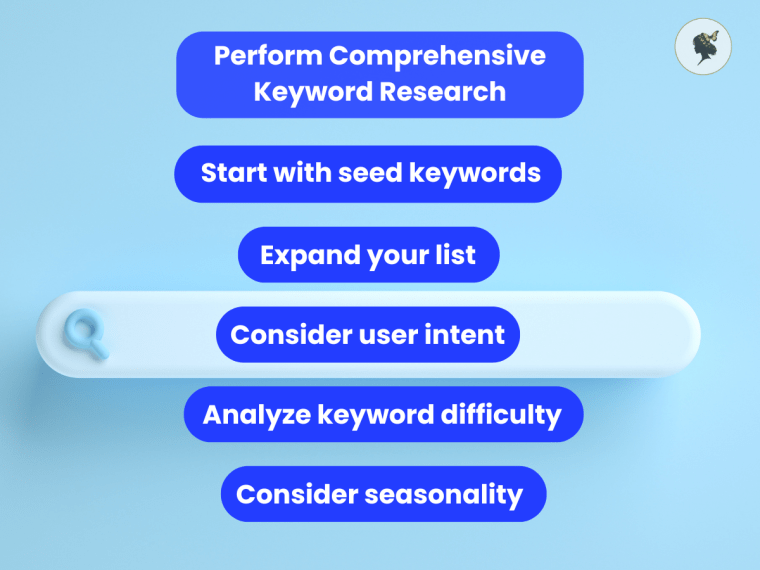
Here’s how to approach it:
- Start with seed keywords: Begin by thinking of broad terms related to your business. For example, “private tours in Rome” or “family vacations in Costa Rica.”
- Expand your list: Use tools to generate variations, long-tail keywords, and related terms. For example, “best private tours in Rome for families” or “Rome city tours with kids.”
- Consider user intent: Look at the search intent behind each keyword. For travel companies, user intent can be categorized into three main types:
- Informational (e.g., “What are the best things to do in Rome?”)
- Navigational (e.g., “Rome private tour company”)
- Transactional (e.g., “Book private tour in Rome”)
- Commercial (e.g., “The best private tours in Rome”)
Prioritize keywords that align with the specific action you want users to take—whether it’s booking a service or researching your offerings. For more about search intent, check out our post: Mastering Search Intent.
- Analyze keyword difficulty and competition: You need to know how competitive a keyword is before deciding to target it. Tools like Semrush or Ahrefs give a difficulty score based on how hard it is to rank for specific terms.
- Consider seasonality: Travel is highly seasonal, so make sure to research and track trends over time to understand which keywords peak during specific seasons. For example, “summer vacation in Paris” may be more relevant during the months leading up to the summer travel season.
Step 3: Organize and Prioritize Keywords
Now that you have a list of potential keywords, the next step is to prioritize them.
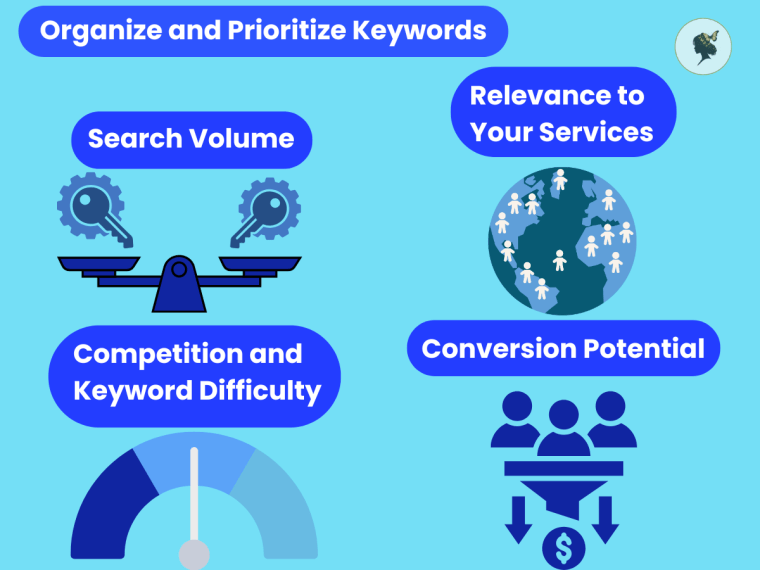
We do that based on the following criteria:
- Search Volume: Higher volume keywords may bring more traffic, but they are also more competitive. Balancing high-volume keywords with long-tail, lower-volume keywords can yield the best results.
- Relevance to Your Services: Choose keywords that reflect the specific services you offer. If you specialize in small group tours, prioritize terms like “small group tours to Italy” over broader terms like “Italy tours.”
- Competition and Keyword Difficulty: Weigh the keyword difficulty against the authority of your site. If you’re just starting out or have a relatively low domain authority, it may be best to prioritize long-tail keywords or keywords with lower competition.
- Conversion Potential: Focus on keywords that have the highest potential for conversion. For example, “luxury beach resorts in the Maldives” has a high conversion potential for someone ready to book their trip.
Step 4: Implement the Strategy Across Your Website
Now that you’ve prioritized your keywords, it’s time to implement your strategy across your site.
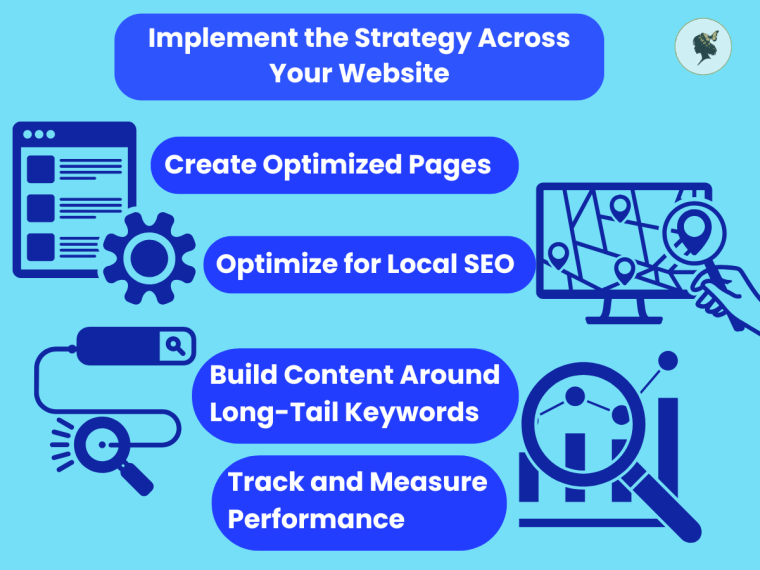
Here’s how to do it:
- Create Optimized Pages: Optimize your homepage, landing pages, and blog posts with your selected keywords. Be sure to include them in title tags, headers, URLs, and meta descriptions. Make sure your content remains engaging and readable to users, rather than just being stuffed with keywords.
- Optimize for Local SEO: For travel companies targeting specific destinations, be sure to incorporate location-based keywords into your content. For example, “family-friendly tours in London” or “best hikes in Colorado.”
- Build Content Around Long-Tail Keywords: Long-tail keywords are less competitive and easier to rank for. Use these keywords in blog posts, FAQ pages, or resource guides. For instance, a blog post titled “10 Best Things to Do in Rome with Kids” could target long-tail phrases like “family activities in Rome.”
- Track and Measure Performance: After implementing your strategy, use tools like Google Analytics and Google Search Console to track your keyword rankings, organic traffic, and conversions. Be prepared to adjust your strategy based on the results.
For more about Long-Tail Keywords, check out: Mastering Long-Tail Keywords.
Why is Keyword Prioritization and Strategy Important for Travel Companies?
For travel companies, keyword prioritization and strategy play a pivotal role in driving qualified traffic and boosting conversions.
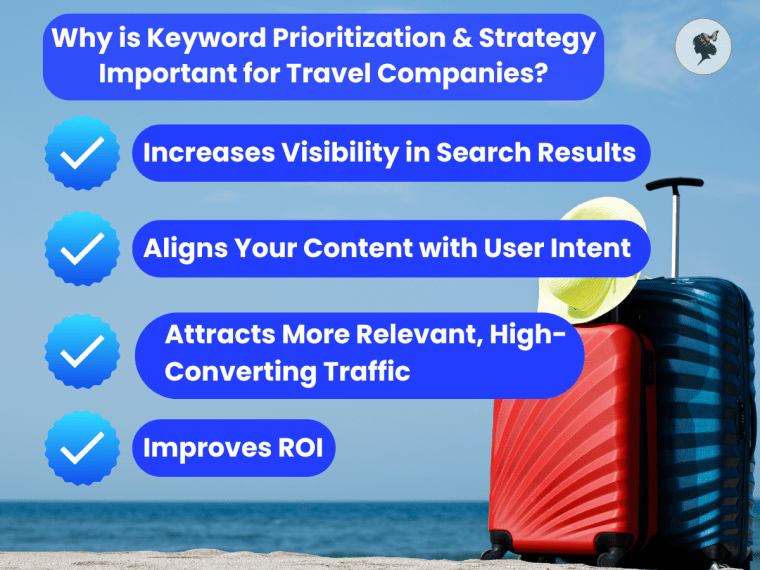
Here are a few reasons why this approach is so important:
1. Increases Visibility in Search Results
Properly prioritized keywords help your business appear at the top of search engine results pages (SERPs), making it easier for potential travelers to find you. When you optimize for the right keywords, you’ll show up in front of customers who are actively looking for what you offer, whether it’s a luxury resort, an adventure tour, or a cultural excursion.
2. Aligns Your Content with User Intent
Travelers use search engines to find information, plan trips, and book services. By prioritizing keywords that align with their search intent, you can craft content that answers their questions and provides valuable information. This increases your chances of driving traffic and earning trust, which can lead to conversions.
3. Attracts More Relevant, High-Converting Traffic
By targeting long-tail keywords and location-specific terms, you can attract traffic that is highly relevant to your business and services. For example, someone searching for “honeymoon packages in Bali” is more likely to convert than someone searching for “vacation packages.” The more targeted your keywords, the higher your conversion rates will be.
4. Improves ROI
Prioritizing the right keywords means you’re focusing your efforts on those that have the best chance of driving real business results. This leads to better return on investment (ROI), as you’re not wasting time or resources going after highly competitive, low-converting keywords.
If you’re ready to start attracting more travelers to your website, don’t wait—contact us today and let us help you craft an SEO strategy that works for your business!
Discover more from Wander Women Strategies
Subscribe to get the latest posts sent to your email.

3 thoughts on “Mastering Keyword Prioritization and Strategy for Travel Companies”
Comments are closed.