
▶ Table of Contents
Introduction
When running an online business in the travel industry, it’s essential to know not only how your website is performing but also how your competitors are doing. Gaining competitor traffic and ranking insights can help you understand how well others in your niche are performing, identify gaps in your strategy, and seize opportunities that can boost your travel company’s SEO.
This type of competitor analysis is invaluable when seeking to enhance your online presence, increase organic traffic, and improve your overall ranking on search engines.
What are Competitor Traffic and Ranking Insights?
In SEO, competitor traffic and ranking insights are the data points you gather to understand how your competitors are performing in terms of organic traffic and their rankings on search engines. These insights can be incredibly valuable as they reveal not only which keywords your competitors are ranking for, but also the amount of traffic they are getting from these keywords.
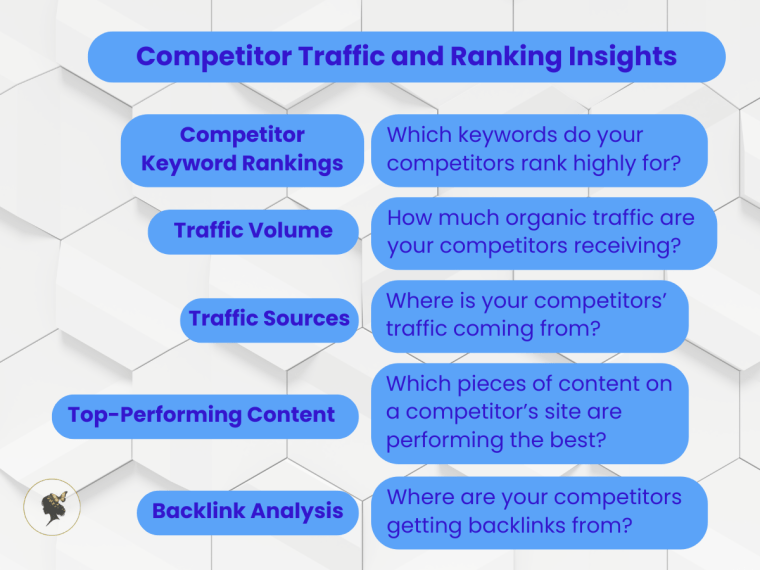
By understanding where your competitors are gaining traction, you can develop a strategy to improve your own rankings and potentially overtake them in certain areas. Key elements of competitor traffic and ranking insights include:
Competitor Keyword Rankings
This refers to the positions your competitors hold for specific search terms. By identifying which keywords your competitors rank highly for, you can understand which terms are driving traffic to their sites and whether you can target those same keywords—or better yet, identify less competitive keywords that might give you an edge.
Traffic Volume
This is the amount of organic traffic your competitors are receiving from search engines. By analyzing the traffic volume of competitors who rank for the same keywords as your business, you can gauge how much potential traffic you could gain by ranking for those keywords.
Traffic Sources
Knowing where your competitors’ traffic is coming from (i.e., which search engines, devices, or even specific pages) can provide insight into their audience behavior. Are they getting more traffic from mobile searches? Which pages are driving the most traffic?
Top-Performing Content
In addition to keywords, understanding which pieces of content on a competitor’s site are performing the best can help you determine what content you should create. It can also give you insights into why certain types of content resonate with your shared audience.
Backlink Analysis
Although not directly related to traffic, backlinks have a significant effect on rankings. Understanding where your competitors are getting backlinks from, and how many they have, can help you refine your link-building strategy.
How to Obtain Competitor Traffic and Ranking Insights for Your Travel Company
Obtaining competitor traffic and ranking insights requires the right tools and a systematic approach. Below is a step-by-step guide on how to collect these insights effectively:
Step 1: Identify Your Competitors
The first step in obtaining these insights is identifying your direct and indirect competitors.
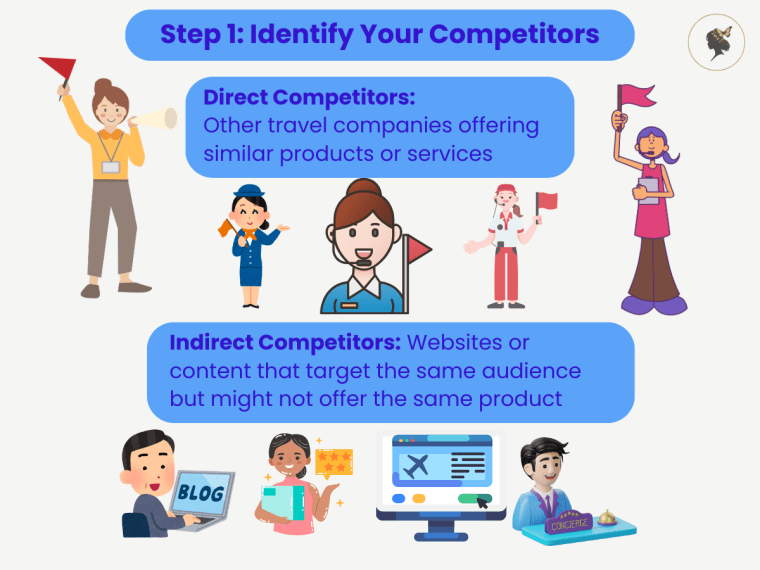
For travel businesses, this could include:
- Direct Competitors: Other travel companies offering similar products or services (e.g., other tour operators, travel agencies, or destination-specific companies).
- Indirect Competitors: Websites or content that target the same audience but might not offer the same product, such as travel blogs, online review sites, and booking platforms.
Once you’ve identified your competitors, you can focus on their online performance, and start collecting the data that matters.
Step 2: Use SEO Tools to Collect Data
To get the most accurate and actionable traffic and ranking insights, you’ll need to use advanced SEO tools.
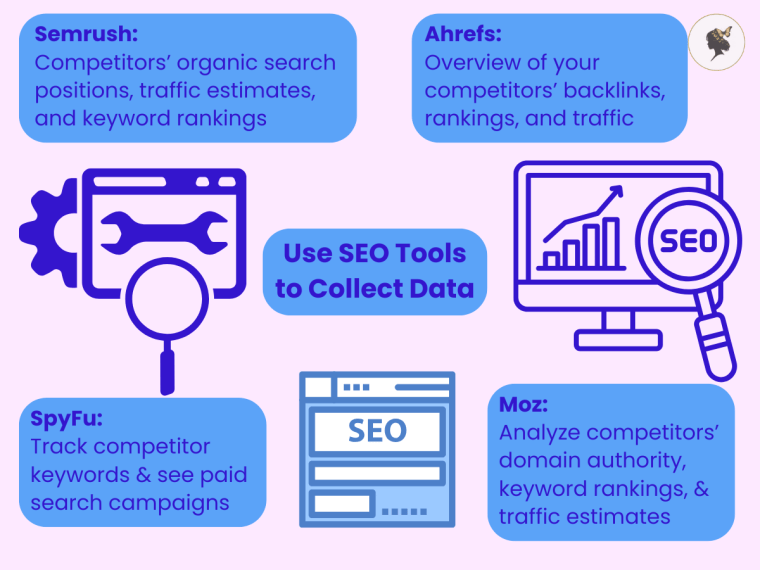
Some of the best tools available for this task include:
- Semrush: This tool allows you to view your competitors’ organic search positions, traffic estimates, and keyword rankings. It also gives insights into which pages on your competitor’s website are driving the most traffic.
- Ahrefs: Ahrefs provides a detailed overview of your competitors’ backlinks, rankings, and traffic. It also offers a tool for analyzing competitors’ organic keywords and the search volume for each keyword.
- SpyFu: With SpyFu, you can track competitor keywords, see which paid search campaigns they are running, and get traffic insights based on their organic keywords.
- Moz: Moz provides tools for analyzing competitors’ domain authority, keyword rankings, and traffic estimates. It also offers a competitive analysis tool to compare your SEO performance with that of others.
These tools provide data on:
- Organic Keyword Rankings: Which keywords your competitors are ranking for, and their position in search results.
- Estimated Traffic: How much traffic these keywords are bringing to the competitor’s website.
- Traffic Volume by Device: How much of your competitor’s traffic is coming from mobile versus desktop searches.
Step 3: Analyze the Data
Once you have the data from the tools, you can start analyzing the insights.
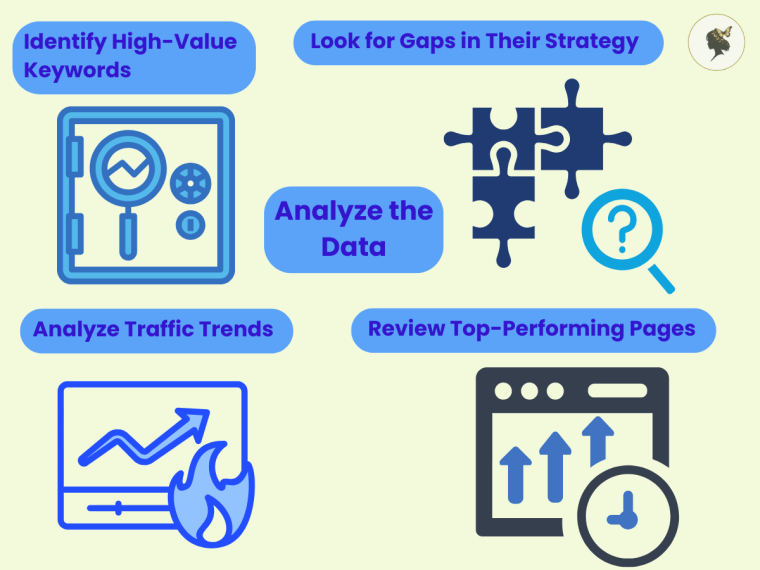
Here’s how:
- Identify High-Value Keywords: Look for keywords where your competitors are ranking highly but you are not. These are the areas where you have the opportunity to catch up or outbid them for that ranking spot.
- Look for Gaps in Their Strategy: Is there a topic or keyword that they are not targeting, which could be an opportunity for you?
- Analyze Traffic Trends: Understand how your competitors’ traffic has changed over time. This can tell you if their traffic is increasing or decreasing, giving you insight into their SEO strategy’s effectiveness.
- Review Top-Performing Pages: Analyze which of your competitors’ pages drive the most traffic. This can provide content ideas and insights into what your audience is looking for.
Step 4: Apply Insights to Your Own Strategy
With this information, you can refine your SEO strategy to outperform your competitors.
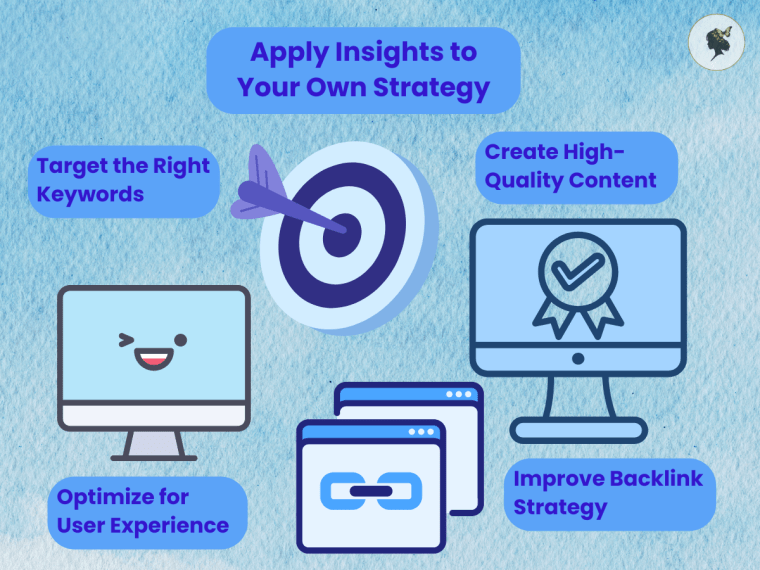
Here’s how:
- Target the Right Keywords: Focus on keywords that have high traffic potential and low competition, based on your analysis of competitor rankings.
- Create High-Quality Content: Replicate the types of content that are performing well for your competitors, but offer more value, be more detailed, and more user-friendly.
- Optimize for User Experience: If competitors’ top pages rank because they offer an excellent user experience, ensure your site is optimized for both usability and speed.
- Improve Backlink Strategy: Analyze your competitors’ backlinks and look for opportunities to earn similar links to boost your domain authority and improve your own rankings.
Step 5: Monitor and Adjust Regularly
Competitor analysis is not a one-time task. SEO is a dynamic field, and your competitors will constantly adjust their strategies. Regularly monitoring your competitors’ rankings and traffic can help you stay ahead of the curve.
Why Competitor Traffic and Ranking Insights Are Important for Travel Companies
Competitor traffic and ranking insights offer multiple advantages for travel companies looking to enhance their SEO strategies.
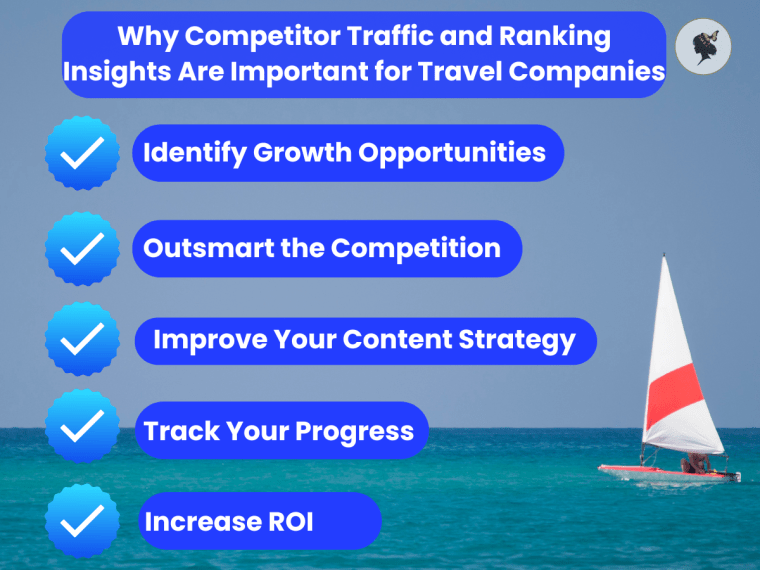
Here’s why these insights are so important:
Identify Growth Opportunities
By examining the keywords your competitors are ranking for, you can identify growth opportunities for your travel business. If they’re ranking for high-traffic keywords you’re not targeting, this gives you clear opportunities to compete for those same keywords.
Outsmart the Competition
Knowing where your competitors are succeeding and failing allows you to strategically outmaneuver them. If a competitor is driving massive traffic through a particular set of keywords or content, you can create something better or target underutilized opportunities.
Improve Your Content Strategy
Understanding which content drives the most traffic to your competitors can inspire new content ideas. If your competitors are ranking for specific travel destinations or experiences, you can create better-targeted and more engaging content to serve your audience.
Track Your Progress
Competitor analysis is also an excellent way to benchmark your progress. By tracking your competitors’ rankings and traffic over time, you can evaluate how well your SEO efforts are working compared to your competition.
Increase ROI
By focusing your SEO efforts on high-value, under-targeted keywords, you can achieve better rankings with less competition. This can lead to increased organic traffic and a higher return on investment (ROI).
Contact us today to learn how we can help your travel company gain valuable competitor traffic and ranking insights. Together, we can create a strategy that leads to long-term SEO success!
Discover more from Wander Women Strategies
Subscribe to get the latest posts sent to your email.
