
▶ Table of Contents
- Introduction
- Understanding the Role of Data Analytics in SEO and Content
- Analyzing Audience Behavior to Inform Content Topics
- Keyword Research Backed by Data
- Competitor Analysis Through SEO Tools
- Optimizing Existing Content Based on Performance Metrics
- Tracking SEO Progress Over Time
- Using Data to Shape Content Formats and Distribution
- Predicting Future Travel Trends with Data
- Common Pitfalls to Avoid When Using Data
- Conclusion & Next Steps
Introduction
In the digital age, travel agencies no longer rely solely on beautiful brochures or brick-and-mortar storefronts to attract customers. Instead, they must compete in the vast online marketplace, where visibility and engagement often determine success. The most successful travel brands are those that pair creativity with data—using analytics to guide content strategy, SEO tactics, and user experience decisions.
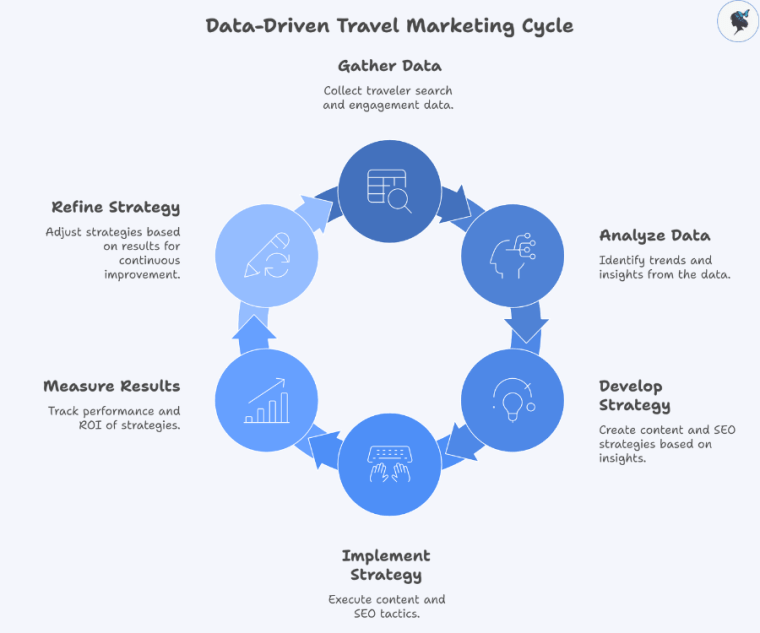
By leveraging data analytics, travel agencies can better understand what travelers are searching for, which types of content convert best, and how to continuously refine their digital strategies. When SEO and content are aligned with data insights, agencies can attract more qualified leads, improve their search rankings, and ultimately increase bookings. Agencies that do this successfully position themselves as thought leaders while optimizing their content investment for maximum ROI.
Understanding the Role of Data Analytics in SEO and Content
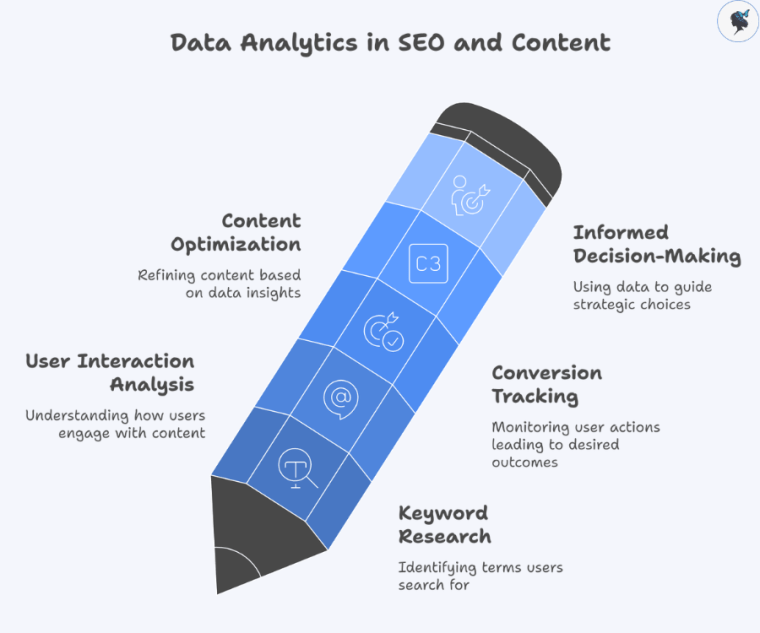
Before jumping into tactical steps, it’s essential to understand the role of data analytics in digital marketing. Data analytics involves collecting and interpreting user and website data to make informed decisions. In the context of SEO and content strategy, this includes insights into which keywords users are searching, how they interact with content, and what actions they take on your website.
This foundation enables travel agencies to move from assumptions to accuracy. Instead of guessing what travelers want, agencies can tailor their content with precision, ensuring relevancy and performance.
Key Tools:
- Google Analytics: Understand audience behavior and conversion paths. For example, track which destination pages convert best for family vacations, helping to allocate marketing spend more effectively.
- Google Search Console: Track keyword performance and identify crawl or indexing issues. This helps discover if your “Honeymoon in Bali” guide is being seen but not clicked, signaling the need to improve meta descriptions.
- Semrush / Ahrefs: Competitor analysis, keyword tracking, and backlink data. These tools can show how your blog on “Northern Lights Tours” stacks up against competitors and where to improve.
- Hotjar / Microsoft Clarity: Visual heatmaps and user session recordings. See where users drop off on your “Luxury Train Journeys” landing page and optimize accordingly to increase conversions.
Travel Examples:
- A family travel agency using Google Analytics to identify top-performing content around beach resorts sees more bookings during summer.
- A luxury travel operator discovers via Search Console that their “Maldives Overwater Villas” page has high impressions but low clicks, prompting them to rewrite meta tags.
- An adventure travel brand uses Semrush to uncover competitor keywords for “Amazon Rainforest Expeditions” and creates better content targeting those terms.
Connect Data to Revenue — Not Just Traffic
Traffic alone doesn’t grow your business. Always tie your analytics back to revenue and booking behavior. Instead of asking:
- “Which blog gets the most visits?”
Ask:
- “Which content drives inquiries?”
- “Which landing pages generate bookings?”
- “Which audience segments convert at the highest value?”
When you shift from vanity metrics to profitability metrics, your strategy becomes exponentially more powerful.
Wander Women Hot Tip: The most successful travel brands don’t create content based on trends — they create content based on traveler behavior. When you let data guide your strategy, you stop guessing and start converting. Precision beats assumption every single time.
Analyzing Audience Behavior to Inform Content Topics
One of the first steps in refining your content strategy is analyzing how visitors behave on your site. Audience behavior data helps you identify what’s resonating with travelers, what needs improvement, and what opportunities exist. It bridges the gap between content production and real user needs.
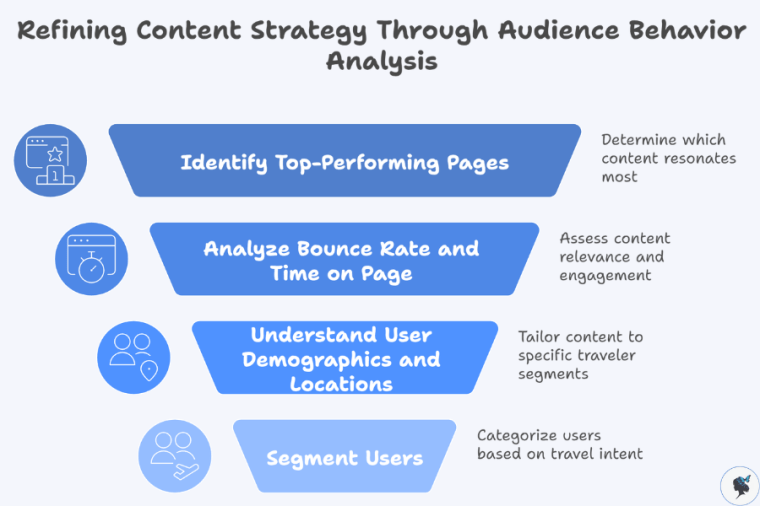
Using Google Analytics, travel agencies can discover:
- Top-performing pages: Identify which blog posts or itineraries get the most views and engagement. For instance, if your “2-Week Itinerary in Japan” post is your top performer, consider creating video content or social media snippets to further amplify engagement.
- Bounce rate and time on page: These indicate how engaging and relevant your content is. A high bounce rate on “Affordable Caribbean Packages” may suggest that the content or headlines don’t meet user expectations, signaling a need for optimization.
- User demographics and locations: Helps tailor content to specific traveler segments. For example, if most visitors to your “Alaskan Cruise Guide” are retirees from the U.S., customize calls-to-action and offers targeting that demographic.
Segment your users into categories such as:
- Informational travelers: Dreaming about travel and looking for inspiration. Create visually rich blog posts or destination listicles like “10 Most Romantic Cities in Europe” to engage these users.
- Transactional travelers: Ready to book and searching for specific services. Develop landing pages like “Book Your All-Inclusive Maldives Package Today” with clear booking options.
Read our comprehensive guide on mastering search intent.
Travel Examples:
- A spike in engagement on the “Winter in Quebec” post suggests increased seasonal interest, encouraging timely promotional content. Check out: managing seasonal content.
- Analytics show long page times on the “Backpacking Through Patagonia” guide, indicating strong content value and opportunities to upsell local tours.
- Users drop off quickly from the “Luxury Travel in Dubai” page; session recordings reveal slow load times and lack of engaging CTAs, guiding design improvements.
Wander Women Hot Tip: Look for patterns, not just spikes. One viral post doesn’t define your strategy — but consistent behavior patterns do. Track: recurring destination interests, seasonal search behavior, & content themes that repeatedly convert. When you identify patterns, you can build scalable content frameworks rather than chasing one-off wins.
Keyword Research Backed by Data
Effective SEO starts with understanding what your audience is searching for. Keyword research powered by data ensures your content aligns with real-world demand, increasing its chances of ranking well and attracting the right travelers.
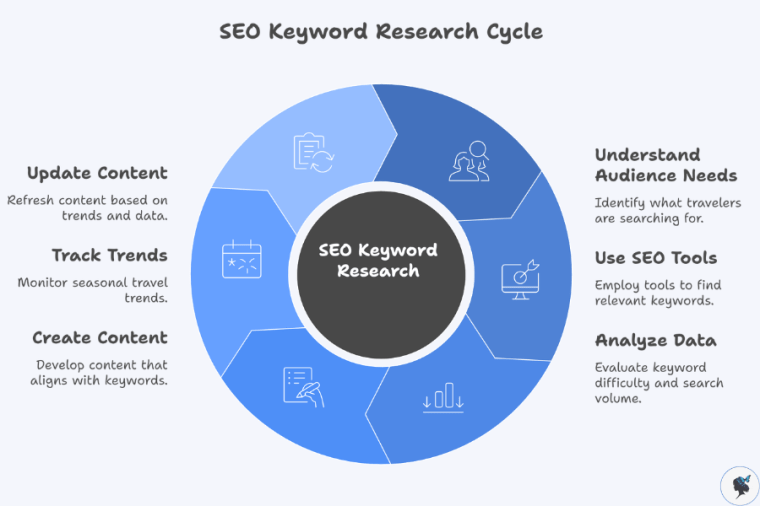
Tools to Use:
- Google Keyword Planner: Discover keywords by destination or travel type. Use it to find terms like “best safari tours Kenya” that align with your packages.
- Semrush / Ahrefs: Analyze keyword difficulty, search volume, and competitive data. This helps prioritize whether to target “skiing in Switzerland” or “ski trips Austria.”
- AnswerThePublic: Find question-based long-tail keywords your audience is asking. Helps you address queries like “Is Iceland safe for solo travel?”
- Internal Site Search: Review what users type in your website’s search bar to find missing content. If people search for “pet-friendly hotels,” create a dedicated guide.
Track seasonal travel trends and update your content calendar accordingly. For example, “best places to visit in Europe in summer” spikes around March–May, so plan content in February.
Read our post: Mastering Keyword Prioritization & Strategy.
Travel Examples:
- Discovering “Things to Do in Cappadocia” has low competition but high interest helps craft a niche blog that captures a specialized audience.
- Site search reveals users frequently look for “visa-free countries for Indians,” guiding a new content series catering to this segment.
- Semrush shows rising interest in “digital nomad visas,” perfect for attracting remote worker travelers with dedicated content.
Wander Women Hot Tip: Prioritize keywords by intent + opportunity. Not all keywords deserve equal attention. Prioritize keywords that: align with your packages, show commercial or booking intent, have achievable competition levels, & match seasonal demand. The smartest travel brands don’t chase the highest volume keywords — they target the most strategic ones.
Competitor Analysis Through SEO Tools
Understanding your competitors’ strategies helps uncover keyword and content gaps. With SEO tools, you can reverse-engineer their success and spot opportunities to outperform them.
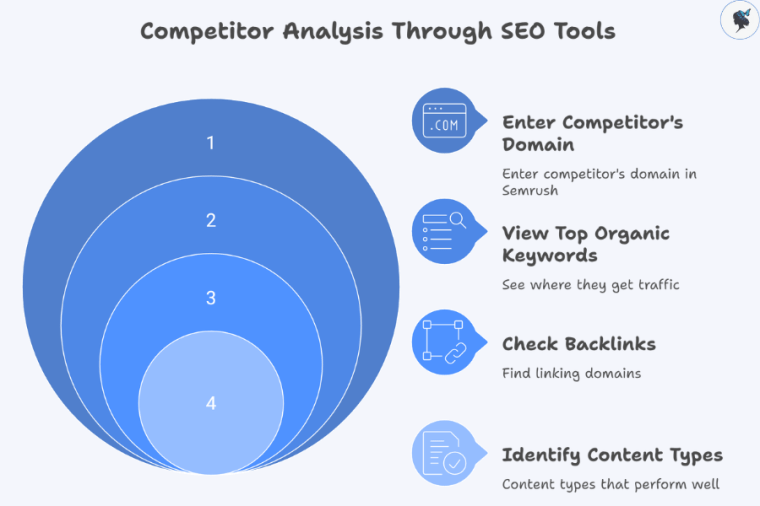
Use tools like Semrush or Ahrefs to evaluate:
- What keywords they rank for: Discover high-performing keywords you haven’t targeted yet. For example, if a competitor ranks for “Adventure Travel New Zealand,” create a more comprehensive version of this content.
- Which blog posts generate backlinks: High backlink posts indicate authority. Consider writing about similar topics like “Eco-Lodges in Costa Rica” to earn valuable links. More about competitor backlinks here.
- Their domain authority and top-performing pages: Gauge your ability to compete and understand their content strengths.
Step-by-step:
- Enter a competitor’s domain in Semrush’s “Domain Overview.”
- View “Top Organic Keywords” to see where they get traffic.
- Check “Backlinks” to find linking domains.
- Identify content types that perform well.
Travel Examples:
- A rival blog’s “Glamping in California” piece ranks #1; aim to outdo it with insider tips and engaging video content.
- Competitors focus on “travel insurance for seniors”; create a better-optimized, visually appealing alternative to capture this audience.
- A YouTube video on “Island Hopping in Greece” from a competitor gets strong links—add your own travel vlog to compete.
Wander Women Hot Tip: Look for gaps, not just rankings. The biggest opportunity isn’t always their #1 keyword — it’s the keyword they missed. Pay attention to: underserved traveler segments, outdated blog posts, thin content ranking on page one, questions left unanswered in their guides. That’s where you can win.
Optimizing Existing Content Based on Performance Metrics
Rather than constantly creating new content, use analytics to improve what you already have. Optimization is often faster and more cost-effective than starting from scratch.
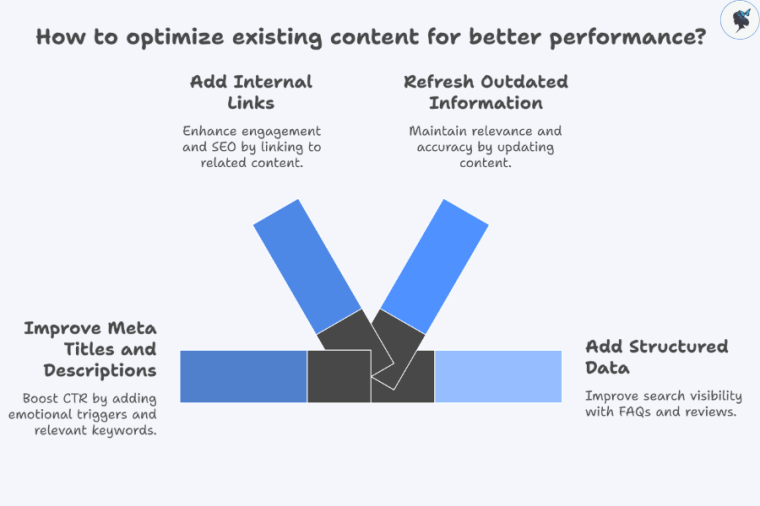
Look for blog posts with:
- High impressions but low click-through rates (CTR): Improve meta titles and descriptions. For example, “Top Beaches in Bali” might benefit from adding emotional triggers like “Uncrowded Paradise Beaches in Bali” to entice clicks.
- Low time on page or high bounce rates: This may signal content mismatch or weak layout. Enhance readability with subheadings, images, or summaries to keep visitors engaged.
- Rankings just outside the top 10 in Google: A few tweaks can push these into top spots. Add keywords, update outdated info, or improve internal links.
How to Optimize:
- Improve meta titles and descriptions to boost CTR.
- Add internal links to related content.
- Refresh outdated information (e.g., visa policies or hotel recommendations).
- Add structured data (FAQs, reviews) for rich results.
Travel Examples:
- Your “Solo Travel in Japan” post ranks #12—add unique safety tips and insider advice to improve rank.
- “Packing Tips for Europe” sees low CTR—rewrite title to “20 Genius Packing Tips for Your European Adventure” to attract clicks.
- Bounce rate is high on “Hiking Machu Picchu” guide—add trail maps and altitude details to enhance user experience.
Read our guide: how to optimize for location-based keywords.
Wander Women Hot Tip: SEO success isn’t about publishing more — it’s about improving smarter. When you identify gaps — whether in your competitors’ content or your own — you create strategic leverage.
Tracking SEO Progress Over Time
Set realistic KPIs and track your progress monthly. Monitoring performance ensures you remain aligned with your goals and catch any downward trends early.
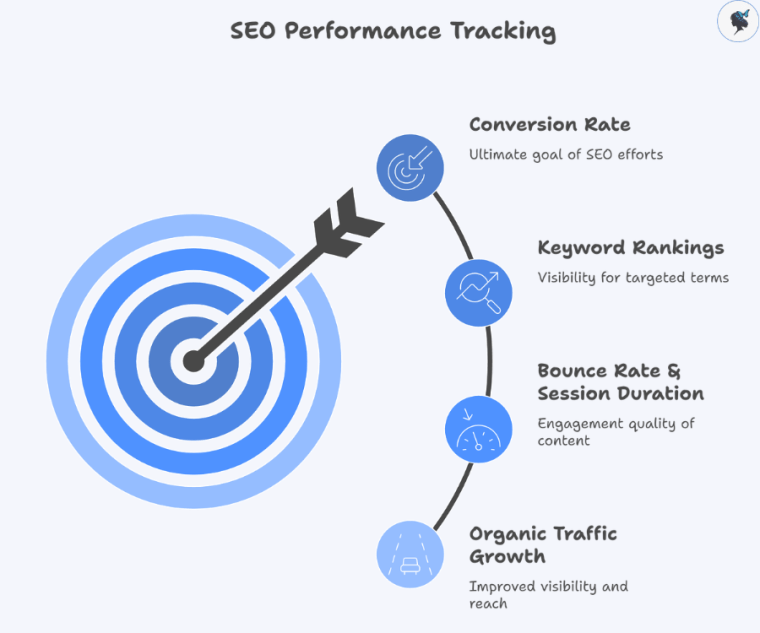
Key SEO Metrics:
- Organic traffic growth: Indicates improved visibility. A rise after publishing “Cherry Blossom Season in Kyoto” suggests SEO efforts paid off.
- Bounce rate and session duration: Reveal engagement quality. Long sessions on “Road Trips Across Australia” show strong content relevance.
- Keyword rankings: Show your visibility for targeted terms. Seeing “Best Beach Resorts in Thailand” climb rankings proves content value.
- Conversion rate from organic content: Ultimately, the most important metric. Track how many readers book trips after reading your “Traveling with Kids in Italy” guide.
Google Looker Studio Setup:
- Connect your Google Analytics and Search Console accounts.
- Build custom reports with key SEO KPIs.
- Segment by content type (e.g., blog vs. landing pages).
Travel Examples:
- Track post-launch traffic of your “Ski Season in the Alps” article.
- Monitor CTR changes after editing “Best Vegan Restaurants in Bangkok.”
- Compare session durations across “Luxury Cruises” vs. “Budget Backpacking” content.
Wander Women Hot Tip: Track trends, not just numbers. SEO success compounds over time. Don’t panic over small dips. Instead, analyze: 3-month trends, 6-month growth, seasonal patterns, & content refresh performance. Progress in SEO is rarely linear — but with consistent tracking, it is predictable.
Using Data to Shape Content Formats and Distribution
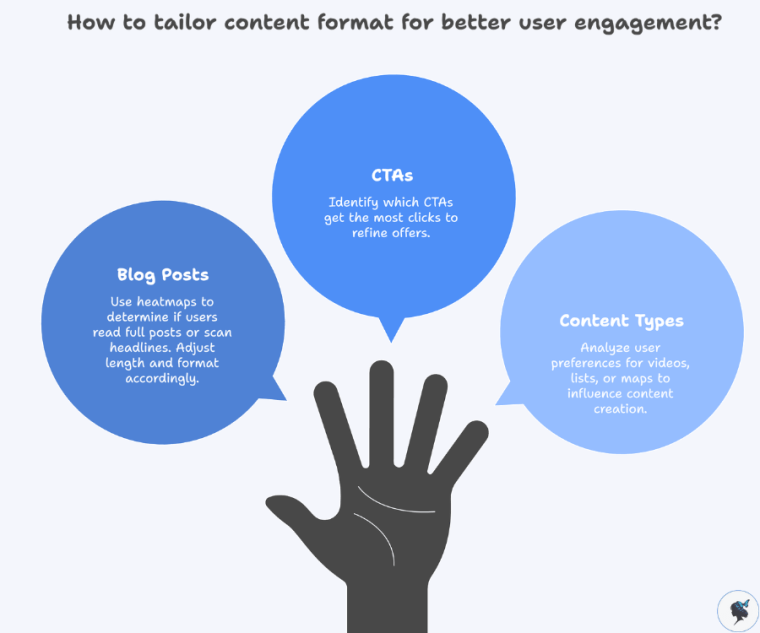
Not all content performs equally. Use heatmaps (Hotjar, Clarity) to see how users interact with your site—where they scroll, click, or drop off. These insights help you tailor your content format to how users actually consume it.
Insights to Look For:
- Do users read full blog posts or just scan headlines? Scrolling data can reveal whether to keep long-form content or switch to bite-sized formats. For example, scan-friendly layouts work well for “Top 10” lists.
- Which CTAs get the most clicks? This shows what prompts action. Use this to refine offers on pages like “Luxury Stays in the Maldives.”
- Are travelers more drawn to videos, lists, or maps? Content type preferences can influence engagement. If users interact more with interactive maps on your “Wine Tours in France” page, use them in similar content.
Tailor your content format accordingly:
- Listicles: Great for social sharing. A post like “7 Most Scenic Train Rides in Europe” gains more traction when formatted clearly.
- In-depth guides: Ideal for SEO. A comprehensive “Ultimate Guide to Backpacking Southeast Asia” attracts organic traffic over time.
- Videos and infographics: High engagement on mobile. Visuals work great for posts like “Island-Hopping in the Philippines.”
Travel Examples:
- A “Best Hidden Beaches in Croatia” listicle drives more shares than traditional guides.
- Your “Guide to Japan’s Rail Passes” with infographics reduces bounce rates.
- Video content on “Traveling Italy by Vespa” sees more engagement on mobile.
Wander Women Hot Tip: Optimize for behavior, not preference. You may prefer writing long travel essays — but if your audience skims and clicks lists, adapt accordingly. Data reveals how travelers actually consume content. Stop creating content the way you like to consume it. Create content the way your travelers engage with it. When format aligns with behavior, engagement rises — and so do conversions.
Predicting Future Travel Trends with Data
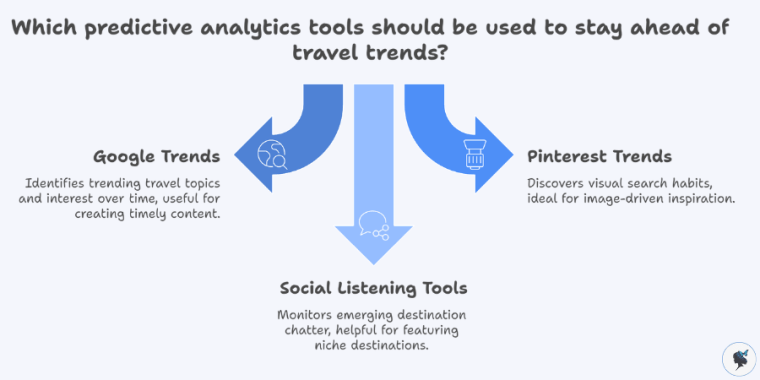
Use predictive analytics and trend monitoring to stay ahead of the curve. Forward-looking data allows agencies to create content and campaigns before interest peaks, giving them a competitive edge.
Tools to Try:
- Google Trends: See what’s trending now or rising interest over time. For instance, searches for “slow travel” or “off-the-grid getaways” are gaining traction.
- Pinterest Trends: Discover visual search habits in travel. Find image-driven inspiration like “tiny house stays” or “desert escapes.”
- Social listening tools (Brandwatch, Sprout Social): Monitor emerging destination chatter. If people are talking more about “Astrotourism,” consider featuring dark sky destinations.
Travel Examples:
- Rising Google Trends for “digital detox vacations” prompt content on unplugged getaways in Costa Rica.
- Pinterest searches for “fall foliage drives” inspire a blog on U.S. road trips.
- Brandwatch shows increasing mentions of “Arctic cruises,” suggesting a niche opportunity.
Wander Women Hot Tip: The best travel brands don’t just follow trends — they forecast them. When you combine search data, visual discovery insights, and social listening, you stop reacting to demand and start leading it.
Common Pitfalls to Avoid When Using Data
While data is powerful, it must be interpreted and applied correctly. Missteps can lead to wasted resources or ineffective strategies.
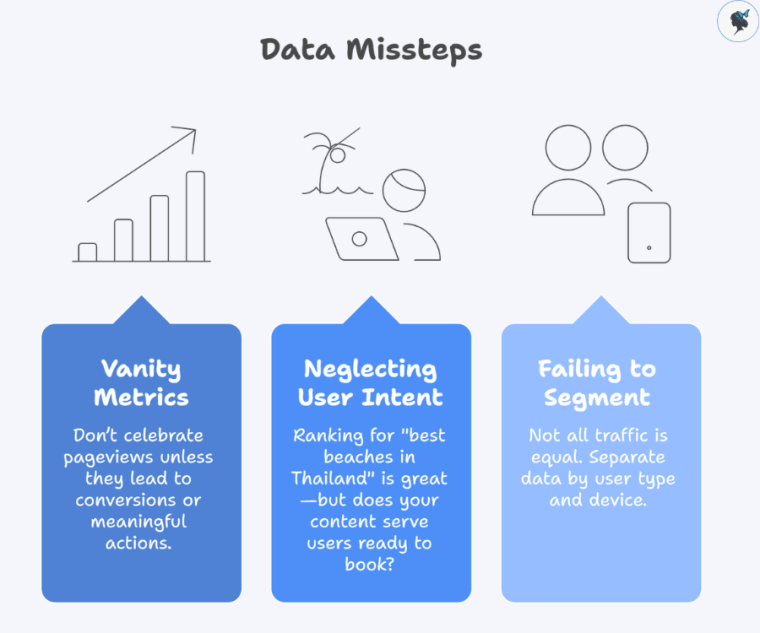
- Chasing vanity metrics: Don’t celebrate pageviews unless they lead to conversions or meaningful actions. A blog on “Fun Facts About Italy” might get views but doesn’t lead to bookings.
- Neglecting user intent: Ranking for “best beaches in Thailand” is great—but does your content serve users ready to book? If not, add booking widgets or clear CTAs.
- Failing to segment: Not all traffic is equal. Separate data by user type and device. Knowing mobile users prefer short, visual content helps tailor “Weekend Getaways from NYC.”
Travel Examples:
- A “Travel Quotes” post drives traffic but no bookings—replace with trip planning content.
- Ranking for “cheap flights” draws users not interested in full-service packages.
- Failing to differentiate international vs. domestic travelers in “Travel Insurance Guide” weakens conversions.
Conclusion & Next Steps
By integrating data analytics into your SEO and content strategy, your travel agency can stop guessing and start optimizing. Data provides the roadmap—revealing what content attracts travelers, what keywords convert, and how to stay ahead of industry shifts.
This data-driven approach ensures resources go to high-impact activities, and continuous feedback loops lead to stronger marketing decisions. Ultimately, it transforms SEO from a guessing game into a scalable, ROI-positive growth strategy.
If you’re ready to turn insights into impact:
- Audit your top content in Google Analytics. Focus on improving or repurposing high-potential pieces.
- Research untapped keywords in Semrush. Look for long-tail queries like “family-friendly safaris in Kenya.”
- Set clear monthly SEO goals. Use dashboards to visualize your wins and gaps.
- Start building dashboards to track progress. Transparency helps your team align on content goals.
Need help understanding the data? Contact us today to see how we can help.
Discover more from Wander Women Strategies
Subscribe to get the latest posts sent to your email.

7 thoughts on “How Travel Agencies Can Leverage Data Analytics to Optimize Their SEO and Content Strategies”
Comments are closed.