
▶ Table of Contents
- Introduction
- Optimize Your Google Business Profile (GBP)
- Local Keyword Research and Optimization
- Building Local Citations and Directory Listings
- Creating Locally Relevant Content
- Leveraging Online Reviews and Reputation Management
- Mobile Optimization and Local Search Experience
- Utilizing Social Media for Local Engagement
- Conclusion
Introduction
In today’s digital age, local SEO is a critical tool for small travel businesses like bed-and-breakfasts, hotels, and travel agencies. These businesses rely heavily on local customers and travelers searching nearby for accommodations or travel services. Optimizing your online presence to appear in local search results can significantly increase your bookings, foot traffic, and overall visibility.
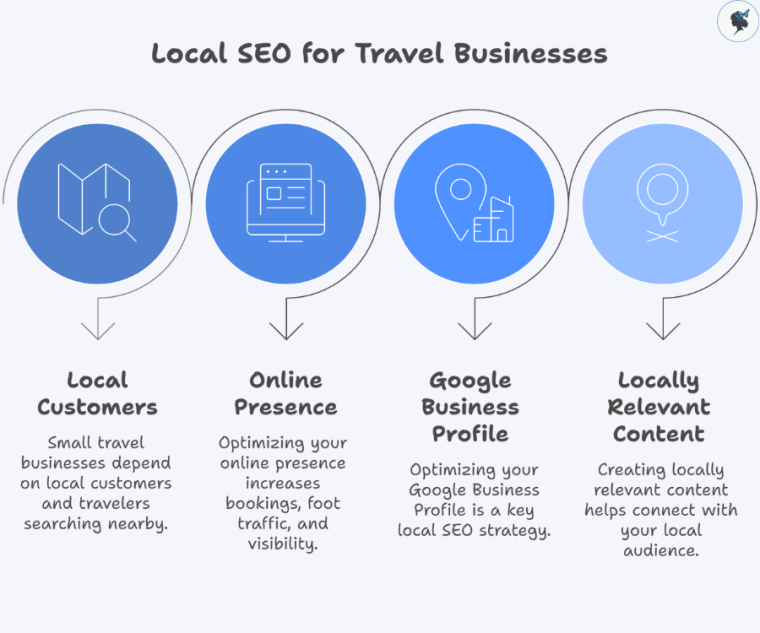
This post will guide you through effective local SEO strategies specifically designed for small travel-related businesses. From optimizing your Google Business Profile to creating locally relevant content, these steps will help you connect with your local audience and stand out in a competitive market.
Optimize Your Google Business Profile (GBP)
Your Google Business Profile is the cornerstone of local SEO. It helps your business appear in Google Maps and the local “3-pack” search results, which are highly visible to potential customers.
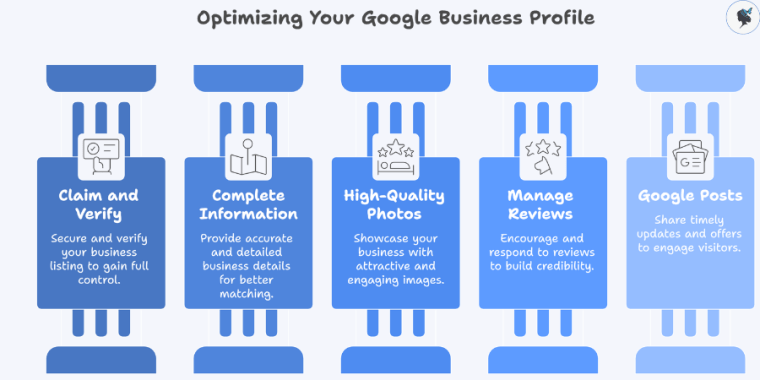
- Claim and verify your profile: Visit the Google Business Profile site, claim your listing, and verify your business to gain full control over your information. This verification builds trust with Google and users.
- Add complete and accurate information: Include your exact address, phone number, business hours, website, and service descriptions. Accurate info helps Google match your listing with relevant local searches.
- Upload high-quality photos: Showcase your property, rooms, amenities, or office space with attractive images. Photos increase user engagement and encourage bookings.
- Encourage and manage reviews: Ask satisfied guests to leave positive reviews, which improve your local rankings. Respond professionally to all reviews to build credibility.
- Use Google Posts: Share timely updates, offers, or events directly on your GBP profile to engage visitors.
Many SEO guides emphasize that adding high-quality photos and responding to reviews on your Google Business Profile can improve engagement and visibility, which in turn correlates with higher bookings and customer interactions.
Local Keyword Research and Optimization
Finding and using the right local keywords is essential to make your website visible to nearby searchers.
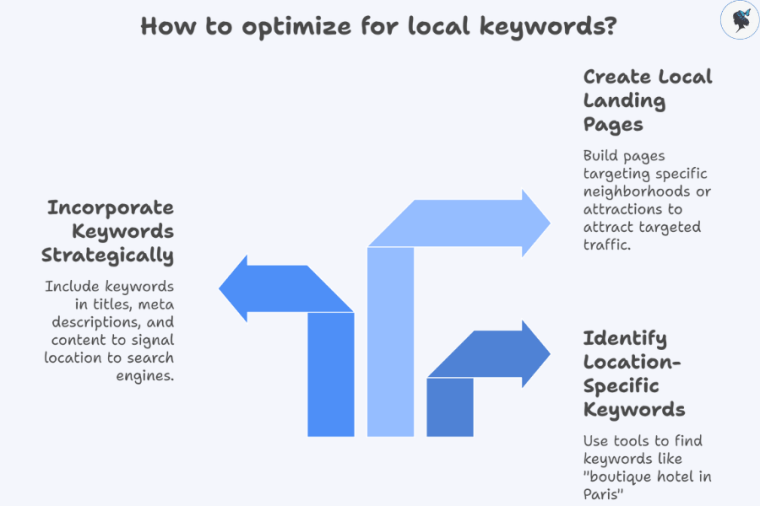
- Identify location-specific keywords: Use tools like Google Keyword Planner, Ahrefs, or Semrush to find keywords such as “boutique hotel in Paris” or “family-friendly B&B near Notre-Dame.” These phrases help capture travelers searching specifically in your area.
- Incorporate keywords strategically: Include local keywords in your website’s titles, meta descriptions, headers, and body content. This signals to search engines that your business serves a particular location.
- Create local landing pages: Build dedicated pages targeting specific neighborhoods, nearby attractions, or popular travel routes. For example, “Hotels near Central Park, NYC” can attract targeted traffic.
A boutique hotel in Florida implemented a comprehensive SEO overhaul that included local landing pages and blog posts focused on nearby attractions and experiences. Results after eight months: Enhanced local SEO and landing pages helped attract relevant search traffic. 300% increase in organic leads. New blog content targeting experience and location-based keywords.
You might like our post: Mastering local keyword focus.
Building Local Citations and Directory Listings
Local citations are online mentions of your business name, address, and phone number (NAP) on various websites and directories. They boost your local SEO by confirming your business’s legitimacy and location.
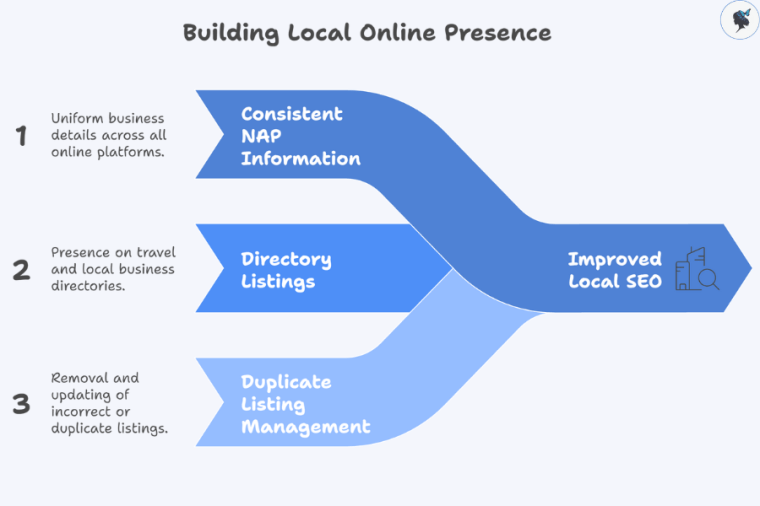
- Ensure consistent NAP information: Keep your business name, address, and phone number consistent across all platforms to avoid confusion and improve rankings.
- List on travel and local directories: Submit your business to TripAdvisor, Yelp, Booking.com, local chambers of commerce, and tourism boards.
- Monitor and clean duplicate listings: Use tools like Moz Local or BrightLocal to find and remove or update duplicate or incorrect listings.
A travel agency in the GCC implemented local SEO including consistent NAP across directories, Google Business Profile optimization, and geo-targeted landing pages. After 6 months, the agency saw a 40% increase in organic inquiries (forms & calls) along with significant traffic and local visibility improvements.
Creating Locally Relevant Content
Content that highlights local attractions, events, and experiences draws in travelers researching your area and builds your site’s authority.
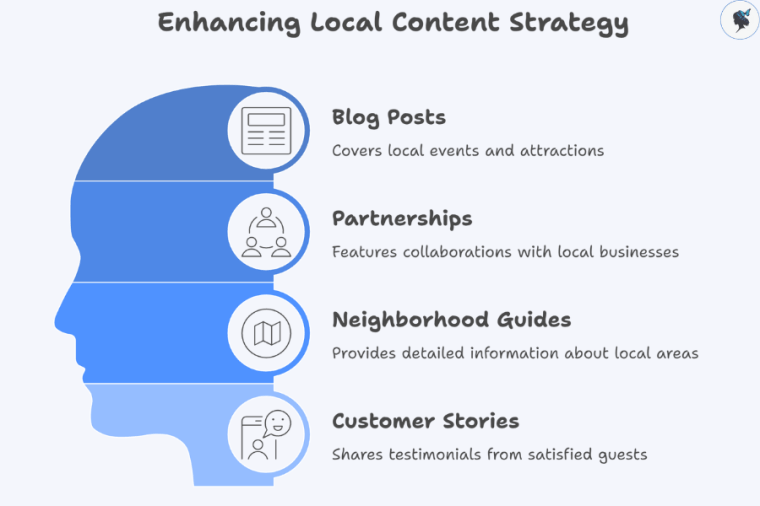
- Write blog posts about local events and attractions: Cover annual festivals, popular hiking trails, or hidden gems near your property.
- Highlight partnerships: Feature collaborations with local tour operators, restaurants, or artists to showcase your embeddedness in the community.
- Create neighborhood guides: Offer detailed information about neighborhoods, including dining, shopping, and sightseeing tips.
- Showcase customer stories: Share testimonials or case studies from guests who enjoyed local experiences.
A boutique hotel in Zion National Park created in‑depth content about hiking trails and nearby attractions as part of its SEO strategy, which contributed to a 150 % increase in organic traffic over 6 months and a 78 % increase in direct bookings. This illustrates how experience‑focused content drives real search engagement for hotels.
Leveraging Online Reviews and Reputation Management
Online reviews greatly influence travelers’ booking decisions and impact your local SEO rankings.
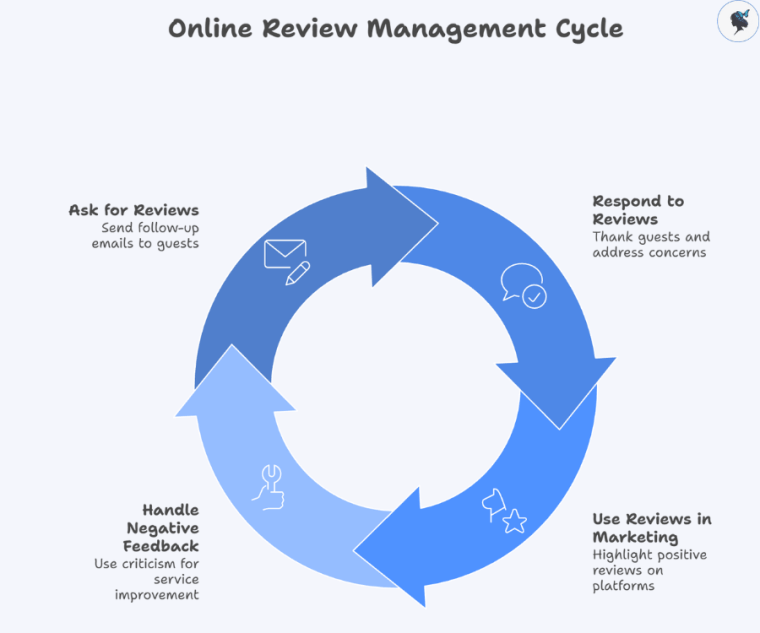
- Ask guests for reviews: Send follow-up emails requesting reviews on Google, Yelp, and travel-specific platforms.
- Respond promptly to reviews: Thank guests for positive feedback and address any concerns raised in negative reviews professionally and constructively.
- Use reviews in marketing: Highlight positive reviews on your website and social media to build trust. You might like: The Role of Trust Signals in Converting Travel Website Visitors.
- Handle negative feedback gracefully: Use criticism as an opportunity to improve your service and show potential guests your commitment.
Tripadvisor suggests properties (hotels and B&Bs) that respond to a higher percentage of reviews are significantly more likely to receive booking inquiries. Specifically, properties that respond to more than 50% of their reviews have up to a 24 % greater likelihood of a booking inquiry compared to those that don’t respond at all.
Mobile Optimization and Local Search Experience
With the majority of local searches happening on mobile devices, your website must offer a seamless mobile experience.
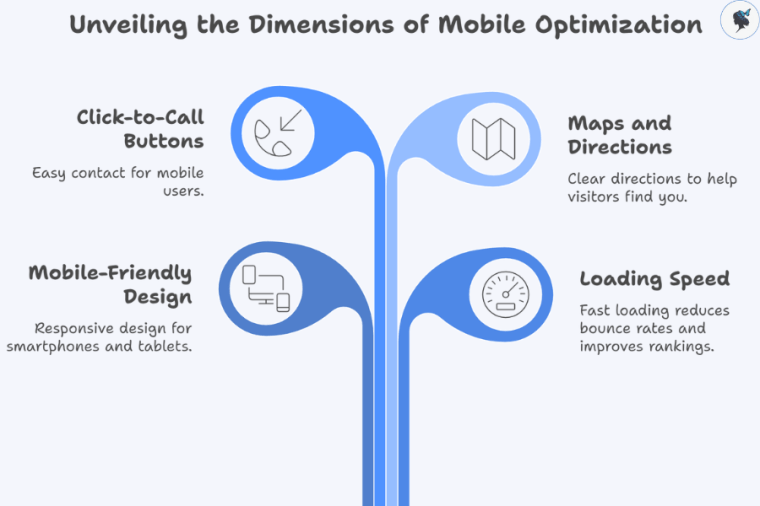
- Ensure a mobile-friendly design: Use responsive web design so your site looks and works well on smartphones and tablets.
- Improve loading speed: Fast websites reduce bounce rates and improve search rankings. Use tools like Google PageSpeed Insights to identify and fix slow elements.
- Add click-to-call buttons: Make it easy for mobile users to contact you directly from your site.
- Incorporate maps and directions: Embed Google Maps and clear directions to help visitors find you quickly.
A hotel case study of website performance optimization shows that reducing load time (e.g., from 6 seconds to under 2 seconds) often leads to double‑digit increases in mobile bookings and direct reservations as part of broader UX improvements, including mobile‑friendly design and streamlined booking processes.
You might like our post: Mobile Optimization for travel companies.
Utilizing Social Media for Local Engagement
Social media is a valuable channel to engage with your local community and attract travelers.
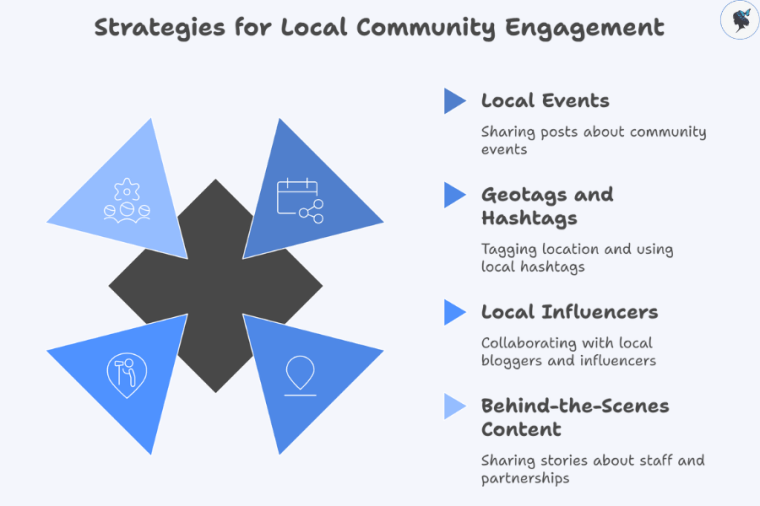
- Engage locally: Share posts about community events, local attractions, and special offers relevant to your area.
- Use geotags and local hashtags: Tag your location in posts and use hashtags like #(City)Travel or #(Neighborhood)Eats to reach local users.
- Collaborate with local influencers: Partner with local travel bloggers or Instagrammers to expand your reach.
- Show behind-the-scenes content: Share stories about your staff, renovations, or local partnerships to build personal connections.
Influencer marketing campaigns in the travel sector produce higher engagement rates and visibility by connecting audiences with authentic travel stories shared by creators, which can then translate into social engagement and interest in travel offerings.
You might like our post: the best social media platforms in 2025.
Conclusion
Local SEO is an essential strategy for bed-and-breakfasts, hotels, and small travel agencies aiming to capture nearby customers and travelers. By optimizing your Google Business Profile, targeting location-specific keywords, building local citations, creating relevant content, managing reviews, enhancing mobile experience, and engaging on social media, you can significantly boost your visibility and bookings.
Start implementing these strategies step-by-step, and over time you’ll build a strong local presence that keeps your business thriving in a competitive travel market.
Ready to get started? Contact us today!
Discover more from Wander Women Strategies
Subscribe to get the latest posts sent to your email.

2 thoughts on “Local SEO Strategies for Bed-and-Breakfasts, Hotels, and Small Travel Agencies”
Comments are closed.