
How to Optimize Travel Content for Generative AI: From GEO to AEO
▶ Table of Contents
- How to Optimize Travel Content for Generative AI: From GEO to AEO
- Introduction
- Understanding Generative AI in the Travel Ecosystem
- Why Travel Brands Must Adapt to AI-Driven Discovery
- Key Differences Between GEO and AEO
- Strategies for GEO SEO in Travel
- Implementing AEO for Travel Content
- Measuring Success in the Age of AI Search
- Case Studies and Best Practices
- The Future: Where GEO Meets Social Discovery
- Conclusion
Introduction
According to a Minty Digital industry analysis, 40% of travelers now say AI helps them discover new destinations — signaling that AI is already reshaping how people explore and plan trips. In today’s landscape, travel marketers and DMOs must evolve from traditional SEO to strategies that help their content be recognized, synthesized, and cited by generative AI engines like ChatGPT, Gemini, or Bing Copilot.
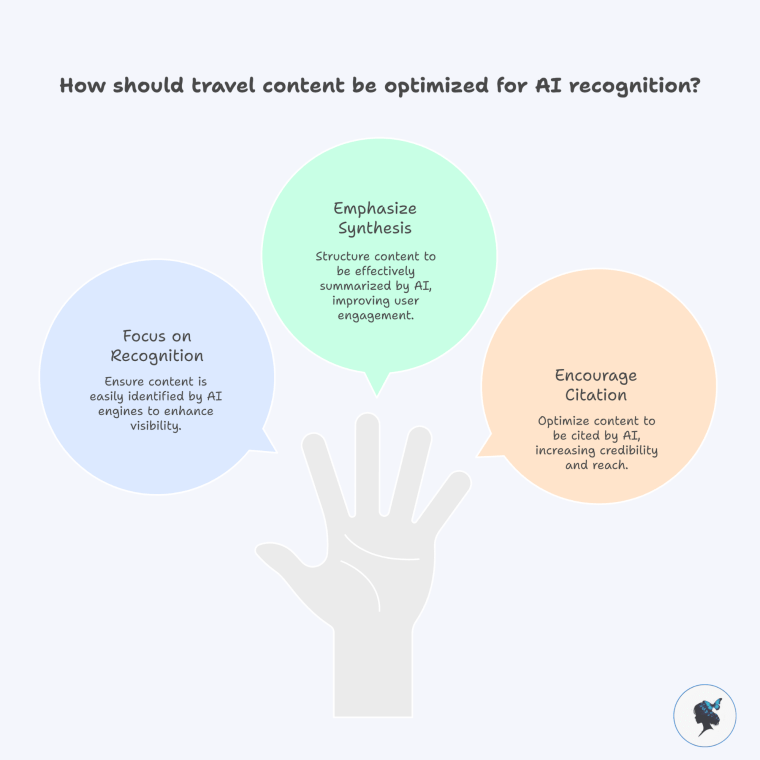
Wander Women Hot Tip: Start by auditing your highest-traffic content — and ask: would an AI assistant “see” and trust it?
Understanding Generative AI in the Travel Ecosystem
1 What Is Generative AI — and Why It Matters for Travel?
A recent study by Booking.com reveals that 74% of travelers appreciate AI-generated recommendations that help them avoid overcrowded destinations or peak travel times. news. For travel brands, generative AI doesn’t just shift discovery — it changes how users ask questions and expect answers. An AI might generate a full itinerary, narrative, or comparative recommendation rather than deliver a list of links.
For example: A traveler might ask, “Plan me a 10-day road trip in Italy focused on food and small towns.” Instead of showing links, AI engines build a complete itinerary — citing a few trusted sources.
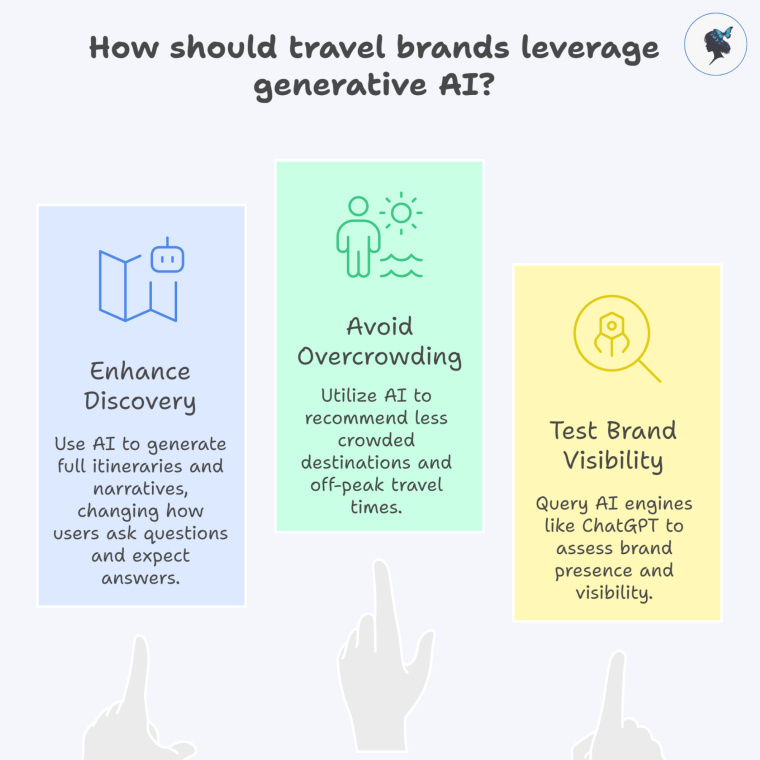
Wander Women Hot Tip: Test your own destination or itinerary queries by asking ChatGPT — see whether your brand is surfaced or ignored.
2 What Is Generative Engine Optimization (GEO)?
In 2025, the AI-in-travel market is projected to reach USD 531.95 billion by 2029, underlining that AI-driven content will dominate travel tech investment.
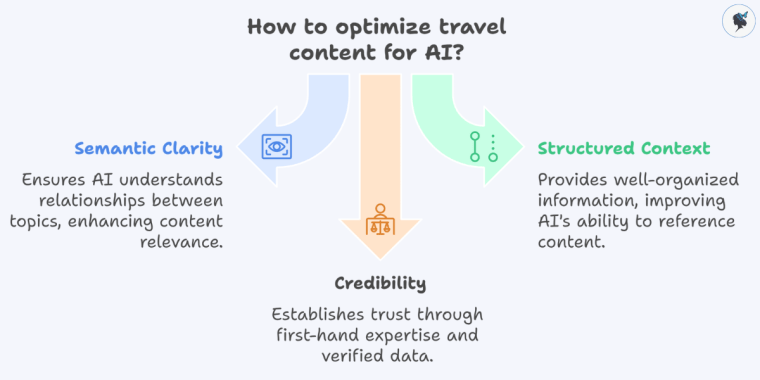
GEO (Generative Engine Optimization) is the practice of optimizing your travel content so that AI systems understand, reference, or weave your content into generated travel narratives. It leans heavily on semantic clarity, topical depth, and structured context rather than just keyword density.
GEO prioritizes:
- Semantic clarity — clear relationships between topics (e.g., destinations, activities, experiences).
- Structured context — well-labeled schema, FAQs, and entity-based connections.
- Credibility — first-hand expertise, author transparency, and verified data.
Wander Women Hot Tip: When drafting destination content, think in “entity clusters” (attraction, region, nearby towns) rather than standalone pages.
More about content clusters here.
3 What Is Answer Engine Optimization (AEO)?
In recent Semrush research, AI Overviews now appear in over 13% of all queries, up from 6.49% earlier in 2025 — confirming that answer-style summaries are becoming more common in search. AEO (Answer Engine Optimization) is about tailoring content so that short, factual responses from your content can power featured snippets, voice answers, or AI summaries.
AEO ensures your pages can power:
- Featured snippets
- Voice search answers
- AI Overviews (Google’s new generative summaries)
Example:
- AEO query: “Best time to visit Iceland”
- Answer: “The best time to visit Iceland is from June to August for warmer temperatures and longer daylight hours.”
- Well-structured, schema-backed pages are what AI models prefer for these results.
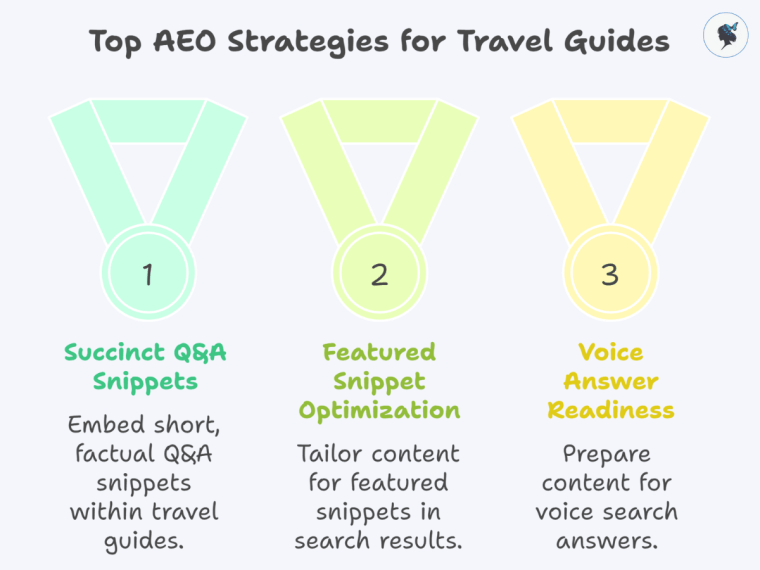
Wander Women Hot Tip: Embed succinct, Q&A-style snippets within your longer travel guides to seed AEO-ready content.
Read out post: Optimize your blog for voice search.
Why Travel Brands Must Adapt to AI-Driven Discovery
Search Engine land reports that in March 2025, 27.2% of U.S. searches ended without a click (versus 24.4 % a year prior), highlighting how zero-click behavior is rising. Meanwhile, Bain estimates 80% of consumers rely on “zero-click” results in at least 40% of their searches, reducing organic traffic by 15–25%. For the travel industry, this means traditional SEO — chasing clicks — is no longer enough. Brands must aim to be the answer, not just occupy a top link.
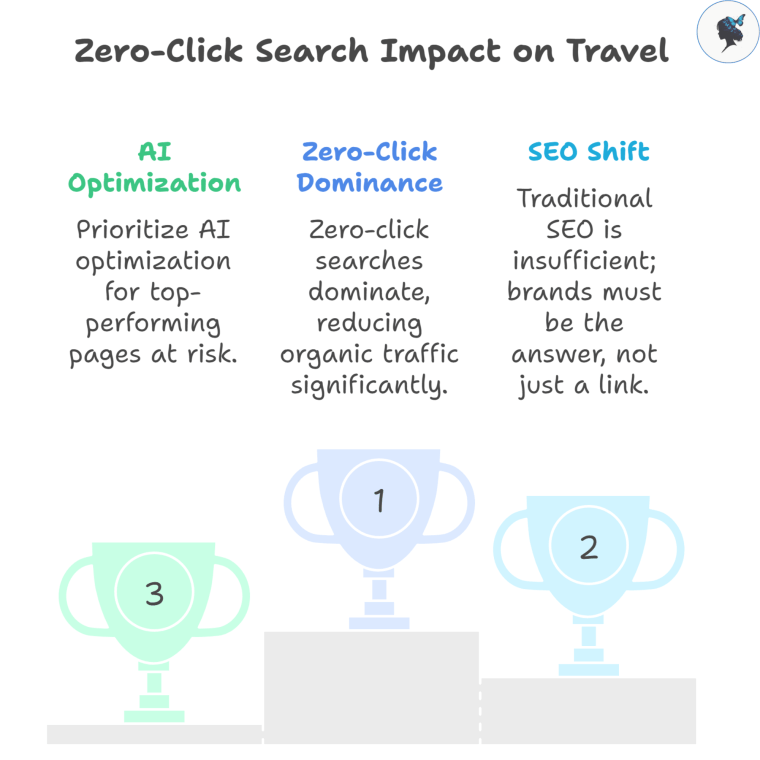
Wander Women Hot Tip: Map your top-performing pages and see which are most at risk of being eclipsed by AI summaries — prioritize them for AI optimization.
Key Differences Between GEO and AEO
| Factor | AEO | GEO |
|---|---|---|
| Goal | Provide concise factual responses | Be referenced in longer AI-generated narratives |
| Ideal Content Type | FAQs, how-to lists, definitions | Destination guides, itineraries, deep stories |
| Optimization Focus | Schema, brevity, clarity | Entities, context linking, authority signals |
| Typical Use Case | “When is best time to visit Iceland?” | “Plan a 7-day Iceland itinerary with hidden gems” |
Generative travel SEO in 2025 means integrating both — AEO for attention, GEO for context and relevance.
Wander Women Hot Tip: For each topic, include one “AEO hook” (a quick answer block) and a deeper GEO passage.
Strategies for GEO SEO in Travel
1 Focus on Entity-Based SEO
The travel content that thrives with AI frames clear semantic relationships.
To help AI understand your destination:
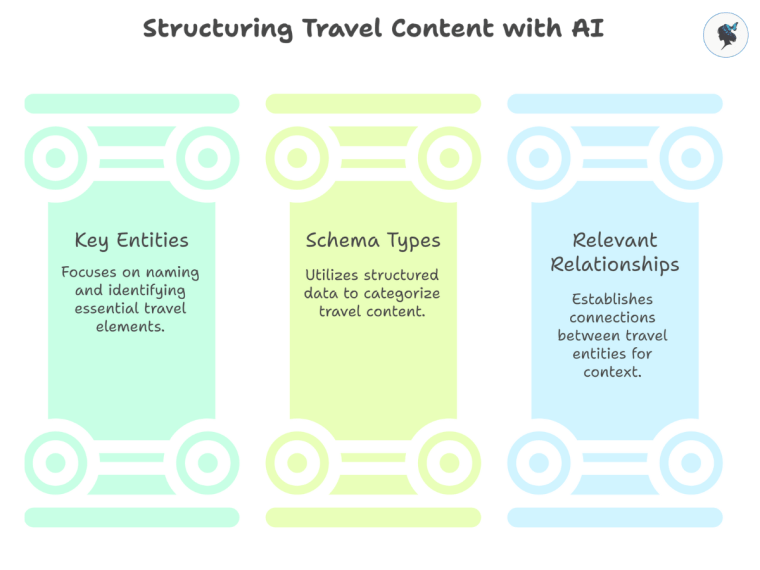
- Mention key entities (cities, landmarks, attractions) using consistent naming.
- Use schema types like:
TouristAttractionItineraryHotelRestaurant- Include relevant relationships: “Palermo is part of Sicily.” “Mount Etna is a top-rated tourist attraction near Catania.”
Wander Women Hot Tip: Always link your pages using the same canonical names (e.g. “Sicily / Sicilia”) to help AI resolve entity consistency.
2 Build AI-Comprehensible Content Structures
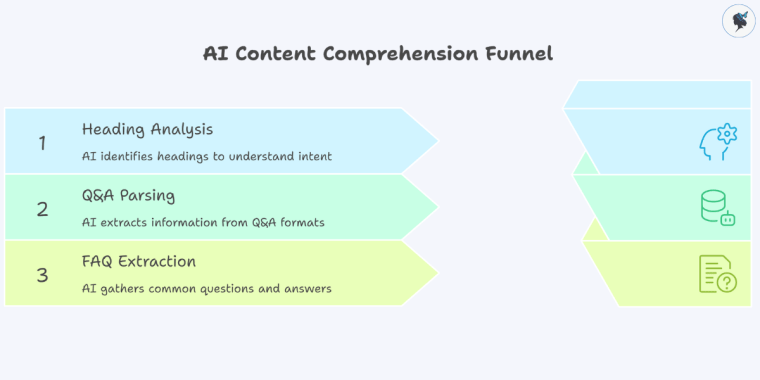
AI models parse headings, Q&A, and structured layout to extract meaning.
Use:
- Clear H2/H3 headings reflecting traveler intent (e.g., “Where to Stay in Lisbon for First-Time Visitors”).
- Natural question-and-answer formats.
- FAQ sections covering conversational search terms.
Wander Women Hot Tip: Before writing, map your content as an AI “outline” — will an AI be able to extract meaning easily?
3 Use Verified and Localized Data
Travel content that cites authoritative sources tends to be trusted by AI engines.
That means:
- Include sources, statistics, and citations (e.g., from tourism boards or government data).
- Highlight author credentials and local expertise.
- Use fresh, updated content — outdated info may be de-prioritized by AI.
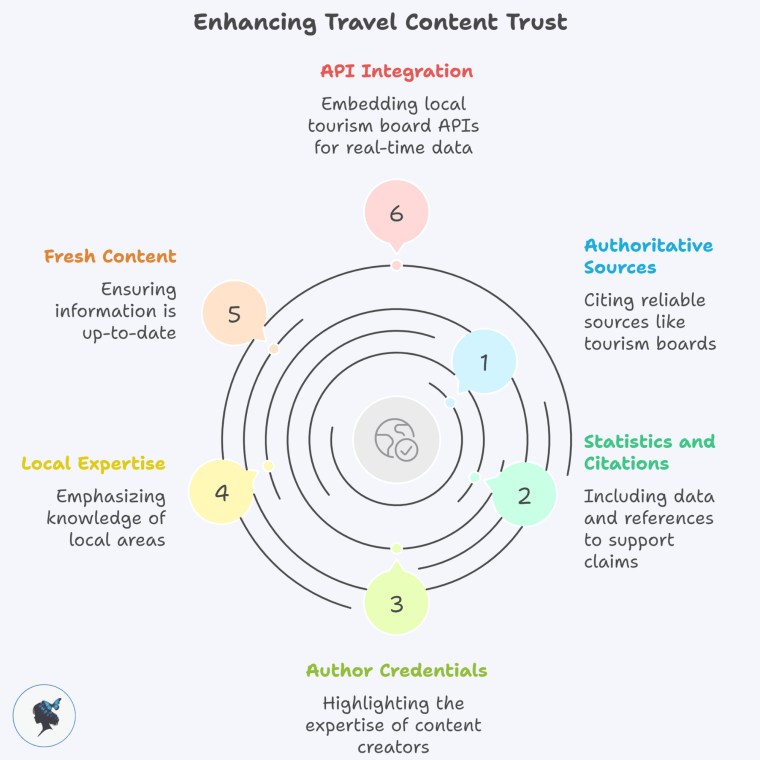
Wander Women Hot Tip: Embed local tourism board APIs or datasets where possible to power freshness.
4 Strengthen Context with Internal Linking
Content clusters matter more than isolated pages.
Link deep — “Top 10 Things in Lisbon” → “Hidden Gardens of Alfama” → “Lisbon Day Trips by Train.”
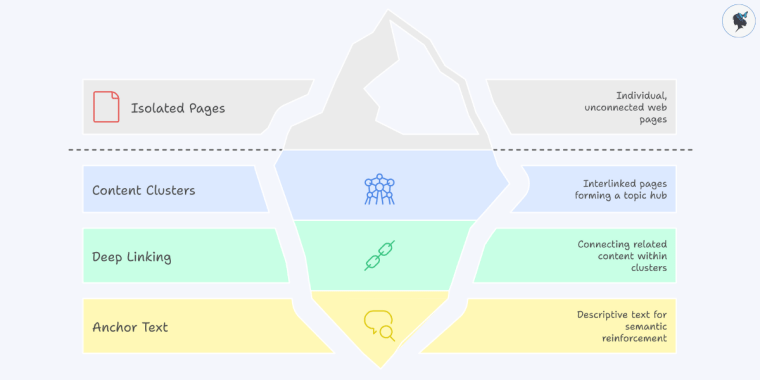
Wander Women Hot Tip: Use descriptive anchor text (not generic “click here”) to reinforce semantic relations.
More about internal linking here.
5 Optimize Multimedia for AI Recognition
AI models also interpret images and metadata.
Make it easy for them by:
- Using descriptive alt text (e.g., “Sunrise over Santorini caldera, Greece”).
- Embedding EXIF metadata with location and copyright info.
- Adding captions that explain context.
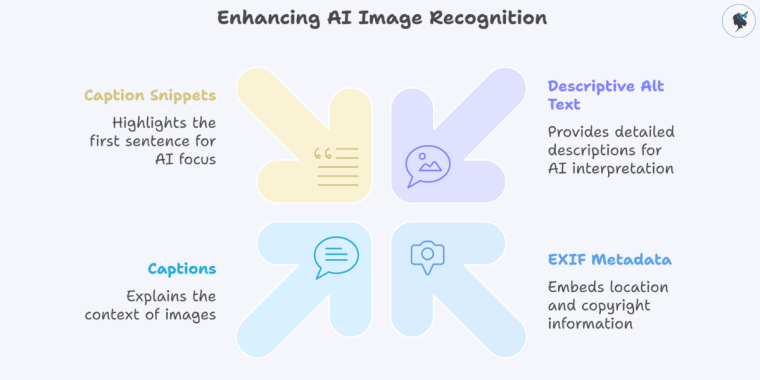
Wander Women Hot Tip: Always embed a “caption snippet” below images — the first sentence becomes AI fodder.
Implementing AEO for Travel Content
1 Create FAQ-Driven Segments
Insert a small FAQ block in each topic page (2–5 Qs) with natural language traveler queries.
- “What’s the best time to visit?”
- “How many days should I spend here?”
- “Is it family-friendly?”
Wander Women Hot Tip: Use your search analytics to identify 2 or 3 long-tail conversational queries and answer them succinctly.
2 Use Structured Data Markup
Apply FAQPage, HowTo, Review, Organization schema where relevant.
This makes your content machine-readable for AI answer engines.
Apply schema like:
FAQPageHowToOrganizationReview
Wander Women Hot Tip: Validate schema in Google’s Rich Results tool — errors often prevent AI uptake.
3 Write for Conversational Queries
People talk to AI like humans. Embed subheadings that mirror phrasing: “Where to eat in Porto like a local?”
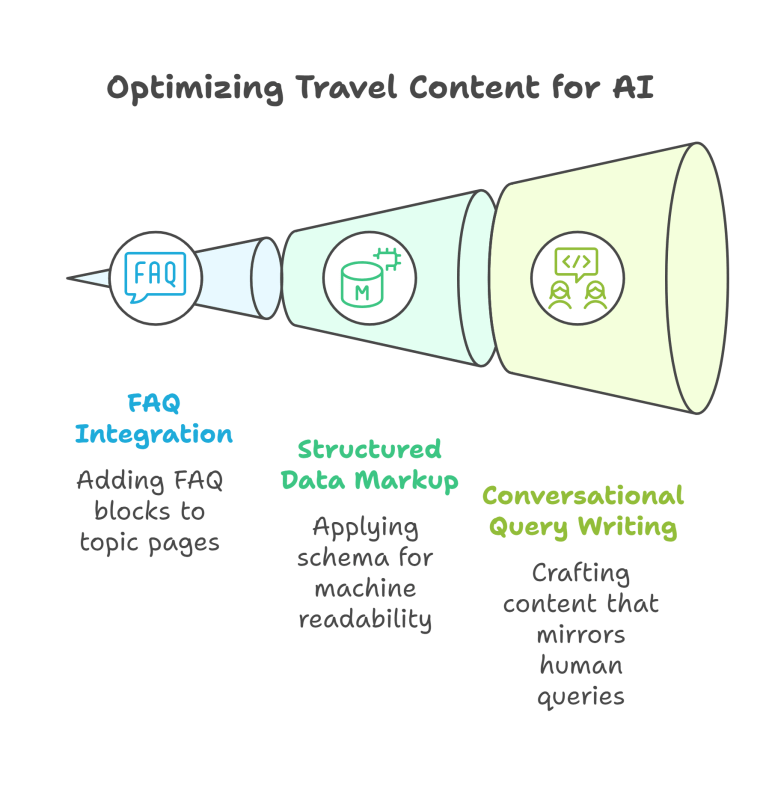
Wander Women Hot Tip: Use variations (Who, What, Where, Why) in headings to cover more conversational ground.
Measuring Success in the Age of AI Search
Monitor metrics beyond clicks:
- AI mentions / citations in tools like Perplexity, Bing Copilot
- Branded search lift post-AI exposure
- Referral traffic from AI “read more” links (if available)
- Zero-click visibility (impressions in search console from summary panels)
Wander Women Hot Tip: Build a “monitoring query list” of 10–20 seed travel topics and check weekly whether AI engines surface your content.
Case Studies and Best Practices
Case Study 1: Sicily Itinerary Optimization
A boutique travel blog restructured its “7-Day Sicily Itinerary” applying entity markup, internal linking clusters, and FAQ sections — within weeks, their content began appearing in Bing Copilot and Perplexity’s reference list.
Wander Women Hot Tip: After publishing, test your content prompt “Plan a 7-day Sicily trip” to see if your article is cited.
Case Study 2: DMO Destination Hub Model
A DMO created a hub-and-spoke model:
- Hub: “Explore Northern Portugal”
- Spokes: “Douro Valley Wine Tours,” “Porto Neighborhood Walks,” “Eco-Stays in Minho”
They saw increased topical authority and AI mention traction.
Wander Women Hot Tip: Use a visual site map to confirm each subpage is tightly linked to the hub.
The Future: Where GEO Meets Social Discovery
In 2025, a study observed that almost 1 in 5 UK adults aged 25–34 are now using AI tools to design holiday packages. Social platforms — TikTok, Instagram, YouTube — are increasingly feeding into AI models as source data. Brands should optimize UGC and social metadata (captions, tags) to become part of those AI inputs.
Wander Women Hot Tip: When reposting social content, republish it as a structured blog snippet to feed both social and AI visibility.
More about repurposing content here.
Conclusion
In this AI-first environment, visibility is no longer about ranking — it’s about being recognized. Travel marketers must fuse GEO (depth + context) with AEO (clarity + structure) to stay relevant.
Wander Women Hot Tip: Treat your site as a knowledge graph — not a collection of pages — and feed AI the best path through it.
Need help? Contact us today.
Discover more from Wander Women Strategies
Subscribe to get the latest posts sent to your email.

2 thoughts on “How to Optimize Travel Content for Generative AI: From GEO to AEO”
Comments are closed.