
▶ Table of Contents
Introduction: Why Summer Content Needs a Strategy
For travel agencies, summer is the season everyone talks about — long vacations, beach getaways, family trips, and international travel spikes. Yet, paradoxically, many agencies struggle to maximize traffic and bookings outside peak months, leaving summer content underperforming.
Travel agencies need a proactive content strategy for summer — one that addresses immediate traffic dips, strengthens SEO, and ensures long-term relevance year after year.
Summer Issues Travel Agencies Face
Understanding the common pitfalls of summer content is crucial before implementing solutions.
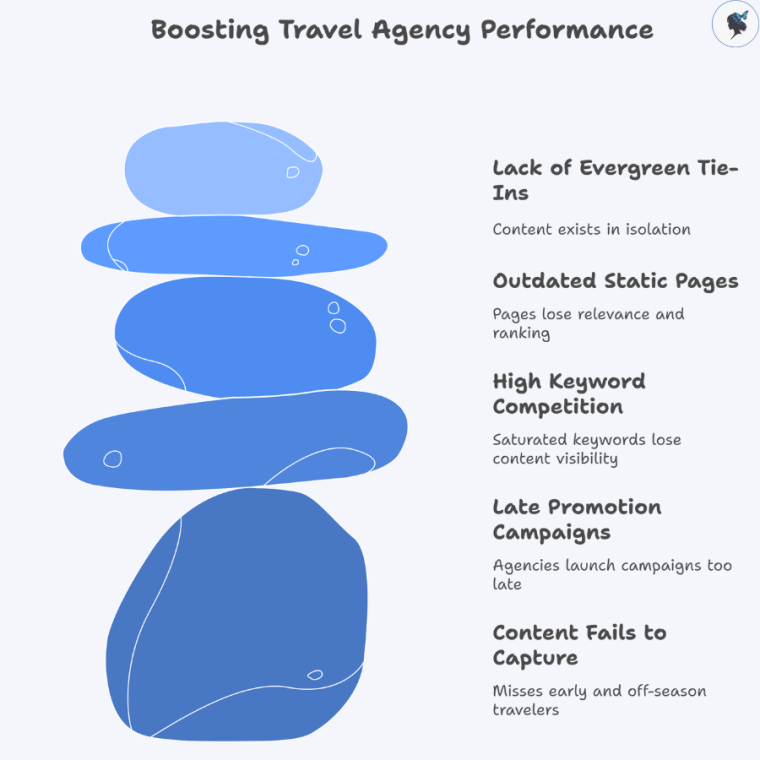
1. Traffic and Booking Dips Outside Peak Months
- Many agencies see a spike in website visits in June–August but a significant drop in May or September.
- Content often fails to capture early planners or off-season travelers.
2. Content Lacks Early Promotion
- Agencies tend to launch summer guides or promotional campaigns too late.
- Early promotion (spring or even late winter) can capture travelers planning 3–6 months ahead, giving agencies a competitive advantage.
3. High Competition for Summer-Related Keywords
- Keywords like “summer holidays,” “beach vacations,” and “summer travel deals” are saturated.
- Without creative, long-tail targeting, your content risks being lost amid global competition.
4. Pages Get Outdated Year to Year
- Static pages lose relevance and fail to rank in search engines.
- Content with outdated information (prices, regulations, events) decreases credibility and discourages repeat visits.
5. Lack of Evergreen Tie-Ins
- Summer content often exists in isolation without connections to off-peak or shoulder-season content.
- Agencies miss opportunities to guide users year-round, such as linking summer destinations to winter or fall experiences.
More about evergreen content here.
Short-Term Fixes for Summer Content
For immediate improvements to summer content, travel agencies can implement several quick-win strategies.

1. Refresh Last Year’s Successful Content
- Update itineraries, imagery, and statistics from the previous year.
- Example: “Top 10 Mediterranean Beaches – Updated 2026”.
- Refreshing existing content is faster than creating new posts while improving SEO relevance.
2. Launch Promotions Early
- Start campaigns in spring to capture travelers planning ahead.
- Channels: newsletters, social media teasers, blog posts, and paid search campaigns.
- Early promotion increases the likelihood of bookings before competitors saturate the market.
3. Add User-Generated Content
- Incorporate traveler photos, reviews, and testimonials.
- Campaign idea: “Share Your Best Summer Memories”.
- Benefits: boosts engagement, adds fresh content, and enhances SEO through social signals.
More about user-generated content here.
4. Update Titles and Metadata
- Include the current year in page titles and meta descriptions to signal freshness.
- Example: “Summer in Bali 2026: Insider Tips & Deals”.
- Fresh metadata helps improve CTRs and search rankings.
More about meta titles and descriptions here.
5. Leverage Local Summer Keywords
- Target geographic or niche-specific terms to reduce competition.
- Examples: “Best summer festivals in Provence”, “Family-friendly beaches in Florida”.
- Localized keywords attract travelers looking for specific experiences rather than generic searches.
Long-Term Strategies for Sustainable Seasonal Content
Beyond short-term fixes, agencies should implement strategies that maintain relevance year after year.

1. Maintain Evergreen Landing Pages
- Avoid year-specific URLs like
/summer-2025-guide. - Keep evergreen URLs such as
/summer-travel-guideand update content annually. - Benefits: retains backlinks, improves search rankings, and reduces maintenance.
2. Build Backlink Authority
- Promote summer content during off-season via email, blog posts, or social media.
- Link to evergreen content from other pages to increase domain authority.
More about internal linking here.
3. Repurpose Content Across Seasons
- Turn summer guides into shoulder-season planning resources:
- Example: “Plan Your Winter Trip Now: Lessons From Summer Destinations”.
- Repurposing extends the lifespan of content and maintains relevance year-round.
More about repurposing content here.
4. Monitor Trends with Tools
- Use Google Trends, Semrush, or Ahrefs to track interest shifts and seasonal keywords.
- Adjust content focus based on search volume, emerging destinations, or traveler queries.
5. Segment Audiences for Tailored Updates
- Personalize content for families, solo travelers, luxury travelers, or adventure seekers.
- Example: send family-focused summer guides to parents while highlighting adventure activities to solo travelers.
More about the importance of personalization here.
Unique Summer Content Ideas
Creating engaging and shareable summer content can differentiate your agency.
- Top Hidden Beach Spots for 2026 – Lesser-known destinations that appeal to adventurous travelers.
- Interactive “Plan Your Summer Getaway” Quiz – Captures emails and engages users while recommending trips.
- User-Submitted Summer Photo Gallery – Encourages community participation and adds dynamic content to your site.
- Off-Season vs. Peak-Season Cost Comparison – Helps travelers plan budget-friendly trips and cross-promotes off-peak content.
- Local Summer Festival Guides with Sustainable Travel Tips – Combines experiential travel with responsible tourism, appealing to eco-conscious travelers.
Sample Summer Content Calendar
A structured timeline ensures timely content creation, promotion, and updates.
| Month | Actions |
|---|---|
| January–February | Conduct keyword research, analyze last year’s traffic, segment audiences |
| March | Refresh previous content, plan new blog posts, gather user-generated content |
| April | Launch early spring promotions, post teaser content on social media |
| May | Publish summer guides, interactive content, quizzes, and photo galleries |
| June–August | Run summer-themed campaigns, promote content via email/social media, monitor engagement |
| September | Analyze metrics, start repurposing content for shoulder season |
| October–December | Update evergreen content for next year, build backlinks, optimize landing pages |
Wander Women Hot Tip: Always integrate content review checkpoints into your calendar to ensure pages are accurate, up-to-date, and SEO-friendly.
Actionable Tips for Travel Agencies
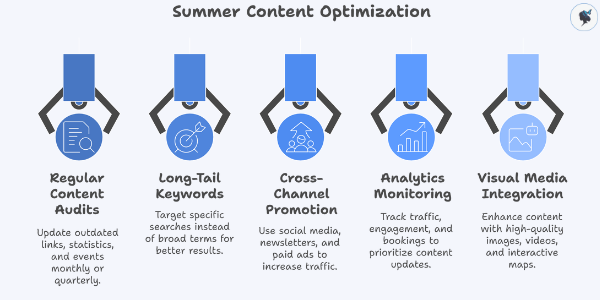
- Audit Content Regularly: Schedule monthly or quarterly audits to update outdated links, statistics, and events.
- Focus on Long-Tail Keywords: Target specific searches like “family-friendly summer trips in Greece” instead of just “summer vacations.”
- Promote Across Channels: Leverage social media, newsletters, and paid ads to drive traffic to summer content.
- Use Analytics: Monitor which pages drive traffic, engagement, and bookings to prioritize updates.
- Incorporate Visual Media: Summer travel content benefits from high-quality images, videos, and interactive maps.
Conclusion
Summer content is more than a seasonal necessity; it’s a strategic asset for travel agencies. By addressing traffic dips, optimizing for SEO, leveraging user-generated content, and linking to evergreen and off-season pages, agencies can maximize engagement and bookings throughout the year.
Short-term fixes like updating old content, launching early promotions, and targeting local keywords provide immediate results, while long-term strategies such as maintaining evergreen pages, monitoring trends, and segmenting audiences ensure sustainable performance.
With unique content ideas like interactive quizzes, hidden beach guides, and sustainable festival tips, travel agencies can stand out in a crowded summer travel market. By following a structured content calendar and committing to both short- and long-term strategies, agencies can maintain relevance, authority, and engagement from early spring planning through post-summer wrap-ups.
Start by auditing your summer content today. Refresh high-performing posts, plan next year’s guides early, and experiment with interactive content to keep travelers engaged year-round.
Need help with your summer content strategy? Contact us today!
Discover more from Wander Women Strategies
Subscribe to get the latest posts sent to your email.
