

▶ Table of Contents
Introduction
Travel websites are a unique beast in the SEO world. Unlike static sites, they deal with constantly shifting inventory, seasonal peaks, fleeting offers, and event-driven content. These quirks present technical SEO challenges that, if not managed, can hurt search visibility, crawl efficiency, and ultimately bookings.
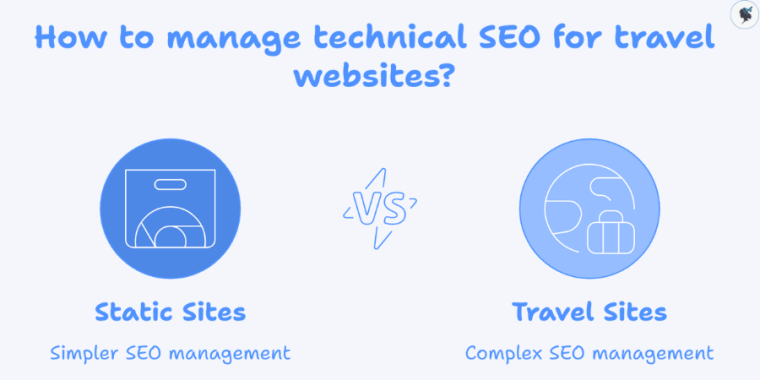
This guide explores the top technical SEO issues travel sites face and provides actionable strategies to navigate them.
Understanding Technical SEO Quirks in Travel Sites
1. What Makes Travel Sites Technically Unique
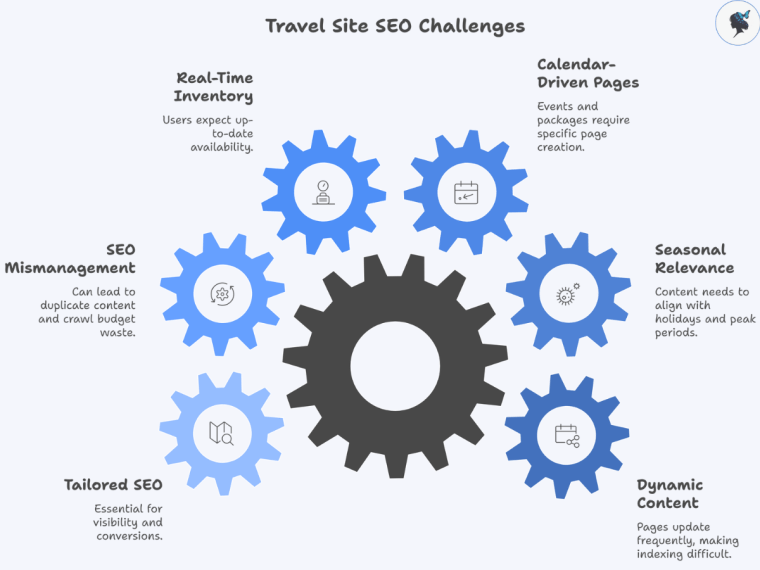
Travel sites differ from other industries because:
- Pages often update dynamically based on availability, pricing, or promotions.
- Content relevance is highly seasonal (holidays, school breaks, peak travel periods).
- There’s frequent creation of calendar-driven pages for events, festivals, or seasonal packages.
- Users expect real-time inventory while search engines prefer crawlable, stable content.
2. Why Tailored SEO Approaches Are Needed
- Search engines may struggle to index rapidly changing content.
- Mismanagement can cause duplicate content issues, wasted crawl budget, or loss of authority.
- Travel agencies that understand and manage these quirks gain better visibility and conversion rates.
Wander Women Hot Tip: Document every dynamic URL, seasonal page, and temporary offer in your SEO audit. This creates a baseline for monitoring crawl errors, canonical issues, and indexing gaps.
Seasonal Timing and Its SEO Implications
1. Understanding Seasonal SEO Challenges
- Peaks in travel search vary by destination and audience (e.g., Christmas ski trips vs. summer beach holidays).
- Pages created for seasonal relevance may lose rankings outside peak periods if not updated.
- Keywords for seasonal content fluctuate, requiring preemptive optimization.
2. Strategies for Seasonal Content Optimization
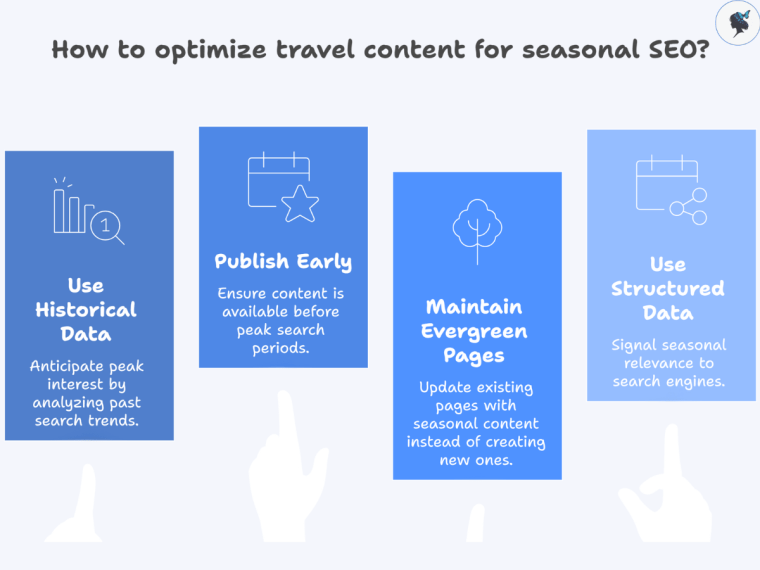
- Use historical search data to anticipate peak interest. Tools like Google Trends or Search Console are essential.
- Publish early: For example, summer vacation guides should go live in spring.
- Maintain evergreen pages: Instead of creating a new page each year, update existing pages with seasonal content.
- Structured data for events and offers: Signals search engines about seasonal relevance.
Wander Women Hot Tip: Maintain a seasonal content calendar with metadata, internal links, and structured data updated before peak search periods.
More about internal linking here.
Dynamic Inventory Pages and SEO Challenges
1. What Are Dynamic Inventory Pages?
- Pages that display live availability, pricing, and package options.
- Common for hotels, flights, tours, and seasonal packages.
2. SEO Implications
- High risk of duplicate or thin content due to rapidly changing inventory.
- Frequent updates can waste crawl budget if search engines repeatedly crawl low-value variations.
- User experience must remain consistent even if inventory changes frequently.
3. Best Practices
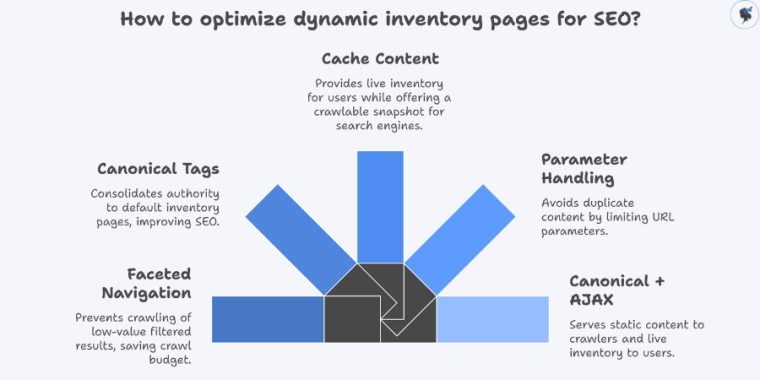
- Faceted navigation: Noindex low-value filtered results to prevent unnecessary crawling.
- Canonical tags: Point to default inventory pages to consolidate authority.
- Cache content for SEO: Users see live inventory, while crawlers see a crawlable snapshot.
- Parameter handling: Limit URL parameters to avoid duplicate content.
Wander Women Hot Tip: Use a canonical + AJAX strategy: serve static content to crawlers while providing live inventory for users.
Canonical Issues with Fleeting Offers
1. Understanding Fleeting Offers
- Flash sales, last-minute deals, or seasonal promotions live for days or weeks.
- Often repeated on multiple URLs for different campaigns.
2. Common Canonical Challenges
- Duplicate content risk when offers are mirrored on multiple pages.
- Temporary pages may be indexed prematurely, affecting long-term SEO.
- Incorrect canonical tags can prevent main destination pages from retaining authority.
3. Solutions for Canonical Management
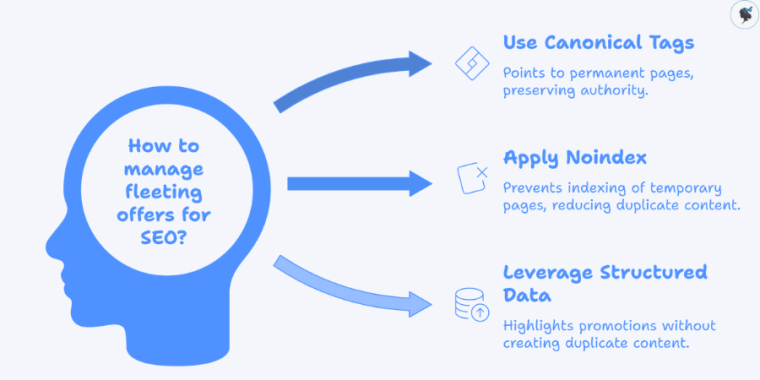
- Use canonical tags pointing to permanent destination or product pages.
- Apply noindex to short-lived pages if they do not add long-term SEO value.
- Leverage structured data to highlight promotions without creating duplicate content.
Wander Women Hot Tip: Create a template for fleeting offers: canonical points to the main page, structured data shows the time-sensitive deal, ensuring SEO value is preserved.
Calendar-Driven Content for Travel Sites
1. What is Calendar-Driven Content?
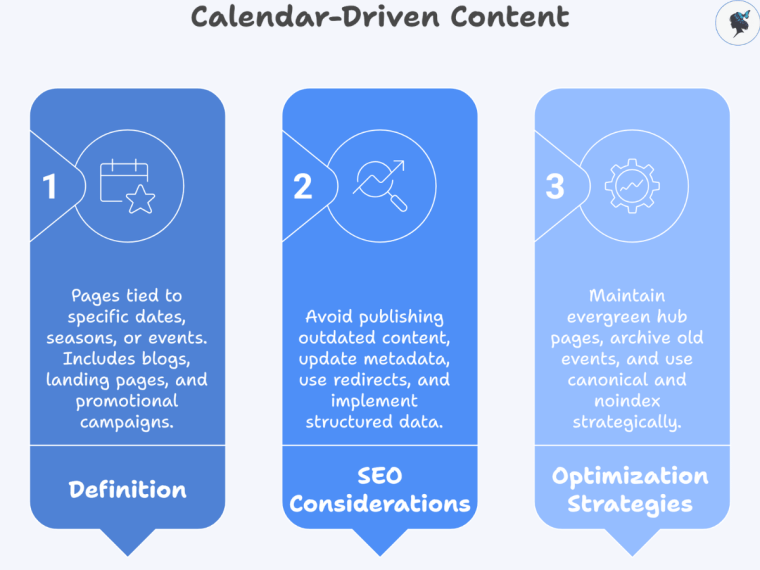
- Pages tied to specific dates, seasons, or events (e.g., “Top Paris Festivals in July”).
- Includes blogs, landing pages, and promotional campaigns.
2. SEO Considerations
- Avoid publishing outdated content with past event dates.
- Update metadata to reflect the current year or season.
- Use 301 redirects or updated URLs for recurring annual events to preserve link equity.
- Implement structured data for events and offers for rich SERP features.
3. Optimization Strategies
- Maintain evergreen hub pages linking to yearly updates.
- Archive old events properly to reduce thin content and clutter.
- Use canonical and noindex strategically to maintain authority.
Wander Women Hot Tip: Build a calendar-driven content template that automatically updates metadata, structured data, and internal links each year to maintain SEO relevance.
Integrating Technical Strategies Across Travel Sites
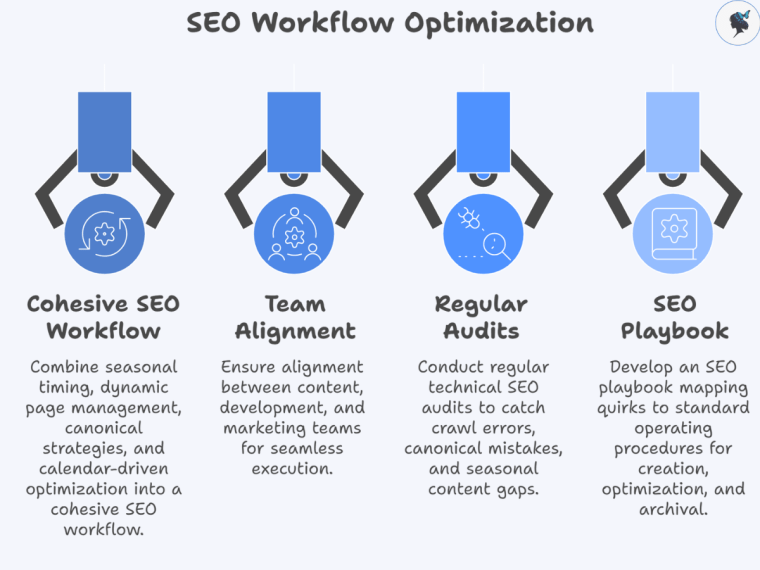
- Combine seasonal timing, dynamic page management, canonical strategies, and calendar-driven optimization into a cohesive SEO workflow.
- Ensure alignment between content, development, and marketing teams for seamless execution.
- Conduct regular technical SEO audits to catch crawl errors, canonical mistakes, and seasonal content gaps.
Wander Women Hot Tip: Develop an SEO playbook mapping quirks (dynamic inventory, fleeting offers, seasonal content) to standard operating procedures for creation, optimization, and archival.
Conclusion
Travel sites face unique technical SEO challenges due to constantly shifting content, seasonal trends, and inventory-driven pages. By proactively managing seasonal timing, dynamic pages, canonical issues, and calendar-driven content, travel agencies can:
- Maintain search visibility year-round.
- Improve crawl efficiency and indexation.
- Preserve authority across temporary or seasonal offers.
- Enhance user experience and booking conversions.
Wander Women Hot Tip: Start with a priority list of seasonal pages and dynamic inventory URLs to audit and optimize. Scaling this process ensures sustained SEO performance and increased revenue opportunities.
Need help with technical SEO? Contact us today!
Discover more from Wander Women Strategies
Subscribe to get the latest posts sent to your email.
