
▶ Table of Contents
Introduction to Schema and Rich Results
If you’re in the travel business — whether you run a tour operator, travel agency, or destination‑content site — you already know how fiercely competitive search is. The difference between page two and page one of Google often comes down to more than keyword stuffing. One of the most powerful tools you can use today is schema markup and its resulting rich results.
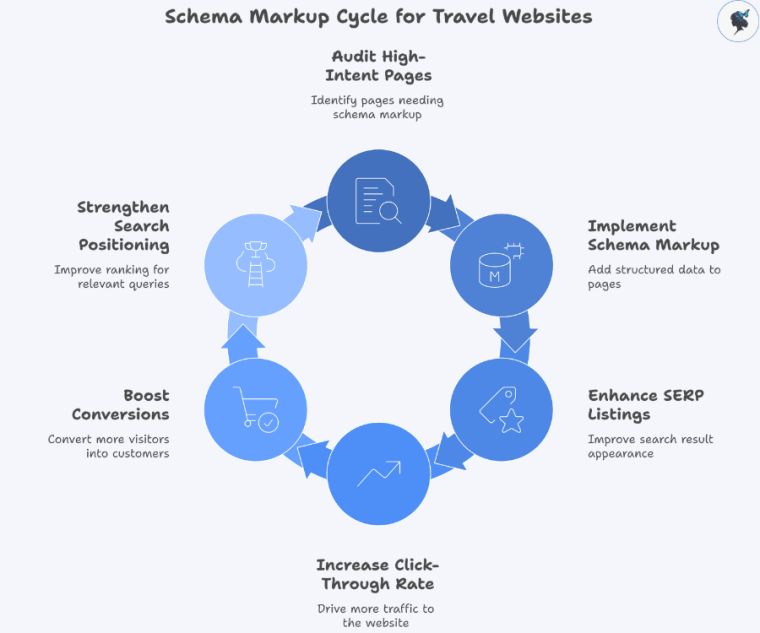
Schema markup is structured data (often in JSON‑LD format) that tells search engines exactly what your page is about: a tour, an event, an offer, an itinerary, a FAQ, and so on. Rich results are the enhanced listings you see in Google (star ratings, price, event dates, accordions) that make your SERP listing stand out. You might like our article: AI overview & SERP integration.
According to a recent article, travel websites that implement comprehensive schema markup see up to a 30%–35% improvement in click‑through rate (CTR) compared with sites without it.
For travel agencies, that means more organic traffic, better conversion opportunities, and stronger positioning in search for high‑intent traveller queries. Throughout this article we’ll explore what this means, the types of schema most relevant for travel (offers, itineraries, events, FAQs), how to implement them, and real‑world case examples.
Wander Women Hot Tip: Start by auditing your high‑intent pages (booking/offers, itineraries, event pages) and check whether they have any schema markup. If none, schedule them for markup as priority.
Importance of Schema Markup for Travel Content
Why It Matters
While it’s accurate that schema markup isn’t a direct ranking factor in Google’s algorithm, it has several indirect but highly valuable effects:
- Rich results increase CTR. As noted, travel sites with robust schema reported up to a 30% increase in organic CTR.
- User experience improves: when searchers see price, availability, dates, or ratings directly in SERPs, your listing becomes more compelling.
- It helps search engines better understand your content, which is particularly useful for complex travel content (itineraries, multi‑day tours, events).

Why Travel Content Specifically
Travel content is complex: you have offers, tours, events, frequently updated inventory, seasonal packages. Read our article: managing seasonal content.
Without schema you’re relying purely on generic page content and hope search engines interpret it properly. For travel agencies:
- Your offer pages (seasonal deals, last‑minute packages) benefit from Offer schema so that price/availability appear.
- Your tours or multi‐day itineraries benefit from Tour/ItemList schema so search engines understand “day 1: city A; day 2: city B”.
- Events and festivals (that drive travel) benefit from Event schema, which can surface your page in event carousels.
Wander Women Hot Tip: Prioritize the commercial decision pages (offers, booking pages, featured tours) for schema implementation first — these are more likely to convert once you attract traffic.
Types of Schema Markup Relevant to Travel Agencies
Here are key categories travel agencies should exploit.
Offers
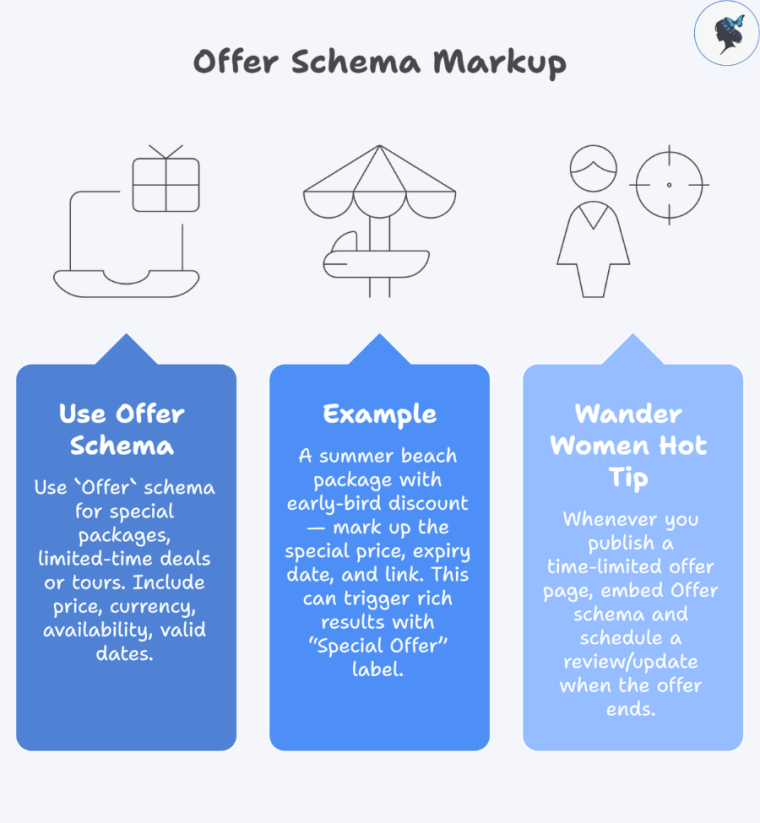
- Use
Offerschema for special packages, limited‑time deals or tours. Include price, currency, availability, valid dates. - Example: A summer beach package with early‑bird discount — mark up the special price, expiry date, and link. This can trigger rich results with “Special Offer” label.
Wander Women Hot Tip: Whenever you publish a time‑limited offer page (e.g., “Summer 2025 Beach Escape – 10% off if you book by 31 May”), embed Offer schema and schedule a review/update when the offer ends (so you avoid showing expired info to search engines).
Itineraries
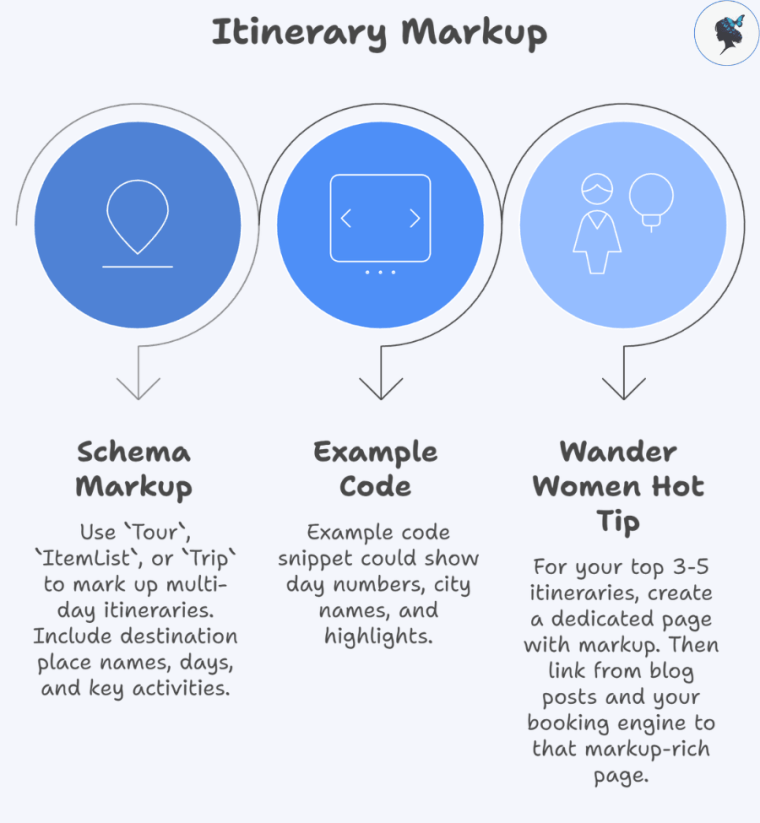
- Use
Tour,ItemListorTrip(depending on what schema vocabulary you choose) to mark up multi‑day itineraries. Include destination place names, days, key activities. - Example code snippet could show day numbers, city names, highlights.
Wander Women Hot Tip: For your top 3‑5 itineraries (eg: “7‑day Italy Highlights”, “10‑day Safari & Beach”) create a dedicated page with markup. Then link from blog posts and your booking engine to that markup‑rich page.
Events
- Use
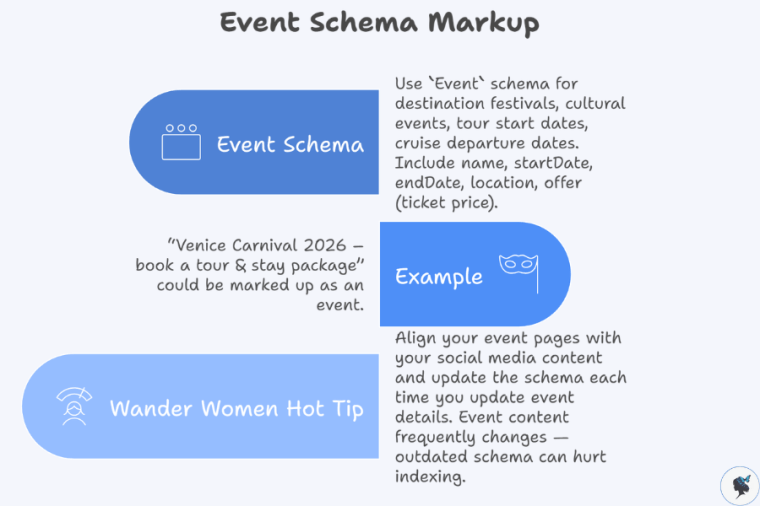
Eventschema for destination festivals, cultural events, tour start dates, cruise departure dates. Include name, startDate, endDate, location, offer (ticket price). - Example: “Venice Carnival 2026 – book a tour & stay package” could be marked up as an event.
Wander Women Hot Tip: Align your event pages with your social media content and update the schema each time you update event details. Event content frequently changes — outdated schema can hurt indexing. More about aligning social media calendars here.
FAQs
- Use
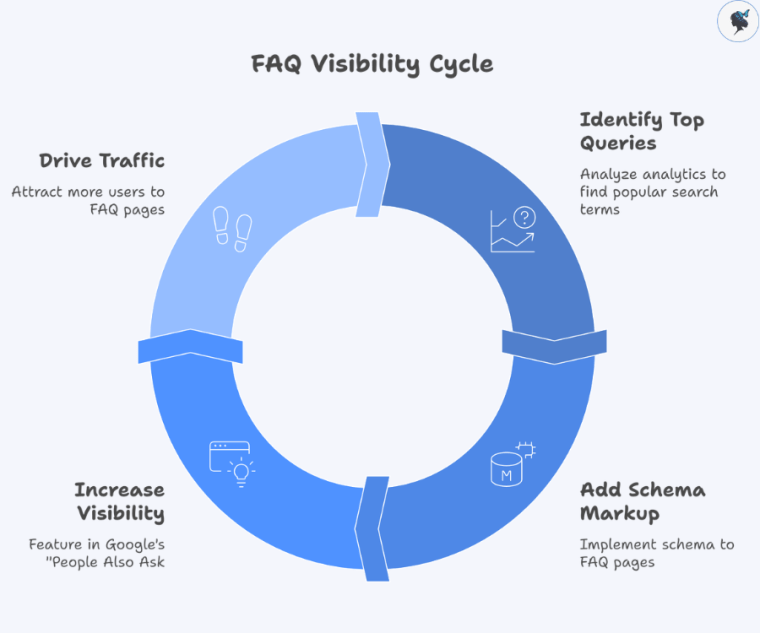
FAQPageschema for your Q&A content targeted at travellers (e.g., “What is the best time to visit Iceland in winter?”, “Do I need a visa for Costa Rica?”). - When implemented correctly, these can feature in Google’s “People Also Ask” boxes.
Wander Women Hot Tip: Go through your analytics/search console and list the top 10‑15 query‑phrases that bring users to FAQ pages. Then add schema markup to those FAQ pages to increase visibility.
How Travel Agencies Can Implement Schema Markup
Tools and Resources
- Google’s Structured Data Markup Helper
- Schema.org documentation (e.g., Tour, Offer, Event types)
- CMS plugins/modules: for WordPress (Yoast, Rank Math), Drupal (Schema App), Shopify (various).
- Validation tools: Google Rich Results Test, Schema Validator.
Step‑by‑Step Guide
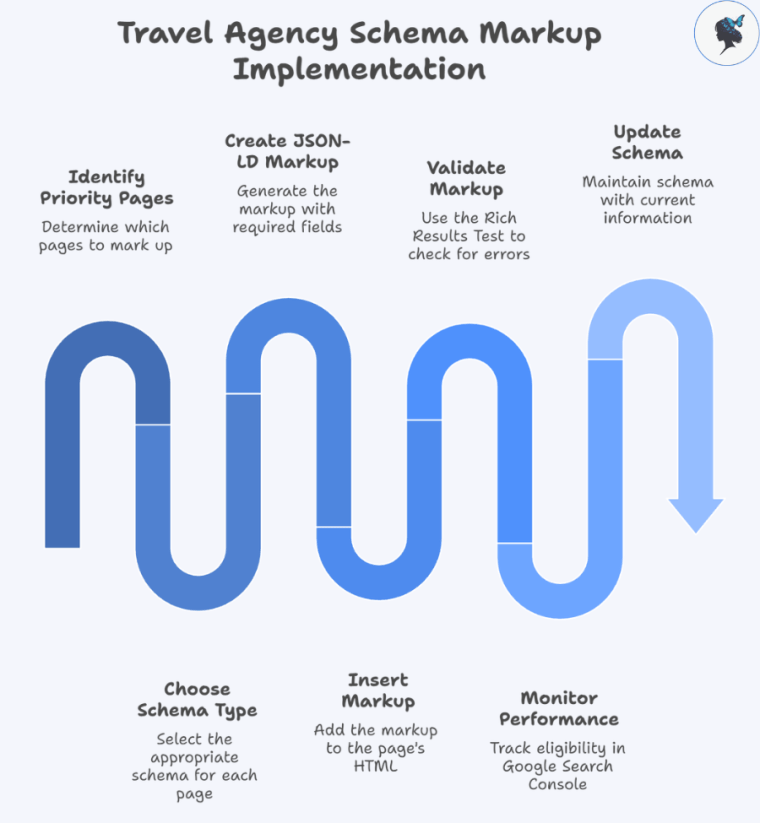
- Identify your priority pages: offers, itineraries, event pages, FAQ pages.
- Choose the correct schema type (Offer, Tour/ItemList, Event, FAQPage).
- Create the JSON‑LD markup with required fields (e.g.,
@context,@type,name,price,availability,startDate). - Insert the markup into the
<head>or before</body>of the page HTML. - Use the Rich Results Test to validate. Fix any errors or warnings.
- Monitor via Google Search Console > Enhancements section to check how many pages are eligible for rich results.
- Update schema when offers expire or event start dates change. Schema maintenance is ongoing.
Wander Women Hot Tip: Use a staging site to test markup implementation and monitor how Google displays rich results before deploying live – this avoids unintended CTR drops.
Case Study of Successful Implementation
In one hotel‑industry case study, implementing schema markup (local business + hotel review + offer) helped a property reduce reliance on OTAs and improve direct bookings.
Wander Women Hot Tip: Document what types of schema you implemented (Offer vs Tour vs Event) and track the corresponding CTR or conversion lift. Use this data as proof to scale your schema efforts across other pages.
Conclusion
Schema and rich results are no longer optional extras — they’re strategic tools, especially for travel agencies operating in competitive organic search environments. By implementing key schema types such as Offers, Itineraries, Events and FAQs, your pages can stand out in SERPs, capture user attention earlier in the funnel, and drive stronger engagement and bookings.
Start with your most important pages (highest‑intent offers or your most popular itineraries), implement schema, validate it, monitor performance. Then scale across your site.
Wander Women Hot Tip: Schedule a quarterly audit of structured data across your site — verify that all schema is valid, current, and aligned with your content calendar and offer calendar.
Need help implementing Schema? Contact us today!
Discover more from Wander Women Strategies
Subscribe to get the latest posts sent to your email.

One thought on “Advanced Schema and Rich Result Opportunities for Travel Content: How Travel Agencies Can Exploit These”
Comments are closed.