
▶ Table of Contents
- Introduction: Why SEO Matters for Small Businesses
- Understanding SEO Basics
- Keyword Research: Finding What Customers Search For
- On-Page SEO: Optimizing Your Website Content
- Technical SEO Fundamentals
- Off-Page SEO: Building Authority and Trust
- Local SEO: Essential for Small Businesses
- Content Marketing and SEO
- Measuring SEO Success
- Essential SEO Tools
- Common SEO Mistakes Small Businesses Should Avoid
- SEO Trends Small Businesses Should Watch
Introduction: Why SEO Matters for Small Businesses
If you run a small business, you probably want more customers to find you online. One of the most effective ways to achieve that is through Search Engine Optimization (SEO).
SEO is the process of improving your website so that it appears higher in search engine results when people search for products or services related to your business. For example, if someone searches for “best bakery near me,” SEO helps ensure your bakery appears among the results.
SEO is incredibly important for small businesses because most customers start their buying journey online. Research shows that organic search drives more than 50% of website traffic, making it one of the largest sources of visitors for businesses online.
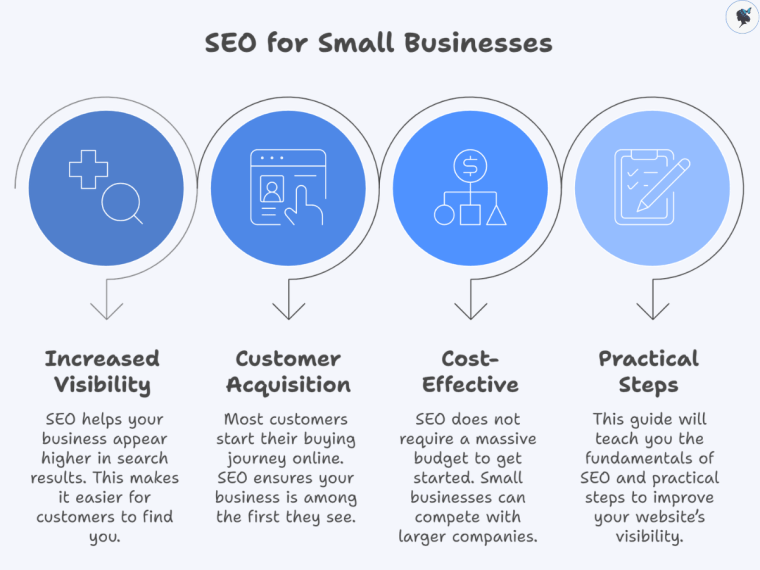
The good news is that SEO does not require a massive budget to get started. With the right strategies and consistent effort, small businesses can compete with larger companies in search results.
In this guide, you’ll learn the fundamentals of SEO and practical steps to improve your website’s visibility.
Understanding SEO Basics
What Is SEO?
Search Engine Optimization (SEO) refers to the process of improving a website’s visibility in search engines like Google. The goal is to attract organic (unpaid) traffic from people who are searching for information, products, or services.
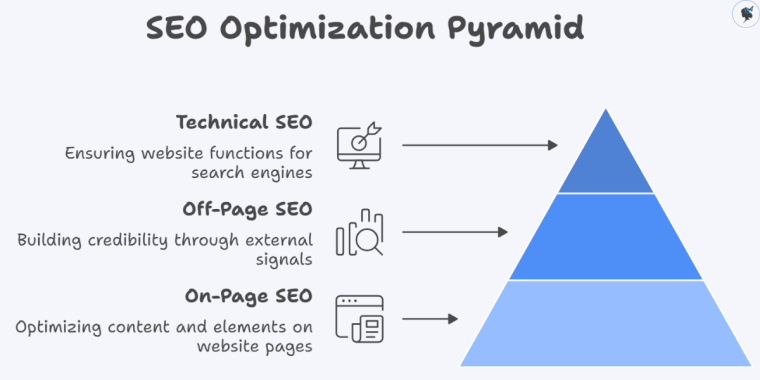
SEO typically consists of three main components:
On-page SEO
Optimizing the content and elements on your website pages.
Off-page SEO
Building credibility and authority through external signals such as backlinks.
Technical SEO
Ensuring your website functions properly so search engines can crawl and index it.
When these three components work together, search engines can better understand your website and rank it higher for relevant searches.
How do Search Engines Work?
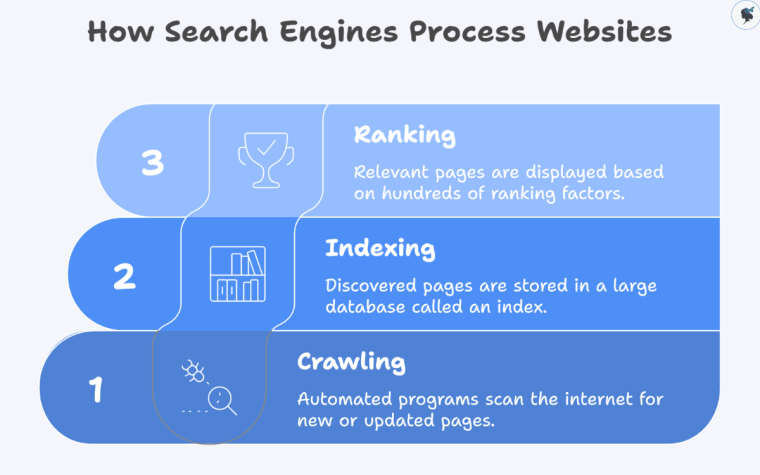
Search engines follow three main steps when processing websites:
Crawling
Search engines use automated programs called crawlers or spiders to scan the internet and discover new or updated pages.
Indexing
Once a page is discovered, it is stored in a large database called an index. This index contains billions of webpages.
Ranking
When a user performs a search, the search engine analyzes its index and displays the most relevant pages based on hundreds of ranking factors.
These factors include content relevance, page quality, user experience, and website authority.
More about crawlability and indexing here.
Why Does SEO Benefit Small Businesses?
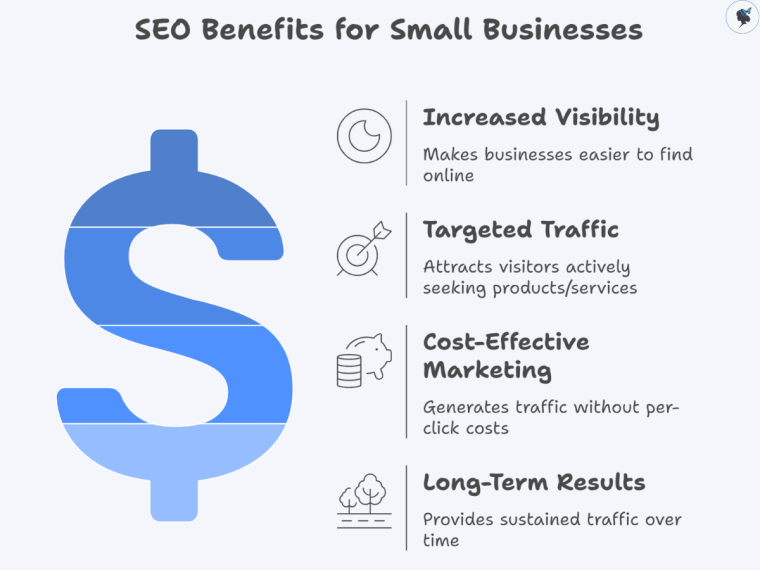
SEO provides several advantages for small businesses:
Increased visibility
Your business becomes easier to find online.
Targeted traffic
Visitors coming from search engines are actively looking for your products or services.
Cost-effective marketing
Unlike paid advertising, organic traffic does not require paying for each click.
Long-term results
SEO improvements can continue generating traffic for months or years.
For small businesses with limited marketing budgets, SEO can be one of the most powerful growth strategies available.
Keyword Research: Finding What Customers Search For
What Are Keywords?
Keywords are the words and phrases people type into search engines.
For example:
- “affordable wedding photographer”
- “best coffee shop near me”
- “how to fix a leaking faucet”
By identifying the keywords your customers are searching for, you can create content that directly answers their questions.
Types of Keywords
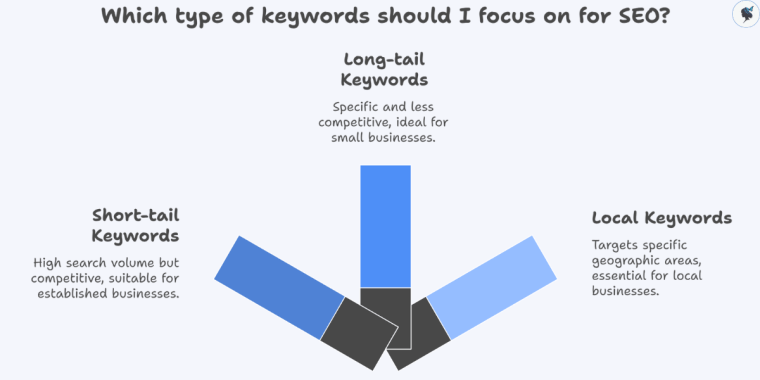
Short-tail keywords
These are broad search terms with high search volume.
Example: “coffee shop”
Long-tail keywords
These are longer and more specific search phrases.
Example: “best coffee shop for remote work in Madrid”
Long-tail keywords are often easier for small businesses to rank for.
More about long-tail keywords here.
Local keywords
These include geographic locations.
Example: “plumber in Barcelona”
Local keywords are especially important for businesses serving specific areas.
More about location-based keywords here.
Why Does Keyword Research Matter?
Keyword research helps you:
- Understand what customers are searching for
- Discover new content opportunities
- Target topics with realistic competition
- Attract the right audience
Without keyword research, businesses may create content that nobody is searching for.
Tools for Keyword Research
Several tools can help identify valuable keywords:
- Google Keyword Planner
- Ubersuggest
- Semrush
- Ahrefs
- AnswerThePublic
Many of these tools provide information about search volume, competition, and related keywords.
A Simple Keyword Research Process
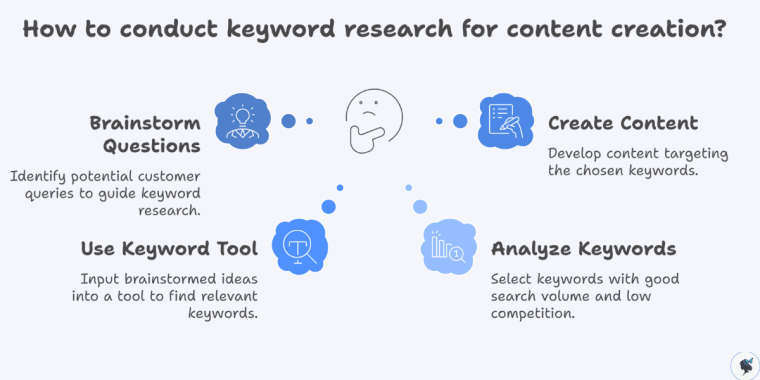
- Brainstorm questions customers might ask.
- Enter those ideas into a keyword research tool.
- Look for keywords with reasonable search volume and lower competition.
- Create content targeting those keywords.
On-Page SEO: Optimizing Your Website Content
What Is On-Page SEO?
On-page SEO involves optimizing elements directly on your website to help search engines understand your content.
It also improves user experience, making your site easier for visitors to navigate.
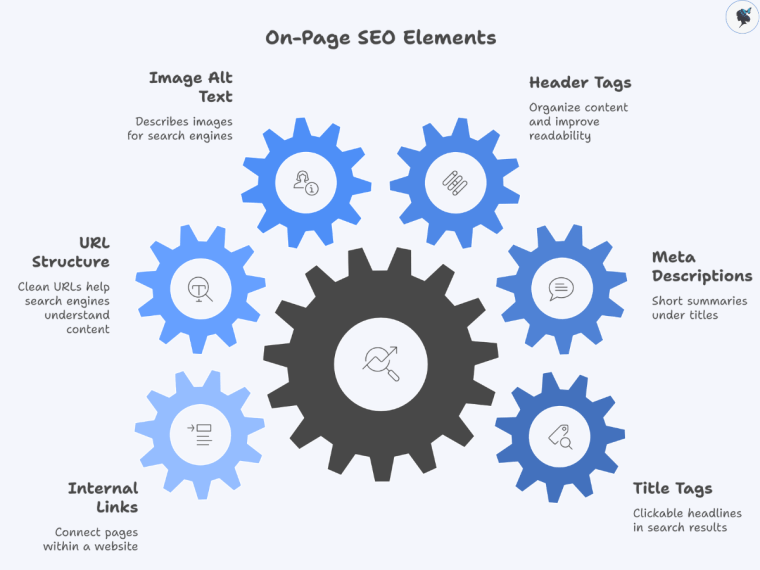
Key On-Page SEO Elements
Title Tags
The title tag is the clickable headline shown in search results.
Example: SEO Tips for Small Businesses | Beginner Guide
Title tags should include your main keyword and be under about 60 characters.
Meta Descriptions
The meta description is a short summary that appears under the title in search results.
It should clearly explain what the page is about and encourage users to click.
More about meta descriptions here.
Header Tags (H1, H2, H3)
Headers organize your content and improve readability.
Example structure:
H1: Main page title
H2: Main sections
H3: Subtopics
Image Alt Text
Alt text describes images for search engines and visually impaired users.
Example: “fresh baked croissants in bakery display case”
More about image optimization and alt text here.
URL Structure
Clean URLs help search engines understand your content.
Example: yourwebsite.com/seo-for-small-business
Internal Links
Internal links connect pages within your website.
They help search engines discover content and guide visitors to related pages.
More about internal linking here.
Content Optimization Best Practices
To improve rankings:
- Write clear, helpful content
- Include keywords naturally
- Use headings to organize information
- Answer common customer questions
- Provide original insights
High-quality content is one of the most important ranking factors.
Technical SEO Fundamentals
Technical SEO ensures your website functions properly for both users and search engines.
While it may sound complex, beginners should focus on a few key factors.
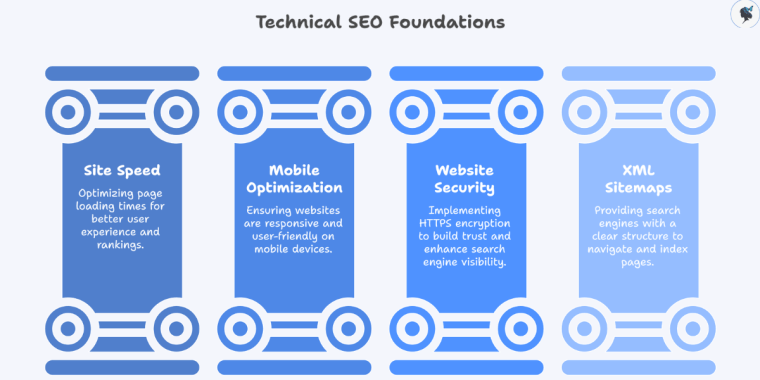
Site Speed
Page loading speed affects both user experience and rankings.
Studies show that 53% of users leave a site that takes longer than three seconds to load.
Ways to improve speed include:
- Compressing images
- Using reliable web hosting
- Minimizing unnecessary plugins
More about website speed here.
Mobile Optimization
More than half of web traffic comes from mobile devices. Because of this, search engines prioritize mobile-friendly websites.
Ensure your website:
- Adjusts to different screen sizes
- Has readable text on mobile
- Loads quickly on smartphones
Website Security
Secure websites use HTTPS encryption.
Search engines prioritize secure sites, and users are more likely to trust them.
More about implementing website security here.
XML Sitemaps
A sitemap helps search engines understand your website structure and find important pages more easily.
Most website platforms generate sitemaps automatically.
Off-Page SEO: Building Authority and Trust
What Is Off-Page SEO?
Off-page SEO refers to actions taken outside your website that improve search rankings.
The most important off-page factor is backlinks.
Backlinks Explained
Backlinks are links from other websites pointing to your site.
Search engines view backlinks as signals of credibility and authority.
If reputable websites link to your content, search engines are more likely to trust your site.
Strategies to Build Backlinks
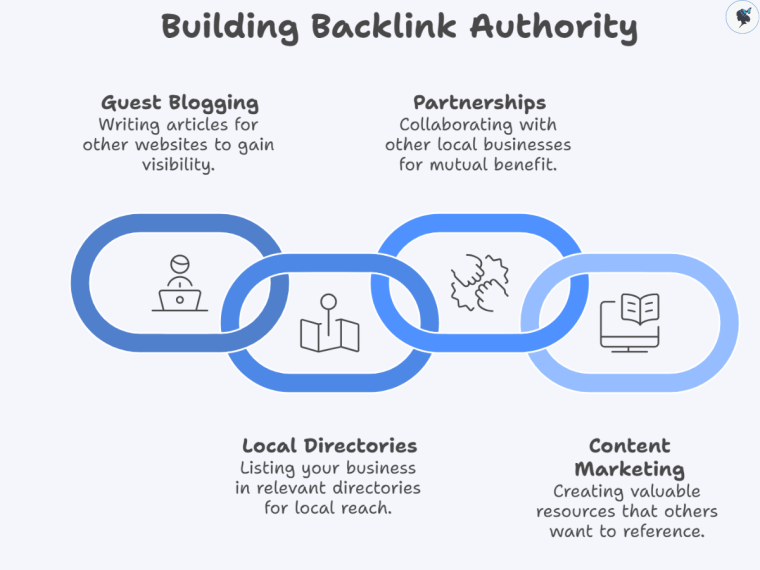
Small businesses can build backlinks through:
Guest blogging
Writing articles for other websites.
Local directories
Listing your business in relevant directories.
Partnerships
Collaborating with other local businesses.
Content marketing
Creating valuable resources others want to reference.
Quality matters more than quantity when it comes to backlinks.
Read our post: link-building strategies.
Local SEO: Essential for Small Businesses
For businesses serving specific geographic areas, local SEO is critical.
Nearly 46% of all searches have local intent.
What Is Local SEO?
Local SEO helps businesses appear in location-based searches like:
- “restaurants near me”
- “dentist in Málaga”
- “best yoga studio nearby”
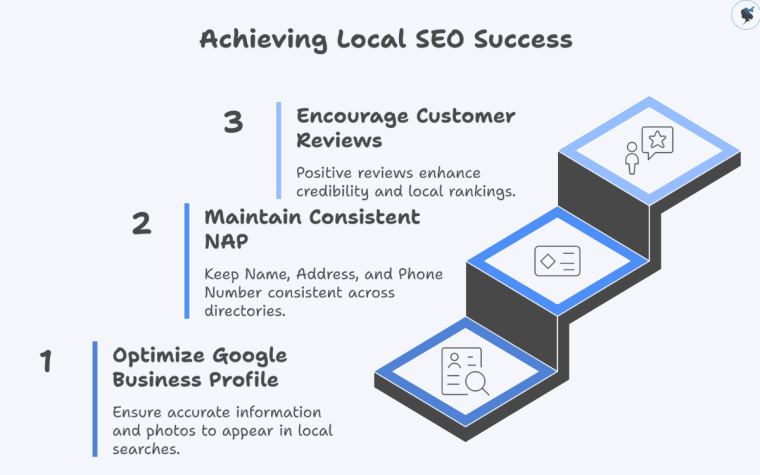
Optimizing Your Google Business Profile
A Google Business Profile helps your business appear in local search results and Google Maps.
Important steps include:
- Adding accurate business information
- Uploading photos
- Listing services
- Responding to reviews
Maintain Consistent Business Information
Ensure your business Name, Address, and Phone Number (NAP) are consistent across all directories.
Consistency improves search engine trust.
Encourage Customer Reviews
Positive reviews improve both credibility and local rankings.
Ask satisfied customers to leave honest feedback.
Read our related post: Local SEO strategies.
Content Marketing and SEO
Content marketing plays a major role in SEO success.
By creating helpful content, businesses can attract visitors and build authority.
Types of SEO Content
Examples include:
- Blog posts
- How-to guides
- FAQs
- Product pages
- Case studies
Each piece of content should address real customer questions.
Creating Content That Ranks
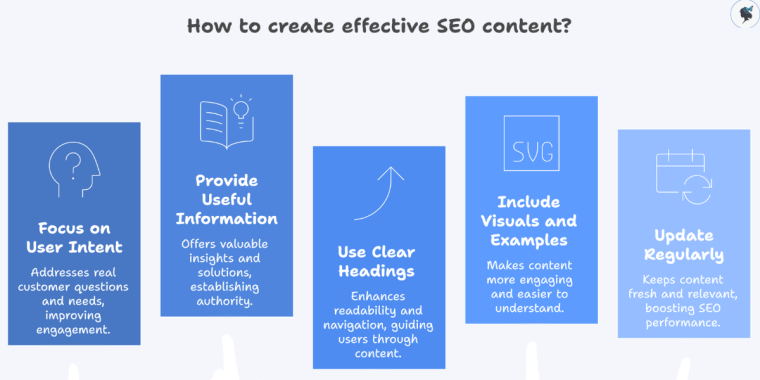
Effective SEO content:
- Focuses on user intent
- Provides useful information
- Uses clear headings
- Includes visuals and examples
- Is updated regularly
Consistent publishing helps search engines view your website as an active and valuable resource.
Read our comprehensive guide: mastering search intent.
Measuring SEO Success
SEO is a long-term strategy, so tracking progress is essential.
Key Metrics to Monitor
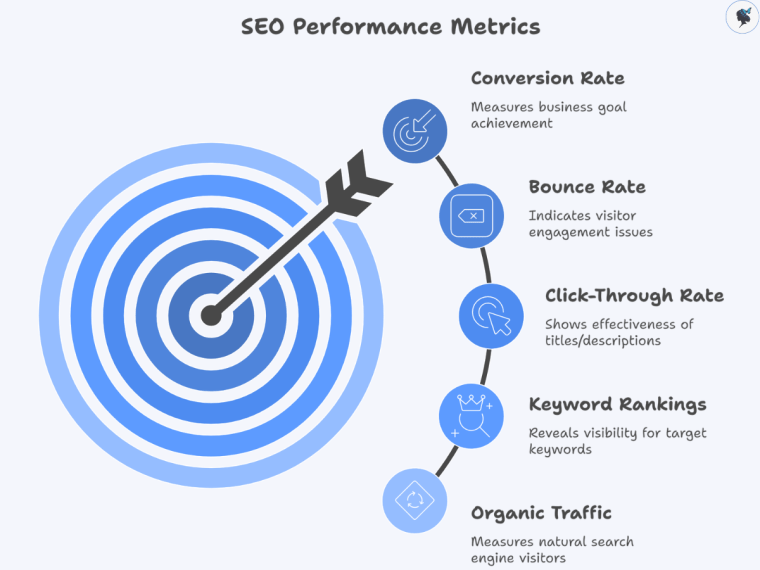
Important SEO metrics include:
Organic traffic
The number of visitors arriving from search engines.
Organic traffic shows how many people find your website naturally, and increases here indicate that your SEO efforts are effectively improving visibility.
Keyword rankings
Where your website appears for target keywords.
Monitoring keyword rankings helps you understand which search terms you are visible for and identify opportunities to improve your position in search results.
Click-through rate (CTR)
The percentage of users who click your result.
A high CTR means your title tags and meta descriptions are compelling, which helps drive more traffic even if your ranking doesn’t change.
Bounce rate
The percentage of visitors who leave without interacting.
A high bounce rate can indicate that visitors aren’t finding what they expected, signaling potential issues with content relevance or user experience.
Conversion rate
How many visitors become customers.
Conversion rate measures the actual impact of your SEO traffic on your business goals, showing whether visitors are taking meaningful actions.
Essential SEO Tools
These tools help monitor performance:
- Google Analytics
- Google Search Console
- Semrush
- Ahrefs
- Moz
They provide insights into traffic, rankings, and website performance.
Common SEO Mistakes Small Businesses Should Avoid
Many beginners make similar SEO mistakes.
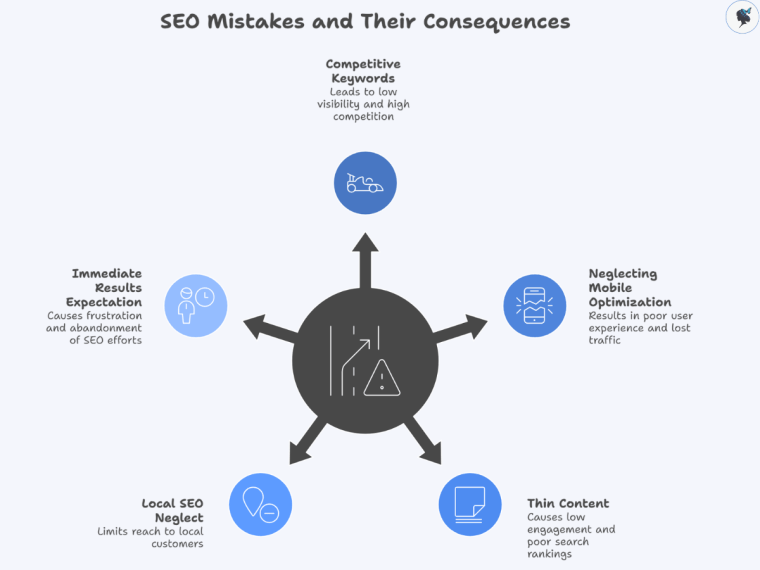
Common ones include:
- Targeting extremely competitive keywords
- Ignoring mobile optimization
- Publishing thin or low-quality content
- Neglecting local SEO
- Expecting immediate results
SEO takes time, but consistent improvements can lead to significant growth.
SEO Trends Small Businesses Should Watch
Search engine optimization continues to evolve.
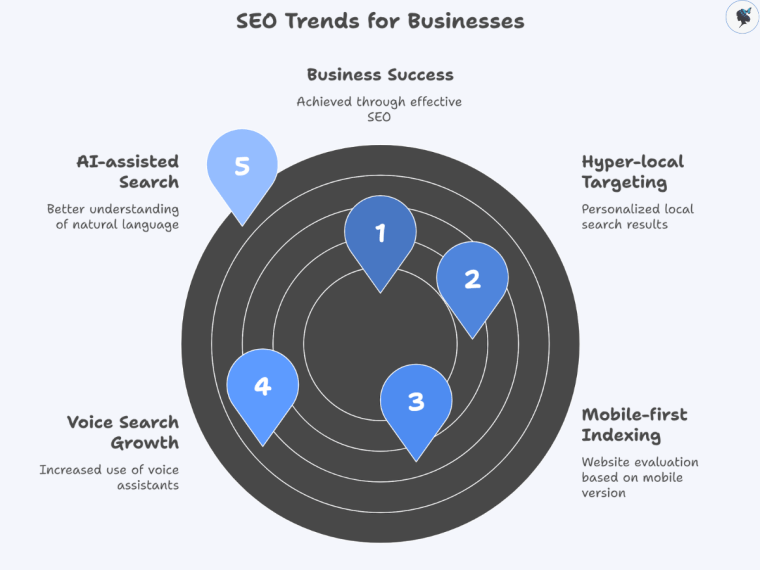
Important trends include:
AI-assisted search
Search engines are becoming better at understanding natural language.
More about generative AI and AI search here.
Voice search growth
Many searches are now performed through voice assistants.
More about voice search optimization here.
Mobile-first indexing
Search engines primarily evaluate the mobile version of websites.
Hyper-local targeting
Local search results are becoming more personalized.
Adapting to these trends will help businesses stay competitive.
Start Small and Grow Your Visibility
SEO may seem complicated at first, but the basics are manageable for any small business.
To recap, successful SEO involves:
- Conducting keyword research
- Optimizing website content
- Improving technical performance
- Building backlinks
- Focusing on local search
- Tracking results over time
The most important step is simply getting started. Small improvements made consistently can significantly increase your online visibility.
With patience and persistence, SEO can become one of the most valuable marketing tools for your business.
Need help? Contact us today!
Discover more from Wander Women Strategies
Subscribe to get the latest posts sent to your email.
