Technical SEO Quirks for Travel Sites: Strategies for Seasonal, Dynamic, and Calendar-Driven Content

▶ Table of Contents
  1. Introduction
  2. Understanding Technical SEO Quirks in Travel Sites
  3. Seasonal Timing and Its SEO Implications
  4. Dynamic Inventory Pages and SEO Challenges
  5. Canonical Issues with Fleeting Offers
  6. Calendar-Driven Content for Travel Sites
  7. Integrating Technical Strategies Across Travel Sites
  8. Conclusion

Introduction

Travel websites are a unique beast in the SEO world. Unlike static sites, they deal with constantly shifting inventory, seasonal peaks, fleeting offers, and event-driven content. These quirks present technical SEO challenges that, if not managed, can hurt search visibility, crawl efficiency, and ultimately bookings.

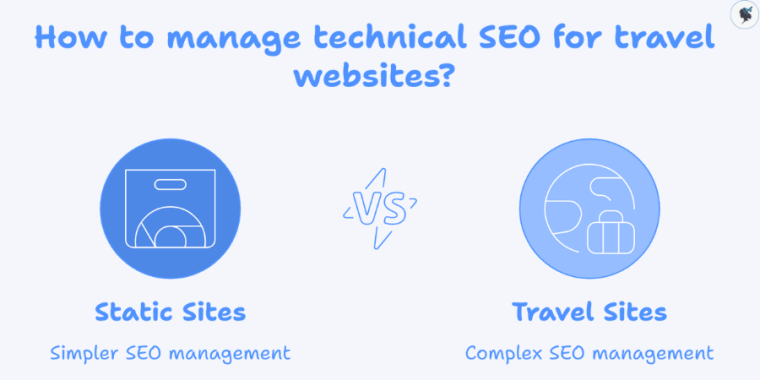
infograph: How to manage technical SEO for travel websites?
How to manage technical SEO for travel websites?

This guide explores the top technical SEO issues travel sites face and provides actionable strategies to navigate them.


Understanding Technical SEO Quirks in Travel Sites

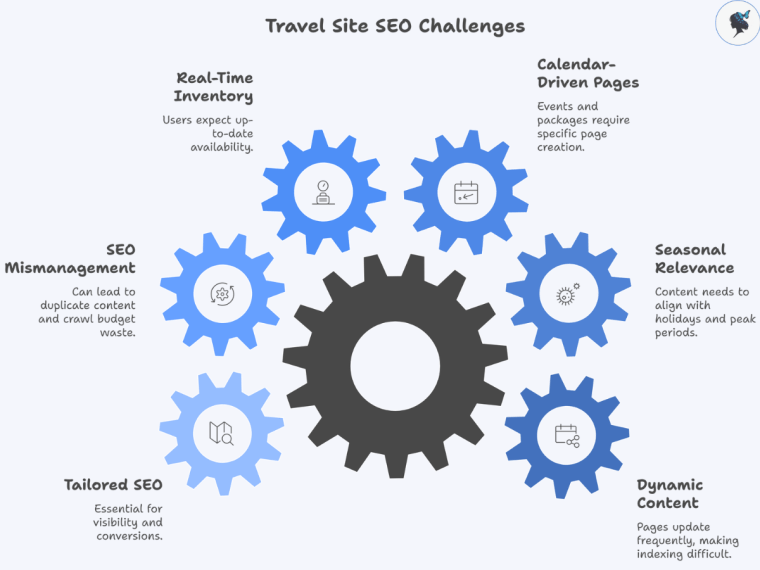
infograph: Travel site SEO challenges
Travel site SEO challenges

1. What Makes Travel Sites Technically Unique

Travel sites differ from other industries because:

  • Pages often update dynamically based on availability, pricing, or promotions.
  • Content relevance is highly seasonal (holidays, school breaks, peak travel periods).
  • There’s frequent creation of calendar-driven pages for events, festivals, or seasonal packages.
  • Users expect real-time inventory while search engines prefer crawlable, stable content.

2. Why Tailored SEO Approaches Are Needed

  • Search engines may struggle to index rapidly changing content.
  • Mismanagement can cause duplicate content issues, wasted crawl budget, or loss of authority.
  • Travel agencies that understand and manage these quirks gain better visibility and conversion rates.

Wander Women Hot Tip: Document every dynamic URL, seasonal page, and temporary offer in your SEO audit. This creates a baseline for monitoring crawl errors, canonical issues, and indexing gaps.


Seasonal Timing and Its SEO Implications

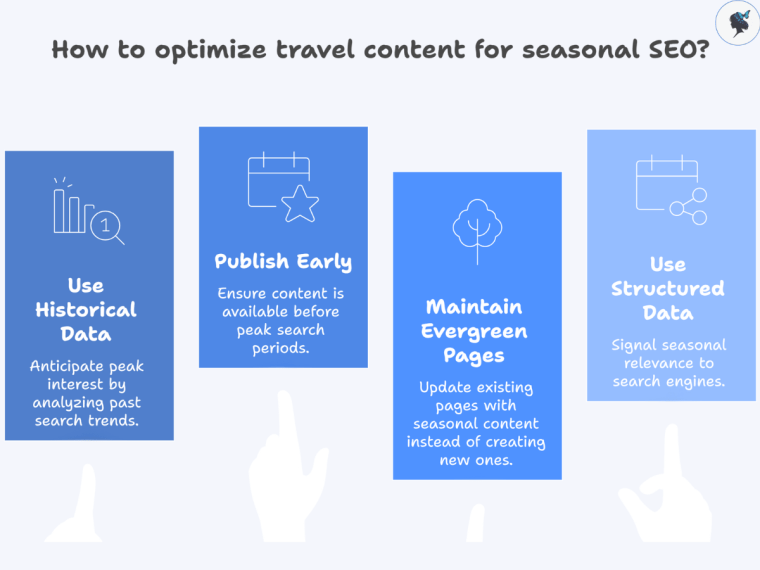
infograph: How to optimize travel content for seasonal SEO?
How to optimize travel content for seasonal SEO?

1. Understanding Seasonal SEO Challenges

  • Peaks in travel search vary by destination and audience (e.g., Christmas ski trips vs. summer beach holidays).
  • Pages created for seasonal relevance may lose rankings outside peak periods if not updated.
  • Keywords for seasonal content fluctuate, requiring preemptive optimization.

2. Strategies for Seasonal Content Optimization

  • Use historical search data to anticipate peak interest. Tools like Google Trends or Search Console are essential.
  • Publish early: For example, summer vacation guides should go live in spring.
  • Maintain evergreen pages: Instead of creating a new page each year, update existing pages with seasonal content.
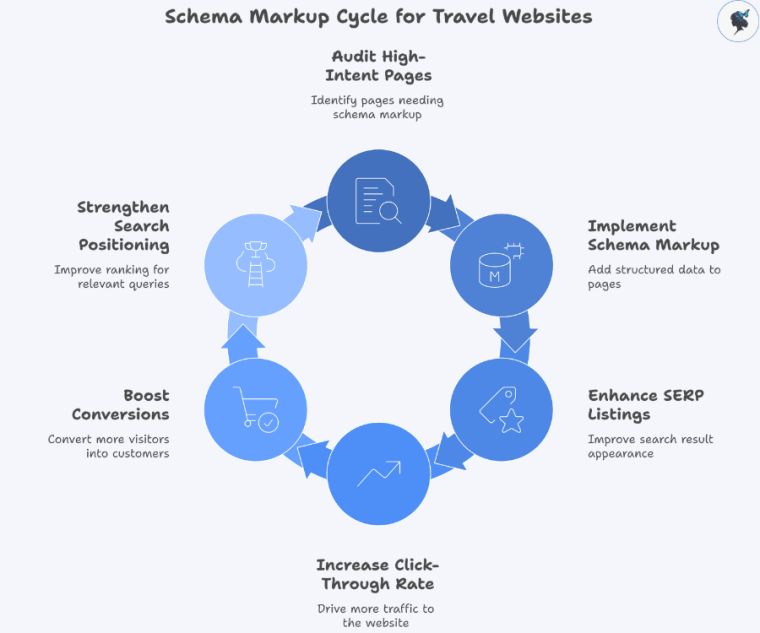
  • Structured data for events and offers: Signals search engines about seasonal relevance.

Wander Women Hot Tip: Maintain a seasonal content calendar with metadata, internal links, and structured data updated before peak search periods.

More about internal linking here.


Dynamic Inventory Pages and SEO Challenges

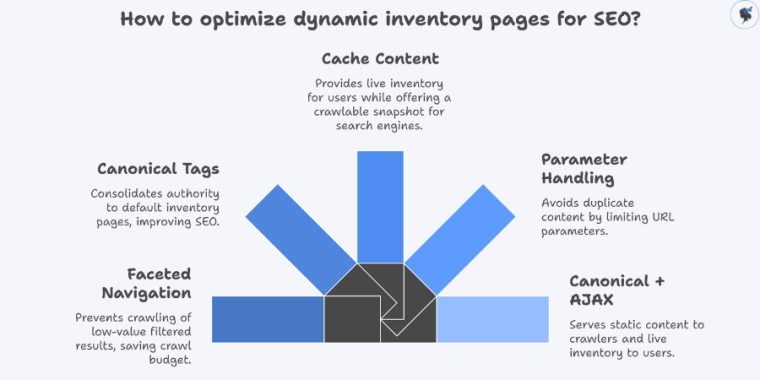
infograph: How to optimize dynamic inventory pages for SEO?
How to optimize dynamic inventory pages for SEO?

1. What Are Dynamic Inventory Pages?

  • Pages that display live availability, pricing, and package options.
  • Common for hotels, flights, tours, and seasonal packages.

2. SEO Implications

  • High risk of duplicate or thin content due to rapidly changing inventory.
  • Frequent updates can waste crawl budget if search engines repeatedly crawl low-value variations.
  • User experience must remain consistent even if inventory changes frequently.

3. Best Practices

  • Faceted navigation: Noindex low-value filtered results to prevent unnecessary crawling.
  • Canonical tags: Point to default inventory pages to consolidate authority.
  • Cache content for SEO: Users see live inventory, while crawlers see a crawlable snapshot.
  • Parameter handling: Limit URL parameters to avoid duplicate content.

Wander Women Hot Tip: Use a canonical + AJAX strategy: serve static content to crawlers while providing live inventory for users.


Canonical Issues with Fleeting Offers

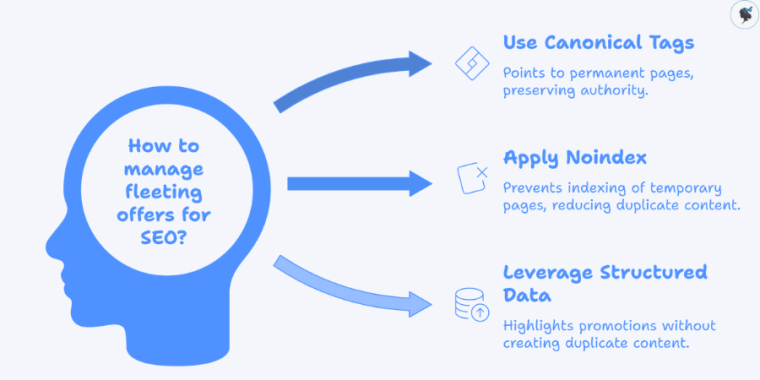
infograph: How to manage fleeting offers for SEO?
How to manage fleeting offers for SEO?

1. Understanding Fleeting Offers

  • Flash sales, last-minute deals, or seasonal promotions live for days or weeks.
  • Often repeated on multiple URLs for different campaigns.

2. Common Canonical Challenges

  • Duplicate content risk when offers are mirrored on multiple pages.
  • Temporary pages may be indexed prematurely, affecting long-term SEO.
  • Incorrect canonical tags can prevent main destination pages from retaining authority.

3. Solutions for Canonical Management

  • Use canonical tags pointing to permanent destination or product pages.
  • Apply noindex to short-lived pages if they do not add long-term SEO value.
  • Leverage structured data to highlight promotions without creating duplicate content.

Wander Women Hot Tip: Create a template for fleeting offers: canonical points to the main page, structured data shows the time-sensitive deal, ensuring SEO value is preserved.


Calendar-Driven Content for Travel Sites

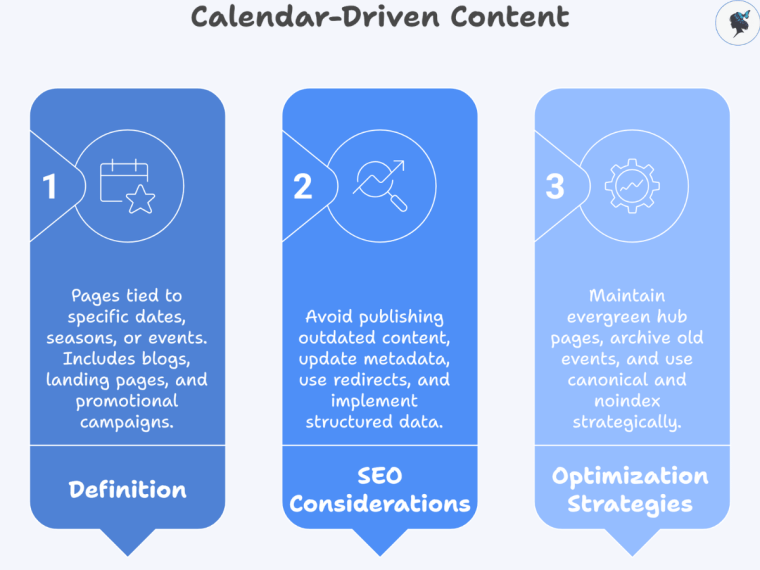
infograph: Calendar-driven content
Calendar-driven content

1. What is Calendar-Driven Content?

  • Pages tied to specific dates, seasons, or events (e.g., “Top Paris Festivals in July”).
  • Includes blogs, landing pages, and promotional campaigns.

2. SEO Considerations

  • Avoid publishing outdated content with past event dates.
  • Update metadata to reflect the current year or season.
  • Use 301 redirects or updated URLs for recurring annual events to preserve link equity.
  • Implement structured data for events and offers for rich SERP features.

3. Optimization Strategies

  • Maintain evergreen hub pages linking to yearly updates.
  • Archive old events properly to reduce thin content and clutter.
  • Use canonical and noindex strategically to maintain authority.

Wander Women Hot Tip: Build a calendar-driven content template that automatically updates metadata, structured data, and internal links each year to maintain SEO relevance.


Integrating Technical Strategies Across Travel Sites

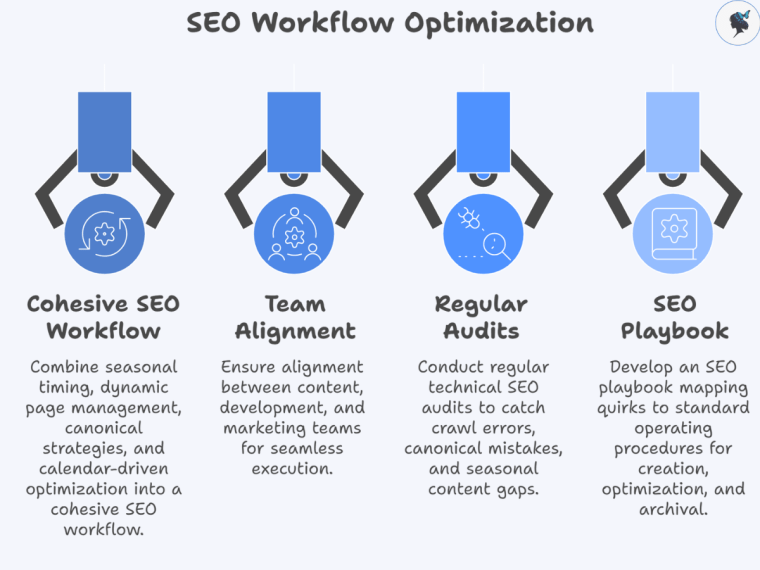
infograph: SEO workflow optimization
SEO workflow optimization
  • Combine seasonal timing, dynamic page management, canonical strategies, and calendar-driven optimization into a cohesive SEO workflow.
  • Ensure alignment between content, development, and marketing teams for seamless execution.
  • Conduct regular technical SEO audits to catch crawl errors, canonical mistakes, and seasonal content gaps.

Wander Women Hot Tip: Develop an SEO playbook mapping quirks (dynamic inventory, fleeting offers, seasonal content) to standard operating procedures for creation, optimization, and archival.


Conclusion

Travel sites face unique technical SEO challenges due to constantly shifting content, seasonal trends, and inventory-driven pages. By proactively managing seasonal timing, dynamic pages, canonical issues, and calendar-driven content, travel agencies can:

  • Maintain search visibility year-round.
  • Improve crawl efficiency and indexation.
  • Preserve authority across temporary or seasonal offers.
  • Enhance user experience and booking conversions.

Wander Women Hot Tip: Start with a priority list of seasonal pages and dynamic inventory URLs to audit and optimize. Scaling this process ensures sustained SEO performance and increased revenue opportunities.

Need help with technical SEO? Contact us today!

Beyond Translation: How Travel Agencies Can Localize Keyword Research for Different Languages and Markets

▶ Table of Contents
  1. Introduction
  2. Why Direct Translation Doesn’t Work
  3. Understanding Local Search Intent and Cultural Nuances
  4. Tools and Methods for Localized Keyword Research
  5. Integrating Keywords into a Multilingual SEO Strategy
  6. Case Studies
  7. Actionable Tips for Travel Agencies
  8. Conclusion

Introduction

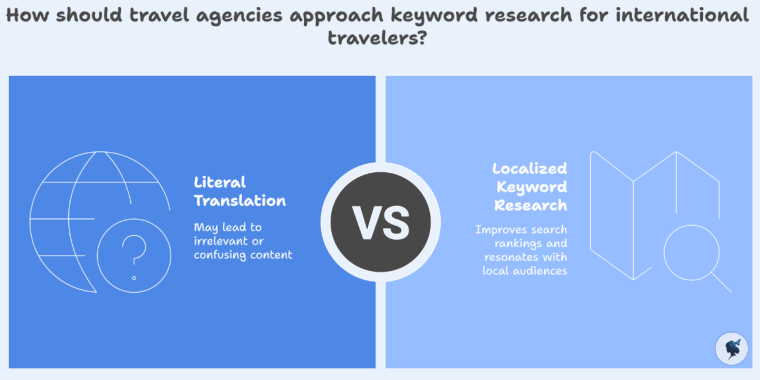
Travel agencies often assume that translating English keywords into other languages is enough to attract international travelers. In reality, literal translation rarely captures local search behavior, cultural nuances, or regional trends. A phrase that ranks well in English may be completely irrelevant or even confusing to travelers searching in German, Japanese, or French.

infograph: How should travel agencies approach keyword research for international travelers?
How should travel agencies approach keyword research for international travelers?

Localized keyword research allows travel agencies to create content that resonates with each audience, improves organic search rankings, and drives more bookings. This approach goes beyond translation, factoring in cultural context, search intent, and local preferences.

Wander Women Hot Tip: Start by auditing your current multilingual content. Identify which pages are underperforming in local markets and prioritize them for localized keyword research.


Why Direct Translation Doesn’t Work

Directly translating English keywords can lead to several issues:

infograph: Keyword translation challenges
Keyword translation challenges
  • Linguistic differences: Local languages often have multiple ways to express the same concept. For example, “summer holidays” can be searched as Sommerurlaub in Germany, vacances d’été in France, and 夏の休暇 in Japan, each with different search volumes.
  • Search engine variations: Google dominates many markets, but in China, Baidu is the primary engine; in Russia, Yandex is dominant. Each has unique ranking factors and query patterns.
  • Cultural context: Seasonal trends, local holidays, and travel behaviors influence search patterns. “Beach holidays” in Spain may be popular in summer, but in Germany, searches for “wellness retreats in the Alps” spike in winter.

Wander Women Hot Tip: Never rely on automated translation tools for keyword research. Instead, focus on how locals actually search for your destinations in their native language.


Understanding Local Search Intent and Cultural Nuances

To create effective localized content, you must understand how local travelers think and search:

infograph: Effective localized content strategy
Effective localized content strategy
  • Intent Types:
    • Informational: “Best things to do in Paris”
    • Transactional: “Book a guided tour in Rome”
    • Navigational: “Visit Eiffel Tower tickets”
    • More about search intent here.
  • Cultural considerations:
    • Holiday patterns and school breaks influence travel searches.
    • Popular local attractions may differ from global trends.
    • Search phrasing varies by region (formal vs. colloquial terms).
  • Persona-driven research:
    • Create travel personas for each target market (e.g., Japanese solo travelers, French family tourists).
    • Map content around personas’ preferences, pain points, and intent.

Wander Women Hot Tip: Build detailed regional personas to guide both keyword selection and content structure. These personas help ensure your content aligns with local search behavior.


Tools and Methods for Localized Keyword Research

Keyword Tools for International Markets

Infograph: Strategies for international keyword research
Strategies for international keyword research
  • Google Keyword Planner: Target specific countries and languages.
  • Semrush / Ahrefs: Explore regional search volume, competition, and trends.
  • Ubersuggest & AnswerThePublic: Identify question-based and long-tail queries.
  • Trends Tools: Google Trends, Baidu Index, Yandex Wordstat for local search patterns.

Effective Methods

  • Competitor Analysis: Review local agencies’ websites for keyword insights. More about competitor keyword analysis here.
  • Search Engine Observation: Analyze local SERPs for phrasing, featured snippets, and related searches.
  • Social Listening: Monitor travel forums, Instagram hashtags, and local blogs to identify trending keywords.
  • Long-tail Keyword Focus: Target specific, market-relevant queries to capture high-intent traffic. Read our post: Mastering Long-Tail Keyword Identification.

Wander Women Hot Tip: Use multiple tools and cross-check results. A high-ranking English keyword may have little relevance in another language or region.


Integrating Keywords into a Multilingual SEO Strategy

Once you have localized keywords, integrate them effectively:

infograph: International SEO strategy pyramid
International SEO strategy pyramid
  • Hreflang Implementation: Signal to search engines which language and country each page targets.
  • URL Structure:
    • English: /en/destinations/rome/
    • German: /de/reiseziel/rom/
    • French: /fr/destination/rome/
  • Meta Tags & Headings: Include localized keywords in page titles, headings, and meta descriptions. More about meta optimization here.
  • Internal Linking: Connect regional pages to related content within the same market. You might like our post: How to Increase Organic Traffic with Internal Linking.

Wander Women Hot Tip: Focus on high-value destinations for each market. Avoid duplicating content across regions; tailor the content to the local search intent and cultural context.


Case Studies

Example 1 – Boutique Travel Agency

  • Targeted European travelers for Austria.
  • Results included a 38% boost in German organic traffic, a 44% uplift from the UK, and a 60% increase in mobile conversion rates among French users.

Example 2 – Global Hotel Booking Platform

  • Optimized for region-specific keywords and travel terms to increase bookings from Asian markets.
  • Organic visibility rose 50% across target markets, bookings from Japan and South Korea jumped 75% year over year, mobile app downloads increased 60%, and average session duration grew by 25%.

Wander Women Hot Tip: Document which localized terms perform best per market and use them to inform future content planning.


Actionable Tips for Travel Agencies

infograph: How to optimize keywords for international markets?
How to optimize keywords for international markets?
  1. Avoid literal translation; research how locals search for your destinations.
  2. Build regional personas to guide keyword selection and content creation.
  3. Update keywords regularly based on seasonal trends, cultural events, and analytics insights.
  4. Use structured data (schema) to support multilingual content and rich results.
  5. Leverage social media trends and user-generated content to refine keywords and ideas.

Wander Women Hot Tip: Treat each market as its own ecosystem. Test, iterate, and refine keyword strategies continuously to maintain relevance and search performance.


Conclusion

Localizing keyword research is critical for international travel SEO success. Moving beyond direct translation allows travel agencies to:

  • Capture authentic search behavior in each market.
  • Create content that resonates with local travelers.
  • Improve rankings, engagement, and conversions for multilingual audiences.

Wander Women Hot Tip: Consider every market as a living system. Regularly monitor trends, analyze performance, and adjust strategies to ensure your destination content ranks and converts year after year.

Need help with localized keyword strategy? Contact us today!


Link-Building Strategies for Travel Agencies: Partnering with DMOs, Event Organizers, and Destination Bloggers


▶ Table of Contents

Introduction

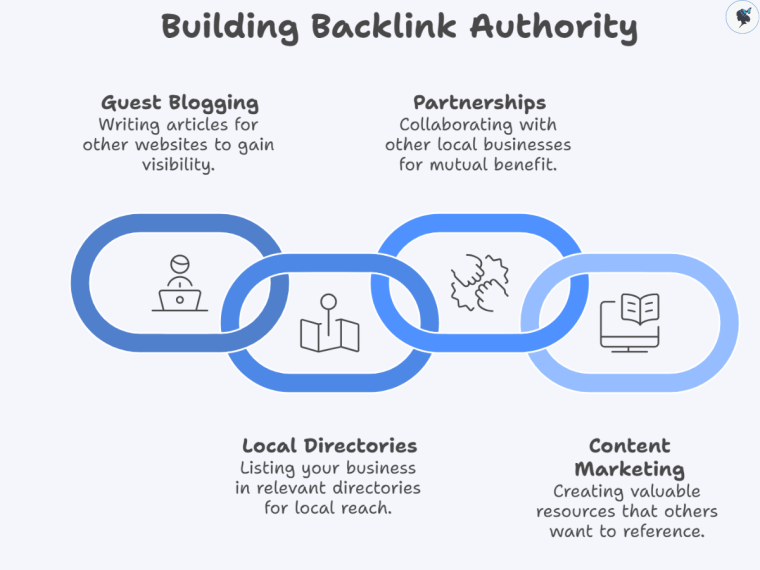
For travel agencies, achieving strong organic search rankings and sustainable referral traffic means going beyond standard on‑page SEO. One of the most effective ways to build authority and visibility is link‑building—earning high‑quality backlinks from relevant, authoritative sites in the travel world. According to recent data, link‑building remains a core long‑term ranking factor: 85 % of marketers believe link‑building is crucial for brand authority and ranking in the years ahead.

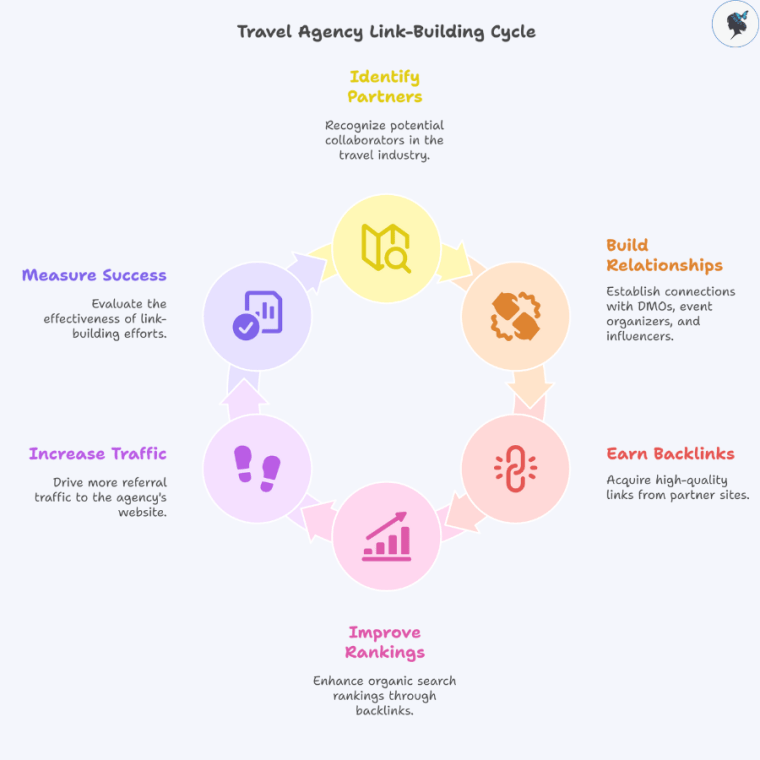
infograph: Travel agency link-building cycle
Travel agency link-building cycle

In the travel niche, however, not all links are equal. The best opportunities often come through industry‑specific relationships:

  • DMOs (Destination Marketing Organizations) that promote regions and destinations,
  • Event organizers whose pages attract travellers and local interest
  • Destination bloggers and influencers whose audiences align with your travel brand

This article will walk travel agencies through how to understand each partner type, how to approach realistic collaborations, and how to measure success.

Wander Women Hot Tip: Begin your link‑building plan by listing all the destinations you serve, the local DMOs, major events, and active destination bloggers in those areas. This gives you the raw partner pool to work from.


1. Understanding DMOs (Destination Marketing Organizations)

What Are DMOs?

Destination Marketing Organizations are official or semi‑official bodies (city tourism bureaus, regional tourism offices, national destination boards) whose job is to raise awareness and drive visitation to a region. They publish destination guides, events calendars, partner directories, and often link out to businesses that service the local market.

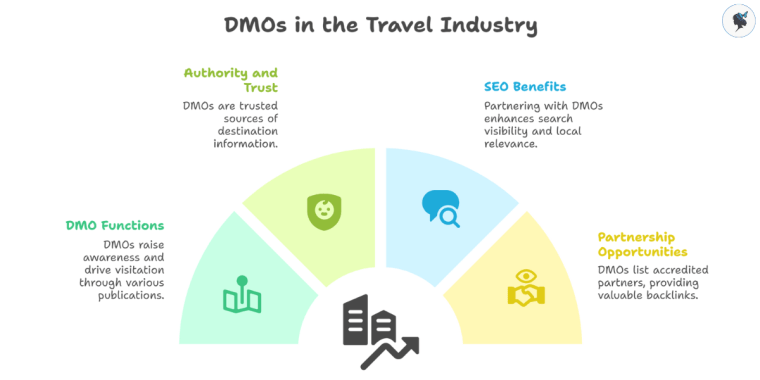
infograph: DMOs in the travel industry
DMOs in the travel industry

Role of DMOs in the Travel Industry

DMOs carry authority: they’re often trusted sources for destination information. Travel agencies that partner with them can benefit from backlinks from high‑authority regional domains, improved local relevance, and referral traffic from destination‑specific visitors. One guide notes that tourism SEO requires constant investment and dedicated content creation by DMOs for results.
Because DMO pages often rank highly for destination keywords, securing links from them can give your agency a boost in search visibility for those locales.

Wander Women Hot Tip: For each DMO you target, check their Partners or Industry page and see if they list accredited tour operators or travel agencies. Having a presence there often equals a credible backlink.


2. Partnering with DMOs

How to Establish Partnerships

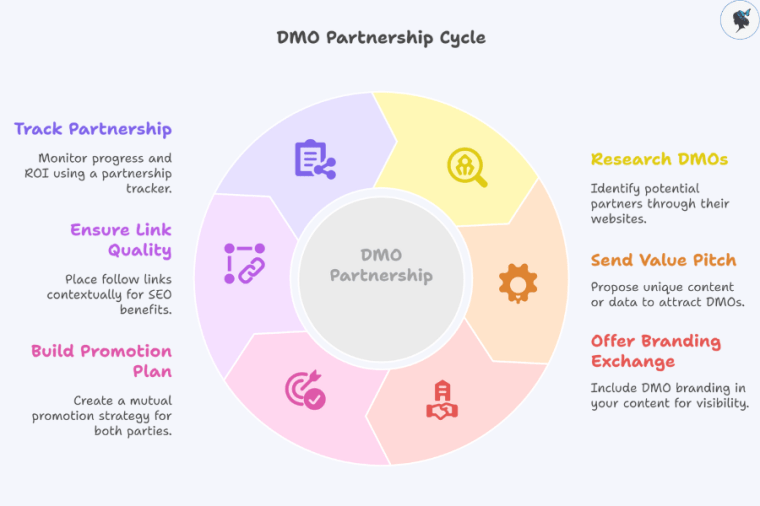
  • Research the DMO websites of each destination you target. Find their “Industry Partners,” “Tourism Trade,” or “Visit (Destination)” sections.
  • Send a pitch that adds value: propose co‑created content (e.g., “Top 10 Hidden Gems Tour for [Destination]” with your agency’s expertise) or offer unique data or insights (you’ve served X number of visitors last year).
  • Offer to include the DMO’s branding or link in your own travel‑guide content in exchange for a feature.
  • Build a mutual promotion plan: you feature their destination content, they link to your page or tour.
  • Ensure the link is follow (not nofollow) and placed contextually (within relevant content, not buried in a footer).
infograph: DMO partnership cycle
DMO partnership cycle

Potential Benefits

  • High‑authority backlinks from DMO domains will improve domain/authority score which helps your other pages.
  • Referral traffic from people interested in the destination.
  • Boost in local relevance: search engines interpret links from destination‑specific sites as signals of authenticity for your travel services.
  • Credibility and trust with potential travellers who see your agency associated with official destination partners.

Wander Women Hot Tip: Create a DMO partnership tracker: list DMO name, site URL, contact person, date contacted, proposal type, link outcome, and estimated domain authority. This keeps your outreach organised and your ROI measurable.

More about the role of trust signals here.


3. Collaborating with Event Organizers

Identifying Relevant Events

Travel agencies can also build links through local or destination events, such as:

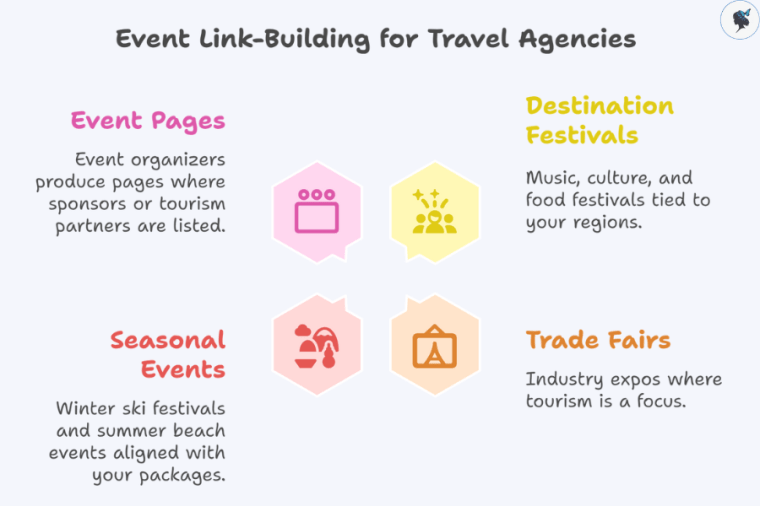
  • Destination festivals (music, culture, food) tied to your regions.
  • Trade fairs or industry expos where tourism is a focus.
  • Seasonal events (winter ski festivals, summer beach events) aligned with your packages.
  • Event organizers often produce event pages or partner directories where sponsors or tourism partners are listed (with links).
infograph: Event link-building for travel agencies
Event link-building for travel agencies
  • Offer to produce a blog or guide about the event (eg, “Ultimate Guide to the X Festival in Y Region”), then ask the event organizer to publish or link to it.
  • Sponsor or co‑host an event: sponsorship often includes a link on the event site.
  • Provide media coverage: offer a post‑event review or recap which the event site may link to or embed.
  • Bundle the event with your travel offering: you create the tour + the event experience, then event organizer links to your agency as official partner.

Benefits for Travel Agencies

  • Context‑specific backlinks: links tied to an event in your destination signal relevancy.
  • Potential referral traffic from event audiences seeking travel services.
  • Fresh content opportunities (event guides) that are link‑worthy and shareable.
  • Opportunity to tap into the event’s marketing reach (social, email, partner links).

Wander Women Hot Tip: Build an event calendar for all your destination markets. For each event, note the event website, domain authority, potential for partner link, and ideal content topic (guide, recap, offer).


4. Engaging Destination Bloggers & Influencers

Identifying Influential Bloggers

Look for travel bloggers, micro‑influencers, and niche content creators who:

  • Focus on destinations or travel themes you sell (solo female travel, adventure, luxury).
  • Have a blog or website with decent authority (check Domain Rating/DR on Ahrefs).
  • Operate in your target destination region or serve your target audience.
  • Bloggers often link to travel agencies when reviewing tours, writing destination guides, or collaborating.
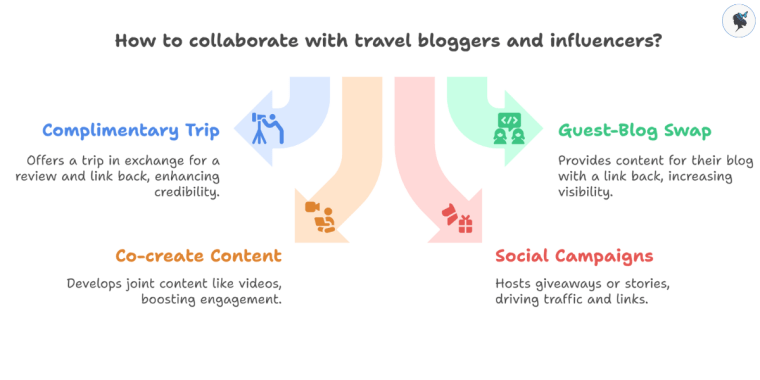
infograph: How to collaborate with travel bloggers and influencers?
How to collaborate with travel bloggers and influencers?

Approaches to Collaboration

  • Offer a complimentary familiarisation trip or tour in exchange for a blog review + link back to your booking page.
  • Guest‑blog swap: you provide a destination guide for their blog and they link to your relevant service page.
  • Co‑create content: interview the blogger, create a video series about the region, then link it back.
  • Run social campaigns: the blogger hosts a “giveaway” or “travel story” featuring your agency and links to your website.

Read: How to leverage influencer marketing.

Benefits of Blogger Relationships

  • Backlinks from niche travel blogs can have high relevance and strong engagement signals.
  • Social amplification from bloggers’ followers can increase referral traffic and potentially links from other sites (link‑baiting).
  • Authentic user content: blogs are seen as more credible by travellers, increasing trust and the likelihood of conversion.

Wander Women Hot Tip: Start by engaging 3‑5 micro‑influencers (5k‑50k followers) in each destination. They often have higher engagement rates, are more approachable, and can deliver quality links and mentions for less budget. Scale the relationships once you see results.


5. Practical Execution: How to Implement These Strategies

Research & Targeting

  • Create a spreadsheet of all your target destinations.
  • For each destination, list the local DMO website, major upcoming event websites, and top 10 destination bloggers/blogs.
  • Qualify each target by Domain Authority (DA/DR), relevance to your niche, and the potential link placement.
  • Prioritise quick opportunities (low‑hanging fruit) that can deliver link placement within 3‑6 months.

Outreach Strategy

  • Craft personalised email templates for each partner type: DMO, event organizer, blogger. Highlight what you can bring (content, tours, audiences).
  • Offer value: “We will provide a destination guide, industry insights, photo assets.”
  • Follow up gently after 1 week, then 2 weeks. Maintain a CRM or tracking sheet.
  • When a link is secured, ensure it’s live, is “follow” (if possible), uses relevant anchor text (e.g., destination name + “Tours by [Your Agency]”), and is indexed.

More about outreach strategy development here.

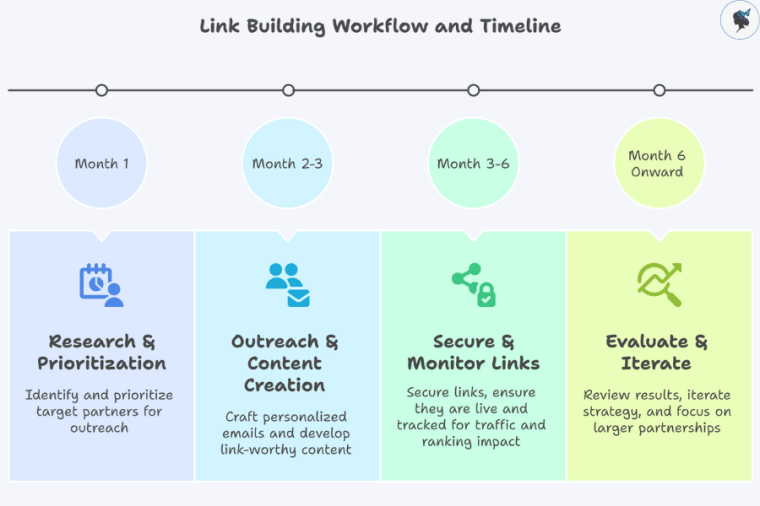
infograph: Link-building workflow and timeline
Link-building workflow and timeline
  • Develop content pieces specifically for link building: destination partner page, event guide, blog collaboration.
  • Use supporting media: high‑quality images, video, infographic—making it more link‑worthy.
  • Ensure your website is ready: the target page (your own) is optimised with H1, descriptive text, internal links, and conversion CTA (booking form or contact).
  • Track each backlink: note placement date, anchor text, referring URL, monthly referral traffic from that link, and any ranking movement.

Workflow and Timeline

  • Month 1: Research & list target partners, prioritise.
  • Month 2‑3: Outreach to DMOs and event organisers; produce content.
  • Month 3‑6: Secure links, monitor referral traffic and ranking changes.
  • Month 6 onward: Evaluate results, iterate, focus on blogs and larger partnerships.

Wander Women Hot Tip: Use a simple link‑building dashboard (spreadsheet or BI tool) that tracks each link: Partner, URL, Domain Authority, Outreach Status, Go‑Live Date, Referral Traffic, Ranking Impact. Review monthly.


6. Measuring Success

Link‑building isn’t just about counting links—it’s about measuring impact.

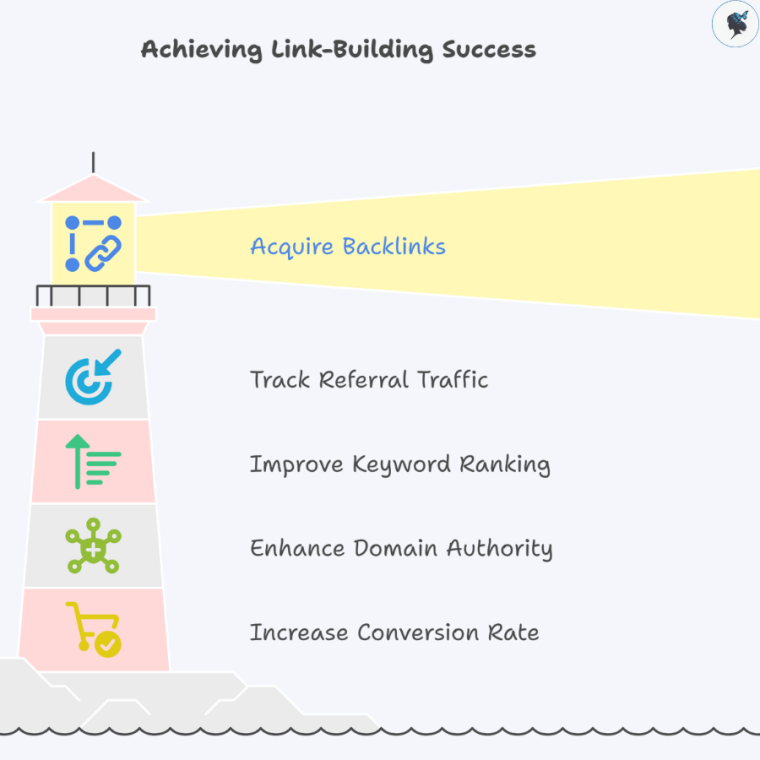
infograph: Achieving link-building success
Achieving link-building success
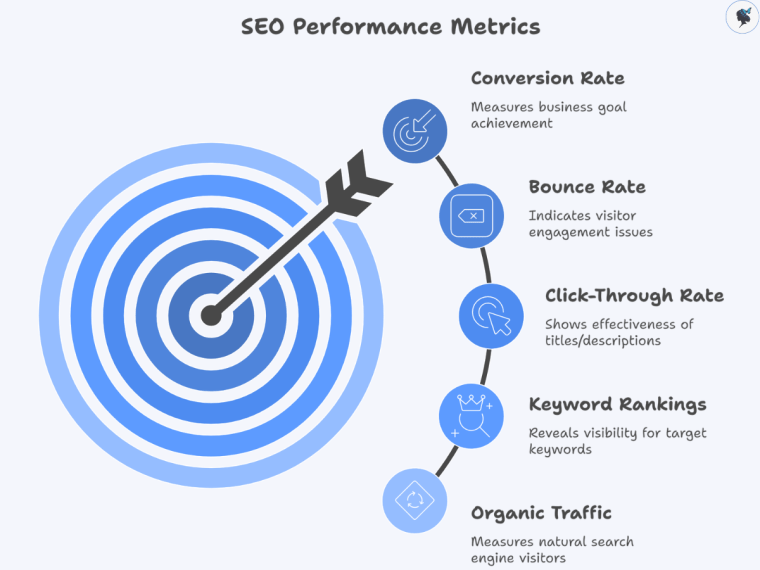
  • Number of new backlinks acquired, broken down by source type (DMO, event, blogger).
  • Referral traffic from those backlinks.
  • Keyword ranking improvements for destination pages benefiting from the link(s).
  • Domain Authority/URL Rating improvement (via Ahrefs/SEMrush) over time.
  • Conversion rate from pages receiving referred traffic (are visitors booking?).

According to link‑building statistics, only 28% of link‑builders track revenue from links and just 46% report measurable results within 3‑6 months. Therefore, you need clearly defined KPIs and time the reports appropriately (some links take months to show impact).

Wander Women Hot Tip: Set a KPI milestone at 6 months for each link‑building campaign: “Ranking for target keyword improved by X positions”. If no movement, adjust strategy.


Conclusion

Link‑building is a strategic, high‑impact SEO tactic for travel agencies—but it works best when you leverage industry‑specific opportunities. By partnering with DMOs, collaborating with event organisers, and engaging destination bloggers, you can earn relevant backlinks, boost organic visibility, and drive referral traffic.

The key is realistic execution: research, target relevant partners, create value‑driven content, outreach thoughtfully, and measure success.

Wander Women Hot Tip: Pick one destination this quarter. Secure one DMO link, one event link, and one blogger collaboration for that destination, then compare performance after six months. Use that pilot to scale across your other destinations.

By treating link‑building as an ongoing, destination‑centric strategy rather than a one‑off task, your agency will build both credibility and visible SEO momentum in highly competitive travel search environments.

Need help? Contact us today!

Best Practices for Multilingual SEO for Travel Agencies

▶ Table of Contents

Introduction: Why Multilingual SEO Matters for Travel Agencies

In today’s global travel market, your website isn’t just competing locally—it’s competing internationally. Travelers from different countries and cultures increasingly search online in their native languages for flights, tours, accommodations, and travel experiences.

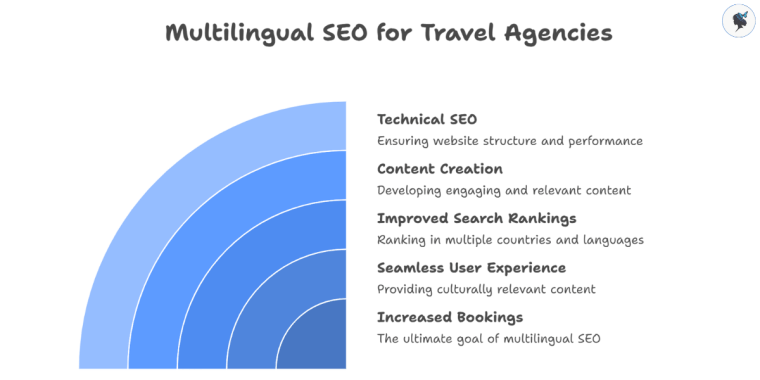
infograph: Multilingual SEO for travel agencies
Multilingual SEO for travel agencies

For travel agencies, multilingual SEO is not optional; it’s essential. Without optimizing your website for multiple languages, you risk losing potential clients, missing search traffic, and limiting your international reach.

Effective multilingual SEO ensures your site:

  • Ranks in multiple countries and languages.
  • Provides a seamless, culturally relevant experience.
  • Increases bookings from international travelers.

This guide will walk travel agencies through best practices for multilingual SEO, covering keyword research, on-page and technical SEO, local SEO, content creation strategies, and more.


1. Keyword Research for Multilingual SEO

Keyword research is the foundation of any SEO strategy. When targeting multiple languages, it becomes more nuanced.

infograph: How to conduct keyword research for multilingual SEO
How to conduct keyword research for multilingual SEO

Understanding Search Intent Across Languages

  • Users in different countries search differently for the same travel service.
    • Example: “vacation packages” in the U.S. vs. “holiday deals” in the UK.
  • Understanding intent ensures your content matches what travelers are actually searching for.

More about mastering search intent here.

Using Multilingual Keyword Tools

  • Tools such as Google Keyword Planner, Semrush, Ahrefs, and Ubersuggest can help identify keywords in different languages.
  • Analyze search volume, competition, and local trends to prioritize keywords.

Transcreation vs. Translation

  • Literal translations often fail to capture local nuances.
  • Transcreation adapts content culturally and linguistically, maintaining meaning while resonating with local audiences.

Local Language Variations and Dialects

  • Consider regional spellings, slang, and formal vs. informal phrasing.
  • Example: In Spanish, “holiday” can be vacaciones (Spain) or feriado (Latin America).

Wander Women Hot Tip: Always validate your translated keywords with native speakers or local SEO experts to ensure relevance.


2. On-Page Optimization for Multilingual Sites

Once you have keywords, it’s time to optimize your website’s pages in each language.

infograph: Optimizing your website for multilingual SEO
Optimizing your website for multilingual SEO

URL Structure

  • Options include:
    • Subdirectories: example.com/fr/
    • Subdomains: fr.example.com
    • Country-specific domains: example.fr
  • Best practice for travel agencies: Use subdirectories for simplicity and centralized authority, unless targeting large markets independently.

Meta Titles and Descriptions

  • Write language-specific meta tags for each page.
  • Example: French page for Paris tours: “Visitez Paris: Circuits et forfaits touristiques”.

Read our post: Meta Title & Description Optimization.

Hreflang Tags

  • Hreflang tags signal to search engines the language and regional targeting for each page.
  • Prevents duplicate content issues and ensures travelers see the correct language version.

Internal Linking and Navigation

  • Maintain clear navigation per language.
  • Avoid mixing multiple languages on the same page to reduce confusion and improve UX.

Check out: Increase Organic Traffic with Internal Linking.


3. Technical SEO Considerations

Multilingual SEO requires careful attention to site structure, crawlability, and technical performance.

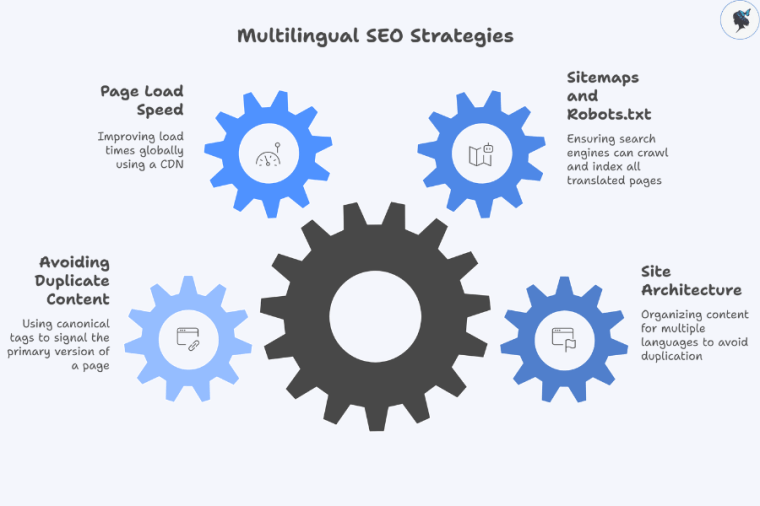
infograph: Multilingual SEO strategies
Multilingual SEO strategies

Site Architecture

  • Organize content clearly for multiple languages.
  • Avoid creating unnecessary duplicate pages.

Sitemaps and Robots.txt

  • Include all language versions in your XML sitemaps.
  • Ensure search engines can crawl and index all translated pages without restrictions.

Page Load Speed Across Regions

  • International travelers may access your site from different continents.
  • Use a Content Delivery Network (CDN) to improve load times globally.

Avoiding Duplicate Content

  • Use canonical tags properly to signal the primary version of a page.
  • Helps prevent penalties and consolidates SEO authority.

4. Local SEO for Multilingual Travel Agencies

For travel agencies, local SEO in each language ensures that search engines serve relevant results to international travelers.

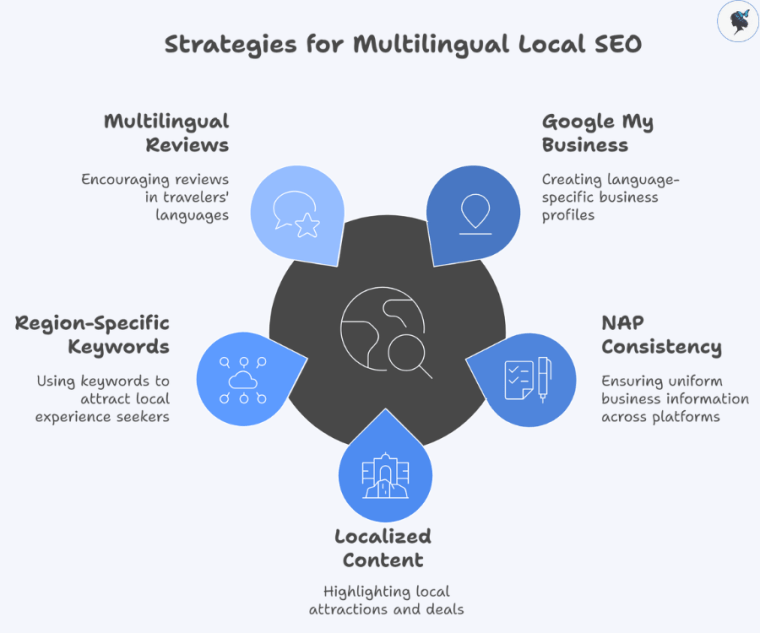
infograph: Strategies for multilingual local SEO
Strategies for multilingual local SEO

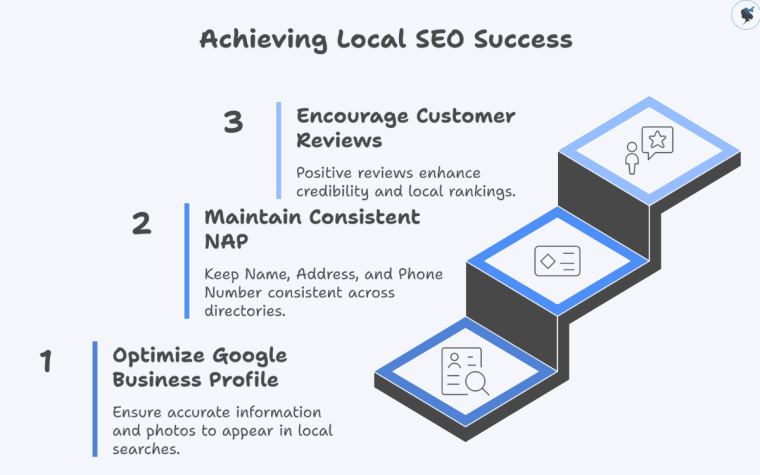
Google My Business / Local Listings

  • Create language-specific business profiles if necessary.
  • Ensure NAP (Name, Address, Phone) consistency across languages and platforms.

Localized Content

  • Highlight local attractions, travel tips, and seasonal deals.
  • Use region-specific keywords to attract travelers searching for local experiences.

Reviews and Testimonials

  • Encourage travelers to leave reviews in their own language.
  • Multilingual testimonials increase credibility and improve search rankings for local queries.

Read: The Role of Trust Signals.


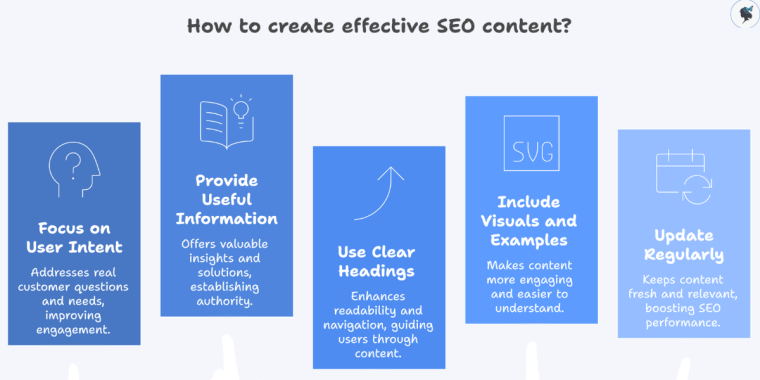
5. Content Creation Strategies for Multilingual Websites

High-quality content drives engagement, conversions, and SEO performance. For multilingual sites:

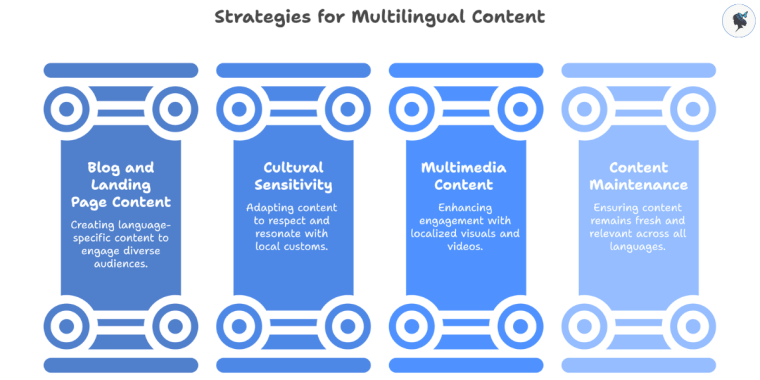
infograph: Strategies for multilingual content
Strategies for multilingual content

Blog and Landing Page Content

  • Create content targeting language-specific topics.
  • Example: Blog post on “Top Summer Destinations in Italy” with versions in Italian, English, and Spanish.

Cultural Sensitivity and Relevance

  • Consider local holidays, customs, and travel behavior.
  • Avoid literal translations that may not resonate with the audience.

Multimedia Content

  • Include localized images, videos, and infographics.
  • Enhances engagement and improves dwell time.

Content Maintenance

  • Regularly update all language versions to maintain freshness and SEO relevance.
  • Track performance metrics separately for each language.

6. Common Challenges and How to Overcome Them

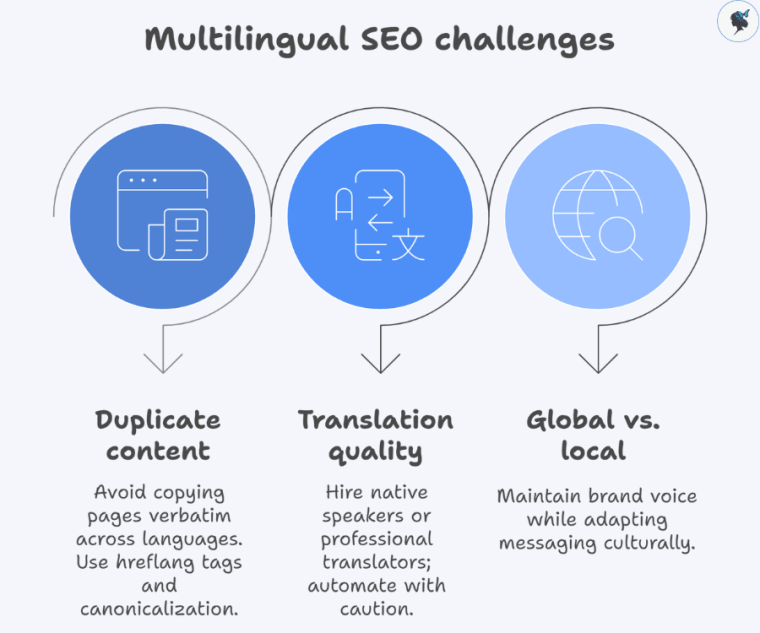
infograph: Multilingual SEO challenges
Multilingual SEO challenges
  • Duplicate content: Avoid copying pages verbatim across languages. Use hreflang tags and canonicalization.
  • Translation quality: Hire native speakers or professional translators; automate with caution.
  • Global branding vs. local relevance: Maintain brand voice while adapting messaging culturally.

Wander Women Hot Tip: Monitor analytics for each language version to see what resonates with local audiences.

More about leveraging data analytics here.


7. Tools and Resources for Multilingual SEO

  • Keyword Research: Semrush, Ahrefs, Google Keyword Planner
  • Translation & Transcreation: Smartling, Lokalise, DeepL Pro
  • Technical SEO & Site Audits: Screaming Frog, Sitebulb
  • Local SEO Management: Google My Business, Moz Local

Wander Women Hot Tip: Some tools allow geo-targeting and language filtering, which is essential for multilingual SEO success.


Conclusion

Multilingual SEO is a critical strategy for travel agencies seeking to expand their reach internationally. By focusing on:

  1. Keyword research tailored to language and cultural differences.
  2. On-page optimization with hreflang, metadata, and URL structure.
  3. Technical SEO for crawlability and site performance.
  4. Local SEO to attract international travelers.
  5. Culturally relevant content across blogs, landing pages, and multimedia.

Travel agencies can significantly improve search visibility, user experience, and ultimately bookings from international markets.

Next Steps: Audit your multilingual SEO setup today, ensure hreflang tags are correctly implemented, and start creating transcreated, culturally relevant content to attract travelers worldwide.

Need help? Contact us today!
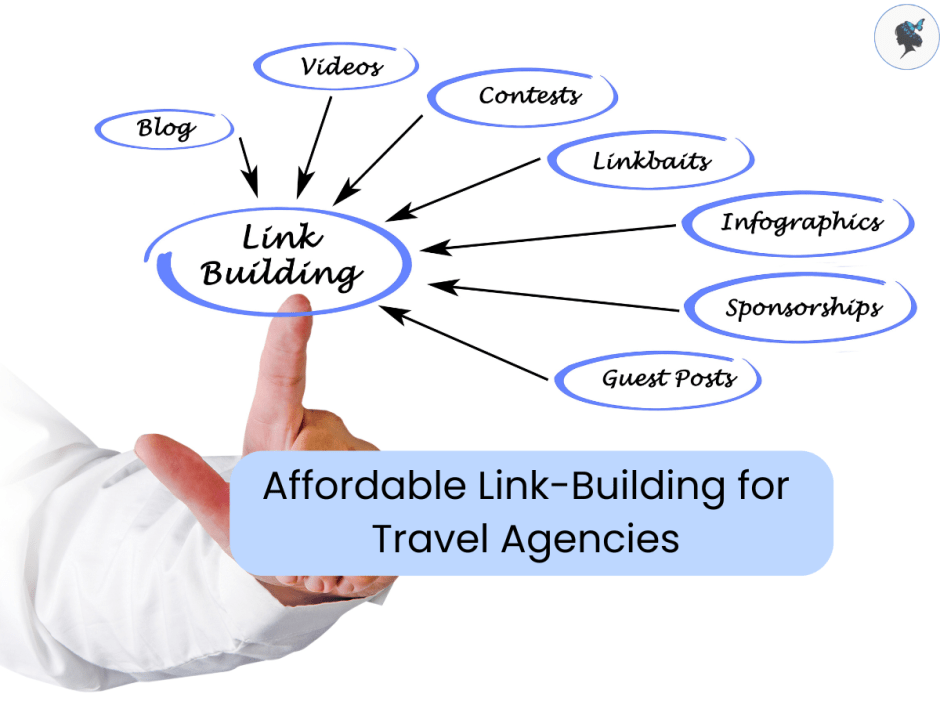
Affordable Link-Building for Travel Agencies

How Small Brands Can Boost SEO Without Expensive PR


▶ Table of Contents
  1. How Small Brands Can Boost SEO Without Expensive PR
    1. Introduction
    2. Why Link-Building Matters for Travel Agencies
    3. Effective Low-Cost Link-Building Techniques
    4. Case Studies / Examples
    5. Common Pitfalls and How to Avoid Them
    6. Conclusion

Introduction

For small travel agencies, link-building can feel daunting. High-profile campaigns and expensive PR initiatives are often out of reach, yet backlinks remain critical for SEO. They signal credibility to search engines, improve rankings, and can drive organic traffic directly to your offers.

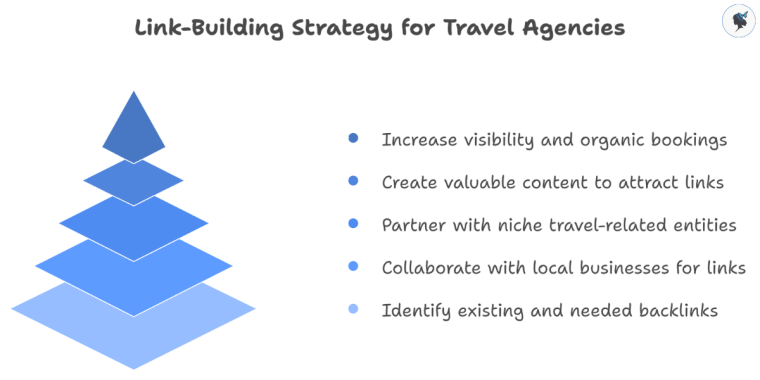
infograph: Link-building strategy for travel agencies
Link-building strategy for travel agencies

The good news? You don’t need a big budget to build high-quality links. By leveraging local partnerships, niche collaborations, and content-focused strategies, small agencies can earn authoritative backlinks that boost visibility, attract leads, and improve organic bookings.

Wander Women Hot Tip: Start by auditing your current backlinks. Identify which pages already attract links and which high-value pages need more support. This will guide your initial link-building efforts.


Impact on SEO

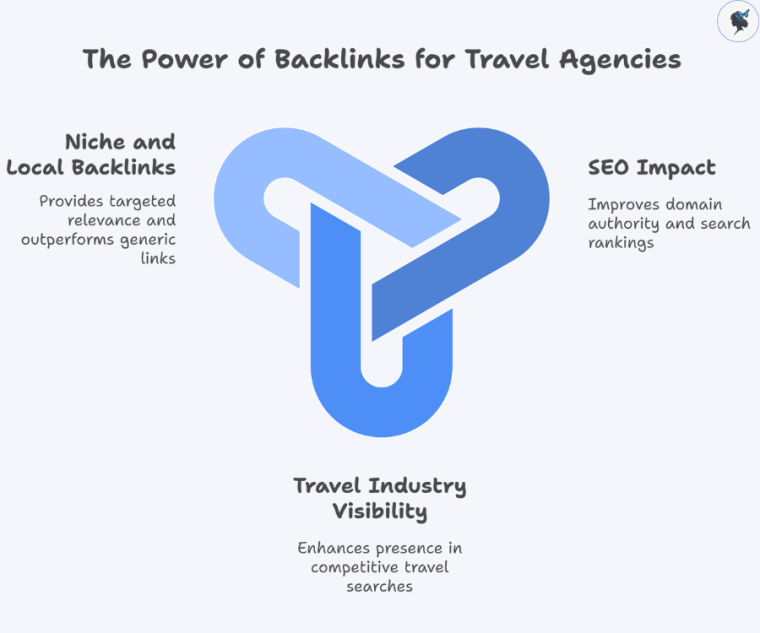
Backlinks remain a top-ranking factor for search engines. Quality links improve domain authority, signal relevance, and help your content compete in highly competitive travel searches. Unlike paid ads, which stop delivering once the campaign ends, links provide long-term, compounding value.

infograph: The power of backlinks for travel agencies
The power of backlinks for travel agencies

Role in Travel Industry Visibility

In travel, search visibility is competitive. Even a well-optimized destination page may struggle without backlinks. For example, a boutique travel agency offering tours in Italy or Thailand will rank better if other relevant sites reference their guides, itineraries, or travel tips.

Wander Women Hot Tip: Focus on niche and local backlinks—a few relevant links often outperform dozens of generic ones from unrelated sources.


Partnering with Local DMOs and Tourism Boards

Destination Marketing Organizations (DMOs) are excellent partners for link-building. They often maintain resource pages, travel guides, and event calendars where your content can be featured.

infograph: Strategic link-building with DMOs
Strategic link-building with DMOs

Action Steps:

  • Offer to create destination guides or itineraries highlighting your expertise.
  • Collaborate on blog posts or social media campaigns that naturally include links back to your site.

Example: A small tour operator contributes a “Hidden Gems of (Destination)” guide to the local DMO’s blog, earning multiple backlinks and increased visibility.

Read our post: creating destination guides that convert.


Collaborating with Event Organizers and Local Businesses

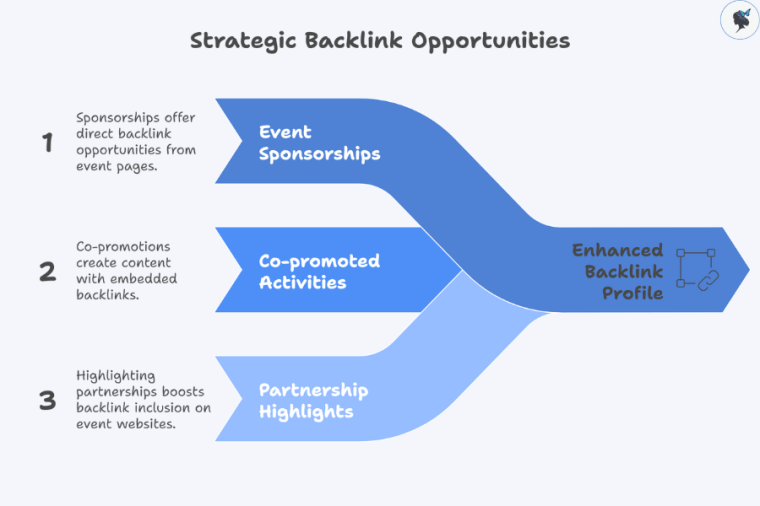
Sponsoring or participating in local events provides a natural opportunity for backlinks:

  • Event pages often list sponsors and partners with URLs.
  • Co-promoted activities, like city tours or travel workshops, can generate content with embedded links.
infograph: Strategic backlink opportunities
Strategic backlink opportunities

Wander Women Hot Tip: Highlight your partnerships in blog posts or social media, then request inclusion on the event’s website to capture backlinks.

Check out social media post ideas here.


Guest Blogging on Travel or Niche Sites

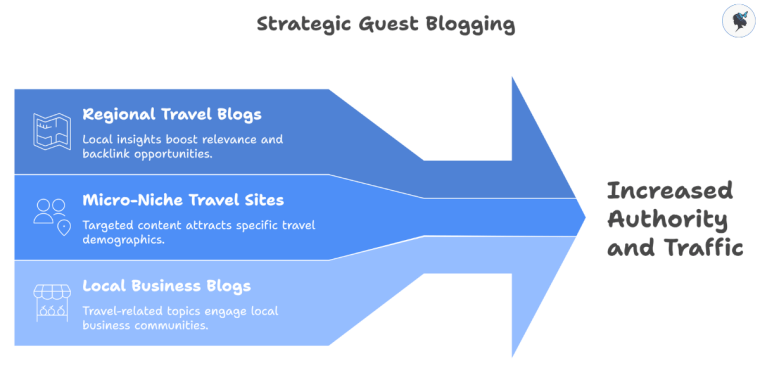
Guest posting remains a cost-effective way to gain authoritative backlinks.

infograph: Strategic guest blogging
Strategic guest blogging

Focus on:

  • Regional travel blogs
  • Micro-niche travel sites (e.g., solo female travel, adventure travel)
  • Local business blogs that cover travel-related topics

Action Steps:

  • Pitch unique content like destination guides, travel tips, or personal experiences.
  • Include contextual backlinks naturally within the content.

Example: A small solo travel agency guest-posted on three micro-niche blogs, generating referral traffic and increasing their authority in a targeted segment.


Leveraging User-Generated Content (UGC) and Reviews

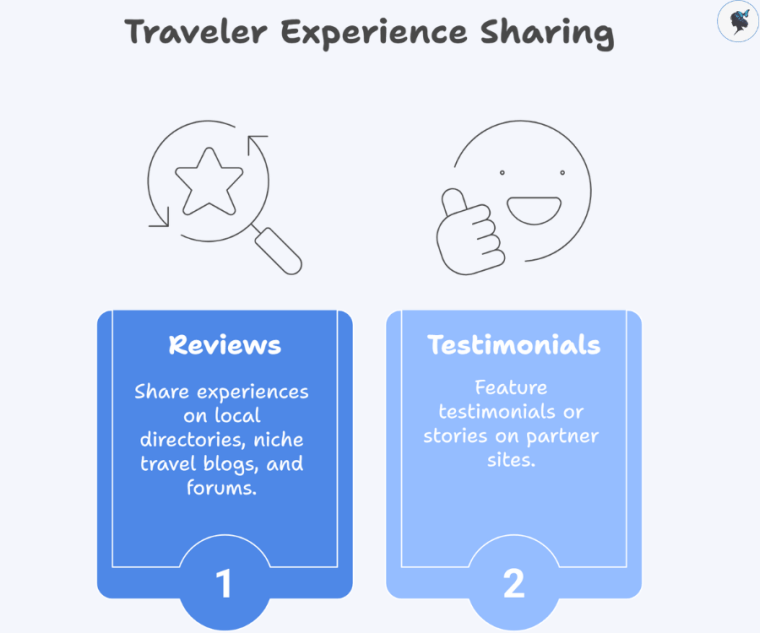
Encourage travelers to share experiences that can be linked:

infograph: Traveler experience sharing
Traveler experience sharing
  • Reviews on local directories, niche travel blogs, and forums
  • Testimonials or stories featured on partner sites

Wander Women Hot Tip: Reach out to local bloggers or online publications who may feature your clients’ experiences—these mentions often result in high-value backlinks.

More about using UGC as SEO assets here.


Creating Linkable Assets

Content that provides clear value attracts links organically:

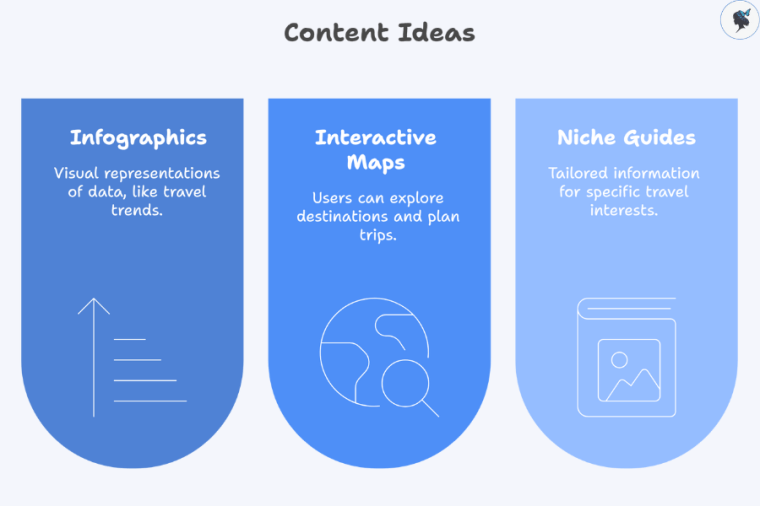
  • Infographics showing seasonal travel trends or destination highlights
  • Interactive maps or visual itineraries
  • Guides for niche travel segments
infograph: Content ideas
Content ideas

Action Steps:

  • Promote these assets via social media, newsletters, and partner websites.
  • Reach out directly to sites that might reference your content.

Example: A regional tour operator created a visual “Top 10 Hidden Beaches” infographic. Local travel blogs referenced it, earning several high-quality backlinks.


Resource Pages and Listicles

infograph: Content submission strategies
Content submission strategies
  • Submit your content to curated lists: “Best Boutique Travel Agencies in (Region)” or “Top Sustainable Tours.”
  • Identify resource pages maintained by DMOs or local travel blogs.

Wander Women Hot Tip: Track which resource pages provide both backlinks and traffic. Focus on building relationships with those sites for long-term collaboration.


Case Studies / Examples

Boutique Travel Agency

  • Partnered with a local DMO and contributed a seasonal travel guide.
  • Result: 5 high-quality backlinks and a 20% increase in organic traffic.

Solo Female Travel Agency

  • Guest-posted on three micro-niche blogs.
  • Result: Increased referral traffic and authority in a targeted niche.

Regional Tour Operator

  • Created seasonal itineraries with infographics and promoted them to local blogs.
  • Result: Backlinks from 7 travel blogs and improved SERP rankings for destination pages.

Wander Women Hot Tip: Document backlink sources and the traffic they generate. Use this data to refine your outreach strategy and identify high-value partners.

Read our post: leveraging data analytics.


Common Pitfalls and How to Avoid Them

infograph: SEO backlink strategy challenges
SEO backlink strategy challenges
  • Buying low-quality links: Avoid paid links from irrelevant sources—they can harm SEO.
  • Over-optimizing anchor text: Keep link anchors natural and contextually relevant.
  • Neglecting link diversity: Mix sources, formats, and authority levels for a robust backlink profile.

Conclusion

Even small travel agencies can compete effectively with cost-efficient link-building strategies. The key is to focus on:

  • Building partnerships with local and niche sites
  • Creating valuable, linkable content
  • Leveraging guest blogging, UGC, and curated resource pages

Wander Women Hot Tip: Start by identifying 5–10 potential partners or resource pages. Craft content specifically to earn their backlinks and scale gradually based on results.

By implementing these strategies, small travel agencies can increase their search visibility, attract targeted traffic, and grow bookings—all without expensive PR campaigns.

Need help with your backlink strategy? Contact us today!
Maximizing Value from Seasonal Travel Content: Smart Repurposing Strategies for Travel Agencies

▶Table of Contents
  1. Introduction
  2. Importance of Content Repurposing
  3. Strategies for Repurposing Seasonal Content
  4. Tips for Integrating SEO into Repurposed Content
  5. Conclusion

Introduction

Seasonal travel content—such as summer beach guides, fall foliage escapes or winter ski destination write‑ups—is a staple for many travel agencies. Yet all too often, these guides are treated as one‑time hits: created, published, promoted for the season, then forgotten once the demand dips. This approach wastes effort, depletes SEO equity and misses the chance to build a longer‑term asset.

infograph: Seasonal travel content repurposing cycle
Seasonal travel content repurposing cycle

In this article we’ll show how travel companies can repurpose seasonal content instead of recreating it from scratch each year, thereby saving resources, preserving SEO performance and engaging audiences more consistently.

Wander Women Hot Tip: Before the next high season starts, pick your top 3 seasonal guides from the last year and identify which one to repurpose first—treat it as your pilot.


Importance of Content Repurposing

Content repurposing isn’t simply “re‑using old content” — it’s a strategic approach that extends lifespan, increases return on investment and keeps your brand message active and meaningful.

infograph: The strategic benefits of content repurposing
The strategic benefits of content repurposing

Why it saves time and resources

Producing fresh, in‑depth content each season is resource‑intensive. According to one recent study, 65% of marketers agree that content repurposing is more affordable than creating brand‑new content. By repurposing guides, agencies can spend less time on ideation and more on promotion and optimization.

Why it boosts SEO value

Sites that refresh and republish content rather than abandoning it gain stronger SEO outcomes. One data point shows that content lifecycle extensions via updates increased organic traffic by 28% in 2025. With travel guides, you retain inbound links, existing authority and content history—all valuable assets.

Why it reaches a broader audience

People consume content in myriad formats and on various platforms. A guide originally written for blog readers may resonate as a social‑media carousel, a downloadable PDF or an email feature. Repurposing helps broaden reach.

Repurposing is not a shortcut—it’s an investment in stretching the value of your best content, improving SEO impact and engaging more travellers across platforms.

Wander Women Hot Tip: Audit your content library annually and tag your best‑performing seasonal guides. These become your “repurpose candidates” for the next cycle.


Strategies for Repurposing Seasonal Content

In this section we’ll walk through specific strategies travel agencies can adopt to repurpose seasonal guides effectively.

1. Update content for the new season

infograph: Website content update process
Website content update process
  • Refresh statistics (visitor numbers, average temperatures, hotel rates).
  • Update event listings, new attractions or newly opened properties.
  • Replace outdated travel advisories or seasonal commentary.
  • Keep the original URL where possible to preserve SEO rankings.

Wander Women Hot Tip: Use a revision log on each page (“Last updated: November 2025”) which signals freshness to Google and users alike.

2. Add new visuals and multimedia

infograph: Visual refresh ideas
Visual refresh ideas
  • Replace old hero images with recent high‑quality photos from the destination.
  • Create an infographic summarizing “Top 10 highlights this season.”
  • Convert the guide into a short video or reel for social channels.
  • Use interactive maps or sliders for visual appeal.

Wander Women Hot Tip: Create a “visual refresh” every 12 months—update at least 3 images or one video per guide to keep it feeling current.

3. Integrate user‑generated content (UGC)

infograph: User-Generated Content in travel guides
User-Generated Content in travel guides
  • Feature traveller photos, reviews or short stories from your customers.
  • Include UGC in the guide, linking to Instagram posts, testimonials or guest blog entries.
  • Encourage sharing via branded hashtags and then curate the best content into your guide.

Read: How travel brands can use UGC.

Wander Women Hot Tip: Run a social campaign post‑season: “Share your (destination) summer moment” and then embed the best user posts into next year’s guide.

4. Reformat content for different channels

Repurposing a seasonal guide
  • Break the long guide into mini‑posts: “5 things you didn’t know about X in fall” for social.
  • Create a downloadable PDF or e‑book version of your seasonal guide.
  • Use parts of the guide as email newsletter features with links back to the full page.
  • Turn the guide into a script for a podcast episode or a YouTube short.

Read our guide: Evergreen Destination Seasonal Content Hubs

Wander Women Hot Tip: Re‑use your main seasonal guide across at least three formats (blog + infographic + video) for maximum reach.

infograph: Content linking strategies
Content linking strategies
  • On the guide page, link to related content: past season’s guide archive, booking pages, photo galleries.
  • From newer content (blog posts for this season), link back to the hub destination guide to concentrate authority.
  • Use internal linking to funnel users into current offers.

Wander Women Hot Tip: Include a “Last year this guide…” section on the page linking to previous version—maintains history and authority rather than removing old content.

6. Keep the URL stable and archive wisely

Infograph: URL and content management process
URL and content management process
  • Avoid creating a new URL each season (e.g., /fall‑2024‑destination-guide). Instead, use /destination‑guide/fall/ and update content annually.
  • Archive older versions behind a change log or “archive” tag but keep the main page intact to preserve ranking signals.

Wander Women Hot Tip: Use a “last updated” schema on the page to signal to search engines that it has been refreshed without changing the URL.

By applying these strategies—updating content, fresh visuals, UGC integration, multi‑format repurposing, strong linking and stable URLs—you transform seasonal assets into evergreen pieces that deliver year after year.


Tips for Integrating SEO into Repurposed Content

Updating content is only half the job—ensuring it’s optimized for search is equally critical.

infograph: SEO strategy for repurposed content
SEO strategy for repurposed content

Keyword refresh

  • Use tools like Google Trends, Ahrefs or Semrush to identify new season‑specific keywords (“fall foliage tours 2025”, “winter skiing essentials”), long‑tail queries and question formats.
  • Update H1/H2 headings and meta descriptions accordingly.

Read our post: Mastering Long-Tail Keywords.

On‑page optimization

  • Update meta titles and descriptions to reflect current season and year.
  • Include schema markup for updated offers, itineraries or events.
  • Ensure headings and content reflect newly added sections (e.g., UGC gallery, infographic).
  • Optimize images: new filenames, alt text, compression for speed.

More about On-Page Optimization here.

  • Internal links: From blog posts or social posts to the updated destination guide.
  • External links: Share the refresh on partner websites, social media, and newsletters to attract new backlinks.
  • Ensure old URLs redirect (if any), and keep canonical tags in place to prevent duplicate content.

More about internal linking for travel companies here.

Wander Women Hot Tip: Add a “What’s new this season” section at the top of the guide with updated keywords—they’ll signal freshness to search engines and interest to returning visitors.

Monitor performance

  • Compare performance pre‑ and post‑update (traffic, rankings, conversions).
  • Use Google Search Console to see if impressions/CTR changed after refresh.
  • Use Analytics to track changes in engagement and conversions.

SEO doesn’t stop once you’ve updated the guide—the optimization, monitoring and linking work ensures your repurposed content continues to perform and attract new traffic each season.


Conclusion

Repurposing seasonal travel content is a strategic way for travel agencies to maximize the value of their marketing efforts. By updating and enhancing your existing guides—rather than creating entirely new ones—you save resources, preserve SEO traction and continue attracting travellers across multiple seasons.

Key takeaways:

  • Refresh core elements (data, visuals, UGC) each season.
  • Repurpose guides into multiple formats and distribute across channels.
  • Keep URLs stable and maintain internal linking to preserve authority.
  • Integrate fresh season‑specific keywords and SEO updates.
  • Monitor performance and iterate based on insights.

Wander Women Hot Tip: Pick one seasonal guide this week and apply a mini‑refresh plan using this process: update visuals & UGC, optimize for the new season’s keywords, publish the refreshed version and promote it across your social and email channels.

Ready to convert your seasonal content into year‑round assets? Contact us today and watch your content keep working for your agency long after the season ends.

How Travel Brands Can Use User‑Generated Content as SEO Assets

▶ Table of Contents
  1. Introduction
  2. The Strategic Significance of UGC in Travel
  3. Best Practices for Leveraging UGC as SEO Assets
  4. Effective Strategies for Soliciting UGC from Travellers
  5. Techniques for Optimising UGC for Search Engines
  6. Real‑World Examples of Travel Companies Using UGC to Drive SEO & Engagement
  7. Conclusion

Introduction

In the travel industry, we’re seeing a tectonic shift in how travellers discover, evaluate and book trips. Rather than simply absorbing branded content, today’s (and tomorrow’s) travellers rely heavily on user‑generated content (UGC)—photos, videos, reviews, social posts from real travellers—to inspire, inform and influence their decisions. According to one 2025 statistic, 86% of travellers said they were inspired to visit a location after seeing user‑generated content.
Meanwhile, the market for UGC in travel is estimated at around USD 279.8 million in 2025, with a projected growth to USD 1,132.1 million by 2035. (Future Market Insights)
For travel agencies and destination brands, this means UGC isn’t just “good to have” — it’s a high‑impact asset for content marketing, social media, and SEO. When properly solicited, curated and optimised, UGC drives engagement, improves search visibility, and builds trust with prospective travellers.

Wander Women Hot Tip: View UGC as a dual‑purpose tool: 1) social engagement and inspiration, 2) SEO asset and web content amplifier. Plan both uses whenever you request or reuse traveller content.


The Strategic Significance of UGC in Travel

1.Why UGC is a High‑Value Asset for Travel Brands

infograph: Benefits of User-Generated Content
Benefits of User-Generated Content
  • Authenticity & trust: UGC offers “real people, real experience” rather than polished brand messages. A 2025 study found UGC has a significant positive effect on destination imagery and tourist visit intentions.
  • Engagement and inspiration: In the travel sector particularly, 83% of travellers use social media for trip inspiration. Another stat: 86% of travellers were inspired to visit a location after seeing UGC.
  • Cost efficiency & scale: Compared with high‑production brand content, UGC can be more scalable, authentic and cost‑effective. For example, a marketing stat notes that visual UGC is considered more impactful by 85% of marketers compared to professional photography.
  • SEO & discoverability: UGC contributes to freshness signals, real traveller language (long‑tail keywords), multimedia content (photos/videos) and social signals that help search engines and users alike.

You might like our post: Use UGC to Enhance Your Travel Brand’s Trust

2. How UGC Impacts SEO & the Travel Funnel

infograph: UGC's impact on travel SEO
UGC’s impact on travel SEO
  • Awareness phase: UGC helps travellers discover destinations (“I saw this Instagram reel and now want to go”).
  • Consideration phase: Reviews, photos, videos from travellers build credibility and answer questions (“What’s it really like staying at this hotel?”).
  • Conversion phase: Real‑traveller content reduces perceived risk, making bookings more likely.
  • SEO in action:
    • Fresh UGC updates signal to search engines a page is current and relevant.
    • Traveller language captures long‑tail, conversational keywords (e.g., “what it was like to stay in a tree house in Costa Rica”). More about Long-Tail Keywords here.
    • Multimedia UGC supports rich search results (image/video search, Google Discover).
    • Internal linking of UGC pages into destination/service hubs strengthens topical authority.
  • Metric improvements: UGC often leads to longer time on page, deeper scrolls (since people enjoy real‑traveller content), better engagement metrics—all of which can support rankings.

Wander Women Hot Tip: Build your content funnel around UGC touchpoints:

  • For TOFU (top‑of‑funnel) create “traveller story” pages and galleries.
  • For MOFU (middle) embed UGC into destination/service hub pages (real review + service link).
  • For BOFU (bottom) use UGC testimonials and case studies that push toward booking.
    Map your internal linking so that UGC feeds into your commercial pages.

Check out: The Complete Digital Marketing Funnel for Travel


Best Practices for Leveraging UGC as SEO Assets

1. Curate and Showcase UGC Strategically

infograph: UGC integration strategies
UGC integration strategies
  • Create dedicated sections on your site for UGC: e.g., “Traveller Gallery”, “Real Stories”, “Trip Highlights”. Use these as entry‑points and link into hub/destination/service content.
  • Use UGC in blog posts: integrate traveller quotes, photos, video snippets to humanise content and make it richer.
  • Build content clusters: For example, a destination page that includes brand content + embedded UGC streams (photos/videos) + links to sub‑pages. This boosts structure and authority.
  • Maintain quality control: Not all UGC will be suitable. Filter for relevance, authenticity, and brand fit. Research shows UGC influences tourist image and behaviour only when perceived as genuine.
  • Refresh UGC often: A destination page that embeds new traveller posts signals freshness to search engines and encourages repeat visits.
  • Align UGC showcase with user‑intent: E.g., if the page is “Adventure Travel in Iceland”, select UGC showing adventure contexts rather than leisure pool images.

2. Integrate UGC with On‑Page SEO Elements

infograph: Enhancing UGC for SEO
Enhancing UGC for SEO
  • Use descriptive headings/sub‑headings that frame UGC: e.g., “See real traveller photos from our Maldives resort”, “What guests say: tree‑house experience in Belize”.
  • Optimize alt text and filenames of UGC assets: eg “solo‑female‑traveller‑hiking‑Torres‑del‑Paine.jpg” or “family‑trip‑senior‑couple‑Santorini‑sunset.png”.
  • Apply schema markup where relevant: Review schema around UGC testimonials, VideoObject schema for traveller videos.
  • Meta tags: Create enticing meta titles/descriptions for UGC‑rich pages (“Real traveller photos & reviews of XYZ resort – see what it’s really like”).
  • Internal linking strategy: Link from UGC pages to commercial/service pages (“Book the same villa our guest visited”), and from blog content into UGC pages for deeper engagement.
  • Encourage user‑interaction: Optional comments or “submit your photo” forms increase dwell time and activity on page.
  • Cross‑channel amplification: Use UGC‑led content in social media, email, newsletters to drive traffic back to on‑site pages (which improves search signals).

3. Monitor & Optimize Performance

infograph: How to optimize UGC performance?
How to optimize UGC performance?
  • Track metrics: organic traffic to UGC pages, engagement (time on page, scroll depth), conversion from UGC content (clicks to booking).
  • Identify which UGC formats perform best (photo carousel vs video vs text review) and scale accordingly.
  • Audit older UGC pages: refresh assets, update meta tags, add new traveller posts to keep content fresh (search engines reward recent updates).
  • Use A/B tests: e.g., UGC gallery hero vs brand hero image, UGC testimonial vs no testimonial. Compare engagement and conversion outcomes.
  • Watch for faux‑UGC or irrelevant content—it may harm user trust and SEO signals. Authenticity matters.

Wander Women Hot Tip: Maintain a UGC content calendar: schedule quarterly refreshes of your UGC‑rich pages, track when traveller content awaits moderation, and ensure each UGC update prompts a mini‑SEO audit (alt text, schema, linking).


Effective Strategies for Soliciting UGC from Travellers

1. Build a UGC‑Friendly Ecosystem

infograph: UGC engagement cycle
UGC engagement cycle
  • Make it easy for travellers to submit their content: mobile upload forms, dedicated hashtag campaigns, photo spot prompts during or after the trip.
  • Incentivise contributions: run UGC contests (e.g., “Best sunset photo from our Bali resort”), feature winners, offer small rewards or recognition.
  • Use branded hashtags and prompts: “#OurBrandTraveller”, “#MyResortStory” – encourages sharing and helps aggregation.
  • In‑trip prompts: At check‑in, on‑tour, create signage or digital prompts encouraging travellers to tag your brand and share their moments.
  • Post‑trip follow‑up: send automated emails or SMS shortly after travel inviting submissions (“Share your favourite photo & you could be featured”).
  • Legal and rights management: ensure travellers agree to your terms for content reuse (photo rights, social media tags) at the point of submission.

2. Encourage UGC That Is SEO‑Friendly

infograph: Traveller content guidelines
Traveller content guidelines
  • Provide guidelines to travellers: ask for short captions including location + experience (e.g., “Hiking the red dunes of Wadi Rum – best trip ever”). This helps generate natural keywords.
  • Ask travellers to tag the destination, accommodation, tour name in the caption (makes the content more searchable, helps link building).
  • Collect metadata: ask for trip dates, accommodation name, destination region, content type (photo, video, review) so you can later categorise and use effectively.
  • Encourage multiple formats: visuals (photos/videos), short text reviews, long‑form blog‑style stories (if willing) — more formats mean more SEO opportunity.
  • Promote sharing across channels: Instagram stories, TikTok reels, YouTube vlogs – you can then embed these on your website for richer content.

3. Manage and Moderate UGC Efficiently

infograph: UGC management
UGC management
  • Create a UGC library (digital asset management): tag content by destination, trip type, season, traveller persona. Makes retrieval for content creation easier.
  • Moderate for quality & relevance: ensure the content aligns with your brand values, destination, and avoids irrelevant/spam posts. Lack of authenticity may undermine trust.
  • Attribute properly: always provide photo/author credit, link to the user where possible (improves authenticity and community feeling).
  • Use automation where possible: scanning hashtags, setting alerts for submissions, using workflow tools for approval and tagging.
  • Maintain transparency: let travellers know how their content will be used; this builds willingness to participate and ensures compliance.

Wander Women Hot Tip: Create a “Traveller UGC Kit” you send to past guests: sample captions, suggested hashtags, simple steps to upload/share their content. The more friction you remove, the more UGC you will receive.


Techniques for Optimising UGC for Search Engines

1. Structuring UGC for SEO Impact

infograph: Strategies for enhancing UGC SEO
Strategies for enhancing UGC SEO
  • Create dedicated UGC‑rich pages with unique URL, title, meta description, e.g., /traveller‑stories/destination‑x/.
  • Ensure UGC is embedded within strong contextual content: not just a gallery, but heading, intro paragraph, text around it explaining relevance (“This is what it’s like to hike the glacier…”) which improves readability, scroll depth and SEO.
  • Mix content types: use photos, videos, reviews — this diversity improves chances of appearing in various search results (image search, video search, Google Discover).
  • Consider pagination for large galleries but ensure search bots can crawl (avoid infinite scroll without fallback).
  • Use schema markup: For example, mark up an embedded traveller video with VideoObject, or a review with Review.
  • Link to it: Internal linking from destination/service hub pages to UGC page and vice versa helps distribute SEO value.

2. Keyword Strategy Within UGC

infograph: UGC optimization funnel
UGC optimization funnel
  • Extract organic language from traveller captions/comments to spot real‑world long‑tail keywords (e.g., “family friendly resort Maldivian lagoon with kids”).
  • Use those keywords in sub‑headings, alt‑text, captions, and metadata around the UGC.
  • Align UGC pages with search intent: e.g., if travellers often search “what it’s like staying in over‑water villa Maldives”, then embed relevant UGC and tailor the page accordingly.
  • Make sure the UGC helps push users down the funnel: link from the UGC story to booking/tour page with anchor text optimised for action (e.g., “Book the same villa our guest stayed in”).
  • On‑page optimisation: Ensure H1/H2 include target keywords, alt‑text for images include destination + experience, captions reinforce the topic.

3. Technical & On‑Page Optimisation

infograph: UGC optimization strategies
UGC optimization strategies
  • Optimize media: large volumes of high‑resolution images/videos can slow page speed. Use compression, lazy loading, responsive design.
  • File naming: rename server files to include keywords (e.g., solo‑female‑traveller‑hiking‑Torres‑del‑Paine.jpg).
  • Alt text: described in natural language including destination plus experience (“Solo female traveller hiking at sunrise Torres del Paine national park”).
  • Canonical tags: If UGC appears on multiple pages, ensure canonicalization to avoid duplication.
  • Mobile‑first optimisation: Ensure UGC pages load well on mobile since many travellers browse on smartphones.
  • Meta descriptions: Use social proof (“See real traveller photos & reviews from Destination X”) to boost click‑through rate (CTR).
  • Structured data: Use Review schema for UGC testimonials, ImageObject or VideoObject schema for galleries and videos.
  • Monitor crawl & index status: Use Google Search Console to ensure UGC‑rich pages are crawled and indexed.

4. Measuring & Iterating

infograph: UGC performance measurement
UGC performance measurement
  • Key metrics: organic traffic to UGC pages; dwell time/scroll depth; referral traffic to booking pages; keyword ranking improvement; conversion rates (booking enquiries) originating from UGC content.
  • Compare UGC vs brand‑only pages: measure if embedding UGC leads to improved performance (e.g., lower bounce rate, higher pages per session).
  • Refresh UGC content periodically: add new traveller submissions, update captions, refresh images/videos — freshness supports SEO.
  • A/B test UGC layouts: e.g., hero image from traveller vs brand image; testimonial block vs no testimonial; call‑to‑action at bottom of UGC page vs none.
  • Maintain UGC library insights: track top performing UGC types (videos, scenic photos, cultural moments) and replicate similar campaigns.

Wander Women Hot Tip: Schedule a quarterly UGC SEO audit: list all pages with embedded traveller content, check alt‑text, meta title/desc, internal linking, page speed, mobile performance. Prioritise fixes for pages with high traffic but low conversion.


Real‑World Examples of Travel Companies Using UGC to Drive SEO & Engagement

  • Airbnb: Frequently uses guest‑shared photos and reviews in its destination pages and blog, helping travellers visualise “what it’s really like” and improving engagement.
  • Destination marketing example: A recent study found that UGC significantly improves destination image and intentions to visit, illustrating that DMO/brand‑driven UGC campaigns can shift demand materially.
  • Key takeaway for travel agencies: You may not have massive budgets, but you can embed UGC in your site, build galleries, feature “Traveller of the Month”, and link stories to service offers. Over time, this builds topical authority and trust.

Wander Women Hot Tip: Pick one UGC campaign (e.g., “Show us your stay at Resort X”), run it for 3 months, embed the resulting content in a destination hub page, and monitor traffic, engagement and conversions vs a similar page without UGC. Use the results to scale.


Conclusion

User‑generated content is not a nice‑to‑have extra in the travel industry—it’s an SEO‑strong asset, a trust builder, and a engagement amplifier. For travel agencies and brands willing to invest in soliciting, curating and optimising UGC, the benefits are clear: more organic traffic, higher engagement, better conversion potential, and authentic connection with travellers.
To recap the strategy:

  1. Solicit UGC intentionally (with prompts, incentives, seamless workflows).
  2. Curate it smartly (destination‑relevant, quality controlled, integrated into content hubs).
  3. Optimise it for web (alt text, schema, internal linking, media optimisation).
  4. Measure and iterate (audit quarterly, refresh content, replicate what works).
    Start small, pick a pilot destination or service, embed traveller content, optimise around long‑tail keywords derived from that content, and use it as a proof case internally.

Wander Women Hot Tip: Use your first 90 days to build a “UGC starter kit”: write a brief for traveller submissions, design a UGC gallery page template, map the internal linking path to your service/booking pages, and schedule the quarterly review. Once the system is set, you’ll continuously gain UGC, SEO value and conversions with decreasing incremental effort.

Need help? Contact us today to get started!

Managing Seasonal Offers and Dynamic Inventory: SEO Best Practices for Travel Agencies


▶ Table of Contents
  1. Introduction
  2. Understanding Dynamic Inventory
  3. SEO Implications of Dynamic Pages
  4. Best Practices for Managing Dynamic Offers
  5. Enhancing User Experience
  6. Case Study
  7. Conclusion

Introduction

For travel agencies, dynamic inventory pages—featuring seasonal offers, limited-time packages, or fluctuating availability—are essential for converting travelers. However, frequent changes pose SEO challenges. Pages may appear and disappear each season, risking lost rankings, duplicate content, or broken links.

Properly handling these pages requires a combination of technical SEO strategies and content planning to preserve search visibility while delivering a seamless user experience.

Wander Women Hot Tip: Start by auditing your existing offers pages. Identify which seasonal or expiring content has caused 404 errors or ranking drops in the past.


Understanding Dynamic Inventory

infograph: Dynamic inventory examples
Dynamic inventory examples

1. Definition and Examples

Dynamic inventory pages are those updated frequently based on availability, promotions, or seasonality. Common examples include:

  • Seasonal tour packages (e.g., summer beach specials, winter ski trips)
  • Limited-time flight deals or hotel discounts
  • Holiday-specific accommodation offers
  • Travel demand varies by season; peak periods often bring high search interest for specific destinations.
  • Search behavior changes accordingly—for instance, “best ski resorts” spikes in winter.
  • Agencies must update content timely to match traveler intent.

Wander Women Hot Tip: Track seasonal search trends per destination to plan offers content ahead of peak interest, ensuring your pages are indexed and visible when travelers search.

You might be interested in our post: Strategies for Managing Seasonal Content.


SEO Implications of Dynamic Pages

infograph: SEO challenges with seasonal content
SEO challenges with seasonal content

1. Crawling and Indexing Challenges

  • Frequent URL changes can confuse search engines, leading to pages being dropped from the index.
  • Disappearing pages may lose ranking authority if not managed correctly.

More about crawlability and indexability here.

2. Risks of 404 Errors and Duplicate Content

  • Expired offers returning 404s hurt both SEO and user experience.
  • Similar offers across multiple pages can create duplicate content issues.
  • Link equity may be diluted if multiple seasonal pages target the same destination or keyword.
  • Without proper canonicalization or redirects, valuable SEO signals can be lost.

Wander Women Hot Tip: Develop a consistent URL strategy for seasonal offers, keeping base URLs evergreen while updating the content dynamically.


Best Practices for Managing Dynamic Offers

infograph: How to manage dynamic offers for SEO?
How to manage dynamic offers for SEO?

1. Structured Data Implementation

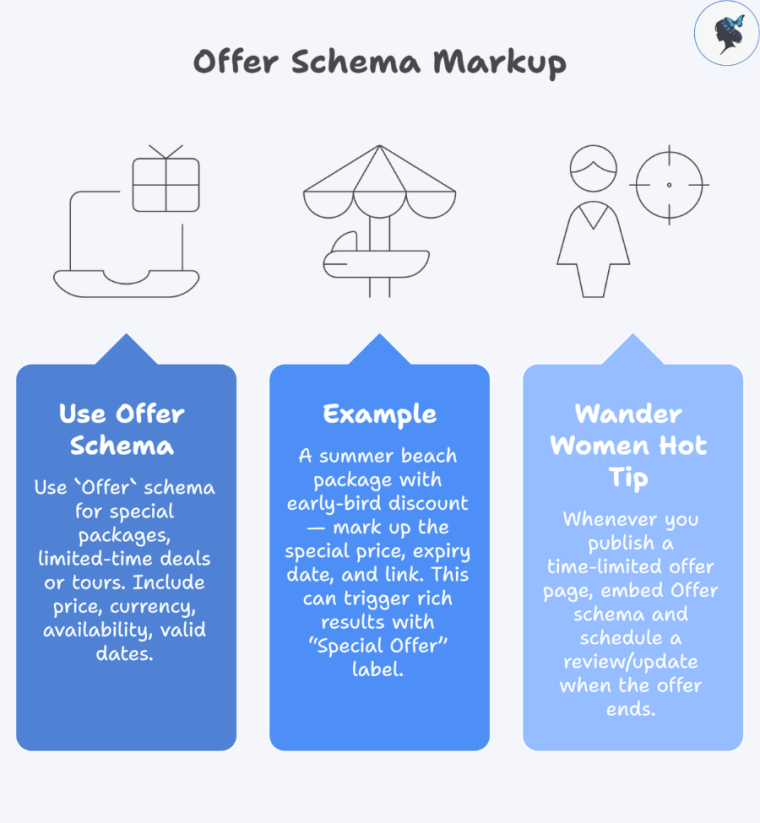
  • Use Offer, Product, and Event schema to help search engines understand seasonal packages.
  • Structured data can enable rich snippets in search results, increasing CTR and visibility.

2. Canonical Tags

  • Use canonical tags to consolidate duplicate or similar offers, preserving SEO value.
  • Example: /summer-beach-special canonicalized to /beach-offers ensures all authority points to the main destination page.

3. Seasonal Content Calendar

  • Plan content updates aligned with travel seasons.
  • Schedule posts for new packages before peak search periods to maintain relevance and indexing.

4. Redirects and 404 Handling

  • Use 301 redirects for removed offers to relevant alternatives.
  • Soft 404s for expired offers can maintain user trust without harming SEO.

Wander Women Hot Tip: Maintain a master offers index page that links to all seasonal pages. This acts as a central hub for both users and search engines.


Enhancing User Experience

infograph: Website optimization
Website optimization

1. Displaying Offers Dynamically

  • Implement filters for travelers to sort by date, destination, and price.
  • Use real-time availability feeds without creating duplicate URLs for each variant.

2. Page Speed and Mobile Optimization

  • Dynamic pages often include heavy images or scripts—optimize for fast loading.
  • Mobile-friendly design is critical, as most travelers search and book on mobile devices.

More about mobile optimization here.

3. Consistency Across Channels

  • Ensure your website, email campaigns, and social media showcase the same offers to avoid confusion.

Wander Women Hot Tip: Use lazy loading for images and caching for frequently updated content to balance dynamic functionality with page speed.


Case Study

Ingenia Holiday Parks — Migration & SEO protection

  • Client: Ingenia Holiday Parks (part of Ingenia Communities).
  • Project: Large-scale platform migration from WordPress to headless CMS (Sanity) with a dev partner (Inlight) and SEO partner Optimising.
  • Goal: Migrate a high-traffic site without losing organic rankings or bookings.
  • Outcome: traffic levels sustained through cutover (200k+ monthly organic visits), impressions doubled year-on-year, key park pages showing significant click gains, and bookings remained consistent. Optimising reports rankings/impressions stabilised within two weeks and continued to improve thereafter.

Wander Women Hot Tip: Analyze which seasonal pages consistently generate traffic and bookings to prioritize future updates.


Conclusion

Managing dynamic inventory pages effectively requires a balance of SEO, content planning, and user experience:

  • Use structured data to highlight seasonal offers in search results.
  • Apply canonical tags and 301 redirects to preserve SEO value.
  • Maintain a content calendar to plan updates and ensure pages remain relevant.
  • Optimize page speed and mobile experience to enhance usability.

By implementing these strategies, travel agencies can maintain rankings, improve conversions, and maximize visibility for seasonal offers without compromising SEO.

Wander Women Hot Tip: Treat your dynamic offers pages as a living asset. Update, optimize, and monitor them regularly to ensure both travelers and search engines continue to find your best seasonal content.

Need help with your dynamic content? Contact us today!

Strategies for Managing Seasonal Content

Why Seasonal Content Management Matters for Travel Agencies

▶ Table of Contents
  1. Why Seasonal Content Management Matters for Travel Agencies
  2. Understanding Seasonal Trends in the Travel Industry
  3. Strategies for Managing Seasonal Content Effectively
  4. Case Studies: Seasonal Content Success Stories
  5. Building a Sustainable Seasonal Content Strategy

In the travel industry, seasonal peaks and troughs are baked into everything you do: summer beach holidays, winter ski trips, shoulder-season city breaks. But for a travel agency, that creates a content and SEO challenge: if you only publish content when demand spikes, you risk letting your online visibility fall off in the off-season, losing organic traffic, bookings and authority.

infograph: Seasonal content management cycle
Seasonal content management cycle

A recent article from Bulldog Digital Media points out that “travel behaviour is cyclical … if you miss key seasonal moments, you miss out on significant revenue opportunities.” Meanwhile, a specialist SEO article for travel agencies emphasises seasonality as one of the key SEO-challenges in the travel market.

By managing your seasonal content thoughtfully — planning ahead, refreshing it strategically, and blending in evergreen support content — you can maintain your SEO momentum year-round, improve bookings in both high and low periods, and build long-term site authority. This post will show travel-agency-specific strategies for doing exactly that.


Identifying Seasonal Patterns

To manage seasonal content effectively, you must first understand when and how your demand rises and falls.

infograph: How to manage seasonal content effectively?
How to manage seasonal content effectively?
  • Use tools like Google Trends, your internal booking/website analytics, and even Google Search Console to track when people search for your destinations (e.g., “summer beach holidays Spain”, “ski resorts Austria December”).
  • Categorise your offerings into clear seasons:
    • peak (high demand),
    • shoulder (transitional),
    • and off-season.
  • Tourism marketing often divides travel demand into these three categories.
  • Map external triggers: school holidays, public holidays, events (festivals, cruises, etc.), weather patterns, and also travel restrictions/shifts (e.g., recent pandemic-related changes).

Wander Women Hot Tip: have your summer-holiday content live 8-10 weeks ahead of launch so you catch booking momentum.

Analysing Content Performance by Season

Once you have awareness of your seasonal windows, look at how your existing content performs:

Infograph: Seasonal content strategy development
Seasonal content strategy development
  • Review your analytics to see which pages/posts drop off in the off-season or which ones still hold steady.
  • Identify content decay — e.g., a blog post published for “summer 2024 beach deals” might see traffic crash in November. Flag those posts for refresh or repurposing.
  • Build a seasonal content calendar tied to these peaks/shoulders/off-season periods, so you’re not scrambling when seasonality changes.
  • Consider using predictive analytics.

By combining trend-data plus internal performance review, you can see when content matters most and which content needs a year-round strategy rather than “launch-and-forget”.

More about data analytics here.


Strategies for Managing Seasonal Content Effectively

Here are five actionable strategies travel agencies can implement to keep seasonal content working for them all year round.

Plan Seasonal Content Well in Advance

Infograph: Seasonal content planning process
Seasonal content planning process
  • Create a 12-month editorial calendar: map each major season (winter holidays, summer travel, shoulder periods) and assign content themes and publication dates.
  • Publish your key seasonal content 8–10 weeks before the booking surge begins. For example, if summer bookings pick up in April, your “Top 2026 Summer Beach Packages” post should go live in February or March.
  • Link content to promotional campaigns: have blog posts, landing pages and social media tie into your email campaigns, early-bird offers, and remarketing efforts.
  • Build in evergreen tie-ins within seasonal content. For example: “Best Beaches in Spain for Summer 2026 – And How to Visit Off-Season Too.” This allows you to update rather than re-create each year.
  • Use predictive tools: the Smartvel article outlines how agencies can use AI and trends data to get ahead of upcoming travel interest surges.

More about using AI in travel here.

Repurpose and Refresh Existing Content

Infograph: How to manage seasonal content?
How to manage seasonal content?
  • Rather than deleting or archiving last year’s seasonal posts, update them: change dates, insert new deals, refresh visuals, update SEO-metadata.
  • Convert content formats: blog posts – infographics – short videos or Instagram Reels. This helps maximize reach from one core idea.
  • Add internal links between your evergreen and seasonal content: e.g., a “Year-Round Spain Travel Guide” (evergreen) linking to “Summer 2026 Ibiza Beach Packages” (seasonal).
  • Monitor traffic drop-off on seasonal pages; when it falls below a threshold, mark the page for refresh rather than deletion, so you preserve domain authority and link equity.
  • Maintain the URL structure for recurring content (e.g., /christmas-markets-europe/) and update the content rather than creating a new page each year — this gives you the benefit of existing backlinks, internal links and domain trust.

Read more about internal linking here.

Utilize Social Media & Promotion to Extend Seasonal Reach

infograph: Enhancing seasonal destination visibility
Enhancing seasonal destination visibility
  • Use social media not only at peak season, but during shoulder and off-seasons: promote older seasonal content with “Throwback” or “Plan Ahead” messaging.
  • Leverage user-generated content (UGC): encourage travellers who visited in past seasons to share photos or stories, re-promote them to maintain destination visibility even when it’s off-season.
  • Run countdown or teaser campaigns ahead of high-booking seasons: e.g., “12 Weeks to Summer: Why You Should Book Now.”
  • Use paid social ads timed before the booking surge, supporting organic content.
  • Align posts with your blog/landing page strategy so social and content marketing reinforce each other — improving dwell
  • time, share metrics and signals to search engines.

Read our post: User-Generated Content.

Implement SEO Best Practices for Seasonal Keywords

infograph: SEO strategies for seasonal content
SEO strategies for seasonal content
  • Do keyword research not just for current season terms (e.g., “summer beach holidays 2026 Spain”) but also evergreen + seasonal blends (e.g., “best beaches Spain” + “summer 2026 deals”).
  • Maintain permanent URLs for recurring content; update metadata (title tag/description) each year rather than creating a new URL to preserve ranking and link history.
  • Use structured data/schema markup where appropriate — for example event schema if you are covering a festival or seasonal attraction.
  • Internal linking: create a hub-and-spoke architecture — a pillar evergreen page (‘Country travel guide’) linking to seasonal subpages (‘Winter in …’, ‘Summer in …’).
  • Monitor ranking fluctuations: the travel-industry SEO guide emphasises that seasonality is a major cause of ranking and traffic swings in this niche.
  • Ensure mobile-first and fast page-speed performance — especially as many travellers research and book on mobile devices.

More about mobile optimization here.

Create Evergreen Supporting Content

infograph: How to manage evergreen content for SEO?
How to manage evergreen content for SEO?
  • Build content that is not tied to a season, such as:
    • “How to pack for a multi-destination Europe trip”,
    • “Travel insurance: what you need to know”, or
    • “How to choose a family-friendly tour operator”. These posts hold value year-round and help maintain site authority.
  • Link evergreen content to your seasonal posts: this strengthens overall site structure and keeps traffic flowing between pages even when seasonal interest is low.
  • Use evergreen content as your “foundation” for your site’s SEO health — so that even when the seasonal pages dip, you still have reliable traffic and domain authority.
  • Update evergreen content periodically (e.g., once per quarter) to keep it fresh and relevant to search engines — don’t leave it static.
  • Review old seasonal content and convert some into evergreen format where practical — e.g., “Why Visit Iceland in Any Season” instead of just “Summer in Iceland”.

Read: how to create evergreen content.


Case Studies: Seasonal Content Success Stories

Here are some hypothetical (but grounded) examples of how travel agencies can use these strategies. While proprietary data may not be publicly available, these reflect sector best practices.

Ski Travel Agency Turning Off-Season into Shoulder-Season Growth
A ski-focused agency publishes a “Top Ski Resorts for Season 2025/26” blog in September and also adds a section on “Summer Hiking & Mountain Biking at the Same Resorts.” The refreshed article gets updated each March and gets internal links from their evergreen “Outdoor Adventures Europe” pillar page. As a result, instead of traffic dropping 70% in summer, they see only a 30% drop and maintain a good volume of bookings for summer and early autumn.

Beach Destination Tour Operator Maintaining Visibility Year-Round
A beach tour operator creates a pillar page for “Best Beach Destinations in Spain” (evergreen) and has subpages for “Summer 2026 Beach Packages”, “Late-Season Autumn Breaks”, “Winter Sun Getaways”. They update the seasonal subpages each year, preserving URLs and backlinks. During off-peak months they run UGC and social posts (“Remember your summer holiday in 2025? Book early for 2026”). This helps retain about 60-70% of their usual organic traffic even in the low season.

City-Break Specialist Leveraging Annual Events
A travel agency focuses on city-breaks and has a page for “Christmas Markets in Europe” — the page URL remains the same year-to-year, but they update content every October with new dates, deals and local events. They build an internal link from their evergreen city-travel guide. Because they preserve the URL and link equity, their page ranks consistently each year and traffic grows through backlinks from travel-bloggers linking to the same page annually.

Read: managing seasonal content: fall.


Building a Sustainable Seasonal Content Strategy

Seasonal content is not something to publish once, then archive and forget. For travel agencies, it’s a dynamic asset that — if managed correctly — can support bookings and SEO year-round.

  • Plan ahead with a 12-month editorial calendar that anticipates peaks, shoulders and troughs.
  • Refresh and repurpose existing content instead of deleting or re-creating each year.
  • Use social promotion and UGC to keep destinations alive in off-season months.
  • Apply sound SEO practices to seasonal content: maintain URLs, update metadata, use internal linking, and monitor ranking shifts.
  • Build evergreen supporting content to stabilise your domain’s authority and traffic across seasons.
infograph: Achieving year-round content success
Achieving year-round content success

If you’re responsible for content in your travel agency, now is the time to audit your seasonal content:

  • Which pages are still live from last year?
  • Which ones have decayed in traffic?
  • What evergreen “foundation” content do you have?
  • Are you linking evergreen – seasonal – evergreen?
  • Can you publish next season’s content earlier so you establish search visibility ahead of the rush?

By treating seasonal content as a cyclical, renewable asset rather than a one-off campaign, you’ll position your agency for stronger organic visibility, more bookings and more sustainable performance in both high and low travel periods.

Need help with your seasonal content strategy? Contact us today!