▶ Table of Contents
- Introduction
- What Are DMOs?
- Role of DMOs in the Travel Industry
- How to Establish Partnerships
- Potential Benefits
- Identifying Relevant Events
- Link‑Building Strategies with Events
- Benefits for Travel Agencies
- Identifying Influential Bloggers
- Approaches to Collaboration
- Benefits of Blogger Relationships
- Research & Targeting
- Outreach Strategy
- Content & Link Placement
- Workflow and Timeline
Introduction
For travel agencies, achieving strong organic search rankings and sustainable referral traffic means going beyond standard on‑page SEO. One of the most effective ways to build authority and visibility is link‑building—earning high‑quality backlinks from relevant, authoritative sites in the travel world. According to recent data, link‑building remains a core long‑term ranking factor: 85 % of marketers believe link‑building is crucial for brand authority and ranking in the years ahead.
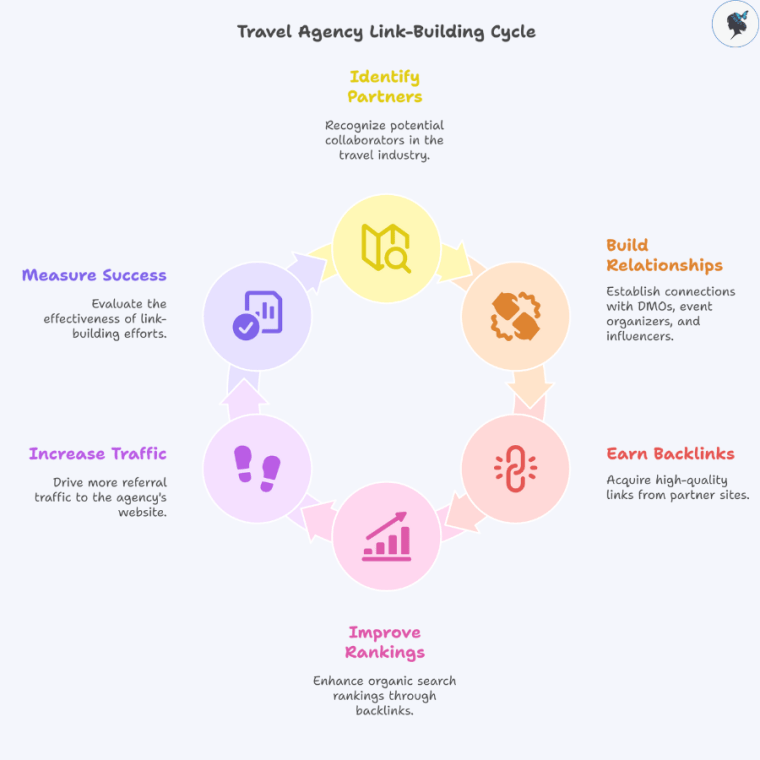
In the travel niche, however, not all links are equal. The best opportunities often come through industry‑specific relationships:
- DMOs (Destination Marketing Organizations) that promote regions and destinations,
- Event organizers whose pages attract travellers and local interest
- Destination bloggers and influencers whose audiences align with your travel brand
This article will walk travel agencies through how to understand each partner type, how to approach realistic collaborations, and how to measure success.
Wander Women Hot Tip: Begin your link‑building plan by listing all the destinations you serve, the local DMOs, major events, and active destination bloggers in those areas. This gives you the raw partner pool to work from.
1. Understanding DMOs (Destination Marketing Organizations)
What Are DMOs?
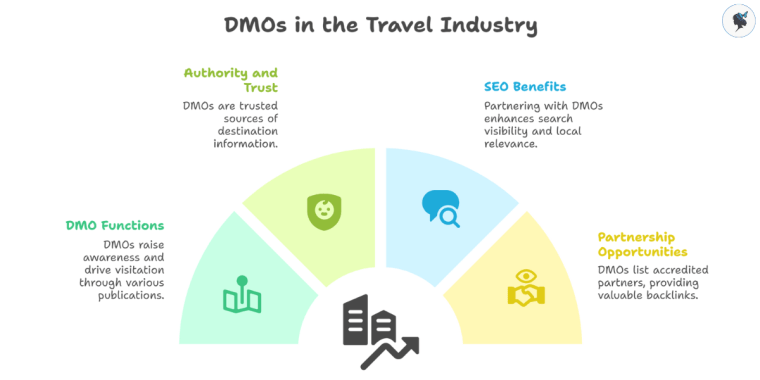
Destination Marketing Organizations are official or semi‑official bodies (city tourism bureaus, regional tourism offices, national destination boards) whose job is to raise awareness and drive visitation to a region. They publish destination guides, events calendars, partner directories, and often link out to businesses that service the local market.
Role of DMOs in the Travel Industry
DMOs carry authority: they’re often trusted sources for destination information. Travel agencies that partner with them can benefit from backlinks from high‑authority regional domains, improved local relevance, and referral traffic from destination‑specific visitors. One guide notes that tourism SEO requires constant investment and dedicated content creation by DMOs for results.
Because DMO pages often rank highly for destination keywords, securing links from them can give your agency a boost in search visibility for those locales.
Wander Women Hot Tip: For each DMO you target, check their Partners or Industry page and see if they list accredited tour operators or travel agencies. Having a presence there often equals a credible backlink.
2. Partnering with DMOs
How to Establish Partnerships
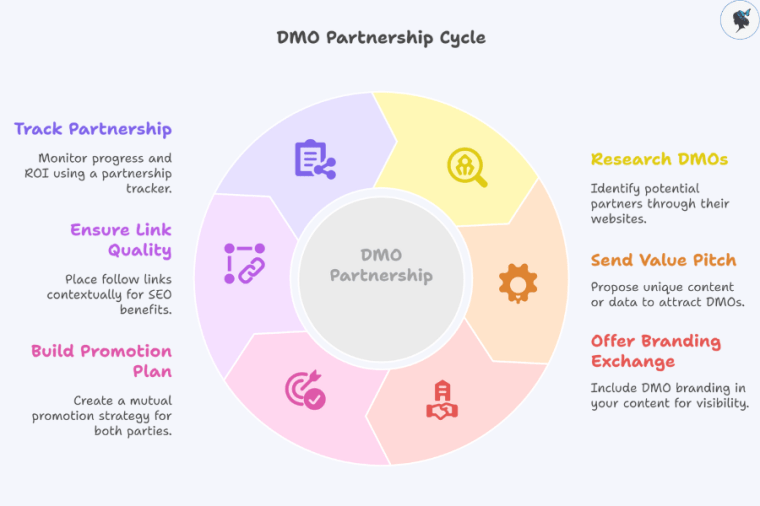
- Research the DMO websites of each destination you target. Find their “Industry Partners,” “Tourism Trade,” or “Visit (Destination)” sections.
- Send a pitch that adds value: propose co‑created content (e.g., “Top 10 Hidden Gems Tour for [Destination]” with your agency’s expertise) or offer unique data or insights (you’ve served X number of visitors last year).
- Offer to include the DMO’s branding or link in your own travel‑guide content in exchange for a feature.
- Build a mutual promotion plan: you feature their destination content, they link to your page or tour.
- Ensure the link is follow (not nofollow) and placed contextually (within relevant content, not buried in a footer).
Potential Benefits
- High‑authority backlinks from DMO domains will improve domain/authority score which helps your other pages.
- Referral traffic from people interested in the destination.
- Boost in local relevance: search engines interpret links from destination‑specific sites as signals of authenticity for your travel services.
- Credibility and trust with potential travellers who see your agency associated with official destination partners.
Wander Women Hot Tip: Create a DMO partnership tracker: list DMO name, site URL, contact person, date contacted, proposal type, link outcome, and estimated domain authority. This keeps your outreach organised and your ROI measurable.
More about the role of trust signals here.
3. Collaborating with Event Organizers
Identifying Relevant Events
Travel agencies can also build links through local or destination events, such as:
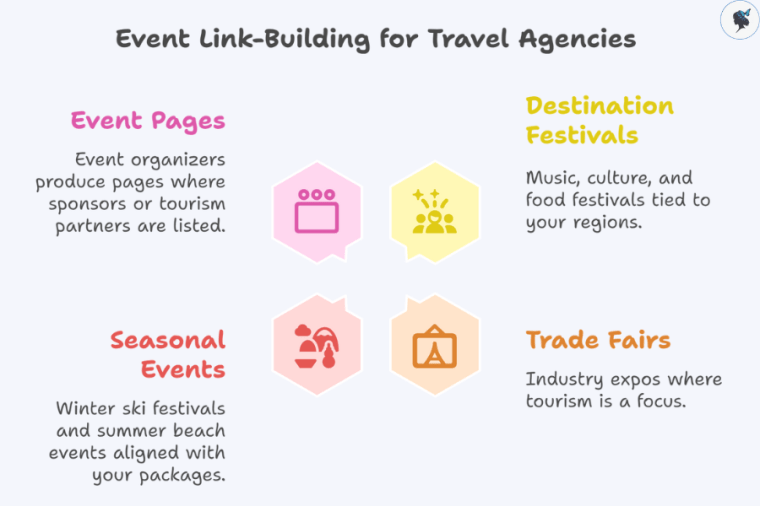
- Destination festivals (music, culture, food) tied to your regions.
- Trade fairs or industry expos where tourism is a focus.
- Seasonal events (winter ski festivals, summer beach events) aligned with your packages.
- Event organizers often produce event pages or partner directories where sponsors or tourism partners are listed (with links).
Link‑Building Strategies with Events
- Offer to produce a blog or guide about the event (eg, “Ultimate Guide to the X Festival in Y Region”), then ask the event organizer to publish or link to it.
- Sponsor or co‑host an event: sponsorship often includes a link on the event site.
- Provide media coverage: offer a post‑event review or recap which the event site may link to or embed.
- Bundle the event with your travel offering: you create the tour + the event experience, then event organizer links to your agency as official partner.
Benefits for Travel Agencies
- Context‑specific backlinks: links tied to an event in your destination signal relevancy.
- Potential referral traffic from event audiences seeking travel services.
- Fresh content opportunities (event guides) that are link‑worthy and shareable.
- Opportunity to tap into the event’s marketing reach (social, email, partner links).
Wander Women Hot Tip: Build an event calendar for all your destination markets. For each event, note the event website, domain authority, potential for partner link, and ideal content topic (guide, recap, offer).
4. Engaging Destination Bloggers & Influencers
Identifying Influential Bloggers
Look for travel bloggers, micro‑influencers, and niche content creators who:
- Focus on destinations or travel themes you sell (solo female travel, adventure, luxury).
- Have a blog or website with decent authority (check Domain Rating/DR on Ahrefs).
- Operate in your target destination region or serve your target audience.
- Bloggers often link to travel agencies when reviewing tours, writing destination guides, or collaborating.
Approaches to Collaboration
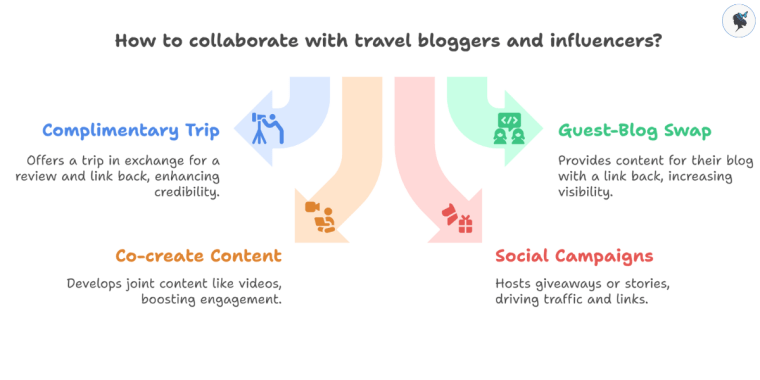
- Offer a complimentary familiarisation trip or tour in exchange for a blog review + link back to your booking page.
- Guest‑blog swap: you provide a destination guide for their blog and they link to your relevant service page.
- Co‑create content: interview the blogger, create a video series about the region, then link it back.
- Run social campaigns: the blogger hosts a “giveaway” or “travel story” featuring your agency and links to your website.
Read: How to leverage influencer marketing.
Benefits of Blogger Relationships
- Backlinks from niche travel blogs can have high relevance and strong engagement signals.
- Social amplification from bloggers’ followers can increase referral traffic and potentially links from other sites (link‑baiting).
- Authentic user content: blogs are seen as more credible by travellers, increasing trust and the likelihood of conversion.
Wander Women Hot Tip: Start by engaging 3‑5 micro‑influencers (5k‑50k followers) in each destination. They often have higher engagement rates, are more approachable, and can deliver quality links and mentions for less budget. Scale the relationships once you see results.
5. Practical Execution: How to Implement These Strategies
Research & Targeting
- Create a spreadsheet of all your target destinations.
- For each destination, list the local DMO website, major upcoming event websites, and top 10 destination bloggers/blogs.
- Qualify each target by Domain Authority (DA/DR), relevance to your niche, and the potential link placement.
- Prioritise quick opportunities (low‑hanging fruit) that can deliver link placement within 3‑6 months.
Outreach Strategy
- Craft personalised email templates for each partner type: DMO, event organizer, blogger. Highlight what you can bring (content, tours, audiences).
- Offer value: “We will provide a destination guide, industry insights, photo assets.”
- Follow up gently after 1 week, then 2 weeks. Maintain a CRM or tracking sheet.
- When a link is secured, ensure it’s live, is “follow” (if possible), uses relevant anchor text (e.g., destination name + “Tours by [Your Agency]”), and is indexed.
More about outreach strategy development here.
Content & Link Placement
- Develop content pieces specifically for link building: destination partner page, event guide, blog collaboration.
- Use supporting media: high‑quality images, video, infographic—making it more link‑worthy.
- Ensure your website is ready: the target page (your own) is optimised with H1, descriptive text, internal links, and conversion CTA (booking form or contact).
- Track each backlink: note placement date, anchor text, referring URL, monthly referral traffic from that link, and any ranking movement.
Workflow and Timeline
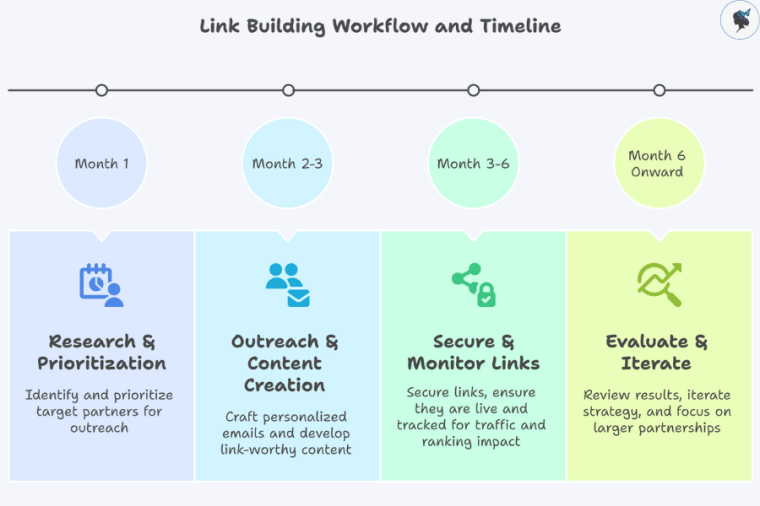
- Month 1: Research & list target partners, prioritise.
- Month 2‑3: Outreach to DMOs and event organisers; produce content.
- Month 3‑6: Secure links, monitor referral traffic and ranking changes.
- Month 6 onward: Evaluate results, iterate, focus on blogs and larger partnerships.
Wander Women Hot Tip: Use a simple link‑building dashboard (spreadsheet or BI tool) that tracks each link: Partner, URL, Domain Authority, Outreach Status, Go‑Live Date, Referral Traffic, Ranking Impact. Review monthly.
6. Measuring Success
Link‑building isn’t just about counting links—it’s about measuring impact.
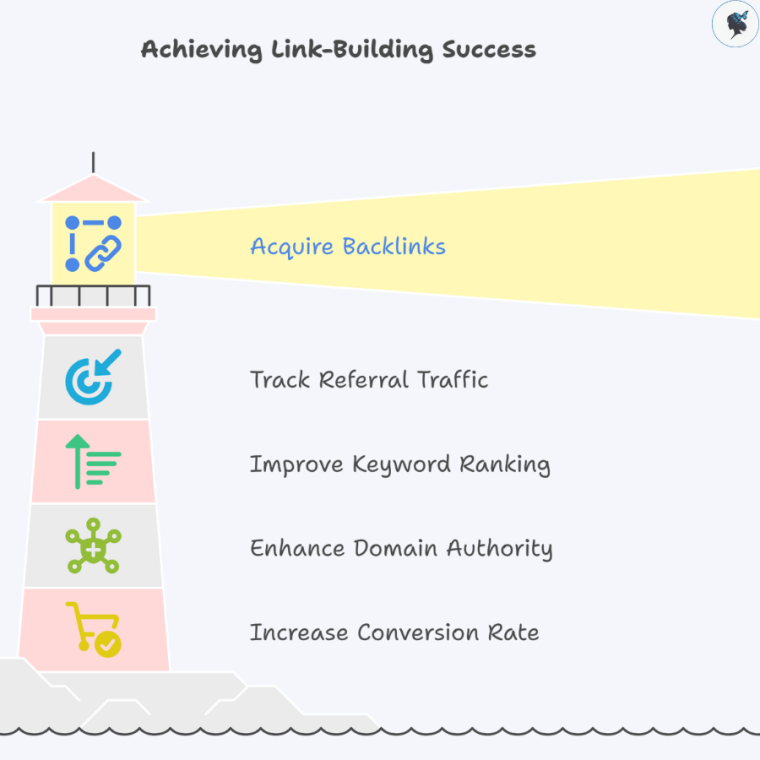
- Number of new backlinks acquired, broken down by source type (DMO, event, blogger).
- Referral traffic from those backlinks.
- Keyword ranking improvements for destination pages benefiting from the link(s).
- Domain Authority/URL Rating improvement (via Ahrefs/SEMrush) over time.
- Conversion rate from pages receiving referred traffic (are visitors booking?).
According to link‑building statistics, only 28% of link‑builders track revenue from links and just 46% report measurable results within 3‑6 months. Therefore, you need clearly defined KPIs and time the reports appropriately (some links take months to show impact).
Wander Women Hot Tip: Set a KPI milestone at 6 months for each link‑building campaign: “Ranking for target keyword improved by X positions”. If no movement, adjust strategy.
Conclusion
Link‑building is a strategic, high‑impact SEO tactic for travel agencies—but it works best when you leverage industry‑specific opportunities. By partnering with DMOs, collaborating with event organisers, and engaging destination bloggers, you can earn relevant backlinks, boost organic visibility, and drive referral traffic.
The key is realistic execution: research, target relevant partners, create value‑driven content, outreach thoughtfully, and measure success.
Wander Women Hot Tip: Pick one destination this quarter. Secure one DMO link, one event link, and one blogger collaboration for that destination, then compare performance after six months. Use that pilot to scale across your other destinations.
By treating link‑building as an ongoing, destination‑centric strategy rather than a one‑off task, your agency will build both credibility and visible SEO momentum in highly competitive travel search environments.
Need help? Contact us today!