
▶ Table of Contents
- Introduction
- Understanding NLP: The Language Engine Behind AI Chatbots
- How AI-Powered Chatbots Use NLP to Enhance Customer Interactions
- Benefits of Using Chatbots for Personalized Travel Advice
- Real-World Example: GuideGeek’s AI Chatbot for Personalized Travel Assistance
- How Travel Agencies Can Integrate AI Chatbots into Their Strategy
- Conclusion
Introduction
In today’s travel landscape, travellers expect more than generic replies and static FAQs. They want personalised, immediate responses when planning their trips — from choosing destinations to exploring local experiences. For travel agencies, this means evolving from standard web forms and email interactions to rich conversational experiences that feel tailored, responsive and intelligent.
Enter artificial intelligence (AI) chatbots powered by natural language processing (NLP) — the underlying technology that allows machines to understand, interpret and respond to human language. By leveraging NLP, travel agencies can deliver human-like travel conversations at scale: customised itineraries, on-the-fly adjustments, and 24/7 support.
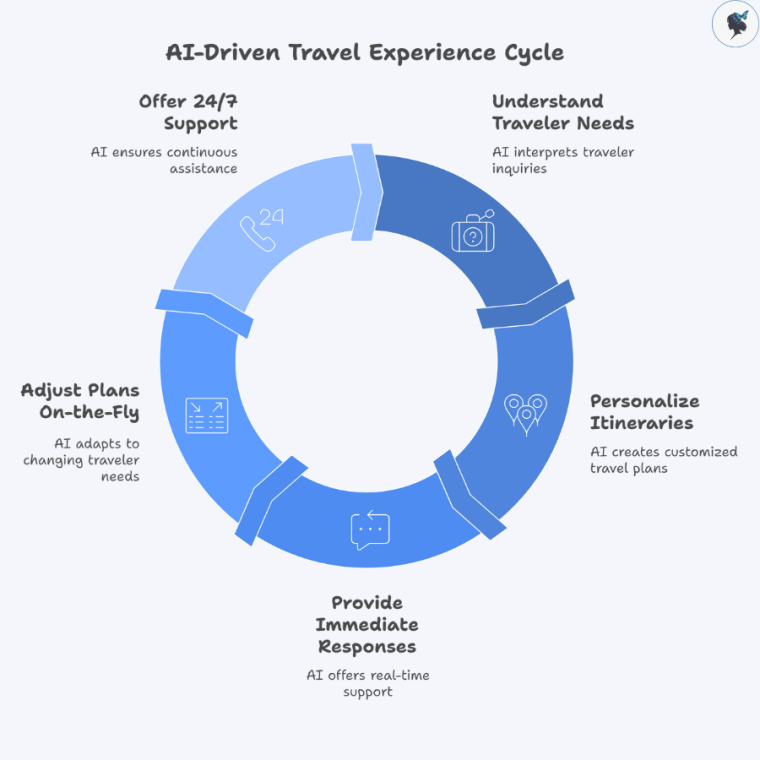
In this article, we’ll explore what NLP is and why it matters for travel agencies, how AI chatbots use NLP to boost content personalisation and customer interactions, examine a real-world example (GuideGeek), and outline how your agency can integrate this technology into your content and service strategy.
Understanding NLP: The Language Engine Behind AI Chatbots
A. What is Natural Language Processing (NLP)?
NLP is a branch of AI that focuses on enabling machines to understand, interpret and generate human language — both written and spoken. It combines elements of linguistics, computer science, and data science to bridge the gap between human users and computer systems.
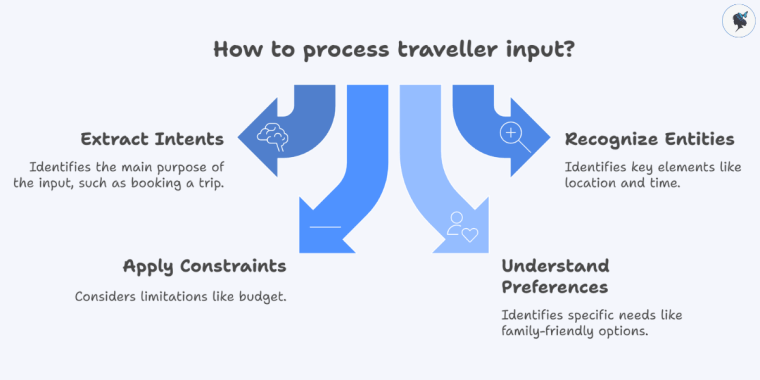
Within travel applications, NLP enables chatbots to parse traveller inputs such as “I’d like a family-friendly beach trip in June under €2,000” and extract key intents (family trip), entities (beach, June), constraints (budget) and preferences (family-friendly) to deliver meaningful responses.
B. Why NLP Matters in the Travel Industry

- Context-rich interactions: Travel conversations often contain nuance (e.g., “I want somewhere warm but not tourist-packed”, “We have a toddler and grandparents in our group”). NLP allows chatbots to pick up on those preferences and adapt.
- Personalisation at scale: Traditional methods (manual chat, email responses) are labour-intensive and difficult to scale. NLP-powered chatbots automate many interactions while maintaining the “feel” of a personalised service.
- Enhanced content strategy: When travellers engage with chatbots, they also generate data (preferences, queries, language used) that agencies can use to tailor content-topics, blog-posts, itineraries and landing pages.
- SEO and service advantage: According to industry data, the AI in tourism market is growing rapidly — one source shows the global AI in tourism market valued at around USD 3.37 billion in 2024, with many travellers preferring brands that use AI for personalisation.
For example, a 2024 blog on AI in tourism marketing found that hyper‐personalisation via AI and chatbots can boost bookings by up to 25%.
Bottom line: NLP is the engine that enables chatbots to elevate personalised travel experiences — making it a strategic content and service tool for travel agencies.
You might be interested in our post: How to Build a Travel Content Strategy That Converts.
How AI-Powered Chatbots Use NLP to Enhance Customer Interactions
Here are the key ways chatbots use NLP to take travel personalization to the next level.
A. Understanding Traveller Intent
When someone types, “I’m looking for a romantic city break in Europe next month”, an NLP engine in a chatbot would:
- Identify intent: romantic city break
- Identify entities: Europe, next month
- Recognise constraints: timeframe (next month), style (romantic)
Then the chatbot can respond with suggestions (city options, hotels, romantic restaurants) tailored to that.
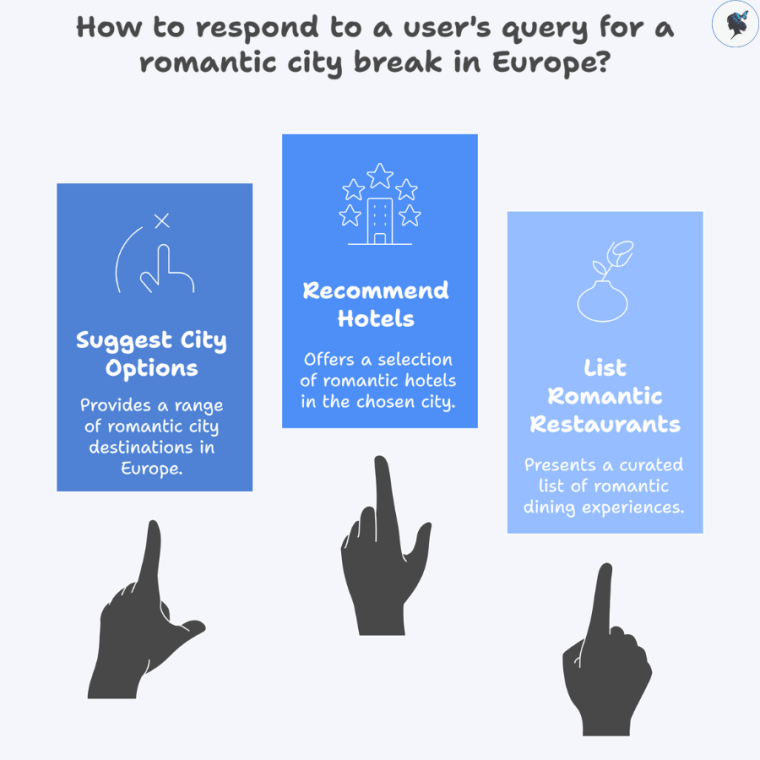
This precision is made possible by NLP features such as tokenization, named-entity recognition and intent classification.
For travel agencies, that means content can transition from generic “city break in Europe” to “romantic city break in Lisbon for early June” — and your chatbot can drive users toward a booking funnel or a blog post accordingly.
You might like: The Complete Digital Marketing Funnel for Travel.
B. Conversational Flow & Context Retention
Unlike static forms, NLP chatbots maintain context across a session.
Example: User starts with “I want to visit Greece in May” – chatbot replies with suggestions – user then adds “Make it under €1,500 and for three adults” – chatbot updates recommendations accordingly.
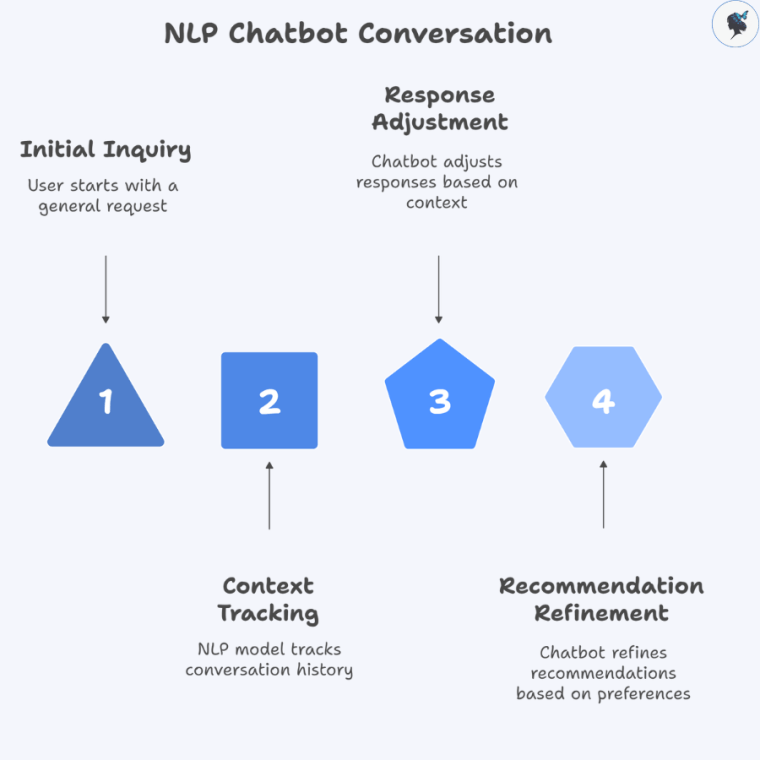
This continuity is enabled by NLP models tracking conversation history, adjusting responses, and refining recommendations.
For a travel agency, this means your chatbot can guide a traveller through multiple steps (destination choice – accommodation – activities – add-ons) and retain their preferences – improving satisfaction and reducing drop-off.
C. Multilingual and Tone Adaptation
Travel is inherently global — travellers may speak many languages. Advanced NLP allows chatbots to:
- Recognise input in multiple languages and respond accordingly.
- Adjust tone based on the user (formal for business traveller, friendly for holiday-maker).
- Interpret colloquial language or slang (e.g., “cheap eats near city centre”, “hidden gems off the beaten track”).
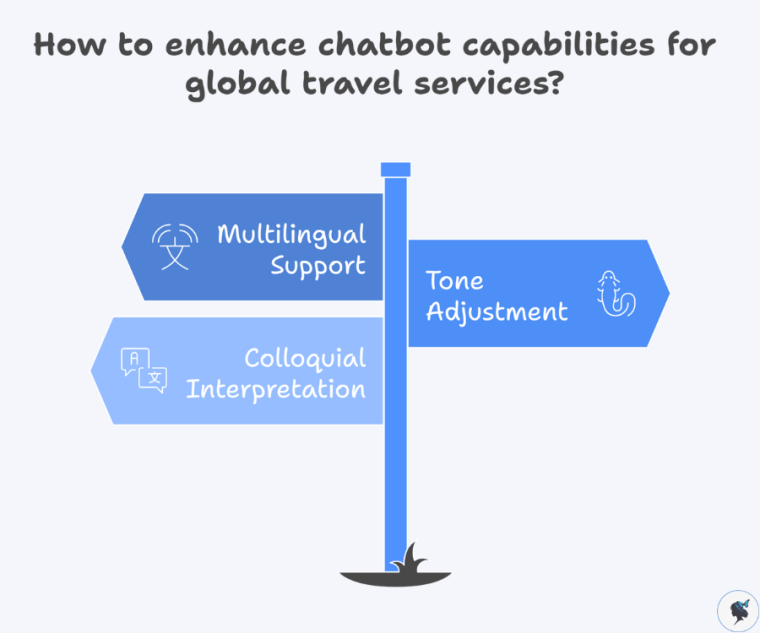
This flexibility extends your content reach globally, enabling your agency to serve non-native speakers or niche travel segments effectively.
D. Real-Time Personalisation via Data Integration
NLP-driven chatbots, when integrated with CRM, booking systems and analytics, can deliver dynamic responses based on:
- Past behaviours: returning traveller, previously booked ski trips, etc.
- Contextual data: weather changes, local events, flight delays.
- Preferences: dietary restrictions, budget ceilings, travel style.
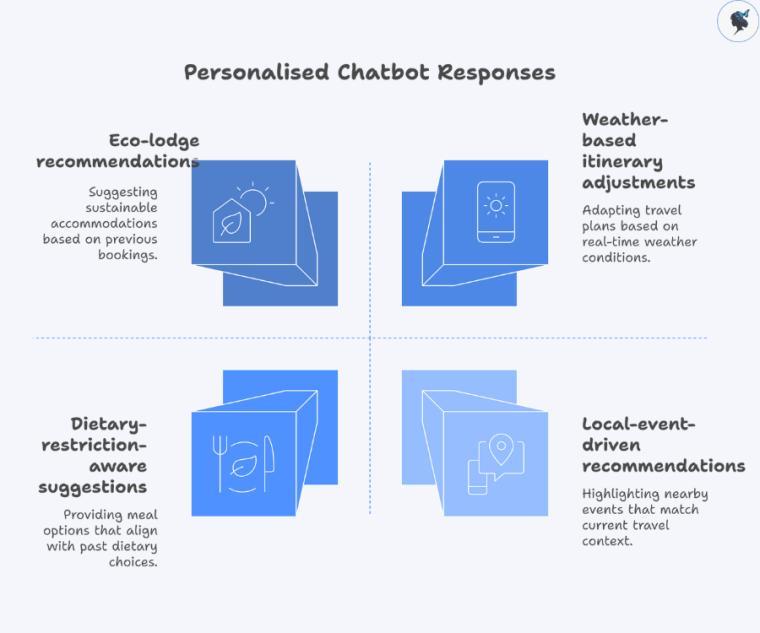
For example, if a traveller has previously booked eco-lodges, the chatbot can emphasise sustainable stays for their next trip.
This turns chatbots into personalised content engines — recommending not just general packages, but highly tailored itineraries matching the user’s profile.
You might like: Ways AI Can Enhance Travel Content Personalization: Personalized Itinerary Generation.
Benefits of Using Chatbots for Personalized Travel Advice
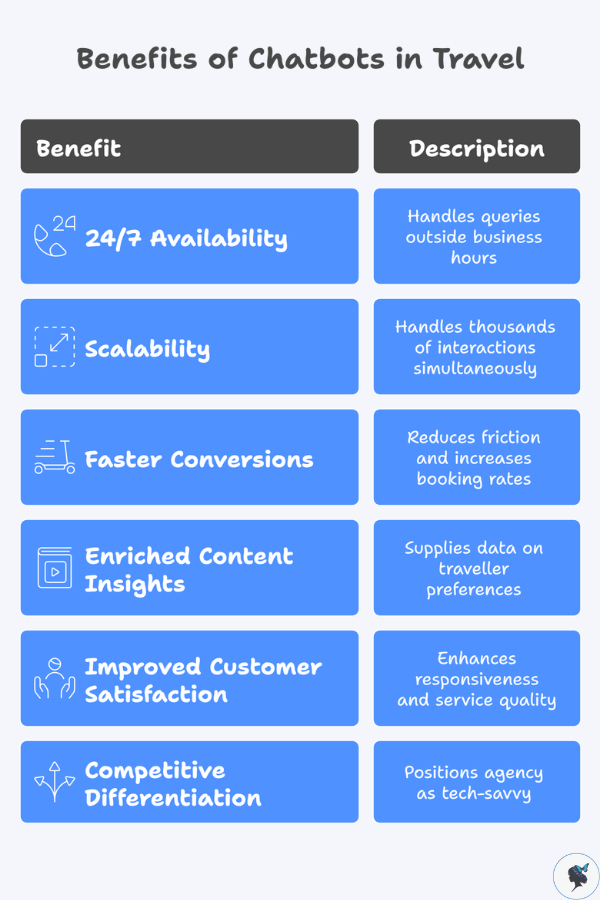
Implementing NLP-powered chatbots offers concrete benefits for travel agencies and content strategy:
- 24/7 availability: Chatbots never sleep — they can handle queries outside business hours, which many travellers expect.
- Scalability: A single chatbot can handle thousands of interactions simultaneously, freeing human agents for complex cases.
- Faster conversions: By guiding travellers through their preferences and narrowing options quickly, chatbots reduce friction and increase booking rates.
- Enriched content insights: Every interaction supplies data on what travellers ask, how they phrase queries, what their preferences are — usable for blog ideas, landing pages, FAQs.
- Improved customer satisfaction: According to a systematic review of chatbots in tourism, they enhance responsiveness and service quality.
- Competitive differentiation: Agencies that use chatbots with NLP can position themselves as tech-savvy, personalised and client-centric.
One statistical highlight: though only 48% of travellers report using AI chatbots for assistance, about 65% say they prefer brands that use AI for personalisation.
In short: NLP-driven chatbots allow your agency to deliver personalised content and service at scale — improving engagement, bookings and brand reputation.
Real-World Example: GuideGeek’s AI Chatbot for Personalized Travel Assistance
A. Overview of GuideGeek
GuideGeek is an AI travel assistant created by Matador Network that operates via WhatsApp, Instagram and Facebook Messenger.
- Free to use: travelers chat with the bot, ask for destinations, itineraries, restaurants, local experiences.
- Powered by ChatGPT and real-time travel data integrations (> 1,000 sources) to deliver personalised suggestions.
- Example usage: A user asked for a two-week trip and GuideGeek provided suggestions, accommodation ideas, restaurants and a draft itinerary — reducing planning time significantly.
B. Key Lessons for Travel Agencies
- Free tool accessibility: Because GuideGeek is free and easily accessible, it demonstrates that travel personalisation via NLP is no longer limited to large players.
- Brand integration potential: Matador provides white-label versions of GuideGeek for destination marketing organisations (DMOs), showing how agencies or DMOs could adopt similar chatbots.
- Content leverage: Interactions with GuideGeek likely generate rich insights into what travellers ask for. Agencies can use that to craft blog posts (“What travellers ask our chatbot about Bali”) or landing pages based on FAQ data.
- Operational partnership: Your agency could integrate a chatbot like GuideGeek (or similar) on messaging platforms to handle initial traveller engagement, freeing your human agents to follow up with tailored packages.
How Travel Agencies Can Integrate AI Chatbots into Their Strategy
Here’s a step-by-step roadmap for your agency to adopt NLP-powered chatbots.
Step 1: Identify Key Touchpoints
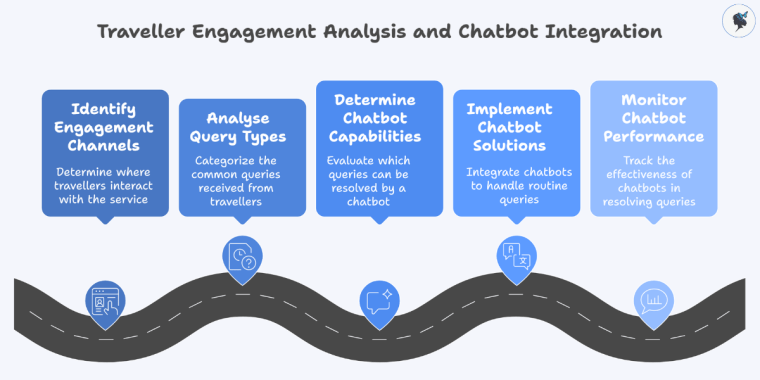
- Review where your travellers engage: website chat, WhatsApp, Facebook Messenger, Instagram DMs.
- Analyse what queries you receive frequently: destination suggestions, budgeting, itinerary planning, local insider tips.
- Determine which portion of queries can be handled by a chatbot vs which require human intervention.
Step 2: Choose the Right Chatbot Platform
There are many platforms that support NLP and travel use-cases, including some free or freemium options:
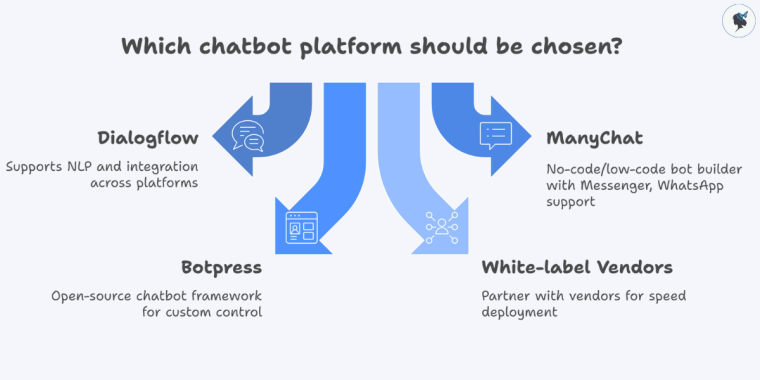
- Dialogflow (by Google) — supports NLP and integration across platforms.
- ManyChat — no-code/low-code bot builder with Messenger, WhatsApp support.
- Botpress — open-source chatbot framework if you want custom control.
- Your agency can also partner with white-label travel-chatbot vendors (as Matador/GuideGeek did) to speed deployment.
Step 3: Personalise the Experience
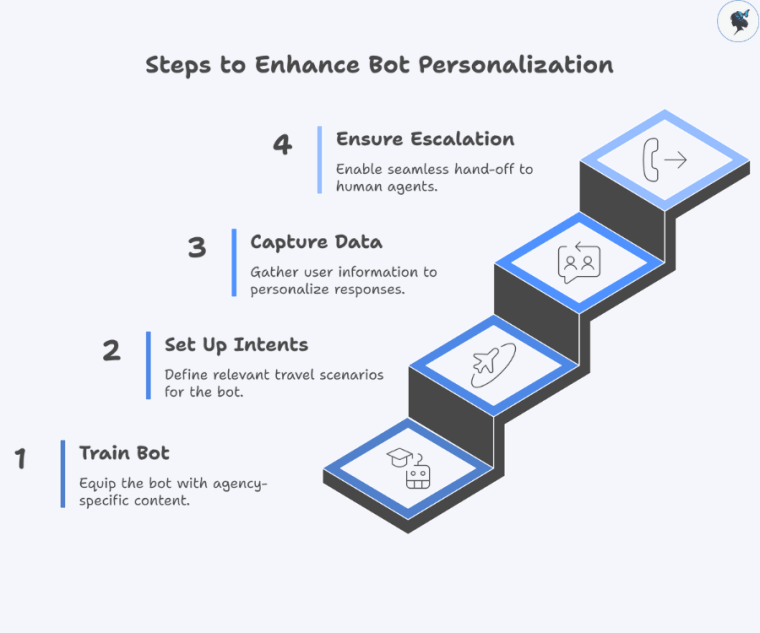
- Train your bot with your agency’s own content: FAQs, destination guides, previous itineraries, traveller feedback.
- Set up intents and entities relevant to your niche (e.g., “beach holiday under €1000”, “honeymoon in Greece”, “family ski trip Austria”).
- Incorporate data capture: ask users for their travel style, budget, companions, past trips — feed this into your CRM and personalise responses.
- Ensure the bot can escalate to a human agent when needed, and maintain context so hand-off is seamless.
Step 4: Monitor, Analyse & Optimise
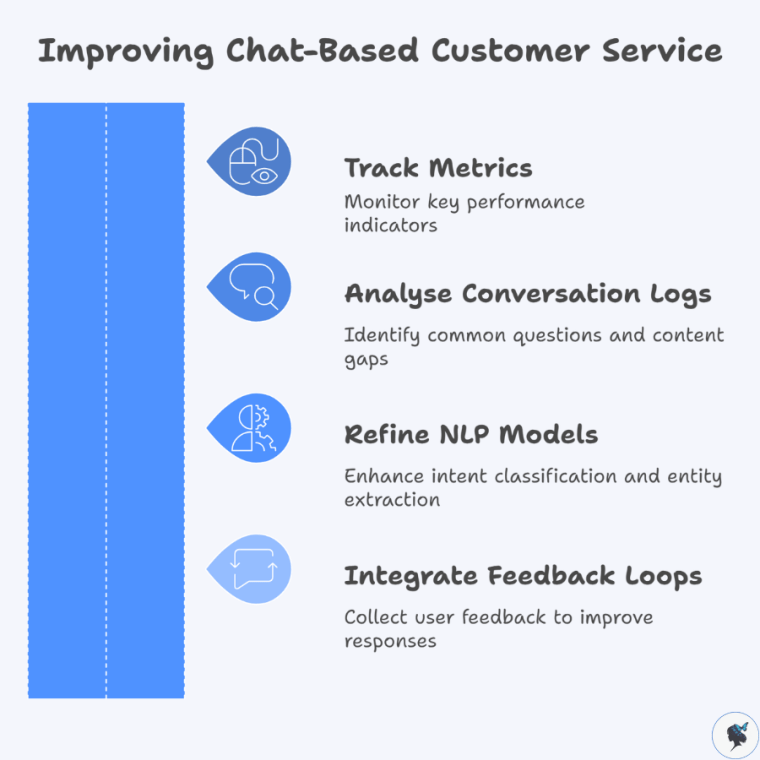
- Track metrics: number of chats, conversion rate (chat → booking/lead), time saved, satisfaction ratings.
- Analyse the conversation logs: what questions are common? What content do travellers want but you don’t currently provide? Use this for new blog ideas or landing pages.
- Refine NLP models: improve intent classification, entity extraction, multilingual support as needed.
- Integrate feedback loops: ask users after chat, “Was this helpful?” and use that data to improve responses.
Step 5: Align Content Strategy
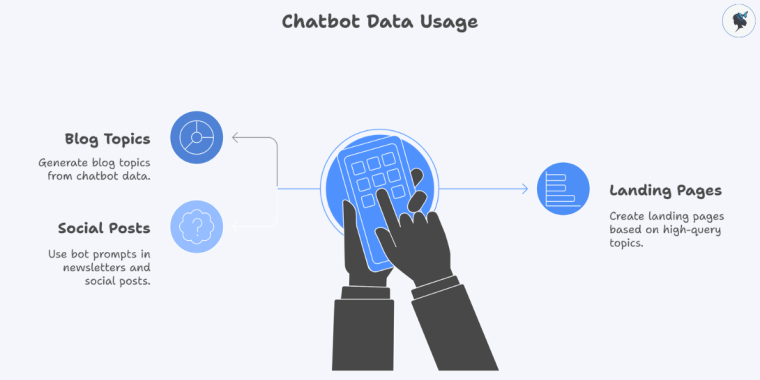
- Use chatbot data to generate blog topics: e.g., “Top 10 things couples ask our AI travel bot about Bali”.
- Create landing-pages or microsites based on high-query topics surfaced by the chatbot.
- Use bot-prompts in newsletters or social posts: “Ask our travel bot where you should go next” — driving engagement and lead generation.
Conclusion
Natural Language Processing (NLP)-powered chatbots represent a major step forward in personalised travel content and service. For travel agencies, they offer a strategic tool to deliver tailored interactions, gather insights, and scale high-quality engagement.
By implementing a chatbot that uses NLP, your agency can:
- Offer 24/7 personalised travel assistance via messaging apps or web chat
- Extract content-intelligence from real-traveller questions and use that to inform blogs, landing pages and marketing
- Streamline service workflows while maintaining a human-like experience
- Position your brand as technology-forward and customer-centric
If you haven’t yet explored NLP chatbots, now is a great time. Start with a free or low-cost platform (Dialogflow, ManyChat, etc.), pilot with one messaging channel (e.g., WhatsApp or Messenger), capture traveller preferences, and monitor how many leads or bookings you generate from it.
Treat NLP chatbots not as a replacement for your human agents, but as a powerful extension of your content strategy and customer service — helping you scale personalisation in a meaningful way.
Need help? Contact us today!
