Repurposing your travel blog posts into short-form visual content like Reels, Pins, and social media posts can double your reach, save time, and reinforce your key messages across channels. According to HubSpot, 60% of marketers report that repurposed content generates more leads than original content. And when done effectively, visual content gets more views than text-only content.
Wander Women Hot Tip: Repurposing is giving your best content a passport.
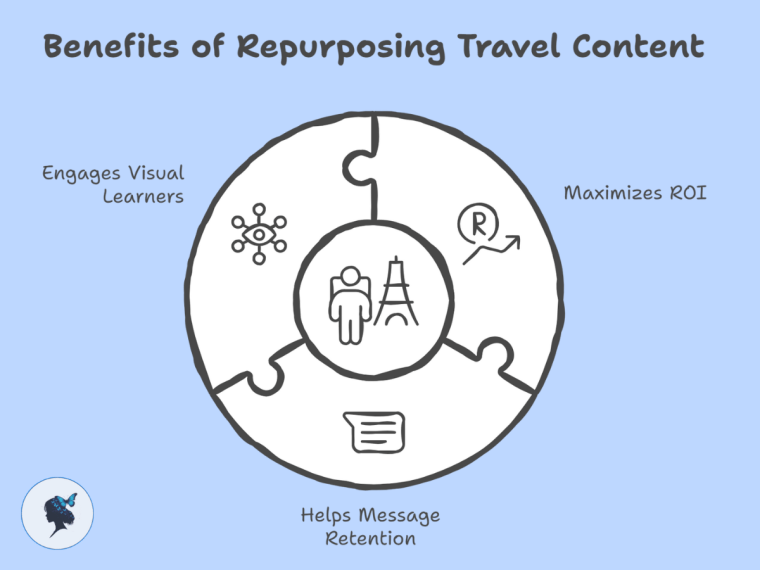
Maximizes ROI: You’ve already invested time in research and writing—a single blog post can become a Reel, Pin, carousel post, and newsletter piece, giving more value for your original work.
Helps message retention: The Rule of 7 says prospects need to hear/see your message multiple times before they convert. Repurposing reinforces your message across platforms.
Engages visual learners: Visuals are processed 60,000× faster than text, and visual content is shared up to 40× more often on social media.
Wander Women Hot Tip: For travel marketers, this multiplies your exposure on visual-first platforms like Instagram, Pinterest, and TikTok—where your future customers are dreaming up their next getaway. It also strengthens SEO by building backlinks and engagement loops.
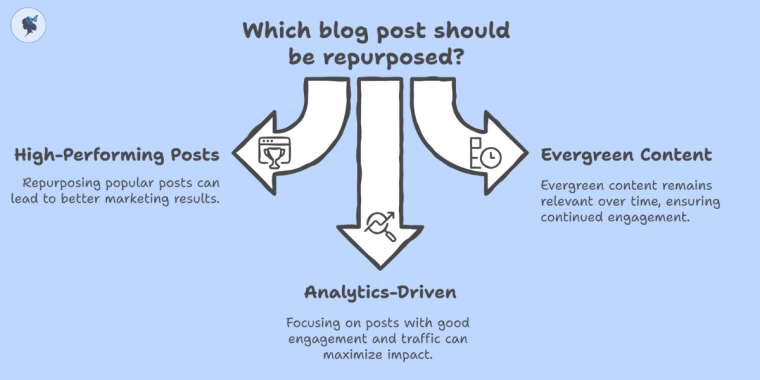
Choose high-performing posts, like popular destination guides or top-10 itineraries.
Prioritize evergreen content—tips, packing lists, top attractions—that stays relevant over time.
Check your analytics to focus on posts with good engagement, traffic, or inquiries.
Wander Women Hot Tip: If you’re unsure where to start, head to Google Analytics or Search Console and look for posts that already rank in the top 10 for their keywords or drive the most organic traffic. Those posts are prime repurposing material—and already have proven value to your audience.
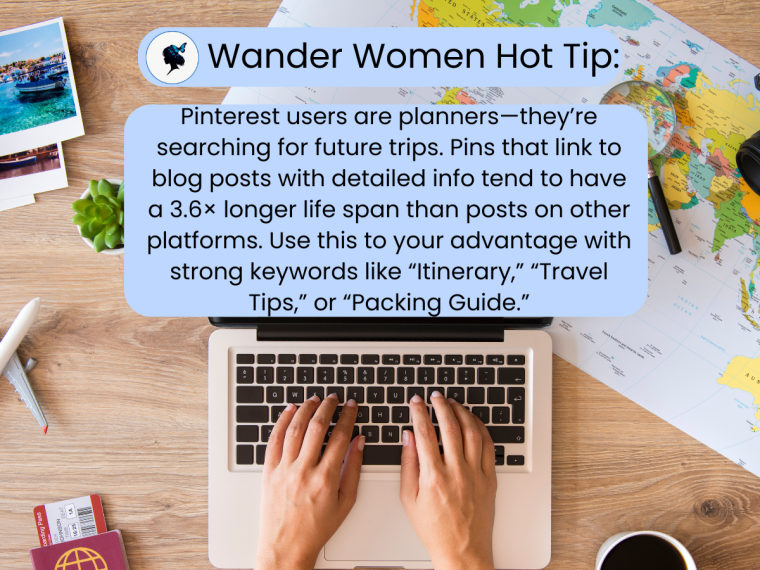
Wander Women Hot Tip: Pins that link to blog posts have a longer lifespan.
Formats to use:
Infographics (e.g. “Check-In Checklist for Bali”)
Tip list pins (e.g. “Top 5 Hidden Beaches in Bali”)
Photo + headline overlay (e.g. “How to Spend 48 Hours in Lisbon”)
Convert your blog headings into catchy pin titles.
Design in Canva—choose a vertical layout (1000×1500 px).
Include your URL, branded colors, and keywords.
Pin to relevant boards with optimized descriptions to enhance SEO.
Repurposing into Instagram & Facebook Posts
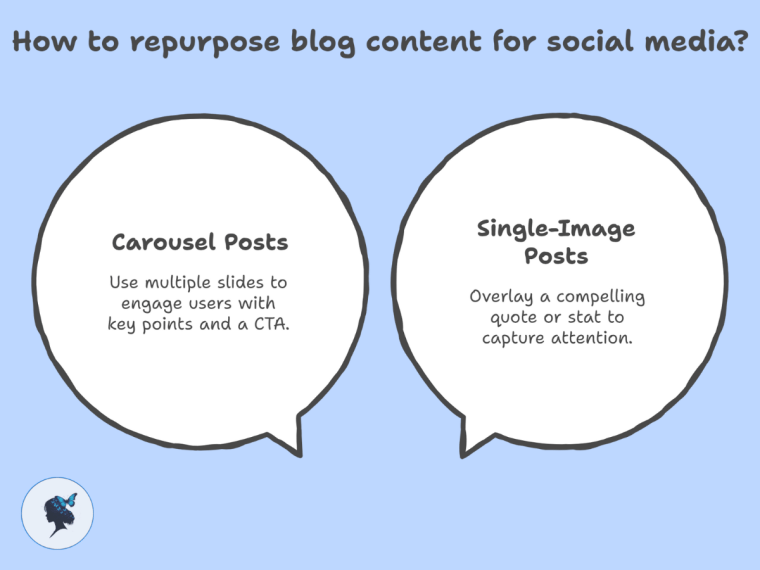
How to repurpose blog content for social media?
Use carousel posts:
Slide 1 = headline or hook (e.g. “3 Underrated Villages in Tuscany”)
Slides 2–4 = key points from the blog
Final slide = CTA with blog link (“Link in bio”)
For single-image posts, overlay a compelling quote or stat.
Craft captions that echo your blog intro, plus CTA (e.g. “Save this for your next trip!”).
Wander Women Hot Tip: Repurpose blog sections into individual slides, add emojis or icons for readability, and prompt users to “Swipe for tips” to boost time-on-post.
Bonus: Create a Full Content Series from One Blog
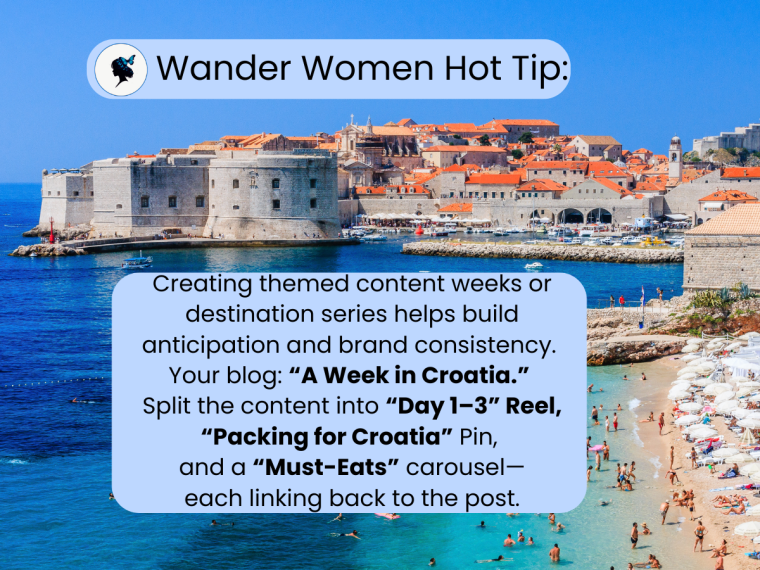
Wander Women Hot Tip: Create themed content.
Example schedule:
Monday: Reel or TikTok
Tuesday: Pinterest infographic
Wednesday: Instagram carousel
Thursday: Quote image in Stories with Q&A
Add the content sequence to your email newsletter with direct links.
You can reuse blog sections as tweets, Facebook updates, or LinkedIn posts, all pointing back to the full guide.
Tracking & Optimizing Your Repurposed Content
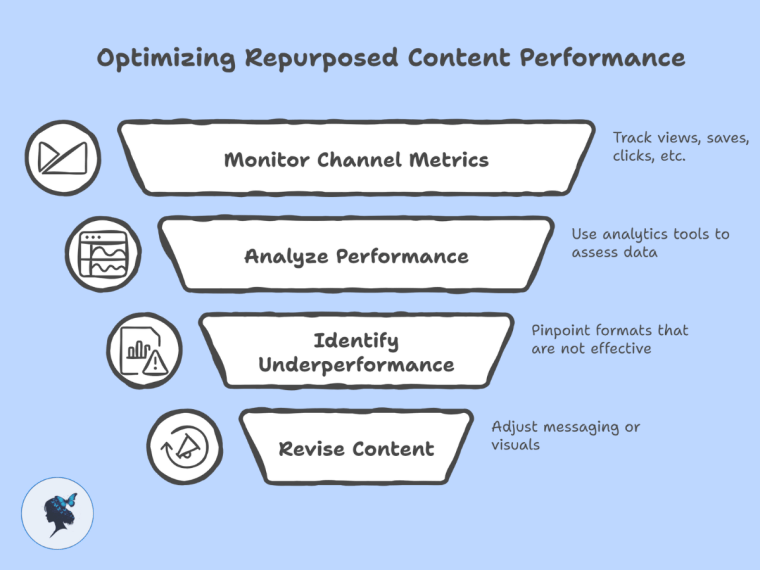
Optimizing repurposed content performance
Monitor performance per channel:
Reel views, saves, and follows
Pin impressions, clicks, and repins
Carousel engagement and link clicks
Use tools like Google Analytics, Pinterest Analytics, and IG Insights. A survey by Semrush found that 92% of marketers see analytics as essential for refining repurposed content.
Whenever a format underperforms, revisit the messaging or visual style and iterate.
Wander Women Hot Tip: Look at what formats drive not just reach, but clicks back to your blog. Content that performs well visually may still need optimization (e.g. clearer CTAs, better linking) to convert viewers into site visitors—and ultimately, clients or bookings.
Repurposing travel blog content into Reels, Pins, and social media posts allows you to work smarter—not harder. You’re multiplying your content’s reach, reinforcing brand visibility, and addressing multiple audience preferences with minimal extra effort.
Wander Women Hot Tip: Make repurposing part of your workflow. When you publish a blog post, immediately create a Reels version, a Pin-ready visual, and a carousel outline. That way, each blog becomes a mini content ecosystem.
Creating a Social Media Calendar for Your Travel Business
In the fast-paced world of digital marketing, consistency is key—especially for travel brands looking to inspire, engage, and convert. One of the most effective tools to stay organized and strategic is a well-structured social media calendar. This guide will walk you through everything you need to know to create and maintain a high-performing calendar for your travel business, including templates, content ideas, and platform-specific best practices.
Why Your Travel Business Needs a Social Media Calendar
The 2024 B2B Content Marketing Trends report highlights that 53% of top-performing marketers attribute their success to having a documented strategy.
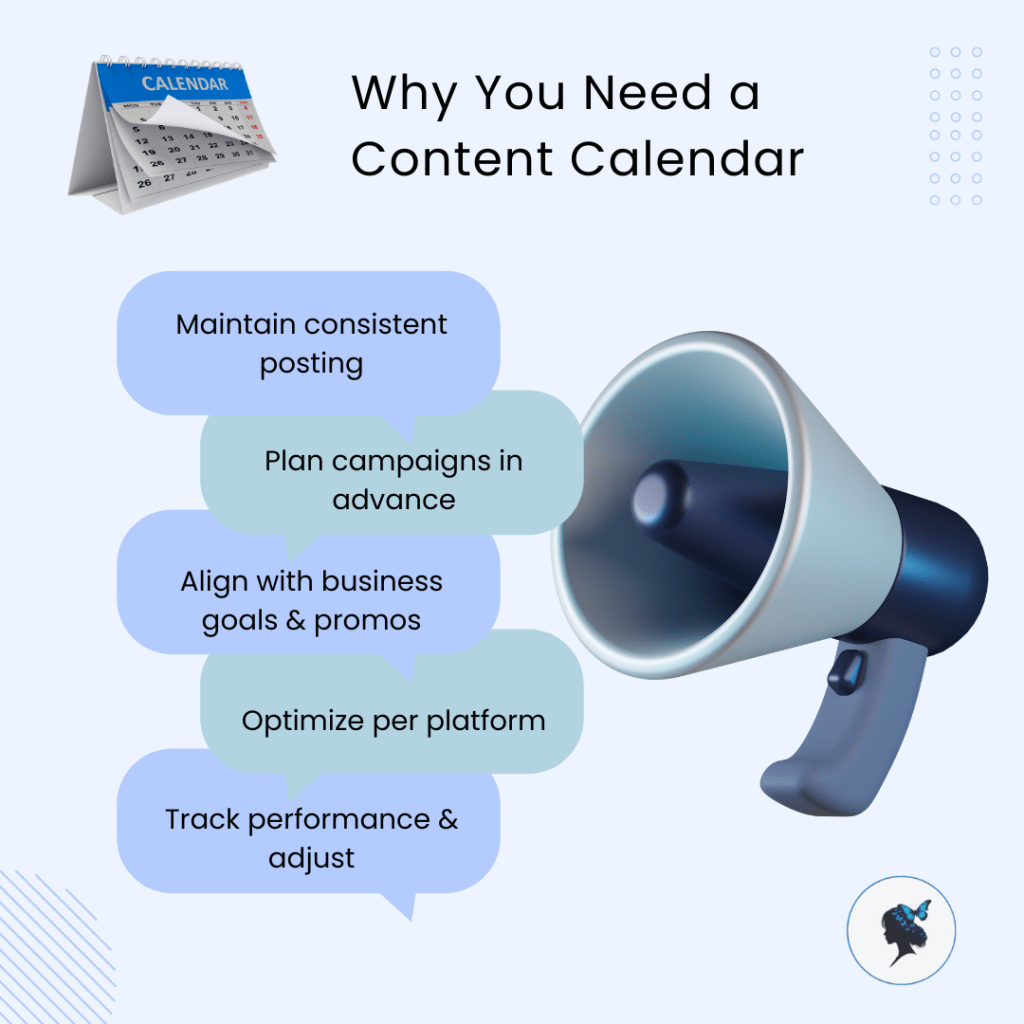
A content calendar helps you:
Maintain consistent posting
Plan campaigns in advance
Align posts with business goals and promotions
Ensure platform-specific optimization
Track performance and make data-driven adjustments
Consistency breeds familiarity, which is essential for building trust in the travel industry. Planning ahead means fewer missed opportunities around seasonal trends and booking patterns. For example, a travel brand could plan a winter promotion campaign for ski resorts well in advance to maximize visibility.
Imagine you’re promoting a boutique eco-lodge in Costa Rica. By using a calendar to map out posts in sync with the dry season (December to April), you ensure timely visibility for travelers researching their next trip.
Step 1: Set Clear Social Media Goals
Start with defining what success looks like for your business. Common travel-related goals include:
Driving traffic to your website or booking platform
Building brand awareness
Growing your email list
Increasing engagement (likes, shares, saves)
Generating leads or direct bookings
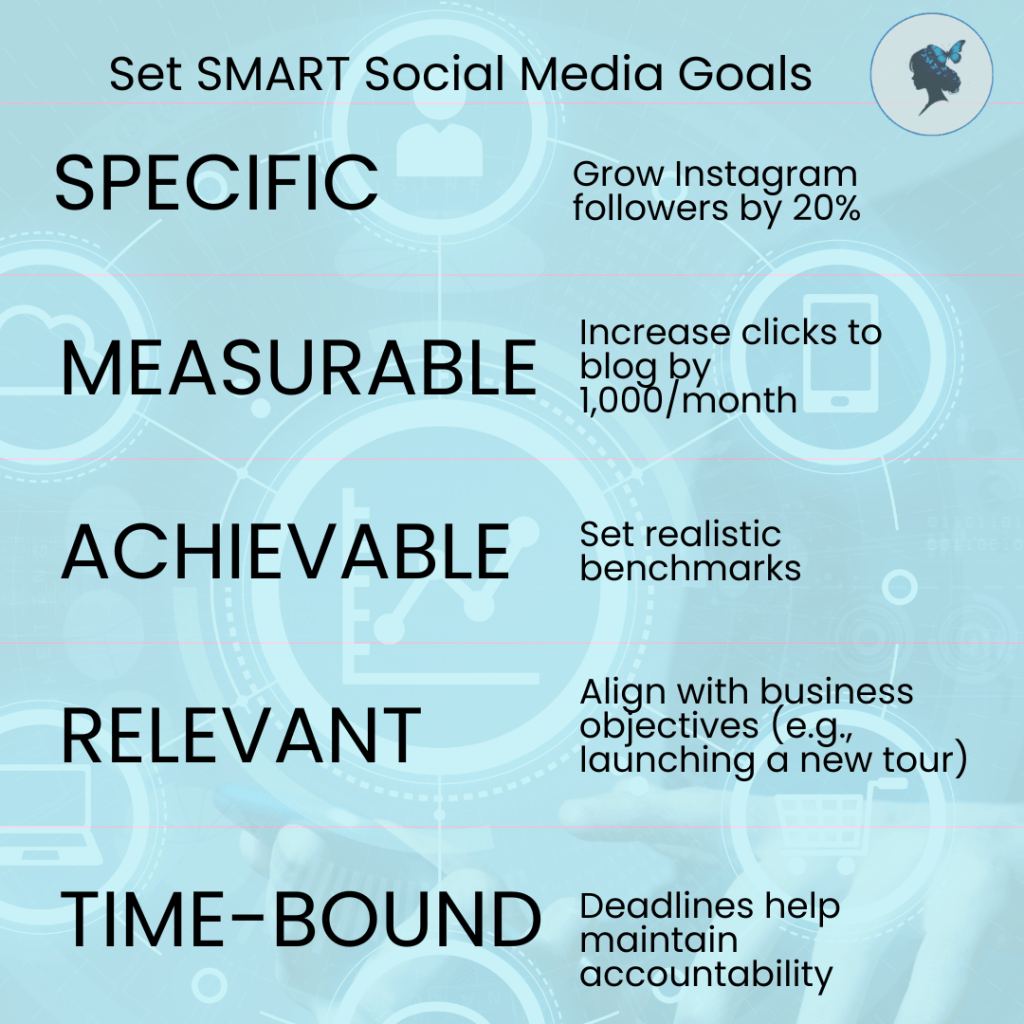
Use the SMART goal framework:
Specific – “Grow Instagram followers by 20%”
Measurable – “Increase clicks to blog by 1,000/month”
Achievable – Set realistic benchmarks
Relevant – Align with business objectives (e.g., launching a new tour)
Time-bound – Deadlines help maintain accountability
Clarity on your social media goals creates a sense of direction and enables consistent performance tracking. When everyone on your marketing team knows the desired outcomes, effort and creativity can be better aligned.
A boutique safari company might aim to generate 200 qualified leads through Facebook Ads over three months, using a lead magnet like a free wildlife travel guide.
Not every platform will suit your brand equally. Here’s a quick breakdown for travel businesses:
Platform
Strengths
Audience
Instagram
Visual storytelling, reels, UGC
18–34
Facebook
Groups, events, ads, long-form posts
25–54
TikTok
Short videos, trends, virality
16–34
Pinterest
Trip planning, aspirational content
25–45 (women)
YouTube
Long-form video, vlogs, tutorials
18–44
Twitter/X
News, trends, industry updates
25–49
Choose 2–3 platforms to focus on based on your ideal customer profile. If you’re targeting Gen Z backpackers, TikTok and Instagram are essential; for luxury cruises, Facebook and Pinterest may offer better returns. Always assess the engagement levels and ROI of each platform quarterly.
Focusing your resources on platforms that match your audience leads to higher ROI and more relevant engagement. Avoid the trap of trying to be everywhere at once. Quality trumps quantity, especially when you’re managing a lean marketing team.
A travel agency offering yoga retreats in Bali may see better traction on Pinterest and Instagram due to their visual nature and planning-oriented audiences.
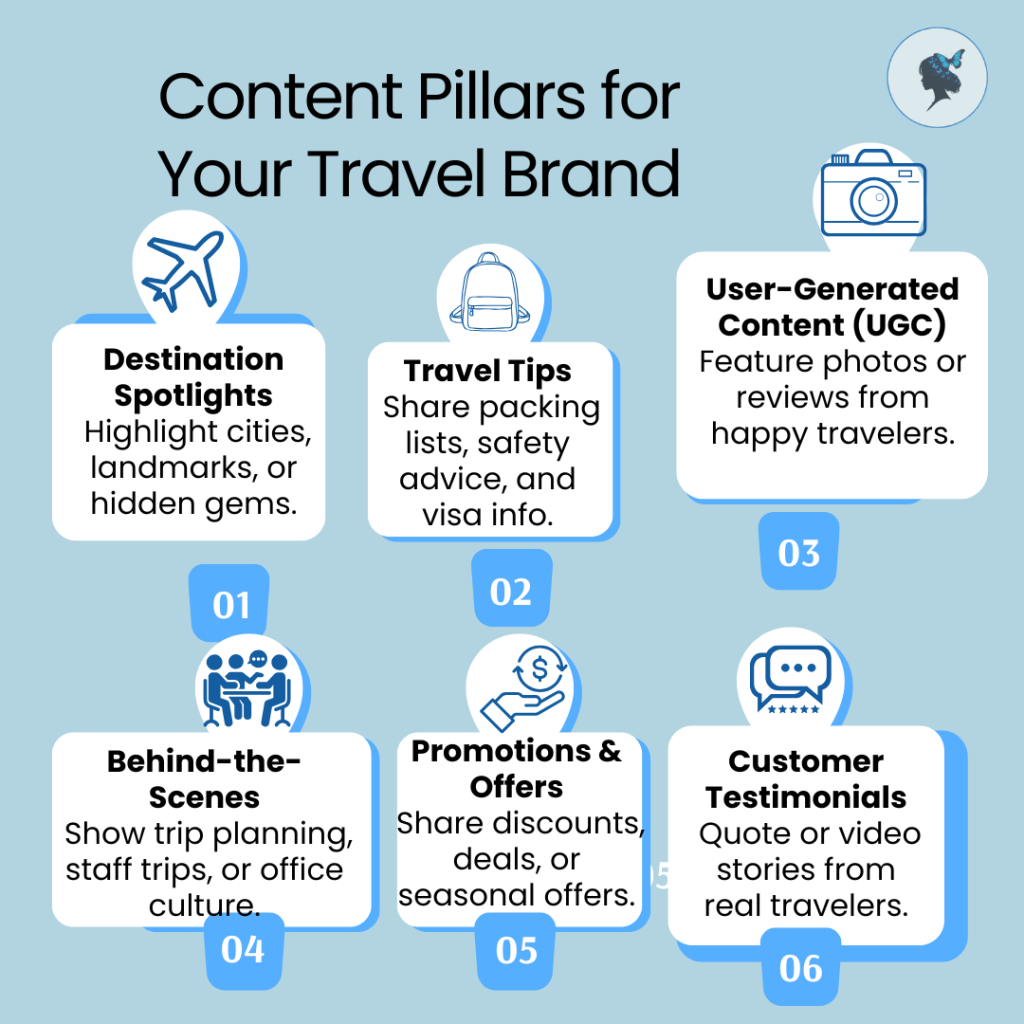
Destination Spotlights – Highlight specific locations or attractions
Travel Tips – Packing guides, visa info, travel hacks
User-Generated Content (UGC) – Reposts from happy customers
Behind-the-Scenes – Office life, team travels, planning process
Promotions & Offers – Limited-time deals, early bird specials
Customer Testimonials – Stories, quotes, or video clips
Each pillar serves a unique purpose: driving inspiration, delivering value, and fostering trust. Variety ensures you appeal to different segments of your audience and keep your feed dynamic. Mapping these categories across the month ensures balanced, evergreen and timely content.
According to Demand Metric, content marketing generates over three times as many leads as outbound marketing and costs 62% less.
A South American adventure brand might rotate between Machu Picchu spotlights, backpacker visa tips, and traveler testimonials to appeal to both first-timers and return explorers.
Use a spreadsheet, Google Calendar, Trello, or a tool like Later or Planoly.
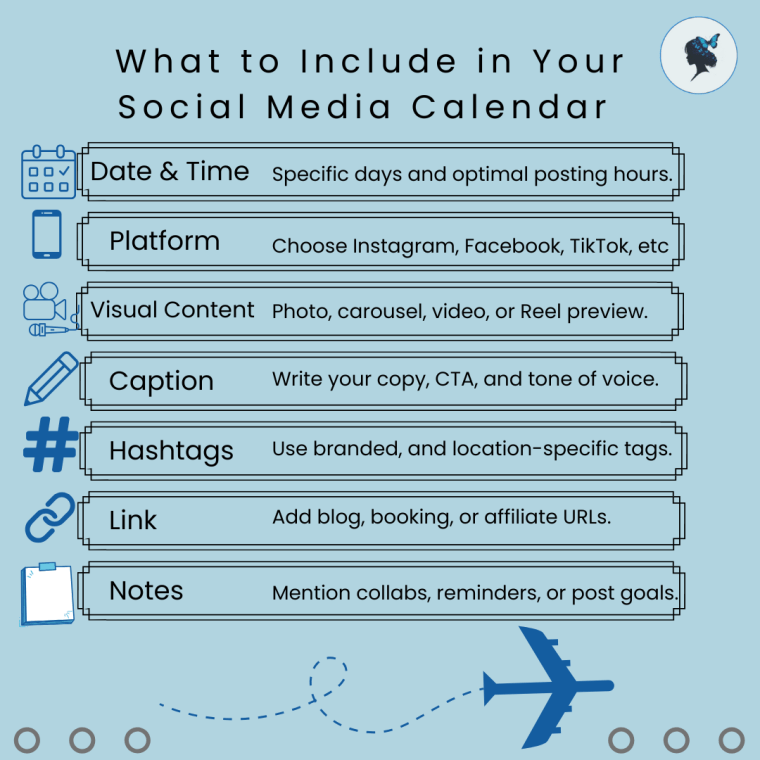
Each post should include:
Date & time
Platform
Visual content (photo, video, carousel, reel)
Caption
Hashtags
Link (if applicable)
Notes (e.g., collaborator tags, campaign theme)
Building a strong structure allows for easy collaboration and reduces last-minute scrambling. Color-coding by content pillar helps you spot gaps and ensure a healthy content mix. Regular check-ins on your calendar’s structure can also help you reallocate resources during peak travel seasons.
For a Mediterranean cruise line, the calendar may rotate destinations weekly—Italy on Mondays, Greece on Wednesdays, and Turkey on Fridays—with corresponding photo assets and themes.
Step 5: Determine Optimal Posting Frequency
Posting frequency depends on your capacity and audience expectations:
Platform
Recommended Frequency
Instagram
3–5 times/week + Stories daily
Facebook
3–5 times/week
TikTok
5–7 times/week
Pinterest
5–10 pins/day
YouTube
1–2 videos/week
Twitter/X
1–3 tweets/day
Overposting can lead to burnout, while underposting can make you forgettable. Test and adjust your schedule based on engagement data. Use platform analytics to identify when your audience is most active and focus on maintaining those rhythms.
According to Hootsuite’s 2025 data, brands that post consistently—about 3 to 5 times per week—tend to see better engagement compared to those posting less frequently.
A Caribbean resort might notice their audience engages most with sunrise beach reels posted early in the week, leading them to prioritize Monday morning uploads.
Step 6: Incorporate Seasonal and Cultural Moments
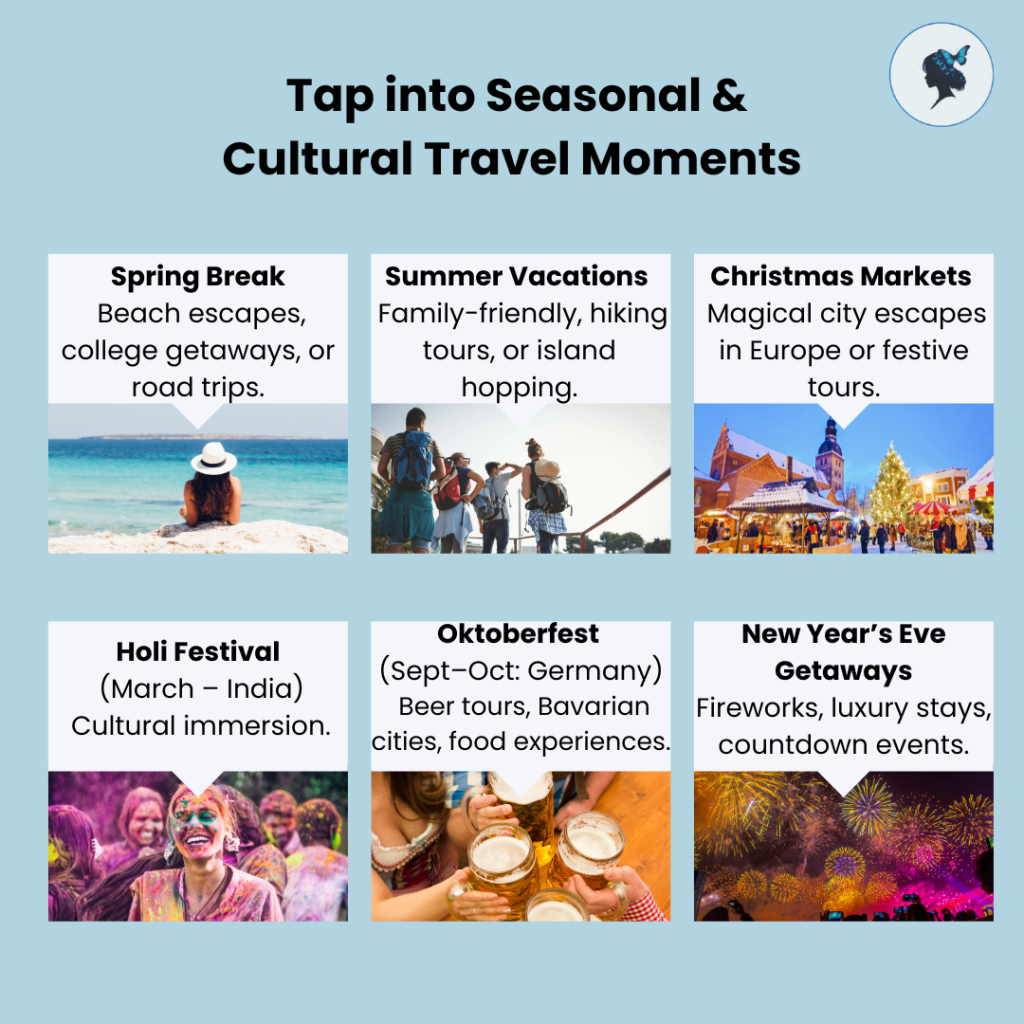
Travel content thrives when it’s timely. Incorporate seasonal trends, holidays, and regional events into your content plan. Think spring break, summer vacation, Christmas markets, or regional festivals like Holi in India or Oktoberfest in Germany.
These timely posts resonate because they align with what travelers are already thinking about. It also shows cultural awareness, which helps build authenticity and relevance.
Google has reported significant increases in travel-related searches during peak holiday seasons.
A travel company that offers tours in Japan could feature cherry blossom content in March and April, including a countdown, traveler photos, and booking tips.
Step 7: Plan for Engagement, Not Just Broadcasting
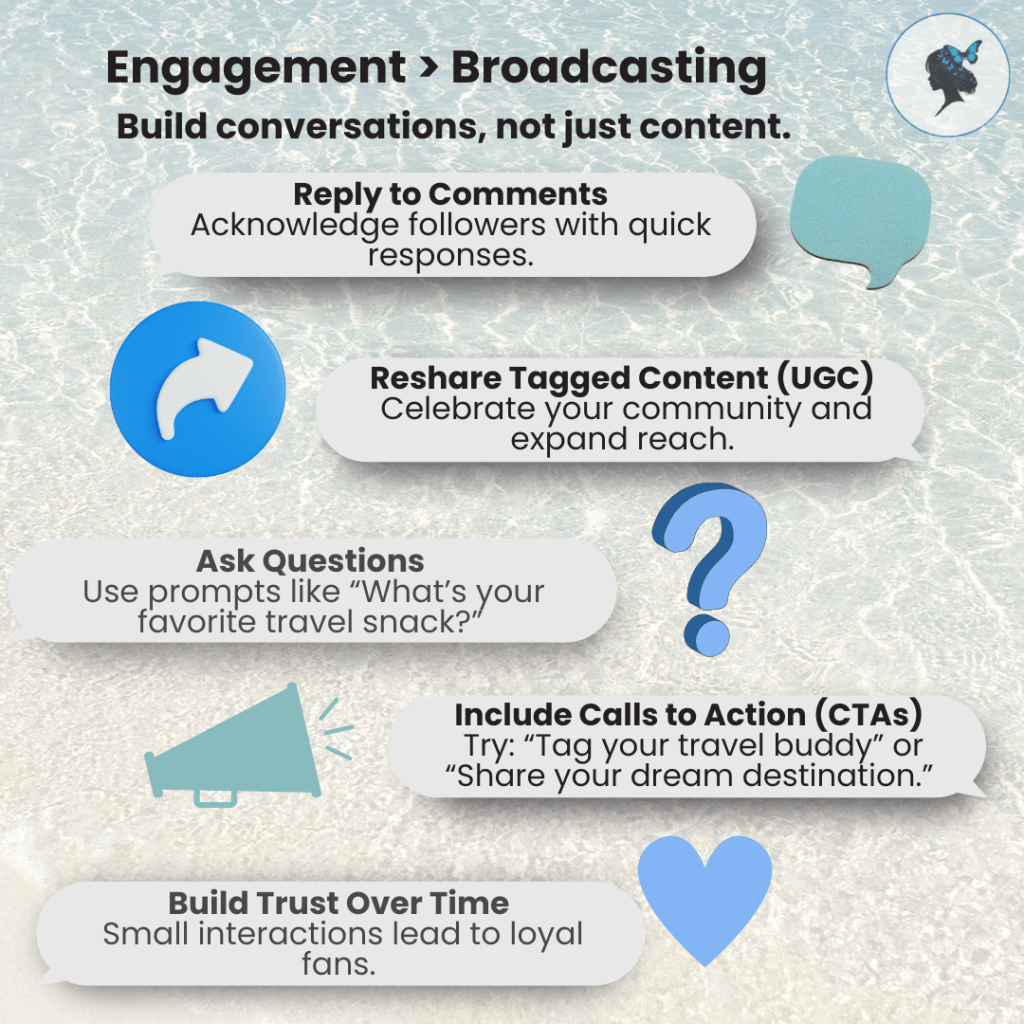
Social media is a two-way conversation, not just a place to push content. Schedule time to reply to comments, reshare tagged content, and ask questions that spark discussion. Engagement builds community, improves reach through algorithms, and fosters trust.
Don’t underestimate the value of small interactions—they create brand advocates over time. Prompt engagement with CTAs (calls to action) such as “Tag a travel buddy” or “Tell us your favorite beach!”
Around 73% of social users agree if a brand doesn’t respond on social, they’ll buy from a competitor, according to Sprout Social.
A hiking tour brand could post a breathtaking photo of Patagonia and ask, “What’s your dream trekking destination?”—then reply personally to every comment.
Step 8: Repurpose High-Performing Content
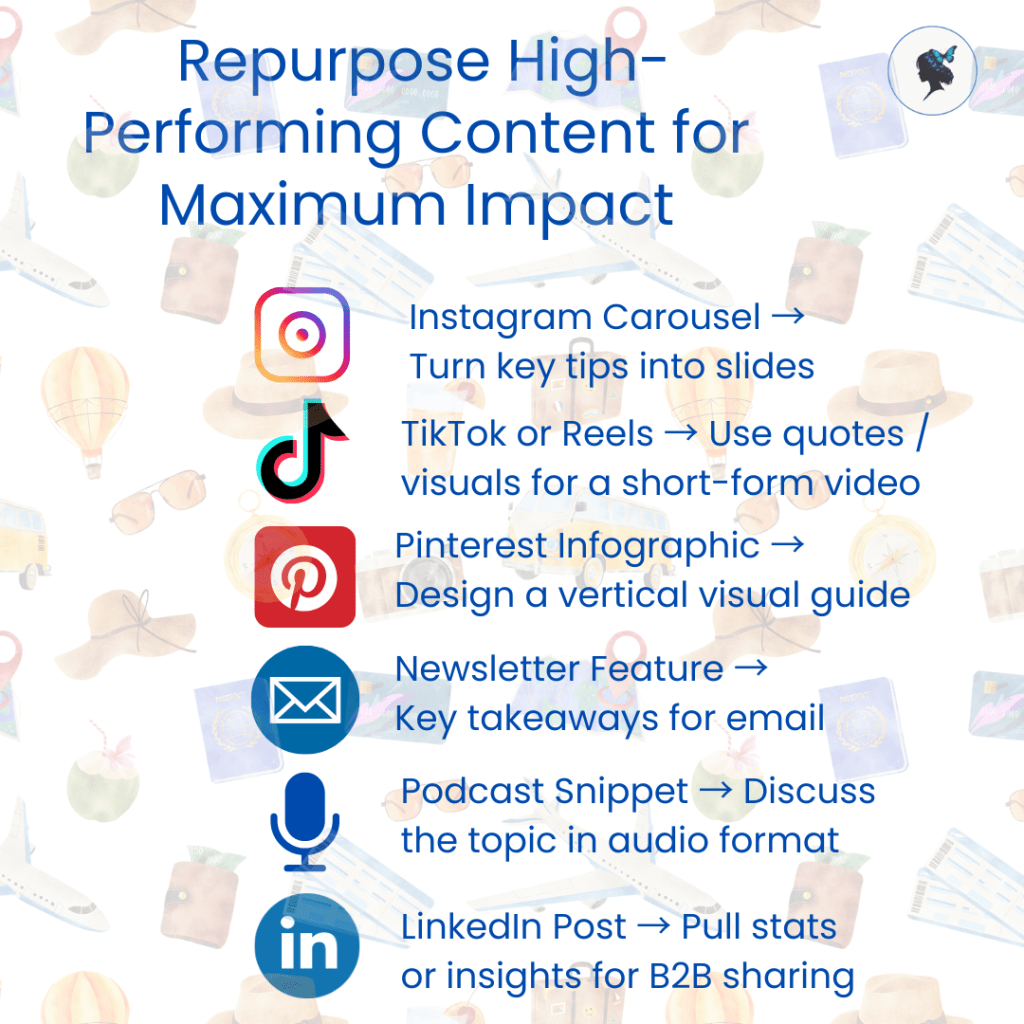
Repurposing allows you to maximize value from successful posts by adapting them to different formats or platforms. A well-performing blog post can be turned into an Instagram carousel, a short TikTok, or an infographic for Pinterest. This strategy saves time, maintains brand consistency, and ensures your best ideas reach a broader audience.
According to Semrush, 51% of marketers say updating and repurposing existing content is one of the most efficient content marketing tactics.
If a travel agency’s blog post on “10 Hidden Gems in Thailand” performs well, it can be transformed into a Pinterest pin for each location, a short video compilation on Instagram Reels, and a discussion prompt on Facebook.
Step 9: Track Performance and Adjust Accordingly
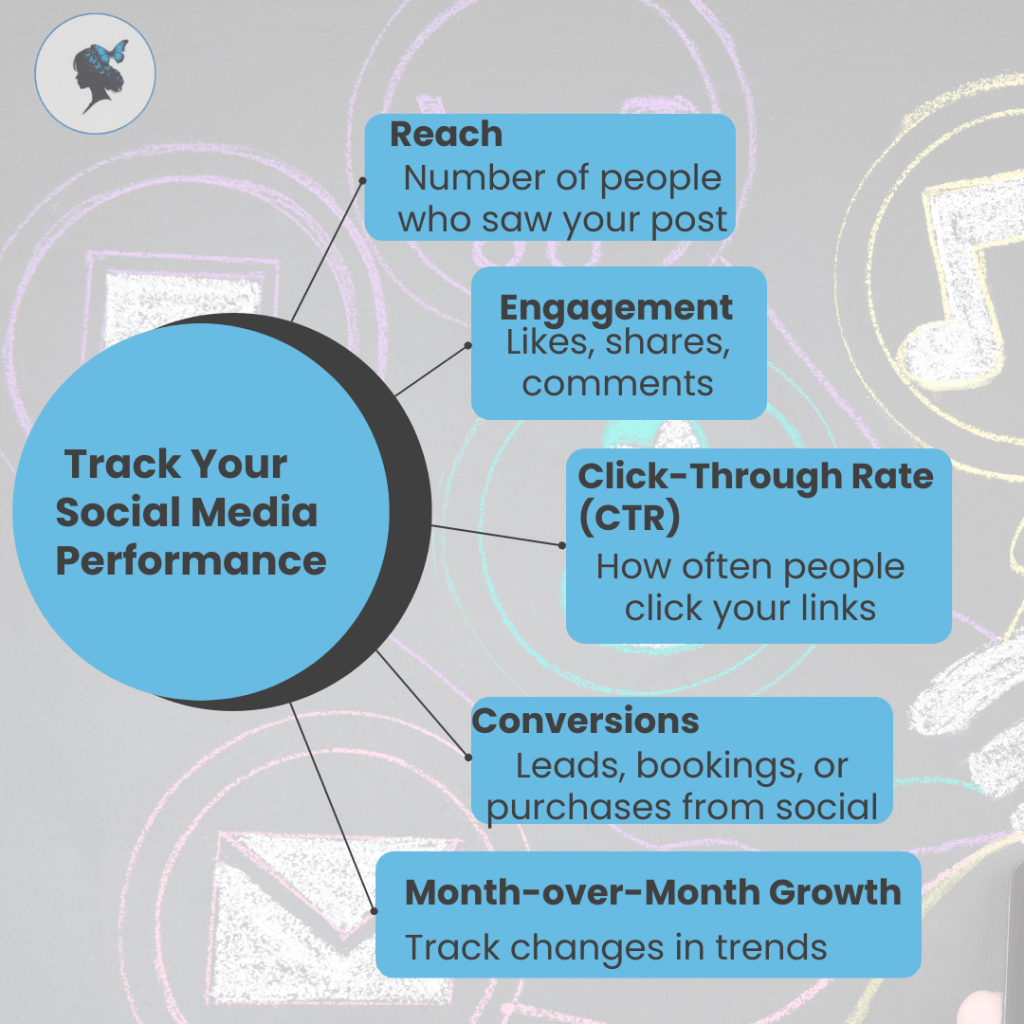
Tracking your social media performance is critical to continuous improvement. Use native analytics tools (Meta Business Suite, Instagram Insights, TikTok Analytics, etc.) or third-party platforms like Hootsuite or Sprout Social to evaluate metrics like reach, engagement, click-through rates, and conversions. Compare performance month-over-month to understand what content and timing resonate most with your audience.
Sprout Social’s data indicates that 77% of marketers use social media analytics to measure campaign performance.
A travel influencer agency might discover that Instagram Reels showcasing traveler testimonials generate 40% more saves and shares than static posts, prompting a shift in format priorities.
Step 10: Schedule Regular Review and Brainstorming Sessions
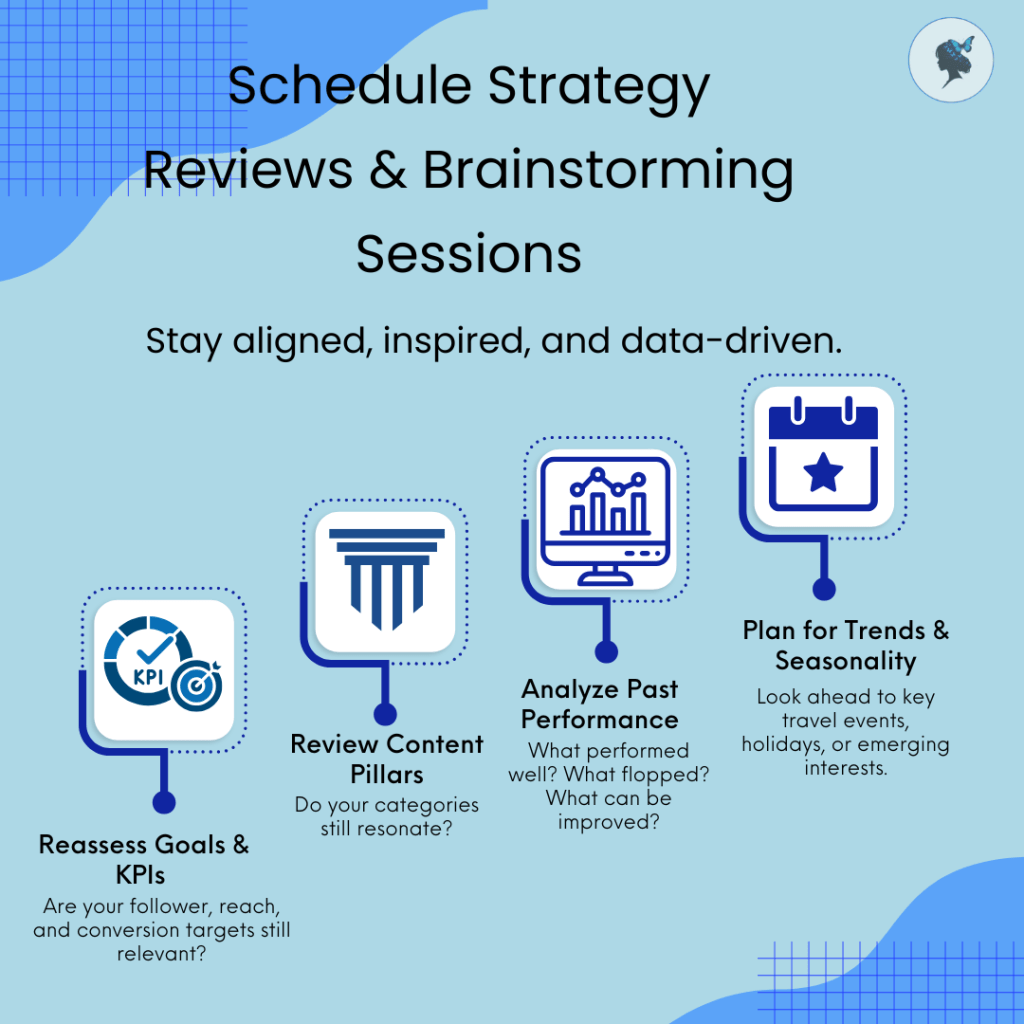
Monthly or quarterly strategy reviews help you reassess your goals, content pillars, and platform focus.
Include your team (or stakeholders) in brainstorming new campaign ideas, analyzing past performance, and planning seasonal adjustments. It’s also a great opportunity to review upcoming travel trends, competitor content, and user feedback.
According to CoSchedule, marketers who proactively plan their marketing are 3X more likely to report success.
A luxury travel brand might host a quarterly creative meeting to incorporate trends like “slow travel” or “eco-conscious getaways” into the next season’s content schedule.
Conclusion
Creating a robust social media calendar isn’t just about organization—it’s about aligning your brand story with the rhythms of your audience and the travel industry. When implemented thoughtfully, a calendar becomes a compass that guides content creation, community building, and business growth.
From setting SMART goals to leveraging analytics, a travel business that strategically manages its content will stand out in a saturated digital space. Start with simple structures and scale over time, and soon, you’ll be building a loyal following of inspired travelers eager to engage with your brand.
Final Tip: Revisit your calendar regularly and always leave space for spontaneity—travel is all about adventure, after all.
Need help with your Social Media Calendar? Contact us today!