How Storytelling Can Transform Your Travel Brand’s Blog


▶ Table of Contents
  1. The Power of Storytelling in Travel Marketing
  2. Benefits of Storytelling for Your Travel Blog
  3. Tips for Effective Storytelling in Travel Blogging
  4. Examples of Storytelling for Travel Blogs
  5. Conclusion

In the travel industry, it’s not just about selling a destination—it’s about selling an experience. For many travelers, choosing where to go isn’t driven by facts or features but by emotions and inspiration. This is where storytelling comes in. A compelling narrative can take your travel brand’s blog from a generic content repository to an engaging platform that connects deeply with your audience.

The Power of Storytelling in Travel Marketing

Storytelling is one of the oldest and most effective forms of communication. In travel blogging, it allows you to go beyond promoting your services and instead share meaningful experiences that inspire readers to take action. When done well, storytelling creates an emotional connection, making your brand memorable and trustworthy.

Check out our services to start moving in the right direction!

Benefits of Storytelling for Your Travel Blog

1. Capturing Reader Interest

A good story draws readers in. By painting vivid pictures of unique travel experiences—whether it’s trekking through the Amazon rainforest or savoring street food in Bangkok—you can keep your audience hooked from start to finish.

2. Building Emotional Connections

Travel decisions are often influenced by emotions. Storytelling helps your audience visualize themselves in the destinations or scenarios you describe, creating a desire to live those moments themselves.

3. Differentiating Your Brand

In a saturated market, storytelling helps set your travel brand apart. While competitors may list itineraries or features, your stories bring the journey to life, showing what makes your services unique.

4. Encouraging User Engagement

Authentic stories resonate with readers, encouraging them to comment, share, or even contribute their own travel experiences. This engagement builds a loyal community around your brand.

Tips for Effective Storytelling in Travel Blogging

1. Focus on the Traveler’s Perspective

Instead of solely promoting your services, share stories from a traveler’s viewpoint. Highlight their emotions, challenges, and joys to make your content relatable.

2. Use Sensory Details

Bring your stories to life by incorporating sensory details. Describe the aroma of spices in a Moroccan market or the sound of waves crashing on a secluded beach. Such details transport readers to the heart of the experience.

3. Incorporate Visual Elements

Pair your narratives with stunning visuals, including photos and videos, to enhance the storytelling experience. A picture truly can be worth a thousand words when it comes to travel.

4. Add a Personal Touch

Authenticity is key. Share real experiences, whether they’re your own or those of satisfied customers. Personal stories make your content more genuine and engaging.

5. End with a Call to Action

Every story should inspire action. Whether it’s booking a tour, exploring a destination, or simply subscribing to your blog, make sure your readers know the next step.

Examples of Storytelling for Travel Blogs

1. Destination Narratives

Instead of listing “10 Things to Do in Paris,” share a day in the life of a traveler exploring Paris. Describe strolling along the Seine, sipping coffee at a quaint café, and watching the Eiffel Tower light up at night.

2. Customer Success Stories

Feature testimonials or stories from past customers who’ve had memorable trips with your brand. Highlight their unique experiences and the role your services played in making their journey special.

3. Behind-the-Scenes Stories

Give readers a glimpse behind the curtain by sharing stories about your team, the planning process, or the history behind certain tours or destinations. This builds trust and humanizes your brand.

Conclusion

In today’s travel industry, storytelling isn’t just a nice-to-have—it’s a must-have. By weaving compelling narratives into your blog, you can transform your travel brand into a source of inspiration and connection. Stories have the power to move people, and in travel, they have the power to move them across the world.

Start telling your brand’s stories today and watch your audience grow, engage, and embark on adventures fueled by your content.

Contact us to see how we can help you!

What Are Social Media Captions and Why Do They Matter?

In the ever-evolving world of social media, visuals often take center stage. A stunning photo, an eye-catching video, or an engaging infographic grabs the viewer’s attention immediately. However, behind every great visual is a tool that anchors the content, adds context, and sparks connection: the social media caption.

Here are some more ideas for Social Media Campaigns to Inspire Wanderlust!

Check out our packages to start moving in the right direction!


▶ Table of Contents
  1. Defining Social Media Captions
  2. Why Are Social Media Captions Important?
  3. Elements of a Great Social Media Caption
  4. Examples of Captions by Platform
  5. Final Thoughts

Defining Social Media Captions

At its core, a social media caption is the text accompanying your image, video, or post on platforms like Instagram, Facebook, Twitter, LinkedIn, or TikTok. Captions can be as short as a few words or as long as several paragraphs, depending on the platform’s limitations and the message you want to convey. They’re not just add-ons; they’re an integral part of the post’s narrative.

A caption can include:

  • Text: Your primary message or storytelling component.
  • Hashtags: Keywords prefixed by the # symbol to increase discoverability.
  • Mentions: Tags that reference other accounts using @.
  • Emojis: Visual elements that add personality or emotion.
  • Call-to-Action (CTA): Encouragement for your audience to engage (e.g., “Click the link in bio,” “Tag a friend,” or “Comment below”).

Why Are Social Media Captions Important?

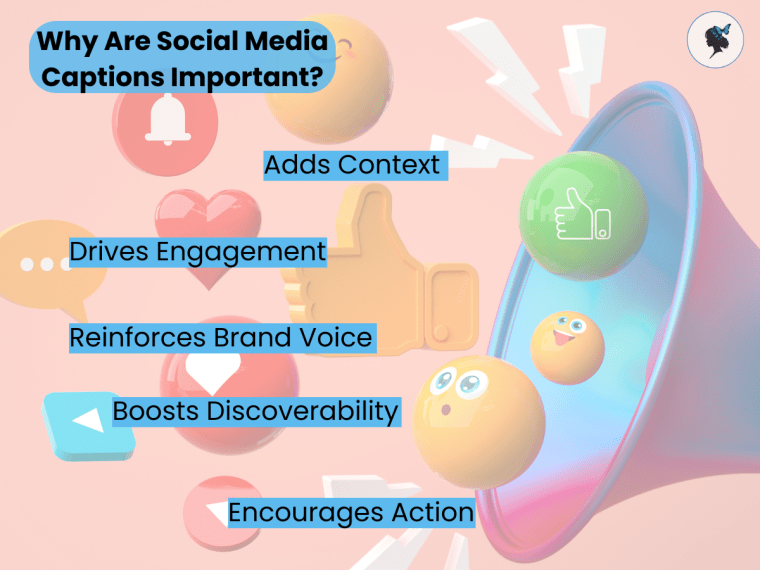
Infograph: Why are social media captions important?
Why are social media captions important?

A well-crafted caption is much more than filler text. It serves several crucial purposes:

1. Adds Context

A picture might be worth a thousand words, but captions provide clarity. They give your audience the backstory, explain your intent, or highlight details that may not be immediately obvious in the visual.

2. Drives Engagement

Captions can spark conversations, inspire likes, and encourage shares. By asking questions, including CTAs, or sharing relatable anecdotes, you create opportunities for your audience to interact with your post.

3. Reinforces Brand Voice

Your caption is an extension of your brand’s personality. Whether your tone is witty, professional, inspirational, or playful, captions help maintain consistency and deepen your connection with your audience.

4. Boosts Discoverability

Strategic use of hashtags and mentions can amplify your post’s reach. Hashtags make your content searchable, while mentions allow you to engage with other users or brands directly.

5. Encourages Action

From clicking a link to visiting your website, signing up for a newsletter, or attending an event, captions can guide your audience toward specific actions that align with your goals.

Elements of a Great Social Media Caption

What makes a caption stand out?

While there’s no one-size-fits-all formula, great captions often share the following traits:

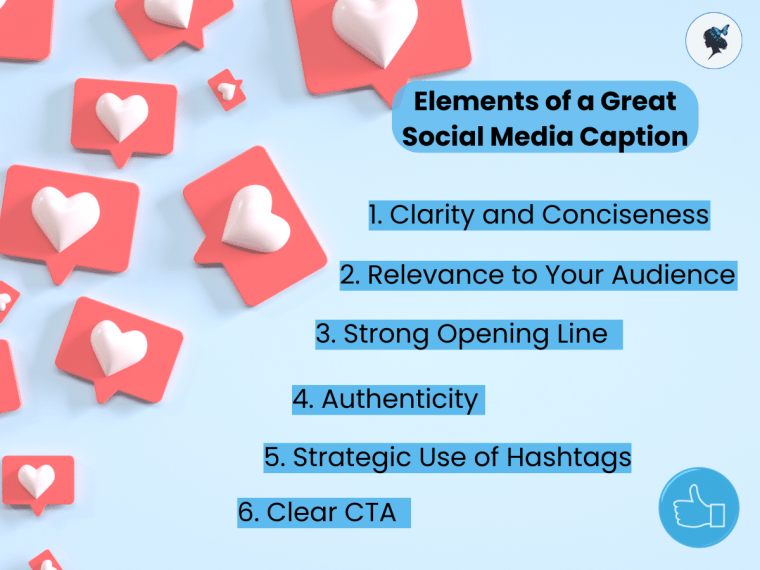
Infograph: Elements of a great social media caption
Elements of a great social media caption

1. Clarity and Conciseness

Keep your message straightforward and easy to understand. People scroll quickly, so make your point early and effectively.

2. Relevance to Your Audience

Understand your audience’s interests, challenges, and preferences. A relatable caption resonates better and encourages interaction.

3. Strong Opening Line

The first few words are crucial for grabbing attention. Use hooks like intriguing questions, bold statements, or compelling facts to draw readers in.

4. Authenticity

Be genuine. Audiences value transparency and are quick to spot insincerity.

5. Strategic Use of Hashtags

Research trending or niche hashtags relevant to your content. Avoid overloading your caption with hashtags; 3-5 well-chosen ones often work best.

6. Clear CTA

What do you want your audience to do after reading your caption? Whether it’s to comment, share, or visit a link, make your CTA direct and compelling.

The importance of clear CTAs.

Examples of Captions by Platform

Different platforms have different norms and audiences, so your caption style may vary:

  • Instagram: Often more personal and storytelling-driven. Example: “A day in the life of a coffee lover. What’s your favorite morning ritual?”
  • Twitter (X): Concise and impactful due to character limits. Example: “Breaking news: Our new product launches tomorrow! #Innovation”
  • LinkedIn: Professional and informative. Example: “Excited to share our latest report on workplace trends. Download it here: [link].”
  • TikTok: Fun and playful to match the platform’s tone. Example: “POV: You realize it’s Friday and your weekend plans just got canceled #WeekendVibes”

Read our thoughts on the best social media platforms in 2025.

Final Thoughts

While visuals draw attention, captions hold the power to engage and convert. They’re your opportunity to share your story, showcase your personality, and build a relationship with your audience. Whether you’re a brand, an influencer, or an everyday user, investing time and thought into your captions can transform your social media presence from good to unforgettable.

Need help with your Social Media Strategy? Contact us to see how we can help!