The Best Social Media Platforms for Travel Companies in 2025

In the fast-evolving world of travel marketing, social media has become one of the most powerful tools for travel companies to reach, engage, and convert potential customers. As the travel industry continues to thrive in 2025, knowing which social media platforms to focus on is crucial for staying competitive. In this blog post, we will explore the best social media platforms for travel companies in 2025 and provide tips on how to leverage each platform to grow your travel business.

You might find our post “Creating social media campaigns that inspire Wanderlust!” helpful too.

Check out our packages to see how we can help your SEO and Content move in the right direction!


▶ Table of Contents

1. Instagram: The Visual Platform for Travel Inspiration

Instagram has long been a top choice for travel brands, and it continues to be an essential platform for businesses in the travel industry in 2025. With its emphasis on visual storytelling, Instagram allows travel companies to showcase beautiful destinations, experiences, and accommodations to a highly engaged audience.

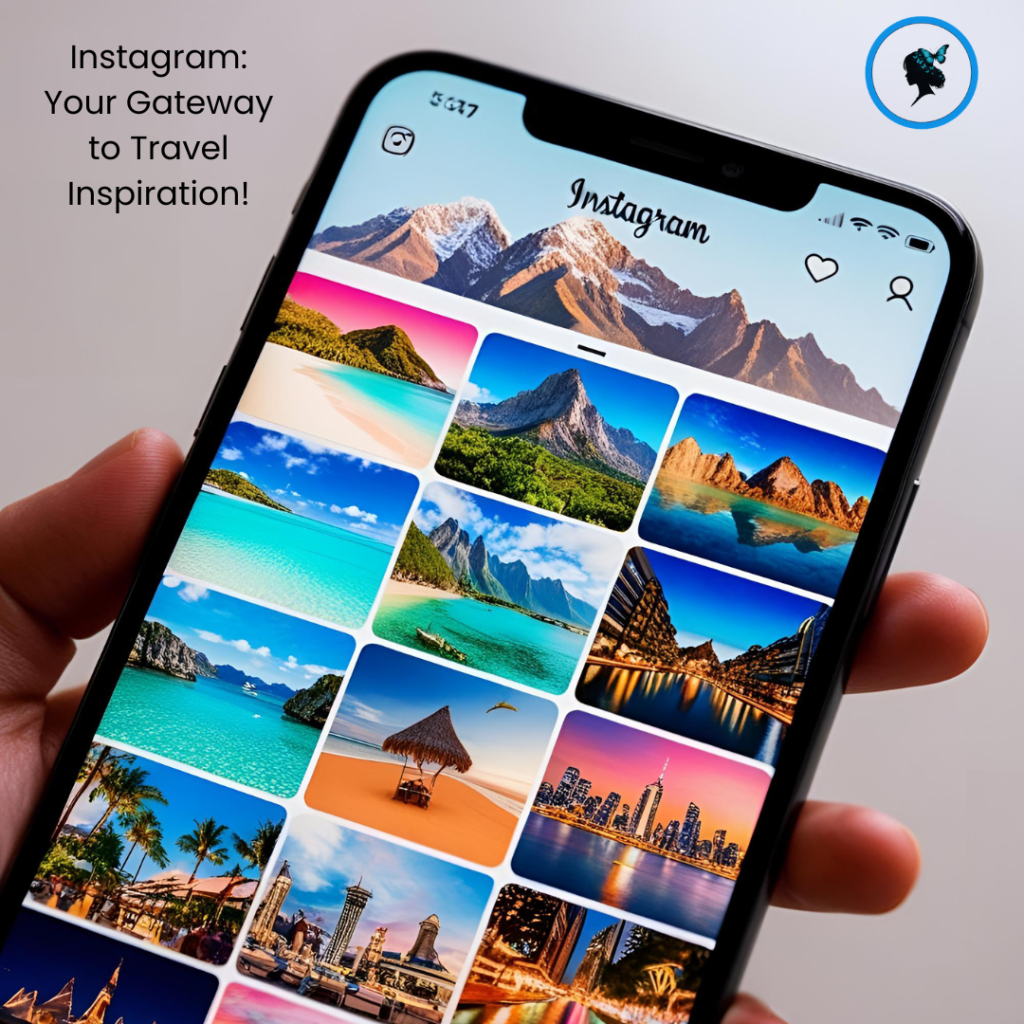
Image of several destinations on someone's phone.
Instagram: your gateway to travel inspiration

Why Instagram is Essential for Travel Companies:

  • Highly Visual Nature: Instagram is a photo- and video-based platform, making it ideal for showcasing stunning landscapes, exotic destinations, and travel experiences.
  • Strong Engagement Rates: Instagram boasts high engagement rates compared to other social platforms, with users actively liking, commenting, and sharing content.
  • Stories and Reels: Instagram’s Stories and Reels features are perfect for sharing behind-the-scenes content, travel tips, and short-form videos that engage users in a more personal way.
  • Shopping Features: Instagram’s e-commerce capabilities, including the “Book Now” and “Shop” buttons, allow users to directly book tours or purchase travel-related products through the platform.

How to Use Instagram Effectively for Your Travel Business:

  • Share Stunning Visuals: Post high-quality photos and videos of your travel destinations, hotels, tours, and experiences. Ensure your content is captivating and inspiring.
  • Leverage User-Generated Content: Encourage your customers to share their travel experiences and tag your business. Reposting their content not only builds trust but also increases brand visibility.
  • Utilize Instagram Ads: Instagram’s ad targeting capabilities are highly effective for travel companies, allowing you to reach specific demographics, such as adventure seekers, honeymooners, or family vacation planners.

Check out our post: Instagram tips for travel brands.

2. Facebook: The All-Encompassing Platform for Community Engagement

While some may argue that Facebook is past its prime for younger audiences, it remains a vital platform for travel businesses in 2025, particularly for community building and generating bookings.

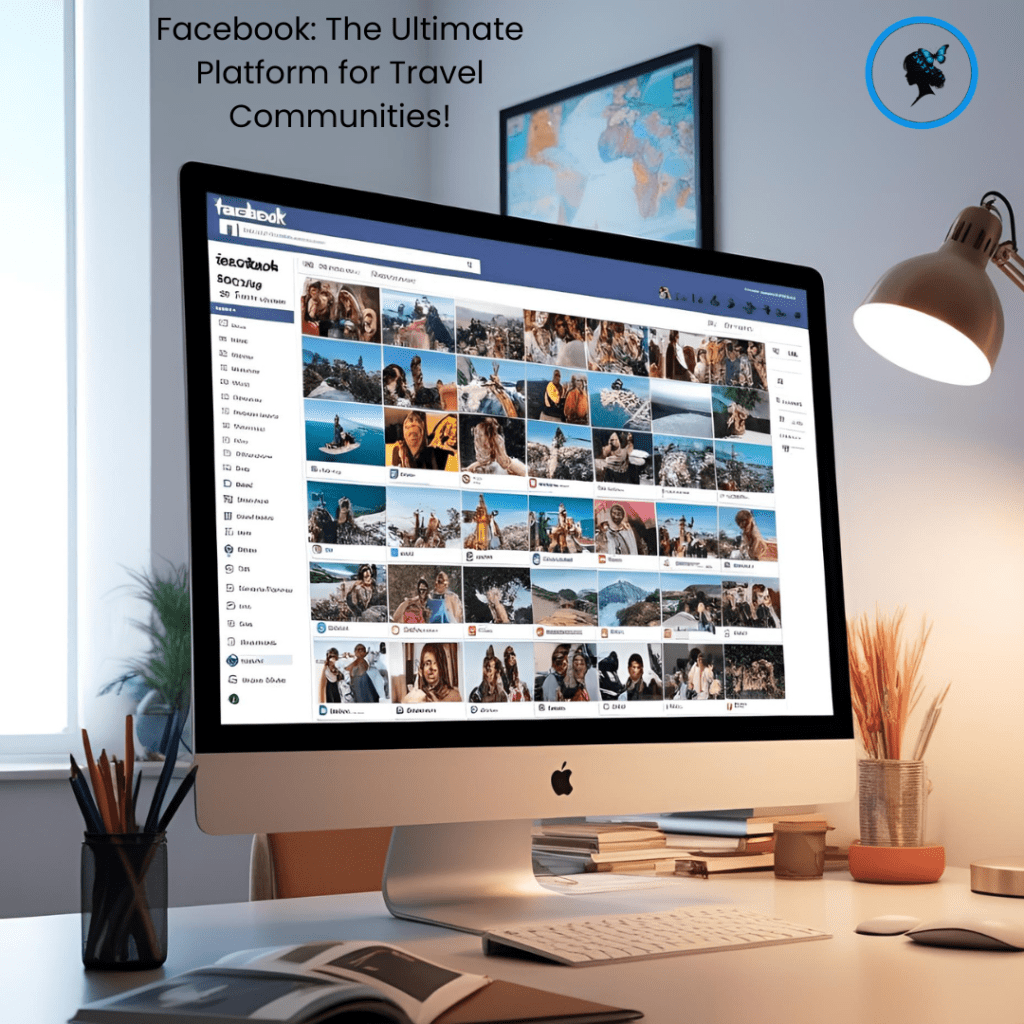
Facebook screen on desktop with travel images
Facebook: the ultimate platform for travel communities

Why Facebook is Still Relevant for Travel Companies:

  • Wide User Base: Facebook continues to have one of the largest user bases, encompassing a diverse demographic, making it ideal for reaching potential customers of all ages.
  • Groups and Communities: Facebook Groups offer a great opportunity for travel companies to build niche communities, share travel tips, and engage with potential customers in meaningful ways.
  • Event Promotion: Travel companies can promote events, webinars, or special promotions directly on Facebook, increasing engagement and conversions.
  • Targeted Advertising: Facebook Ads are incredibly powerful for targeting potential travelers based on location, interests, behaviors, and even past interactions with your website.

How to Use Facebook Effectively for Your Travel Business:

  • Create a Travel Community: Start a Facebook Group around specific destinations, types of travel (e.g., solo travel, family vacations), or experiences. Share valuable content, respond to queries, and engage with members regularly.
  • Run Facebook Ads: Use Facebook’s extensive targeting options to run ads that promote travel packages, tours, or seasonal offers to a relevant audience.
  • Host Facebook Live Sessions: Go live to showcase live travel experiences, host Q&A sessions, or give virtual tours of destinations to keep your audience engaged and interested in your services.

3. TikTok: Short-Form Videos for Travel Storytelling

TikTok has quickly emerged as a powerful tool for brands to create viral content, and the travel industry is no exception. In 2025, TikTok remains one of the best platforms for travel companies looking to reach a younger, trend-conscious audience and create engaging, shareable content.

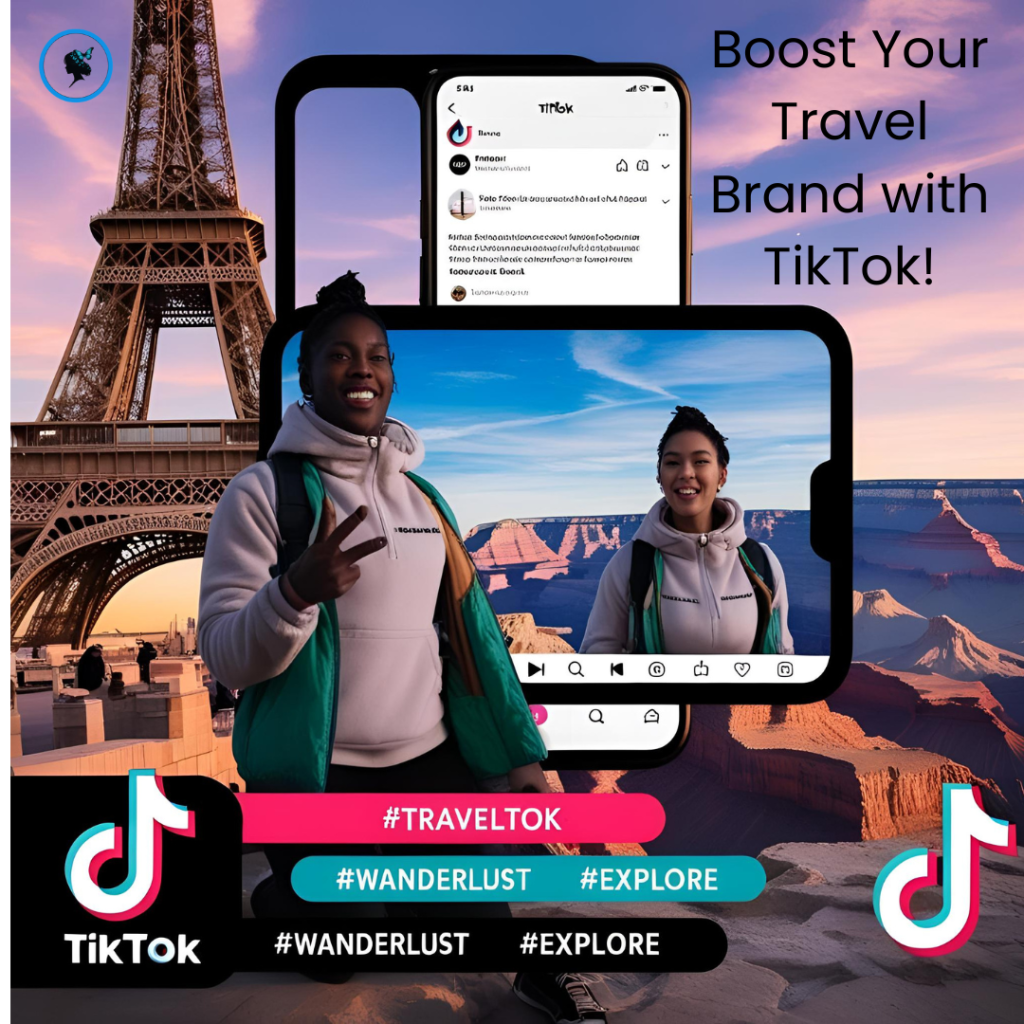
travel imagery and 2 girls with phones
Boost your travel brand with TikTok

Why TikTok is Key for Travel Companies:

  • Viral Potential: TikTok’s algorithm favors engaging content, meaning even small travel businesses can go viral with the right video. This offers huge exposure potential for your brand.
  • Creative Storytelling: TikTok’s short-form video format is perfect for showcasing fast-paced, exciting travel experiences, from exploring hidden gems in a destination to giving tips for affordable travel.
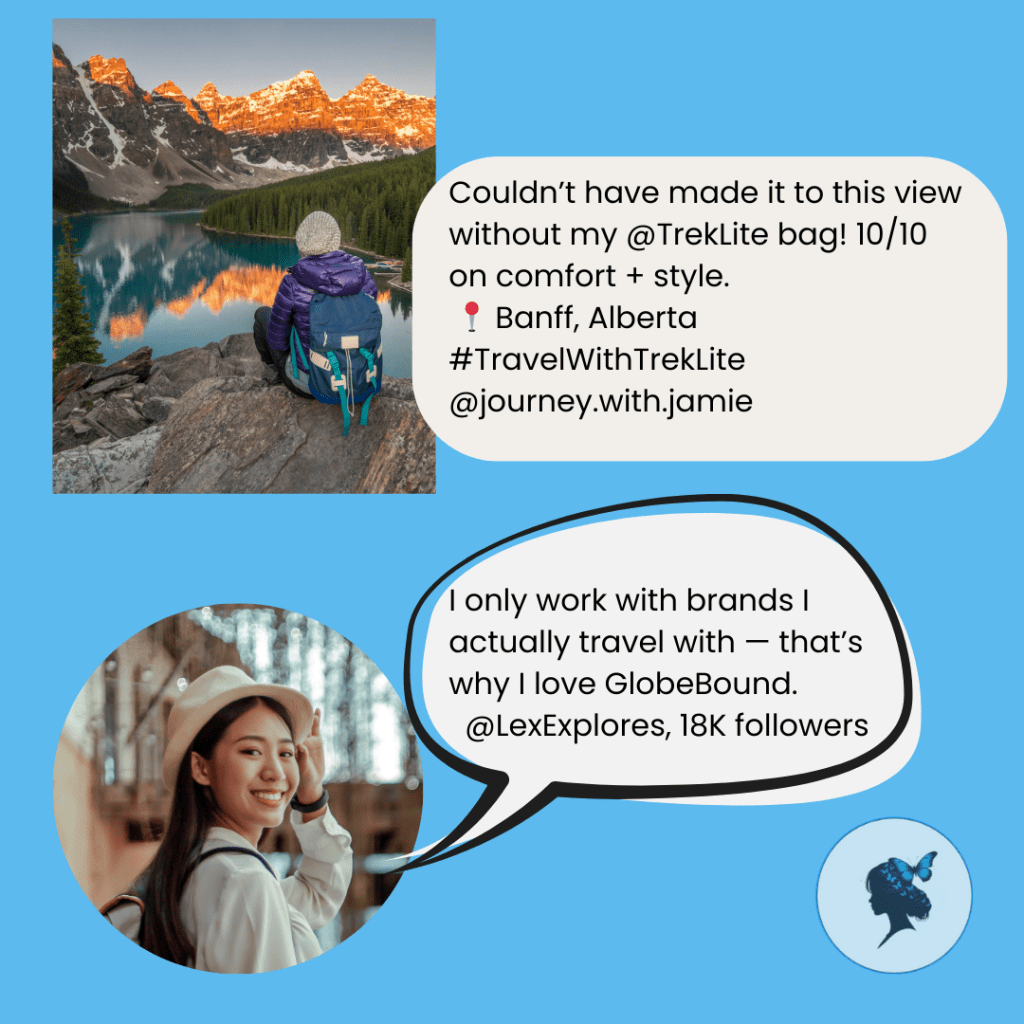
  • Influencer Marketing: TikTok influencers have massive reach, and partnering with them can help amplify your message and boost your brand’s visibility.
  • Trendy Content: TikTok thrives on trends and challenges, so participating in travel-related trends can give your business a fun and engaging way to connect with a wider audience.

How to Use TikTok Effectively for Your Travel Business:

  • Create Engaging, Short Videos: Showcase highlights of your destinations, fun travel hacks, or travel-related challenges in quick, creative video formats.
  • Participate in Trends: Keep an eye on popular TikTok trends and incorporate them into your travel content to increase visibility and relevance.
  • Collaborate with Influencers: Partner with TikTok influencers who align with your brand to showcase your travel services in an authentic and engaging way.
  • Use Hashtags and Captions: Optimize your content by using trending hashtags and writing compelling captions that encourage interaction.

More about influencer marketing here.

4. Pinterest: The Visual Search Engine for Travel Inspiration

Pinterest is often referred to as a visual search engine, and its ability to help users discover and save ideas makes it a powerful platform for travel businesses. In 2025, Pinterest remains one of the best social media platforms for generating organic traffic to your website.

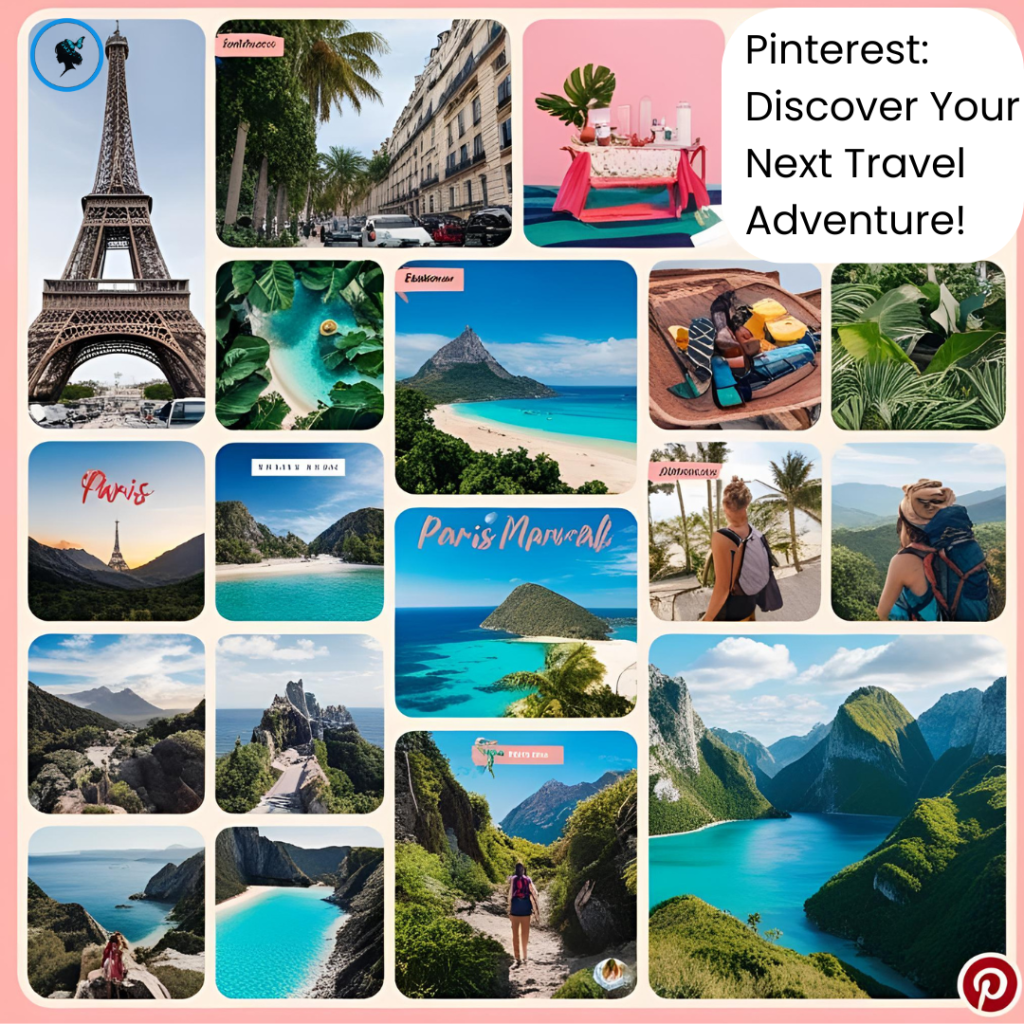
Pinterest: discover your next travel adventure. Many travel images and pinterest logo.
Pinterest: discover your next travel adventure

Why Pinterest is Valuable for Travel Companies:

  • Travel Planning: Pinterest is a go-to platform for users seeking travel inspiration and planning their vacations. Many users use Pinterest to find ideas for destinations, itineraries, and accommodations.
  • Long-Lasting Content: Unlike other social media platforms where posts have a short lifespan, Pins on Pinterest can continue to drive traffic for months or even years after being posted.
  • Targeted Traffic: Pinterest users actively search for specific travel-related content, meaning your Pins can attract a highly relevant audience looking for exactly what you offer.
  • Search Functionality: With Pinterest’s search function, your Pins can show up in relevant searches for keywords like “budget travel tips” or “best beaches in the Maldives.”

How to Use Pinterest Effectively for Your Travel Business:

  • Create Beautiful Pins: Design visually appealing Pins that showcase destinations, itineraries, or travel tips. Include a strong call-to-action and link directly to relevant landing pages.
  • Use Keyword-Rich Descriptions: Optimize your Pins with keywords related to travel, destinations, and experiences to increase discoverability.
  • Share Travel Guides and Itineraries: Post Pins linking to detailed travel guides, itineraries, or blog posts, driving traffic back to your website.
  • Create Boards Around Travel Themes: Organize your Pins into boards around specific topics like “Tropical Getaways,” “Family Travel,” or “Luxury Vacations” to help users find exactly what they’re looking for.

5. YouTube: Video Marketing for Travel Brands

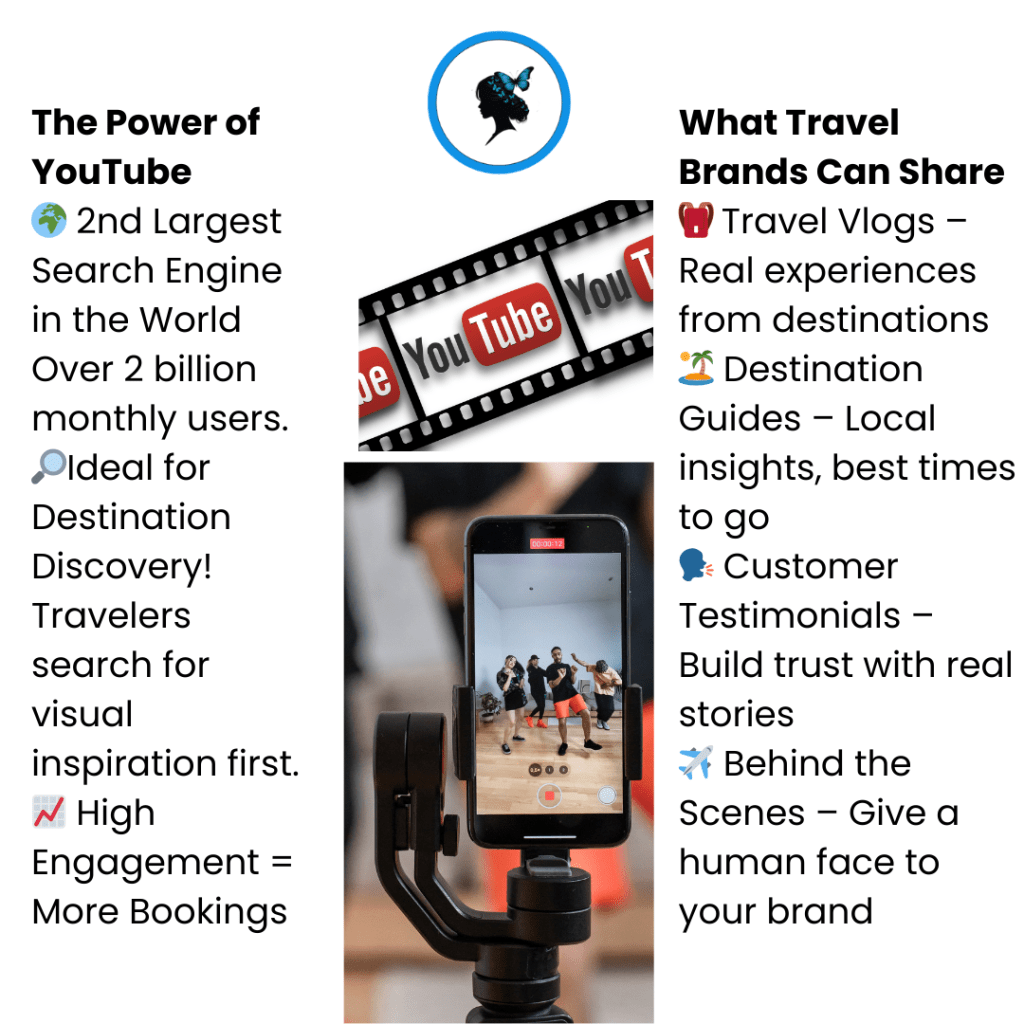
YouTube is the second-largest search engine globally, making it an invaluable platform for travel companies that want to provide in-depth video content, such as destination guides, travel vlogs, and customer testimonials. In 2025, YouTube remains one of the most effective platforms for video marketing in the travel industry.

Infograph: The power of YouTube.
The power of YouTube

Why YouTube is Crucial for Travel Companies:

  • Rich, Long-Form Content: YouTube is perfect for long-form content, such as detailed destination guides, how-to videos, or travel experiences.
  • Massive Audience Reach: With over 2 billion logged-in monthly users, YouTube allows you to reach a global audience interested in travel-related content.
  • SEO Benefits: YouTube videos can show up in Google search results, driving additional traffic to your website.
  • Content Longevity: Unlike other platforms where posts may quickly fade, YouTube videos can continue to drive traffic long after they’re published.

How to Use YouTube Effectively for Your Travel Business:

  • Create Travel Vlogs: Share immersive travel vlogs that give potential customers a taste of the destinations and experiences you offer.
  • Produce Educational Content: Post how-to videos, tips for planning a trip, or packing guides to offer value to your audience.
  • Optimize Video Titles and Descriptions: Use SEO best practices by incorporating relevant keywords in your video titles, descriptions, and tags.
  • Collaborate with Influencers: Partner with YouTube influencers to create co-branded content and reach a larger audience.

Conclusion: Leveraging Social Media for Travel Success in 2025

As we move further into 2025, the best social media platforms for travel companies continue to evolve, but certain platforms remain highly effective for driving engagement and bookings. Instagram, Facebook, TikTok, Pinterest, and YouTube all offer unique advantages that can help travel brands grow their online presence and connect with their target audience.

By strategically using each platform based on its strengths—whether that’s visual content on Instagram, community building on Facebook, or long-form video storytelling on YouTube—travel companies can create a comprehensive and successful social media marketing strategy that drives bookings and enhances brand awareness. Stay consistent, engage authentically, and keep up with trends to ensure your business stays ahead in the ever-evolving digital world of travel marketing.

Related post: What are social captions and why do they matter?

Seem a bit overwhelming? Contact us, we can get you on the right track!

Creating Social Media Campaigns That Inspire Wanderlust

Social media has transformed the travel industry, offering small and large businesses alike the ability to connect directly with travelers. Platforms like Instagram, TikTok, and Pinterest are ideal for showcasing breathtaking destinations and inspiring wanderlust. But creating a successful social media campaign requires more than just posting stunning photos—it involves strategy, creativity, and engagement.

Here’s how to craft campaigns that captivate audiences and turn dreams into bookings.


▶ Table of Contents
  1. Why Social Media Matters for Travel Businesses
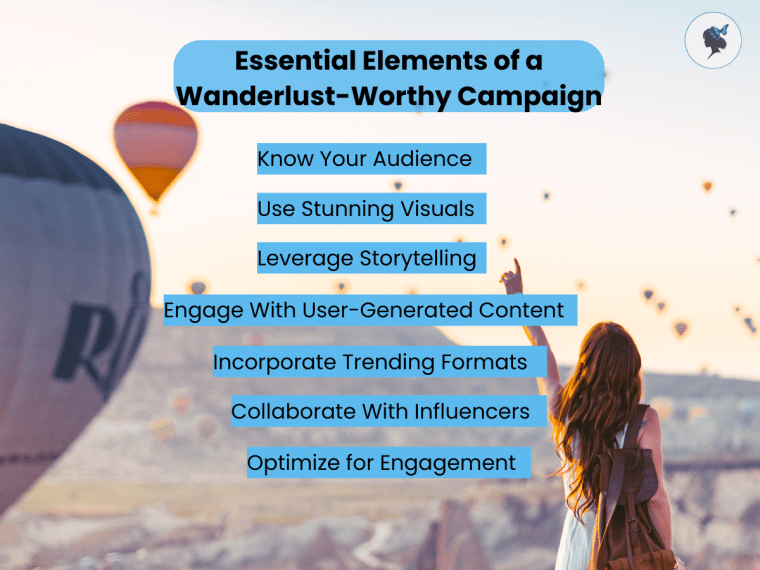
  2. Essential Elements of a Wanderlust-Worthy Campaign
  3. Tips for Platform-Specific Campaigns
  4. Measuring Success
  5. Conclusion

Why Social Media Matters for Travel Businesses

Travel is inherently visual and experiential, making it a perfect match for social media platforms. A well-executed social media campaign can:

  • Boost Brand Awareness: Get your name in front of a larger audience.
  • Drive Website Traffic: Guide users from posts to your website or booking platform.
  • Engage Your Community: Build relationships with followers through comments, shares, and likes.
  • Inspire Bookings: Convert followers into customers by showcasing your unique offerings.

Need some help with your SEO, Content and Social Media strategies?

Check out our packages to start moving in the right direction!

Essential Elements of a Wanderlust-Worthy Campaign

1. Know Your Audience

Understanding your target audience is crucial. Are they budget backpackers, luxury travelers, or adventure seekers? Tailor your content to their interests and preferences. Use platform insights and analytics to determine what resonates most with your followers.

Read here for more insights on types of content every travel website should have.

2. Use Stunning Visuals

Travelers are drawn to captivating imagery and videos. Invest in high-quality photography or videography that highlights the best aspects of your offerings. Focus on:

  • Scenic landscapes
  • Unique experiences (e.g., dining under the stars or diving with dolphins)
  • Authentic cultural moments

3. Leverage Storytelling

Great travel campaigns tell a story. Share personal experiences, testimonials, or behind-the-scenes looks at destinations. Use captions to evoke emotions and paint a vivid picture of the traveler’s journey.

More tips on how storytelling can transform your travel brand’s blog here.

4. Engage With User-Generated Content (UGC)

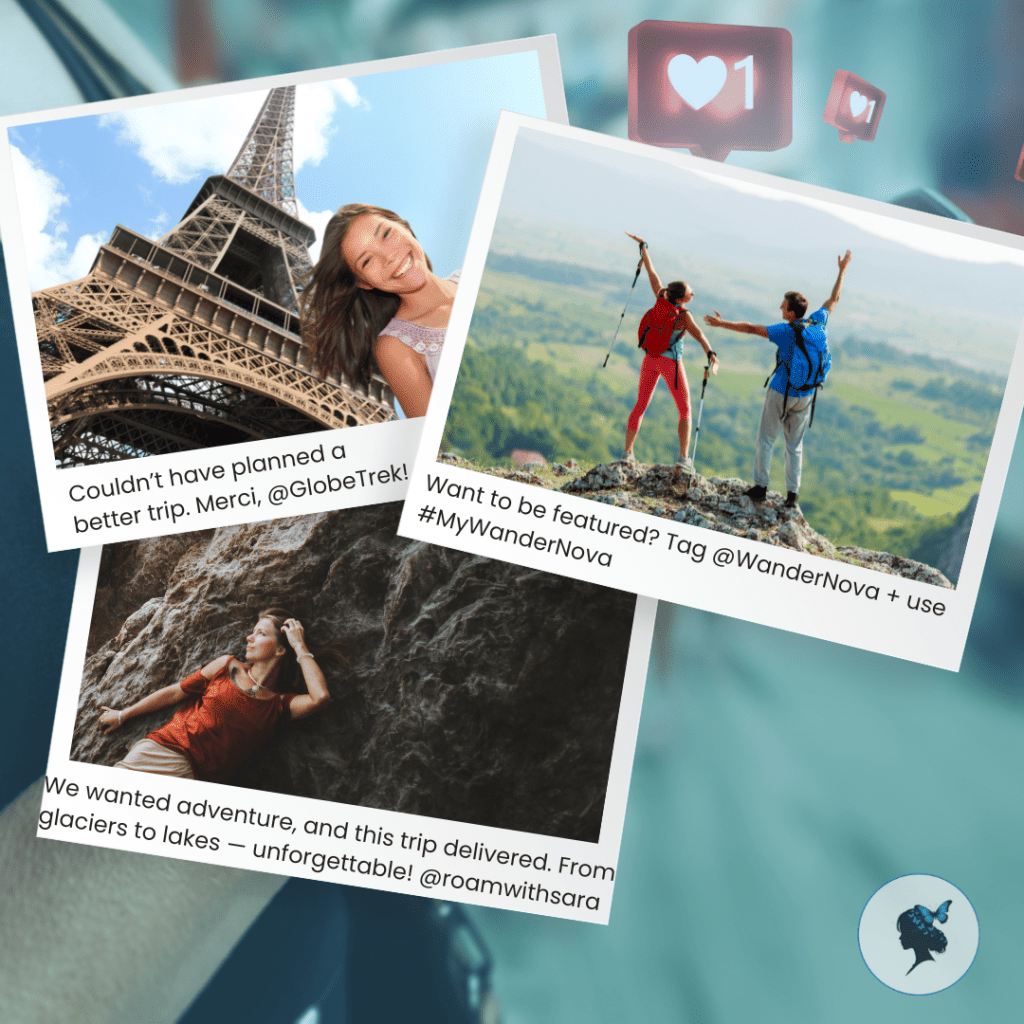
Encourage your followers to share their own travel experiences using your hashtags or tagging your business. Reposting UGC not only builds a sense of community but also provides authentic content that resonates with potential customers.

Read our guide: How to Use User-Generated Content to Enhance Your Travel Brand’s Trust.

Social media trends evolve quickly. Stay relevant by using popular formats such as:

  • Instagram Reels
  • TikTok challenges
  • Pinterest travel boards
  • Twitter threads with travel tips

Get inspired with our post: Social Media captions and why they matter.

6. Collaborate With Influencers

Partnering with travel influencers can expand your reach and add credibility to your brand. Choose influencers whose audience aligns with your target market and who can authentically represent your offerings.

7. Optimize for Engagement

Craft posts that encourage interaction. Ask questions, run polls, or host contests to keep your audience engaged. Examples include:

  • “Which destination is on your bucket list?”
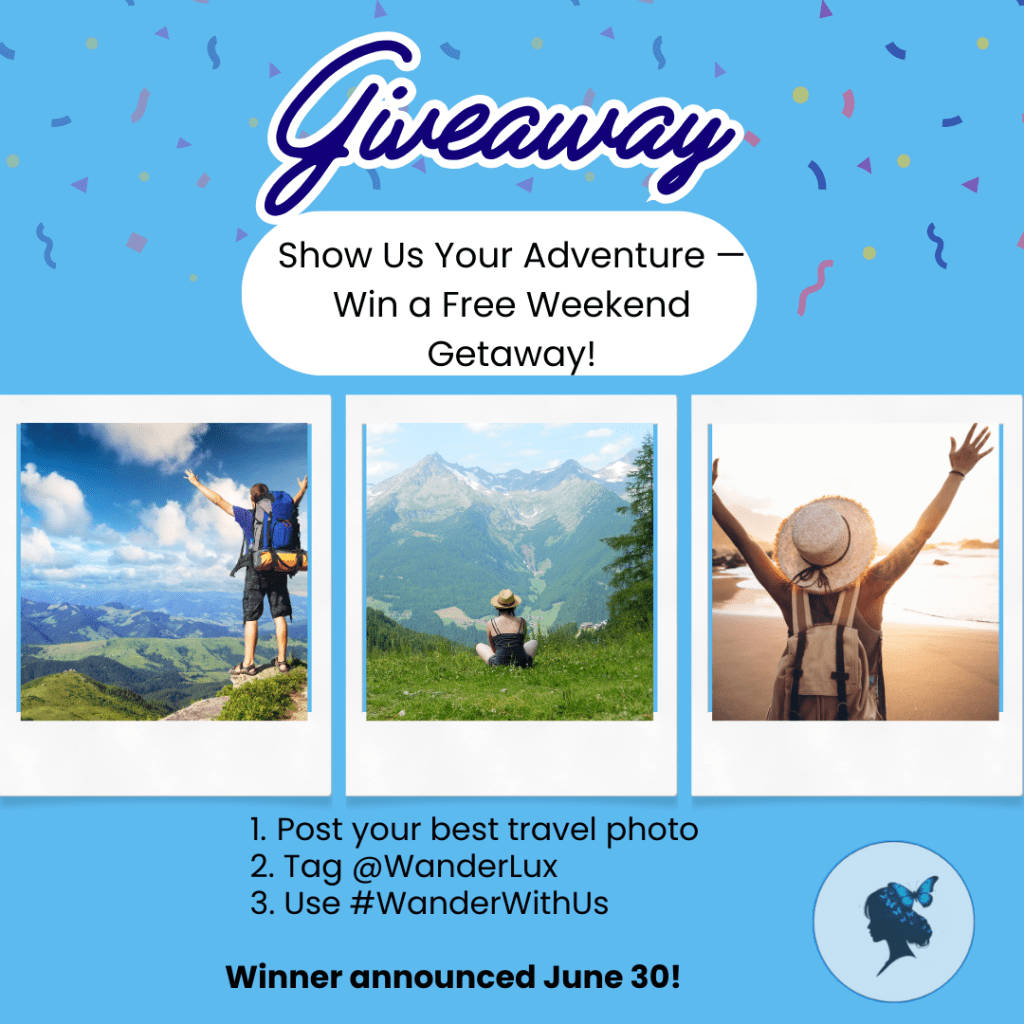
  • Photo contests with travel-related prizes
  • Polls about travel preferences

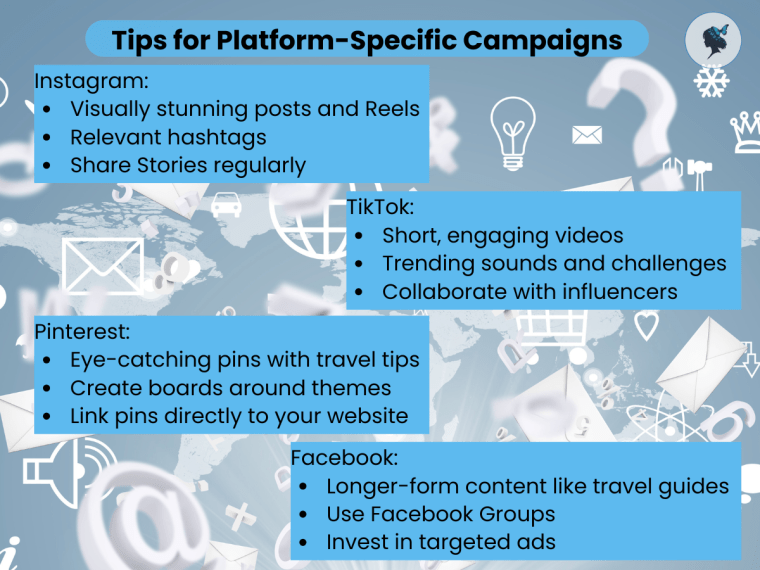
Tips for Platform-Specific Campaigns

Instagram

  • Focus on visually stunning posts and Reels.
  • Use relevant hashtags to increase discoverability.
  • Share Stories regularly to maintain visibility.

TikTok

  • Create short, engaging videos showcasing unique experiences.
  • Use trending sounds and challenges to boost reach.
  • Collaborate with TikTok travel influencers for authentic content.

Pinterest

  • Design eye-catching pins with travel tips, itineraries, or bucket lists.
  • Create boards around themes (e.g., “Top Beaches of 2025”).
  • Link pins directly to your website or booking platform.

Facebook

  • Share longer-form content like travel guides or event updates.
  • Use Facebook Groups to connect with niche communities.
  • Invest in targeted ads for specific demographics.

Measuring Success

Analyze the performance of your campaign to understand what works and what doesn’t. Key metrics to track include:

  • Engagement Rates: Likes, comments, shares, and saves.
  • Click-Through Rates: Traffic driven to your website or landing pages.
  • Follower Growth: New followers gained during the campaign.
  • Conversion Rates: Bookings or inquiries generated from social media.

Conclusion

Social media is a powerful tool for travel businesses to inspire wanderlust and turn dreams into action. By creating visually stunning, engaging, and authentic campaigns, you can connect with your audience on a deeper level and drive meaningful results. Start crafting your next campaign today, and watch as your followers become your biggest fans and loyal customers.

Need help with your Social Media strategy? Contact us to see how we can help!

5 Types of Content Every Travel Website Should Have

A well-designed travel website is more than just a booking platform; it’s a source of inspiration and information for travelers. To stand out in the competitive travel industry, your website must offer engaging and valuable content that keeps visitors coming back. Here are five essential types of content every travel website should have to attract and retain an audience.


▶ Table of Contents
  1. Destination Guides
  2. Travel Blogs and Stories
  3. Photo and Video Galleries
  4. User Reviews and Testimonials
  5. Booking and Planning Tools
  6. Conclusion

Check out our packages to start moving in the right direction!

1. Destination Guides

Travelers are always seeking detailed information about their next destination. Comprehensive destination guides can serve as a cornerstone for your website, providing:

  • Overview of the Location: Highlight key attractions, cultural experiences, and must-visit spots.
  • Practical Tips: Include advice on weather, local customs, currency, and transportation.
  • Hidden Gems: Share insider recommendations that aren’t typically covered in mainstream guides.

By offering rich, localized content, you establish your website as an authority in the travel space and attract both first-time and repeat visitors.

For more tips, check out our post: a step-by-step guide to creating destination guides.

2. Travel Blogs and Stories

Authentic travel stories and blogs resonate deeply with readers. Use this space to share:

  • Personal Travel Experiences: Narratives that inspire readers to follow in the footsteps of real travelers.
  • Itinerary Ideas: Provide detailed, day-by-day plans for popular destinations or themed trips.
  • Seasonal Travel Tips: Write about the best destinations for specific seasons or holidays.

Engaging travel blogs not only captivate your audience but also improve your SEO, drawing in organic traffic through long-tail keywords.

Read more tips on how storytelling can transform your travel brand’s blog.

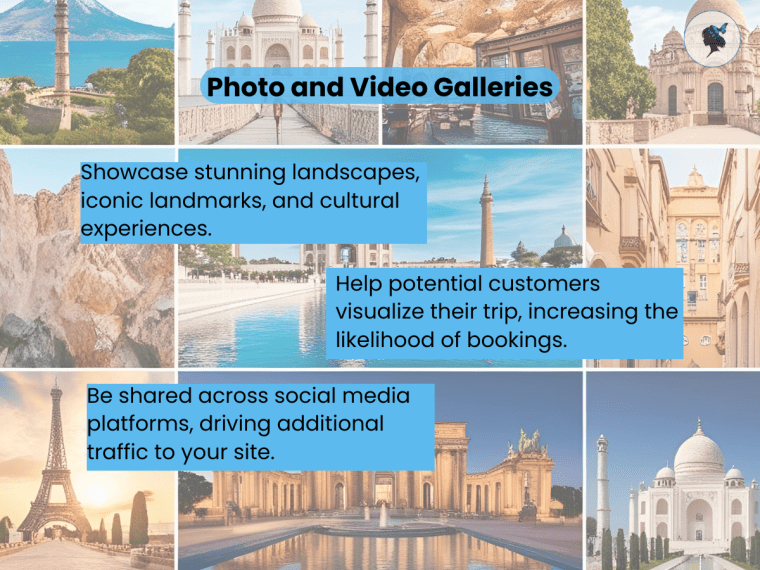
3. Photo and Video Galleries

Visual content is a powerful tool for sparking wanderlust. A curated gallery of high-quality photos and videos can:

  • Showcase stunning landscapes, iconic landmarks, and cultural experiences.
  • Help potential customers visualize their trip, increasing the likelihood of bookings.
  • Be shared across social media platforms, driving additional traffic to your site.

Invest in professional photography and videography to create a visually compelling experience for your audience.

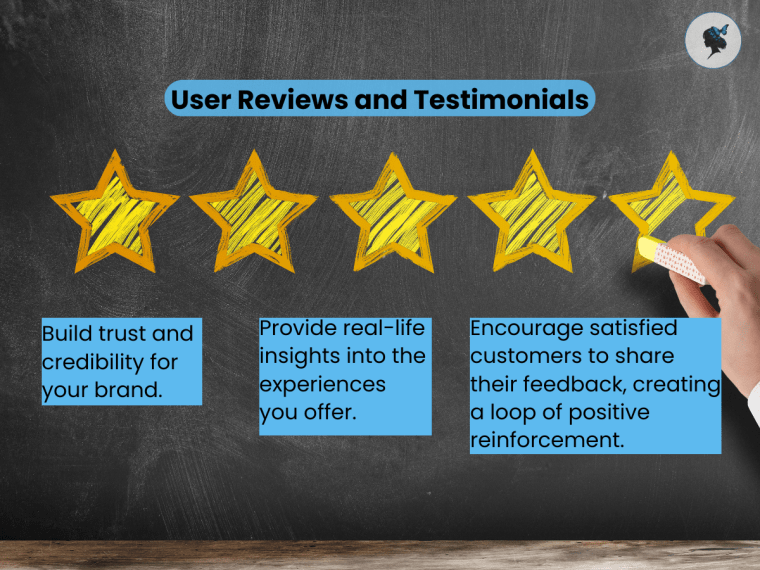
4. User Reviews and Testimonials

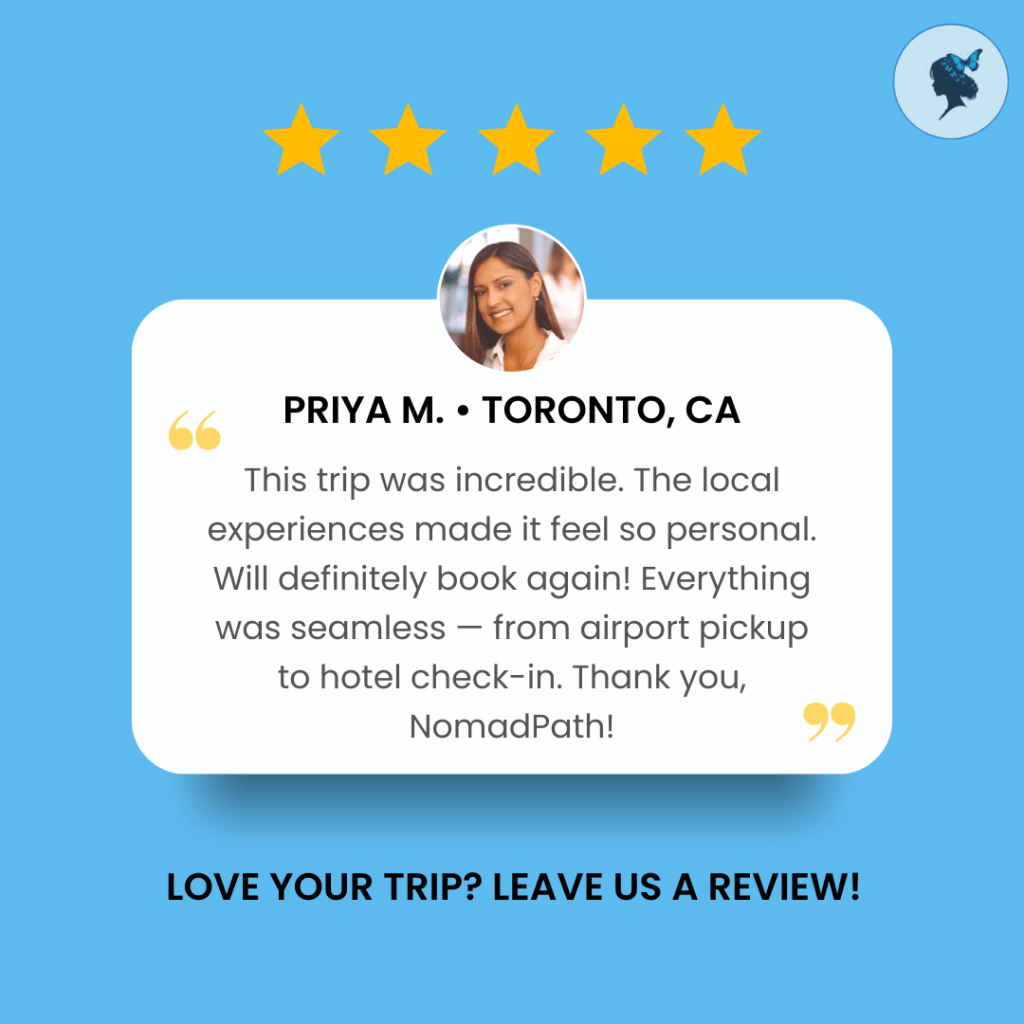
Social proof plays a critical role in the decision-making process for travelers. Featuring user reviews and testimonials can:

  • Build trust and credibility for your brand.
  • Provide real-life insights into the experiences you offer.
  • Encourage satisfied customers to share their feedback, creating a loop of positive reinforcement.

Make reviews easy to find and integrate with platforms like Google Reviews or TripAdvisor to enhance authenticity.

User-Generated Content (UGC) is also great for building trust. Read more about UGC here.

5. Booking and Planning Tools

Travelers value convenience, and having interactive tools on your website can make the planning process seamless. Consider including:

  • Itinerary Planners: Allow users to customize their travel schedules.
  • Cost Calculators: Help travelers estimate their expenses for accommodation, transport, and activities.
  • Maps and Navigation Tools: Offer interactive maps with pinned attractions, restaurants, and accommodations.

By providing these resources, you’ll position your website as a one-stop solution for all travel needs.

Conclusion

Creating diverse and engaging content is essential for building a successful travel website. From destination guides to interactive planning tools, these five content types can help you attract a wider audience, enhance user experience, and drive conversions. Remember, the key to success lies in understanding your audience and continuously updating your content to meet their evolving needs.

Start integrating these content types into your travel website today and watch your engagement and bookings soar!

Need help? Contact us for tailor-made content strategies.

What Are Social Media Captions and Why Do They Matter?

In the ever-evolving world of social media, visuals often take center stage. A stunning photo, an eye-catching video, or an engaging infographic grabs the viewer’s attention immediately. However, behind every great visual is a tool that anchors the content, adds context, and sparks connection: the social media caption.

Here are some more ideas for Social Media Campaigns to Inspire Wanderlust!

Check out our packages to start moving in the right direction!


▶ Table of Contents
  1. Defining Social Media Captions
  2. Why Are Social Media Captions Important?
  3. Elements of a Great Social Media Caption
  4. Examples of Captions by Platform
  5. Final Thoughts

Defining Social Media Captions

At its core, a social media caption is the text accompanying your image, video, or post on platforms like Instagram, Facebook, Twitter, LinkedIn, or TikTok. Captions can be as short as a few words or as long as several paragraphs, depending on the platform’s limitations and the message you want to convey. They’re not just add-ons; they’re an integral part of the post’s narrative.

A caption can include:

  • Text: Your primary message or storytelling component.
  • Hashtags: Keywords prefixed by the # symbol to increase discoverability.
  • Mentions: Tags that reference other accounts using @.
  • Emojis: Visual elements that add personality or emotion.
  • Call-to-Action (CTA): Encouragement for your audience to engage (e.g., “Click the link in bio,” “Tag a friend,” or “Comment below”).

Why Are Social Media Captions Important?

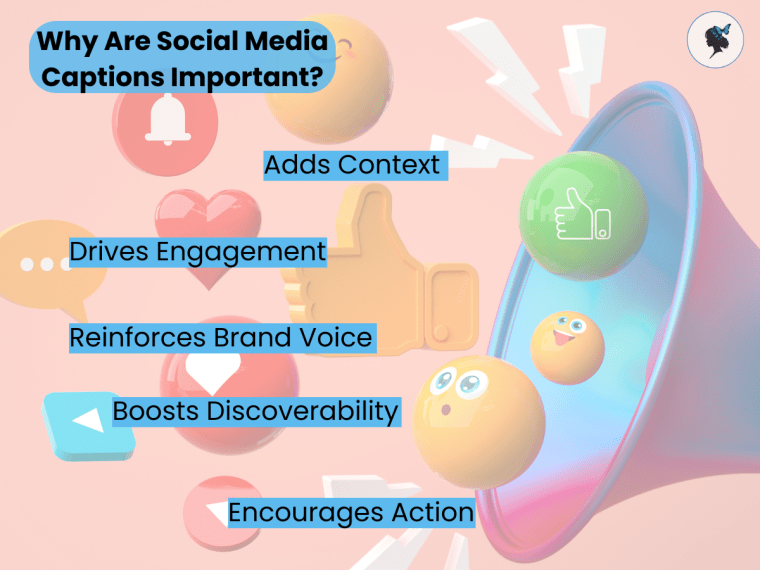
Infograph: Why are social media captions important?
Why are social media captions important?

A well-crafted caption is much more than filler text. It serves several crucial purposes:

1. Adds Context

A picture might be worth a thousand words, but captions provide clarity. They give your audience the backstory, explain your intent, or highlight details that may not be immediately obvious in the visual.

2. Drives Engagement

Captions can spark conversations, inspire likes, and encourage shares. By asking questions, including CTAs, or sharing relatable anecdotes, you create opportunities for your audience to interact with your post.

3. Reinforces Brand Voice

Your caption is an extension of your brand’s personality. Whether your tone is witty, professional, inspirational, or playful, captions help maintain consistency and deepen your connection with your audience.

4. Boosts Discoverability

Strategic use of hashtags and mentions can amplify your post’s reach. Hashtags make your content searchable, while mentions allow you to engage with other users or brands directly.

5. Encourages Action

From clicking a link to visiting your website, signing up for a newsletter, or attending an event, captions can guide your audience toward specific actions that align with your goals.

Elements of a Great Social Media Caption

What makes a caption stand out?

While there’s no one-size-fits-all formula, great captions often share the following traits:

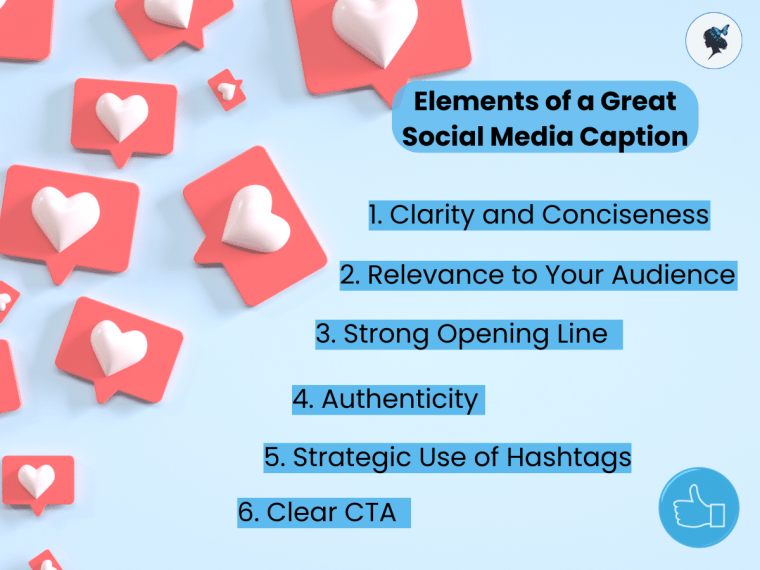
Infograph: Elements of a great social media caption
Elements of a great social media caption

1. Clarity and Conciseness

Keep your message straightforward and easy to understand. People scroll quickly, so make your point early and effectively.

2. Relevance to Your Audience

Understand your audience’s interests, challenges, and preferences. A relatable caption resonates better and encourages interaction.

3. Strong Opening Line

The first few words are crucial for grabbing attention. Use hooks like intriguing questions, bold statements, or compelling facts to draw readers in.

4. Authenticity

Be genuine. Audiences value transparency and are quick to spot insincerity.

5. Strategic Use of Hashtags

Research trending or niche hashtags relevant to your content. Avoid overloading your caption with hashtags; 3-5 well-chosen ones often work best.

6. Clear CTA

What do you want your audience to do after reading your caption? Whether it’s to comment, share, or visit a link, make your CTA direct and compelling.

The importance of clear CTAs.

Examples of Captions by Platform

Different platforms have different norms and audiences, so your caption style may vary:

  • Instagram: Often more personal and storytelling-driven. Example: “A day in the life of a coffee lover. What’s your favorite morning ritual?”
  • Twitter (X): Concise and impactful due to character limits. Example: “Breaking news: Our new product launches tomorrow! #Innovation”
  • LinkedIn: Professional and informative. Example: “Excited to share our latest report on workplace trends. Download it here: [link].”
  • TikTok: Fun and playful to match the platform’s tone. Example: “POV: You realize it’s Friday and your weekend plans just got canceled #WeekendVibes”

Read our thoughts on the best social media platforms in 2025.

Final Thoughts

While visuals draw attention, captions hold the power to engage and convert. They’re your opportunity to share your story, showcase your personality, and build a relationship with your audience. Whether you’re a brand, an influencer, or an everyday user, investing time and thought into your captions can transform your social media presence from good to unforgettable.

Need help with your Social Media Strategy? Contact us to see how we can help!