
▶ Table of Contents
Introduction
A well-crafted travel itinerary is more than just a schedule—it’s a powerful sales tool that inspires travelers to book their next adventure with you. Itineraries that clearly communicate value, excitement, and practical details can significantly boost bookings and improve customer satisfaction. According to a study by Skift, travelers are researching longer, and prefer detailed itineraries before committing to a trip, making your itinerary writing skills critical for success.
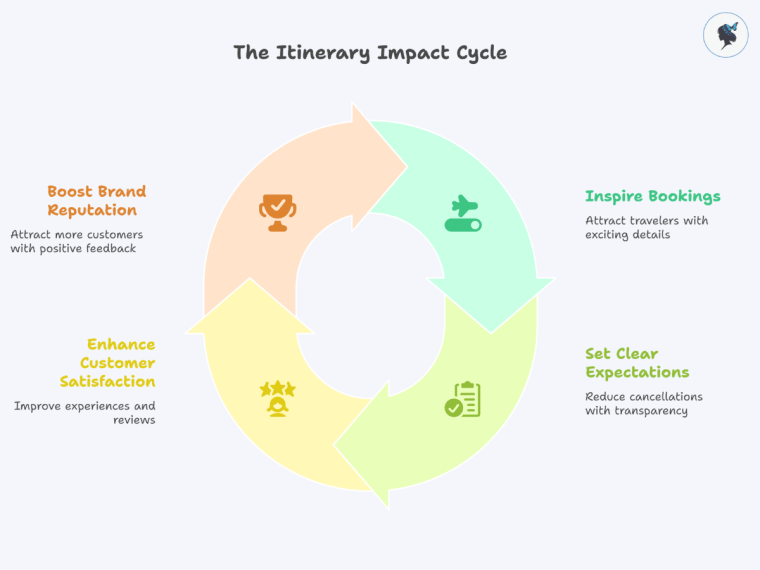
In addition to influencing booking decisions, effective itineraries help set clear expectations, reducing last-minute cancellations and dissatisfaction. When travelers know exactly what to expect, they are more likely to enjoy their trip and leave positive reviews, which in turn attracts more customers. Therefore, the quality of your itinerary impacts not only sales but also your brand reputation and customer loyalty.
Know Your Audience
Before drafting an itinerary, understand who you’re writing for. Different traveler types have different priorities—families may prioritize safety and kid-friendly activities, solo travelers might seek social experiences, and adventure seekers want thrill and exploration. Tailor your itineraries accordingly by researching traveler demographics and preferences. Tools like Google Analytics and social media insights can provide valuable audience data. Meeting traveler expectations at this level creates trust and relevance.
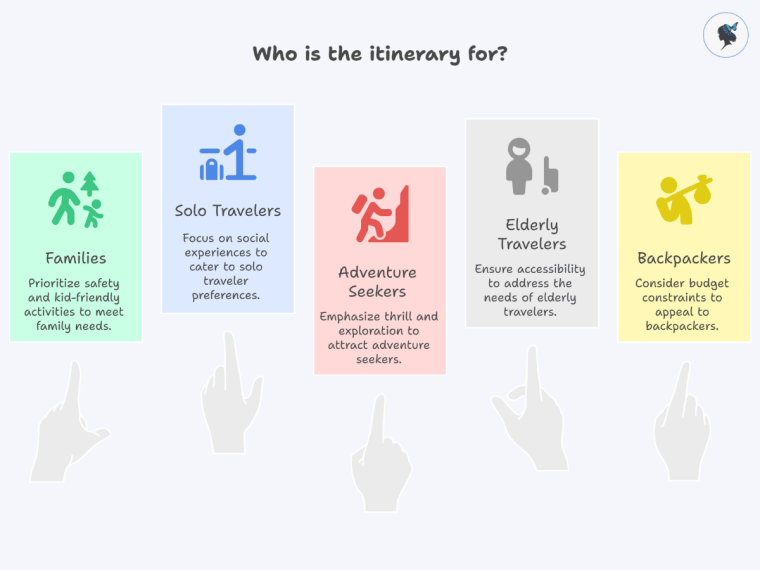
Moreover, understanding your audience enables you to address specific pain points, such as accessibility for elderly travelers or budget constraints for backpackers. Personalizing itineraries for these needs demonstrates empathy and expertise, which enhances the perceived value of your offerings. This approach can also help you segment your marketing efforts, making it easier to reach and convert distinct traveler groups effectively.
Read our post: the complete digital marketing funnel for travel.
Create a Clear and Logical Structure
Structure your itinerary so it’s easy to follow and visually appealing. Break it down by days or by activities, with clear headings and bullet points. Including estimated times for each activity, transportation info, and rest periods helps travelers visualize their experience. According to Nielsen Norman Group, users scan web content, so breaking text into digestible chunks improves readability. A logical flow ensures travelers feel confident and informed about their plans.
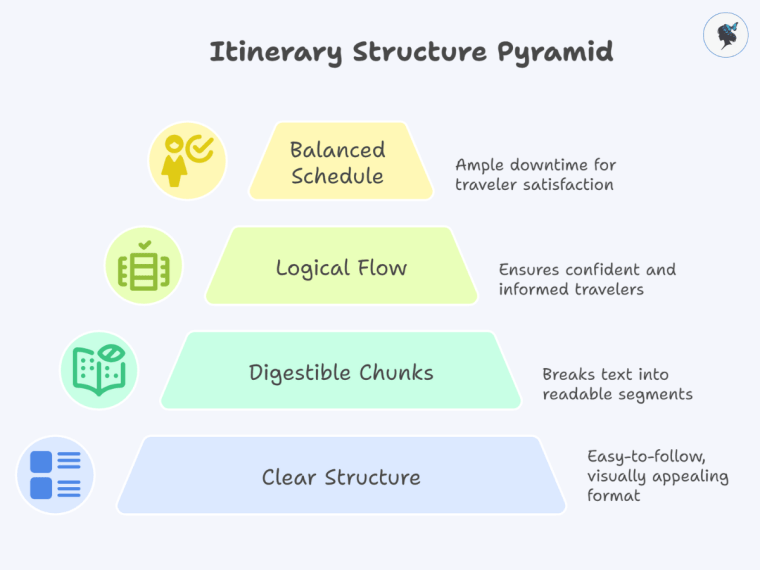
A well-organized itinerary also aids in setting a comfortable travel pace, which is crucial for traveler satisfaction. Overloading a day with too many activities can lead to fatigue, while too few can cause boredom. Providing a balanced schedule with ample downtime signals professionalism and care, reassuring travelers that their wellbeing is a priority.
Use Engaging and Persuasive Language
Bring your itinerary to life with vivid, sensory language that paints a picture. Instead of “Visit the beach,” say “Relax on the pristine white sands of Clearwater Beach, soaking up the golden sun.” Highlight unique features or exclusive experiences that set your offering apart. Use action verbs and focus on benefits like relaxation, adventure, or cultural immersion. Persuasive language taps into traveler emotions and helps turn interest into bookings.
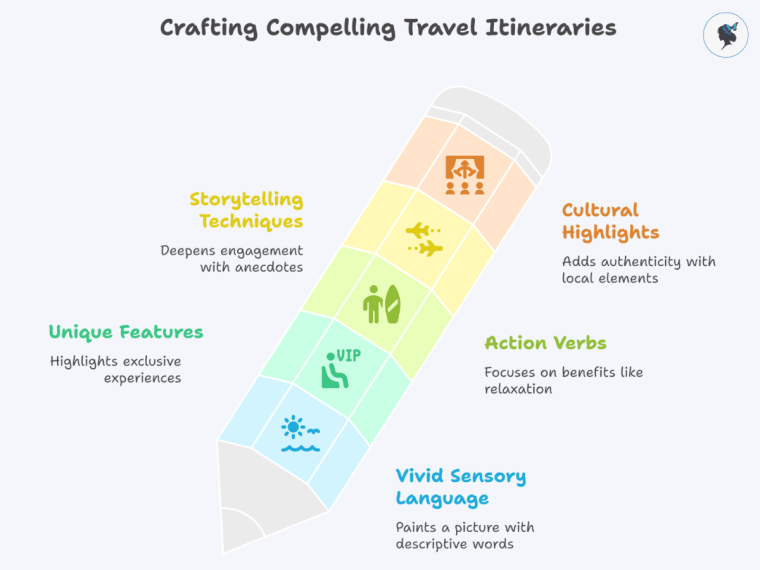
Using storytelling techniques, such as describing a typical day or sharing anecdotes from past travelers, can deepen engagement. When travelers emotionally connect with the itinerary, imagining themselves in those scenarios, they are more inclined to make a purchase. Including local cultural highlights or personal touches adds authenticity that differentiates your itineraries from generic ones.
Include Practical Information
Beyond excitement, travelers need practical details to feel secure. Include transport options, accommodation details, meal arrangements, estimated costs, booking deadlines, and cancellation policies. Adding insider tips—like the best time to visit a site or local customs—adds extra value. Practical info reduces uncertainty, which is a major booking barrier.
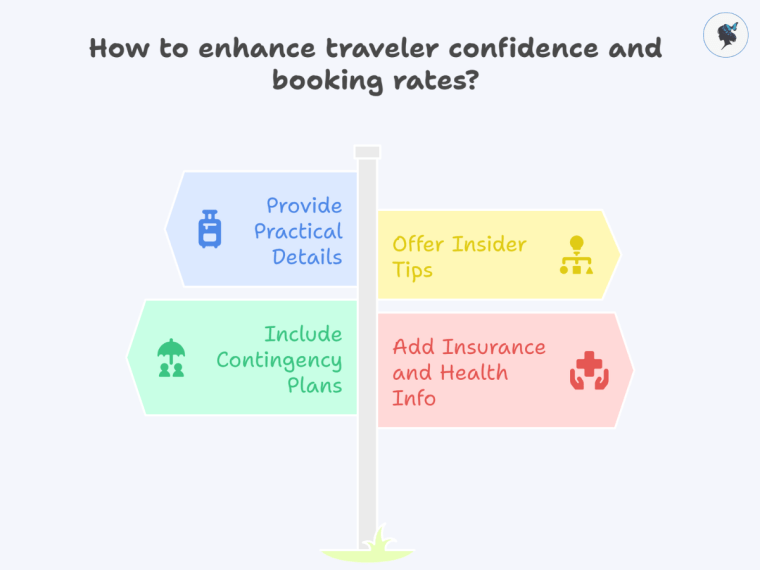
Providing contingency plans, such as alternatives during bad weather or emergency contacts, further reassures travelers. Including information on travel insurance or health requirements can also build trust and professionalism. The more transparent and comprehensive your itinerary, the more travelers feel confident booking through you rather than competitors.
Incorporate Visual Elements
Visuals make itineraries more engaging and easier to understand. Add high-quality images of destinations, maps outlining routes, or icons indicating meal inclusions, activity difficulty, or accessibility. Interactive or downloadable PDFs enhance usability and shareability. Visual cues support comprehension and appeal to different learning styles, increasing the chances that travelers will connect with your offering.
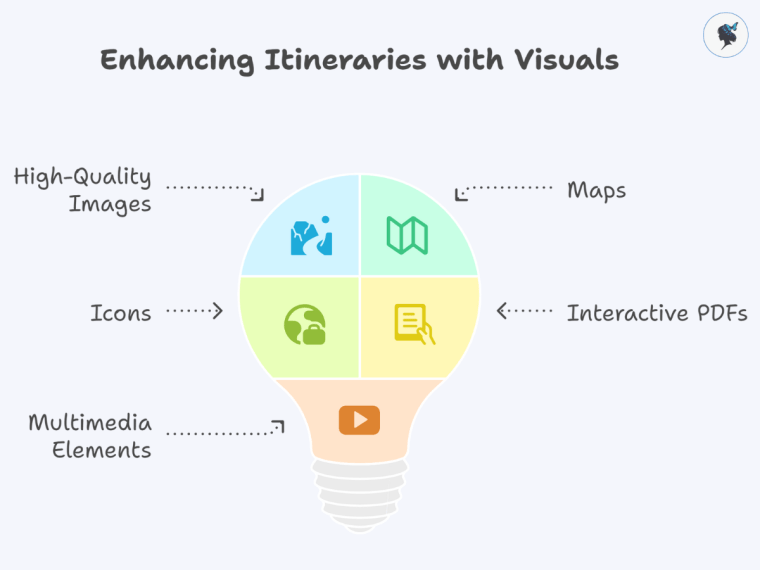
Incorporating multimedia elements like short videos or virtual tours can further enhance the experience, especially for digital-savvy travelers. These elements not only make your itinerary stand out but also help travelers get a real sense of the destinations and activities, increasing excitement and trust in your brand.
Read our post: the power of visual content.
Address Common Traveler Questions and Concerns
Anticipate and answer typical questions such as safety measures, weather expectations, packing recommendations, and optional activities. Offering alternatives or flexible options helps travelers customize their experience, making your itinerary more appealing. Transparency builds trust—travelers appreciate when you openly address potential concerns. Including an FAQ section can improve satisfaction and reduce pre-booking anxiety.
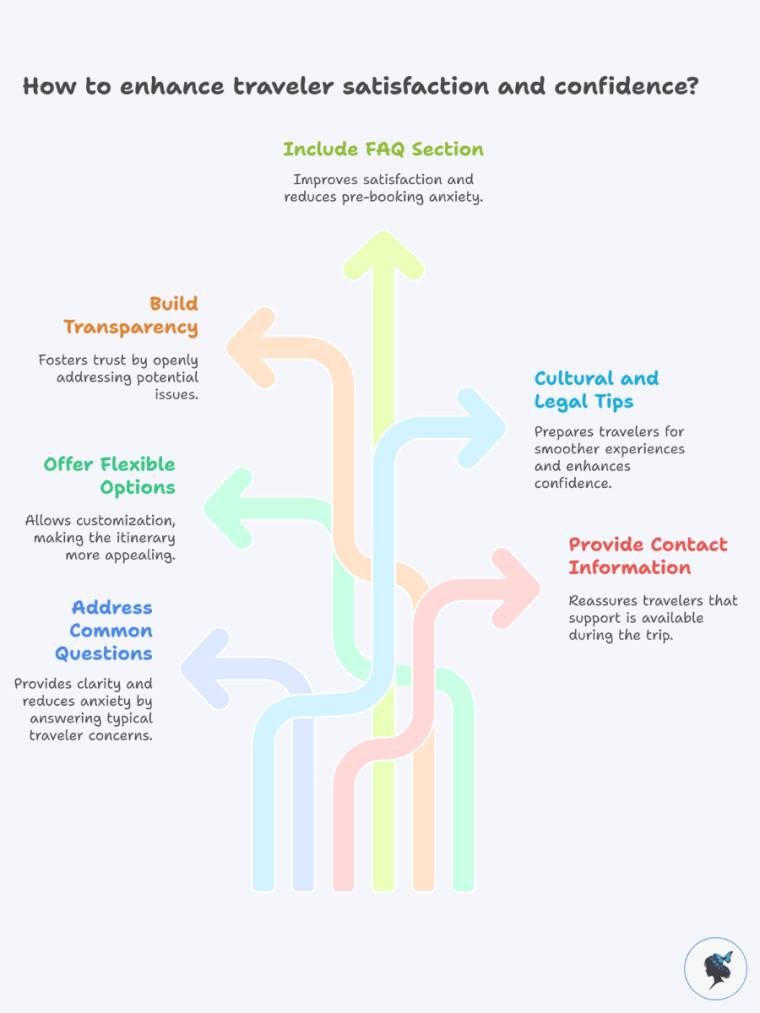
Additionally, addressing cultural sensitivities, local laws, and language tips can prepare travelers for smoother experiences, enhancing their confidence in your expertise. Providing contact information for support during the trip further reassures travelers that help is available when needed, which can be a decisive factor in booking.
Call to Action and Booking Information
End your itinerary with a clear and compelling call to action (CTA). Encourage travelers to book now, request more info, or customize their trip. Provide contact details, booking links, or next steps so the decision-making process is simple and straightforward. Effective CTAs have been shown to increase conversions when placed strategically. Don’t miss this crucial step to close the sale.
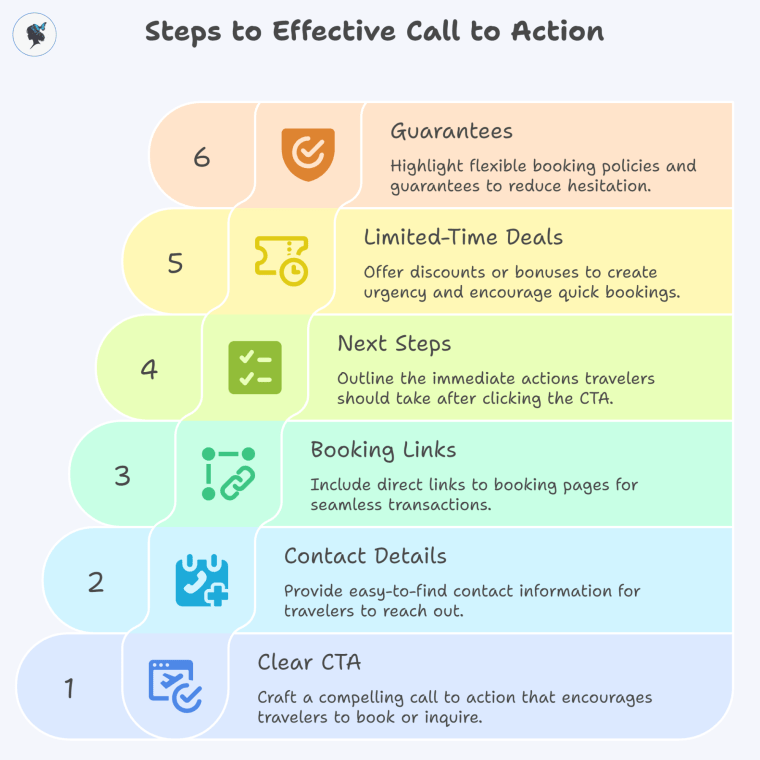
Consider also offering limited-time deals, early bird discounts, or bonuses for quick bookings in your CTA to create urgency. Highlighting guarantees or flexible booking policies alongside your CTA can reduce hesitation and make travelers feel more comfortable committing immediately.
Check out: the importance of clear CTAs.
Review and Test Your Itinerary
Before publishing, proofread your itinerary carefully for accuracy, clarity, and tone. Getting feedback from colleagues, past travelers, or a focus group can uncover improvements. Regularly update your itineraries based on seasonal changes, new experiences, or traveler feedback. Continuous refinement keeps your content fresh, relevant, and effective in converting leads.
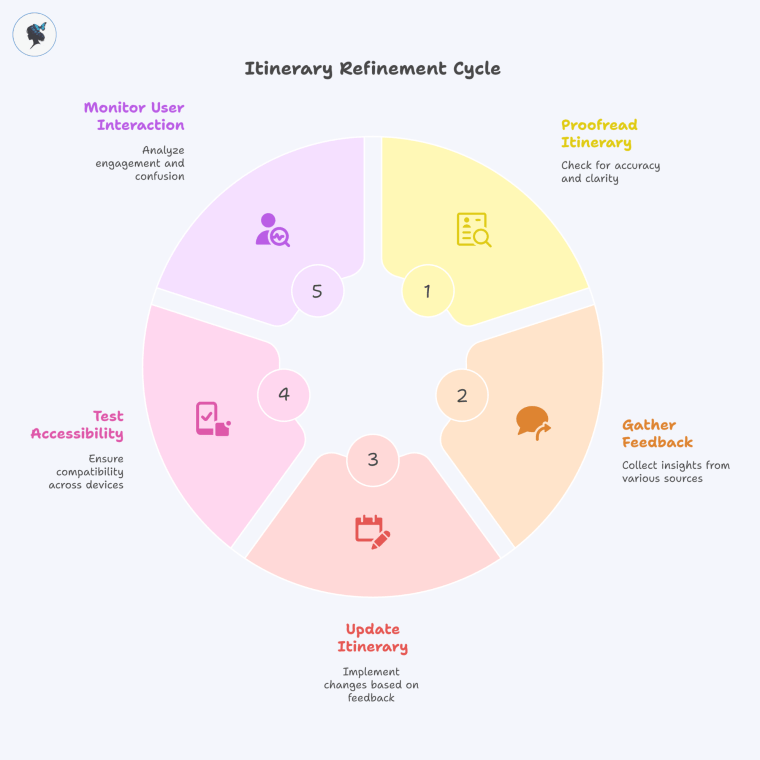
Testing your itinerary in different formats (desktop, mobile, PDF) ensures accessibility across platforms, as travelers often access itineraries on multiple devices. Monitoring user interactions and feedback also helps identify which sections are most engaging or confusing, enabling you to optimize accordingly.
Conclusion
Writing travel itineraries that sell requires a blend of audience insight, clear structure, vivid storytelling, practical details, and strong calls to action. When done right, itineraries do more than inform—they excite, reassure, and motivate travelers to book. By continuously improving your itineraries based on feedback and trends, you can enhance your travel business’s appeal and drive sustained growth.
Remember, your itinerary is often the first detailed impression a traveler has of your service. Investing time and effort into perfecting it not only increases bookings but also fosters loyalty and referrals, helping your travel brand thrive in a competitive market.
Need help? Contact us today!
