

▶ Table of Contents
- Introduction
- 1. Algorithm Updates Can Instantly Impact Your Rankings
- 2. Travel Trends and Keywords Shift Frequently
- 3. Broken Links and Redirect Errors Erode User Experience
- 4. Mobile Experience Is More Important Than Ever
- 5. Page Speed Directly Impacts Conversions
- 6. Duplicate Content Can Confuse Search Engines
- 7. Local SEO Issues Block Visibility in Key Markets
- 8. Competitor Strategies Are Always Evolving
- 9. Technical SEO Problems Often Go Unnoticed
- 10. Consistent Audits Drive Long-Term Growth
- Conclusion
Introduction
In a hyper-competitive digital travel marketplace, visibility equals viability. Whether you’re running a boutique hotel, tour operator, or destination marketing organization, showing up in the right search results can make the difference between a fully booked season and empty rooms. However, travel trends, search engine algorithms, and consumer behavior are constantly evolving. What ranked on page one last year might be buried on page three today.
That’s where regular SEO audits come in. Think of them as a health check-up for your website’s visibility, performance, and relevance. Just like your travelers wouldn’t set off on a multi-country adventure without some planning and route checks, your site shouldn’t go months without evaluating its path to traffic and conversions.
In this post, we’ll walk you through 10 compelling reasons why regular SEO audits are essential for long-term success in the travel industry. Plus, we’ll show how they tie directly into your bottom line and brand growth.
1. Algorithm Updates Can Instantly Impact Your Rankings
Search engine algorithms determine where your pages rank in search results, and updates to these algorithms can cause sudden changes in visibility. Search engines like Google update their algorithms frequently, and sometimes those changes are significant. A single update can alter how your pages rank, penalize outdated practices, or prioritize new ranking signals such as Core Web Vitals.
65% of marketers saw a significant impact on traffic due to algorithm updates. This indicates that relying on outdated strategies is risky—especially in fast-moving sectors like travel.
Use Google Search Console to monitor your site’s performance around algorithm updates. Log into your account and navigate to the Performance tab. Within the Pages section, you can pinpoint which URLs gained or lost visibility. Next, head to Indexing > Pages to uncover excluded or error-prone pages that may be affecting rankings. Finally, review the Core Web Vitals and Page Experience reports to assess if user experience metrics like load time or interactivity are dragging down your performance.
A luxury villa rental site in Bali saw a 35% drop in organic traffic after a Google core update emphasized mobile performance. An audit revealed poor mobile responsiveness on landing pages, which was quickly fixed, helping traffic recover within six weeks.
Regular audits ensure you adapt quickly to algorithm changes, avoiding sudden drops in visibility that can hurt your travel bookings.
2. Travel Trends and Keywords Shift Frequently
Keyword trends reflect what your audience is searching for, and these trends shift with seasons, news, and emerging destinations. People search differently throughout the year—”summer getaways” become “winter escapes”. Keyword trends also change as new destinations become hot spots and travel habits evolve.
A report from TravelPerk notes that 72% of travelers preferred to book their trips online. This shift towards digital platforms underscores the importance of online presence and searchability for travel businesses.
Use Google Trends to explore current keyword popularity in your region. Type in phrases like “remote travel” or “digital nomad destinations” and compare them across countries or time periods.
During the rise of “workcations,” a remote travel agency adjusted its content strategy based on audit insights to focus on long-stay and coworking-friendly destinations, increasing qualified leads by 40%.
Audits help you align your content with current traveler intent, giving you a better chance of being found at the right time.
3. Broken Links and Redirect Errors Erode User Experience
Broken links and improper redirects confuse search engines and create poor user experiences, potentially causing traffic and ranking losses. Travel sites are often updated with new tours, hotels, or itinerary pages. Over time, outdated or deleted pages can lead to broken internal links or redirect chains, which frustrate users and hurt SEO.
A study by Semrush found that 42.5% of websites have broken internal links, identifying broken pages as one of the top technical SEO issues affecting performance.
Use Screaming Frog SEO Spider (free up to 500 URLs) to crawl your website and locate broken links and redirect chains. Download the report to prioritize high-traffic pages.
A UK-based walking tour operator discovered hundreds of broken links to seasonal pages no longer active. After cleaning up through an audit, bounce rate dropped by 19%.
Clean site architecture boosts both usability and rankings, making it easier for potential travelers to book with you.
4. Mobile Experience Is More Important Than Ever
Mobile usability includes load time, navigation, and content layout—all crucial for SEO and conversions. More than 70% of travel research and over half of bookings happen on mobile devices. An audit uncovers whether your site is mobile-optimized and if not, what’s causing performance issues.
Think with Google suggests that 67% of smartphone users are more likely to purchase from companies whose mobile sites or apps allow them to find answers quickly.
Use Google’s Mobile-Friendly Test to identify mobile issues. Simply enter your URL and get instant feedback on whether your page passes Google’s mobile criteria, along with suggestions for improvement.
A Costa Rican eco-lodge site optimized its mobile layout and reduced load time after audit findings, which led to a 28% increase in mobile bookings in two months.
Mobile audits are essential for conversion-focused design, especially when so many travelers are researching and booking on the go.
5. Page Speed Directly Impacts Conversions
Page speed measures how quickly content loads on your site and directly affects bounce rates and SEO rankings. Speed is a major Google ranking factor and a crucial part of user experience. Slow sites lead to lost opportunities—especially when users are planning their dream vacations.
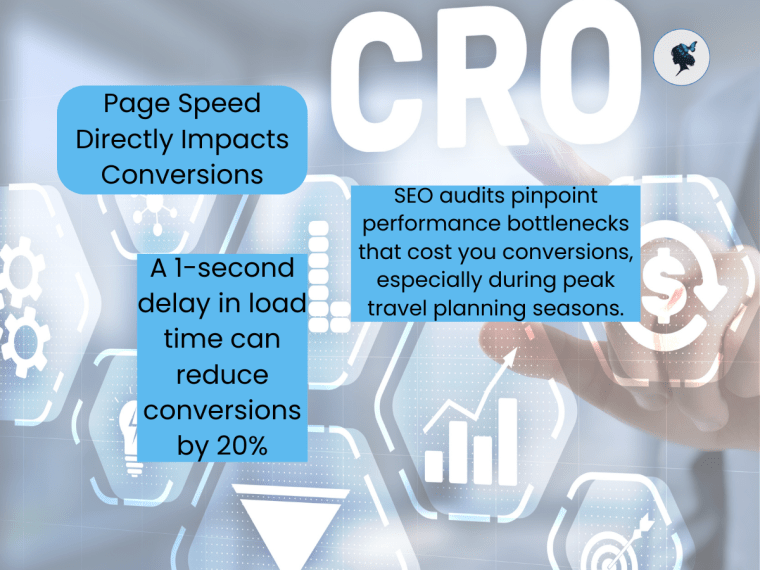
A 1-second delay in load time can reduce conversions by 20%, which could mean thousands in lost revenue for travel sites.
Use Google PageSpeed Insights to identify and fix speed issues. Paste your URL and review suggestions under the “Opportunities” and “Diagnostics” tabs.
A Caribbean cruise site improved its average page load time by 3 seconds, leading to a 15% increase in bookings.
SEO audits pinpoint performance bottlenecks that cost you conversions, especially during peak travel planning seasons.
You might like our post on website speed optimization.
6. Duplicate Content Can Confuse Search Engines
Duplicate content is identical or very similar content that appears on multiple pages, confusing search engines and weakening rankings. Travel sites often copy supplier-provided content or republish the same descriptions across multiple pages.
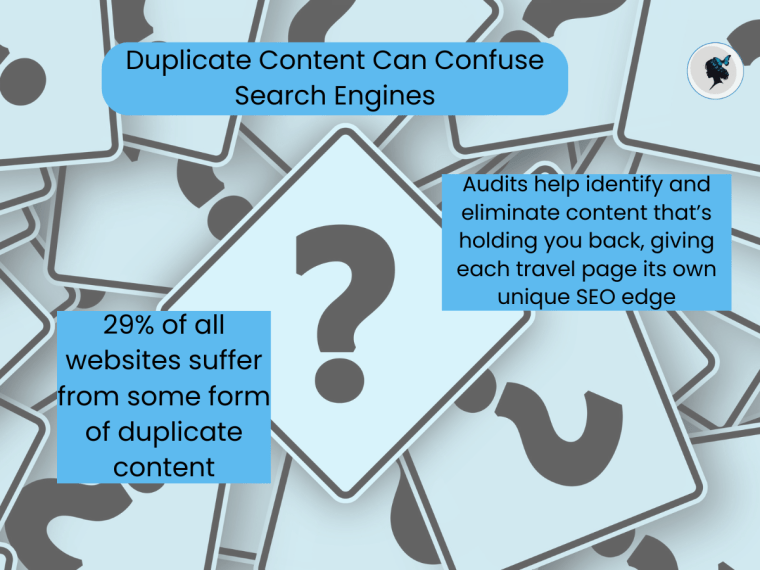
MoldStud suggests that approximately 29% of all websites suffer from some form of duplicate content, which can significantly impact SEO performance.
Use Siteliner to find duplicate content within your domain. Scan your site and export the report to identify pages that need rewriting.
A multi-destination trip planner was penalized for repeating the same itinerary blurbs across city pages. A content audit fixed this with unique, intent-aligned text.
Audits help identify and eliminate content that’s holding you back, giving each travel page its own unique SEO edge.
7. Local SEO Issues Block Visibility in Key Markets
Local SEO refers to optimizing your website to appear in geographically relevant searches, which is vital for location-based travel businesses. Regular audits assess NAP consistency, local citations, and optimization of your Google Business Profile.
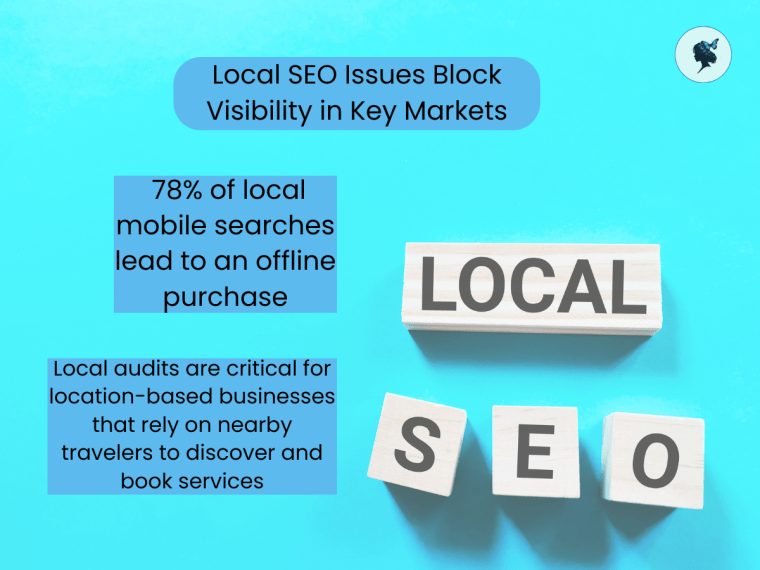
Bright local consumer review survey found that 78% of local mobile searches lead to an offline purchase—crucial for hotels, tours, and attractions.
Use Moz Local (not a free tool) to check and fix local listing issues. Enter your business info and review consistency across directories like Yelp, TripAdvisor, and Google Maps.
A boutique hotel in Lisbon wasn’t ranking for key local searches until an audit uncovered inconsistent address listings across directories. Fixing these led to a 22% rise in local search visibility.
Local audits are critical for location-based businesses that rely on nearby travelers to discover and book services.
Read our post: the ultimate guide to Local SEO.
8. Competitor Strategies Are Always Evolving
Competitor SEO analysis helps you identify what others in your niche are doing well and what opportunities you can capitalize on. Regular audits include competitive analysis to identify gaps, opportunities, and new content ideas that keep you ahead.
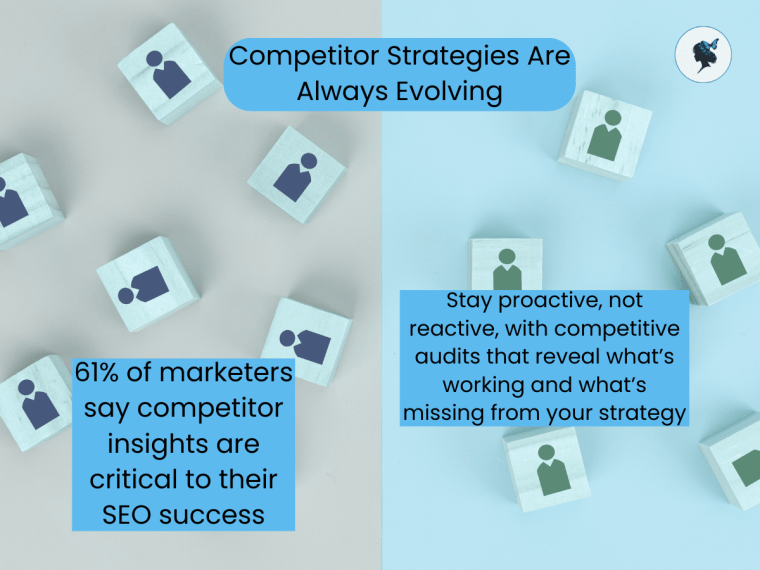
61% of marketers say competitor insights are critical to their SEO success, and in travel, new competitors emerge constantly.
Use Ubersuggest (free version) to track competitors’ keywords and content. Enter a competitor’s domain to see which pages perform best and what keywords they rank for.
A safari tour company discovered that a competitor was outranking them using FAQ schema and user-generated content. After adopting a similar strategy, the company regained its top-3 ranking.
Stay proactive, not reactive, with competitive audits that reveal what’s working and what’s missing from your strategy.
For tips about your competitors, check out our post: competitor identification.
9. Technical SEO Problems Often Go Unnoticed
Technical SEO includes elements like indexing, crawling, site structure, and metadata that support how well your site is understood by search engines. Issues like missing meta tags, improper hreflang implementation, crawl errors, or bloated sitemaps can limit your site’s performance without you realizing it.
A study by Conductor found that 44% of organizations reported over three high-impact SEO incidents on their most important pages in the last year. These incidents often go unresolved for weeks, potentially costing companies more than $10,000 in revenue.
Use Ahrefs Webmaster Tools (free account) to check for technical SEO issues. The tool flags crawl errors, missing metadata, and URL problems.
A travel blog with strong backlinks struggled to rank. An audit revealed conflicting canonical tags and blocked pages in the robots.txt file. Fixing these technical issues led to a 3x boost in traffic.
Even great content can fail without a healthy technical foundation, so audits keep your travel site structurally sound.
10. Consistent Audits Drive Long-Term Growth
Ongoing SEO evaluation ensures your site keeps up with digital changes, new competition, and evolving user behavior. SEO is not a set-it-and-forget-it tactic. The best travel brands treat it like a system—reviewing performance monthly or quarterly, acting on data, and optimizing iteratively.
7 Eagles report that regular SEO audits can boost organic traffic by as much as 61%, reduce bounce rates by up to 50%, and increase average time spent on site by 20-40%.
Set up automated monthly reports with Google Looker Studio (formerly Data Studio). Connect your Google Analytics and Search Console to monitor key KPIs.
A regional tourism board committed to quarterly SEO audits. In one year, they improved traffic by 87%, reduced their dependency on paid ads, and saw increased international bookings.
Growth compounds with consistent attention and action, and in travel, that consistency can lead to all-season success.
Conclusion
A travel website isn’t just a digital brochure—it’s your best salesperson, travel agent, and concierge rolled into one. But if it’s not regularly evaluated and optimized, you’re leaving opportunities on the table.
Regular SEO audits give you the insights and agility needed to respond to change, improve performance, and secure your position in a rapidly evolving travel market. From catching technical errors to seizing new keyword trends, audits are your map to sustainable growth.
Want to know how your travel website is really performing?
Wander Women Strategies offers free SEO audits specifically tailored for the travel industry. Our audits go beyond the basics to uncover hidden opportunities that drive bookings and build brand authority.
Request your free SEO audit today and start turning traffic into travelers.
Discover more from Wander Women Strategies
Subscribe to get the latest posts sent to your email.
