
▶Table of Contents
Introduction
In today’s competitive travel blogging space, beautiful imagery and engaging storytelling are essential, but they’re not enough to get your blog noticed. To attract more readers organically, travel bloggers must embrace search engine optimization (SEO) strategies—specifically, the use of location-based keywords. These keywords help your content appear in front of people searching for travel tips about specific places. This guide walks you through six key steps to optimizing your travel blog using location-based SEO techniques, complete with practical examples, relevant statistics, and real-world insights.
Step 1: Conduct Comprehensive Keyword Research
Keyword research is the process of finding and analyzing terms that people enter into search engines when looking for travel-related content. For location-based SEO, the goal is to find keywords that include specific destinations, such as “backpacking Bali,” “things to do in Lisbon,” or “family vacation in Banff.”
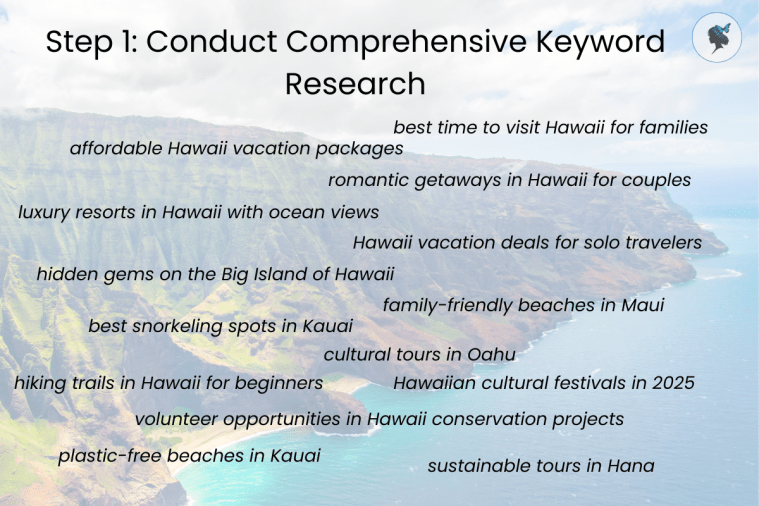
Targeting the right location-specific keywords ensures that your blog posts appear in front of users searching for exactly what you offer. It aligns your content with user intent and drives qualified traffic to your site.
WordStream highlights that 46% of all Google searches are seeking local information, and 28% of local searches result in a purchase within 24 hours. These statistics underscore the importance of optimizing your content with location-specific keywords to enhance visibility in local search results.
“The Hawaii Vacation Guide” blog ranks highly for terms like “best time to visit Maui” and “Oahu travel tips” because it may use targeted keyword research tools such as Google Keyword Planner and Ubersuggest to pinpoint what travelers are searching for.
Step 2: Optimize On-Page Elements
On-page optimization refers to the practice of tweaking individual web pages to rank higher in search engines. This includes placing keywords in strategic areas such as titles, meta descriptions, headers, image alt text, and URLs.

These elements help search engines understand the topic and relevance of your content. They also improve the user experience, encouraging more clicks and longer time spent on your site.
According to a recent study by BrightLocal, 78% of local mobile searches result in an offline purchase, and nearly 60% of users click on the top three local search results.
“Spotted by Locals” includes destination names in their H1 tags, meta descriptions, and slugs (e.g., /athens/local-guide). This targeted use of keywords helps the blog appear in search results for specific cities.
Step 3: Create High-Quality, Location-Specific Content
This involves writing in-depth blog posts, guides, itineraries, and personal stories centered around specific destinations. The content should include natural mentions of the location, helpful tips, and experiences relevant to the region.
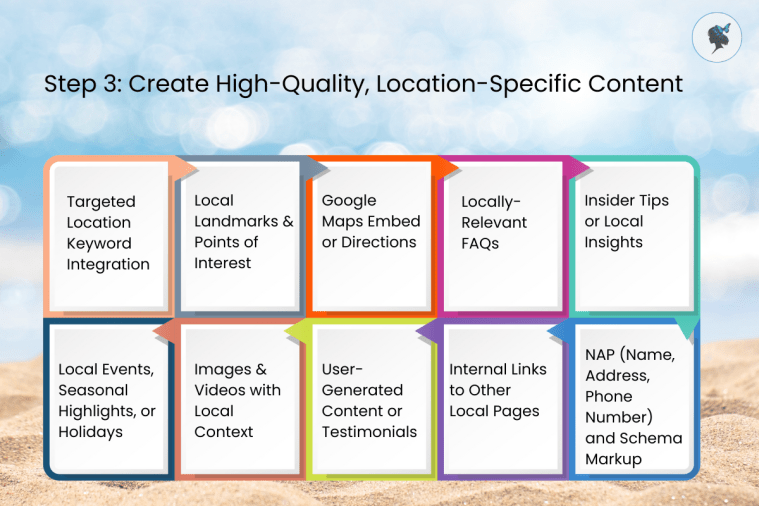
Quality location-based content provides value to your audience, which increases dwell time, engagement, and the likelihood of being linked to by other websites.
For instance, a study by BrightLocal revealed that 94% of high-performing brands have a dedicated local marketing strategy, compared to 60% of average-performing brands.
“Salt in Our Hair” is a travel blog that creates exhaustive guides such as “10-Day Sri Lanka Itinerary” or “Ultimate Guide to Nusa Penida.” Each post is full of local insights, maps, and tips—and ranks well because of its depth and relevance.
Step 4: Leverage Internal and External Linking
Internal linking connects related blog posts within your website, while external linking references reputable sources elsewhere on the web. Both enhance the authority and SEO structure of your blog.
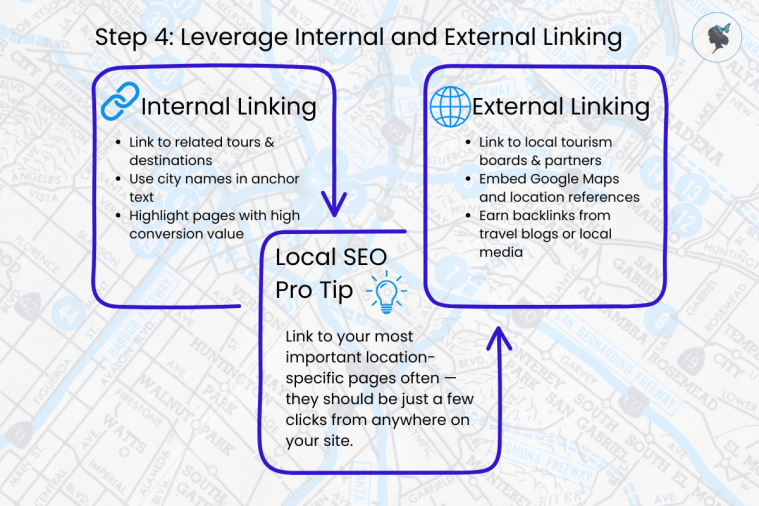
Linking helps search engines crawl your site more effectively, keeps users engaged by pointing them to related content, and boosts your blog’s credibility.
Inbound links to Google Business Profile (GBP) landing page URLs from locally-relevant domains have increased by 257%, according to a study by whitespark. While overall link quantities are declining, local and industry-relevant links are becoming more valuable for boosting rankings.
“Nomadic Matt” uses internal links to guide readers through related posts (e.g., linking from “Things to Do in Bangkok” to “Bangkok Budget Guide”). He also links to trusted sources like Lonely Planet, reinforcing the credibility of his content.
Step 5: Utilize Local SEO Strategies
Local SEO involves optimizing your blog for search queries that include geographic location, such as city names, landmarks, or regions. Techniques include creating Google Business profiles (for tour services), embedding maps, and using structured data.
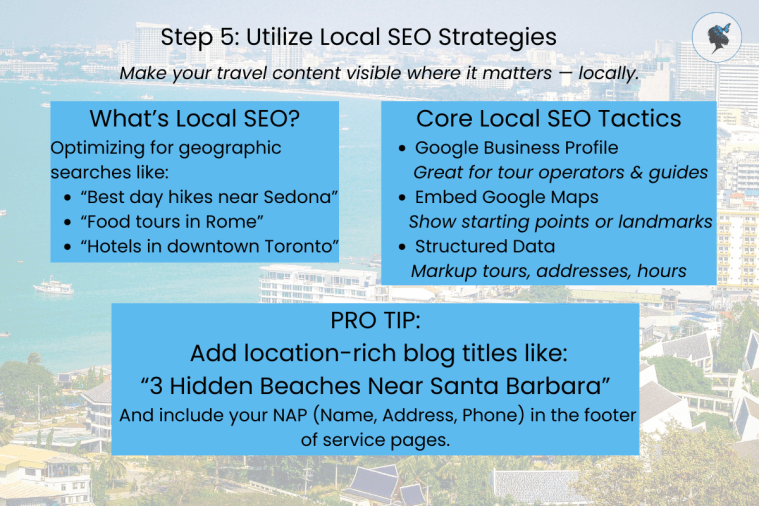
Local SEO makes your blog more discoverable by users planning trips to specific places. It increases your chances of appearing in “near me” or geo-targeted search results.
Locally.net.au emphasizes the importance of creating localized content and optimizing for local SEO to enhance visibility and engagement. Implementing strategies such as geotagging images, writing about local events, and crafting blog posts specific to each area can help boost engagement with potential customers and increase visibility on localized searches.
“Travel HerStory” optimizes her destination posts with embedded Google Maps, regional tags, and FAQs that reflect common local queries, such as “Is Santorini safe for solo female travelers?”
Step 6: Monitor Performance and Adjust Accordingly
Performance monitoring involves tracking key SEO metrics such as keyword rankings, bounce rate, average time on page, and click-through rates using tools like Google Analytics and Search Console.
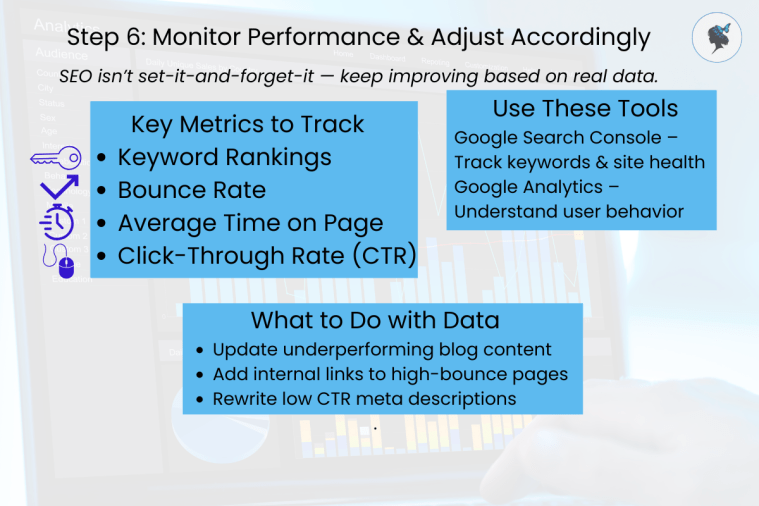
Regular analysis allows you to identify which strategies are working and which ones need adjustment. It ensures your SEO efforts are continuously aligned with your audience’s needs and current search trends.
Search Engine Journal emphasizes the importance of regularly updating and improving existing content to boost traffic. This includes cataloging content, scoring its performance, and making necessary improvements to enhance its effectiveness.
“Dan Flying Solo” uses performance data to revise underperforming posts and boost top-performing ones with additional details, new keywords, or fresh photos—keeping content evergreen and competitive.
By applying these six SEO strategies consistently, travel bloggers can significantly improve their organic visibility, attract more engaged readers, and establish themselves as go-to sources for location-specific travel advice. SEO is not a one-time effort but a continuous process of research, optimization, and refinement.
Need help with your SEO strategy? Check out our services!
Contact us to see how we can help your travel brand soar!
Discover more from Wander Women Strategies
Subscribe to get the latest posts sent to your email.

5 thoughts on “How to Optimize Your Travel Blog for Location-Based Keywords”
Comments are closed.