
▶Table of Contents
Introduction
For travel companies, one of the most powerful SEO strategies is the ability to target local search intent. Whether you’re a boutique hotel in Bali, a family-owned tour company in Paris, or a local travel agency offering day trips in New York City, focusing on local keywords can give your business a competitive edge. In this article, we’ll dive into local keyword focus, explain why it’s crucial for travel businesses, and provide actionable steps on how to implement it successfully.
If you want your travel business to stand out in local searches and attract tourists who are searching for specific, location-based experiences, then it’s time to pay attention to local SEO. Let’s take a closer look at this concept and how it can skyrocket your bookings.
What is Local Keyword Focus?
Local keyword focus refers to the practice of incorporating location-specific keywords into your SEO strategy in order to attract visitors who are searching for travel services or experiences in particular geographical areas. These keywords not only include the city or region you’re based in but also add variations based on tourist attractions, destinations, and local experiences travelers are searching for.
For example, if you’re running a tour company in Rome, instead of just targeting broad terms like “Italy tours,” you would focus on specific, location-based phrases like:
- “Rome city tours”
- “Best Rome walking tours”
- “Private tours in Rome”
- “Rome sightseeing tours for families”

By using location-based keywords, you can make sure your content ranks higher in searches from people looking for services in your specific area, improving your visibility and attracting travelers who are interested in your offerings.
Why Local Keywords Matter
Local keywords are highly effective because they match the search intent of users looking for businesses, activities, or services nearby. Today, local search is a dominant force in consumer behavior, and more than 75% of mobile searchers visit a business within 24 hours of making a local search.
For travel companies, this means the potential to increase foot traffic, bookings, and brand awareness among travelers who are already in the area or planning to visit. By focusing on local keyword optimization, you can ensure that your business shows up in searches by travelers who need local services or recommendations—whether it’s hotels, guided tours, transportation, or dining experiences.
How to Do Local Keyword Focus?
To implement local keyword focus successfully, you need a well-planned approach that includes research, on-page SEO, and the use of the right tools to track and optimize local search.
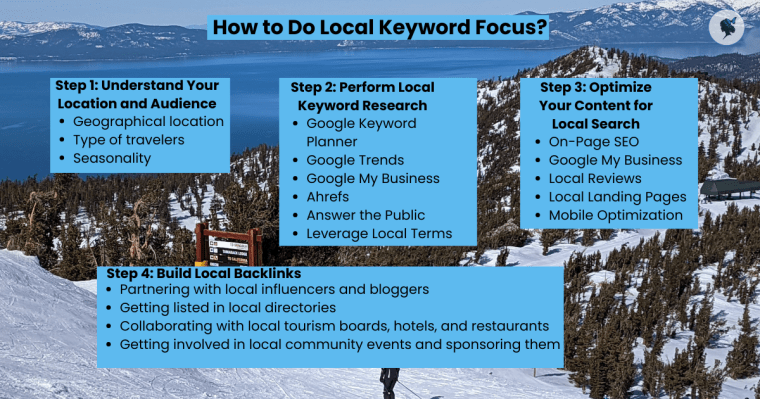
Here’s a step-by-step guide to help you get started:
Step 1: Understand Your Location and Audience
The first step in local keyword focus is understanding your target location and the types of travelers who visit or plan to visit that location. Key factors to consider include:
- Geographical location: Identify the city, region, country, or specific tourist attractions where your business operates. You may even want to focus on neighborhoods or landmarks in your area to capture searchers who are specifically looking for services near those locations.
- Type of travelers: Consider the types of tourists your services attract. Are they luxury travelers, families, adventure seekers, or cultural tourists? Tailoring your keywords to these demographics will help you target the right audience.
- Seasonality: The location and the time of year also impact keyword searches. For example, “best ski resorts in Aspen” may peak in winter months, while “summer vacation spots in Florida” will be more popular in the warmer months.
Once you have a clear understanding of your location and audience, you can identify local keyword opportunities that will resonate with potential customers.
Step 2: Perform Local Keyword Research
Next, you need to conduct thorough keyword research. There are several tools you can use to find location-based keywords, and these will help you build a list of local long-tail keywords to target.
Here’s how you can conduct local keyword research:
- Google Keyword Planner: Use Google’s Keyword Planner tool to find local keyword suggestions based on your region. Google Keyword Planner allows you to set your location and get keyword suggestions relevant to your target area.
- Google Trends: Google Trends is a great tool to find out what’s trending in specific locations. This can help you spot seasonal shifts and tailor your content and keywords based on the most popular searches.
- Local Listings & Google My Business: Use Google My Business (GMB) to optimize your listing and see which keywords are bringing traffic to your local page. By analyzing your GMB insights, you can identify the search terms your audience is using.
- Competitor Research: Use tools like Ahrefs to analyze the keywords your competitors are ranking for. This will give you ideas on how to tweak your own strategy, discover new keyword opportunities, and differentiate your travel business.
- Question-Based Keywords: Often, travelers will search using question formats like “What to do in Paris?” or “Best restaurants in Venice.” Use tools like Answer the Public to uncover these question-based keywords that your audience is asking.
- Leverage Local Terms: Use terms that reflect the local culture, language, and landmarks. For example, if your company offers tours of Paris, consider keywords like “Eiffel Tower private tours” or “Louvre Museum guided tours.”
Step 3: Optimize Your Content for Local Search
Once you’ve identified a list of local keywords, the next step is to optimize your website content. Here’s how you can do that:
- On-Page SEO: Use local keywords in your title tags, meta descriptions, headers, and body content. Make sure to include them naturally so that your content reads well, without keyword stuffing. (You might be interested in our post: On-Page Keyword Optimization).
- Google My Business (GMB): Ensure your business is listed in Google My Business with accurate location information, a detailed description, and relevant keywords. This is critical for improving local search rankings.
- Local Reviews: Encourage your customers to leave reviews on Google and other platforms like TripAdvisor. Reviews with location-specific keywords will help improve your local rankings.
- Local Landing Pages: If your travel company operates in multiple locations (e.g., different cities or regions), create dedicated landing pages for each one. Use local keywords relevant to each page, and include local attractions, places to visit, and other location-based details.
- Mobile Optimization: With many travelers searching on mobile devices, ensure that your website is mobile-friendly and optimized for local search. Google prioritizes mobile-friendly websites in its rankings, especially for local queries.
Step 4: Build Local Backlinks
One of the most powerful ways to improve your local SEO ranking is by acquiring local backlinks. These are links from other local websites, businesses, or blogs that point back to your site.
You can build local backlinks by:
- Partnering with local influencers and bloggers
- Getting listed in local directories
- Collaborating with local tourism boards, hotels, and restaurants
- Getting involved in local community events and sponsoring them
By earning backlinks from authoritative local sources, you can boost your website’s credibility and ranking in local search results.
Why is Local Keyword Focus Important for Travel Companies?
For travel businesses, local keyword focus can be a game-changer for several reasons.
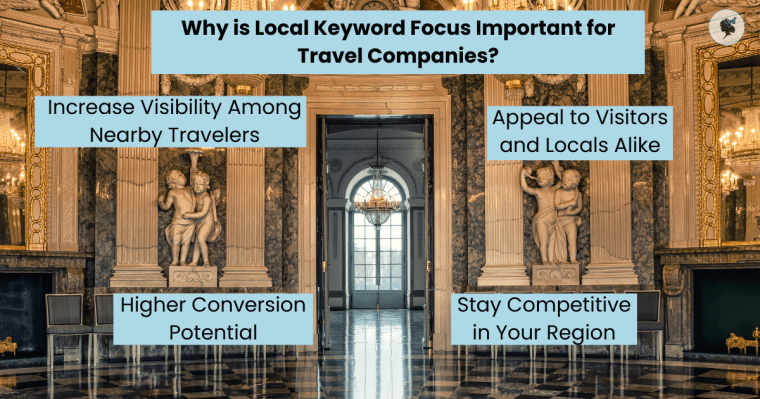
1. Increase Visibility Among Nearby Travelers
Local keywords ensure your business ranks well when tourists or travelers search for services in your area. For example, a search for “best day trips from Edinburgh” will lead travelers to your business if you optimize your content accordingly. This helps you attract nearby customers who are actively looking for things to do in the local area.
2. Appeal to Visitors and Locals Alike
Local keyword focus doesn’t just cater to tourists; it can also help you attract local customers who may be seeking weekend getaways, day trips, or local tours. Optimizing for “local experiences” makes your business appealing to both tourists and residents who might be looking for experiences they can enjoy close to home.
3. Higher Conversion Potential
Local searchers are often further along in the decision-making process, which means they are more likely to book or purchase. When someone searches for “private tours in New York,” they are likely looking to book a tour for the very next day or week. Ranking for location-specific keywords can help you capture these high-intent customers.
4. Stay Competitive in Your Region
For travel businesses, local keyword focus gives you a competitive advantage by helping you rank higher in local search results. As more businesses adopt local SEO, it’s important to stay ahead by optimizing for local keywords to avoid getting lost in the shuffle.
If you’re ready to take your travel company to the next level with local SEO, we can drive more bookings, higher traffic, and stronger visibility for your business. Contact us today to get started!
Discover more from Wander Women Strategies
Subscribe to get the latest posts sent to your email.

4 thoughts on “Mastering Local Keyword Focus for Travel Companies”
Comments are closed.