
▶ Table of Contents
Introduction
In the digital age, travel decisions are made in moments. Potential customers scroll through dozens of travel websites before making a choice, and even the smallest barrier to booking can send them bouncing to a competitor. Despite spending considerable budgets on SEO, design, and advertising, many travel companies still see suboptimal conversion rates. Why? Because their websites aren’t optimized to convert traffic into actual bookings.
Conversion Rate Optimization (CRO) is the bridge between traffic and revenue. Without it, even the most beautifully designed travel site with compelling content can fall flat. This post outlines five of the most common conversion rate mistakes travel websites make and offers practical, actionable fixes for each. Backed by real-life examples and recent data, these insights are tailored specifically for travel brands looking to turn more clicks into customers.
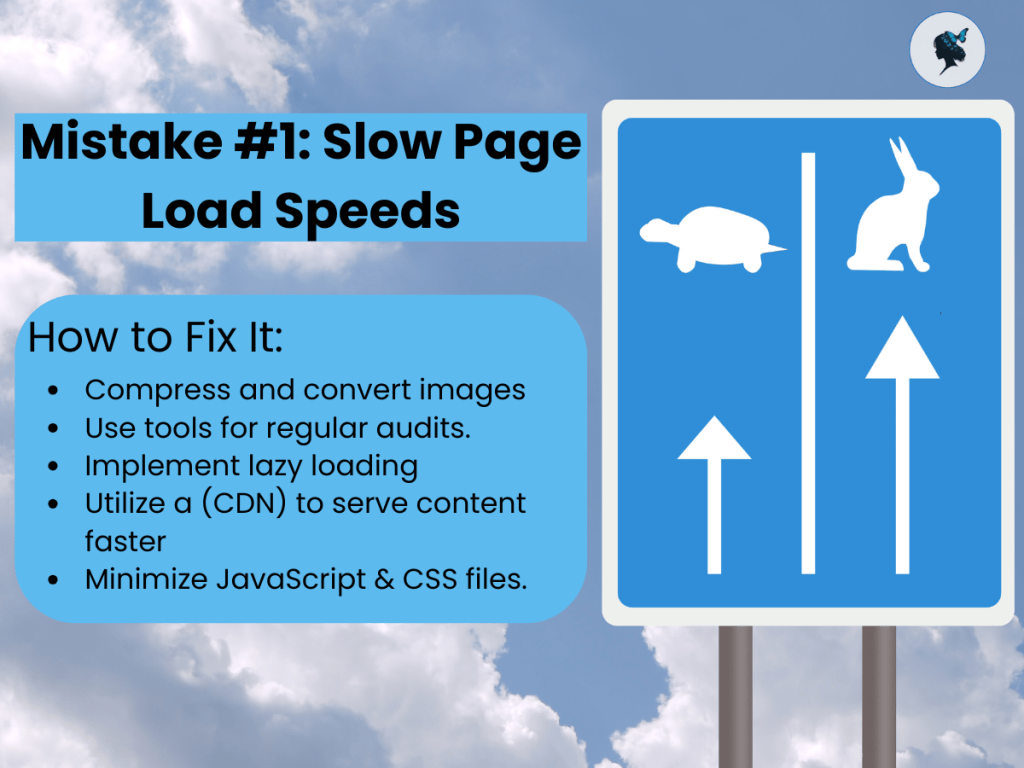
Mistake #1: Slow Page Load Speeds
Why It Matters
Speed is no longer a luxury—it’s an expectation. Today’s travel consumers are used to instant results. When a travel site takes too long to load, users grow impatient and leave. This is especially problematic for sites filled with high-resolution images, videos, and interactive maps, which often bog down performance.
A study by Google and SOASTA found that “a 1-second delay in mobile load times can impact conversion rates by up to 20%”. That single second could be the difference between a sale and a lost opportunity.
A mid-sized adventure travel company in New Zealand struggled with high bounce rates. After optimizing their homepage load time from 5.3 seconds to 2.1 seconds using image compression and lazy loading, they saw an 18% increase in mobile conversions over two months.
How to Fix It
- Compress and convert images to next-gen formats like WebP.
- Use tools like Google PageSpeed Insights, GTmetrix, or Lighthouse for regular audits.
- Implement lazy loading so that only on-screen content loads initially.
- Utilize a Content Delivery Network (CDN) to serve content faster based on geographic location.
- Minimize JavaScript and CSS files.
Read more about website page speed optimization here.
Mistake #2: Poor Mobile Optimization
Why It Matters
With over half of all travel bookings occurring on mobile devices, mobile optimization is non-negotiable. Yet, many travel sites are still primarily designed for desktop users. A poor mobile experience—like hard-to-click buttons or distorted layouts—can be incredibly frustrating for users and damaging to your bottom line.
According to Google, “Over 70% of travelers use mobile devices to research trips, and more than 50% complete bookings on mobile”.
A boutique hotel chain based in Italy revamped its website to prioritize mobile users. This included thumb-friendly buttons, simplified mobile booking forms, and responsive image scaling. As a result, direct bookings increased by 24% within three months.
How to Fix It
- Design using mobile-first principles.
- Use responsive design frameworks that adapt across all screen sizes.
- Simplify navigation and eliminate unnecessary steps in the booking process.
- Test regularly on various devices and browsers.
- Use heatmaps and session recordings to identify mobile UX issues.
Mistake #3: Weak or Generic Calls-to-Action (CTAs)
Why It Matters
Your call-to-action (CTA) is one of the most powerful elements on your website. Generic phrases like “Click Here” or “Learn More” do little to entice a user to act. On travel websites, where emotion and aspiration play a big role, CTAs need to be dynamic, benefit-driven, and compelling.
HubSpot reports that “Personalized CTAs convert 202% better than generic ones”.
A travel agency specializing in Northern Europe tours A/B tested their CTAs. Replacing a generic “Learn More” button with “Plan My Iceland Adventure” increased form submissions by over 300% within a month.
How to Fix It
- Use specific and benefit-driven phrases like “Get My Custom Itinerary” or “Start My Adventure.”
- Align CTAs with the stage of the user journey (e.g., research vs. ready to book).
- Use contrasting colors and strategic placement to make CTAs stand out.
- Test different wording, design, and locations continuously.
For more about CTAs, check out our post: the importance of clear CTAs.
Mistake #4: Not Showcasing Trust Signals
Why It Matters
Travel is a high-investment and high-trust purchase. If users feel unsure about the credibility of your site, they will abandon the process. Missing trust elements like testimonials, verified reviews, or security badges can erode confidence and cost you conversions.
BigCommerce reports that “92% of consumers read online reviews before making a purchase decision”.
A luxury safari company in South Africa integrated customer testimonials, Trustpilot ratings, and “As seen in” media logos across their landing pages. This boosted booking inquiries by 17% in just six weeks.
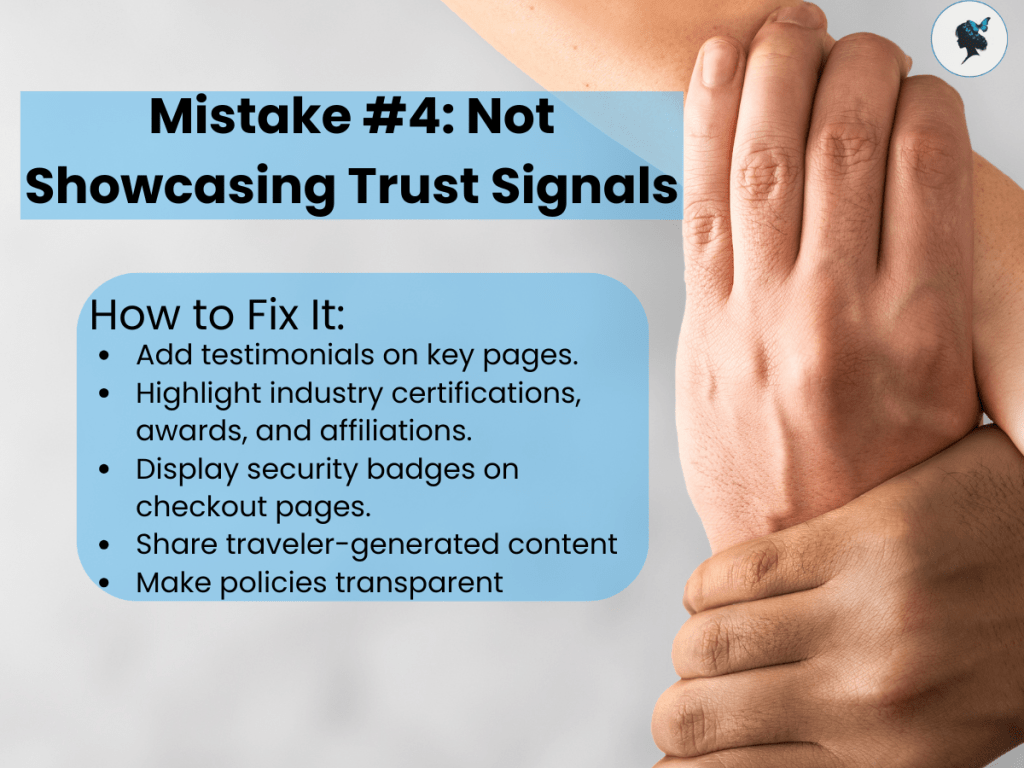
How to Fix It
- Add real customer testimonials and verified reviews on key pages.
- Highlight industry certifications, awards, and affiliations.
- Display security badges on checkout pages.
- Share traveler-generated content (photos / videos) for authenticity.
- Make cancellation and refund policies transparent and easy to find.
Mistake #5: Ignoring SEO and Content Strategy Alignment
Why It Matters
Driving traffic to your site without aligning content to the right intent results in unqualified visitors who won’t convert. Travel sites often produce content that ranks but doesn’t resonate with the decision-making process of their ideal customer.
According to HubSpot, “61% of marketers say improving SEO and growing organic presence is their top inbound marketing priority”.
A destination marketing organization in Southeast Asia realigned their blog content strategy to match buyer intent—creating itineraries, seasonal guides, and comparison posts. Within three months, they saw a 32% increase in qualified leads and a 22% boost in average session duration.
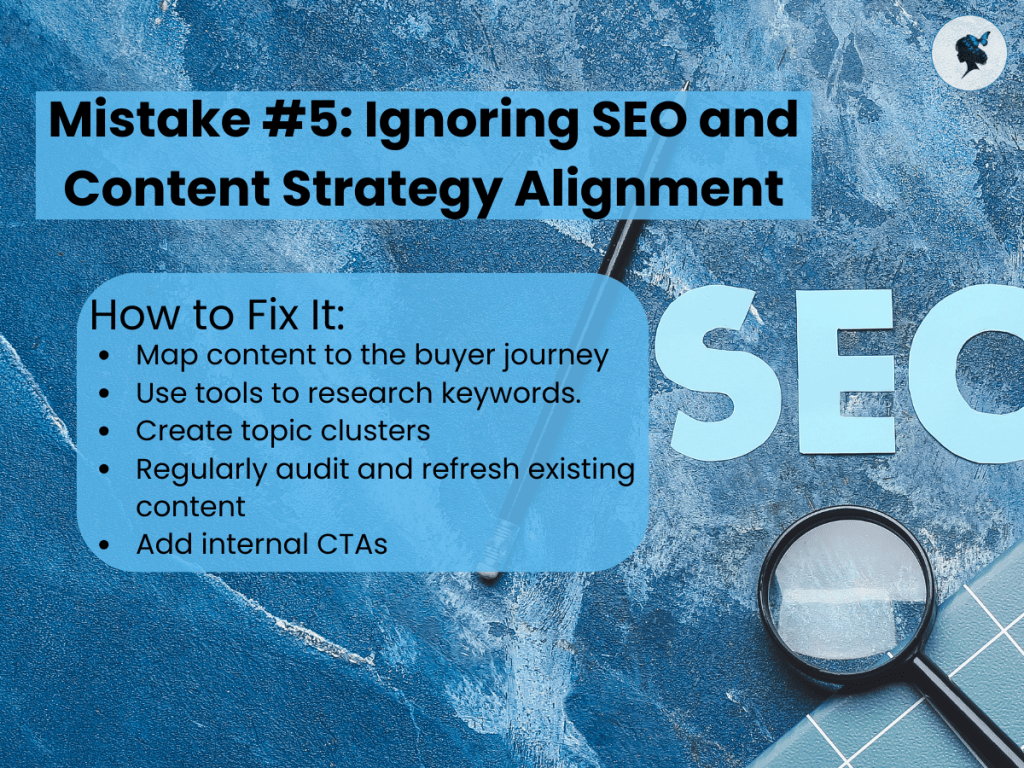
How to Fix It
- Map content to the buyer journey: awareness, consideration, decision.
- Use tools like Semrush or Ahrefs to research intent-based keywords.
- Create topic clusters that interlink around key themes (e.g., Bali travel guide, best time to visit, sample itineraries).
- Regularly audit and refresh existing content to maintain ranking and relevance.
- Add internal CTAs tailored to user stage (e.g., trip planner download, quote request).
Conclusion
In an industry driven by emotion, competition, and timing, optimizing your travel website for conversions is not just beneficial—it’s essential. From reducing page load times to refining your CTAs and aligning your content with search intent, each improvement has the potential to significantly impact your bottom line.
These five common mistakes often go unnoticed, yet they silently erode your revenue potential. The good news? Every one of them is fixable. Start with a simple audit of your current site against the points above, and prioritize changes based on impact.
If you need help identifying CRO opportunities or aligning your content with high-converting SEO strategy, our team specializes in helping travel companies turn traffic into bookings. Contact us today to see how we can help!
Discover more from Wander Women Strategies
Subscribe to get the latest posts sent to your email.
