

▶ Table of Contents
Introduction
Trust signals are essential cues on your travel website that reassure visitors your business is reliable, secure, and worth booking with. In the travel industry, where purchases involve significant cost and planning, trust is crucial for turning casual browsers into paying customers.
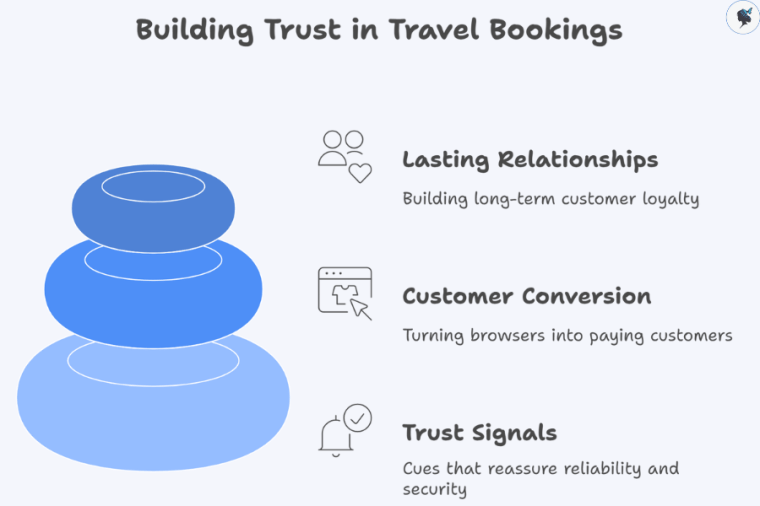
Research shows that 75% of travelers say a website’s trustworthiness strongly influences their decision to book. By incorporating strong trust signals, travel brands can reduce hesitation, increase conversions, and build lasting customer relationships.
Customer Reviews and Testimonials
Customer reviews are some of the most powerful trust signals because they provide social proof — real evidence from other travelers about your service quality.
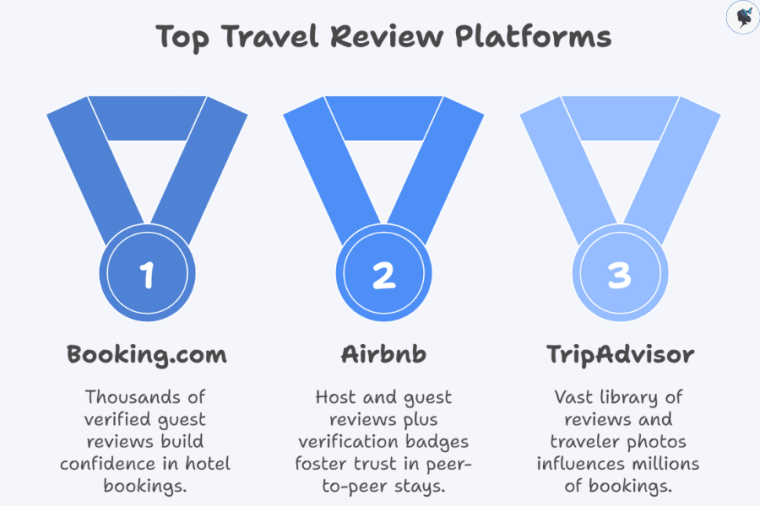
- Booking.com displays thousands of verified guest reviews, giving visitors detailed insights on hotels’ cleanliness, service, and amenities. This transparency builds confidence in bookings.
- Airbnb uses host and guest reviews, plus verification badges like “Superhost,” helping users trust peer-to-peer stays.
- TripAdvisor’s vast library of reviews and traveler photos makes it a go-to resource, influencing millions of bookings.
How to Implement:
Send follow-up emails post-trip requesting reviews using platforms like Trustpilot or Yotpo. Embed review widgets dynamically on accommodation and booking pages. Encourage detailed, authentic feedback with guided questions to make reviews more useful.
Security and Privacy Indicators
Travelers must share sensitive information, so visible security signals greatly reduce booking abandonment. Baymard Institute reports that 19% of shoppers leave due to security concerns during checkout.
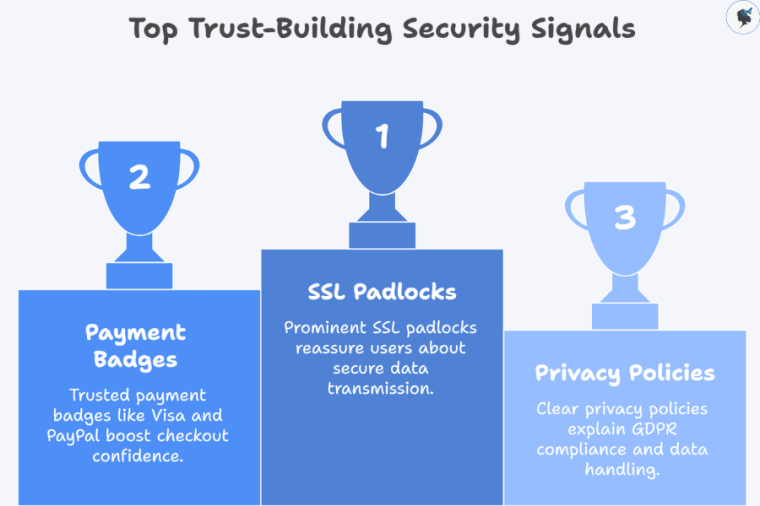
- Expedia prominently displays SSL padlocks and payment provider logos like Visa and PayPal to reassure users.
- Booking.com’s privacy policies clearly explain GDPR compliance and data handling, boosting user trust.
- Hotels.com uses recognized seals like Norton Secured and McAfee Secure during checkout.
How to Implement:
Install SSL certificates (get free ones via Let’s Encrypt). Add trusted payment badges from Stripe or PayPal on checkout pages. Create a clear, accessible privacy policy explaining data protection measures.
Professional Design and Usability
A sleek, intuitive design reflects professionalism and reliability, making visitors more likely to trust your site. Since over 60% of travel bookings now occur on mobile devices, mobile responsiveness is critical.
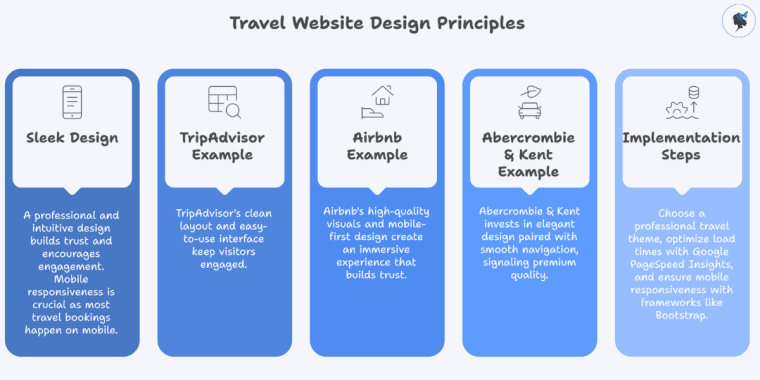
- TripAdvisor’s clean layout and easy-to-use interface keep visitors engaged.
- Airbnb’s high-quality visuals and mobile-first design create an immersive experience that builds trust.
- Luxury operator Abercrombie & Kent invests in elegant design paired with smooth navigation, signaling premium quality.
How to Implement:
Choose a professional travel theme from marketplaces like ThemeForest. Use Google PageSpeed Insights to optimize load times. Ensure mobile responsiveness with responsive frameworks like Bootstrap.
More about mobile optimization here.
Trust Signals in Content and Communication
Trustworthy content and transparent policies are vital. Third-party endorsements, awards, and clear cancellation or refund policies reassure visitors. Providing live chat support answers questions instantly, preventing doubts.
Check out our post: The Role of NLP for Chatbots.
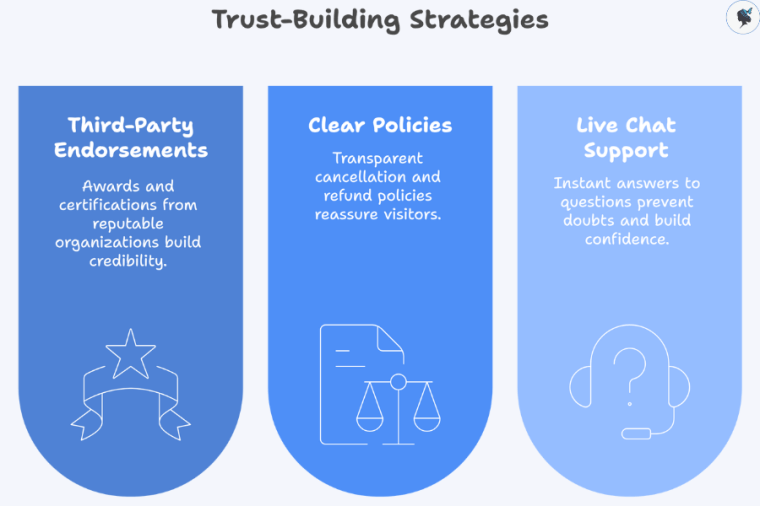
- Abercrombie & Kent showcases multiple industry awards, reinforcing authority.
- Intrepid Travel highlights ethical certifications, appealing to socially conscious travelers.
- Many companies, like Contiki, use live chat for immediate customer support.
How to Implement:
Display award logos on your homepage. Publish detailed FAQ and policy pages. Use tools like Zendesk or Intercom for live chat.
Social Proof Beyond Reviews
Real-time social proof, like live booking notifications and user-generated content, creates urgency and builds community trust. Influencer partnerships also amplify credibility.
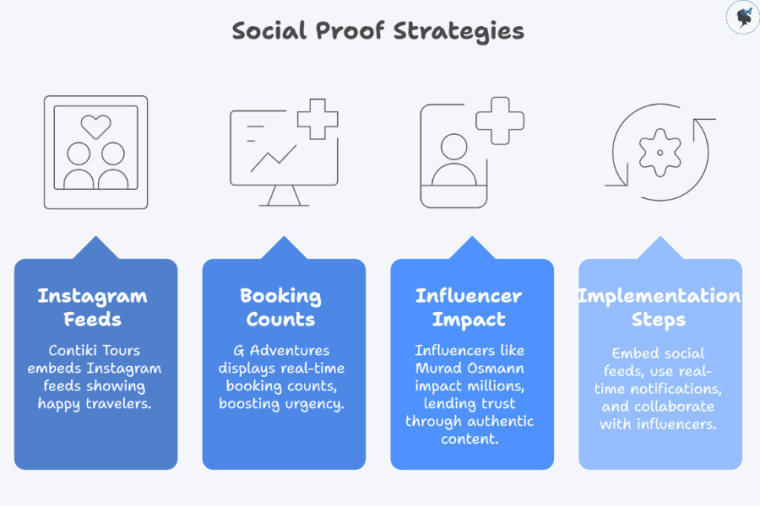
- Contiki Tours embeds Instagram feeds showing happy travelers.
- G Adventures displays real-time booking counts, boosting urgency.
- Influencers like Murad Osmann (#FollowMeTo) impact millions, lending trust through authentic content.
How to Implement:
Embed social feeds with Taggbox or Juicer. Use Fomo or Proof for real-time booking notifications. Collaborate with influencers using BuzzSumo or Upfluence.
Measuring the Impact of Trust Signals
Measure how trust elements affect user behavior with conversion rates, bounce rates, and session durations. Use A/B testing to optimize placement and design.
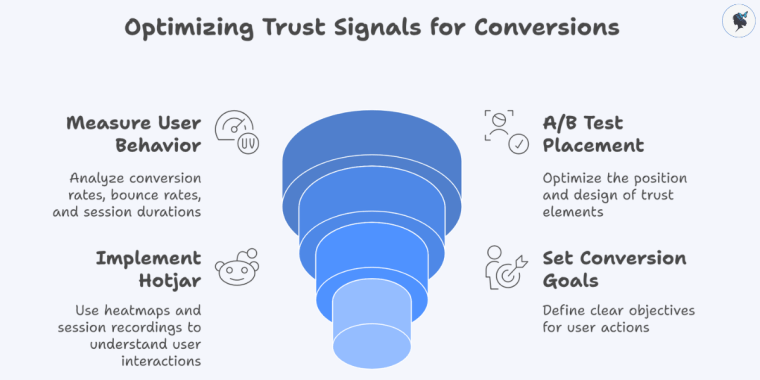
A European travel company boosted bookings by 15% after moving testimonials above the fold. A US hotel chain lowered cart abandonment by adding security badges, verified with heatmaps.
How to Implement:
Set conversion goals in Google Analytics. Analyze user behavior with Hotjar.
Conclusion
In travel, trust is currency. Incorporating reviews, security badges, professional design, transparent content, and social proof builds credibility and boosts conversions. With 70% of travelers prioritizing trust, embedding these signals is critical for sustained growth and customer loyalty.
Contact us today to see how we can guide your trust strategy.
Discover more from Wander Women Strategies
Subscribe to get the latest posts sent to your email.

8 thoughts on “The Role of Trust Signals in Converting Travel Website Visitors”
Comments are closed.