

▶Table of Contents
- Introduction: The Rise of Voice Search in Travel
- How Voice Search is Transforming the Travel Industry
- Understanding the Nature of Voice Search Queries
- SEO Tips for Optimizing Travel Content for Voice Search
- Leveraging Local SEO and “Near Me” Searches in Travel
- The Role of Mobile Optimization in Voice Search Success
- Future Trends: AI, Machine Learning, and Voice Search in Travel
- Conclusion: Preparing Your Travel Brand for the Voice Search Era
Introduction: The Rise of Voice Search in Travel
Voice-activated devices and digital assistants like Siri, Alexa, and Google Assistant have become integral parts of how people search for information. The travel industry, in particular, has seen a significant shift in consumer behavior as travelers increasingly use voice search to plan trips, find local attractions, and make bookings. Optimizing for voice search is no longer optional—it’s essential for travel brands aiming to capture modern travelers’ attention. Currently, about 20% of all searches are expected to be voice-based, highlighting the urgent need for travel marketers to adapt their SEO strategies.

- A traveler on a road trip asks Alexa, “Find scenic stops along Route 66,” seeking quick local recommendations without typing.
- A backpacker planning a last-minute trip says to Siri, “What’s the cheapest flight to Barcelona next weekend?” for instant pricing info.
- A family on vacation uses Google Assistant to ask, “Where can I find kid-friendly restaurants near the hotel in Orlando?” to simplify dining choices.
How Voice Search is Transforming the Travel Industry
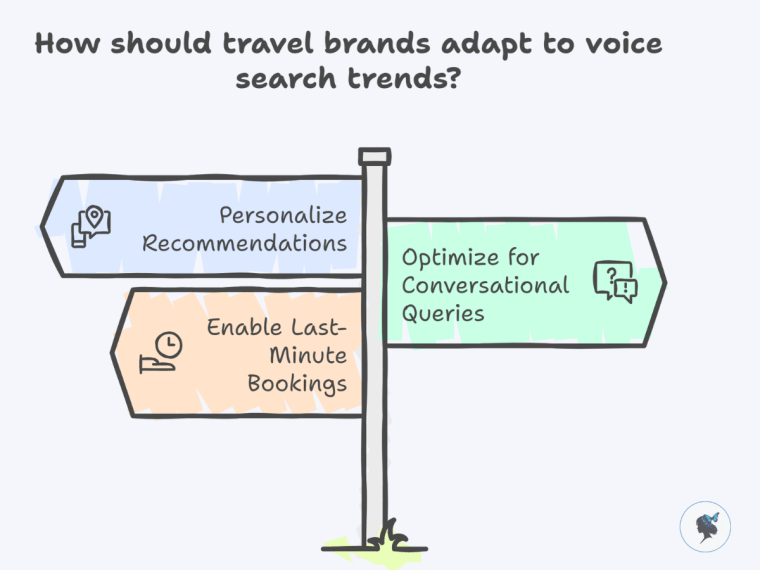
Voice search provides travelers instant access to information while on the move, enabling quick decision-making and a more seamless travel experience. Unlike traditional typed searches, voice queries are more conversational and context-driven, reflecting the way people naturally speak. Travelers increasingly expect personalized and local recommendations, asking questions such as “best vegan restaurants near me” or “cheap flights to Bali next weekend.” This shift influences booking behaviors, with many travelers making last-minute decisions based on voice search results. Travel brands must align their content with these evolving needs to remain competitive.
- A solo traveler uses voice search to ask, “What are the safest neighborhoods to stay in Tokyo?” helping them select accommodations confidently.
- A couple on a city break says, “Show me rooftop bars open now in New York City,” allowing spontaneous outing plans.
- An adventure tourist queries, “Which national parks near Denver allow dogs on trails?” to tailor their itinerary.
Understanding the Nature of Voice Search Queries
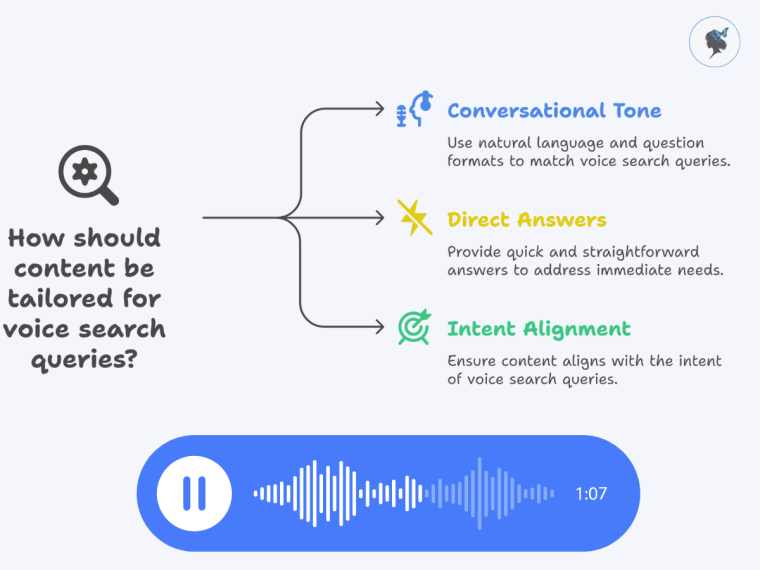
Voice search queries tend to be longer, more natural, and phrased in a question format compared to text searches. This means that instead of searching for “Chicago pet-friendly hotels,” a user might ask, “Where can I find a pet-friendly hotel in Chicago?” Content creators need to understand this conversational tone and create content that answers these questions directly and succinctly. Voice searches also often focus on immediate needs, so providing quick, straightforward answers is critical. Tailoring your content to this intent helps ensure it aligns with what travelers are actually asking their voice assistants.
- A traveler asks, “How do I get from Heathrow Airport to central London by train?” seeking a quick transit guide.
- Someone planning a beach holiday asks, “What’s the best time to visit the Maldives for snorkeling?” to get seasonal advice.
- A food enthusiast queries, “Are there any Michelin-starred restaurants in San Francisco that offer vegan options?” for dining decisions.
SEO Tips for Optimizing Travel Content for Voice Search
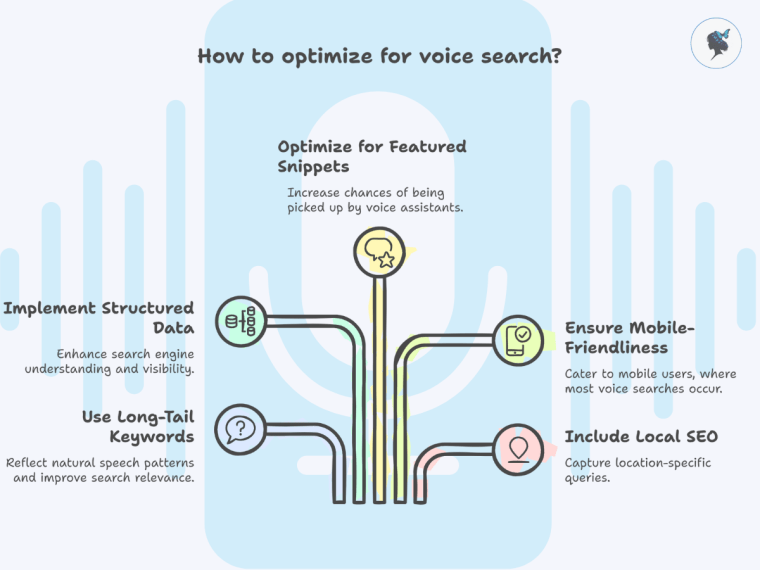
Optimizing your travel blog or website for voice search starts with using long-tail, question-based keywords that reflect natural speech patterns. Creating content that clearly and concisely answers common travel questions improves your chances of being picked up by voice assistants. Implementing structured data such as FAQPage, HowTo, and LocalBusiness schema markup helps search engines understand your content better, enhancing your visibility. Featured snippets are especially important, as voice assistants frequently pull answers directly from them—structure your content with bullet points and short paragraphs to increase snippet potential.
Additionally, your website must be mobile-friendly and load quickly, as voice searches mostly happen on mobile devices. Including local SEO elements will help capture “near me” and location-specific queries. Utilize tools like AnswerThePublic, Google’s People Also Ask, and Semrush to find relevant voice search questions and optimize accordingly.
- A travel blog creates a FAQ answering, “How do I book a train ticket from Paris to Lyon?” with schema markup for Google to display in voice search.
- A hotel website adds clear, bulleted “check-in and check-out times” sections that help generate featured snippets.
- A tour operator writes blog posts targeting “best family-friendly activities in Orlando near Disney World” optimized for mobile and local search.
Leveraging Local SEO and “Near Me” Searches in Travel
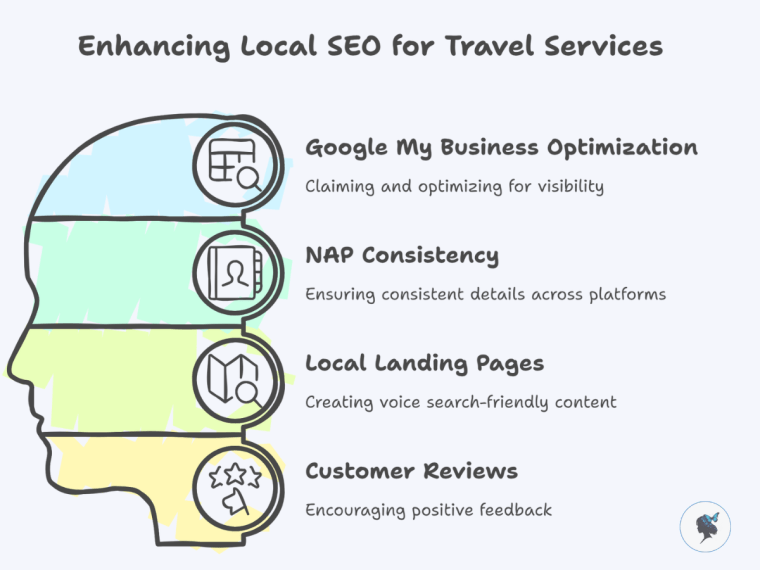
Local SEO plays a vital role in capturing voice search traffic, especially for travel-related services such as tours, accommodations, and dining. Claiming and optimizing your Google My Business listing is essential for visibility in local voice searches. Consistent Name, Address, and Phone (NAP) details across your website and directories build trust and improve your local rankings. Creating local landing pages with voice search-friendly content and encouraging positive customer reviews further enhance your chances of being found. For example, a tour operator optimizing their content for “best walking tours near me” can capture travelers looking for immediate local experiences via voice assistants.
- A bed-and-breakfast in Portland optimizes its Google My Business profile with detailed descriptions and photos to appear in voice searches for “cozy stays near downtown Portland.”
- A restaurant in Barcelona ensures their NAP is consistent across directories to rank high for “tapas bars near me.”
- A local hiking guide writes blog content focused on “easy hikes near San Diego” and encourages guests to leave positive Google reviews to boost local rankings.
Read: The ultimate guide to Local SEO.
The Role of Mobile Optimization in Voice Search Success
Since the majority of voice searches occur on mobile devices, ensuring your travel website is mobile-friendly is crucial. Fast-loading, responsive websites provide the seamless experience voice search users expect. 56% of users used voice search via mobile to find information about a brand or business, underlining the importance of mobile optimization in voice SEO.
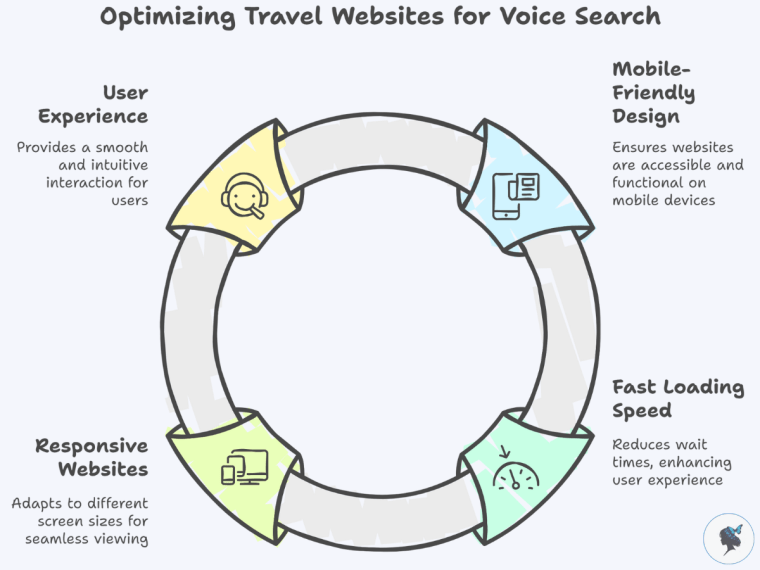
- A travel blog redesigns its site using responsive templates to reduce load times, leading to a 20% increase in mobile traffic from voice search.
- A hotel website compresses images and simplifies navigation to make booking easier for users speaking voice queries on smartphones.
- A city tour company tests its mobile site speed with Google PageSpeed Insights and improves scores, helping voice search users find tours faster.
Future Trends: AI, Machine Learning, and Voice Search in Travel
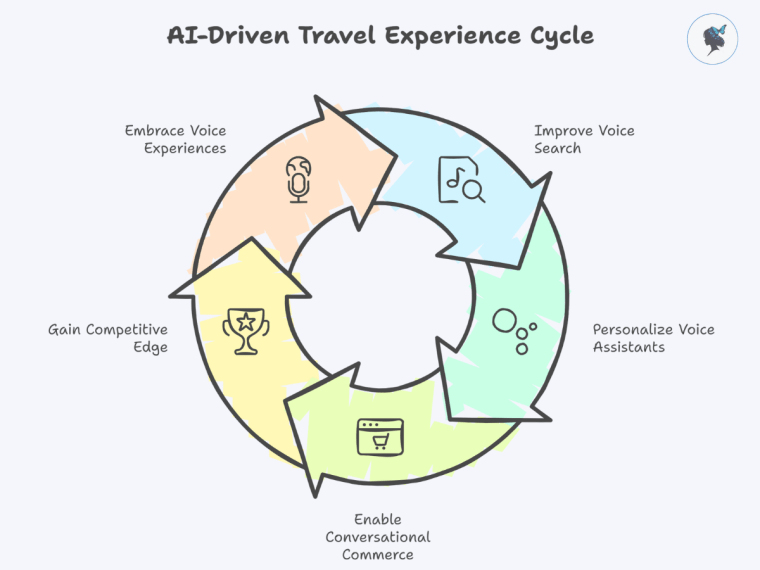
Artificial intelligence (AI) and machine learning are continuously improving the accuracy and contextual understanding of voice search results. Personalized voice assistants are becoming more prevalent in travel planning, enabling conversational commerce and even voice bookings. Travel brands leveraging AI-powered chatbots integrated with voice assistants are already gaining a competitive edge. Preparing your SEO strategy to incorporate these emerging technologies will keep your brand ahead as the travel industry embraces voice-activated experiences.
- A luxury resort uses an AI chatbot integrated with Google Assistant to allow guests to book spa appointments via voice commands.
- A travel agency implements machine learning to analyze voice search trends and tailor content for popular destinations accordingly.
- An airline integrates voice-enabled booking support with Alexa, allowing customers to check flight status and make changes hands-free.
Conclusion: Preparing Your Travel Brand for the Voice Search Era
Voice search is revolutionizing how travelers find and interact with travel information online. Travel brands that optimize for voice queries by embracing conversational keywords, structured data, local SEO, and mobile optimization will be better positioned to attract and convert these users. Staying informed about the latest trends and adapting your SEO strategy will ensure your brand remains visible in this rapidly evolving landscape. Early adoption of voice search optimization offers a significant competitive advantage in capturing the growing segment of voice-driven travel consumers.
Contact us today to see how we can help!
Discover more from Wander Women Strategies
Subscribe to get the latest posts sent to your email.
