
▶ Table of Contents
- Introduction: The Importance of Landing Pages in Travel Marketing
- Understand Your Target Audience and Their Needs
- Crafting a Clear, Compelling Headline
- Use Engaging and Relevant Visual Content
- Write Persuasive, Customer-Centric Copy
- Implement Strong Calls to Action (CTAs)
- Optimize for Mobile and Fast Loading Times
- Use SEO Best Practices to Attract Organic Traffic
- Incorporate Trust Signals and Security Features
- Test, Analyze, and Optimize Continuously
- Conclusion: Creating Landing Pages That Drive Results
Introduction: The Importance of Landing Pages in Travel Marketing
Landing pages are standalone web pages designed specifically to convert visitors into customers or leads by focusing on a single offer or service. For travel businesses, these pages are crucial because they guide visitors to take immediate actions like booking a hotel room, signing up for a tour, or requesting a travel consultation. In today’s highly competitive travel industry, well-crafted landing pages can make the difference between losing a visitor and securing a booking. According to HubSpot, companies with 40 or more landing pages get 12 times more leads than those with only 1-5 pages.
Understand Your Target Audience and Their Needs
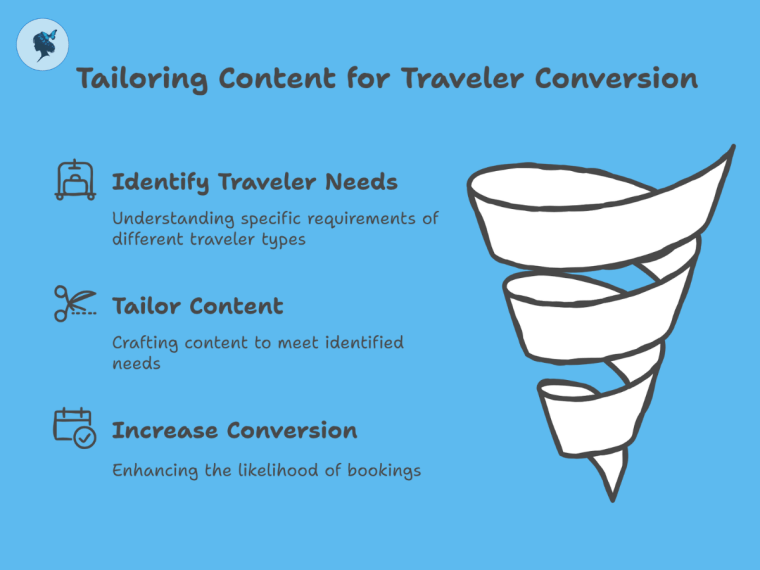
To create a landing page that truly resonates, you first need to understand your ideal traveler. This involves researching demographics, travel preferences, budget, pain points, and booking behavior. For example, solo travelers might look for safety and social experiences, while families prioritize kid-friendly activities and accommodations. Tailoring content to meet these specific needs increases the likelihood of conversion.
Examples:
- A travel agency creates a landing page targeting adventure seekers with thrilling imagery and copy about guided mountain treks.
- A boutique hotel builds a family-focused landing page emphasizing amenities like play areas and babysitting services.
- A luxury cruise company designs a page for honeymooners highlighting romantic packages and private suites.
Tools: Use Google Analytics to analyze visitor demographics and interests, SurveyMonkey to gather traveler feedback, and Semrush Audience Insights to understand traveler intent.
Crafting a Clear, Compelling Headline
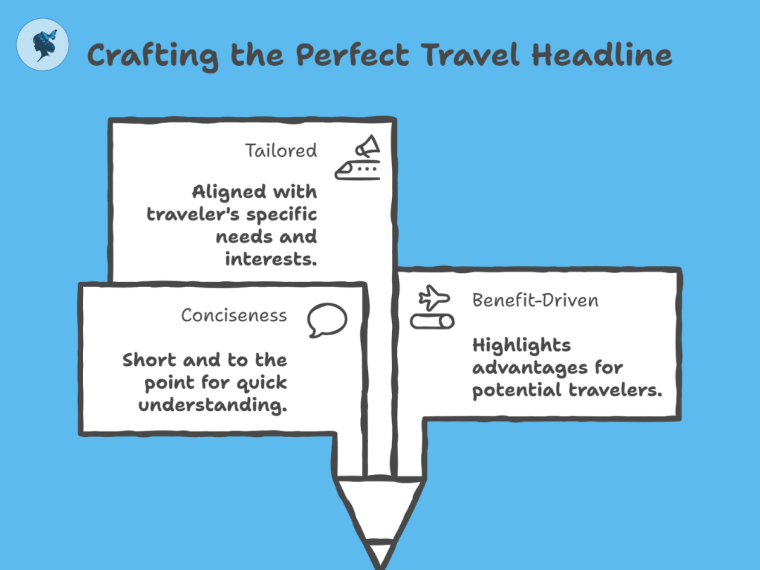
Your headline is the first thing visitors see—it must capture attention instantly and communicate the value of your travel service. Effective headlines are concise, benefit-driven, and tailored to the traveler’s intent. For example, instead of “Book a Tour,” try “Explore Bali’s Hidden Waterfalls with Expert Guides.” According to Copyblogger, 8 out of 10 people will read your headline, but only 2 out of 10 will read the rest.
Examples:
- “Discover Affordable Luxury Stays in Paris” for a boutique hotel.
- “Family-Friendly Safari Adventures in Kenya Await” for a tour operator.
- “Book Your Dream Caribbean Cruise Today” for a cruise line.
Tools: Use CoSchedule Headline Analyzer to score and improve headline effectiveness, and AnswerThePublic to find common traveler questions that can inspire headlines.
Use Engaging and Relevant Visual Content
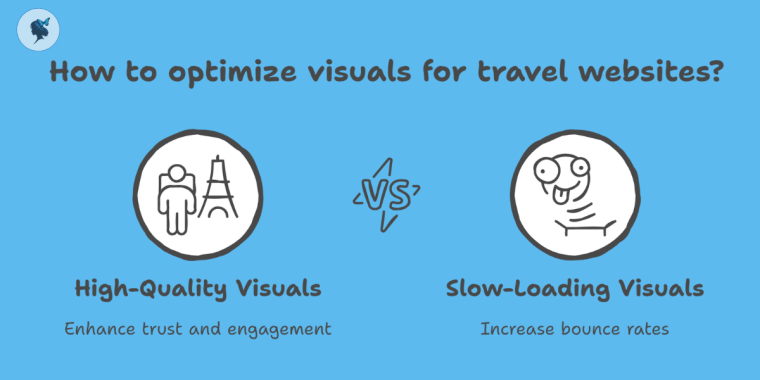
Visuals create an emotional connection and showcase what travelers can expect. High-quality photos and videos build trust and inspire action. Use authentic images—preferably from actual customers or professional shoots—to avoid stock photo clichés. Include 360° tours or short clips to immerse visitors in the experience. Research shows that when page load times balloon from 2 to 5 seconds, bounce rates can surge from around 6% up to 38%—a strong reminder that optimizing image loading is vital since visuals often make or break perceived performance.
Examples:
- A mountain lodge includes a drone video showcasing panoramic views.
- A beach resort uses a 360° virtual tour of its pool and beachfront.
- A city walking tour embeds customer-shot photos highlighting key landmarks.
Tools: Use Canva or Adobe Lightroom for image editing, Cloudinary for image optimization, and YouTube or Vimeo to host videos.
Read the power of visual content here.
Write Persuasive, Customer-Centric Copy
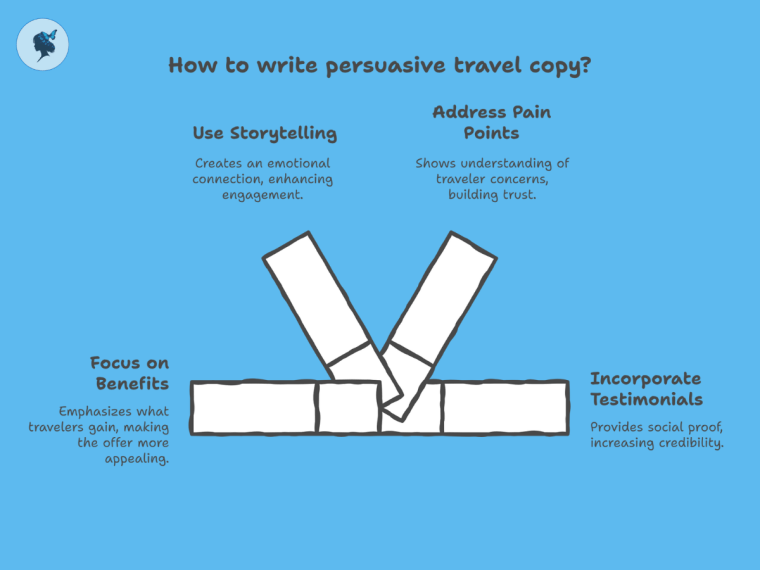
The copy should focus on traveler benefits rather than just features. Use storytelling to paint a vivid picture of the experience and address pain points such as booking hassles or travel safety. Incorporate testimonials and reviews to build social proof, which 92% of travelers read before booking.
Examples:
- A travel agency tells a story of a couple who rediscovered romance on a Mediterranean cruise.
- A boutique hotel highlights customer reviews praising personalized service.
- A tour operator explains how their guides ensure hassle-free adventure in remote locations.
Tools: Use Grammarly for polished copy, Trustpilot or Yelp for integrating reviews, and Hemingway Editor to improve readability.
Read our storytelling tips here.
Implement Strong Calls to Action (CTAs)
A clear, compelling CTA guides travelers on what to do next. Use action-oriented language that creates urgency and relevance, like “Book Your Safari Adventure Now” or “Check Availability for Summer Dates.” Placement matters—CTAs should be visible above the fold and repeated at logical points throughout the page. Use contrasting colors and buttons that stand out. According to WordStream, personalized CTAs convert 202% better than generic ones.

Examples:
- “Reserve Your Family Suite Today” on a hotel landing page.
- “Get Your Free Travel Guide Now” for a tour company lead capture.
- “Claim Your Early Bird Discount” on a seasonal package page.
Tools: Use Unbounce or Instapage to A/B test CTAs, Hotjar to analyze click heatmaps, and Canva for designing CTA buttons.
Read about the importance of clear CTAs.
Optimize for Mobile and Fast Loading Times
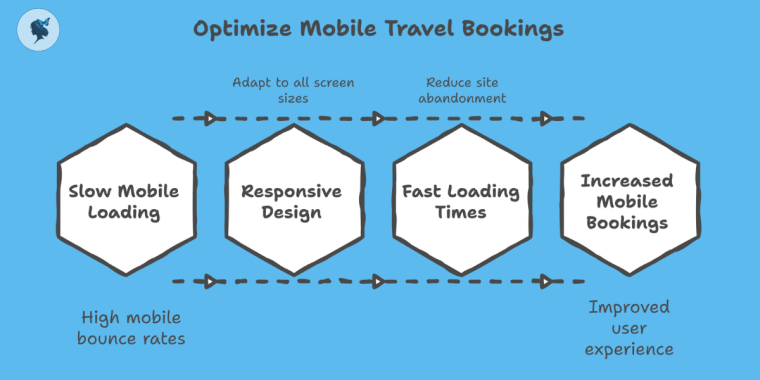
With over 60% of travel bookings made on mobile devices, mobile optimization is critical. Responsive design ensures your landing page looks great on all screen sizes, while fast loading times reduce bounce rates. Google reports that 53% of mobile users abandon sites that take longer than 3 seconds to load.
Examples:
- A hotel site compresses images and minimizes code to speed up load times.
- A tour operator redesigns navigation menus for easier tapping on smartphones.
Tools: Use Google PageSpeed Insights and GTmetrix to test and optimize speed, BrowserStack to preview mobile responsiveness.
Read: Mobile optimization for travel companies.
Use SEO Best Practices to Attract Organic Traffic
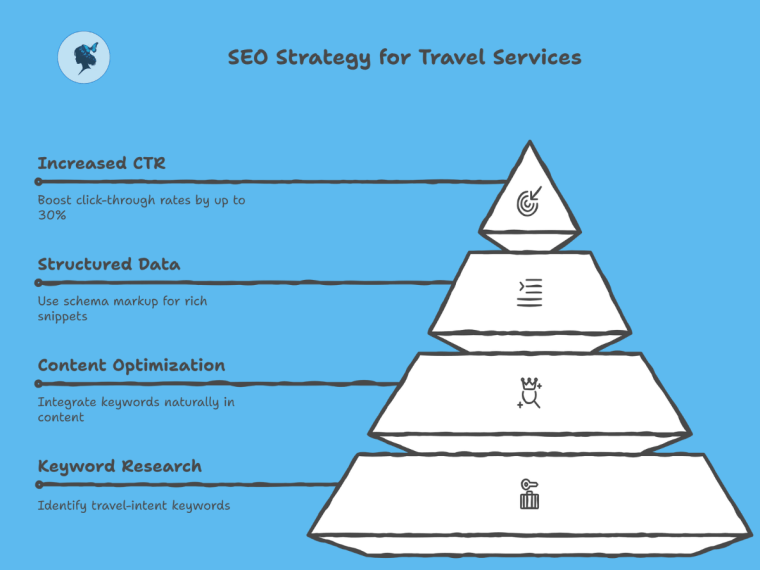
SEO ensures your landing pages are discoverable by travelers searching for relevant services. Conduct keyword research focused on travel intent, such as “family-friendly hotels in Orlando” or “best hiking tours in Peru.” Incorporate these keywords naturally in titles, meta descriptions, headers, and image alt text. Use structured data markup like LocalBusiness schema to enhance your search listings with rich snippets, increasing click-through rates by up to 30%.
Examples:
- A tour company targets long-tail keywords for niche experiences like “volcano trekking tours in Costa Rica.”
- A resort optimizes metadata for “all-inclusive beach resorts in Cancun.”
- A travel agency adds FAQ schema answering common booking questions.
Tools: Use Ahrefs or Semrush for keyword research, Google Search Console to monitor rankings, and Schema.org generators to add structured data.
Incorporate Trust Signals and Security Features
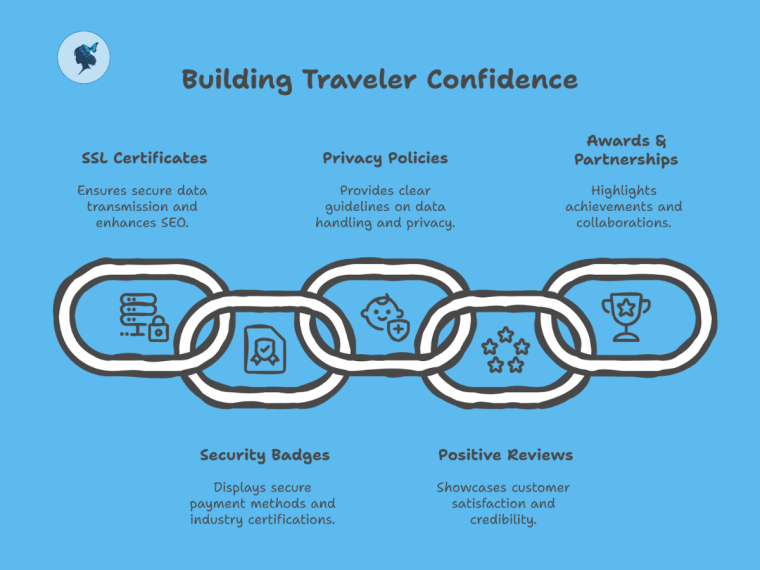
Trust signals reassure travelers that your site and services are credible and secure. SSL certificates (HTTPS) are now mandatory to protect customer data and improve SEO rankings. Display badges for secure payment methods, industry certifications (e.g., AAA, TripAdvisor), and clear privacy policies. Positive reviews, awards, and partnership logos further build confidence. According to Salesforce, 90% of consumers say brands need to put more effort into providing trustworthy experiences.
Examples:
- An online booking platform displays SSL and payment security badges prominently on checkout pages.
- A luxury resort showcases TripAdvisor Traveler’s Choice awards and guest testimonials.
- A travel insurance company lists partnerships with recognized organizations and clear policy terms.
Tools: Use Let’s Encrypt for free SSL certificates, Trustpilot for review collection, and TrustedSite for security badges.
More about the role of trust signals here.
Test, Analyze, and Optimize Continuously
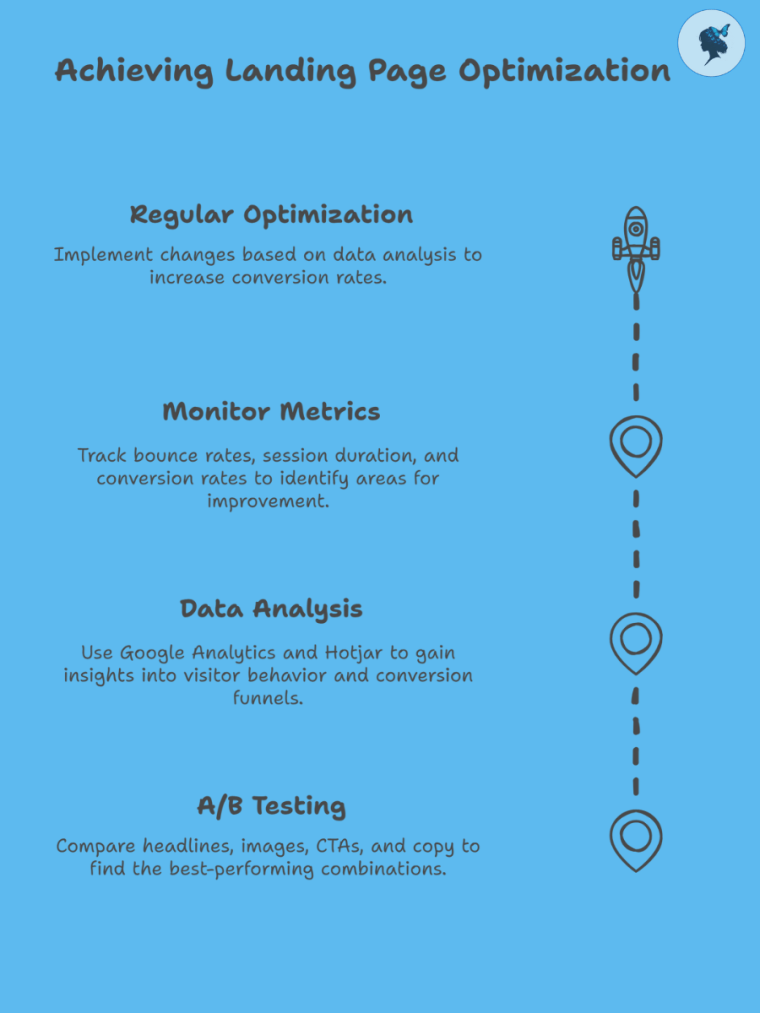
No landing page is perfect from the start. Use A/B testing to compare headlines, images, CTAs, and copy to find the best-performing combinations. Tools like Google Analytics and Hotjar provide deep insights into visitor behavior, click patterns, and conversion funnels. Monitor bounce rates, session duration, and conversion rates to identify improvement areas. Regular optimization can increase conversion rates by up to 300%.
Examples:
- A travel agency tests two versions of their booking CTA button color to increase clicks.
- A hotel analyzes heatmaps to reposition key information higher on the page.
- A tour operator experiments with different headline styles to boost engagement.
Tools: Use Hotjar for heatmaps and visitor recordings, and Google Analytics for performance metrics.
Conclusion: Creating Landing Pages That Drive Results
High-quality landing pages tailored for your travel services can significantly increase bookings, inquiries, and customer engagement. By understanding your audience, crafting compelling headlines, using stunning visuals, persuasive copy, and clear CTAs, you build trust and drive conversions. Combine mobile optimization, SEO best practices, trust signals, and ongoing testing to create landing pages that perform at their best. Prioritize these steps to ensure your travel brand captures and converts today’s savvy travelers.
Need help with your landing pages? Contact us today!
Discover more from Wander Women Strategies
Subscribe to get the latest posts sent to your email.


2 thoughts on “How to Create High-Quality Landing Pages for Your Travel Services”
Comments are closed.