
▶ Table of Contents
- Introduction: What is A/B Testing and Why It Matters for Travel Websites
- Identify Key Conversion Goals for Your Travel Website
- Determine Which Elements to Test
- Set Up Your A/B Test Using Popular Tools
- Analyze Test Results and Understand Metrics
- Implement Winning Variants and Iterate
- Best Practices and Common Pitfalls to Avoid
- Conclusion: Driving Continuous Growth with A/B Testing
Introduction: What is A/B Testing and Why It Matters for Travel Websites
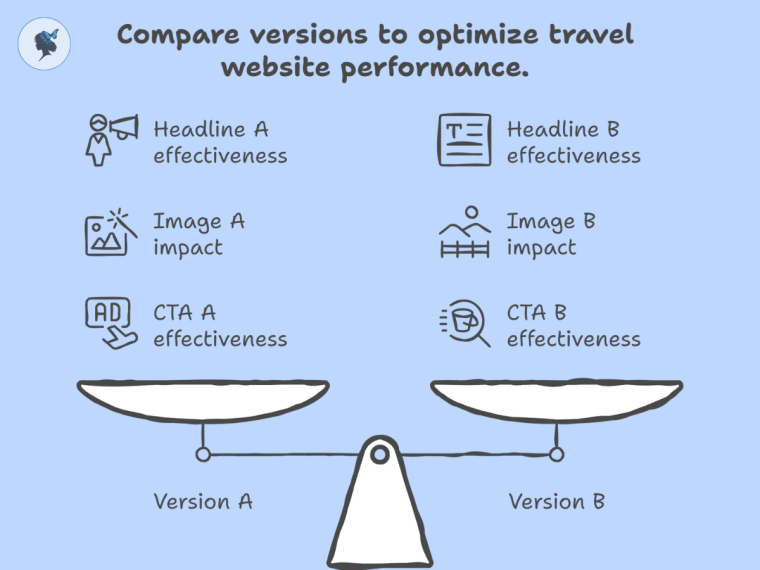
A/B testing, also known as split testing, is a method where you compare two versions of a webpage or app to see which one performs better in achieving a specific goal. For travel websites, this can mean testing different headlines, images, or calls to action to see which variation leads to more bookings, inquiries, or sign-ups. In an industry as competitive as travel, data-driven decisions through A/B testing can dramatically boost conversions and revenue. According to VWO, companies that run A/B tests regularly report a 30% improvement in conversion rates on average.
Identify Key Conversion Goals for Your Travel Website
Before you start any A/B test, it’s essential to pinpoint the exact action you want your visitors to take. Conversion goals are the measurable actions that align with your business objectives. For travel websites, these often relate directly to booking, engagement, or lead generation. Clearly defining your goals will help you focus your tests and accurately evaluate their success.
Common Key Conversion Goals for Travel Websites:
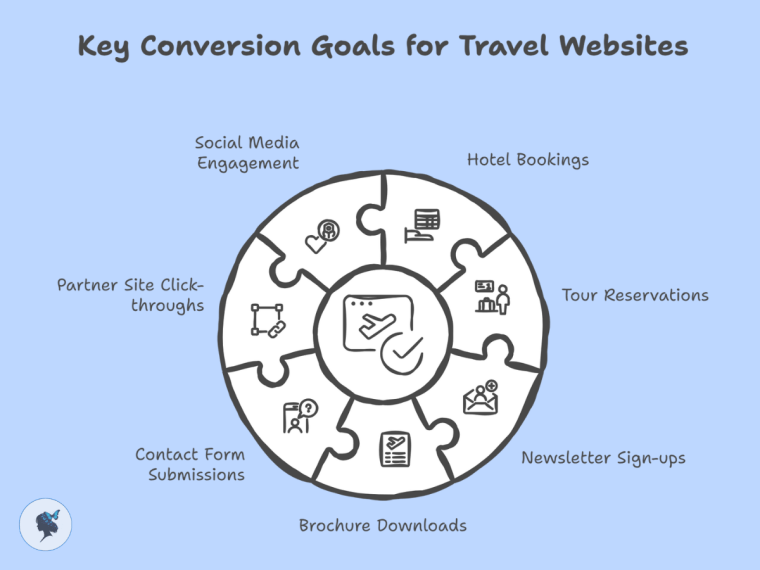
- Hotel or Accommodation Bookings: This is the primary revenue driver for many travel sites. Increasing the percentage of visitors who complete a booking directly impacts your bottom line.
- Tour or Experience Reservations: Travel agencies or tour operators may want visitors to book specific tours or activities.
- Newsletter or Email Sign-ups: Building an email list allows you to nurture potential travelers with future offers and content, increasing repeat visits and bookings.
- Brochure or Itinerary Downloads: Encouraging visitors to download detailed travel guides or itineraries can be a strong lead generation tactic.
- Contact Form Submissions: For personalized services like luxury travel planning or custom trips, getting visitors to submit an inquiry form is crucial.
- Click-throughs to Partner Sites: Some travel sites earn commissions by sending visitors to airline or hotel partners; increasing these clicks improves revenue.
- Social Media Engagement: Getting visitors to follow or share your travel brand’s social media can increase brand awareness and future conversions.
By selecting one or two primary goals per test, you avoid diluting your data and can make confident decisions based on clear metrics. For example, a small bed-and-breakfast might focus solely on increasing direct booking requests, while a large travel blog may run separate tests for newsletter sign-ups and social shares.
Determine Which Elements to Test
You can A/B test almost any element on your travel site, but some have more influence on traveler decisions than others. Headlines grab attention and set expectations. Images create emotional connections, especially destination photos or accommodation interiors. Calls to action (CTAs) guide visitors on the next step. Even the layout of pricing information or inclusion of testimonials can sway potential customers.
Key Elements to Test:
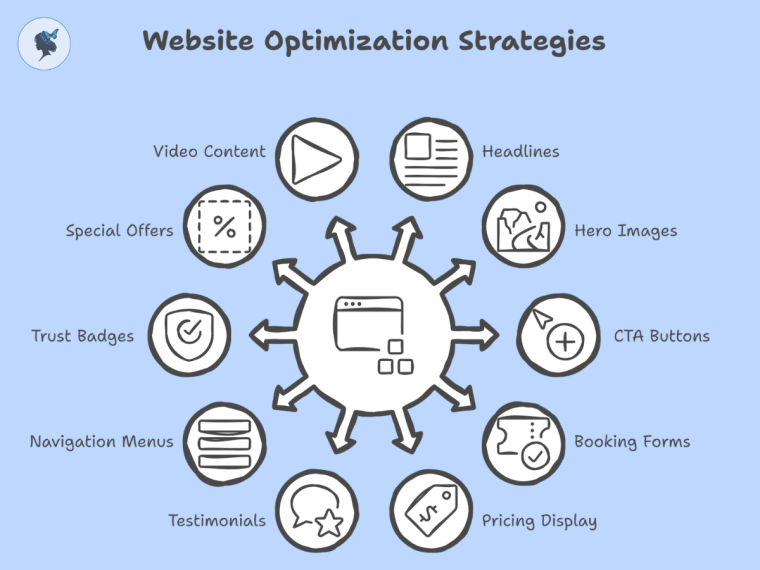
- Headlines: The first thing visitors read; a compelling headline can increase engagement instantly. Test “Experience the Magic of Bali” versus “Affordable Bali Vacations” to see which drives more bookings.
- Hero Images: The main image sets the tone and mood. Different images can appeal to different traveler personas. A serene beach vs. an adventurous jungle trek for a tour operator’s homepage.
- Call-to-Action (CTA) Buttons: The text, color, size, and placement of buttons influence clicks and conversions. “Book Now” versus “Check Availability” or changing button color from blue to orange. Check out our post: the importance of clear CTAs.
- Booking Forms: Length and complexity affect completion rates. Simplifying forms often increases bookings. Testing a one-step form versus a multi-step form for a hotel reservation.
- Pricing Display: Showing prices upfront versus after a search or highlighting discounts. Displaying “Starting at $199 per night” vs. “Check our special offers.”
- Testimonials and Reviews: The presence, placement, and style of traveler reviews can build trust. Including star ratings vs. detailed written reviews. Read our guide: the role of trust signals.
- Navigation Menus: The clarity and structure can impact how easily users find important info. Testing a simplified menu with fewer options versus a detailed menu with all services listed.
- Trust Badges and Security Seals: Displaying secure payment logos or awards can reassure visitors. Showing “Secure Booking” badges near the payment section.
- Special Offers or Promotions: Highlighting discounts or seasonal deals in banners or pop-ups. Testing a “Summer Sale – 20% Off” banner vs. no banner.
- Video Content: Including or removing background videos or travel destination clips. A video showcasing a resort’s amenities versus a static image. Read our guide: the power of visual content.
By systematically testing these elements, you can discover what resonates best with your audience and steadily improve your travel website’s conversion rates.
Set Up Your A/B Test Using Popular Tools
There are many tools available to help you set up A/B tests without needing to code. Google Optimize is a free and user-friendly option ideal for beginners, while Optimizely and VWO offer more advanced features for complex experiments.
Analyze Test Results and Understand Metrics
Once your test runs for enough time, you’ll need to evaluate which version performed better. Key metrics include:
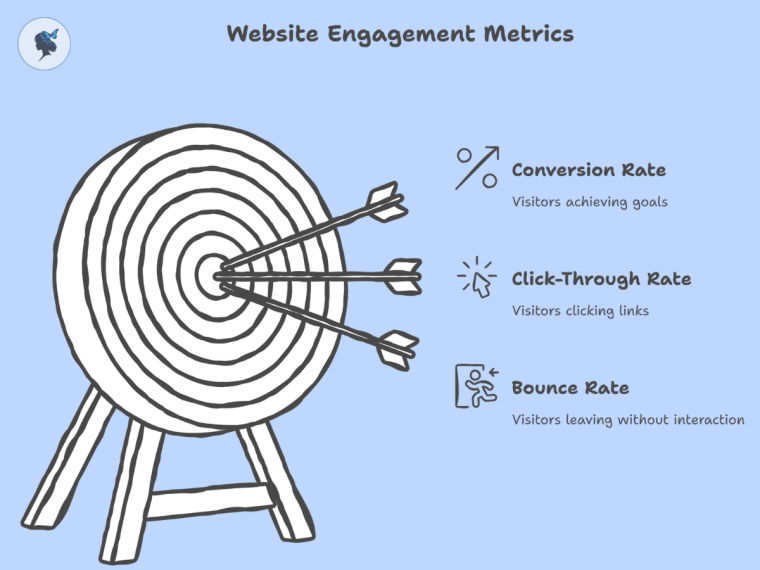
- Conversion Rate: The percentage of visitors completing your goal (booking, sign-up, etc.)
- Bounce Rate: Visitors who leave without interacting
- Click-Through Rate (CTR): How many clicked specific links or buttons
Statistical significance tells you if the result difference is likely real or due to chance — a confidence level of 95% is standard. For example, if your booking CTA’s click rate improves from 8% to 12% with a new button color and the test is statistically significant, you’ve found a winner.
Example Scenarios:
- A travel blog increases email sign-ups by 25% by testing two headline variations.
- A cruise company boosts cabin bookings by 15% after swapping images on their homepage.
- A hotel reduces bounce rate by 10% after simplifying their booking form in the variant.
Implement Winning Variants and Iterate
After identifying the better-performing version, implement the changes site-wide to benefit all visitors. But don’t stop there — conversion optimization is an ongoing process. Continuous A/B testing lets you refine your travel website progressively and adapt to seasonal trends or changing traveler preferences.
Travel Company Examples:
- A luxury resort implements a tested booking CTA and later tests new payment options for convenience.
- An adventure tour operator cycles through images of various destinations seasonally, running tests to see which draws more inquiries.
- A travel agency alternates between testimonials and user-generated content on landing pages to optimize trust signals.
More about user-generated content here.
Best Practices and Common Pitfalls to Avoid
Running A/B tests on your travel website can be highly effective, but only if done correctly. Here are some best practices to ensure your tests provide reliable insights and avoid costly errors:
Best Practices:
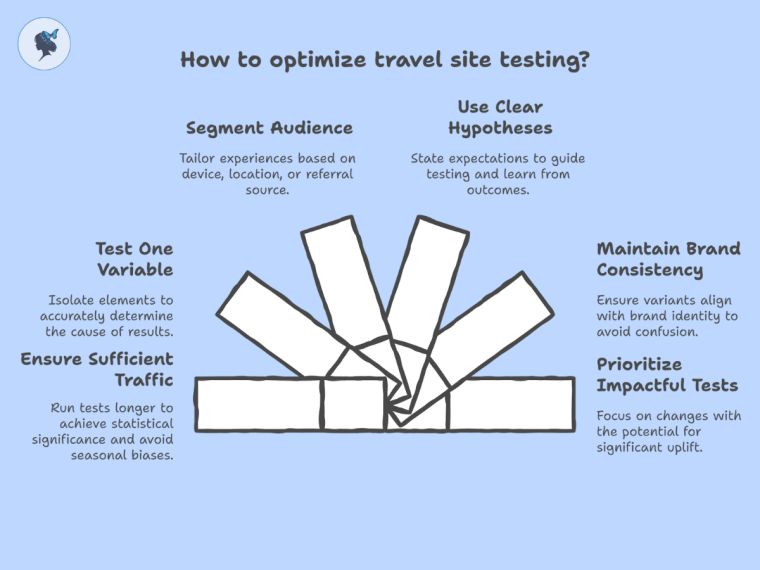
- Ensure Sufficient Traffic and Test Duration: Small or niche travel sites may have limited visitors, so tests need to run longer to reach statistical significance. A good rule of thumb is to run tests for at least 2-4 weeks, covering weekdays and weekends, as travel booking patterns can vary. This timeframe helps you capture enough data to avoid seasonal biases.
- Test One Variable at a Time: Isolate elements such as headlines, images, or CTA buttons. Changing multiple variables simultaneously can make it impossible to determine which change caused the result. For instance, testing both the headline and image together can confuse the outcome.
- Segment Your Audience: Use tools to segment visitors by device type, location, or referral source. For example, mobile users might respond better to shorter booking forms, while desktop users might prefer more detailed info. Geographic segmentation helps when offering region-specific deals or content.
- Use Clear Hypotheses: Before running a test, state what you expect to happen and why. This approach brings focus and helps you learn even from failed tests. For example, hypothesizing that a more vivid hero image will increase bookings can guide your testing strategy.
- Maintain Brand Consistency: While experimenting, ensure that new variants still align with your travel brand’s identity and messaging to avoid confusing your audience. Brand inconsistency can damage trust, especially in high-consideration purchases like travel.
- Prioritize Tests Based on Impact: Start with changes that have the potential for the biggest uplift, like the booking CTA or pricing display, rather than minor cosmetic tweaks. This ensures you invest resources where they matter most.
Common Pitfalls:
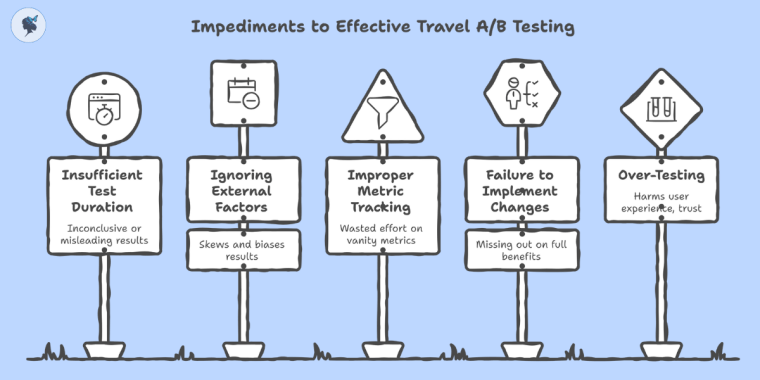
- Running Tests Too Short or Without Enough Visitors: This can lead to inconclusive or misleading results. For example, testing a booking button color for just a couple of days during a low-traffic period may show random fluctuations rather than real trends.
- Ignoring Seasonal and External Factors: The travel industry is highly seasonal. Running tests during a major holiday or travel event without considering its impact can skew results. Always factor in seasonality or special promotions to avoid biased conclusions.
- Not Tracking Key Metrics Properly: Focusing only on vanity metrics like clicks without tracking actual conversions or revenue can waste effort. Use analytics tools to measure the entire funnel, from landing page visit to completed booking.
- Failing to Implement Winning Variants: Some travel marketers stop testing after identifying a better variant but don’t apply changes site-wide, missing out on full benefits.
- Over-testing: Bombarding visitors with constant changes can harm user experience and reduce trust. Space out your tests thoughtfully to maintain a smooth, coherent journey.
By following these best practices and avoiding common pitfalls, your travel website’s A/B testing program will provide valuable, actionable insights that help you grow bookings and build loyal traveler relationships.
Conclusion: Driving Continuous Growth with A/B Testing
A/B testing empowers travel businesses to optimize their websites based on real traveler behavior rather than guesswork. By setting clear goals, testing impactful elements, analyzing data rigorously, and iterating consistently, you can increase bookings, engagement, and customer satisfaction. Start small, stay patient, and watch your travel website evolve into a conversion powerhouse.
Need help with A/B testing? Contact us today!
Discover more from Wander Women Strategies
Subscribe to get the latest posts sent to your email.

9 thoughts on “How to Use A/B Testing to Improve Your Travel Website’s Conversions”
Comments are closed.