

▶ Table of Contents
Introduction
In the travel industry, we’re seeing a tectonic shift in how travellers discover, evaluate and book trips. Rather than simply absorbing branded content, today’s (and tomorrow’s) travellers rely heavily on user‑generated content (UGC)—photos, videos, reviews, social posts from real travellers—to inspire, inform and influence their decisions. According to one 2025 statistic, 86% of travellers said they were inspired to visit a location after seeing user‑generated content.
Meanwhile, the market for UGC in travel is estimated at around USD 279.8 million in 2025, with a projected growth to USD 1,132.1 million by 2035. (Future Market Insights)
For travel agencies and destination brands, this means UGC isn’t just “good to have” — it’s a high‑impact asset for content marketing, social media, and SEO. When properly solicited, curated and optimised, UGC drives engagement, improves search visibility, and builds trust with prospective travellers.
Wander Women Hot Tip: View UGC as a dual‑purpose tool: 1) social engagement and inspiration, 2) SEO asset and web content amplifier. Plan both uses whenever you request or reuse traveller content.
The Strategic Significance of UGC in Travel
1.Why UGC is a High‑Value Asset for Travel Brands
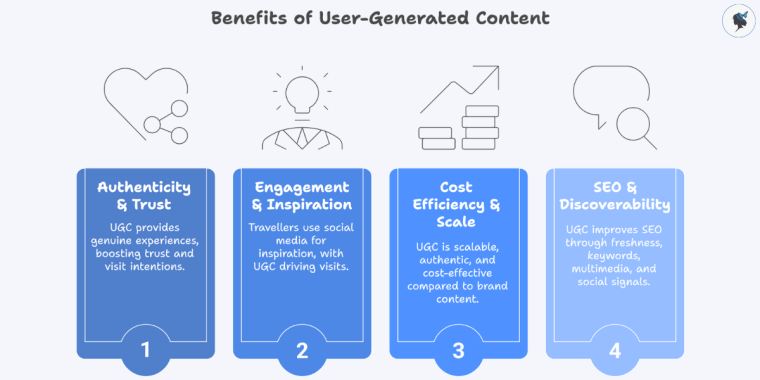
- Authenticity & trust: UGC offers “real people, real experience” rather than polished brand messages. A 2025 study found UGC has a significant positive effect on destination imagery and tourist visit intentions.
- Engagement and inspiration: In the travel sector particularly, 83% of travellers use social media for trip inspiration. Another stat: 86% of travellers were inspired to visit a location after seeing UGC.
- Cost efficiency & scale: Compared with high‑production brand content, UGC can be more scalable, authentic and cost‑effective. For example, a marketing stat notes that visual UGC is considered more impactful by 85% of marketers compared to professional photography.
- SEO & discoverability: UGC contributes to freshness signals, real traveller language (long‑tail keywords), multimedia content (photos/videos) and social signals that help search engines and users alike.
You might like our post: Use UGC to Enhance Your Travel Brand’s Trust
2. How UGC Impacts SEO & the Travel Funnel
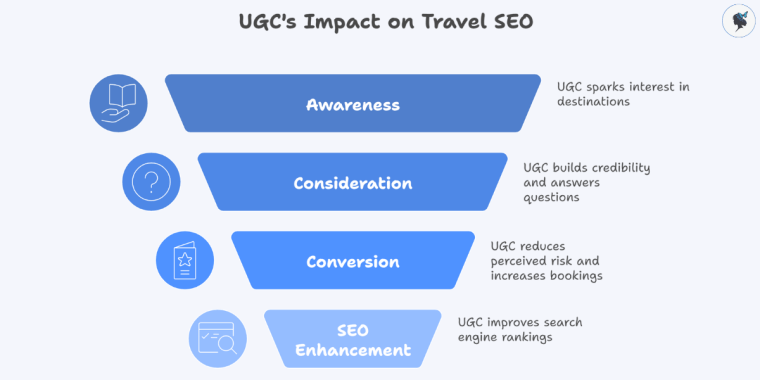
- Awareness phase: UGC helps travellers discover destinations (“I saw this Instagram reel and now want to go”).
- Consideration phase: Reviews, photos, videos from travellers build credibility and answer questions (“What’s it really like staying at this hotel?”).
- Conversion phase: Real‑traveller content reduces perceived risk, making bookings more likely.
- SEO in action:
- Fresh UGC updates signal to search engines a page is current and relevant.
- Traveller language captures long‑tail, conversational keywords (e.g., “what it was like to stay in a tree house in Costa Rica”). More about Long-Tail Keywords here.
- Multimedia UGC supports rich search results (image/video search, Google Discover).
- Internal linking of UGC pages into destination/service hubs strengthens topical authority.
- Metric improvements: UGC often leads to longer time on page, deeper scrolls (since people enjoy real‑traveller content), better engagement metrics—all of which can support rankings.
Wander Women Hot Tip: Build your content funnel around UGC touchpoints:
- For TOFU (top‑of‑funnel) create “traveller story” pages and galleries.
- For MOFU (middle) embed UGC into destination/service hub pages (real review + service link).
- For BOFU (bottom) use UGC testimonials and case studies that push toward booking.
Map your internal linking so that UGC feeds into your commercial pages.
Check out: The Complete Digital Marketing Funnel for Travel
Best Practices for Leveraging UGC as SEO Assets
1. Curate and Showcase UGC Strategically

- Create dedicated sections on your site for UGC: e.g., “Traveller Gallery”, “Real Stories”, “Trip Highlights”. Use these as entry‑points and link into hub/destination/service content.
- Use UGC in blog posts: integrate traveller quotes, photos, video snippets to humanise content and make it richer.
- Build content clusters: For example, a destination page that includes brand content + embedded UGC streams (photos/videos) + links to sub‑pages. This boosts structure and authority.
- Maintain quality control: Not all UGC will be suitable. Filter for relevance, authenticity, and brand fit. Research shows UGC influences tourist image and behaviour only when perceived as genuine.
- Refresh UGC often: A destination page that embeds new traveller posts signals freshness to search engines and encourages repeat visits.
- Align UGC showcase with user‑intent: E.g., if the page is “Adventure Travel in Iceland”, select UGC showing adventure contexts rather than leisure pool images.
2. Integrate UGC with On‑Page SEO Elements
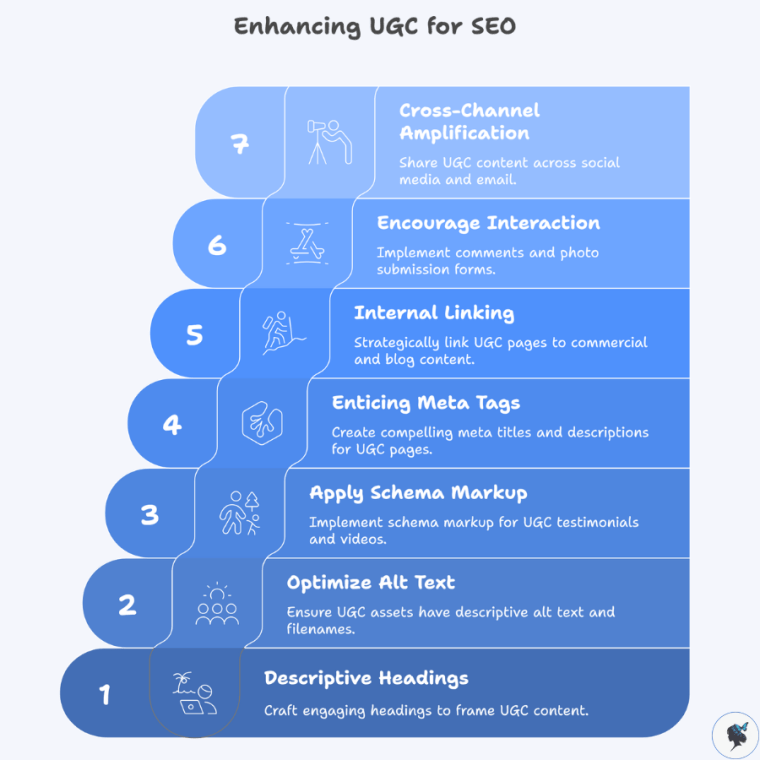
- Use descriptive headings/sub‑headings that frame UGC: e.g., “See real traveller photos from our Maldives resort”, “What guests say: tree‑house experience in Belize”.
- Optimize alt text and filenames of UGC assets: eg “solo‑female‑traveller‑hiking‑Torres‑del‑Paine.jpg” or “family‑trip‑senior‑couple‑Santorini‑sunset.png”.
- Apply schema markup where relevant: Review schema around UGC testimonials, VideoObject schema for traveller videos.
- Meta tags: Create enticing meta titles/descriptions for UGC‑rich pages (“Real traveller photos & reviews of XYZ resort – see what it’s really like”).
- Internal linking strategy: Link from UGC pages to commercial/service pages (“Book the same villa our guest visited”), and from blog content into UGC pages for deeper engagement.
- Encourage user‑interaction: Optional comments or “submit your photo” forms increase dwell time and activity on page.
- Cross‑channel amplification: Use UGC‑led content in social media, email, newsletters to drive traffic back to on‑site pages (which improves search signals).
3. Monitor & Optimize Performance
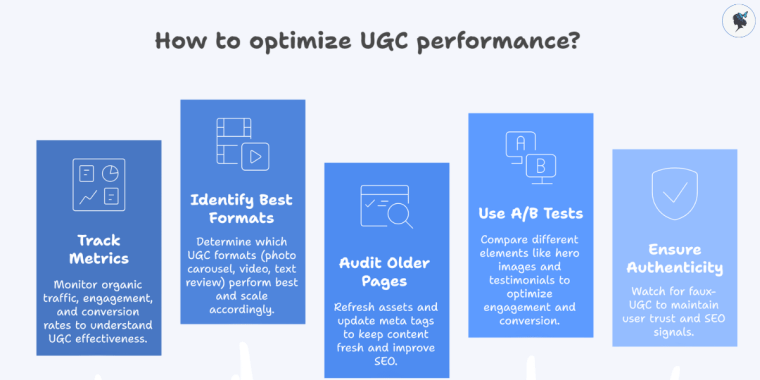
- Track metrics: organic traffic to UGC pages, engagement (time on page, scroll depth), conversion from UGC content (clicks to booking).
- Identify which UGC formats perform best (photo carousel vs video vs text review) and scale accordingly.
- Audit older UGC pages: refresh assets, update meta tags, add new traveller posts to keep content fresh (search engines reward recent updates).
- Use A/B tests: e.g., UGC gallery hero vs brand hero image, UGC testimonial vs no testimonial. Compare engagement and conversion outcomes.
- Watch for faux‑UGC or irrelevant content—it may harm user trust and SEO signals. Authenticity matters.
Wander Women Hot Tip: Maintain a UGC content calendar: schedule quarterly refreshes of your UGC‑rich pages, track when traveller content awaits moderation, and ensure each UGC update prompts a mini‑SEO audit (alt text, schema, linking).
Effective Strategies for Soliciting UGC from Travellers
1. Build a UGC‑Friendly Ecosystem

- Make it easy for travellers to submit their content: mobile upload forms, dedicated hashtag campaigns, photo spot prompts during or after the trip.
- Incentivise contributions: run UGC contests (e.g., “Best sunset photo from our Bali resort”), feature winners, offer small rewards or recognition.
- Use branded hashtags and prompts: “#OurBrandTraveller”, “#MyResortStory” – encourages sharing and helps aggregation.
- In‑trip prompts: At check‑in, on‑tour, create signage or digital prompts encouraging travellers to tag your brand and share their moments.
- Post‑trip follow‑up: send automated emails or SMS shortly after travel inviting submissions (“Share your favourite photo & you could be featured”).
- Legal and rights management: ensure travellers agree to your terms for content reuse (photo rights, social media tags) at the point of submission.
2. Encourage UGC That Is SEO‑Friendly
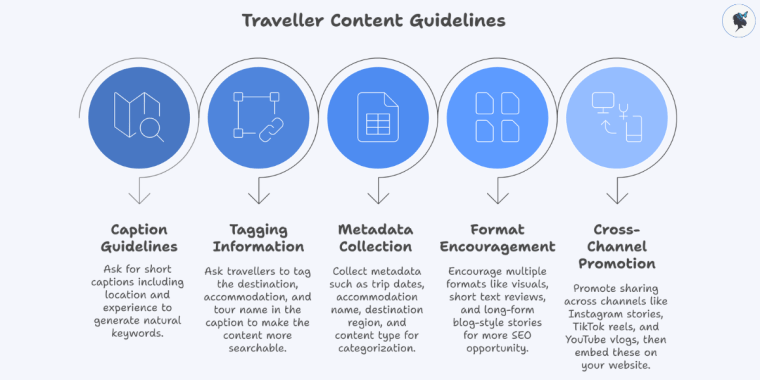
- Provide guidelines to travellers: ask for short captions including location + experience (e.g., “Hiking the red dunes of Wadi Rum – best trip ever”). This helps generate natural keywords.
- Ask travellers to tag the destination, accommodation, tour name in the caption (makes the content more searchable, helps link building).
- Collect metadata: ask for trip dates, accommodation name, destination region, content type (photo, video, review) so you can later categorise and use effectively.
- Encourage multiple formats: visuals (photos/videos), short text reviews, long‑form blog‑style stories (if willing) — more formats mean more SEO opportunity.
- Promote sharing across channels: Instagram stories, TikTok reels, YouTube vlogs – you can then embed these on your website for richer content.
3. Manage and Moderate UGC Efficiently
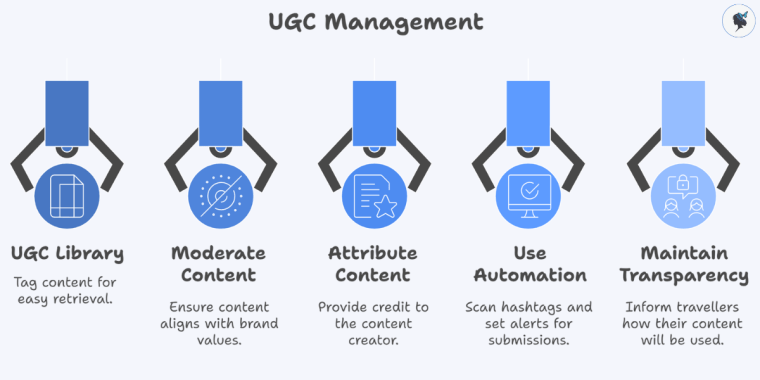
- Create a UGC library (digital asset management): tag content by destination, trip type, season, traveller persona. Makes retrieval for content creation easier.
- Moderate for quality & relevance: ensure the content aligns with your brand values, destination, and avoids irrelevant/spam posts. Lack of authenticity may undermine trust.
- Attribute properly: always provide photo/author credit, link to the user where possible (improves authenticity and community feeling).
- Use automation where possible: scanning hashtags, setting alerts for submissions, using workflow tools for approval and tagging.
- Maintain transparency: let travellers know how their content will be used; this builds willingness to participate and ensures compliance.
Wander Women Hot Tip: Create a “Traveller UGC Kit” you send to past guests: sample captions, suggested hashtags, simple steps to upload/share their content. The more friction you remove, the more UGC you will receive.
Techniques for Optimising UGC for Search Engines
1. Structuring UGC for SEO Impact
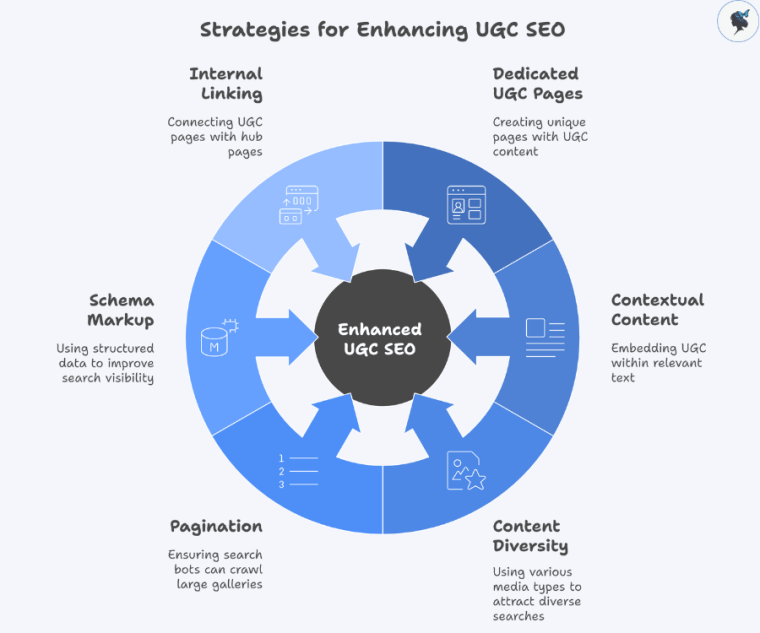
- Create dedicated UGC‑rich pages with unique URL, title, meta description, e.g.,
/traveller‑stories/destination‑x/. - Ensure UGC is embedded within strong contextual content: not just a gallery, but heading, intro paragraph, text around it explaining relevance (“This is what it’s like to hike the glacier…”) which improves readability, scroll depth and SEO.
- Mix content types: use photos, videos, reviews — this diversity improves chances of appearing in various search results (image search, video search, Google Discover).
- Consider pagination for large galleries but ensure search bots can crawl (avoid infinite scroll without fallback).
- Use schema markup: For example, mark up an embedded traveller video with
VideoObject, or a review withReview. - Link to it: Internal linking from destination/service hub pages to UGC page and vice versa helps distribute SEO value.
2. Keyword Strategy Within UGC
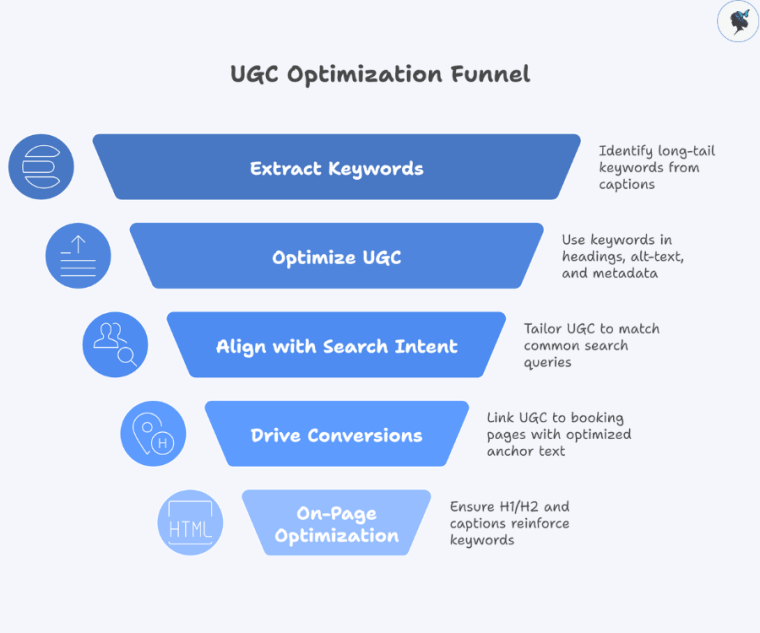
- Extract organic language from traveller captions/comments to spot real‑world long‑tail keywords (e.g., “family friendly resort Maldivian lagoon with kids”).
- Use those keywords in sub‑headings, alt‑text, captions, and metadata around the UGC.
- Align UGC pages with search intent: e.g., if travellers often search “what it’s like staying in over‑water villa Maldives”, then embed relevant UGC and tailor the page accordingly.
- Make sure the UGC helps push users down the funnel: link from the UGC story to booking/tour page with anchor text optimised for action (e.g., “Book the same villa our guest stayed in”).
- On‑page optimisation: Ensure H1/H2 include target keywords, alt‑text for images include destination + experience, captions reinforce the topic.
3. Technical & On‑Page Optimisation
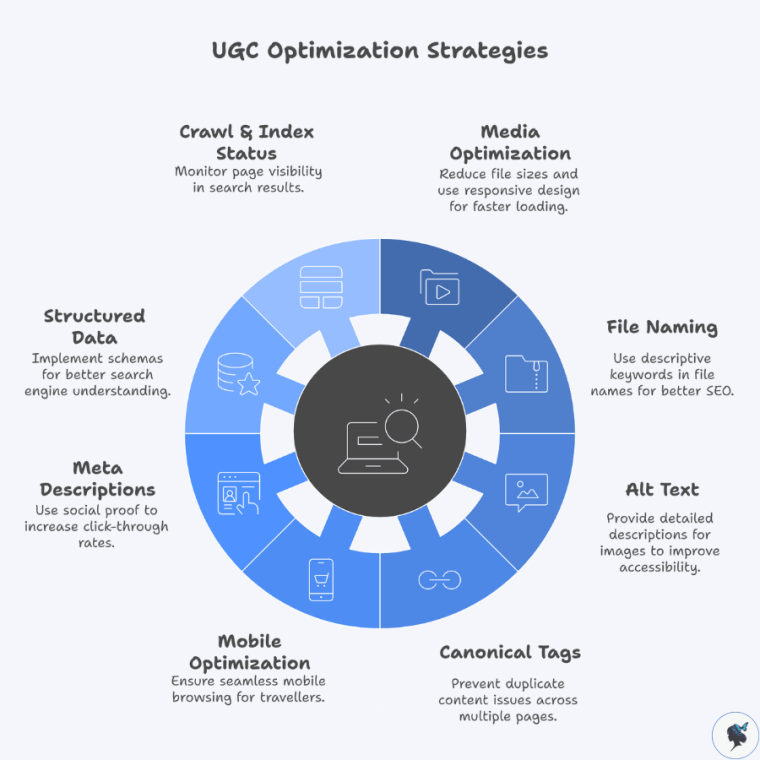
- Optimize media: large volumes of high‑resolution images/videos can slow page speed. Use compression, lazy loading, responsive design.
- File naming: rename server files to include keywords (e.g.,
solo‑female‑traveller‑hiking‑Torres‑del‑Paine.jpg). - Alt text: described in natural language including destination plus experience (“Solo female traveller hiking at sunrise Torres del Paine national park”).
- Canonical tags: If UGC appears on multiple pages, ensure canonicalization to avoid duplication.
- Mobile‑first optimisation: Ensure UGC pages load well on mobile since many travellers browse on smartphones.
- Meta descriptions: Use social proof (“See real traveller photos & reviews from Destination X”) to boost click‑through rate (CTR).
- Structured data: Use
Reviewschema for UGC testimonials,ImageObjectorVideoObjectschema for galleries and videos. - Monitor crawl & index status: Use Google Search Console to ensure UGC‑rich pages are crawled and indexed.
4. Measuring & Iterating
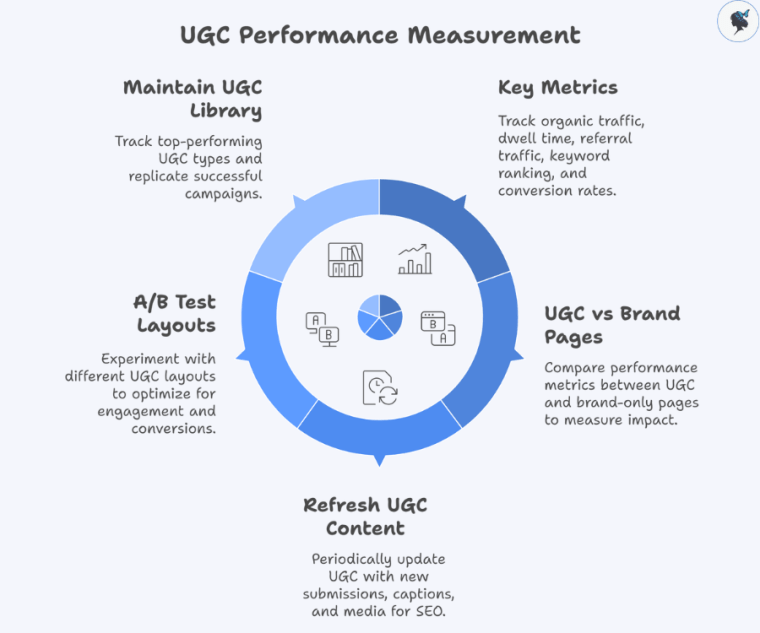
- Key metrics: organic traffic to UGC pages; dwell time/scroll depth; referral traffic to booking pages; keyword ranking improvement; conversion rates (booking enquiries) originating from UGC content.
- Compare UGC vs brand‑only pages: measure if embedding UGC leads to improved performance (e.g., lower bounce rate, higher pages per session).
- Refresh UGC content periodically: add new traveller submissions, update captions, refresh images/videos — freshness supports SEO.
- A/B test UGC layouts: e.g., hero image from traveller vs brand image; testimonial block vs no testimonial; call‑to‑action at bottom of UGC page vs none.
- Maintain UGC library insights: track top performing UGC types (videos, scenic photos, cultural moments) and replicate similar campaigns.
Wander Women Hot Tip: Schedule a quarterly UGC SEO audit: list all pages with embedded traveller content, check alt‑text, meta title/desc, internal linking, page speed, mobile performance. Prioritise fixes for pages with high traffic but low conversion.
Real‑World Examples of Travel Companies Using UGC to Drive SEO & Engagement
- Airbnb: Frequently uses guest‑shared photos and reviews in its destination pages and blog, helping travellers visualise “what it’s really like” and improving engagement.
- Destination marketing example: A recent study found that UGC significantly improves destination image and intentions to visit, illustrating that DMO/brand‑driven UGC campaigns can shift demand materially.
- Key takeaway for travel agencies: You may not have massive budgets, but you can embed UGC in your site, build galleries, feature “Traveller of the Month”, and link stories to service offers. Over time, this builds topical authority and trust.
Wander Women Hot Tip: Pick one UGC campaign (e.g., “Show us your stay at Resort X”), run it for 3 months, embed the resulting content in a destination hub page, and monitor traffic, engagement and conversions vs a similar page without UGC. Use the results to scale.
Conclusion
User‑generated content is not a nice‑to‑have extra in the travel industry—it’s an SEO‑strong asset, a trust builder, and a engagement amplifier. For travel agencies and brands willing to invest in soliciting, curating and optimising UGC, the benefits are clear: more organic traffic, higher engagement, better conversion potential, and authentic connection with travellers.
To recap the strategy:
- Solicit UGC intentionally (with prompts, incentives, seamless workflows).
- Curate it smartly (destination‑relevant, quality controlled, integrated into content hubs).
- Optimise it for web (alt text, schema, internal linking, media optimisation).
- Measure and iterate (audit quarterly, refresh content, replicate what works).
Start small, pick a pilot destination or service, embed traveller content, optimise around long‑tail keywords derived from that content, and use it as a proof case internally.
Wander Women Hot Tip: Use your first 90 days to build a “UGC starter kit”: write a brief for traveller submissions, design a UGC gallery page template, map the internal linking path to your service/booking pages, and schedule the quarterly review. Once the system is set, you’ll continuously gain UGC, SEO value and conversions with decreasing incremental effort.
Need help? Contact us today to get started!
Discover more from Wander Women Strategies
Subscribe to get the latest posts sent to your email.

8 thoughts on “How Travel Brands Can Use User‑Generated Content as SEO Assets”
Comments are closed.