
▶ Table of Contents
- Introduction
- Why Content Marketing Matters for Travel Agencies
- Methods to Track and Attribute Leads/Bookings to Content
- Tools and Analytics Platforms for Measuring Content Effectiveness
- Case Studies: Successful Attribution in Travel
- Actionable Tips to Improve Content Strategy Based on Attribution Insights
- Conclusion
Introduction
For travel agencies, content marketing is more than a brand-building exercise—it’s a revenue driver. Blogs, destination guides, social media posts, and videos all work together to engage travelers, answer their questions, and guide them toward booking. Yet, one of the biggest challenges agencies face is proving the ROI of content.
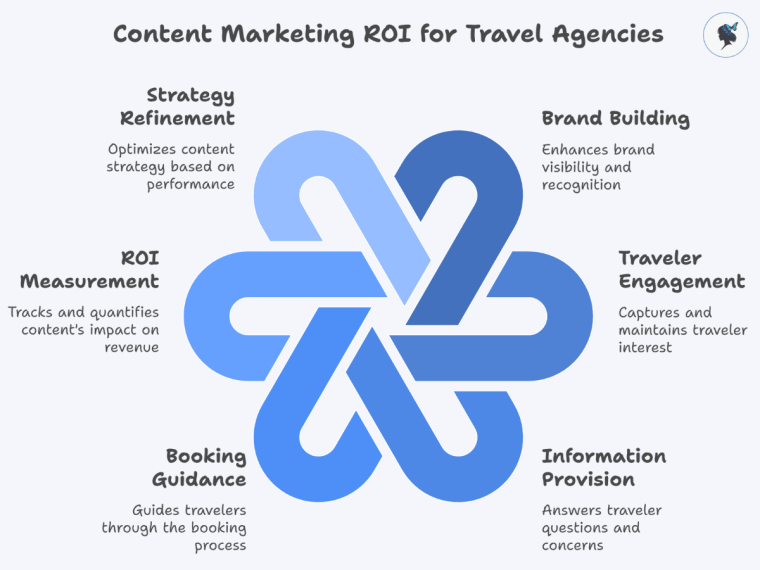
Unlike paid ads, which provide immediate tracking of clicks and conversions, content often has a longer, more subtle influence on bookings. Travelers may read multiple blog posts, follow your social media, and download itineraries before making a reservation. Accurately attributing bookings and leads to these content interactions is essential to justify investment and refine strategy.
Wander Women Hot Tip: Start by auditing all your content channels—blogs, emails, social media—to identify where travelers first engage and how content contributes to the booking journey.
Why Content Marketing Matters for Travel Agencies
Content is the bridge between travelers’ curiosity and their decision to book. Here’s why it’s essential:
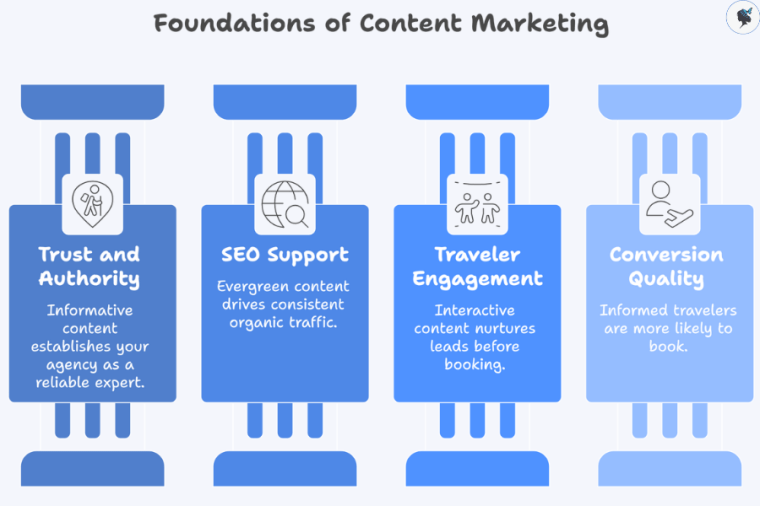
- Builds Trust and Authority: Informative content like destination guides, tips, and itineraries positions your agency as an expert.
- Supports Long-Term SEO: Evergreen content drives consistent organic traffic year-round.
- Engages Travelers: Interactive blogs, videos, and social posts nurture leads before they book.
- Improves Conversion Quality: Travelers who engage with content are typically better informed and more likely to convert.
Methods to Track and Attribute Leads/Bookings to Content
Attribution methods determine which content influences conversions. For travel agencies, consider these approaches:
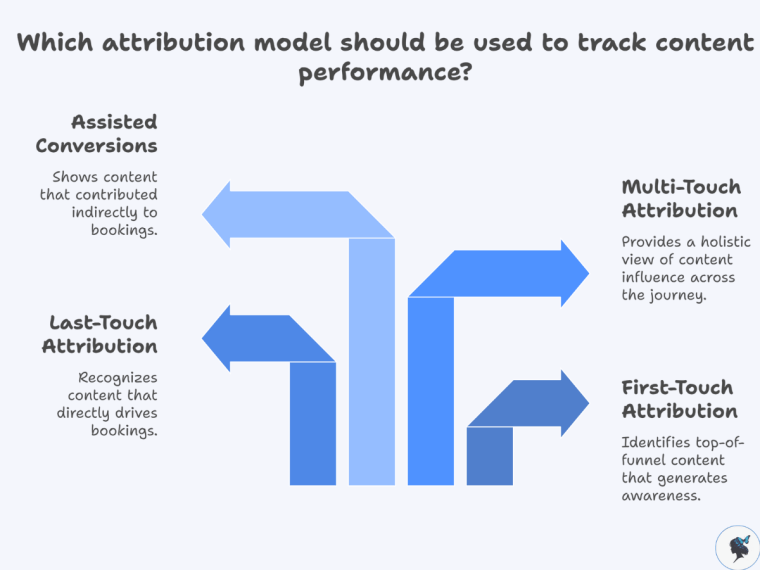
1. First-Touch Attribution
- Assigns credit to the first piece of content a traveler interacts with.
- Helps identify top-of-funnel content that generates awareness.
- Example: A blog post about “Best Beaches in Spain” introduces a traveler who later books a package.
Read our guide: The Complete Digital Marketing Funnel for Travel
2. Last-Touch Attribution
- Assigns credit to the final content before a conversion.
- Useful for recognizing content that directly drives bookings.
- Example: An email campaign or detailed itinerary PDF that the traveler interacts with just before booking.
Read our guide: AI-Driven Email Personalization
3. Multi-Touch Attribution
- Distributes credit across all interactions in the traveler’s journey.
- Provides a holistic view of content influence, from blog posts to social media shares.
- Example: Traveler reads a blog post, watches a YouTube destination video, and then opens a follow-up email before booking.
4. Assisted Conversions / Content Path Analysis
- Shows which content contributed indirectly to bookings.
- Useful for mid-funnel content like checklists, travel guides, and Instagram posts.
Wander Women Hot Tip: Track content performance by destination, season, or travel type to uncover hidden patterns of influence on bookings.
Tools and Analytics Platforms for Measuring Content Effectiveness
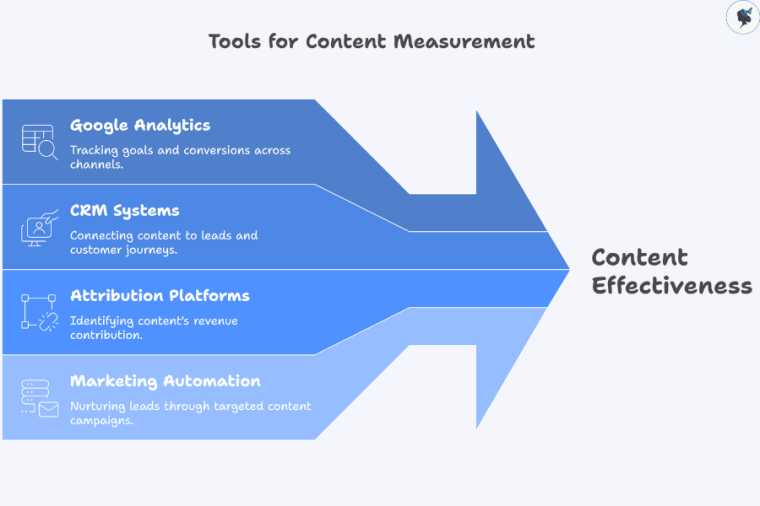
Google Analytics
- Track goals and conversions for specific pages or campaigns.
- Use multi-channel funnel reports to see how content interacts with paid, organic, and social channels.
CRM Systems (HubSpot, Salesforce)
- Connect content interactions to individual leads.
- Monitor the full customer journey from content engagement to booking.
Attribution Platforms (Ruler Analytics, Funnel.io)
- Provide advanced multi-touch attribution reporting.
- Identify which content pieces contribute the most revenue.
Marketing Automation Tools
- Track emails, clicks, and content interactions.
- Nurture leads through targeted campaigns and monitor content’s influence.
Wander Women Hot Tip: Use UTM parameters on blogs, social posts, and emails to track exactly which content drives traffic and leads.
Case Studies: Successful Attribution in Travel
Example 1 – Major UK Travel Company
A UK travel company adopted a multi-touch attribution model to better understand how customers moved across channels before making a booking. By mapping the full customer journey—rather than relying on last-click attribution—the company was able to evaluate the true impact of blogs, email, paid media, and social touchpoints working together. This approach revealed how different channels contributed at various stages of the funnel, enabling the marketing team to make more informed budget decisions, optimize campaign performance, and demonstrate the real business value of their marketing efforts, even when individual channels were not the final point of conversion.
Example 2 – Travel Nevada
Travel Nevada, the state’s official destination marketing organization, demonstrated how email newsletters paired with strong content can drive measurable engagement. After revamping its email strategy with a greater focus on travel inspiration, itineraries, and visitor guides, the organization saw clear performance gains across key metrics. Email-driven sessions to the website increased by 23%, while requests for the official visitor guide rose by 150%, indicating deeper engagement from subscribers actively planning trips. The campaign also led to substantial growth in newsletter sign-ups and partner referrals, reinforcing the role of content-led email marketing in moving audiences from inspiration to meaningful action.
Example 3 – Regional Tourism Board
Atout France, in partnership with regional tourism boards such as Provence-Alpes-Côte d’Azur, used market and performance data to adjust seasonal campaigns and promote autumn and winter travel to the French Riviera and Provence. By shifting messaging toward off-season experiences and targeting travelers earlier in the planning cycle, the initiative increased interest and bookings during typically slower periods, demonstrating how data-driven campaign optimization can help stimulate off-season tourism.
Wander Women Hot Tip: Identify content that consistently appears in the conversion path and prioritize updates, promotion, or repurposing.
Actionable Tips to Improve Content Strategy Based on Attribution Insights
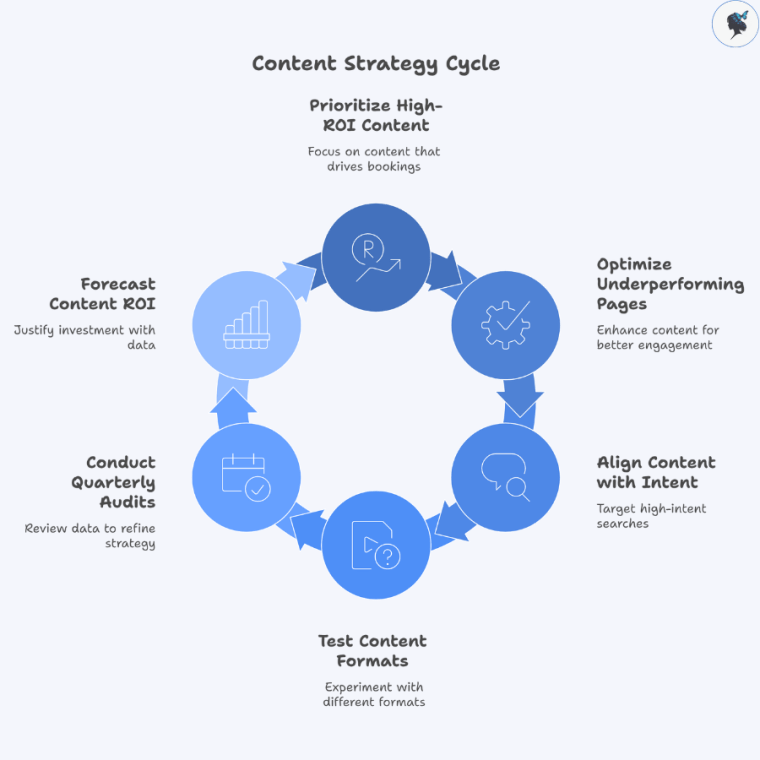
- Prioritize High-ROI Content: Focus resources on blogs, guides, and videos that consistently contribute to bookings.
- Optimize Underperforming Pages: Update information, add calls-to-action, or reformat content to increase engagement.
- Align Content with Intent: Create content targeting high-intent searches based on attribution insights.
- Test Content Formats: Experiment with videos, infographics, or interactive maps, and monitor which formats drive leads.
- Quarterly Audits: Regularly review attribution data to refine strategy and adjust budgets.
Wander Women Hot Tip: Use attribution insights to forecast content ROI for upcoming campaigns, helping justify investment to leadership or stakeholders.
Conclusion
Attributing bookings and leads to content is essential for travel agencies looking to justify content marketing investment. While content may not generate immediate conversions like paid ads, it often influences the traveler’s journey at multiple touchpoints.
By implementing first-touch, last-touch, and multi-touch attribution, and leveraging analytics tools, agencies can:
- Understand which content drives awareness and bookings
- Optimize content strategy based on data-driven insights
- Increase ROI and justify marketing spend
Final Wander Women Hot Tip: Start small by tracking first-touch and last-touch attribution, then scale to multi-touch for deeper insights. Treat your content as an investment that compounds over time, building trust, engagement, and ultimately, more bookings.
Need help tracking your ROI? Contact us today!
Discover more from Wander Women Strategies
Subscribe to get the latest posts sent to your email.
