Ways AI Can Enhance Travel Content Personalization: AI-Driven Email Personalization

▶ Table of Contents
  1. Introduction
  2. Understanding AI in Travel
  3. AI-Driven Email Personalization: The Future of Targeted Travel Campaigns
  4. Case Study: BrazeAI Decisioning Studio — AI-Powered Optimization for Personalized Engagement
  5. Benefits of AI-Personalized Emails for Travel Agencies
  6. Implementation Strategies: How Travel Agencies Can Adopt AI-Driven Email Personalization
  7. Conclusion

Introduction

In today’s travel industry, personalization isn’t a “nice-to-have” — it’s an expectation. Modern travelers expect offers, content and communications that reflect their interests, previous trips, budget, and style. For travel agencies, this shift means moving beyond generic email blasts or one-size-fits-all newsletter templates.
That’s where artificial intelligence (AI) steps in. By analysing user behaviour, past bookings and contextual data, AI can transform how travel agencies craft and deliver highly personalized travel content — especially via email campaigns.
In this post, we’ll explore how AI works in the travel space, dig into how it drives email personalization, examine a leading case study, outline the clear benefits for travel agencies, and provide actionable implementation steps. If you’re aiming to boost engagement, conversion and customer loyalty through smarter email marketing — this is for you.


Understanding AI in Travel

What is AI?

Artificial Intelligence (AI) refers broadly to computer systems that can perform tasks typically requiring human intelligence: learning from data, recognising patterns, making predictions, and sometimes generating content. Within travel marketing, AI often looks like machine-learning models, predictive analytics, dynamic content generation and automation of repetitive tasks.

Infograph: AI-driven personalization in travel
AI-driven personalization in travel

Relevance of AI in the Travel Industry

The travel industry is awash with data: traveller profiles, booking histories, preferences, search queries, seasonal trends and more. But gathering data isn’t enough — the real value comes from turning that data into meaningful insights and tailored experiences.
According to research, the market for AI-driven travel experience personalization was valued at around USD 3.61 billion in 2024, with a projected CAGR of 22.3% from 2025-2032. Furthermore, AI-driven personalisation in tourism marketing has been shown to deliver conversion increases of up to 20-25%.
This means for travel agencies: AI isn’t futuristic—it’s already reshaping how travellers engage, how offers convert, and how content must be crafted.


AI-Driven Email Personalization: The Future of Targeted Travel Campaigns

The Role of AI in Email Marketing

Email remains one of the most effective channels for travel agencies: you own the list, you control the message, you can guide travellers from email → landing page → booking. But generic blasts no longer cut it. According to a 2024 study, personalised emails delivered 6× more transactions than non-personalised ones.
Here’s how AI upgrades email marketing for travel agencies:

Infograph: Ai in email marketing strategies
Ai in email marketing strategies
  • Behavioural analysis: AI examines how travellers have previously engaged — which destinations they viewed, which trip types they booked, what emails they clicked, what content they ignored.
  • Demographic & profile data: Age, travel frequency, solo vs family, preferred style (luxury, budget, adventure) feed into segmenting and personalising offers.
  • Contextual data: Seasonality, upcoming holidays, weather, location, time of day — AI uses this to send more timely and relevant messages (for example: “City break escapes for early Autumn” rather than generic “Summer deals”).
  • Predictive modelling: AI anticipates when a traveller is poised to book again — and sends the right message at the right time.
  • Dynamic content generation: Email subject lines, body copy, images and CTA buttons can all be tailored per recipient, improving relevance and engagement.

More about managing seasonal content here.

Key AI Techniques Used in Email Personalization

Infograph: Ai-driven email personalization funnel
Ai-driven email personalization funnel
  • Segmentation & clustering: Rather than manual segments (“families”, “solo travellers”), AI creates ever-changing clusters based on behaviour, intent and patterns.
  • Predictive scoring: Assigns scores to each user (likelihood to engage, likelihood to book), enabling prioritised targeting.
  • Personalised recommendations: Based on past behaviour and preferences, the AI suggests destinations or itineraries the traveller is most likely to respond to.
  • Automated A/B and multivariate testing: AI continuously experiments with subject lines, send times, visuals, copy, and learns which variant performs best — automatically.
  • Real-time optimisation: If a traveller clicks on a city-break email and visits your site, the next email can adjust its content accordingly (e.g., offering hotel options in that city).

More about A/B testing here.

Why It Matters for Travel Content

For travel agencies, lever­aging AI in email campaigns means the difference between “Here are 100 generic trip deals” and “Here’s a hand-picked 5-day itinerary in Lisbon that matches your food-lover profile, budget and family size”. The latter builds trust, improves conversion, and drives up lifetime value.


Case Study: BrazeAI Decisioning Studio — AI-Powered Optimization for Personalized Engagement

Overview of BrazeAI Decisioning Studio

BrazeAI Decisioning Studio is an AI marketing automation platform that specialises in self-learning personalization for email and other channels. They replace traditional A/B testing with machine-learning models that continuously optimise each offer. Their clients span hospitality, travel, retail and other industries.

How it Works

  • The AI analyses individual-level data: past transactions, engagement metrics, preference data.
  • It identifies which offer type (discount vs upgraded package vs loyalty reward) appeals to which user.
  • It picks the best send time, channel (email, push, SMS) and subject line for each user.
  • It adapts over time — learning what works for each segment and improving campaign performance.

Application in the Travel Industry

Imagine a travel agency uses BrazeAI Decisioning Studio:

  • They pull data on who has booked adventure trips versus beach holidays versus city breaks.
  • The AI segments newsletter recipients by these profiles.
  • For the “adventure seekers” segment: an email goes out with a subject line like “Ready for your next adrenaline rush? See our Peru trekking deals”, sent on Wednesday morning when this segment historically opens most.
  • For “family beach holiday” segment: an email offers early-bird booking for summer escapes, subject line “Family summer fun: 3 nights free if you book by June!”.
  • The results: higher open rates, higher click-throughs, stronger conversions. Travel agencies report boosted engagement and improved ROI thanks to AI-personalized offers.

Why This Matters

  • Shows real use of AI in automating what was previously manual and guesswork-driven.
  • Demonstrates how email content becomes “smart” — personalised and adaptive, rather than one-size-fits-all.
  • Travel agencies gain a strategic asset: targeted messaging based on data and AI insights, not just gut feel.

Benefits of AI-Personalized Emails for Travel Agencies

Let’s break down the advantages your agency can expect when you adopt AI-driven email personalization.

infograph: Ai-driven email personalization
Ai-driven email personalization
  • Enhanced Customer Engagement
    Personalized emails resonate more. Data shows personalised campaigns see 29% higher open rates and 42% higher conversions than generic ones.
  • Higher Conversion Rates
    By sending the right offer at the right time to the right person, you reduce friction and increase booking probability.
  • Improved Customer Retention
    Personalization fosters loyalty — travellers feel recognised and valued. Post-trip follow-ups, tailored up-sells and relevant offers drive repeat bookings.
  • Data-Driven Content Strategy
    Email AI tools generate insights about what travellers are responding to: destinations, trip types, content formats. This shapes blog topics, landing pages and future campaigns.
  • Operational Efficiency
    Automation means less manual segmentation, fewer generic blasts, and more time for creative strategy and high-value client interactions.
  • Competitive Differentiation
    Agencies embracing AI-driven personalization position themselves as tech-forward, customer-centric, and likely ahead of competitors still doing mass newsletters.

More about using AI in personalized itineraries here.


Implementation Strategies: How Travel Agencies Can Adopt AI-Driven Email Personalization

Here’s a practical step-by-step roadmap to help your travel agency get started.

infograph: AI email personalization implementation
AI email personalization implementation

Step 1: Audit and Consolidate Your Data

  • Gather data from your CRM, booking system, website analytics, email engagement history.
  • Ensure you have permissions, data hygiene and structure in place (GDPR compliance if operating in EU).
  • Identify key traveler-attributes you want to leverage: destination preferences, trip type, budget, companion type (solo, family, couple), past email engagement.

More about leveraging data here.

Step 2: Choose the Right AI Email Personalization Platform

Look for tools that integrate with your existing stack, support dynamic content, predictive modelling and automated optimisation. A few examples:

  • BrazeAI Decisioning Studio (for automated offer testing & personalization)
  • Mailchimp (offers AI features for subject lines and send time optimisation)
  • HubSpot (Marketing Hub with AI email personalization)

Wander Women Hot Tip: Ensure the tool supports your scale, data privacy needs and travel-specific requirements.

Step 3: Develop Dynamic Content Assets

  • Build a library of destination content, trip types, visuals, itineraries and offers.
  • Ensure flexible modules in your emails: dynamic placeholders for destination, budget tier, traveller segment.
  • Create copy templates tuned for traveller personas (family, solo adventure, luxury couple, etc.).
  • Use the AI platform to pull these modules and assemble tailored emails per recipient.

Step 4: Segment & Test — Start Small, Scale Fast

  • Pick one segment to start (e.g., “frequent travellers who booked city breaks last two years”).
  • Send control email (generic offer) and AI-personalised email side-by-side. Measure open, click and conversion rates.
  • Gradually expand to other segments as you learn what works.
  • Use AI’s automated testing to refine subject lines, send times and content blocks.

Step 5: Integrate with Your Broader Marketing Ecosystem

  • Synchronise email personalization with landing pages: the same traveller who clicks “family beach holiday” should land on a page with tailored content.
  • Integrate with your social media retargeting and chatbot efforts so the message is consistent across channels.
  • Use email insights to inform blog content: “Top 5 beach locations this segment clicked on” → blog post with tailored content for that audience.

Step 6: Monitor, Analyse & Optimize

  • Track KPIs: open rate, click-through rate, conversion rate (bookings from email), engagement depth, unsubscribe rate.
  • Use AI platform reports to identify what travel segments perform best and what offers resonate.
  • Iterate content: update assets, refresh visuals, adjust segments, refine timing.
  • Ensure data privacy and compliance: travellers may be increasingly sensitive to how their data is used. Maintain transparency.

Conclusion

In a travel world where consumers expect tailored experiences and instant, relevant communications, AI-driven email personalization offers a major leap forward. By leveraging traveller behaviour, preferences and contextual data, travel agencies can transform their email campaigns from “just another deal” into meaningful, customised journeys that resonate.
Platforms like OfferFit demonstrate how AI can power smarter segmentation, offer optimisation, dynamic content and clearer ROI. The benefits are clear: higher engagement, improved conversions, stronger loyalty, deeper content insights and operational efficiency.
If you’re reading this and wondering “Where do we start?” — here’s your prompt: begin with your data, pick an AI tool, build dynamic content templates, choose one test segment and run a personalised campaign. Measure the results. Then scale.
Personalisation is no longer optional — it’s expected. And with AI, your agency can deliver it at scale. Embrace AI for your travel-email strategy and watch your content, engagement and bookings soar.

Need help with your AI email strategy? Contact us today!

The Role of Natural Language Processing (NLP) for Chatbots

▶ Table of Contents
  1. Introduction
  2. Understanding NLP: The Language Engine Behind AI Chatbots
  3. How AI-Powered Chatbots Use NLP to Enhance Customer Interactions
  4. Benefits of Using Chatbots for Personalized Travel Advice
  5. Real-World Example: GuideGeek’s AI Chatbot for Personalized Travel Assistance
  6. How Travel Agencies Can Integrate AI Chatbots into Their Strategy
  7. Conclusion

Introduction

In today’s travel landscape, travellers expect more than generic replies and static FAQs. They want personalised, immediate responses when planning their trips — from choosing destinations to exploring local experiences. For travel agencies, this means evolving from standard web forms and email interactions to rich conversational experiences that feel tailored, responsive and intelligent.
Enter artificial intelligence (AI) chatbots powered by natural language processing (NLP) — the underlying technology that allows machines to understand, interpret and respond to human language. By leveraging NLP, travel agencies can deliver human-like travel conversations at scale: customised itineraries, on-the-fly adjustments, and 24/7 support.

infograph: AI-Driven travel experience cycle
AI-Driven travel experience cycle

In this article, we’ll explore what NLP is and why it matters for travel agencies, how AI chatbots use NLP to boost content personalisation and customer interactions, examine a real-world example (GuideGeek), and outline how your agency can integrate this technology into your content and service strategy.


Understanding NLP: The Language Engine Behind AI Chatbots

A. What is Natural Language Processing (NLP)?

NLP is a branch of AI that focuses on enabling machines to understand, interpret and generate human language — both written and spoken. It combines elements of linguistics, computer science, and data science to bridge the gap between human users and computer systems.

infograph: How to process traveller input?
How to process traveller input?

Within travel applications, NLP enables chatbots to parse traveller inputs such as “I’d like a family-friendly beach trip in June under €2,000” and extract key intents (family trip), entities (beach, June), constraints (budget) and preferences (family-friendly) to deliver meaningful responses.

B. Why NLP Matters in the Travel Industry

Infograph: Benefits of NLP in travel
Benefits of NLP in travel
  • Context-rich interactions: Travel conversations often contain nuance (e.g., “I want somewhere warm but not tourist-packed”, “We have a toddler and grandparents in our group”). NLP allows chatbots to pick up on those preferences and adapt.
  • Personalisation at scale: Traditional methods (manual chat, email responses) are labour-intensive and difficult to scale. NLP-powered chatbots automate many interactions while maintaining the “feel” of a personalised service.
  • Enhanced content strategy: When travellers engage with chatbots, they also generate data (preferences, queries, language used) that agencies can use to tailor content-topics, blog-posts, itineraries and landing pages.
  • SEO and service advantage: According to industry data, the AI in tourism market is growing rapidly — one source shows the global AI in tourism market valued at around USD 3.37 billion in 2024, with many travellers preferring brands that use AI for personalisation.

For example, a 2024 blog on AI in tourism marketing found that hyper‐personalisation via AI and chatbots can boost bookings by up to 25%.
Bottom line: NLP is the engine that enables chatbots to elevate personalised travel experiences — making it a strategic content and service tool for travel agencies.

You might be interested in our post: How to Build a Travel Content Strategy That Converts.


How AI-Powered Chatbots Use NLP to Enhance Customer Interactions

Here are the key ways chatbots use NLP to take travel personalization to the next level.

A. Understanding Traveller Intent

When someone types, “I’m looking for a romantic city break in Europe next month”, an NLP engine in a chatbot would:

  • Identify intent: romantic city break
  • Identify entities: Europe, next month
  • Recognise constraints: timeframe (next month), style (romantic)
    Then the chatbot can respond with suggestions (city options, hotels, romantic restaurants) tailored to that.
Infograph: How to respond to a user's query for a romantic city break in Europe?
How to respond to a user’s query for a romantic city break in Europe?

This precision is made possible by NLP features such as tokenization, named-entity recognition and intent classification.
For travel agencies, that means content can transition from generic “city break in Europe” to “romantic city break in Lisbon for early June” — and your chatbot can drive users toward a booking funnel or a blog post accordingly.

You might like: The Complete Digital Marketing Funnel for Travel.

B. Conversational Flow & Context Retention

Unlike static forms, NLP chatbots maintain context across a session.
Example: User starts with “I want to visit Greece in May” – chatbot replies with suggestions – user then adds “Make it under €1,500 and for three adults” – chatbot updates recommendations accordingly.

Infograph: NLP chatbot conversation
NLP chatbot conversation

This continuity is enabled by NLP models tracking conversation history, adjusting responses, and refining recommendations.
For a travel agency, this means your chatbot can guide a traveller through multiple steps (destination choice – accommodation – activities – add-ons) and retain their preferences – improving satisfaction and reducing drop-off.

C. Multilingual and Tone Adaptation

Travel is inherently global — travellers may speak many languages. Advanced NLP allows chatbots to:

  • Recognise input in multiple languages and respond accordingly.
  • Adjust tone based on the user (formal for business traveller, friendly for holiday-maker).
  • Interpret colloquial language or slang (e.g., “cheap eats near city centre”, “hidden gems off the beaten track”).
Infograph: How to enhance chatbot capabilities for global travel services?
How to enhance chatbot capabilities for global travel services?

This flexibility extends your content reach globally, enabling your agency to serve non-native speakers or niche travel segments effectively.

D. Real-Time Personalisation via Data Integration

NLP-driven chatbots, when integrated with CRM, booking systems and analytics, can deliver dynamic responses based on:

  • Past behaviours: returning traveller, previously booked ski trips, etc.
  • Contextual data: weather changes, local events, flight delays.
  • Preferences: dietary restrictions, budget ceilings, travel style.
Infograph: Personalised chatbot responses
Personalised chatbot responses

For example, if a traveller has previously booked eco-lodges, the chatbot can emphasise sustainable stays for their next trip.
This turns chatbots into personalised content engines — recommending not just general packages, but highly tailored itineraries matching the user’s profile.

You might like: Ways AI Can Enhance Travel Content Personalization: Personalized Itinerary Generation.


Benefits of Using Chatbots for Personalized Travel Advice

Infograph: Benefits of chatbots in travel
Benefits of chatbots in travel

Implementing NLP-powered chatbots offers concrete benefits for travel agencies and content strategy:

  • 24/7 availability: Chatbots never sleep — they can handle queries outside business hours, which many travellers expect.
  • Scalability: A single chatbot can handle thousands of interactions simultaneously, freeing human agents for complex cases.
  • Faster conversions: By guiding travellers through their preferences and narrowing options quickly, chatbots reduce friction and increase booking rates.
  • Enriched content insights: Every interaction supplies data on what travellers ask, how they phrase queries, what their preferences are — usable for blog ideas, landing pages, FAQs.
  • Improved customer satisfaction: According to a systematic review of chatbots in tourism, they enhance responsiveness and service quality.
  • Competitive differentiation: Agencies that use chatbots with NLP can position themselves as tech-savvy, personalised and client-centric.

One statistical highlight: though only 48% of travellers report using AI chatbots for assistance, about 65% say they prefer brands that use AI for personalisation.
In short: NLP-driven chatbots allow your agency to deliver personalised content and service at scale — improving engagement, bookings and brand reputation.


Real-World Example: GuideGeek’s AI Chatbot for Personalized Travel Assistance

A. Overview of GuideGeek

GuideGeek is an AI travel assistant created by Matador Network that operates via WhatsApp, Instagram and Facebook Messenger.

  • Free to use: travelers chat with the bot, ask for destinations, itineraries, restaurants, local experiences.
  • Powered by ChatGPT and real-time travel data integrations (> 1,000 sources) to deliver personalised suggestions.
  • Example usage: A user asked for a two-week trip and GuideGeek provided suggestions, accommodation ideas, restaurants and a draft itinerary — reducing planning time significantly.

B. Key Lessons for Travel Agencies

  • Free tool accessibility: Because GuideGeek is free and easily accessible, it demonstrates that travel personalisation via NLP is no longer limited to large players.
  • Brand integration potential: Matador provides white-label versions of GuideGeek for destination marketing organisations (DMOs), showing how agencies or DMOs could adopt similar chatbots.
  • Content leverage: Interactions with GuideGeek likely generate rich insights into what travellers ask for. Agencies can use that to craft blog posts (“What travellers ask our chatbot about Bali”) or landing pages based on FAQ data.
  • Operational partnership: Your agency could integrate a chatbot like GuideGeek (or similar) on messaging platforms to handle initial traveller engagement, freeing your human agents to follow up with tailored packages.

How Travel Agencies Can Integrate AI Chatbots into Their Strategy

Here’s a step-by-step roadmap for your agency to adopt NLP-powered chatbots.

Step 1: Identify Key Touchpoints

Infograph: Traveller engagement analysis and chatbot integration
Traveller engagement analysis and chatbot integration
  • Review where your travellers engage: website chat, WhatsApp, Facebook Messenger, Instagram DMs.
  • Analyse what queries you receive frequently: destination suggestions, budgeting, itinerary planning, local insider tips.
  • Determine which portion of queries can be handled by a chatbot vs which require human intervention.

Step 2: Choose the Right Chatbot Platform

There are many platforms that support NLP and travel use-cases, including some free or freemium options:

Which chatbot platform should be chosen?
  • Dialogflow (by Google) — supports NLP and integration across platforms.
  • ManyChat — no-code/low-code bot builder with Messenger, WhatsApp support.
  • Botpress — open-source chatbot framework if you want custom control.
  • Your agency can also partner with white-label travel-chatbot vendors (as Matador/GuideGeek did) to speed deployment.

Step 3: Personalise the Experience

Infograph: Steps to enhance bot personalisation
Steps to enhance bot personalisation
  • Train your bot with your agency’s own content: FAQs, destination guides, previous itineraries, traveller feedback.
  • Set up intents and entities relevant to your niche (e.g., “beach holiday under €1000”, “honeymoon in Greece”, “family ski trip Austria”).
  • Incorporate data capture: ask users for their travel style, budget, companions, past trips — feed this into your CRM and personalise responses.
  • Ensure the bot can escalate to a human agent when needed, and maintain context so hand-off is seamless.

Step 4: Monitor, Analyse & Optimise

Infograph: Improving chat-based customer service
Improving chat-based customer service
  • Track metrics: number of chats, conversion rate (chat → booking/lead), time saved, satisfaction ratings.
  • Analyse the conversation logs: what questions are common? What content do travellers want but you don’t currently provide? Use this for new blog ideas or landing pages.
  • Refine NLP models: improve intent classification, entity extraction, multilingual support as needed.
  • Integrate feedback loops: ask users after chat, “Was this helpful?” and use that data to improve responses.

Step 5: Align Content Strategy

Infograph: Chatbot data usage
Chatbot data usage
  • Use chatbot data to generate blog topics: e.g., “Top 10 things couples ask our AI travel bot about Bali”.
  • Create landing-pages or microsites based on high-query topics surfaced by the chatbot.
  • Use bot-prompts in newsletters or social posts: “Ask our travel bot where you should go next” — driving engagement and lead generation.

Conclusion

Natural Language Processing (NLP)-powered chatbots represent a major step forward in personalised travel content and service. For travel agencies, they offer a strategic tool to deliver tailored interactions, gather insights, and scale high-quality engagement.
By implementing a chatbot that uses NLP, your agency can:

  • Offer 24/7 personalised travel assistance via messaging apps or web chat
  • Extract content-intelligence from real-traveller questions and use that to inform blogs, landing pages and marketing
  • Streamline service workflows while maintaining a human-like experience
  • Position your brand as technology-forward and customer-centric

If you haven’t yet explored NLP chatbots, now is a great time. Start with a free or low-cost platform (Dialogflow, ManyChat, etc.), pilot with one messaging channel (e.g., WhatsApp or Messenger), capture traveller preferences, and monitor how many leads or bookings you generate from it.

Treat NLP chatbots not as a replacement for your human agents, but as a powerful extension of your content strategy and customer service — helping you scale personalisation in a meaningful way.

Need help? Contact us today!
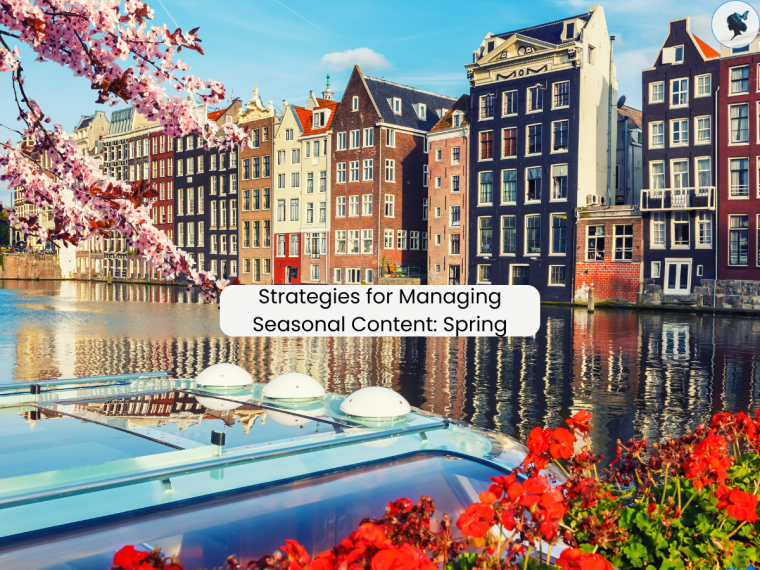
Strategies for Managing Seasonal Content: Fall

▶ Table of Contents
  1. Introduction: Why Fall Content Needs a Strategy
  2. Common Fall Content Issues
  3. Short-Term Fixes for Fall Content
  4. Long-Term Strategies for Fall Content
  5. Unique Fall Content Ideas
  6. Sample Fall Content Calendar
  7. Actionable Tips for Travel Agencies
  8. Conclusion

Introduction: Why Fall Content Needs a Strategy

Fall is a season that many travel agencies overlook, yet it offers unique opportunities for engagement and bookings. From autumn foliage and harvest festivals to cozy weekend getaways, the months of September through November see an influx of travelers seeking memorable experiences.

However, travel agencies often face challenges with fall content: traffic dips after summer, outdated blog posts, and limited SEO strategies targeting autumn-specific searches. According to Google Trends, searches for terms like “fall getaways” or “autumn road trips” spike in early September but taper off quickly, emphasizing the need for timely, optimized content.

This guide provides actionable strategies for managing fall content, covering common challenges, short-term fixes, long-term strategies, unique content ideas, and a seasonal calendar to maximize engagement and SEO performance.


Common Fall Content Issues

infograph: Capturing fall travel interest
Capturing fall travel interest

Fall content often underperforms due to several common pitfalls:

1. Missed Mid-Season Interest

  • Travel agencies frequently focus on summer vacations or winter holidays, neglecting fall-specific topics such as foliage tours, harvest festivals, and cozy autumn retreats.
  • This oversight results in missed opportunities to capture early fall planners or travelers seeking weekend getaways.

2. Pitfalls of Seasonal SEO

  • Overemphasis on summer or winter keywords can leave fall content with low organic visibility.
  • Autumn searches are highly seasonal and often competitive, requiring targeted optimization for phrases like “best fall foliage drives” or “autumn wine tours.”

3. Infrequent Updates

  • Many fall posts are not revisited annually, leading to:
    • Outdated itineraries and pricing
    • Broken links or expired events
    • Reduced search engine rankings

4. Lack of Localized Fall Guides

  • Generic content fails to attract travelers looking for specific regional experiences, such as New England foliage, Midwest harvest festivals, or Pacific Northwest wine tours.

5. Failure to Recycle or Repurpose Content

  • Agencies rarely adapt content from previous years or cross-seasonally, missing the chance to maintain relevance and build SEO authority year after year.

Read our post about repurposing content here.


Short-Term Fixes for Fall Content

infograph: Short-Term Fixes for Fall Content
Short-Term Fixes for Fall Content

Implementing short-term strategies can quickly improve visibility and engagement for autumn content.

1. Refresh Existing Fall Posts

  • Update previous autumn guides with the current year, fresh statistics, and new images.
  • Example: “Top 10 Fall Foliage Drives – Updated 2026.”
  • Update meta descriptions to reflect current events and offers for improved click-through rates.

More about meta descriptions here.

2. Use Fall-Specific Keywords

  • Incorporate high-intent keywords like:
    • “fall festivals near me”
    • “autumn weekend getaways”
    • “best cider tours in fall”
  • Target long-tail keywords to reduce competition and attract travelers ready to book.

Learn more about long-tail keywords here.

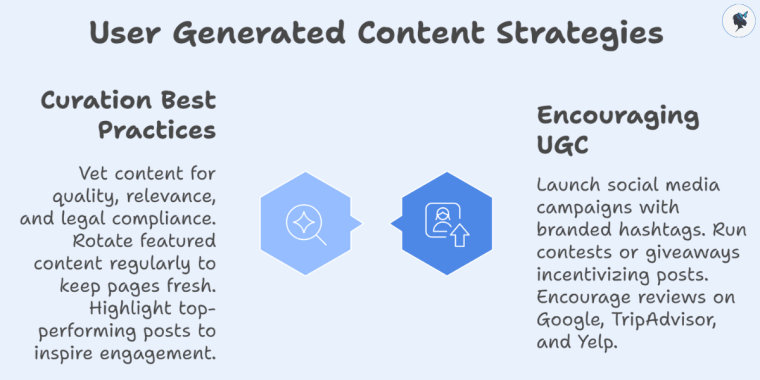
3. Encourage User-Generated Content (UGC)

  • Collect traveler photos, stories, and reviews to enhance engagement and social proof.
  • Campaign idea: “Share Your Favorite Fall Adventure”.
  • UGC helps with fresh content generation, SEO, and social media promotion.

More about user-generated content here.

4. Launch Early Fall Campaigns

  • Promote autumn escapes in late summer to capture early planners.
  • Include themed blog posts, local event roundups, and promotional packages.

5. Integrate Localized Content

  • Highlight regional experiences:
    • Foliage tours
    • Harvest festivals
    • Local food and wine trails
  • Localized content attracts high-intent travelers and improves SEO for geo-targeted searches.

More about attracting high-intent travelers here.


Long-Term Strategies for Fall Content

Infograph: Long-Term Strategies for Fall Content
Long-Term Strategies for Fall Content

For sustainable success, travel agencies should implement long-term strategies that maintain relevance and maximize SEO performance.

1. Build Evergreen Fall Content

  • Create guides that remain valuable each year, such as:
    • “Best Autumn Road Trips in the U.S.”
    • “Top Cozy Fall Stays for Couples”
  • Evergreen content minimizes the need for new posts while retaining search engine authority.

More about evergreen content here.

  • Collaborate with local DMOs, tourism boards, and event organizers to generate inbound links.
  • Linking fall content to off-season guides or holiday promotions strengthens SEO and increases site authority.

3. Segment Content by Topics

  • Organize fall content into themes for better user navigation and SEO:
    • Foliage drives and scenic locations
    • Food and harvest festivals
    • Cozy stays and cabin getaways

More about content clusters here.

4. Track and Optimize Seasonal Keywords

  • Use tools like Sitebulb, Semrush, or Ahrefs to monitor autumn keyword trends.
  • Re-optimize content annually based on search volume, competition, and engagement metrics.

5. Align Content With User Intent

  • Differentiate between informational content (tips, itineraries, packing guides) and transactional content (booking guides, promotional packages).
  • Ensure each piece of content addresses the traveler’s needs effectively, improving engagement and conversions.

Learn more about search intent here.


Unique Fall Content Ideas

Creating engaging, distinctive content can attract and retain readers while boosting SEO.

  1. “Cider-Tasting Road Trip in Fall” – Combine food, drink, and travel for experiential content.
  2. “Autumn Photography Tour Spots” – Guide for photographers seeking perfect foliage shots.
  3. “Fall Packing Tips for Chill Evenings” – Practical advice for travelers in cooler climates.
  4. “Local Harvest Festival Calendar” – Curated by region, featuring dates and activities.
  5. “Top 5 Fall Foliage Hikes” – Highlight scenic trails with peak autumn colors.

Wander Women Hot Tip: Use multimedia like interactive maps, Instagram photo galleries, or short videos to increase engagement and time-on-page.


Sample Fall Content Calendar

A structured timeline ensures that content is timely, optimized, and promoted effectively.

MonthActivities
JuneConduct keyword research; review prior year’s fall content; plan campaigns
JulyUpdate existing fall guides; incorporate local event calendars; prepare visuals
AugustLaunch early promotions; tease fall content on social media; collect UGC
SeptemberPublish main fall content; optimize for seasonal SEO; share interactive content
OctoberPromote via newsletters, social posts, and blogs; highlight local events and festivals
NovemberAnalyze engagement, traffic, and conversions; gather insights for next year

Wander Women Hot Tip: Align content production, SEO audits, and promotional campaigns to capture early planners and maintain visibility throughout the season.


Actionable Tips for Travel Agencies

Infograph: Actionable Tips for Travel Agencies
Actionable Tips for Travel Agencies
  • Audit Content Regularly: Schedule seasonal audits to refresh itineraries, update prices, and fix broken links.
  • Target Long-Tail Keywords: Focus on queries like “best fall foliage drives in Vermont” for better SEO performance.
  • Promote Across Channels: Leverage newsletters, social media, and paid campaigns to drive traffic.
  • Incorporate Visual Media: Use high-quality images, videos, and interactive guides to engage audiences.
  • Monitor Analytics: Track performance using Google Analytics and SEO tools; adjust content based on traffic and conversion metrics.

Conclusion

Fall content presents a unique opportunity for travel agencies to capture travelers seeking seasonal experiences, from foliage tours to harvest festivals. While challenges like low mid-season interest and outdated content exist, implementing short-term fixes (refreshing posts, launching early campaigns, and promoting UGC) can quickly improve engagement and visibility.

Long-term strategies, including evergreen guides, backlink building, content segmentation, and ongoing keyword optimization, ensure that fall content remains relevant year after year.

By leveraging unique content ideas such as fall foliage hikes, cider-tasting road trips, and local festival calendars, agencies can differentiate themselves in a competitive market. Following a structured content calendar maximizes reach, improves SEO, and drives bookings throughout the autumn season.

Begin auditing your fall content today. Refresh guides, implement SEO best practices, and create engaging seasonal experiences to attract travelers and maintain authority in your market.

Need help with your fall content? Contact us today!

Ways AI Can Enhance Travel Content Personalization: Personalized Itinerary Generation

▶ Table of Contents
  1. Introduction
  2. The Importance of Personalization in Travel
  3. How AI Enhances Itinerary Generation
  4. Case Studies of AI Tools
  5. Benefits of AI-Driven Itinerary Planning for Travel Agencies
  6. Conclusion

Introduction

In today’s travel landscape, the “one-size-fits-all” itinerary no longer satisfies. Travelers expect experiences that reflect their preferences, travel style, budget, and pace. For travel agencies, this means a shift: from generic destination guides to deeply personalized planning.

Enter artificial intelligence (AI).

Infograph: Achieving personalized travel experiences with AI
Achieving personalized travel experiences with AI

Thanks to advances in machine learning, natural language processing (NLP) and contextual data-analysis, agencies now have the power to deliver custom itineraries at scale — not just for VIP clients, but for standard packages too. In doing so, you’re enhancing the traveller experience, boosting engagement, and gaining a competitive edge in content and service.

In this post we’ll explore how AI analyzes traveler preferences, past behaviours and contextual data to craft custom itineraries, review real-tools you can try, and highlight how agencies can use this for content and service innovation.


The Importance of Personalization in Travel

Infograph: AI-powered travel personalization
AI-powered travel personalization
  • Changing expectations: A growing share of travellers say they want “travel experiences tailored to me” rather than generic vacations. Personalization builds loyalty, increases conversion and can raise average booking value.
  • Challenges for agencies: Traditional itinerary creation tends to be manual and time-intensive. Customising every trip by hand is not scalable when you serve many clients with diverse tastes.
  • Why AI matters: AI provides a way to automate and scale personalization while retaining the “feel” of a bespoke service. It moves travel content from static lists (“Top 10 things to do in X”) to dynamic, tailored experiences (“Here’s a 5-day plan for you based on your interest in foodie walks & local culture”).
  • Content implication: For agencies producing blog posts, destination pages or email campaigns, personalization via AI means you can deliver multiple versions of content (for different segments) with less incremental effort.

You might be interested in our post: Personalization in travel website content.


How AI Enhances Itinerary Generation

Let’s break down the three key data-driven blocks: traveller preferences, past behaviours and contextual data — and how AI applies them to generate personalized itineraries.

Analyzing Traveler Preferences

Infograph: AI-Driven travel preference analysis
AI-Driven travel preference analysis
  • Input capture: Via a questionnaire, chat interface or booking form, AI asks for details such as preferred destinations, travel dates, travel style (luxury / budget / adventure), interests (culture, food, nature, nightlife), and companions (solo, couple, family).
  • Natural Language Processing (NLP): AI systems interpret free-text inputs like “I love hidden gem cafés and local festivals” or “I prefer off-beat hikes to crowded tourist trails”.
  • Machine-learning refinement: With each input and feedback cycle, the system learns what types of activities, destinations or lodging a given user will favour. Future suggestions become sharper and more tailored.
  • Content angle: For a travel agency blog or service, you can use this to create content segments: e.g., “For the foodie-culture curious traveller: itineraries generated by AI for local culinary tours”.

Utilizing Past Behaviors

Infograph: How to enhance personalization using AI?
How to enhance personalization using AI?
  • Behavioural data mining: AI probes previous bookings, website activity (pages visited), search queries, ratings given and even social media interactions (if permissions allow). For example, if a user repeatedly searches “mountain lodges Austria”, this preference becomes a signal.
  • Cross-channel integration: Itineraries benefit when AI aggregates data from multiple touchpoints (booking system, mobile app, email engagement). The richer the dataset, the more accurate the personalization.
  • Predictive personalization: Based on past patterns, AI can predict new destinations or experiences: e.g., “You liked beach sun & sand last year — would you like a surf-camp break next summer?”
  • Content angle: In blog content agencies can mine their CRM/booking data and pair it with AI-driven insights to craft content that speaks to “return travellers” with intelligent cross-sell itineraries.

You might like our post: attracting high-intent travelers.

Incorporating Contextual Data

Infograph: AI travel adjustments
AI travel adjustments
  • Real-time/contextual adjustment: AI considers external variables such as weather, local events/festivals, crowd levels, travel restrictions, and even time of day. For example, if rain is forecasted in a destination, the AI might swap an outdoor walking tour for a museum visit.
  • Geo-intelligence & route optimisation: Based on maps, proximity of attractions, transport links, and traveller’s pace preference, AI builds efficient routes and sequences.
  • Temporal relevance: AI accounts for seasonality, event calendars, local holidays, peak/off-peak crowds — which ensures content and itineraries are timely and relevant. For instance, a blog post could highlight “AI-adjusted itineraries for travellers visiting during the shoulder season”.
  • Content angle: In your blog you can integrate contextual layers into content (e.g., “5 Winter festivals your AI itinerary engine will pick up for you”). Personalization includes not just who the traveller is, but when, where and how they travel.

You might like: strategies for managing seasonal content.


Case Studies of AI Tools

Here are some practical tools that travel agencies can explore to see AI itinerary personalization in action.

Overview of Trip Planner AI

  • This online tool positions itself as “the smarter way to plan flights, hotels & experiences”.
  • How it works: The user enters travel dates, destination, budget and travel style; the AI then generates a full itinerary including flights, accommodation suggestions and activities.
  • Agency use-case: Travel agencies can use this as a rapid prototype builder for client itineraries, then add human local expertise on top.
  • Free tool link: https://tripplanner.ai

Overview of Wonderplan

  • A free-for-now AI trip planner tool that lets users input their preferences and build tailored itineraries.
  • Features: Input destination, travel length, budget, travel style (solo/couple/family), and AI delivers a day-by-day plan. You can also download PDF for offline.
  • Agency use-case: Great tool for clients who want DIY preview itineraries; agencies can embed or recommend this as value-add.
  • Free tool link: https://wonderplan.ai

Additional Tools & Emerging Examples

  • Alike Eia Trip Planner – Provides personalized, budget-friendly itineraries and allows collaboration.
  • Mindtrip – Focuses on personalised recommendations and itinerary building based on uploaded photos or saved places.
  • For agencies: These tools illustrate the direction of the travel-tech market and provide inspiration for integrating AI into your services and content operations.

Benefits of AI-Driven Itinerary Planning for Travel Agencies

infograph: AI-driven benefits for travel agencies
AI-driven benefits for travel agencies
  • Efficiency & scalability: AI handles the heavy lifting of data gathering and itinerary draft creation, freeing agents to focus on curation, storytelling and upselling.
  • Deeper personalization: By leveraging data and AI, agencies can deliver richly tailored content (itineraries, destination pages, email sequences) that resonate with each traveler segment.
  • Enhanced customer experience: Personalized itineraries increase traveller satisfaction, lead to higher engagement (content reads, email opens), and ultimately repeat bookings.
  • Real-time adaptation: With contextual data, agencies can offer dynamic updates (e.g., if weather changes, event added), reinforcing value beyond static content.
  • Data-driven marketing insights: The same engines feeding personalization can generate insights on travel-styles, popular activities, segment trends — usable for blog topics, destination promos, social media content.
  • Competitive advantage through content: Agencies that use AI-based personalization can publish targeted blog posts (“For food-loving solo travellers in Lisbon”), landing pages, and customised newsletters — thereby improving SEO relevance for niche queries and boosting organic traffic.

Conclusion

Personalization in travel content is no longer a luxury – it’s a strategic imperative. With AI tools now mature enough to analyse traveler preferences, past behaviours, and contextual signals, travel agencies have a real opportunity to re-imagine how they craft itineraries, engage clients and produce content.
By incorporating tools such as Trip Planner AI and Wonderplan (and others like Mindtrip, Alike Eia) into your workflow, you not only enhance your service offering but also enrich your content ecosystem: blog posts, landing pages, email campaigns — all get more relevant, targeted and performance-driven.
In short: treat personalization not as a one-off add-on, but as a foundational strategy. Combine human expertise + AI automation to deliver travel content that feels bespoke, scales across your audience, and supports your SEO and business goals.
As a next step, consider picking one free tool from above, running a live experiment with a client profile or sample itinerary, then publishing blog content around your process and insights (e.g., “How we used AI to build a 7-day Lisbon food & culture itinerary”). That kind of transparency and value-add will position your agency as forward-thinking and client-centric.

Need help? Contact us today!
Strategies for Managing Seasonal Content

Why Seasonal Content Management Matters for Travel Agencies

▶ Table of Contents
  1. Why Seasonal Content Management Matters for Travel Agencies
  2. Understanding Seasonal Trends in the Travel Industry
  3. Strategies for Managing Seasonal Content Effectively
  4. Case Studies: Seasonal Content Success Stories
  5. Building a Sustainable Seasonal Content Strategy

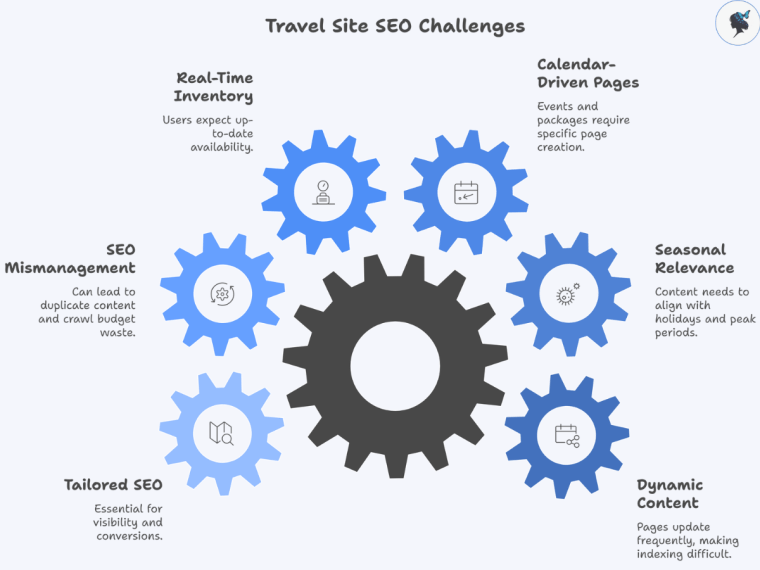
In the travel industry, seasonal peaks and troughs are baked into everything you do: summer beach holidays, winter ski trips, shoulder-season city breaks. But for a travel agency, that creates a content and SEO challenge: if you only publish content when demand spikes, you risk letting your online visibility fall off in the off-season, losing organic traffic, bookings and authority.

infograph: Seasonal content management cycle
Seasonal content management cycle

A recent article from Bulldog Digital Media points out that “travel behaviour is cyclical … if you miss key seasonal moments, you miss out on significant revenue opportunities.” Meanwhile, a specialist SEO article for travel agencies emphasises seasonality as one of the key SEO-challenges in the travel market.

By managing your seasonal content thoughtfully — planning ahead, refreshing it strategically, and blending in evergreen support content — you can maintain your SEO momentum year-round, improve bookings in both high and low periods, and build long-term site authority. This post will show travel-agency-specific strategies for doing exactly that.


Identifying Seasonal Patterns

To manage seasonal content effectively, you must first understand when and how your demand rises and falls.

infograph: How to manage seasonal content effectively?
How to manage seasonal content effectively?
  • Use tools like Google Trends, your internal booking/website analytics, and even Google Search Console to track when people search for your destinations (e.g., “summer beach holidays Spain”, “ski resorts Austria December”).
  • Categorise your offerings into clear seasons:
    • peak (high demand),
    • shoulder (transitional),
    • and off-season.
  • According to an article from WTM Global, tourism marketing often divides travel demand into these three categories.
  • Map external triggers: school holidays, public holidays, events (festivals, cruises, etc.), weather patterns, and also travel restrictions/shifts (e.g., recent pandemic-related changes).

Wander Women Hot Tip: have your summer-holiday content live 8-10 weeks ahead of launch so you catch booking momentum.

Analysing Content Performance by Season

Once you have awareness of your seasonal windows, look at how your existing content performs:

Infograph: Seasonal content strategy development
Seasonal content strategy development
  • Review your analytics to see which pages/posts drop off in the off-season or which ones still hold steady.
  • Identify content decay — e.g., a blog post published for “summer 2024 beach deals” might see traffic crash in November. Flag those posts for refresh or repurposing.
  • Build a seasonal content calendar tied to these peaks/shoulders/off-season periods, so you’re not scrambling when seasonality changes.
  • Consider using predictive analytics.

By combining trend-data plus internal performance review, you can see when content matters most and which content needs a year-round strategy rather than “launch-and-forget”.

More about data analytics here.


Strategies for Managing Seasonal Content Effectively

Here are five actionable strategies travel agencies can implement to keep seasonal content working for them all year round.

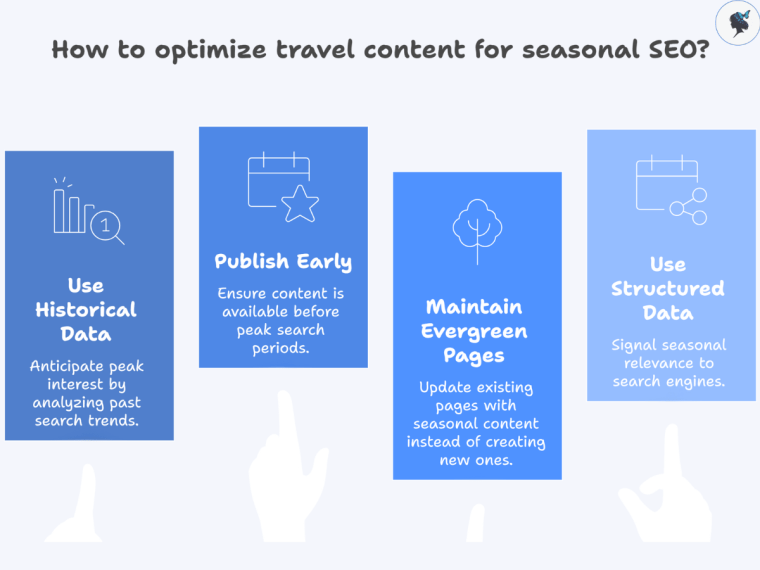
Plan Seasonal Content Well in Advance

Infograph: Seasonal content planning process
Seasonal content planning process
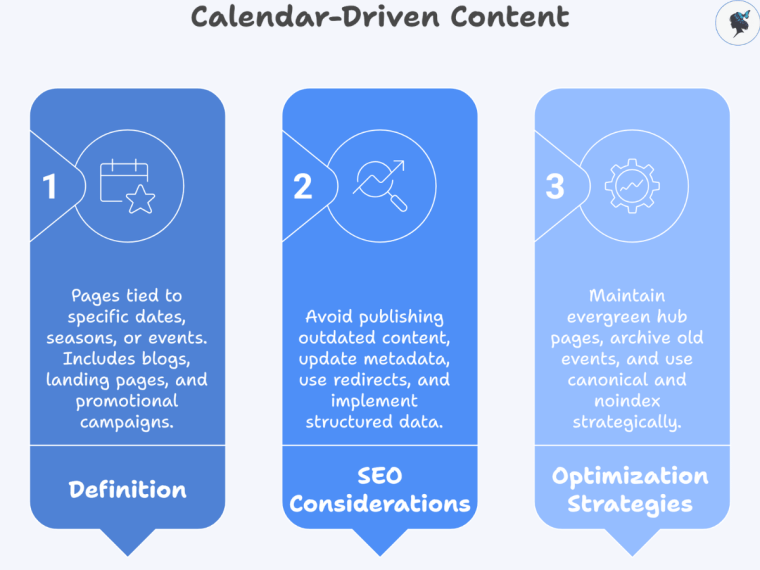
  • Create a 12-month editorial calendar: map each major season (winter holidays, summer travel, shoulder periods) and assign content themes and publication dates.
  • Publish your key seasonal content 8–10 weeks before the booking surge begins. For example, if summer bookings pick up in April, your “Top 2026 Summer Beach Packages” post should go live in February or March.
  • Link content to promotional campaigns: have blog posts, landing pages and social media tie into your email campaigns, early-bird offers, and remarketing efforts.
  • Build in evergreen tie-ins within seasonal content. For example: “Best Beaches in Spain for Summer 2026 – And How to Visit Off-Season Too.” This allows you to update rather than re-create each year.
  • Use predictive tools: the Smartvel article outlines how agencies can use AI and trends data to get ahead of upcoming travel interest surges.

More about using AI in travel here.

Repurpose and Refresh Existing Content

Infograph: How to manage seasonal content?
How to manage seasonal content?
  • Rather than deleting or archiving last year’s seasonal posts, update them: change dates, insert new deals, refresh visuals, update SEO-metadata.
  • Convert content formats: blog posts – infographics – short videos or Instagram Reels. This helps maximize reach from one core idea.
  • Add internal links between your evergreen and seasonal content: e.g., a “Year-Round Spain Travel Guide” (evergreen) linking to “Summer 2026 Ibiza Beach Packages” (seasonal).
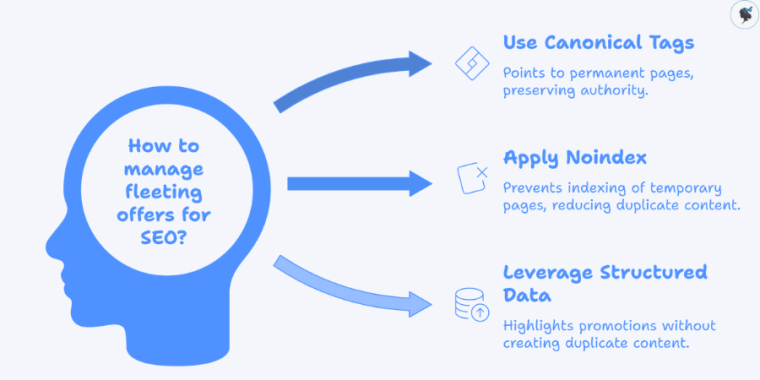
  • Monitor traffic drop-off on seasonal pages; when it falls below a threshold, mark the page for refresh rather than deletion, so you preserve domain authority and link equity.
  • Maintain the URL structure for recurring content (e.g., /christmas-markets-europe/) and update the content rather than creating a new page each year — this gives you the benefit of existing backlinks, internal links and domain trust.

Read more about internal linking here.

Utilize Social Media & Promotion to Extend Seasonal Reach

infograph: Enhancing seasonal destination visibility
Enhancing seasonal destination visibility
  • Use social media not only at peak season, but during shoulder and off-seasons: promote older seasonal content with “Throwback” or “Plan Ahead” messaging.
  • Leverage user-generated content (UGC): encourage travellers who visited in past seasons to share photos or stories, re-promote them to maintain destination visibility even when it’s off-season.
  • Run countdown or teaser campaigns ahead of high-booking seasons: e.g., “12 Weeks to Summer: Why You Should Book Now.”
  • Use paid social ads timed before the booking surge, supporting organic content.
  • Align posts with your blog/landing page strategy so social and content marketing reinforce each other — improving dwell
  • time, share metrics and signals to search engines.

Read our post: User-Generated Content.

Implement SEO Best Practices for Seasonal Keywords

infograph: SEO strategies for seasonal content
SEO strategies for seasonal content
  • Do keyword research not just for current season terms (e.g., “summer beach holidays 2026 Spain”) but also evergreen + seasonal blends (e.g., “best beaches Spain” + “summer 2026 deals”).
  • Maintain permanent URLs for recurring content; update metadata (title tag/description) each year rather than creating a new URL to preserve ranking and link history.
  • Use structured data/schema markup where appropriate — for example event schema if you are covering a festival or seasonal attraction.
  • Internal linking: create a hub-and-spoke architecture — a pillar evergreen page (‘Country travel guide’) linking to seasonal subpages (‘Winter in …’, ‘Summer in …’).
  • Monitor ranking fluctuations: the travel-industry SEO guide emphasises that seasonality is a major cause of ranking and traffic swings in this niche.
  • Ensure mobile-first and fast page-speed performance — especially as many travellers research and book on mobile devices.

More about mobile optimization here.

Create Evergreen Supporting Content

infograph: How to manage evergreen content for SEO?
How to manage evergreen content for SEO?
  • Build content that is not tied to a season, such as:
    • “How to pack for a multi-destination Europe trip”,
    • “Travel insurance: what you need to know”, or
    • “How to choose a family-friendly tour operator”. These posts hold value year-round and help maintain site authority.
  • Link evergreen content to your seasonal posts: this strengthens overall site structure and keeps traffic flowing between pages even when seasonal interest is low.
  • Use evergreen content as your “foundation” for your site’s SEO health — so that even when the seasonal pages dip, you still have reliable traffic and domain authority.
  • Update evergreen content periodically (e.g., once per quarter) to keep it fresh and relevant to search engines — don’t leave it static.
  • Review old seasonal content and convert some into evergreen format where practical — e.g., “Why Visit Iceland in Any Season” instead of just “Summer in Iceland”.

Read: how to create evergreen content.


Case Studies: Seasonal Content Success Stories

Here are some hypothetical (but grounded) examples of how travel agencies can use these strategies. While proprietary data may not be publicly available, these reflect sector best practices.

Ski Travel Agency Turning Off-Season into Shoulder-Season Growth
A ski-focused agency publishes a “Top Ski Resorts for Season 2025/26” blog in September and also adds a section on “Summer Hiking & Mountain Biking at the Same Resorts.” The refreshed article gets updated each March and gets internal links from their evergreen “Outdoor Adventures Europe” pillar page. As a result, instead of traffic dropping 70% in summer, they see only a 30% drop and maintain a good volume of bookings for summer and early autumn.

Beach Destination Tour Operator Maintaining Visibility Year-Round
A beach tour operator creates a pillar page for “Best Beach Destinations in Spain” (evergreen) and has subpages for “Summer 2026 Beach Packages”, “Late-Season Autumn Breaks”, “Winter Sun Getaways”. They update the seasonal subpages each year, preserving URLs and backlinks. During off-peak months they run UGC and social posts (“Remember your summer holiday in 2025? Book early for 2026”). This helps retain about 60-70% of their usual organic traffic even in the low season.

City-Break Specialist Leveraging Annual Events
A travel agency focuses on city-breaks and has a page for “Christmas Markets in Europe” — the page URL remains the same year-to-year, but they update content every October with new dates, deals and local events. They build an internal link from their evergreen city-travel guide. Because they preserve the URL and link equity, their page ranks consistently each year and traffic grows through backlinks from travel-bloggers linking to the same page annually.

Read: managing seasonal content: fall.


Building a Sustainable Seasonal Content Strategy

Seasonal content is not something to publish once, then archive and forget. For travel agencies, it’s a dynamic asset that — if managed correctly — can support bookings and SEO year-round.

  • Plan ahead with a 12-month editorial calendar that anticipates peaks, shoulders and troughs.
  • Refresh and repurpose existing content instead of deleting or re-creating each year.
  • Use social promotion and UGC to keep destinations alive in off-season months.
  • Apply sound SEO practices to seasonal content: maintain URLs, update metadata, use internal linking, and monitor ranking shifts.
  • Build evergreen supporting content to stabilise your domain’s authority and traffic across seasons.
infograph: Achieving year-round content success
Achieving year-round content success

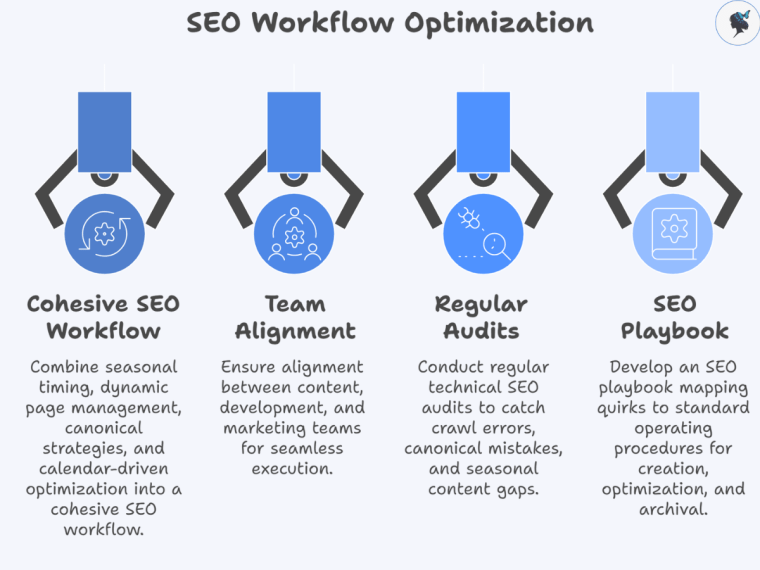
If you’re responsible for content in your travel agency, now is the time to audit your seasonal content:

  • Which pages are still live from last year?
  • Which ones have decayed in traffic?
  • What evergreen “foundation” content do you have?
  • Are you linking evergreen – seasonal – evergreen?
  • Can you publish next season’s content earlier so you establish search visibility ahead of the rush?

By treating seasonal content as a cyclical, renewable asset rather than a one-off campaign, you’ll position your agency for stronger organic visibility, more bookings and more sustainable performance in both high and low travel periods.

Need help with your seasonal content strategy? Contact us today!
Blogging vs. Video: What Travel Brands Should Prioritize

▶ Table of Contents
  1. Introduction
  2. The Power of Blogging for Travel Brands
  3. The Impact of Video Content in Travel Marketing
  4. Comparing Reach and Engagement
  5. Target Audience Considerations
  6. When to Prioritize Blogging
  7. When to Prioritize Video
  8. Combining Blogging and Video for Maximum Impact
  9. Conclusion

Introduction

Content marketing is essential for travel brands aiming to connect with potential travelers, build trust, and ultimately drive bookings. In today’s digital landscape, blogging and video content have emerged as two of the most powerful tools to achieve these goals. However, deciding whether to prioritize blogging or video can be challenging, especially when resources are limited. Understanding the strengths and nuances of each format can help travel brands make informed decisions that align with their marketing objectives.


The Power of Blogging for Travel Brands

Blogging remains a cornerstone of digital marketing, primarily because of its significant SEO benefits. Well-optimized blog posts can drive consistent, long-term organic traffic by targeting search queries related to destinations, travel tips, and experiences. According to HubSpot, companies that blog receive 55% more website visitors and 67% more leads than those that don’t.

Infograph: The multifaceted benefits of travel blogging
The multifaceted benefits of travel blogging

Blogs allow for deep storytelling and detailed travel guides, providing rich information that travelers rely on during their planning phases. Writing authoritative content helps establish your brand as a trusted expert, which is crucial in the highly competitive travel market. Moreover, blogs support other marketing efforts by feeding email campaigns and social media posts with quality content.

Read our post: How storytelling can transform your blog.


The Impact of Video Content in Travel Marketing

Video consumption is skyrocketing, especially on social media platforms where visual content captures attention rapidly. Platforms like YouTube, Instagram Reels, and TikTok have transformed how travelers discover and engage with travel brands. According to Wyzowl, 87% of marketers report that video has increased traffic to their websites, and 88% say video gives them a positive ROI.

Infograph: Unveiling the power of video in travel marketing
Unveiling the power of video in travel marketing

Videos enable emotional storytelling by showcasing immersive experiences, beautiful landscapes, and real-time adventures. This format appeals to travelers’ senses, creating a stronger connection than text alone. Video testimonials from past customers and live updates can also boost credibility and urgency, driving faster booking decisions.


Comparing Reach and Engagement

When comparing blogs and videos, metrics such as average time spent, shares, and conversion rates offer valuable insights. Research from Medium shows that social video generates 1200% more shares than text and images combined, which indicates higher engagement potential.

Infograph: Social video vs blogs: shares
Social video vs blogs: shares

However, blogs typically generate higher SEO value and better performance in search engines, sustaining traffic over time. Video production tends to require higher costs and resources, including equipment, editing, and scripting, whereas blogging can be more cost-effective and faster to produce. Choosing the right balance depends on your budget, team skills, and marketing goals.


Target Audience Considerations

Understanding your target audience is critical when choosing between blogging and video. Younger generations like Gen Z and Millennials favor video content, especially on mobile devices, with 90% of Gen Z consumers preferring to see videos from brands.

Infograph: Which content format should be chosen for travel marketing?
Which content format should be chosen for travel marketing?

Meanwhile, older travelers may prefer blogs that allow for detailed research at their own pace. Additionally, travel stages influence content preference: travelers in the inspiration phase might engage more with videos showcasing experiences, whereas those in the decision-making phase often seek detailed blog posts to finalize plans. Accessibility issues such as slow internet or device constraints can also affect content consumption.

Read our post: marketing to Gen Z travelers.


When to Prioritize Blogging

Blogging should be a priority if your goal is to improve SEO rankings and build a repository of evergreen content. Detailed guides, how-tos, and FAQs help travelers find your brand through organic search and provide comprehensive trip planning support. Blogging also offers flexibility for integrating keywords and internal links, boosting your site’s authority.

Infograph: Strategic benefits of travel blogging
Strategic benefits of travel blogging

Furthermore, blogs complement multi-channel strategies by providing content that can be repurposed for newsletters, social media captions, and downloadable resources. If your travel brand focuses on educating customers and nurturing leads over time, investing in blogging is essential.

Read our post: How to repurpose travel blog content.


When to Prioritize Video

Video content is ideal when your objective is to maximize social media engagement and tell compelling brand stories. Travel experiences are highly visual, and videos can capture excitement, culture, and scenery in ways text cannot. Short-form videos perform well on platforms like Instagram and TikTok, perfect for reaching younger audiences and generating viral interest.

Infograph: The power of video in travel branding
The power of video in travel branding

Videos also work well for showcasing customer testimonials and live updates from destinations, which add authenticity and urgency. If your travel brand aims to build emotional connections and prompt immediate bookings or inquiries, prioritizing video content can be highly effective.

Read our post: how to use stunning travel photography and videos.


Combining Blogging and Video for Maximum Impact

The most successful travel brands leverage both blogging and video to maximize their reach and engagement. Repurposing blog content into videos (e.g., travel tips, destination highlights) and vice versa allows you to appeal to different audience preferences without doubling workload.

Infograph: Maximize reach with blogging and video
Maximize reach with blogging and video

Cross-promotion—embedding videos in blog posts or sharing blog links in video descriptions—can improve SEO and enhance user experience. Tracking performance analytics from both formats enables data-driven decisions, helping you fine-tune your content strategy to what resonates most with your audience.


Conclusion

There is no one-size-fits-all answer when deciding between blogging and video for travel brands. The best approach depends on your brand’s goals, target audience, budget, and resources. Starting with clear objectives and testing both formats helps identify what drives the most engagement and conversions.

Continuously monitoring trends and adapting your strategy ensures your travel brand remains competitive in the evolving digital landscape. Whether you lean towards detailed blogs, captivating videos, or a combination of both, delivering valuable and inspiring content will always be key to winning traveler loyalty and business growth.

Need help? Contact us today!

Story Ideas for Hotels & Tour Companies


▶ Table of Contents

Storytelling is one of the most powerful tools for hotels and tour companies to connect emotionally with travelers. Beyond just selling rooms or tours, stories help your audience envision unforgettable experiences, build trust, and feel inspired to book with you. But what kinds of stories resonate best in the travel industry? Below, we explore nine compelling story ideas with examples and practical tips for creating your own.


1. Guest Experience Stories

Nothing builds credibility like authentic stories from real guests. Sharing guest testimonials or narratives about memorable stays and tours creates social proof and showcases the unique value of your offerings.

For example, a boutique hotel might share a story of a couple who celebrated their anniversary with a surprise dinner on the rooftop, highlighting how the staff went the extra mile. Similarly, a tour company could feature a family’s adventure that created lifelong memories.

Guest Experience Stories: surprise dinner

Wander Women Hot Tip: Use direct quotes, photos, or short video clips to make these stories vivid and relatable. Encourage guests to share their stories on social media and seek permission to repurpose their content.

Example: The Kimpton Hotels often share heartfelt guest stories on Instagram and their website, which helps build an emotional connection with their audience.


2. Behind-the-Scenes Narratives

People love seeing what goes on behind the curtain. Sharing behind-the-scenes stories humanizes your brand, highlights the passion of your team, and builds trust.

Tell the story of your chef sourcing fresh local ingredients for your restaurant or a tour guide preparing for a challenging expedition. Or narrate the history of your hotel — how it started, the founders’ vision, and its evolution.

Behind-the-Scenes Narratives: chef at local market

Wander Women Hot Tip: Use storytelling formats like “A Day in the Life” or short staff interviews to bring your team’s dedication to life.

Example: The BBC series Amazing Hotels: Life Beyond the Lobby offers a fascinating behind-the-scenes look at how some of the world’s most extraordinary hotels deliver exceptional guest experiences.

Read our post: 30 social media post ideas.


3. Local Culture & Community

Showcasing your connection to the local culture and community enriches your brand’s story and appeals to travelers seeking authentic experiences.

Share stories about partnerships with local artisans, support for community events, or initiatives promoting cultural heritage. This demonstrates your commitment beyond tourism — you’re part of a larger story.

Local Culture & Community: handwoven baskets

Wander Women Hot Tip: Highlight how guests can engage with these cultural experiences during their stay or tour.

Example: Aman Resorts often highlight their collaborations with local communities and cultural experiences that guests can enjoy.

Read our post: Local SEO strategies for hotels.


4. Destination Highlights Through Guests’ Eyes

Invite your audience to see your destination through the eyes of your guests. First-person narratives, user-generated content, or guest blogs can make travel experiences more relatable and inspiring.

For instance, a guest sharing their day exploring hidden waterfalls or sampling street food paints a vivid picture and invites others to imagine themselves there.

Destination Highlights Through Guests’ Eyes: chasing waterfalls

Wander Women Hot Tip: Encourage guests to tag your brand and use hashtags so you can easily find and share their stories.

Example: Airbnb’s marketing strategy frequently feature guest stories that highlight unique destinations and accommodations.

Read our post: creating destination guides that rank and convert.


5. Seasonal & Event-Based Stories

Capitalize on the excitement around holidays, festivals, and seasons by telling stories themed to these occasions. This makes your content timely and relevant.

Share narratives about Christmas markets, summer beach festivals, or spring wildflower tours your company hosts. Use storytelling to evoke the atmosphere and excitement, encouraging bookings during peak seasons.

Seasonal & Event-Based Stories: Christmas market

Wander Women Hot Tip: Create content calendars that align with key seasonal events and update your stories yearly.

Example: Four Seasons magazine posts stories and guides related to seasonal events and holidays in their destinations, enhancing seasonal engagement.

Read our post: content marketing ideas.


6. Travel Tips and Insider Secrets

Stories that provide practical advice mixed with insider knowledge add value and position your brand as an expert.

Tell the story of a local guide who reveals the best hidden café or a packing tip that saved a traveler’s trip. These useful nuggets encourage saves, shares, and repeat visits.

Travel Tips and Insider Secrets: hidden café

Tip: Use blog posts, infographics, or short videos to deliver tips in engaging formats.

Example: On Instagram, Lonely Planet shares insider travel tips on instagram from locals and experts, creating useful content that travelers trust.


7. Transformation and Wellness Journeys

Highlight stories of personal transformation, wellness, or adventure that guests experience with your brand. These narratives tap into travelers’ desire for growth and rejuvenation.

For example, a guest who found mindfulness and relaxation at your spa resort or an adventurer who conquered a challenging trek on your tour.

Transformation and Wellness Journeys: tough trek

Wander Women Hot Tip: Use before-and-after testimonials, or invite guests to share their wellness journeys through blogs or videos.

Example: Canyon Ranch shares compelling wellness transformation stories that resonate with health-conscious travelers.


8. Sustainability and Responsible Tourism

Modern travelers care deeply about sustainability. Sharing stories about your eco-friendly initiatives and responsible tourism practices builds trust and appeals to conscious travelers.

Narrate how your company reduces plastic waste, supports wildlife conservation, or empowers local communities. This storytelling positions your brand as ethical and forward-thinking.

Sustainability and Responsible Tourism: giant panda
Sustainability and Responsible Tourism: Giant panda

Wander Women Hot Tip: Use impact metrics and real-life examples to make these stories credible.

Example: The Intrepid Foundation highlights its commitment to sustainable travel and community projects, attracting eco-conscious clients.


9. Special Celebrations and Milestones

Share your company’s milestones and the special moments your guests celebrate with you. These stories create emotional connections and showcase your brand as a place for life’s memorable occasions.

Celebrate anniversaries, awards, or guest weddings with engaging narratives that invite your audience to be part of your journey.

Special Celebrations and Milestones: wedding day

Wander Women Hot Tip: Use photos and videos to capture the joy and significance of these moments.

Example: Coombe Abbey Hotel (Coventry, England) has a section called “Wedding stories at Coombe Abbey” where real couples share their wedding journeys at the venue — from how they chose the venue, how planning went, to the guest experience and how it felt on the day.


Final Thoughts

Storytelling is more than marketing — it’s about creating genuine connections that inspire travelers to choose your hotel or tour company. By mixing guest experiences, behind-the-scenes insights, local culture, tips, and responsible tourism narratives, you can craft a rich content strategy that resonates deeply.

Start gathering your stories today. Encourage guests and staff to share, and watch your brand loyalty and bookings grow!

Need help? Contact us today!
Best Times to Post Travel Content on Each Platform

Introduction


▶ Table of Contents
  1. Introduction
  2. Best Times to Post on Instagram
  3. Best Times to Post on Facebook
  4. Best Times to Post on X (formerly Twitter)
  5. Best Times to Post on TikTok
  6. Best Times to Post on Pinterest
  7. Best Times to Post on LinkedIn (for Travel Industry Professionals)
  8. Best Times to Post on Bluesky
  9. Best Times to Post on Threads
  10. Best Times to Post on YouTube
  11. Best Times to Post on WhatsApp
  12. Best Times to Post on Telegram
  13. General Tips for Timing Travel Content
  14. Conclusion

Timing is a critical factor in social media marketing, especially for travel brands looking to maximize engagement and reach. Posting when your audience is most active increases the chances your content will be seen, liked, shared, and converted into bookings or inquiries. According to Sprout Social, posting at the right time can increase engagement by up to 30%. This guide covers the best times to post travel content on each major platform to help you optimize your social media strategy.


Best Times to Post on Instagram

Travel content thrives on Instagram thanks to its visual nature. Studies from Later and HubSpot suggest the best times to post are generally:

Infograph: Best Times to Post on Instagram
Best Times to Post on Instagram
  • Wednesday and Friday around 11 AM to 1 PM
  • Monday through Thursday evenings from 7 PM to 9 PM

Reels and Stories see high engagement in the evenings when users unwind. Using Instagram Insights lets you see when your specific followers are most active, helping tailor your timing. For example, a travel brand targeting young millennials might find their audience active around 8 PM on weekends.


Best Times to Post on Facebook

Infograph: Best Times to Post on Facebook
Best Times to Post on Facebook

Facebook engagement peaks between 12 and 3 PM on Thursdays and Fridays, with weekends seeing lower activity. For travel pages, posting slightly earlier during weekdays works well as users plan upcoming trips. Paid ads perform best during weekdays at lunch hours when users take breaks.

Facebook Insights offers detailed analytics on your page’s audience activity, so adjust timing based on your specific followers. For example, a family travel agency might find that weekend posts work better when parents have time to browse.


Best Times to Post on X (formerly Twitter)

Infograph: Best Times to Post on X (formerly Twitter)
Best Times to Post on X (formerly Twitter)

On X, the best times for travel content are typically mornings from 11 AM to 2 PM on Thursday, Friday and Saturday. Due to the fast-paced nature of X, posting multiple times a day is recommended.

Event-based posting around travel announcements or trending hashtags can also boost visibility. For instance, during major airline sales or travel expos, timing your posts to coincide with these events can amplify reach. Use X’s native analytics to track when your tweets get the most impressions.


Best Times to Post on TikTok

Infograph: Best Times to Post on TikTok
Best Times to Post on TikTok

TikTok’s younger demographic means peak engagement is often after school and work hours:

  • Tuesday, Thursday, and Friday between 6 PM and 10 PM
  • Weekends midday around 11 AM to 1 PM

TikTok trends can emerge rapidly, so frequent posting and jumping on relevant challenges at the right moment is crucial. For travel brands, showcasing quick destination clips or travel hacks during peak times can increase shares and followers.


Best Times to Post on Pinterest

Infograph: Best Times to Post on Pinterest
Best Times to Post on Pinterest

Pinterest users often plan future trips, making timing important:

  • Evenings, particularly Saturdays from 8 PM to 11 PM, are peak times.
  • Early mornings around 2 AM to 4 AM also see high activity, likely due to international users.

Pinterest’s algorithm favors fresh, relevant content during high-traffic hours, helping your pins get early saves and impressions that compound over time.


Best Times to Post on LinkedIn (for Travel Industry Professionals)

Infograph: Best Times to Post on LinkedIn
Best Times to Post on LinkedIn

LinkedIn is key for B2B travel marketing and networking. The best times are:

  • Tuesday to Thursday from 8 AM to 10 AM and 12 PM to 1 PM.
  • Posting during work breaks targets travel industry professionals, suppliers, and corporate travelers planning business trips or events.

For example, a travel company specializing in corporate travel could post case studies or industry insights during these times for maximum reach.


Best Times to Post on Bluesky

Infograph: Best Times to Post on Bluesky
Best Times to Post on Bluesky

Bluesky, as an emerging decentralized social platform, currently sees its audience active mostly in US and European time zones. Early studies and user patterns indicate:

  • Weekday mornings between 9 AM and 11 AM
  • Evenings between 7 PM and 9 PM

Travel brands experimenting here should monitor engagement and adjust timing based on their specific followers, as the platform is still growing.


Best Times to Post on Threads

Infograph: Best Times to Post on Threads
Best Times to Post on Threads

Meta’s Threads is closely linked to Instagram, so its user behavior is similar:

  • Weekdays from 11 AM to 1 PM and 7 PM to 9 PM see high engagement
  • Travel brands can repurpose Instagram content for Threads and schedule posts during these windows for broader reach.

Since Threads is new, frequent testing is recommended, using Instagram’s audience data as a guide.


Best Times to Post on YouTube

Infograph: Best Times to Post on YouTube
Best Times to Post on YouTube

YouTube engagement peaks:

  • Thursday and Friday afternoons between 2 PM and 4 PM
  • Weekends from 9 AM to 11 AM

Travel brands can schedule video premieres or live Q&A sessions around these times for better viewer turnout. YouTube Analytics can help you discover when your subscribers are most active. For example, travel vloggers targeting families may find weekend mornings best for posting family-friendly travel videos.


Best Times to Post on WhatsApp

Infograph: Best Times to Post on WhatsApp
Best Times to Post on WhatsApp

WhatsApp is popular for direct communication and group promotions. The best times for travel-related messages are:

  • Evenings between 6 PM and 9 PM, when users check personal chats
  • Avoid early mornings or late nights to prevent spamming.

Using WhatsApp Status during holidays or travel seasons to share offers or travel tips can keep your audience engaged without being intrusive.


Best Times to Post on Telegram

Infograph: Best Times to Post on Telegram
Best Times to Post on Telegram

Telegram channels focused on travel tend to get the most engagement:

  • Weekdays between 10 AM and 12 PM and evenings from 7 PM to 9 PM
  • Scheduling announcements, travel deals, or tips during these times ensures your message reaches active users.

Automate posting with tools like Combot or Telemetr for consistent updates without manual effort.


General Tips for Timing Travel Content

  • Consider your audience’s location and daily routines to post when they’re most likely scrolling. For example, if your followers are mostly European travelers, adjust posting times to Central European Time (CET).
  • Test different posting times and analyze engagement metrics regularly to refine your schedule.
  • Align content timing with travel seasons and events, such as promoting ski destinations in early November or tropical escapes in late spring.

Conclusion

Knowing the best times to post travel content on each platform can significantly enhance your social media performance. Combining optimal timing with compelling content tailored to your audience’s interests maximizes engagement and conversions. Stay flexible, monitor analytics, and adapt as platforms and user behaviors evolve to keep your travel brand ahead in the social media game.

Need help with Social Media? Contact us today!
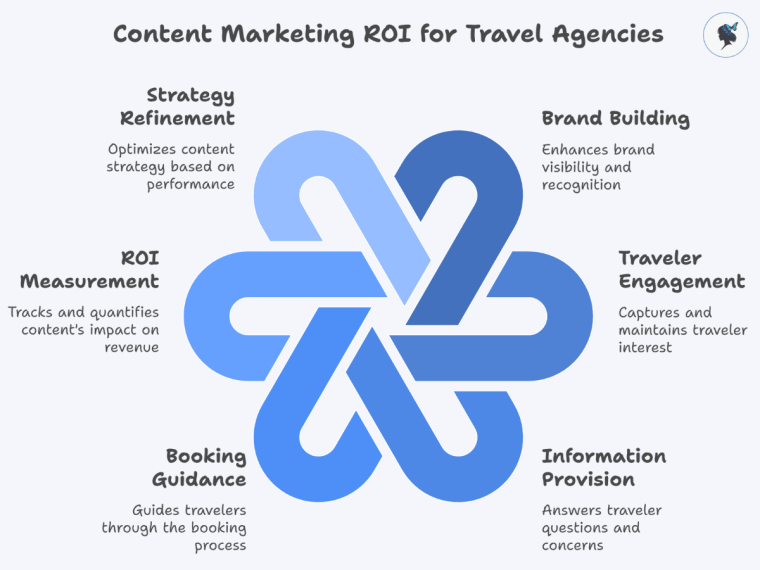

Understand Your Audience

A Guide for Travel Companies


Introduction

▶ Table of Contents

Why Knowing Your Audience Matters

In the travel industry, understanding your audience is more than just knowing who they are—it’s about understanding what drives their travel decisions. Travelers have diverse needs, preferences, and motivations, and tailoring your marketing to these factors can increase engagement, bookings, and loyalty.

Personalized marketing can boost conversion rates, making audience insights essential for any travel company looking to grow online.

What You’ll Learn in This Post

This guide will show you how to:

Infograph: Enhancing audience engagement
Enhancing audience engagement
  • Identify and analyze your audience
  • Create actionable buyer personas
  • Use analytics to uncover behavior patterns
  • Implement strategies to boost engagement through SEO, content, and social media

Understanding Your Audience

Key Demographics

Start by gathering basic information about your audience.

Infograph: Key audience demographics
Key audience demographics
  • Age: Are they Millennials, Gen Z, families, or retirees?
  • Gender: Tailor messaging if one gender predominates in your audience.
  • Location: Local, national, or international travelers?
  • Income & Travel Habits: Budget travelers, luxury seekers, or adventure enthusiasts

Example: Millennials may prioritize adventure travel, while retirees may prefer luxury cruises or cultural tours.

Read our post: marketing to Gen Z travelers.

Psychographics and Travel Motivations

Demographics alone aren’t enough. Psychographics reveal why your audience travels.

Infograph: The heart of modern travel motivations
The heart of modern travel motivations
  • Interests & Values: Sustainability, wellness, food culture, or adventure
  • Lifestyle: Solo travelers, families, remote workers, or digital nomads
  • Motivations: Bucket-list experiences, social media-worthy moments, relaxation

Behavior Patterns

Understanding behavior patterns is essential for travel brands because it informs marketing, sales, service, and product decisions across all channels, not just social media.

infograph: Factors shaping travel booking choices
Factors shaping travel booking choices
  • Booking Channels: Online vs. travel agencies
  • Content Preferences: Blogs, videos, social media, newsletters
  • Seasonal Trends: Peak travel times and holidays

Wander Women Hot Tip: Use social media polls or surveys to quickly gather demographic and psychographic insights.


Creating Buyer Personas

What Are Buyer Personas?

Buyer personas are semi-fictional profiles representing your ideal customers based on data and research.

They help travel marketers:

  • Tailor content and messaging
  • Personalize campaigns for higher engagement
  • Optimize ad targeting

Step-by-Step Guide to Creating Buyer Personas

Infograph: How to develop buyer personas?
How to develop buyer personas?
  • Collect Data: Gather insights from analytics, surveys, customer feedback, and social media.
  • Identify Patterns: Look for shared traits and behaviors.
  • Develop Persona Profiles: Include demographics, motivations, pain points, and content preferences.
  • Add Names & Stories: Make personas relatable for your marketing team.

    Example Persona: Adventure Alex

    • Age: 28, single, NYC
    • Motivations: Thrill-seeking, Instagram-worthy experiences
    • Preferred Content: Short travel videos, interactive itineraries
    • Booking Behavior: Books online, prefers mobile-friendly platforms

    Free Tool: HubSpot has a great tool: Make my Persona.


    Utilizing Analytics for Insights

    Google Analytics for Travel Companies

    Infograph: Google analytics for travel companies
    Google analytics for travel companies
    • Track key metrics: pageviews, session duration, top-performing content, and booking behavior
    • Use Audience Reports to understand age, gender, location, device, and interests

    Social Media Analytics

    Infograph: Which social media platform should be prioritized for content strategy?
    Which social media platform should be prioritized for content strategy?
    • Facebook Insights, Instagram Analytics, TikTok Analytics: Measure engagement, reach, and top-performing posts
    • Identify content formats that resonate with different audience segments

    Leveraging Feedback and Reviews

    Infograph: How to leverage feedback and reviews to improve customer satisfaction?
    How to leverage feedback and reviews to improve customer satisfaction?
    • Monitor TripAdvisor, Google Reviews, and social media comments
    • Extract insights on traveler expectations, pain points, and preferred experiences

    Wander Women Hot Tip: Set up custom dashboards in Google Analytics to track behavior on specific landing pages, blog posts, or itineraries.


    Actionable Tips for Engagement

    infograph: Enhancing user engagement in travel
    Enhancing user engagement in travel

    Personalization

    • Tailor email campaigns, blog posts, and social media content to specific personas
    • Address audience pain points and motivations in messaging

    Align Content Strategy with Travel Stages

    • Inspiration Stage: Blog posts, Instagram reels, destination guides
    • Planning Stage: Interactive itineraries, packing tips, videos
    • Booking Stage: Clear CTAs, comparison guides, booking widgets
    • Post-Trip Stage: Testimonials, UGC campaigns, email follow-ups

    Social Media Tactics

    • Run polls, Q&As, and live sessions to gather insights
    • Partner with niche influencers to enhance reach and credibility
    • Encourage user-generated content to foster community and trust

    SEO Applications

    • Use persona-driven keywords in blog posts and landing pages
    • Create location-specific content to attract local audiences

    Free Tools: Google Trends, AnswerThePublic.


    Conclusion

    Key Takeaways

    • Understanding your audience—through demographics, psychographics, and behavior—is essential for effective travel marketing
    • Buyer personas help personalize campaigns and guide content creation
    • Analytics provide actionable insights to improve SEO, content, and social media strategies

    Start taking action today

    1. Conduct a survey or poll to collect audience insights
    2. Build at least one buyer persona
    3. Audit your analytics to identify your top-performing content

    Define your audience today and watch your engagement, bookings, and online visibility grow! Need help? Contact us today!