BLOG

Best Practices for Multilingual SEO for Travel Agencies

▶ Table of Contents

Introduction: Why Multilingual SEO Matters for Travel Agencies

In today’s global travel market, your website isn’t just competing locally—it’s competing internationally. Travelers from different countries and cultures increasingly search online in their native languages for flights, tours, accommodations, and travel experiences.

infograph: Multilingual SEO for travel agencies
Multilingual SEO for travel agencies

For travel agencies, multilingual SEO is not optional; it’s essential. Without optimizing your website for multiple languages, you risk losing potential clients, missing search traffic, and limiting your international reach.

Effective multilingual SEO ensures your site:

  • Ranks in multiple countries and languages.
  • Provides a seamless, culturally relevant experience.
  • Increases bookings from international travelers.

This guide will walk travel agencies through best practices for multilingual SEO, covering keyword research, on-page and technical SEO, local SEO, content creation strategies, and more.


1. Keyword Research for Multilingual SEO

Keyword research is the foundation of any SEO strategy. When targeting multiple languages, it becomes more nuanced.

infograph: How to conduct keyword research for multilingual SEO
How to conduct keyword research for multilingual SEO

Understanding Search Intent Across Languages

  • Users in different countries search differently for the same travel service.
    • Example: “vacation packages” in the U.S. vs. “holiday deals” in the UK.
  • Understanding intent ensures your content matches what travelers are actually searching for.

More about mastering search intent here.

Using Multilingual Keyword Tools

  • Tools such as Google Keyword Planner, Semrush, Ahrefs, and Ubersuggest can help identify keywords in different languages.
  • Analyze search volume, competition, and local trends to prioritize keywords.

Transcreation vs. Translation

  • Literal translations often fail to capture local nuances.
  • Transcreation adapts content culturally and linguistically, maintaining meaning while resonating with local audiences.

Local Language Variations and Dialects

  • Consider regional spellings, slang, and formal vs. informal phrasing.
  • Example: In Spanish, “holiday” can be vacaciones (Spain) or feriado (Latin America).

Wander Women Hot Tip: Always validate your translated keywords with native speakers or local SEO experts to ensure relevance.


2. On-Page Optimization for Multilingual Sites

Once you have keywords, it’s time to optimize your website’s pages in each language.

infograph: Optimizing your website for multilingual SEO
Optimizing your website for multilingual SEO

URL Structure

  • Options include:
    • Subdirectories: example.com/fr/
    • Subdomains: fr.example.com
    • Country-specific domains: example.fr
  • Best practice for travel agencies: Use subdirectories for simplicity and centralized authority, unless targeting large markets independently.

Meta Titles and Descriptions

  • Write language-specific meta tags for each page.
  • Example: French page for Paris tours: “Visitez Paris: Circuits et forfaits touristiques”.

Read our post: Meta Title & Description Optimization.

Hreflang Tags

  • Hreflang tags signal to search engines the language and regional targeting for each page.
  • Prevents duplicate content issues and ensures travelers see the correct language version.

Internal Linking and Navigation

  • Maintain clear navigation per language.
  • Avoid mixing multiple languages on the same page to reduce confusion and improve UX.

Check out: Increase Organic Traffic with Internal Linking.


3. Technical SEO Considerations

Multilingual SEO requires careful attention to site structure, crawlability, and technical performance.

infograph: Multilingual SEO strategies
Multilingual SEO strategies

Site Architecture

  • Organize content clearly for multiple languages.
  • Avoid creating unnecessary duplicate pages.

Sitemaps and Robots.txt

  • Include all language versions in your XML sitemaps.
  • Ensure search engines can crawl and index all translated pages without restrictions.

Page Load Speed Across Regions

  • International travelers may access your site from different continents.
  • Use a Content Delivery Network (CDN) to improve load times globally.

Avoiding Duplicate Content

  • Use canonical tags properly to signal the primary version of a page.
  • Helps prevent penalties and consolidates SEO authority.

4. Local SEO for Multilingual Travel Agencies

For travel agencies, local SEO in each language ensures that search engines serve relevant results to international travelers.

infograph: Strategies for multilingual local SEO
Strategies for multilingual local SEO

Google My Business / Local Listings

  • Create language-specific business profiles if necessary.
  • Ensure NAP (Name, Address, Phone) consistency across languages and platforms.

Localized Content

  • Highlight local attractions, travel tips, and seasonal deals.
  • Use region-specific keywords to attract travelers searching for local experiences.

Reviews and Testimonials

  • Encourage travelers to leave reviews in their own language.
  • Multilingual testimonials increase credibility and improve search rankings for local queries.

Read: The Role of Trust Signals.


5. Content Creation Strategies for Multilingual Websites

High-quality content drives engagement, conversions, and SEO performance. For multilingual sites:

infograph: Strategies for multilingual content
Strategies for multilingual content

Blog and Landing Page Content

  • Create content targeting language-specific topics.
  • Example: Blog post on “Top Summer Destinations in Italy” with versions in Italian, English, and Spanish.

Cultural Sensitivity and Relevance

  • Consider local holidays, customs, and travel behavior.
  • Avoid literal translations that may not resonate with the audience.

Multimedia Content

  • Include localized images, videos, and infographics.
  • Enhances engagement and improves dwell time.

Content Maintenance

  • Regularly update all language versions to maintain freshness and SEO relevance.
  • Track performance metrics separately for each language.

6. Common Challenges and How to Overcome Them

infograph: Multilingual SEO challenges
Multilingual SEO challenges
  • Duplicate content: Avoid copying pages verbatim across languages. Use hreflang tags and canonicalization.
  • Translation quality: Hire native speakers or professional translators; automate with caution.
  • Global branding vs. local relevance: Maintain brand voice while adapting messaging culturally.

Wander Women Hot Tip: Monitor analytics for each language version to see what resonates with local audiences.

More about leveraging data analytics here.


7. Tools and Resources for Multilingual SEO

  • Keyword Research: Semrush, Ahrefs, Google Keyword Planner
  • Translation & Transcreation: Smartling, Lokalise, DeepL Pro
  • Technical SEO & Site Audits: Screaming Frog, Sitebulb
  • Local SEO Management: Google My Business, Moz Local

Wander Women Hot Tip: Some tools allow geo-targeting and language filtering, which is essential for multilingual SEO success.


Conclusion

Multilingual SEO is a critical strategy for travel agencies seeking to expand their reach internationally. By focusing on:

  1. Keyword research tailored to language and cultural differences.
  2. On-page optimization with hreflang, metadata, and URL structure.
  3. Technical SEO for crawlability and site performance.
  4. Local SEO to attract international travelers.
  5. Culturally relevant content across blogs, landing pages, and multimedia.

Travel agencies can significantly improve search visibility, user experience, and ultimately bookings from international markets.

Next Steps: Audit your multilingual SEO setup today, ensure hreflang tags are correctly implemented, and start creating transcreated, culturally relevant content to attract travelers worldwide.

Need help? Contact us today!
Affordable Link-Building for Travel Agencies

How Small Brands Can Boost SEO Without Expensive PR


▶ Table of Contents
  1. How Small Brands Can Boost SEO Without Expensive PR
    1. Introduction
    2. Why Link-Building Matters for Travel Agencies
    3. Effective Low-Cost Link-Building Techniques
    4. Case Studies / Examples
    5. Common Pitfalls and How to Avoid Them
    6. Conclusion

Introduction

For small travel agencies, link-building can feel daunting. High-profile campaigns and expensive PR initiatives are often out of reach, yet backlinks remain critical for SEO. They signal credibility to search engines, improve rankings, and can drive organic traffic directly to your offers.

infograph: Link-building strategy for travel agencies
Link-building strategy for travel agencies

The good news? You don’t need a big budget to build high-quality links. By leveraging local partnerships, niche collaborations, and content-focused strategies, small agencies can earn authoritative backlinks that boost visibility, attract leads, and improve organic bookings.

Wander Women Hot Tip: Start by auditing your current backlinks. Identify which pages already attract links and which high-value pages need more support. This will guide your initial link-building efforts.


Impact on SEO

Backlinks remain a top-ranking factor for search engines. Quality links improve domain authority, signal relevance, and help your content compete in highly competitive travel searches. Unlike paid ads, which stop delivering once the campaign ends, links provide long-term, compounding value.

infograph: The power of backlinks for travel agencies
The power of backlinks for travel agencies

Role in Travel Industry Visibility

In travel, search visibility is competitive. Even a well-optimized destination page may struggle without backlinks. For example, a boutique travel agency offering tours in Italy or Thailand will rank better if other relevant sites reference their guides, itineraries, or travel tips.

Wander Women Hot Tip: Focus on niche and local backlinks—a few relevant links often outperform dozens of generic ones from unrelated sources.


Partnering with Local DMOs and Tourism Boards

Destination Marketing Organizations (DMOs) are excellent partners for link-building. They often maintain resource pages, travel guides, and event calendars where your content can be featured.

infograph: Strategic link-building with DMOs
Strategic link-building with DMOs

Action Steps:

  • Offer to create destination guides or itineraries highlighting your expertise.
  • Collaborate on blog posts or social media campaigns that naturally include links back to your site.

Example: A small tour operator contributes a “Hidden Gems of (Destination)” guide to the local DMO’s blog, earning multiple backlinks and increased visibility.

Read our post: creating destination guides that convert.


Collaborating with Event Organizers and Local Businesses

Sponsoring or participating in local events provides a natural opportunity for backlinks:

  • Event pages often list sponsors and partners with URLs.
  • Co-promoted activities, like city tours or travel workshops, can generate content with embedded links.
infograph: Strategic backlink opportunities
Strategic backlink opportunities

Wander Women Hot Tip: Highlight your partnerships in blog posts or social media, then request inclusion on the event’s website to capture backlinks.

Check out social media post ideas here.


Guest Blogging on Travel or Niche Sites

Guest posting remains a cost-effective way to gain authoritative backlinks.

infograph: Strategic guest blogging
Strategic guest blogging

Focus on:

  • Regional travel blogs
  • Micro-niche travel sites (e.g., solo female travel, adventure travel)
  • Local business blogs that cover travel-related topics

Action Steps:

  • Pitch unique content like destination guides, travel tips, or personal experiences.
  • Include contextual backlinks naturally within the content.

Example: A small solo travel agency guest-posted on three micro-niche blogs, generating referral traffic and increasing their authority in a targeted segment.


Leveraging User-Generated Content (UGC) and Reviews

Encourage travelers to share experiences that can be linked:

infograph: Traveler experience sharing
Traveler experience sharing
  • Reviews on local directories, niche travel blogs, and forums
  • Testimonials or stories featured on partner sites

Wander Women Hot Tip: Reach out to local bloggers or online publications who may feature your clients’ experiences—these mentions often result in high-value backlinks.

More about using UGC as SEO assets here.


Creating Linkable Assets

Content that provides clear value attracts links organically:

  • Infographics showing seasonal travel trends or destination highlights
  • Interactive maps or visual itineraries
  • Guides for niche travel segments
infograph: Content ideas
Content ideas

Action Steps:

  • Promote these assets via social media, newsletters, and partner websites.
  • Reach out directly to sites that might reference your content.

Example: A regional tour operator created a visual “Top 10 Hidden Beaches” infographic. Local travel blogs referenced it, earning several high-quality backlinks.


Resource Pages and Listicles

infograph: Content submission strategies
Content submission strategies
  • Submit your content to curated lists: “Best Boutique Travel Agencies in (Region)” or “Top Sustainable Tours.”
  • Identify resource pages maintained by DMOs or local travel blogs.

Wander Women Hot Tip: Track which resource pages provide both backlinks and traffic. Focus on building relationships with those sites for long-term collaboration.


Case Studies / Examples

Boutique Travel Agency

  • Partnered with a local DMO and contributed a seasonal travel guide.
  • Result: 5 high-quality backlinks and a 20% increase in organic traffic.

Solo Female Travel Agency

  • Guest-posted on three micro-niche blogs.
  • Result: Increased referral traffic and authority in a targeted niche.

Regional Tour Operator

  • Created seasonal itineraries with infographics and promoted them to local blogs.
  • Result: Backlinks from 7 travel blogs and improved SERP rankings for destination pages.

Wander Women Hot Tip: Document backlink sources and the traffic they generate. Use this data to refine your outreach strategy and identify high-value partners.

Read our post: leveraging data analytics.


Common Pitfalls and How to Avoid Them

infograph: SEO backlink strategy challenges
SEO backlink strategy challenges
  • Buying low-quality links: Avoid paid links from irrelevant sources—they can harm SEO.
  • Over-optimizing anchor text: Keep link anchors natural and contextually relevant.
  • Neglecting link diversity: Mix sources, formats, and authority levels for a robust backlink profile.

Conclusion

Even small travel agencies can compete effectively with cost-efficient link-building strategies. The key is to focus on:

  • Building partnerships with local and niche sites
  • Creating valuable, linkable content
  • Leveraging guest blogging, UGC, and curated resource pages

Wander Women Hot Tip: Start by identifying 5–10 potential partners or resource pages. Craft content specifically to earn their backlinks and scale gradually based on results.

By implementing these strategies, small travel agencies can increase their search visibility, attract targeted traffic, and grow bookings—all without expensive PR campaigns.

Need help with your backlink strategy? Contact us today!
Ways AI Can Enhance Travel Content Personalization: Enhanced Customer Support

▶Table of Contents
  1. Why Customer Support Matters in Travel
  2. AI-Powered Systems for 24/7 Customer Support
  3. Real-World Examples: AI in Action
  4. How AI Enhances Travel Personalization Through Customer Support
  5. Benefits of AI-Powered Customer Support
  6. Implementing AI Customer Support in Your Travel Agency
  7. Transforming Travel Experiences with AI Customer Support

Why Customer Support Matters in Travel

In the fast-paced world of travel, customer support isn’t just a department — it’s a critical part of the traveler experience. Studies show that about 60% of travelers say prompt and helpful customer support heavily influences their booking decisions. Delays, unanswered questions, or inconsistent service can quickly erode trust, leading travelers to switch to competitors.

For travel agencies, traditional support systems — staffed agents handling phone calls and emails — often struggle to provide timely, personalized service. The challenge intensifies during peak seasons, international holidays, or unexpected travel disruptions.

This is where Artificial Intelligence (AI) becomes transformative. AI-powered customer support, especially through chatbots and automated messaging, enables travel agencies to deliver personalized, 24/7 assistance, boosting customer satisfaction and engagement while gathering insights that improve marketing and content strategies.

AI-Powered Systems for 24/7 Customer Support

Significance of AI in Customer Support

infograph: AI customer support ecosystem
AI customer support ecosystem

AI customer support systems, powered by Natural Language Processing (NLP) and machine learning, are designed to understand and respond to traveler inquiries automatically. These systems can:

  • Handle large volumes of queries simultaneously, eliminating long wait times.
  • Provide responses based on past bookings, travel preferences, and context such as seasonal trends or current flight delays.
  • Escalate complex queries to human agents, while maintaining conversation context to ensure a seamless experience.

By combining automation with personalization, AI creates a support ecosystem that can adapt in real time to each traveler’s needs.

Benefits for Travel Agencies

infograph: Benefits of AI in travel agencies
Benefits of AI in travel agencies
  1. Availability: AI chatbots and automated systems provide instant support, anytime and anywhere — across multiple time zones.
  2. Scalability: A single AI system can manage thousands of simultaneous interactions, a feat impossible for human teams alone.
  3. Cost-efficiency: Reduces operational costs by minimizing the need for extensive call centers.
  4. Consistency: AI ensures standardized, accurate, and on-brand responses across all communication channels.
  5. Data-driven personalization: Every interaction gathers valuable data, helping agencies tailor future offers, email campaigns, and content recommendations.

These advantages make AI not only a customer service tool but also a strategic driver for content personalization, guiding travelers with suggestions, insights, and promotions that reflect their unique preferences.

Read our post: the importance of personalization.


Real-World Examples: AI in Action

Expedia

Expedia is at the forefront of using AI to enhance customer support. Their AI chatbots help travelers with:

  • Booking modifications
  • Refund requests
  • FAQs about destinations, travel policies, and promotions

The Expedia chatbot also analyzes traveler interactions to provide personalized recommendations, suggesting hotels, flights, or activities based on past searches and preferences. This not only improves the traveler experience but also increases conversion rates.


Booking.com

Booking.com uses AI-powered support to handle millions of queries globally across its website, app, and messaging platforms. Key features include:

  • Instant responses for common inquiries like reservation changes, payment issues, and local travel tips.
  • Learning from interactions, refining recommendations for future personalized communications.
  • Multi-language support, ensuring travelers worldwide receive accurate, contextually appropriate assistance.

This approach reduces wait times, improves booking satisfaction, and builds trust — critical for retaining repeat travelers.


Lessons for Travel Agencies

Travel agencies can adopt AI support gradually:

infograph: AI integration in travel agencies
AI integration in travel agencies
  1. Start with FAQs: Automate responses to common questions about bookings, destinations, or policies.
  2. Integrate across channels: Use AI on your website, mobile app, and messaging platforms like WhatsApp or Facebook Messenger.
  3. Scale to full AI-driven 24/7 support: Once successful, expand to handle complex queries and provide real-time, personalized recommendations.

Even small agencies can leverage AI to match the responsiveness of global platforms, making them more competitive and customer-centric.


How AI Enhances Travel Personalization Through Customer Support

AI-powered support doesn’t just respond — it personalizes the travel experience. Here’s how:

infograph: AI-Powered travel support
AI-Powered travel support

Context-Aware Recommendations

  • AI chatbots can suggest destinations, activities, and deals based on traveler history and preferences.
  • Example: A traveler who previously booked a beach holiday may receive a message recommending a tropical getaway during peak season, with suggestions for family-friendly accommodations.

Improved Engagement

  • Travelers receive quick, accurate answers, increasing satisfaction and encouraging further interaction.
  • AI can also send proactive messages, such as reminders about upcoming trips, check-in notifications, or local event suggestions.

Cross-Channel Integration

  • AI ensures continuity across channels. Whether a traveler interacts via mobile app, website, or messaging platform, the system maintains context and personalization, avoiding repeated questions or confusion.

Real-Time Adaptation

  • AI can respond to changing circumstances — flight delays, cancellations, or last-minute deals — providing personalized alternatives instantly.
  • Example: “Your flight to Rome has been delayed. Here’s a suggested activity to enjoy while you wait, based on your past preferences.”

Benefits of AI-Powered Customer Support

infograph: AI's impact on travel agencies
AI’s impact on travel agencies

24/7 Availability

AI chatbots provide round-the-clock support, critical for international travelers across multiple time zones.

Faster Resolution

Instant answers reduce frustration, prevent churn, and increase trust in your agency.

Cost Efficiency

AI reduces the need for large customer support teams while maintaining high-quality service.

Personalized Traveler Experience

AI leverages past bookings, preferences, and interactions to tailor recommendations and support messages.

Data Collection and Insights

Each interaction generates data, informing future email campaigns, website content, and destination recommendations.

Competitive Advantage

Travel agencies implementing AI support can match the responsiveness and personalization capabilities of major players like Expedia and Booking.com, positioning themselves as innovative and traveler-focused.


Implementing AI Customer Support in Your Travel Agency

infograph: Implementing AI customer support
Implementing AI customer support

Identify Common Queries

  • Audit your current support requests to determine which questions are repetitive or high-volume.
  • Examples: booking changes, cancellation policies, visa requirements, hotel info.

Choose the Right AI Tool

  • Consider AI platforms like:
  • Ensure the tool integrates with your CRM and booking systems to provide context-aware, personalized responses.

Start Small and Scale

  • Begin with FAQ automation.
  • Integrate chatbots into your website and app.
  • Expand to multi-channel support and real-time personalization as you gather data.

Train and Optimize

  • Regularly feed AI with updated content: policies, destinations, promotions.
  • Monitor performance metrics: response accuracy, engagement, conversion rates, traveler satisfaction.
  • Refine AI models based on feedback and changing traveler behavior.

Transforming Travel Experiences with AI Customer Support

AI-powered customer support is more than a tool — it’s a strategic asset for travel agencies seeking to enhance personalization. By combining 24/7 availability, instant resolution, and data-driven personalization, AI systems improve traveler satisfaction, engagement, and loyalty.

Travel agencies should start exploring AI-driven chatbots and automated support systems today. Begin by automating FAQs, integrate across multiple channels, and progressively implement personalized recommendations to meet traveler expectations and gain a competitive edge.

Need help? Contact us today!

Maximizing Value from Seasonal Travel Content: Smart Repurposing Strategies for Travel Agencies

▶Table of Contents
  1. Introduction
  2. Importance of Content Repurposing
  3. Strategies for Repurposing Seasonal Content
  4. Tips for Integrating SEO into Repurposed Content
  5. Conclusion

Introduction

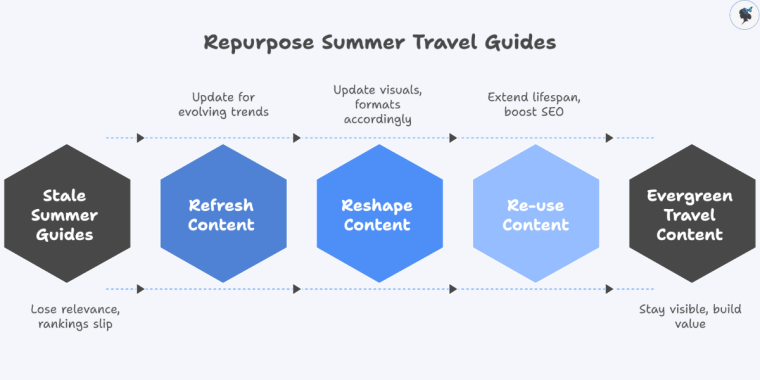
Seasonal travel content—such as summer beach guides, fall foliage escapes or winter ski destination write‑ups—is a staple for many travel agencies. Yet all too often, these guides are treated as one‑time hits: created, published, promoted for the season, then forgotten once the demand dips. This approach wastes effort, depletes SEO equity and misses the chance to build a longer‑term asset.

infograph: Seasonal travel content repurposing cycle
Seasonal travel content repurposing cycle

In this article we’ll show how travel companies can repurpose seasonal content instead of recreating it from scratch each year, thereby saving resources, preserving SEO performance and engaging audiences more consistently.

Wander Women Hot Tip: Before the next high season starts, pick your top 3 seasonal guides from the last year and identify which one to repurpose first—treat it as your pilot.


Importance of Content Repurposing

Content repurposing isn’t simply “re‑using old content” — it’s a strategic approach that extends lifespan, increases return on investment and keeps your brand message active and meaningful.

infograph: The strategic benefits of content repurposing
The strategic benefits of content repurposing

Why it saves time and resources

Producing fresh, in‑depth content each season is resource‑intensive. According to one recent study, 65% of marketers agree that content repurposing is more affordable than creating brand‑new content. By repurposing guides, agencies can spend less time on ideation and more on promotion and optimization.

Why it boosts SEO value

Sites that refresh and republish content rather than abandoning it gain stronger SEO outcomes. One data point shows that content lifecycle extensions via updates increased organic traffic by 28% in 2025. With travel guides, you retain inbound links, existing authority and content history—all valuable assets.

Why it reaches a broader audience

People consume content in myriad formats and on various platforms. A guide originally written for blog readers may resonate as a social‑media carousel, a downloadable PDF or an email feature. Repurposing helps broaden reach.

Repurposing is not a shortcut—it’s an investment in stretching the value of your best content, improving SEO impact and engaging more travellers across platforms.

Wander Women Hot Tip: Audit your content library annually and tag your best‑performing seasonal guides. These become your “repurpose candidates” for the next cycle.


Strategies for Repurposing Seasonal Content

In this section we’ll walk through specific strategies travel agencies can adopt to repurpose seasonal guides effectively.

1. Update content for the new season

infograph: Website content update process
Website content update process
  • Refresh statistics (visitor numbers, average temperatures, hotel rates).
  • Update event listings, new attractions or newly opened properties.
  • Replace outdated travel advisories or seasonal commentary.
  • Keep the original URL where possible to preserve SEO rankings.

Wander Women Hot Tip: Use a revision log on each page (“Last updated: November 2025”) which signals freshness to Google and users alike.

2. Add new visuals and multimedia

infograph: Visual refresh ideas
Visual refresh ideas
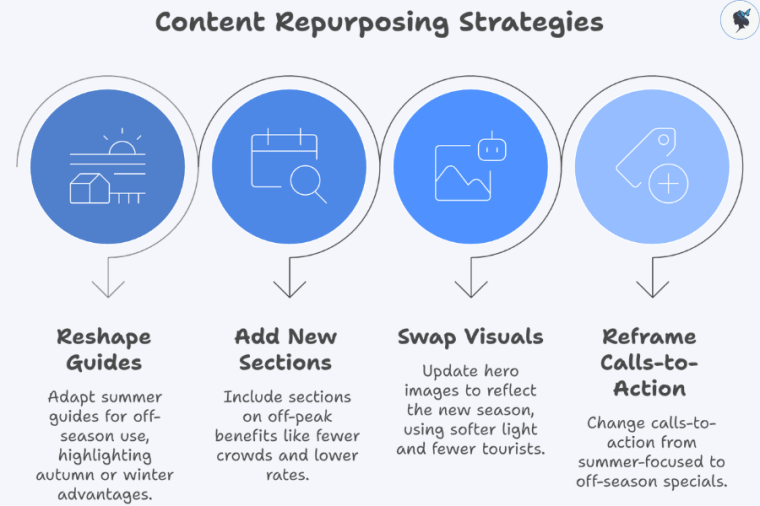
  • Replace old hero images with recent high‑quality photos from the destination.
  • Create an infographic summarizing “Top 10 highlights this season.”
  • Convert the guide into a short video or reel for social channels.
  • Use interactive maps or sliders for visual appeal.

Wander Women Hot Tip: Create a “visual refresh” every 12 months—update at least 3 images or one video per guide to keep it feeling current.

3. Integrate user‑generated content (UGC)

infograph: User-Generated Content in travel guides
User-Generated Content in travel guides
  • Feature traveller photos, reviews or short stories from your customers.
  • Include UGC in the guide, linking to Instagram posts, testimonials or guest blog entries.
  • Encourage sharing via branded hashtags and then curate the best content into your guide.

Read: How travel brands can use UGC.

Wander Women Hot Tip: Run a social campaign post‑season: “Share your (destination) summer moment” and then embed the best user posts into next year’s guide.

4. Reformat content for different channels

Repurposing a seasonal guide
  • Break the long guide into mini‑posts: “5 things you didn’t know about X in fall” for social.
  • Create a downloadable PDF or e‑book version of your seasonal guide.
  • Use parts of the guide as email newsletter features with links back to the full page.
  • Turn the guide into a script for a podcast episode or a YouTube short.

Read our guide: Evergreen Destination Seasonal Content Hubs

Wander Women Hot Tip: Re‑use your main seasonal guide across at least three formats (blog + infographic + video) for maximum reach.

infograph: Content linking strategies
Content linking strategies
  • On the guide page, link to related content: past season’s guide archive, booking pages, photo galleries.
  • From newer content (blog posts for this season), link back to the hub destination guide to concentrate authority.
  • Use internal linking to funnel users into current offers.

Wander Women Hot Tip: Include a “Last year this guide…” section on the page linking to previous version—maintains history and authority rather than removing old content.

6. Keep the URL stable and archive wisely

Infograph: URL and content management process
URL and content management process
  • Avoid creating a new URL each season (e.g., /fall‑2024‑destination-guide). Instead, use /destination‑guide/fall/ and update content annually.
  • Archive older versions behind a change log or “archive” tag but keep the main page intact to preserve ranking signals.

Wander Women Hot Tip: Use a “last updated” schema on the page to signal to search engines that it has been refreshed without changing the URL.

By applying these strategies—updating content, fresh visuals, UGC integration, multi‑format repurposing, strong linking and stable URLs—you transform seasonal assets into evergreen pieces that deliver year after year.


Tips for Integrating SEO into Repurposed Content

Updating content is only half the job—ensuring it’s optimized for search is equally critical.

infograph: SEO strategy for repurposed content
SEO strategy for repurposed content

Keyword refresh

  • Use tools like Google Trends, Ahrefs or Semrush to identify new season‑specific keywords (“fall foliage tours 2025”, “winter skiing essentials”), long‑tail queries and question formats.
  • Update H1/H2 headings and meta descriptions accordingly.

Read our post: Mastering Long-Tail Keywords.

On‑page optimization

  • Update meta titles and descriptions to reflect current season and year.
  • Include schema markup for updated offers, itineraries or events.
  • Ensure headings and content reflect newly added sections (e.g., UGC gallery, infographic).
  • Optimize images: new filenames, alt text, compression for speed.

More about On-Page Optimization here.

  • Internal links: From blog posts or social posts to the updated destination guide.
  • External links: Share the refresh on partner websites, social media, and newsletters to attract new backlinks.
  • Ensure old URLs redirect (if any), and keep canonical tags in place to prevent duplicate content.

More about internal linking for travel companies here.

Wander Women Hot Tip: Add a “What’s new this season” section at the top of the guide with updated keywords—they’ll signal freshness to search engines and interest to returning visitors.

Monitor performance

  • Compare performance pre‑ and post‑update (traffic, rankings, conversions).
  • Use Google Search Console to see if impressions/CTR changed after refresh.
  • Use Analytics to track changes in engagement and conversions.

SEO doesn’t stop once you’ve updated the guide—the optimization, monitoring and linking work ensures your repurposed content continues to perform and attract new traffic each season.


Conclusion

Repurposing seasonal travel content is a strategic way for travel agencies to maximize the value of their marketing efforts. By updating and enhancing your existing guides—rather than creating entirely new ones—you save resources, preserve SEO traction and continue attracting travellers across multiple seasons.

Key takeaways:

  • Refresh core elements (data, visuals, UGC) each season.
  • Repurpose guides into multiple formats and distribute across channels.
  • Keep URLs stable and maintain internal linking to preserve authority.
  • Integrate fresh season‑specific keywords and SEO updates.
  • Monitor performance and iterate based on insights.

Wander Women Hot Tip: Pick one seasonal guide this week and apply a mini‑refresh plan using this process: update visuals & UGC, optimize for the new season’s keywords, publish the refreshed version and promote it across your social and email channels.

Ready to convert your seasonal content into year‑round assets? Contact us today and watch your content keep working for your agency long after the season ends.

How to Structure and Maintain Evergreen Destination Seasonal Content Hubs for Travel Sites

▶ Table of Contents
  1. Introduction
  2. Understanding Evergreen Content for Travel Destinations
  3. Why Build a Destination Content Hub
  4. Structuring a Seasonal Evergreen Content Hub
  5. Maintaining Seasonal Relevance
  6. Integrating User‑Generated Content (UGC)
  7. Promoting and Leveraging Seasonal Hubs
  8. Measuring Success and Iterating

Introduction

In the fast‑moving world of travel content, where every destination feels ten minutes away from being “over‑covered,” a smart approach is to build evergreen destination seasonal content hubs. These hubs combine the stability of timeless content with the freshness of seasonal relevance — creating resources that attract search engine traffic, engage travellers consistently, and stay top‑of‑mind year after year.

Why bother? Evergreen content continues to deliver long after publication; in fact, for many websites, evergreen content consistently drives more than a third of total organic traffic. In travel specifically, with seasonal patterns and shifting consumer habits, this hybrid approach of evergreen + seasonality gives you both resilience and relevance.

Wander Women Hot Tip: Start with a “destination hub” strategy rather than hundreds of disconnected blog posts. Think big, centralised, modular — build the library now so that future updates are smoother.


Understanding Evergreen Content for Travel Destinations

1. What Makes Content Truly Evergreen in Travel

infograph: Evergreen travel content
Evergreen travel content
  • Evergreen travel content covers topics that remain relevant regardless of year, season, or fleeting trends: e.g., “How to get to X destination,” “What you must pack for X,” “Cultural norms and local etiquette in X.”
  • It avoids being too tied to a fixed date (e.g., “Summer 2025 deals”) and instead focuses on enduring user needs.
  • In a travel‑destination hub, evergreen pieces can be the “core” of the hub: destination overview, transport and logistics, “must sees,” best time to go (with caveats), local culture, food, safety tips, etc.

2. SEO Benefits of Evergreen Content

infograph: Benefits of Evergreen Content for SEO
Benefits of Evergreen Content for SEO
  • Because it remains relevant, evergreen content drives consistent organic traffic. Search engines favour pages that continue to satisfy user intent, rather than topics that die out.
  • Evergreen pages give excellent internal‑linking opportunities (they become pillars that link out to seasonal or more specific pieces). That strengthens your site architecture and authority.
  • You save resources: you don’t have to constantly churn brand‐new content; instead you maintain and update. One guide noted companies prioritising evergreen content see a 5× higher return on investment than those focusing only on trend‑based content.

Wander Women Hot Tip: Identify 8–12 evergreen “pillar” pages for each destination (e.g., Getting There, Where to Stay, Food & Drink, Culture & Customs, Best Time to Visit, Practical Tips). These become the foundation of your hub. Then seasonal content layers on top.


Why Build a Destination Content Hub

1. Benefits Over Stand‑alone Blog Posts

infograph: Destination hub benefits
Destination hub benefits
  • A hub creates structure: instead of random blog posts, you have a parent page (“destination hub”) and child pages (evergreen + seasonal) that nest logically.
  • Search engines see this structure as topical authority: you’re demonstrating your site knows all about destination X, not just that you occasionally wrote about it.
  • For users, it’s better: if someone lands on your hub for “Visit X”, they find everything in one place — not just a blog post bouncing them out. This increases engagement, time on site, and reduces bounce rates.
  • Stand‑alone posts may generate a short‑term spike but then fade. A hub is more sustainable.

More about content clusters (hubs) here.

2. How Content Hubs Improve User Experience

infograph: Hub content suggestions
Hub content suggestions
  • Use the parent hub as a gateway: quick snapshot of destination + links to deeper dives (seasonal activities, upcoming festivals, itineraries, FAQs).
  • Provide navigation aids: e.g., a “Select your season” filter so travellers see what to do in spring vs winter.
  • Include rich content: maps, image galleries, interactive features (quiz: “Which season at X fits you best?”).
  • Add CTAs (calls to action): newsletter signup for seasonal updates, booking enquiry, user photo gallery submission.

Wander Women Hot Tip: Design the hub UI/UX like a mini‑magazine: think “Explore Destination X” homepage with cards for each season, “In this month”, “Insider tips”, “Traveller stories.” Make it visually appealing and scannable.


Structuring a Seasonal Evergreen Content Hub

1. Hub Architecture and Layout

infograph: How to structure the travel hub website?
How to structure the travel hub website?
  • Parent Hub Page: the first destination page a traveller lands on. It includes the overview, key selling points (“Why go here”), quick links to seasons, top experiences, and a “Start planning” CTA.
  • Child Pages — Evergreen Layer: logistics (how to get there, travel documents), accommodations, local culture, cuisine, “must‑do experiences”.
  • Child Pages — Seasonal Layer: each major season (Spring, Summer, Autumn, Winter) gets its own guide: best activities, events, weather guide, seasonal pros & cons, suggested itineraries.
  • Cross‑links and modules: On each seasonal page, link back to the evergreen pages (“Need to know about travel documents? Visit our logistics guide”). Likewise the evergreen page can link to each seasonal page (“Check what’s happening this winter”).
  • Sidebar / module widgets: “Upcoming festival in X”, “Traveller photo of the month”, social feed.
  • Consider a year‑round calendar of events embedded or linked.

2. Balancing Evergreen and Seasonal Content

infograph: Updating seasonal content
Updating seasonal content
  • Start with the evergreen core — this remains mostly stable year‑to‑year.
  • Then layer seasonal content — which may require annual updates (dates of festivals, seasonal deals, weather variations, new experiences).
  • Ensure seasonal pages maintain some evergreen components (e.g., “Spring in X: what you can do” still relevant from year to year) but highlight what changes.
  • Use a modular update approach: only parts of the seasonal pages change (dates, deals, new venues); rest remains. That keeps maintenance manageable.

3. Internal Linking Strategy

infograph: Enhancing website navigation
Enhancing website navigation
  • Link from parent hub – evergreen pages – seasonal pages.
  • On evergreen pages, include “Explore this destination by season” links.
  • On seasonal pages, include “Also check: full destination guide” links.
  • Use consistent anchor text: e.g., “Visit X in autumn” or “Autumn activities in Destination X”.
  • Use a “Related articles” module at bottom of every page to suggest deeper reads (which helps dwell time).
  • Perform periodic audits of links to ensure seasonal pages still point to correct evergreen pages and vice versa.

Wander Women Hot Tip: Set up a mini‑site‑map or interactive menu within the hub that lets users jump to “Summer activities”, “Winter festivals”, “Family travel”, etc. The clearer your internal linking, the more search engines (and travellers) see the depth of your coverage.


Maintaining Seasonal Relevance

1. Updating Content for Each Season

infograph: How to update seasonal pages?
How to update seasonal pages?
  • At set intervals (quarterly or annually), review each seasonal page: update event dates, new attractions, closures, weather data, deals.
  • Refresh meta titles/descriptions when changes occur (e.g., “What’s new for Autumn 2026 in Destination X”).
  • Add fresh images or user‑submitted photos to reflect updates (e.g., new festival venue).
  • Highlight “What’s new this season” inside each seasonal page — creates perceived freshness for returning visitors.
  • Republish or refresh the page (even if URL remains same) to signal search engines it’s current.

2. Automating Seasonal Updates

infograph: Seasonal update process
Seasonal update process
  • Maintain a content calendar: at the start of the year list all hubs + seasonal updates with deadlines.
  • Use CMS features to flag when a page is due for review (6‑12 months after last update).
  • Consider integrating data feeds: e.g., event partner API, weather service widget, local tourism board feed for upcoming events.
  • Use versioning: keep a revision log so you know what changed from last season — helpful during audits.

Wander Women Hot Tip: Create a “Seasonal update checklist” for each destination: events, weather, closures, new attractions, traveller tips changes. Use it year after year with tweaks — saves time and ensures nothing is overlooked.


Integrating User‑Generated Content (UGC)

1. Benefits of UGC in Travel Content

infograph: Top UGC impact factors in travel
Top UGC impact factors in travel
  • UGC is seen as highly trust‑worthy: a study found 79% of consumers say user‑generated content significantly influences their purchasing decisions.
  • In the travel market, the global user‑generated content for travel market size was US$10.4 billion in 2024, with a projected compound annual growth rate (CAGR) of 13.2% out to 2033.
  • UGC enhances authenticity and freshness, and when naturally embedded in a hub, keeps pages alive and engaging.

Read our post: Use User‑Generated Content as SEO Assets

2. Sources of UGC

infograph: Types of user-generated content
Types of user-generated content
  • Photo galleries submitted by travellers (with permission/credits).
  • Short travel‑story snippets or quotes (“I loved sunrise at X”).
  • Instagram / TikTok posts using a hashtag you promote (e.g., #MyTripToX).
  • Reviews and testimonials — embed or summarise within seasonal/evergreen pages.
  • Community Q&A or forums on your site: travellers ask and answer.

3. Displaying UGC Effectively

infograph: UGC integration strategies
UGC integration strategies
  • On the parent hub page: highlight a “Traveller of the Month” photo or video slider.
  • On seasonal pages: include a carousel of “Recent traveller photos this (season) in Destination X”.
  • Embed social media feeds (Instagram stories, TikTok clips) with traveller content.
  • Encourage submission by offering spotlight features (“Submit your photo and be featured”).
  • Use UGC as link‑bait: published content with traveller stories tends to be shared and linked to by other sites.

Wander Women Hot Tip: Create a monthly “UGC roundup” blog/article inside the hub: “5 real traveller stories from this season at Destination X” — this keeps content fresh, supports the hub and encourages community participation.


Promoting and Leveraging Seasonal Hubs

1. Social Media Integration

infograph: Social media strategies
Social media strategies
  • Use Instagram, TikTok, Pinterest to tease seasonal hub content: e.g., short video “Top winter tips for Destination X”, linking to the seasonal page. Note that travel‑related content on TikTok has increased by about 410% since 2021.
  • Create specific hashtags for your hub (e.g., #ExploreXSpring2026) to track UGC and engagement.
  • Run “Insta‑takeover” days/traveller‑guest posts focusing on seasonal experiences at the destination.
  • Use social platforms to gather content ideas: ask travellers “What are your top tips for Destination X in autumn?” and then build blog content from that.

2. Email Marketing & Newsletter Tie‑Ins

infograph: How to effectively engage email subscribers?
How to effectively engage email subscribers?
  • Segment your email list by interest or season (e.g., subscribers interested in “Summer X”).
  • Send a seasonal hub update email: “What’s new for summer 2026 at Destination X” linking into the hub.
  • Use evergreen content as the basis for an automated “Welcome sequence” for new subscribers (“Start with our ultimate destination guide”) and then nurture into seasonal offers.

3. Cross‑Promotion Across Platforms

infograph: Hub promotion strategies
Hub promotion strategies
  • Link from hub pages to your booking/itinerary packages, affiliate partners, or travel‑offer pages — this increases conversion opportunities.
  • Use the seasonal hub as a campaign landing page for paid ads: e.g., “Visit X this winter – see our winter hub and book the best experiences”.
  • Promote the hub in partnerships or guest‐content: have local tourism boards or influencers link back into your hub.

Wander Women Hot Tip: Treat each seasonal page like a micro‑campaign asset: plan one social post, one community challenge (e.g., share your winter hiking photo), one newsletter trigger, one site update per season. That creates a rhythm.


Measuring Success and Iterating

1. Key Metrics to Track

infograph: Hub page metrics
Hub page metrics
  • Organic traffic to the parent hub page and each seasonal child page (compare year‑on‑year).
  • User engagement metrics: average time on page, scroll depth, clicks to other hub pages, “bounce” from hub.
  • Conversion metrics (if applicable): newsletter sign‑ups, enquiries/bookings from hub pages.
  • Keyword ranking stability/growth for core evergreen and seasonal keywords.
  • UGC submission volume and social shares of hub content.
  • Link growth/backlinks to hub pages (especially evergreen sections).

2. Continuous Improvement

infograph: Content improvement process
Content improvement process
  • Perform an annual content audit for each destination hub: update what’s outdated, remove links to dead external pages, correct event dates.
  • Review top‑performing pages (seasonal and evergreen) and replicate formats for other destinations.
  • Use user feedback: comments, social shares, DMs can hint at what travellers want more of (e.g., “I wish you covered off‑season travel tips”).
  • Use A/B testing for CTA placements, interactive modules, UGC display formats.
  • Monitor search‐intent shifts: if a seasonal keyword’s search pattern changes, update your page accordingly.

Wander Women Hot Tip: Build a “hub health dashboard” for each destination: seasonal update indicator, link check status, top UGC item this month, traffic vs last year. Review quarterly.


Conclusion

Building and maintaining evergreen destination seasonal content hubs is one of the smartest investments a travel brand can make. You get the enduring power of evergreen content — which drives consistent organic traffic and builds authority over time. And you also gain the relevance and freshness of seasonal content that keeps your destination top of mind with travellers.

By structuring your hub thoughtfully, layering seasonal content on top of an evergreen foundation, integrating user‑generated content and social media, and keeping your updates systematic and measurable, you simultaneously build a resource that helps visitors now and continues helping visitors next year and the year after.

Wander Women Hot Tip: Start now. Pick your priority destinations, build one hub thoroughly — with your pillar pages, seasonal pages, UGC modules — then roll the model out to the next destination. The compounding benefits will snowball.

Need help? Contact us today!
How Travel Brands Can Use User‑Generated Content as SEO Assets

▶ Table of Contents
  1. Introduction
  2. The Strategic Significance of UGC in Travel
  3. Best Practices for Leveraging UGC as SEO Assets
  4. Effective Strategies for Soliciting UGC from Travellers
  5. Techniques for Optimising UGC for Search Engines
  6. Real‑World Examples of Travel Companies Using UGC to Drive SEO & Engagement
  7. Conclusion

Introduction

In the travel industry, we’re seeing a tectonic shift in how travellers discover, evaluate and book trips. Rather than simply absorbing branded content, today’s (and tomorrow’s) travellers rely heavily on user‑generated content (UGC)—photos, videos, reviews, social posts from real travellers—to inspire, inform and influence their decisions. According to one 2025 statistic, 86% of travellers said they were inspired to visit a location after seeing user‑generated content.
Meanwhile, the market for UGC in travel is estimated at around USD 279.8 million in 2025, with a projected growth to USD 1,132.1 million by 2035. (Future Market Insights)
For travel agencies and destination brands, this means UGC isn’t just “good to have” — it’s a high‑impact asset for content marketing, social media, and SEO. When properly solicited, curated and optimised, UGC drives engagement, improves search visibility, and builds trust with prospective travellers.

Wander Women Hot Tip: View UGC as a dual‑purpose tool: 1) social engagement and inspiration, 2) SEO asset and web content amplifier. Plan both uses whenever you request or reuse traveller content.


The Strategic Significance of UGC in Travel

1.Why UGC is a High‑Value Asset for Travel Brands

infograph: Benefits of User-Generated Content
Benefits of User-Generated Content
  • Authenticity & trust: UGC offers “real people, real experience” rather than polished brand messages. A 2025 study found UGC has a significant positive effect on destination imagery and tourist visit intentions.
  • Engagement and inspiration: In the travel sector particularly, 83% of travellers use social media for trip inspiration. Another stat: 86% of travellers were inspired to visit a location after seeing UGC.
  • Cost efficiency & scale: Compared with high‑production brand content, UGC can be more scalable, authentic and cost‑effective. For example, a marketing stat notes that visual UGC is considered more impactful by 85% of marketers compared to professional photography.
  • SEO & discoverability: UGC contributes to freshness signals, real traveller language (long‑tail keywords), multimedia content (photos/videos) and social signals that help search engines and users alike.

You might like our post: Use UGC to Enhance Your Travel Brand’s Trust

2. How UGC Impacts SEO & the Travel Funnel

infograph: UGC's impact on travel SEO
UGC’s impact on travel SEO
  • Awareness phase: UGC helps travellers discover destinations (“I saw this Instagram reel and now want to go”).
  • Consideration phase: Reviews, photos, videos from travellers build credibility and answer questions (“What’s it really like staying at this hotel?”).
  • Conversion phase: Real‑traveller content reduces perceived risk, making bookings more likely.
  • SEO in action:
    • Fresh UGC updates signal to search engines a page is current and relevant.
    • Traveller language captures long‑tail, conversational keywords (e.g., “what it was like to stay in a tree house in Costa Rica”). More about Long-Tail Keywords here.
    • Multimedia UGC supports rich search results (image/video search, Google Discover).
    • Internal linking of UGC pages into destination/service hubs strengthens topical authority.
  • Metric improvements: UGC often leads to longer time on page, deeper scrolls (since people enjoy real‑traveller content), better engagement metrics—all of which can support rankings.

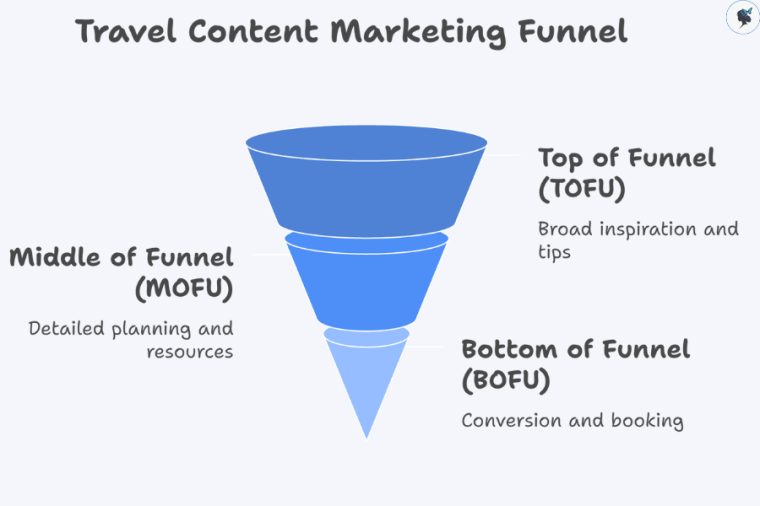
Wander Women Hot Tip: Build your content funnel around UGC touchpoints:

  • For TOFU (top‑of‑funnel) create “traveller story” pages and galleries.
  • For MOFU (middle) embed UGC into destination/service hub pages (real review + service link).
  • For BOFU (bottom) use UGC testimonials and case studies that push toward booking.
    Map your internal linking so that UGC feeds into your commercial pages.

Check out: The Complete Digital Marketing Funnel for Travel


Best Practices for Leveraging UGC as SEO Assets

1. Curate and Showcase UGC Strategically

infograph: UGC integration strategies
UGC integration strategies
  • Create dedicated sections on your site for UGC: e.g., “Traveller Gallery”, “Real Stories”, “Trip Highlights”. Use these as entry‑points and link into hub/destination/service content.
  • Use UGC in blog posts: integrate traveller quotes, photos, video snippets to humanise content and make it richer.
  • Build content clusters: For example, a destination page that includes brand content + embedded UGC streams (photos/videos) + links to sub‑pages. This boosts structure and authority.
  • Maintain quality control: Not all UGC will be suitable. Filter for relevance, authenticity, and brand fit. Research shows UGC influences tourist image and behaviour only when perceived as genuine.
  • Refresh UGC often: A destination page that embeds new traveller posts signals freshness to search engines and encourages repeat visits.
  • Align UGC showcase with user‑intent: E.g., if the page is “Adventure Travel in Iceland”, select UGC showing adventure contexts rather than leisure pool images.

2. Integrate UGC with On‑Page SEO Elements

infograph: Enhancing UGC for SEO
Enhancing UGC for SEO
  • Use descriptive headings/sub‑headings that frame UGC: e.g., “See real traveller photos from our Maldives resort”, “What guests say: tree‑house experience in Belize”.
  • Optimize alt text and filenames of UGC assets: eg “solo‑female‑traveller‑hiking‑Torres‑del‑Paine.jpg” or “family‑trip‑senior‑couple‑Santorini‑sunset.png”.
  • Apply schema markup where relevant: Review schema around UGC testimonials, VideoObject schema for traveller videos.
  • Meta tags: Create enticing meta titles/descriptions for UGC‑rich pages (“Real traveller photos & reviews of XYZ resort – see what it’s really like”).
  • Internal linking strategy: Link from UGC pages to commercial/service pages (“Book the same villa our guest visited”), and from blog content into UGC pages for deeper engagement.
  • Encourage user‑interaction: Optional comments or “submit your photo” forms increase dwell time and activity on page.
  • Cross‑channel amplification: Use UGC‑led content in social media, email, newsletters to drive traffic back to on‑site pages (which improves search signals).

3. Monitor & Optimize Performance

infograph: How to optimize UGC performance?
How to optimize UGC performance?
  • Track metrics: organic traffic to UGC pages, engagement (time on page, scroll depth), conversion from UGC content (clicks to booking).
  • Identify which UGC formats perform best (photo carousel vs video vs text review) and scale accordingly.
  • Audit older UGC pages: refresh assets, update meta tags, add new traveller posts to keep content fresh (search engines reward recent updates).
  • Use A/B tests: e.g., UGC gallery hero vs brand hero image, UGC testimonial vs no testimonial. Compare engagement and conversion outcomes.
  • Watch for faux‑UGC or irrelevant content—it may harm user trust and SEO signals. Authenticity matters.

Wander Women Hot Tip: Maintain a UGC content calendar: schedule quarterly refreshes of your UGC‑rich pages, track when traveller content awaits moderation, and ensure each UGC update prompts a mini‑SEO audit (alt text, schema, linking).


Effective Strategies for Soliciting UGC from Travellers

1. Build a UGC‑Friendly Ecosystem

infograph: UGC engagement cycle
UGC engagement cycle
  • Make it easy for travellers to submit their content: mobile upload forms, dedicated hashtag campaigns, photo spot prompts during or after the trip.
  • Incentivise contributions: run UGC contests (e.g., “Best sunset photo from our Bali resort”), feature winners, offer small rewards or recognition.
  • Use branded hashtags and prompts: “#OurBrandTraveller”, “#MyResortStory” – encourages sharing and helps aggregation.
  • In‑trip prompts: At check‑in, on‑tour, create signage or digital prompts encouraging travellers to tag your brand and share their moments.
  • Post‑trip follow‑up: send automated emails or SMS shortly after travel inviting submissions (“Share your favourite photo & you could be featured”).
  • Legal and rights management: ensure travellers agree to your terms for content reuse (photo rights, social media tags) at the point of submission.

2. Encourage UGC That Is SEO‑Friendly

infograph: Traveller content guidelines
Traveller content guidelines
  • Provide guidelines to travellers: ask for short captions including location + experience (e.g., “Hiking the red dunes of Wadi Rum – best trip ever”). This helps generate natural keywords.
  • Ask travellers to tag the destination, accommodation, tour name in the caption (makes the content more searchable, helps link building).
  • Collect metadata: ask for trip dates, accommodation name, destination region, content type (photo, video, review) so you can later categorise and use effectively.
  • Encourage multiple formats: visuals (photos/videos), short text reviews, long‑form blog‑style stories (if willing) — more formats mean more SEO opportunity.
  • Promote sharing across channels: Instagram stories, TikTok reels, YouTube vlogs – you can then embed these on your website for richer content.

3. Manage and Moderate UGC Efficiently

infograph: UGC management
UGC management
  • Create a UGC library (digital asset management): tag content by destination, trip type, season, traveller persona. Makes retrieval for content creation easier.
  • Moderate for quality & relevance: ensure the content aligns with your brand values, destination, and avoids irrelevant/spam posts. Lack of authenticity may undermine trust.
  • Attribute properly: always provide photo/author credit, link to the user where possible (improves authenticity and community feeling).
  • Use automation where possible: scanning hashtags, setting alerts for submissions, using workflow tools for approval and tagging.
  • Maintain transparency: let travellers know how their content will be used; this builds willingness to participate and ensures compliance.

Wander Women Hot Tip: Create a “Traveller UGC Kit” you send to past guests: sample captions, suggested hashtags, simple steps to upload/share their content. The more friction you remove, the more UGC you will receive.


Techniques for Optimising UGC for Search Engines

1. Structuring UGC for SEO Impact

infograph: Strategies for enhancing UGC SEO
Strategies for enhancing UGC SEO
  • Create dedicated UGC‑rich pages with unique URL, title, meta description, e.g., /traveller‑stories/destination‑x/.
  • Ensure UGC is embedded within strong contextual content: not just a gallery, but heading, intro paragraph, text around it explaining relevance (“This is what it’s like to hike the glacier…”) which improves readability, scroll depth and SEO.
  • Mix content types: use photos, videos, reviews — this diversity improves chances of appearing in various search results (image search, video search, Google Discover).
  • Consider pagination for large galleries but ensure search bots can crawl (avoid infinite scroll without fallback).
  • Use schema markup: For example, mark up an embedded traveller video with VideoObject, or a review with Review.
  • Link to it: Internal linking from destination/service hub pages to UGC page and vice versa helps distribute SEO value.

2. Keyword Strategy Within UGC

infograph: UGC optimization funnel
UGC optimization funnel
  • Extract organic language from traveller captions/comments to spot real‑world long‑tail keywords (e.g., “family friendly resort Maldivian lagoon with kids”).
  • Use those keywords in sub‑headings, alt‑text, captions, and metadata around the UGC.
  • Align UGC pages with search intent: e.g., if travellers often search “what it’s like staying in over‑water villa Maldives”, then embed relevant UGC and tailor the page accordingly.
  • Make sure the UGC helps push users down the funnel: link from the UGC story to booking/tour page with anchor text optimised for action (e.g., “Book the same villa our guest stayed in”).
  • On‑page optimisation: Ensure H1/H2 include target keywords, alt‑text for images include destination + experience, captions reinforce the topic.

3. Technical & On‑Page Optimisation

infograph: UGC optimization strategies
UGC optimization strategies
  • Optimize media: large volumes of high‑resolution images/videos can slow page speed. Use compression, lazy loading, responsive design.
  • File naming: rename server files to include keywords (e.g., solo‑female‑traveller‑hiking‑Torres‑del‑Paine.jpg).
  • Alt text: described in natural language including destination plus experience (“Solo female traveller hiking at sunrise Torres del Paine national park”).
  • Canonical tags: If UGC appears on multiple pages, ensure canonicalization to avoid duplication.
  • Mobile‑first optimisation: Ensure UGC pages load well on mobile since many travellers browse on smartphones.
  • Meta descriptions: Use social proof (“See real traveller photos & reviews from Destination X”) to boost click‑through rate (CTR).
  • Structured data: Use Review schema for UGC testimonials, ImageObject or VideoObject schema for galleries and videos.
  • Monitor crawl & index status: Use Google Search Console to ensure UGC‑rich pages are crawled and indexed.

4. Measuring & Iterating

infograph: UGC performance measurement
UGC performance measurement
  • Key metrics: organic traffic to UGC pages; dwell time/scroll depth; referral traffic to booking pages; keyword ranking improvement; conversion rates (booking enquiries) originating from UGC content.
  • Compare UGC vs brand‑only pages: measure if embedding UGC leads to improved performance (e.g., lower bounce rate, higher pages per session).
  • Refresh UGC content periodically: add new traveller submissions, update captions, refresh images/videos — freshness supports SEO.
  • A/B test UGC layouts: e.g., hero image from traveller vs brand image; testimonial block vs no testimonial; call‑to‑action at bottom of UGC page vs none.
  • Maintain UGC library insights: track top performing UGC types (videos, scenic photos, cultural moments) and replicate similar campaigns.

Wander Women Hot Tip: Schedule a quarterly UGC SEO audit: list all pages with embedded traveller content, check alt‑text, meta title/desc, internal linking, page speed, mobile performance. Prioritise fixes for pages with high traffic but low conversion.


Real‑World Examples of Travel Companies Using UGC to Drive SEO & Engagement

  • Airbnb: Frequently uses guest‑shared photos and reviews in its destination pages and blog, helping travellers visualise “what it’s really like” and improving engagement.
  • Destination marketing example: A recent study found that UGC significantly improves destination image and intentions to visit, illustrating that DMO/brand‑driven UGC campaigns can shift demand materially.
  • Key takeaway for travel agencies: You may not have massive budgets, but you can embed UGC in your site, build galleries, feature “Traveller of the Month”, and link stories to service offers. Over time, this builds topical authority and trust.

Wander Women Hot Tip: Pick one UGC campaign (e.g., “Show us your stay at Resort X”), run it for 3 months, embed the resulting content in a destination hub page, and monitor traffic, engagement and conversions vs a similar page without UGC. Use the results to scale.


Conclusion

User‑generated content is not a nice‑to‑have extra in the travel industry—it’s an SEO‑strong asset, a trust builder, and a engagement amplifier. For travel agencies and brands willing to invest in soliciting, curating and optimising UGC, the benefits are clear: more organic traffic, higher engagement, better conversion potential, and authentic connection with travellers.
To recap the strategy:

  1. Solicit UGC intentionally (with prompts, incentives, seamless workflows).
  2. Curate it smartly (destination‑relevant, quality controlled, integrated into content hubs).
  3. Optimise it for web (alt text, schema, internal linking, media optimisation).
  4. Measure and iterate (audit quarterly, refresh content, replicate what works).
    Start small, pick a pilot destination or service, embed traveller content, optimise around long‑tail keywords derived from that content, and use it as a proof case internally.

Wander Women Hot Tip: Use your first 90 days to build a “UGC starter kit”: write a brief for traveller submissions, design a UGC gallery page template, map the internal linking path to your service/booking pages, and schedule the quarterly review. Once the system is set, you’ll continuously gain UGC, SEO value and conversions with decreasing incremental effort.

Need help? Contact us today to get started!

Managing Seasonal Offers and Dynamic Inventory: SEO Best Practices for Travel Agencies


▶ Table of Contents
  1. Introduction
  2. Understanding Dynamic Inventory
  3. SEO Implications of Dynamic Pages
  4. Best Practices for Managing Dynamic Offers
  5. Enhancing User Experience
  6. Case Study
  7. Conclusion

Introduction

For travel agencies, dynamic inventory pages—featuring seasonal offers, limited-time packages, or fluctuating availability—are essential for converting travelers. However, frequent changes pose SEO challenges. Pages may appear and disappear each season, risking lost rankings, duplicate content, or broken links.

Properly handling these pages requires a combination of technical SEO strategies and content planning to preserve search visibility while delivering a seamless user experience.

Wander Women Hot Tip: Start by auditing your existing offers pages. Identify which seasonal or expiring content has caused 404 errors or ranking drops in the past.


Understanding Dynamic Inventory

infograph: Dynamic inventory examples
Dynamic inventory examples

1. Definition and Examples

Dynamic inventory pages are those updated frequently based on availability, promotions, or seasonality. Common examples include:

  • Seasonal tour packages (e.g., summer beach specials, winter ski trips)
  • Limited-time flight deals or hotel discounts
  • Holiday-specific accommodation offers
  • Travel demand varies by season; peak periods often bring high search interest for specific destinations.
  • Search behavior changes accordingly—for instance, “best ski resorts” spikes in winter.
  • Agencies must update content timely to match traveler intent.

Wander Women Hot Tip: Track seasonal search trends per destination to plan offers content ahead of peak interest, ensuring your pages are indexed and visible when travelers search.

You might be interested in our post: Strategies for Managing Seasonal Content.


SEO Implications of Dynamic Pages

infograph: SEO challenges with seasonal content
SEO challenges with seasonal content

1. Crawling and Indexing Challenges

  • Frequent URL changes can confuse search engines, leading to pages being dropped from the index.
  • Disappearing pages may lose ranking authority if not managed correctly.

More about crawlability and indexability here.

2. Risks of 404 Errors and Duplicate Content

  • Expired offers returning 404s hurt both SEO and user experience.
  • Similar offers across multiple pages can create duplicate content issues.
  • Link equity may be diluted if multiple seasonal pages target the same destination or keyword.
  • Without proper canonicalization or redirects, valuable SEO signals can be lost.

Wander Women Hot Tip: Develop a consistent URL strategy for seasonal offers, keeping base URLs evergreen while updating the content dynamically.


Best Practices for Managing Dynamic Offers

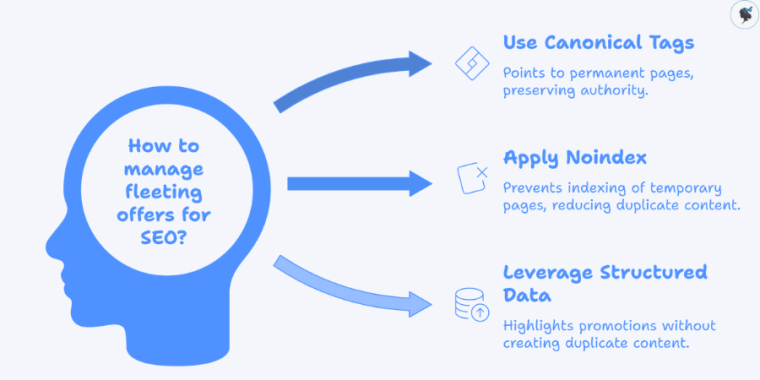
infograph: How to manage dynamic offers for SEO?
How to manage dynamic offers for SEO?

1. Structured Data Implementation

  • Use Offer, Product, and Event schema to help search engines understand seasonal packages.
  • Structured data can enable rich snippets in search results, increasing CTR and visibility.

2. Canonical Tags

  • Use canonical tags to consolidate duplicate or similar offers, preserving SEO value.
  • Example: /summer-beach-special canonicalized to /beach-offers ensures all authority points to the main destination page.

3. Seasonal Content Calendar

  • Plan content updates aligned with travel seasons.
  • Schedule posts for new packages before peak search periods to maintain relevance and indexing.

4. Redirects and 404 Handling

  • Use 301 redirects for removed offers to relevant alternatives.
  • Soft 404s for expired offers can maintain user trust without harming SEO.

Wander Women Hot Tip: Maintain a master offers index page that links to all seasonal pages. This acts as a central hub for both users and search engines.


Enhancing User Experience

infograph: Website optimization
Website optimization

1. Displaying Offers Dynamically

  • Implement filters for travelers to sort by date, destination, and price.
  • Use real-time availability feeds without creating duplicate URLs for each variant.

2. Page Speed and Mobile Optimization

  • Dynamic pages often include heavy images or scripts—optimize for fast loading.
  • Mobile-friendly design is critical, as most travelers search and book on mobile devices.

More about mobile optimization here.

3. Consistency Across Channels

  • Ensure your website, email campaigns, and social media showcase the same offers to avoid confusion.

Wander Women Hot Tip: Use lazy loading for images and caching for frequently updated content to balance dynamic functionality with page speed.


Case Study

Ingenia Holiday Parks — Migration & SEO protection

  • Client: Ingenia Holiday Parks (part of Ingenia Communities).
  • Project: Large-scale platform migration from WordPress to headless CMS (Sanity) with a dev partner (Inlight) and SEO partner Optimising.
  • Goal: Migrate a high-traffic site without losing organic rankings or bookings.
  • Outcome: traffic levels sustained through cutover (200k+ monthly organic visits), impressions doubled year-on-year, key park pages showing significant click gains, and bookings remained consistent. Optimising reports rankings/impressions stabilised within two weeks and continued to improve thereafter.

Wander Women Hot Tip: Analyze which seasonal pages consistently generate traffic and bookings to prioritize future updates.


Conclusion

Managing dynamic inventory pages effectively requires a balance of SEO, content planning, and user experience:

  • Use structured data to highlight seasonal offers in search results.
  • Apply canonical tags and 301 redirects to preserve SEO value.
  • Maintain a content calendar to plan updates and ensure pages remain relevant.
  • Optimize page speed and mobile experience to enhance usability.

By implementing these strategies, travel agencies can maintain rankings, improve conversions, and maximize visibility for seasonal offers without compromising SEO.

Wander Women Hot Tip: Treat your dynamic offers pages as a living asset. Update, optimize, and monitor them regularly to ensure both travelers and search engines continue to find your best seasonal content.

Need help with your dynamic content? Contact us today!

Strategies for Managing Seasonal Content: Winter

▶ Table of Contents
  1. Introduction: Why Winter Content Needs a Strategy
  2. Winter Issues Travel Agencies Face
  3. Short-Term Fixes for Winter Content
  4. Long-Term Strategies for Winter Content
  5. Unique Winter Content Ideas
  6. Sample Winter Content Calendar
  7. Actionable Tips for Travel Agencies
  8. Conclusion

Introduction: Why Winter Content Needs a Strategy

Winter is a unique season for travel agencies. While many associate it with skiing, holiday markets, and cozy escapes, it also comes with significant challenges. Websites often see slower traffic, and content created for previous years can quickly become outdated.

Effective winter content management is critical for travel agencies to maintain SEO performance, attract travelers, and convert seasonal interest into bookings. This guide covers both short-term fixes and long-term strategies to help agencies maximize the impact of winter content.

You might like: Managing Seasonal Content: Fall.

Winter Issues Travel Agencies Face

Understanding the challenges specific to winter content is key to developing effective strategies.

Infograph: Winter SEO challenges
Winter SEO challenges

1. Low Organic Visibility

  • Popular keywords like “winter escapes,” “ski holidays,” or “winter getaways” are highly competitive.
  • Search interest is heavily seasonal, often peaking in early winter and dropping quickly afterward, leaving many pages underutilized.

2. Lack of Content Repurposing

  • Many agencies focus on summer or autumn content, but fail to adapt it for winter themes.
  • Opportunities to repurpose content across seasons — for example, turning a summer mountain guide into a winter skiing guide — are often missed.

More about repurposing content here.

  • Older winter pages often go offline post-season, resulting in loss of backlinks and authority.
  • This reduces organic visibility for new content and diminishes the site’s overall SEO performance.

Short-Term Fixes for Winter Content

To achieve quick wins and keep winter content relevant, travel agencies can implement several short-term strategies.

Infograph: Winter content strategy sequence
Winter content strategy sequence

1. Revive Evergreen Winter Pages

  • Update pages from previous years with the current year and refreshed content.
  • Example: “Top Ski Resorts – Updated Winter Guide 2026.”
  • Benefits: preserves search rankings and maintains relevance for returning visitors.

More about evergreen content here.

2. Add Structured Data

  • Implement schema markup for winter deals, events, and holiday packages.
  • Recommended types:
    • Event schema (for winter festivals or activities)
    • Offer schema (for promotions and package deals)
    • FAQ schema (for common traveler questions)
  • Structured data enhances rich results in Google, improving click-through rates.

3. Launch Winter Promotions Early

  • Start campaigns in late autumn to capture early planners.
  • Channels: email newsletters, social media teasers, and blog posts.
  • Early promotion increases the likelihood of pre-bookings and reduces competition during peak winter searches.

4. Encourage User-Generated Content

  • Collect traveler photos, stories, and reviews to enhance engagement.
  • Campaign idea: “Share Your Favorite Winter Trip Memories.”
  • Benefits: fresh content, social proof, and improved SEO through new text and image content.

More about User-Generated Content here.

5. Utilize Geo-Targeted Winter Keywords

  • Target location-specific searches to reduce competition and attract travelers seeking specific destinations.
  • Examples:
    • “Best winter escapes in Switzerland”
    • “Family-friendly ski resorts in Colorado”
  • Geo-targeting helps attract high-intent visitors likely to book.

Long-Term Strategies for Winter Content

Short-term fixes are important, but long-term planning ensures sustained value from your winter content.

Infograph: Enhancing winter content strategy
Enhancing winter content strategy

1. Keep Winter Landing Pages Live Year-Round

  • Avoid taking seasonal pages offline; instead, update them annually.
  • Benefits: retains SEO value, maintains backlinks, and improves site authority.
  • Link winter content to related off-season guides, holiday promotions, or early booking offers.
  • Example: linking a winter ski guide to a “Best Summer Mountain Hikes” post to encourage year-round engagement.

3. Create Evergreen Winter Guides

  • Develop content that remains relevant across multiple years. Examples:
    • “Best Time to Visit Alpine Ski Resorts”
    • “Winter Festivals Around the World”
  • Evergreen content minimizes the need for yearly rewrites while continuing to attract traffic.

4. Track Performance Using SEO Tools

  • Monitor winter content using Google Search Console, Ahrefs, or Semrush.
  • Track key metrics: organic traffic, keyword rankings, click-through rates, and conversions.
  • Insights inform both updates to current content and planning for next year.

5. Align Content With User Intent

  • Differentiate content for informational queries (e.g., packing guides, travel tips) and transactional queries (e.g., booking ski trips).
  • Ensure each page addresses the intent effectively:
    • Informational content educates and inspires.
    • Transactional content drives bookings and conversions.

More about user intent here.


Unique Winter Content Ideas

Innovative content can attract and engage audiences while differentiating your agency from competitors.

  1. Winter Escape Checklist – Practical tips for preparing for winter trips, from packing to safety.
  2. How to Pack for Alpine Winter Trips – Guides tailored to families, solo travelers, and adventure seekers.
  3. Virtual Snow-Sports Previews – Interactive videos or VR experiences of ski slopes, snowboarding runs, and winter trails.
  4. Feature Local Winter-Only Events or Traditions – Highlight festivals, Christmas markets, or seasonal cultural activities.
  5. Interviews With Local Guides – Insider tips on winter highlights, hidden gems, and adventure activities.

Sample Winter Content Calendar

A well-structured content calendar ensures timely content creation, promotion, and evaluation.

MonthActions
September–OctoberPrepare and publish winter content; refresh evergreen guides; gather user-generated content
November–JanuaryRun winter-themed campaigns (New Year’s deals, ski trips, holiday escapes); promote content via social media and newsletters
February–MarchAnalyze performance; gather insights for next season; begin preparing spring content

Wander Women Hot Tip: Integrate SEO audits, structured data checks, and promotional campaigns into the calendar to maximize winter content effectiveness.


Actionable Tips for Travel Agencies

Infograph: Winter content promotion
Winter content promotion
  • Audit Content Regularly: Schedule seasonal audits to update outdated links, offers, and images.
  • Focus on Long-Tail Keywords: Use queries like “family-friendly winter trips in Switzerland” instead of generic terms.
  • Promote Across Channels: Leverage newsletters, social media, and paid search to drive traffic to winter content.
  • Incorporate Visual Media: Use high-quality images, videos, and interactive elements like maps or quizzes.
  • Monitor Analytics: Track performance and adjust campaigns based on engagement, conversion rates, and search trends.

More about long-tail keyword identification here.


Conclusion

Winter content presents unique challenges for travel agencies — from slow traffic and outdated pages to competitive keywords and seasonal interest. By implementing short-term fixes, such as refreshing evergreen pages, launching early promotions, and leveraging user-generated content, agencies can quickly improve visibility and engagement.

Long-term strategies like maintaining evergreen landing pages, building backlinks, creating evergreen guides, and aligning content with user intent ensure sustained SEO performance and year-round relevance.

With innovative content ideas like winter escape checklists, virtual snow-sports previews, and local festival features, travel agencies can stand out in the crowded winter travel market. By following a structured content calendar and combining short- and long-term strategies, agencies can maximize bookings, maintain authority, and engage travelers throughout the winter season.

Begin auditing your winter content today. Refresh high-performing guides, implement structured data, and plan early promotions to ensure your winter travel content drives maximum engagement and conversions.

Need help with your winter content? Contact us today!
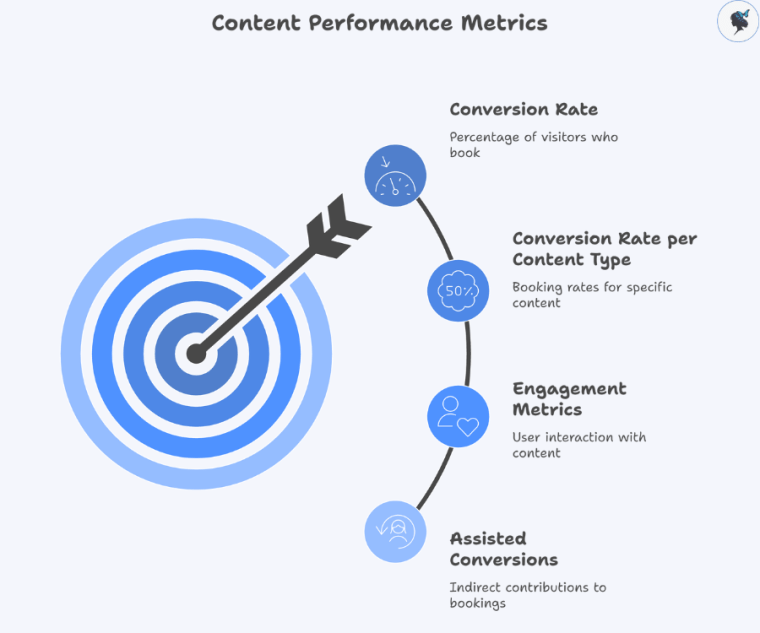

Strategies for Managing Seasonal Content: Summer

▶ Table of Contents
  1. Introduction: Why Summer Content Needs a Strategy
  2. Summer Issues Travel Agencies Face
  3. Short-Term Fixes for Summer Content
  4. Long-Term Strategies for Sustainable Seasonal Content
  5. Unique Summer Content Ideas
  6. Sample Summer Content Calendar
  7. Actionable Tips for Travel Agencies
  8. Conclusion

Introduction: Why Summer Content Needs a Strategy

For travel agencies, summer is the season everyone talks about — long vacations, beach getaways, family trips, and international travel spikes. Yet, paradoxically, many agencies struggle to maximize traffic and bookings outside peak months, leaving summer content underperforming.

Travel agencies need a proactive content strategy for summer — one that addresses immediate traffic dips, strengthens SEO, and ensures long-term relevance year after year.

Summer Issues Travel Agencies Face

Understanding the common pitfalls of summer content is crucial before implementing solutions.

infograph: Boosting travel agency performance
Boosting travel agency performance

1. Traffic and Booking Dips Outside Peak Months

  • Many agencies see a spike in website visits in June–August but a significant drop in May or September.
  • Content often fails to capture early planners or off-season travelers.

2. Content Lacks Early Promotion

  • Agencies tend to launch summer guides or promotional campaigns too late.
  • Early promotion (spring or even late winter) can capture travelers planning 3–6 months ahead, giving agencies a competitive advantage.
  • Keywords like “summer holidays,” “beach vacations,” and “summer travel deals” are saturated.
  • Without creative, long-tail targeting, your content risks being lost amid global competition.

4. Pages Get Outdated Year to Year

  • Static pages lose relevance and fail to rank in search engines.
  • Content with outdated information (prices, regulations, events) decreases credibility and discourages repeat visits.

5. Lack of Evergreen Tie-Ins

  • Summer content often exists in isolation without connections to off-peak or shoulder-season content.
  • Agencies miss opportunities to guide users year-round, such as linking summer destinations to winter or fall experiences.

More about evergreen content here.


Short-Term Fixes for Summer Content

For immediate improvements to summer content, travel agencies can implement several quick-win strategies.

Infograph: Enhancing summer content strategy
Enhancing summer content strategy

1. Refresh Last Year’s Successful Content

  • Update itineraries, imagery, and statistics from the previous year.
  • Example: “Top 10 Mediterranean Beaches – Updated 2026”.
  • Refreshing existing content is faster than creating new posts while improving SEO relevance.

2. Launch Promotions Early

  • Start campaigns in spring to capture travelers planning ahead.
  • Channels: newsletters, social media teasers, blog posts, and paid search campaigns.
  • Early promotion increases the likelihood of bookings before competitors saturate the market.

3. Add User-Generated Content

  • Incorporate traveler photos, reviews, and testimonials.
  • Campaign idea: “Share Your Best Summer Memories”.
  • Benefits: boosts engagement, adds fresh content, and enhances SEO through social signals.

More about user-generated content here.

4. Update Titles and Metadata

  • Include the current year in page titles and meta descriptions to signal freshness.
  • Example: “Summer in Bali 2026: Insider Tips & Deals”.
  • Fresh metadata helps improve CTRs and search rankings.

More about meta titles and descriptions here.

5. Leverage Local Summer Keywords

  • Target geographic or niche-specific terms to reduce competition.
  • Examples: “Best summer festivals in Provence”, “Family-friendly beaches in Florida”.
  • Localized keywords attract travelers looking for specific experiences rather than generic searches.

Long-Term Strategies for Sustainable Seasonal Content

Beyond short-term fixes, agencies should implement strategies that maintain relevance year after year.

infograph: Achieving sustainable seasonal content
Achieving sustainable seasonal content

1. Maintain Evergreen Landing Pages

  • Avoid year-specific URLs like /summer-2025-guide.
  • Keep evergreen URLs such as /summer-travel-guide and update content annually.
  • Benefits: retains backlinks, improves search rankings, and reduces maintenance.
  • Promote summer content during off-season via email, blog posts, or social media.
  • Link to evergreen content from other pages to increase domain authority.

More about internal linking here.

3. Repurpose Content Across Seasons

  • Turn summer guides into shoulder-season planning resources:
    • Example: “Plan Your Winter Trip Now: Lessons From Summer Destinations”.
  • Repurposing extends the lifespan of content and maintains relevance year-round.

More about repurposing content here.

  • Use Google Trends, Semrush, or Ahrefs to track interest shifts and seasonal keywords.
  • Adjust content focus based on search volume, emerging destinations, or traveler queries.

5. Segment Audiences for Tailored Updates

  • Personalize content for families, solo travelers, luxury travelers, or adventure seekers.
  • Example: send family-focused summer guides to parents while highlighting adventure activities to solo travelers.

More about the importance of personalization here.


Unique Summer Content Ideas

Creating engaging and shareable summer content can differentiate your agency.

  1. Top Hidden Beach Spots for 2026 – Lesser-known destinations that appeal to adventurous travelers.
  2. Interactive “Plan Your Summer Getaway” Quiz – Captures emails and engages users while recommending trips.
  3. User-Submitted Summer Photo Gallery – Encourages community participation and adds dynamic content to your site.
  4. Off-Season vs. Peak-Season Cost Comparison – Helps travelers plan budget-friendly trips and cross-promotes off-peak content.
  5. Local Summer Festival Guides with Sustainable Travel Tips – Combines experiential travel with responsible tourism, appealing to eco-conscious travelers.

Sample Summer Content Calendar

A structured timeline ensures timely content creation, promotion, and updates.

MonthActions
January–FebruaryConduct keyword research, analyze last year’s traffic, segment audiences
MarchRefresh previous content, plan new blog posts, gather user-generated content
AprilLaunch early spring promotions, post teaser content on social media
MayPublish summer guides, interactive content, quizzes, and photo galleries
June–AugustRun summer-themed campaigns, promote content via email/social media, monitor engagement
SeptemberAnalyze metrics, start repurposing content for shoulder season
October–DecemberUpdate evergreen content for next year, build backlinks, optimize landing pages

Wander Women Hot Tip: Always integrate content review checkpoints into your calendar to ensure pages are accurate, up-to-date, and SEO-friendly.


Actionable Tips for Travel Agencies

infograph: Summer content optimization
Summer content optimization
  • Audit Content Regularly: Schedule monthly or quarterly audits to update outdated links, statistics, and events.
  • Focus on Long-Tail Keywords: Target specific searches like “family-friendly summer trips in Greece” instead of just “summer vacations.”
  • Promote Across Channels: Leverage social media, newsletters, and paid ads to drive traffic to summer content.
  • Use Analytics: Monitor which pages drive traffic, engagement, and bookings to prioritize updates.
  • Incorporate Visual Media: Summer travel content benefits from high-quality images, videos, and interactive maps.

Conclusion

Summer content is more than a seasonal necessity; it’s a strategic asset for travel agencies. By addressing traffic dips, optimizing for SEO, leveraging user-generated content, and linking to evergreen and off-season pages, agencies can maximize engagement and bookings throughout the year.

Short-term fixes like updating old content, launching early promotions, and targeting local keywords provide immediate results, while long-term strategies such as maintaining evergreen pages, monitoring trends, and segmenting audiences ensure sustainable performance.

With unique content ideas like interactive quizzes, hidden beach guides, and sustainable festival tips, travel agencies can stand out in a crowded summer travel market. By following a structured content calendar and committing to both short- and long-term strategies, agencies can maintain relevance, authority, and engagement from early spring planning through post-summer wrap-ups.

Start by auditing your summer content today. Refresh high-performing posts, plan next year’s guides early, and experiment with interactive content to keep travelers engaged year-round.

Need help with your summer content strategy? Contact us today!