How to Measure and Optimize Content ROI for Travel Agencies: Strategies to Maximize Marketing Impact

▶ Table of Contents
  1. Introduction
  2. Understanding Content ROI in the Travel Industry
  3. Mapping the Content Funnel for Travel Agencies
  4. Advanced Reporting Strategies
  5. Optimizing Content Based on ROI Insights
  6. Conclusion

Introduction

In the travel industry, content marketing is a significant investment, from detailed destination guides to social media campaigns and email newsletters. But how do you know which pieces of content are actually driving revenue? This is where Content ROI (Return on Investment) comes into play.

Content ROI measures how your content contributes to bookings, leads, and brand growth. For travel agencies, this is particularly challenging due to long booking cycles, multiple touchpoints, and the seasonal nature of travel. For example, a blog post about “Best Winter Ski Destinations” may generate traffic months before the booking occurs.

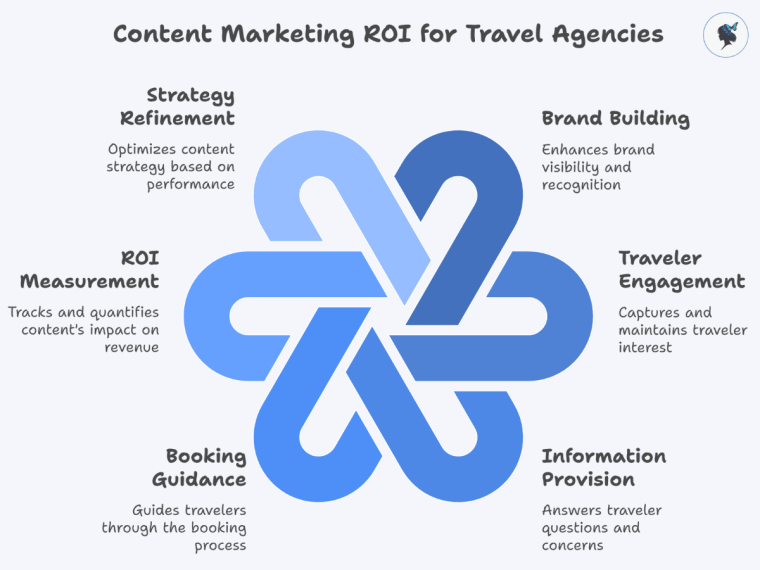
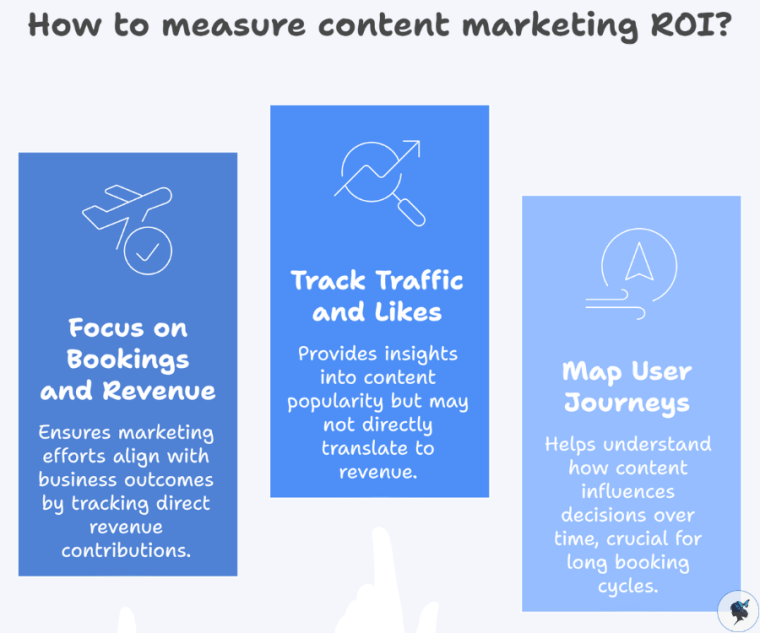
infograph: How to measure content marketing ROI?
How to measure content marketing ROI?

Tracking ROI goes beyond simply counting visits. It requires understanding which content influences decisions, mapping user journeys, and measuring actual revenue contributions. Agencies that adopt a structured approach to ROI see higher conversions and better resource allocation for content creation.

Wander Women Hot Tip: Focus on content ROI in terms of bookings and revenue, not just traffic or likes. This ensures marketing efforts align with business outcomes.


Understanding Content ROI in the Travel Industry

1.Defining ROI for Travel Agencies

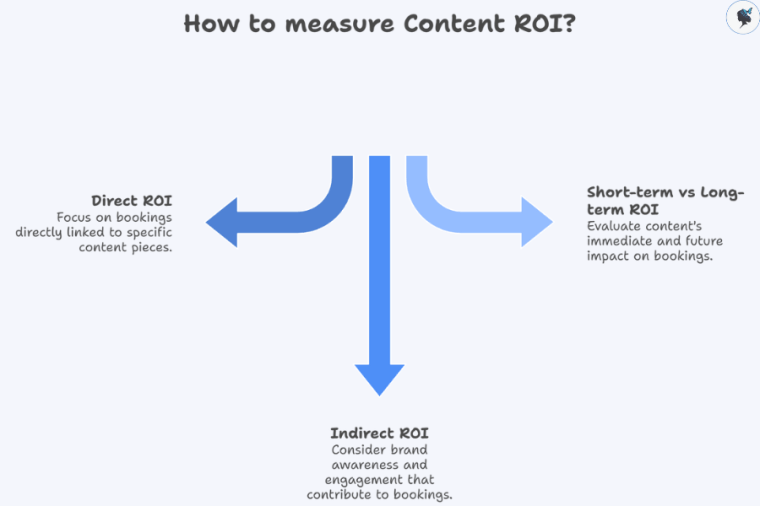
infograph: How to measure content ROI?
How to measure content ROI?

Content ROI is more than just clicks. Travel agencies should consider:

  • Direct ROI: Bookings that can be directly traced back to a blog post, social campaign, or landing page.
  • Indirect ROI: Brand awareness, email subscribers, or social engagement that eventually contributes to bookings.
  • Short-term vs Long-term ROI: A piece of content may not convert immediately but can influence bookings months later.

2. Why Accurate Attribution Matters

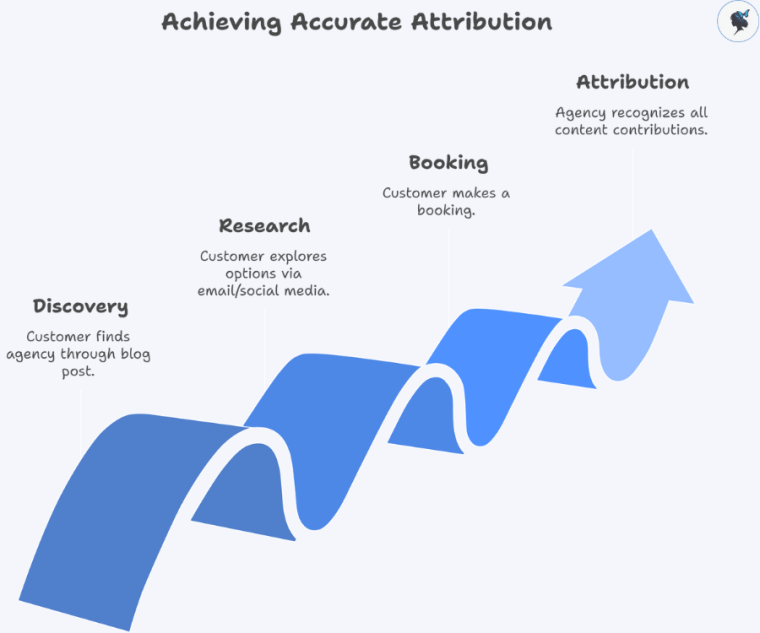
The travel buyer’s journey is complex. A customer may discover your agency through a blog post, then research options via email or social media before booking. Multi-touch attribution is critical to recognize all contributions of content to the final booking.

infograph: Achieving accurate attribution
Achieving accurate attribution

Wander Women Hot Tip: Use a blended attribution approach—track both direct and assisted conversions to fully understand content impact.


Mapping the Content Funnel for Travel Agencies

1. Understanding the Travel Content Funnel

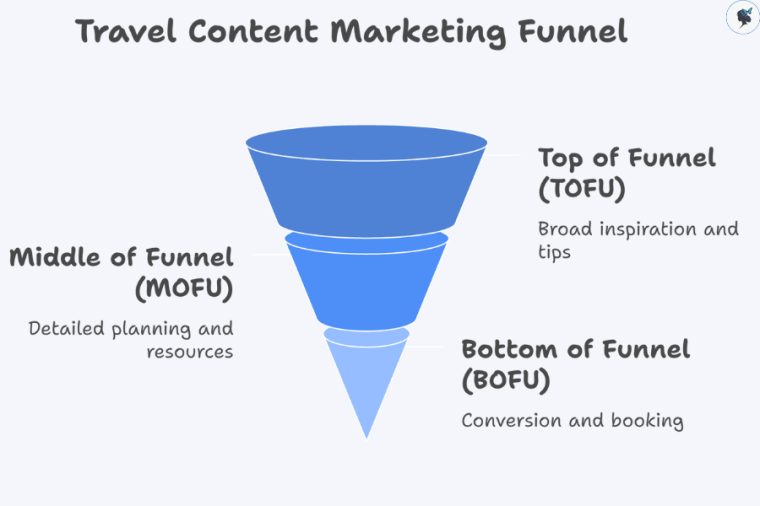
Travel content naturally maps to the marketing funnel:

infograph: Travel content marketing funnel
Travel content marketing funnel
  • Top of Funnel (TOFU): Destination inspiration, travel tips, adventure guides, “best of” lists.
  • Middle of Funnel (MOFU): Itineraries, package comparisons, in-depth guides, downloadable resources.
  • Bottom of Funnel (BOFU): Booking pages, special offers, call-to-action blogs, promotional campaigns.

2. Techniques for Funnel Mapping

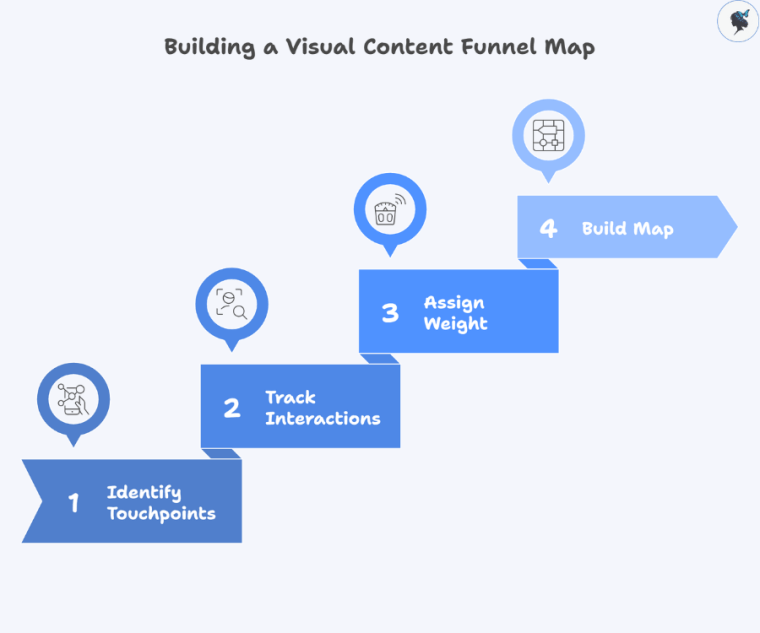
infograph: Building a visual content funnel map
Building a visual content funnel map
  • Identify all content touchpoints across channels: blog, email, social, review platforms.
  • Track user interactions from awareness to consideration to booking.
  • Assign weight to content based on its funnel stage and likelihood to influence conversions.

Wander Women Hot Tip: Build a visual content funnel map linking each destination, blog, or guide to potential revenue impact. It clarifies where to invest in content updates or promotion.


Advanced Reporting Strategies

1. Beyond Traffic: Metrics That Matter

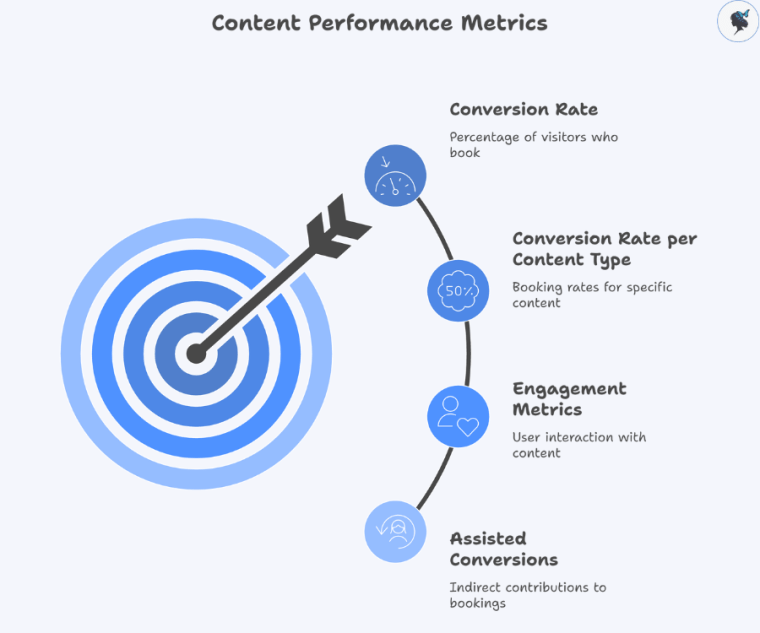
infograph: Content performance metrics
Content performance metrics

Instead of only looking at page views, consider:

  • Assisted conversions: Content that indirectly contributes to bookings.
  • Engagement metrics: Scroll depth, time on page, return visits.
  • Conversion rate per content type: Identify which blogs or guides lead to actual booking pages.

You might like: Top Metrics Travel Marketers Should Track.

2. Tools and Analytics for Measuring ROI

  • Google Analytics: Use Goals, Multi-Channel Funnels, and eCommerce tracking.
  • CRM Integration: Link bookings or inquiries to content touches.
  • Marketing Automation Platforms: Track interactions across email, social, and retargeting campaigns.
  • Dashboards: Consolidate traffic, engagement, and revenue metrics in one view for easy decision-making.

3. Advanced Attribution Models

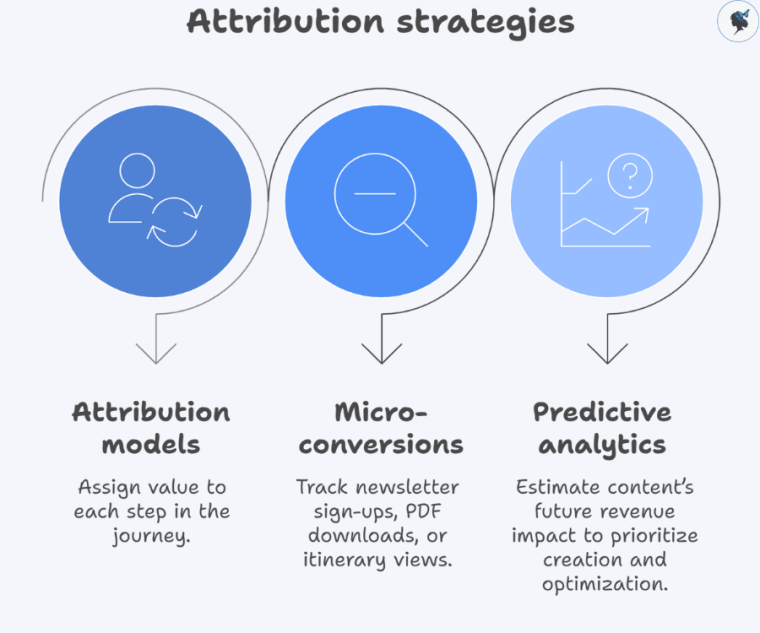
infograph: Attribution strategies
Attribution strategies
  • First-touch vs last-touch vs multi-touch attribution: Assign value to each step in the journey.
  • Micro-conversions: Track newsletter sign-ups, PDF downloads, or itinerary views.
  • Predictive analytics: Estimate content’s future revenue impact to prioritize creation and optimization.

Wander Women Hot Tip: Use multi-channel funnel reports to see which content consistently assists conversions, not just what drives traffic.


Optimizing Content Based on ROI Insights

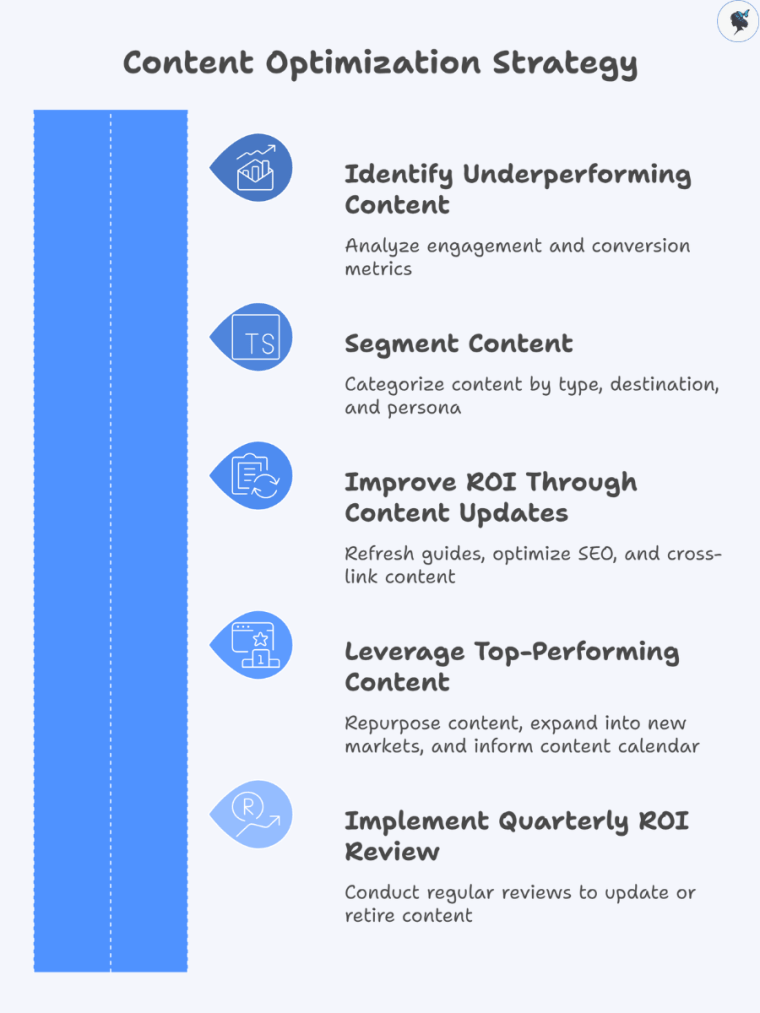
infograph: Content optimization strategy
Content optimization strategy

1. Identifying Underperforming Content

  • Low engagement: pages with high bounce rates or short session durations.
  • Low conversion: content that doesn’t guide users to booking pages.
  • Segment content by type, destination, and audience persona.

2. Improving ROI Through Content Updates

  • Refresh destination guides with current pricing, local tips, and visuals.
  • Optimize SEO: keywords, meta descriptions, internal linking.
  • Cross-link high-performing content to BOFU pages to encourage bookings.

3. Leveraging Top-Performing Content

Wander Women Hot Tip: Implement a quarterly ROI-driven content review cycle to update, optimize, or retire content based on revenue contribution.


Conclusion

Measuring and optimizing content ROI is crucial for travel agencies looking to maximize marketing impact. By mapping the content funnel, applying advanced attribution, tracking key performance indicators, and continuously optimizing content, agencies can transform content from a cost center into a revenue-generating asset.

Wander Women Hot Tip: Start small: pick 3–5 key pieces of content, track their ROI, optimize based on insights, and scale this system across your content library.

The journey to measurable content ROI is ongoing, but with the right strategy, your agency can increase bookings, improve customer experience, and maximize the value of every piece of content created.

Need help measuring your ROI? Contact us today!

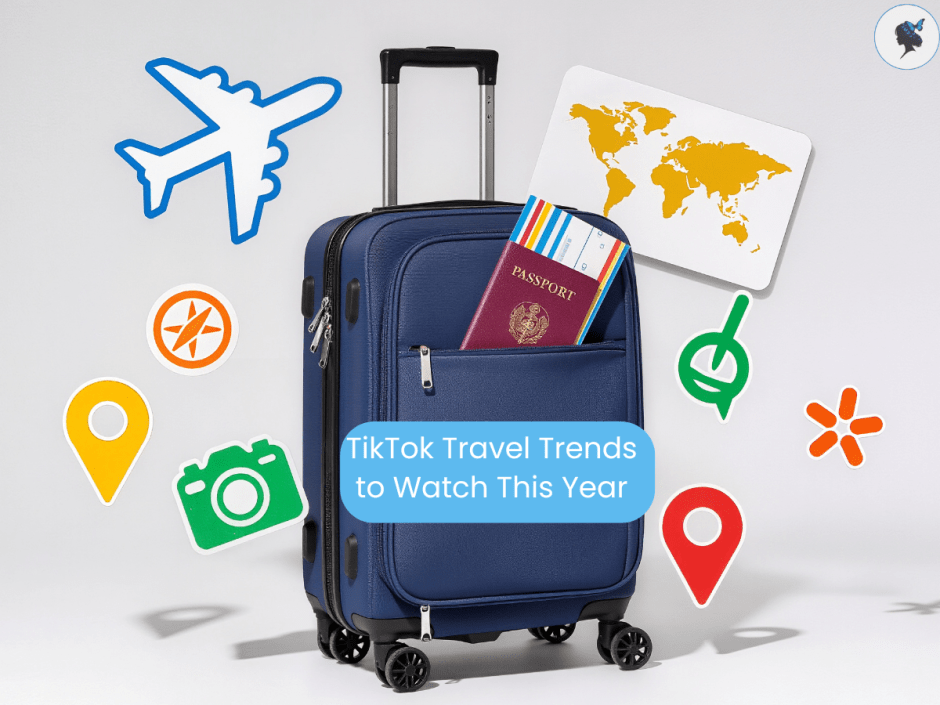
TikTok Travel Trends to Watch This Year

▶ Table of Contents
  1. Introduction
  2. Emerging Destinations Gaining Popularity
  3. Evolving Traveler Preferences
  4. Viral Travel Trends on TikTok
  5. Influencer Impact and User-Generated Content
  6. Sustainable and Ethical Travel
  7. Interactive and Immersive Travel Content
  8. Conclusion

Introduction

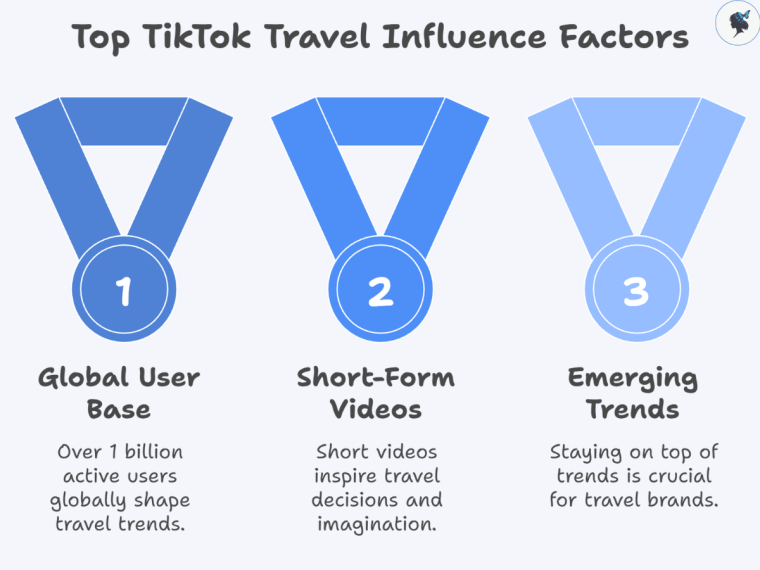
TikTok has rapidly become a powerful force in travel inspiration and decision-making. With over 1 billion active users globally as of 2024, the platform’s short-form videos shape what destinations and travel experiences capture the imagination of millions.

infograph: Top TikTok travel influence factors
Top TikTok travel influence factors

Travel brands and travelers alike must stay on top of TikTok trends to leverage this influence and tap into emerging travel behaviors.


Emerging Destinations Gaining Popularity

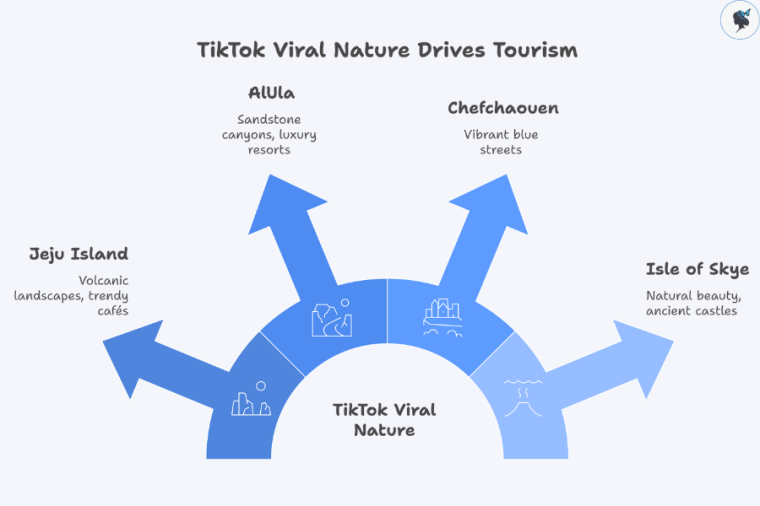
TikTok’s viral nature has brought attention to lesser-known but breathtaking destinations. For instance, Jeju Island, South Korea, has become a hotspot due to its stunning volcanic landscapes and trendy cafés showcased in many viral videos. Similarly, AlUla in Saudi Arabia, with its dramatic sandstone canyons and luxurious desert resorts, has gained traction as a must-see Middle Eastern destination.

infograph: TikTok viral nature drives tourism
TikTok viral nature drives tourism

Other viral destinations include Chefchaouen, Morocco, famous for its vibrant blue streets, and the mystical Isle of Skye, Scotland, attracting travelers seeking natural beauty and ancient castles. These destinations offer a fresh alternative to over-touristed places, appealing especially to younger travelers eager to explore “hidden gems.”


Evolving Traveler Preferences

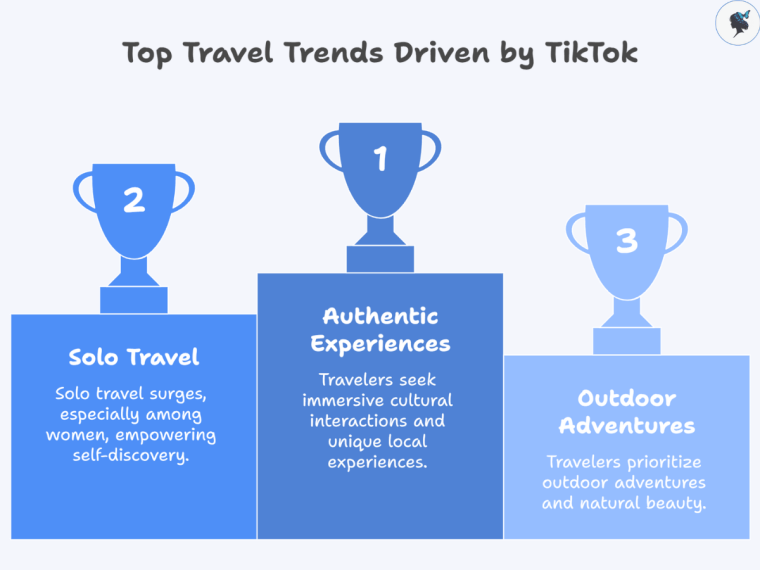
TikTok trends reveal a shift in traveler preferences, particularly among Gen Z and Millennials. There is a growing movement away from traditional all-inclusive resorts toward more authentic and adventurous experiences. Travelers now prioritize immersive cultural interactions, unique local experiences, and outdoor adventures.

infograph: Top travel trends driven by TikTok
Top travel trends driven by TikTok

Solo travel is surging, especially among women, who use TikTok to share empowering stories of self-discovery and independence. Women are a majority of solo travelers in many reports; one travel trend analysis notes that women account for roughly 75–84 % of all solo travelers globally.


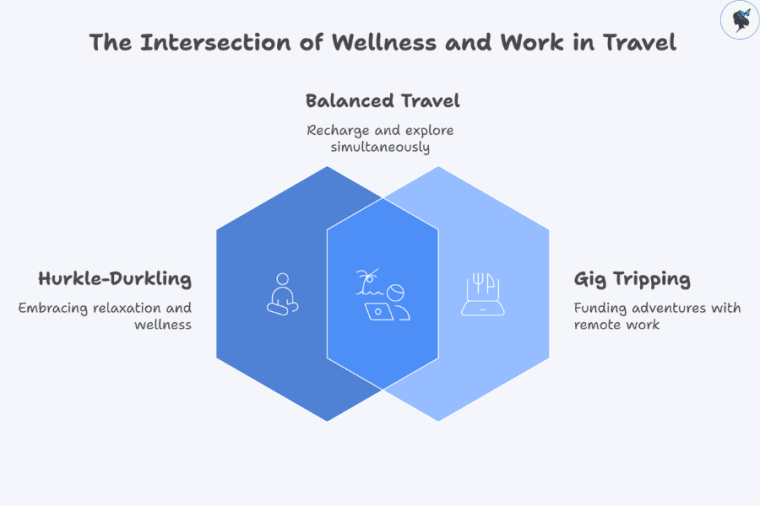
Several niche travel trends have gained viral popularity on TikTok. “Hurkle-Durkling,” a trend focusing on the art of doing nothing and embracing relaxation, reflects a growing desire for wellness-focused travel experiences. This counters the “busy tourist” stereotype and appeals to those looking to recharge.

infograph: The intersection of wellness and work in travel
The intersection of wellness and work in travel

“Gig Tripping” involves combining travel with remote work or side gigs, allowing travelers to fund their adventures while exploring new places. This hybrid travel-work lifestyle is becoming a viable trend, especially as flexible work arrangements persist post-pandemic.


Influencer Impact and User-Generated Content

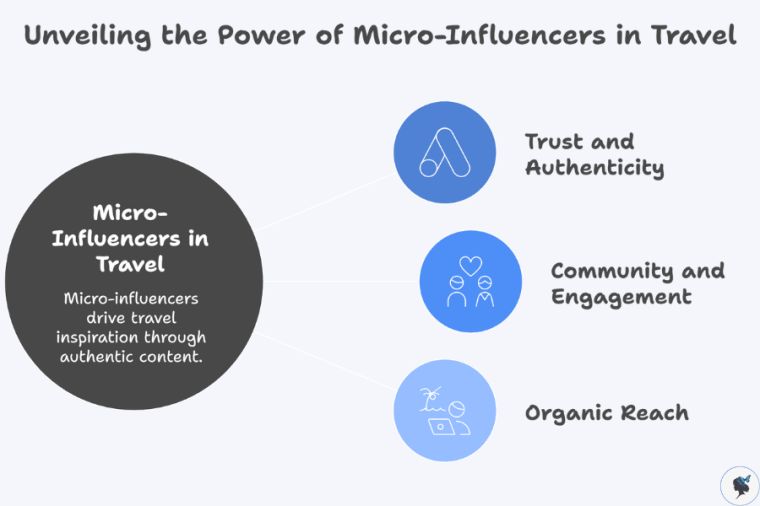
Micro-influencers and everyday travelers sharing authentic, unpolished content have become key drivers of travel inspiration on TikTok. According to a report by Influencer Marketing Hub, 82% of consumers trust micro-influencers over traditional celebrities.

infograph: Unveiling the powers of micro-influencers in travel
Unveiling the powers of micro-influencers in travel

This democratization of travel storytelling means travelers trust real experiences over glossy ads, encouraging brands to foster community and engagement rather than purely polished campaigns. User-generated content also expands reach organically, making it a crucial element in travel marketing strategies.

More about travel influencers here.


Sustainable and Ethical Travel

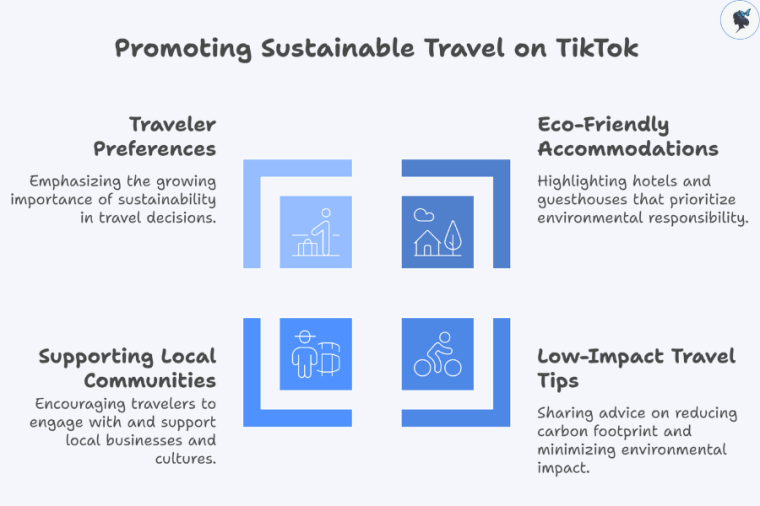
Sustainability is a growing priority for travelers, and TikTok has become a platform for promoting eco-friendly travel choices and responsible tourism. Content creators highlight sustainable accommodations, low-impact travel tips, and ways to support local communities.

infograph: Promoting sustainable travel on TikTok
Promoting sustainable travel on TikTok

An ecotourism statistics overview reported that sustainability remains important for around 84 % of global travelers in 2025, further underscoring that environmentally conscious choices are influencing travel decisions.


Interactive and Immersive Travel Content

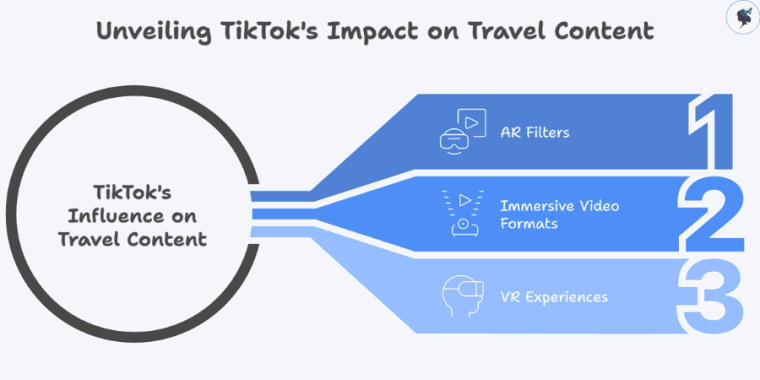
TikTok’s integration of AR filters and immersive video formats is enhancing how travel content is consumed. Creators use augmented reality to provide virtual tours or showcase cultural elements interactively, making destinations more accessible to viewers.

infograph: Unveiling TikTok's impact on travel content
Unveiling TikTok’s impact on travel content

Short videos provide quick, engaging glimpses into destinations, making travel inspiration more immediate and digestible. As technology advances, we expect to see more travel brands experimenting with VR experiences and interactive storytelling on TikTok to captivate audiences.


Conclusion

TikTok continues to redefine travel marketing with viral destinations, evolving traveler preferences, and immersive content trends. Travel brands and enthusiasts should watch emerging spots like Jeju Island and AlUla, embrace authentic storytelling through influencers, and promote sustainable travel.

By staying attuned to TikTok’s fast-moving trends and leveraging its unique content formats, travel brands can engage new audiences and inspire the next generation of travelers. The future of travel inspiration is visual, interactive, and community-driven, and TikTok sits right at the center of this revolution.

Need help with TikTok? Contact us today!


Tracking Content ROI in Travel: How to Attribute Bookings and Leads Beyond Paid Ads

▶ Table of Contents
  1. Introduction
  2. Why Content Marketing Matters for Travel Agencies
  3. Methods to Track and Attribute Leads/Bookings to Content
  4. Tools and Analytics Platforms for Measuring Content Effectiveness
  5. Case Studies: Successful Attribution in Travel
  6. Actionable Tips to Improve Content Strategy Based on Attribution Insights
  7. Conclusion

Introduction

For travel agencies, content marketing is more than a brand-building exercise—it’s a revenue driver. Blogs, destination guides, social media posts, and videos all work together to engage travelers, answer their questions, and guide them toward booking. Yet, one of the biggest challenges agencies face is proving the ROI of content.

infograph: Content marketing ROI for travel agencies
Content marketing ROI for travel agencies

Unlike paid ads, which provide immediate tracking of clicks and conversions, content often has a longer, more subtle influence on bookings. Travelers may read multiple blog posts, follow your social media, and download itineraries before making a reservation. Accurately attributing bookings and leads to these content interactions is essential to justify investment and refine strategy.

Wander Women Hot Tip: Start by auditing all your content channels—blogs, emails, social media—to identify where travelers first engage and how content contributes to the booking journey.


Why Content Marketing Matters for Travel Agencies

Content is the bridge between travelers’ curiosity and their decision to book. Here’s why it’s essential:

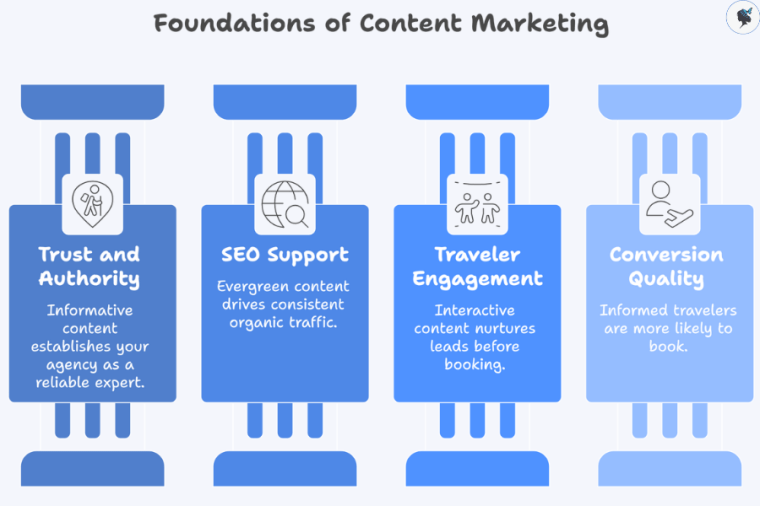
Infograph: Foundations of content marketing
Foundations of content marketing
  • Builds Trust and Authority: Informative content like destination guides, tips, and itineraries positions your agency as an expert.
  • Supports Long-Term SEO: Evergreen content drives consistent organic traffic year-round.
  • Engages Travelers: Interactive blogs, videos, and social posts nurture leads before they book.
  • Improves Conversion Quality: Travelers who engage with content are typically better informed and more likely to convert.

Methods to Track and Attribute Leads/Bookings to Content

Attribution methods determine which content influences conversions. For travel agencies, consider these approaches:

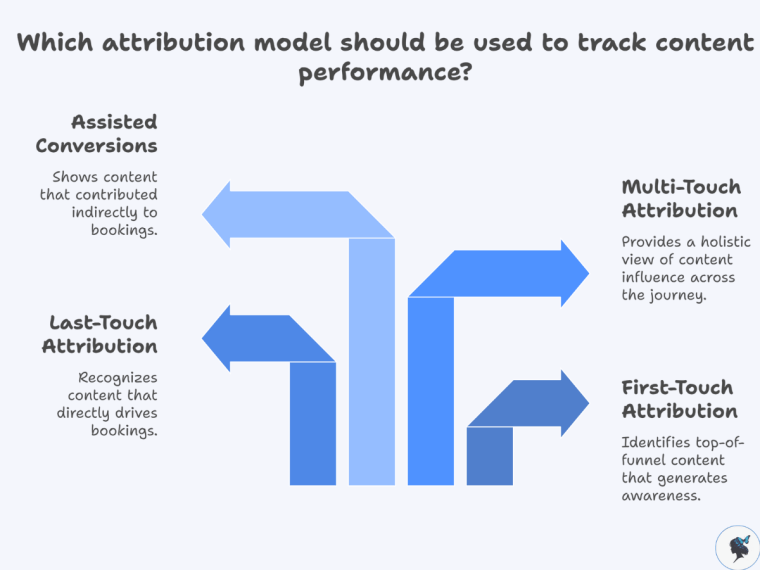
infograph: Which attribution model should be used to track content performance?
Which attribution model should be used to track content performance?

1. First-Touch Attribution

  • Assigns credit to the first piece of content a traveler interacts with.
  • Helps identify top-of-funnel content that generates awareness.
  • Example: A blog post about “Best Beaches in Spain” introduces a traveler who later books a package.

Read our guide: The Complete Digital Marketing Funnel for Travel

2. Last-Touch Attribution

  • Assigns credit to the final content before a conversion.
  • Useful for recognizing content that directly drives bookings.
  • Example: An email campaign or detailed itinerary PDF that the traveler interacts with just before booking.

Read our guide: AI-Driven Email Personalization

3. Multi-Touch Attribution

  • Distributes credit across all interactions in the traveler’s journey.
  • Provides a holistic view of content influence, from blog posts to social media shares.
  • Example: Traveler reads a blog post, watches a YouTube destination video, and then opens a follow-up email before booking.

4. Assisted Conversions / Content Path Analysis

  • Shows which content contributed indirectly to bookings.
  • Useful for mid-funnel content like checklists, travel guides, and Instagram posts.

Wander Women Hot Tip: Track content performance by destination, season, or travel type to uncover hidden patterns of influence on bookings.


Tools and Analytics Platforms for Measuring Content Effectiveness

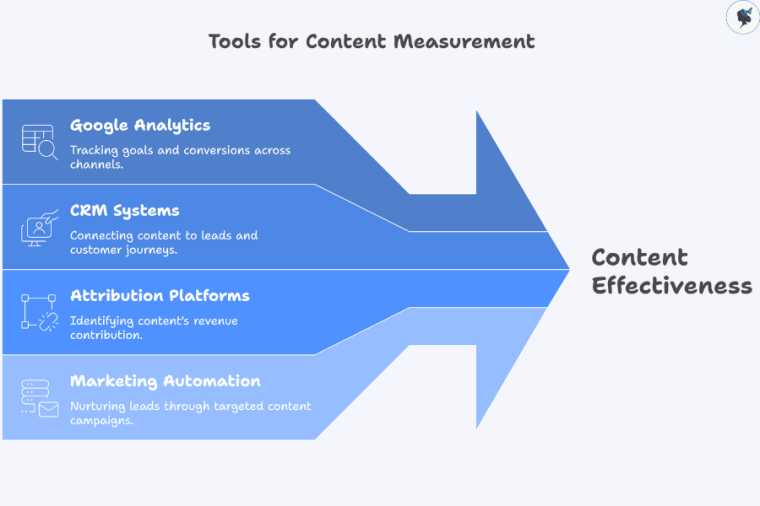
infograph: Tools for content measurement
Tools for content measurement

Google Analytics

  • Track goals and conversions for specific pages or campaigns.
  • Use multi-channel funnel reports to see how content interacts with paid, organic, and social channels.

CRM Systems (HubSpot, Salesforce)

  • Connect content interactions to individual leads.
  • Monitor the full customer journey from content engagement to booking.

Attribution Platforms (Ruler Analytics, Funnel.io)

  • Provide advanced multi-touch attribution reporting.
  • Identify which content pieces contribute the most revenue.

Marketing Automation Tools

  • Track emails, clicks, and content interactions.
  • Nurture leads through targeted campaigns and monitor content’s influence.

Wander Women Hot Tip: Use UTM parameters on blogs, social posts, and emails to track exactly which content drives traffic and leads.


Case Studies: Successful Attribution in Travel

Example 1 – Major UK Travel Company

A UK travel company adopted a multi-touch attribution model to better understand how customers moved across channels before making a booking. By mapping the full customer journey—rather than relying on last-click attribution—the company was able to evaluate the true impact of blogs, email, paid media, and social touchpoints working together. This approach revealed how different channels contributed at various stages of the funnel, enabling the marketing team to make more informed budget decisions, optimize campaign performance, and demonstrate the real business value of their marketing efforts, even when individual channels were not the final point of conversion.

Example 2 – Travel Nevada

Travel Nevada, the state’s official destination marketing organization, demonstrated how email newsletters paired with strong content can drive measurable engagement. After revamping its email strategy with a greater focus on travel inspiration, itineraries, and visitor guides, the organization saw clear performance gains across key metrics. Email-driven sessions to the website increased by 23%, while requests for the official visitor guide rose by 150%, indicating deeper engagement from subscribers actively planning trips. The campaign also led to substantial growth in newsletter sign-ups and partner referrals, reinforcing the role of content-led email marketing in moving audiences from inspiration to meaningful action.

Example 3 – Regional Tourism Board

Atout France, in partnership with regional tourism boards such as Provence-Alpes-Côte d’Azur, used market and performance data to adjust seasonal campaigns and promote autumn and winter travel to the French Riviera and Provence. By shifting messaging toward off-season experiences and targeting travelers earlier in the planning cycle, the initiative increased interest and bookings during typically slower periods, demonstrating how data-driven campaign optimization can help stimulate off-season tourism.

Wander Women Hot Tip: Identify content that consistently appears in the conversion path and prioritize updates, promotion, or repurposing.


Actionable Tips to Improve Content Strategy Based on Attribution Insights

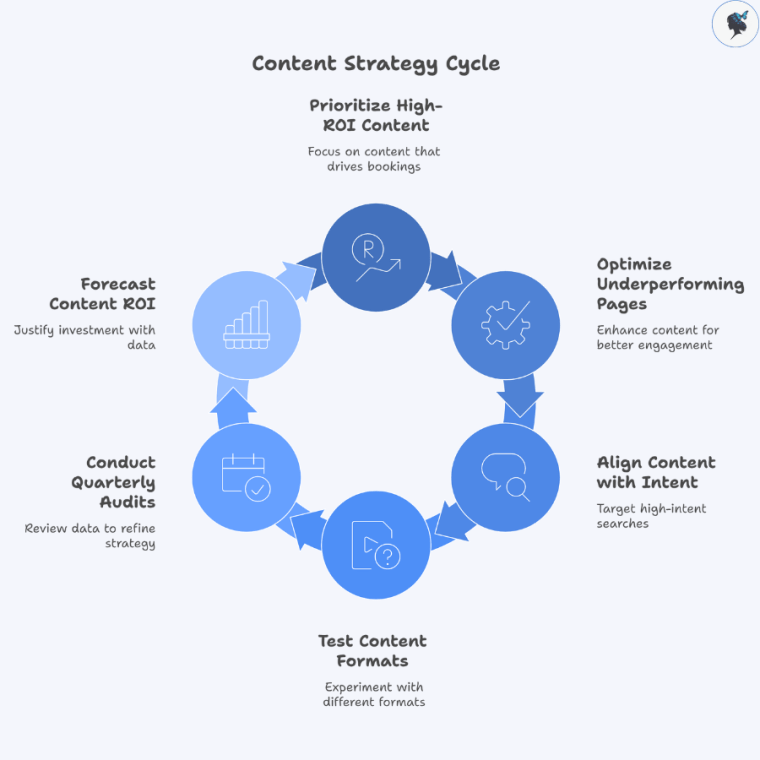
Infograph: Content strategy cycle
Content strategy cycle
  • Prioritize High-ROI Content: Focus resources on blogs, guides, and videos that consistently contribute to bookings.
  • Optimize Underperforming Pages: Update information, add calls-to-action, or reformat content to increase engagement.
  • Align Content with Intent: Create content targeting high-intent searches based on attribution insights.
  • Test Content Formats: Experiment with videos, infographics, or interactive maps, and monitor which formats drive leads.
  • Quarterly Audits: Regularly review attribution data to refine strategy and adjust budgets.

Wander Women Hot Tip: Use attribution insights to forecast content ROI for upcoming campaigns, helping justify investment to leadership or stakeholders.


Conclusion

Attributing bookings and leads to content is essential for travel agencies looking to justify content marketing investment. While content may not generate immediate conversions like paid ads, it often influences the traveler’s journey at multiple touchpoints.

By implementing first-touch, last-touch, and multi-touch attribution, and leveraging analytics tools, agencies can:

  • Understand which content drives awareness and bookings
  • Optimize content strategy based on data-driven insights
  • Increase ROI and justify marketing spend

Final Wander Women Hot Tip: Start small by tracking first-touch and last-touch attribution, then scale to multi-touch for deeper insights. Treat your content as an investment that compounds over time, building trust, engagement, and ultimately, more bookings.

Need help tracking your ROI? Contact us today!

Strategies for Managing Seasonal Content: Holidays

▶ Table of contents
  1. Introduction: Why Holiday Content Matters for Travel Agencies
  2. Common Holiday Content Issues
  3. Short-Term Fixes for Holiday Content
  4. Long-Term Strategies for Holiday Content
  5. Unique Holiday Content Ideas
  6. Sample Holiday Content Calendar
  7. Actionable Tips for Travel Agencies
  8. Conclusion

Introduction: Why Holiday Content Matters for Travel Agencies

The holiday season—spanning Christmas and New Year—is a peak travel period, yet many travel agencies struggle to capture the full potential of this critical timeframe. From romantic getaways to family adventures and festive city breaks, travelers actively seek inspiration and guidance for holiday planning.

infograph: Holiday travel content missed opportunities
Holiday travel content missed opportunities

Despite this demand, holiday content often suffers from delayed publication, outdated guides, and poor SEO optimization, leaving agencies with missed opportunities for traffic, engagement, and bookings. According to Bridgely, searches for queries like “Christmas markets in Europe” and “New Year’s Eve travel ideas” spike starting in October, highlighting the need for early, optimized content.

This guide provides practical strategies for travel agencies to plan, optimize, and promote holiday content effectively, ensuring maximum visibility and engagement.


Common Holiday Content Issues

Understanding the challenges specific to holiday content is the first step in creating an effective strategy.

infograph: How to create effective holiday content?
How to create effective holiday content?

Delayed Publication

  • Holiday content is often published too late, after October or even November, missing the early planners who begin searching months in advance.

URL Structures with Year

  • Including years in URLs (e.g., /christmas-2025/) creates duplicate content issues each year and dilutes SEO authority.

Poor Updating of Past Content

  • Simply republishing old holiday content without updates reduces relevance, affecting search rankings and user engagement.

Ignoring Rich Results and Schema

  • Failing to implement structured data for offers, events, or itineraries limits visibility in Google’s rich results, including featured snippets.

Lack of Early Promotion

  • Agencies often neglect email campaigns, social media teasers, and cross-platform promotions, limiting exposure before the holidays.

Short-Term Fixes for Holiday Content

Even with limited time, agencies can take immediate actions to boost holiday content performance.

infograph: Short-term fixes for holiday content
Short-term fixes for holiday content

Publish and Optimize Early

Remove Years from URLs

  • Use evergreen URLs like /christmas-travel-guide/ to preserve link equity and avoid duplication issues each year.

Add Structured Data

  • Implement schema for:
    • Holiday offers (special deals, packages)
    • Events and itineraries (festivals, guided tours)
    • FAQs about destinations and travel tips
  • Benefits: increases visibility in rich results and featured snippets.

Use Targeted Holiday Keywords

  • Incorporate relevant keywords in content, headings, and metadata:
    • “Festive getaways for couples”
    • “Family-friendly holiday trips”
    • “New Year celebrations worldwide”

Promote Across Campaigns

  • Engage audiences across multiple channels:
    • Email newsletters with early booking incentives
    • Social media countdowns and festive campaigns
    • Blog cross-promotion with seasonal guides and interactive content

Long-Term Strategies for Holiday Content

For sustainable holiday content success, implement strategies that retain relevance and boost SEO year after year.

infograph: Cycle of sustainable holiday content strategy
Cycle of sustainable holiday content strategy

Maintain Evergreen Holiday Pages

  • Keep holiday guides live year-round and update annually with new events, destinations, and travel tips.

Read our guide: How to Structure and Maintain Evergreen Destination Seasonal Content Hubs for Travel Sites

  • Collaborate with:
    • Local event organizers
    • Tourism boards
    • Influencers and bloggers
  • High-quality backlinks improve domain authority and search engine visibility.
  • Structure content with headings, bullet points, tables, and FAQs.
  • Target high-intent queries like:
    • “Best Christmas markets in Europe”
    • “Top New Year destinations worldwide”

You might like: The Role of SEO in Attracting High-Intent Travelers.

Analyze Performance Post-Season

  • Use Google Analytics, Search Console, and SEO tools to track traffic, engagement, and conversions.
  • Refine strategies based on insights to improve next season’s campaigns.

More about leveraging data analytics here.

Segment by Holiday Themes

  • Tailor content for specific audiences:
    • Couples: romantic retreats, cozy getaways
    • Families: kid-friendly itineraries, winter breaks
    • Luxury travelers: high-end festive experiences

Unique Holiday Content Ideas

To stand out, create content that is creative, practical, and engaging.

infograph: Holiday content ideas
Holiday content ideas
  1. Festive Getaway Ideas for Couples
    • Romantic destinations, cozy cabins, winter retreats with spa packages
  2. Family-Friendly Holiday Itineraries
    • Kid-friendly resorts, festive attractions, interactive activities
  3. Local Christmas Markets You Can’t Miss
    • Curated guides by city or country, highlighting food, crafts, and events
  4. New Year’s Eve Celebrations Around the World
    • Global events, fireworks shows, and destination experiences
  5. Packing Essentials for Holiday Travel
    • Advice for weather, gifts, festive attire, and travel safety

Wander Women Hot Tip: Enhance engagement using videos, infographics, interactive maps, and user-generated content galleries.


Sample Holiday Content Calendar

A structured calendar ensures content is timely, optimized, and promoted effectively.

MonthActivities
June–JulyResearch holiday travel trends, high-demand destinations, and search queries
August–SeptemberCreate content including blogs, guides, itineraries, and visual assets
October–NovemberPublish holiday content; optimize for SEO; run campaigns across email, social media, and blog channels
December–JanuaryEngage with audiences; share UGC; monitor real-time performance and bookings
FebruaryReview analytics; assess traffic, engagement, and conversions; refine strategy for next season

Wander Women Hot Tip: Align content with search intent, seasonal interest, and early booking cycles to maximize traffic and conversions.


Actionable Tips for Travel Agencies

infograph: Enhancing travel agency content strategy
Enhancing travel agency content strategy
  • Audit Existing Holiday Content: Update itineraries, events, pricing, and seasonal tips.
  • Focus on Long-Tail Keywords: Target high-intent phrases like “romantic Christmas getaway in Paris”.
  • Promote Across Channels: Email, social media, and blog content should reinforce each other.
  • Use Multimedia: Videos, infographics, and interactive maps improve engagement and time-on-page.
  • Monitor and Optimize: Track metrics using Google Analytics and SEO tools to refine next season’s strategy.

Conclusion

Holiday content represents a critical opportunity for travel agencies to engage travelers during a high-demand season. While challenges like late publication, outdated content, and missed SEO opportunities exist, implementing short-term fixes—publishing early, optimizing URLs and metadata, adding structured data, and promoting across channels—can quickly improve visibility and engagement.

Long-term strategies—including evergreen content, backlink building, rich result optimization, post-season analysis, and audience segmentation—ensure that holiday content remains effective year after year.

By following a structured content calendar and implementing these strategies, travel agencies can maximize engagement, boost SEO performance, and convert seasonal interest into bookings.

Begin auditing your holiday content today. Update evergreen pages, implement structured data, plan early campaigns, and create unique festive guides to capture holiday travelers and outperform competitors.

Need help with your holiday content? Contact us today!

User-Generated Content for Travel Agencies: Legal Safety and SEO Optimization Strategies

▶ Table of Contents

Introduction

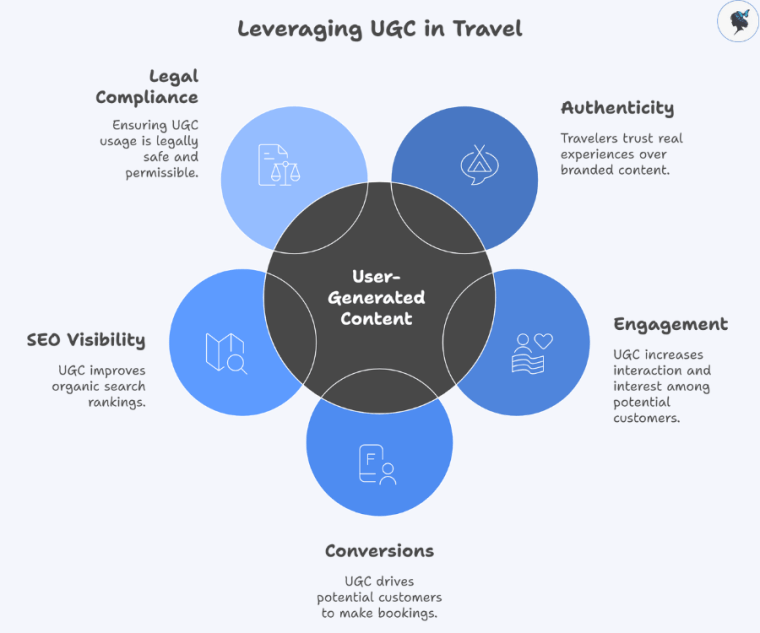
In the travel industry, authenticity sells. Travelers trust real experiences more than branded content, making user-generated content (UGC) an essential tool for travel agencies. From Instagram photos to blog reviews, UGC can increase engagement, conversions, and organic search visibility.

Infograph: Leveraging UGC in travel
Leveraging UGC in travel

However, there’s a catch: not all UGC is legally safe to use, and improperly optimized content may fail to deliver SEO benefits. Travel agencies need a clear strategy to leverage UGC effectively, while staying compliant and maximizing search performance.

Wander Women Hot Tip: Conduct an audit of your existing UGC sources. Identify which content is legally cleared and which requires permissions before embedding it on your website.

Read: using UGC to enhance trust.


What is User-Generated Content?

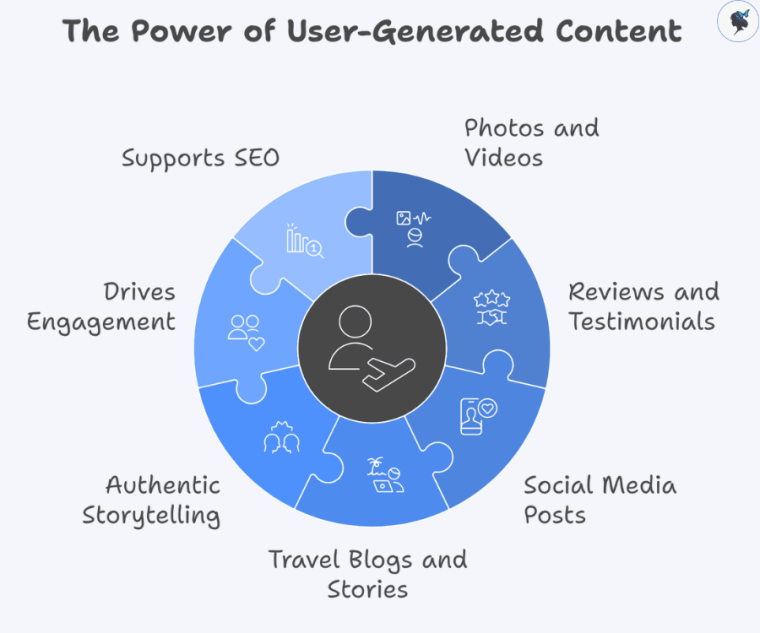
Infograph: The power of User-Generated Content
The power of User-Generated Content

UGC is content created by travelers, customers, or social media followers rather than your agency. It comes in many forms:

  • Photos and videos from trips
  • Reviews and testimonials on platforms like TripAdvisor, Google, or Yelp
  • Social media posts (Instagram, TikTok, Pinterest)
  • Travel blogs, itineraries, and stories written by travelers

Benefits for travel agencies include:

  • Authentic storytelling builds trust
  • Drives engagement and repeat visits
  • Supports long-tail SEO through naturally occurring keywords

Wander Women Hot Tip: Track UGC trends to see which types generate the most engagement and search traffic. For example, video highlights of popular destinations often outperform static images in clicks and shares.

More Social Media post ideas here.


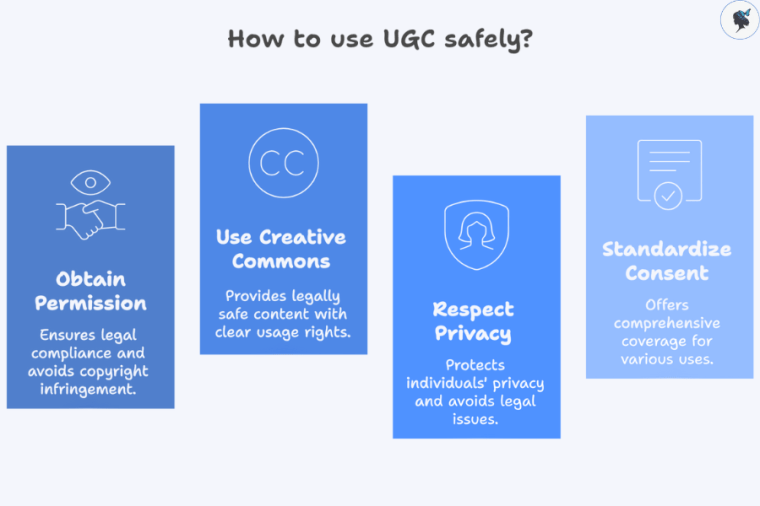
Infograph: How to use UGC safely?
How to use UGC safely?

Using UGC without permission can lead to copyright infringement or privacy violations. Here’s what travel agencies need to know:

  • Photos, videos, and written content are automatically copyrighted to their creator.
  • Using someone else’s content without consent can result in takedown notices or legal penalties.

2. Permission and Licensing

  • Always obtain written consent from users before publishing their content.
  • Platforms like Instagram or TikTok offer content-sharing options, but always check terms of service.
  • Consider using Creative Commons licenses for legally safe content.

3. Privacy Considerations

  • Avoid featuring identifiable people without a model release, especially minors.
  • Ensure sensitive locations or personal details are not revealed without permission.

4. Consequences of Misuse

  • Legal disputes and fines
  • Damage to brand reputation
  • Content removal from search engines

Wander Women Hot Tip: Use a standardized UGC consent form for submissions. Include clauses for website, social media, and marketing use to ensure full coverage.


Benefits of UGC for Travel Agencies

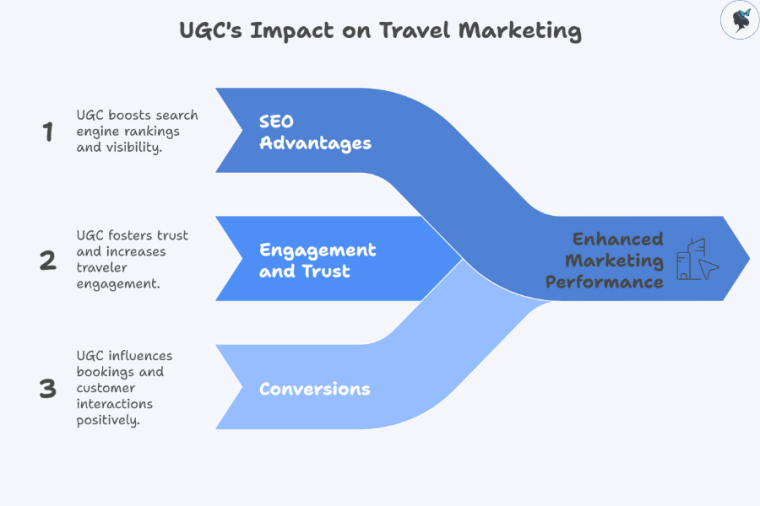
infograph: UGC's impact on travel marketing
UGC’s impact on travel marketing

UGC is not just about authenticity—it can boost SEO, engagement, and conversions:

  • SEO Advantages:
    • Fresh content is regularly indexed by Google
    • Naturally incorporates long-tail keywords
    • Encourages backlinks from social shares
  • Engagement and Trust:
    • Travelers trust real experiences more than branded marketing
    • Increases time spent on destination pages
  • Conversions:
    • Influences bookings, inquiries, and newsletter sign-ups

A Nosto report found that 79% of people say UGC highly impacts their purchasing decisions, making it a critical marketing asset.

Wander Women Hot Tip: Feature UGC prominently on destination pages to boost dwell time and help Google recognize the page as valuable and authoritative.

You might be interested in: Creating Destination Guides That Rank and Convert


Optimizing UGC for SEO

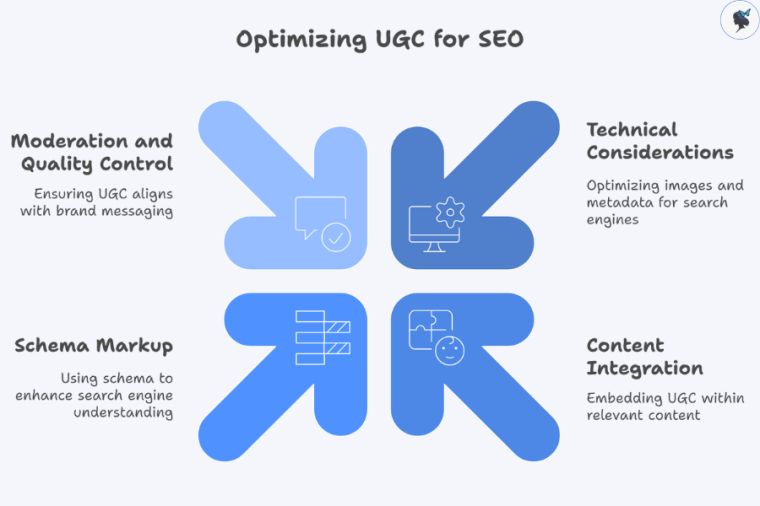
infograph: Optimizing UGC for SEO
Optimizing UGC for SEO

To maximize UGC benefits, optimization is key:

1. Technical Considerations

  • Alt text for images: Include descriptive, keyword-rich text
  • Captions and metadata: Enhance relevance for search engines
  • Video metadata: Include titles, descriptions, and transcripts

Read our post: Image Optimization and Alt Text.

2. Content Integration

  • Embed UGC within destination guides, itineraries, and blog posts
  • Use internal linking from UGC to related tours, offers, or attractions

More about internal linking here.

3. Schema Markup

  • Review schema for testimonials
  • ImageObject schema for photos
  • VideoObject schema for video highlights

4. Moderation and Quality Control

  • Ensure UGC aligns with brand messaging
  • Remove low-quality or irrelevant content

Wander Women Hot Tip: Create UGC galleries with proper alt text and captions. This helps SEO while maintaining legal safety and visual appeal.


Encouraging and Curating UGC in the Travel Industry

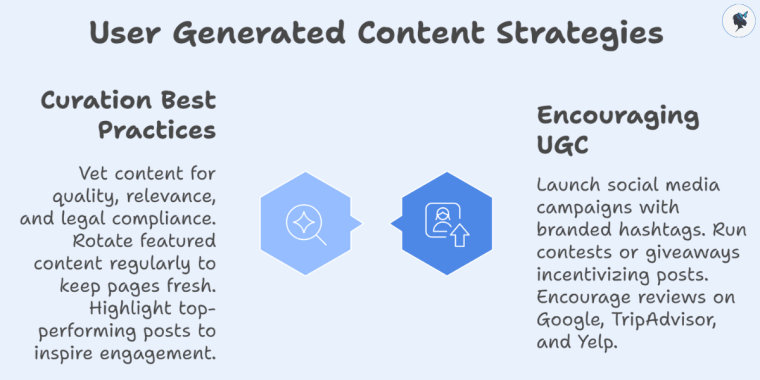
infograph: UGC strategies
UGC strategies

1. How to Encourage UGC

  • Launch social media campaigns with branded hashtags
  • Run contests or giveaways incentivizing posts
  • Encourage reviews on Google, TripAdvisor, and Yelp

2. Curation Best Practices

  • Vet content for quality, relevance, and legal compliance
  • Rotate featured content regularly to keep pages fresh
  • Highlight top-performing posts to inspire engagement

Wander Women Hot Tip: Use a consistent branded hashtag for campaigns and feature traveler posts directly on destination pages to enhance authenticity and SEO simultaneously.


Conclusion

User-generated content is a powerful tool for travel agencies when used correctly:

  • Ensure legal safety through permissions and licensing
  • Optimize UGC for SEO to increase visibility and engagement
  • Curate and encourage high-quality content to keep pages fresh and relevant

Wander Women Hot Tip: Treat UGC as a living asset. Regularly update, optimize, and refresh it to maintain search performance, user trust, and compliance.

Need help? Contact us today!

More about content here:

Maximizing Value from Seasonal Travel Content: Smart Repurposing Strategies for Travel Agencies

▶Table of Contents
  1. Introduction
  2. Importance of Content Repurposing
  3. Strategies for Repurposing Seasonal Content
  4. Tips for Integrating SEO into Repurposed Content
  5. Conclusion

Introduction

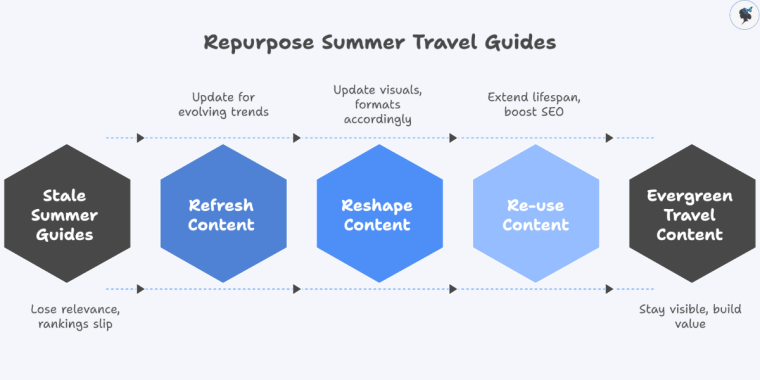
Seasonal travel content—such as summer beach guides, fall foliage escapes or winter ski destination write‑ups—is a staple for many travel agencies. Yet all too often, these guides are treated as one‑time hits: created, published, promoted for the season, then forgotten once the demand dips. This approach wastes effort, depletes SEO equity and misses the chance to build a longer‑term asset.

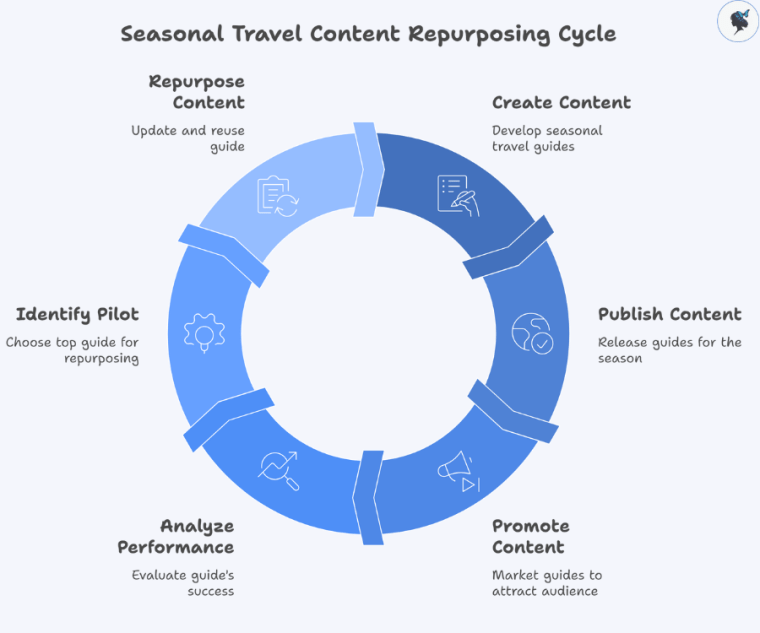
infograph: Seasonal travel content repurposing cycle
Seasonal travel content repurposing cycle

In this article we’ll show how travel companies can repurpose seasonal content instead of recreating it from scratch each year, thereby saving resources, preserving SEO performance and engaging audiences more consistently.

Wander Women Hot Tip: Before the next high season starts, pick your top 3 seasonal guides from the last year and identify which one to repurpose first—treat it as your pilot.


Importance of Content Repurposing

Content repurposing isn’t simply “re‑using old content” — it’s a strategic approach that extends lifespan, increases return on investment and keeps your brand message active and meaningful.

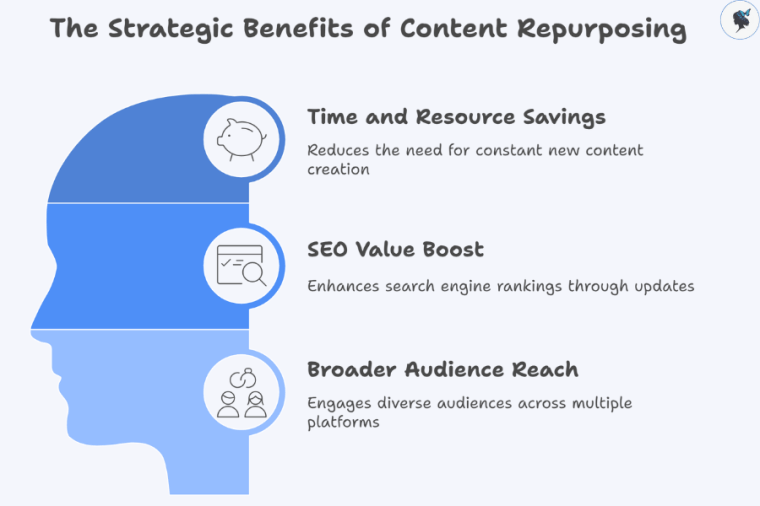
infograph: The strategic benefits of content repurposing
The strategic benefits of content repurposing

Why it saves time and resources

Producing fresh, in‑depth content each season is resource‑intensive. According to one recent study, 65% of marketers agree that content repurposing is more affordable than creating brand‑new content. By repurposing guides, agencies can spend less time on ideation and more on promotion and optimization.

Why it boosts SEO value

Sites that refresh and republish content rather than abandoning it gain stronger SEO outcomes. One data point shows that content lifecycle extensions via updates increased organic traffic by 28% in 2025. With travel guides, you retain inbound links, existing authority and content history—all valuable assets.

Why it reaches a broader audience

People consume content in myriad formats and on various platforms. A guide originally written for blog readers may resonate as a social‑media carousel, a downloadable PDF or an email feature. Repurposing helps broaden reach.

Repurposing is not a shortcut—it’s an investment in stretching the value of your best content, improving SEO impact and engaging more travellers across platforms.

Wander Women Hot Tip: Audit your content library annually and tag your best‑performing seasonal guides. These become your “repurpose candidates” for the next cycle.


Strategies for Repurposing Seasonal Content

In this section we’ll walk through specific strategies travel agencies can adopt to repurpose seasonal guides effectively.

1. Update content for the new season

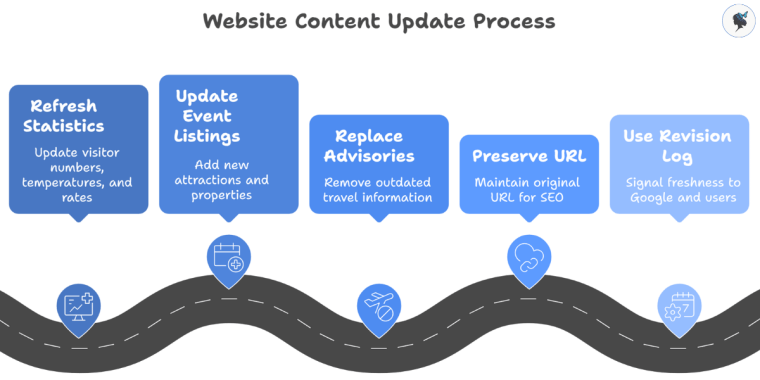
infograph: Website content update process
Website content update process
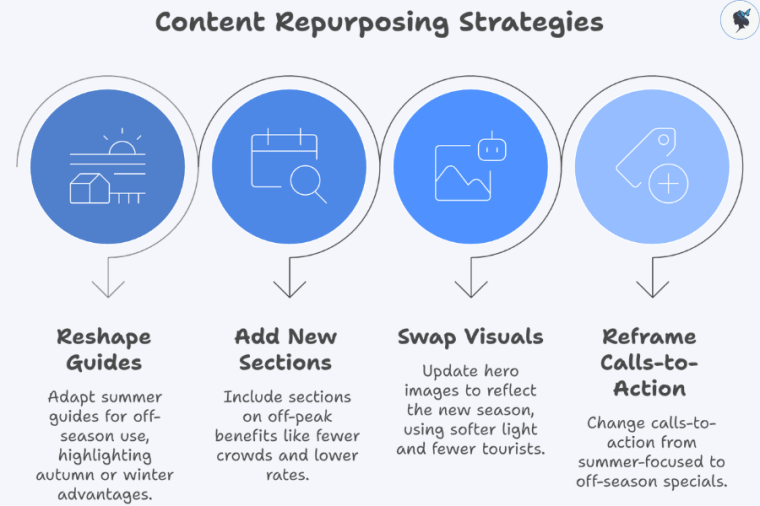
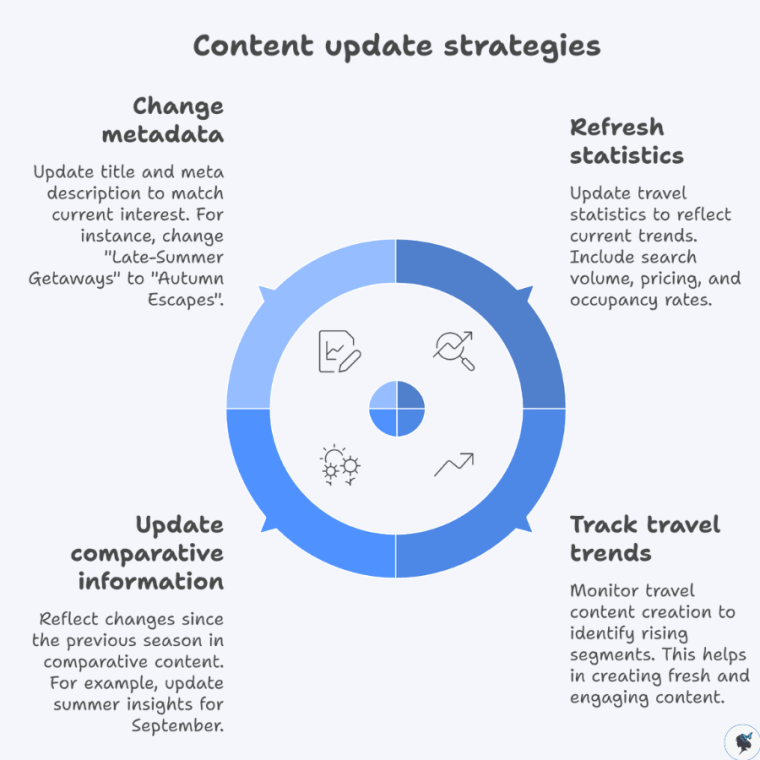
  • Refresh statistics (visitor numbers, average temperatures, hotel rates).
  • Update event listings, new attractions or newly opened properties.
  • Replace outdated travel advisories or seasonal commentary.
  • Keep the original URL where possible to preserve SEO rankings.

Wander Women Hot Tip: Use a revision log on each page (“Last updated: November 2025”) which signals freshness to Google and users alike.

2. Add new visuals and multimedia

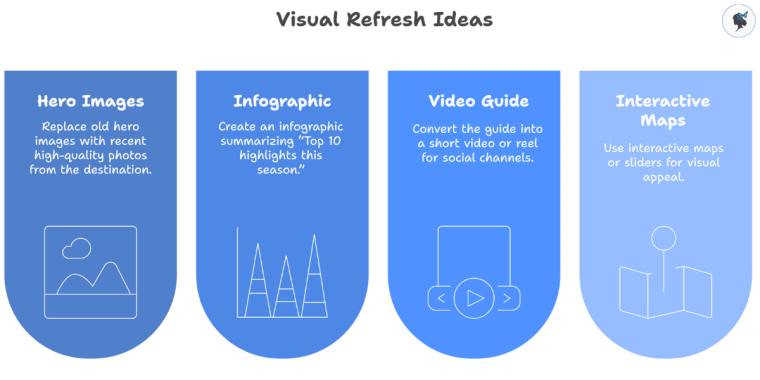
infograph: Visual refresh ideas
Visual refresh ideas
  • Replace old hero images with recent high‑quality photos from the destination.
  • Create an infographic summarizing “Top 10 highlights this season.”
  • Convert the guide into a short video or reel for social channels.
  • Use interactive maps or sliders for visual appeal.

Wander Women Hot Tip: Create a “visual refresh” every 12 months—update at least 3 images or one video per guide to keep it feeling current.

3. Integrate user‑generated content (UGC)

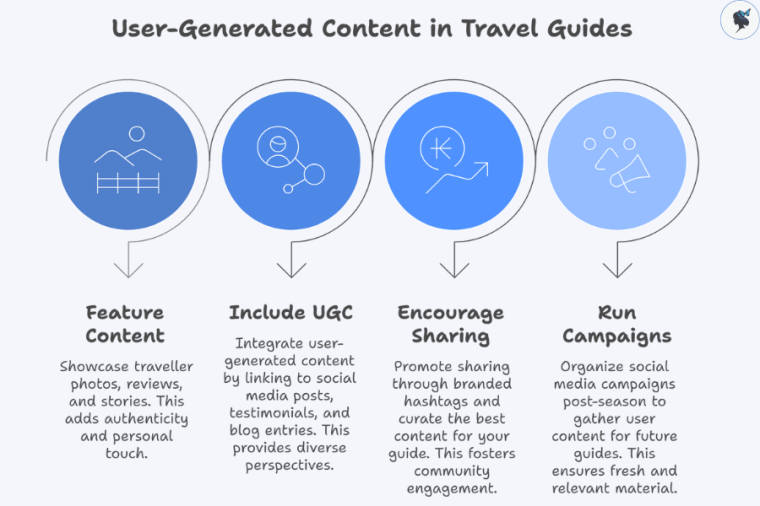
infograph: User-Generated Content in travel guides
User-Generated Content in travel guides
  • Feature traveller photos, reviews or short stories from your customers.
  • Include UGC in the guide, linking to Instagram posts, testimonials or guest blog entries.
  • Encourage sharing via branded hashtags and then curate the best content into your guide.

Read: How travel brands can use UGC.

Wander Women Hot Tip: Run a social campaign post‑season: “Share your (destination) summer moment” and then embed the best user posts into next year’s guide.

4. Reformat content for different channels

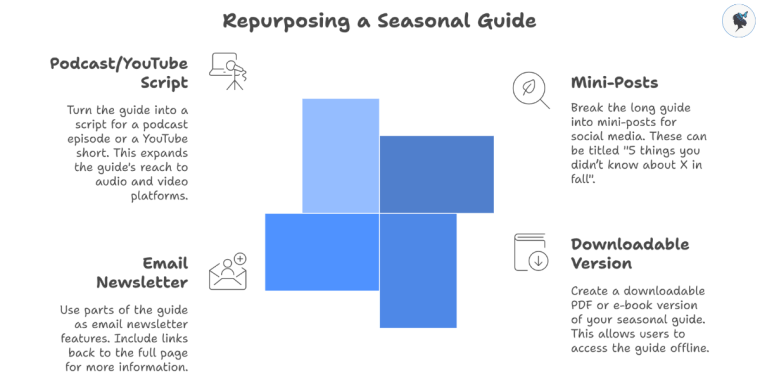
Repurposing a seasonal guide
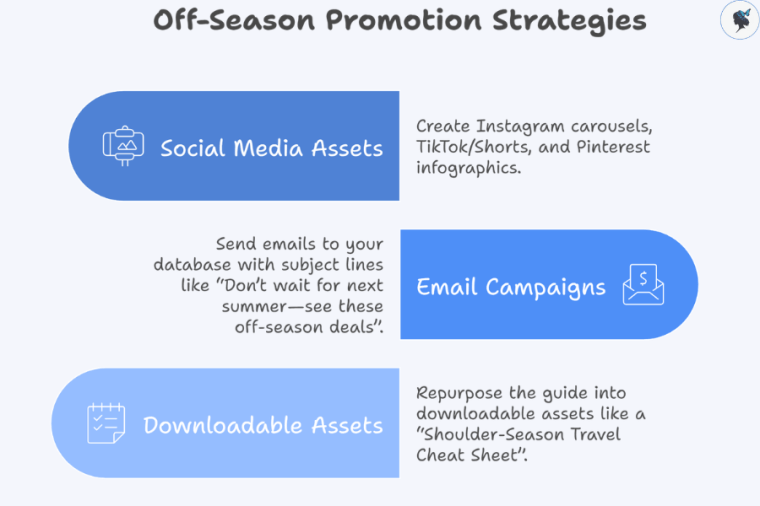
  • Break the long guide into mini‑posts: “5 things you didn’t know about X in fall” for social.
  • Create a downloadable PDF or e‑book version of your seasonal guide.
  • Use parts of the guide as email newsletter features with links back to the full page.
  • Turn the guide into a script for a podcast episode or a YouTube short.

Read our guide: Evergreen Destination Seasonal Content Hubs

Wander Women Hot Tip: Re‑use your main seasonal guide across at least three formats (blog + infographic + video) for maximum reach.

infograph: Content linking strategies
Content linking strategies
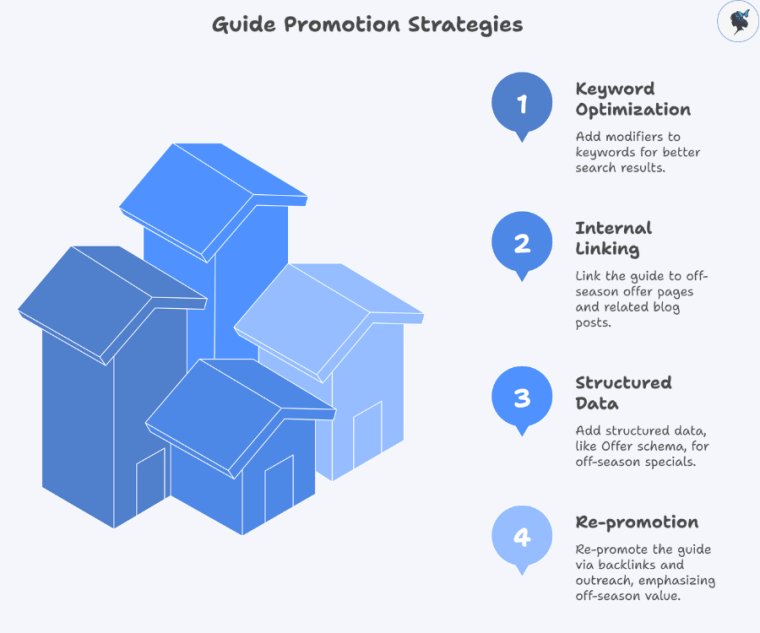
  • On the guide page, link to related content: past season’s guide archive, booking pages, photo galleries.
  • From newer content (blog posts for this season), link back to the hub destination guide to concentrate authority.
  • Use internal linking to funnel users into current offers.

Wander Women Hot Tip: Include a “Last year this guide…” section on the page linking to previous version—maintains history and authority rather than removing old content.

6. Keep the URL stable and archive wisely

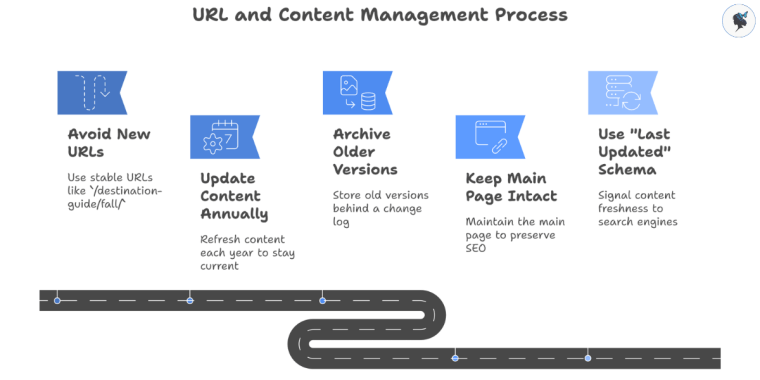
Infograph: URL and content management process
URL and content management process
  • Avoid creating a new URL each season (e.g., /fall‑2024‑destination-guide). Instead, use /destination‑guide/fall/ and update content annually.
  • Archive older versions behind a change log or “archive” tag but keep the main page intact to preserve ranking signals.

Wander Women Hot Tip: Use a “last updated” schema on the page to signal to search engines that it has been refreshed without changing the URL.

By applying these strategies—updating content, fresh visuals, UGC integration, multi‑format repurposing, strong linking and stable URLs—you transform seasonal assets into evergreen pieces that deliver year after year.


Tips for Integrating SEO into Repurposed Content

Updating content is only half the job—ensuring it’s optimized for search is equally critical.

infograph: SEO strategy for repurposed content
SEO strategy for repurposed content

Keyword refresh

  • Use tools like Google Trends, Ahrefs or Semrush to identify new season‑specific keywords (“fall foliage tours 2025”, “winter skiing essentials”), long‑tail queries and question formats.
  • Update H1/H2 headings and meta descriptions accordingly.

Read our post: Mastering Long-Tail Keywords.

On‑page optimization

  • Update meta titles and descriptions to reflect current season and year.
  • Include schema markup for updated offers, itineraries or events.
  • Ensure headings and content reflect newly added sections (e.g., UGC gallery, infographic).
  • Optimize images: new filenames, alt text, compression for speed.

More about On-Page Optimization here.

  • Internal links: From blog posts or social posts to the updated destination guide.
  • External links: Share the refresh on partner websites, social media, and newsletters to attract new backlinks.
  • Ensure old URLs redirect (if any), and keep canonical tags in place to prevent duplicate content.

More about internal linking for travel companies here.

Wander Women Hot Tip: Add a “What’s new this season” section at the top of the guide with updated keywords—they’ll signal freshness to search engines and interest to returning visitors.

Monitor performance

  • Compare performance pre‑ and post‑update (traffic, rankings, conversions).
  • Use Google Search Console to see if impressions/CTR changed after refresh.
  • Use Analytics to track changes in engagement and conversions.

SEO doesn’t stop once you’ve updated the guide—the optimization, monitoring and linking work ensures your repurposed content continues to perform and attract new traffic each season.


Conclusion

Repurposing seasonal travel content is a strategic way for travel agencies to maximize the value of their marketing efforts. By updating and enhancing your existing guides—rather than creating entirely new ones—you save resources, preserve SEO traction and continue attracting travellers across multiple seasons.

Key takeaways:

  • Refresh core elements (data, visuals, UGC) each season.
  • Repurpose guides into multiple formats and distribute across channels.
  • Keep URLs stable and maintain internal linking to preserve authority.
  • Integrate fresh season‑specific keywords and SEO updates.
  • Monitor performance and iterate based on insights.

Wander Women Hot Tip: Pick one seasonal guide this week and apply a mini‑refresh plan using this process: update visuals & UGC, optimize for the new season’s keywords, publish the refreshed version and promote it across your social and email channels.

Ready to convert your seasonal content into year‑round assets? Contact us today and watch your content keep working for your agency long after the season ends.

How to Structure and Maintain Evergreen Destination Seasonal Content Hubs for Travel Sites

▶ Table of Contents
  1. Introduction
  2. Understanding Evergreen Content for Travel Destinations
  3. Why Build a Destination Content Hub
  4. Structuring a Seasonal Evergreen Content Hub
  5. Maintaining Seasonal Relevance
  6. Integrating User‑Generated Content (UGC)
  7. Promoting and Leveraging Seasonal Hubs
  8. Measuring Success and Iterating

Introduction

In the fast‑moving world of travel content, where every destination feels ten minutes away from being “over‑covered,” a smart approach is to build evergreen destination seasonal content hubs. These hubs combine the stability of timeless content with the freshness of seasonal relevance — creating resources that attract search engine traffic, engage travellers consistently, and stay top‑of‑mind year after year.

Why bother? Evergreen content continues to deliver long after publication; in fact, for many websites, evergreen content consistently drives more than a third of total organic traffic. In travel specifically, with seasonal patterns and shifting consumer habits, this hybrid approach of evergreen + seasonality gives you both resilience and relevance.

Wander Women Hot Tip: Start with a “destination hub” strategy rather than hundreds of disconnected blog posts. Think big, centralised, modular — build the library now so that future updates are smoother.


Understanding Evergreen Content for Travel Destinations

1. What Makes Content Truly Evergreen in Travel

infograph: Evergreen travel content
Evergreen travel content
  • Evergreen travel content covers topics that remain relevant regardless of year, season, or fleeting trends: e.g., “How to get to X destination,” “What you must pack for X,” “Cultural norms and local etiquette in X.”
  • It avoids being too tied to a fixed date (e.g., “Summer 2025 deals”) and instead focuses on enduring user needs.
  • In a travel‑destination hub, evergreen pieces can be the “core” of the hub: destination overview, transport and logistics, “must sees,” best time to go (with caveats), local culture, food, safety tips, etc.

2. SEO Benefits of Evergreen Content

infograph: Benefits of Evergreen Content for SEO
Benefits of Evergreen Content for SEO
  • Because it remains relevant, evergreen content drives consistent organic traffic. Search engines favour pages that continue to satisfy user intent, rather than topics that die out.
  • Evergreen pages give excellent internal‑linking opportunities (they become pillars that link out to seasonal or more specific pieces). That strengthens your site architecture and authority.
  • You save resources: you don’t have to constantly churn brand‐new content; instead you maintain and update. One guide noted companies prioritising evergreen content see a 5× higher return on investment than those focusing only on trend‑based content.

Wander Women Hot Tip: Identify 8–12 evergreen “pillar” pages for each destination (e.g., Getting There, Where to Stay, Food & Drink, Culture & Customs, Best Time to Visit, Practical Tips). These become the foundation of your hub. Then seasonal content layers on top.


Why Build a Destination Content Hub

1. Benefits Over Stand‑alone Blog Posts

infograph: Destination hub benefits
Destination hub benefits
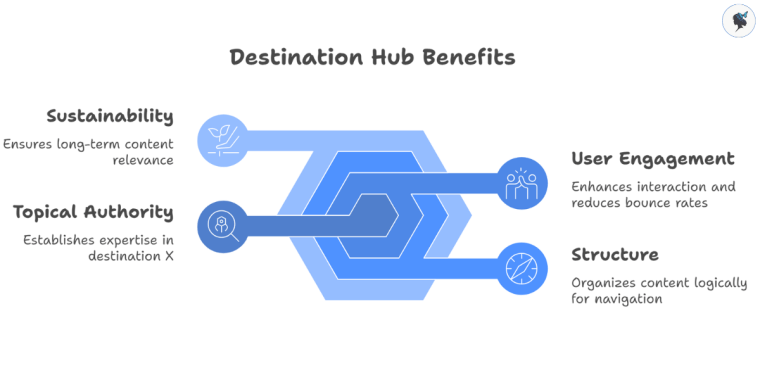
  • A hub creates structure: instead of random blog posts, you have a parent page (“destination hub”) and child pages (evergreen + seasonal) that nest logically.
  • Search engines see this structure as topical authority: you’re demonstrating your site knows all about destination X, not just that you occasionally wrote about it.
  • For users, it’s better: if someone lands on your hub for “Visit X”, they find everything in one place — not just a blog post bouncing them out. This increases engagement, time on site, and reduces bounce rates.
  • Stand‑alone posts may generate a short‑term spike but then fade. A hub is more sustainable.

More about content clusters (hubs) here.

2. How Content Hubs Improve User Experience

infograph: Hub content suggestions
Hub content suggestions
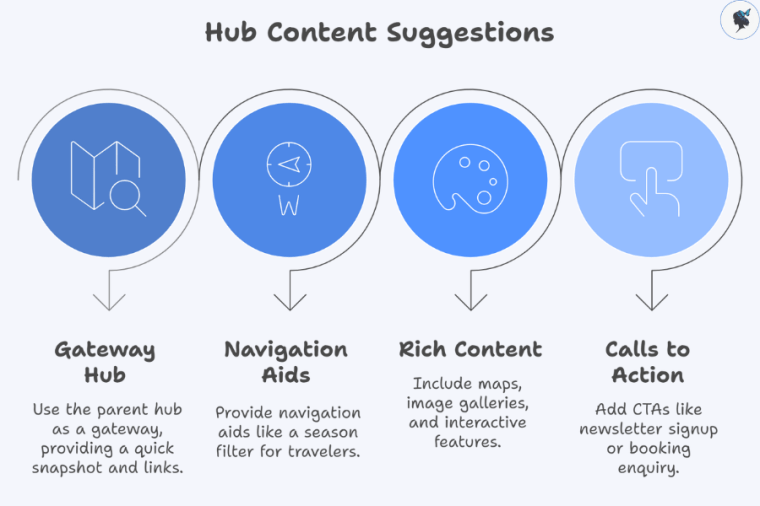
  • Use the parent hub as a gateway: quick snapshot of destination + links to deeper dives (seasonal activities, upcoming festivals, itineraries, FAQs).
  • Provide navigation aids: e.g., a “Select your season” filter so travellers see what to do in spring vs winter.
  • Include rich content: maps, image galleries, interactive features (quiz: “Which season at X fits you best?”).
  • Add CTAs (calls to action): newsletter signup for seasonal updates, booking enquiry, user photo gallery submission.

Wander Women Hot Tip: Design the hub UI/UX like a mini‑magazine: think “Explore Destination X” homepage with cards for each season, “In this month”, “Insider tips”, “Traveller stories.” Make it visually appealing and scannable.


Structuring a Seasonal Evergreen Content Hub

1. Hub Architecture and Layout

infograph: How to structure the travel hub website?
How to structure the travel hub website?
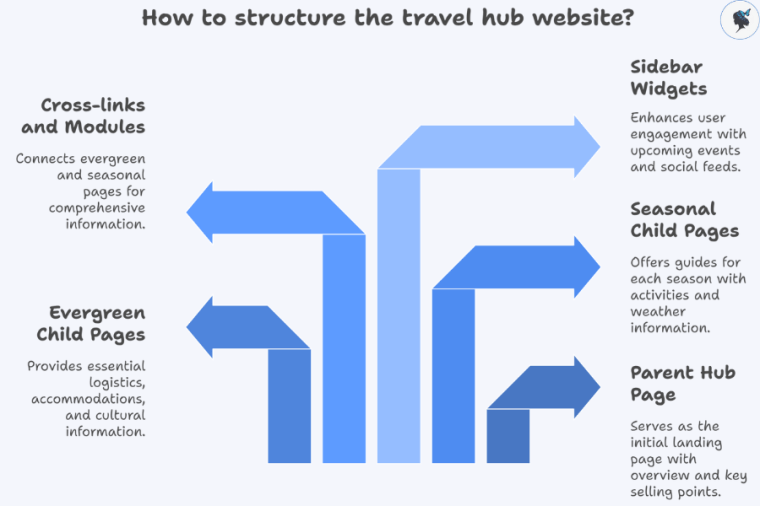
  • Parent Hub Page: the first destination page a traveller lands on. It includes the overview, key selling points (“Why go here”), quick links to seasons, top experiences, and a “Start planning” CTA.
  • Child Pages — Evergreen Layer: logistics (how to get there, travel documents), accommodations, local culture, cuisine, “must‑do experiences”.
  • Child Pages — Seasonal Layer: each major season (Spring, Summer, Autumn, Winter) gets its own guide: best activities, events, weather guide, seasonal pros & cons, suggested itineraries.
  • Cross‑links and modules: On each seasonal page, link back to the evergreen pages (“Need to know about travel documents? Visit our logistics guide”). Likewise the evergreen page can link to each seasonal page (“Check what’s happening this winter”).
  • Sidebar / module widgets: “Upcoming festival in X”, “Traveller photo of the month”, social feed.
  • Consider a year‑round calendar of events embedded or linked.

2. Balancing Evergreen and Seasonal Content

infograph: Updating seasonal content
Updating seasonal content
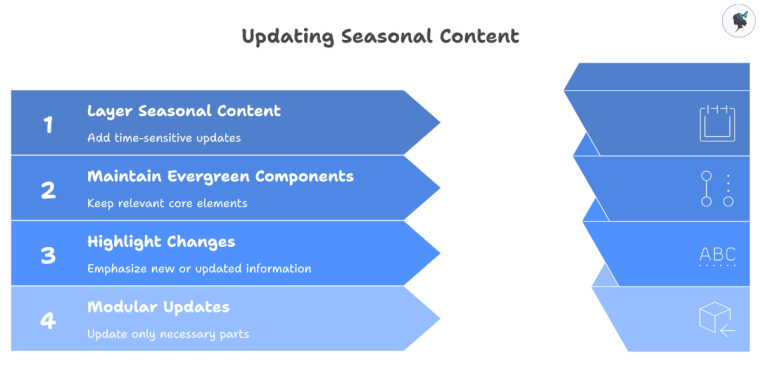
  • Start with the evergreen core — this remains mostly stable year‑to‑year.
  • Then layer seasonal content — which may require annual updates (dates of festivals, seasonal deals, weather variations, new experiences).
  • Ensure seasonal pages maintain some evergreen components (e.g., “Spring in X: what you can do” still relevant from year to year) but highlight what changes.
  • Use a modular update approach: only parts of the seasonal pages change (dates, deals, new venues); rest remains. That keeps maintenance manageable.

3. Internal Linking Strategy

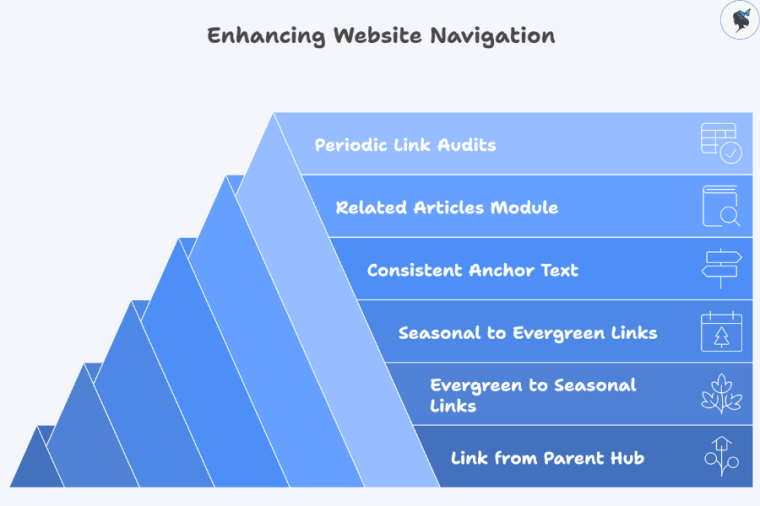
infograph: Enhancing website navigation
Enhancing website navigation
  • Link from parent hub – evergreen pages – seasonal pages.
  • On evergreen pages, include “Explore this destination by season” links.
  • On seasonal pages, include “Also check: full destination guide” links.
  • Use consistent anchor text: e.g., “Visit X in autumn” or “Autumn activities in Destination X”.
  • Use a “Related articles” module at bottom of every page to suggest deeper reads (which helps dwell time).
  • Perform periodic audits of links to ensure seasonal pages still point to correct evergreen pages and vice versa.

Wander Women Hot Tip: Set up a mini‑site‑map or interactive menu within the hub that lets users jump to “Summer activities”, “Winter festivals”, “Family travel”, etc. The clearer your internal linking, the more search engines (and travellers) see the depth of your coverage.


Maintaining Seasonal Relevance

1. Updating Content for Each Season

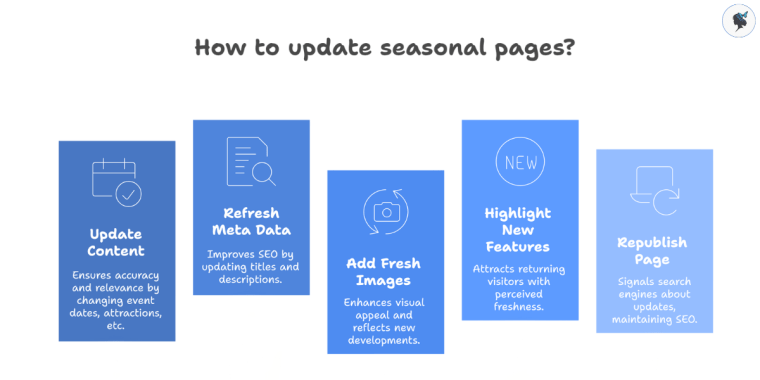
infograph: How to update seasonal pages?
How to update seasonal pages?
  • At set intervals (quarterly or annually), review each seasonal page: update event dates, new attractions, closures, weather data, deals.
  • Refresh meta titles/descriptions when changes occur (e.g., “What’s new for Autumn 2026 in Destination X”).
  • Add fresh images or user‑submitted photos to reflect updates (e.g., new festival venue).
  • Highlight “What’s new this season” inside each seasonal page — creates perceived freshness for returning visitors.
  • Republish or refresh the page (even if URL remains same) to signal search engines it’s current.

2. Automating Seasonal Updates

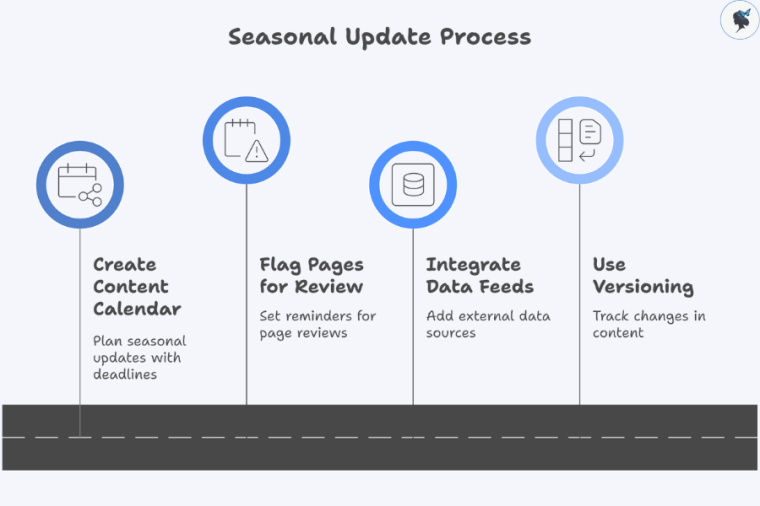
infograph: Seasonal update process
Seasonal update process
  • Maintain a content calendar: at the start of the year list all hubs + seasonal updates with deadlines.
  • Use CMS features to flag when a page is due for review (6‑12 months after last update).
  • Consider integrating data feeds: e.g., event partner API, weather service widget, local tourism board feed for upcoming events.
  • Use versioning: keep a revision log so you know what changed from last season — helpful during audits.

Wander Women Hot Tip: Create a “Seasonal update checklist” for each destination: events, weather, closures, new attractions, traveller tips changes. Use it year after year with tweaks — saves time and ensures nothing is overlooked.


Integrating User‑Generated Content (UGC)

1. Benefits of UGC in Travel Content

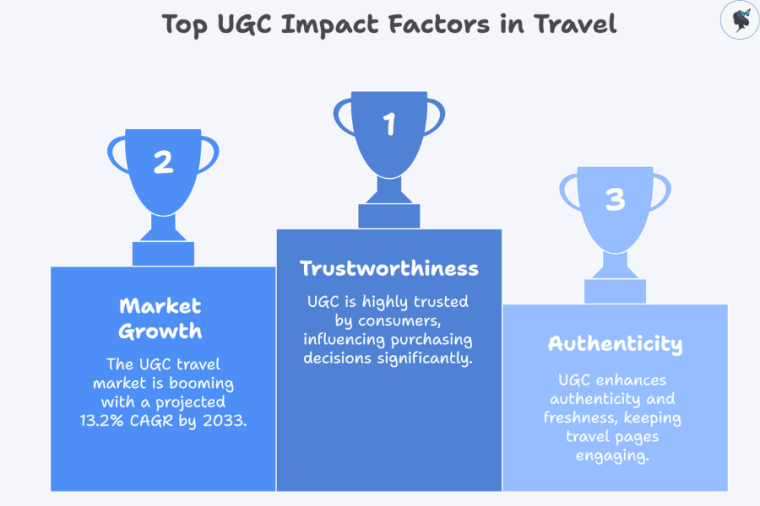
infograph: Top UGC impact factors in travel
Top UGC impact factors in travel
  • UGC is seen as highly trust‑worthy: a study found 79% of consumers say user‑generated content significantly influences their purchasing decisions.
  • In the travel market, the global user‑generated content for travel market size was US$10.4 billion in 2024, with a projected compound annual growth rate (CAGR) of 13.2% out to 2033.
  • UGC enhances authenticity and freshness, and when naturally embedded in a hub, keeps pages alive and engaging.

Read our post: Use User‑Generated Content as SEO Assets

2. Sources of UGC

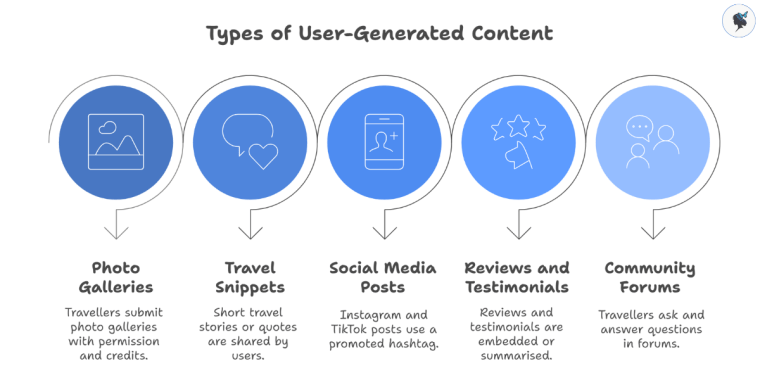
infograph: Types of user-generated content
Types of user-generated content
  • Photo galleries submitted by travellers (with permission/credits).
  • Short travel‑story snippets or quotes (“I loved sunrise at X”).
  • Instagram / TikTok posts using a hashtag you promote (e.g., #MyTripToX).
  • Reviews and testimonials — embed or summarise within seasonal/evergreen pages.
  • Community Q&A or forums on your site: travellers ask and answer.

3. Displaying UGC Effectively

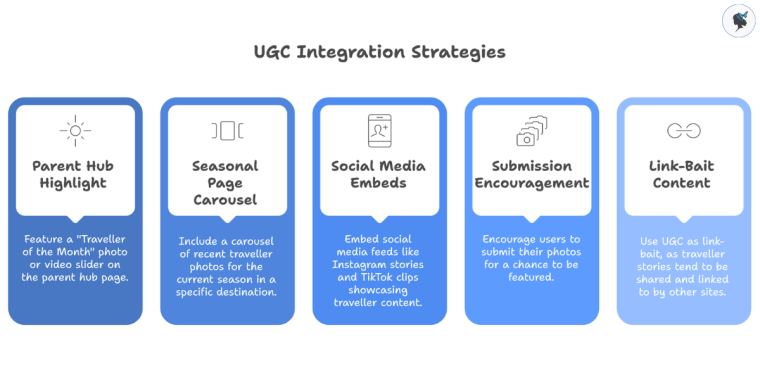
infograph: UGC integration strategies
UGC integration strategies
  • On the parent hub page: highlight a “Traveller of the Month” photo or video slider.
  • On seasonal pages: include a carousel of “Recent traveller photos this (season) in Destination X”.
  • Embed social media feeds (Instagram stories, TikTok clips) with traveller content.
  • Encourage submission by offering spotlight features (“Submit your photo and be featured”).
  • Use UGC as link‑bait: published content with traveller stories tends to be shared and linked to by other sites.

Wander Women Hot Tip: Create a monthly “UGC roundup” blog/article inside the hub: “5 real traveller stories from this season at Destination X” — this keeps content fresh, supports the hub and encourages community participation.


Promoting and Leveraging Seasonal Hubs

1. Social Media Integration

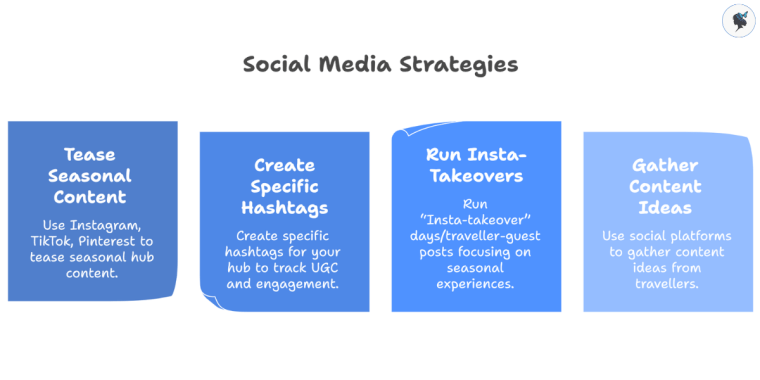
infograph: Social media strategies
Social media strategies
  • Use Instagram, TikTok, Pinterest to tease seasonal hub content: e.g., short video “Top winter tips for Destination X”, linking to the seasonal page. Note that travel‑related content on TikTok has increased by about 410% since 2021.
  • Create specific hashtags for your hub (e.g., #ExploreXSpring2026) to track UGC and engagement.
  • Run “Insta‑takeover” days/traveller‑guest posts focusing on seasonal experiences at the destination.
  • Use social platforms to gather content ideas: ask travellers “What are your top tips for Destination X in autumn?” and then build blog content from that.

2. Email Marketing & Newsletter Tie‑Ins

infograph: How to effectively engage email subscribers?
How to effectively engage email subscribers?
  • Segment your email list by interest or season (e.g., subscribers interested in “Summer X”).
  • Send a seasonal hub update email: “What’s new for summer 2026 at Destination X” linking into the hub.
  • Use evergreen content as the basis for an automated “Welcome sequence” for new subscribers (“Start with our ultimate destination guide”) and then nurture into seasonal offers.

3. Cross‑Promotion Across Platforms

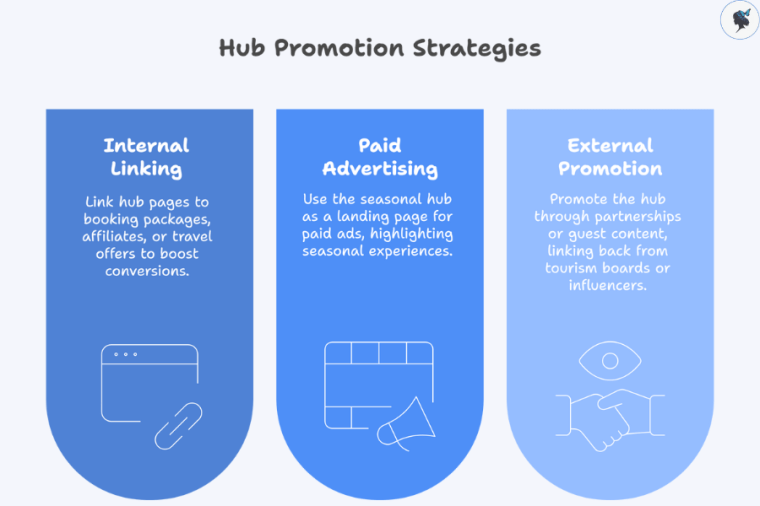
infograph: Hub promotion strategies
Hub promotion strategies
  • Link from hub pages to your booking/itinerary packages, affiliate partners, or travel‑offer pages — this increases conversion opportunities.
  • Use the seasonal hub as a campaign landing page for paid ads: e.g., “Visit X this winter – see our winter hub and book the best experiences”.
  • Promote the hub in partnerships or guest‐content: have local tourism boards or influencers link back into your hub.

Wander Women Hot Tip: Treat each seasonal page like a micro‑campaign asset: plan one social post, one community challenge (e.g., share your winter hiking photo), one newsletter trigger, one site update per season. That creates a rhythm.


Measuring Success and Iterating

1. Key Metrics to Track

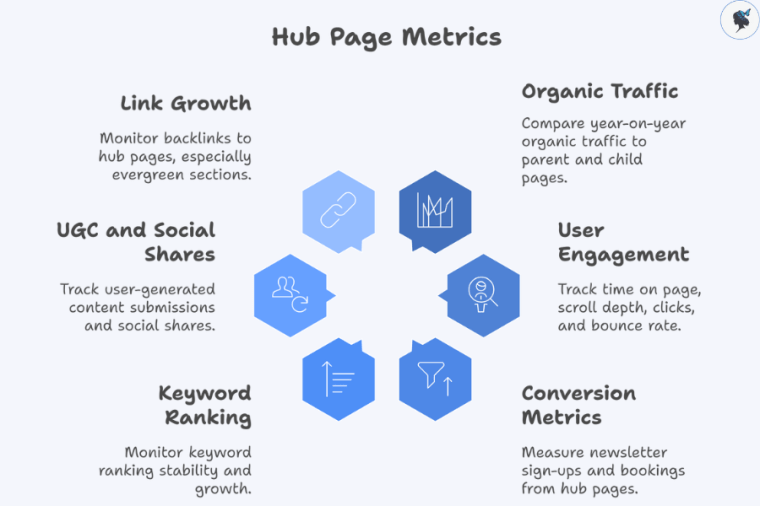
infograph: Hub page metrics
Hub page metrics
  • Organic traffic to the parent hub page and each seasonal child page (compare year‑on‑year).
  • User engagement metrics: average time on page, scroll depth, clicks to other hub pages, “bounce” from hub.
  • Conversion metrics (if applicable): newsletter sign‑ups, enquiries/bookings from hub pages.
  • Keyword ranking stability/growth for core evergreen and seasonal keywords.
  • UGC submission volume and social shares of hub content.
  • Link growth/backlinks to hub pages (especially evergreen sections).

2. Continuous Improvement

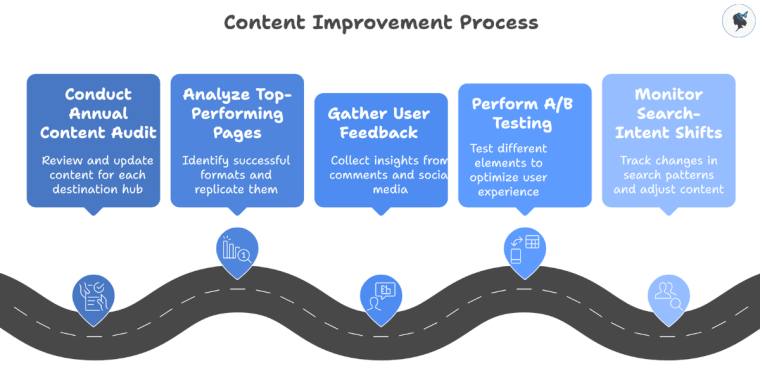
infograph: Content improvement process
Content improvement process
  • Perform an annual content audit for each destination hub: update what’s outdated, remove links to dead external pages, correct event dates.
  • Review top‑performing pages (seasonal and evergreen) and replicate formats for other destinations.
  • Use user feedback: comments, social shares, DMs can hint at what travellers want more of (e.g., “I wish you covered off‑season travel tips”).
  • Use A/B testing for CTA placements, interactive modules, UGC display formats.
  • Monitor search‐intent shifts: if a seasonal keyword’s search pattern changes, update your page accordingly.

Wander Women Hot Tip: Build a “hub health dashboard” for each destination: seasonal update indicator, link check status, top UGC item this month, traffic vs last year. Review quarterly.


Conclusion

Building and maintaining evergreen destination seasonal content hubs is one of the smartest investments a travel brand can make. You get the enduring power of evergreen content — which drives consistent organic traffic and builds authority over time. And you also gain the relevance and freshness of seasonal content that keeps your destination top of mind with travellers.

By structuring your hub thoughtfully, layering seasonal content on top of an evergreen foundation, integrating user‑generated content and social media, and keeping your updates systematic and measurable, you simultaneously build a resource that helps visitors now and continues helping visitors next year and the year after.

Wander Women Hot Tip: Start now. Pick your priority destinations, build one hub thoroughly — with your pillar pages, seasonal pages, UGC modules — then roll the model out to the next destination. The compounding benefits will snowball.

Need help? Contact us today!
How Travel Brands Can Use User‑Generated Content as SEO Assets

▶ Table of Contents
  1. Introduction
  2. The Strategic Significance of UGC in Travel
  3. Best Practices for Leveraging UGC as SEO Assets
  4. Effective Strategies for Soliciting UGC from Travellers
  5. Techniques for Optimising UGC for Search Engines
  6. Real‑World Examples of Travel Companies Using UGC to Drive SEO & Engagement
  7. Conclusion

Introduction

In the travel industry, we’re seeing a tectonic shift in how travellers discover, evaluate and book trips. Rather than simply absorbing branded content, today’s (and tomorrow’s) travellers rely heavily on user‑generated content (UGC)—photos, videos, reviews, social posts from real travellers—to inspire, inform and influence their decisions. According to one 2025 statistic, 86% of travellers said they were inspired to visit a location after seeing user‑generated content.
Meanwhile, the market for UGC in travel is estimated at around USD 279.8 million in 2025, with a projected growth to USD 1,132.1 million by 2035. (Future Market Insights)
For travel agencies and destination brands, this means UGC isn’t just “good to have” — it’s a high‑impact asset for content marketing, social media, and SEO. When properly solicited, curated and optimised, UGC drives engagement, improves search visibility, and builds trust with prospective travellers.

Wander Women Hot Tip: View UGC as a dual‑purpose tool: 1) social engagement and inspiration, 2) SEO asset and web content amplifier. Plan both uses whenever you request or reuse traveller content.


The Strategic Significance of UGC in Travel

1.Why UGC is a High‑Value Asset for Travel Brands

infograph: Benefits of User-Generated Content
Benefits of User-Generated Content
  • Authenticity & trust: UGC offers “real people, real experience” rather than polished brand messages. A 2025 study found UGC has a significant positive effect on destination imagery and tourist visit intentions.
  • Engagement and inspiration: In the travel sector particularly, 83% of travellers use social media for trip inspiration. Another stat: 86% of travellers were inspired to visit a location after seeing UGC.
  • Cost efficiency & scale: Compared with high‑production brand content, UGC can be more scalable, authentic and cost‑effective. For example, a marketing stat notes that visual UGC is considered more impactful by 85% of marketers compared to professional photography.
  • SEO & discoverability: UGC contributes to freshness signals, real traveller language (long‑tail keywords), multimedia content (photos/videos) and social signals that help search engines and users alike.

You might like our post: Use UGC to Enhance Your Travel Brand’s Trust

2. How UGC Impacts SEO & the Travel Funnel

infograph: UGC's impact on travel SEO
UGC’s impact on travel SEO
  • Awareness phase: UGC helps travellers discover destinations (“I saw this Instagram reel and now want to go”).
  • Consideration phase: Reviews, photos, videos from travellers build credibility and answer questions (“What’s it really like staying at this hotel?”).
  • Conversion phase: Real‑traveller content reduces perceived risk, making bookings more likely.
  • SEO in action:
    • Fresh UGC updates signal to search engines a page is current and relevant.
    • Traveller language captures long‑tail, conversational keywords (e.g., “what it was like to stay in a tree house in Costa Rica”). More about Long-Tail Keywords here.
    • Multimedia UGC supports rich search results (image/video search, Google Discover).
    • Internal linking of UGC pages into destination/service hubs strengthens topical authority.
  • Metric improvements: UGC often leads to longer time on page, deeper scrolls (since people enjoy real‑traveller content), better engagement metrics—all of which can support rankings.

Wander Women Hot Tip: Build your content funnel around UGC touchpoints:

  • For TOFU (top‑of‑funnel) create “traveller story” pages and galleries.
  • For MOFU (middle) embed UGC into destination/service hub pages (real review + service link).
  • For BOFU (bottom) use UGC testimonials and case studies that push toward booking.
    Map your internal linking so that UGC feeds into your commercial pages.

Check out: The Complete Digital Marketing Funnel for Travel


Best Practices for Leveraging UGC as SEO Assets

1. Curate and Showcase UGC Strategically

infograph: UGC integration strategies
UGC integration strategies
  • Create dedicated sections on your site for UGC: e.g., “Traveller Gallery”, “Real Stories”, “Trip Highlights”. Use these as entry‑points and link into hub/destination/service content.
  • Use UGC in blog posts: integrate traveller quotes, photos, video snippets to humanise content and make it richer.
  • Build content clusters: For example, a destination page that includes brand content + embedded UGC streams (photos/videos) + links to sub‑pages. This boosts structure and authority.
  • Maintain quality control: Not all UGC will be suitable. Filter for relevance, authenticity, and brand fit. Research shows UGC influences tourist image and behaviour only when perceived as genuine.
  • Refresh UGC often: A destination page that embeds new traveller posts signals freshness to search engines and encourages repeat visits.
  • Align UGC showcase with user‑intent: E.g., if the page is “Adventure Travel in Iceland”, select UGC showing adventure contexts rather than leisure pool images.

2. Integrate UGC with On‑Page SEO Elements

infograph: Enhancing UGC for SEO
Enhancing UGC for SEO
  • Use descriptive headings/sub‑headings that frame UGC: e.g., “See real traveller photos from our Maldives resort”, “What guests say: tree‑house experience in Belize”.
  • Optimize alt text and filenames of UGC assets: eg “solo‑female‑traveller‑hiking‑Torres‑del‑Paine.jpg” or “family‑trip‑senior‑couple‑Santorini‑sunset.png”.
  • Apply schema markup where relevant: Review schema around UGC testimonials, VideoObject schema for traveller videos.
  • Meta tags: Create enticing meta titles/descriptions for UGC‑rich pages (“Real traveller photos & reviews of XYZ resort – see what it’s really like”).
  • Internal linking strategy: Link from UGC pages to commercial/service pages (“Book the same villa our guest visited”), and from blog content into UGC pages for deeper engagement.
  • Encourage user‑interaction: Optional comments or “submit your photo” forms increase dwell time and activity on page.
  • Cross‑channel amplification: Use UGC‑led content in social media, email, newsletters to drive traffic back to on‑site pages (which improves search signals).

3. Monitor & Optimize Performance

infograph: How to optimize UGC performance?
How to optimize UGC performance?
  • Track metrics: organic traffic to UGC pages, engagement (time on page, scroll depth), conversion from UGC content (clicks to booking).
  • Identify which UGC formats perform best (photo carousel vs video vs text review) and scale accordingly.
  • Audit older UGC pages: refresh assets, update meta tags, add new traveller posts to keep content fresh (search engines reward recent updates).
  • Use A/B tests: e.g., UGC gallery hero vs brand hero image, UGC testimonial vs no testimonial. Compare engagement and conversion outcomes.
  • Watch for faux‑UGC or irrelevant content—it may harm user trust and SEO signals. Authenticity matters.

Wander Women Hot Tip: Maintain a UGC content calendar: schedule quarterly refreshes of your UGC‑rich pages, track when traveller content awaits moderation, and ensure each UGC update prompts a mini‑SEO audit (alt text, schema, linking).


Effective Strategies for Soliciting UGC from Travellers

1. Build a UGC‑Friendly Ecosystem

infograph: UGC engagement cycle
UGC engagement cycle
  • Make it easy for travellers to submit their content: mobile upload forms, dedicated hashtag campaigns, photo spot prompts during or after the trip.
  • Incentivise contributions: run UGC contests (e.g., “Best sunset photo from our Bali resort”), feature winners, offer small rewards or recognition.
  • Use branded hashtags and prompts: “#OurBrandTraveller”, “#MyResortStory” – encourages sharing and helps aggregation.
  • In‑trip prompts: At check‑in, on‑tour, create signage or digital prompts encouraging travellers to tag your brand and share their moments.
  • Post‑trip follow‑up: send automated emails or SMS shortly after travel inviting submissions (“Share your favourite photo & you could be featured”).
  • Legal and rights management: ensure travellers agree to your terms for content reuse (photo rights, social media tags) at the point of submission.

2. Encourage UGC That Is SEO‑Friendly

infograph: Traveller content guidelines
Traveller content guidelines
  • Provide guidelines to travellers: ask for short captions including location + experience (e.g., “Hiking the red dunes of Wadi Rum – best trip ever”). This helps generate natural keywords.
  • Ask travellers to tag the destination, accommodation, tour name in the caption (makes the content more searchable, helps link building).
  • Collect metadata: ask for trip dates, accommodation name, destination region, content type (photo, video, review) so you can later categorise and use effectively.
  • Encourage multiple formats: visuals (photos/videos), short text reviews, long‑form blog‑style stories (if willing) — more formats mean more SEO opportunity.
  • Promote sharing across channels: Instagram stories, TikTok reels, YouTube vlogs – you can then embed these on your website for richer content.

3. Manage and Moderate UGC Efficiently

infograph: UGC management
UGC management
  • Create a UGC library (digital asset management): tag content by destination, trip type, season, traveller persona. Makes retrieval for content creation easier.
  • Moderate for quality & relevance: ensure the content aligns with your brand values, destination, and avoids irrelevant/spam posts. Lack of authenticity may undermine trust.
  • Attribute properly: always provide photo/author credit, link to the user where possible (improves authenticity and community feeling).
  • Use automation where possible: scanning hashtags, setting alerts for submissions, using workflow tools for approval and tagging.
  • Maintain transparency: let travellers know how their content will be used; this builds willingness to participate and ensures compliance.

Wander Women Hot Tip: Create a “Traveller UGC Kit” you send to past guests: sample captions, suggested hashtags, simple steps to upload/share their content. The more friction you remove, the more UGC you will receive.


Techniques for Optimising UGC for Search Engines

1. Structuring UGC for SEO Impact

infograph: Strategies for enhancing UGC SEO
Strategies for enhancing UGC SEO
  • Create dedicated UGC‑rich pages with unique URL, title, meta description, e.g., /traveller‑stories/destination‑x/.
  • Ensure UGC is embedded within strong contextual content: not just a gallery, but heading, intro paragraph, text around it explaining relevance (“This is what it’s like to hike the glacier…”) which improves readability, scroll depth and SEO.
  • Mix content types: use photos, videos, reviews — this diversity improves chances of appearing in various search results (image search, video search, Google Discover).
  • Consider pagination for large galleries but ensure search bots can crawl (avoid infinite scroll without fallback).
  • Use schema markup: For example, mark up an embedded traveller video with VideoObject, or a review with Review.
  • Link to it: Internal linking from destination/service hub pages to UGC page and vice versa helps distribute SEO value.

2. Keyword Strategy Within UGC

infograph: UGC optimization funnel
UGC optimization funnel
  • Extract organic language from traveller captions/comments to spot real‑world long‑tail keywords (e.g., “family friendly resort Maldivian lagoon with kids”).
  • Use those keywords in sub‑headings, alt‑text, captions, and metadata around the UGC.
  • Align UGC pages with search intent: e.g., if travellers often search “what it’s like staying in over‑water villa Maldives”, then embed relevant UGC and tailor the page accordingly.
  • Make sure the UGC helps push users down the funnel: link from the UGC story to booking/tour page with anchor text optimised for action (e.g., “Book the same villa our guest stayed in”).
  • On‑page optimisation: Ensure H1/H2 include target keywords, alt‑text for images include destination + experience, captions reinforce the topic.

3. Technical & On‑Page Optimisation

infograph: UGC optimization strategies
UGC optimization strategies
  • Optimize media: large volumes of high‑resolution images/videos can slow page speed. Use compression, lazy loading, responsive design.
  • File naming: rename server files to include keywords (e.g., solo‑female‑traveller‑hiking‑Torres‑del‑Paine.jpg).
  • Alt text: described in natural language including destination plus experience (“Solo female traveller hiking at sunrise Torres del Paine national park”).
  • Canonical tags: If UGC appears on multiple pages, ensure canonicalization to avoid duplication.
  • Mobile‑first optimisation: Ensure UGC pages load well on mobile since many travellers browse on smartphones.
  • Meta descriptions: Use social proof (“See real traveller photos & reviews from Destination X”) to boost click‑through rate (CTR).
  • Structured data: Use Review schema for UGC testimonials, ImageObject or VideoObject schema for galleries and videos.
  • Monitor crawl & index status: Use Google Search Console to ensure UGC‑rich pages are crawled and indexed.

4. Measuring & Iterating

infograph: UGC performance measurement
UGC performance measurement
  • Key metrics: organic traffic to UGC pages; dwell time/scroll depth; referral traffic to booking pages; keyword ranking improvement; conversion rates (booking enquiries) originating from UGC content.
  • Compare UGC vs brand‑only pages: measure if embedding UGC leads to improved performance (e.g., lower bounce rate, higher pages per session).
  • Refresh UGC content periodically: add new traveller submissions, update captions, refresh images/videos — freshness supports SEO.
  • A/B test UGC layouts: e.g., hero image from traveller vs brand image; testimonial block vs no testimonial; call‑to‑action at bottom of UGC page vs none.
  • Maintain UGC library insights: track top performing UGC types (videos, scenic photos, cultural moments) and replicate similar campaigns.

Wander Women Hot Tip: Schedule a quarterly UGC SEO audit: list all pages with embedded traveller content, check alt‑text, meta title/desc, internal linking, page speed, mobile performance. Prioritise fixes for pages with high traffic but low conversion.


Real‑World Examples of Travel Companies Using UGC to Drive SEO & Engagement

  • Airbnb: Frequently uses guest‑shared photos and reviews in its destination pages and blog, helping travellers visualise “what it’s really like” and improving engagement.
  • Destination marketing example: A recent study found that UGC significantly improves destination image and intentions to visit, illustrating that DMO/brand‑driven UGC campaigns can shift demand materially.
  • Key takeaway for travel agencies: You may not have massive budgets, but you can embed UGC in your site, build galleries, feature “Traveller of the Month”, and link stories to service offers. Over time, this builds topical authority and trust.

Wander Women Hot Tip: Pick one UGC campaign (e.g., “Show us your stay at Resort X”), run it for 3 months, embed the resulting content in a destination hub page, and monitor traffic, engagement and conversions vs a similar page without UGC. Use the results to scale.


Conclusion

User‑generated content is not a nice‑to‑have extra in the travel industry—it’s an SEO‑strong asset, a trust builder, and a engagement amplifier. For travel agencies and brands willing to invest in soliciting, curating and optimising UGC, the benefits are clear: more organic traffic, higher engagement, better conversion potential, and authentic connection with travellers.
To recap the strategy:

  1. Solicit UGC intentionally (with prompts, incentives, seamless workflows).
  2. Curate it smartly (destination‑relevant, quality controlled, integrated into content hubs).
  3. Optimise it for web (alt text, schema, internal linking, media optimisation).
  4. Measure and iterate (audit quarterly, refresh content, replicate what works).
    Start small, pick a pilot destination or service, embed traveller content, optimise around long‑tail keywords derived from that content, and use it as a proof case internally.

Wander Women Hot Tip: Use your first 90 days to build a “UGC starter kit”: write a brief for traveller submissions, design a UGC gallery page template, map the internal linking path to your service/booking pages, and schedule the quarterly review. Once the system is set, you’ll continuously gain UGC, SEO value and conversions with decreasing incremental effort.

Need help? Contact us today to get started!

Managing Seasonal Offers and Dynamic Inventory: SEO Best Practices for Travel Agencies


▶ Table of Contents
  1. Introduction
  2. Understanding Dynamic Inventory
  3. SEO Implications of Dynamic Pages
  4. Best Practices for Managing Dynamic Offers
  5. Enhancing User Experience
  6. Case Study
  7. Conclusion

Introduction

For travel agencies, dynamic inventory pages—featuring seasonal offers, limited-time packages, or fluctuating availability—are essential for converting travelers. However, frequent changes pose SEO challenges. Pages may appear and disappear each season, risking lost rankings, duplicate content, or broken links.

Properly handling these pages requires a combination of technical SEO strategies and content planning to preserve search visibility while delivering a seamless user experience.

Wander Women Hot Tip: Start by auditing your existing offers pages. Identify which seasonal or expiring content has caused 404 errors or ranking drops in the past.


Understanding Dynamic Inventory

infograph: Dynamic inventory examples
Dynamic inventory examples

1. Definition and Examples

Dynamic inventory pages are those updated frequently based on availability, promotions, or seasonality. Common examples include:

  • Seasonal tour packages (e.g., summer beach specials, winter ski trips)
  • Limited-time flight deals or hotel discounts
  • Holiday-specific accommodation offers
  • Travel demand varies by season; peak periods often bring high search interest for specific destinations.
  • Search behavior changes accordingly—for instance, “best ski resorts” spikes in winter.
  • Agencies must update content timely to match traveler intent.

Wander Women Hot Tip: Track seasonal search trends per destination to plan offers content ahead of peak interest, ensuring your pages are indexed and visible when travelers search.

You might be interested in our post: Strategies for Managing Seasonal Content.


SEO Implications of Dynamic Pages

infograph: SEO challenges with seasonal content
SEO challenges with seasonal content

1. Crawling and Indexing Challenges

  • Frequent URL changes can confuse search engines, leading to pages being dropped from the index.
  • Disappearing pages may lose ranking authority if not managed correctly.

More about crawlability and indexability here.

2. Risks of 404 Errors and Duplicate Content

  • Expired offers returning 404s hurt both SEO and user experience.
  • Similar offers across multiple pages can create duplicate content issues.
  • Link equity may be diluted if multiple seasonal pages target the same destination or keyword.
  • Without proper canonicalization or redirects, valuable SEO signals can be lost.

Wander Women Hot Tip: Develop a consistent URL strategy for seasonal offers, keeping base URLs evergreen while updating the content dynamically.


Best Practices for Managing Dynamic Offers

infograph: How to manage dynamic offers for SEO?
How to manage dynamic offers for SEO?

1. Structured Data Implementation

  • Use Offer, Product, and Event schema to help search engines understand seasonal packages.
  • Structured data can enable rich snippets in search results, increasing CTR and visibility.

2. Canonical Tags

  • Use canonical tags to consolidate duplicate or similar offers, preserving SEO value.
  • Example: /summer-beach-special canonicalized to /beach-offers ensures all authority points to the main destination page.

3. Seasonal Content Calendar

  • Plan content updates aligned with travel seasons.
  • Schedule posts for new packages before peak search periods to maintain relevance and indexing.

4. Redirects and 404 Handling

  • Use 301 redirects for removed offers to relevant alternatives.
  • Soft 404s for expired offers can maintain user trust without harming SEO.

Wander Women Hot Tip: Maintain a master offers index page that links to all seasonal pages. This acts as a central hub for both users and search engines.


Enhancing User Experience

infograph: Website optimization
Website optimization

1. Displaying Offers Dynamically

  • Implement filters for travelers to sort by date, destination, and price.
  • Use real-time availability feeds without creating duplicate URLs for each variant.

2. Page Speed and Mobile Optimization

  • Dynamic pages often include heavy images or scripts—optimize for fast loading.
  • Mobile-friendly design is critical, as most travelers search and book on mobile devices.

More about mobile optimization here.

3. Consistency Across Channels

  • Ensure your website, email campaigns, and social media showcase the same offers to avoid confusion.

Wander Women Hot Tip: Use lazy loading for images and caching for frequently updated content to balance dynamic functionality with page speed.


Case Study

Ingenia Holiday Parks — Migration & SEO protection

  • Client: Ingenia Holiday Parks (part of Ingenia Communities).
  • Project: Large-scale platform migration from WordPress to headless CMS (Sanity) with a dev partner (Inlight) and SEO partner Optimising.
  • Goal: Migrate a high-traffic site without losing organic rankings or bookings.
  • Outcome: traffic levels sustained through cutover (200k+ monthly organic visits), impressions doubled year-on-year, key park pages showing significant click gains, and bookings remained consistent. Optimising reports rankings/impressions stabilised within two weeks and continued to improve thereafter.

Wander Women Hot Tip: Analyze which seasonal pages consistently generate traffic and bookings to prioritize future updates.


Conclusion

Managing dynamic inventory pages effectively requires a balance of SEO, content planning, and user experience:

  • Use structured data to highlight seasonal offers in search results.
  • Apply canonical tags and 301 redirects to preserve SEO value.
  • Maintain a content calendar to plan updates and ensure pages remain relevant.
  • Optimize page speed and mobile experience to enhance usability.

By implementing these strategies, travel agencies can maintain rankings, improve conversions, and maximize visibility for seasonal offers without compromising SEO.

Wander Women Hot Tip: Treat your dynamic offers pages as a living asset. Update, optimize, and monitor them regularly to ensure both travelers and search engines continue to find your best seasonal content.

Need help with your dynamic content? Contact us today!