Why Regular SEO Audits Are Crucial for Travel Websites’ Long-Term Success


▶ Table of Contents

Introduction

In a hyper-competitive digital travel marketplace, visibility equals viability. Whether you’re running a boutique hotel, tour operator, or destination marketing organization, showing up in the right search results can make the difference between a fully booked season and empty rooms. However, travel trends, search engine algorithms, and consumer behavior are constantly evolving. What ranked on page one last year might be buried on page three today.

That’s where regular SEO audits come in. Think of them as a health check-up for your website’s visibility, performance, and relevance. Just like your travelers wouldn’t set off on a multi-country adventure without some planning and route checks, your site shouldn’t go months without evaluating its path to traffic and conversions.

In this post, we’ll walk you through 10 compelling reasons why regular SEO audits are essential for long-term success in the travel industry. Plus, we’ll show how they tie directly into your bottom line and brand growth.


1. Algorithm Updates Can Instantly Impact Your Rankings

Search engine algorithms determine where your pages rank in search results, and updates to these algorithms can cause sudden changes in visibility. Search engines like Google update their algorithms frequently, and sometimes those changes are significant. A single update can alter how your pages rank, penalize outdated practices, or prioritize new ranking signals such as Core Web Vitals.

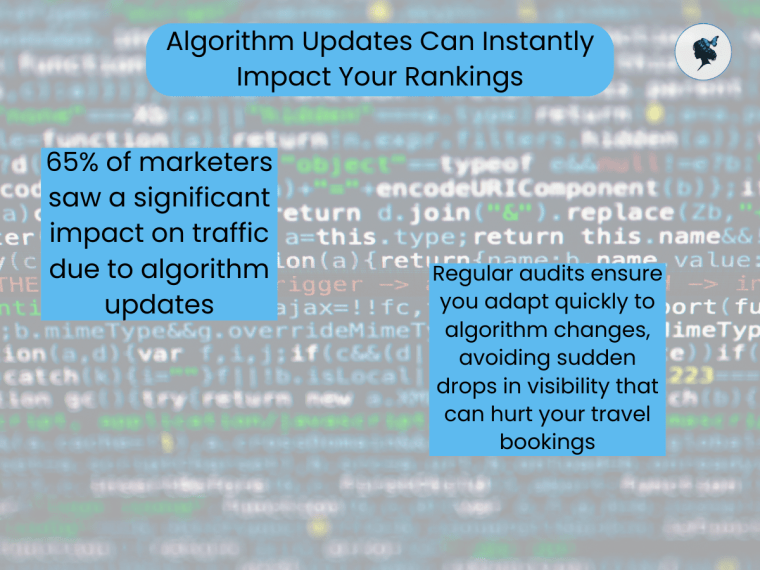
65% of marketers saw a significant impact on traffic due to algorithm updates. This indicates that relying on outdated strategies is risky—especially in fast-moving sectors like travel.
Use Google Search Console to monitor your site’s performance around algorithm updates. Log into your account and navigate to the Performance tab. Within the Pages section, you can pinpoint which URLs gained or lost visibility. Next, head to Indexing > Pages to uncover excluded or error-prone pages that may be affecting rankings. Finally, review the Core Web Vitals and Page Experience reports to assess if user experience metrics like load time or interactivity are dragging down your performance.

A luxury villa rental site in Bali saw a 35% drop in organic traffic after a Google core update emphasized mobile performance. An audit revealed poor mobile responsiveness on landing pages, which was quickly fixed, helping traffic recover within six weeks.

Regular audits ensure you adapt quickly to algorithm changes, avoiding sudden drops in visibility that can hurt your travel bookings.


Keyword trends reflect what your audience is searching for, and these trends shift with seasons, news, and emerging destinations. People search differently throughout the year—”summer getaways” become “winter escapes”. Keyword trends also change as new destinations become hot spots and travel habits evolve.

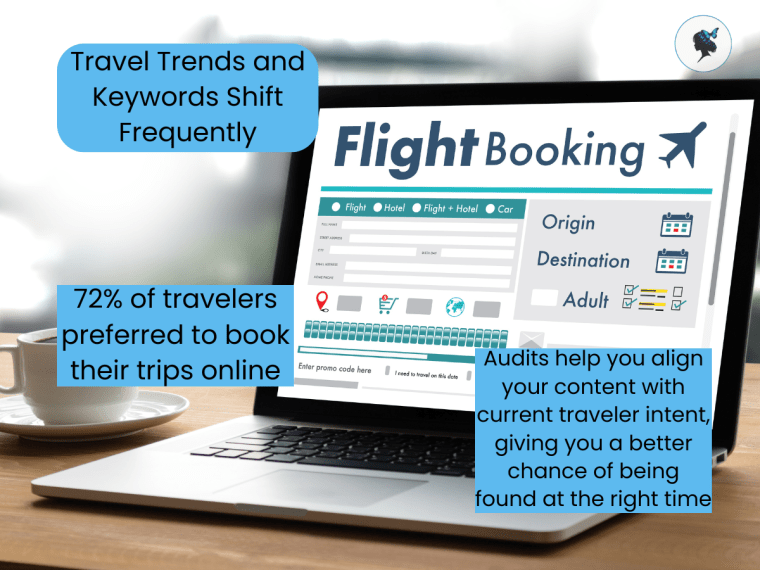
A report from TravelPerk notes that 72% of travelers preferred to book their trips online. This shift towards digital platforms underscores the importance of online presence and searchability for travel businesses.
Use Google Trends to explore current keyword popularity in your region. Type in phrases like “remote travel” or “digital nomad destinations” and compare them across countries or time periods.

During the rise of “workcations,” a remote travel agency adjusted its content strategy based on audit insights to focus on long-stay and coworking-friendly destinations, increasing qualified leads by 40%.

Audits help you align your content with current traveler intent, giving you a better chance of being found at the right time.

You might be interested in Wanderlust Keywords, our keyword research package.


Broken links and improper redirects confuse search engines and create poor user experiences, potentially causing traffic and ranking losses. Travel sites are often updated with new tours, hotels, or itinerary pages. Over time, outdated or deleted pages can lead to broken internal links or redirect chains, which frustrate users and hurt SEO.

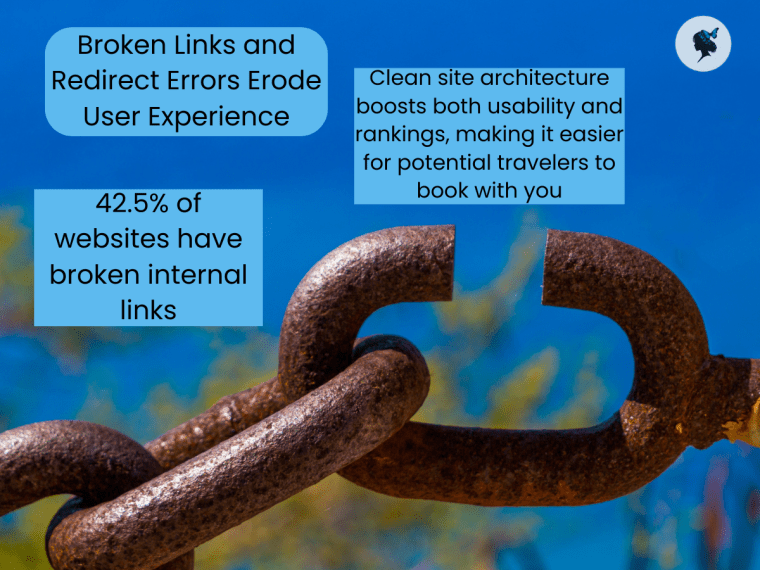
A study by Semrush found that 42.5% of websites have broken internal links, identifying broken pages as one of the top technical SEO issues affecting performance.
Use Screaming Frog SEO Spider (free up to 500 URLs) to crawl your website and locate broken links and redirect chains. Download the report to prioritize high-traffic pages.

A UK-based walking tour operator discovered hundreds of broken links to seasonal pages no longer active. After cleaning up through an audit, bounce rate dropped by 19%.

Clean site architecture boosts both usability and rankings, making it easier for potential travelers to book with you.


4. Mobile Experience Is More Important Than Ever

Mobile usability includes load time, navigation, and content layout—all crucial for SEO and conversions. More than 70% of travel research and over half of bookings happen on mobile devices. An audit uncovers whether your site is mobile-optimized and if not, what’s causing performance issues.

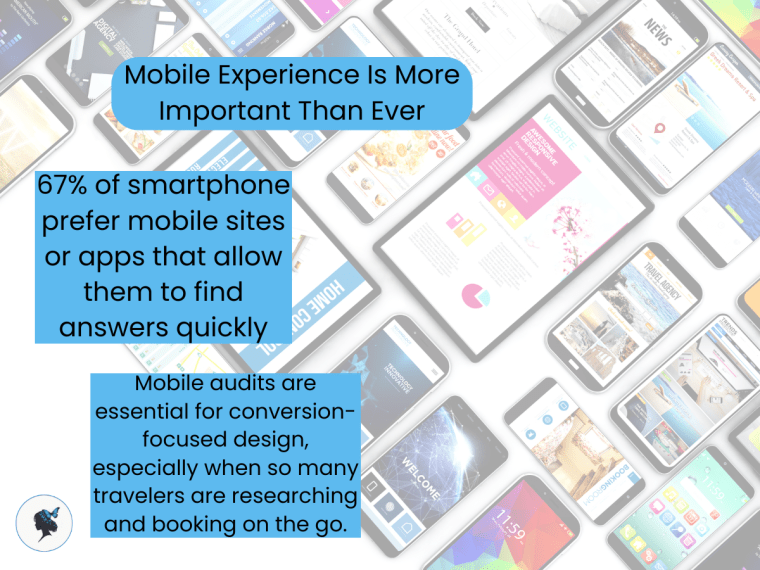
Think with Google suggests that 67% of smartphone users are more likely to purchase from companies whose mobile sites or apps allow them to find answers quickly.
Use Google’s Mobile-Friendly Test to identify mobile issues. Simply enter your URL and get instant feedback on whether your page passes Google’s mobile criteria, along with suggestions for improvement.

A Costa Rican eco-lodge site optimized its mobile layout and reduced load time after audit findings, which led to a 28% increase in mobile bookings in two months.

Mobile audits are essential for conversion-focused design, especially when so many travelers are researching and booking on the go.


5. Page Speed Directly Impacts Conversions

Page speed measures how quickly content loads on your site and directly affects bounce rates and SEO rankings. Speed is a major Google ranking factor and a crucial part of user experience. Slow sites lead to lost opportunities—especially when users are planning their dream vacations.

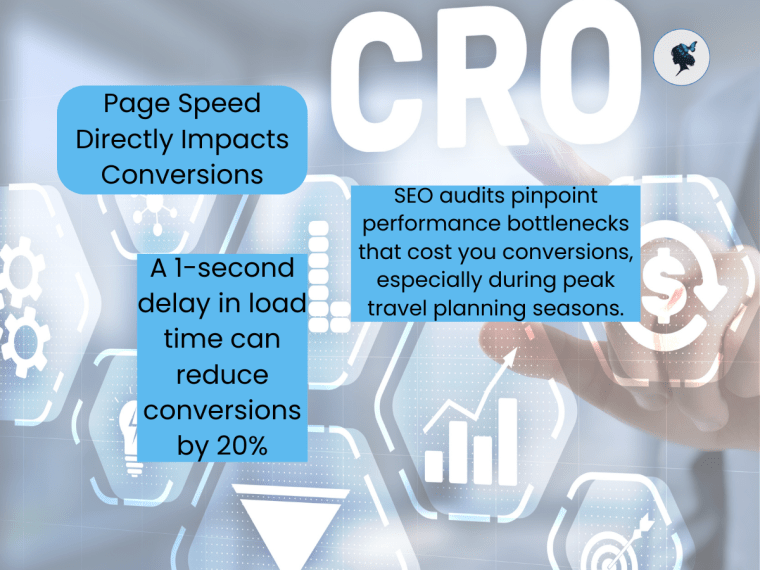
A 1-second delay in load time can reduce conversions by 20%, which could mean thousands in lost revenue for travel sites.
Use Google PageSpeed Insights to identify and fix speed issues. Paste your URL and review suggestions under the “Opportunities” and “Diagnostics” tabs.

A Caribbean cruise site improved its average page load time by 3 seconds, leading to a 15% increase in bookings.

SEO audits pinpoint performance bottlenecks that cost you conversions, especially during peak travel planning seasons.

You might like our post on website speed optimization.


6. Duplicate Content Can Confuse Search Engines

Duplicate content is identical or very similar content that appears on multiple pages, confusing search engines and weakening rankings. Travel sites often copy supplier-provided content or republish the same descriptions across multiple pages.

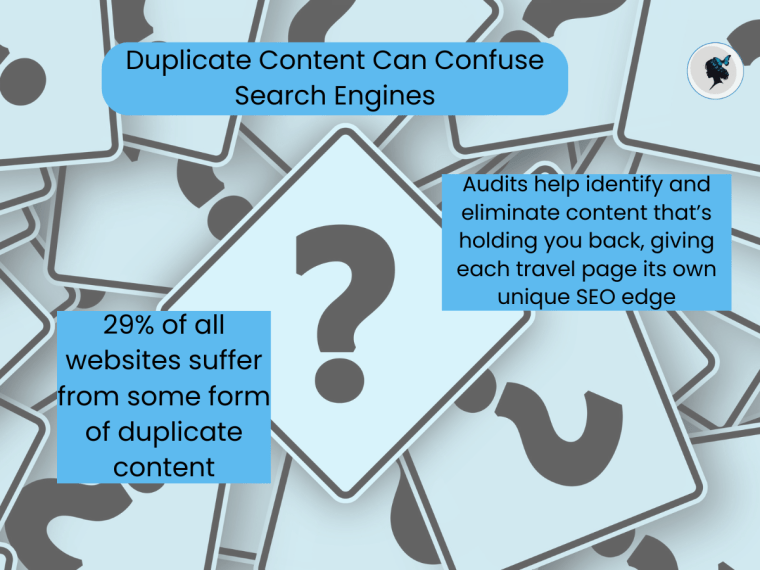
MoldStud suggests that approximately 29% of all websites suffer from some form of duplicate content, which can significantly impact SEO performance.
Use Siteliner to find duplicate content within your domain. Scan your site and export the report to identify pages that need rewriting.

A multi-destination trip planner was penalized for repeating the same itinerary blurbs across city pages. A content audit fixed this with unique, intent-aligned text.

Audits help identify and eliminate content that’s holding you back, giving each travel page its own unique SEO edge.


7. Local SEO Issues Block Visibility in Key Markets

Local SEO refers to optimizing your website to appear in geographically relevant searches, which is vital for location-based travel businesses. Regular audits assess NAP consistency, local citations, and optimization of your Google Business Profile.

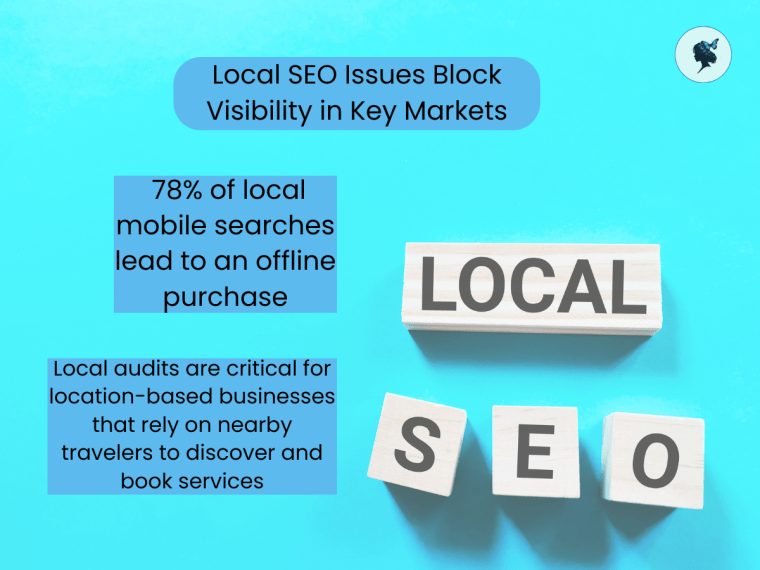
Bright local consumer review survey found that 78% of local mobile searches lead to an offline purchase—crucial for hotels, tours, and attractions.
Use Moz Local (not a free tool) to check and fix local listing issues. Enter your business info and review consistency across directories like Yelp, TripAdvisor, and Google Maps.

A boutique hotel in Lisbon wasn’t ranking for key local searches until an audit uncovered inconsistent address listings across directories. Fixing these led to a 22% rise in local search visibility.

Local audits are critical for location-based businesses that rely on nearby travelers to discover and book services.

Read our post: the ultimate guide to Local SEO.


8. Competitor Strategies Are Always Evolving

Competitor SEO analysis helps you identify what others in your niche are doing well and what opportunities you can capitalize on. Regular audits include competitive analysis to identify gaps, opportunities, and new content ideas that keep you ahead.

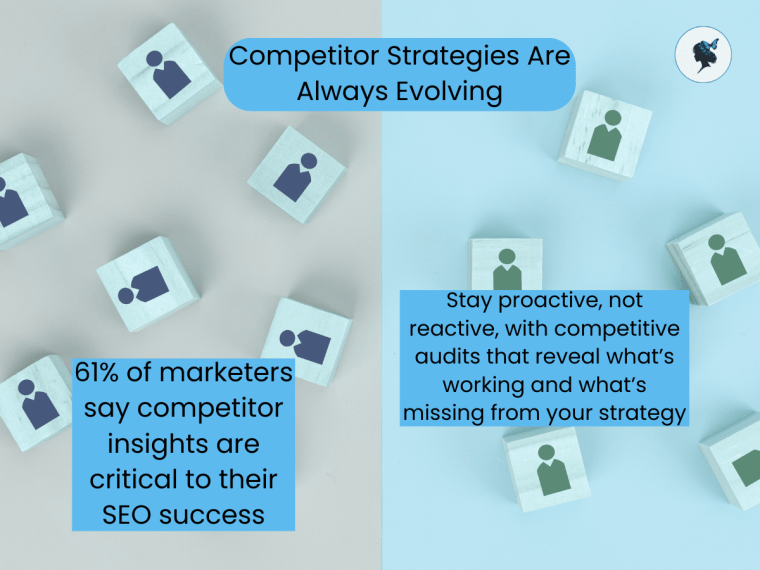
61% of marketers say competitor insights are critical to their SEO success, and in travel, new competitors emerge constantly.
Use Ubersuggest (free version) to track competitors’ keywords and content. Enter a competitor’s domain to see which pages perform best and what keywords they rank for.

A safari tour company discovered that a competitor was outranking them using FAQ schema and user-generated content. After adopting a similar strategy, the company regained its top-3 ranking.

Stay proactive, not reactive, with competitive audits that reveal what’s working and what’s missing from your strategy.

For tips about your competitors, check out our post: competitor identification.


9. Technical SEO Problems Often Go Unnoticed

Technical SEO includes elements like indexing, crawling, site structure, and metadata that support how well your site is understood by search engines. Issues like missing meta tags, improper hreflang implementation, crawl errors, or bloated sitemaps can limit your site’s performance without you realizing it.

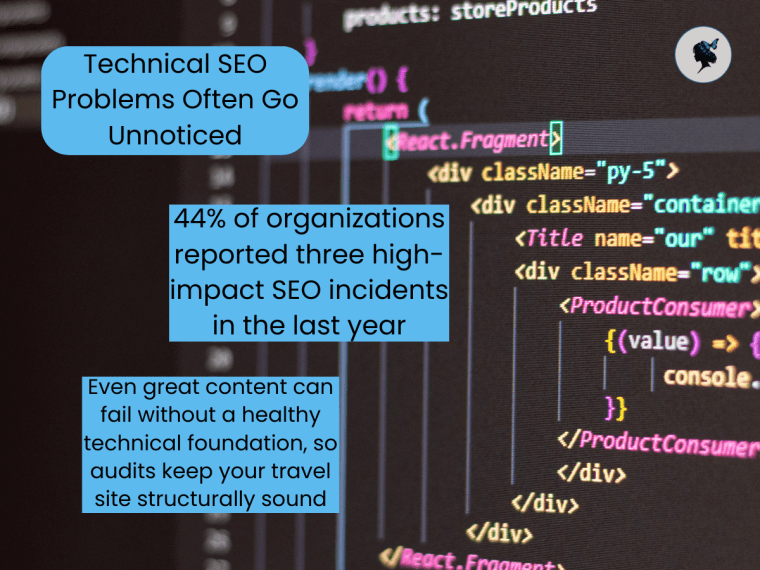
A study by Conductor found that 44% of organizations reported over three high-impact SEO incidents on their most important pages in the last year. These incidents often go unresolved for weeks, potentially costing companies more than $10,000 in revenue.
Use Ahrefs Webmaster Tools (free account) to check for technical SEO issues. The tool flags crawl errors, missing metadata, and URL problems.

A travel blog with strong backlinks struggled to rank. An audit revealed conflicting canonical tags and blocked pages in the robots.txt file. Fixing these technical issues led to a 3x boost in traffic.

Even great content can fail without a healthy technical foundation, so audits keep your travel site structurally sound.


10. Consistent Audits Drive Long-Term Growth

Ongoing SEO evaluation ensures your site keeps up with digital changes, new competition, and evolving user behavior. SEO is not a set-it-and-forget-it tactic. The best travel brands treat it like a system—reviewing performance monthly or quarterly, acting on data, and optimizing iteratively.

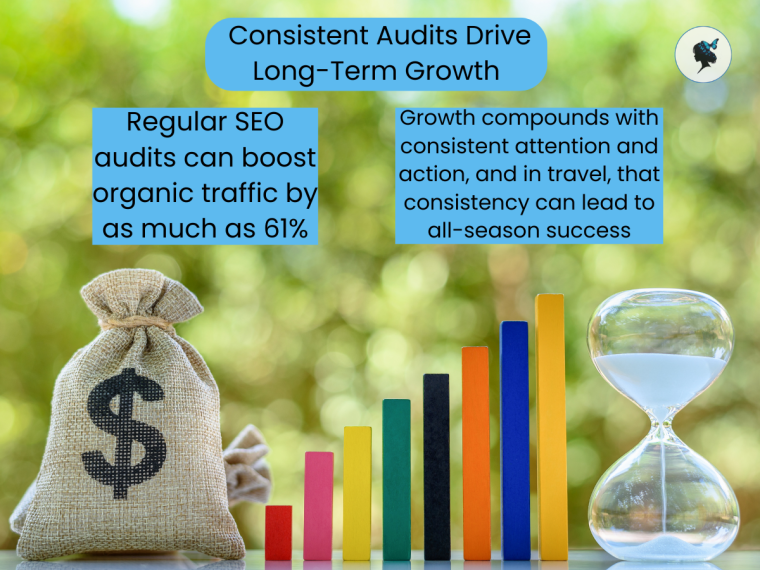
7 Eagles report that regular SEO audits can boost organic traffic by as much as 61%, reduce bounce rates by up to 50%, and increase average time spent on site by 20-40%.
Set up automated monthly reports with Google Looker Studio (formerly Data Studio). Connect your Google Analytics and Search Console to monitor key KPIs.

A regional tourism board committed to quarterly SEO audits. In one year, they improved traffic by 87%, reduced their dependency on paid ads, and saw increased international bookings.

Growth compounds with consistent attention and action, and in travel, that consistency can lead to all-season success.


Conclusion

A travel website isn’t just a digital brochure—it’s your best salesperson, travel agent, and concierge rolled into one. But if it’s not regularly evaluated and optimized, you’re leaving opportunities on the table.

Regular SEO audits give you the insights and agility needed to respond to change, improve performance, and secure your position in a rapidly evolving travel market. From catching technical errors to seizing new keyword trends, audits are your map to sustainable growth.


Want to know how your travel website is really performing?

Wander Women Strategies offers free SEO audits specifically tailored for the travel industry. Our audits go beyond the basics to uncover hidden opportunities that drive bookings and build brand authority.

Request your free SEO audit today and start turning traffic into travelers.

Outreach Strategy Development: A Key SEO Tactic for Travel Companies

▶ Table of Contents
  1. Introduction
  2. What is Outreach Strategy Development?
  3. How to Develop an Effective Outreach Strategy
  4. Why Outreach Strategy Development is Important for Travel Companies
  5. How Wanderlinks Can Help with Outreach Strategy Development

Introduction

In the highly competitive travel industry, gaining visibility and establishing your brand as a trusted authority requires a multifaceted SEO strategy. While technical SEO, keyword research, and on-page optimization are important, outreach strategy development is a game-changer in building sustainable SEO success. Outreach is an essential component of link-building, content promotion, and brand awareness.

In this article, we’ll explore Outreach Strategy Development in detail and explain how travel companies can harness this tactic to build their SEO profile and drive more organic traffic to their websites. We’ll also introduce you to Wanderlinks, our all-in-one package designed to help travel businesses grow through targeted outreach and backlink building.


What is Outreach Strategy Development?

Outreach strategy development is the process of identifying, building, and nurturing relationships with relevant third-party websites, bloggers, influencers, journalists, and other content creators to promote your brand, gain valuable backlinks, and increase your reach. The ultimate goal of an outreach strategy is to create mutually beneficial partnerships that improve your website’s authority and visibility in search engines.

Effective outreach is not just about securing backlinks. It’s about building a reputation as a valuable and credible resource in your niche, sharing your content with the right audiences, and leveraging those relationships to boost your online presence.

The outreach process typically involves:

  • Identifying potential partners: Finding websites, influencers, and blogs relevant to your industry and audience.
  • Crafting compelling pitches: Reaching out to potential partners with personalized messages that emphasize the value of collaborating.
  • Building strong relationships: Engaging with your partners over time to foster trust and open communication.
  • Securing backlinks and mentions: Achieving the ultimate goal of gaining valuable backlinks, social media mentions, or guest post opportunities.

For travel companies, outreach is especially important as it helps establish credibility, fosters collaborations, and drives traffic from reputable sources in the travel industry.


How to Develop an Effective Outreach Strategy

An effective outreach strategy requires careful planning, research, and ongoing efforts. Follow these steps to develop a successful outreach strategy for your travel business:

Step 1: Set Clear Outreach Goals

Before launching an outreach campaign, define your goals. Are you seeking backlinks, guest post opportunities, social media mentions, or media coverage? Your goals will guide your outreach strategy and ensure you’re targeting the right people.

Some common outreach goals for travel companies include:

  • Building backlinks: Links from authoritative websites improve SEO rankings and increase your domain authority.
  • Promoting content: Increase visibility for new blog posts, destination guides, or promotional offers.
  • Partnerships and collaborations: Form partnerships with influencers, bloggers, or local businesses to boost brand exposure.
  • Media mentions: Gain media coverage from travel publications or influencers to establish credibility.

Clearly defined goals ensure that every outreach effort is purposeful and measurable.

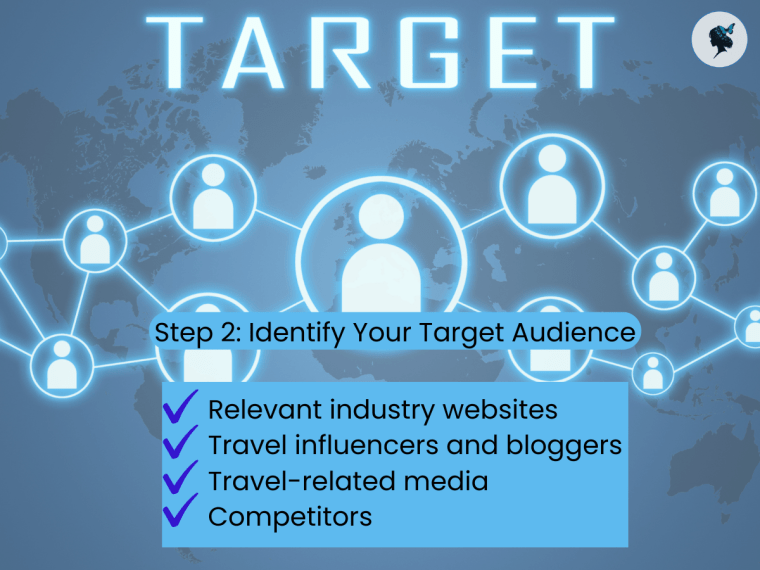
Step 2: Identify Your Target Audience

The success of your outreach campaign depends on targeting the right websites, influencers, and content creators.

To identify the best targets for your outreach, consider the following:

  • Relevant industry websites: Look for travel websites, blogs, or tourism boards that share similar interests or cater to the same audience. For example, if you specialize in eco-tourism, focus on websites that emphasize sustainable travel or eco-friendly destinations.
  • Travel influencers and bloggers: Identify influencers in the travel niche who can amplify your message. You can use platforms like Instagram, X, or travel blogs to find influencers with high engagement rates and a genuine connection to their followers.
  • Travel-related media: Target journalists or writers from prominent travel publications such as Travel + Leisure, Lonely Planet, or National Geographic. Getting media coverage from these outlets can significantly increase your visibility and establish trust with your audience.
  • Competitors: Analyze your competitors’ backlinks to uncover their outreach targets. Use tools like Ahrefs, Semrush, or Moz to discover where your competitors are earning their links, and consider reaching out to the same websites for backlink opportunities.

Step 3: Craft Compelling Outreach Pitches

Once you’ve identified your outreach targets, it’s time to create personalized outreach pitches that will grab their attention. A well-crafted pitch is critical for establishing a connection and building a relationship.

Keep these tips in mind when crafting your outreach emails:

  • Personalize your message: Address the recipient by name and refer to specific content or topics that resonate with them. For example, if you’re reaching out to a travel blogger who recently posted about a destination you also offer tours to, mention that post and explain how your travel company could be a good fit for their audience.
  • Offer value: Be clear about the value you can offer to the recipient. Whether it’s guest blogging, sharing content, or a collaboration, make sure the pitch highlights how both parties will benefit from working together.
  • Be concise and clear: Don’t overwhelm the recipient with too much information. Keep your message concise, highlighting the key points of your outreach, such as the purpose of the collaboration and the benefits involved.
  • Include a call to action (CTA): Invite the recipient to take action, such as setting up a meeting, publishing a guest post, or linking to your content. A clear CTA ensures that the recipient knows exactly what you want from them.

Step 4: Build Relationships Over Time

Outreach is not just a one-time transaction; it’s about building lasting relationships. After your initial outreach, follow up with the recipient and engage with their content regularly.

You can:

  • Engage on social media: Share and comment on their posts, articles, and content to build rapport.
  • Offer value: If you come across content or a resource that would benefit the recipient, don’t hesitate to share it with them.
  • Stay in touch: Periodically check in with your outreach targets, offering new opportunities or content that might interest them. Keep the relationship positive and professional.

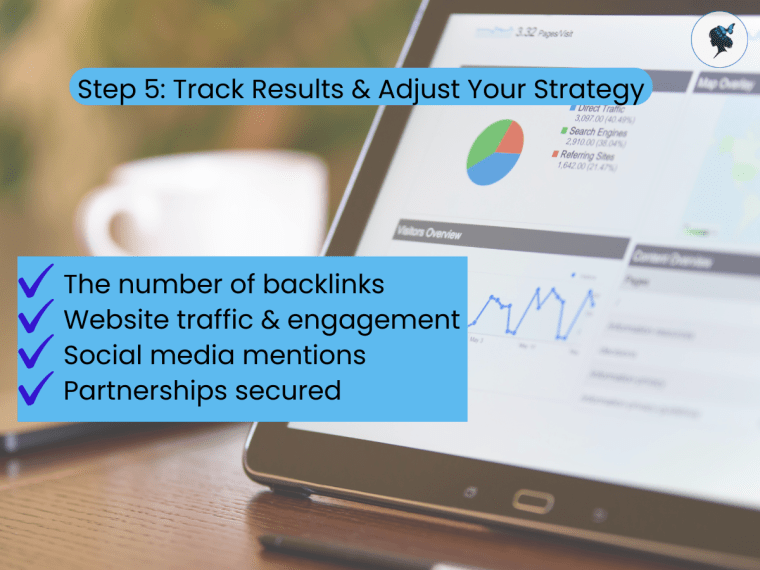
Step 5: Track Results and Adjust Your Strategy

An effective outreach campaign requires ongoing monitoring.

Track the success of your outreach efforts by measuring:

  • The number of backlinks acquired
  • Website traffic and engagement from outreach sources
  • Social media mentions or collaborations
  • The number of partnerships or media mentions secured

If certain tactics or outreach targets are working particularly well, double down on those efforts. If other strategies aren’t yielding results, adjust your approach to refine your outreach plan.


Why Outreach Strategy Development is Important for Travel Companies

An outreach strategy is crucial for travel companies for several reasons:

Improves SEO and Rankings

Backlinks remain one of the most important ranking factors for search engines. By securing backlinks from authoritative websites, travel companies can boost their domain authority and improve their SEO rankings. Outreach allows you to strategically build a backlink profile that will push your website higher in search results.

Increases Website Traffic

Outreach doesn’t just help with SEO; it can also drive direct traffic to your website. By partnering with bloggers, influencers, and media outlets, you increase the chances of your content being shared with their audiences, resulting in more traffic to your site.

Establishes Authority and Trust

Working with trusted websites and influencers helps build your reputation in the travel industry. When reputable sources link to your content or mention your business, it signals to both search engines and users that your website is credible and authoritative.

Expands Brand Awareness

A well-executed outreach campaign can expand your brand’s visibility. Whether through guest blogging, media coverage, or influencer mentions, outreach exposes your brand to new audiences, which can ultimately lead to more conversions and customers.

Fosters Long-term Partnerships

The connections made through outreach can lead to long-term partnerships that benefit your business in various ways. For example, forming relationships with influencers or travel media outlets can lead to ongoing collaboration, content opportunities, and brand advocacy.


At Wander Women Strategies, we specialize in helping travel companies develop and execute effective outreach strategies that drive results. If you want to ensure your backlink profile is clean, effective, and working for you, WanderLinks is the perfect solution for your travel company. Our WanderLinks package offers:

  • Backlink Audit: We complete a thorough backlink audit with actionable recommendations on your broken links.
  • Competitor Backlink Analysis: We identify your competitors, evaluate their backlinks, and provide valuable insight into backlink opportunities.
  • Outreach Strategy Development: We identify 10+ opportunities for guest posting and provide tips on best practices for your outreach strategy.
  • Local Link Building: We provide opportunities for local link building, including local tourism blogs & websites, local business partnerships, and local media.

By leveraging the insights and tools from WanderLinks, your travel company can create a more effective SEO strategy that attracts high-quality backlinks and drives more traffic to your website.

Let us help you harness the power of outreach to boost your SEO, increase website traffic, and grow your travel business. With Wanderlinks, you’ll have the tools and expertise to develop a winning outreach strategy.


Ready to Launch Your Outreach Strategy? Contact us today to get started with Wanderlinks.


Unlocking the Power of Initial Keyword Discovery for Travel Companies


▶ Table of Contents
  1. Introduction
  2. Why Initial Keyword Discovery Matters
  3. Initial Keyword Discovery
  4. Wanderlust Keywords

Introduction

In the competitive landscape of the travel industry, staying ahead of the SEO curve is not just a strategy; it’s a necessity. Whether you’re a boutique tour operator or a global booking platform, discovering high-value keywords is foundational to achieving strong organic search visibility. This blog will walk you through the process of Initial Keyword Discovery and why it matters for travel businesses.


Why Initial Keyword Discovery Matters

Before creating content or optimizing existing pages, it’s critical to understand what your audience is searching for. Keyword discovery enables you to:

  • Identify what drives traffic to your competitors.
  • Understand search intent.
  • Focus on keywords with commercial value.
  • Build a robust SEO strategy rooted in data.

This process is particularly relevant for travel companies, where customer journeys vary from research to booking.


Initial Keyword Discovery

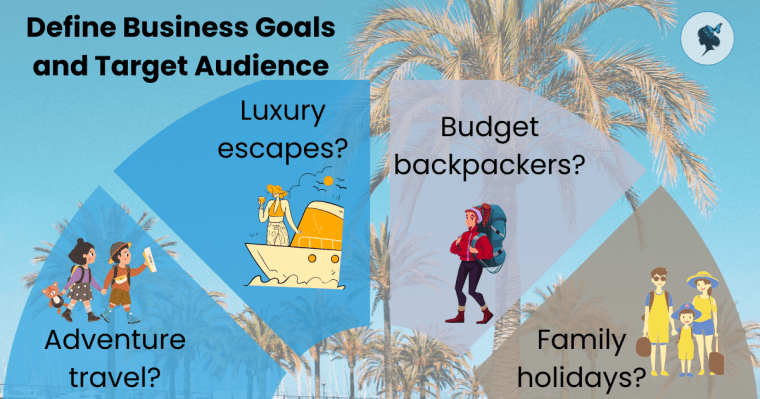
Step 1: Define Business Goals and Target Audience

Start by clarifying your niche within the travel sector:

  • Adventure travel?
  • Luxury escapes?
  • Budget backpackers?
  • Family holidays?

Understanding this helps narrow your keyword research to queries with high intent and relevance.

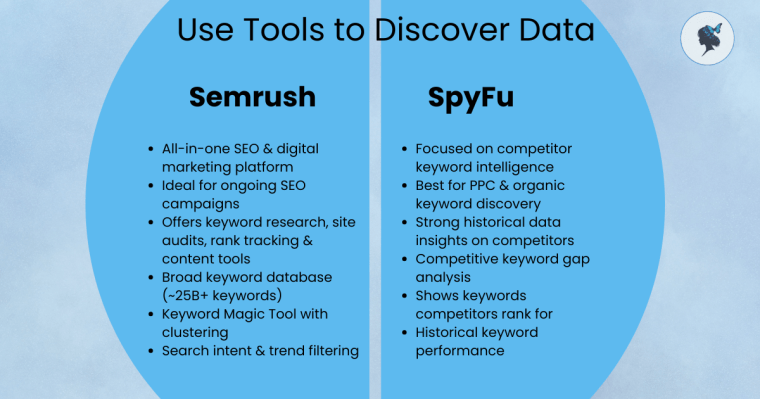
Step 2: Use Tools to Discover Data

Semrush

Understanding and leveraging keyword data is crucial for travel companies aiming to enhance their online visibility and attract more organic traffic. Tools like Semrush provide comprehensive insights into keyword rankings, organic search traffic, and SERP features, enabling businesses to make informed decisions.

Semrush’s Organic Research tool allows travel companies to identify the total number of keywords their website ranks for in Google’s top 100 results. This metric offers a snapshot of the site’s organic search visibility. For instance, a travel website might discover it ranks for over 50,000 keywords, indicating a broad reach across various search queries. Understanding this breadth helps in assessing the site’s authority and identifying areas for content expansion or optimization. By analyzing which keywords are driving traffic, companies can tailor their content strategies to focus on high-performing topics and fill gaps where potential customers are searching.

To learn how to do this, read Semrush’s Manual: Organic Research Positions Report

Monitoring monthly organic traffic provides insights into the effectiveness of SEO efforts and content performance. Semrush estimates the number of visitors arriving at a site through organic search, allowing travel companies to track trends over time. For example, a spike in traffic during a particular month could correlate with seasonal travel interests or successful marketing campaigns. Conversely, a decline might signal the need to update content or address technical SEO issues. Regularly reviewing this data helps businesses stay agile, adapting their strategies to maintain and grow their online presence.

SERP features, such as featured snippets, image packs, and local packs, enhance the visibility of search results beyond traditional listings. Semrush enables travel companies to identify which SERP features their site appears in and how these features impact traffic. Appearing in a featured snippet, for instance, can significantly increase click-through rates by positioning the content at the top of the search results. A study analyzing over 67,000 keywords found that SERP features can significantly influence click-through rates, either enhancing or diminishing them, depending on the feature type and placement. By optimizing content to target specific SERP features, travel companies can improve their chances of capturing user attention and driving more traffic to their sites.

SpyFU

SpyFu is a powerful tool that enables travel companies to identify the keywords driving the most organic traffic to their websites. By analyzing metrics such as keyword rank, search volume, estimated organic traffic, and competition level, businesses can gain valuable insights into their SEO performance. This information helps in understanding which search terms are most effective in attracting potential travelers, allowing for more targeted and efficient marketing strategies.

For travel companies, this data is crucial in a highly competitive digital landscape. Knowing which keywords are performing well allows businesses to optimize their content, focus on high-performing areas, and identify opportunities for growth. For instance, if a particular destination or travel package is attracting significant traffic through specific keywords, companies can create more content around those topics to capitalize on the interest. This targeted approach not only improves search engine rankings but also enhances user engagement and conversion rates.

The importance of keyword research is underscored by industry statistics. According to a study by BrightEdge, 53% of all website traffic comes from organic search, highlighting the critical role of SEO in online visibility. Furthermore, 75% of users never scroll past the first page of search results, emphasizing the need for travel companies to rank highly for relevant keywords. By leveraging tools like SpyFu to analyze and refine their keyword strategies, travel businesses can improve their online presence, attract more potential customers, and ultimately drive bookings and revenue.

Step 3: Discover Current Ranking Keywords

Identifying and leveraging their current top-ranking keywords is essential for travel companies aiming to enhance their online visibility and attract potential travelers. By focusing on high-performing keywords, businesses can tailor their content strategies to meet user intent, improve search engine rankings, and drive organic traffic.

By creating content around these keyword topics—such as blog posts, detailed destination guides, or time-sensitive promotional offers—travel companies can effectively target specific search intents and address the diverse needs of their audience. For example, a blog titled “Top 10 Affordable Beach Vacations for 2025” not only captures search traffic for that exact phrase but also speaks directly to budget-conscious travelers actively planning their trips. Similarly, publishing a comprehensive guide on “Family-Friendly Resorts in the Caribbean” helps position the brand as an authority and resource for family travel, increasing dwell time and user engagement. Promotional content optimized for terms like “Luxury Safari Tours 2025 Deals” can attract high-intent users ready to book. This type of content, when mapped to user queries and supported by keyword research tools, increases the chances of appearing in SERP features like featured snippets or “People Also Ask” sections, further boosting visibility and click-through rates.

The importance of targeting high-ranking keywords is underscored by SEO statistics. According to Backlinko, the top five organic search results on Google account for 67.6% of all clicks. This highlights the critical need for travel businesses to secure top positions in search engine results pages (SERPs) to maximize visibility and traffic. By consistently monitoring keyword performance and adjusting content strategies accordingly, travel companies can maintain a competitive edge in the digital marketplace.

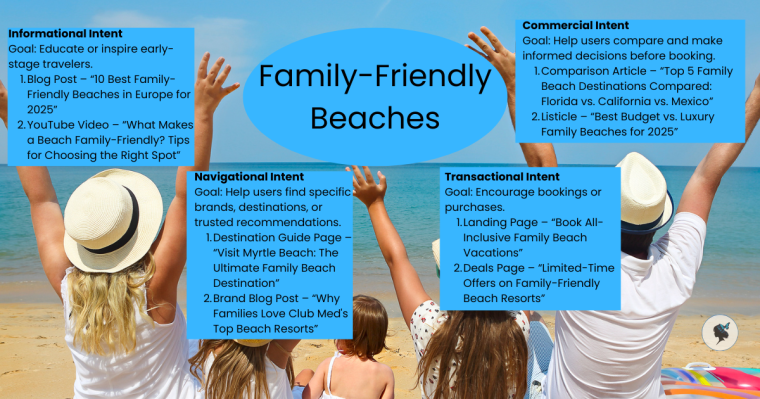
Wander Women Hot Tip: Filter and group keywords by intent: informational, transactional, commercial and navigational.

  • Informational content targets users in the research phase—such as “How to travel solo safely in 2025.”
  • Navigational content helps users find a specific brand or service, such as “XYZ Travel’s Europe Tours.”
  • Transactional content is geared toward users ready to make a booking, like “Book luxury safari tours in Kenya.”
  • Commercial intent sits between informational and transactional—these users are considering their options but haven’t made a decision yet. Content like “Best travel insurance for digital nomads” or “Top-rated tour companies for Costa Rica” caters to this group.

For example, you might be ranking for “family friendly beaches”. Here are some content ideas:

Step 4: Discover Rising Keywords

Identifying and capitalizing on rising keywords is crucial for travel companies aiming to stay ahead in the dynamic digital landscape. Emerging search terms reflect evolving traveler interests and behaviors, offering opportunities to tailor content strategies accordingly. By focusing on these trends, businesses can enhance their online visibility, attract targeted traffic, and ultimately drive bookings.

For travel companies, these rising keywords offer a roadmap to align content strategies with current traveler interests. By creating targeted content—such as blog posts, destination guides, and promotional offers—centered around these terms, businesses can improve their search engine rankings and attract a more engaged audience. For instance, a blog post titled “Top 10 Solo Travel Destinations for 2025” can cater to the increasing number of individuals seeking solo adventures, providing valuable information and positioning the company as a trusted resource.

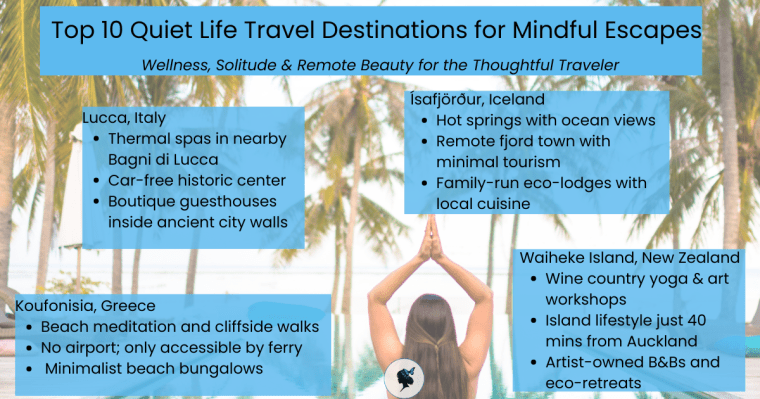
The significance of adapting to these trends is underscored by recent statistics. According to a report by Pinterest, interest in “quiet life travel” has surged, reflecting a broader desire for serene and less crowded destinations. Additionally, the concept of “destination dupes” has gained traction on platforms like TikTok, where travelers share alternatives to popular destinations, influencing travel choices and search behaviors. By staying attuned to these emerging trends and incorporating relevant keywords into their content, travel companies can enhance their online presence, meet evolving traveler needs, and drive sustained growth.

Step 5: Optimize Content

Optimizing existing content based on keyword research is one of the most effective ways for travel companies to increase visibility, traffic, and conversions. Once you’ve identified your top-performing content, map that content against both current and rising keywords.

For instance, if you already have a blog post titled “Top 10 Beaches in Thailand” ranking for “Thailand beach vacations,” and you’ve discovered that “affordable beach vacations” is a rising keyword, you can enhance the post by incorporating affordability tips, travel hacks, or budget-friendly resort recommendations. Updating the title and meta description to include these keywords can also improve click-through rates in the SERPs.

Next, focus on keyword placement within the content itself. Incorporate both high-ranking and trending keywords naturally in the introduction, headers (H2, H3), image alt text, and conclusion. For example, if “eco-friendly travel packages” is trending, and your company offers tours in Costa Rica, update your related page to highlight sustainable features such as local partnerships, carbon offsetting, and green accommodations. Use the keyword in section headers like “Eco-Friendly Tour Options in Costa Rica” and in internal links that guide users to booking or more detailed information. This not only enhances SEO but also aligns your content with users’ current search intent.

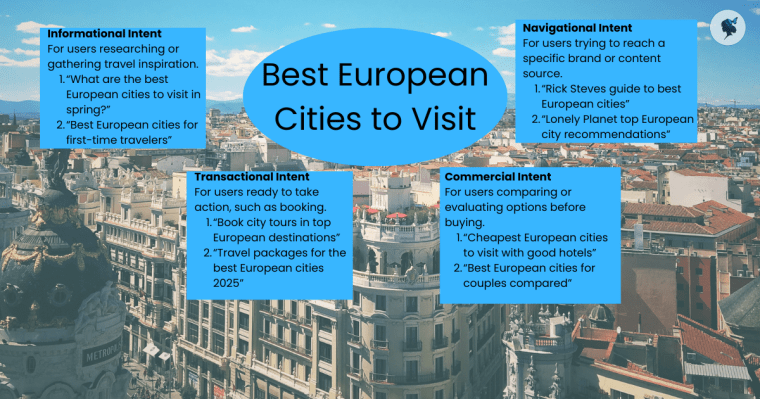
Don’t overlook the importance of content freshness. Search engines prioritize content that’s both relevant and current. Review older content and update travel dates, prices, visa information, and seasonal recommendations. Let’s say you published an article in 2022 on “Best European Cities to Visit.” With 2025 here and “solo travel destinations 2025” trending, revise the article to include sections for solo travelers, add current travel safety tips, and include new keywords like “solo travel-friendly” or “hidden gems for solo adventurers.”

These updates help retain rankings, regain traffic lost to competitors, and serve new audience interests.

Step 6: Create Content

Creating new content based on keyword research is a proactive way for travel companies to capitalize on current search trends and meet emerging customer demands. Once you’ve identified high-opportunity keywords—those with solid search volume, low to medium competition, and relevance to your audience, you can start organizing your content based around these keyword ideas. Building new content around these topics can help you rank early before they become saturated.

When planning new content, segment it by user intent: informational, navigational, transactional, and commercial.

Including all four types ensures you cover the full customer journey, from awareness to decision-making. This intent-based approach not only boosts visibility in search engines but also improves engagement by delivering the right message at the right stage of the buyer’s journey. For example, if “digital nomad visa countries 2025” is trending, you might create an informational blog titled “What is a Digital Nomad Visa?” followed by a commercial guide comparing the top five countries offering them, and finally, a transactional landing page for booking travel packages to those destinations. This layered content structure encourages return visits and nurtures users toward conversion.

Format also matters. Consider content types that match the format most likely to earn clicks in your niche. Listicles, itineraries, travel guides, and comparison posts perform well in the travel industry. A well-structured article titled “Top 10 Quiet Life Travel Destinations for Mindful Escapes” can include sub-sections on wellness activities, remote locations, and accommodation tips—each aligned with keyword insights. Embedding rich media like photos, videos, and interactive maps further enhances engagement and dwell time, both of which contribute positively to SEO performance.

Check out our post: 5 content types for travel websites.

Lastly, make use of SERP features and structured data. Tools like Semrush and SpyFu can tell you if your target keywords commonly trigger “People Also Ask” boxes, featured snippets, or image packs. Incorporate relevant questions as H2 or H3 subheadings in your new content to increase the chance of being selected for those features. For example, if “eco-friendly travel packages” often appears with FAQs, include sections like “What makes a travel package eco-friendly?” or “Are sustainable trips more expensive?” Optimizing for SERP features can greatly increase your click-through rate—even if you aren’t the number one result. In essence, by creating content based on keyword trends, travel companies can capture attention, build trust, and grow traffic in a targeted, measurable way.


Wanderlust Keywords

Now that you understand the importance of initial keyword discovery, it’s time to take action!

The Wanderlust Keywords package is designed to help travel companies like yours discover the most valuable, relevant, and high-converting keywords for your business.

By partnering with us, you’ll receive:

  • Initial Keyword Discovery: Top 5 current keywords, top 5 rising keywords, SERPs features, a free keyword checklist & more.
  • Long-Tail Keyword Identification: 20+ long-tail keywords, divided into search intent
  • Local Keyword Focus: 10-20 local keywords related to your niche, with metrics including search volume and keyword difficulty.
  • Keyword Prioritization and Strategy: current keywords, rising keywords, long-tail keywords, and local keywords are divided into search intent, and ideas for new content is provided.

Don’t let your travel business get lost in the noise of the online world. Get started with Wanderlust Keywords today and unlock the power of SEO to drive more qualified leads and increase your bookings!

Contact us to learn more about how we can help you embark on your journey to SEO success with the Wanderlust Keywords package.

Mastering Long-Tail Keyword Identification for Travel Companies


▶ Table of Contents
  1. What are Long-Tail Keywords?
  2. How to Identify Long-Tail Keywords for Your Travel Business?
  3. Why is Long-Tail Keyword Identification Important for Travel Companies?
  4. Get Started with Wanderlust Keywords

As a travel company, ensuring that your website and content are visible to the right audience is key to driving high-quality traffic and increasing conversions. With the travel industry being incredibly competitive, it’s crucial to adopt a strategic SEO approach that helps you stand out in the digital marketplace. One of the most effective ways to achieve this is by utilizing long-tail keywords—a powerful tool for attracting the right customers and improving your rankings.

In this article, we’ll explore the concept of long-tail keyword identification, why it’s vital for your travel business, and how the Wanderlust Keywords package can help you effectively target these high-value, low-competition keywords. Whether you’re just getting started with SEO or refining your current strategy, understanding and using long-tail keywords can make all the difference in your online visibility.

What are Long-Tail Keywords?

In the world of SEO, long-tail keywords refer to search queries that are longer (usually containing three or more words) and more specific than short-tail keywords. While short-tail keywords (also known as head or seed keywords) tend to be very broad and highly competitive (think: “vacations” or “travel”), long-tail keywords are more niche and target specific search intent.

Example of Long-Tail Keywords:

  • Best family vacation packages in Europe
  • Budget-friendly honeymoon destinations in Bali
  • Affordable beach resorts in Mexico for families
  • Luxury travel experiences for solo travelers in Asia

Long-tail keywords are incredibly valuable because they allow you to target a highly specific audience with a higher likelihood of conversion. People who use long-tail keywords often know exactly what they want, meaning they’re closer to booking a trip or purchasing a service.

Why are Long-Tail Keywords Important?

Long-tail keywords have several advantages that can significantly enhance your travel company’s SEO strategy:

  • Lower competition: Since they are more specific, long-tail keywords are usually less competitive than broad search terms, allowing you to rank more easily.
  • Higher intent: Long-tail keywords reflect deeper user intent. For example, someone searching for “luxury resorts for couples in the Maldives” is more likely to book a trip than someone searching for “vacation spots.”
  • Better conversion rates: Because long-tail keywords focus on very specific needs, users who search for them are often further down the sales funnel, meaning they are more likely to convert.
  • Improved visibility in niche markets: Travel companies with a niche (luxury, eco-tourism, family-friendly, etc.) can leverage long-tail keywords to ensure they’re seen by the right audience.

As you can see, long-tail keywords are not just a trendy SEO technique—they are a strategic asset that can help travel businesses build stronger connections with their target customers.


How to Identify Long-Tail Keywords for Your Travel Business?

Now that we understand what long-tail keywords are and why they’re valuable, the next step is learning how to identify the best long-tail keywords for your travel business. With the right tools and approach, long-tail keyword identification can be straightforward. Here’s a detailed guide on how to get started:

Step 1: Start with Seed Keywords

To kick off the long-tail keyword identification process, begin with seed keywords—the broad terms that are central to your travel business. These might include:

  • Travel packages
  • Luxury hotels
  • Adventure tours
  • Beach vacations
  • Honeymoon destinations

These seed keywords are the foundation of your keyword research. Once you have your seed list, you’ll start expanding it into long-tail variations that match your target audience’s search queries.

Step 2: Use Keyword Research Tools

Next, you’ll want to leverage keyword research tools to help identify long-tail variations of your seed keywords.

These tools can show you search volume, competition level, and related terms. Here are a few great tools to get started:

  • Google Keyword Planner: This free tool allows you to enter your seed keywords and see a variety of related long-tail keywords with data on their search volume and competition.
  • Ahrefs: Ahrefs is one of the most robust tools for keyword research. It shows you the exact phrases people are searching for, along with their ranking difficulty and potential traffic.
  • Semrush: Semrush provides a detailed breakdown of keyword opportunities, including long-tail keyword ideas, competition analysis, and trending keywords.
  • Ubersuggest: This tool is a great beginner-friendly option for discovering long-tail keywords, related keywords, and keyword ideas based on search volume and difficulty.
  • Answer the Public: This tool is great for finding questions and phrases that people are searching for, helping you identify long-tail queries based on user intent.

Using these tools, you can discover long-tail keywords with higher search volume and low competition, ensuring you’re optimizing for keywords that will attract qualified leads.

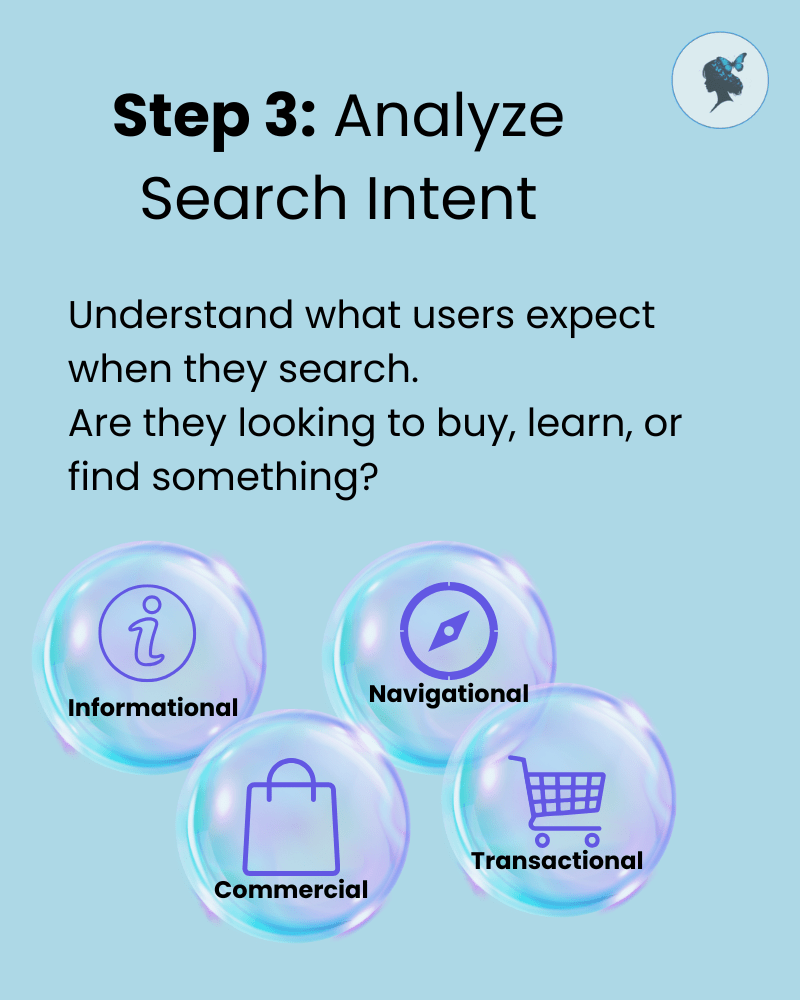
Step 3: Analyze Search Intent

Understanding the intent behind each keyword is crucial. Long-tail keywords are powerful because they reflect specific search intent.

There are typically four types of search intent to consider:

  • Informational: The user is seeking information (e.g., “best time to visit Paris” or “what to pack for a trip to the Alps”).
  • Navigational: The user is searching for a specific site or brand (e.g., “Hawaiian Airlines booking”).
  • Transactional: The user is ready to make a purchase or booking (e.g., “luxury beach resorts in the Maldives for honeymoon”).
  • Commercial Investigation: The user is researching or comparing options before buying. (e.g., “best all-inclusive honeymoon packages” or “top-rated safari tours in Kenya”)

For travel companies, focusing on transactional long-tail keywords (those with a high purchase intent) is especially important, as these keywords are more likely to convert into bookings.

Read more about search intent in our guide.

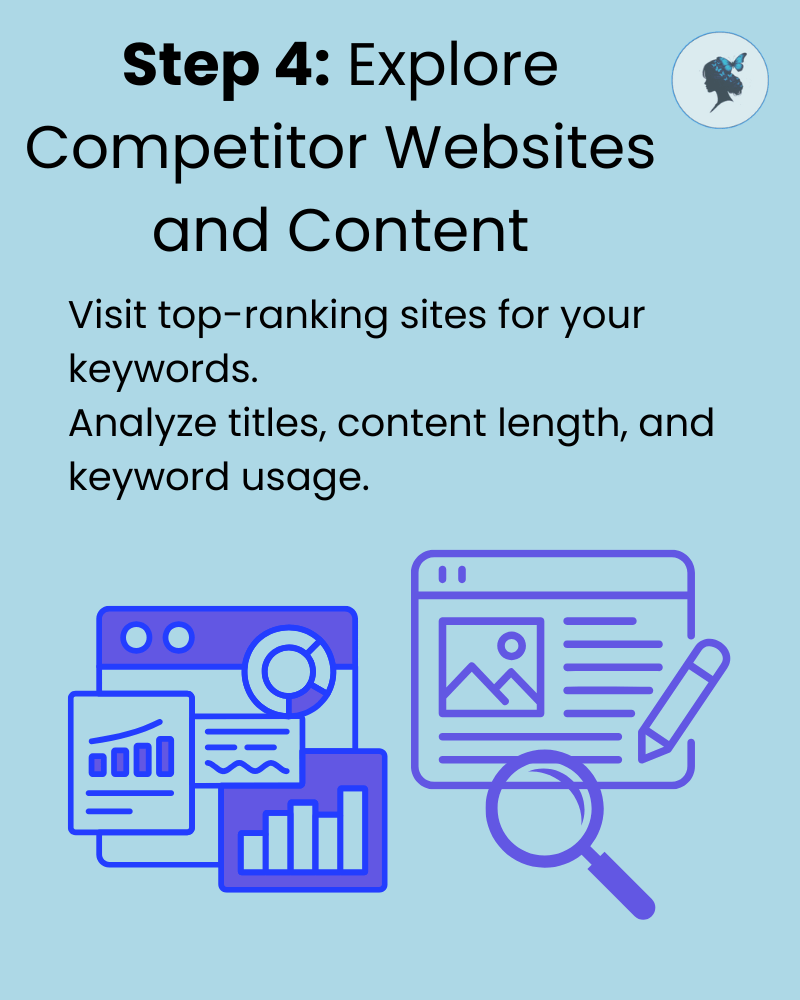
Step 4: Explore Competitor Websites and Content

Another great way to identify valuable long-tail keywords is by analyzing the websites and content of your competitors.

Look at:

  • Their blog posts: What topics are they covering? What keywords are they ranking for?
  • Meta titles and descriptions: Check their metadata to see what keywords they’re targeting.
  • Content gaps: Are there any long-tail keyword opportunities they’re missing that you can capitalize on?

By studying your competitors, you’ll not only identify keyword opportunities but also see how you can differentiate your content strategy to outperform them.

Not sure who your competitors are? Check out our post on competitor identification for travel companies.

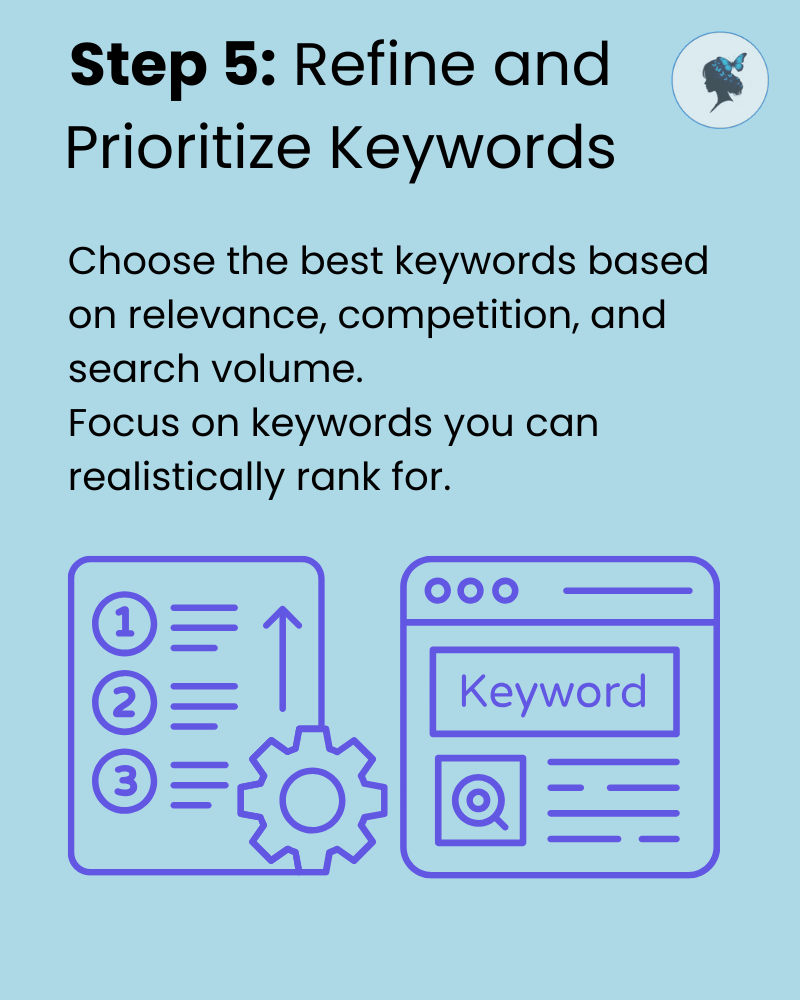
Step 5: Refine and Prioritize Keywords

Once you’ve gathered a list of long-tail keywords, it’s time to refine and prioritize them.

Focus on keywords that:

  • Have a high search intent and align with your business offerings.
  • Offer low competition but significant traffic potential.
  • Match your audience’s journey, whether they are in the research phase or ready to book.

Also, be sure to balance volume with competition. Some long-tail keywords may have high search volume but also be highly competitive, while others may have lower volume but be much easier to rank for.


Why is Long-Tail Keyword Identification Important for Travel Companies?

Long-tail keyword identification is especially crucial for travel companies for several reasons:

1. Capture High-Intent Traffic

Travelers searching for specific, long-tail keywords often know exactly what they want. This means they are typically further down the sales funnel and more likely to convert. By targeting these high-intent keywords, your travel business can attract qualified leads who are actively searching for the experiences and services you offer.

2. Target Niche Markets

The travel industry is vast, and different travelers have unique needs. Whether you specialize in luxury vacations, budget travel, family-friendly trips, or adventure tours, long-tail keywords allow you to speak directly to your niche audience and address their specific concerns and desires.

3. Improve Your SEO Rankings

Long-tail keywords are typically less competitive, making it easier for you to rank for them. Since fewer businesses are targeting long-tail keywords, you’ll have a better chance of reaching the top of search engine results, improving your organic visibility.

4. Provide Content that Resonates with Users

Long-tail keywords often reflect the specific questions and concerns of travelers. By targeting these keywords, you can create content that directly answers those questions and provides real value. This builds trust with your audience, increases engagement, and encourages social sharing.

5. Increase Conversion Rates

Because long-tail keywords are more specific, they help you attract visitors who are more likely to book a service. A traveler searching for “luxury family vacation packages to Italy” is probably further down the decision-making process than someone searching for “vacation spots”.


Get Started with Wanderlust Keywords

If you’re ready to harness the power of long-tail keyword identification for your travel business, the Wanderlust Keywords package is designed to guide you every step of the way. We specialize in helping travel companies uncover high-converting, niche long-tail keywords that will help you:

  • Initial Keyword Discovery: Top 5 Current Keywords: + position in SERPs, Monthly Search Volume, Organic Traffic and Competition of these Keywords & Top 5 Rising Keywords:+ position in SERPs, Monthly Search Volume, Organic Traffic and Competition of these Keywords
  • Long-Tail Keyword Identification: 20+ Long-Tail Keywords, divided into Search Intent: Informational, Navigational, Transactional, and Commercial
  • Local Keyword Focus: 20-30 Local Keywords, including Search Volume and Keyword Difficulty
  • Keyword Prioritization and Strategy: Local Keywords will be prioritized into Search Intent, 15 + Suggestions for new content (blogs, articles…) based on Keyword Research

Our team of SEO experts will conduct in-depth keyword research, and identify opportunities that will set your travel business apart from the competition. Get in touch today to learn how Wanderlust Keywords can help you attract the right customers and achieve SEO success!