Ways AI Can Enhance Travel Content Personalization: Enhanced Customer Support

▶Table of Contents
  1. Why Customer Support Matters in Travel
  2. AI-Powered Systems for 24/7 Customer Support
  3. Real-World Examples: AI in Action
  4. How AI Enhances Travel Personalization Through Customer Support
  5. Benefits of AI-Powered Customer Support
  6. Implementing AI Customer Support in Your Travel Agency
  7. Transforming Travel Experiences with AI Customer Support

Why Customer Support Matters in Travel

In the fast-paced world of travel, customer support isn’t just a department — it’s a critical part of the traveler experience. Studies show that about 60% of travelers say prompt and helpful customer support heavily influences their booking decisions. Delays, unanswered questions, or inconsistent service can quickly erode trust, leading travelers to switch to competitors.

For travel agencies, traditional support systems — staffed agents handling phone calls and emails — often struggle to provide timely, personalized service. The challenge intensifies during peak seasons, international holidays, or unexpected travel disruptions.

This is where Artificial Intelligence (AI) becomes transformative. AI-powered customer support, especially through chatbots and automated messaging, enables travel agencies to deliver personalized, 24/7 assistance, boosting customer satisfaction and engagement while gathering insights that improve marketing and content strategies.

AI-Powered Systems for 24/7 Customer Support

Significance of AI in Customer Support

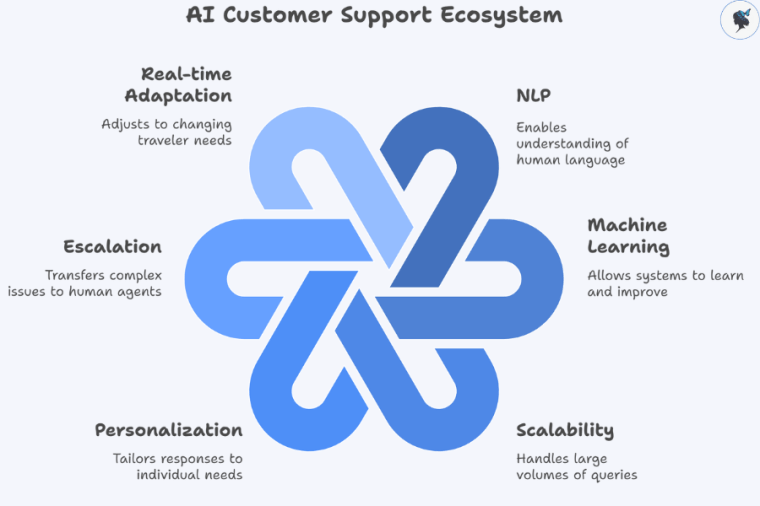
infograph: AI customer support ecosystem
AI customer support ecosystem

AI customer support systems, powered by Natural Language Processing (NLP) and machine learning, are designed to understand and respond to traveler inquiries automatically. These systems can:

  • Handle large volumes of queries simultaneously, eliminating long wait times.
  • Provide responses based on past bookings, travel preferences, and context such as seasonal trends or current flight delays.
  • Escalate complex queries to human agents, while maintaining conversation context to ensure a seamless experience.

By combining automation with personalization, AI creates a support ecosystem that can adapt in real time to each traveler’s needs.

Benefits for Travel Agencies

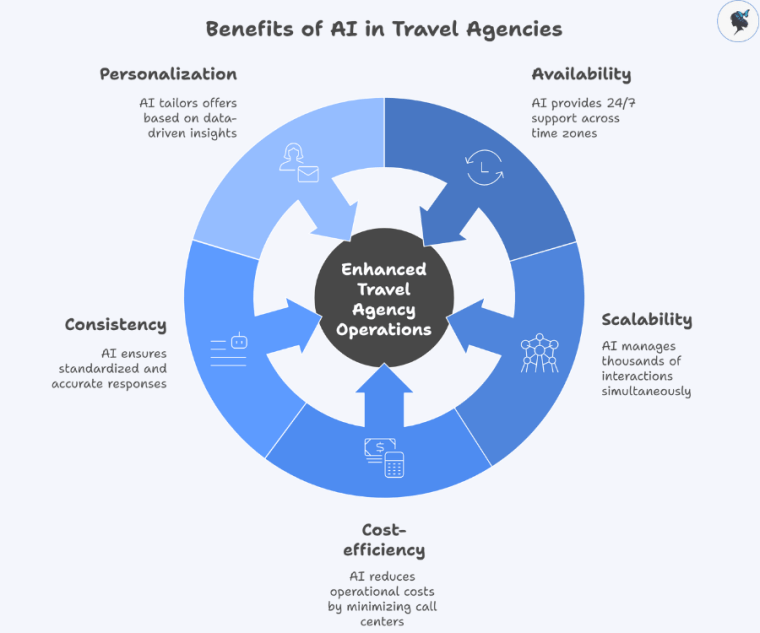
infograph: Benefits of AI in travel agencies
Benefits of AI in travel agencies
  1. Availability: AI chatbots and automated systems provide instant support, anytime and anywhere — across multiple time zones.
  2. Scalability: A single AI system can manage thousands of simultaneous interactions, a feat impossible for human teams alone.
  3. Cost-efficiency: Reduces operational costs by minimizing the need for extensive call centers.
  4. Consistency: AI ensures standardized, accurate, and on-brand responses across all communication channels.
  5. Data-driven personalization: Every interaction gathers valuable data, helping agencies tailor future offers, email campaigns, and content recommendations.

These advantages make AI not only a customer service tool but also a strategic driver for content personalization, guiding travelers with suggestions, insights, and promotions that reflect their unique preferences.

Read our post: the importance of personalization.


Real-World Examples: AI in Action

Expedia

Expedia is at the forefront of using AI to enhance customer support. Their AI chatbots help travelers with:

  • Booking modifications
  • Refund requests
  • FAQs about destinations, travel policies, and promotions

The Expedia chatbot also analyzes traveler interactions to provide personalized recommendations, suggesting hotels, flights, or activities based on past searches and preferences. This not only improves the traveler experience but also increases conversion rates.


Booking.com

Booking.com uses AI-powered support to handle millions of queries globally across its website, app, and messaging platforms. Key features include:

  • Instant responses for common inquiries like reservation changes, payment issues, and local travel tips.
  • Learning from interactions, refining recommendations for future personalized communications.
  • Multi-language support, ensuring travelers worldwide receive accurate, contextually appropriate assistance.

This approach reduces wait times, improves booking satisfaction, and builds trust — critical for retaining repeat travelers.


Lessons for Travel Agencies

Travel agencies can adopt AI support gradually:

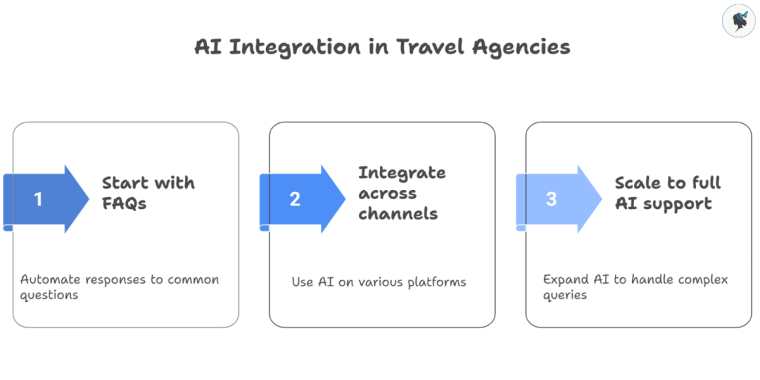
infograph: AI integration in travel agencies
AI integration in travel agencies
  1. Start with FAQs: Automate responses to common questions about bookings, destinations, or policies.
  2. Integrate across channels: Use AI on your website, mobile app, and messaging platforms like WhatsApp or Facebook Messenger.
  3. Scale to full AI-driven 24/7 support: Once successful, expand to handle complex queries and provide real-time, personalized recommendations.

Even small agencies can leverage AI to match the responsiveness of global platforms, making them more competitive and customer-centric.


How AI Enhances Travel Personalization Through Customer Support

AI-powered support doesn’t just respond — it personalizes the travel experience. Here’s how:

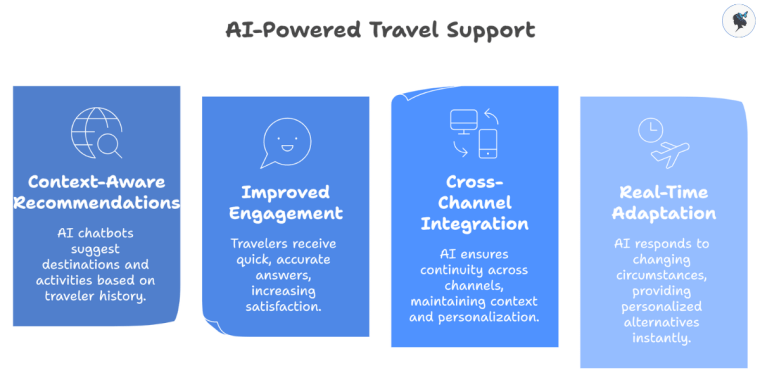
infograph: AI-Powered travel support
AI-Powered travel support

Context-Aware Recommendations

  • AI chatbots can suggest destinations, activities, and deals based on traveler history and preferences.
  • Example: A traveler who previously booked a beach holiday may receive a message recommending a tropical getaway during peak season, with suggestions for family-friendly accommodations.

Improved Engagement

  • Travelers receive quick, accurate answers, increasing satisfaction and encouraging further interaction.
  • AI can also send proactive messages, such as reminders about upcoming trips, check-in notifications, or local event suggestions.

Cross-Channel Integration

  • AI ensures continuity across channels. Whether a traveler interacts via mobile app, website, or messaging platform, the system maintains context and personalization, avoiding repeated questions or confusion.

Real-Time Adaptation

  • AI can respond to changing circumstances — flight delays, cancellations, or last-minute deals — providing personalized alternatives instantly.
  • Example: “Your flight to Rome has been delayed. Here’s a suggested activity to enjoy while you wait, based on your past preferences.”

Benefits of AI-Powered Customer Support

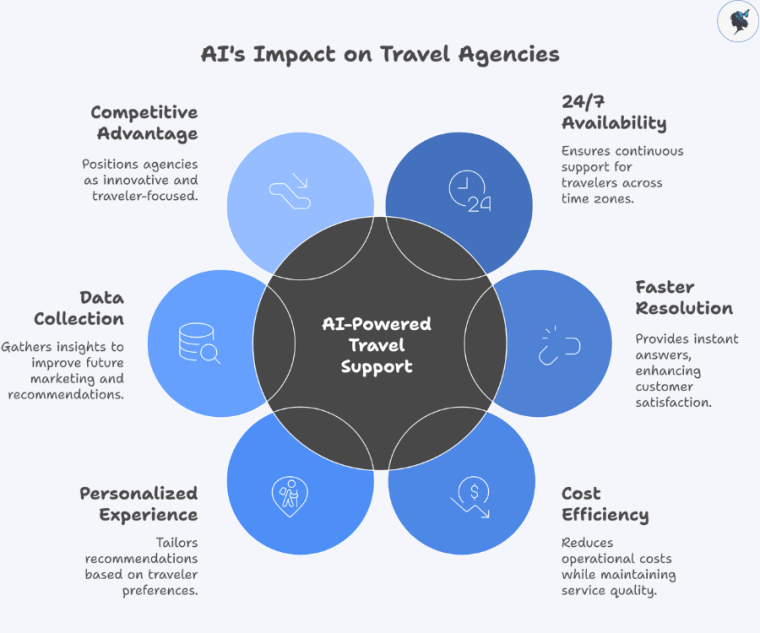
infograph: AI's impact on travel agencies
AI’s impact on travel agencies

24/7 Availability

AI chatbots provide round-the-clock support, critical for international travelers across multiple time zones.

Faster Resolution

Instant answers reduce frustration, prevent churn, and increase trust in your agency.

Cost Efficiency

AI reduces the need for large customer support teams while maintaining high-quality service.

Personalized Traveler Experience

AI leverages past bookings, preferences, and interactions to tailor recommendations and support messages.

Data Collection and Insights

Each interaction generates data, informing future email campaigns, website content, and destination recommendations.

Competitive Advantage

Travel agencies implementing AI support can match the responsiveness and personalization capabilities of major players like Expedia and Booking.com, positioning themselves as innovative and traveler-focused.


Implementing AI Customer Support in Your Travel Agency

infograph: Implementing AI customer support
Implementing AI customer support

Identify Common Queries

  • Audit your current support requests to determine which questions are repetitive or high-volume.
  • Examples: booking changes, cancellation policies, visa requirements, hotel info.

Choose the Right AI Tool

  • Consider AI platforms like:
  • Ensure the tool integrates with your CRM and booking systems to provide context-aware, personalized responses.

Start Small and Scale

  • Begin with FAQ automation.
  • Integrate chatbots into your website and app.
  • Expand to multi-channel support and real-time personalization as you gather data.

Train and Optimize

  • Regularly feed AI with updated content: policies, destinations, promotions.
  • Monitor performance metrics: response accuracy, engagement, conversion rates, traveler satisfaction.
  • Refine AI models based on feedback and changing traveler behavior.

Transforming Travel Experiences with AI Customer Support

AI-powered customer support is more than a tool — it’s a strategic asset for travel agencies seeking to enhance personalization. By combining 24/7 availability, instant resolution, and data-driven personalization, AI systems improve traveler satisfaction, engagement, and loyalty.

Travel agencies should start exploring AI-driven chatbots and automated support systems today. Begin by automating FAQs, integrate across multiple channels, and progressively implement personalized recommendations to meet traveler expectations and gain a competitive edge.

Need help? Contact us today!


Ways AI Can Enhance Travel Content Personalization: AI-Driven Email Personalization

▶ Table of Contents
  1. Introduction
  2. Understanding AI in Travel
  3. AI-Driven Email Personalization: The Future of Targeted Travel Campaigns
  4. Case Study: BrazeAI Decisioning Studio — AI-Powered Optimization for Personalized Engagement
  5. Benefits of AI-Personalized Emails for Travel Agencies
  6. Implementation Strategies: How Travel Agencies Can Adopt AI-Driven Email Personalization
  7. Conclusion

Introduction

In today’s travel industry, personalization isn’t a “nice-to-have” — it’s an expectation. Modern travelers expect offers, content and communications that reflect their interests, previous trips, budget, and style. For travel agencies, this shift means moving beyond generic email blasts or one-size-fits-all newsletter templates.
That’s where artificial intelligence (AI) steps in. By analysing user behaviour, past bookings and contextual data, AI can transform how travel agencies craft and deliver highly personalized travel content — especially via email campaigns.
In this post, we’ll explore how AI works in the travel space, dig into how it drives email personalization, examine a leading case study, outline the clear benefits for travel agencies, and provide actionable implementation steps. If you’re aiming to boost engagement, conversion and customer loyalty through smarter email marketing — this is for you.


Understanding AI in Travel

What is AI?

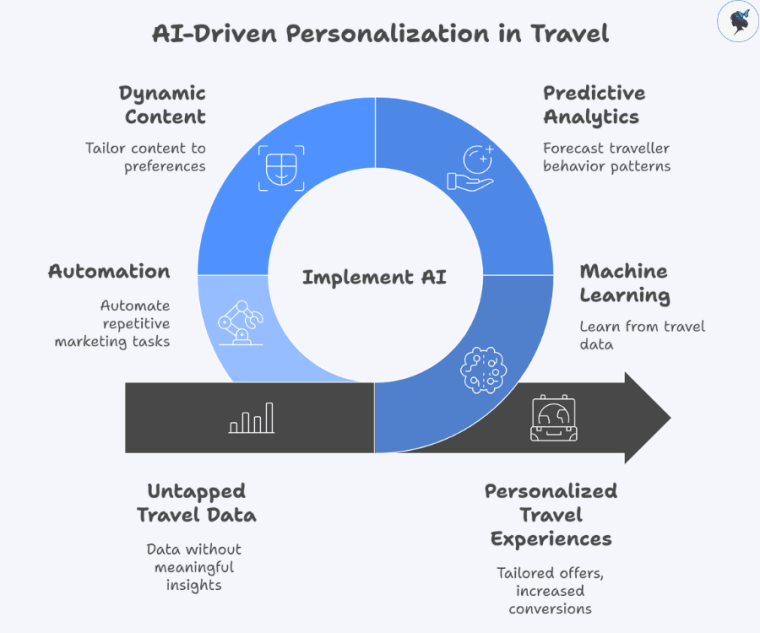
Artificial Intelligence (AI) refers broadly to computer systems that can perform tasks typically requiring human intelligence: learning from data, recognising patterns, making predictions, and sometimes generating content. Within travel marketing, AI often looks like machine-learning models, predictive analytics, dynamic content generation and automation of repetitive tasks.

Infograph: AI-driven personalization in travel
AI-driven personalization in travel

Relevance of AI in the Travel Industry

The travel industry is awash with data: traveller profiles, booking histories, preferences, search queries, seasonal trends and more. But gathering data isn’t enough — the real value comes from turning that data into meaningful insights and tailored experiences.
According to research, the market for AI-driven travel experience personalization was valued at around USD 3.61 billion in 2024, with a projected CAGR of 22.3% from 2025-2032. Furthermore, AI-driven personalisation in tourism marketing has been shown to deliver conversion increases of up to 20-25%.
This means for travel agencies: AI isn’t futuristic—it’s already reshaping how travellers engage, how offers convert, and how content must be crafted.


AI-Driven Email Personalization: The Future of Targeted Travel Campaigns

The Role of AI in Email Marketing

Email remains one of the most effective channels for travel agencies: you own the list, you control the message, you can guide travellers from email → landing page → booking. But generic blasts no longer cut it. According to a 2024 study, personalised emails delivered 6× more transactions than non-personalised ones.
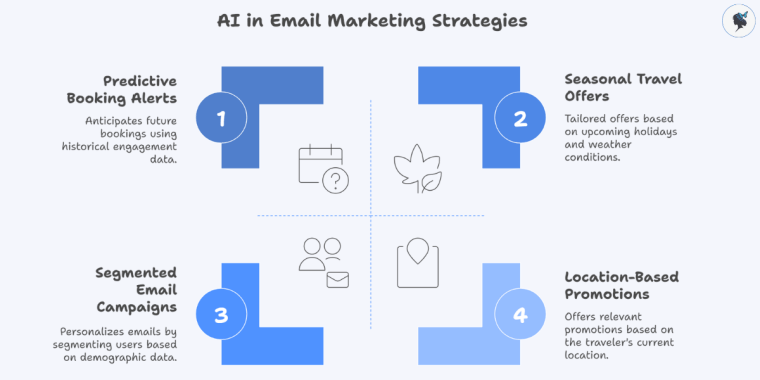
Here’s how AI upgrades email marketing for travel agencies:

Infograph: Ai in email marketing strategies
Ai in email marketing strategies
  • Behavioural analysis: AI examines how travellers have previously engaged — which destinations they viewed, which trip types they booked, what emails they clicked, what content they ignored.
  • Demographic & profile data: Age, travel frequency, solo vs family, preferred style (luxury, budget, adventure) feed into segmenting and personalising offers.
  • Contextual data: Seasonality, upcoming holidays, weather, location, time of day — AI uses this to send more timely and relevant messages (for example: “City break escapes for early Autumn” rather than generic “Summer deals”).
  • Predictive modelling: AI anticipates when a traveller is poised to book again — and sends the right message at the right time.
  • Dynamic content generation: Email subject lines, body copy, images and CTA buttons can all be tailored per recipient, improving relevance and engagement.

More about managing seasonal content here.

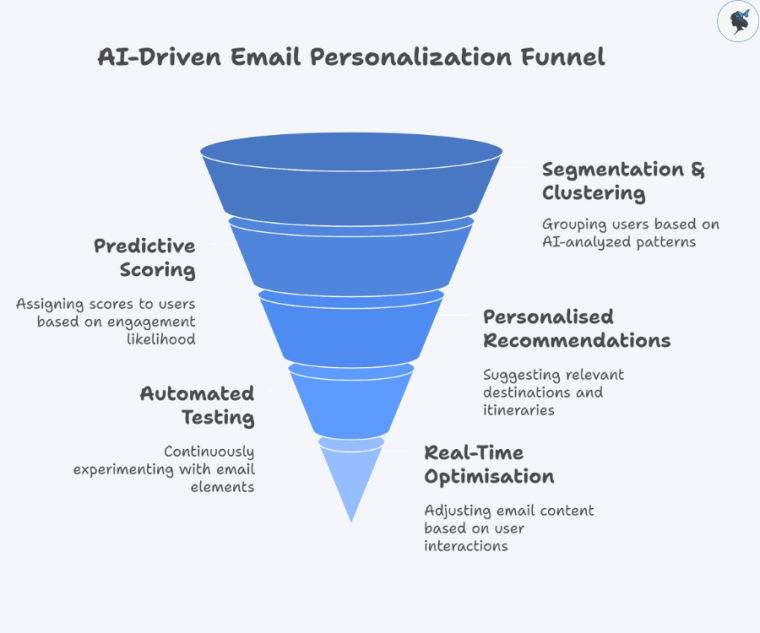
Key AI Techniques Used in Email Personalization

Infograph: Ai-driven email personalization funnel
Ai-driven email personalization funnel
  • Segmentation & clustering: Rather than manual segments (“families”, “solo travellers”), AI creates ever-changing clusters based on behaviour, intent and patterns.
  • Predictive scoring: Assigns scores to each user (likelihood to engage, likelihood to book), enabling prioritised targeting.
  • Personalised recommendations: Based on past behaviour and preferences, the AI suggests destinations or itineraries the traveller is most likely to respond to.
  • Automated A/B and multivariate testing: AI continuously experiments with subject lines, send times, visuals, copy, and learns which variant performs best — automatically.
  • Real-time optimisation: If a traveller clicks on a city-break email and visits your site, the next email can adjust its content accordingly (e.g., offering hotel options in that city).

More about A/B testing here.

Why It Matters for Travel Content

For travel agencies, lever­aging AI in email campaigns means the difference between “Here are 100 generic trip deals” and “Here’s a hand-picked 5-day itinerary in Lisbon that matches your food-lover profile, budget and family size”. The latter builds trust, improves conversion, and drives up lifetime value.


Case Study: BrazeAI Decisioning Studio — AI-Powered Optimization for Personalized Engagement

Overview of BrazeAI Decisioning Studio

BrazeAI Decisioning Studio is an AI marketing automation platform that specialises in self-learning personalization for email and other channels. They replace traditional A/B testing with machine-learning models that continuously optimise each offer. Their clients span hospitality, travel, retail and other industries.

How it Works

  • The AI analyses individual-level data: past transactions, engagement metrics, preference data.
  • It identifies which offer type (discount vs upgraded package vs loyalty reward) appeals to which user.
  • It picks the best send time, channel (email, push, SMS) and subject line for each user.
  • It adapts over time — learning what works for each segment and improving campaign performance.

Application in the Travel Industry

Imagine a travel agency uses BrazeAI Decisioning Studio:

  • They pull data on who has booked adventure trips versus beach holidays versus city breaks.
  • The AI segments newsletter recipients by these profiles.
  • For the “adventure seekers” segment: an email goes out with a subject line like “Ready for your next adrenaline rush? See our Peru trekking deals”, sent on Wednesday morning when this segment historically opens most.
  • For “family beach holiday” segment: an email offers early-bird booking for summer escapes, subject line “Family summer fun: 3 nights free if you book by June!”.
  • The results: higher open rates, higher click-throughs, stronger conversions. Travel agencies report boosted engagement and improved ROI thanks to AI-personalized offers.

Why This Matters

  • Shows real use of AI in automating what was previously manual and guesswork-driven.
  • Demonstrates how email content becomes “smart” — personalised and adaptive, rather than one-size-fits-all.
  • Travel agencies gain a strategic asset: targeted messaging based on data and AI insights, not just gut feel.

Benefits of AI-Personalized Emails for Travel Agencies

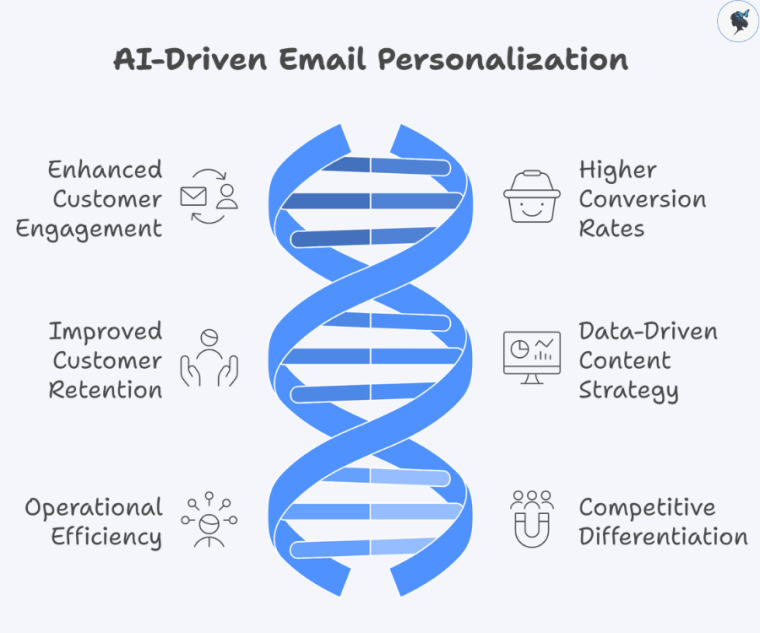
Let’s break down the advantages your agency can expect when you adopt AI-driven email personalization.

infograph: Ai-driven email personalization
Ai-driven email personalization
  • Enhanced Customer Engagement
    Personalized emails resonate more. Data shows personalised campaigns see 29% higher open rates and 42% higher conversions than generic ones.
  • Higher Conversion Rates
    By sending the right offer at the right time to the right person, you reduce friction and increase booking probability.
  • Improved Customer Retention
    Personalization fosters loyalty — travellers feel recognised and valued. Post-trip follow-ups, tailored up-sells and relevant offers drive repeat bookings.
  • Data-Driven Content Strategy
    Email AI tools generate insights about what travellers are responding to: destinations, trip types, content formats. This shapes blog topics, landing pages and future campaigns.
  • Operational Efficiency
    Automation means less manual segmentation, fewer generic blasts, and more time for creative strategy and high-value client interactions.
  • Competitive Differentiation
    Agencies embracing AI-driven personalization position themselves as tech-forward, customer-centric, and likely ahead of competitors still doing mass newsletters.

More about using AI in personalized itineraries here.


Implementation Strategies: How Travel Agencies Can Adopt AI-Driven Email Personalization

Here’s a practical step-by-step roadmap to help your travel agency get started.

infograph: AI email personalization implementation
AI email personalization implementation

Step 1: Audit and Consolidate Your Data

  • Gather data from your CRM, booking system, website analytics, email engagement history.
  • Ensure you have permissions, data hygiene and structure in place (GDPR compliance if operating in EU).
  • Identify key traveler-attributes you want to leverage: destination preferences, trip type, budget, companion type (solo, family, couple), past email engagement.

More about leveraging data here.

Step 2: Choose the Right AI Email Personalization Platform

Look for tools that integrate with your existing stack, support dynamic content, predictive modelling and automated optimisation. A few examples:

  • BrazeAI Decisioning Studio (for automated offer testing & personalization)
  • Mailchimp (offers AI features for subject lines and send time optimisation)
  • HubSpot (Marketing Hub with AI email personalization)

Wander Women Hot Tip: Ensure the tool supports your scale, data privacy needs and travel-specific requirements.

Step 3: Develop Dynamic Content Assets

  • Build a library of destination content, trip types, visuals, itineraries and offers.
  • Ensure flexible modules in your emails: dynamic placeholders for destination, budget tier, traveller segment.
  • Create copy templates tuned for traveller personas (family, solo adventure, luxury couple, etc.).
  • Use the AI platform to pull these modules and assemble tailored emails per recipient.

Step 4: Segment & Test — Start Small, Scale Fast

  • Pick one segment to start (e.g., “frequent travellers who booked city breaks last two years”).
  • Send control email (generic offer) and AI-personalised email side-by-side. Measure open, click and conversion rates.
  • Gradually expand to other segments as you learn what works.
  • Use AI’s automated testing to refine subject lines, send times and content blocks.

Step 5: Integrate with Your Broader Marketing Ecosystem

  • Synchronise email personalization with landing pages: the same traveller who clicks “family beach holiday” should land on a page with tailored content.
  • Integrate with your social media retargeting and chatbot efforts so the message is consistent across channels.
  • Use email insights to inform blog content: “Top 5 beach locations this segment clicked on” → blog post with tailored content for that audience.

Step 6: Monitor, Analyse & Optimize

  • Track KPIs: open rate, click-through rate, conversion rate (bookings from email), engagement depth, unsubscribe rate.
  • Use AI platform reports to identify what travel segments perform best and what offers resonate.
  • Iterate content: update assets, refresh visuals, adjust segments, refine timing.
  • Ensure data privacy and compliance: travellers may be increasingly sensitive to how their data is used. Maintain transparency.

Conclusion

In a travel world where consumers expect tailored experiences and instant, relevant communications, AI-driven email personalization offers a major leap forward. By leveraging traveller behaviour, preferences and contextual data, travel agencies can transform their email campaigns from “just another deal” into meaningful, customised journeys that resonate.
Platforms like OfferFit demonstrate how AI can power smarter segmentation, offer optimisation, dynamic content and clearer ROI. The benefits are clear: higher engagement, improved conversions, stronger loyalty, deeper content insights and operational efficiency.
If you’re reading this and wondering “Where do we start?” — here’s your prompt: begin with your data, pick an AI tool, build dynamic content templates, choose one test segment and run a personalised campaign. Measure the results. Then scale.
Personalisation is no longer optional — it’s expected. And with AI, your agency can deliver it at scale. Embrace AI for your travel-email strategy and watch your content, engagement and bookings soar.

Need help with your AI email strategy? Contact us today!

The Role of Natural Language Processing (NLP) for Chatbots

▶ Table of Contents
  1. Introduction
  2. Understanding NLP: The Language Engine Behind AI Chatbots
  3. How AI-Powered Chatbots Use NLP to Enhance Customer Interactions
  4. Benefits of Using Chatbots for Personalized Travel Advice
  5. Real-World Example: GuideGeek’s AI Chatbot for Personalized Travel Assistance
  6. How Travel Agencies Can Integrate AI Chatbots into Their Strategy
  7. Conclusion

Introduction

In today’s travel landscape, travellers expect more than generic replies and static FAQs. They want personalised, immediate responses when planning their trips — from choosing destinations to exploring local experiences. For travel agencies, this means evolving from standard web forms and email interactions to rich conversational experiences that feel tailored, responsive and intelligent.
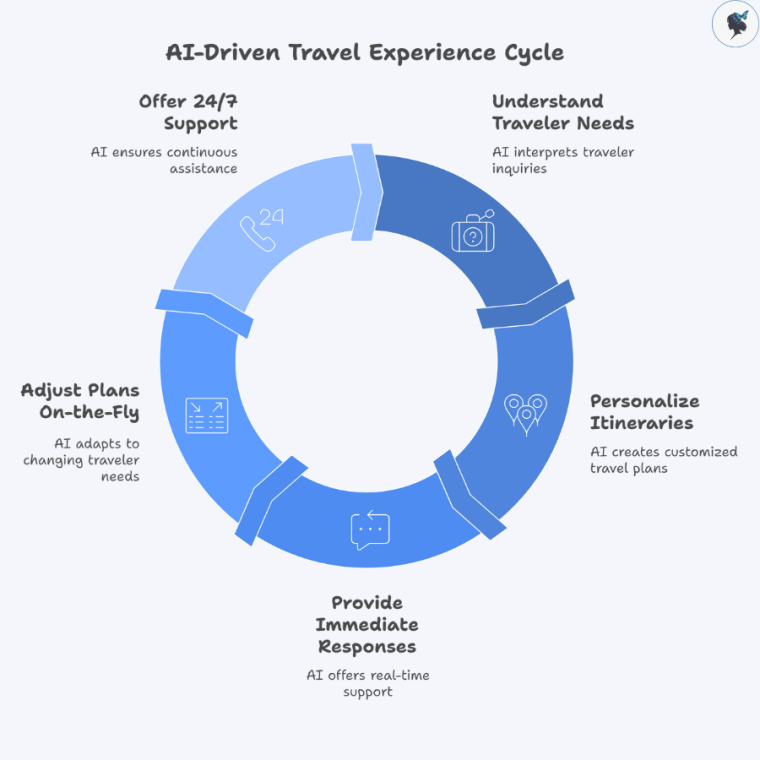
Enter artificial intelligence (AI) chatbots powered by natural language processing (NLP) — the underlying technology that allows machines to understand, interpret and respond to human language. By leveraging NLP, travel agencies can deliver human-like travel conversations at scale: customised itineraries, on-the-fly adjustments, and 24/7 support.

infograph: AI-Driven travel experience cycle
AI-Driven travel experience cycle

In this article, we’ll explore what NLP is and why it matters for travel agencies, how AI chatbots use NLP to boost content personalisation and customer interactions, examine a real-world example (GuideGeek), and outline how your agency can integrate this technology into your content and service strategy.


Understanding NLP: The Language Engine Behind AI Chatbots

A. What is Natural Language Processing (NLP)?

NLP is a branch of AI that focuses on enabling machines to understand, interpret and generate human language — both written and spoken. It combines elements of linguistics, computer science, and data science to bridge the gap between human users and computer systems.

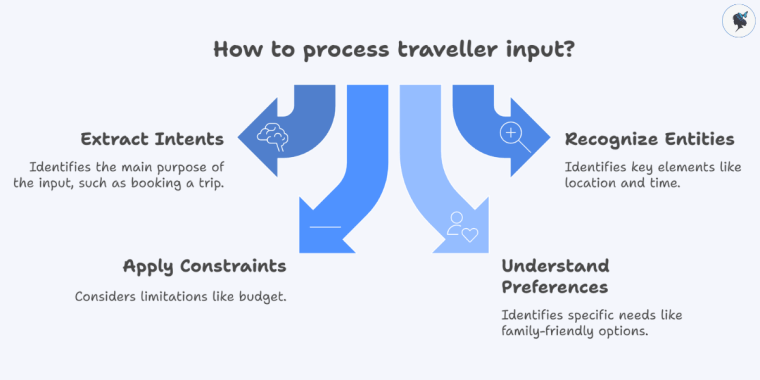
infograph: How to process traveller input?
How to process traveller input?

Within travel applications, NLP enables chatbots to parse traveller inputs such as “I’d like a family-friendly beach trip in June under €2,000” and extract key intents (family trip), entities (beach, June), constraints (budget) and preferences (family-friendly) to deliver meaningful responses.

B. Why NLP Matters in the Travel Industry

Infograph: Benefits of NLP in travel
Benefits of NLP in travel
  • Context-rich interactions: Travel conversations often contain nuance (e.g., “I want somewhere warm but not tourist-packed”, “We have a toddler and grandparents in our group”). NLP allows chatbots to pick up on those preferences and adapt.
  • Personalisation at scale: Traditional methods (manual chat, email responses) are labour-intensive and difficult to scale. NLP-powered chatbots automate many interactions while maintaining the “feel” of a personalised service.
  • Enhanced content strategy: When travellers engage with chatbots, they also generate data (preferences, queries, language used) that agencies can use to tailor content-topics, blog-posts, itineraries and landing pages.
  • SEO and service advantage: According to industry data, the AI in tourism market is growing rapidly — one source shows the global AI in tourism market valued at around USD 3.37 billion in 2024, with many travellers preferring brands that use AI for personalisation.

For example, a 2024 blog on AI in tourism marketing found that hyper‐personalisation via AI and chatbots can boost bookings by up to 25%.
Bottom line: NLP is the engine that enables chatbots to elevate personalised travel experiences — making it a strategic content and service tool for travel agencies.

You might be interested in our post: How to Build a Travel Content Strategy That Converts.


How AI-Powered Chatbots Use NLP to Enhance Customer Interactions

Here are the key ways chatbots use NLP to take travel personalization to the next level.

A. Understanding Traveller Intent

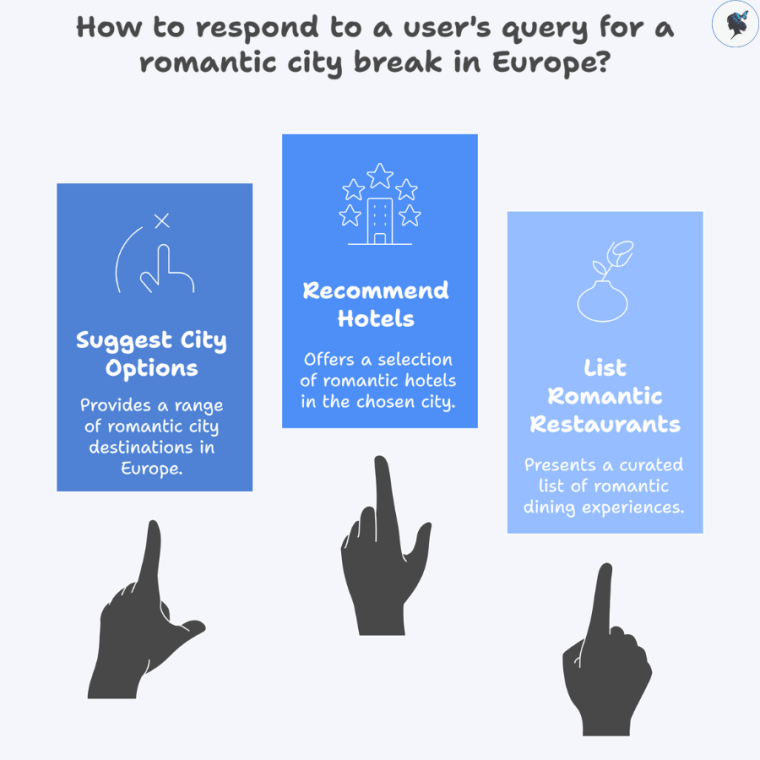
When someone types, “I’m looking for a romantic city break in Europe next month”, an NLP engine in a chatbot would:

  • Identify intent: romantic city break
  • Identify entities: Europe, next month
  • Recognise constraints: timeframe (next month), style (romantic)
    Then the chatbot can respond with suggestions (city options, hotels, romantic restaurants) tailored to that.
Infograph: How to respond to a user's query for a romantic city break in Europe?
How to respond to a user’s query for a romantic city break in Europe?

This precision is made possible by NLP features such as tokenization, named-entity recognition and intent classification.
For travel agencies, that means content can transition from generic “city break in Europe” to “romantic city break in Lisbon for early June” — and your chatbot can drive users toward a booking funnel or a blog post accordingly.

You might like: The Complete Digital Marketing Funnel for Travel.

B. Conversational Flow & Context Retention

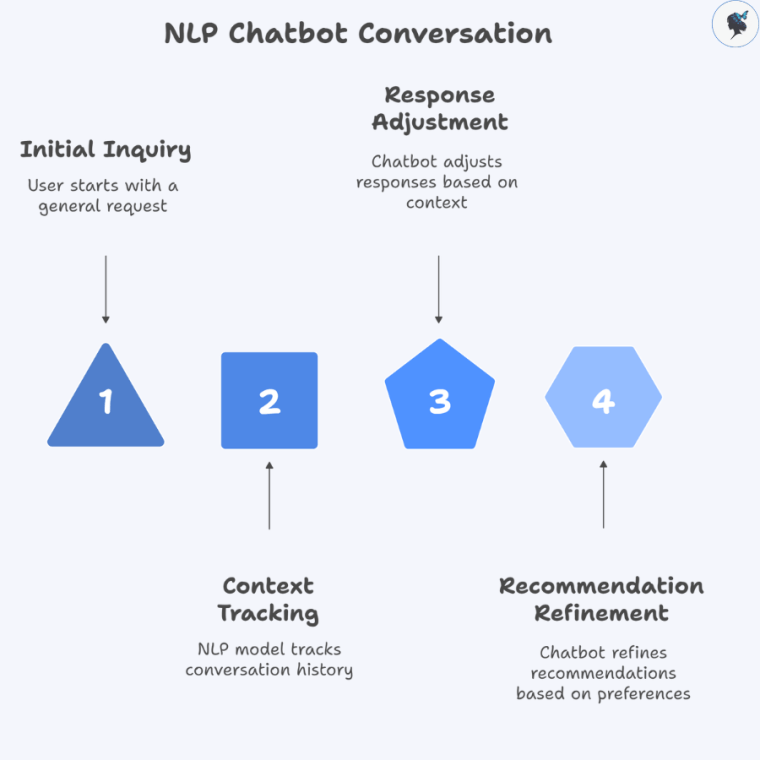
Unlike static forms, NLP chatbots maintain context across a session.
Example: User starts with “I want to visit Greece in May” – chatbot replies with suggestions – user then adds “Make it under €1,500 and for three adults” – chatbot updates recommendations accordingly.

Infograph: NLP chatbot conversation
NLP chatbot conversation

This continuity is enabled by NLP models tracking conversation history, adjusting responses, and refining recommendations.
For a travel agency, this means your chatbot can guide a traveller through multiple steps (destination choice – accommodation – activities – add-ons) and retain their preferences – improving satisfaction and reducing drop-off.

C. Multilingual and Tone Adaptation

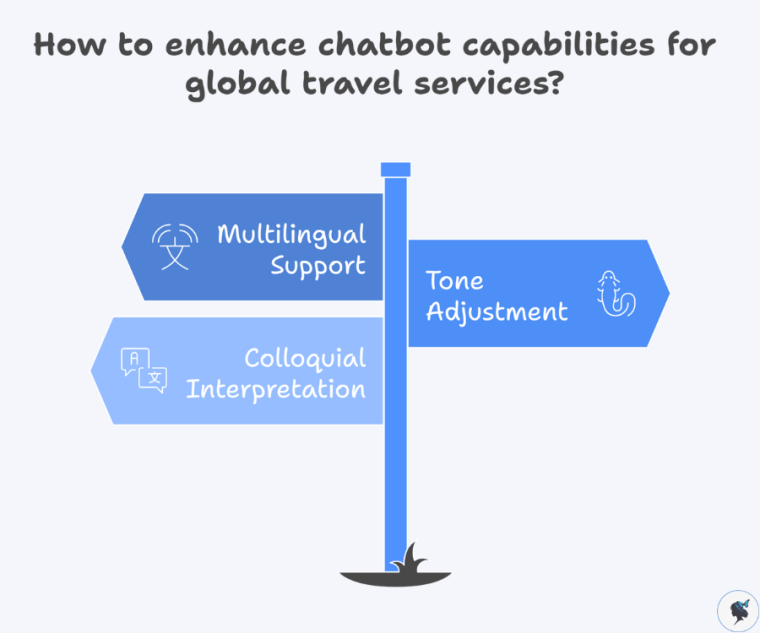
Travel is inherently global — travellers may speak many languages. Advanced NLP allows chatbots to:

  • Recognise input in multiple languages and respond accordingly.
  • Adjust tone based on the user (formal for business traveller, friendly for holiday-maker).
  • Interpret colloquial language or slang (e.g., “cheap eats near city centre”, “hidden gems off the beaten track”).
Infograph: How to enhance chatbot capabilities for global travel services?
How to enhance chatbot capabilities for global travel services?

This flexibility extends your content reach globally, enabling your agency to serve non-native speakers or niche travel segments effectively.

D. Real-Time Personalisation via Data Integration

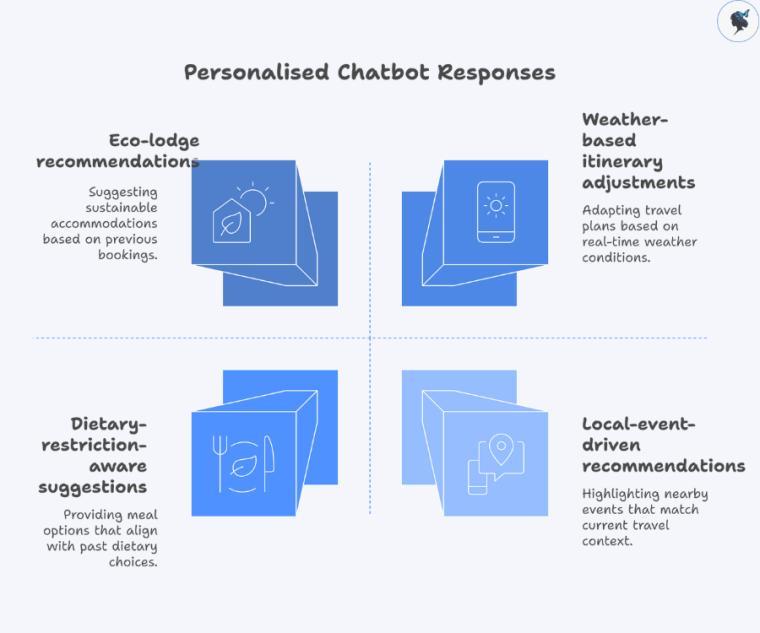
NLP-driven chatbots, when integrated with CRM, booking systems and analytics, can deliver dynamic responses based on:

  • Past behaviours: returning traveller, previously booked ski trips, etc.
  • Contextual data: weather changes, local events, flight delays.
  • Preferences: dietary restrictions, budget ceilings, travel style.
Infograph: Personalised chatbot responses
Personalised chatbot responses

For example, if a traveller has previously booked eco-lodges, the chatbot can emphasise sustainable stays for their next trip.
This turns chatbots into personalised content engines — recommending not just general packages, but highly tailored itineraries matching the user’s profile.

You might like: Ways AI Can Enhance Travel Content Personalization: Personalized Itinerary Generation.


Benefits of Using Chatbots for Personalized Travel Advice

Infograph: Benefits of chatbots in travel
Benefits of chatbots in travel

Implementing NLP-powered chatbots offers concrete benefits for travel agencies and content strategy:

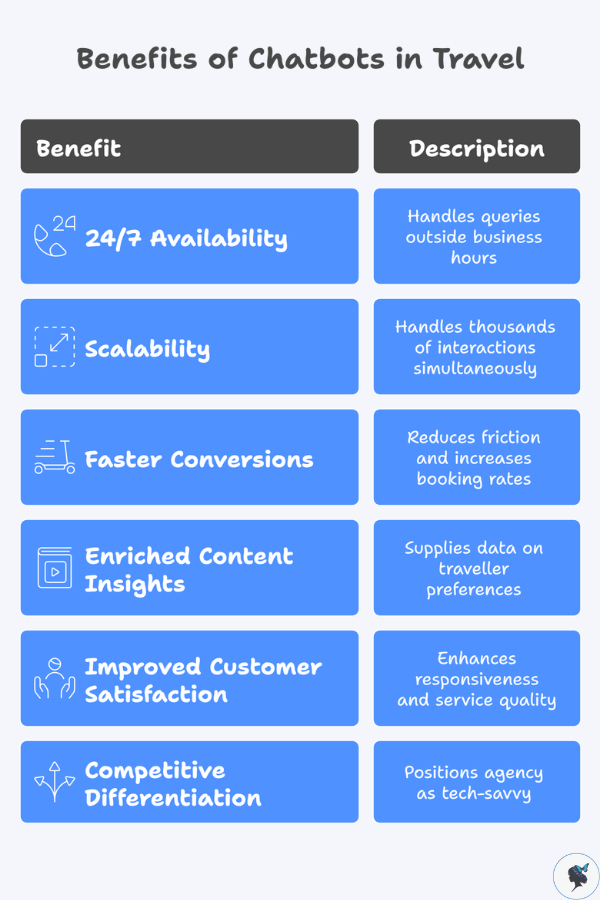
  • 24/7 availability: Chatbots never sleep — they can handle queries outside business hours, which many travellers expect.
  • Scalability: A single chatbot can handle thousands of interactions simultaneously, freeing human agents for complex cases.
  • Faster conversions: By guiding travellers through their preferences and narrowing options quickly, chatbots reduce friction and increase booking rates.
  • Enriched content insights: Every interaction supplies data on what travellers ask, how they phrase queries, what their preferences are — usable for blog ideas, landing pages, FAQs.
  • Improved customer satisfaction: According to a systematic review of chatbots in tourism, they enhance responsiveness and service quality.
  • Competitive differentiation: Agencies that use chatbots with NLP can position themselves as tech-savvy, personalised and client-centric.

One statistical highlight: though only 48% of travellers report using AI chatbots for assistance, about 65% say they prefer brands that use AI for personalisation.
In short: NLP-driven chatbots allow your agency to deliver personalised content and service at scale — improving engagement, bookings and brand reputation.


Real-World Example: GuideGeek’s AI Chatbot for Personalized Travel Assistance

A. Overview of GuideGeek

GuideGeek is an AI travel assistant created by Matador Network that operates via WhatsApp, Instagram and Facebook Messenger.

  • Free to use: travelers chat with the bot, ask for destinations, itineraries, restaurants, local experiences.
  • Powered by ChatGPT and real-time travel data integrations (> 1,000 sources) to deliver personalised suggestions.
  • Example usage: A user asked for a two-week trip and GuideGeek provided suggestions, accommodation ideas, restaurants and a draft itinerary — reducing planning time significantly.

B. Key Lessons for Travel Agencies

  • Free tool accessibility: Because GuideGeek is free and easily accessible, it demonstrates that travel personalisation via NLP is no longer limited to large players.
  • Brand integration potential: Matador provides white-label versions of GuideGeek for destination marketing organisations (DMOs), showing how agencies or DMOs could adopt similar chatbots.
  • Content leverage: Interactions with GuideGeek likely generate rich insights into what travellers ask for. Agencies can use that to craft blog posts (“What travellers ask our chatbot about Bali”) or landing pages based on FAQ data.
  • Operational partnership: Your agency could integrate a chatbot like GuideGeek (or similar) on messaging platforms to handle initial traveller engagement, freeing your human agents to follow up with tailored packages.

How Travel Agencies Can Integrate AI Chatbots into Their Strategy

Here’s a step-by-step roadmap for your agency to adopt NLP-powered chatbots.

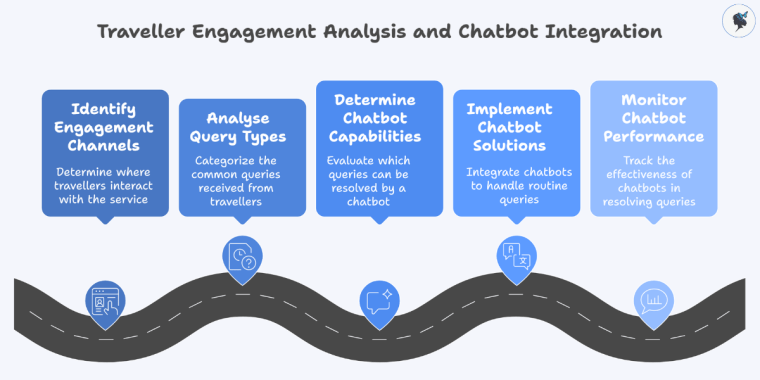
Step 1: Identify Key Touchpoints

Infograph: Traveller engagement analysis and chatbot integration
Traveller engagement analysis and chatbot integration
  • Review where your travellers engage: website chat, WhatsApp, Facebook Messenger, Instagram DMs.
  • Analyse what queries you receive frequently: destination suggestions, budgeting, itinerary planning, local insider tips.
  • Determine which portion of queries can be handled by a chatbot vs which require human intervention.

Step 2: Choose the Right Chatbot Platform

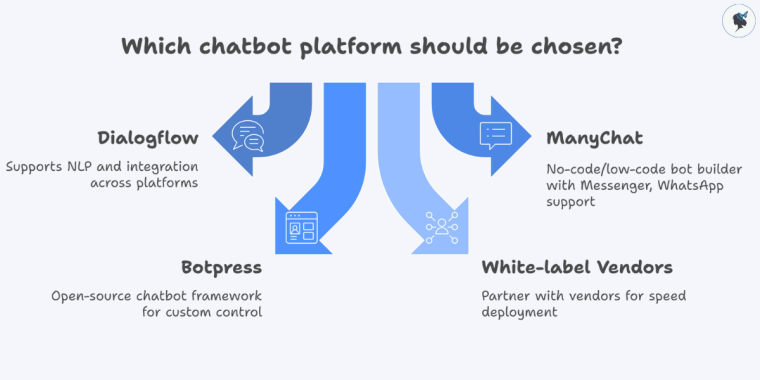
There are many platforms that support NLP and travel use-cases, including some free or freemium options:

Which chatbot platform should be chosen?
  • Dialogflow (by Google) — supports NLP and integration across platforms.
  • ManyChat — no-code/low-code bot builder with Messenger, WhatsApp support.
  • Botpress — open-source chatbot framework if you want custom control.
  • Your agency can also partner with white-label travel-chatbot vendors (as Matador/GuideGeek did) to speed deployment.

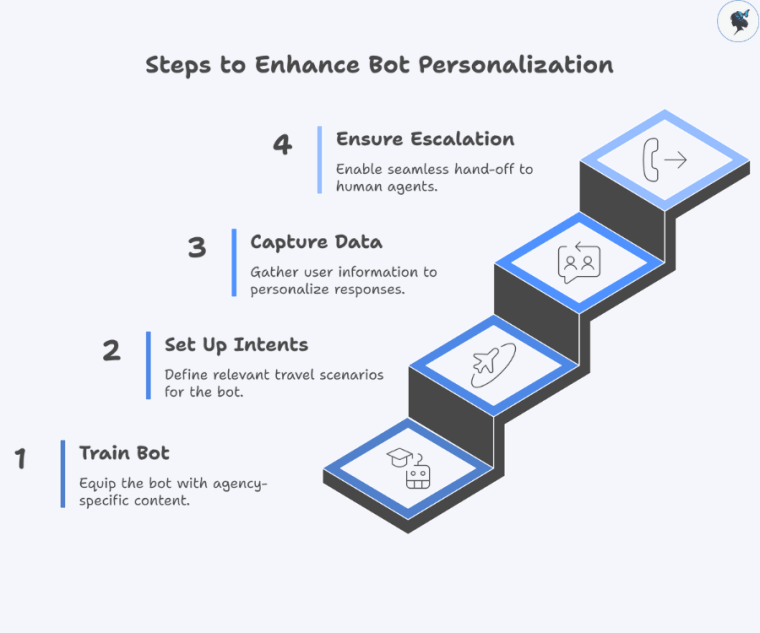
Step 3: Personalise the Experience

Infograph: Steps to enhance bot personalisation
Steps to enhance bot personalisation
  • Train your bot with your agency’s own content: FAQs, destination guides, previous itineraries, traveller feedback.
  • Set up intents and entities relevant to your niche (e.g., “beach holiday under €1000”, “honeymoon in Greece”, “family ski trip Austria”).
  • Incorporate data capture: ask users for their travel style, budget, companions, past trips — feed this into your CRM and personalise responses.
  • Ensure the bot can escalate to a human agent when needed, and maintain context so hand-off is seamless.

Step 4: Monitor, Analyse & Optimise

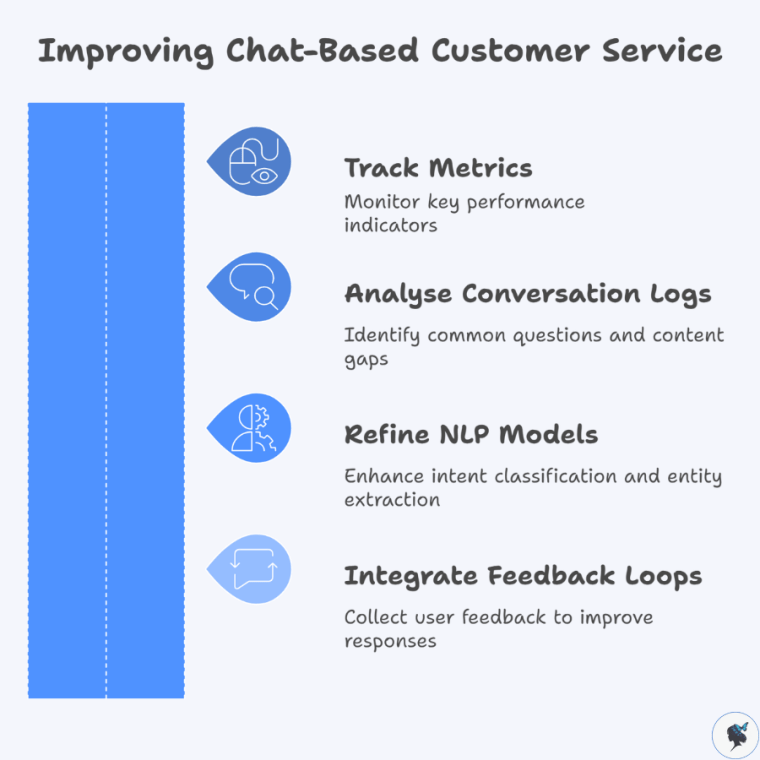
Infograph: Improving chat-based customer service
Improving chat-based customer service
  • Track metrics: number of chats, conversion rate (chat → booking/lead), time saved, satisfaction ratings.
  • Analyse the conversation logs: what questions are common? What content do travellers want but you don’t currently provide? Use this for new blog ideas or landing pages.
  • Refine NLP models: improve intent classification, entity extraction, multilingual support as needed.
  • Integrate feedback loops: ask users after chat, “Was this helpful?” and use that data to improve responses.

Step 5: Align Content Strategy

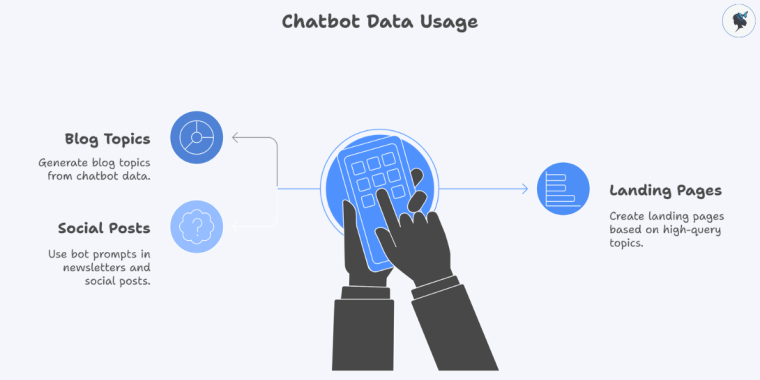
Infograph: Chatbot data usage
Chatbot data usage
  • Use chatbot data to generate blog topics: e.g., “Top 10 things couples ask our AI travel bot about Bali”.
  • Create landing-pages or microsites based on high-query topics surfaced by the chatbot.
  • Use bot-prompts in newsletters or social posts: “Ask our travel bot where you should go next” — driving engagement and lead generation.

Conclusion

Natural Language Processing (NLP)-powered chatbots represent a major step forward in personalised travel content and service. For travel agencies, they offer a strategic tool to deliver tailored interactions, gather insights, and scale high-quality engagement.
By implementing a chatbot that uses NLP, your agency can:

  • Offer 24/7 personalised travel assistance via messaging apps or web chat
  • Extract content-intelligence from real-traveller questions and use that to inform blogs, landing pages and marketing
  • Streamline service workflows while maintaining a human-like experience
  • Position your brand as technology-forward and customer-centric

If you haven’t yet explored NLP chatbots, now is a great time. Start with a free or low-cost platform (Dialogflow, ManyChat, etc.), pilot with one messaging channel (e.g., WhatsApp or Messenger), capture traveller preferences, and monitor how many leads or bookings you generate from it.

Treat NLP chatbots not as a replacement for your human agents, but as a powerful extension of your content strategy and customer service — helping you scale personalisation in a meaningful way.

Need help? Contact us today!
Ways AI Can Enhance Travel Content Personalization: Personalized Itinerary Generation

▶ Table of Contents
  1. Introduction
  2. The Importance of Personalization in Travel
  3. How AI Enhances Itinerary Generation
  4. Case Studies of AI Tools
  5. Benefits of AI-Driven Itinerary Planning for Travel Agencies
  6. Conclusion

Introduction

In today’s travel landscape, the “one-size-fits-all” itinerary no longer satisfies. Travelers expect experiences that reflect their preferences, travel style, budget, and pace. For travel agencies, this means a shift: from generic destination guides to deeply personalized planning.

Enter artificial intelligence (AI).

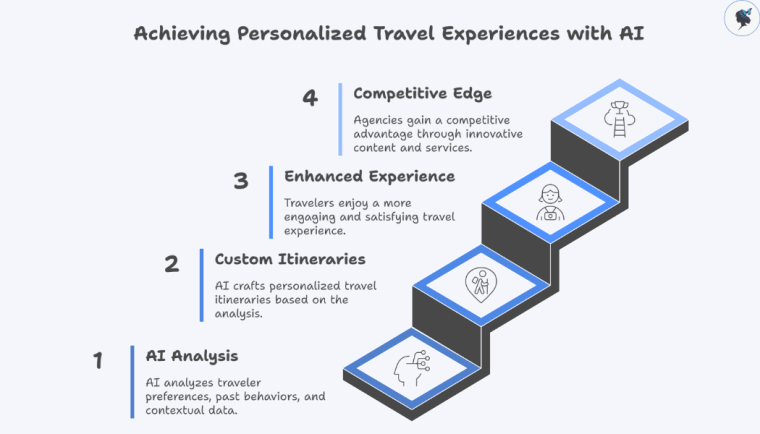
Infograph: Achieving personalized travel experiences with AI
Achieving personalized travel experiences with AI

Thanks to advances in machine learning, natural language processing (NLP) and contextual data-analysis, agencies now have the power to deliver custom itineraries at scale — not just for VIP clients, but for standard packages too. In doing so, you’re enhancing the traveller experience, boosting engagement, and gaining a competitive edge in content and service.

In this post we’ll explore how AI analyzes traveler preferences, past behaviours and contextual data to craft custom itineraries, review real-tools you can try, and highlight how agencies can use this for content and service innovation.


The Importance of Personalization in Travel

Infograph: AI-powered travel personalization
AI-powered travel personalization
  • Changing expectations: A growing share of travellers say they want “travel experiences tailored to me” rather than generic vacations. Personalization builds loyalty, increases conversion and can raise average booking value.
  • Challenges for agencies: Traditional itinerary creation tends to be manual and time-intensive. Customising every trip by hand is not scalable when you serve many clients with diverse tastes.
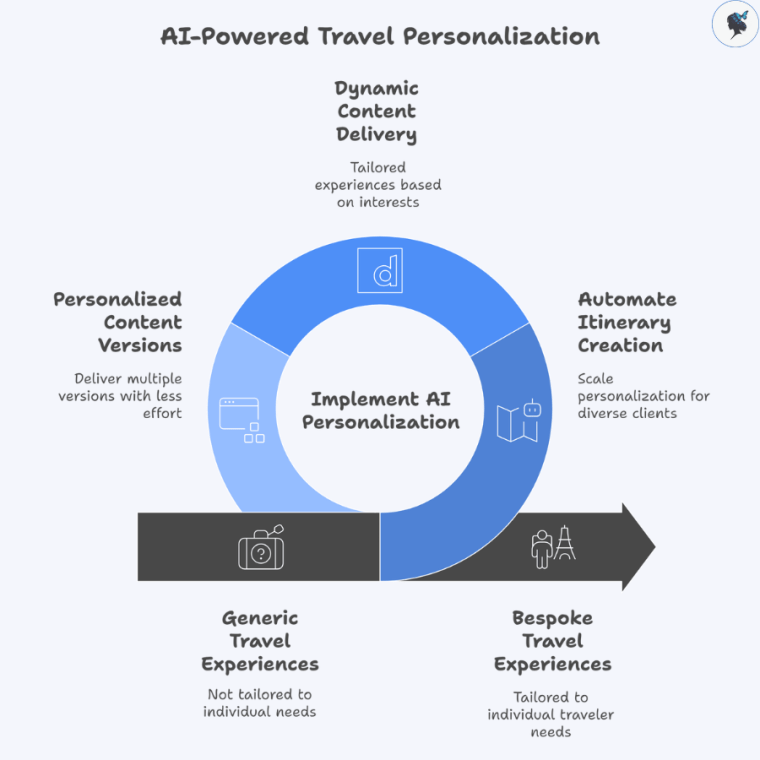
  • Why AI matters: AI provides a way to automate and scale personalization while retaining the “feel” of a bespoke service. It moves travel content from static lists (“Top 10 things to do in X”) to dynamic, tailored experiences (“Here’s a 5-day plan for you based on your interest in foodie walks & local culture”).
  • Content implication: For agencies producing blog posts, destination pages or email campaigns, personalization via AI means you can deliver multiple versions of content (for different segments) with less incremental effort.

You might be interested in our post: Personalization in travel website content.


How AI Enhances Itinerary Generation

Let’s break down the three key data-driven blocks: traveller preferences, past behaviours and contextual data — and how AI applies them to generate personalized itineraries.

Analyzing Traveler Preferences

Infograph: AI-Driven travel preference analysis
AI-Driven travel preference analysis
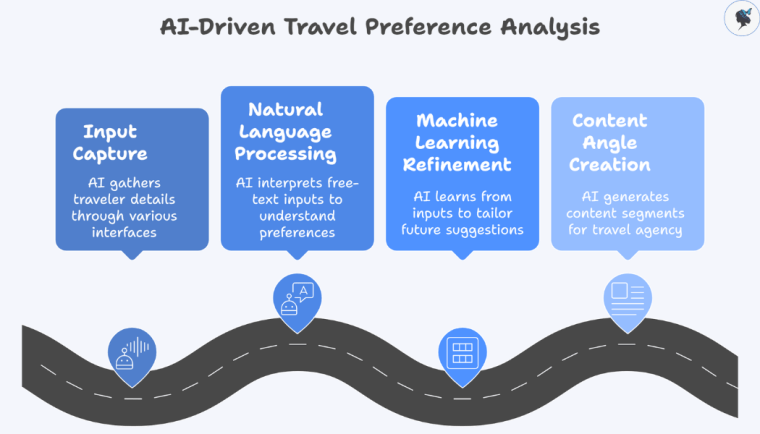
  • Input capture: Via a questionnaire, chat interface or booking form, AI asks for details such as preferred destinations, travel dates, travel style (luxury / budget / adventure), interests (culture, food, nature, nightlife), and companions (solo, couple, family).
  • Natural Language Processing (NLP): AI systems interpret free-text inputs like “I love hidden gem cafés and local festivals” or “I prefer off-beat hikes to crowded tourist trails”.
  • Machine-learning refinement: With each input and feedback cycle, the system learns what types of activities, destinations or lodging a given user will favour. Future suggestions become sharper and more tailored.
  • Content angle: For a travel agency blog or service, you can use this to create content segments: e.g., “For the foodie-culture curious traveller: itineraries generated by AI for local culinary tours”.

Utilizing Past Behaviors

Infograph: How to enhance personalization using AI?
How to enhance personalization using AI?
  • Behavioural data mining: AI probes previous bookings, website activity (pages visited), search queries, ratings given and even social media interactions (if permissions allow). For example, if a user repeatedly searches “mountain lodges Austria”, this preference becomes a signal.
  • Cross-channel integration: Itineraries benefit when AI aggregates data from multiple touchpoints (booking system, mobile app, email engagement). The richer the dataset, the more accurate the personalization.
  • Predictive personalization: Based on past patterns, AI can predict new destinations or experiences: e.g., “You liked beach sun & sand last year — would you like a surf-camp break next summer?”
  • Content angle: In blog content agencies can mine their CRM/booking data and pair it with AI-driven insights to craft content that speaks to “return travellers” with intelligent cross-sell itineraries.

You might like our post: attracting high-intent travelers.

Incorporating Contextual Data

Infograph: AI travel adjustments
AI travel adjustments
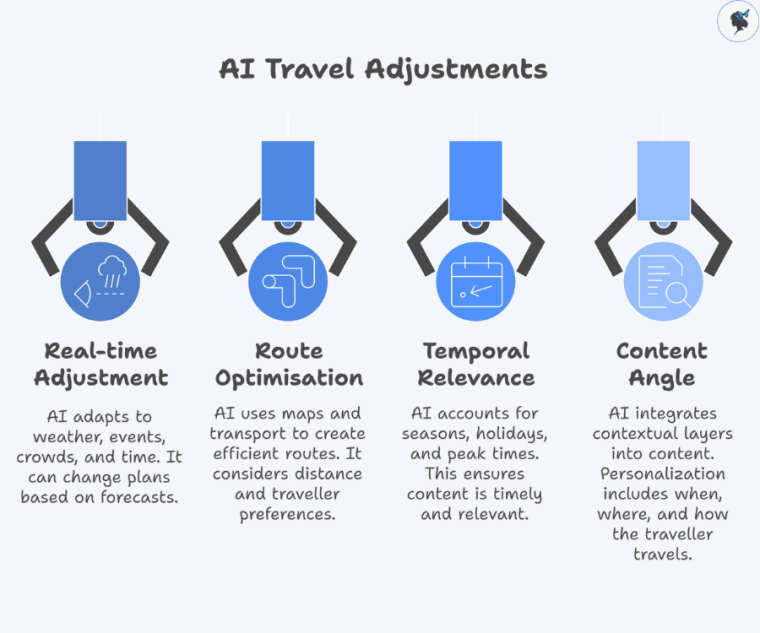
  • Real-time/contextual adjustment: AI considers external variables such as weather, local events/festivals, crowd levels, travel restrictions, and even time of day. For example, if rain is forecasted in a destination, the AI might swap an outdoor walking tour for a museum visit.
  • Geo-intelligence & route optimisation: Based on maps, proximity of attractions, transport links, and traveller’s pace preference, AI builds efficient routes and sequences.
  • Temporal relevance: AI accounts for seasonality, event calendars, local holidays, peak/off-peak crowds — which ensures content and itineraries are timely and relevant. For instance, a blog post could highlight “AI-adjusted itineraries for travellers visiting during the shoulder season”.
  • Content angle: In your blog you can integrate contextual layers into content (e.g., “5 Winter festivals your AI itinerary engine will pick up for you”). Personalization includes not just who the traveller is, but when, where and how they travel.

You might like: strategies for managing seasonal content.


Case Studies of AI Tools

Here are some practical tools that travel agencies can explore to see AI itinerary personalization in action.

Overview of Trip Planner AI

  • This online tool positions itself as “the smarter way to plan flights, hotels & experiences”.
  • How it works: The user enters travel dates, destination, budget and travel style; the AI then generates a full itinerary including flights, accommodation suggestions and activities.
  • Agency use-case: Travel agencies can use this as a rapid prototype builder for client itineraries, then add human local expertise on top.
  • Free tool link: https://tripplanner.ai

Overview of Wonderplan

  • A free-for-now AI trip planner tool that lets users input their preferences and build tailored itineraries.
  • Features: Input destination, travel length, budget, travel style (solo/couple/family), and AI delivers a day-by-day plan. You can also download PDF for offline.
  • Agency use-case: Great tool for clients who want DIY preview itineraries; agencies can embed or recommend this as value-add.
  • Free tool link: https://wonderplan.ai

Additional Tools & Emerging Examples

  • Alike Eia Trip Planner – Provides personalized, budget-friendly itineraries and allows collaboration.
  • Mindtrip – Focuses on personalised recommendations and itinerary building based on uploaded photos or saved places.
  • For agencies: These tools illustrate the direction of the travel-tech market and provide inspiration for integrating AI into your services and content operations.

Benefits of AI-Driven Itinerary Planning for Travel Agencies

infograph: AI-driven benefits for travel agencies
AI-driven benefits for travel agencies
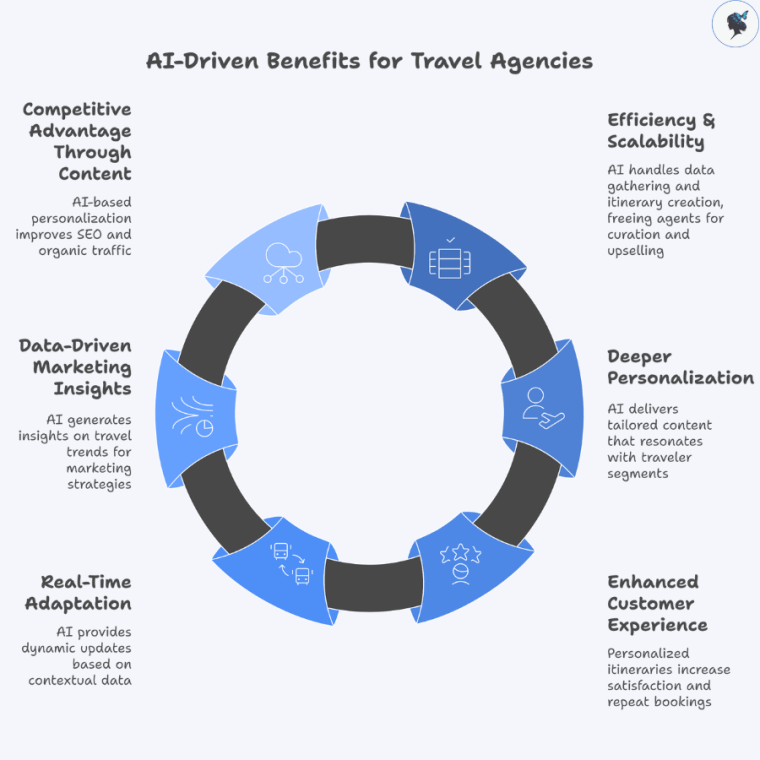
  • Efficiency & scalability: AI handles the heavy lifting of data gathering and itinerary draft creation, freeing agents to focus on curation, storytelling and upselling.
  • Deeper personalization: By leveraging data and AI, agencies can deliver richly tailored content (itineraries, destination pages, email sequences) that resonate with each traveler segment.
  • Enhanced customer experience: Personalized itineraries increase traveller satisfaction, lead to higher engagement (content reads, email opens), and ultimately repeat bookings.
  • Real-time adaptation: With contextual data, agencies can offer dynamic updates (e.g., if weather changes, event added), reinforcing value beyond static content.
  • Data-driven marketing insights: The same engines feeding personalization can generate insights on travel-styles, popular activities, segment trends — usable for blog topics, destination promos, social media content.
  • Competitive advantage through content: Agencies that use AI-based personalization can publish targeted blog posts (“For food-loving solo travellers in Lisbon”), landing pages, and customised newsletters — thereby improving SEO relevance for niche queries and boosting organic traffic.

Conclusion

Personalization in travel content is no longer a luxury – it’s a strategic imperative. With AI tools now mature enough to analyse traveler preferences, past behaviours, and contextual signals, travel agencies have a real opportunity to re-imagine how they craft itineraries, engage clients and produce content.
By incorporating tools such as Trip Planner AI and Wonderplan (and others like Mindtrip, Alike Eia) into your workflow, you not only enhance your service offering but also enrich your content ecosystem: blog posts, landing pages, email campaigns — all get more relevant, targeted and performance-driven.
In short: treat personalization not as a one-off add-on, but as a foundational strategy. Combine human expertise + AI automation to deliver travel content that feels bespoke, scales across your audience, and supports your SEO and business goals.
As a next step, consider picking one free tool from above, running a live experiment with a client profile or sample itinerary, then publishing blog content around your process and insights (e.g., “How we used AI to build a 7-day Lisbon food & culture itinerary”). That kind of transparency and value-add will position your agency as forward-thinking and client-centric.

Need help? Contact us today!
How to Optimize Travel Content for Generative AI: From GEO to AEO


How to Optimize Travel Content for Generative AI: From GEO to AEO

▶ Table of Contents

Introduction

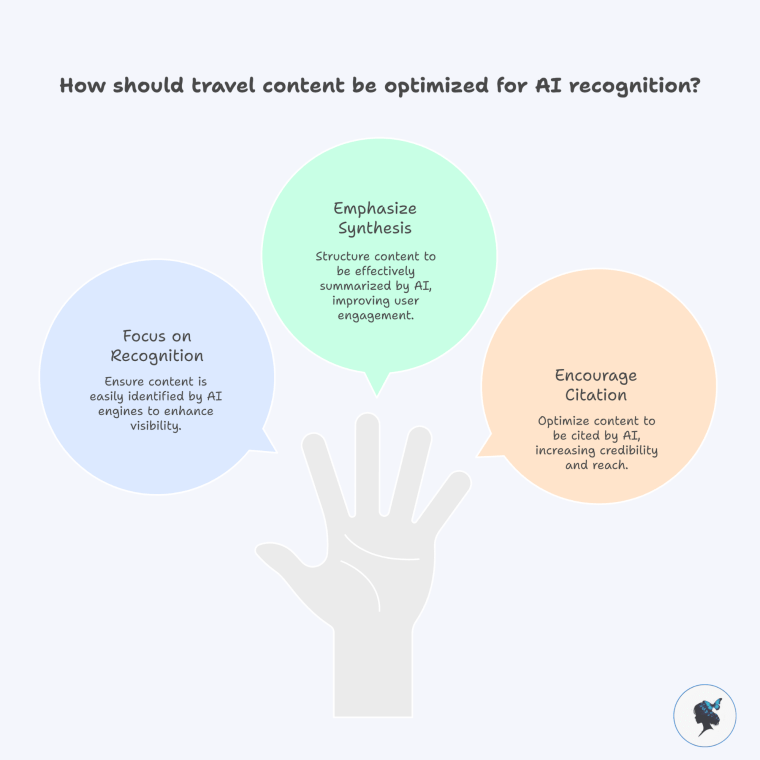
According to a Minty Digital industry analysis, 40% of travelers now say AI helps them discover new destinations — signaling that AI is already reshaping how people explore and plan trips. In today’s landscape, travel marketers and DMOs must evolve from traditional SEO to strategies that help their content be recognized, synthesized, and cited by generative AI engines like ChatGPT, Gemini, or Bing Copilot.

Infograph: How should travel content be optimized for AI recognition?
How should travel content be optimized for AI recognition?

Wander Women Hot Tip: Start by auditing your highest-traffic content — and ask: would an AI assistant “see” and trust it?


Understanding Generative AI in the Travel Ecosystem

1 What Is Generative AI — and Why It Matters for Travel?

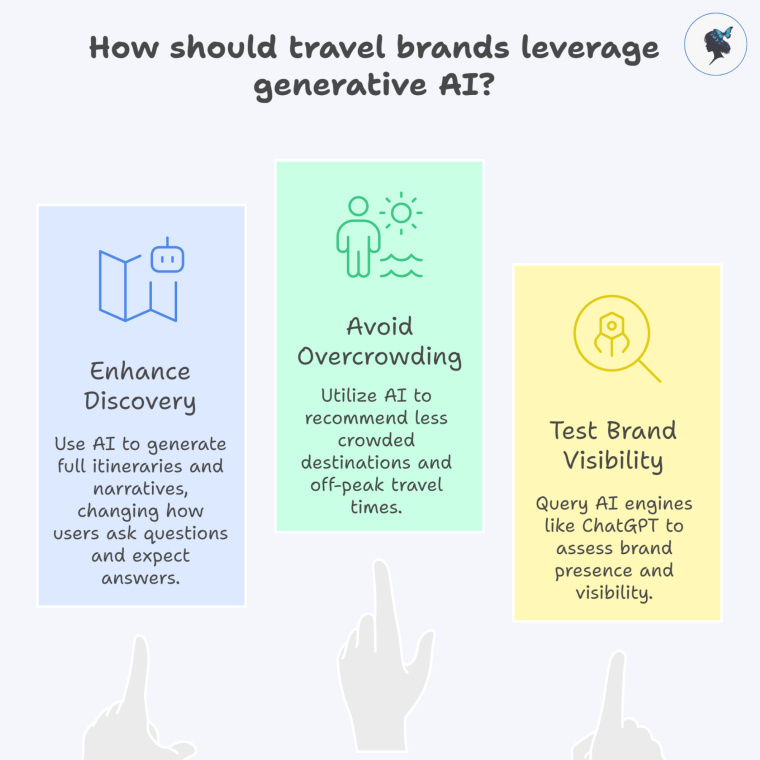
A recent study by Booking.com reveals that 74% of travelers appreciate AI-generated recommendations that help them avoid overcrowded destinations or peak travel times. news. For travel brands, generative AI doesn’t just shift discovery — it changes how users ask questions and expect answers. An AI might generate a full itinerary, narrative, or comparative recommendation rather than deliver a list of links.

For example: A traveler might ask, “Plan me a 10-day road trip in Italy focused on food and small towns.” Instead of showing links, AI engines build a complete itinerary — citing a few trusted sources.

Infograph: How should travel brands leverage generative AI?
How should travel brands leverage generative AI?

Wander Women Hot Tip: Test your own destination or itinerary queries by asking ChatGPT — see whether your brand is surfaced or ignored.

2 What Is Generative Engine Optimization (GEO)?

In 2025, the AI-in-travel market is projected to reach USD 531.95 billion by 2029, underlining that AI-driven content will dominate travel tech investment.
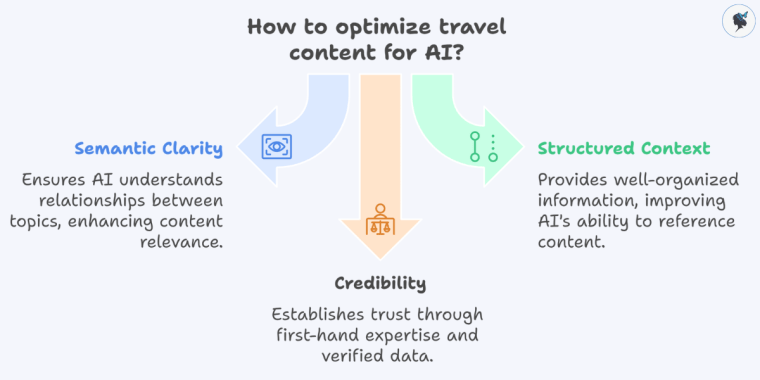
GEO (Generative Engine Optimization) is the practice of optimizing your travel content so that AI systems understand, reference, or weave your content into generated travel narratives. It leans heavily on semantic clarity, topical depth, and structured context rather than just keyword density.

GEO prioritizes:

  • Semantic clarity — clear relationships between topics (e.g., destinations, activities, experiences).
  • Structured context — well-labeled schema, FAQs, and entity-based connections.
  • Credibility — first-hand expertise, author transparency, and verified data.
Infograph: How to optimize travel content for AI?
How to optimize travel content for AI?

Wander Women Hot Tip: When drafting destination content, think in “entity clusters” (attraction, region, nearby towns) rather than standalone pages.

More about content clusters here.

3 What Is Answer Engine Optimization (AEO)?

In recent Semrush research, AI Overviews now appear in over 13% of all queries, up from 6.49% earlier in 2025 — confirming that answer-style summaries are becoming more common in search. AEO (Answer Engine Optimization) is about tailoring content so that short, factual responses from your content can power featured snippets, voice answers, or AI summaries.

AEO ensures your pages can power:

  • Featured snippets
  • Voice search answers
  • AI Overviews (Google’s new generative summaries)

Example:

  • AEO query: “Best time to visit Iceland”
  • Answer: “The best time to visit Iceland is from June to August for warmer temperatures and longer daylight hours.”
  • Well-structured, schema-backed pages are what AI models prefer for these results.
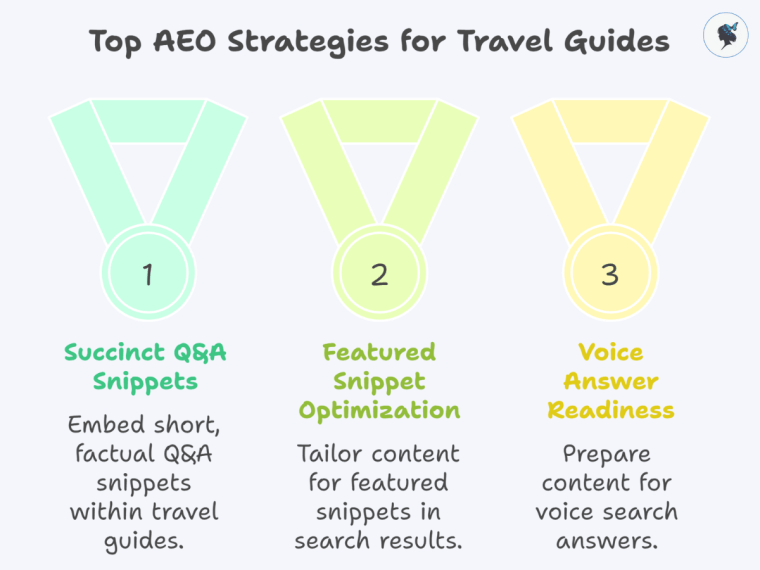
infograph: Top AEO strategies for travel guides.
Top AEO strategies for travel guides.

Wander Women Hot Tip: Embed succinct, Q&A-style snippets within your longer travel guides to seed AEO-ready content.

Read out post: Optimize your blog for voice search.


Why Travel Brands Must Adapt to AI-Driven Discovery

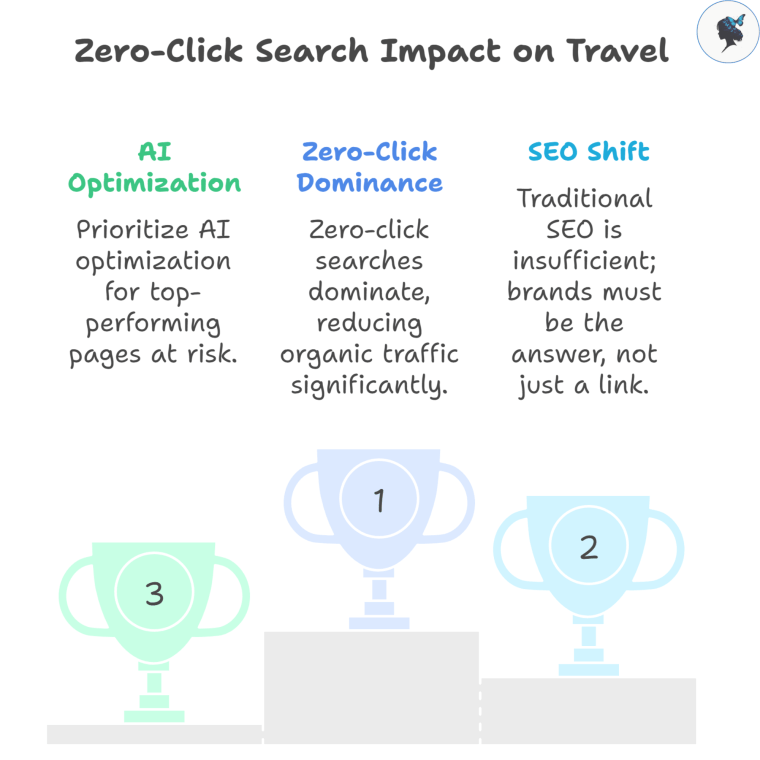
Search Engine land reports that in March 2025, 27.2% of U.S. searches ended without a click (versus 24.4 % a year prior), highlighting how zero-click behavior is rising. Meanwhile, Bain estimates 80% of consumers rely on “zero-click” results in at least 40% of their searches, reducing organic traffic by 15–25%. For the travel industry, this means traditional SEO — chasing clicks — is no longer enough. Brands must aim to be the answer, not just occupy a top link.

infograph: Zero-click search impact on travel.
Zero-click search impact on travel.

Wander Women Hot Tip: Map your top-performing pages and see which are most at risk of being eclipsed by AI summaries — prioritize them for AI optimization.


Key Differences Between GEO and AEO

FactorAEOGEO
GoalProvide concise factual responsesBe referenced in longer AI-generated narratives
Ideal Content TypeFAQs, how-to lists, definitionsDestination guides, itineraries, deep stories
Optimization FocusSchema, brevity, clarityEntities, context linking, authority signals
Typical Use Case“When is best time to visit Iceland?”“Plan a 7-day Iceland itinerary with hidden gems”

Generative travel SEO in 2025 means integrating both — AEO for attention, GEO for context and relevance.
Wander Women Hot Tip: For each topic, include one “AEO hook” (a quick answer block) and a deeper GEO passage.


Strategies for GEO SEO in Travel

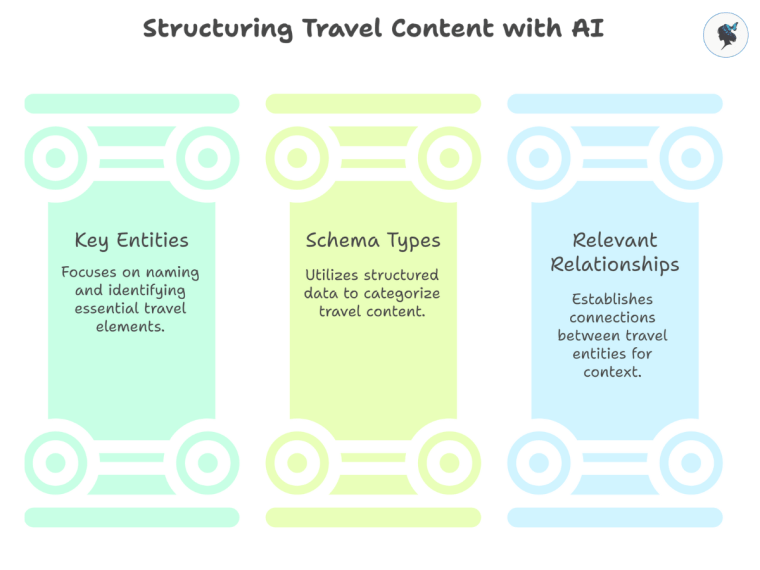
1 Focus on Entity-Based SEO

The travel content that thrives with AI frames clear semantic relationships.
To help AI understand your destination:

  • Mention key entities (cities, landmarks, attractions) using consistent naming.
  • Use schema types like:
  • TouristAttraction
  • Itinerary
  • Hotel
  • Restaurant
  • Include relevant relationships: “Palermo is part of Sicily.” “Mount Etna is a top-rated tourist attraction near Catania.”
Infograph: Structuring travel content with AI.
Structuring travel content with AI.

Wander Women Hot Tip: Always link your pages using the same canonical names (e.g. “Sicily / Sicilia”) to help AI resolve entity consistency.

2 Build AI-Comprehensible Content Structures

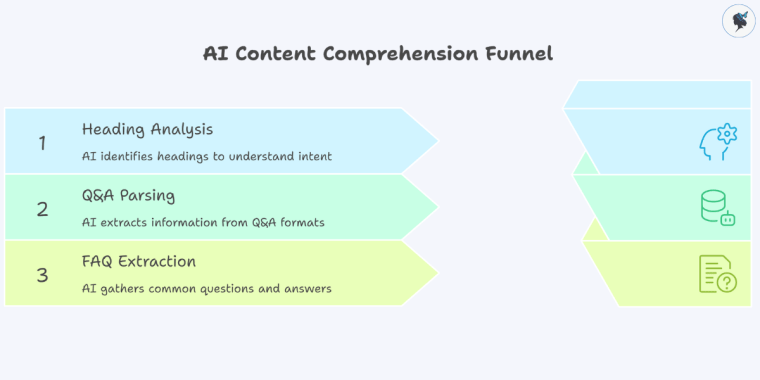
AI models parse headings, Q&A, and structured layout to extract meaning.
Use:

  • Clear H2/H3 headings reflecting traveler intent (e.g., “Where to Stay in Lisbon for First-Time Visitors”).
  • Natural question-and-answer formats.
  • FAQ sections covering conversational search terms.
Infograph: AI content comprehension funnel.
AI content comprehension funnel.

Wander Women Hot Tip: Before writing, map your content as an AI “outline” — will an AI be able to extract meaning easily?

3 Use Verified and Localized Data

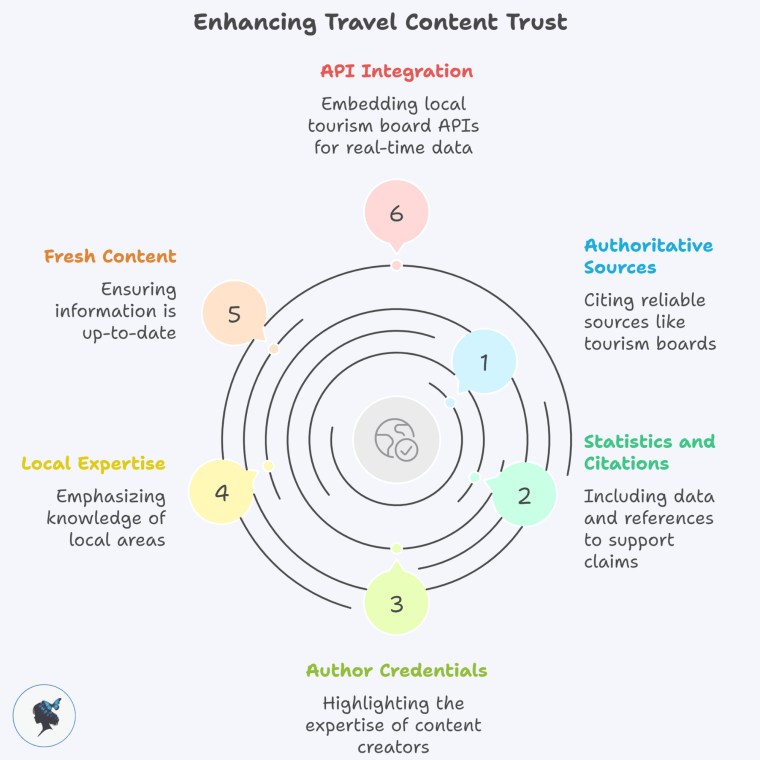
Travel content that cites authoritative sources tends to be trusted by AI engines.
That means:

  • Include sources, statistics, and citations (e.g., from tourism boards or government data).
  • Highlight author credentials and local expertise.
  • Use fresh, updated content — outdated info may be de-prioritized by AI.
Infograph: Enhancing travel content trust.
Enhancing travel content trust.

Wander Women Hot Tip: Embed local tourism board APIs or datasets where possible to power freshness.

4 Strengthen Context with Internal Linking

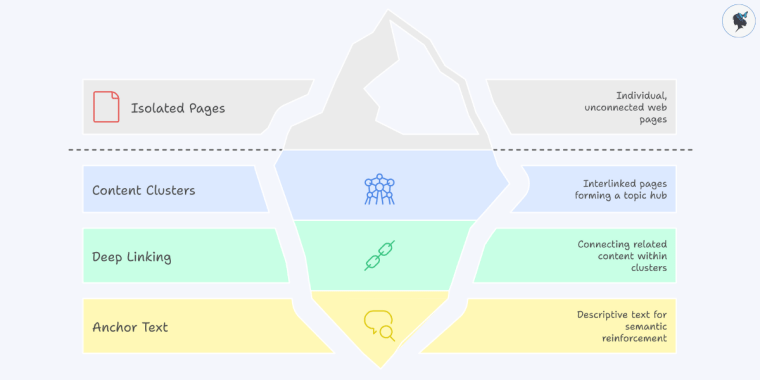
Content clusters matter more than isolated pages.
Link deep — “Top 10 Things in Lisbon” → “Hidden Gardens of Alfama” → “Lisbon Day Trips by Train.”

Infograph: Strengthen context with internal linking.
Strengthen context with internal linking.

Wander Women Hot Tip: Use descriptive anchor text (not generic “click here”) to reinforce semantic relations.

More about internal linking here.

5 Optimize Multimedia for AI Recognition

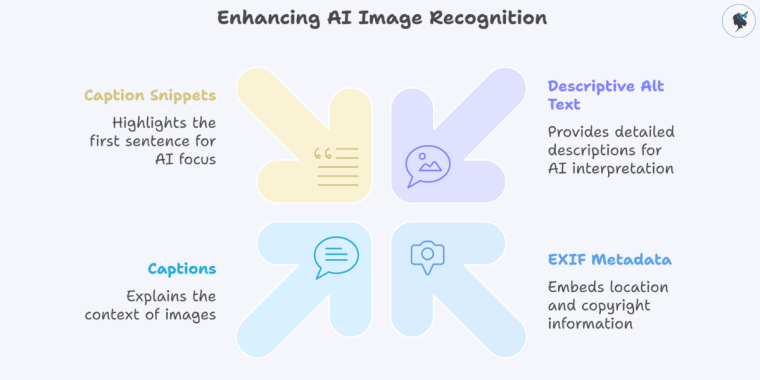
AI models also interpret images and metadata.
Make it easy for them by:

  • Using descriptive alt text (e.g., “Sunrise over Santorini caldera, Greece”).
  • Embedding EXIF metadata with location and copyright info.
  • Adding captions that explain context.
Infograph: Enhancing AI image recognition.
Enhancing AI image recognition.

Wander Women Hot Tip: Always embed a “caption snippet” below images — the first sentence becomes AI fodder.


Implementing AEO for Travel Content

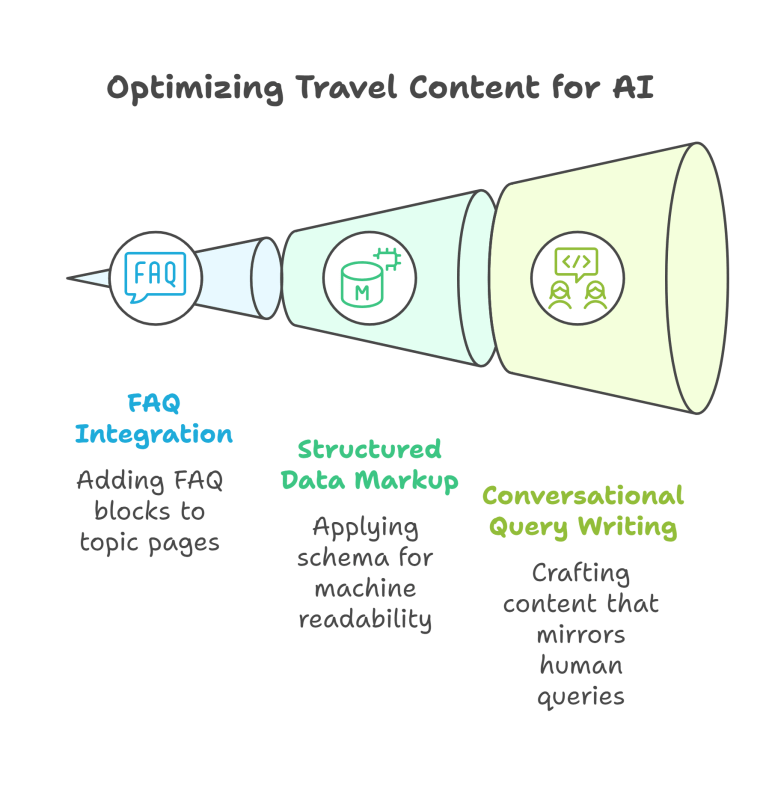
1 Create FAQ-Driven Segments

Insert a small FAQ block in each topic page (2–5 Qs) with natural language traveler queries.

  • “What’s the best time to visit?”
  • “How many days should I spend here?”
  • “Is it family-friendly?”

Wander Women Hot Tip: Use your search analytics to identify 2 or 3 long-tail conversational queries and answer them succinctly.

2 Use Structured Data Markup

Apply FAQPage, HowTo, Review, Organization schema where relevant.
This makes your content machine-readable for AI answer engines.

Apply schema like:

  • FAQPage
  • HowTo
  • Organization
  • Review

Wander Women Hot Tip: Validate schema in Google’s Rich Results tool — errors often prevent AI uptake.

3 Write for Conversational Queries

People talk to AI like humans. Embed subheadings that mirror phrasing: “Where to eat in Porto like a local?”

Infograph: Optimizing travel content for AI.
Optimizing travel content for AI.

Wander Women Hot Tip: Use variations (Who, What, Where, Why) in headings to cover more conversational ground.


Monitor metrics beyond clicks:

  • AI mentions / citations in tools like Perplexity, Bing Copilot
  • Branded search lift post-AI exposure
  • Referral traffic from AI “read more” links (if available)
  • Zero-click visibility (impressions in search console from summary panels)

Wander Women Hot Tip: Build a “monitoring query list” of 10–20 seed travel topics and check weekly whether AI engines surface your content.


Case Studies and Best Practices

Case Study 1: Sicily Itinerary Optimization

A boutique travel blog restructured its “7-Day Sicily Itinerary” applying entity markup, internal linking clusters, and FAQ sections — within weeks, their content began appearing in Bing Copilot and Perplexity’s reference list.

Wander Women Hot Tip: After publishing, test your content prompt “Plan a 7-day Sicily trip” to see if your article is cited.

Case Study 2: DMO Destination Hub Model

A DMO created a hub-and-spoke model:

  • Hub: “Explore Northern Portugal”
  • Spokes: “Douro Valley Wine Tours,” “Porto Neighborhood Walks,” “Eco-Stays in Minho”

They saw increased topical authority and AI mention traction.

Wander Women Hot Tip: Use a visual site map to confirm each subpage is tightly linked to the hub.


The Future: Where GEO Meets Social Discovery

In 2025, a study observed that almost 1 in 5 UK adults aged 25–34 are now using AI tools to design holiday packages. Social platforms — TikTok, Instagram, YouTube — are increasingly feeding into AI models as source data. Brands should optimize UGC and social metadata (captions, tags) to become part of those AI inputs.

Wander Women Hot Tip: When reposting social content, republish it as a structured blog snippet to feed both social and AI visibility.

More about repurposing content here.


Conclusion

In this AI-first environment, visibility is no longer about ranking — it’s about being recognized. Travel marketers must fuse GEO (depth + context) with AEO (clarity + structure) to stay relevant.

Wander Women Hot Tip: Treat your site as a knowledge graph — not a collection of pages — and feed AI the best path through it.

Need help? Contact us today.

AI Overviews & SERP Integration: What’s Changing?


▶ Table of Contents
  1. Introduction
  2. What Are AI Overviews?
  3. How AI Overviews Work
  4. Impact on Travel Companies
  5. Tips for Travel Companies
  6. Conclusion

Introduction

Google’s AI Overviews are short, AI-generated summaries that appear at the top of search results, giving users quick answers without clicking through to websites. While this makes finding information faster, it can also lower click-through rates (CTR) for travel sites by around 34.5% on informational queries, and these overviews now show up on roughly 42.5% of searches.

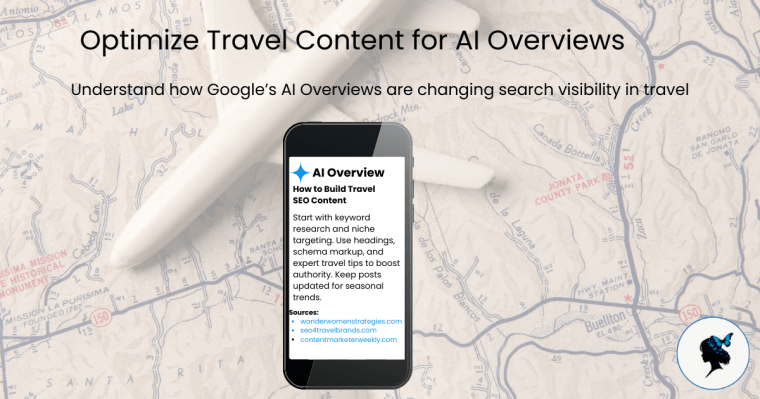
Visual guide on optimizing travel content for AI overviews, showcasing effective strategies and techniques.

For travel companies, this means less free traffic from Google when people research destinations or itineraries. To stay visible, travel brands need to structure content so AI can easily pull summaries, boost their trust signals, and explore other channels like video or paid ads.

What Are AI Overviews?

AI Overviews (formerly part of Google’s Search Generative Experience) are brief, 2–5 sentence summaries that appear in a card at the top of the search page.
They pull key points from several web pages and cite those sources directly beneath the summary.
Sometimes they include images or lists to make the answer clearer, especially for recipe or itinerary-style queries.

How AI Overviews Work

  1. Content Aggregation
    The AI reads multiple top-ranking pages and picks out the main facts.
  2. Summary Generation
    It writes a short paragraph that answers the user’s question.
  3. Source Citations
    It links to the web pages it used, giving users a path to learn more.
  4. Interactive Features
    Users can simplify or expand the summary, and even send it to Google Docs or Gmail.
  5. Ads Integration
    For commercial queries, Google now includes sponsored suggestions directly in the AI Overview, marked as “sponsored”.
Infographic depicting the workflow of AI, highlighting data analysis and response generation steps.

Impact on Travel Companies

Lower Click-Through Rates

  • Organic CTR Drops: When an AI Overview appears, CTR to the first organic result can fall by about 34.5%.
  • Non-Branded Queries Hit Hardest: Informational searches like “best beach in Bali” see CTR declines near 20% on average.
  • Paid Ads Also Affected: Paid search ads can lose about 12 percentage points in CTR whenever an AI Overview shows up.

Reduced Visibility for Travel Research

Travelers often start with “where to go” or “what to see” queries. Since AI Overviews answer these questions directly, fewer people scroll down to organic listings. Major travel brands like Kayak and TripAdvisor are already adjusting their strategies to feed content directly into AI systems, hoping to stay in the AI-sourced summaries.

Authority and Trust Signals Matter More

Google leans on E-E-A-T (Experience, Expertise, Authoritativeness, Trustworthiness). Sites that clearly show author credentials, publish fresh reviews, and use structured data are more likely to be cited in AI Overviews.

Tips for Travel Companies

  1. Add Clear “Quick Facts” Sections
    Place a bullet-point list or short paragraph at the top of your page that directly answers common travel questions.
  2. Use FAQ Schema
    Mark up FAQs with structured data so Google’s AI can easily find and use your answers.
  3. Highlight Experts
    Show author bios with real credentials and local expertise.
  4. Keep Content Fresh
    Update guides and itineraries seasonally and date-stamp them clearly.
  5. Diversify Channels
    • YouTube & Video: Video content can be featured in AI Overviews and on Google’s video carousel.
    • Non-Google AIs: Publish content optimized for ChatGPT or Perplexity to capture referral traffic.
  6. Consider Paid Placements
    Explore Google Ads extensions that appear alongside AI Overviews to maintain visibility.

Conclusion

AI Overviews are changing how people search and how clicks are distributed. Travel companies must adapt by making their content AI-friendly, boosting trust signals, and branching out into video and paid channels.

If you’re in the travel business and need help staying visible in this AI-driven world, contact Wander Women Strategies. We specialize in SEO, content strategy, and social media for travel brands, and we’re here to help you thrive when Google’s AI takes the lead.