Outreach Strategy Development: A Key SEO Tactic for Travel Companies

▶ Table of Contents
  1. Introduction
  2. What is Outreach Strategy Development?
  3. How to Develop an Effective Outreach Strategy
  4. Why Outreach Strategy Development is Important for Travel Companies
  5. How Wanderlinks Can Help with Outreach Strategy Development

Introduction

In the highly competitive travel industry, gaining visibility and establishing your brand as a trusted authority requires a multifaceted SEO strategy. While technical SEO, keyword research, and on-page optimization are important, outreach strategy development is a game-changer in building sustainable SEO success. Outreach is an essential component of link-building, content promotion, and brand awareness.

In this article, we’ll explore Outreach Strategy Development in detail and explain how travel companies can harness this tactic to build their SEO profile and drive more organic traffic to their websites. We’ll also introduce you to Wanderlinks, our all-in-one package designed to help travel businesses grow through targeted outreach and backlink building.


What is Outreach Strategy Development?

Outreach strategy development is the process of identifying, building, and nurturing relationships with relevant third-party websites, bloggers, influencers, journalists, and other content creators to promote your brand, gain valuable backlinks, and increase your reach. The ultimate goal of an outreach strategy is to create mutually beneficial partnerships that improve your website’s authority and visibility in search engines.

Effective outreach is not just about securing backlinks. It’s about building a reputation as a valuable and credible resource in your niche, sharing your content with the right audiences, and leveraging those relationships to boost your online presence.

The outreach process typically involves:

  • Identifying potential partners: Finding websites, influencers, and blogs relevant to your industry and audience.
  • Crafting compelling pitches: Reaching out to potential partners with personalized messages that emphasize the value of collaborating.
  • Building strong relationships: Engaging with your partners over time to foster trust and open communication.
  • Securing backlinks and mentions: Achieving the ultimate goal of gaining valuable backlinks, social media mentions, or guest post opportunities.

For travel companies, outreach is especially important as it helps establish credibility, fosters collaborations, and drives traffic from reputable sources in the travel industry.


How to Develop an Effective Outreach Strategy

An effective outreach strategy requires careful planning, research, and ongoing efforts. Follow these steps to develop a successful outreach strategy for your travel business:

Step 1: Set Clear Outreach Goals

Before launching an outreach campaign, define your goals. Are you seeking backlinks, guest post opportunities, social media mentions, or media coverage? Your goals will guide your outreach strategy and ensure you’re targeting the right people.
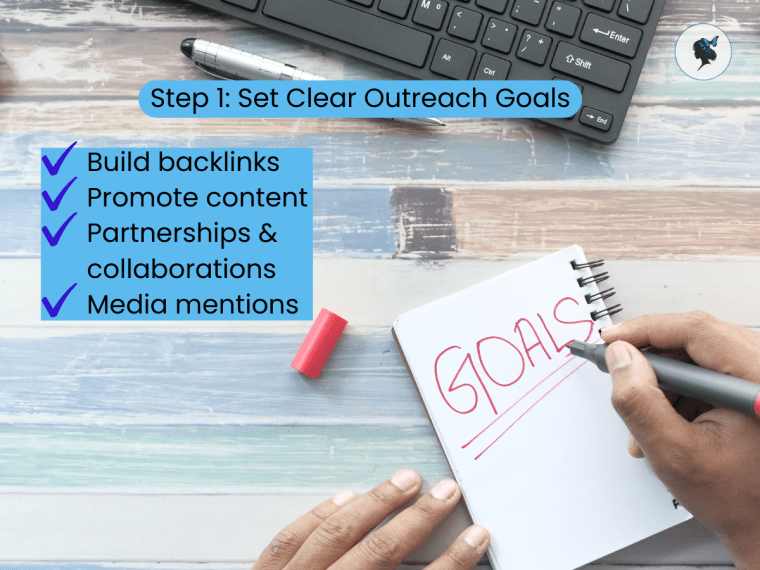
Some common outreach goals for travel companies include:

  • Building backlinks: Links from authoritative websites improve SEO rankings and increase your domain authority.
  • Promoting content: Increase visibility for new blog posts, destination guides, or promotional offers.
  • Partnerships and collaborations: Form partnerships with influencers, bloggers, or local businesses to boost brand exposure.
  • Media mentions: Gain media coverage from travel publications or influencers to establish credibility.

Clearly defined goals ensure that every outreach effort is purposeful and measurable.

Step 2: Identify Your Target Audience

The success of your outreach campaign depends on targeting the right websites, influencers, and content creators.
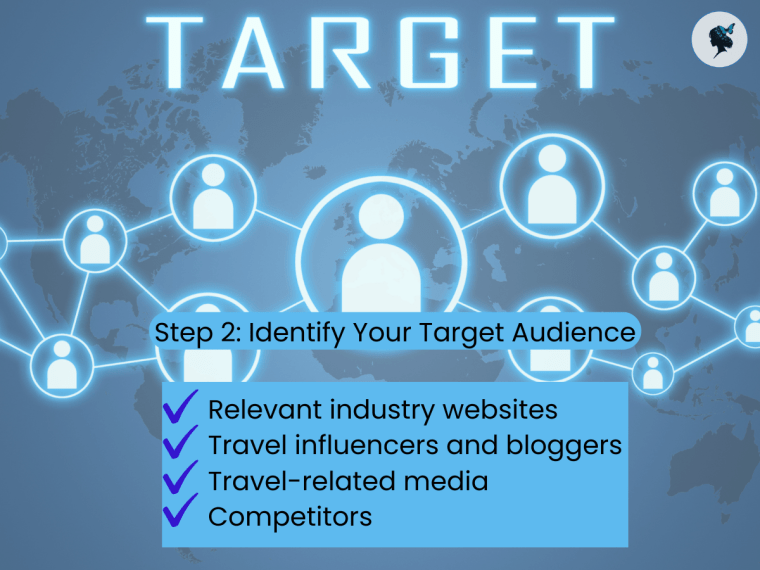
To identify the best targets for your outreach, consider the following:

  • Relevant industry websites: Look for travel websites, blogs, or tourism boards that share similar interests or cater to the same audience. For example, if you specialize in eco-tourism, focus on websites that emphasize sustainable travel or eco-friendly destinations.
  • Travel influencers and bloggers: Identify influencers in the travel niche who can amplify your message. You can use platforms like Instagram, X, or travel blogs to find influencers with high engagement rates and a genuine connection to their followers.
  • Travel-related media: Target journalists or writers from prominent travel publications such as Travel + Leisure, Lonely Planet, or National Geographic. Getting media coverage from these outlets can significantly increase your visibility and establish trust with your audience.
  • Competitors: Analyze your competitors’ backlinks to uncover their outreach targets. Use tools like Ahrefs, Semrush, or Moz to discover where your competitors are earning their links, and consider reaching out to the same websites for backlink opportunities.

Step 3: Craft Compelling Outreach Pitches

Once you’ve identified your outreach targets, it’s time to create personalized outreach pitches that will grab their attention. A well-crafted pitch is critical for establishing a connection and building a relationship.

Keep these tips in mind when crafting your outreach emails:

  • Personalize your message: Address the recipient by name and refer to specific content or topics that resonate with them. For example, if you’re reaching out to a travel blogger who recently posted about a destination you also offer tours to, mention that post and explain how your travel company could be a good fit for their audience.
  • Offer value: Be clear about the value you can offer to the recipient. Whether it’s guest blogging, sharing content, or a collaboration, make sure the pitch highlights how both parties will benefit from working together.
  • Be concise and clear: Don’t overwhelm the recipient with too much information. Keep your message concise, highlighting the key points of your outreach, such as the purpose of the collaboration and the benefits involved.
  • Include a call to action (CTA): Invite the recipient to take action, such as setting up a meeting, publishing a guest post, or linking to your content. A clear CTA ensures that the recipient knows exactly what you want from them.

Step 4: Build Relationships Over Time

Outreach is not just a one-time transaction; it’s about building lasting relationships. After your initial outreach, follow up with the recipient and engage with their content regularly.

You can:

  • Engage on social media: Share and comment on their posts, articles, and content to build rapport.
  • Offer value: If you come across content or a resource that would benefit the recipient, don’t hesitate to share it with them.
  • Stay in touch: Periodically check in with your outreach targets, offering new opportunities or content that might interest them. Keep the relationship positive and professional.

Step 5: Track Results and Adjust Your Strategy

An effective outreach campaign requires ongoing monitoring.
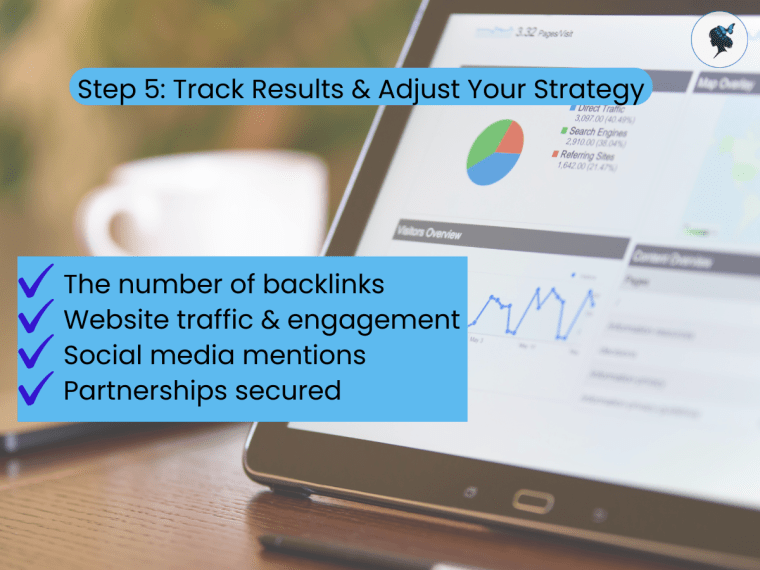
Track the success of your outreach efforts by measuring:

  • The number of backlinks acquired
  • Website traffic and engagement from outreach sources
  • Social media mentions or collaborations
  • The number of partnerships or media mentions secured

If certain tactics or outreach targets are working particularly well, double down on those efforts. If other strategies aren’t yielding results, adjust your approach to refine your outreach plan.


Why Outreach Strategy Development is Important for Travel Companies

An outreach strategy is crucial for travel companies for several reasons:

Improves SEO and Rankings

Backlinks remain one of the most important ranking factors for search engines. By securing backlinks from authoritative websites, travel companies can boost their domain authority and improve their SEO rankings. Outreach allows you to strategically build a backlink profile that will push your website higher in search results.

Increases Website Traffic

Outreach doesn’t just help with SEO; it can also drive direct traffic to your website. By partnering with bloggers, influencers, and media outlets, you increase the chances of your content being shared with their audiences, resulting in more traffic to your site.

Establishes Authority and Trust

Working with trusted websites and influencers helps build your reputation in the travel industry. When reputable sources link to your content or mention your business, it signals to both search engines and users that your website is credible and authoritative.

Expands Brand Awareness

A well-executed outreach campaign can expand your brand’s visibility. Whether through guest blogging, media coverage, or influencer mentions, outreach exposes your brand to new audiences, which can ultimately lead to more conversions and customers.

Fosters Long-term Partnerships

The connections made through outreach can lead to long-term partnerships that benefit your business in various ways. For example, forming relationships with influencers or travel media outlets can lead to ongoing collaboration, content opportunities, and brand advocacy.


At Wander Women Strategies, we specialize in helping travel companies develop and execute effective outreach strategies that drive results. If you want to ensure your backlink profile is clean, effective, and working for you, WanderLinks is the perfect solution for your travel company. Our WanderLinks package offers:

  • Backlink Audit: We complete a thorough backlink audit with actionable recommendations on your broken links.
  • Competitor Backlink Analysis: We identify your competitors, evaluate their backlinks, and provide valuable insight into backlink opportunities.
  • Outreach Strategy Development: We identify 10+ opportunities for guest posting and provide tips on best practices for your outreach strategy.
  • Local Link Building: We provide opportunities for local link building, including local tourism blogs & websites, local business partnerships, and local media.

By leveraging the insights and tools from WanderLinks, your travel company can create a more effective SEO strategy that attracts high-quality backlinks and drives more traffic to your website.

Let us help you harness the power of outreach to boost your SEO, increase website traffic, and grow your travel business. With Wanderlinks, you’ll have the tools and expertise to develop a winning outreach strategy.


Ready to Launch Your Outreach Strategy? Contact us today to get started with Wanderlinks.


Competitor Backlink Analysis: Unlocking SEO Success for Travel Companies

▶ Table of Contents
  1. What is Competitor Backlink Analysis?
  2. How to Perform Competitor Backlink Analysis
  3. Why Competitor Backlink Analysis is Crucial for Travel Companies
  4. WanderLinks: our Backlink SEO package

In the highly competitive travel industry, establishing a strong SEO strategy is critical to standing out from the crowd. One of the most effective ways to boost your search rankings is by conducting competitor backlink analysis. By understanding where your competitors are earning their backlinks, you can gain invaluable insights into how to improve your own SEO performance.

This process is part of the powerful suite of SEO services we offer at Wander Women Strategies: WanderLinks—a package tailored specifically for travel companies looking to strengthen their backlink strategy and enhance their overall online presence.

Let’s dive in and explore how competitor backlink analysis can provide a major SEO boost for your travel company!

Competitor backlink analysis is the process of evaluating the backlink profiles of your competitors to identify opportunities, gaps, and strategies you can adopt to improve your own SEO efforts. Backlinks (also known as inbound links) are one of the most significant ranking factors for search engines, such as Google. When authoritative websites link to your travel business, it signals to search engines that your site is credible, trustworthy, and relevant to the industry.

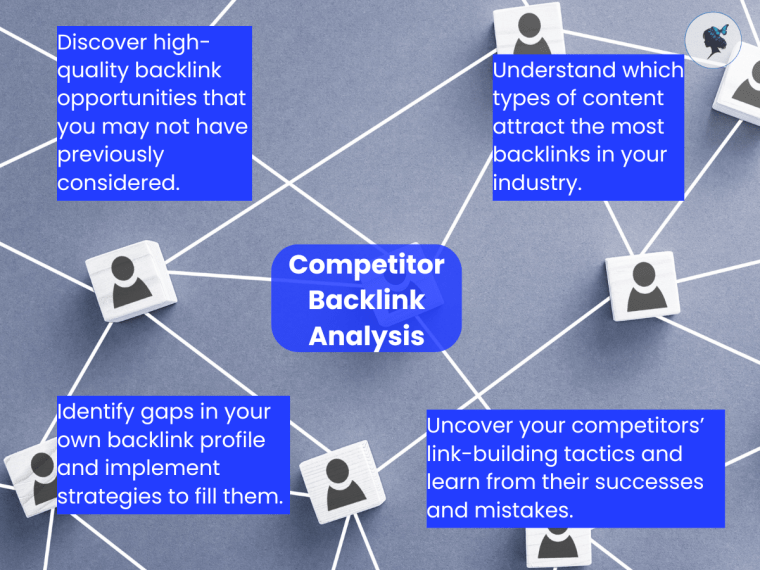
By conducting a competitor backlink analysis, you can:

  • Discover high-quality backlink opportunities that you may not have previously considered.
  • Understand which types of content attract the most backlinks in your industry.
  • Identify gaps in your own backlink profile and implement strategies to fill them.
  • Uncover your competitors’ link-building tactics and learn from their successes and mistakes.

In short, competitor backlink analysis is about strategically using data from your competitors to enhance your own backlink strategy and outperform them in search engine rankings.


Performing a competitor backlink analysis is a multi-step process that requires careful attention to detail and the right tools. Below is a step-by-step guide to help you conduct a thorough competitor backlink analysis for your travel company.

Identify Your Competitors

Before you can start analyzing your competitors’ backlinks, you need to identify who they are.

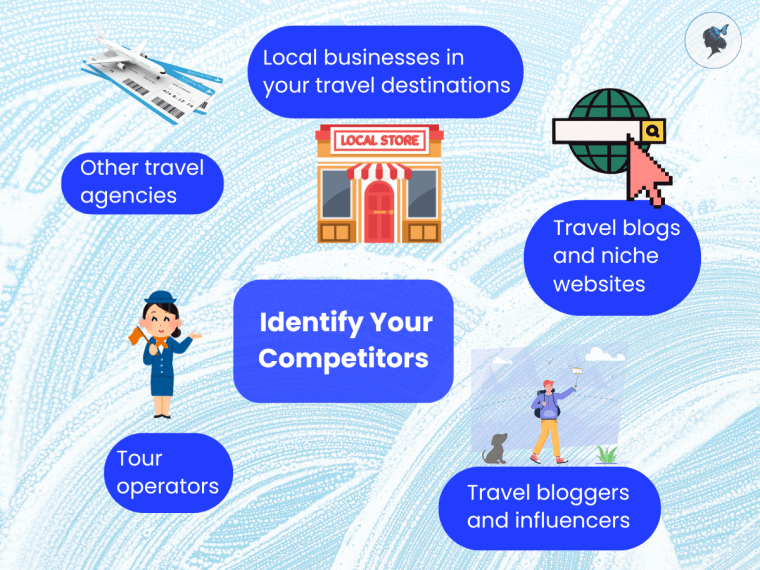
In the travel industry, your competitors may include:

  • Other travel agencies
  • Tour operators
  • Travel bloggers and influencers
  • Travel blogs and niche websites
  • Local businesses in your travel destinations

You can identify your competitors by searching for key travel-related terms and phrases on Google (e.g., “best tours in Bali” or “luxury hotels in Paris”). Take note of the websites that consistently appear at the top of the search results. These are the websites you will want to analyze.

There are several powerful SEO tools that can help you gather data on your competitors’ backlinks. Some of the most popular ones include:

  • Ahrefs: Ahrefs offers a robust backlink analysis tool that allows you to view the backlinks of any website, including your competitors. It provides detailed reports on the quality, quantity, and source of backlinks.
  • Semrush: Semrush’s Backlink Analytics tool provides a comprehensive breakdown of your competitors’ backlinks, helping you identify high-value links, referring domains, and more.
  • Moz: Moz’s Link Explorer lets you view the backlink profiles of competitors, including domain authority, page authority, and the anchor text used in backlinks.
  • Majestic: Majestic’s backlink analysis tools allow you to examine the backlink profiles of your competitors, with detailed metrics such as Trust Flow and Citation Flow to assess link quality.

Once you’ve selected your tool, enter the URL of your competitors’ websites to start gathering their backlink data.

You can analyze specific metrics, such as:

  • Number of backlinks: How many backlinks does your competitor have?
  • Referring domains: How many unique domains are linking to your competitor’s website?
  • Anchor text: What anchor text is used in the backlinks? Is it relevant and natural?
  • Backlink quality: Are the backlinks from authoritative, trustworthy sites?

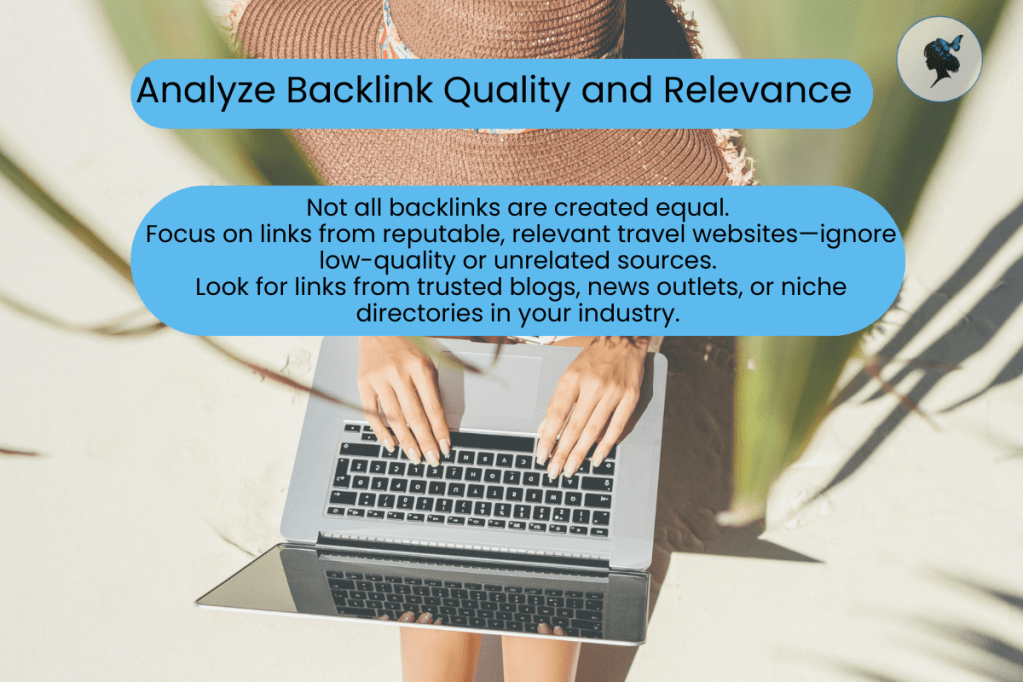
Not all backlinks are created equal. When performing a competitor backlink analysis, it’s crucial to evaluate the quality and relevance of the backlinks.

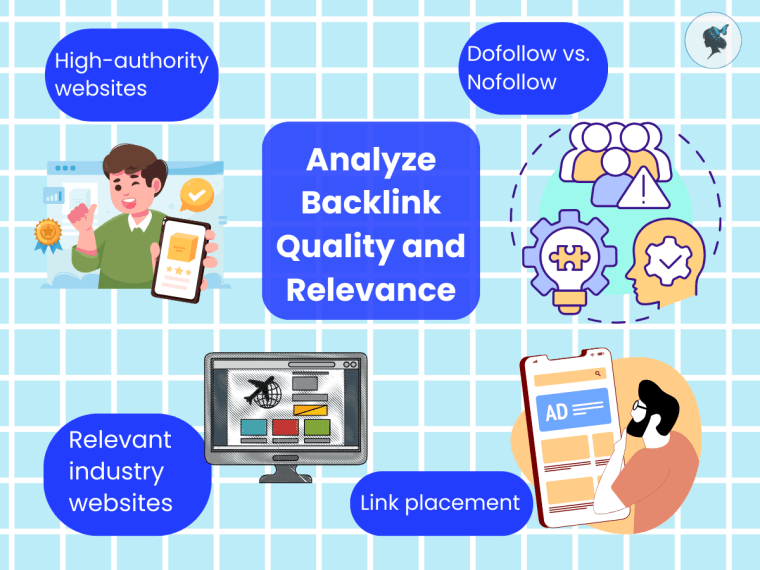
Here’s what to look for:

  • High-authority websites: Backlinks from websites with high domain authority (DA) are more valuable and can improve your rankings significantly. Check the DA of the websites linking to your competitors using tools like Moz’s Domain Authority metric.
  • Relevant industry websites: Backlinks from websites that are related to the travel industry or your specific niche are more beneficial than links from unrelated sites. For example, a backlink from a popular travel blog or tourism board is much more valuable than a link from a general news website.
  • Dofollow vs. Nofollow: Dofollow backlinks pass on SEO value and help improve rankings, while nofollow backlinks do not directly impact SEO. While both types of backlinks are useful for driving traffic, prioritize dofollow links when possible.
  • Link placement: Where is the backlink placed? Is it within the body content of a relevant page, or is it buried in the footer or sidebar? Backlinks in the main content are typically more valuable.

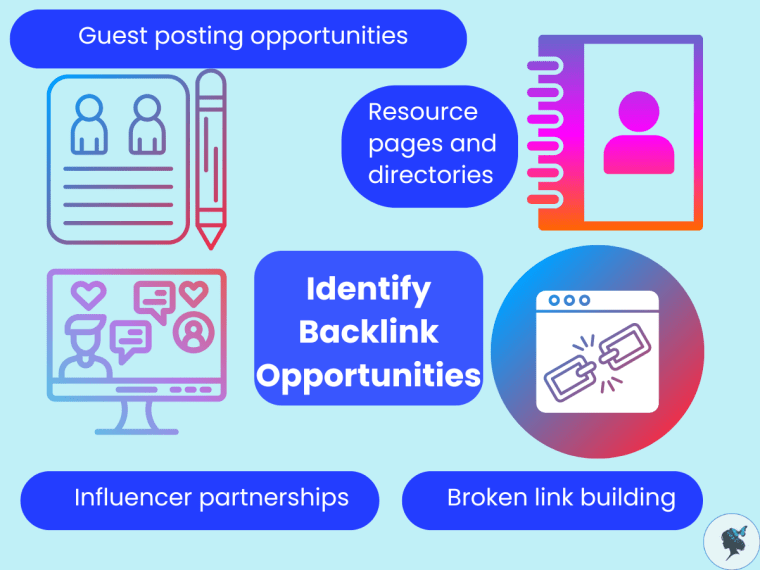
One of the most important aspects of competitor backlink analysis is identifying backlink opportunities. By understanding where your competitors are earning their backlinks, you can uncover high-quality sites that may be willing to link to your travel business as well.

Look for:

  • Guest posting opportunities: Is your competitor contributing guest posts to popular travel blogs? If so, consider reaching out to those blogs for similar opportunities.
  • Resource pages and directories: Many websites in the travel industry have resource pages or directories listing relevant travel businesses. Look for these pages and see if you can get your website listed.
  • Influencer partnerships: Travel bloggers and influencers often link to companies they work with or review. Look for opportunities to collaborate with influencers in your niche.
  • Broken link building: Identify broken links on your competitors’ websites and offer your own content as a replacement. This tactic can be highly effective in earning high-quality backlinks.

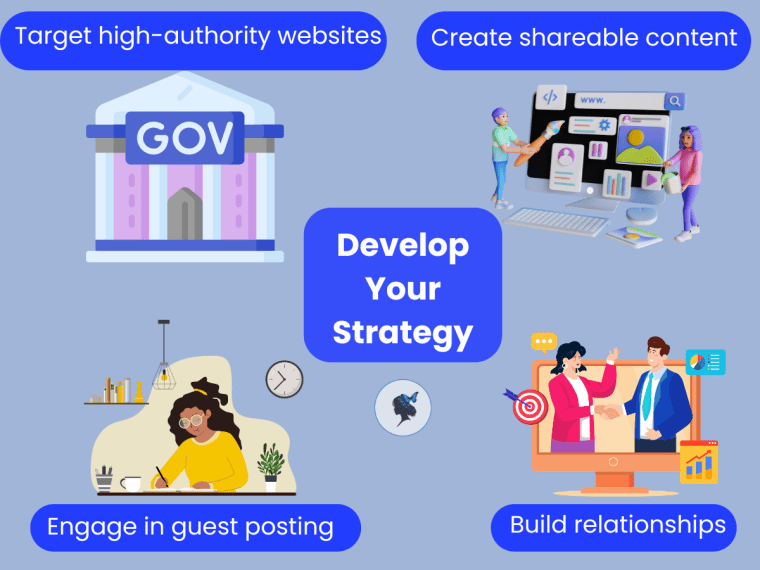
After gathering insights from your competitor’s backlink profiles, it’s time to develop your own link-building strategy. The goal is to replicate your competitors’ successful strategies while also finding unique opportunities for your travel business.

Focus on:

  • Targeting high-authority websites in the travel industry.
  • Creating shareable content like infographics, destination guides, or travel tips to attract backlinks.
  • Engaging in guest posting on relevant blogs and publications.
  • Building relationships with industry influencers and bloggers.

Regularly tracking and optimizing your backlink strategy will keep your travel website ahead of the competition.


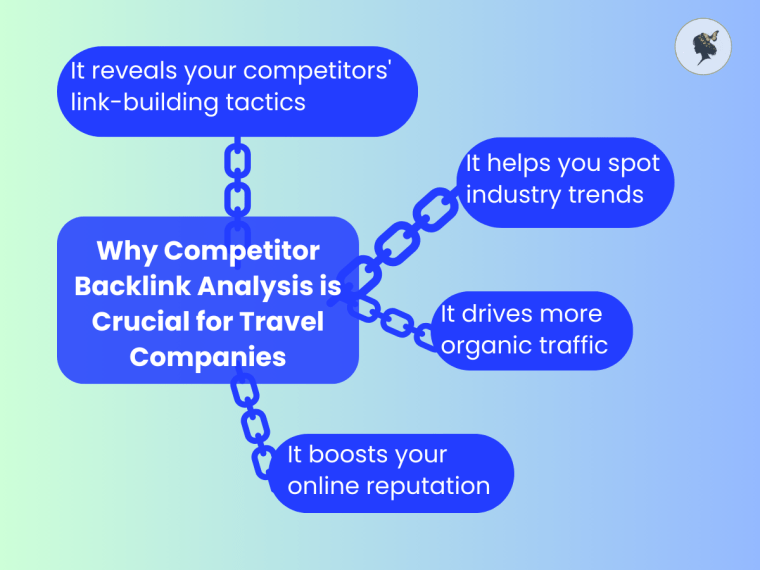
Competitor backlink analysis is especially important for travel companies because:

  • It reveals your competitors’ link-building tactics: By learning where your competitors are getting their backlinks, you can adapt these tactics and refine them to create your own successful strategy.
  • It helps you spot industry trends: By analyzing the backlinks of successful travel websites, you can identify industry trends and create content that’s likely to attract links from other high-authority websites.
  • It saves you time and resources: Rather than starting from scratch, competitor backlink analysis lets you build on existing strategies that have already proven successful in the travel industry.
  • It drives more organic traffic: The more high-quality backlinks you acquire, the more likely your travel business is to rank higher in search results, attracting more organic traffic and increasing your chances of converting visitors into customers.
  • It boosts your online reputation: Earning backlinks from reputable and authoritative sites in the travel industry enhances your website’s credibility and reputation.

At Wander Women Strategues, we offer a comprehensive backlink package designed to help your travel business stay competitive in the ever-evolving online space. Our WanderLinks package includes:

  • Backlink Audit: We complete a thorough backlink audit with actionable recommendations on your broken links.
  • Competitor Backlink Analysis: We identify your competitors, evaluate their backlinks, and provide valuable insight into backlink opportunities.
  • Outreach Strategy Development: We identify 10+ opportunities for guest posting and provide tips on best practices for your outreach strategy.
  • Local Link Building: We provide opportunities for local link building, including local tourism blogs & websites, local business partnerships, and local media.

Don’t let your competitors steal the spotlight. With Wanderlinks, you’ll gain a competitive edge and implement a robust backlink strategy that drives results.


Ready to Outperform Your Competitors?

Start your backlink analysis today with Wanderlinks. Our expert team will help you assess your competitors’ backlinks, uncover new opportunities, and build a powerful backlink profile that elevates your travel company’s SEO. Contact us now to get started!


Competitor Backlink Analysis for Travel Companies: Enhance Your SEO Strategy


▶Table of Contents
  1. Introduction
  2. What is Competitor Backlink Analysis?
  3. How to Do Competitor Backlink Analysis for Your Travel Company
  4. Why Competitor Backlink Analysis is Important for Travel Companies
  5. Get Started with Wanderer’s Watchlist: Your Competitive Edge in SEO

Introduction

In the competitive world of online marketing, SEO is the backbone of digital visibility. For travel companies, ranking higher in search engine results can directly translate into increased bookings, brand awareness, and customer loyalty. But how do you gain an edge over your competitors, especially in a saturated market? The answer lies in competitor backlink analysis.

Backlinks are one of the most important ranking factors for search engines like Google, and understanding how your competitors are building their link profiles can give you a significant advantage. In this article, we’ll explore what competitor backlink analysis is, how to do it effectively, why it’s crucial for travel businesses, and how our Wanderer’s Watchlist package can help you track and outsmart your competition.


Competitor backlink analysis is the process of examining the backlinks that point to your competitors’ websites. Backlinks are external links from other websites that direct traffic to your site, and they play a vital role in determining your site’s authority, relevance, and ranking in search engines.

When you conduct a backlink analysis, you are essentially looking at the websites linking to your competitors and identifying:

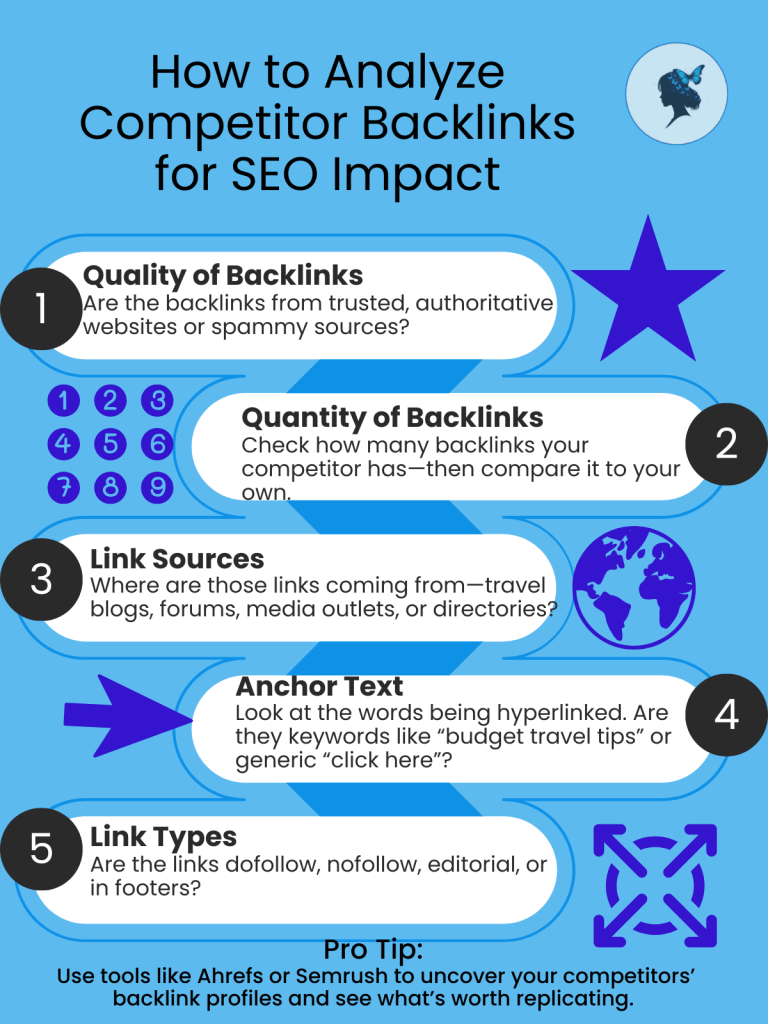
  • The Quality of Backlinks: Are these links from authoritative or spammy websites? Quality backlinks have a much higher impact on SEO.
  • The Quantity of Backlinks: How many backlinks does a competitor have, and how does it compare to your backlink profile?
  • Link Sources: Where are these backlinks coming from? Are they from high-traffic travel blogs, niche industry websites, or social media platforms?
  • Anchor Text: What keywords are used in the anchor text of the backlinks? This can give you insights into the terms competitors are ranking for.
  • Link Types: Are these links from guest posts, articles, directories, or other sources? Understanding the types of backlinks your competitors are building can help you identify the most effective link-building strategies for your own website.

By analyzing your competitors’ backlinks, you can identify opportunities for link-building and discover potential weaknesses in their SEO strategy that you can take advantage of.


Effective competitor backlink analysis requires a structured and comprehensive approach. Let’s break down the steps to analyze your competitors’ backlinks and use that data to improve your travel business’s SEO strategy.

Step 1: Identify Your Competitors

Before diving into backlink analysis, you need to determine who your competitors are. These could include:

  • Direct Competitors: Other travel companies offering the same products or services (e.g., tour operators, booking agencies, and destinations).
  • Indirect Competitors: Websites like travel blogs, review platforms, or even niche content creators targeting the same audience but not offering the same service.

Use search engines or SEO tools like Semrush, Ahrefs, or Moz to identify these competitors by looking at the keywords you want to rank for and noting which websites consistently rank for those terms.

Once you’ve identified your competitors, it’s time to dive into backlink data. There are a variety of SEO tools available to conduct backlink analysis:

  • Ahrefs: Ahrefs has one of the most comprehensive backlink analysis tools, allowing you to analyze the link profile of any website. You can track the total number of backlinks, view the linking domains, and see the anchor text used.
  • Semrush: Semrush offers detailed insights into backlinks, showing you the exact pages where competitors are receiving links, the link types, and their link authority.
  • Moz Link Explorer: Moz provides a simple interface for analyzing backlinks and offers metrics such as Domain Authority (DA) and Page Authority (PA) to assess the quality of backlinks.
  • Majestic: This tool specializes in backlinks and gives you metrics like Trust Flow and Citation Flow, which can help you determine the quality of links.

These tools will provide you with valuable insights into your competitors’ backlinks, helping you see where their strength lies and where they might be lacking.

Not all backlinks are created equal. For your competitor backlink analysis to be truly valuable, you need to assess the quality and relevance of the backlinks your competitors are receiving.

  • Domain Authority: Check the authority of the domains that are linking to your competitors. High-authority domains (like popular travel publications or tourism boards) will have a bigger impact on search rankings than low-authority domains (such as spammy websites).
  • Relevance to Your Niche: For travel businesses, backlinks from travel-related websites, blogs, tourism boards, and related industry sources are more valuable than generic backlinks from unrelated sites.
  • Follow vs. NoFollow Links: Follow links pass link equity and contribute to SEO, while NoFollow links do not. A good backlink profile contains a healthy mix of both, but focus on acquiring Follow links from high-quality sources.

One of the most valuable aspects of competitor backlink analysis is identifying potential link-building opportunities.

As you analyze your competitors’ backlinks, make note of any:

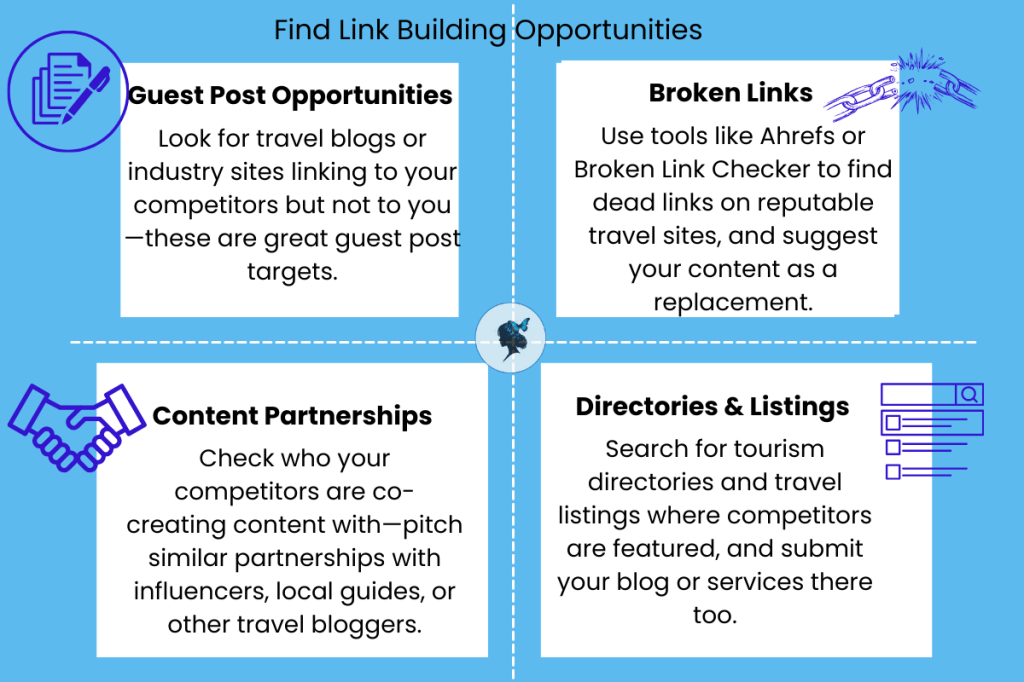
  • Guest Post Opportunities: Are there industry blogs or websites that are linking to your competitors but not to you? These might be potential guest post opportunities.
  • Broken Links: Find broken or dead links on authoritative websites that could be replaced with a link to your content.
  • Content Partnerships: Look for content collaborations, co-marketing opportunities, or influencer partnerships that your competitors have leveraged successfully.
  • Directories and Listings: Explore the directories and listings where your competitors have their business listed. You might want to ensure you are included in those same directories.

By identifying where your competitors are getting their links, you can replicate their strategies and even discover better opportunities to enhance your own backlink profile.

Competitor backlink analysis is an ongoing process. Your competitors will continue to build backlinks, and you should track their progress regularly to ensure you remain competitive. Use SEO tools to set up alerts for new backlinks that point to your competitors’ websites, and adjust your own link-building strategy accordingly.


Competitor backlink analysis is a powerful tool that offers several benefits for travel businesses looking to improve their SEO strategy.

By analyzing the backlinks of top-performing travel competitors, you can uncover high-value link-building opportunities. These could include websites and blogs that are already proven to link to other travel businesses.

Backlink strategies change over time, and competitors’ link-building tactics can offer valuable insights into emerging trends in the travel industry. By keeping an eye on your competitors’ backlinks, you can adapt your strategy and avoid missing out on new opportunities.

Improve Website Authority and Ranking

Backlinks are one of Google’s most important ranking factors. By building high-quality backlinks to your travel website, you can increase its authority, improve your rankings, and drive more traffic to your site. Competitor backlink analysis helps you understand what types of backlinks work best in your niche, enabling you to build a more effective link profile.

Refine Your Content Strategy

Backlinks aren’t just about quantity—they’re also about the quality of the content they’re linked to. By studying which pages or types of content your competitors are getting backlinks for, you can refine your own content strategy to create more link-worthy content. For instance, you might discover that long-form destination guides or travel resource hubs are frequently linked to, encouraging you to produce similar high-quality content.

Optimize for Local SEO

For travel companies targeting specific destinations, local backlinks can be incredibly valuable. Through competitor backlink analysis, you can discover local websites, directories, and industry-specific portals where your competitors are getting links. This insight can help you build a local backlink strategy to improve your visibility in local search results.

For more, check out our ultimate guide to Local SEO.


Get Started with Wanderer’s Watchlist: Your Competitive Edge in SEO

Now that you understand the importance of competitor backlink analysis and how to leverage it for your travel business, it’s time to take action with Wanderer’s Watchlist. Our backlink analysis package offers:

  • Competitor Identification: A list of top 5 competitors in your niche, including domain names and a brief description of each.
  • Keyword Analysis: A breakdown of high-performing keywords used by competitors, including search volume & position in SERPs. Keyword gap analyisis, including: monthly volume, competition, and position in SERPs.
  • Backlink Analysis: A report on competitor backlink profiles, highlighting linking domains and opportunities for link building.
  • Traffic and Ranking Insights: An overview of estimated traffic sources and top-ranking pages for competitors, providing benchmarks for your own SEO strategy.

Ready to Unlock Your Backlink Potential?

If you’re ready to take your travel SEO to the next level and start acquiring high-quality backlinks, contact us today to learn more about how Wanderer’s Watchlist can help your travel business build a stronger, more competitive online presence.


Backlink Audits: The Key to Building a Strong SEO Foundation for Travel Companies


▶ Table of Contents
  1. What is a Backlink Audit?
  2. How to Conduct a Backlink Audit
  3. Why Backlink Audits Are Important for Travel Companies
  4. Start Optimizing Your Backlink Profile with WanderLinks

In today’s competitive travel industry, having a strong online presence is more important than ever. While on-page SEO and high-quality content are essential, backlinks remain one of the most influential ranking factors for search engines. However, not all backlinks are created equal. To ensure that your travel company is benefiting from its backlink strategy, you need to perform regular backlink audits.

A backlink audit allows you to evaluate the quality of your backlinks, remove any harmful ones, and discover new opportunities to improve your link profile. With a package like WanderLinks, your travel company can stay on top of your backlink strategy and ensure it supports your long-term SEO goals.

A backlink audit is the process of reviewing and analyzing the backlinks pointing to your website. Backlinks, also known as inbound links, are links from external websites that point to your pages. These links are a signal to search engines that other sites trust your content. As such, backlinks are one of the most important ranking factors in SEO.

However, not all backlinks are beneficial. While some backlinks from reputable, high-authority sites can improve your website’s ranking, low-quality, spammy, or toxic backlinks can have the opposite effect. A backlink audit helps you identify:

  • Good backlinks: Links from authoritative websites that contribute positively to your website’s credibility.
  • Toxic backlinks: Links from unreliable, low-quality, or irrelevant websites that could negatively affect your rankings.
  • Opportunities: Identifying gaps in your backlink profile where you could earn more high-quality backlinks.

A backlink audit is a crucial step in maintaining a clean, effective, and healthy link profile that will help you climb the search engine rankings.


Conducting a backlink audit may seem complex, but breaking it down into manageable steps makes it easier to handle. Here’s how you can perform a thorough backlink audit for your travel company:

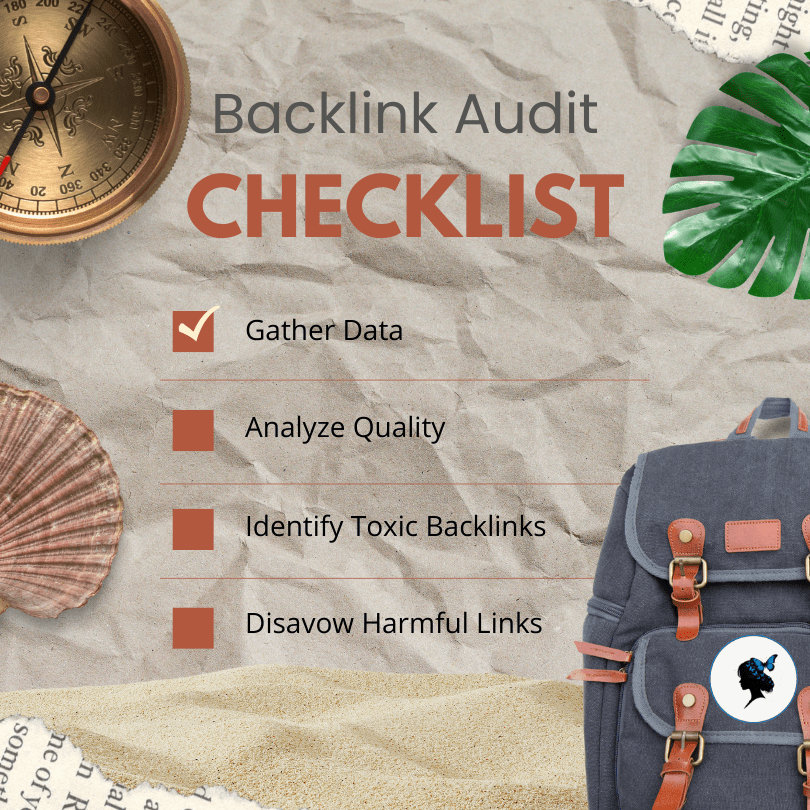
Step 1: Gather Your Backlink Data

The first step in conducting a backlink audit is collecting a list of all the backlinks pointing to your website. You can use SEO tools such as:

  • Google Search Console: This is a free tool from Google that allows you to see which websites are linking to your site and provides information about the quality of those links.
  • Ahrefs: Ahrefs is an excellent tool for analyzing backlinks and viewing detailed reports about link quality, link type, and anchor text.
  • SEMrush: SEMrush provides a comprehensive backlink audit tool that identifies both toxic and high-quality backlinks. It can also help you assess competitors’ backlink profiles.
  • Moz: Moz’s Link Explorer provides valuable backlink data, including domain authority, page authority, and the number of linking root domains.

By gathering data from these tools, you can compile a list of all backlinks pointing to your site, both nofollow and dofollow links.

Step 2: Analyze the Quality of Each Backlink

Once you’ve gathered your backlink data, the next step is to assess the quality of each backlink. Factors that determine the quality of a backlink include:

  • Domain Authority: Backlinks from high-authority domains (websites that have a strong online reputation and high trustworthiness) are generally more valuable.
  • Relevance: Backlinks should come from sites that are relevant to your travel business, such as travel blogs, tourism websites, or local tourism authorities.
  • Anchor Text: The anchor text of a backlink is the clickable text that links to your site. Ideally, it should be natural and relevant to the content on the linked page.
  • Traffic: A backlink from a site with high traffic is likely to have more value because it can drive referral traffic to your website.

Step 3: Identify Toxic or Harmful Backlinks

One of the most important parts of a backlink audit is identifying toxic backlinks. These are links that come from low-quality, spammy, or irrelevant websites. Toxic backlinks can come from:

  • Link farms: Websites created specifically to sell backlinks in bulk, often low-quality links that are irrelevant to your site.
  • Spammy websites: Websites that violate Google’s quality guidelines, such as those that promote illegal or unethical activities.
  • Irrelevant industries: Backlinks from websites that have nothing to do with your travel niche can hurt your rankings.

You can use tools like Ahrefs or SEMrush to identify potentially toxic backlinks. Pay attention to the following red flags:

  • Backlinks from sites with a low domain authority
  • Backlinks with over-optimized or irrelevant anchor text
  • Links from websites in unrelated industries

Step 4: Disavow Harmful Links

Once you have identified toxic backlinks, it’s essential to disavow them to avoid any negative impact on your SEO performance. The Google Disavow Tool allows you to tell Google to ignore these harmful backlinks.

Here’s how you can disavow harmful backlinks:

  1. Create a file that includes the links you want Google to ignore.
  2. Upload the file to the Google Disavow Tool.
  3. Google will disregard the disavowed links when calculating your website’s ranking.

Step 5: Build a Plan to Acquire More High-Quality Backlinks

Now that you’ve cleaned up your backlink profile, it’s time to focus on building more high-quality backlinks. You can:

  • Reach out to authoritative websites in the travel industry for guest posting opportunities, collaborations, or content partnerships.
  • Create shareable content such as infographics, blog posts, or destination guides that naturally attract backlinks.
  • Monitor your competitors to see where they’re getting backlinks and identify new link-building opportunities.

Backlink acquisition is an ongoing process, and regularly auditing your backlinks ensures that you are constantly improving the quality of your backlink profile.


For travel companies, backlinks play a crucial role in enhancing SEO performance and boosting organic traffic.

Here’s why regular backlink audits are vital for travel businesses:

1. Boost Your Website’s Authority

High-quality backlinks from reputable websites help establish your travel company as an authority in the industry. When authoritative travel blogs, media outlets, or tourism websites link to your content, it signals to search engines that your site is a credible source of information.

2. Improve Search Engine Rankings

Search engines like Google prioritize websites with strong backlink profiles in their rankings. By regularly auditing your backlinks and removing toxic links, you ensure that search engines view your site favorably, improving your chances of ranking higher for relevant keywords.

3. Increase Organic Traffic

When you have high-quality backlinks, you’re not only boosting your SEO rankings but also increasing the likelihood that visitors from those sites will click through to your travel website. This leads to an increase in referral traffic, which can drive more potential customers to your site.

4. Protect Your Website from Penalties

Toxic backlinks can harm your website’s reputation, and Google can penalize websites with unnatural link profiles. By conducting regular backlink audits, you can catch harmful backlinks before they impact your rankings and ensure your site remains compliant with Google’s quality guidelines.

5. Stay Competitive in the Travel Industry

In the highly competitive travel industry, a solid backlink strategy can make all the difference. By auditing your backlink profile and identifying new opportunities, you can outmaneuver your competitors and attract more visitors to your travel site.


If you want to ensure your backlink profile is clean, effective, and working for you, WanderLinks is the perfect solution for your travel company. Our WanderLinks package offers:

  • Backlink Audit: We complete a thorough backlink audit with actionable recommendations on your broken links.
  • Competitor Backlink Analysis: We identify your competitors, evaluate their backlinks, and provide valuable insight into backlink opportunities.
  • Outreach Strategy Development: We identify 10+ opportunities for guest posting and provide tips on best practices for your outreach strategy.
  • Local Link Building: We provide opportunities for local link building, including local tourism blogs & websites, local business partnerships, and local media.

By leveraging the insights and tools from WanderLinks, your travel company can create a more effective SEO strategy that attracts high-quality backlinks and drives more traffic to your website.

Ready to Improve Your Backlink Strategy?

Contact us today to get started with WanderLinks and take your travel website’s SEO to the next level. We’ll help you perform a comprehensive backlink audit, and discover new opportunities to build a stronger online presence.