Travel Marketing Myths

(and Wander Women Hot Takes That Set the Record Straight)


▶ Table of Contents
  1. and Wander Women Hot Takes That Set the Record Straight
  2. SEO Myths Travel Brands Still Believe
  3. Content Strategy Myths Holding You Back
  4. Social Media Myths We Need to Stop Believing
  5. Travel Biz & Marketing Myths That Slow Growth
  6. Conclusion

Why These Myths Matter: In the ever-evolving world of travel marketing, outdated advice is everywhere. SEO “best practices” that once worked, content hacks from 2015, and social media tips from influencers who don’t actually sell travel services. It’s easy for travel brands to fall into traps that cost time, money, and visibility. At Wander Women Strategies, we’re here to clear the fog. Below, we’re breaking down the most common myths in travel marketing—across SEO, content strategy, social media, and business fundamentals. For each myth, we offer a no-fluff reality check: our own Wander Women Hot Take. Let’s dive in.


SEO Myths Travel Brands Still Believe

Myth #1: If you just blog regularly, Google will reward you.

Infograph: Myth #1: If you just blog regularly, Google will reward you.

Why it’s wrong:

Publishing weekly won’t matter if you’re not targeting the right search intent, keywords, or value.

Google ranks pages that serve users’ needs, not just those that update often.

Wander Women Hot Take: Blogging without a strategy is like shouting into the void. Create purposeful, search-optimized content aligned with your audience’s journey and questions. A boutique hotel in Tulum blogging every week about “travel inspiration” might not see results. But writing a strategic guide like “Where to Stay in Tulum for Couples: A 3-Day Itinerary” could rank and convert. Need ideas? Check out our post on 5 content types for travel websites.

Myth #2: Ranking #1 is the only SEO goal that matters.

Why it’s wrong:

You can rank #1 for keywords no one is searching for.

Visibility only matters if it’s in front of the right people.

Infograph: Myth #2: Ranking #1 is the only SEO goal that matters.

Wander Women Hot Take: Ranking for the wrong keywords = ranking for crickets. Focus on traffic that converts, not just vanity metrics. A safari company ranking #1 for “African wildlife facts” may get clicks, but not bookings. Ranking on page one for “best Kenya safari tours” is what actually drives leads.

Myth #3: Meta descriptions affect rankings.

Infograph: Myth #3: Meta descriptions affect rankings.

Why it’s wrong:

Google has confirmed they don’t use meta descriptions as a ranking factor.

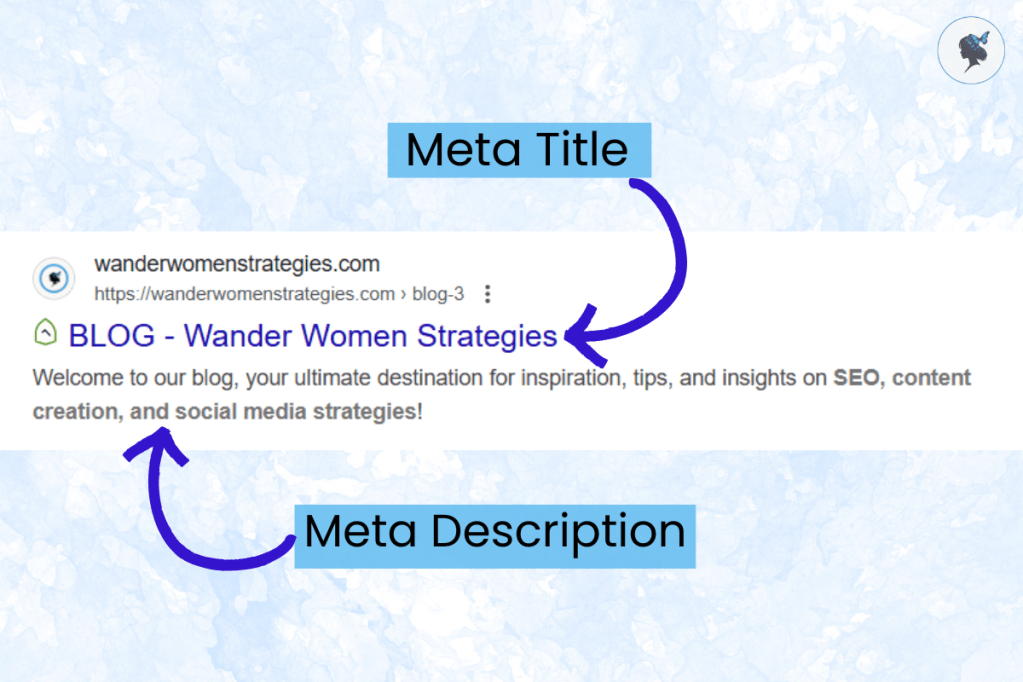
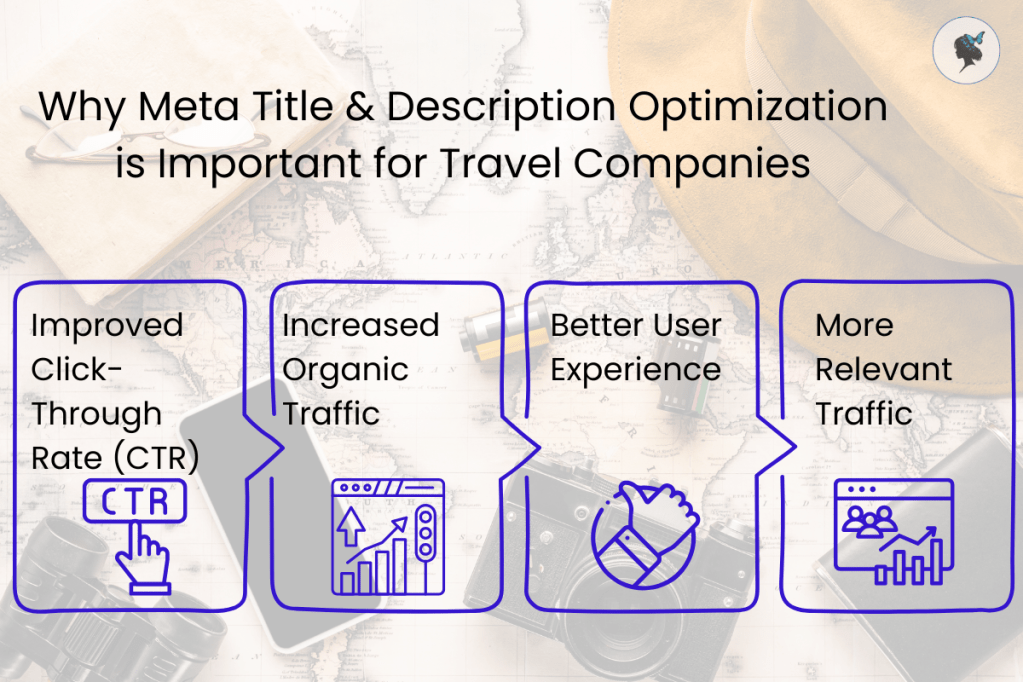
Wander Women Hot Take: They don’t affect rankings, but they do influence clicks. A compelling meta description can boost your CTR dramatically. A dull meta like “Blog about Peru travel” won’t drive clicks. A stronger one: “Discover the 7 hidden spots in Peru most tourists miss (with photos!).” For more about metas, check out our post: Meta description optimization.

Myth #4: SEO is a one-time project.

Why it’s wrong:

SEO requires consistent updates to remain effective—Google’s algorithm evolves, and your competitors do too.

Infograph: Myth #4: SEO is a one-time project.

Wander Women Hot Take: SEO is a garden. Leave it alone and the weeds take over. Tend it consistently for lasting results. A travel agent who hasn’t updated destination pages post-COVID may lose rankings to fresher, more relevant content.

Myth #5: Stuff your destination names everywhere to rank better.

Infograph: Myth #5: Stuff your destination names everywhere to rank better.

Why it’s wrong:

Keyword stuffing is a dated practice. According to Google’s Spam Policies for Google Web Search, keyword stuffing refers to the practice of filling a web page with keywords or numbers in an attempt to manipulate rankings in Google Search results. Google now values natural language and user experience.

Wander Women Hot Take: Google’s smarter than that now—and so are travelers. Focus on storytelling and relevance. Saying “Iceland tour” 12 times in one blog won’t help. Describing the unique experience of an Icelandic glacier hike will. Not sure where to start? Check out Wanderlust Keywords, our SEO Keyword Research package.


Content Strategy Myths Holding You Back

Myth #6: Just write what your audience wants to read.

Why it’s wrong:

Writing without research means you’re guessing. Guessing isn’t strategy.

Infograph: Myth #6: Just write what your audience wants to read.

Wander Women Hot Take: Write what your audience is searching for. There’s a difference. Instead of writing “My trip to Greece,” write “Best Greek Islands to Visit in September” with keyword insights. Read our comprehensive guide: mastering search intent.

Myth #7: Longer blogs = better SEO.

Infograph: Myth #7: Longer blogs = better SEO.

Why it’s wrong:

Google’s algorithm favors helpful content, not just long content.

Wander Women Hot Take: Quality > word count. A 600-word article that solves a problem is better than 2,000 words of fluff. A concise, clear blog about “How to Pack for a Safari in 7 Steps” may outperform a long-winded one titled “Everything About Africa.”

Myth #8: One piece of content = one use.

Why it’s wrong:

Content that isn’t repurposed is wasted effort.

Infograph: Myth #8: One piece of content = one use.

Wander Women Hot Take: Turn a blog post into 5 social posts, a newsletter, a video script, and more. Squeeze the juice out of it. A “Top 10 Places to Eat in Lisbon” post can become a Reel series, Pinterest board, and interactive map. More about repurposing content here.

Myth #9: You need to write content every week to grow.

Infograph: Myth #9: You need to write content every week to grow.

Why it’s wrong:

Frequency alone doesn’t build traffic. Relevance, quality, and promotion do.

Wander Women Hot Take: Consistency beats frequency. Stick to a sustainable schedule. A solo travel coach posting bi-weekly, well-optimized travel safety tips can outpace daily fluff posts.

Myth #10: Good content sells itself.

Why it’s wrong:

Even the best blog needs promotion and optimization.

Infograph: Myth #10: Good content sells itself.

Wander Women Hot Take: Strategy is what takes content from invisible to impactful. An in-depth Bali guide won’t rank if it isn’t shared across Pinterest, email, and SEO. Read our guide: how to build a content strategy that converts.


Social Media Myths We Need to Stop Believing

Myth #11: Posting every day is the key to growth.

Infograph: Myth #11: Posting every day is the key to growth.

Why it’s wrong:

Engagement matters more than volume. Posting without connection is just noise.

Wander Women Hot Take: Engagement > frequency. Start conversations, not just broadcasts. A travel planner who posts once a week but asks questions, responds to comments, and uses stories & polls may get more leads than one posting daily photo dumps. More lead magnet ideas here.

Myth #12: Travel brands should be on every platform.

Why it’s wrong:

Spreading thin waters down your message and drains your team.

Infograph: Myth #12: Travel brands should be on every platform.

Wander Women Hot Take: Be exceptional where your people are—not everywhere. A hiking tour company killing it on Instagram and YouTube doesn’t need TikTok until they’re ready. Which one to choose? Here we break down 5 of the most common social media platforms for travel companies.

Myth #13: Instagram is only for visuals.

Infograph: Myth #13: Instagram is only for visuals.

Why it’s wrong:

Captions can convert browsers into buyers.

Wander Women Hot Take: Storytelling in captions = emotional connection. Don’t waste that real estate. A heartfelt story of a honeymoon couple on a Santorini tour will sell more than a scenic drone shot with no context. More instagram tips here.

Myth #14: Reels need to be highly produced.

Why it’s wrong:

Overproduction can feel inauthentic or distant.

Infograph: Myth #14: Reels need to be highly produced.

Wander Women Hot Take: Raw, real, and relatable usually wins. Especially in travel. A simple video of a guide introducing themselves on-site in Morocco might outperform a polished montage. Read about the power of visual content.

Myth #15: Hashtags are dead.

Infograph: Myth #15: Hashtags are dead.

Why it’s wrong:

Hashtags still drive discovery when used strategically.

Wander Women Hot Take: Hashtags aren’t dead—spammy ones are. Use focused, relevant tags. Instead of #travel #vacation, try #SoloTravelGreece or #BudgetTravelTips.


Travel Biz & Marketing Myths That Slow Growth

Myth #16: Beautiful websites are enough to book clients.

Why it’s wrong:

A pretty site that doesn’t guide action won’t convert.

Infograph: Myth #16: Beautiful websites are enough to book clients.

Wander Women Hot Take: It’s digital eye candy unless it’s optimized for conversion. A luxury villa site with no clear booking button or reviews will lose visitors fast. Read our guide: create high-quality landing pages.

Myth #17: The travel industry is too saturated to stand out.

Infograph: Myth #17: The travel industry is too saturated to stand out.

Why it’s wrong:

Most brands look and sound the same. That’s the real issue.

Wander Women Hot Take: Standing out is a strategy, not luck. A Sri Lanka tour company focused only on female travelers and wellness retreats carves a niche.

Myth #18: If I build it, they will come.

Why it’s wrong:

Visibility isn’t automatic. It must be earned.

Infograph: Myth #18: If I build it, they will come.

Wander Women Hot Take: Build it, then promote the heck out of it. Creating a travel app or blog without a launch and promo strategy means crickets.

Myth #19: I need a huge budget to market my travel biz.

Infograph: Myth #19: I need a huge budget to market my travel biz.

Why it’s wrong:

Smart strategy often beats big spend.
Wander Women Hot Take: Creativity and clarity > cash. Spend smart, not big. A local walking tour business using Google My Business, SEO, and organic Instagram content can compete with major players.

Myth #20: Travel marketing is just about pretty pictures.

Why it’s wrong:

Visuals alone don’t convert without story or strategy.

Infograph: Myth #20: Travel marketing is just about pretty pictures.

Wander Women Hot Take: Pretty gets attention. Strategy gets bookings. A travel advisor sharing carousel posts that break down “How to Plan a Japan Rail Adventure” will drive more leads than sunset pics.


Conclusion:

Strategy Over Assumptions. Myths are powerful. They spread because they’re simple, catchy, and sometimes comforting. But they rarely help your business grow. At Wander Women Strategies, we believe in truth-telling, clarity, and evidence-backed strategy. If you’re tired of guessing and ready to make real marketing moves that get real results, we’re here to help.

Ready to ditch the myths and get strategic? Drop us a message to get started. Your bookings deserve more than buzzwords. Let’s get visible—the right way.
Website Speed Optimization for Travel Companies

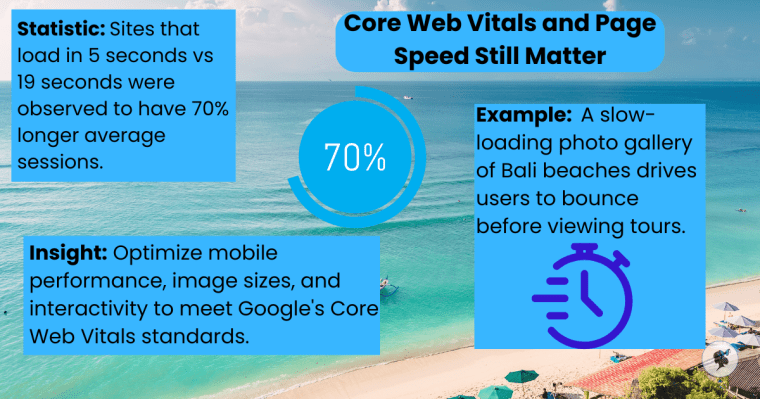
In the highly competitive world of travel and tourism, the speed of your website can make or break your online presence. With travelers increasingly using mobile devices to research their next vacation, a slow website can lead to high bounce rates, poor user experience, and ultimately lost business. At Wander Women Strategies, we understand the importance of website speed optimization for travel companies and how it can impact everything from SEO rankings to conversion rates.

In this article, we’ll walk you through everything you need to know about website speed optimization, including what it is, how to optimize your site, and why it’s crucial for travel businesses.


▶ Table of Contents
  1. What is Website Speed Optimization?
  2. How to Optimize Website Speed for Travel Websites
  3. Why Website Speed Optimization is Crucial for Travel Companies

What is Website Speed Optimization?

Website speed optimization refers to the process of improving the loading times of your website’s pages. It involves reducing the time it takes for your website to load fully and become interactive for users. Website speed is a critical ranking factor for search engines, as well as a key element in providing a seamless user experience.

A website that loads quickly ensures users stay engaged, can access the information they need, and are more likely to convert—whether that’s making a booking, signing up for a newsletter, or sharing content.

Visual representation of website speed optimization, highlighting methods to enhance loading times and user experience.

Why Website Speed Matters

  • User Experience: A slow-loading website leads to frustration. Users expect fast-loading pages, especially on mobile devices, and they may leave if your website takes too long to load. According to Google, 53% of mobile users will abandon a site if it takes more than 3 seconds to load.
  • SEO Rankings: Google and other search engines prioritize websites with fast load times. Search engines use page speed as one of the ranking factors, and websites that load slower may suffer from lower rankings, making it harder for potential customers to find you.
  • Conversion Rates: The faster your website loads, the more likely users are to take action—whether that’s making a booking or interacting with your content. Studies show that even a 1-second delay in page load time can reduce conversion rates by 7%.

Website speed is not just about having a faster website—it’s about creating an experience that keeps users engaged and satisfied.


How to Optimize Website Speed for Travel Websites

Optimizing website speed involves several techniques and tools.

Infographic on optimizing website speed specifically for travel websites, featuring tips and best practices

Let’s look at some key areas where you can improve performance:

Compress and Optimize Images

Travel websites are often image-heavy, featuring breathtaking landscapes, hotels, and destinations that require high-quality visuals. However, high-resolution images can slow down your website if they aren’t properly optimized.

How to Optimize Images:

  • Resize Images: Make sure images are only as large as they need to be. Don’t upload high-resolution images that exceed the required dimensions for your site.
  • Image Compression: Use compression tools to reduce the file size without sacrificing image quality. Tools like TinyPNG, ImageOptim, and JPEG-Optimizer can help compress images without noticeable quality loss.
  • Use Next-Gen Formats: Consider using modern image formats like WebP, which offer superior compression and quality compared to traditional formats like JPEG or PNG.

Optimizing images is one of the most effective ways to speed up your website, as images often account for the largest portion of a page’s total size.

Minimize HTTP Requests

Every element on a page (images, CSS, JavaScript, etc.) requires an HTTP request to the server. The more elements your page has, the more HTTP requests it will need to load, which increases the loading time.

How to Minimize HTTP Requests:

  • Combine CSS and JavaScript Files: Instead of loading multiple CSS and JavaScript files, combine them into one or two files to reduce the number of requests.
  • Use Sprites for Images: If your site uses many small images (like icons), consider using CSS sprites. A sprite combines multiple images into one file, reducing the number of requests.

Enable Browser Caching

Caching is a method of storing static resources like images, CSS, and JavaScript in the user’s browser. When a user visits your site again, the browser doesn’t need to reload these resources, leading to faster load times.

How to Enable Browser Caching:

  • Leverage Cache-Control Headers: Set cache expiration dates for resources that don’t change often, like images and stylesheets.
  • Use a CDN: A Content Delivery Network (CDN) can store copies of your website’s content in multiple locations worldwide. This helps reduce latency by delivering content from the nearest server.

Minify CSS, JavaScript, and HTML Files

Minification is the process of removing unnecessary characters (like spaces, line breaks, and comments) from your code without affecting functionality. Minified code is smaller, which reduces loading time.

How to Minify Code:

  • CSS and JavaScript Minifiers: Tools like UglifyJS (for JavaScript) and CSSMinifier can help you minify these files.
  • HTML Minification: Use HTMLMinifier to compress your HTML files and remove unnecessary whitespace and comments.

Use Lazy Loading

Lazy loading is a technique that delays the loading of images and other media until they are needed, i.e., when they appear in the user’s viewport (visible part of the page). This helps reduce initial load time and saves bandwidth for users.

How to Implement Lazy Loading:

  • Lazy Load Images: Implement lazy loading for images using JavaScript libraries like lazysizes or IntersectionObserver.
  • Lazy Load Embeds and Videos: Apply lazy loading to embedded content, like YouTube videos or maps, to speed up your site.

Optimize Web Hosting

Your website’s hosting environment plays a crucial role in website speed. Poor hosting can cause slow page load times regardless of how optimized your site is.

How to Optimize Hosting:

  • Choose a High-Quality Web Host: Ensure that your web hosting provider offers fast and reliable servers. Managed WordPress hosts like Kinsta or WP Engine are optimized for speed and performance.
  • Use a Dedicated Server or VPS: If your website experiences high traffic volumes, a shared hosting plan may not be sufficient. A VPS (Virtual Private Server) or dedicated server provides better resources and faster performance.

Implement AMP (Accelerated Mobile Pages)

For travel companies, mobile optimization is essential. AMP is an open-source framework that helps create mobile-friendly pages that load extremely fast.

How to Implement AMP:

  • Install AMP Plugin: If you use WordPress, there are AMP plugins available to help set up AMP pages.
  • Follow AMP Guidelines: AMP pages have strict guidelines, so ensure that your content and design comply with AMP standards.

Why Website Speed Optimization is Crucial for Travel Companies

Graphic illustrating the importance of website speed optimization for better user experience and search engine ranking.

Higher Search Engine Rankings

Google has explicitly stated that website speed is a ranking factor. A faster website not only improves the user experience but also helps with SEO. With more travel websites entering the digital space, a faster site has a competitive edge.

Better User Experience

For travel companies, providing a positive user experience is essential. Slow websites frustrate potential customers, and they may abandon your site in favor of faster competitors. Optimizing your site for speed ensures that users can access information quickly, which is especially important for travel-related searches.

Increased Conversion Rates

As mentioned earlier, a faster website means higher conversion rates. Whether it’s booking a flight, reserving a hotel, or simply reading about a travel destination, faster loading speeds mean users are more likely to complete their desired actions. For travel companies, this can directly translate into more bookings and higher revenue.

Mobile Optimization for On-the-Go Travelers

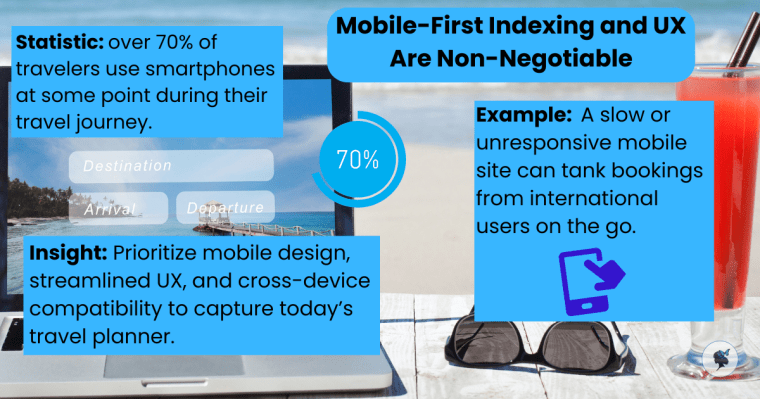
Travelers are often on the go, and mobile optimization is crucial. A slow-loading mobile site can be detrimental to your business, especially considering that mobile traffic accounts for a large portion of web visits. With Google’s mobile-first indexing, ensuring fast mobile load times is more important than ever.


Is your website ready to load faster and rank higher?

Contact us today to learn how we can help you optimize your website for better SEO, enhanced user experience, and increased conversions.

AI Overviews & SERP Integration: What’s Changing?


▶ Table of Contents
  1. Introduction
  2. What Are AI Overviews?
  3. How AI Overviews Work
  4. Impact on Travel Companies
  5. Tips for Travel Companies
  6. Conclusion

Introduction

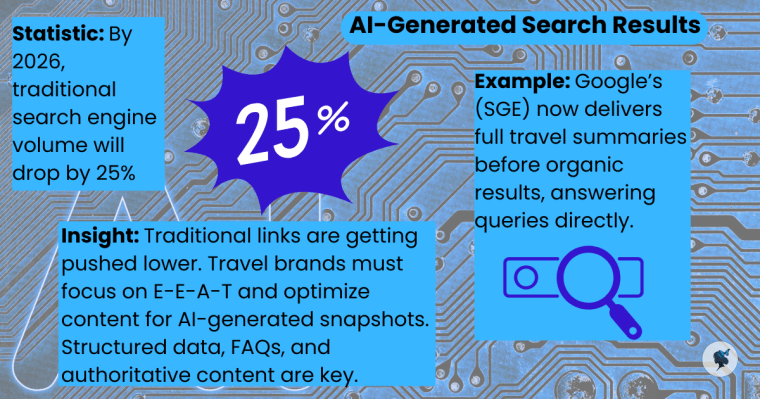
Google’s AI Overviews are short, AI-generated summaries that appear at the top of search results, giving users quick answers without clicking through to websites. While this makes finding information faster, it can also lower click-through rates (CTR) for travel sites by around 34.5% on informational queries, and these overviews now show up on roughly 42.5% of searches.

Visual guide on optimizing travel content for AI overviews, showcasing effective strategies and techniques.

For travel companies, this means less free traffic from Google when people research destinations or itineraries. To stay visible, travel brands need to structure content so AI can easily pull summaries, boost their trust signals, and explore other channels like video or paid ads.

What Are AI Overviews?

AI Overviews (formerly part of Google’s Search Generative Experience) are brief, 2–5 sentence summaries that appear in a card at the top of the search page.
They pull key points from several web pages and cite those sources directly beneath the summary.
Sometimes they include images or lists to make the answer clearer, especially for recipe or itinerary-style queries.

How AI Overviews Work

  1. Content Aggregation
    The AI reads multiple top-ranking pages and picks out the main facts.
  2. Summary Generation
    It writes a short paragraph that answers the user’s question.
  3. Source Citations
    It links to the web pages it used, giving users a path to learn more.
  4. Interactive Features
    Users can simplify or expand the summary, and even send it to Google Docs or Gmail.
  5. Ads Integration
    For commercial queries, Google now includes sponsored suggestions directly in the AI Overview, marked as “sponsored”.
Infographic depicting the workflow of AI, highlighting data analysis and response generation steps.

Impact on Travel Companies

Lower Click-Through Rates

  • Organic CTR Drops: When an AI Overview appears, CTR to the first organic result can fall by about 34.5%.
  • Non-Branded Queries Hit Hardest: Informational searches like “best beach in Bali” see CTR declines near 20% on average.
  • Paid Ads Also Affected: Paid search ads can lose about 12 percentage points in CTR whenever an AI Overview shows up.

Reduced Visibility for Travel Research

Travelers often start with “where to go” or “what to see” queries. Since AI Overviews answer these questions directly, fewer people scroll down to organic listings. Major travel brands like Kayak and TripAdvisor are already adjusting their strategies to feed content directly into AI systems, hoping to stay in the AI-sourced summaries.

Authority and Trust Signals Matter More

Google leans on E-E-A-T (Experience, Expertise, Authoritativeness, Trustworthiness). Sites that clearly show author credentials, publish fresh reviews, and use structured data are more likely to be cited in AI Overviews.

Tips for Travel Companies

  1. Add Clear “Quick Facts” Sections
    Place a bullet-point list or short paragraph at the top of your page that directly answers common travel questions.
  2. Use FAQ Schema
    Mark up FAQs with structured data so Google’s AI can easily find and use your answers.
  3. Highlight Experts
    Show author bios with real credentials and local expertise.
  4. Keep Content Fresh
    Update guides and itineraries seasonally and date-stamp them clearly.
  5. Diversify Channels
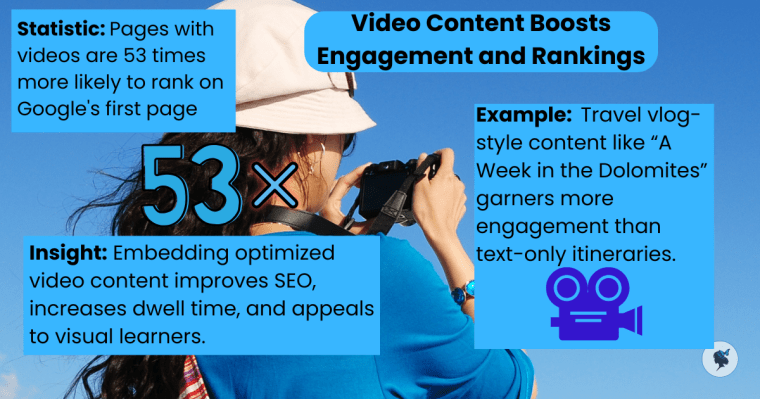
    • YouTube & Video: Video content can be featured in AI Overviews and on Google’s video carousel.
    • Non-Google AIs: Publish content optimized for ChatGPT or Perplexity to capture referral traffic.
  6. Consider Paid Placements
    Explore Google Ads extensions that appear alongside AI Overviews to maintain visibility.

Conclusion

AI Overviews are changing how people search and how clicks are distributed. Travel companies must adapt by making their content AI-friendly, boosting trust signals, and branching out into video and paid channels.

If you’re in the travel business and need help staying visible in this AI-driven world, contact Wander Women Strategies. We specialize in SEO, content strategy, and social media for travel brands, and we’re here to help you thrive when Google’s AI takes the lead.

On-Page Optimization: Keyword Optimization for Travel Companies


▶ Table of Contents
  1. What is On-Page Keyword Optimization?
  2. How to Implement On-Page Keyword Optimization
  3. Why On-Page Keyword Optimization is Important for Travel Companies
  4. Start Your Keyword Optimization Journey with Wander-Ready Web

Introduction

In this article, we’ll dive deep into On-Page Optimization and Keyword Optimization, explain how to effectively implement them, and highlight why they are vital for travel companies. With the help of our Wander-Ready Web package, your travel business can improve its SEO performance and become more visible to your target audience.

In the ever-evolving travel industry, having an online presence that ranks high on search engines is crucial to attracting customers. One of the fundamental aspects of SEO that influences rankings is On-Page Optimization, particularly Keyword Optimization. If your travel business isn’t optimizing the keywords on your website, you may be missing out on valuable organic traffic that could drive bookings, inquiries, and brand awareness.

What is On-Page Keyword Optimization?

On-Page Keyword Optimization refers to the strategic placement of relevant keywords within your website’s content and HTML source code to enhance its search engine ranking. These keywords are the words and phrases your target audience uses when searching for services like yours.

For travel businesses, keyword optimization means identifying the right travel-related terms such as “luxury vacation in Hawaii”, “adventure tours in Costa Rica”, or “budget-friendly European getaways” and optimizing web pages, blog posts, and other content around those terms.

On-Page optimization goes beyond just throwing in keywords. It’s about using those keywords strategically, ensuring that your content provides value to users, while also signaling to search engines that your page is relevant for the search query.


How to Implement On-Page Keyword Optimization

Implementing on-page keyword optimization requires careful planning and execution.

Here’s a step-by-step guide to optimize your travel website effectively:

Step 1: Conduct Keyword Research

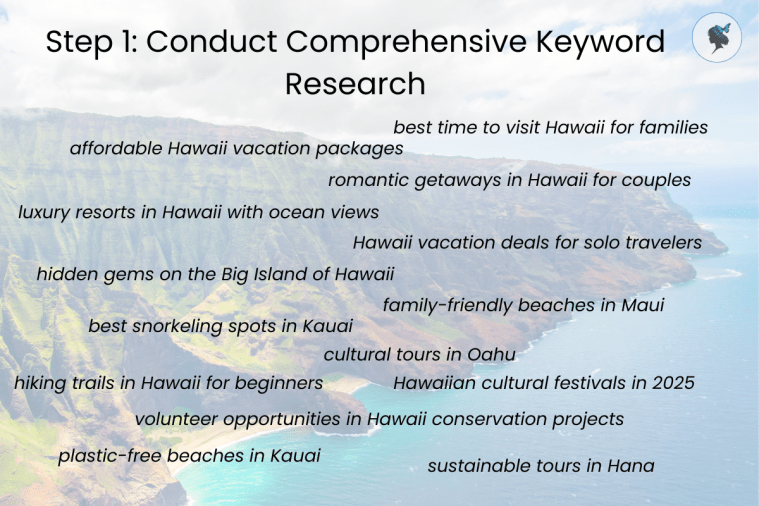
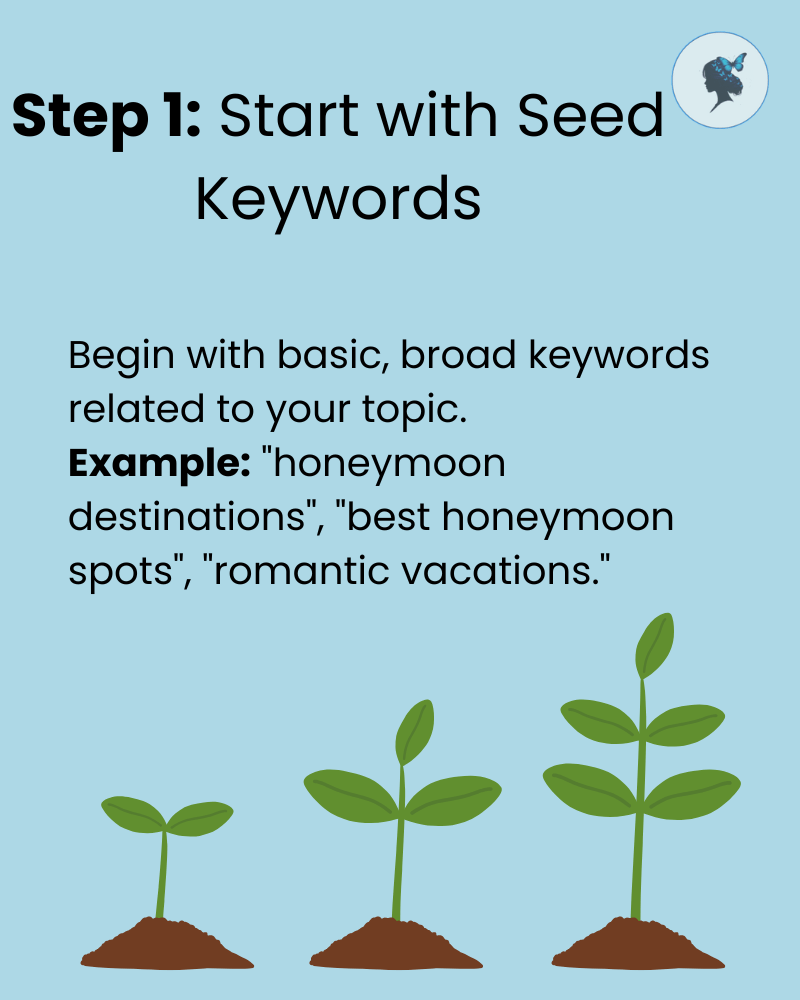
Before you can optimize your website for keywords, you need to know which ones to target. Effective keyword research involves finding the terms that your ideal customers are searching for.

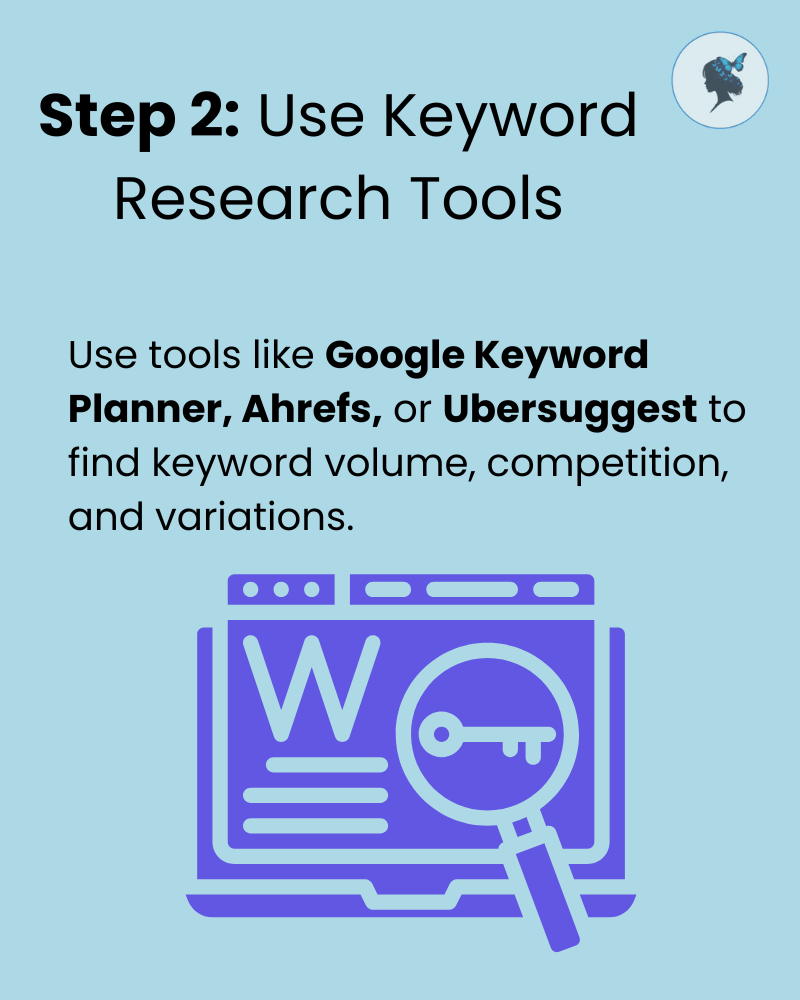
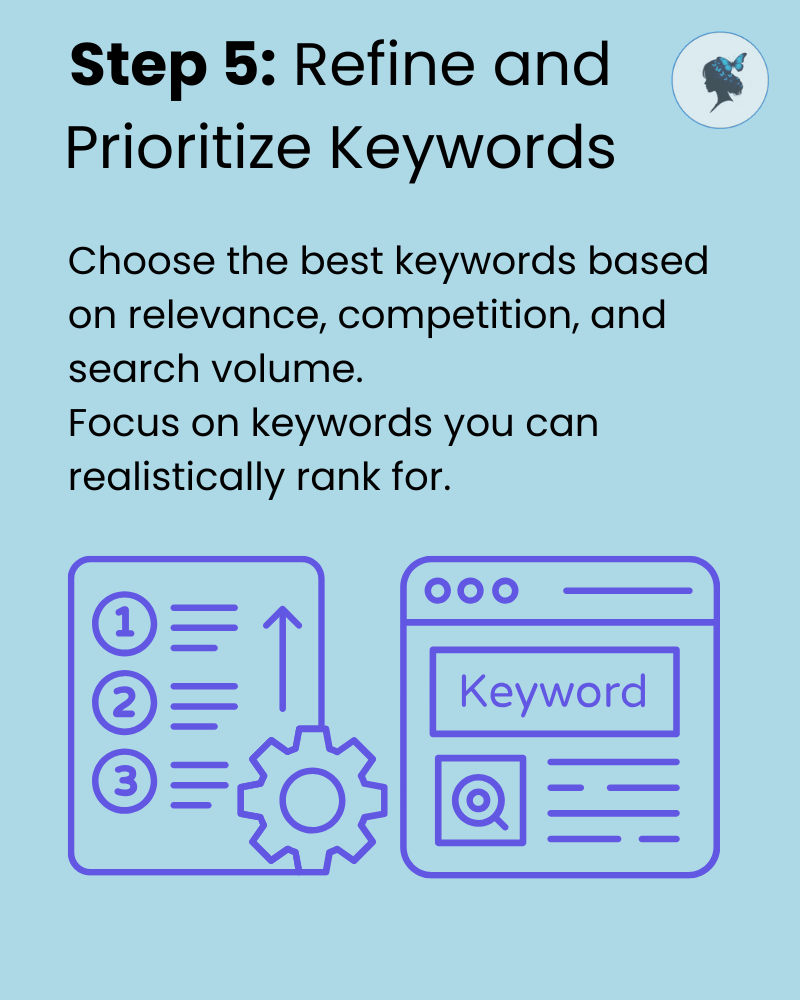
  • Use Tools: Leverage keyword research tools such as Google Keyword Planner, Semrush, and Ahrefs to identify relevant search terms with a good balance of search volume and low competition.
  • Consider User Intent: Keyword research isn’t just about finding high-volume terms. You need to think about user intent: Are users looking for travel inspiration, booking services, or specific activities? Target keywords that align with your business goals (i.e., transactional or informational queries).
  • Look for Long-Tail Keywords: For travel businesses, long-tail keywords like “luxury cruises to Alaska for families” or “best time to visit Bali with kids” are valuable. They typically have lower search volume but higher conversion rates.

Need help with keyword research?

Check out Wanderlust Keywords, our Keyword Research package.

Step 2: Incorporate Keywords in Strategic Areas

Once you’ve identified your target keywords, it’s time to incorporate them in the key on-page elements of your website. Here are the areas to focus on for keyword placement:

  • Title Tags: Your title tag is one of the most important SEO elements. It should accurately describe the page content while including your target keyword. For example, instead of just “Vacation Packages,” use a title like “Best Family Vacation Packages in Florida – Wander Ready”.
  • Meta Descriptions: While meta descriptions don’t directly impact rankings, they do influence whether users click on your website in search results. Include your primary keyword and make the description compelling. Example: “Discover the best family vacation packages in Florida. Explore kid-friendly resorts and activities for an unforgettable holiday.”
  • Headings (H1, H2, H3): Structure your content by including keywords in your headings (H1, H2, and H3). The H1 tag should contain your primary keyword, while H2 and H3 tags can have variations or related keywords. For example: H1: “Top Family-Friendly Vacation Spots in Florida” and H2: “Best Resorts for Family Vacations in Florida”.
  • URLs: Create clear and descriptive URLs that include keywords. For example, instead of “www.example.com/package1,” use “www.example.com/family-vacation-florida.”
  • Content Body: Naturally incorporate your keywords within the body of the content. Aim for high-quality, informative content that answers the user’s query. Avoid keyword stuffing, which can negatively impact readability and SEO.
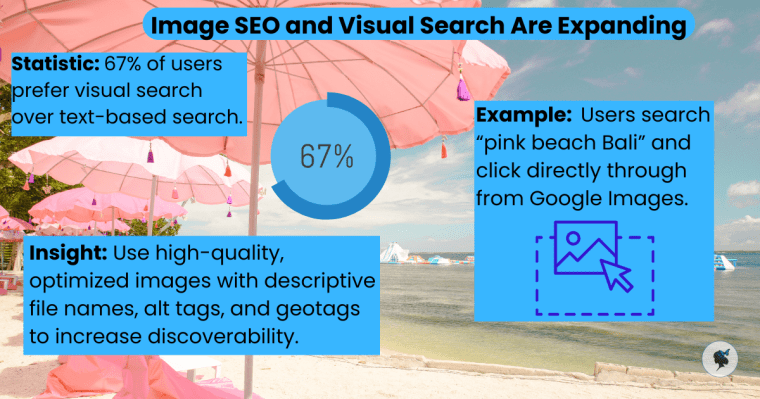
  • Image Alt Text: Images on your travel site should be optimized with descriptive alt text that includes keywords. For example, an image of a beach resort can have alt text like “Luxury beach resort in Bali”.
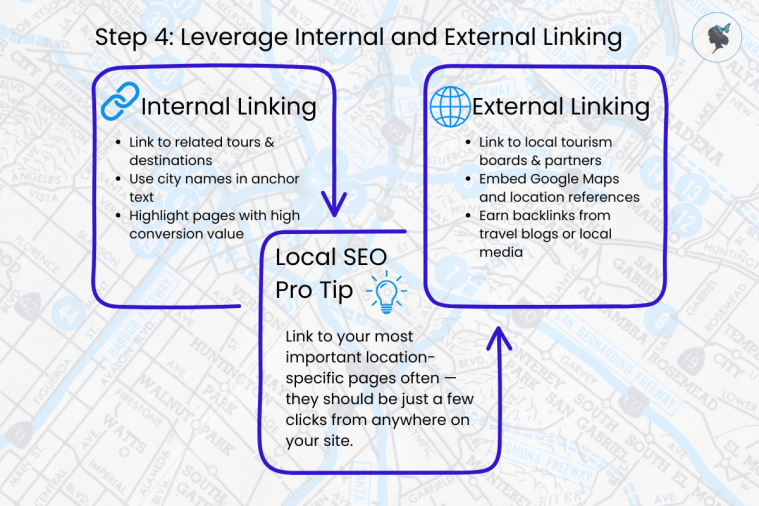
  • Internal Linking: Add internal links to other relevant pages on your website. This helps with SEO and also enhances the user experience by guiding them to related content. For instance, linking to other resort pages or tour packages on your website will keep visitors engaged.

Step 3: Focus on Content Quality

Keyword optimization doesn’t mean just inserting keywords into every corner of your page. The content needs to be valuable and engaging for users. Here’s how to maintain quality while optimizing for keywords:

  • Answer User Questions: Craft content that directly answers the questions your target audience has. For example, if your target keyword is “best eco-tourism destinations in Costa Rica,” you should provide detailed answers about eco-friendly travel options in Costa Rica.
  • Avoid Keyword Stuffing: Keyword stuffing—repeating keywords unnaturally in content—can result in penalties from search engines. Instead, aim for a natural, conversational tone that provides real value to your audience.
  • Use LSI Keywords: Latent Semantic Indexing (LSI) keywords are related terms that reinforce your primary keywords. For example, if your target keyword is “adventure tours in Costa Rica,” related terms might include “Costa Rica hiking tours” or “outdoor adventure vacations.”

Step 4: Optimize for Mobile and Site Speed

Search engines like Google prioritize websites that offer a great user experience. Since most users access websites via mobile devices, it’s essential that your site is mobile-friendly.

  • Responsive Design: Make sure your website has a responsive design, meaning it adjusts seamlessly to different screen sizes. This is especially important for travel websites, as potential customers may browse on mobile while planning trips on the go.
  • Site Speed: Page speed is another ranking factor. Slow-loading pages can hurt both user experience and SEO. Use tools like Google PageSpeed Insights to check your website’s speed and make improvements where needed.

Read our post on website speed optimization for more information.


Why On-Page Keyword Optimization is Important for Travel Companies

For travel businesses, on-page keyword optimization is critical for attracting the right audience, standing out from competitors, and driving qualified traffic to your website. Here are a few reasons why it’s particularly important for the travel industry:

1. Enhanced Visibility in Search Engines

Travel is one of the most competitive industries online, with thousands of websites targeting similar keywords. Properly optimized pages are more likely to rank higher in search engine results, increasing your visibility.

2. Attracts the Right Audience

By targeting keywords that align with user intent, on-page keyword optimization ensures that you attract visitors who are genuinely interested in what your travel business offers. For example, targeting “affordable luxury tours in Paris” will bring in visitors who are actively looking for that specific service.

3. Improves User Experience

Effective on-page optimization improves the user experience by ensuring that content is easy to find, relevant, and engaging. When your website answers the questions and needs of your target audience, they’re more likely to stay on your page and take action, whether that’s booking a tour, subscribing to your newsletter, or reaching out for more information.

4. Increases Conversions

When you target specific long-tail keywords with transactional intent, you’re likely to see higher conversion rates. A user searching for “best all-inclusive resorts in Mexico” is more likely to book than someone just searching for “vacation destinations.”


Start Your Keyword Optimization Journey with Wander-Ready Web

With Wander-Ready Web, our tailored SEO service for travel companies, we’ll help you identify the best keywords for your business and implement a strategy that drives more traffic, conversions, and long-term growth.

Here’s what you get with Wander-Ready Web:

  • Keyword Optimization: We conduct keyword research to identify high-traffic, relevant keywords related to your travel services.
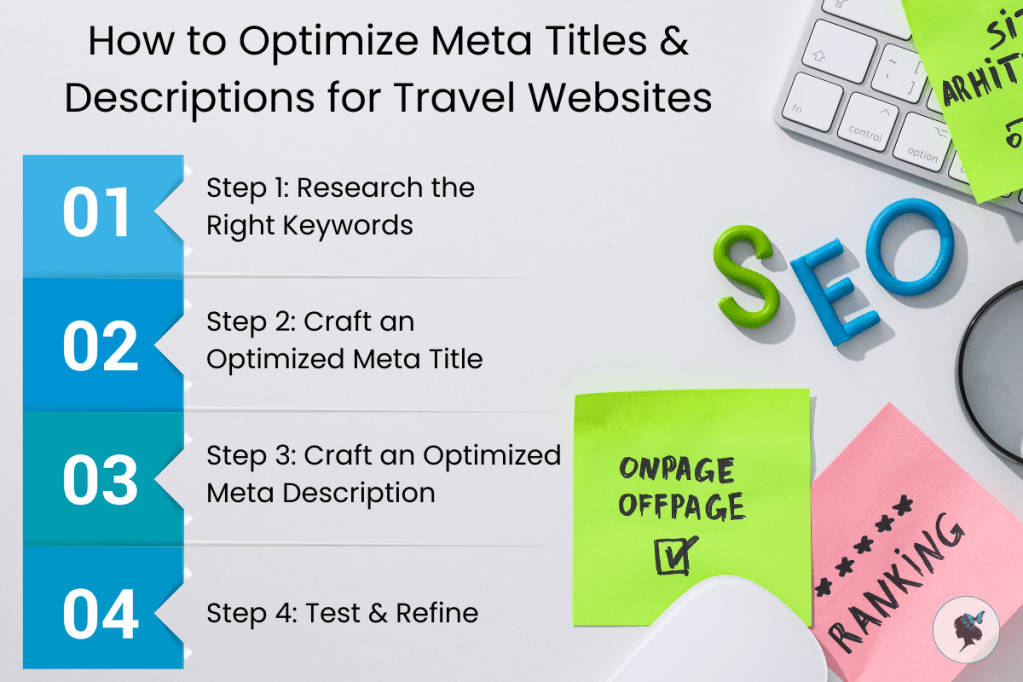
  • Meta Title & Description Optimization: We provide optimization suggestions for your top 5 pages focusing on best practices.
  • Header Tag Optimization: We provide suggestions for optimizing your header tags for the same 5 pages, with expert insights for future strategy to enhance readability and help search engines better understand your travel offerings.
  • Image Optimization & Alt Text: We provide tips for image optimization and alt text for 5 images from the same 5 pages, with expert advice for future image strategy.

Boost Your Search Rankings Today with Wander-Ready Web. Ready to take your travel business to new heights? Contact us today to get started!

Competitor Identification for Travel Companies: Unlocking Your Competitive Edge


▶ Table of Contents
  1. 1. What is Competitor Identification?
  2. 2. How to Identify Competitors in the Travel Industry?
  3. 3. Why is Competitor Identification Important for Travel Companies?
  4. Take Action with Wanderer’s Watchlist

In the highly competitive world of travel, every company, whether it’s a boutique hotel, a travel agency, or a tour operator, is vying for the attention of travelers. With so many options available online, staying ahead of the competition is crucial to your success. One of the most effective ways to achieve this is through competitor identification.

Knowing who your competitors are, understanding their strengths and weaknesses, and strategically positioning yourself against them can give your travel business a competitive edge. In this article, we’ll take you through the process of competitor identification, explain why it’s vital for travel companies, and show you how to implement it effectively with our Wanderer’s Watchlist package.

1. What is Competitor Identification?

Competitor identification is the process of determining which companies within your industry are competing for the same customers, traffic, and market share. For travel businesses, this goes beyond just identifying who is in your direct geographic location. It includes those who are targeting similar audiences, offering related services, and positioning themselves in ways that may influence your potential customers.

Competitor identification isn’t just about finding who is already established. It also involves recognizing emerging players, understanding the market shifts, and identifying trends that might disrupt your business.

Types of Competitors for Travel Companies

Travel companies face several types of competitors in the digital space:

  • Direct Competitors: These are businesses offering the same or similar services as you. For example, a luxury tour operator in Paris would be competing directly with other luxury tour operators in the same location.
  • Indirect Competitors: These companies provide alternative solutions that satisfy the same customer need. For instance, a local restaurant in Paris may not be offering tours, but it may compete with your tour company for customer attention in a broader travel context.
  • Emerging Competitors: New businesses or startups that are entering the travel industry. These may not be major players yet, but identifying them early can provide you with a significant advantage.

Competitor identification allows you to understand who you’re competing with, their positioning in the market, and the strategies they are using to attract your target audience.


2. How to Identify Competitors in the Travel Industry?

Identifying your competitors may seem straightforward, but a strategic approach can help you dive deeper and gather meaningful insights to gain a competitive advantage. Here’s how you can identify your competitors:

Step 1: Define Your Niche

Before you start identifying competitors, it’s crucial to understand your specific market niche. In the travel industry, there are many different segments, such as:

  • Luxury travel
  • Adventure tourism
  • Cultural or historical tours
  • Family-friendly vacations
  • Eco-tourism

Defining your niche allows you to refine your search for competitors who are directly targeting the same audience. A family-owned bed and breakfast in the mountains might be competing with other bed and breakfasts in the area, while a high-end travel agency focused on bespoke itineraries may find competitors among luxury travel providers.

Step 2: Conduct Online Searches

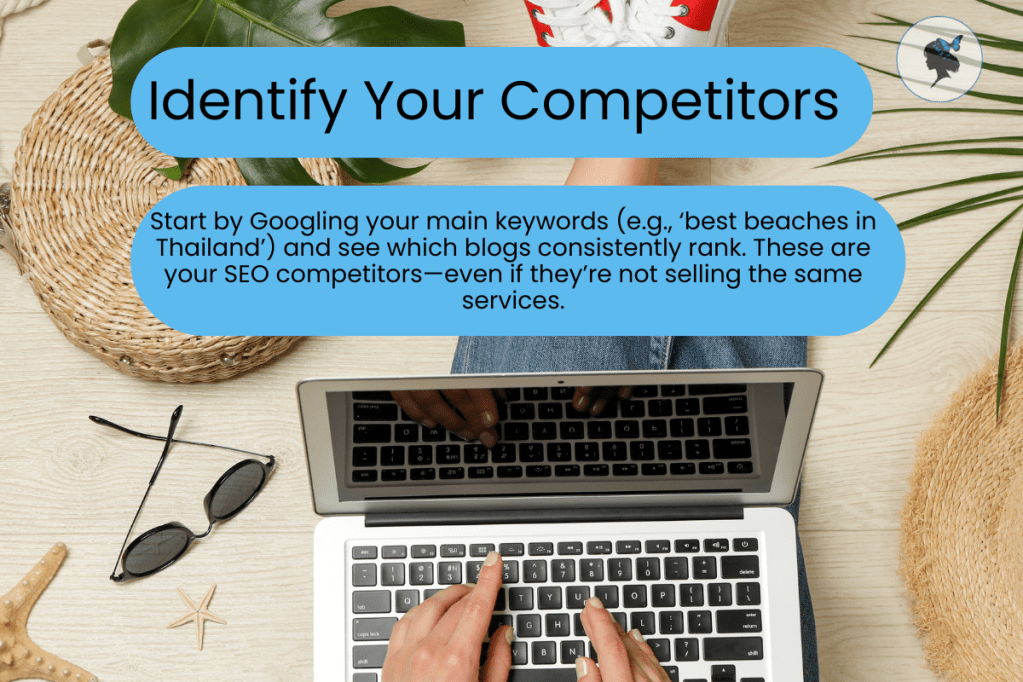
Use search engines to conduct queries around keywords that are relevant to your business. For example, if you specialize in tours in Paris, search for terms like “private tours in Paris,” “best Paris tour operators,” or “Paris sightseeing tours.” Check out the first page of the search results to identify companies that appear repeatedly.

Step 3: Use SEO and Market Research Tools

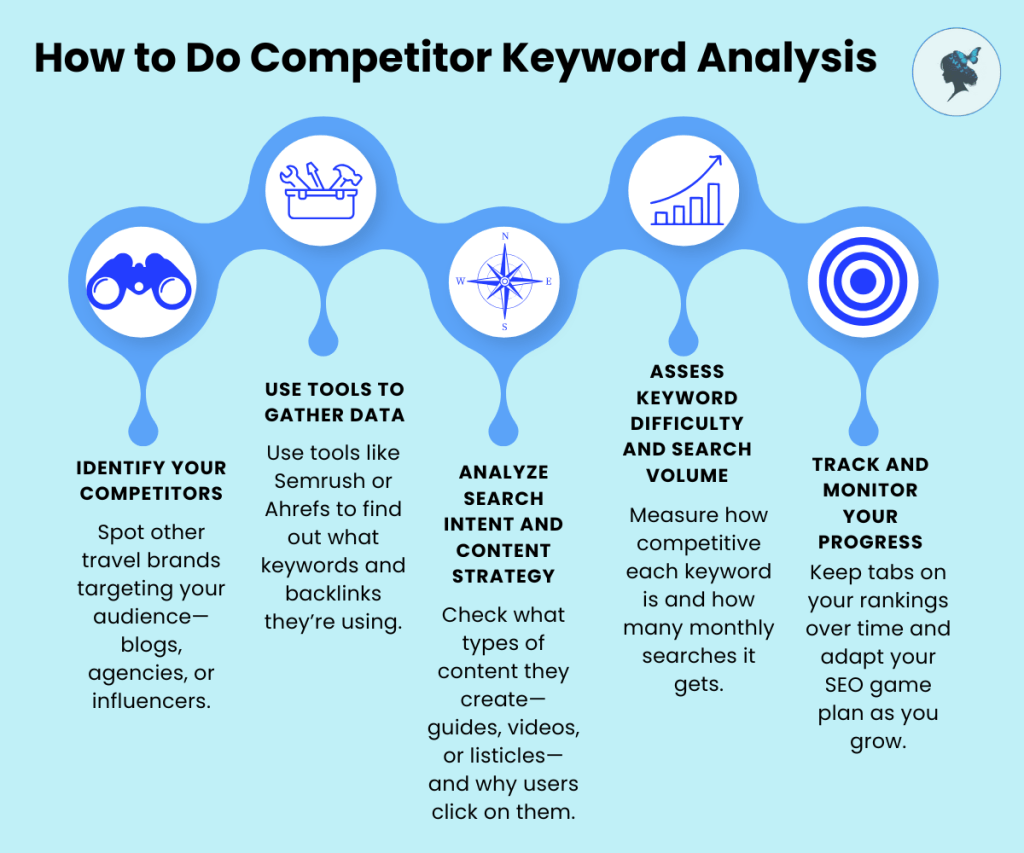
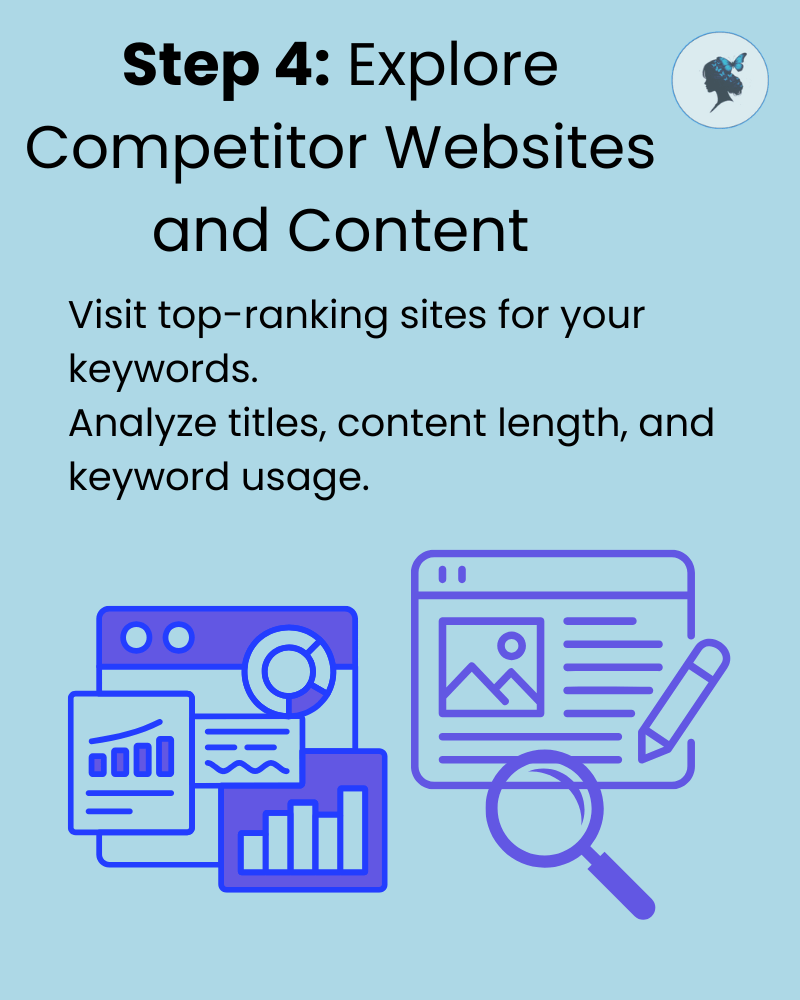
In the travel industry, many SEO and market research tools can help you dig deeper into competitor analysis. Tools like Semrush, Ahrefs, and Moz allow you to:

  • Identify competing websites: Search for keywords related to your services and see who is ranking for those terms.
  • Analyze keyword gaps: Find out which keywords your competitors are ranking for that you are not.
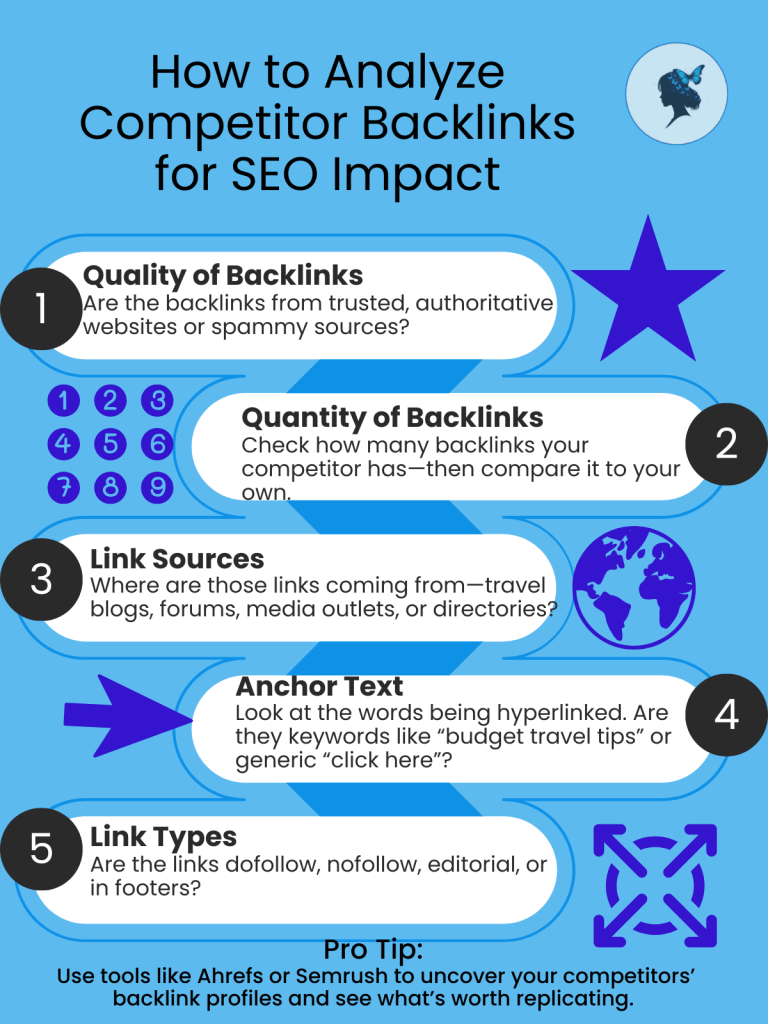
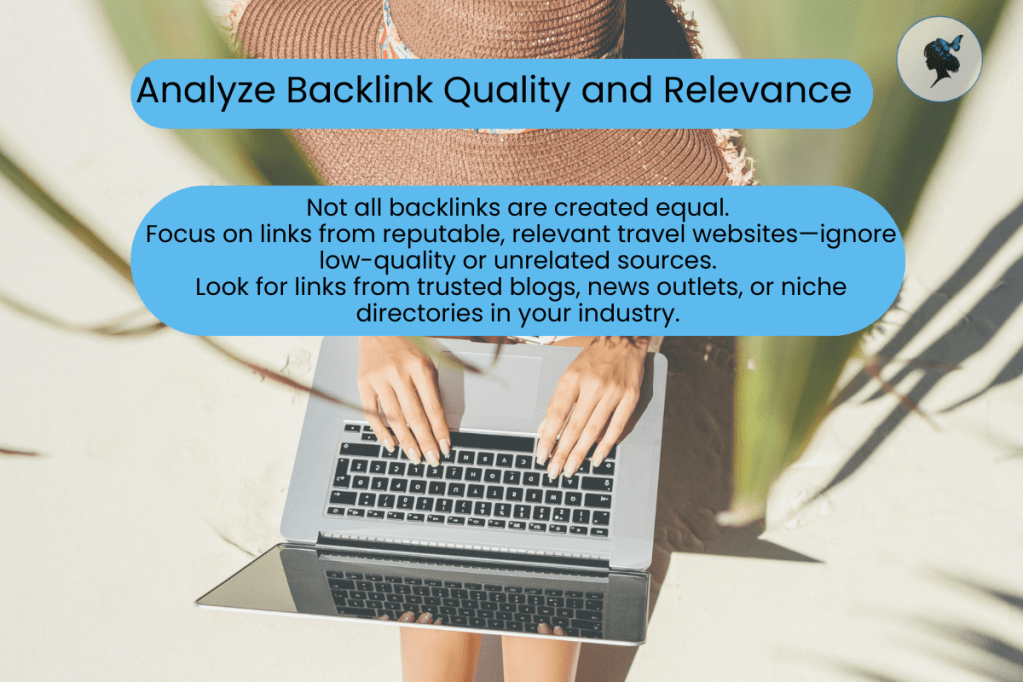
  • Evaluate backlinks: Discover where your competitors are getting their backlinks from, and use this information to improve your own link-building efforts.

Additionally, Google Trends and Google Alerts can be valuable in tracking shifts in search volume for key travel-related terms and identifying emerging competitors.

Step 4: Analyze Social Media and Industry Forums

Social media platforms, especially Instagram, Facebook, Twitter, and LinkedIn, can provide valuable insights into your competitors’ activities. Pay attention to the type of content they’re posting, the hashtags they’re using, their engagement rates, and how they’re positioning their brand in front of potential travelers.

Industry forums and online communities like TripAdvisor, Yelp, and even Reddit can provide insights into who your customers are talking about and which travel brands they trust.

Read our tips: creating social media campaigns that inspire wanderlust.

Step 5: Monitor Reviews and Customer Feedback

Customer feedback on review sites, social media, and travel blogs is a goldmine for competitor insights. See what customers are saying about your competitors and identify areas where they are excelling and areas where they are falling short. This will help you find gaps in the market and areas where you can differentiate your services.


3. Why is Competitor Identification Important for Travel Companies?

Understanding who your competitors are and what they are doing well—or poorly—can be the difference between success and failure.

Here’s why competitor identification is so crucial for travel companies:

1. Helps You Identify Market Opportunities

By identifying your competitors’ weaknesses, you can spot opportunities in the market that they might be overlooking. Perhaps they’re not offering the level of customer service you believe travelers expect, or maybe they’re not capitalizing on the growing trend of eco-tourism. By filling these gaps, you can carve out a niche that attracts travelers seeking better alternatives.

2. Guides Your SEO and Content Strategy

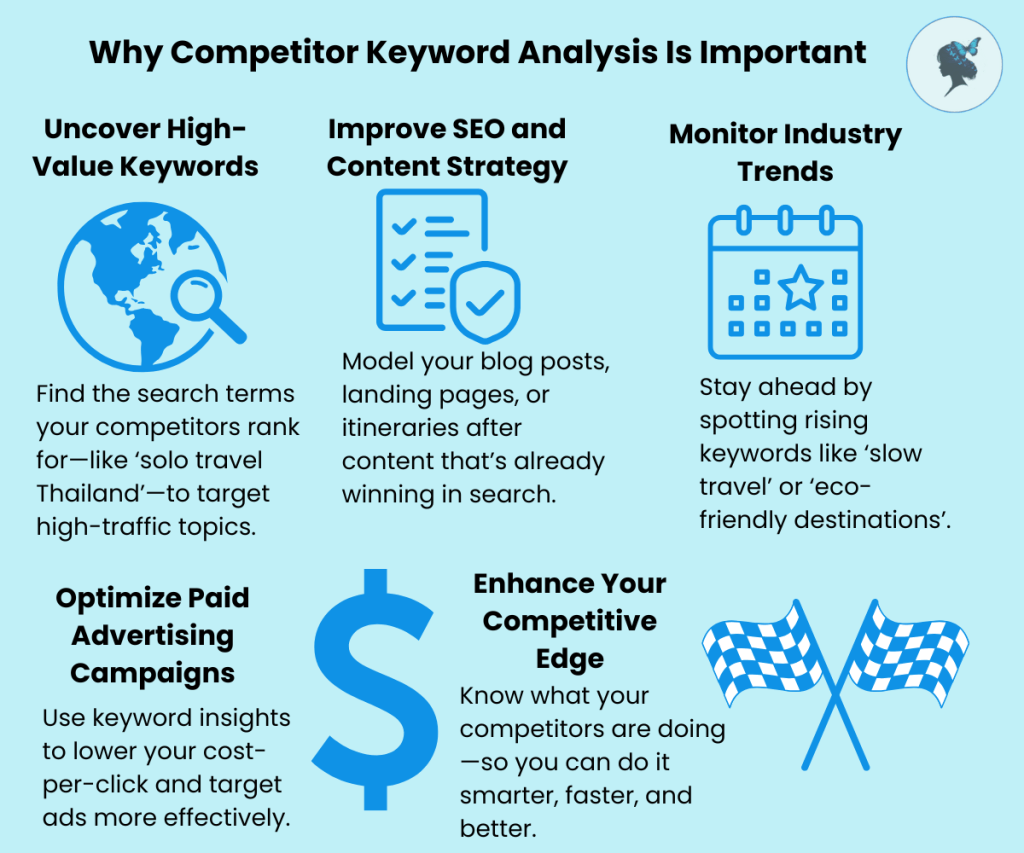
Competitor analysis is a key part of your SEO and content strategy. Understanding the keywords your competitors are ranking for, the types of content they are producing, and the platforms they are active on allows you to build a more effective SEO plan. For example, if a competitor’s blog is gaining traction with content about “hidden gems in Bali,” you may want to create content targeting other similar off-the-beaten-path destinations.

Read our guide: Why SEO is crucial for travel businesses to stay competitive.

3. Provides Insight into Customer Preferences

Competitor research allows you to better understand your customers’ preferences by evaluating what competitors are doing to attract them. If you notice that a competitor is receiving a lot of positive feedback for a specific tour package, you can leverage that insight to create similar offerings that cater to your target audience.

4. Improves Your Marketing and Advertising Campaigns

Tracking your competitors’ marketing strategies—such as paid ads, promotions, and social media campaigns—gives you insight into what’s working in the travel industry. You can adapt or refine your own campaigns based on what you learn. This will save you time and resources, helping you implement strategies that are more likely to succeed.

5. Informs Your Pricing Strategy

By analyzing your competitors’ pricing models, you can ensure your offerings are competitive. If competitors are underpricing or overpricing their services, you can adjust your pricing strategy accordingly. A well-informed pricing structure can give you an edge in attracting more customers without sacrificing profitability.


Take Action with Wanderer’s Watchlist

Now that you understand the importance of competitor identification and how it benefits your travel business, it’s time to put this knowledge into action. Wanderer’s Watchlist, our comprehensive competitor analysis package, helps you stay ahead of the curve and consistently outperform your competitors.

What’s Included in Wanderer’s Watchlist?

  • Competitor Identification: We identify your top 5 competitors and compare ranking keywords, organic traffic Search Volume and their top position in Google.
  • Keyword Analysis: We identify the top 5 competitor keywords for each competitor, including search volume and position in SERPs.
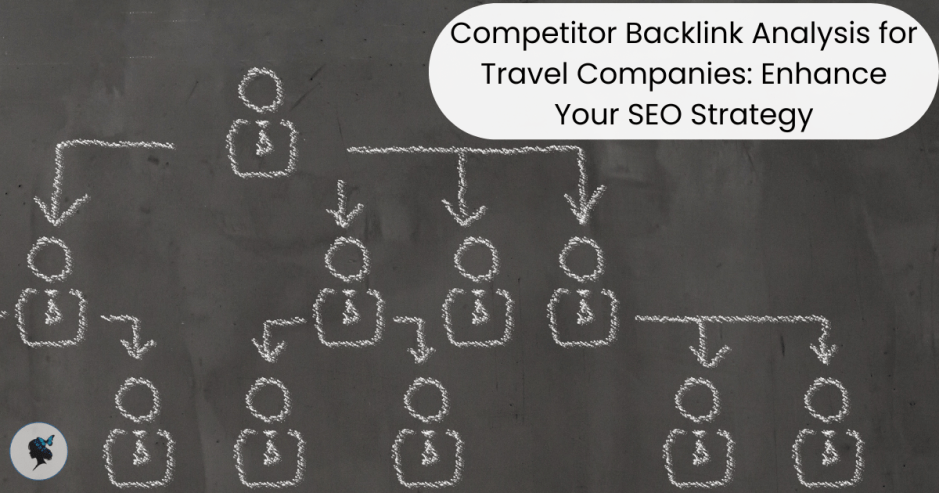
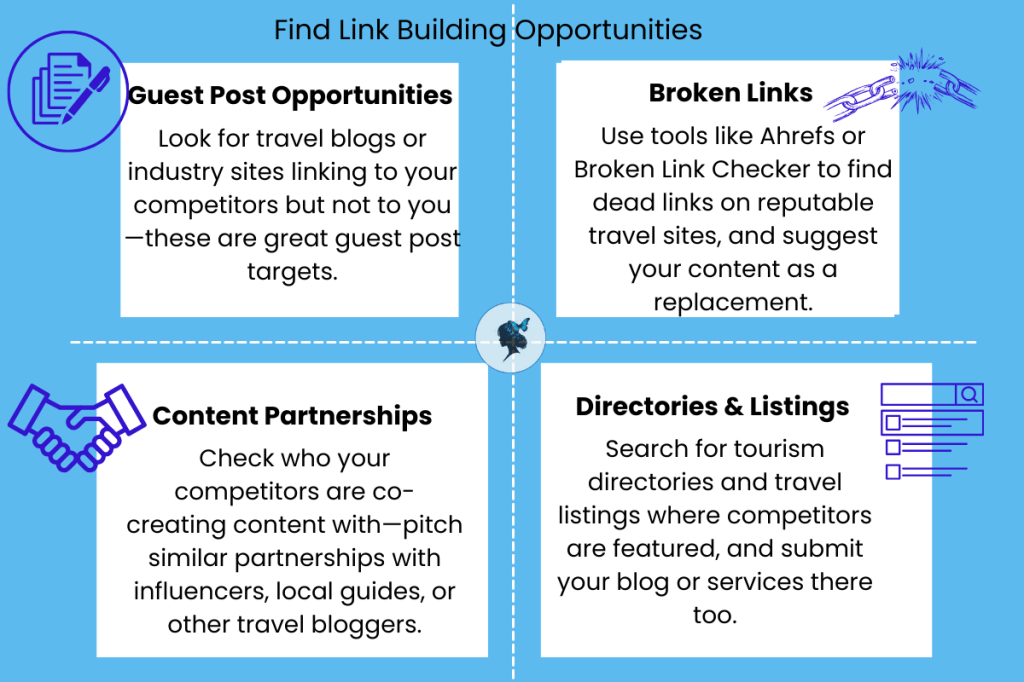
  • Backlink Analysis: We take a deep dive into your competitor’s domain rating, number of backlinks and linking websites, and 20+ backlink & link building opportunities.
  • Traffic and Ranking Insights: We identify the top five pages bringing traffic to your competitors and provide detailed insights into URLs, SERPs, and search volume and provide suggestions on turning insights into opportunities.

With Wanderer’s Watchlist, you’ll receive an actionable roadmap for staying competitive in the ever-evolving travel industry. Our team will help you implement strategies that target the right audience, leverage opportunities, and maximize your growth potential.

Ready to Outsmart Your Competitors?

Don’t wait for your competitors to outpace you. Get the insights you need with Wanderer’s Watchlist, and take your travel business to the next level. Contact us today to learn more about how we can help you stay ahead of the competition and position yourself for success in the travel industry.

Top 5 SEO Mistakes Small Travel Companies Make (And How to Fix Them)

Search Engine Optimization (SEO) is one of the most effective ways for small travel companies to grow their online presence and attract more customers. But SEO can be tricky, especially when you’re balancing the needs of your clients and maintaining the day-to-day operations of your business. While many small travel businesses understand the importance of SEO, there are common mistakes that often prevent them from reaching their full potential.


Table of Contents
  1. Neglecting Local SEO
  2. Ignoring Mobile Optimization
  3. Failing to Optimize for Search Intent
  4. Overlooking the Importance of Quality Content
  5. Not Measuring or Tracking SEO Performance
  6. Conclusion

In this blog, we’ll walk through the top 5 SEO mistakes small travel companies make and provide actionable tips on how to fix them.

Need some help with SEO strategies? Check out our packages to start moving in the right direction!

1. Neglecting Local SEO

One of the biggest mistakes small travel companies make is ignoring the importance of local SEO. Travel businesses often focus on broader, generic keywords like “vacation packages” or “holiday tours,” but these terms are extremely competitive and may not help you reach the customers who are most likely to book your services.

Why This Is a Problem:

By not optimizing for local SEO, you’re missing out on a large pool of potential customers who are actively searching for travel services in your specific location. Local SEO is essential for travel agencies, tour operators, and hotels because travelers often search for services close to their destination.

Read our Ultimate Guide to Local SEO for Travel Agencies for more tips.

How to Fix It:

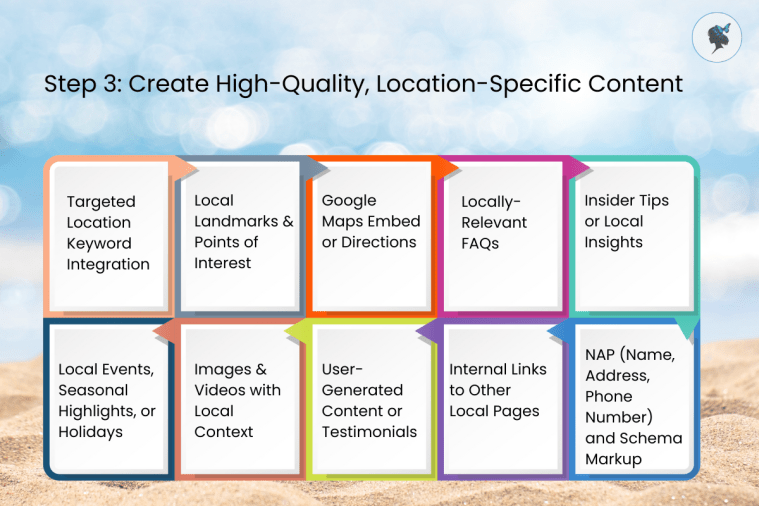
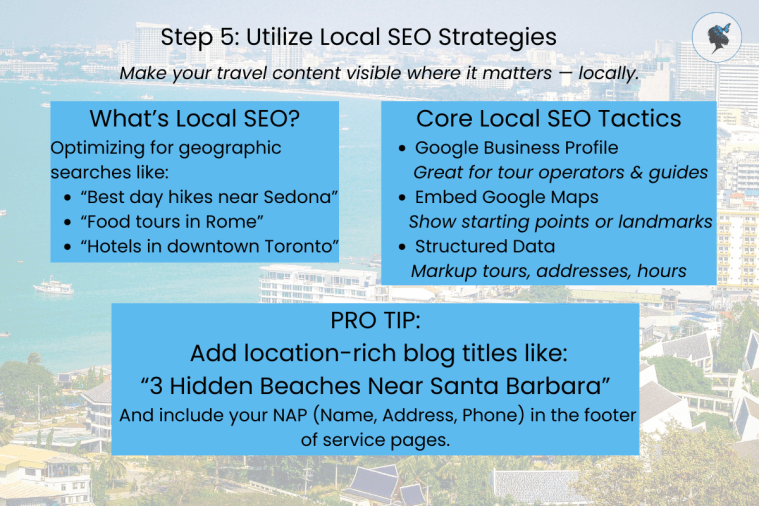
  • Claim and Optimize Your Google My Business Listing: Google My Business (GMB) is a powerful tool for local businesses. Make sure your listing is complete with accurate business details, operating hours, contact information, and high-quality images of your services. Encourage customers to leave reviews, as these can improve your local search rankings.
  • Use Location-Specific Keywords: If you operate in a specific region or cater to a particular destination, use keywords like “best tours in Rome,” “affordable hotels in Madrid,” or “family-friendly activities in London.” Localizing your content will increase your chances of ranking higher for relevant searches in your target area.
  • Create Localized Content: Write blog posts or guides about the local area, such as “Top 10 Things to Do in Sydney” or “Hidden Gems in Portland.” This type of content not only provides value to your customers but also helps boost your local SEO rankings.

Read our ultimate guide to Local SEO.

2. Ignoring Mobile Optimization

With over 50% of website traffic coming from mobile devices, having a mobile-optimized website is no longer optional. If your site isn’t mobile-friendly, you could be losing valuable customers, especially since many travelers search for information while on the go.

Why This Is a Problem:

Google’s mobile-first indexing means that Google predominantly uses the mobile version of your website for ranking and indexing. If your site isn’t optimized for mobile users, it can negatively impact your SEO rankings, making it harder for potential customers to find you.

How to Fix It:

  • Use a Responsive Web Design: A responsive design automatically adjusts the layout and content of your website depending on the screen size. This ensures that your site is easily navigable, whether it’s viewed on a smartphone, tablet, or desktop.
  • Speed Up Your Site: Mobile users are often on the go and impatient for slow-loading pages. Use tools like Google PageSpeed Insights to identify and fix issues that may be slowing down your website. Compress images, eliminate unnecessary scripts, and optimize your website’s structure to ensure fast loading times.
  • Simplify Navigation: On mobile devices, space is limited. Make sure that your site’s navigation is easy to use and that important information (like contact details, booking forms, and service descriptions) is easily accessible.

3. Failing to Optimize for Search Intent

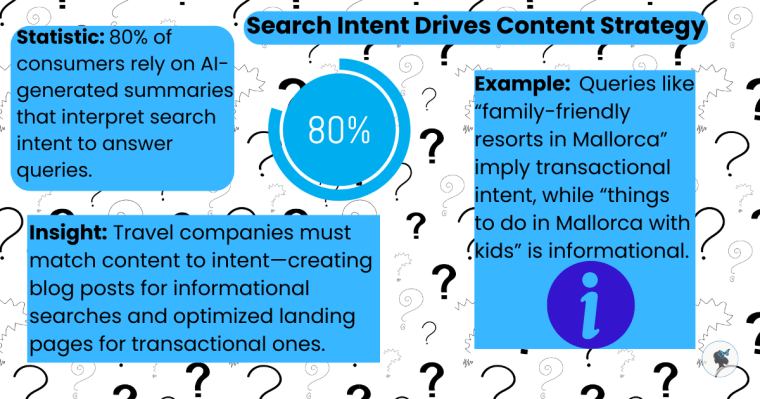
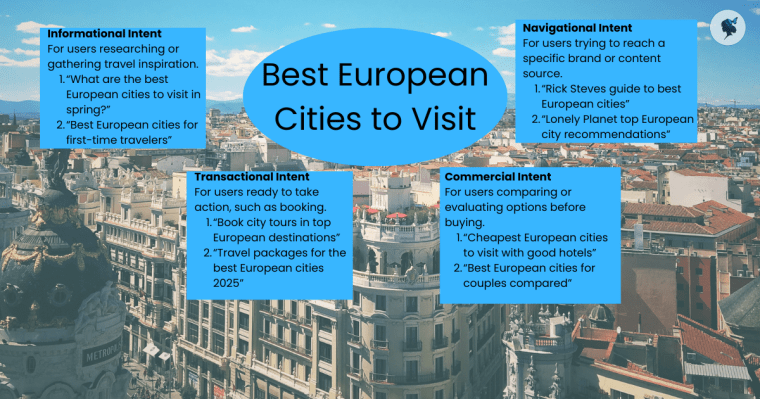
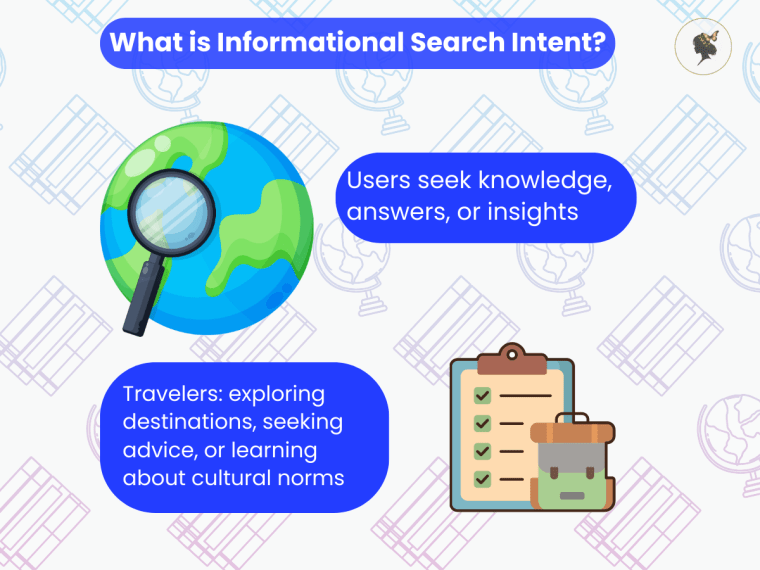
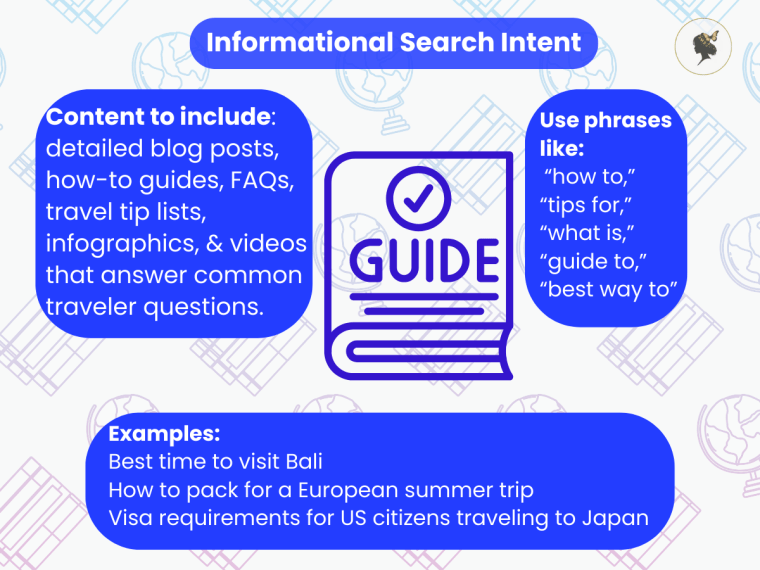
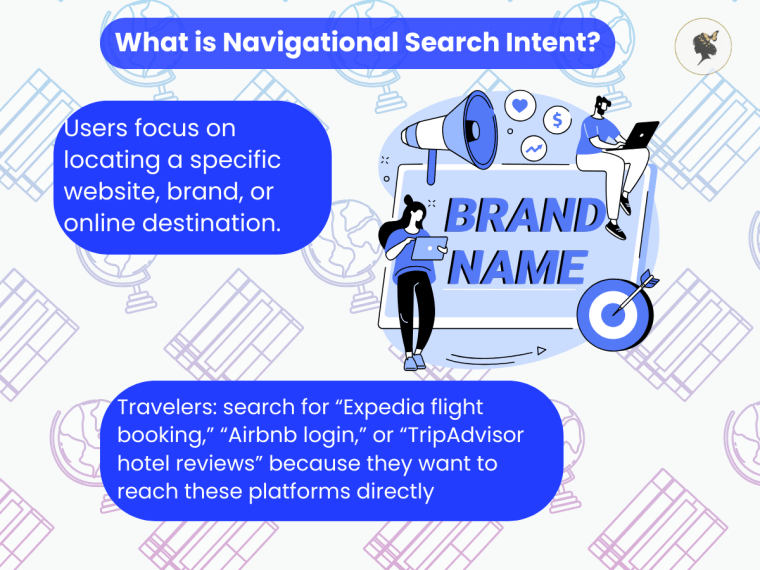
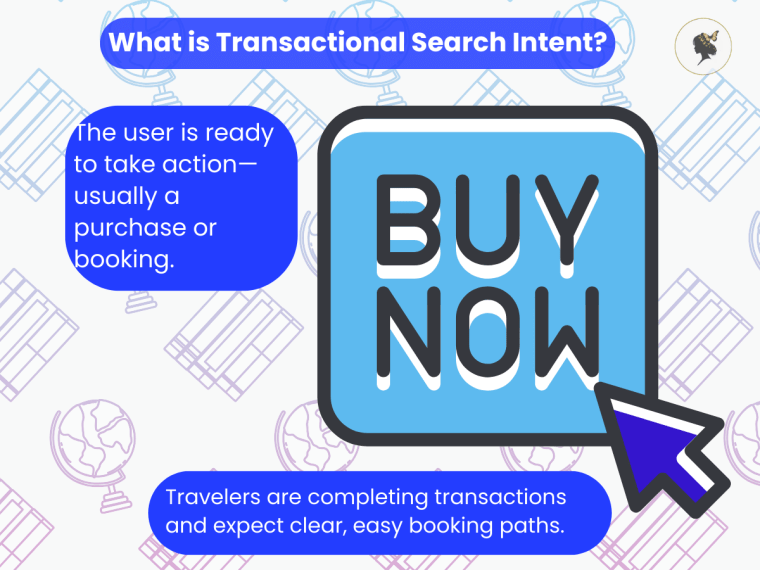
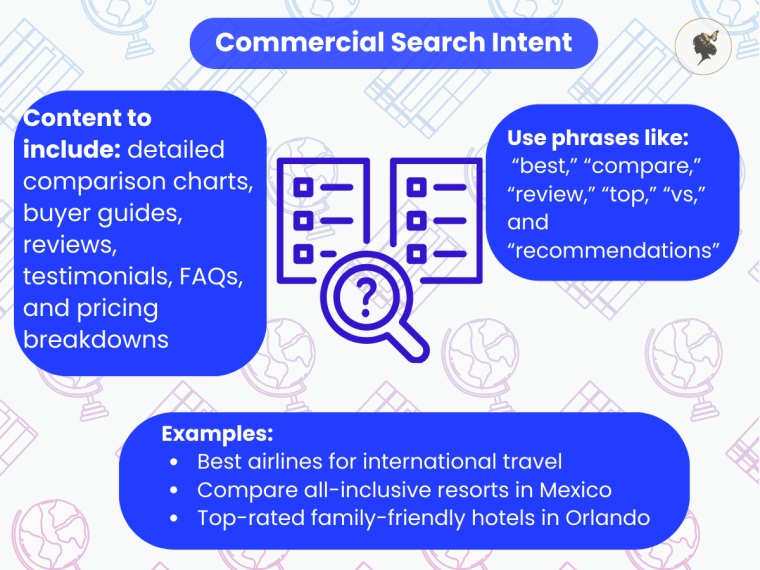
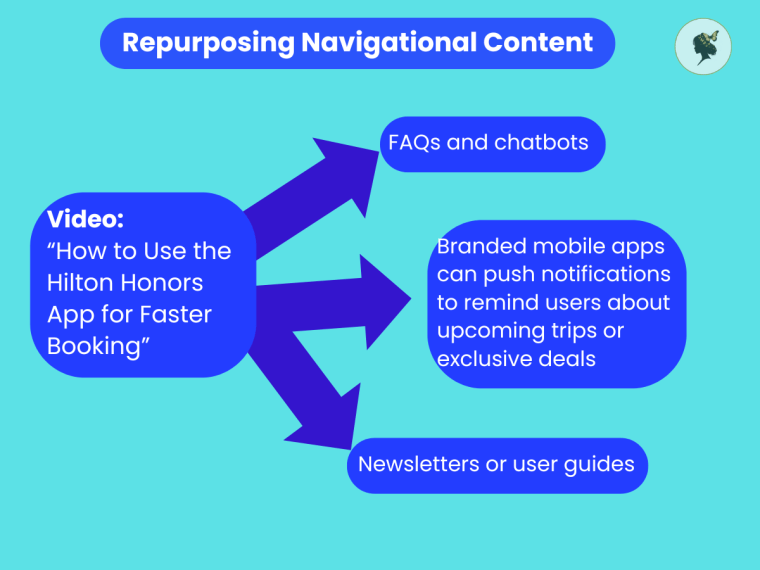
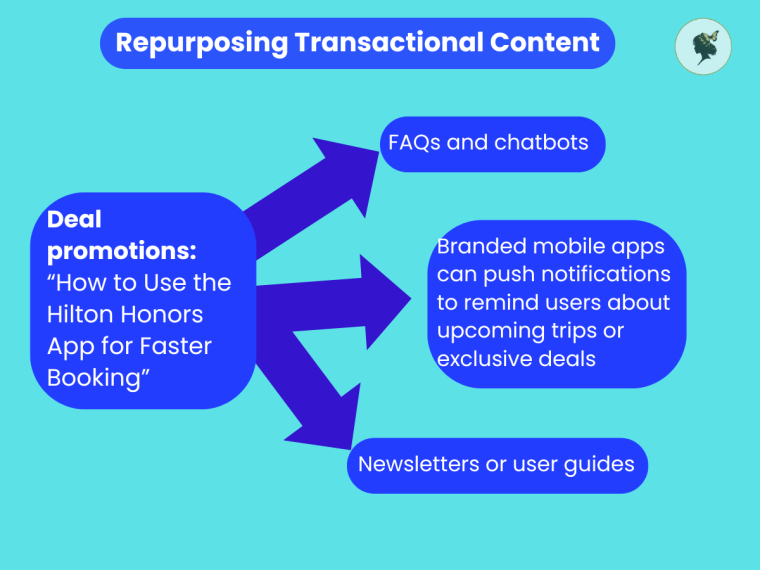
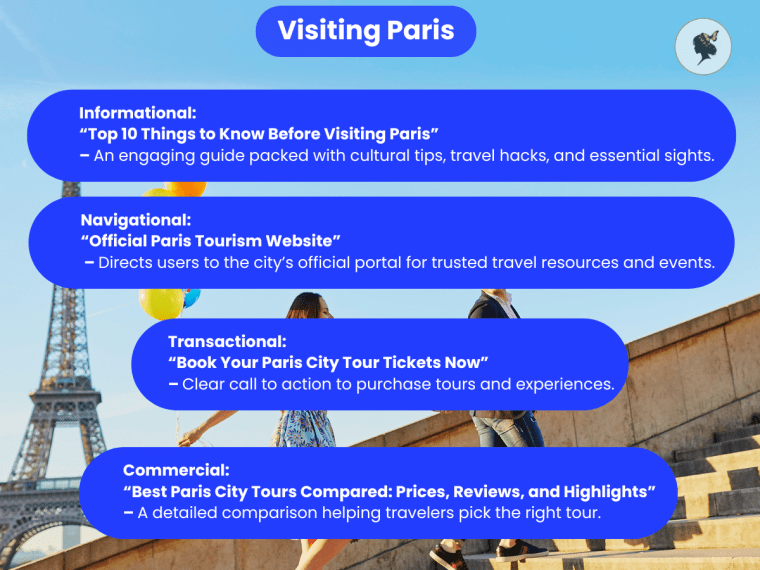
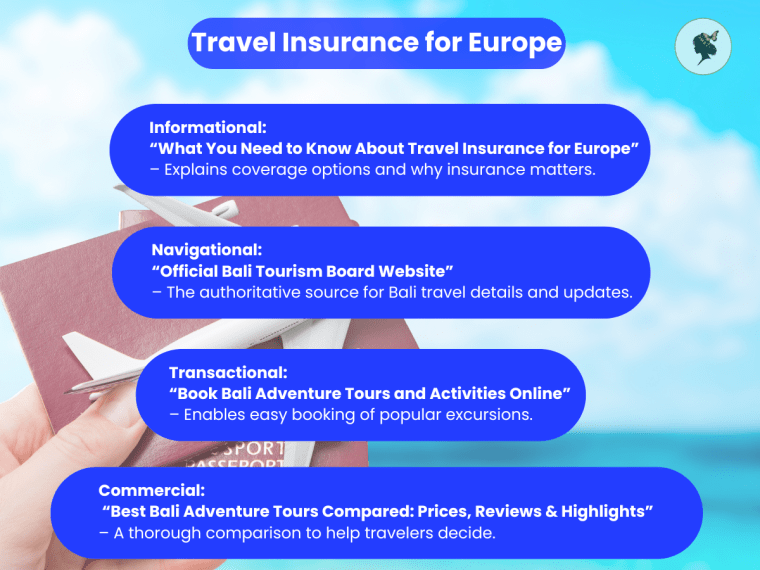
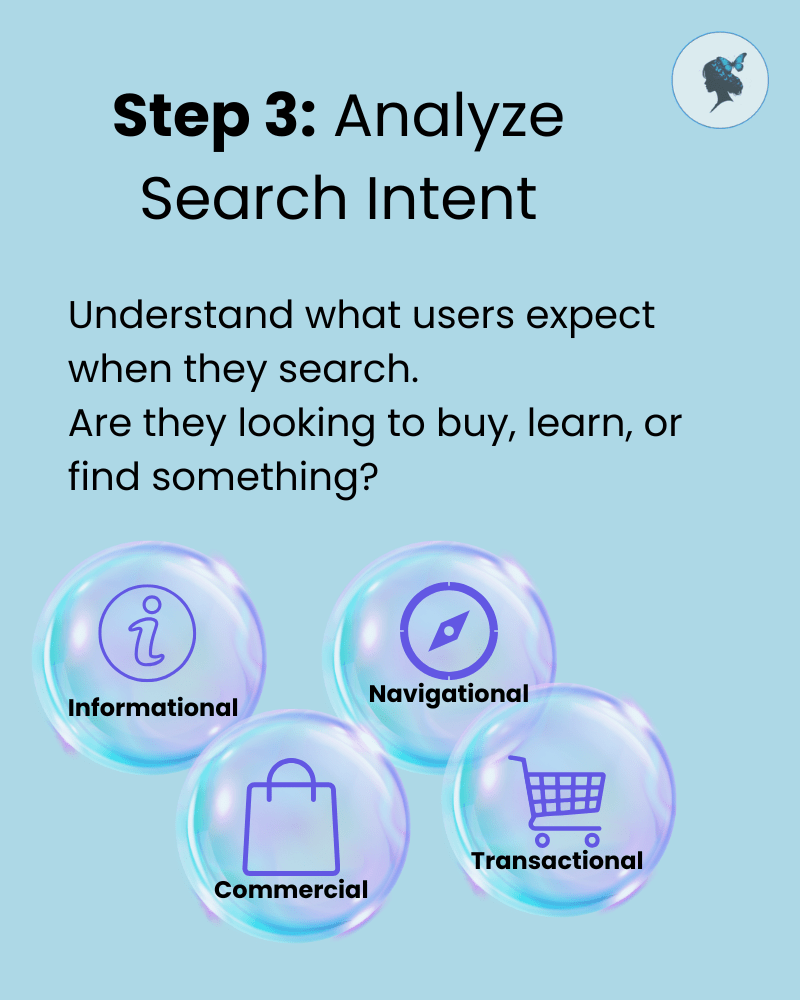
Search intent is the reason behind a user’s search query. If you’re targeting keywords without considering the intent behind them, you may not attract the right audience. There are four main types of search intent: informational, navigational, transactional, and commercial investigation. Small travel companies often make the mistake of targeting keywords that are too broad or irrelevant to their business goals.

Why This Is a Problem:

When you fail to understand the intent behind your customers’ search queries, you may create content that doesn’t meet their needs. This leads to higher bounce rates and lower engagement, which can negatively impact your SEO performance.

How to Fix It:

  • Conduct Keyword Research with Search Intent in Mind: Instead of just targeting keywords with high search volume, focus on keywords that align with the intent of your target audience.
  • Create Content for Each Stage of the Customer Journey: Map your content to the buyer’s journey. Informational content (like blog posts or destination guides) can attract potential travelers in the research phase, while transactional content (like service pages or booking options) can convert them into customers.
  • Optimize Landing Pages for Conversions: If your goal is to drive bookings, make sure that your landing pages are optimized to convert visitors into customers. Include clear calls to action, customer testimonials, and easy navigation for booking or contact information.

More about search intent in our comprehensive guide.

4. Overlooking the Importance of Quality Content

Content is king in SEO. However, many small travel businesses make the mistake of publishing low-quality content that doesn’t add value to their audience. Content that isn’t informative, engaging, or well-optimized for search engines will fail to rank and fail to connect with potential customers.

Why This Is a Problem:

Without high-quality content, your website will struggle to attract visitors and build trust with your audience. Google values content that is informative, relevant, and engaging to users, so low-quality content can severely hurt your SEO efforts.

Read here for more tips on how Storytelling can Transform your Travel Brand’s Blog.

How to Fix It:

  • Focus on Creating Valuable, Engaging Content: Think about your customers’ pain points and needs. Create blog posts, guides, videos, and infographics that provide useful information. For example, a blog post titled “Top 5 Family-Friendly Activities in Rome” would attract people planning family trips and help position your business as an authority in that niche.
  • Use the Right Keywords Naturally: While keyword optimization is essential, avoid keyword stuffing. Focus on creating content that answers the questions your potential customers are asking. Use natural, conversational language and include variations of your target keywords to make your content more engaging and accessible.
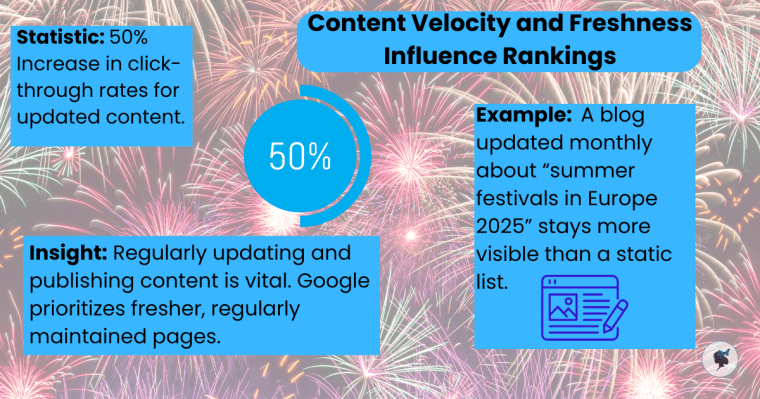
  • Update Old Content: Don’t let outdated content linger on your site. Refresh old blog posts and landing pages with new information, updated statistics, and fresh keywords to ensure they continue to provide value to your audience and perform well in search results.

5. Not Measuring or Tracking SEO Performance

Many small travel businesses dive into SEO without taking the time to measure and track their performance. Not having a clear understanding of how your SEO efforts are performing means you’re operating blindly, which can lead to wasted resources and missed opportunities.

Why This Is a Problem:

Without tracking SEO performance, you won’t know what’s working and what’s not. This can prevent you from making data-driven decisions and adjustments to improve your rankings and traffic over time.

How to Fix It:

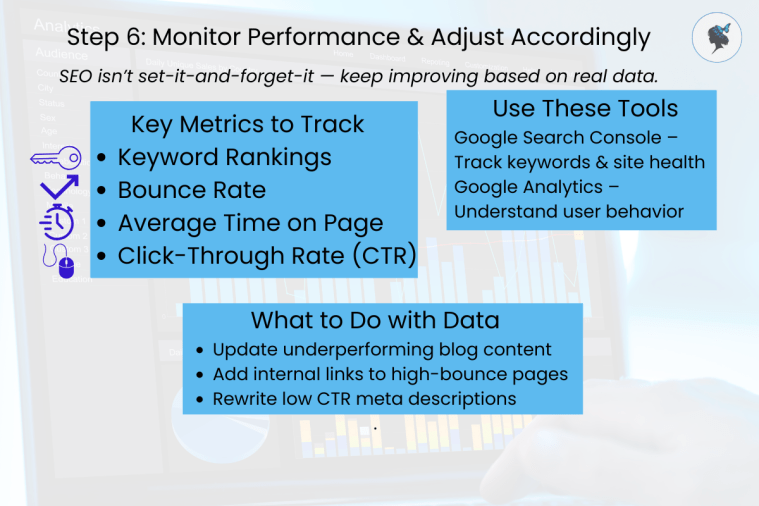
  • Use Analytics Tools: Google Analytics and Google Search Console are essential tools for tracking SEO performance. These platforms can show you which keywords are driving traffic, where your visitors are coming from, and how they interact with your site.
  • Track Key Metrics: Focus on tracking metrics that matter, such as organic traffic, keyword rankings, bounce rates, time on page, and conversion rates. Monitoring these metrics will help you make informed decisions about where to focus your SEO efforts.
  • Regularly Review Your SEO Strategy: SEO is a long-term game, and it’s important to review your strategy periodically. Make adjustments based on your performance data, industry changes, and shifts in customer behavior.

Conclusion

SEO is a powerful tool for small travel companies, but it requires ongoing effort, strategy, and attention to detail. By avoiding these common SEO mistakes—neglecting local SEO, ignoring mobile optimization, failing to understand search intent, publishing low-quality content, and not tracking performance—you can significantly improve your online visibility, drive more traffic to your site, and convert more visitors into loyal customers.

Start by addressing these issues in your SEO strategy, and you’ll be well on your way to achieving better rankings, more leads, and ultimately, business growth. If you need help optimizing your SEO strategy for your travel business, contact us to help you get results faster.

Why SEO is Crucial for Small Travel Businesses to Stay Competitive

In today’s digital-first world, travelers turn to search engines as their go-to resource for planning trips. Whether it’s finding flight deals, researching destinations, or booking accommodations, the journey begins with a simple Google search. For small travel businesses, this presents both an opportunity and a challenge: to stand out in a crowded market, you need a strong online presence—and that’s where Search Engine Optimization (SEO) comes in.

Check out our packages to start moving in the right direction!


▶ Table of Contents
  1. The Growing Importance of Online Visibility
  2. Key Benefits of SEO for Small Travel Businesses
  3. Essential SEO Strategies for Travel Businesses
  4. Staying Ahead of the Competition
  5. Conclusion

The Growing Importance of Online Visibility

According to recent studies, over 80% of travel planning starts online, with search engines being the primary tool for research. If your website doesn’t appear on the first page of search results, potential customers are likely booking with your competitors. SEO helps ensure your business is visible when travelers are searching for services you offer, giving you a competitive edge.

Key Benefits of SEO for Small Travel Businesses

1. Increased Website Traffic

SEO helps improve your website’s ranking on search engines, driving organic traffic. By targeting keywords related to your niche—like “family-friendly safaris” or “budget beach resorts in Bali”—you attract travelers actively looking for your offerings.

2. Cost-Effective Marketing

Compared to paid advertising, SEO offers long-term benefits at a lower cost. Once your website ranks well, you’ll continue receiving traffic without needing to pay for every click or view. For small businesses with limited marketing budgets, this is invaluable.

3. Building Trust and Credibility

Websites that rank higher on search engines are perceived as more trustworthy by users. An optimized website not only attracts more visitors but also helps establish your brand as an authority in the travel industry.

4. Enhanced User Experience

SEO isn’t just about keywords; it also involves optimizing your website’s structure, speed, and mobile-friendliness. A fast, user-friendly website improves your visitors’ experience, increasing the likelihood of conversions.

Essential SEO Strategies for Travel Businesses

1. Target Local SEO

Many travelers search for location-specific services, like “tour guides in Paris” or “private lodges in Kenya.” Optimizing for local SEO by claiming your Google My Business profile and including location-specific keywords can help you attract these customers.

Read our Ultimate Guide to Local SEO for Travel Agencies here.

2. Create High-Quality Content

Travelers are constantly seeking inspiration and information. By publishing blog posts, destination guides, and travel tips, you can attract visitors and establish yourself as an expert. Use engaging visuals and shareable content to amplify your reach.

Read our post on the top 5 types of content every travel website should have.

3. Optimize for Mobile

Over 60% of travel searches are conducted on mobile devices. Ensure your website is mobile-friendly to provide a seamless experience for users on the go.

4. Leverage Reviews and Testimonials

Positive reviews boost your credibility and improve your local SEO rankings. Encourage satisfied customers to leave reviews on platforms like Google and TripAdvisor.

Staying Ahead of the Competition

SEO isn’t a one-time effort but an ongoing process. Regularly updating your content, analyzing performance metrics, and adapting to algorithm changes are crucial for maintaining your rankings. While larger competitors may have bigger budgets, a well-executed SEO strategy can level the playing field, allowing your small travel business to thrive.

That’s why Wander Women Strategies offer mini SEO & content packages—so you can get exactly what you need, when you need it, at a price you can afford.

Conclusion

In the competitive travel industry, having a robust SEO strategy is no longer optional—it’s essential. By investing in SEO, small travel businesses can boost visibility, attract more customers, and build a loyal following. As more travelers turn to search engines for their travel needs, ensuring your business appears prominently in search results is key to long-term success. Start optimizing today, and watch your small travel business soar to new heights!

Need help with SEO? Contact us to see how we can help!