Backlink Audits: The Key to Building a Strong SEO Foundation for Travel Companies


▶ Table of Contents
  1. What is a Backlink Audit?
  2. How to Conduct a Backlink Audit
  3. Why Backlink Audits Are Important for Travel Companies
  4. Start Optimizing Your Backlink Profile with WanderLinks

In today’s competitive travel industry, having a strong online presence is more important than ever. While on-page SEO and high-quality content are essential, backlinks remain one of the most influential ranking factors for search engines. However, not all backlinks are created equal. To ensure that your travel company is benefiting from its backlink strategy, you need to perform regular backlink audits.

A backlink audit allows you to evaluate the quality of your backlinks, remove any harmful ones, and discover new opportunities to improve your link profile. With a package like WanderLinks, your travel company can stay on top of your backlink strategy and ensure it supports your long-term SEO goals.

A backlink audit is the process of reviewing and analyzing the backlinks pointing to your website. Backlinks, also known as inbound links, are links from external websites that point to your pages. These links are a signal to search engines that other sites trust your content. As such, backlinks are one of the most important ranking factors in SEO.
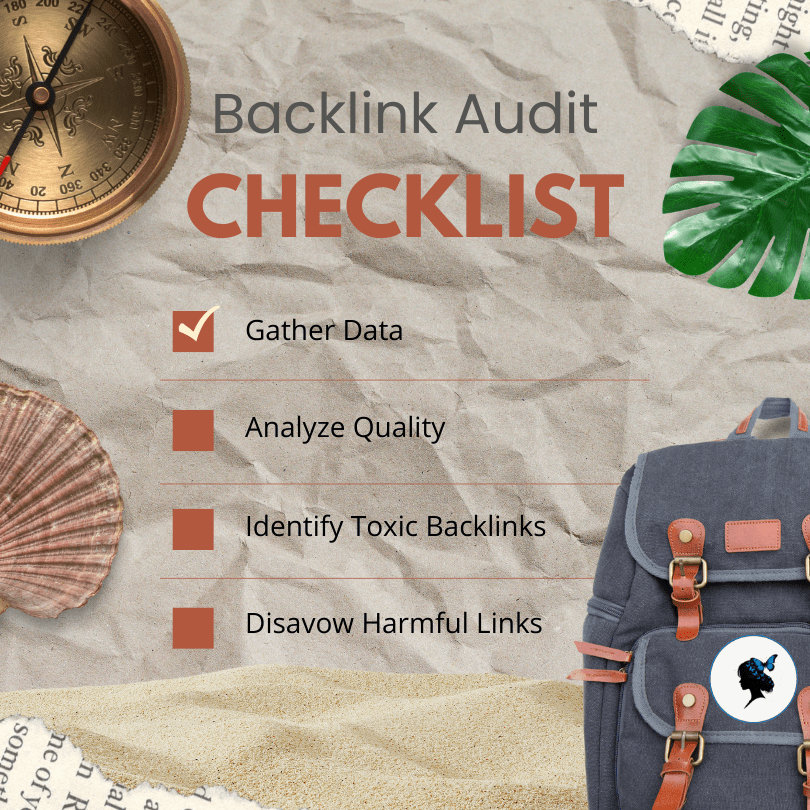
However, not all backlinks are beneficial. While some backlinks from reputable, high-authority sites can improve your website’s ranking, low-quality, spammy, or toxic backlinks can have the opposite effect. A backlink audit helps you identify:

  • Good backlinks: Links from authoritative websites that contribute positively to your website’s credibility.
  • Toxic backlinks: Links from unreliable, low-quality, or irrelevant websites that could negatively affect your rankings.
  • Opportunities: Identifying gaps in your backlink profile where you could earn more high-quality backlinks.

A backlink audit is a crucial step in maintaining a clean, effective, and healthy link profile that will help you climb the search engine rankings.


Conducting a backlink audit may seem complex, but breaking it down into manageable steps makes it easier to handle. Here’s how you can perform a thorough backlink audit for your travel company:

Step 1: Gather Your Backlink Data

The first step in conducting a backlink audit is collecting a list of all the backlinks pointing to your website. You can use SEO tools such as:

  • Google Search Console: This is a free tool from Google that allows you to see which websites are linking to your site and provides information about the quality of those links.
  • Ahrefs: Ahrefs is an excellent tool for analyzing backlinks and viewing detailed reports about link quality, link type, and anchor text.
  • SEMrush: SEMrush provides a comprehensive backlink audit tool that identifies both toxic and high-quality backlinks. It can also help you assess competitors’ backlink profiles.
  • Moz: Moz’s Link Explorer provides valuable backlink data, including domain authority, page authority, and the number of linking root domains.

By gathering data from these tools, you can compile a list of all backlinks pointing to your site, both nofollow and dofollow links.

Step 2: Analyze the Quality of Each Backlink

Once you’ve gathered your backlink data, the next step is to assess the quality of each backlink. Factors that determine the quality of a backlink include:

  • Domain Authority: Backlinks from high-authority domains (websites that have a strong online reputation and high trustworthiness) are generally more valuable.
  • Relevance: Backlinks should come from sites that are relevant to your travel business, such as travel blogs, tourism websites, or local tourism authorities.
  • Anchor Text: The anchor text of a backlink is the clickable text that links to your site. Ideally, it should be natural and relevant to the content on the linked page.
  • Traffic: A backlink from a site with high traffic is likely to have more value because it can drive referral traffic to your website.

Step 3: Identify Toxic or Harmful Backlinks

One of the most important parts of a backlink audit is identifying toxic backlinks. These are links that come from low-quality, spammy, or irrelevant websites. Toxic backlinks can come from:

  • Link farms: Websites created specifically to sell backlinks in bulk, often low-quality links that are irrelevant to your site.
  • Spammy websites: Websites that violate Google’s quality guidelines, such as those that promote illegal or unethical activities.
  • Irrelevant industries: Backlinks from websites that have nothing to do with your travel niche can hurt your rankings.

You can use tools like Ahrefs or SEMrush to identify potentially toxic backlinks. Pay attention to the following red flags:

  • Backlinks from sites with a low domain authority
  • Backlinks with over-optimized or irrelevant anchor text
  • Links from websites in unrelated industries

Step 4: Disavow Harmful Links

Once you have identified toxic backlinks, it’s essential to disavow them to avoid any negative impact on your SEO performance. The Google Disavow Tool allows you to tell Google to ignore these harmful backlinks.

Here’s how you can disavow harmful backlinks:

  1. Create a file that includes the links you want Google to ignore.
  2. Upload the file to the Google Disavow Tool.
  3. Google will disregard the disavowed links when calculating your website’s ranking.

Step 5: Build a Plan to Acquire More High-Quality Backlinks

Now that you’ve cleaned up your backlink profile, it’s time to focus on building more high-quality backlinks. You can:

  • Reach out to authoritative websites in the travel industry for guest posting opportunities, collaborations, or content partnerships.
  • Create shareable content such as infographics, blog posts, or destination guides that naturally attract backlinks.
  • Monitor your competitors to see where they’re getting backlinks and identify new link-building opportunities.

Backlink acquisition is an ongoing process, and regularly auditing your backlinks ensures that you are constantly improving the quality of your backlink profile.
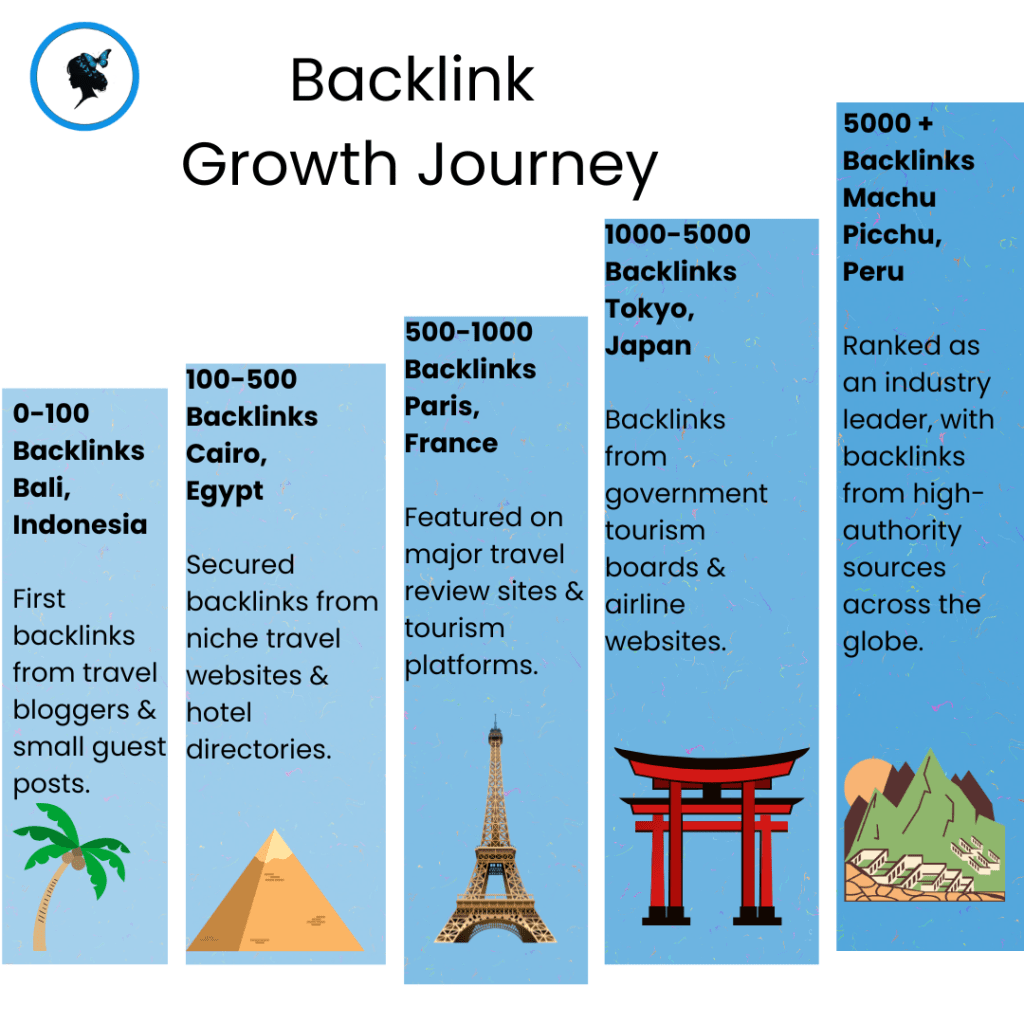

For travel companies, backlinks play a crucial role in enhancing SEO performance and boosting organic traffic.

Here’s why regular backlink audits are vital for travel businesses:

1. Boost Your Website’s Authority

High-quality backlinks from reputable websites help establish your travel company as an authority in the industry. When authoritative travel blogs, media outlets, or tourism websites link to your content, it signals to search engines that your site is a credible source of information.

2. Improve Search Engine Rankings

Search engines like Google prioritize websites with strong backlink profiles in their rankings. By regularly auditing your backlinks and removing toxic links, you ensure that search engines view your site favorably, improving your chances of ranking higher for relevant keywords.

3. Increase Organic Traffic

When you have high-quality backlinks, you’re not only boosting your SEO rankings but also increasing the likelihood that visitors from those sites will click through to your travel website. This leads to an increase in referral traffic, which can drive more potential customers to your site.

4. Protect Your Website from Penalties

Toxic backlinks can harm your website’s reputation, and Google can penalize websites with unnatural link profiles. By conducting regular backlink audits, you can catch harmful backlinks before they impact your rankings and ensure your site remains compliant with Google’s quality guidelines.

5. Stay Competitive in the Travel Industry

In the highly competitive travel industry, a solid backlink strategy can make all the difference. By auditing your backlink profile and identifying new opportunities, you can outmaneuver your competitors and attract more visitors to your travel site.


If you want to ensure your backlink profile is clean, effective, and working for you, WanderLinks is the perfect solution for your travel company. Our WanderLinks package offers:

  • Backlink Audit: We complete a thorough backlink audit with actionable recommendations on your broken links.
  • Competitor Backlink Analysis: We identify your competitors, evaluate their backlinks, and provide valuable insight into backlink opportunities.
  • Outreach Strategy Development: We identify 10+ opportunities for guest posting and provide tips on best practices for your outreach strategy.
  • Local Link Building: We provide opportunities for local link building, including local tourism blogs & websites, local business partnerships, and local media.

By leveraging the insights and tools from WanderLinks, your travel company can create a more effective SEO strategy that attracts high-quality backlinks and drives more traffic to your website.

Ready to Improve Your Backlink Strategy?

Contact us today to get started with WanderLinks and take your travel website’s SEO to the next level. We’ll help you perform a comprehensive backlink audit, and discover new opportunities to build a stronger online presence.
Competitor Identification for Travel Companies: Unlocking Your Competitive Edge


▶ Table of Contents

In the highly competitive world of travel, every company, whether it’s a boutique hotel, a travel agency, or a tour operator, is vying for the attention of travelers. With so many options available online, staying ahead of the competition is crucial to your success. One of the most effective ways to achieve this is through competitor identification.

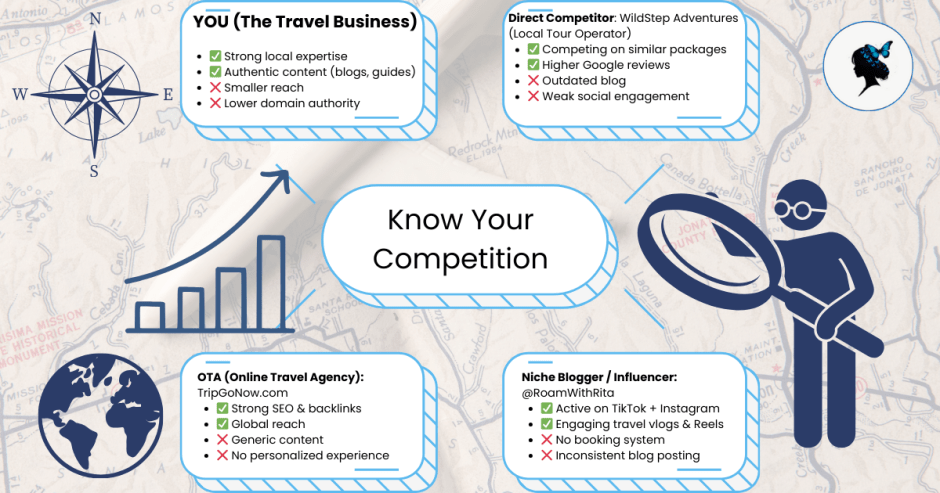
Knowing who your competitors are, understanding their strengths and weaknesses, and strategically positioning yourself against them can give your travel business a competitive edge.

1. What is Competitor Identification?

Competitor identification is the process of determining which companies within your industry are competing for the same customers, traffic, and market share. For travel businesses, this goes beyond just identifying who is in your direct geographic location. It includes those who are targeting similar audiences, offering related services, and positioning themselves in ways that may influence your potential customers.

Competitor identification isn’t just about finding who is already established. It also involves recognizing emerging players, understanding the market shifts, and identifying trends that might disrupt your business.

Types of Competitors for Travel Companies

Travel companies face several types of competitors in the digital space:

  • Direct Competitors: These are businesses offering the same or similar services as you. For example, a luxury tour operator in Paris would be competing directly with other luxury tour operators in the same location.
  • Indirect Competitors: These companies provide alternative solutions that satisfy the same customer need. For instance, a local restaurant in Paris may not be offering tours, but it may compete with your tour company for customer attention in a broader travel context.
  • Emerging Competitors: New businesses or startups that are entering the travel industry. These may not be major players yet, but identifying them early can provide you with a significant advantage.

Competitor identification allows you to understand who you’re competing with, their positioning in the market, and the strategies they are using to attract your target audience.


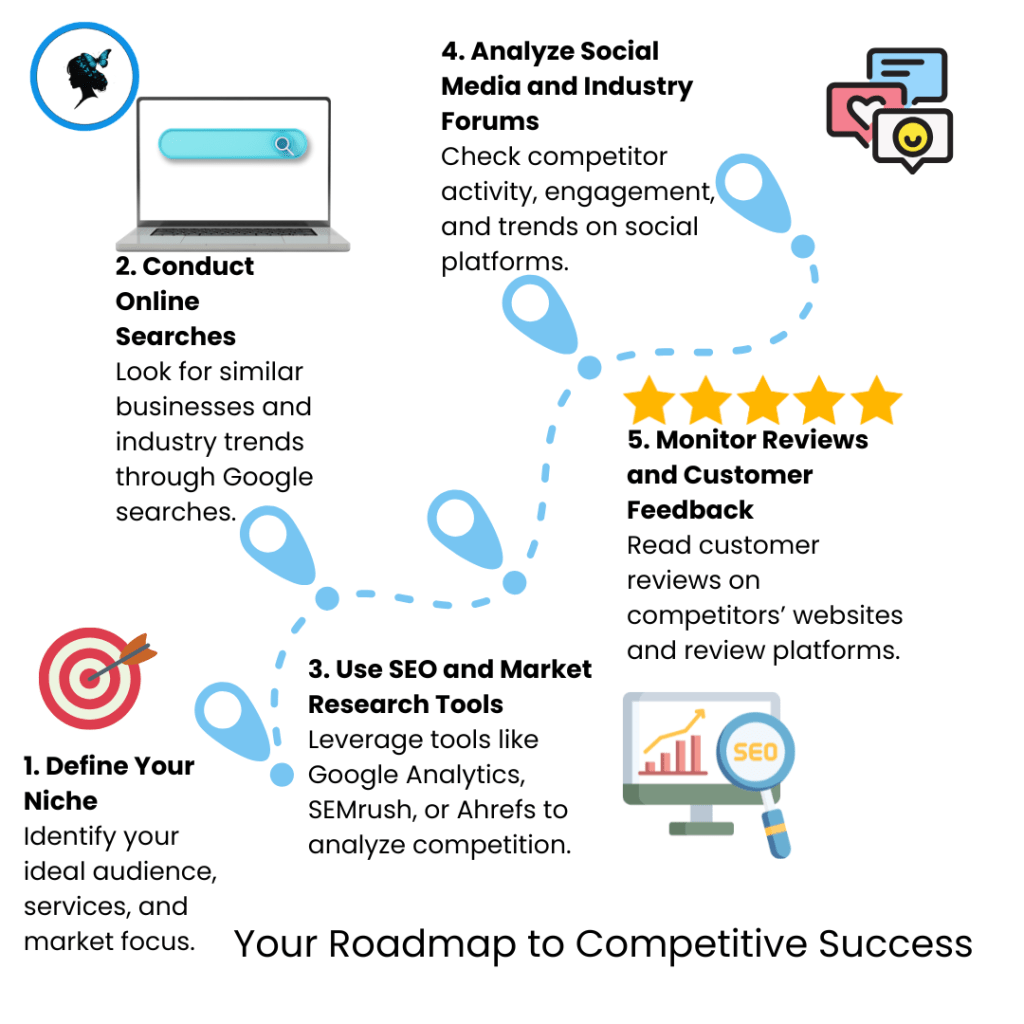
2. How to Identify Competitors in the Travel Industry?

Identifying your competitors may seem straightforward, but a strategic approach can help you dive deeper and gather meaningful insights to gain a competitive advantage. Here’s how you can identify your competitors:

Step 1: Define Your Niche

Before you start identifying competitors, it’s crucial to understand your specific market niche. In the travel industry, there are many different segments, such as:

  • Luxury travel
  • Adventure tourism
  • Cultural or historical tours
  • Family-friendly vacations
  • Eco-tourism

Defining your niche allows you to refine your search for competitors who are directly targeting the same audience. A family-owned bed and breakfast in the mountains might be competing with other bed and breakfasts in the area, while a high-end travel agency focused on bespoke itineraries may find competitors among luxury travel providers.

Step 2: Conduct Online Searches

Use search engines to conduct queries around keywords that are relevant to your business. For example, if you specialize in tours in Paris, search for terms like “private tours in Paris,” “best Paris tour operators,” or “Paris sightseeing tours.” Check out the first page of the search results to identify companies that appear repeatedly.

Step 3: Use SEO and Market Research Tools

In the travel industry, many SEO and market research tools can help you dig deeper into competitor analysis. Tools like Semrush, Ahrefs, and Moz allow you to:

  • Identify competing websites: Search for keywords related to your services and see who is ranking for those terms.
  • Analyze keyword gaps: Find out which keywords your competitors are ranking for that you are not.
  • Evaluate backlinks: Discover where your competitors are getting their backlinks from, and use this information to improve your own link-building efforts.

Additionally, Google Trends and Google Alerts can be valuable in tracking shifts in search volume for key travel-related terms and identifying emerging competitors.

Step 4: Analyze Social Media and Industry Forums

Social media platforms, especially Instagram, Facebook, Twitter, and LinkedIn, can provide valuable insights into your competitors’ activities. Pay attention to the type of content they’re posting, the hashtags they’re using, their engagement rates, and how they’re positioning their brand in front of potential travelers.

Industry forums and online communities like TripAdvisor, Yelp, and even Reddit can provide insights into who your customers are talking about and which travel brands they trust.

Read our tips: creating social media campaigns that inspire wanderlust.

Step 5: Monitor Reviews and Customer Feedback

Customer feedback on review sites, social media, and travel blogs is a goldmine for competitor insights. See what customers are saying about your competitors and identify areas where they are excelling and areas where they are falling short. This will help you find gaps in the market and areas where you can differentiate your services.


3. Why is Competitor Identification Important for Travel Companies?

Understanding who your competitors are and what they are doing well—or poorly—can be the difference between success and failure.

Here’s why competitor identification is so crucial for travel companies:

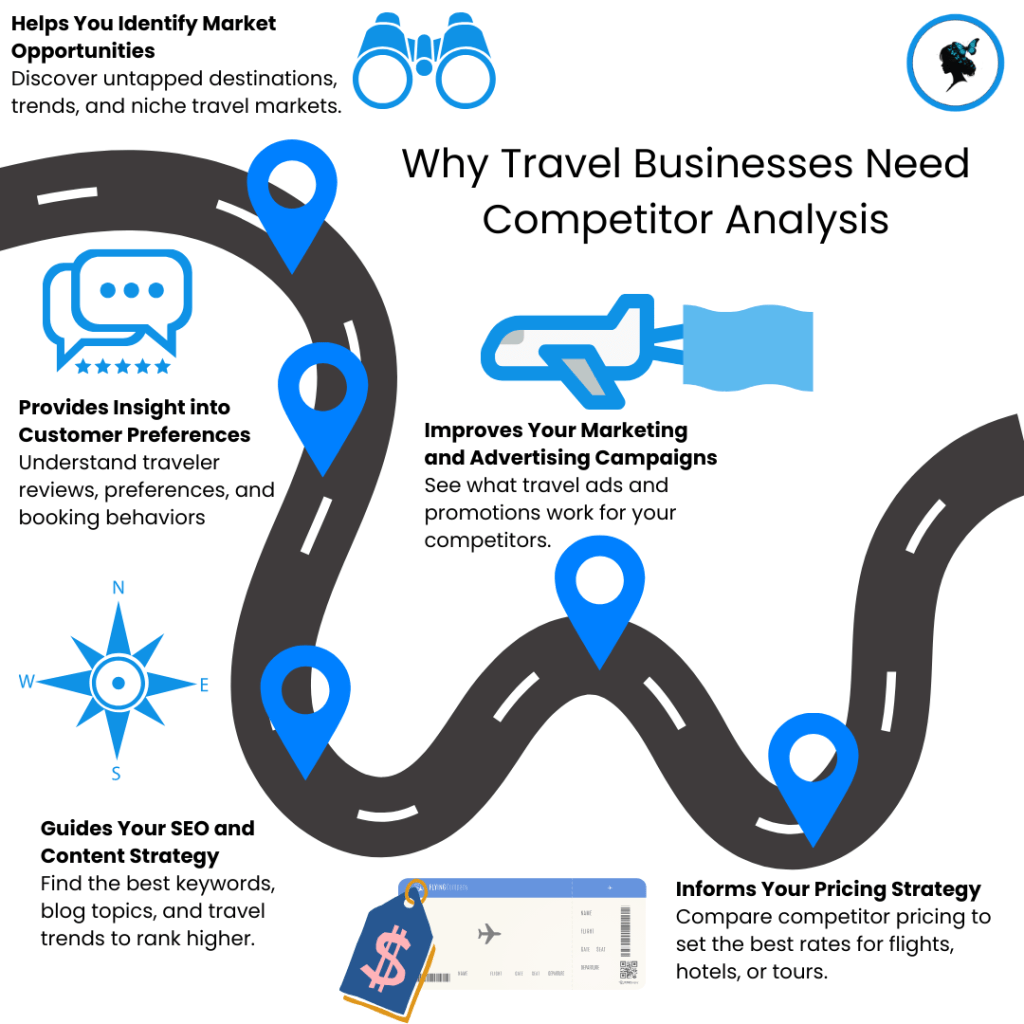
1. Helps You Identify Market Opportunities

By identifying your competitors’ weaknesses, you can spot opportunities in the market that they might be overlooking. Perhaps they’re not offering the level of customer service you believe travelers expect, or maybe they’re not capitalizing on the growing trend of eco-tourism. By filling these gaps, you can carve out a niche that attracts travelers seeking better alternatives.

2. Guides Your SEO and Content Strategy

Competitor analysis is a key part of your SEO and content strategy. Understanding the keywords your competitors are ranking for, the types of content they are producing, and the platforms they are active on allows you to build a more effective SEO plan. For example, if a competitor’s blog is gaining traction with content about “hidden gems in Bali,” you may want to create content targeting other similar off-the-beaten-path destinations.

Read our guide: Why SEO is crucial for travel businesses to stay competitive.

3. Provides Insight into Customer Preferences

Competitor research allows you to better understand your customers’ preferences by evaluating what competitors are doing to attract them. If you notice that a competitor is receiving a lot of positive feedback for a specific tour package, you can leverage that insight to create similar offerings that cater to your target audience.

4. Improves Your Marketing and Advertising Campaigns

Tracking your competitors’ marketing strategies—such as paid ads, promotions, and social media campaigns—gives you insight into what’s working in the travel industry. You can adapt or refine your own campaigns based on what you learn. This will save you time and resources, helping you implement strategies that are more likely to succeed.

5. Informs Your Pricing Strategy

By analyzing your competitors’ pricing models, you can ensure your offerings are competitive. If competitors are underpricing or overpricing their services, you can adjust your pricing strategy accordingly. A well-informed pricing structure can give you an edge in attracting more customers without sacrificing profitability.


Ready to Outsmart Your Competitors?

Don’t wait for your competitors to outpace you. Contact us today to learn more about how we can help you stay ahead of the competition and position yourself for success in the travel industry.

Top 5 SEO Mistakes Small Travel Companies Make (And How to Fix Them)


▶ Table of Contents
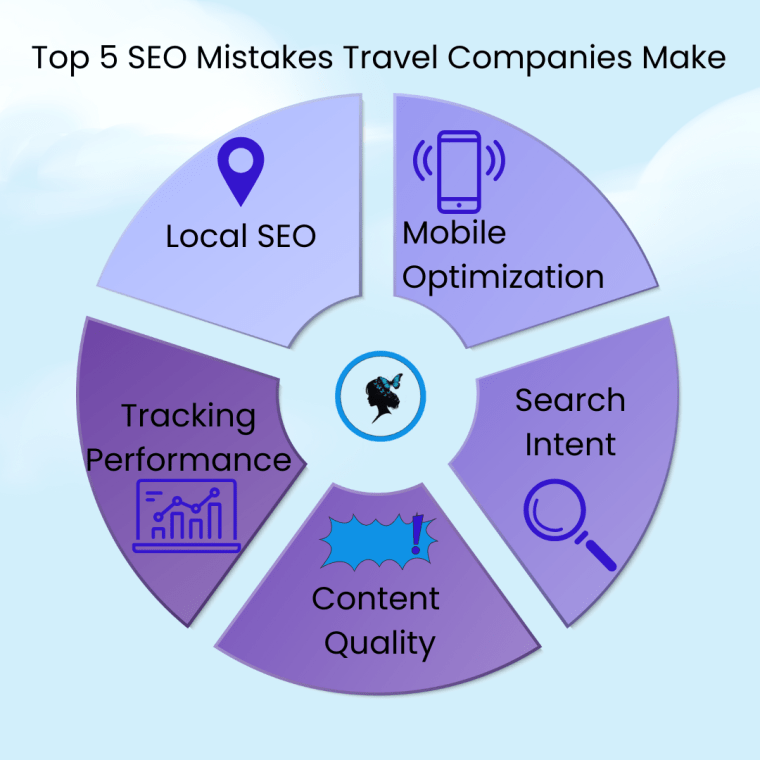
  1. Neglecting Local SEO
  2. Ignoring Mobile Optimization
  3. Failing to Optimize for Search Intent
  4. Overlooking the Importance of Quality Content
  5. Not Measuring or Tracking SEO Performance
  6. Conclusion

Search Engine Optimization (SEO) is one of the most effective ways for small travel companies to grow their online presence and attract more customers. But SEO can be tricky, especially when you’re balancing the needs of your clients and maintaining the day-to-day operations of your business. While many small travel businesses understand the importance of SEO, there are common mistakes that often prevent them from reaching their full potential.

In this blog, we’ll walk through the top 5 SEO mistakes small travel companies make and provide actionable tips on how to fix them.

Need some help with SEO strategies? Check out our services to start moving in the right direction!

1. Neglecting Local SEO

One of the biggest mistakes small travel companies make is ignoring the importance of local SEO. Travel businesses often focus on broader, generic keywords like “vacation packages” or “holiday tours,” but these terms are extremely competitive and may not help you reach the customers who are most likely to book your services.

Why This Is a Problem:

By not optimizing for local SEO, you’re missing out on a large pool of potential customers who are actively searching for travel services in your specific location. Local SEO is essential for travel agencies, tour operators, and hotels because travelers often search for services close to their destination.

Read our Ultimate Guide to Local SEO for Travel Agencies for more tips.

How to Fix It:

  • Claim and Optimize Your Google My Business Listing: Google My Business (GMB) is a powerful tool for local businesses. Make sure your listing is complete with accurate business details, operating hours, contact information, and high-quality images of your services. Encourage customers to leave reviews, as these can improve your local search rankings.
  • Use Location-Specific Keywords: If you operate in a specific region or cater to a particular destination, use keywords like “best tours in Rome,” “affordable hotels in Madrid,” or “family-friendly activities in London.” Localizing your content will increase your chances of ranking higher for relevant searches in your target area.
  • Create Localized Content: Write blog posts or guides about the local area, such as “Top 10 Things to Do in Sydney” or “Hidden Gems in Portland.” This type of content not only provides value to your customers but also helps boost your local SEO rankings.

Read our ultimate guide to Local SEO.

2. Ignoring Mobile Optimization

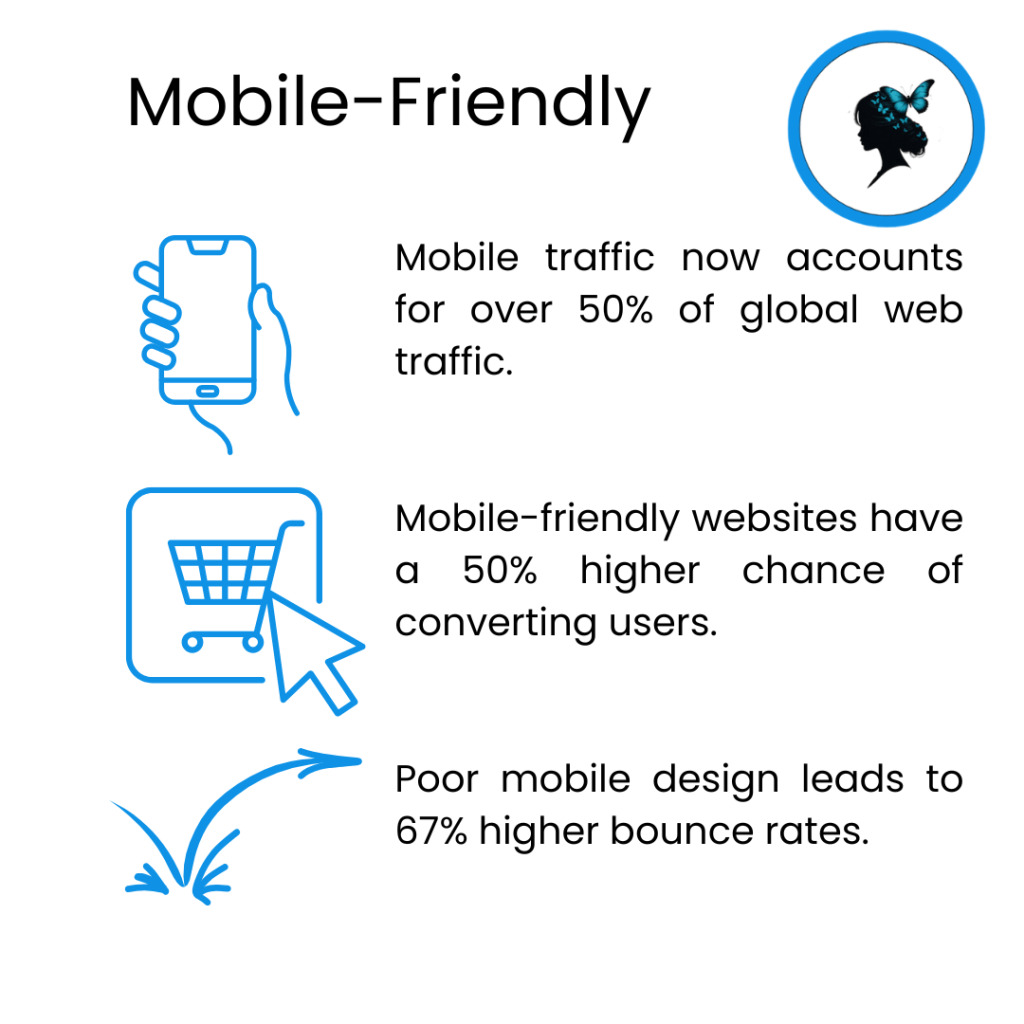
With over 50% of website traffic coming from mobile devices, having a mobile-optimized website is no longer optional. If your site isn’t mobile-friendly, you could be losing valuable customers, especially since many travelers search for information while on the go.

Why This Is a Problem:

Google’s mobile-first indexing means that Google predominantly uses the mobile version of your website for ranking and indexing. If your site isn’t optimized for mobile users, it can negatively impact your SEO rankings, making it harder for potential customers to find you.

How to Fix It:

  • Use a Responsive Web Design: A responsive design automatically adjusts the layout and content of your website depending on the screen size. This ensures that your site is easily navigable, whether it’s viewed on a smartphone, tablet, or desktop.
  • Speed Up Your Site: Mobile users are often on the go and impatient for slow-loading pages. Use tools like Google PageSpeed Insights to identify and fix issues that may be slowing down your website. Compress images, eliminate unnecessary scripts, and optimize your website’s structure to ensure fast loading times.
  • Simplify Navigation: On mobile devices, space is limited. Make sure that your site’s navigation is easy to use and that important information (like contact details, booking forms, and service descriptions) is easily accessible.

3. Failing to Optimize for Search Intent

Search intent is the reason behind a user’s search query. If you’re targeting keywords without considering the intent behind them, you may not attract the right audience. There are four main types of search intent: informational, navigational, transactional, and commercial investigation. Small travel companies often make the mistake of targeting keywords that are too broad or irrelevant to their business goals.

Why This Is a Problem:

When you fail to understand the intent behind your customers’ search queries, you may create content that doesn’t meet their needs. This leads to higher bounce rates and lower engagement, which can negatively impact your SEO performance.

How to Fix It:

  • Conduct Keyword Research with Search Intent in Mind: Instead of just targeting keywords with high search volume, focus on keywords that align with the intent of your target audience.
  • Create Content for Each Stage of the Customer Journey: Map your content to the buyer’s journey. Informational content (like blog posts or destination guides) can attract potential travelers in the research phase, while transactional content (like service pages or booking options) can convert them into customers.
  • Optimize Landing Pages for Conversions: If your goal is to drive bookings, make sure that your landing pages are optimized to convert visitors into customers. Include clear calls to action, customer testimonials, and easy navigation for booking or contact information.

More about search intent in our comprehensive guide.

4. Overlooking the Importance of Quality Content

Content is king in SEO. However, many small travel businesses make the mistake of publishing low-quality content that doesn’t add value to their audience. Content that isn’t informative, engaging, or well-optimized for search engines will fail to rank and fail to connect with potential customers.

Why This Is a Problem:

Without high-quality content, your website will struggle to attract visitors and build trust with your audience. Google values content that is informative, relevant, and engaging to users, so low-quality content can severely hurt your SEO efforts.

Read here for more tips on how Storytelling can Transform your Travel Brand’s Blog.

How to Fix It:

  • Focus on Creating Valuable, Engaging Content: Think about your customers’ pain points and needs. Create blog posts, guides, videos, and infographics that provide useful information. For example, a blog post titled “Top 5 Family-Friendly Activities in Rome” would attract people planning family trips and help position your business as an authority in that niche.
  • Use the Right Keywords Naturally: While keyword optimization is essential, avoid keyword stuffing. Focus on creating content that answers the questions your potential customers are asking. Use natural, conversational language and include variations of your target keywords to make your content more engaging and accessible.
  • Update Old Content: Don’t let outdated content linger on your site. Refresh old blog posts and landing pages with new information, updated statistics, and fresh keywords to ensure they continue to provide value to your audience and perform well in search results.

5. Not Measuring or Tracking SEO Performance

Many small travel businesses dive into SEO without taking the time to measure and track their performance. Not having a clear understanding of how your SEO efforts are performing means you’re operating blindly, which can lead to wasted resources and missed opportunities.

Why This Is a Problem:

Without tracking SEO performance, you won’t know what’s working and what’s not. This can prevent you from making data-driven decisions and adjustments to improve your rankings and traffic over time.

How to Fix It:

  • Use Analytics Tools: Google Analytics and Google Search Console are essential tools for tracking SEO performance. These platforms can show you which keywords are driving traffic, where your visitors are coming from, and how they interact with your site.
  • Track Key Metrics: Focus on tracking metrics that matter, such as organic traffic, keyword rankings, bounce rates, time on page, and conversion rates. Monitoring these metrics will help you make informed decisions about where to focus your SEO efforts.
  • Regularly Review Your SEO Strategy: SEO is a long-term game, and it’s important to review your strategy periodically. Make adjustments based on your performance data, industry changes, and shifts in customer behavior.

Conclusion

SEO is a powerful tool for small travel companies, but it requires ongoing effort, strategy, and attention to detail. By avoiding these common SEO mistakes—neglecting local SEO, ignoring mobile optimization, failing to understand search intent, publishing low-quality content, and not tracking performance—you can significantly improve your online visibility, drive more traffic to your site, and convert more visitors into loyal customers.

Start by addressing these issues in your SEO strategy, and you’ll be well on your way to achieving better rankings, more leads, and ultimately, business growth. If you need help optimizing your SEO strategy for your travel business, contact us to help you get results faster.

5 Types of Content Every Travel Website Should Have


▶ Table of Contents
  1. Destination Guides
  2. Travel Blogs and Stories
  3. Photo and Video Galleries
  4. User Reviews and Testimonials
  5. Booking and Planning Tools
  6. Conclusion

A well-designed travel website is more than just a booking platform; it’s a source of inspiration and information for travelers. To stand out in the competitive travel industry, your website must offer engaging and valuable content that keeps visitors coming back. Here are five essential types of content every travel website should have to attract and retain an audience.

Check out our services to start moving in the right direction!

1. Destination Guides

Travelers are always seeking detailed information about their next destination. Comprehensive destination guides can serve as a cornerstone for your website, providing:

  • Overview of the Location: Highlight key attractions, cultural experiences, and must-visit spots.
  • Practical Tips: Include advice on weather, local customs, currency, and transportation.
  • Hidden Gems: Share insider recommendations that aren’t typically covered in mainstream guides.

By offering rich, localized content, you establish your website as an authority in the travel space and attract both first-time and repeat visitors.

For more tips, check out our post: a step-by-step guide to creating destination guides.

2. Travel Blogs and Stories

Authentic travel stories and blogs resonate deeply with readers. Use this space to share:

  • Personal Travel Experiences: Narratives that inspire readers to follow in the footsteps of real travelers.
  • Itinerary Ideas: Provide detailed, day-by-day plans for popular destinations or themed trips.
  • Seasonal Travel Tips: Write about the best destinations for specific seasons or holidays.

Engaging travel blogs not only captivate your audience but also improve your SEO, drawing in organic traffic through long-tail keywords.

Read more tips on how storytelling can transform your travel brand’s blog.

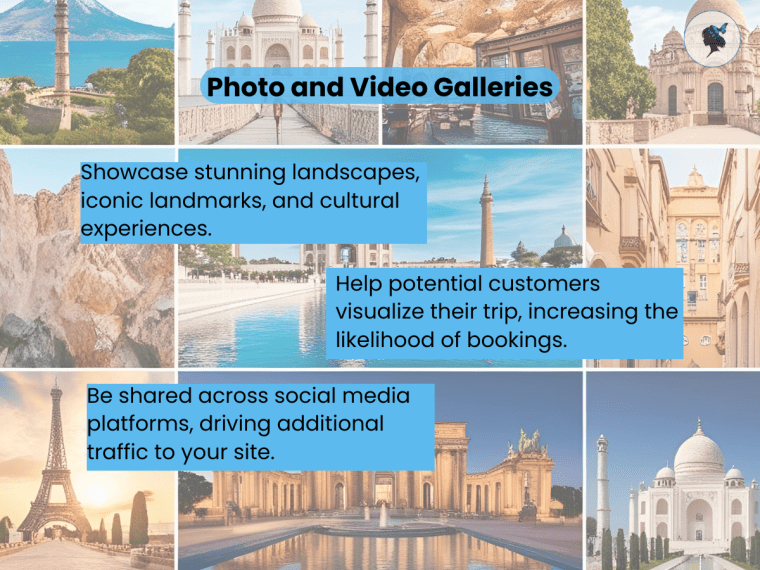
3. Photo and Video Galleries

Visual content is a powerful tool for sparking wanderlust. A curated gallery of high-quality photos and videos can:

  • Showcase stunning landscapes, iconic landmarks, and cultural experiences.
  • Help potential customers visualize their trip, increasing the likelihood of bookings.
  • Be shared across social media platforms, driving additional traffic to your site.

Invest in professional photography and videography to create a visually compelling experience for your audience.

4. User Reviews and Testimonials

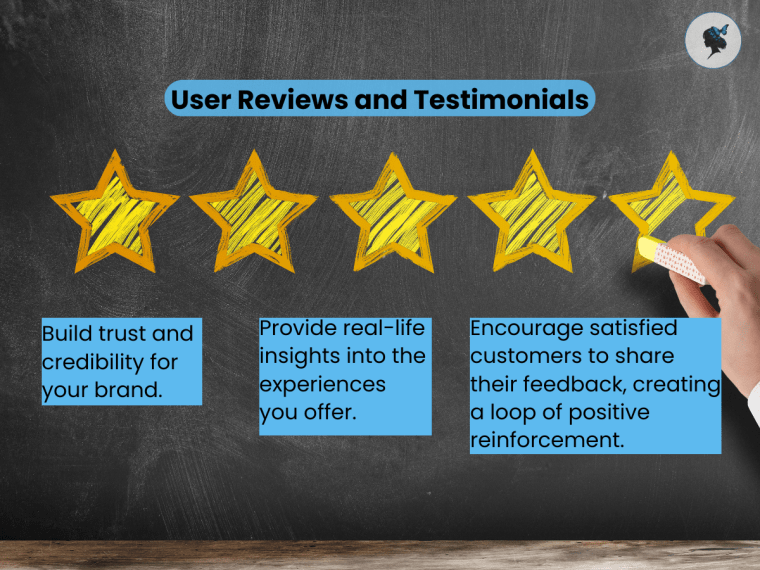
Social proof plays a critical role in the decision-making process for travelers. Featuring user reviews and testimonials can:

  • Build trust and credibility for your brand.
  • Provide real-life insights into the experiences you offer.
  • Encourage satisfied customers to share their feedback, creating a loop of positive reinforcement.

Make reviews easy to find and integrate with platforms like Google Reviews or TripAdvisor to enhance authenticity.

User-Generated Content (UGC) is also great for building trust. Read more about UGC here.

5. Booking and Planning Tools

Travelers value convenience, and having interactive tools on your website can make the planning process seamless. Consider including:

  • Itinerary Planners: Allow users to customize their travel schedules.
  • Cost Calculators: Help travelers estimate their expenses for accommodation, transport, and activities.
  • Maps and Navigation Tools: Offer interactive maps with pinned attractions, restaurants, and accommodations.

By providing these resources, you’ll position your website as a one-stop solution for all travel needs.

Conclusion

Creating diverse and engaging content is essential for building a successful travel website. From destination guides to interactive planning tools, these five content types can help you attract a wider audience, enhance user experience, and drive conversions. Remember, the key to success lies in understanding your audience and continuously updating your content to meet their evolving needs.

Start integrating these content types into your travel website today and watch your engagement and bookings soar!

Need help? Contact us for tailor-made content strategies.

The Ultimate Guide to Local SEO for Small Businesses

Post updated May 18, 2026


▶ Table of Contents

When people need a service nearby, they usually do not browse through ten pages of Google results. They search things like “best accountant near me,” “emergency plumber in Chicago,” or “coffee shop open now in Toronto” — then choose from the businesses Google puts directly in front of them.

That is why local SEO matters.

For small businesses, local search visibility often determines who gets the call, the booking, the foot traffic, or the sale. Whether you run a law firm in New York, a dental clinic in Sydney, a bakery in Paris, or a landscaping company in Austin, showing up in local search is no longer optional.

And the numbers back it up. In 2026, roughly 46% of all Google searches have local intent, while 76% of people who search for something nearby visit a business within 24 hours.

The good news? Most small businesses still do local SEO poorly. That creates a huge opportunity for businesses willing to get the fundamentals right.

This guide covers exactly how local SEO works in 2026 — and how your business can use it to attract more customers organically.


What Is Local SEO?

Local SEO is the process of improving your online presence so your business appears in local search results.

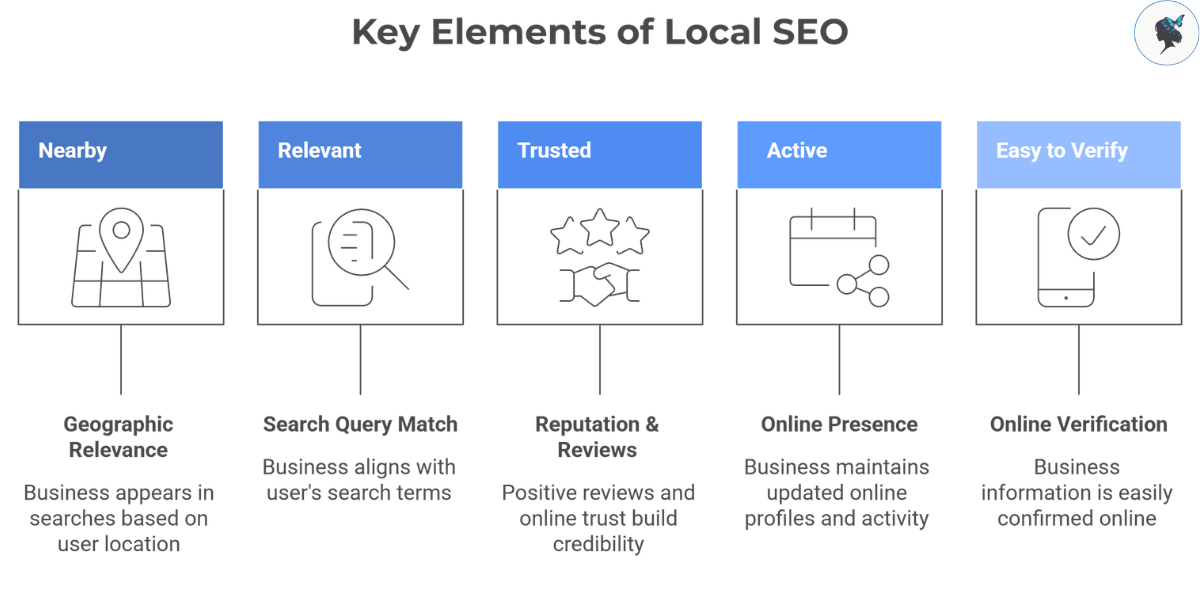
infograph: Key elements of Local SEO
Key elements of Local SEO

These results typically appear in:

  • Google Maps
  • Google’s Local Pack (the top 3 map listings)
  • “Near me” searches
  • Mobile searches
  • Voice searches
  • AI-generated search summaries

For example:

  • “best pizza in New York”
  • “family lawyer in London”
  • “pet groomer near me”
  • “roof repair in Dallas”

Unlike traditional SEO, local SEO focuses heavily on geography, trust, reputation, and real-world business signals.

Google wants to recommend businesses that are:

  • nearby,
  • relevant,
  • trusted,
  • active,
  • and easy to verify online.

More about trust signals here.


Why Local SEO Matters More Than Ever in 2026

Local search has changed dramatically over the last few years.

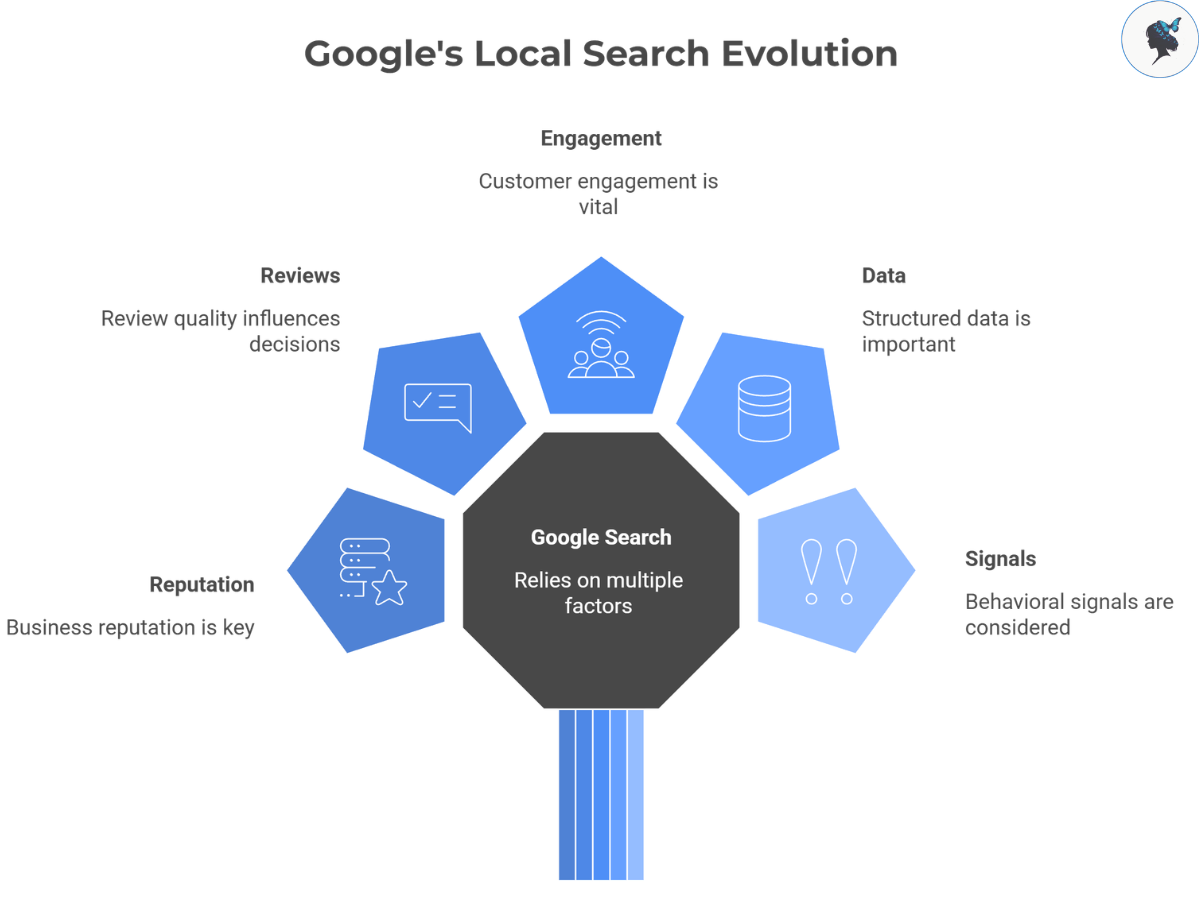
Google now relies more heavily on:

  • business reputation,
  • review quality,
  • entity consistency,
  • customer engagement,
  • structured data,
  • and behavioral signals.

In other words, Google no longer ranks businesses based only on keywords.

infograph: Google's Local search evolution
Google’s Local search evolution

It tries to understand whether your business is legitimate, trusted, and locally relevant.

Recent research shows that online reviews heavily influence local purchasing decisions, with 85% of consumers saying positive reviews make them more likely to use a business. Studies also show that local mobile searches frequently lead to in-store visits, calls, and purchases — especially when businesses maintain complete and active Google Business Profiles.

A restaurant in Boston with hundreds of recent reviews, updated photos, accurate hours, and consistent information across the web will almost always outperform a neglected competitor — even if the competitor has a larger website.

That shift is one of the biggest local SEO trends of 2026.


How Google Ranks Local Businesses

Google primarily evaluates local rankings using three factors:

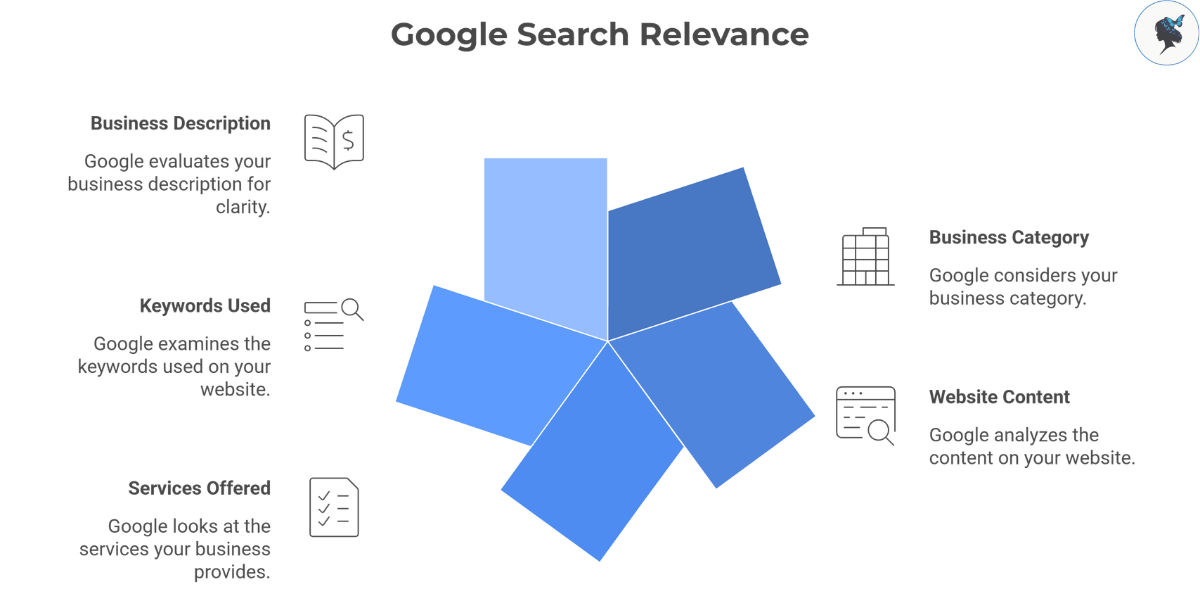
1. Relevance

Does your business match what the user is searching for?

If someone searches “emergency electrician,” Google looks at:

  • your business category,
  • website content,
  • services,
  • keywords,
  • and business description.

A business that clearly explains its services usually performs better than one with vague messaging.

infograph: Google search relevance
Google search relevance

For example, an HVAC company in Atlanta that has dedicated service pages for:

  • AC repair,
  • furnace installation,
  • duct cleaning,
  • and emergency service

is more likely to rank than a one-page generic website.


2. Distance

How close is the business to the searcher?

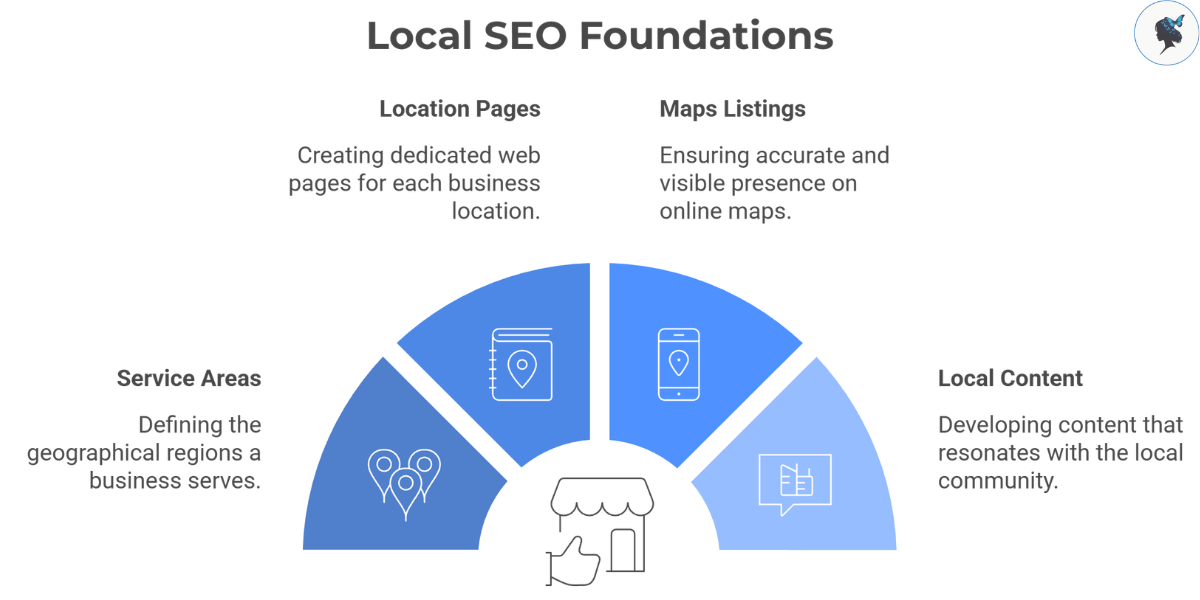
Local SEO still depends heavily on proximity. A dentist in downtown Seattle may rank differently depending on where the searcher is physically located.

infograph: Local SEO foundations
Local SEO foundations

That is why businesses should optimize:

  • service areas,
  • location pages,
  • maps listings,
  • and local content.

3. Prominence

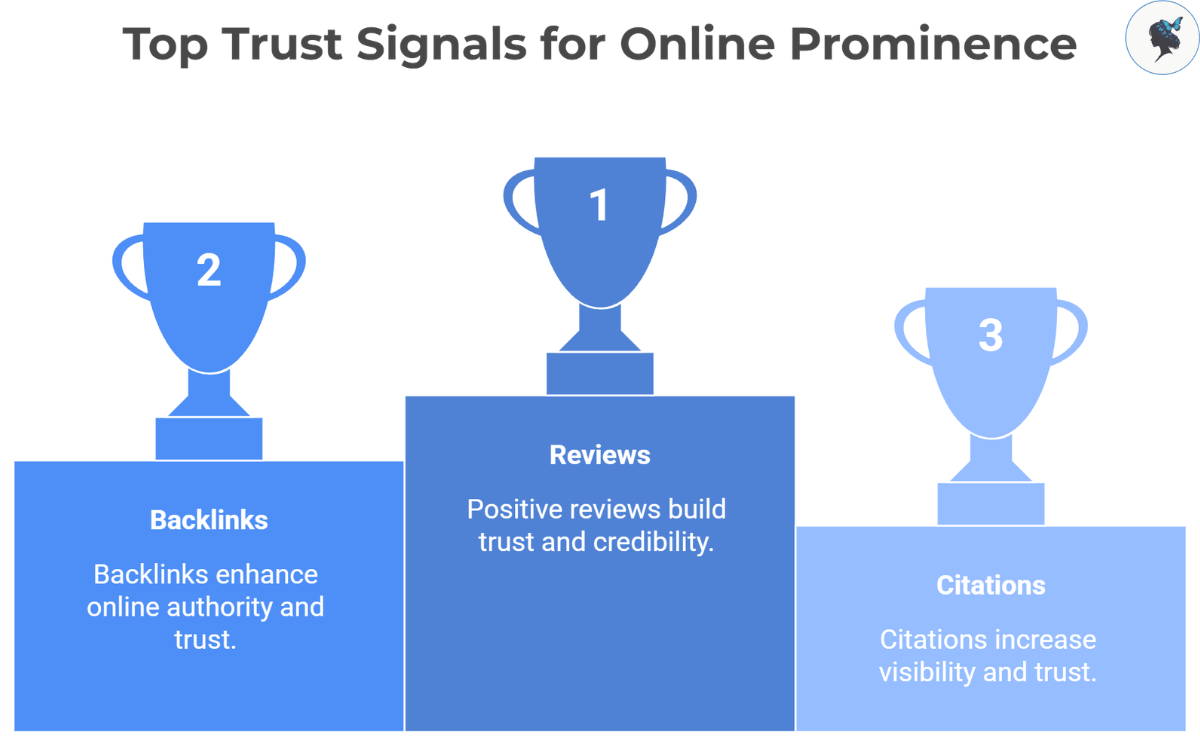
How trusted and established is the business online?

infograph: Top trust signals for online prominance
Top trust signals for online prominance

Google evaluates signals like:

  • reviews,
  • backlinks,
  • citations,
  • brand mentions,
  • engagement,
  • and overall online authority.

A well-reviewed bakery in Melbourne with strong local press coverage and active customer engagement sends stronger trust signals than a competitor with almost no digital presence.

Optimize Your Google Business Profile

Your Google Business Profile (GBP) is the single most important local SEO asset you own.

Many businesses spend thousands on websites and ads while leaving their GBP incomplete or outdated.

That is a mistake.
Recent local SEO research suggests Google Business Profile optimization remains one of the strongest local ranking factors in 2026.
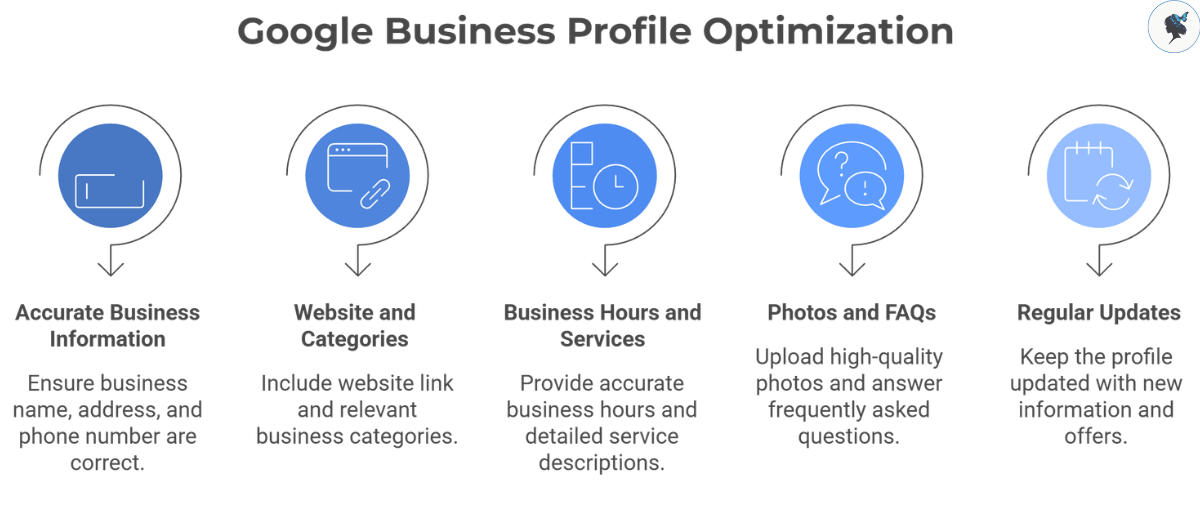
infograph: Google business profile optimization
Google business profile optimization

An optimized profile should include:

  • accurate business name,
  • address,
  • phone number,
  • website,
  • categories,
  • business hours,
  • services,
  • photos,
  • FAQs,
  • and regular updates.

For example, a yoga studio in Vancouver should not simply list “fitness” as a category. It should include:

  • yoga studio,
  • meditation classes,
  • prenatal yoga,
  • wellness workshops,
  • and detailed service descriptions.

The more clearly Google understands your business, the better your chances of ranking.


Reviews Are Now a Major Ranking Signal

Reviews influence both rankings and conversions.

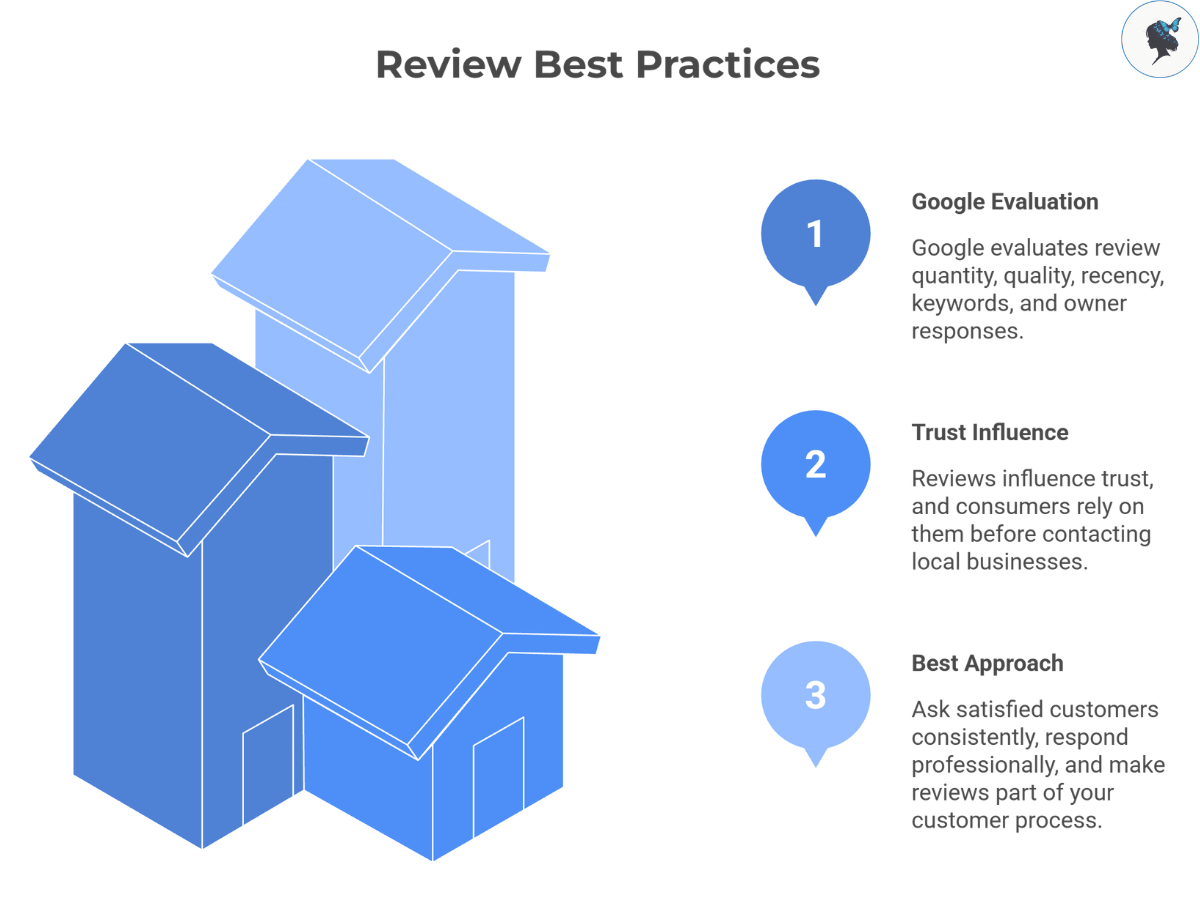
Google evaluates:

  • review quantity,
  • review quality,
  • recency,
  • keywords inside reviews,
  • and owner responses.

A hotel in Singapore with 300 recent, detailed reviews will usually outperform a competitor with outdated or inconsistent feedback.

infograph: Review best practices
Review best practices

But reviews are not only about rankings. They influence trust.

In 2026, consumers rely heavily on reviews before contacting local businesses.

The best approach is simple:

  • ask satisfied customers consistently,
  • respond professionally,
  • and make reviews part of your customer process.

Businesses that treat reviews as an afterthought usually lose visibility over time.


Build Location-Specific Website Pages

Your website still matters.

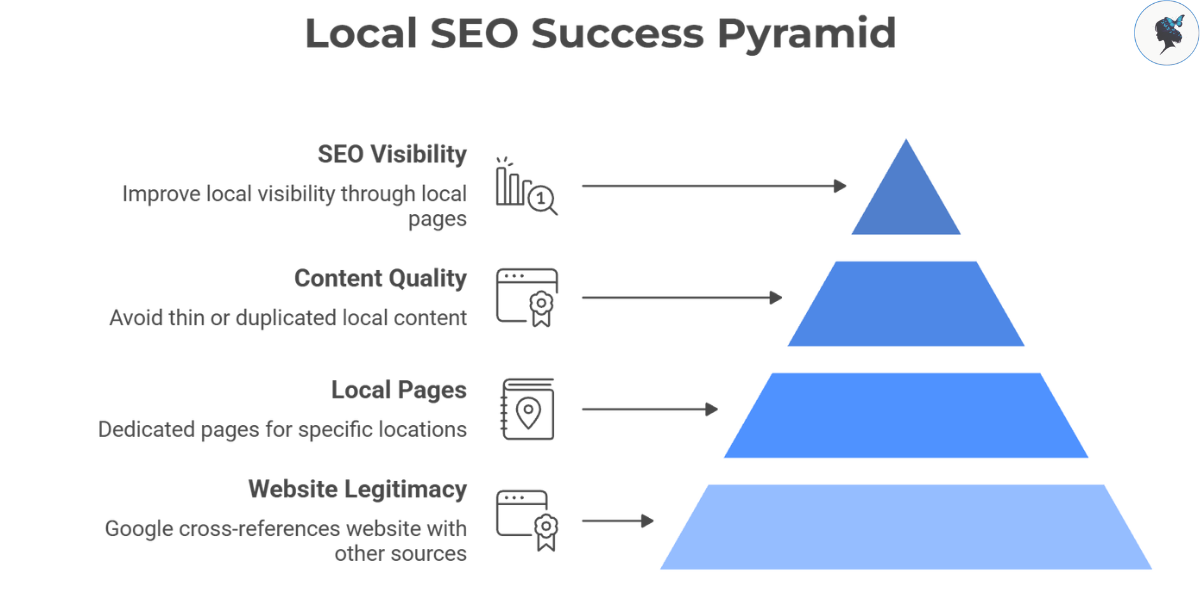
Google cross-references your website with your Google Business Profile, citations, reviews, and directory listings to confirm legitimacy and consistency.

One of the best ways to improve local visibility is through dedicated local pages.

infograph: Local SEO success pyramid
Local SEO success pyramid

Examples:

  • “Personal Injury Lawyer in Miami”
  • “Wedding Photographer in Nashville”
  • “Commercial Cleaning Services in Toronto”

These pages should include:

  • location-specific information,
  • local customer examples,
  • service details,
  • FAQs,
  • testimonials,
  • and clear calls-to-action.

Avoid copying the same text across dozens of city pages. Google is much better at detecting thin or duplicated local content now.


Keep Your Business Information Consistent Everywhere

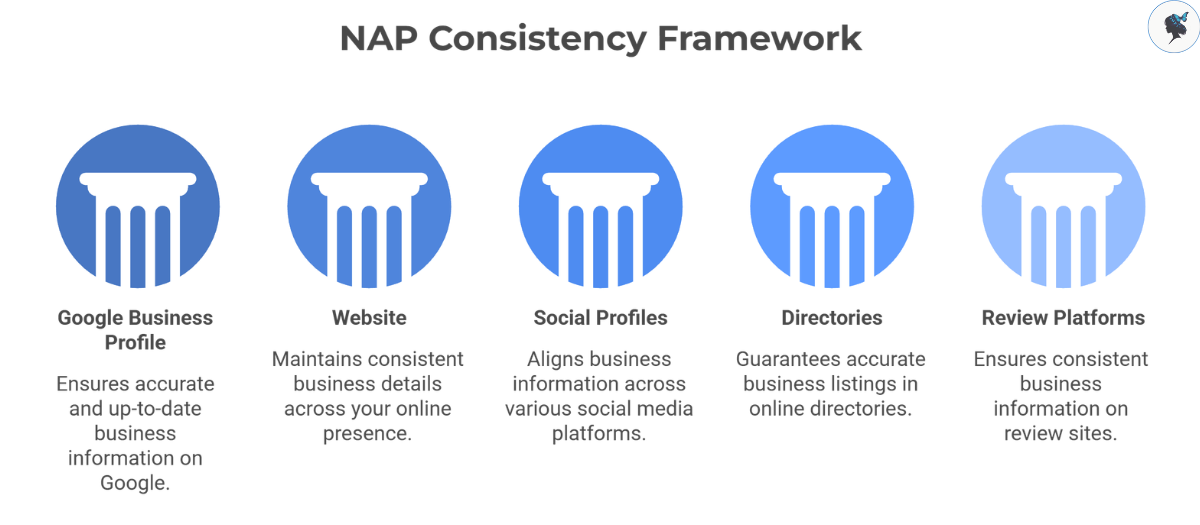
Your business details must match across the internet.

This includes:

  • Google Business Profile,
  • your website,
  • social profiles,
  • directories,
  • and review platforms.
infograph: NAP consistency framework
NAP consistency framework

This consistency is often called NAP consistency:

  • Name
  • Address
  • Phone Number

If your information differs across platforms, Google may lose confidence in your business data.

For example:

  • “Smith & Sons Plumbing”
  • “Smith and Sons Plumbing LLC”
  • “Smith Plumbing”

may accidentally appear like different businesses if handled inconsistently.

Consistent business information across platforms has become increasingly important, as search engines rely on structured data and entity signals to understand and verify businesses — particularly in AI-driven search results.


Create Local Content That Actually Helps People

Many businesses misunderstand content marketing.

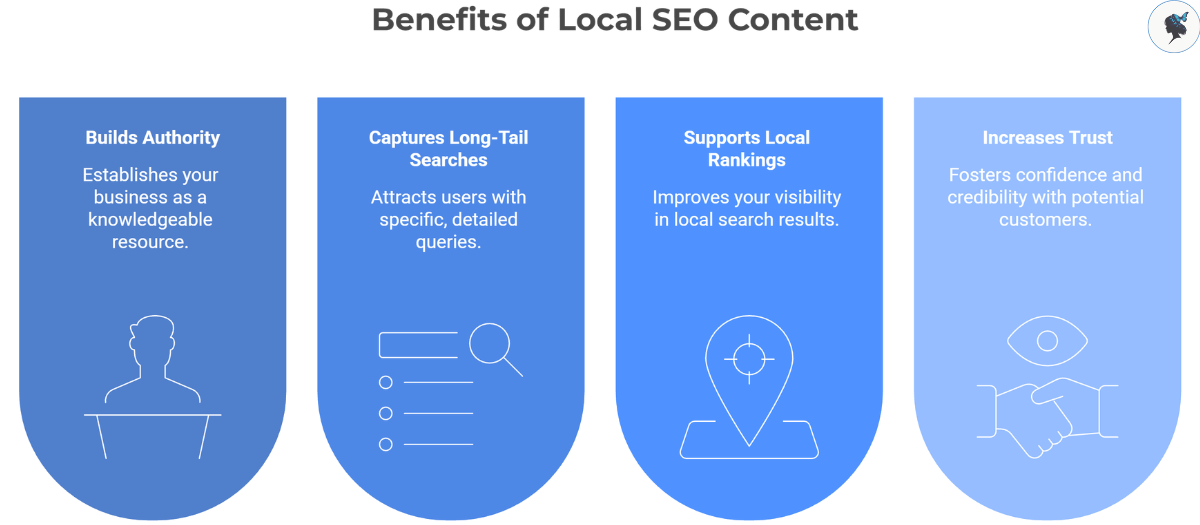
Local SEO content should not exist only to rank. It should answer real customer questions.

infograph: Benefits of Local SEO content
Benefits of Local SEO content

Good examples:

  • “How Much Does Roof Repair Cost in Denver?”
  • “Best Neighborhoods for First-Time Homebuyers in Chicago”
  • “What to Do After a Car Accident in Houston”
  • “How Often Should You Service an HVAC System in Phoenix?”

This type of content:

  • builds authority,
  • captures long-tail searches,
  • supports local rankings,
  • and increases trust.

A veterinary clinic in Dublin that publishes useful pet-care guides will usually outperform a competitor with a thin five-page website.


Mobile Optimization Is Essential

Most local searches happen on mobile devices.

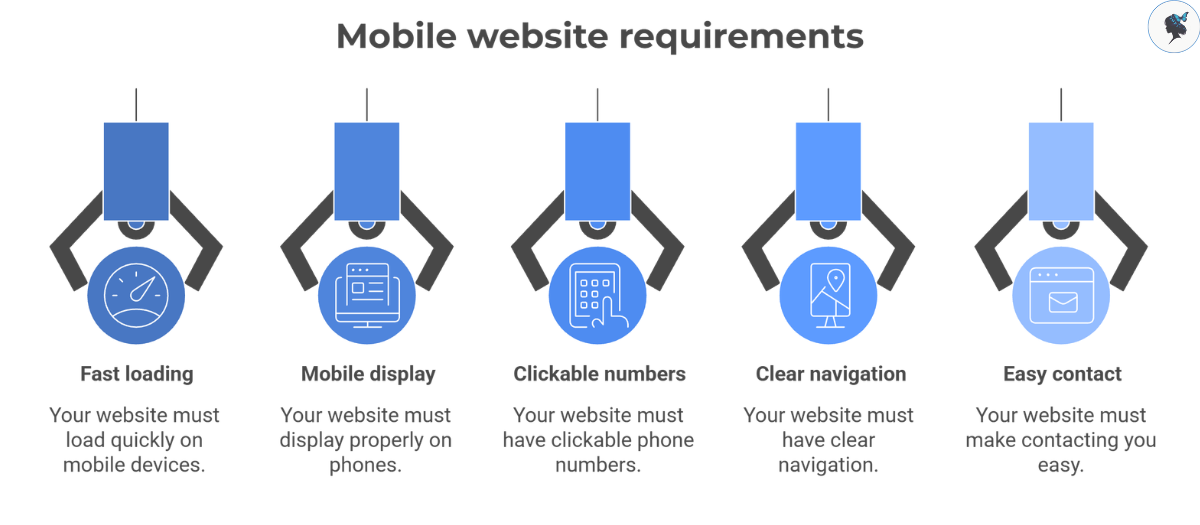
That means your website must:

  • load quickly,
  • display properly on phones,
  • have clickable phone numbers,
  • include clear navigation,
  • and make contacting you easy.
infograph: Mobile website requirements
Mobile website requirements

Google also tracks user behavior.

If visitors quickly leave your website because it is slow or confusing, rankings may suffer.

A restaurant in Los Angeles with:

  • slow menus,
  • broken mobile formatting,
  • and hard-to-find reservation buttons

creates friction that hurts both conversions and search visibility.

More about mobile optimization here.


Local SEO and AI Search in 2026

AI-generated search experiences are changing local SEO, but not in the way many marketers expected.

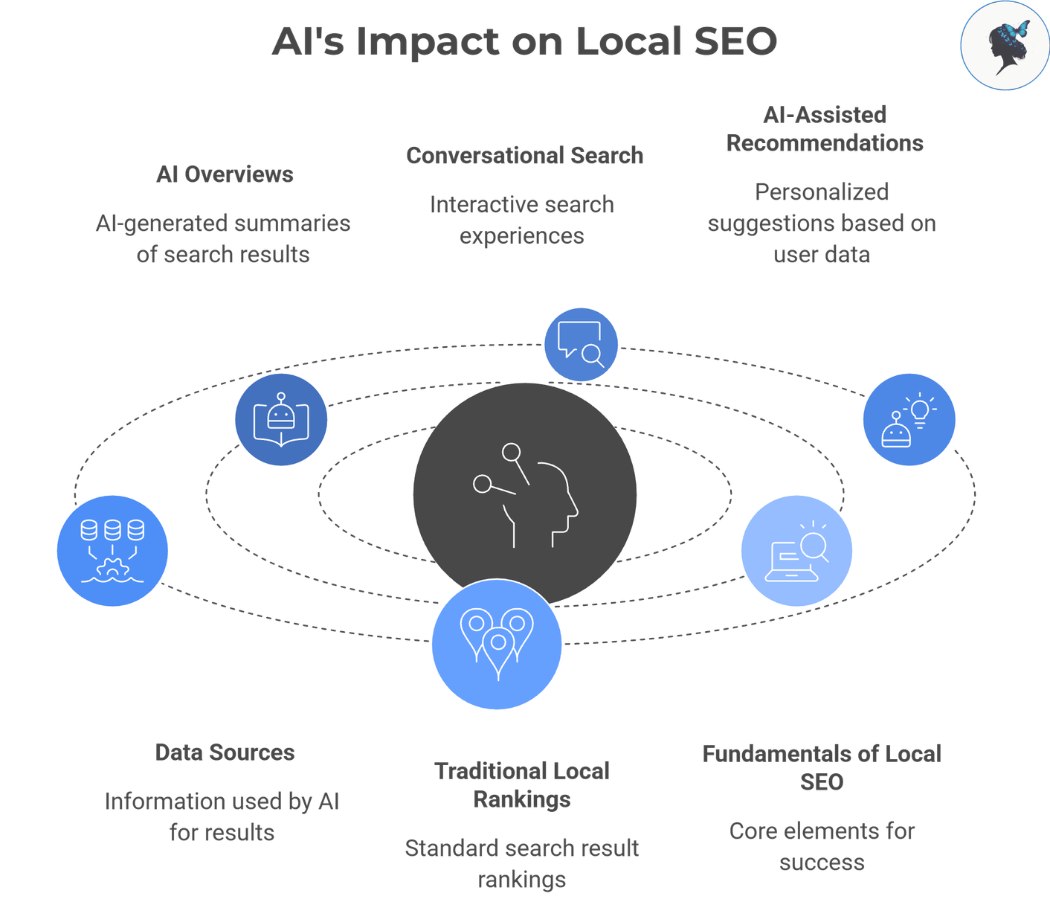
Google’s AI Overviews, conversational search tools, and AI-assisted recommendations increasingly pull information from:

  • reviews,
  • business profiles,
  • structured data,
  • and trusted local sources.
infograph: AI's impact on Local SEO
AI’s impact on Local SEO

That means businesses with complete and consistent online information are more likely to appear in AI-driven results.

At the same time, traditional local rankings still matter enormously.

Studies consistently show that Google’s Local Pack and Maps results capture the majority of user attention and clicks in local search, making them a primary driver of leads, calls, and in-store visits for small businesses.

The fundamentals still win:

  • relevance,
  • reviews,
  • trust,
  • consistency,
  • and strong local signals.

AI has not replaced local SEO. It has reinforced it.

More about AI overviews here.


Common Local SEO Mistakes Small Businesses Make

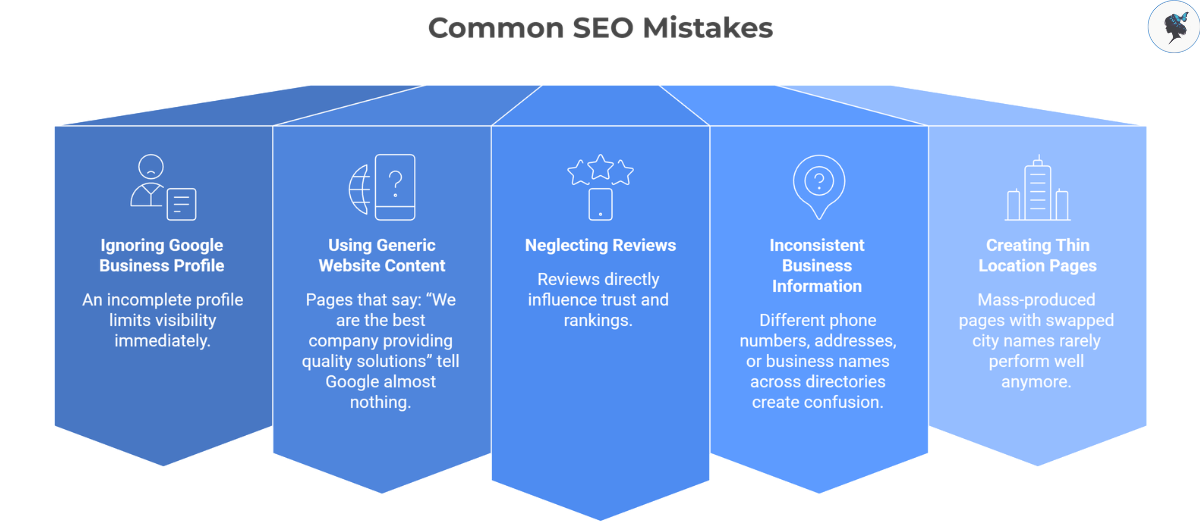
infograph: Common SEO mistakes
Common SEO mistakes

Ignoring Google Business Profile

An incomplete profile limits visibility immediately.

Many businesses still fail to:

  • upload photos,
  • update hours,
  • add services,
  • or respond to reviews.

Using Generic Website Content

Pages that say:

“We are the best company providing quality solutions”

tell Google almost nothing.

Specificity performs better.


Neglecting Reviews

Reviews directly influence trust and rankings.

Businesses that never ask for reviews often lose ground to competitors with active review strategies.


Inconsistent Business Information

Different phone numbers, addresses, or business names across directories create confusion for both users and search engines.


Creating Thin Location Pages

Mass-produced pages with swapped city names rarely perform well anymore.

Local pages should provide real value.


A Simple Local SEO Checklist

If you want a practical starting point, focus on these essentials:

  • Claim and optimize your Google Business Profile
  • Use consistent business information everywhere online
  • Collect and respond to customer reviews
  • Create strong local service pages
  • Improve mobile website performance
  • Add local keywords naturally
  • Publish useful local content
  • Build local backlinks and community mentions
  • Add structured data/schema markup
  • Keep your business information updated regularly

Most businesses do not need advanced SEO tactics first. They need consistent execution of the basics.


Final Thoughts

Local SEO is no longer just about rankings.

It is about trust, visibility, and being the obvious choice when customers search for services nearby.

The businesses winning local search in 2026 are usually not the biggest brands. They are the businesses that:

  • maintain accurate information,
  • build strong reputations,
  • create genuinely useful content,
  • and stay consistently active online.

For small businesses, that creates a real opportunity.

Because while many competitors still neglect local SEO entirely, even modest improvements can dramatically increase calls, bookings, leads, and walk-in traffic.

And unlike paid ads, strong local visibility continues working long after the initial optimization is complete.

Need help? Contact us today!

Why SEO is Crucial for Small Businesses


▶ Table of Contents

Updated May 4th, 2026.


Why SEO Is Crucial for Small Businesses (Even If You’re Starting from Zero)

If you’re a small business owner, chances are you’ve relied on word-of-mouth, social media, or maybe even paid ads to get customers.

But here’s the problem: Those channels are unpredictable, expensive to scale, or completely out of your control.

Meanwhile, your potential customers are actively searching on Google every single day — for solutions you already offer.

If your business isn’t showing up, you’re invisible.

That’s where SEO comes in.


What SEO Actually Means

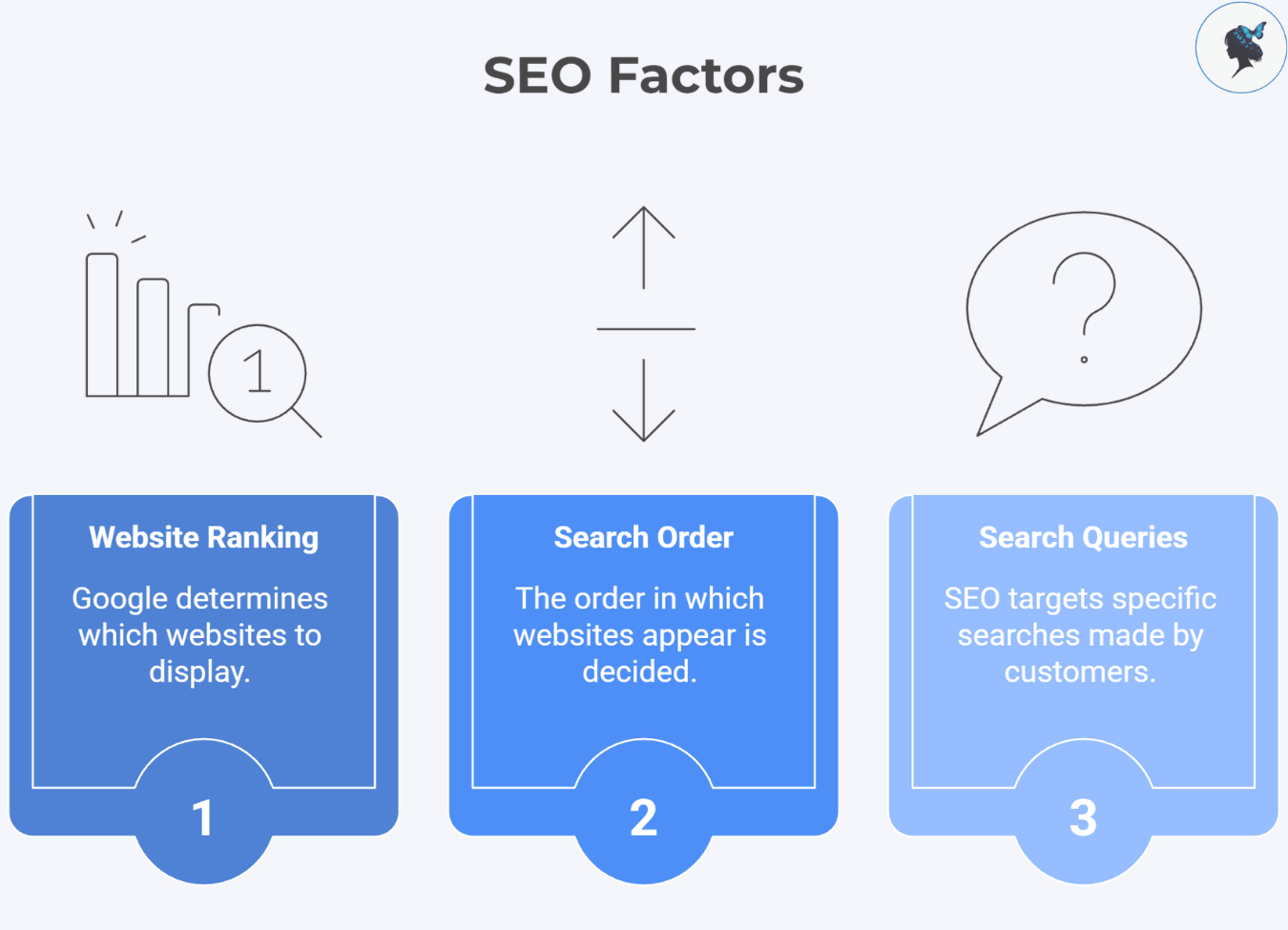
SEO (Search Engine Optimization) is simply the process of helping your business show up when people search online.

Infograph: SEO factors
SEO factors

It’s how Google decides:

  • Which websites to show
  • In what order
  • And for which searches

At its core, SEO is about one thing:

Becoming the best answer to what your customers are already looking for.


Why SEO Matters for Small Businesses

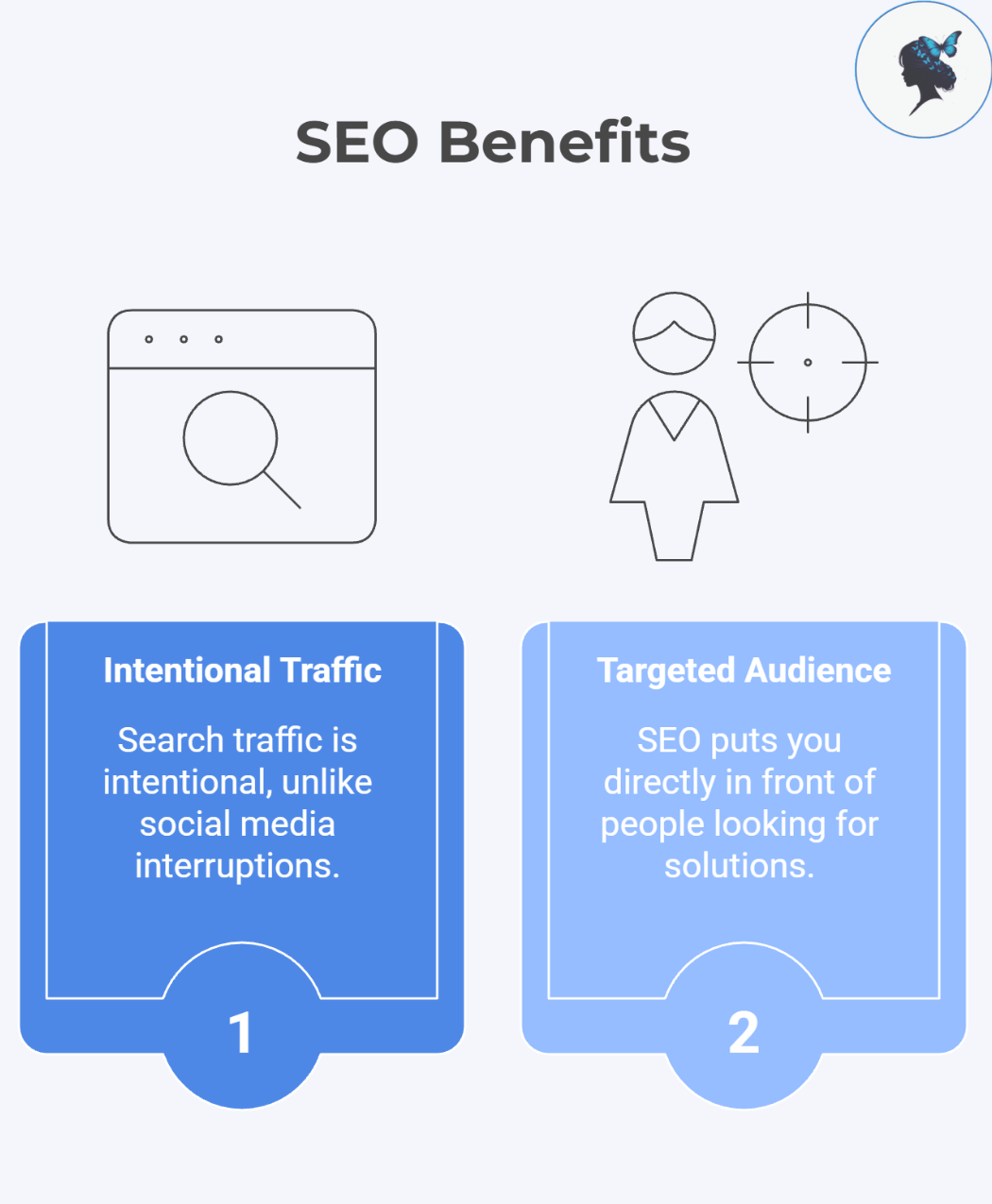
1. You show up when people are already looking

Unlike social media (where you interrupt people), search traffic is intentional.

infograph: SEO benefits
SEO benefits

Someone typing:

  • “best accountant near me”
  • “how to fix a leaking tap”
  • “affordable marketing consultant”

…is already looking for a solution. SEO puts you directly in front of that demand.


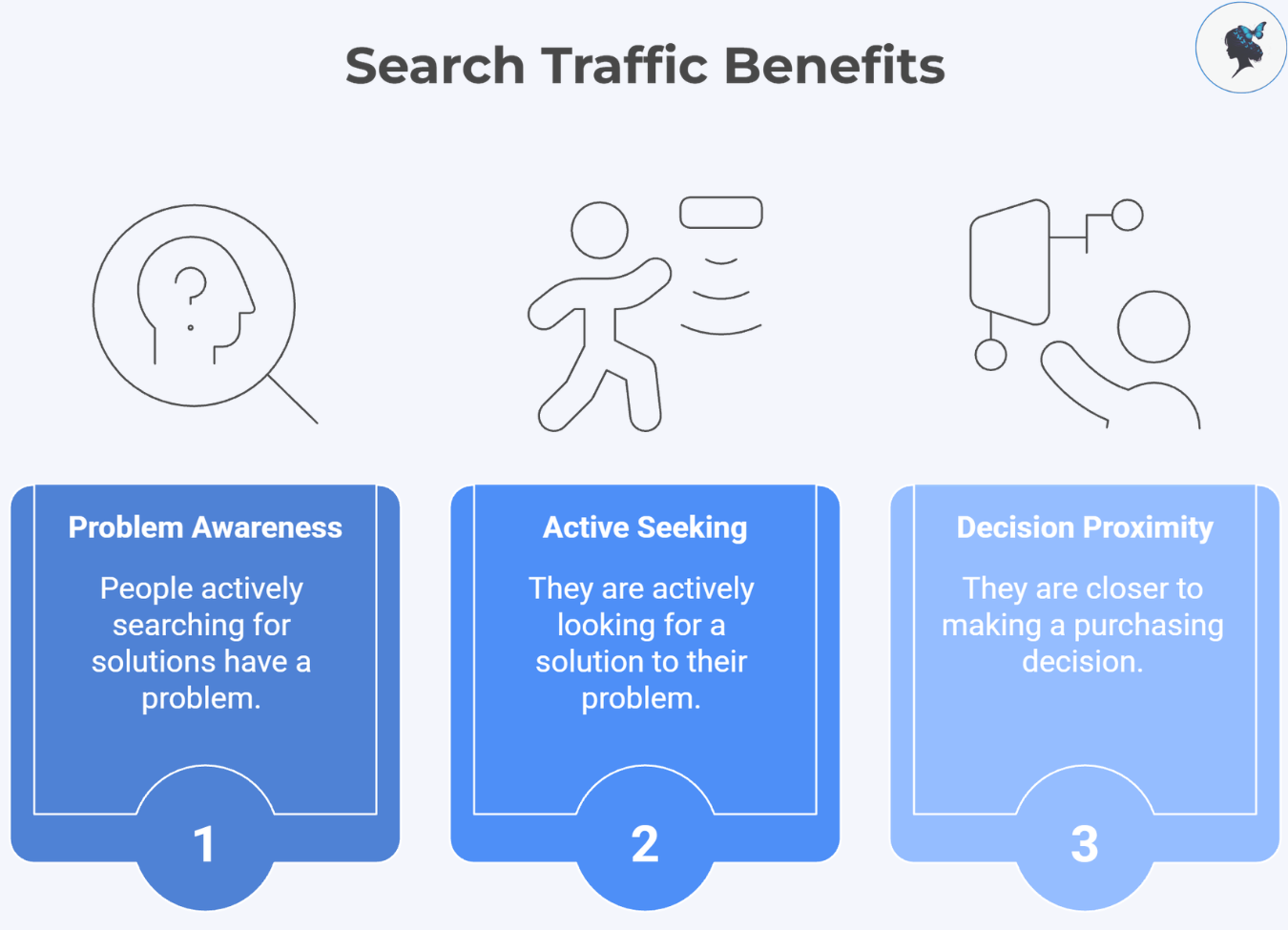
2. It brings high-quality, ready-to-buy traffic

infograph: Search traffic benefits
Search traffic benefits

Search traffic converts better because:

  • People have a problem
  • They’re actively seeking a solution
  • They’re closer to making a decision

This isn’t passive scrolling — it’s action-driven behavior.


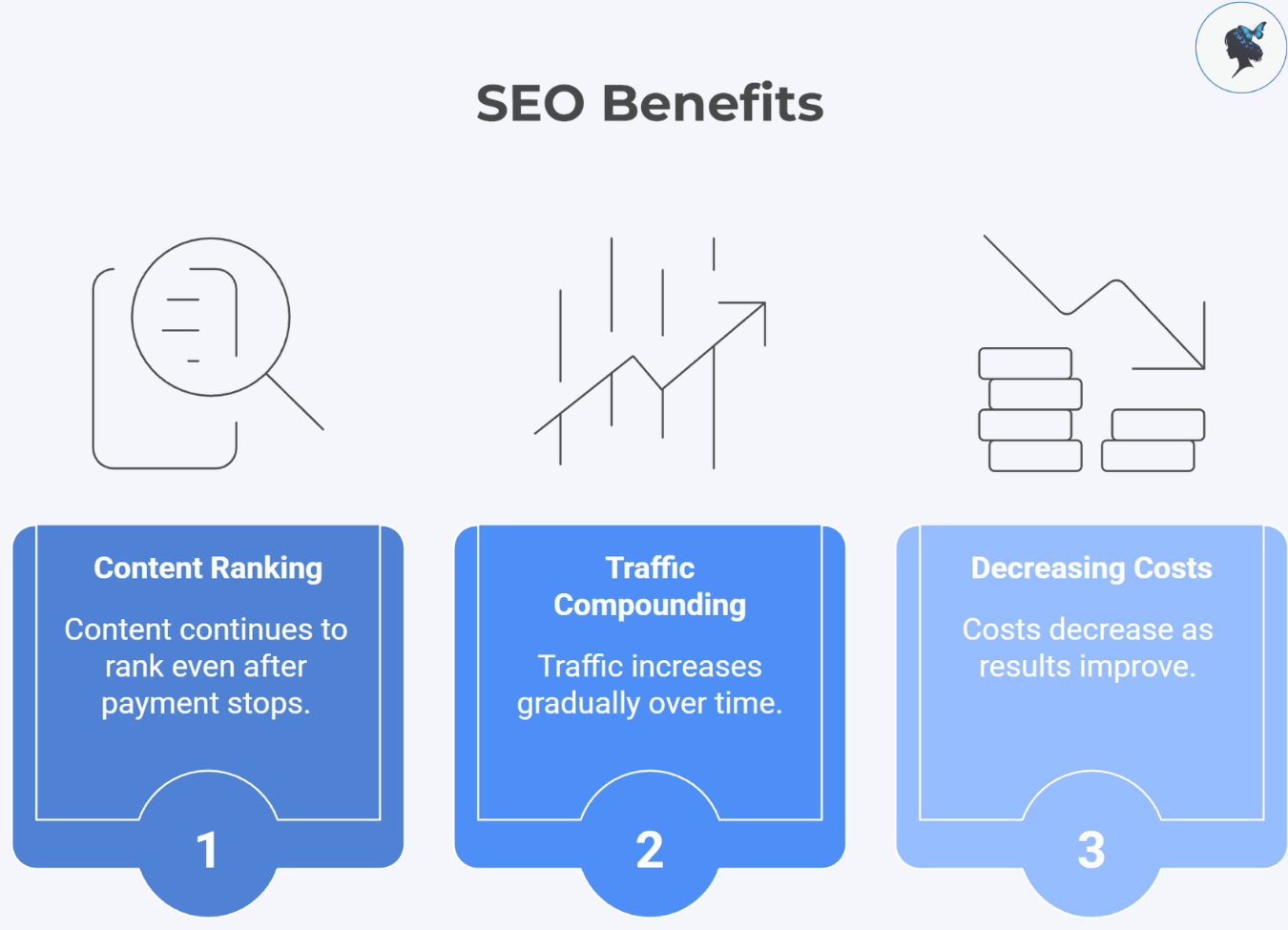
3. It’s one of the most cost-effective marketing strategies

Paid ads stop the moment you stop paying.

infograph: SEO Benefits
SEO Benefits

SEO works differently:

  • Content keeps ranking
  • Traffic compounds over time
  • Costs decrease as results grow

It’s not instant — but it’s sustainable.


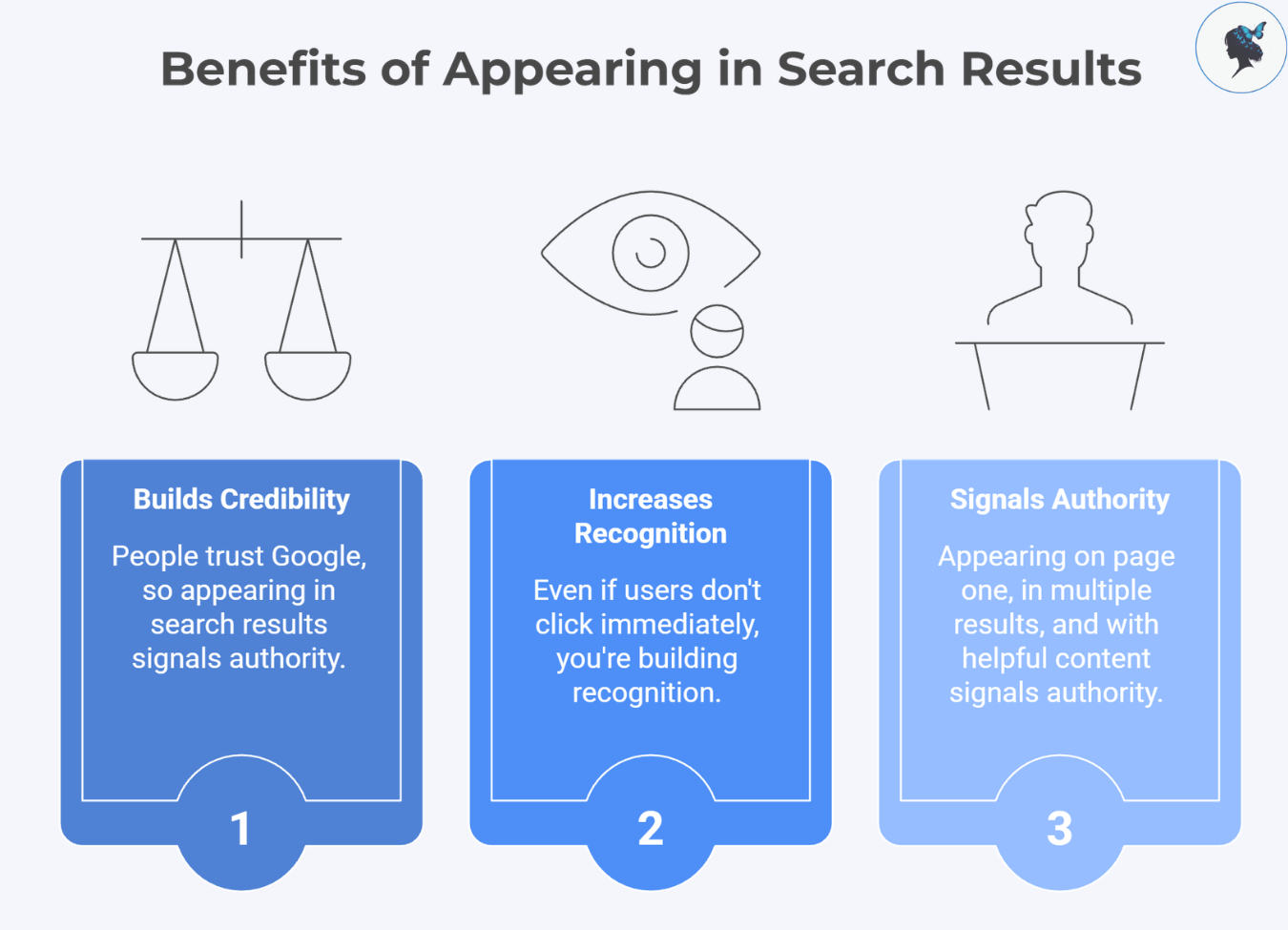
4. It builds credibility and trust

People trust Google.

Benefits of appearing in search results

So when your business appears:

  • On page one
  • In multiple search results
  • With helpful content

…it signals authority. Even if they don’t click immediately, you’re building recognition.


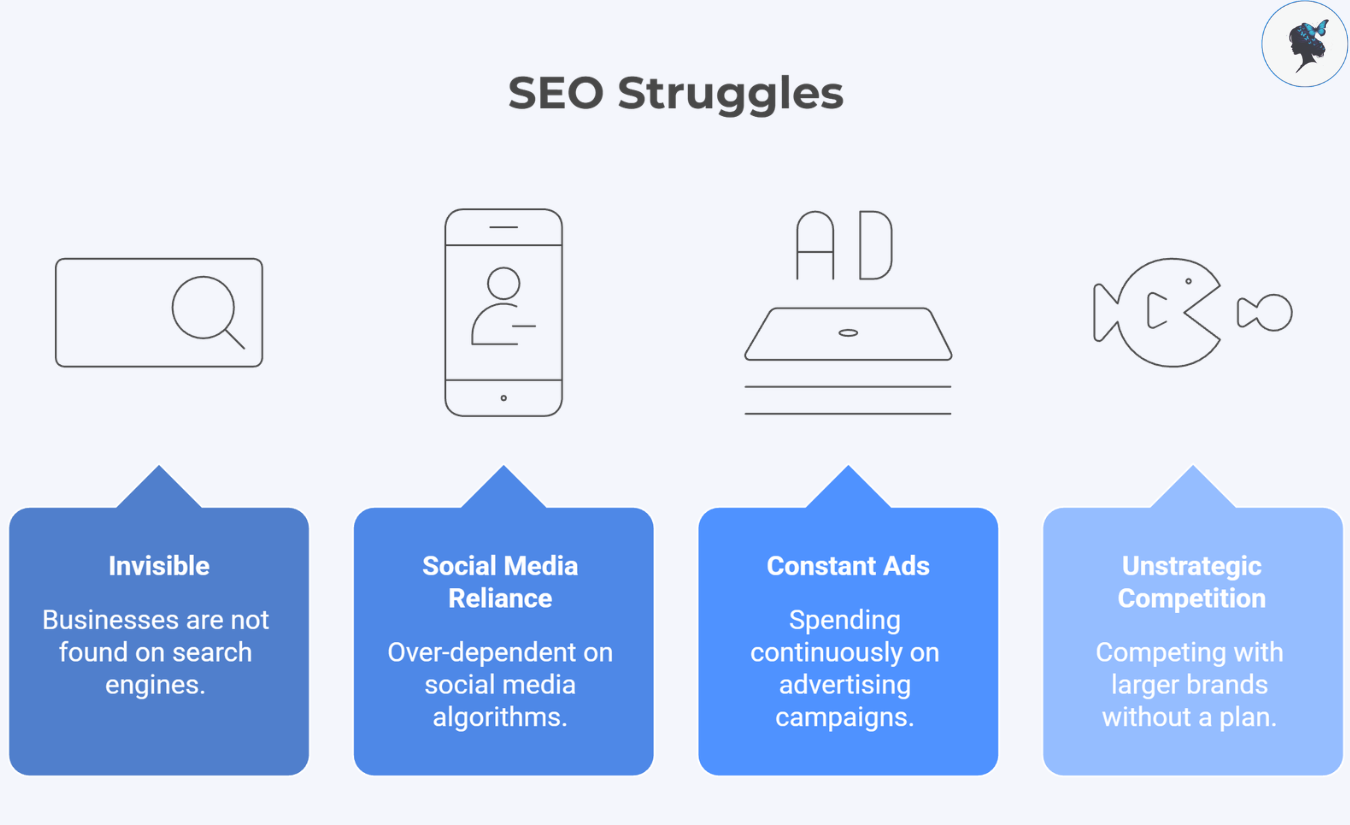
Why Small Businesses Struggle Without SEO

infograph: SEO struggles
SEO struggles

Without SEO, most small businesses end up:

  • Invisible on search engines
  • Over-reliant on social media algorithms
  • Spending constantly on ads
  • Competing with bigger brands without a strategy

And the worst part? Your competitors who are investing in SEO are slowly taking that traffic — and those customers.


The Core SEO Foundations Every Small Business Needs

You don’t need to do everything — but you do need the basics.

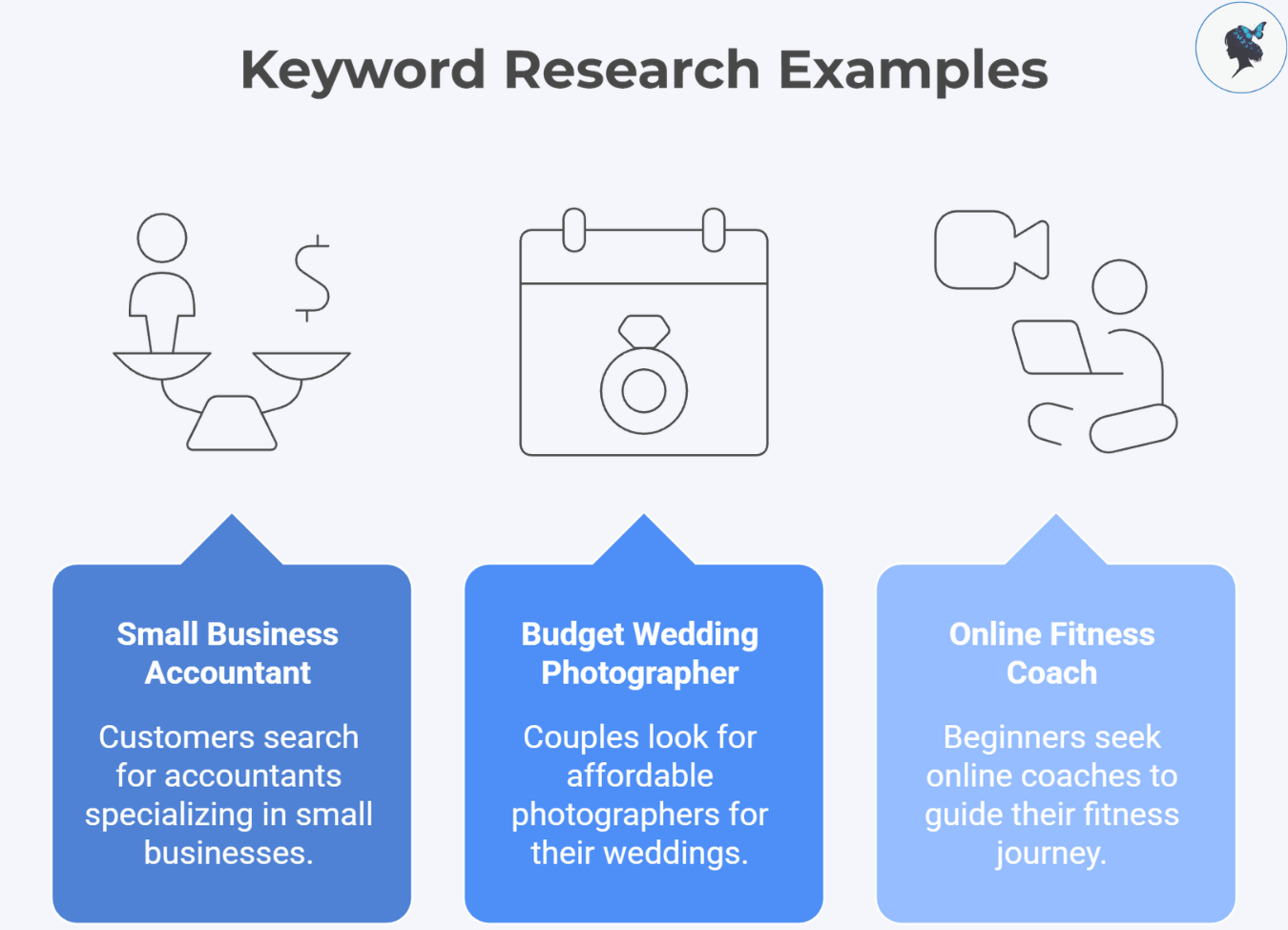
1. Keyword Research

This is about understanding: What your customers are actually searching for.

infograph: Keyword research examples
Keyword research examples

Not what you think they search — what they type into Google.

Examples:

  • “small business accountant”
  • “budget wedding photographer”
  • “online fitness coach for beginners”

Not sure where to begin? Check out our keyword research guide.


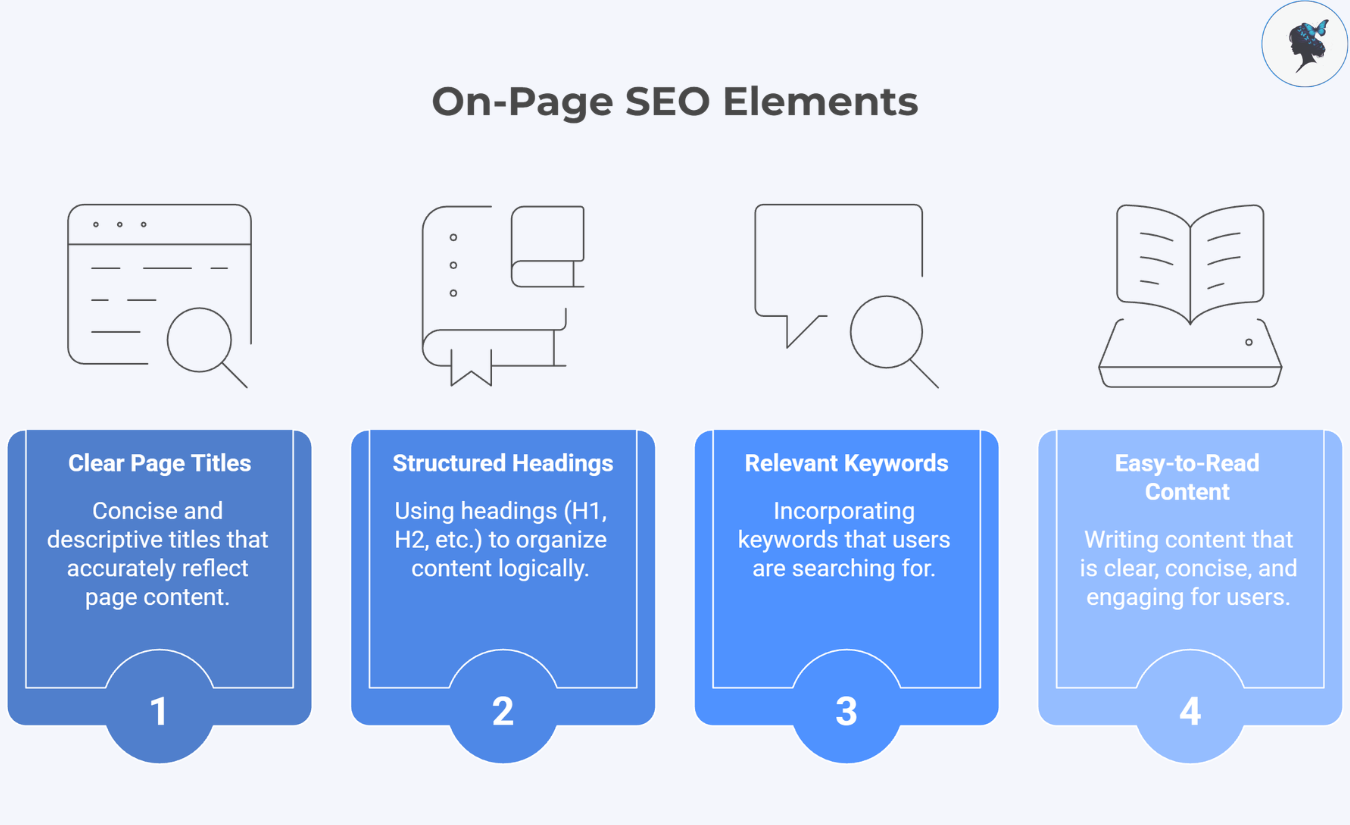
2. On-Page SEO

This is how your website communicates with search engines.

infograph: On-page SEO elements
On-page SEO elements

It includes:

  • Clear page titles
  • Structured headings
  • Relevant keywords
  • Easy-to-read content

Think: making your site understandable for both humans and Google.


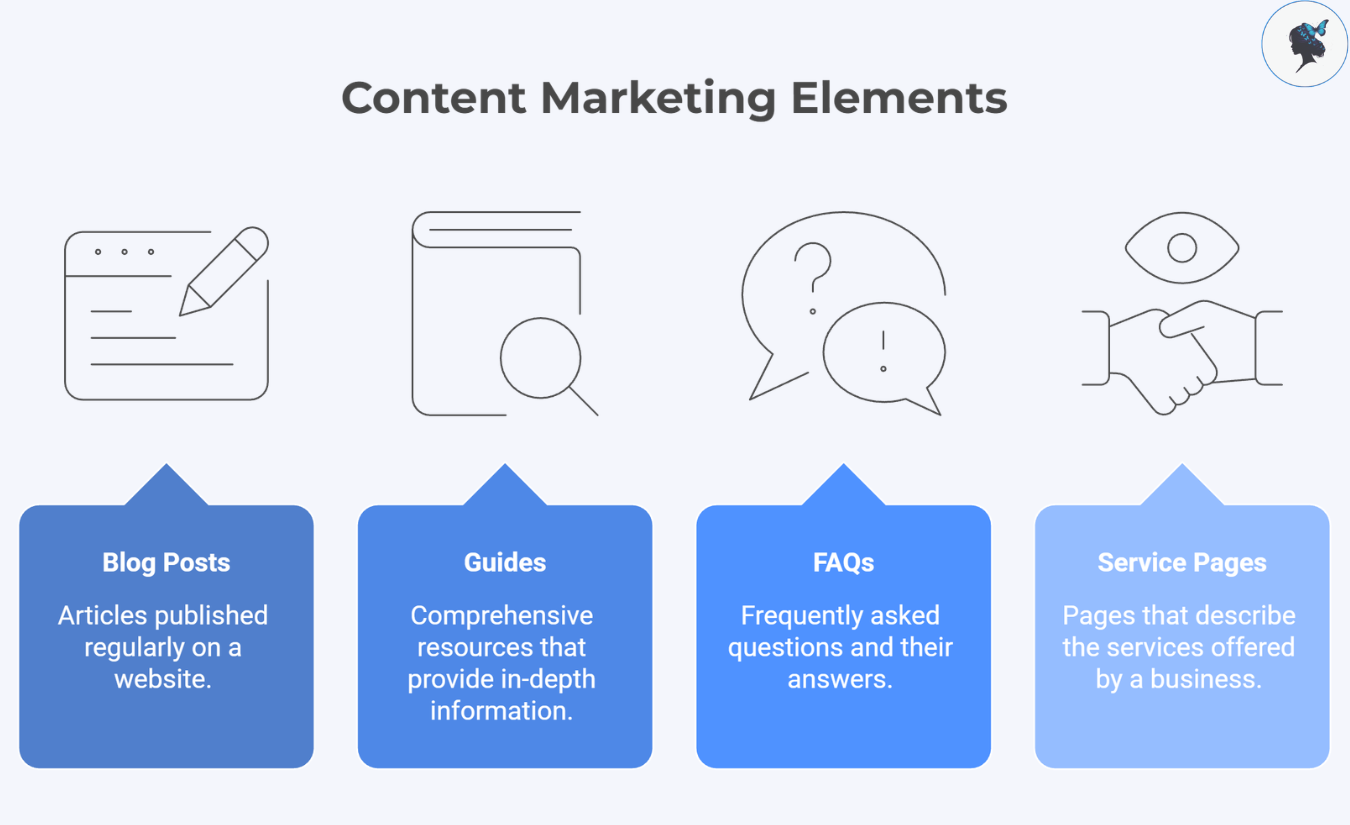
3. Content Marketing

Content is what drives SEO.

infograph: Content marketing elements
Content marketing elements

This includes:

  • Blog posts
  • Guides
  • FAQs
  • Service pages

Good content answers questions, builds trust, and attracts traffic.


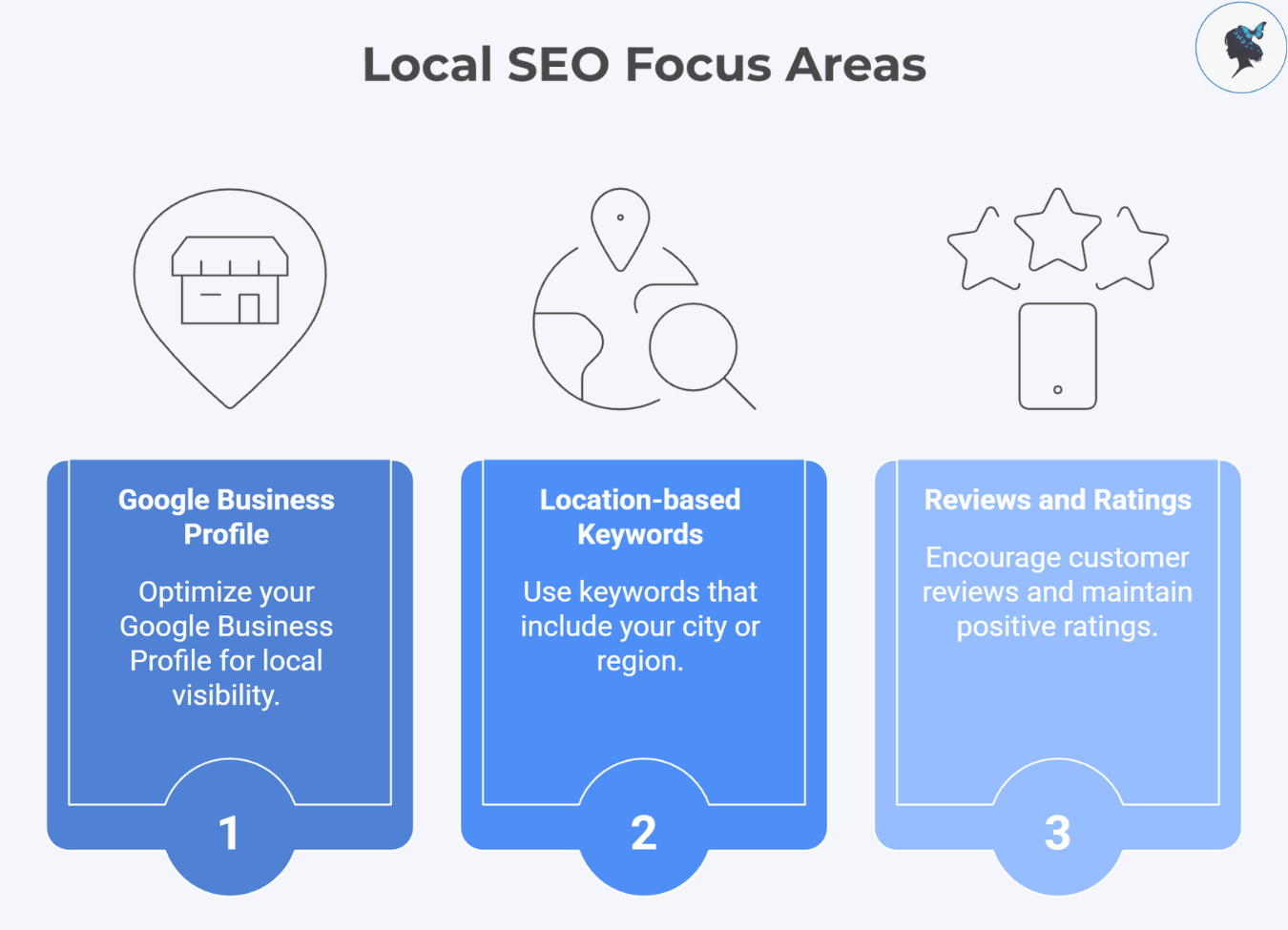
4. Local SEO (Critical for small businesses)

If you serve a local area, this is essential.

infograph: Local SEO focus areas
Local SEO focus areas

Focus on:

  • Your Google Business Profile
  • Location-based keywords
  • Reviews and ratings

This is what helps you show up in “near me” searches.

You might like our On-Page SEO Checklist for Local Service Businesses


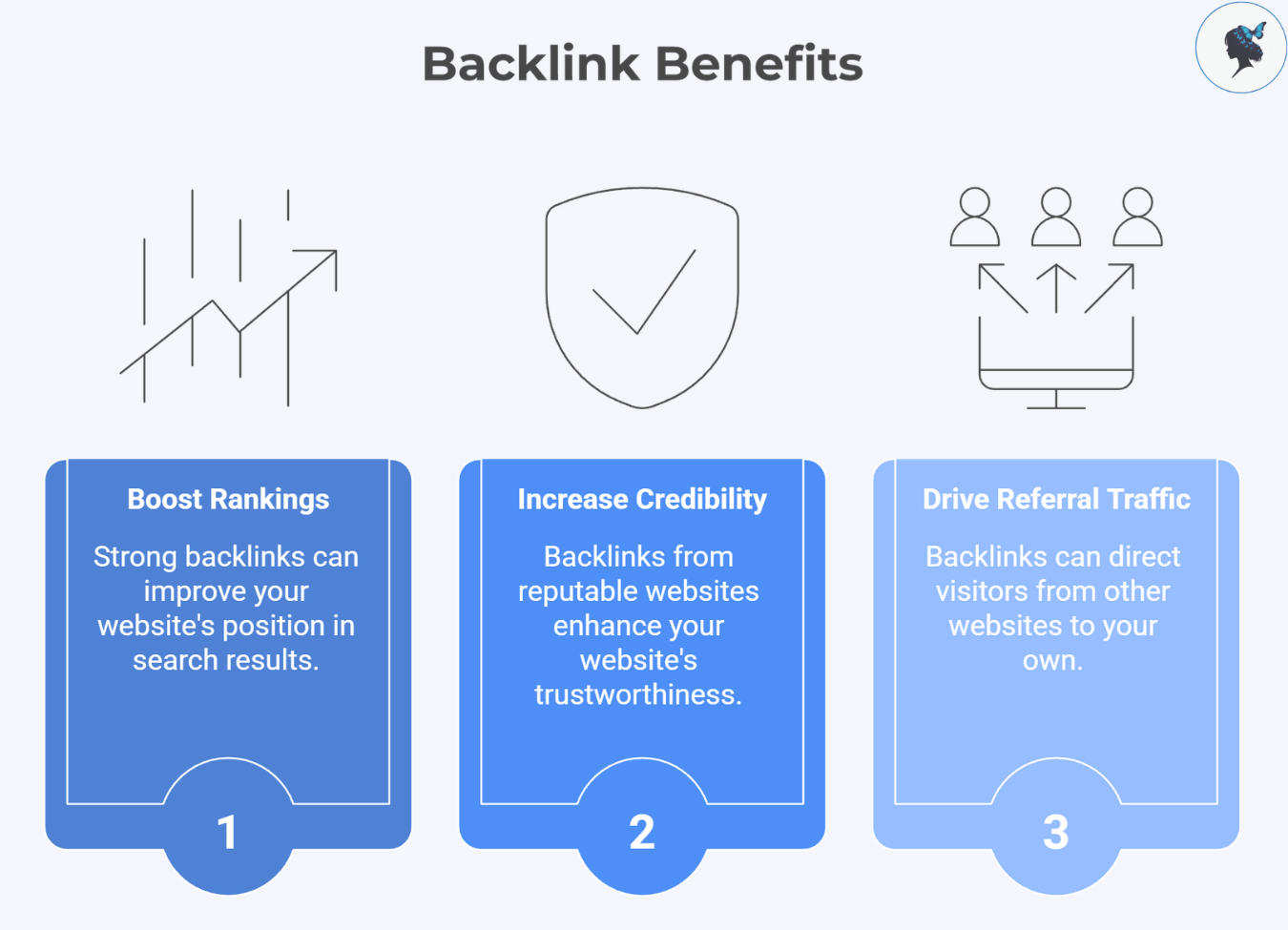
Backlinks are links from other websites to yours.

infograph: Backlink benefits
Backlink benefits

They act like “votes of confidence” in Google’s eyes.

Strong backlinks can:

  • Boost rankings
  • Increase credibility
  • Drive referral traffic

Practical SEO Strategies You Can Start Today

Here’s how to take action — even on a small budget.

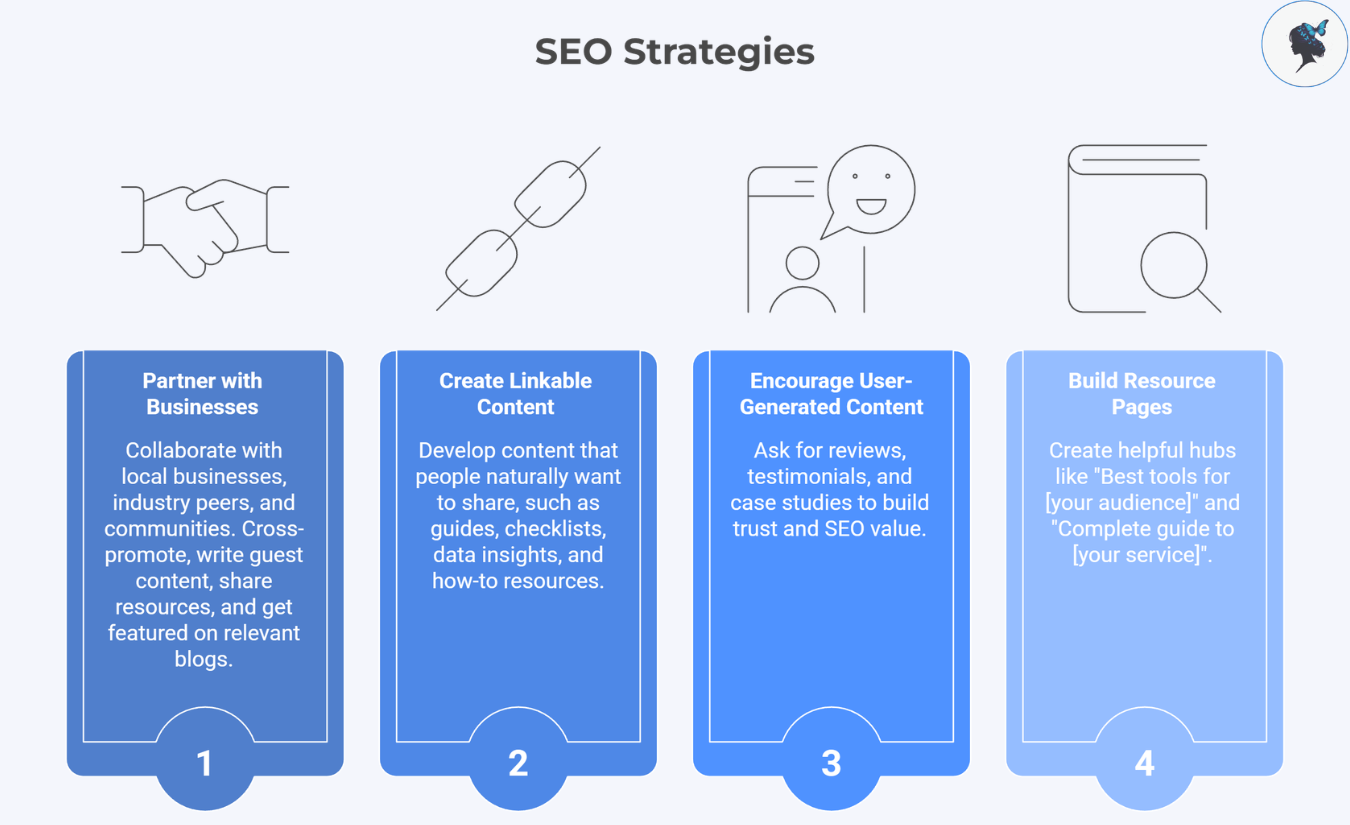
infograph: SEO strategies
SEO strategies

Partner with other businesses

Collaborate with:

  • Local businesses
  • Industry peers
  • Communities

You can:

  • Cross-promote
  • Write guest content
  • Share resources

Look for:

  • Industry blogs
  • Niche publications
  • Local directories

These help you build authority and backlinks.


Create “linkable” content

This is content people naturally want to share, like:

  • Guides
  • Checklists
  • Data insights
  • “How-to” resources

The more useful it is, the more likely it gets linked.


Encourage user-generated content

Ask for:

  • Reviews
  • Testimonials
  • Case studies

This builds both trust and SEO value. More about User-Generated Content here.


Build resource pages

Create helpful hubs like:

  • “Best tools for [your audience]”
  • “Complete guide to [your service]”

These perform well in search and attract links.

Common SEO Mistakes Small Businesses Make

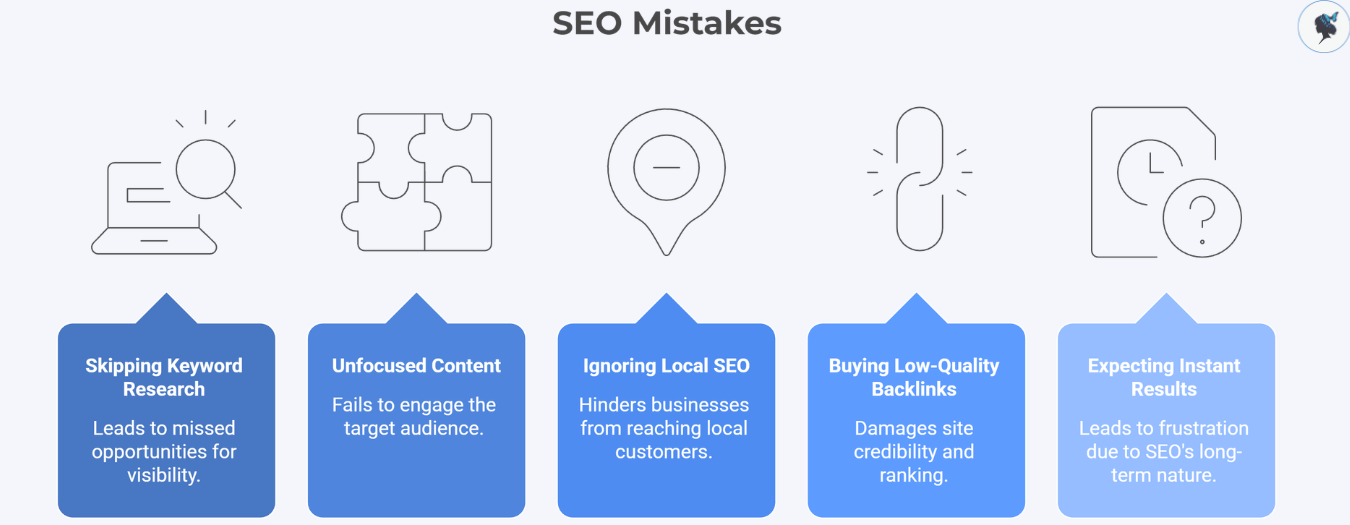
infograph: SEO mistakes
SEO mistakes

Avoid these:

  • Skipping keyword research
  • Publishing random, unfocused content
  • Ignoring local SEO
  • Buying low-quality backlinks
  • Expecting instant results

SEO is not a quick win — it’s a long-term growth channel.


SEO vs Social Media vs Ads (Quick Reality Check)

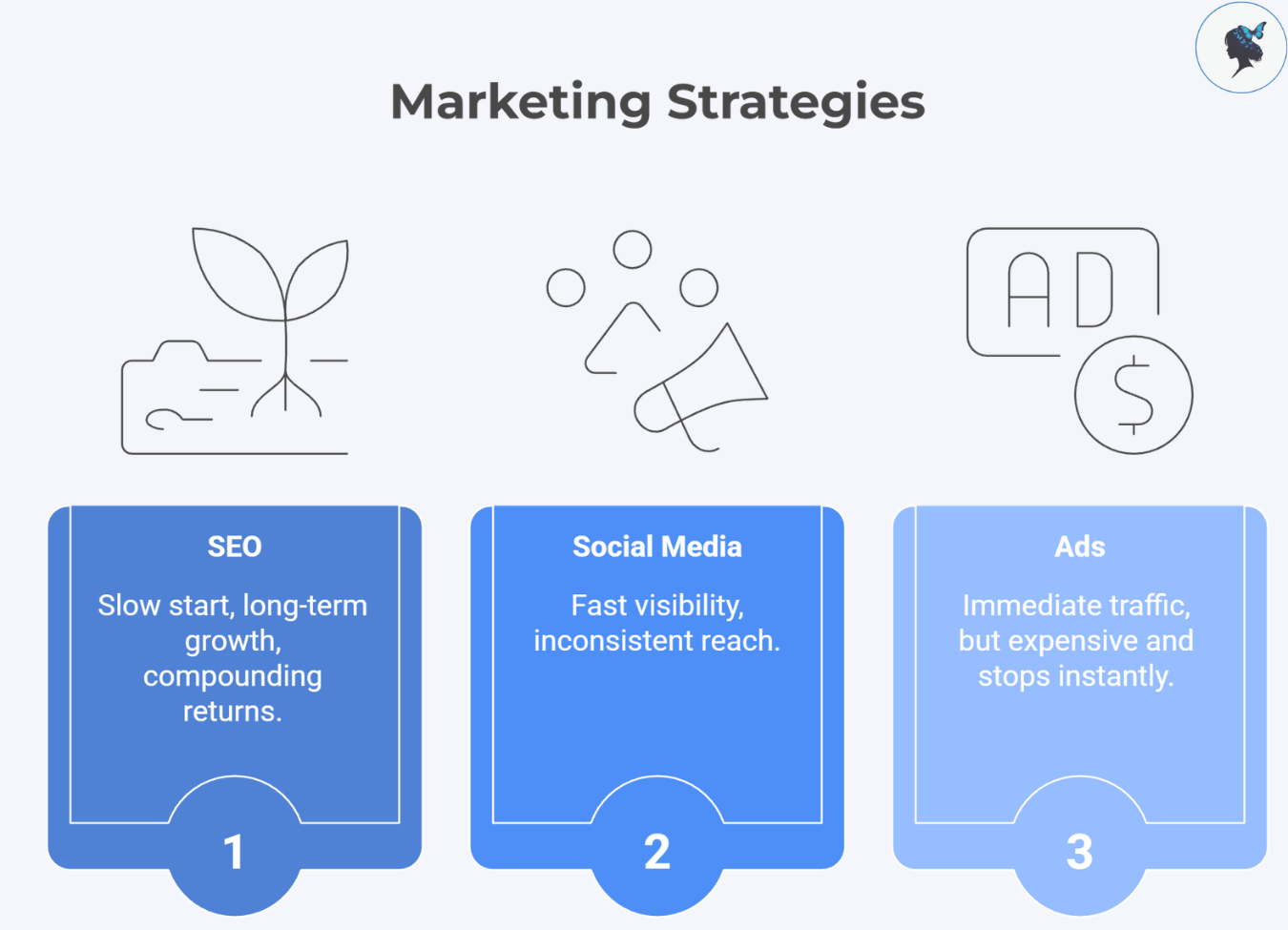
infograph: Marketing strategies
Marketing strategies
  • SEO: Slow start, long-term growth, compounding returns
  • Social media: Fast visibility, inconsistent reach
  • Ads: Immediate traffic, but expensive and stops instantly

The strongest strategy? Use them together — but build SEO as your foundation.


Final Takeaway

SEO isn’t about hacks or algorithms.

It’s about this:

Understanding what your customers are searching for — and becoming the best answer online.

For small businesses, that’s a powerful advantage.

Because you don’t need a massive budget to win.

You just need:

  • The right strategy
  • Consistency
  • And a focus on helping your audience

If you’re not investing in SEO yet, now is the time to start.

Because the longer you wait, the more opportunities you’re leaving on the table.

Need help? Contact us today!