Gen Z (born 1997–2012) is reshaping global tourism. Unlike previous generations, they prioritize immersive experiences, digital discovery, and purpose-driven travel. McKinsey finds that 52% of Gen Zers are willing to spend more on experiential travel vs. just 29% of Boomers. Travel today is less about bucket lists and more about emotional connection, cultural authenticity, and digital sharing.
1. Prioritize Authentic, Immersive Experiences
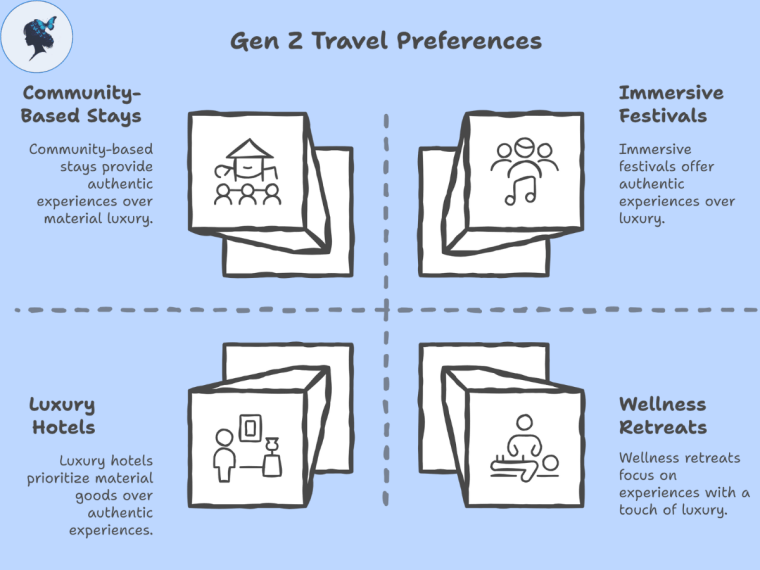
Gen Z travelers favor experiences over luxury: 73% say they prefer experiences to material goods. They embrace offbeat adventures—from immersive festivals to community-based stays in small towns (a trend dubbed “townsizing,” with 67% expressing interest).
Gen Z travel preferences
Wander Women Strategy: Develop itineraries around local traditions, boutique stays, wellness experiences, and niche festivals that create lasting memories—not just photo ops.
2. Sustainability Is a Brand Imperative
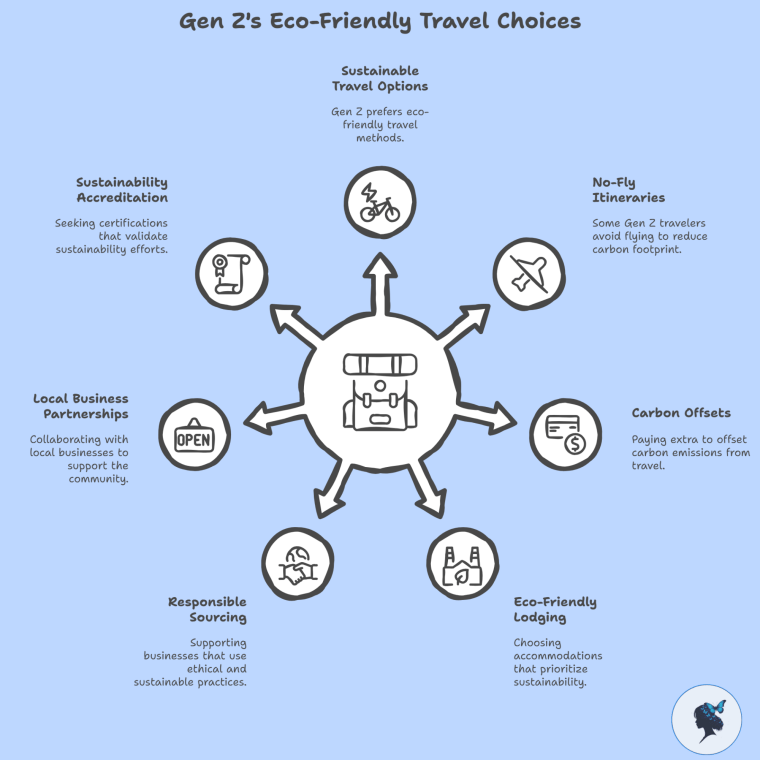
Gen Z is deeply eco-conscious. YouGov reports that many are even opting for no-fly itineraries or paying extra for carbon offsets.
Gen Z’s eco-friendly travel choices
Wander Women Strategy: Emphasize eco-friendly lodging, responsible sourcing, local-business partnerships, and sustainability accreditation. Communicate it transparently on websites and socials.
3. Meet Them Where They Are: Social-First Travel Discovery
Gen Z uses TikTok, Instagram, and YouTube as their primary travel search engines: 80–90% use social media for inspiration, with ~40% preferring TikTok over Google for travel research. TikTok is especially powerful: 77% of European users were motivated to visit destinations after seeing them there.
Gen Z travel inspiration: from passive to active engagement
Wander Women Strategy: Build short-form video content featuring raw, unfiltered travel moments—Reels, TikToks, UGC reels—and partner with micro/nano creators who mirror Gen Z values.
4. Mobile-First Is Non-Negotiable
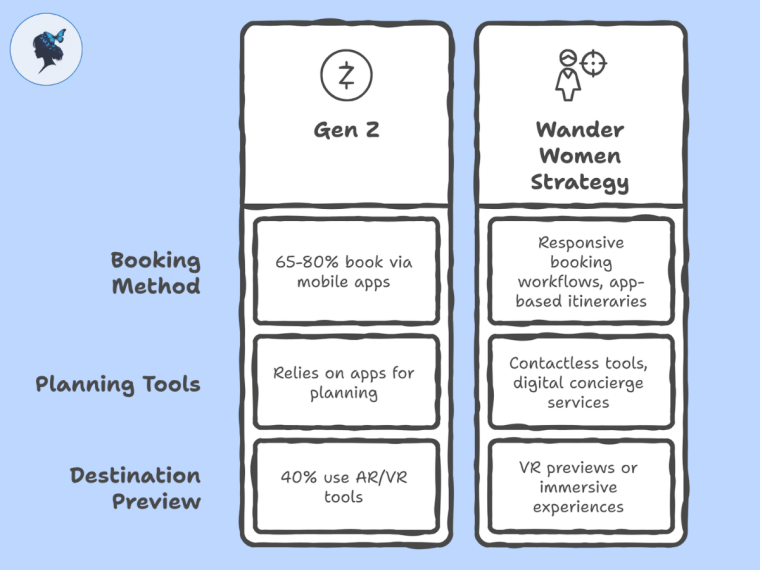
Gen Z expects seamless, on-the-go experiences, and many rely on apps for planning and last-minute deals. Around 40% use AR/VR tools to preview destinations beforehand.
Mobile-first is non-negotiable for Gen Z
Wander Women Strategy: Ensure responsive booking workflows, app-based itineraries, contactless tools, and digital concierge services. Explore VR previews or immersive experiences for high-engagement travel products.
5. Affordable, Value-Driven, and Emotionally Intelligent
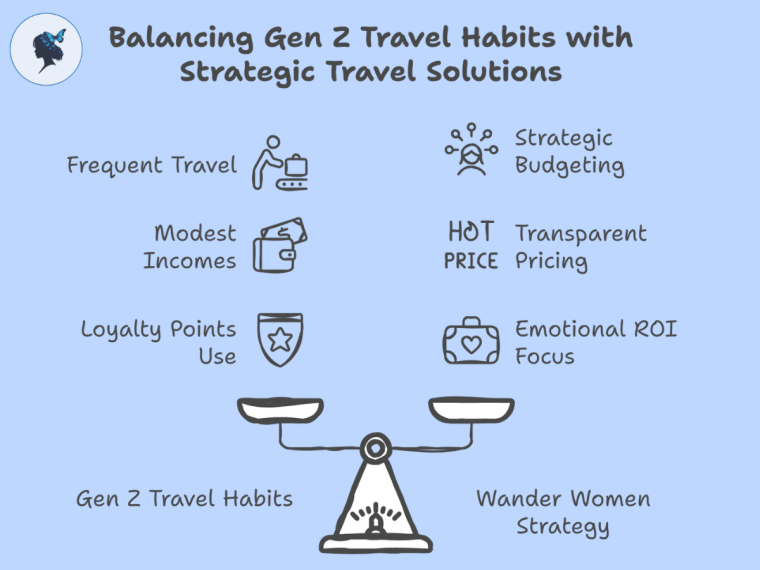
Gen Z travels frequently (often 2–3 trips/year), despite modest incomes (60% earn under $50K). They use “soft-saving” tactics—strategic budgeting, loyalty points, and flexible trip formats—to make it possible.
Balancing Gen Z habits with strategic travel solutions
Wander Women Strategy: Design travel budgets and modular packages with transparent pricing. Promote deals, indie or hostel stays, domestic adventures, and multi-faceted itineraries that offer high emotional ROI.
6. Trust Peer Reviews & User-Generated Content
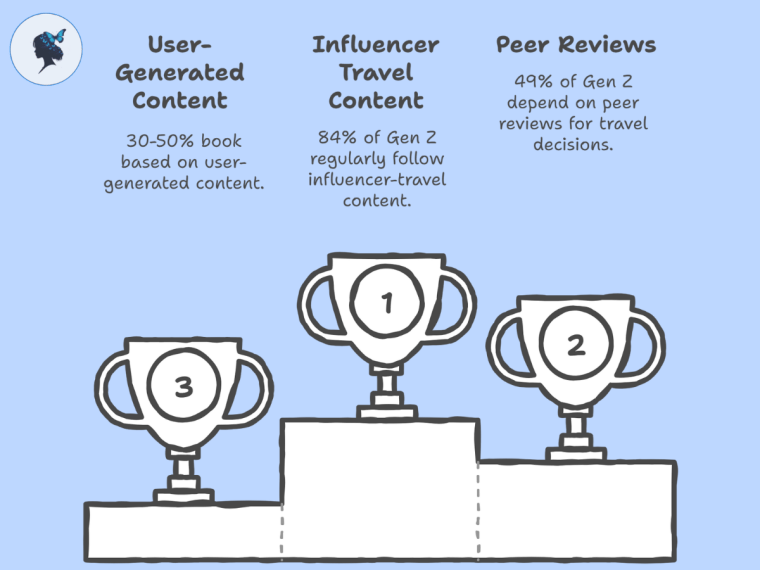
Reviews and UGC are gold for Gen Z: ~30–50% book based on influencer or user content. 84% follow influencer-travel content regularly.
Gen Z Trust Peer Reviews & User-Generated Content
Wander Women Strategy: Amplify guest content: Instagram takeovers, Reels from travelers, review spotlights. Offer branded templates or hashtags for client-generated content, reposting highlights that feel authentic and fun.
7. Gen Z Is Influencing Group & Family Travel
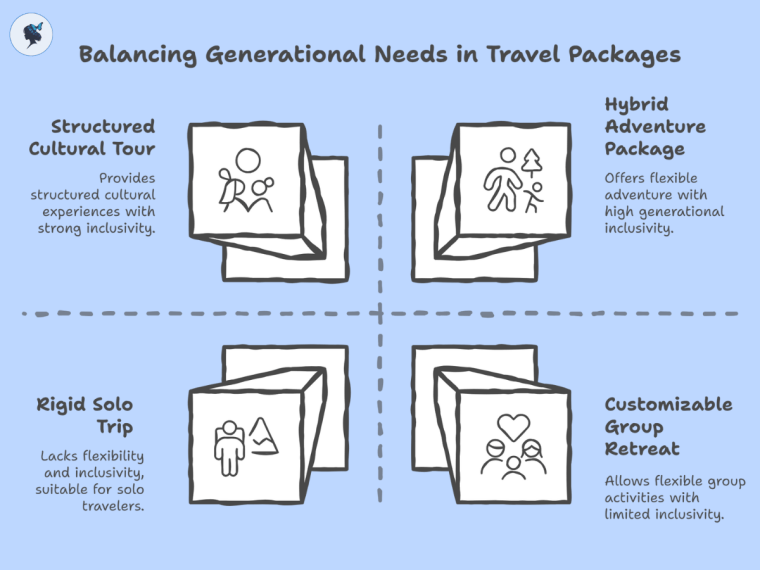
While Gen Z often travels solo or with friends, they heavily influence family trip choices—80% of the time, they shape group itineraries. They want flexibility, modular activities, and multi-generational inclusivity.
Balancing generational needs in travel packages
Wander Women Strategy: Build hybrid packages that balance generational needs—adventure segments, relaxed cultural exploration, photo-worthy stops, wellness breaks, and optional adrenaline activities.
8. Wellness, Self-Growth & Digital Detox Trips Appeal Strongly
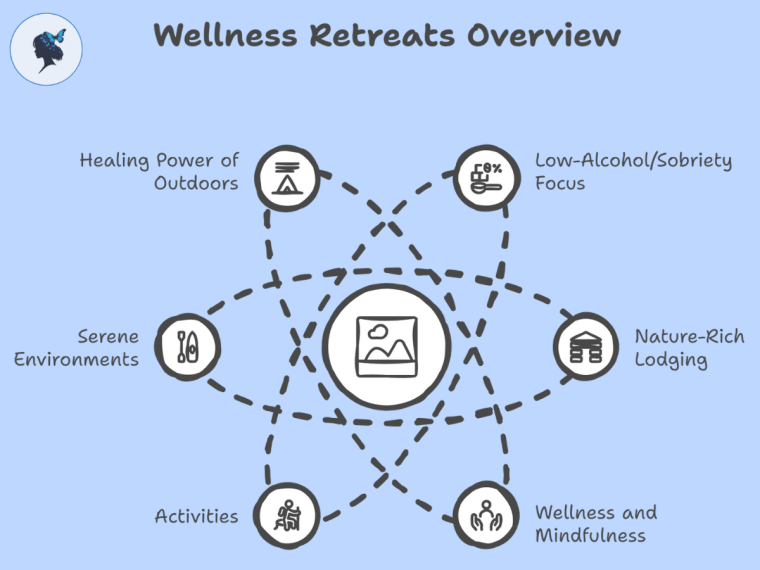
Wellness travel is trending: studies show high percentages (50-70%) of Gen Z saying travel helps their mental health, or that they seek wellness/relaxation in travel. Many prefer low-alcohol or sobriety-focused experiences and nature-rich lodging.
Wellness retreats overview
Wander Women Strategy: Offer curated wellness escapes—mindfulness retreats, yoga by the sea, nature hikes, or silent digital detox days. Emphasize mental clarity, purpose, and restorative experiences.
Final Overview & Strategic Snapshot
Gen Z Trait
Marketing Insight
Prefers experience over luxury
Offer immersive, culturally rich, and adventurous packages
Concerned about sustainability
Feature green credentials, carbon offsets, ethical lodging
Discovers via social media
Invest in TikTok, Instagram Reels, UGC and influencer collaborations
Mobile-first behavior
Optimize app-based booking, AR/VR previews, contactless systems
Budget-savvy yet experiential
Provide flexible budgets, domestic options, modular itineraries
Trusts peers and UGC
Showcase real traveler stories and content for credibility
Drives family travel choices
Design multi-gen and flexible packages with varied experience layers
Wants wellness & growth trips
Offer digital detox, wellness retreats, sober, nature-focused, and retreat tours
Conclusion
Marketing to Gen Z travelers in 2025 means blending digital dynamism, values-based storytelling, and affordable adventure. They seek autonomy, authenticity, and deeper meaning in how they travel—and they expect brands to share those values.
Want to create content and campaigns that resonate with Gen Z? Contact us today!
Instagram is a powerful platform for travel brands aiming to inspire and connect with wanderlust-driven audiences. With over 2 billion monthly active users, Instagram offers unparalleled opportunities to showcase stunning destinations, share authentic experiences, and build a loyal community. Whether you’re a boutique tour operator or a global travel agency, leveraging Instagram effectively can drive brand awareness, engagement, and bookings.
Optimize Your Profile
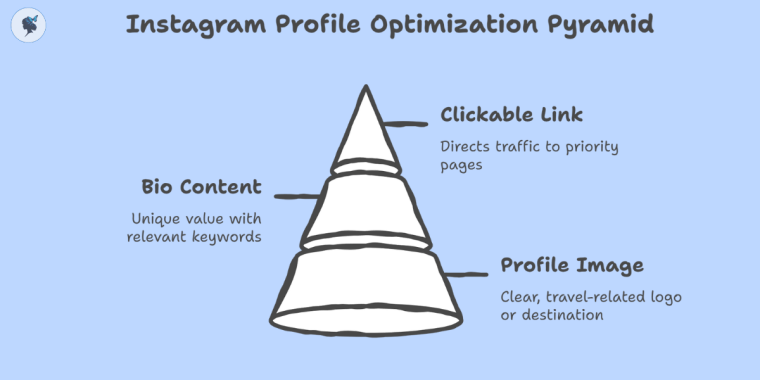
Your Instagram profile is your brand’s first impression. Use a clear, travel-related profile photo such as your logo or a signature destination image. Craft a bio that highlights your unique value and includes keywords travelers might search for, such as “adventure tours” or “family vacations.” Don’t forget to add a clickable link to your website, booking page, or a link-in-bio tool like Linktree to direct traffic effectively. According to Instagram, profiles with complete information get 30% more profile visits.
Instagram profile optimization pyramid
Wander Women Hot Tips:
Choose a clean, recognizable profile image.
Write a concise bio with keywords and a call to action.
Add a link that drives traffic to your highest priority page.
Post High-Quality, Engaging Visuals
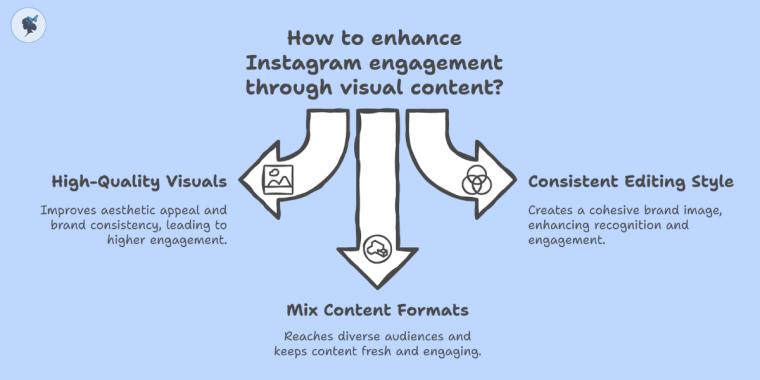
Instagram is a visual-first platform, so the quality of your photos and videos is critical. Share breathtaking travel photos, immersive videos, and engaging carousel posts to tell a story. Maintain a consistent editing style and color palette to create a cohesive brand aesthetic. Brands that use consistent visuals see a 23% higher engagement rate. Don’t hesitate to mix formats—carousel posts, Reels, and Stories all serve different purposes and reach audiences in varied ways.
How to enhance Instagram engagement through visual content?
Wander Women Hot Tips:
Invest in professional or well-edited travel photos.
Maintain visual consistency for brand recognition.
Experiment with content formats to maximize reach.
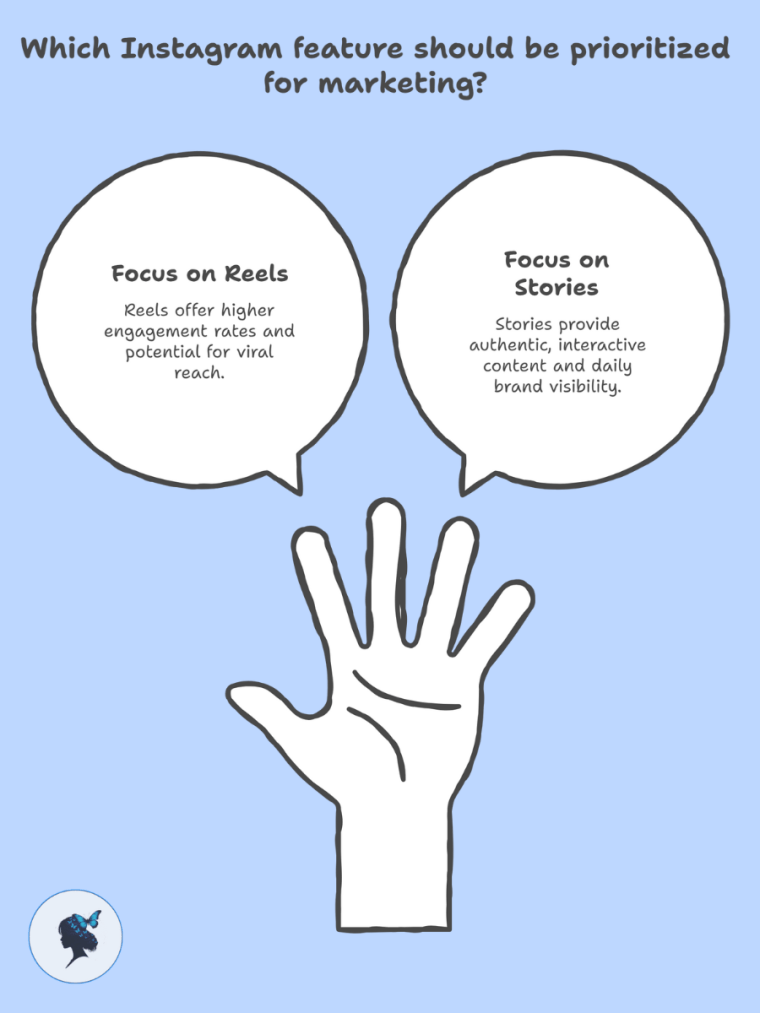
Instagram Reels and Stories have become vital tools for travel brands to increase visibility and engagement. Reels, with their short, engaging videos, can go viral and reach audiences beyond your followers. Stories offer a more casual, authentic glimpse behind the scenes and allow you to use interactive features like polls, quizzes, and question stickers. Data shows that Reels receive 22% more engagement than regular video posts. Posting Stories daily keeps your brand top of mind and encourages audience interaction.
Which Instagram feature should be prioritized for marketing?
Wander Women Hot Tips:
Create fun, inspiring Reels showcasing destinations or travel tips.
Use Stories to share daily updates and interactive content.
Incorporate stickers to boost viewer engagement.
Use Hashtags Strategically
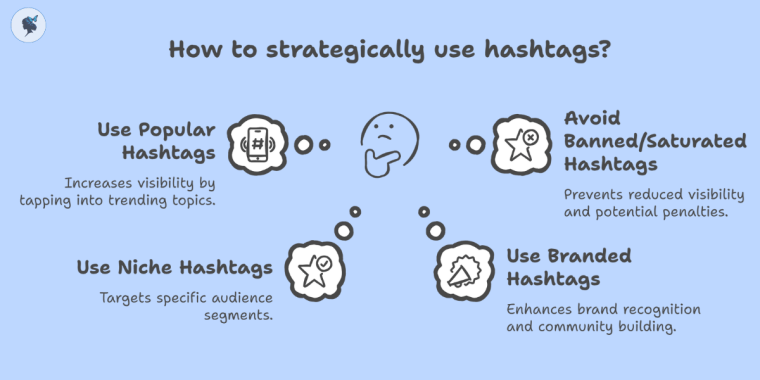
Hashtags help categorize your content and extend its reach. Use a mix of popular, niche, and branded hashtags to target the right audience. For example, combine #TravelTuesday (popular) with #EcoTravelTips (niche) and your branded hashtag like #YourBrandTravels. Avoid banned or overly saturated hashtags, which can reduce your post visibility.
How to strategically use hashtags?
Wander Women Hot Tips:
Research and compile a hashtag set that fits your brand and audience.
Create and promote a unique branded hashtag.
Rotate hashtags to avoid spam signals from Instagram.
Engage Actively with Your Audience
Engagement is a two-way street. Respond to comments and DMs quickly to build trust and loyalty. Like and comment on your followers’ posts to foster community. Hosting giveaways or contests encourages interaction and grows your following organically. Instagram reports that accounts with high engagement see faster follower growth and increased visibility.
Instagram engagement cycle
Wander Women Hot Tips:
Prioritize responding to all comments and messages.
Actively engage with followers and similar accounts.
Run contests or giveaways to encourage participation.
Collaborate with Travel Influencers
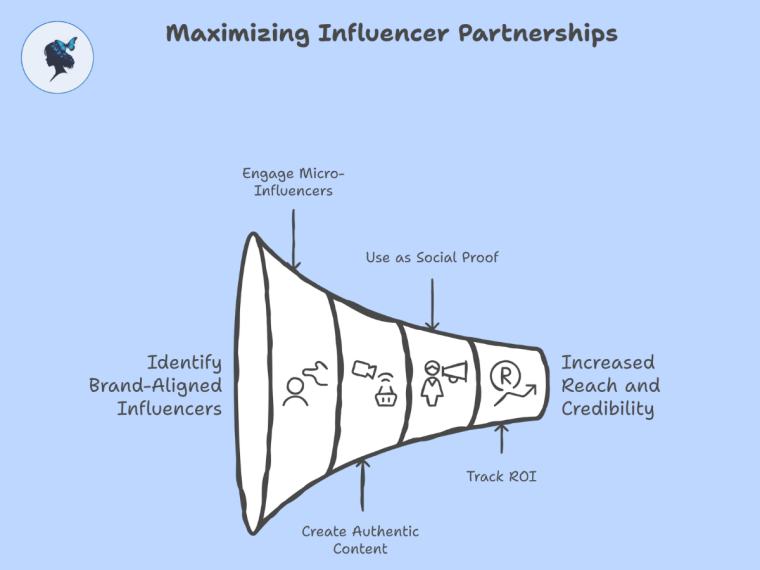
Partnering with influencers who align with your brand can dramatically increase your reach and credibility. Micro-influencers (10k–100k followers) often have highly engaged niche audiences and can provide authentic promotion at a lower cost. Use influencer content as social proof on your channels and track ROI carefully to ensure value. Influencer marketing yields an average of $5.78 ROI for every dollar spent.
Maximizing influencer partnerships
Wander Women Hot Tips:
Identify influencers relevant to your travel niche and audience.
Build genuine, long-term partnerships rather than one-off posts.
Measure campaign results to optimize future collaborations.
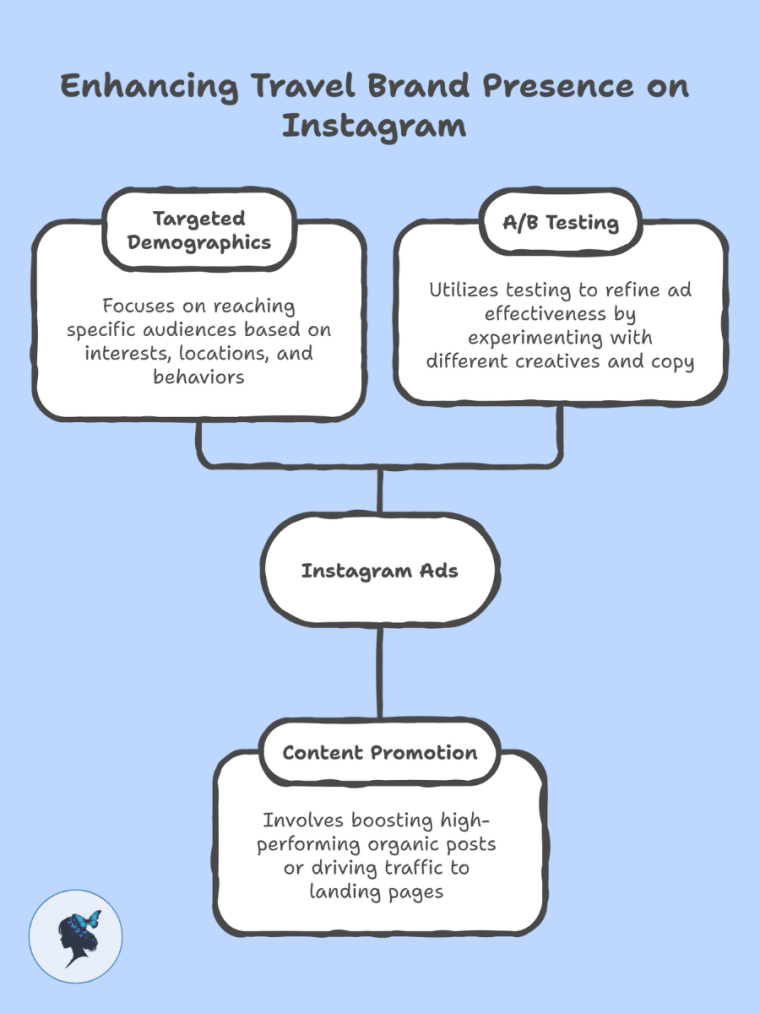
Instagram Ads allow travel brands to promote their best content to highly targeted demographics, based on interests, locations, and behaviors. Use ads to boost posts that perform well organically or to drive traffic to landing pages. Testing different creatives and copy through A/B testing helps refine ad effectiveness.
Enhancing travel brand presence on Instagram
Wander Women Hot Tips:
Promote your top-performing organic content with ads.
Target ads by traveler interests, demographics, and locations.
Continuously A/B test ad creatives and messaging for improvement.
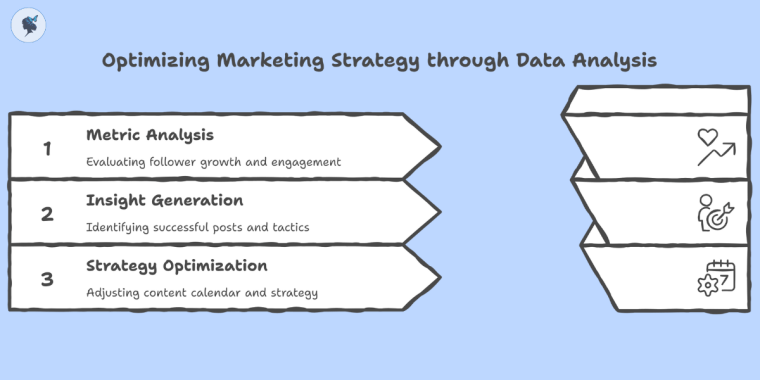
Use Instagram Insights or third-party analytics tools to track follower growth, engagement rates, reach, and conversion metrics. Understanding which posts and tactics drive results allows you to optimize your content calendar and strategy. Data-driven marketers are 6 times more likely to report success. Regular analysis keeps your efforts aligned with your goals and audience preferences.
Optimizing marketing strategy through data analysis
Wander Women Hot Tips:
Monitor key metrics like engagement rate, reach, and follower growth.
Identify top-performing content and replicate its success.
Adjust posting times and content types based on analytics.
Conclusion & Next Steps
Growing your Instagram presence as a travel brand requires consistent effort, creativity, and strategic planning. By optimizing your profile, posting engaging visuals, leveraging Reels and Stories, using hashtags wisely, engaging your audience, collaborating with influencers, running targeted ads, and analyzing your data, you can build a vibrant community of travel enthusiasts eager to explore with you. Start by auditing your current profile and creating a content calendar to implement these tips systematically.
Social media has transformed how travelers research, plan, and book trips. For travel agencies, it’s no longer just about pretty pictures—it’s about consistent, strategic storytelling. According to Statista, 75% of travelers turn to social media during the trip planning phase. That’s a huge opportunity to show up, inspire, and win clients.
Destination-Focused Content
Inspire wanderlust and position your brand as the ultimate travel curator. These posts are designed to help potential clients imagine themselves exploring the world—with you as their guide.
This guide gives you 30 specific post ideas, grouped into themes, each with an intro and actionable tip. Let’s dive in.
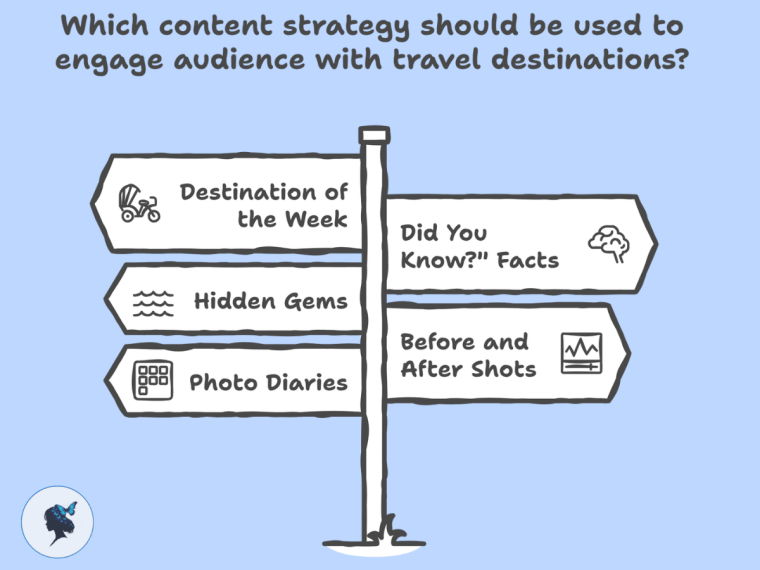
Which content strategy should be used to engage audience with travel destinations?
Feature a Destination of the Week – Highlight a city or region with gorgeous visuals and a short itinerary.
“Did You Know?” Destination Facts – Share surprising or quirky facts about a destination to spark curiosity.
Hidden Gems Posts – Spotlight underrated locations like secluded beaches or quiet mountain villages.
Before and After Travel Shots – Show visual transformations of destinations (or clients’ moods!) pre- and post-trip.
Photo Diaries – Share a day-by-day photo carousel of an unforgettable trip.
Wander Women Hot Tip: Use consistent hashtags (e.g., #WanderlustWednesday or #HiddenGemFridays) to boost discoverability.
Build trust by showing the humans behind the brand. People buy from people. This content creates emotional connections and reinforces your credibility.
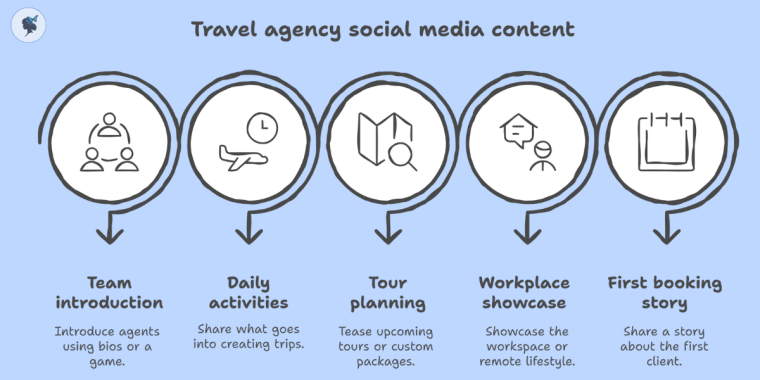
Travel agency social media content
Meet the Team – Introduce your agents with fun bios or a “two truths and a lie” game.
A Day in the Life – Share snippets of what goes into creating an unforgettable trip.
Planning in Progress – Tease a behind-the-scenes look at upcoming tours or custom packages.
Office Vibes – Showcase your workspace or remote work lifestyle.
Throwback to First Booking – Share a nostalgic story about your first client or trip planned.
Wander Women Hot tip: Use casual video or candid shots—polished isn’t always better. Authenticity sells.
Expert Advice & Travel Tips
Offer value with helpful, bite-sized knowledge. These posts educate your audience and position you as a trusted expert—not just a salesperson.
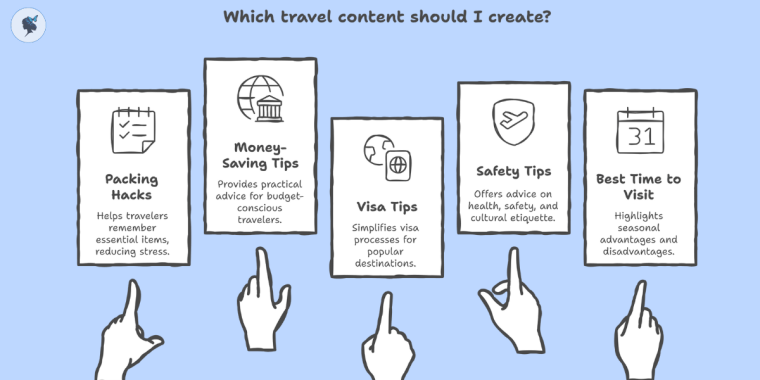
Which travel content should I create?
Packing Hacks – A checklist or reel: “5 things you always forget to pack.”
Money-Saving Travel Tips – Budgeting tips, off-season ideas, or travel apps to use.
Visa or Entry Tips – Demystify travel restrictions or visa applications for popular destinations.
Travel Safety Tips – Share health, safety, or cultural etiquette advice.
Best Time to Visit Posts – Highlight seasonal pros and cons for specific destinations.
Wander Women Hot Tip: Turn longer blog posts into carousels or story highlights to stretch your content value.
These 30 post ideas aren’t just fluff—they’re strategic tools to help you attract leads, build trust, and drive bookings on social media. Mix them weekly, test formats (Reels, Stories, Pins, Carousels), and repeat what works.
In the fast-paced and competitive travel industry, having a solid content strategy is essential to stand out and attract the right travelers. A well-planned content approach not only draws visitors but also nurtures them through the buyer journey, ultimately converting browsers into booked customers. According to the Content Marketing Institute, content marketing rakes in conversion rates six times higher than other methods, making it an indispensable tool for travel brands.
Wander Women takeaways:
Content marketing boosts engagement and conversions significantly.
A clear content strategy guides travelers through the buying journey.
Travel brands without a strategy risk losing customers to competitors.
Define Your Audience & Goals
Understanding who your target travelers are is the foundation of any successful content strategy. Creating detailed personas—whether solo adventurers, families, or luxury seekers—helps tailor your messaging to their unique preferences and pain points. Additionally, setting SMART goals (Specific, Measurable, Achievable, Relevant, Time-bound) aligned with your business objectives, such as increasing bookings by 20% or growing email subscribers, ensures your content efforts are purposeful and measurable.
Content strategy for travel industry
Wander Women Hot Tips:
Develop detailed traveler personas for targeted messaging.
Align content goals with broader business objectives using SMART criteria.
Continuously revisit and refine personas and goals as your audience evolves.
Conduct a Content Audit & Competitive Analysis
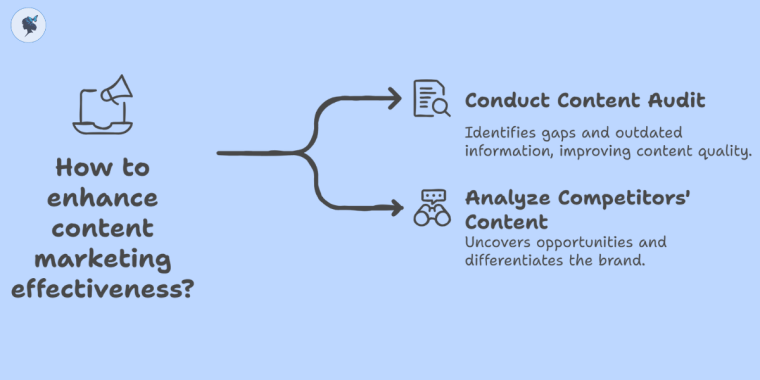
Before creating new content, evaluate what you already have by conducting a thorough content audit. This helps identify gaps, outdated information, or content that performs well. Simultaneously, analyze competitors’ content to uncover opportunities and differentiate your brand. Among the most successful companies in content marketing, 61% conduct content audits at least twice a year.
How to enhance content marketing effectiveness?
Wander Women Hot Tips:
Identify what content resonates and what needs updating.
Benchmark against competitors to find gaps and opportunities.
Use audit findings to prioritize new content creation efforts.
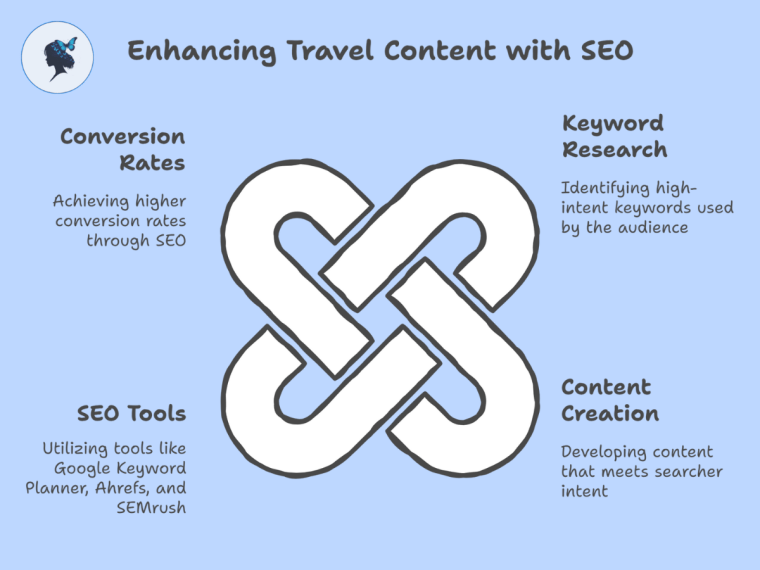
SEO remains a cornerstone for travel content success. By researching high-intent keywords your audience uses, such as “best family resorts in Florida” or “budget Europe travel tips,” you can create content that meets searcher intent—informational, transactional, or navigational. Tools like Google Keyword Planner, Ahrefs, and SEMrush provide valuable insights to guide your content creation. Travel marketers who prioritize SEO report 14.6% conversion rates compared to 1.7% for outbound leads.
Enhancing travel content with SEO
Wander Women Hot Tips:
Target high-intent keywords relevant to your travel niches.
Match content to the searcher’s intent for better engagement.
Leverage SEO tools to discover keyword opportunities and monitor rankings.
Content Types & Formats
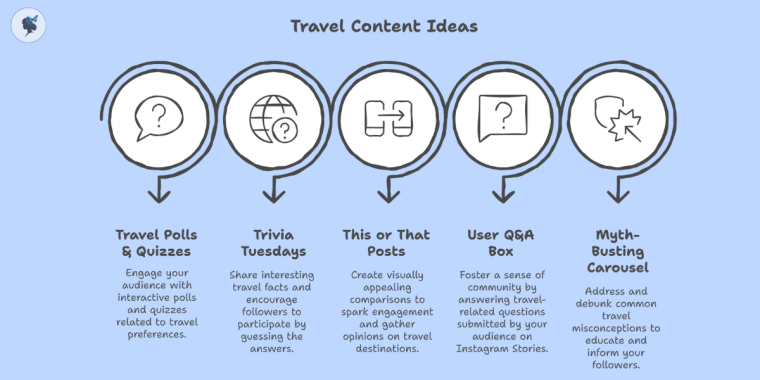
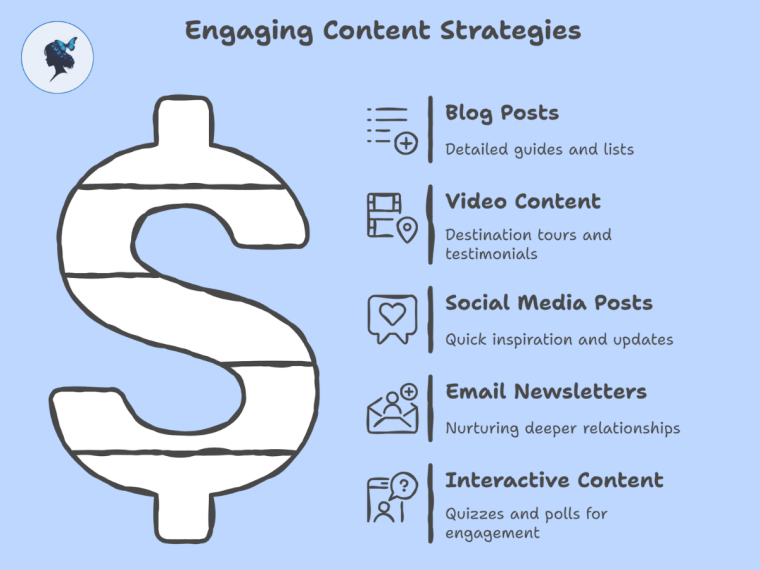
A diverse content mix keeps your audience engaged and caters to different preferences. Blog posts remain a travel staple for detailed guides and lists, while video content—like destination tours and traveler testimonials—is booming; according to the 2024 Global Internet Phenomena Report by Sandvine, streaming video accounts for more than 80% of global internet traffic, underscoring the dominance of video content in online data consumption. Social media posts and Stories allow quick inspiration, while email newsletters nurture deeper relationships. Interactive content such as quizzes or polls can boost engagement by over 40%.
Engaging content strategies
Wander Women Hot Tips:
Use a mix of blogs, videos, social posts, and interactive content.
Prioritize video as a growing format for travel inspiration.
Leverage email newsletters to maintain ongoing connections with prospects.
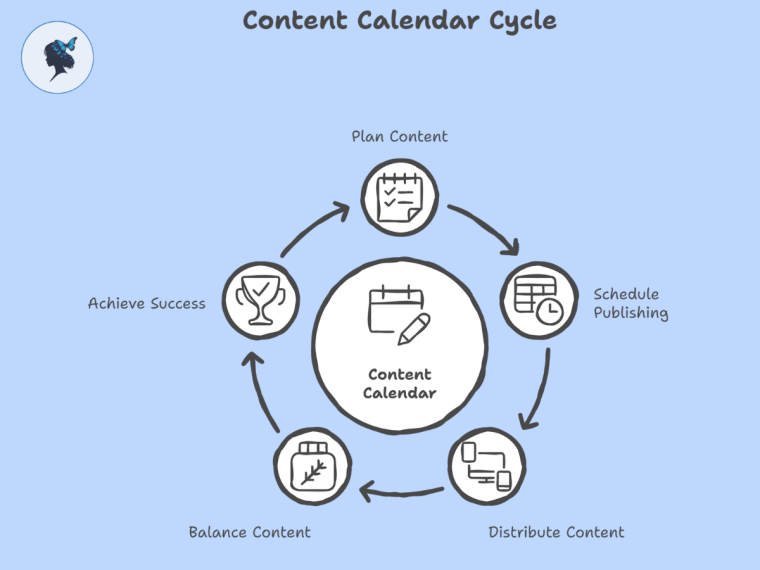
Consistency and planning are vital. Developing a content calendar helps schedule publishing frequency and distribution channels, balancing evergreen content that remains relevant year-round with trending or seasonal topics like holiday travel or summer vacations. According to CoSchedule, marketers who use content calendars are 3 times more likely to report success than those who don’t.
Content calendar cycle
Wander Women Hot Tips:
Plan publishing frequency and channel distribution ahead of time.
Balance evergreen content with seasonal and trending topics.
Use a calendar to maintain consistency and measure campaign success.
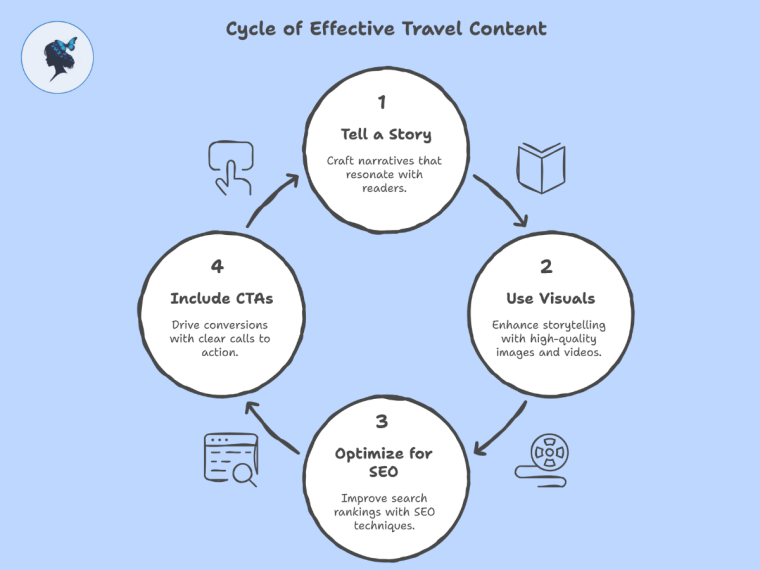
Effective travel content tells a story and appeals to readers’ emotions, helping them imagine their next adventure. Use high-quality images and videos to enhance storytelling and break up text for readability. Incorporate SEO best practices like keyword placement, meta descriptions, and internal linking to boost search rankings. Including clear calls to action—whether to download a guide, subscribe, or book a trip—drives conversions. HubSpot reports that content with strong CTAs increases conversion rates by 202%.
Cycle of effective travel content
Wander Women Hot Tips:
Craft storytelling content that resonates emotionally.
Use visuals to support and break up text content.
Optimize for SEO and include compelling calls to action.
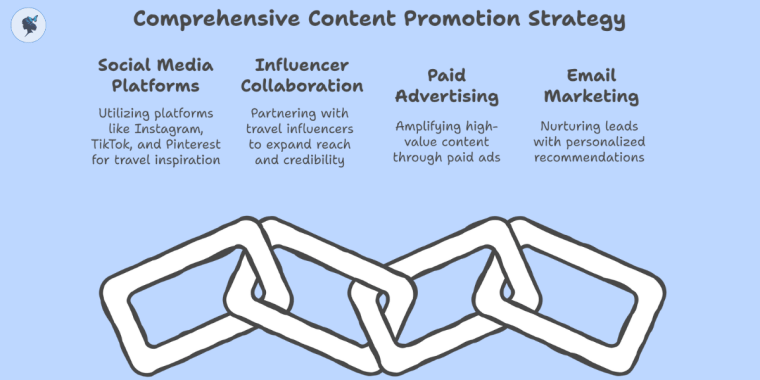
Creating great content is only half the battle—promoting it ensures it reaches your target audience. Share your content on relevant social media platforms such as Instagram, TikTok, and Pinterest, which are popular for travel inspiration. Collaborate with travel influencers or guest bloggers to expand reach and credibility. Paid ads can amplify high-value content, while email marketing nurtures leads with personalized recommendations. Research from Sprout Social shows that 64% of consumers want brands to connect with them on social media.
Comprehensive content promotion strategy
Wander Women Hot Tips:
Share content on platforms your audience frequents.
Partner with influencers and guest bloggers for broader reach.
Use paid promotion and email marketing to nurture leads and conversions.
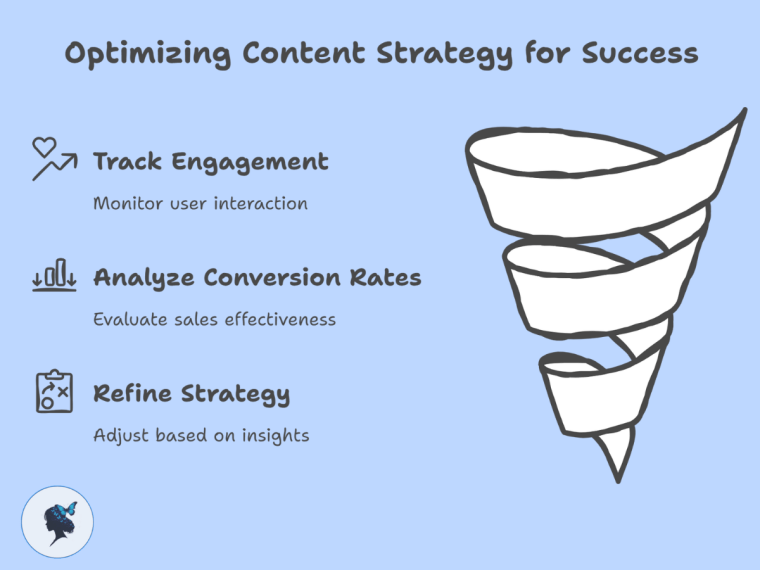
Tracking performance is critical to refine your strategy. Key metrics include website traffic, engagement rates, and conversion rates. Use analytics tools like Google Analytics and platform insights to monitor what’s working and where to improve. According to Deloitte, data-driven organizations are 23 times more likely to acquire customers and 19 times more likely to be profitable. Regularly revisiting and optimizing your content strategy ensures it stays aligned with your goals and audience preferences.
Optimizing content strategy for success
Wander Women Hot Tips:
Monitor traffic, engagement, and conversion metrics regularly.
Use analytics tools to identify content strengths and weaknesses.
Continuously adapt strategy based on data insights.
Building a travel content strategy that converts requires a clear understanding of your audience, a solid SEO foundation, diverse and engaging content, and consistent promotion and measurement. By following these steps, travel brands can create meaningful connections with travelers, build trust, and ultimately drive more bookings. Start today by conducting a content audit or defining your traveler personas to set your strategy on the path to success.
Wander Women Hot Tips:
A strategic approach leads to better engagement and conversions.
Consistent measurement and optimization improve long-term results.
Begin now with a content audit or audience definition to jumpstart your efforts.
Repurposing your travel blog posts into short-form visual content like Reels, Pins, and social media posts can double your reach, save time, and reinforce your key messages across channels. According to HubSpot, 60% of marketers report that repurposed content generates more leads than original content. And when done effectively, visual content gets more views than text-only content.
Wander Women Hot Tip: Repurposing is giving your best content a passport.
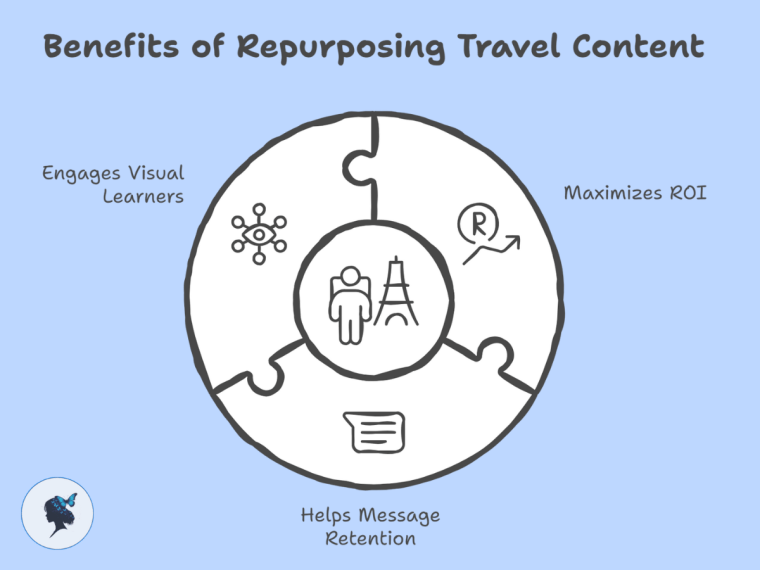
Maximizes ROI: You’ve already invested time in research and writing—a single blog post can become a Reel, Pin, carousel post, and newsletter piece, giving more value for your original work.
Helps message retention: The Rule of 7 says prospects need to hear/see your message multiple times before they convert. Repurposing reinforces your message across platforms.
Engages visual learners: Visuals are processed 60,000× faster than text, and visual content is shared up to 40× more often on social media.
Wander Women Hot Tip: For travel marketers, this multiplies your exposure on visual-first platforms like Instagram, Pinterest, and TikTok—where your future customers are dreaming up their next getaway. It also strengthens SEO by building backlinks and engagement loops.
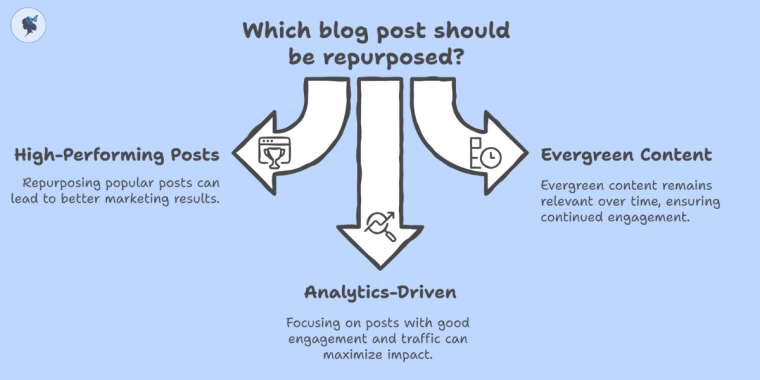
Choose high-performing posts, like popular destination guides or top-10 itineraries.
Prioritize evergreen content—tips, packing lists, top attractions—that stays relevant over time.
Check your analytics to focus on posts with good engagement, traffic, or inquiries.
Wander Women Hot Tip: If you’re unsure where to start, head to Google Analytics or Search Console and look for posts that already rank in the top 10 for their keywords or drive the most organic traffic. Those posts are prime repurposing material—and already have proven value to your audience.
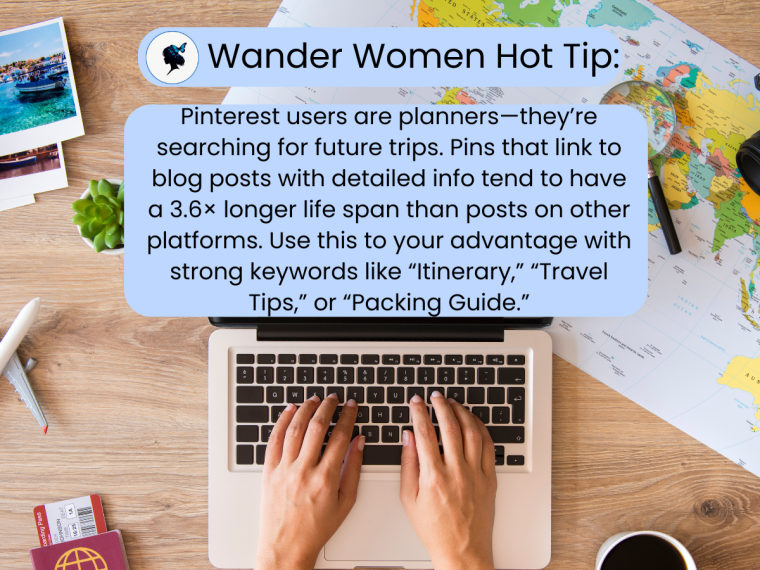
Wander Women Hot Tip: Pins that link to blog posts have a longer lifespan.
Formats to use:
Infographics (e.g. “Check-In Checklist for Bali”)
Tip list pins (e.g. “Top 5 Hidden Beaches in Bali”)
Photo + headline overlay (e.g. “How to Spend 48 Hours in Lisbon”)
Convert your blog headings into catchy pin titles.
Design in Canva—choose a vertical layout (1000×1500 px).
Include your URL, branded colors, and keywords.
Pin to relevant boards with optimized descriptions to enhance SEO.
Repurposing into Instagram & Facebook Posts
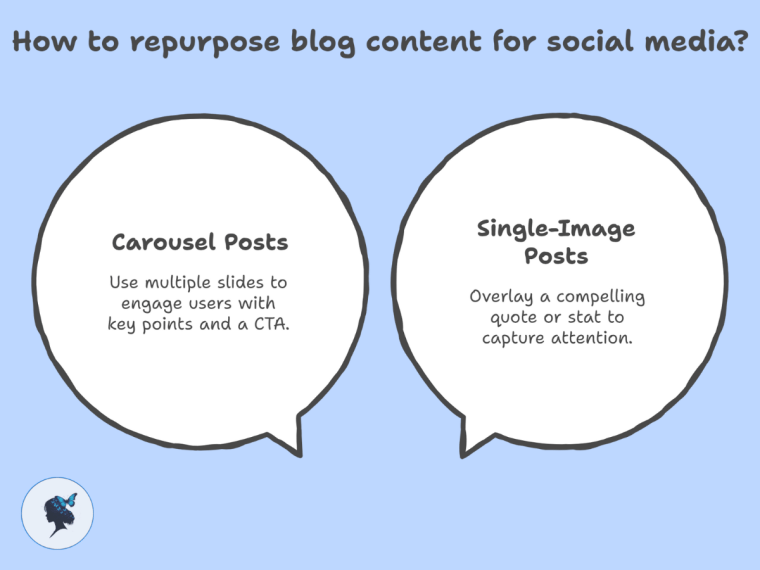
How to repurpose blog content for social media?
Use carousel posts:
Slide 1 = headline or hook (e.g. “3 Underrated Villages in Tuscany”)
Slides 2–4 = key points from the blog
Final slide = CTA with blog link (“Link in bio”)
For single-image posts, overlay a compelling quote or stat.
Craft captions that echo your blog intro, plus CTA (e.g. “Save this for your next trip!”).
Wander Women Hot Tip: Repurpose blog sections into individual slides, add emojis or icons for readability, and prompt users to “Swipe for tips” to boost time-on-post.
Bonus: Create a Full Content Series from One Blog
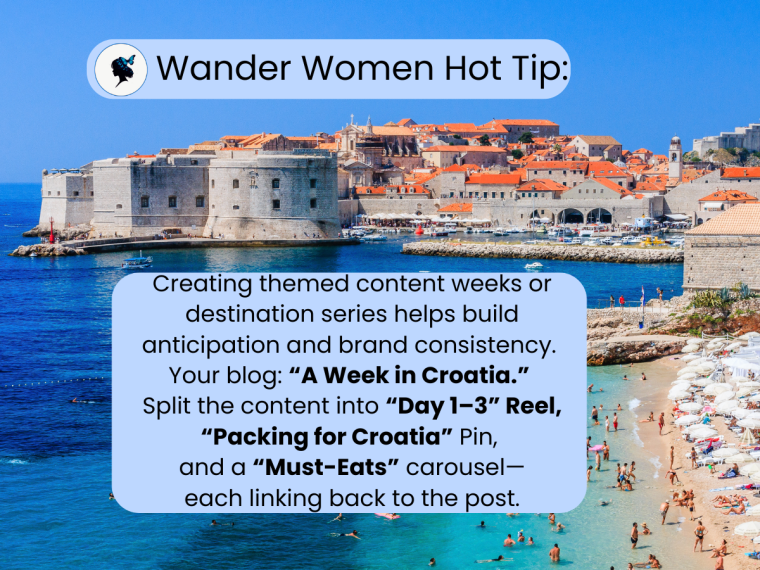
Wander Women Hot Tip: Create themed content.
Example schedule:
Monday: Reel or TikTok
Tuesday: Pinterest infographic
Wednesday: Instagram carousel
Thursday: Quote image in Stories with Q&A
Add the content sequence to your email newsletter with direct links.
You can reuse blog sections as tweets, Facebook updates, or LinkedIn posts, all pointing back to the full guide.
Tracking & Optimizing Your Repurposed Content
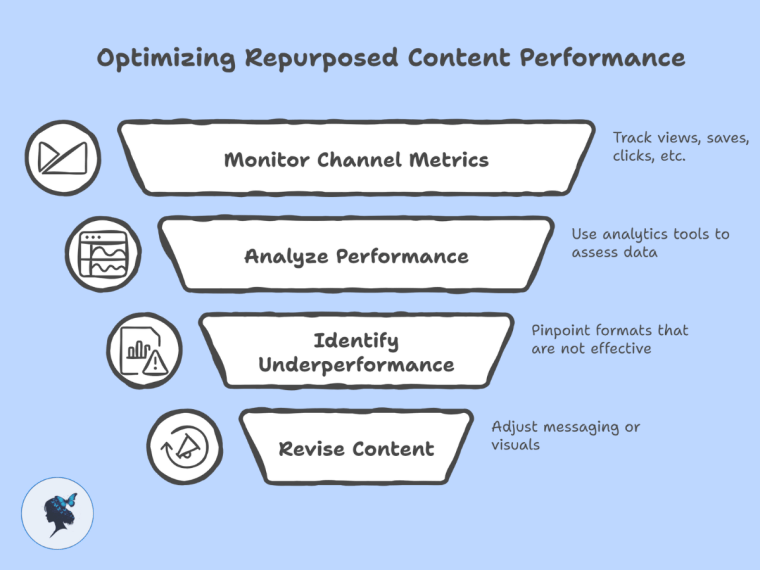
Optimizing repurposed content performance
Monitor performance per channel:
Reel views, saves, and follows
Pin impressions, clicks, and repins
Carousel engagement and link clicks
Use tools like Google Analytics, Pinterest Analytics, and IG Insights. A survey by Semrush found that 92% of marketers see analytics as essential for refining repurposed content.
Whenever a format underperforms, revisit the messaging or visual style and iterate.
Wander Women Hot Tip: Look at what formats drive not just reach, but clicks back to your blog. Content that performs well visually may still need optimization (e.g. clearer CTAs, better linking) to convert viewers into site visitors—and ultimately, clients or bookings.
Repurposing travel blog content into Reels, Pins, and social media posts allows you to work smarter—not harder. You’re multiplying your content’s reach, reinforcing brand visibility, and addressing multiple audience preferences with minimal extra effort.
Wander Women Hot Tip: Make repurposing part of your workflow. When you publish a blog post, immediately create a Reels version, a Pin-ready visual, and a carousel outline. That way, each blog becomes a mini content ecosystem.
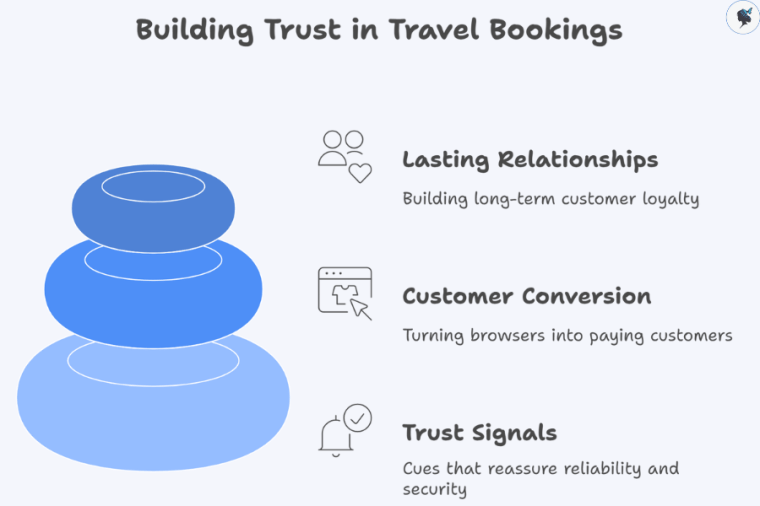
Trust signals are essential cues on your travel website that reassure visitors your business is reliable, secure, and worth booking with. In the travel industry, where purchases involve significant cost and planning, trust is crucial for turning casual browsers into paying customers.
Building trust in travel bookings
Research shows that 75% of travelers say a website’s trustworthiness strongly influences their decision to book. By incorporating strong trust signals, travel brands can reduce hesitation, increase conversions, and build lasting customer relationships.
Customer Reviews and Testimonials
Customer reviews are some of the most powerful trust signals because they provide social proof — real evidence from other travelers about your service quality.
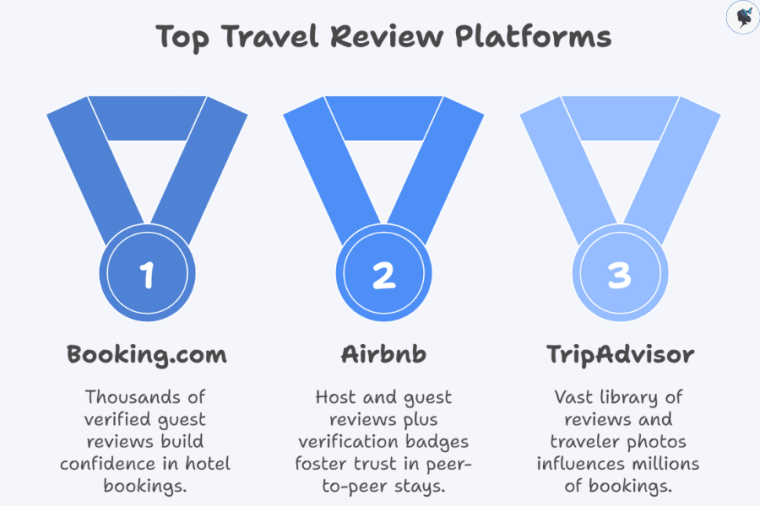
Top travel review platforms
Booking.com displays thousands of verified guest reviews, giving visitors detailed insights on hotels’ cleanliness, service, and amenities. This transparency builds confidence in bookings.
Airbnb uses host and guest reviews, plus verification badges like “Superhost,” helping users trust peer-to-peer stays.
TripAdvisor’s vast library of reviews and traveler photos makes it a go-to resource, influencing millions of bookings.
How to Implement: Send follow-up emails post-trip requesting reviews using platforms like Trustpilot or Yotpo. Embed review widgets dynamically on accommodation and booking pages. Encourage detailed, authentic feedback with guided questions to make reviews more useful.
Security and Privacy Indicators
Travelers must share sensitive information, so visible security signals greatly reduce booking abandonment. Baymard Institute reports that 19% of shoppers leave due to security concerns during checkout.
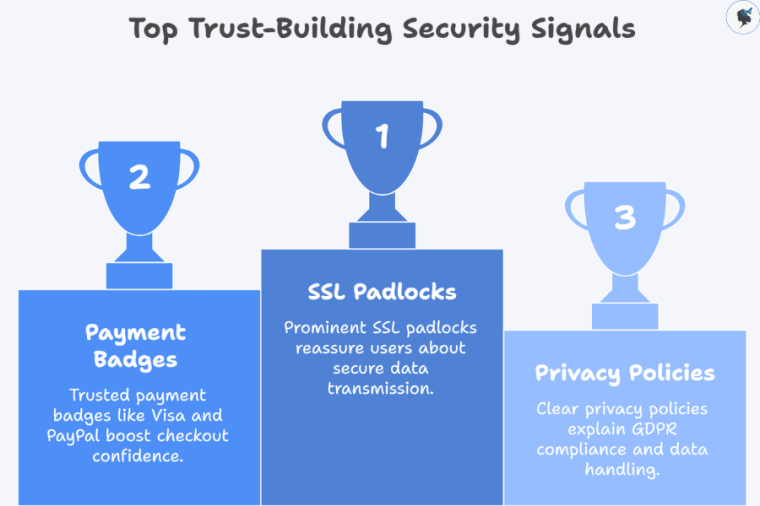
Top trust-building security signals
Expedia prominently displays SSL padlocks and payment provider logos like Visa and PayPal to reassure users.
Hotels.com uses recognized seals like Norton Secured and McAfee Secure during checkout.
How to Implement: Install SSL certificates (get free ones via Let’s Encrypt). Add trusted payment badges from Stripe or PayPal on checkout pages. Create a clear, accessible privacy policy explaining data protection measures.
Professional Design and Usability
A sleek, intuitive design reflects professionalism and reliability, making visitors more likely to trust your site. Since over 60% of travel bookings now occur on mobile devices, mobile responsiveness is critical.
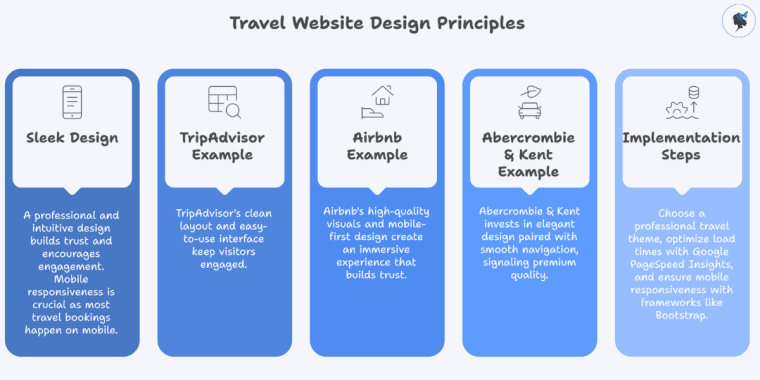
Travel website design principles
TripAdvisor’s clean layout and easy-to-use interface keep visitors engaged.
Airbnb’s high-quality visuals and mobile-first design create an immersive experience that builds trust.
Luxury operator Abercrombie & Kent invests in elegant design paired with smooth navigation, signaling premium quality.
How to Implement: Choose a professional travel theme from marketplaces like ThemeForest. Use Google PageSpeed Insights to optimize load times. Ensure mobile responsiveness with responsive frameworks like Bootstrap.
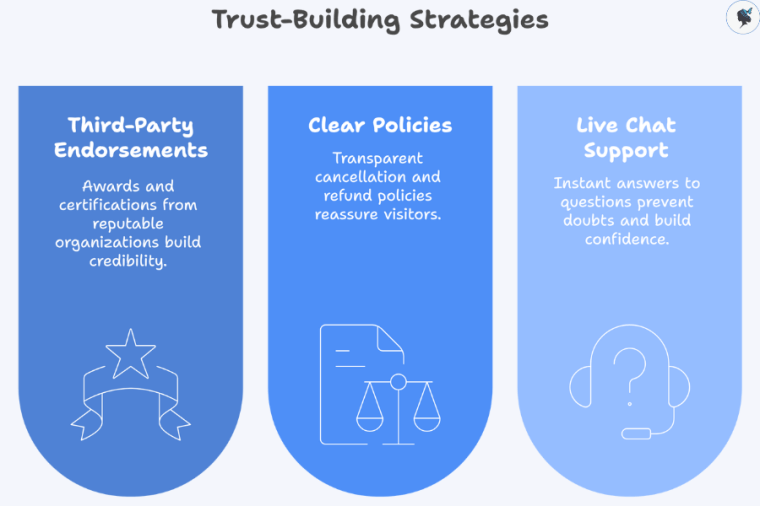
Trustworthy content and transparent policies are vital. Third-party endorsements, awards, and clear cancellation or refund policies reassure visitors. Providing live chat support answers questions instantly, preventing doubts.
Abercrombie & Kent showcases multiple industry awards, reinforcing authority.
Intrepid Travel highlights ethical certifications, appealing to socially conscious travelers.
Many companies, like Contiki, use live chat for immediate customer support.
How to Implement: Display award logos on your homepage. Publish detailed FAQ and policy pages. Use tools like Zendesk or Intercom for live chat.
Social Proof Beyond Reviews
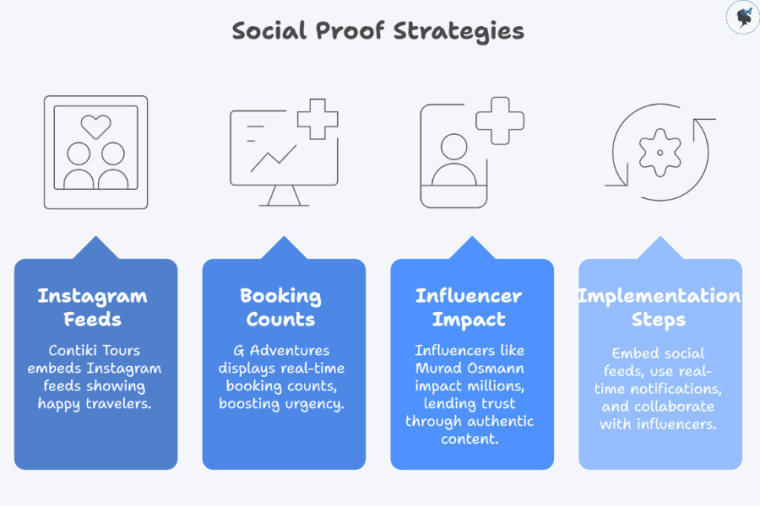
Real-time social proof, like live booking notifications and user-generated content, creates urgency and builds community trust. Influencer partnerships also amplify credibility.
How to Implement: Embed social feeds with Taggbox or Juicer. Use Fomo or Proof for real-time booking notifications. Collaborate with influencers using BuzzSumo or Upfluence.
Measuring the Impact of Trust Signals
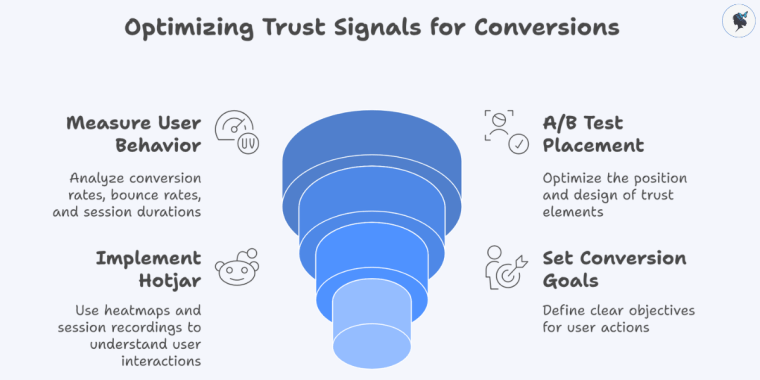
Measure how trust elements affect user behavior with conversion rates, bounce rates, and session durations. Use A/B testing to optimize placement and design.
Optimizing trust signals for conversions
A European travel company boosted bookings by 15% after moving testimonials above the fold. A US hotel chain lowered cart abandonment by adding security badges, verified with heatmaps.
How to Implement: Set conversion goals in Google Analytics. Analyze user behavior with Hotjar.
Conclusion
In travel, trust is currency. Incorporating reviews, security badges, professional design, transparent content, and social proof builds credibility and boosts conversions. With 70% of travelers prioritizing trust, embedding these signals is critical for sustained growth and customer loyalty.
In today’s digital-first world, travelers are no longer flipping through glossy brochures—they’re scrolling Instagram, watching YouTube vlogs, and following TikTok creators on dreamy adventures. Influencer marketing has become a powerful tool for travel brands to build trust, inspire wanderlust, and convert followers into guests.
Why? Because travelers believe travelers. Authentic experiences shared by real people resonate more than traditional ads. Whether you’re a boutique hotel, a tour operator, or a national tourism board, working with the right influencers can amplify your brand, tell your story beautifully, and drive real business results. Influencers provide a human face to your brand, which helps foster emotional connections with potential guests. This strategy not only builds visibility but also creates memorable storytelling opportunities that differentiate your offering in a crowded market.
Why Influencer Marketing Works in Travel
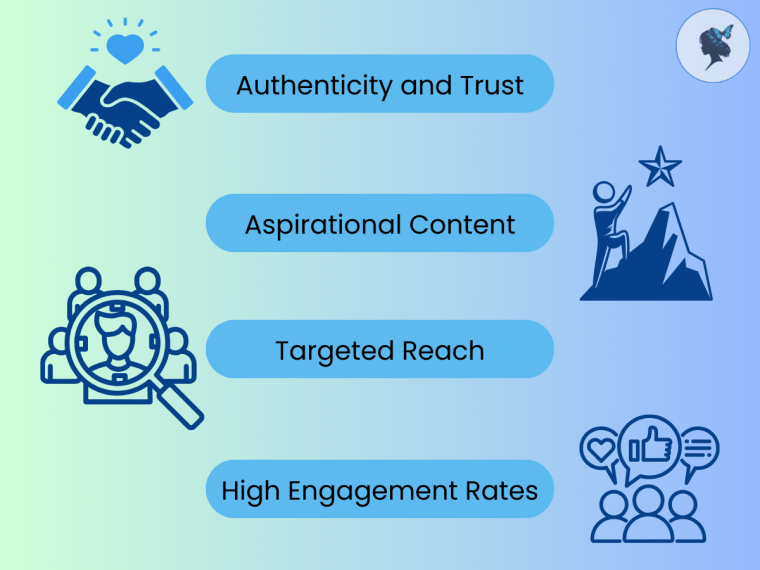
Travel is all about experience, emotion, and storytelling—and that’s where influencers shine.
Why Influencer Marketing Works in Travel
Authenticity and Trust
Influencers create content that feels personal and honest. Their audiences see them as peers, not advertisers, making their recommendations highly trusted. People follow influencers because they value their lifestyle and perspective. Unlike paid celebrity endorsements, influencer content often includes genuine reviews and unscripted moments that build credibility. Travel decisions are often emotional, and seeing someone enjoy a destination firsthand makes it easier for followers to imagine themselves there.
Aspirational Content
Through curated photos and immersive video, influencers paint vivid, emotional portraits of destinations and experiences that followers aspire to recreate. These experiences become travel goals for many people, especially when paired with compelling visuals and storytelling. The more an influencer brings a location to life, the more likely it is to stick in the minds of potential travelers. A well-shot sunset, unique cultural moment, or adventurous activity can turn into a saved post or a booked trip.
Influencers have niche audiences: solo female travelers, adventure seekers, luxury jet-setters, eco-tourists, digital nomads. Working with the right one helps you reach exactly who you’re trying to attract. Instead of casting a wide net, you can tailor your message to a very specific type of traveler. This increases the likelihood of engagement and conversion, as the audience feels your brand aligns with their identity and travel goals. Influencer partnerships also give insight into new market segments you may not have previously considered.
High Engagement Rates
Compared to branded content, influencer posts often achieve higher engagement. Followers are more likely to like, comment, save, and share. This interaction not only boosts reach but also provides direct feedback on what travelers find compelling. Comments often include travel planning questions, which is a strong signal of intent. Engagement creates social proof, further validating your brand’s appeal to prospective guests.
Choosing the Right Influencers
Not all influencers are created equal. Picking the right partner starts with clear goals.
Define Your Campaign Goals
Are you trying to boost bookings? Increase brand awareness? Drive traffic? Your goal determines the type of influencer and campaign structure. Clearly defining your goals upfront will help you measure success more accurately. It also ensures alignment between your expectations and the influencer’s creative execution. SMART goals (Specific, Measurable, Achievable, Relevant, Time-bound) are especially effective in guiding strategy.
Types of Influencers
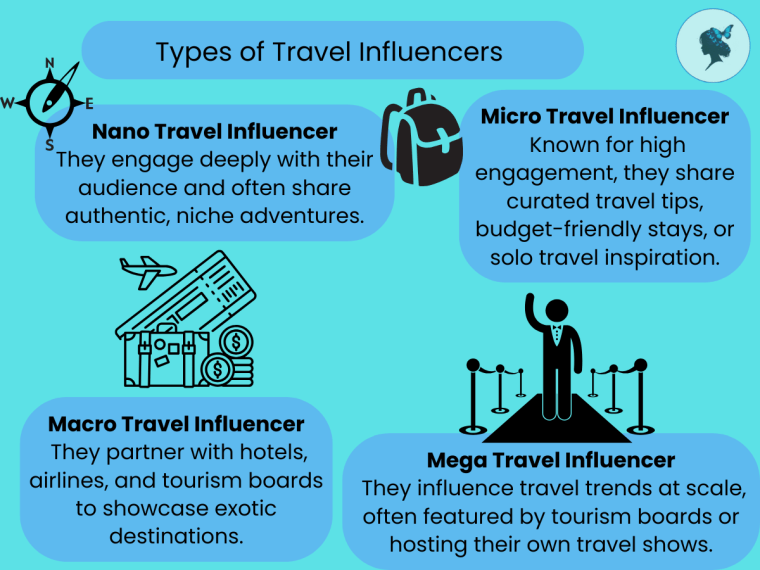
Types of travel influencers
Nano (1K–10K): Super niche, highly engaged audiences. Great for targeting local markets. They’re usually more affordable and have deeper relationships with their followers. Nano influencers often generate high comment rates and more personal interactions. Perfect for grassroots or community-based campaigns.
Micro (10K–100K): Strong influence within a niche (e.g., budget travel, luxury escapes). Their audiences are often very aligned with their content themes, leading to better targeting. They strike a balance between reach and engagement. Micro-influencers tend to offer strong ROI for travel brands.
Macro (100K–1M): Broader reach, polished content, good for regional / national campaigns. Their content is usually high quality and curated. While engagement may be lower, the audience size creates valuable exposure. Great for elevating brand credibility and professionalism.
Mega (1M+): Celebrities. Mass exposure, but often less engagement. These influencers work best for large-scale brand awareness campaigns. They tend to attract broad, mainstream audiences. Be cautious, though—costs are high and relevance may be lower.
Evaluate Fit
Look beyond the follower count:
Audience Relevance: Do their followers match your ideal traveler?
Engagement Rate: Do people like, comment, and share?
Aesthetic & Style: Does their tone match your brand?
Past Partnerships: Do they promote competitors? Are they professional?
Also assess how they engage with followers—do they answer questions and provide value? Review their posting frequency and content consistency. A trial campaign or gifting collaboration is a good way to evaluate fit before investing more.
Crafting a Winning Campaign
You’ve picked your influencer. Now, build a campaign that sets them (and you) up for success.
Crafting a Winning Campaign
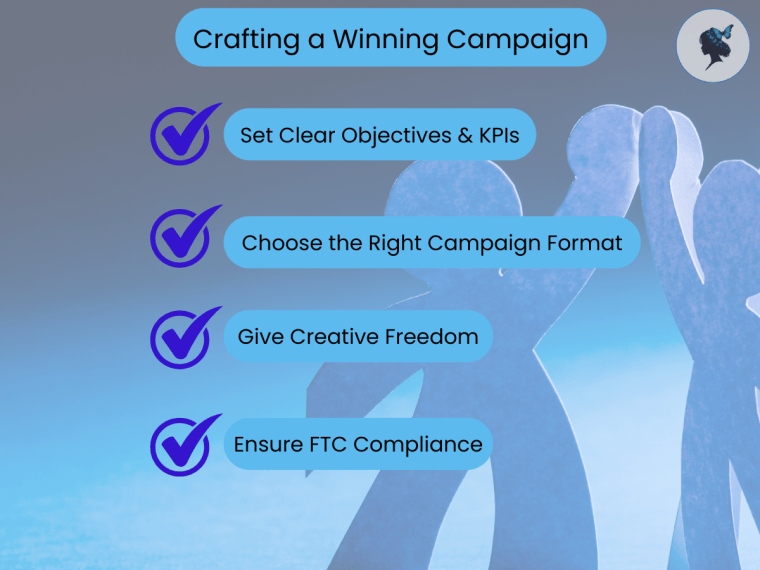
Set Clear Objectives & KPIs
Be specific: “Increase direct bookings by 15% from Gen Z travelers over 30 days” or “Drive 5,000 clicks to our summer promo page.” KPIs keep campaigns focused and help both parties stay accountable. They also enable you to benchmark performance and optimize future collaborations. Make sure influencers understand what success looks like before launch.
Hosted Stays or Press Trips: Let influencers experience your property or destination firsthand. This provides them with a genuine story to share, leading to better content and more trust. Make the itinerary photogenic and unique to encourage creative output. Offer perks like spa treatments or exclusive access for added wow-factor.
Social Media Takeovers: They post directly from your accounts for a day. It gives your audience fresh, behind-the-scenes content while showcasing your brand through a new lens. This also grows trust and visibility. Be sure to promote the takeover in advance.
Sponsored Posts: Influencers create content on their channels. These posts can be photos, videos, or reels that highlight your property or experience. Sponsored content is great for expanding reach and storytelling. Ensure you review drafts to maintain brand alignment.
Affiliate Links or Promo Codes: Track direct conversions from influencer efforts. These allow precise ROI measurement. Influencers get a commission or incentive, motivating them to drive actual sales. Use tools like Refersion or Rewardful for affiliate setup.
Give Creative Freedom
Influencers know their audience. Provide brand guidelines but allow flexibility—forced scripts hurt authenticity. Trust them to craft stories that resonate. Include must-have messages, but let them decide the delivery. Collaboration, not control, yields the best content.
Ensure FTC Compliance
Influencers must disclose paid partnerships clearly with hashtags like #ad or #sponsored. This builds trust and avoids legal issues. Non-disclosure can result in penalties and erode audience trust. Educate influencers on your expectations regarding transparency. Include compliance in your contracts.
Platforms and Content Types That Work
Choose platforms based on your target audience and content style.
Instagram
Ideal for aspirational travel imagery: sunsets, resorts, food, and poolside luxury.
Use Stories, Reels, and carousels.
Why visuals matter: Instagram is where travelers discover and save future trip ideas. It appeals to millennials and Gen Z dreamers. Its visual-first nature makes it perfect for inspiring destination envy. Strong photo editing and creative captions drive engagement. Use hashtags and location tags to increase reach.
YouTube
Long-form video content: reviews, vlogs, city guides.
SEO-rich and evergreen.
Why visuals matter: Viewers watch to plan real trips. Great for detail-driven planners and adventure seekers. Videos stay relevant for months or years. YouTube search is a key discovery channel for travel planning. Collaborate on packing lists, tour reviews, or day-in-the-life content.
TikTok
Fast-paced, fun, behind-the-scenes content.
Trending audio and storytelling.
Why visuals matter: Authenticity and entertainment win. It attracts Gen Z travelers who want off-the-beaten-path ideas and real experiences. TikTok rewards creativity over polish. Even short clips can go viral, generating massive exposure. It’s ideal for promoting quirky experiences or behind-the-scenes access.
Blogs
Ideal for evergreen content like destination guides, hotel reviews, and itineraries.
Great for SEO and link-building.
Why visuals matter: Strong images support content and improve search performance. Readers are often in the planning phase and ready to book. Blog readers typically have high intent. Photos and maps increase dwell time and conversion. Encourage influencers to link to your booking or info page.
Pinterest
Vertical pins (2:3 ratio) for dream-trip inspiration.
Popular for weddings, honeymoons, and bucket-list trips.
Why visuals matter: Pinterest attracts planners—mostly women—looking for aesthetic, save-worthy travel ideas. Pins have a long shelf life and can drive traffic for months. Rich pins improve engagement and conversion. Ideal for itinerary boards, seasonal promotions, and bucket lists.
Numbers matter. Track key metrics to understand impact and optimize future efforts.
Key Metrics
Key Metrics
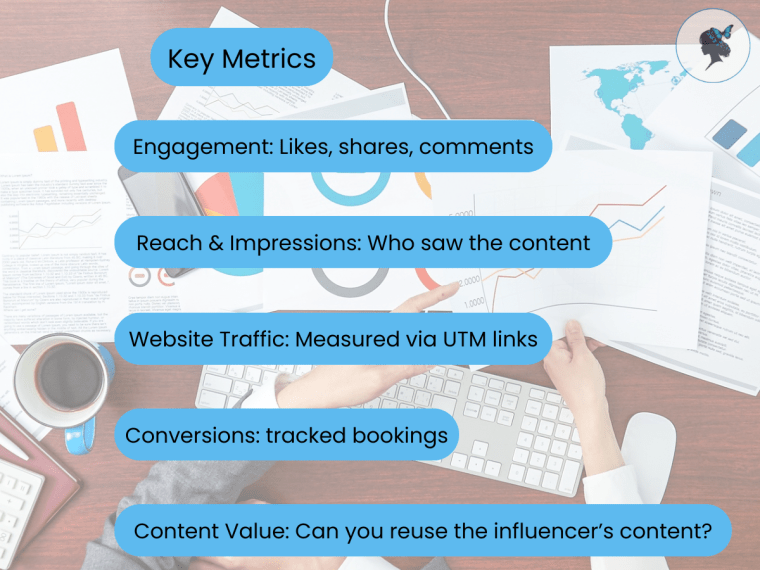
Engagement: Likes, shares, comments High engagement indicates content is resonating with the audience. Look at the ratio of engagement to followers to assess true impact. Compare engagement across multiple posts to spot trends.
Reach & Impressions: Who saw the content Reach tells you how many unique users saw the post, while impressions count all views. These metrics help evaluate brand awareness. Use these numbers to assess the value of exposure.
Website Traffic: Measured via UTM links UTM codes allow you to track traffic from specific influencer posts. Add campaign parameters using Google’s Campaign URL Builder. Analyze traffic in Google Analytics under “Acquisition > Campaigns.”
Conversions: Promo code redemptions or tracked bookings Assign unique discount codes or booking links to each influencer. This shows direct impact and allows for fair compensation models. Combine this with post-purchase surveys to capture attribution.
Content Value: Can you reuse the influencer’s content? High-quality images and videos can be repurposed for ads, newsletters, and your website. Request usage rights in advance. Content reuse increases ROI without additional production costs.
Tools for Tracking
Bitly or Rebrandly: Track link clicks Shorten custom URLs for easy sharing and clickable stats. This also helps with branding and aesthetics. Use unique links for each influencer.
Influencer Dashboards: Some offer post-campaign reports Many influencer platforms offer analytics dashboards with audience insights and campaign summaries. Use these to compare results across multiple influencers. Data transparency helps in post-campaign evaluations.
Affiliate Platforms: Track conversions from specific creators Tools like Refersion, Impact, and Rewardful help manage and pay influencer commissions. These platforms allow you to track clicks, conversions, and payouts in one place. It’s a great option for long-term or performance-based campaigns.
Building Long-Term Relationships
One-off posts are fine—but long-term partnerships bring deeper results.
Ambassador Programs
Instead of single posts, invite influencers to represent your brand over months. This increases trust and visibility. Audiences get more consistent exposure to your brand, which helps build recognition. Ambassadors can participate in seasonal campaigns or be featured across multiple platforms. This also deepens their familiarity with your offerings.
Content Licensing
Negotiate content rights so you can reuse influencer visuals in your ads, email campaigns, or website. Reusing content saves you money on professional photography and video. It also reinforces authenticity by showing real guests and experiences. Make sure terms are clear—include duration, usage rights, and placement options.
Mutual Growth
Support the influencer’s goals too—feature them in your newsletter, cross-promote, and engage with their community. When you elevate their work, you foster goodwill and deeper collaboration. Offer perks like early access to new packages or exclusive event invites. Building trust creates more genuine advocacy.
Real-Life Influencer Examples
@TheBlondeAbroad(Kiersten Rich): A travel influencer focused on solo female travel, with beautifully curated content, blog guides, and Instagram posts. She appeals to millennial and Gen Z women who prioritize safety, aesthetics, and independence. Her blog and email list drive significant booking power for tour companies and boutique hotels.
ExpertVagabond (Matt Karsten): Adventure and photography-focused influencer with an engaged YouTube and Instagram audience. Known for hiking, diving, and off-the-beaten-path destinations. Brands working with him typically target thrill-seeking, eco-conscious travelers.
@Gypsea_Lust(Lauren Bullen): A luxury travel and lifestyle influencer with a dreamy, aspirational Instagram feed. Her audience skews toward high-income couples and honeymooners. Resorts and tourism boards use her visual storytelling to spark romantic travel dreams.
Common Pitfalls to Avoid
Save yourself time, money, and headaches by avoiding these mistakes.
Common Pitfalls to Avoid
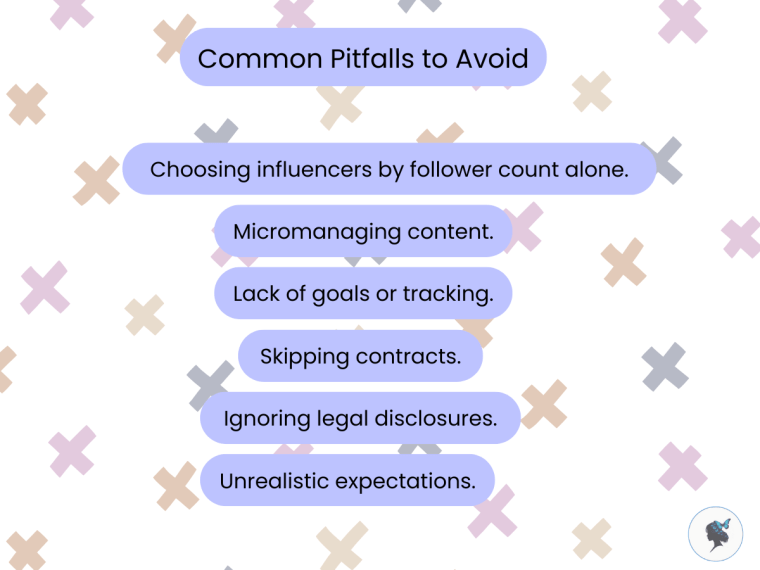
Choosing influencers by follower count alone. A large following doesn’t guarantee relevance or engagement. Instead, evaluate metrics like comment quality and content alignment. Small audiences often drive more loyal actions.
Micromanaging content. Over-controlling limits creativity and authenticity, which can damage both your and the influencer’s brand. Set guidelines but encourage organic storytelling. Trust their knowledge of what works with their audience.
Lack of goals or tracking. Without clear KPIs, you won’t know if your campaign succeeded or failed. Always outline your objectives in the brief and track performance from day one. Even awareness-focused campaigns should include metrics like reach and engagement.
Skipping contracts. Always have a written agreement that includes deadlines, deliverables, compensation, and content rights. Contracts protect both sides and clarify expectations. Include clauses about cancellation, revisions, and disclosures.
Ignoring legal disclosures. Influencers must use #ad, #sponsored, or platform-specific disclosure tools. Not doing so can lead to fines and reduced trust. Be proactive about compliance—it’s part of professional collaboration.
Unrealistic expectations. Influencers can’t guarantee viral posts or immediate bookings. Success is often cumulative and may take multiple campaigns. Be patient and track both short- and long-term outcomes.
Real-Life Examples of Influencer Marketing Success
They partnered with YouTubers and Instagrammers to showcase Iceland’s culture, nature, and sustainable travel experiences. The influencers documented hiking, geothermal spas, and food tours. The campaign reached over 6 million people and contributed to a measurable rise in off-season visits.
Contiki targeted 18–35-year-old adventure travelers by using micro-influencers to create vlogs, Instagram stories, and reels about group travel experiences. These influencers participated in guided tours and shared authentic reactions. The result: a 21% spike in Gen Z bookings during a three-month period.
Conclusion
Influencer marketing offers travel brands a high-impact way to reach new audiences, tell powerful stories, and drive bookings. The key is choosing the right partners, aligning them with your goals, and giving them space to create real, resonant content.
As travelers look for authenticity, peer-to-peer inspiration, and relatable experiences, influencers will continue to play a critical role in travel discovery and decision-making. When done right, this strategy is not only cost-effective but also scalable. Influencers become brand storytellers who shape how your destination or service is perceived.
In the competitive world of travel content, standing out means more than just writing well — it means showing the world what you see. This post explores why visual storytelling is essential, how to create stunning travel photos and videos, and where to share them for maximum impact.
Why Visual Content Matters in Travel Marketing
Visual content isn’t just eye-catching — it’s effective.
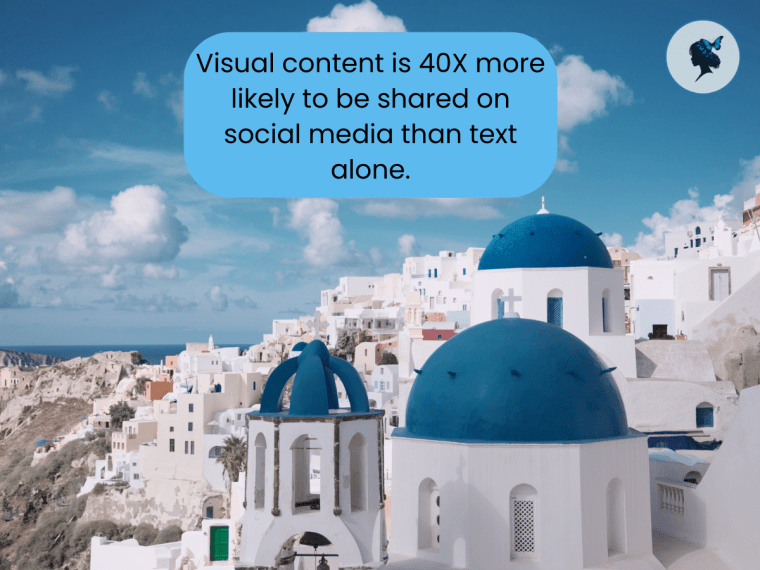
Visual content is 40X more likely to be shared on social media than text alone.
In travel, visuals inspire emotions, spark curiosity, and help potential travelers imagine themselves in a destination.
Real-Life Example:
National Geographic (@natgeo) has over 277M Instagram followers, largely thanks to their powerful use of storytelling through images. Their consistent mix of high-resolution photography and informative captions drives massive engagement.
Capturing Stunning Travel Photography
You don’t need a pro camera to get started. Some of the most viral travel shots were taken on smartphones. What matters most is light, composition, and emotion.
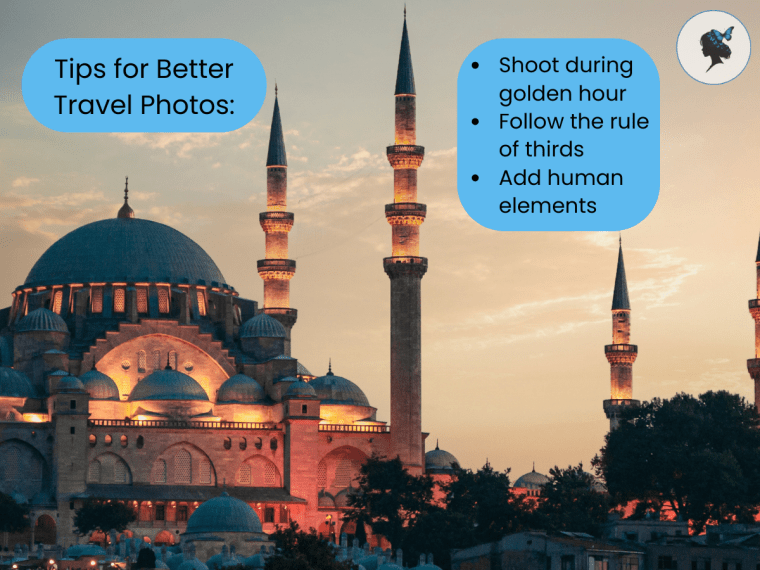
Tips for Better Travel Photos:
Shoot during golden hour (early morning or late afternoon).
Follow the rule of thirds for more balanced compositions.
Add human elements to give scale and storytelling depth.
@gypsea_lust (Lauren Bullen) built a following of over 2 million using dreamy pastel visuals and consistent filters. Her photos are often set in exotic locations and edited with a soft, signature tone.
Creating Engaging Travel Videos
Video is the fastest-growing form of content across platforms.
Platforms like Reels, TikTok, and YouTube Shorts thrive on short, immersive clips — and travel creators are using these to show everything from flight hacks to hidden waterfalls.
How to Shoot Compelling Videos:
Start with a hook (e.g., “I found a secret beach in Thailand…”)
Use natural movement and ambient sound for realism
Kara and Nate grew their YouTube to over 4.25M subscribers by sharing cinematic, personable travel vlogs. Their storytelling-first approach sets them apart from typical highlight reels.
Where and How to Share Your Visual Content
Choosing the right platform — and optimizing for it — is key.
Consistency builds trust. Your audience should instantly recognize your content, whether it’s a blog post, Instagram Story, or YouTube video.
Elements to Define:
Color palette: Pick 3–5 colors that reflect your travel style (earthy, bright, pastel, etc.)
Typography: Use the same fonts for overlays or thumbnails
Preset/Filter: Apply the same editing preset to all your photos for a cohesive feed
Example:
The Bucket List Family maintains a bright, clean aesthetic with family-centered content. Their visuals are uplifting, playful, and immediately recognizable.
Monetizing Your Travel Visuals
Once you’ve built a portfolio of high-quality images and videos, it’s time to turn your work into revenue.
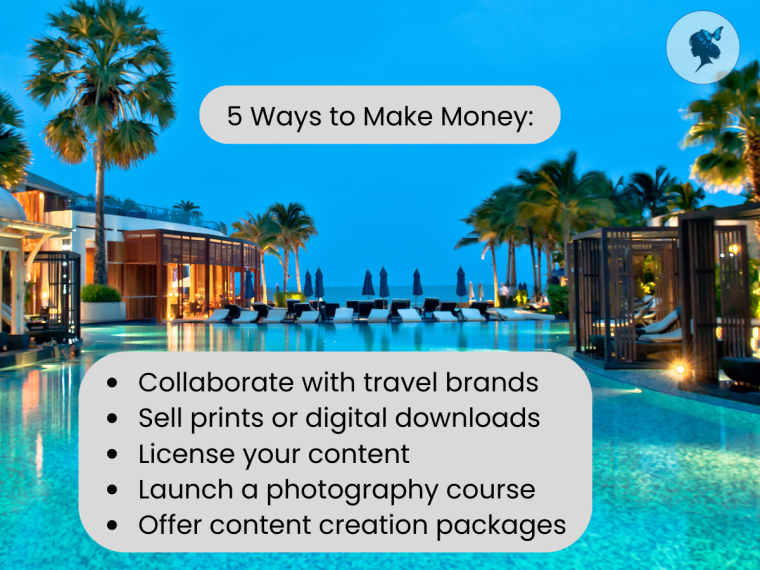
5 Ways to Make Money:
Collaborate with travel brands on sponsored posts
Sell prints or digital downloads via SmugMug or Etsy
Launch a photography course or video editing workshop
Offer content creation packages to hotels or tour companies
Final Thoughts
Visual content is not just decoration — it’s the core of how we experience travel online. A stunning photo can ignite wanderlust. A well-edited video can sell a destination.
Whether you’re a beginner or a seasoned travel blogger, sharpening your visual skills will help you build a more engaging, memorable, and profitable presence online.
Ready to Level Up?
Have a favorite app, editing tip, or travel shot you’re proud of? Drop it in the comments — let’s build a creative community that inspires each other!
Creating a Social Media Calendar for Your Travel Business
In the fast-paced world of digital marketing, consistency is key—especially for travel brands looking to inspire, engage, and convert. One of the most effective tools to stay organized and strategic is a well-structured social media calendar. This guide will walk you through everything you need to know to create and maintain a high-performing calendar for your travel business, including templates, content ideas, and platform-specific best practices.
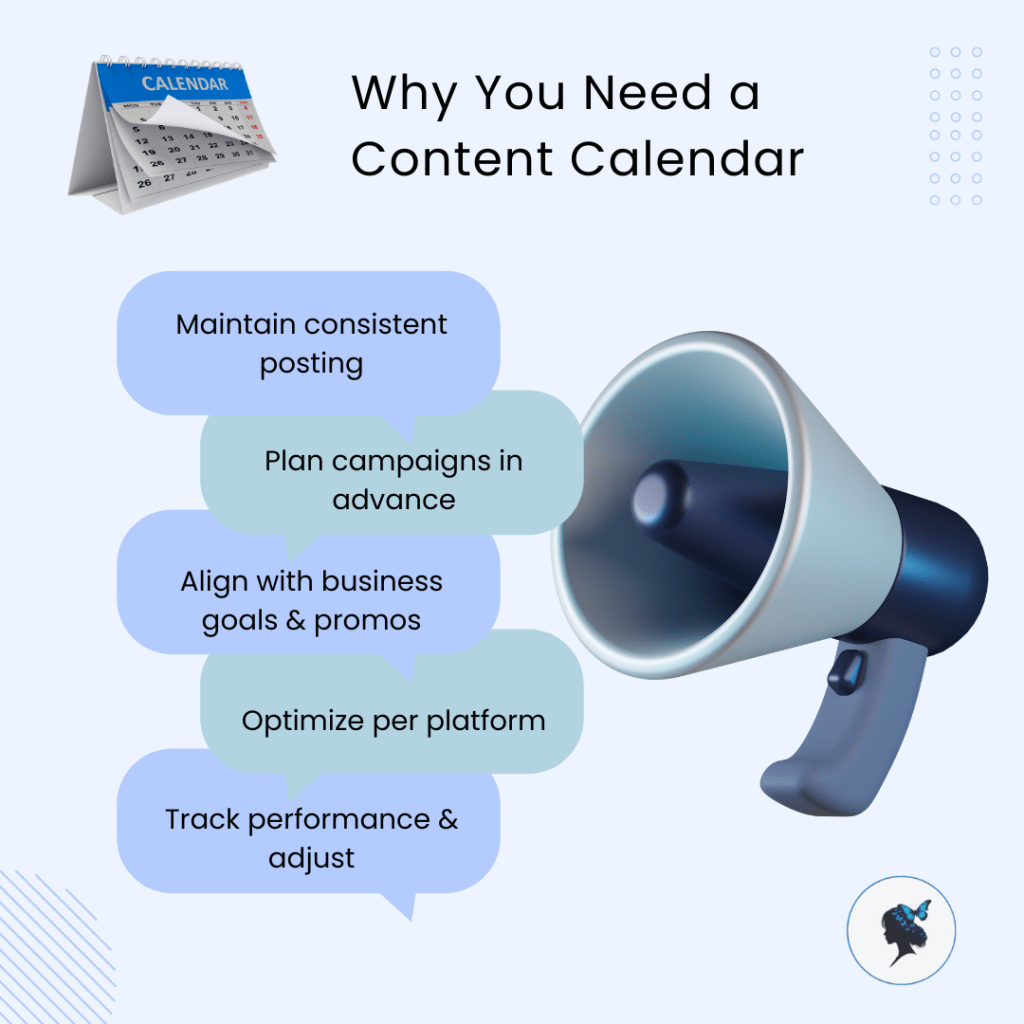
Why Your Travel Business Needs a Social Media Calendar
The 2024 B2B Content Marketing Trends report highlights that 53% of top-performing marketers attribute their success to having a documented strategy.
A content calendar helps you:
Maintain consistent posting
Plan campaigns in advance
Align posts with business goals and promotions
Ensure platform-specific optimization
Track performance and make data-driven adjustments
Consistency breeds familiarity, which is essential for building trust in the travel industry. Planning ahead means fewer missed opportunities around seasonal trends and booking patterns. For example, a travel brand could plan a winter promotion campaign for ski resorts well in advance to maximize visibility.
Imagine you’re promoting a boutique eco-lodge in Costa Rica. By using a calendar to map out posts in sync with the dry season (December to April), you ensure timely visibility for travelers researching their next trip.
Step 1: Set Clear Social Media Goals
Start with defining what success looks like for your business. Common travel-related goals include:
Driving traffic to your website or booking platform
Building brand awareness
Growing your email list
Increasing engagement (likes, shares, saves)
Generating leads or direct bookings
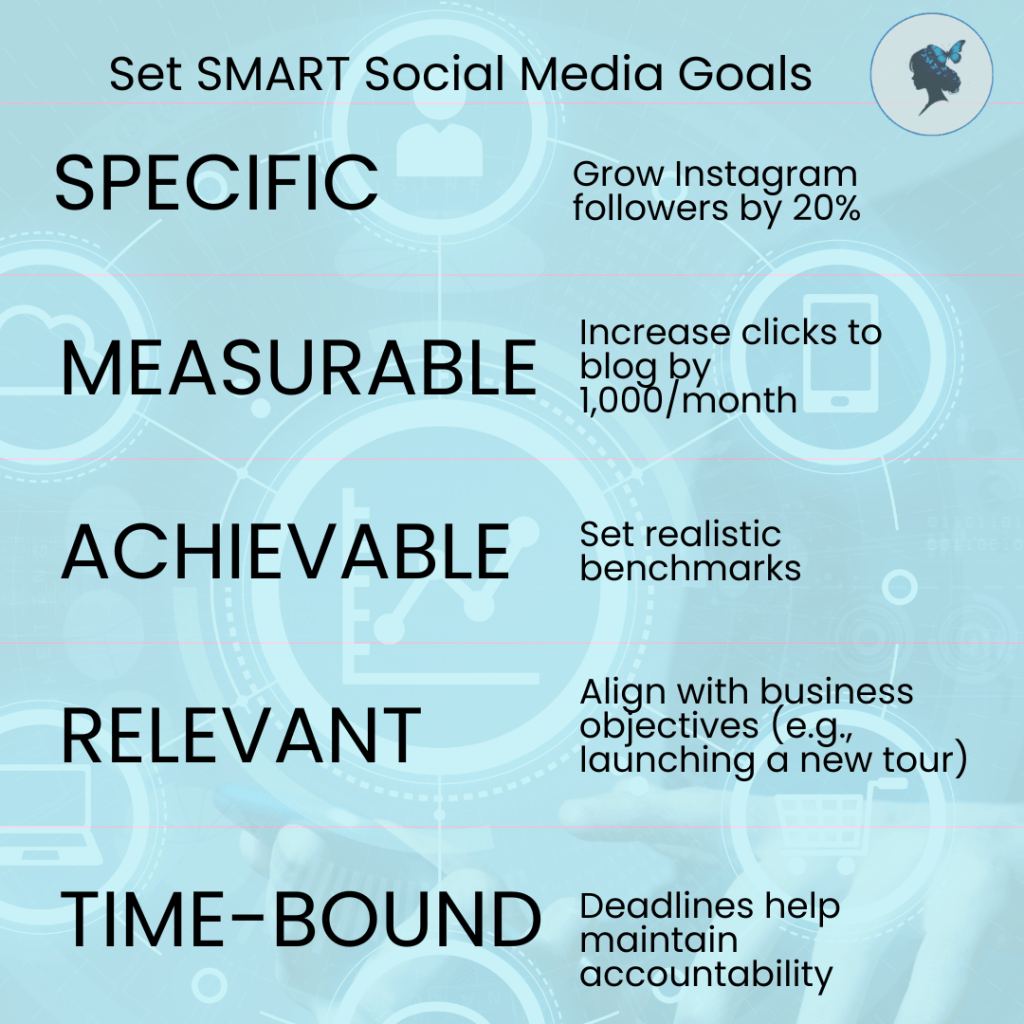
Use the SMART goal framework:
Specific – “Grow Instagram followers by 20%”
Measurable – “Increase clicks to blog by 1,000/month”
Achievable – Set realistic benchmarks
Relevant – Align with business objectives (e.g., launching a new tour)
Time-bound – Deadlines help maintain accountability
Clarity on your social media goals creates a sense of direction and enables consistent performance tracking. When everyone on your marketing team knows the desired outcomes, effort and creativity can be better aligned.
A boutique safari company might aim to generate 200 qualified leads through Facebook Ads over three months, using a lead magnet like a free wildlife travel guide.
Not every platform will suit your brand equally. Here’s a quick breakdown for travel businesses:
Platform
Strengths
Audience
Instagram
Visual storytelling, reels, UGC
18–34
Facebook
Groups, events, ads, long-form posts
25–54
TikTok
Short videos, trends, virality
16–34
Pinterest
Trip planning, aspirational content
25–45 (women)
YouTube
Long-form video, vlogs, tutorials
18–44
Twitter/X
News, trends, industry updates
25–49
Choose 2–3 platforms to focus on based on your ideal customer profile. If you’re targeting Gen Z backpackers, TikTok and Instagram are essential; for luxury cruises, Facebook and Pinterest may offer better returns. Always assess the engagement levels and ROI of each platform quarterly.
Focusing your resources on platforms that match your audience leads to higher ROI and more relevant engagement. Avoid the trap of trying to be everywhere at once. Quality trumps quantity, especially when you’re managing a lean marketing team.
A travel agency offering yoga retreats in Bali may see better traction on Pinterest and Instagram due to their visual nature and planning-oriented audiences.
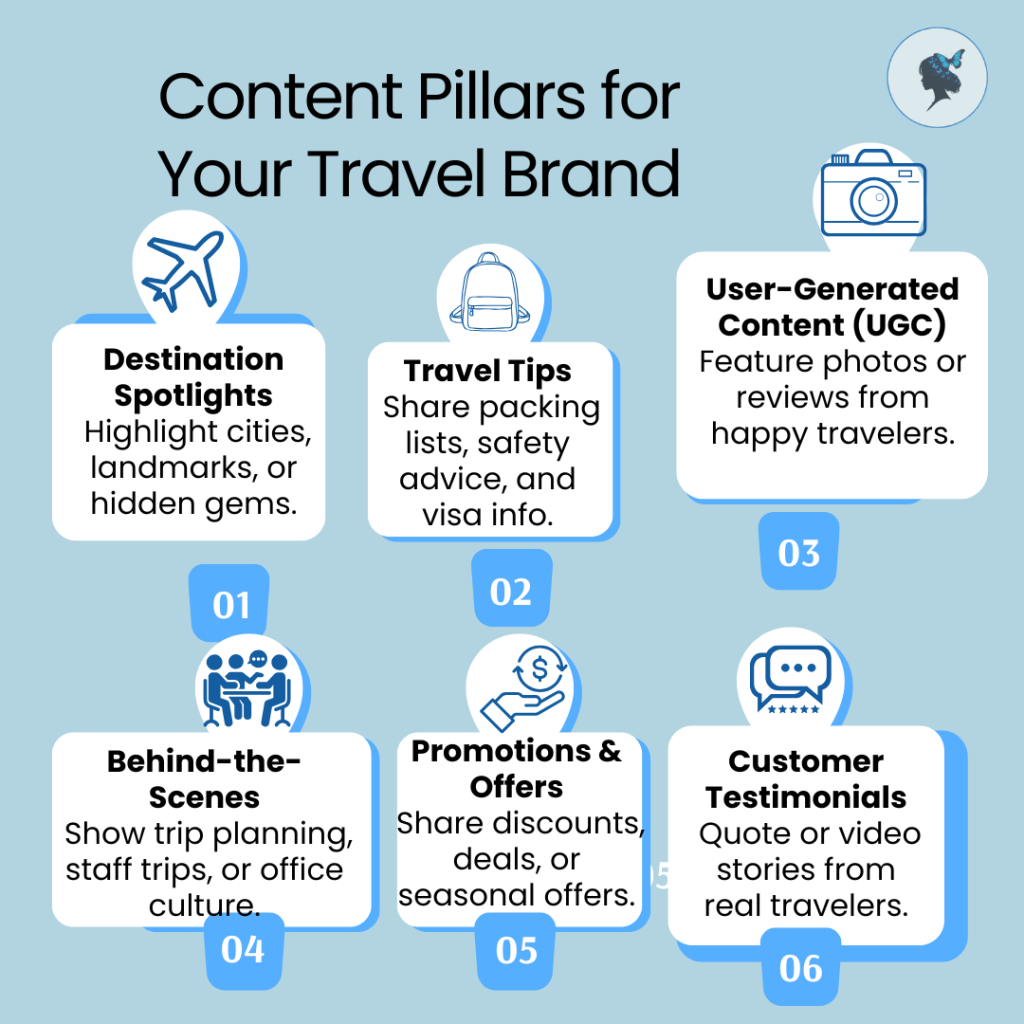
Destination Spotlights – Highlight specific locations or attractions
Travel Tips – Packing guides, visa info, travel hacks
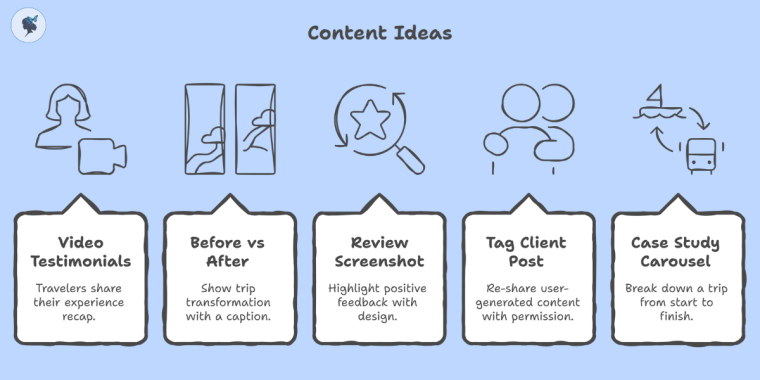
User-Generated Content (UGC) – Reposts from happy customers
Behind-the-Scenes – Office life, team travels, planning process
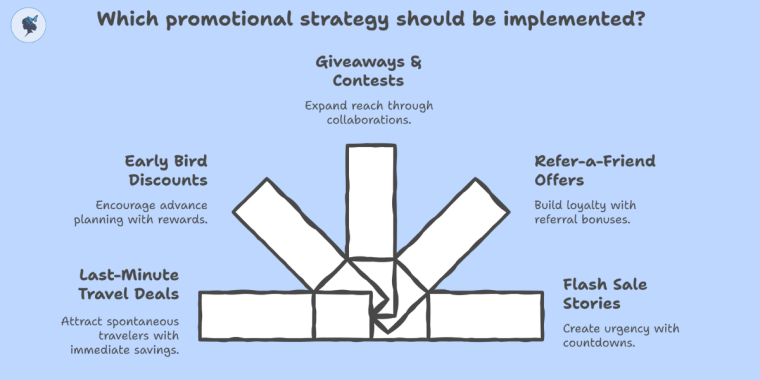
Promotions & Offers – Limited-time deals, early bird specials
Customer Testimonials – Stories, quotes, or video clips
Each pillar serves a unique purpose: driving inspiration, delivering value, and fostering trust. Variety ensures you appeal to different segments of your audience and keep your feed dynamic. Mapping these categories across the month ensures balanced, evergreen and timely content.
According to Demand Metric, content marketing generates over three times as many leads as outbound marketing and costs 62% less.
A South American adventure brand might rotate between Machu Picchu spotlights, backpacker visa tips, and traveler testimonials to appeal to both first-timers and return explorers.
Use a spreadsheet, Google Calendar, Trello, or a tool like Later or Planoly.
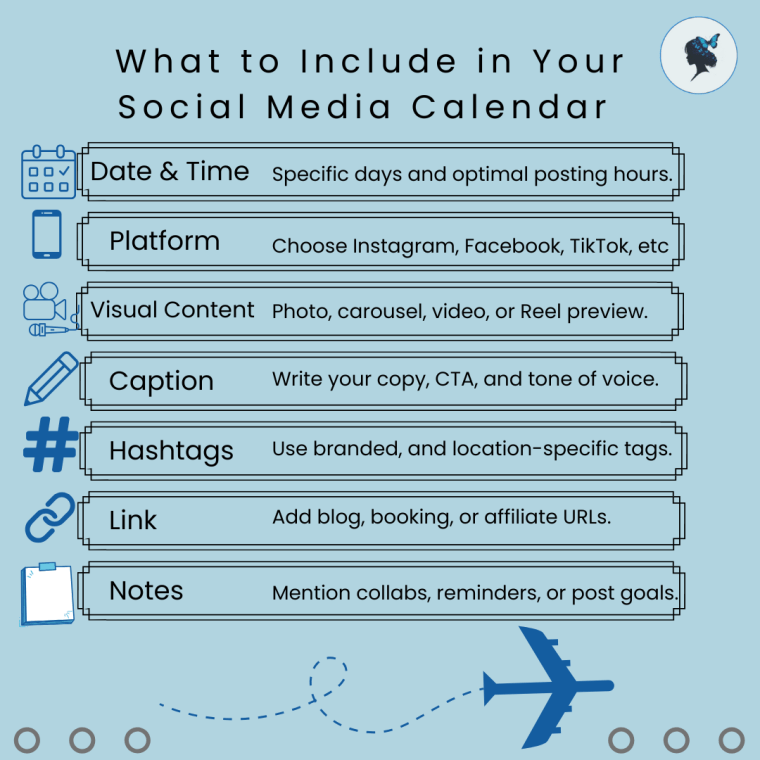
Each post should include:
Date & time
Platform
Visual content (photo, video, carousel, reel)
Caption
Hashtags
Link (if applicable)
Notes (e.g., collaborator tags, campaign theme)
Building a strong structure allows for easy collaboration and reduces last-minute scrambling. Color-coding by content pillar helps you spot gaps and ensure a healthy content mix. Regular check-ins on your calendar’s structure can also help you reallocate resources during peak travel seasons.
For a Mediterranean cruise line, the calendar may rotate destinations weekly—Italy on Mondays, Greece on Wednesdays, and Turkey on Fridays—with corresponding photo assets and themes.
Step 5: Determine Optimal Posting Frequency
Posting frequency depends on your capacity and audience expectations:
Platform
Recommended Frequency
Instagram
3–5 times/week + Stories daily
Facebook
3–5 times/week
TikTok
5–7 times/week
Pinterest
5–10 pins/day
YouTube
1–2 videos/week
Twitter/X
1–3 tweets/day
Overposting can lead to burnout, while underposting can make you forgettable. Test and adjust your schedule based on engagement data. Use platform analytics to identify when your audience is most active and focus on maintaining those rhythms.
According to Hootsuite’s 2025 data, brands that post consistently—about 3 to 5 times per week—tend to see better engagement compared to those posting less frequently.
A Caribbean resort might notice their audience engages most with sunrise beach reels posted early in the week, leading them to prioritize Monday morning uploads.
Step 6: Incorporate Seasonal and Cultural Moments
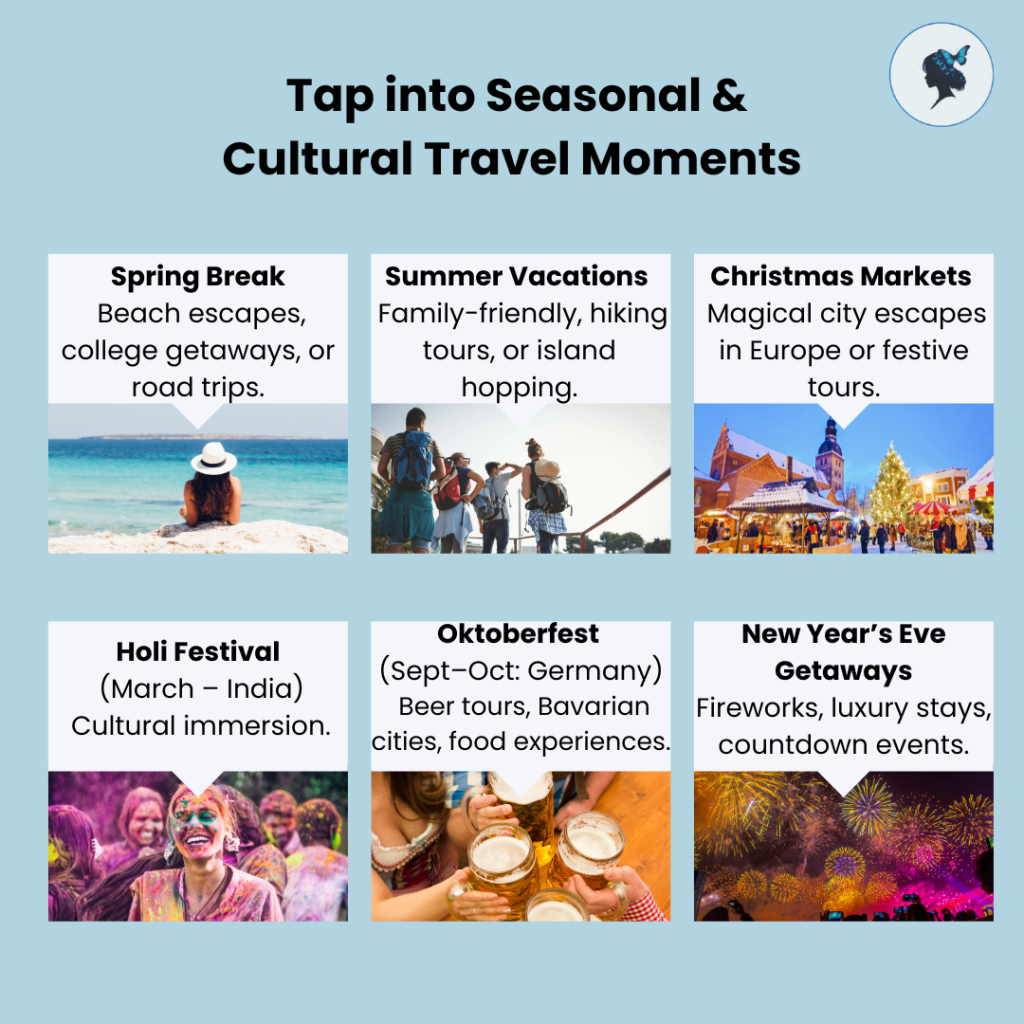
Travel content thrives when it’s timely. Incorporate seasonal trends, holidays, and regional events into your content plan. Think spring break, summer vacation, Christmas markets, or regional festivals like Holi in India or Oktoberfest in Germany.
These timely posts resonate because they align with what travelers are already thinking about. It also shows cultural awareness, which helps build authenticity and relevance.
Google has reported significant increases in travel-related searches during peak holiday seasons.
A travel company that offers tours in Japan could feature cherry blossom content in March and April, including a countdown, traveler photos, and booking tips.
Step 7: Plan for Engagement, Not Just Broadcasting
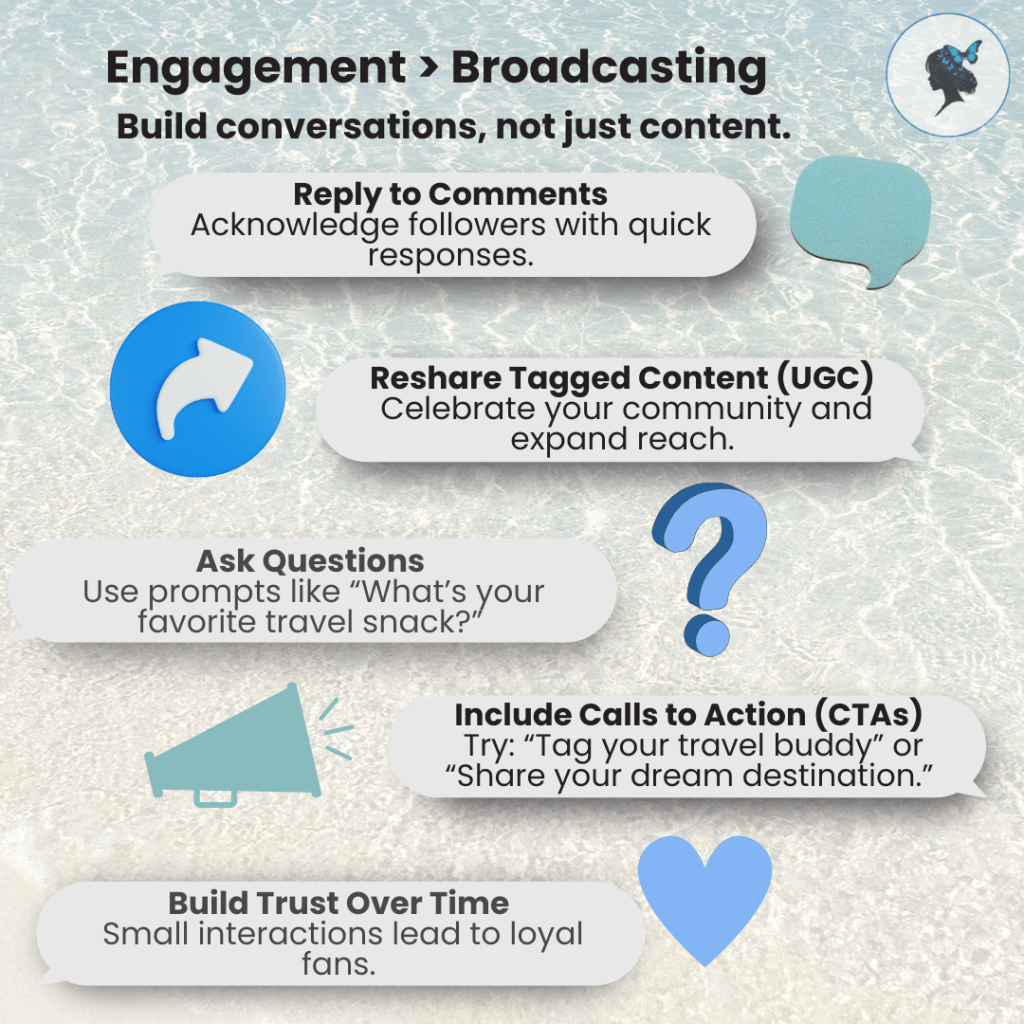
Social media is a two-way conversation, not just a place to push content. Schedule time to reply to comments, reshare tagged content, and ask questions that spark discussion. Engagement builds community, improves reach through algorithms, and fosters trust.
Don’t underestimate the value of small interactions—they create brand advocates over time. Prompt engagement with CTAs (calls to action) such as “Tag a travel buddy” or “Tell us your favorite beach!”
Around 73% of social users agree if a brand doesn’t respond on social, they’ll buy from a competitor, according to Sprout Social.
A hiking tour brand could post a breathtaking photo of Patagonia and ask, “What’s your dream trekking destination?”—then reply personally to every comment.
Step 8: Repurpose High-Performing Content
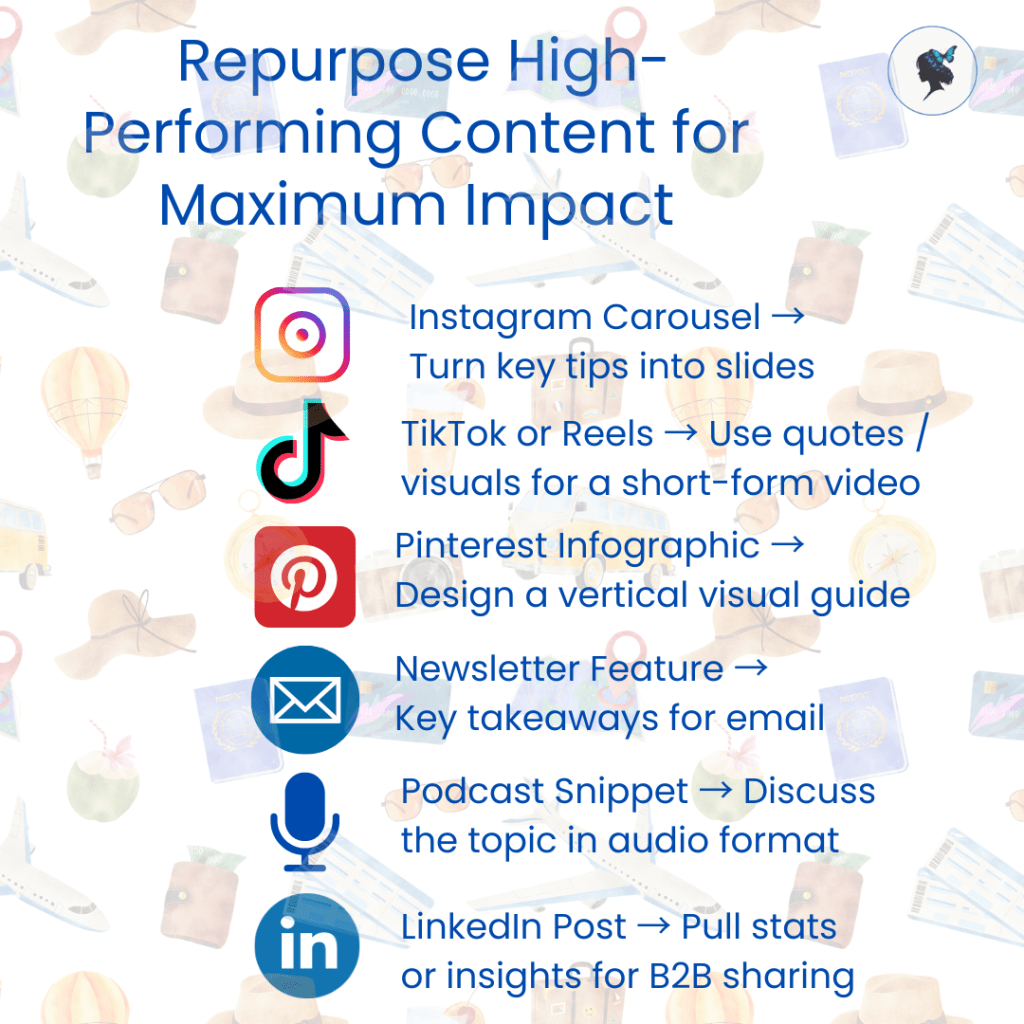
Repurposing allows you to maximize value from successful posts by adapting them to different formats or platforms. A well-performing blog post can be turned into an Instagram carousel, a short TikTok, or an infographic for Pinterest. This strategy saves time, maintains brand consistency, and ensures your best ideas reach a broader audience.
According to Semrush, 51% of marketers say updating and repurposing existing content is one of the most efficient content marketing tactics.
If a travel agency’s blog post on “10 Hidden Gems in Thailand” performs well, it can be transformed into a Pinterest pin for each location, a short video compilation on Instagram Reels, and a discussion prompt on Facebook.
Step 9: Track Performance and Adjust Accordingly
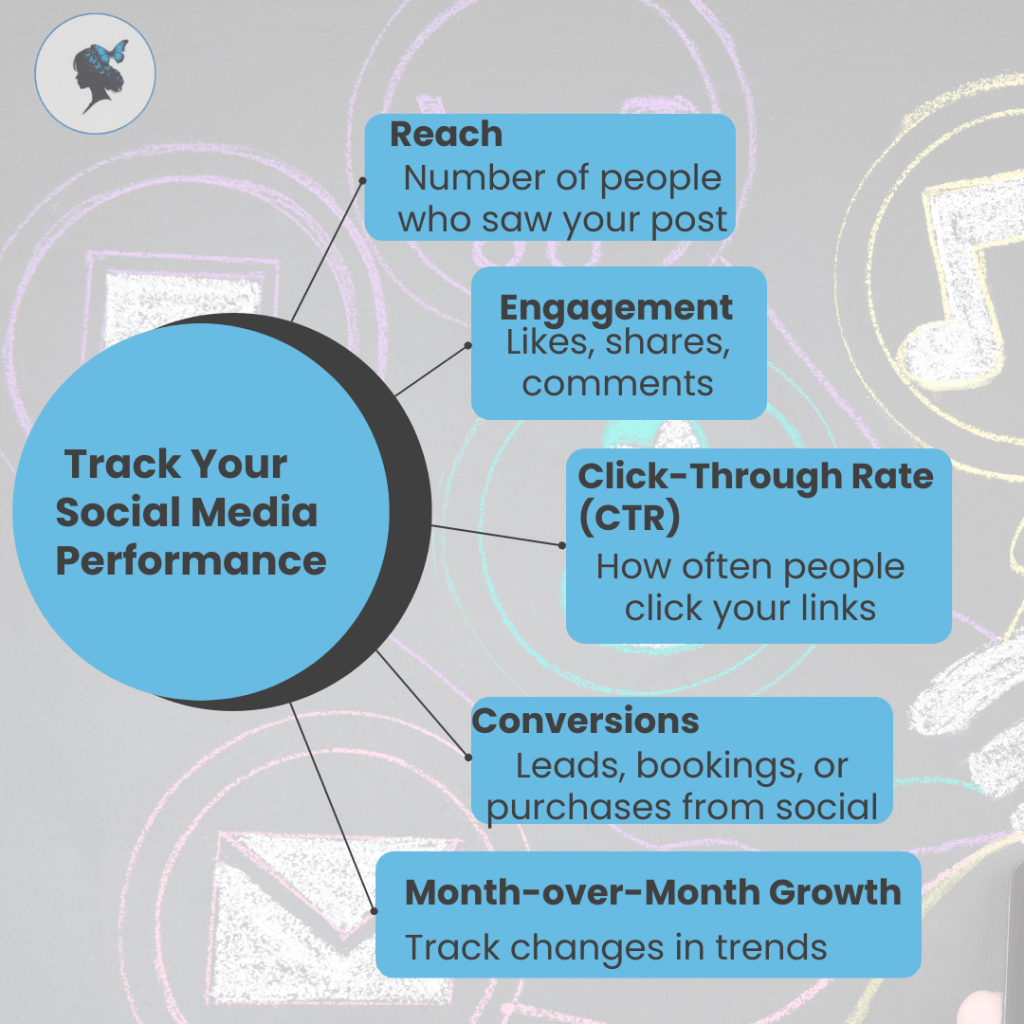
Tracking your social media performance is critical to continuous improvement. Use native analytics tools (Meta Business Suite, Instagram Insights, TikTok Analytics, etc.) or third-party platforms like Hootsuite or Sprout Social to evaluate metrics like reach, engagement, click-through rates, and conversions. Compare performance month-over-month to understand what content and timing resonate most with your audience.
Sprout Social’s data indicates that 77% of marketers use social media analytics to measure campaign performance.
A travel influencer agency might discover that Instagram Reels showcasing traveler testimonials generate 40% more saves and shares than static posts, prompting a shift in format priorities.
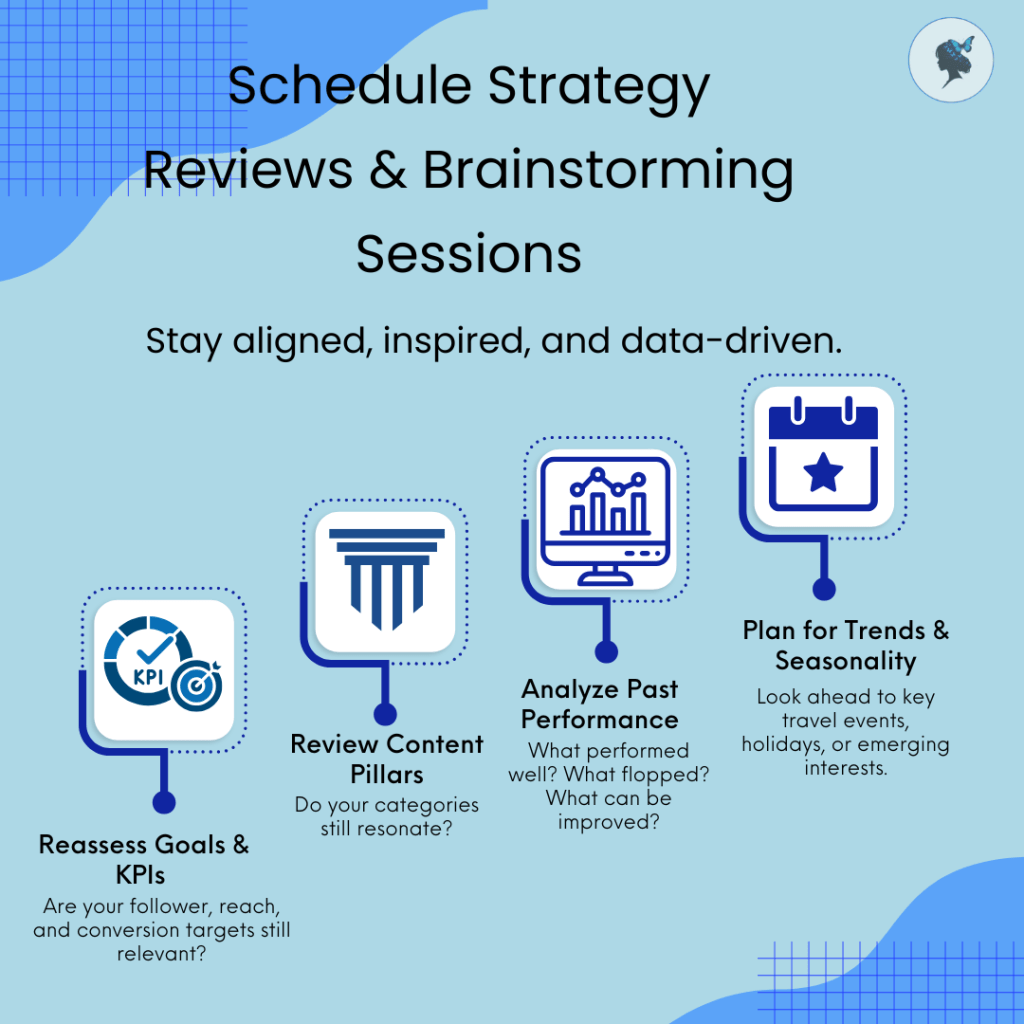
Step 10: Schedule Regular Review and Brainstorming Sessions
Monthly or quarterly strategy reviews help you reassess your goals, content pillars, and platform focus.
Include your team (or stakeholders) in brainstorming new campaign ideas, analyzing past performance, and planning seasonal adjustments. It’s also a great opportunity to review upcoming travel trends, competitor content, and user feedback.
According to CoSchedule, marketers who proactively plan their marketing are 3X more likely to report success.
A luxury travel brand might host a quarterly creative meeting to incorporate trends like “slow travel” or “eco-conscious getaways” into the next season’s content schedule.
Conclusion
Creating a robust social media calendar isn’t just about organization—it’s about aligning your brand story with the rhythms of your audience and the travel industry. When implemented thoughtfully, a calendar becomes a compass that guides content creation, community building, and business growth.
From setting SMART goals to leveraging analytics, a travel business that strategically manages its content will stand out in a saturated digital space. Start with simple structures and scale over time, and soon, you’ll be building a loyal following of inspired travelers eager to engage with your brand.
Final Tip: Revisit your calendar regularly and always leave space for spontaneity—travel is all about adventure, after all.
Need help with your Social Media Calendar? Contact us today!