The Importance of Personalization in Travel Website Content and SEO

▶ Table of Contents
  1. Why Personalization Matters in Travel Marketing
  2. What is Personalization in Travel Website Content?
  3. How Personalization Enhances SEO for Travel Websites
  4. Types of Personalization Strategies for Travel Websites
  5. Tools and Technologies to Implement Personalization
  6. Examples of Personalization in Travel Websites
  7. Measuring the Impact of Personalization on SEO and Conversions
  8. Challenges and Best Practices for Personalization
  9. Conclusion: The Future of Personalization in Travel Marketing

Why Personalization Matters in Travel Marketing

In today’s highly competitive travel industry, personalization has become essential for engaging potential travelers and turning website visitors into loyal customers. Personalization means tailoring your travel website content and SEO strategies to match the unique preferences, behaviors, and needs of each visitor. As travelers increasingly expect customized experiences online, delivering relevant, personalized content not only improves user satisfaction but also boosts key SEO metrics like engagement and conversions. Studies show that 80% of consumers are more likely to purchase from brands offering personalized experiences—a figure that applies strongly to the travel sector.

infograph: Personalization in travel marketing
Personalization in travel marketing

Personalized experiences also help build stronger emotional connections with users, fostering brand loyalty and repeat visits. Furthermore, personalization allows travel brands to differentiate themselves in a crowded marketplace by offering unique, relevant content that competitors may overlook.


What is Personalization in Travel Website Content?

Personalization on travel websites involves dynamically adapting content, offers, and recommendations based on information such as user behavior, location, demographics, and previous interactions. Instead of presenting generic content, personalized sites serve up travel packages, destination guides, and promotions tailored specifically to individual visitors.

infograph: Personalization cycle in travel websites
Personalization cycle in travel websites

This can include showing relevant flight deals based on a user’s search history, highlighting activities suited to their interests, or recommending destinations that match their climate preferences. Dynamic content is key—it adjusts in real-time to deliver the most pertinent information, creating a more seamless and engaging user experience.

Additionally, personalization can extend to language preferences and currency displays, making international visitors feel more at home. It also enables customized user journeys, guiding visitors smoothly from initial interest to booking based on their unique profiles.


How Personalization Enhances SEO for Travel Websites

Personalized content significantly improves SEO performance by increasing visitor engagement. When users find content that feels relevant and useful, they stay longer on your site and explore more pages, which reduces bounce rates—an important ranking factor for search engines. Additionally, personalization enables the use of long-tail keywords tailored to specific traveler interests or locations, helping capture niche search queries.

More about mastering long-tail keywords here.

infograph: Strategies for enhanced SEO performance
Strategies for enhanced SEO performance

Optimizing meta titles and descriptions with personalized elements can also improve click-through rates (CTR) from search engine results pages (SERPs). For example, dynamically inserting location-specific terms into meta tags can attract travelers searching for packages in their preferred destinations.

Furthermore, personalized URLs and structured data can enhance site indexing by search engines, improving visibility for relevant queries. Personalized internal linking strategies also help distribute page authority effectively, guiding users and crawlers through tailored content pathways.


Types of Personalization Strategies for Travel Websites

User Location-Based Content

Showing visitors offers, events, and travel tips relevant to their geographic location helps provide immediate value. For example, a visitor from New York might see winter ski packages in the nearby mountains, while someone browsing from California is shown beach resort deals. This geo-targeting increases relevance and conversion potential.

infograph: Geo-targeting for enhanced user experience
Geo-targeting for enhanced user experience

Behavior-Based Recommendations

Tracking visitor behavior such as previous searches or pages visited allows websites to suggest related destinations, activities, or travel packages. For instance, if a user views several posts about hiking trips, the site can highlight adventure travel itineraries or gear recommendations.

infograph: Behavior-based recommendation cycle
Behavior-based recommendation cycle

Personalized Email Marketing and Retargeting

Using data collected from site visits, travel agencies can send customized emails with offers based on user interests, increasing the likelihood of bookings. Retargeting ads showing destinations or packages the user engaged with keep your brand top-of-mind.

infograph: Enhancing bookings through personalized marketing
Enhancing bookings through personalized marketing

Check out our post: AI-Driven Email Personalization

Dynamic Landing Pages

Landing pages tailored for different traveler segments (families, solo travelers, honeymooners) allow the presentation of highly targeted content and offers that appeal directly to those groups, improving SEO relevance and conversions.

infograph: Tailoring landing pages for traveler segments
Tailoring landing pages for traveler segments

Time-Based Personalization

Adjusting content based on seasonality or upcoming holidays—such as promoting beach vacations in summer or ski trips in winter—keeps the website timely and engaging.

Read our post: Strategies for Managing Seasonal Content

Device-Based Personalization

Optimizing content for different devices (mobile, tablet, desktop) and adjusting offers based on the visitor’s device ensures a smooth experience and higher conversion rates.

infograph: How to optimize content for different devices?
How to optimize content for different devices?

Tools and Technologies to Implement Personalization

Many CMS platforms and SEO tools now support personalization features. For example, HubSpot offers smart content modules that change based on visitor data, while Optimizely provides A/B testing and personalization capabilities to tailor website content dynamically. Artificial intelligence and machine learning algorithms further enhance personalization by predicting user preferences based on large datasets.

Check out: Ways AI Can Enhance Personalized Itinerary Generation

infograph: Personalization tools and technologies
Personalization tools and technologies

Other useful tools include Segment for managing user data across platforms and Dynamic Yield, which offers AI-driven personalization engines. Integrating these tools with analytics platforms like Google Analytics can provide comprehensive insights for continuous improvement.


Examples of Personalization in Travel Websites

  • A travel website detects a user’s previous searches for tropical beaches and dynamically displays a curated list of island resorts with special offers on the homepage.
  • For travelers browsing during winter months, the site automatically highlights ski resorts and winter festivals in relevant regions.
  • The website provides personalized packing lists and travel tips based on the user’s chosen destination and travel dates, enhancing the overall user experience.
infograph: Tailoring travel experiences
Tailoring travel experiences

Imagine a family browsing your site during school holidays and seeing kid-friendly attractions and family vacation packages prominently featured. Or a solo traveler interested in cultural experiences is shown content focusing on local events and group tours. Additionally, returning visitors might receive customized discount offers based on their past interactions, encouraging repeat bookings.


Measuring the Impact of Personalization on SEO and Conversions

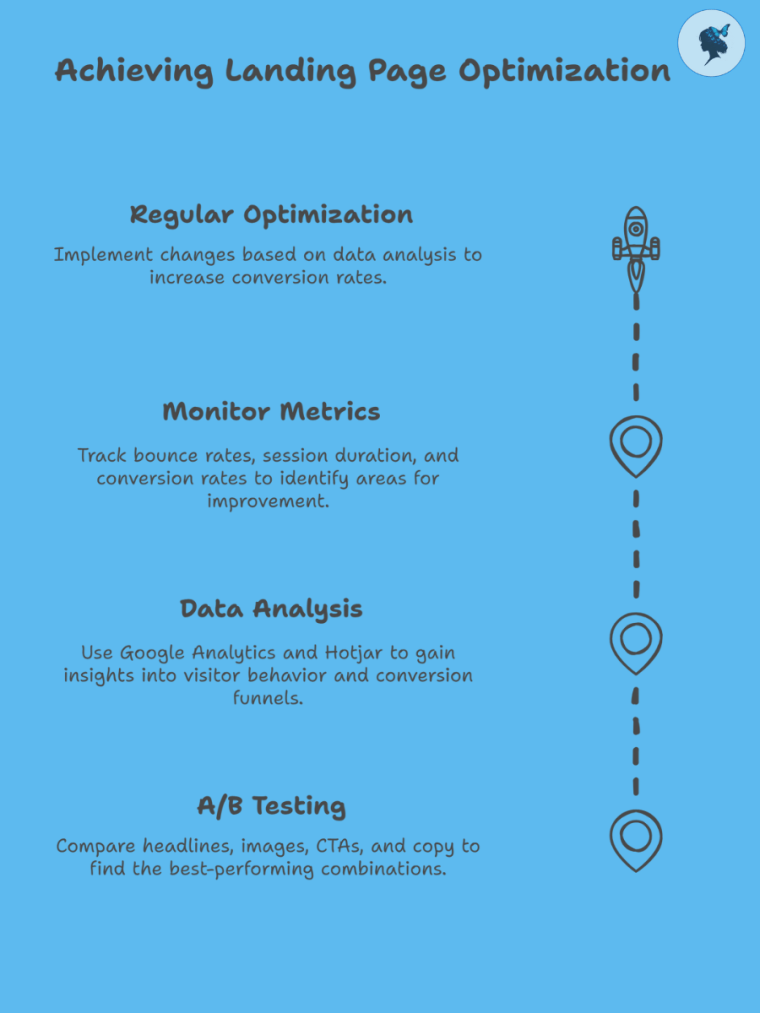
Tracking key performance indicators (KPIs) such as bounce rate, average session duration, and conversion rate helps assess the effectiveness of personalization. Implementing A/B testing enables travel websites to compare personalized vs. generic content, identifying which strategies yield better engagement and sales.

infograph: Personalization effectiveness assessment
Personalization effectiveness assessment

Tools like Google Analytics, Hotjar, and Crazy Egg allow you to monitor user behavior, heatmaps, and conversion funnels, providing insights to optimize personalized experiences further.

Regularly reviewing SEO rankings for targeted keywords can indicate if personalization efforts are improving search visibility. Monitoring customer feedback and engagement metrics also helps refine personalization tactics to better meet traveler expectations.


Challenges and Best Practices for Personalization

While personalization offers great benefits, it must be implemented thoughtfully. Data privacy regulations like GDPR require transparent user consent for data collection and use, so compliance is essential. Over-personalization can sometimes feel intrusive or repetitive, so balancing automated recommendations with fresh, authentic content is critical.

infograph: Balancing personalization benefits and challenges
Balancing personalization benefits and challenges

Best practices include regularly updating personalization rules, providing opt-out options, and ensuring your content remains human-centric and trustworthy.

Travel brands should also invest in staff training to understand the ethical use of data and to design personalized experiences that truly benefit the user. Ensuring website speed and technical SEO health is vital as dynamic personalization can increase site complexity.


Conclusion: The Future of Personalization in Travel Marketing

Personalization is no longer optional for travel websites; it’s a key strategy to improve SEO, user experience, and conversions. As technology advances, emerging trends like voice search personalization and augmented reality (AR) travel previews will create even richer, tailored experiences for travelers.

Travel brands that invest in intelligent personalization tools and strategies today will stand out, foster loyalty, and thrive in a rapidly evolving digital landscape.

Building a culture of continuous testing and adaptation around personalization will keep your agency ahead of competitors and aligned with traveler expectations.

Need help with your SEO or Content Strategy? Contact us to get started.


SSL & Security Implementation for Travel Websites

▶ Table of Contents
  1. What is SSL & Security Implementation?
  2. How to Implement SSL & Security on Your Travel Website
  3. Why is SSL & Security Important for Travel Companies?

In today’s digital landscape, website security is not just a luxury—it’s a necessity. For travel companies, where customer trust and safety are paramount, ensuring that your website is secure is more important than ever. One of the most effective ways to safeguard your website is through SSL (Secure Sockets Layer) certificates and overall security implementation.

At Wander Women Strategies, we understand that the success of your travel website hinges not only on high-quality content and effective SEO strategies but also on securing your users’ personal information and providing a trustworthy online experience.

In this article, we’ll break down the importance of SSL certificates and website security for your travel business, how to implement them on your website, and why they are crucial for driving traffic, improving SEO, and protecting your customers’ data.


What is SSL & Security Implementation?

Before diving into implementation, it’s important to first understand what SSL and website security entail.

SSL (Secure Sockets Layer)

SSL is a security protocol that encrypts the communication between a website and its users, ensuring that data sent and received is secure. When a website has SSL enabled, the URL begins with “https://” instead of “http://,” and you’ll also see a padlock symbol next to the URL in the browser bar.

SSL encrypts the data transmitted between the user’s browser and the website’s server. This encryption prevents hackers from intercepting sensitive information like personal data, passwords, and payment details. For travel websites that collect user data for bookings, payments, and travel details, SSL is absolutely essential.

Website Security Implementation

Website security refers to the broader measures taken to protect your website and its users from malicious attacks, hacking, data breaches, and other security threats. Implementing website security involves not just installing SSL but also configuring various security features such as firewalls, malware protection, and regularly updating your website’s software.

Security implementation involves:

  • Ensuring the website is hosted on a secure server.
  • Using SSL encryption for all data transmitted.
  • Regularly updating website software and plugins to close security loopholes.
  • Setting up firewalls and security plugins to monitor suspicious activity.
  • Securing user accounts with strong authentication protocols (like multi-factor authentication).

In essence, SSL is the first step in a larger strategy to protect both your business and customers from cyber threats.


How to Implement SSL & Security on Your Travel Website

Implementing SSL and website security on your travel site might sound like a complex task, but it’s absolutely essential for protecting your business and improving your SEO rankings. Here’s a step-by-step guide to implementing SSL & Security:

Step 1: Choose the Right SSL Certificate

The first thing you need is to choose the right SSL certificate for your website. There are several types of SSL certificates depending on the needs of your travel business.

  • Domain Validation (DV) SSL: The most basic SSL certificate, ideal for smaller websites. It validates the domain ownership.
  • Organization Validation (OV) SSL: Offers more robust encryption and verifies the identity of the business behind the website.
  • Extended Validation (EV) SSL: The highest level of SSL, offering the most stringent validation processes and displaying a green bar in the browser. This is ideal for eCommerce travel websites handling sensitive payment information.

Step 2: Install the SSL Certificate

After selecting the appropriate SSL certificate, you will need to install it on your website’s server. Most website hosting providers offer SSL installation services, or you can install it manually if you have technical expertise.

  • Automatic Installation: Many hosting providers such as SiteGround or Bluehost offer SSL certificates with automatic installation.
  • Manual Installation: If you’re handling it yourself, follow the instructions from your SSL certificate provider and install it on your server. Once installed, your website will display the padlock icon and “https://” in the URL.

Step 3: Redirect HTTP to HTTPS

Once SSL is installed, it’s essential to ensure that all of your website’s pages are being served securely over HTTPS. This can be done by setting up a 301 redirect from your HTTP pages to HTTPS.

A 301 redirect ensures that users and search engines are automatically directed to the secure version of your pages. This is particularly important to avoid any potential issues with duplicate content and to preserve SEO rankings.

Step 4: Check for Mixed Content Issues

After implementing SSL, you must check that there are no mixed content issues. Mixed content occurs when a page is loaded over HTTPS but contains links or resources (images, videos, scripts, etc.) that are still loaded over HTTP. This can cause security warnings in browsers and can make your site appear less trustworthy.

To resolve mixed content issues, make sure that all internal links, images, scripts, and other resources are updated to HTTPS.

Step 5: Update Website Security Measures

While SSL is critical for securing data transmission, you also need to implement additional security measures to protect your website as a whole:

  • Firewall Configuration: Set up a web application firewall (WAF) to block malicious traffic and potential attacks.
  • Regular Software Updates: Keep your website’s CMS, plugins, and themes up to date. Vulnerable plugins or outdated software can be a gateway for hackers to attack your site.
  • Malware Scanning: Use malware scanning tools to monitor your website for malicious software and threats.
  • Two-Factor Authentication (2FA): For extra protection, enable two-factor authentication for your login and admin areas, especially on high-traffic pages like booking forms and customer account pages.

Step 6: Monitor and Maintain Website Security

Security is not a one-time task. To ensure your travel website stays protected, regularly monitor your website for security breaches, update your SSL certificate (as it expires annually), and run regular scans for vulnerabilities.

Tools like Sucuri, Wordfence (for WordPress), and Google Search Console can help you monitor your website for security issues, including SSL and certificate errors.


Why is SSL & Security Important for Travel Companies?

Trust and Credibility

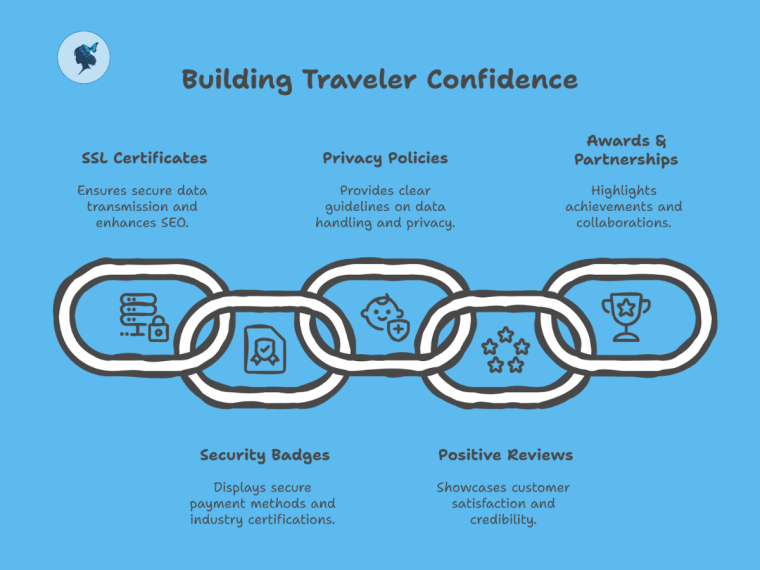
SSL certificates build trust with your users. When customers book flights, hotels, or tours through your website, they want to know their payment and personal information are secure. The padlock symbol and “https://” reassure them that your site is legitimate and safe. This is especially critical for travel companies that deal with sensitive customer information daily.

Improved SEO Rankings

Google has confirmed that SSL is a ranking factor. Websites with SSL certificates receive a ranking boost in search engine results, which means a secure site can help you rank higher in Google. For travel companies, this could mean more visibility for your destination pages, hotel listings, and tour packages, ultimately driving more traffic to your website.

Protection from Cyber Threats

Cybersecurity threats, such as hacking, phishing, and data breaches, are real risks for travel websites. Without SSL, your website is vulnerable to man-in-the-middle attacks, where hackers can intercept and manipulate user data. SSL encryption ensures that sensitive information—such as customer payment details, bookings, and personal information—is protected.

Compliance with Regulations

If you process sensitive customer data, including payment details, you must comply with regulations such as PCI-DSS (Payment Card Industry Data Security Standard). Having SSL certificates in place is one of the key requirements for ensuring that your website meets these regulatory standards and avoids potential legal issues.

Better User Experience

A secure website with SSL encryption ensures that your customers can interact with your site without security warnings or errors. This leads to a smoother booking experience, higher customer satisfaction, and better retention. For travel companies, offering a frictionless, secure online experience is critical to turning visitors into paying customers.


At Wander Women Strategies, we understand the importance of SSL and overall website security for your travel business. With more customers relying on the internet to book their next vacation, it’s essential to ensure your website is both secure and optimized for SEO success.

Contact us today to get started on securing your website. Safeguard your business, boost your SEO, and ensure a seamless, secure travel booking experience for your customers.

Local SEO Strategies for Bed-and-Breakfasts, Hotels, and Small Travel Agencies

▶ Table of Contents
  1. Introduction
  2. Optimize Your Google Business Profile (GBP)
  3. Local Keyword Research and Optimization
  4. Building Local Citations and Directory Listings
  5. Creating Locally Relevant Content
  6. Leveraging Online Reviews and Reputation Management
  7. Mobile Optimization and Local Search Experience
  8. Utilizing Social Media for Local Engagement
  9. Conclusion

Introduction

In today’s digital age, local SEO is a critical tool for small travel businesses like bed-and-breakfasts, hotels, and travel agencies. These businesses rely heavily on local customers and travelers searching nearby for accommodations or travel services. Optimizing your online presence to appear in local search results can significantly increase your bookings, foot traffic, and overall visibility.

This post will guide you through effective local SEO strategies specifically designed for small travel-related businesses. From optimizing your Google Business Profile to creating locally relevant content, these steps will help you connect with your local audience and stand out in a competitive market.


Optimize Your Google Business Profile (GBP)

Your Google Business Profile (formerly Google My Business) is the cornerstone of local SEO. It helps your business appear in Google Maps and the local “3-pack” search results, which are highly visible to potential customers.

  • Claim and verify your profile: Visit the Google Business Profile site, claim your listing, and verify your business to gain full control over your information. This verification builds trust with Google and users.
  • Add complete and accurate information: Include your exact address, phone number, business hours, website, and service descriptions. Accurate info helps Google match your listing with relevant local searches.
  • Upload high-quality photos: Showcase your property, rooms, amenities, or office space with attractive images. Photos increase user engagement and encourage bookings.
  • Encourage and manage reviews: Ask satisfied guests to leave positive reviews, which improve your local rankings. Respond professionally to all reviews to build credibility.
  • Use Google Posts: Share timely updates, offers, or events directly on your GBP profile to engage visitors.

A bed-and-breakfast in Asheville, NC, optimized its Google Business Profile by adding seasonal photos and responding promptly to reviews, resulting in a 30% increase in bookings during the off-season.


Local Keyword Research and Optimization

Finding and using the right local keywords is essential to make your website visible to nearby searchers.

  • Identify location-specific keywords: Use tools like Google Keyword Planner, Ahrefs, or SEMrush to find keywords such as “boutique hotel in [City]” or “family-friendly B&B near [Landmark].” These phrases help capture travelers searching specifically in your area.
  • Incorporate keywords strategically: Include local keywords in your website’s titles, meta descriptions, headers, and body content. This signals to search engines that your business serves a particular location.
  • Create local landing pages: Build dedicated pages targeting specific neighborhoods, nearby attractions, or popular travel routes. For example, “Hotels near Central Park, NYC” can attract targeted traffic.

A boutique hotel in Portland created a series of blog posts and landing pages optimized for local attractions like “Hotels near Powell’s Books,” which increased organic traffic by 40%.

You might like our post: Mastering local keyword focus.


Building Local Citations and Directory Listings

Local citations are online mentions of your business name, address, and phone number (NAP) on various websites and directories. They boost your local SEO by confirming your business’s legitimacy and location.

  • Ensure consistent NAP information: Keep your business name, address, and phone number consistent across all platforms to avoid confusion and improve rankings.
  • List on travel and local directories: Submit your business to TripAdvisor, Yelp, Booking.com, local chambers of commerce, and tourism boards.
  • Monitor and clean duplicate listings: Use tools like Moz Local or BrightLocal to find and remove or update duplicate or incorrect listings.

A small travel agency in Miami increased its local visibility by listing on multiple local directories and cleaning up inconsistent address data, resulting in a 25% boost in phone inquiries.


Creating Locally Relevant Content

Content that highlights local attractions, events, and experiences draws in travelers researching your area and builds your site’s authority.

  • Write blog posts about local events and attractions: Cover annual festivals, popular hiking trails, or hidden gems near your property.
  • Highlight partnerships: Feature collaborations with local tour operators, restaurants, or artists to showcase your embeddedness in the community.
  • Create neighborhood guides: Offer detailed information about neighborhoods, including dining, shopping, and sightseeing tips.
  • Showcase customer stories: Share testimonials or case studies from guests who enjoyed local experiences.

A hotel in Santa Fe started a blog series on “Must-See Art Galleries in Santa Fe” and “Top Local Hiking Trails,” which attracted both organic search traffic and social shares.


Leveraging Online Reviews and Reputation Management

Online reviews greatly influence travelers’ booking decisions and impact your local SEO rankings.

  • Ask guests for reviews: Send follow-up emails requesting reviews on Google, Yelp, and travel-specific platforms.
  • Respond promptly to reviews: Thank guests for positive feedback and address any concerns raised in negative reviews professionally and constructively.
  • Use reviews in marketing: Highlight positive reviews on your website and social media to build trust.
  • Handle negative feedback gracefully: Use criticism as an opportunity to improve your service and show potential guests your commitment.

A bed-and-breakfast in Charleston actively managed its review responses, which improved its average rating and increased bookings by 15% within six months.


Mobile Optimization and Local Search Experience

With the majority of local searches happening on mobile devices, your website must offer a seamless mobile experience.

  • Ensure a mobile-friendly design: Use responsive web design so your site looks and works well on smartphones and tablets.
  • Improve loading speed: Fast websites reduce bounce rates and improve search rankings. Use tools like Google PageSpeed Insights to identify and fix slow elements.
  • Add click-to-call buttons: Make it easy for mobile users to contact you directly from your site.
  • Incorporate maps and directions: Embed Google Maps and clear directions to help visitors find you quickly.

A small hotel revamped its mobile website to load under 3 seconds and added easy booking buttons, resulting in a 20% increase in mobile reservations.

You might like our post: Mobile Optimization for travel companies.


Utilizing Social Media for Local Engagement

Social media is a valuable channel to engage with your local community and attract travelers.

  • Engage locally: Share posts about community events, local attractions, and special offers relevant to your area.
  • Use geotags and local hashtags: Tag your location in posts and use hashtags like #[City]Travel or #[Neighborhood]Eats to reach local users.
  • Collaborate with local influencers: Partner with local travel bloggers or Instagrammers to expand your reach.
  • Show behind-the-scenes content: Share stories about your staff, renovations, or local partnerships to build personal connections.

A travel agency in Vancouver collaborated with a popular local influencer to showcase nearby adventure tours, increasing social engagement and inquiries by 35%.

You might like our post: the best social media platforms in 2025.


Conclusion

Local SEO is an essential strategy for bed-and-breakfasts, hotels, and small travel agencies aiming to capture nearby customers and travelers. By optimizing your Google Business Profile, targeting location-specific keywords, building local citations, creating relevant content, managing reviews, enhancing mobile experience, and engaging on social media, you can significantly boost your visibility and bookings.

Start implementing these strategies step-by-step, and over time you’ll build a strong local presence that keeps your business thriving in a competitive travel market.

Ready to get started? Contact us today!

Mobile Optimization for Travel Companies


▶ Table of Contents
  1. What is Mobile Optimization?
  2. How to Mobile Optimize Your Travel Website
  3. Why Mobile Optimization is Critical for Travel Companies

In today’s digital age, mobile optimization is no longer optional—it’s a necessity. For travel companies, especially those in the tourism and hospitality industries, having a mobile-optimized website is vital for delivering an exceptional user experience and maximizing conversions. Whether your customers are searching for flight options, browsing vacation packages, or booking accommodations, chances are they are using their mobile devices to do so.

In this article, we will dive deep into what mobile optimization is, why it is essential for travel businesses, and how to implement the best mobile practices for your site.


What is Mobile Optimization?

Mobile optimization refers to the process of ensuring that your website is fully functional, fast, and visually appealing on mobile devices such as smartphones and tablets. This includes designing a responsive layout, improving load times, and ensuring that the content and features of the site are tailored to the needs of mobile users.

Key Elements of Mobile Optimization:

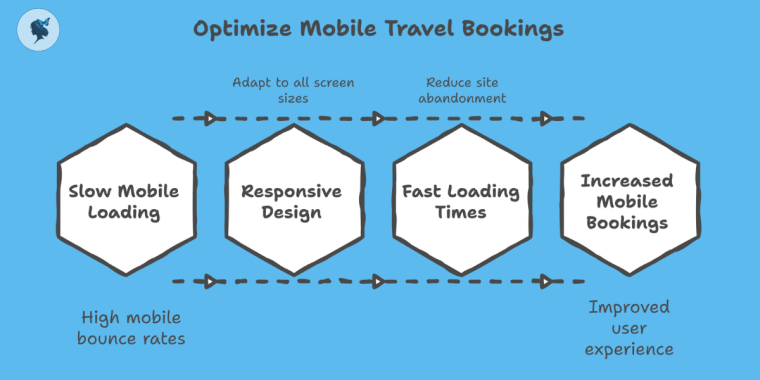
  • Responsive Design: A mobile-optimized website automatically adjusts its layout to fit the screen size of the device it’s being viewed on. Whether a user accesses your website on a desktop, tablet, or phone, the content should resize and adjust to provide a seamless experience.
  • Fast Loading Speed: Mobile users often have limited bandwidth, so optimizing your site for fast loading times is crucial. Pages should load within a couple of seconds to prevent users from abandoning the site.
  • Touch-Friendly Navigation: Since mobile users interact with websites through touchscreens, your site should have large buttons, intuitive menus, and easy-to-click links to enhance usability.
  • Simplified Content: On smaller screens, content should be concise and easy to read. Long blocks of text should be broken up with visuals, and calls to action (CTAs) should be easy to find.

With the majority of travelers using mobile devices to book flights, hotel rooms, or experiences, mobile optimization ensures that you’re catering to this audience while maintaining a smooth and accessible experience.


How to Mobile Optimize Your Travel Website

Now that you understand what mobile optimization is, let’s explore the key steps you can take to ensure that your website performs well on mobile devices.

Implement Responsive Web Design

Responsive web design is the backbone of mobile optimization. It ensures that your website automatically adjusts its layout, images, and navigation based on the screen size and device type.

How to Implement:

  • Use Fluid Grid Layouts: Use percentage-based layouts instead of fixed-width ones. This allows your site elements to scale and adjust to the screen size.
  • Flexible Images: Make sure images are sized properly to scale down on smaller devices. Use responsive image techniques, such as the srcset attribute, to provide different image resolutions based on the user’s device.
  • CSS Media Queries: Implement media queries in your CSS to apply different styles based on the device’s screen size, orientation, and resolution.

This way, your website will always look great and function properly regardless of the device it’s being viewed on.

Optimize Website Speed for Mobile

Speed is one of the most important factors when it comes to mobile optimization. Mobile users expect websites to load quickly, and Google even uses page speed as a ranking factor. A slow website can lead to higher bounce rates and fewer conversions, which is especially harmful for travel companies where timely and engaging content is critical.

How to Optimize Speed:

  • Compress Images: Use image compression tools (e.g., TinyPNG or ImageOptim) to reduce file size without compromising quality.
  • Minify JavaScript and CSS: Minify your site’s CSS, JavaScript, and HTML to reduce unnecessary code and improve page load times.
  • Enable Browser Caching: Configure your server to cache resources so that repeat visitors load pages faster.
  • Use a Content Delivery Network (CDN): Implement a CDN to serve static assets like images and scripts from servers closest to the user, reducing load times and latency.
  • Leverage AMP (Accelerated Mobile Pages): Consider using AMP for your mobile pages. AMP is designed to make pages load almost instantly, especially on mobile devices.

Optimize Navigation for Touch

Mobile users interact with websites using touchscreens, so your navigation should be adapted for touch. Buttons, menus, and links should be large enough to tap comfortably, and the layout should be simple to help users navigate quickly.

How to Optimize Navigation:

  • Large, Clickable Buttons: Buttons should be large enough for users to tap easily. Avoid small clickable elements, as they are difficult to interact with on mobile devices.
  • Simplify the Menu: Use a hamburger menu (three horizontal lines) to condense the navigation into a dropdown, saving valuable screen space.
  • Sticky Navigation: For longer pages, consider a sticky navigation bar that remains visible as users scroll down.

Make Content Mobile-Friendly

Mobile screens are much smaller than desktops, so you need to ensure that your content is easy to read and interact with. Long-form text should be broken up with images and bullet points, and calls-to-action (CTAs) should be easily tappable.

How to Optimize Content:

  • Shorten and Prioritize Content: Mobile users want quick answers. Focus on making your content concise and to the point. Prioritize key information that travelers will want first (e.g., availability, prices, contact information).
  • Use Larger Fonts: Ensure that text is large enough to be easily read on mobile screens without zooming.
  • Mobile-Friendly Forms: Travel companies often rely on forms for bookings and inquiries. Make sure forms are simple to complete on mobile, with input fields that are easy to tap and autocomplete wherever possible.

Test Your Mobile Site Regularly

After implementing mobile optimization strategies, you should regularly test your website to ensure it works properly across different devices and screen sizes.

How to Test Mobile Optimization:

  • Browser Testing: Test your website across a range of browsers and devices to identify issues related to specific platforms (i.e., Safari vs. Chrome, iOS vs. Android).
  • Real-World User Testing: Ask real users to interact with your website on their mobile devices and provide feedback about usability and speed.

Why Mobile Optimization is Critical for Travel Companies

Mobile-First Indexing

Google has adopted mobile-first indexing, which means it primarily uses the mobile version of your website to rank and index content. If your website isn’t mobile-optimized, it will hurt your SEO rankings, making it harder for potential travelers to find your business online.

Increased Mobile Traffic

As of recent reports, over 60% of online travel bookings are made via mobile devices. Travelers are increasingly relying on their phones to research and book trips, compare prices, and read reviews. If your website is not mobile-friendly, you’re missing out on a significant portion of potential customers.

Better User Experience

When it comes to travel, users want to quickly find information and book their trips without any hassle. A smooth, fast mobile experience is essential to keep users engaged. Mobile optimization enhances the overall user experience and helps maintain customer loyalty.

Increased Conversion Rates

A mobile-optimized site is more likely to convert visitors into customers. From booking flights to reserving hotels or tours, a smooth, mobile-friendly process increases the likelihood of a sale or lead generation.

Competitive Advantage

Many travel companies are still not fully optimized for mobile. By ensuring your site is mobile-friendly, you can gain a competitive edge over businesses that have neglected mobile optimization.


Ready to Optimize Your Website for Mobile? Contact Wander Women Strategies today!
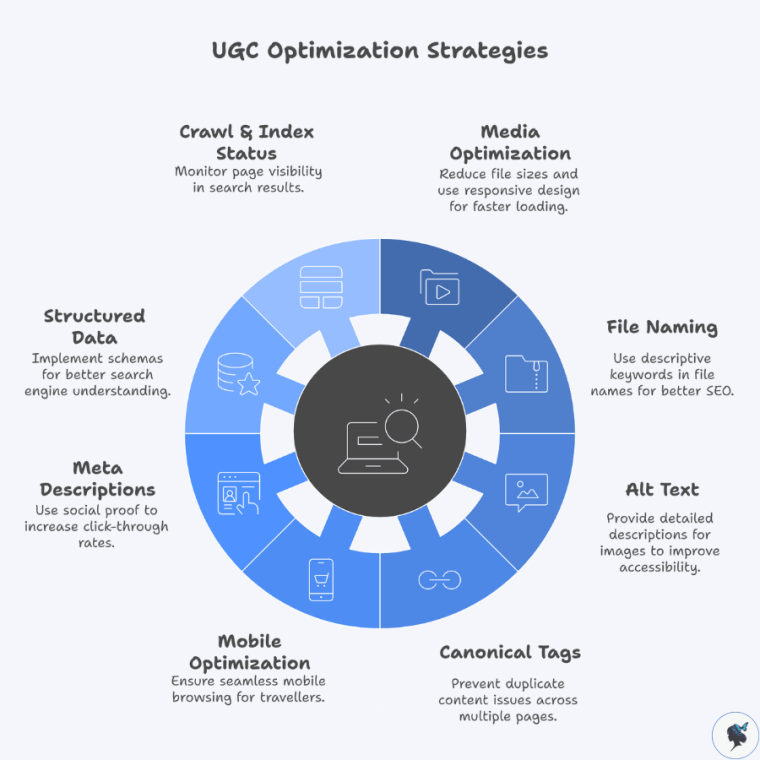
Your mobile optimization efforts will pay off with improved user experience, better SEO rankings, and higher conversion rates.


Image Optimization and Alt Text: Enhancing SEO for Travel Websites


▶ Table of Contents
  1. What is Image Optimization and Alt Text?
  2. How to Optimize Images and Write Effective Alt Text
  3. Why Image Optimization and Alt Text Are Important for Travel Companies

In today’s visually-driven digital world, images are a key element of any travel website. They capture the attention of potential travelers, showcase beautiful destinations, and bring your brand to life. However, without proper image optimization and alt text, your website could be missing out on significant opportunities for improved SEO and user experience.

At Wander Women Strategies, we understand the importance of optimizing images to make your website faster, more accessible, and search engine-friendly. Let’s dive into how image optimization and alt text can give your travel company’s website an SEO boost.

What is Image Optimization and Alt Text?

Image Optimization

Image optimization refers to the process of reducing the file size of an image without compromising its quality. Optimizing images ensures that your website loads faster, provides a better user experience, and helps improve search engine rankings.

When it comes to images, speed matters. Large, unoptimized images can slow down page load times, leading to frustrated visitors and potentially higher bounce rates. Since page speed is a crucial factor in Google’s ranking algorithm, image optimization plays an important role in ensuring that your travel website ranks well.

Common Image Formats for Optimization

  • JPEG: Best for photographs and images with gradients. It provides a good balance between quality and file size.
  • PNG: Ideal for images with transparency or high-quality graphics, but the file size can be larger.
  • WebP: A modern format that provides high-quality images with smaller file sizes, recommended for faster page loading.

Alt Text (Alternative Text)

Alt text (or alternative text) is a short description of an image that appears in place of the image if it fails to load. Alt text also describes the image for screen readers, making your website more accessible to people with visual impairments.

For SEO purposes, alt text provides context to search engines about the content of the image. Google can’t “see” images like humans, so it relies on the alt text to understand what the image is about. Well-written alt text can contribute to your site’s visibility in image searches and enhance your rankings for related keywords.


How to Optimize Images and Write Effective Alt Text

Optimizing images and writing alt text isn’t a one-step process—it requires careful planning and execution. Here’s how you can do it:

Image Optimization

1. Choose the Right File Format

As mentioned earlier, choosing the right file format is key. For travel companies, images often contain landscapes, cityscapes, and destination photos that can be large in file size. By selecting the appropriate file format, you can reduce the file size while maintaining the image quality.

  • JPEG works best for photos or images with subtle color changes.
  • PNG is better for logos, icons, or images requiring transparency.
  • WebP is a great option if you want smaller file sizes without sacrificing quality.

2. Resize Images Appropriately

Images should be resized to fit the space in which they appear. Uploading large images that exceed the dimensions needed for your website will slow down your page. For example, if an image appears as 600px wide on the webpage, there’s no need to upload an image that’s 3000px wide.

Use image editors like Photoshop, TinyPNG, or even WordPress image compression plugins to resize your images before uploading them to your site.

3. Compress Images to Reduce File Size

Once resized, the next step is compression. Image compression reduces file size without sacrificing visible quality. Use image compression tools to strike the right balance between file size and image quality.

  • JPEG-Optimizer and ImageOptim are excellent for compressing JPG and PNG files.
  • For WordPress users, plugins like WP Smush or ShortPixel can automate the compression process.

4. Use Image Compression Plugins for CMS

If you’re using a content management system (CMS) like WordPress, there are plenty of image optimization plugins that can compress and optimize your images in bulk. For example:

  • Smush
  • Imagify
  • ShortPixel Image Optimizer

These plugins can significantly reduce the load time of your website, improving both SEO and user experience.

Writing Alt Text for Images

Alt text plays a crucial role in helping search engines understand the context of your images. Well-optimized alt text can also improve accessibility for individuals with disabilities.

1. Be Descriptive and Accurate

The alt text should describe what is in the image as clearly and accurately as possible. Avoid keyword stuffing or using vague alt text like “image” or “photo.” Instead, focus on describing the content and context of the image, including any relevant keywords naturally.

For example:

  • Not ideal: “Vacation photo”
  • Optimized: “A scenic view of the Amalfi Coast in Italy, showing a cliffside village by the ocean”

2. Include Relevant Keywords

Incorporating relevant keywords in your alt text can help your images appear in image searches. For a travel website, use location-specific keywords that reflect the image content and align with your SEO goals.

For example, for a beach photo of Maldives, alt text might read:
“Pristine white sand beach in the Maldives with turquoise water and palm trees”

3. Keep it Concise

Alt text should be short and to the point, typically no more than 125 characters. Google recommends this length as it ensures that the description is readable and relevant to both search engines and users.

4. Avoid Keyword Stuffing

While it’s important to include keywords, avoid overloading the alt text with irrelevant or excessive keywords. Make sure it’s natural and descriptive. Stuffing keywords in the alt text can lead to a penalty from Google and harm your rankings.


Why Image Optimization and Alt Text Are Important for Travel Companies

1. Improve Website Speed and User Experience

One of the most important reasons to optimize images is to improve website speed. Slow websites can frustrate users, leading to higher bounce rates and lower conversions. Travelers want to browse your site quickly and efficiently, and images that take too long to load can cause them to leave. By reducing image file sizes without sacrificing quality, your travel website will load faster, providing a smoother experience for users.

2. Enhance SEO and Rankings

Search engines use the alt text to understand and index images, so it’s a powerful tool for improving your SEO. Travel companies that use well-optimized images and alt text have a better chance of ranking in both web and image search results.

  • Better Indexing: Search engines can’t “see” images, so they rely on alt text to understand their content. Optimized images with detailed, keyword-rich alt text help search engines index your content.
  • Improved Image Search Results: If your images are optimized properly, they have the potential to appear in Google’s image search, driving more traffic to your website.

3. Increased Accessibility

Alt text is not only beneficial for SEO but also for website accessibility. By providing alt text descriptions, you make your website more accessible to visually impaired individuals who rely on screen readers to navigate the web. For travel companies, accessibility is critical to ensuring that all travelers, regardless of their abilities, can engage with your content.

4. Better Conversion Rates

A fast, easy-to-navigate website with optimized images and alt text encourages visitors to stay longer, explore more pages, and ultimately convert. Whether it’s making a booking or signing up for your newsletter, image optimization plays an essential role in driving conversions.


Start Optimizing Your Travel Website Today

Is your travel website ready to be fully optimized for SEO and user experience? Wander Women Strategies is here to help! Contact us today to learn how we can boost your travel business’s online presence and improve your rankings. Don’t miss out on the opportunity to attract more travelers and grow your brand!

Competitor Traffic and Ranking Insights: Unlock the Secrets to Beating Your Travel Competitors


▶ Table of Contents
  1. Introduction
  2. What are Competitor Traffic and Ranking Insights?
  3. How to Obtain Competitor Traffic and Ranking Insights for Your Travel Company
  4. Why Competitor Traffic and Ranking Insights Are Important for Travel Companies
  5. Get Started with Wanderer’s Watchlist Today

Introduction

When running an online business in the travel industry, it’s essential to know not only how your website is performing but also how your competitors are doing. Gaining competitor traffic and ranking insights can help you understand how well others in your niche are performing, identify gaps in your strategy, and seize opportunities that can boost your travel company’s SEO.

This type of competitor analysis is invaluable when seeking to enhance your online presence, increase organic traffic, and improve your overall ranking on search engines. With a package like Wanderer’s Watchlist, your travel company can leverage competitor traffic and ranking data to stay ahead of the game.


What are Competitor Traffic and Ranking Insights?

In SEO, competitor traffic and ranking insights are the data points you gather to understand how your competitors are performing in terms of organic traffic and their rankings on search engines. These insights can be incredibly valuable as they reveal not only which keywords your competitors are ranking for, but also the amount of traffic they are getting from these keywords.

By understanding where your competitors are gaining traction, you can develop a strategy to improve your own rankings and potentially overtake them in certain areas. Key elements of competitor traffic and ranking insights include:

Competitor Keyword Rankings

This refers to the positions your competitors hold for specific search terms. By identifying which keywords your competitors rank highly for, you can understand which terms are driving traffic to their sites and whether you can target those same keywords—or better yet, identify less competitive keywords that might give you an edge.

Traffic Volume

This is the amount of organic traffic your competitors are receiving from search engines. By analyzing the traffic volume of competitors who rank for the same keywords as your business, you can gauge how much potential traffic you could gain by ranking for those keywords.

Traffic Sources

Knowing where your competitors’ traffic is coming from (i.e., which search engines, devices, or even specific pages) can provide insight into their audience behavior. Are they getting more traffic from mobile searches? Which pages are driving the most traffic?

Top-Performing Content

In addition to keywords, understanding which pieces of content on a competitor’s site are performing the best can help you determine what content you should create. It can also give you insights into why certain types of content resonate with your shared audience.

Although not directly related to traffic, backlinks have a significant effect on rankings. Understanding where your competitors are getting backlinks from, and how many they have, can help you refine your link-building strategy.


How to Obtain Competitor Traffic and Ranking Insights for Your Travel Company

Obtaining competitor traffic and ranking insights requires the right tools and a systematic approach. Below is a step-by-step guide on how to collect these insights effectively:

Step 1: Identify Your Competitors

The first step in obtaining these insights is identifying your direct and indirect competitors.

For travel businesses, this could include:

  • Direct Competitors: Other travel companies offering similar products or services (e.g., other tour operators, travel agencies, or destination-specific companies).
  • Indirect Competitors: Websites or content that target the same audience but might not offer the same product, such as travel blogs, online review sites, and booking platforms.

Once you’ve identified your competitors, you can focus on their online performance, and start collecting the data that matters.

Step 2: Use SEO Tools to Collect Data

To get the most accurate and actionable traffic and ranking insights, you’ll need to use advanced SEO tools.

Some of the best tools available for this task include:

  • Semrush: This tool allows you to view your competitors’ organic search positions, traffic estimates, and keyword rankings. It also gives insights into which pages on your competitor’s website are driving the most traffic.
  • Ahrefs: Ahrefs provides a detailed overview of your competitors’ backlinks, rankings, and traffic. It also offers a tool for analyzing competitors’ organic keywords and the search volume for each keyword.
  • SpyFu: With SpyFu, you can track competitor keywords, see which paid search campaigns they are running, and get traffic insights based on their organic keywords.
  • Moz: Moz provides tools for analyzing competitors’ domain authority, keyword rankings, and traffic estimates. It also offers a competitive analysis tool to compare your SEO performance with that of others.

These tools provide data on:

  • Organic Keyword Rankings: Which keywords your competitors are ranking for, and their position in search results.
  • Estimated Traffic: How much traffic these keywords are bringing to the competitor’s website.
  • Traffic Volume by Device: How much of your competitor’s traffic is coming from mobile versus desktop searches.

Step 3: Analyze the Data

Once you have the data from the tools, you can start analyzing the insights.

Here’s how:

  • Identify High-Value Keywords: Look for keywords where your competitors are ranking highly but you are not. These are the areas where you have the opportunity to catch up or outbid them for that ranking spot.
  • Look for Gaps in Their Strategy: Is there a topic or keyword that they are not targeting, which could be an opportunity for you?
  • Analyze Traffic Trends: Understand how your competitors’ traffic has changed over time. This can tell you if their traffic is increasing or decreasing, giving you insight into their SEO strategy’s effectiveness.
  • Review Top-Performing Pages: Analyze which of your competitors’ pages drive the most traffic. This can provide content ideas and insights into what your audience is looking for.

Step 4: Apply Insights to Your Own Strategy

With this information, you can refine your SEO strategy to outperform your competitors.

Here’s how:

  • Target the Right Keywords: Focus on keywords that have high traffic potential and low competition, based on your analysis of competitor rankings.
  • Create High-Quality Content: Replicate the types of content that are performing well for your competitors, but offer more value, be more detailed, and more user-friendly.
  • Optimize for User Experience: If competitors’ top pages rank because they offer an excellent user experience, ensure your site is optimized for both usability and speed.
  • Improve Backlink Strategy: Analyze your competitors’ backlinks and look for opportunities to earn similar links to boost your domain authority and improve your own rankings.

Step 5: Monitor and Adjust Regularly

Competitor analysis is not a one-time task. SEO is a dynamic field, and your competitors will constantly adjust their strategies. Regularly monitoring your competitors’ rankings and traffic can help you stay ahead of the curve.


Why Competitor Traffic and Ranking Insights Are Important for Travel Companies

Competitor traffic and ranking insights offer multiple advantages for travel companies looking to enhance their SEO strategies.

Here’s why these insights are so important:

Identify Growth Opportunities

By examining the keywords your competitors are ranking for, you can identify growth opportunities for your travel business. If they’re ranking for high-traffic keywords you’re not targeting, this gives you clear opportunities to compete for those same keywords.

Outsmart the Competition

Knowing where your competitors are succeeding and failing allows you to strategically outmaneuver them. If a competitor is driving massive traffic through a particular set of keywords or content, you can create something better or target underutilized opportunities.

Improve Your Content Strategy

Understanding which content drives the most traffic to your competitors can inspire new content ideas. If your competitors are ranking for specific travel destinations or experiences, you can create better-targeted and more engaging content to serve your audience.

Track Your Progress

Competitor analysis is also an excellent way to benchmark your progress. By tracking your competitors’ rankings and traffic over time, you can evaluate how well your SEO efforts are working compared to your competition.

Increase ROI

By focusing your SEO efforts on high-value, under-targeted keywords, you can achieve better rankings with less competition. This can lead to increased organic traffic and a higher return on investment (ROI).


Get Started with Wanderer’s Watchlist Today

If you’re ready to leverage competitor traffic and ranking insights to improve your travel company’s SEO, look no further than Wanderer’s Watchlist. Our package provides:

  • Competitor Identification: A list of top 5 competitors in your niche, including domain names and a brief description of each.
  • Keyword Analysis: A breakdown of high-performing keywords used by competitors, including search volume & position in SERPs. Keyword gap analyisis, including: monthly volume, competition, and position in SERPs.
  • Backlink Analysis: A report on competitor backlink profiles, highlighting linking domains and opportunities for link building.
  • Traffic and Ranking Insights: An overview of estimated traffic sources and top-ranking pages for competitors, providing benchmarks for your own SEO strategy.

With Wanderer’s Watchlist, you’ll have the tools and insights needed to outshine your competition, drive more traffic to your travel website, and grow your business.

Ready to Dominate Your Travel Niche?

Contact us today to learn more about how Wanderer’s Watchlist can help your travel company gain valuable competitor traffic and ranking insights. Together, we can create a strategy that leads to long-term SEO success!


SEO for Hotels and Resorts: Boost Your Online Bookings with These Simple Steps


▶ Table of Contents
  1. Introduction
  2. Understanding SEO for the Hospitality Industry
  3. Keyword Research – Targeting the Right Audience
  4. Optimizing Your Website Content
  5. Technical SEO for Hotels and Resorts
  6. Building Local SEO to Attract Nearby Guests
  7. Leveraging OTAs and Encouraging Direct Bookings
  8. Tracking Performance and Continuous Improvement
  9. Conclusion

Introduction

In today’s digital-first world, having a strong online presence is essential for hotels and resorts to attract guests and increase bookings. Travelers increasingly rely on search engines like Google to find the perfect place to stay, making Search Engine Optimization (SEO) a vital tool for your hospitality business. With smart SEO strategies, you can improve your visibility, attract highly targeted visitors, and increase your direct bookings, reducing your reliance on costly third-party platforms.

This guide will walk you through simple yet effective SEO steps tailored for hotels and resorts to help you maximize your online potential and grow your business sustainably.


Understanding SEO for the Hospitality Industry

SEO is the foundation of any successful digital marketing strategy for hotels and resorts. It helps your website become more visible to travelers actively searching for accommodations that match what you offer. Understanding how SEO works in the hospitality context is the first step toward increasing organic traffic and boosting your bookings.

Why is SEO so crucial for hotels and resorts?

  • Travelers often start their journey on Google, searching for terms like “beachfront hotel in Maui” or “budget resort near ski slopes.” This means your potential guests are already looking for you online.
  • Higher rankings mean more visibility, leading to increased website visits and bookings. The higher you appear in search results, the more trust and authority you build with potential guests.
  • Organic traffic is more cost-effective compared to paid advertising or commission-heavy OTA channels. Investing in SEO means long-term gains with minimal ongoing costs.

If a traveler searches for “luxury resort in Bali,” and your resort ranks on the first page, you’re far more likely to get a direct booking than if your website appears on page 5 or not at all.


Keyword Research – Targeting the Right Audience

Keyword research is the backbone of SEO and ensures you are targeting the exact terms your potential guests are searching for. Without the right keywords, your SEO efforts might attract the wrong audience or fail to generate meaningful traffic. This step focuses your optimization on words and phrases that convert.

How to conduct keyword research:

  1. Brainstorm seed keywords:
    Start with general terms that describe your property’s location, amenities, and target audience. These basic ideas form the foundation for more detailed keyword research.
    If you run a beachfront resort in Florida, you might start with “Florida beach resort,” “family beach hotel,” or “luxury resort Florida.”
  2. Use keyword tools:
    Tools like Google Keyword Planner, Semrush, or Ahrefs help expand your list by suggesting related keywords, showing search volumes, and indicating competition levels.
    Step-by-step for Google Keyword Planner:
    • Log into Google Ads and navigate to Keyword Planner.
    • Choose “Discover new keywords.”
    • Enter your seed keywords (e.g., “beach resort Florida”).
    • Review the suggested keywords with their average monthly searches and competition scores.
    • Select keywords that have a good balance of volume and lower competition for your content.
  3. Focus on long-tail keywords:
    These are longer, more specific phrases that travelers use when closer to booking. Targeting long-tail keywords means you attract guests with clear intent and fewer competitors. Instead of “hotel in Paris,” optimize for “romantic boutique hotel near Eiffel Tower with breakfast included.”

You might be interested in our post: How to choose the right keywords.


Optimizing Your Website Content

Content optimization helps search engines understand what your website offers and makes your pages attractive to potential guests. By carefully incorporating keywords and presenting valuable information, you can improve your rankings and increase user engagement.

Key areas to optimize:

  • Page Titles & Meta Descriptions:
    Your page titles and meta descriptions are the first thing users see on search engine results pages (SERPs). Craft these to include your main keywords and entice clicks by highlighting unique benefits.
    Title: “Luxury Beach Resort in Maui | Oceanfront Paradise” Meta Description: “Experience a luxury beach resort in Maui with stunning ocean views, spa treatments, and family-friendly amenities. Book now for exclusive deals!”
  • Headers (H1, H2, H3):
    Headers help structure your content, making it easier to read and giving search engines clues about your page’s topics. Use your keywords naturally within headers to improve relevance.
    Use “Family-Friendly Amenities” as an H2 header to target families searching for kid-friendly hotels.
  • High-Quality, Engaging Copy:
    Write detailed and enticing descriptions of your rooms, services, and nearby attractions. Engaged visitors are more likely to book, and well-written content improves SEO rankings.
    “Our ocean-view suites offer private balconies and luxurious furnishings, perfect for a relaxing getaway.”
  • Images:
    Optimizing your images by using descriptive filenames and alt text helps search engines index your visuals and improves your chances in image search results.
    Filename: “maui-beach-resort-pool.jpg” Alt text: “Swimming pool at luxury beach resort in Maui.”
  • Additional Content:
    Regularly add blog posts, travel guides, and FAQs to keep your site fresh and expand keyword reach. This also positions your property as an expert in the local area.
    Blog post titled “Top 10 Things to Do Near Our Maui Beach Resort” attracts visitors planning activities.

For more about on-page optimization, you might like to read: Meta Title & Description Optimization.


Technical SEO for Hotels and Resorts

Technical SEO ensures that your website operates efficiently and provides a seamless experience for users and search engines alike. It’s crucial because even the best content can struggle to rank if your site is slow, unsecure, or not mobile-friendly.

Key technical SEO factors:

  • Website Speed:
    Fast-loading pages reduce bounce rates and improve user satisfaction. Compress images, enable browser caching, and minimize JavaScript to speed up your site.
    Example: Use tools like Google PageSpeed Insights to analyze your site speed and follow recommended fixes.
  • Mobile-Friendly Design:
    With many bookings made on smartphones, your site must display correctly on all screen sizes. Responsive design adapts your layout for mobile, tablet, and desktop.
    Example: Test your website using Google’s Mobile-Friendly Test tool and make adjustments as needed.
  • Secure HTTPS Protocol:
    HTTPS encrypts data and protects users during their booking journey. Google also gives a ranking boost to secure sites.
    Example: Install an SSL certificate on your website to switch from HTTP to HTTPS.
  • Structured Data & Schema Markup:
    Adding schema markup helps search engines better understand your content and display enhanced results with rich snippets such as pricing, availability, and reviews.
    Example: Use Google’s Structured Data Markup Helper to generate hotel schema and implement it on your booking pages.

Building Local SEO to Attract Nearby Guests

Local SEO focuses on optimizing your online presence to attract travelers searching for accommodations in your specific geographic area. This strategy is especially important for hotels and resorts because many bookings come from people already in or near your destination.

How to optimize local SEO:

  • Google My Business (GMB):
    Claiming and optimizing your GMB profile helps your hotel appear in local map packs and Google searches. Keep your info accurate and regularly update photos and posts.
    Example: Upload high-quality images of your property and update your holiday hours to attract local searchers.
  • Guest Reviews:
    Positive reviews improve your online reputation and can boost rankings in local search results. Encourage guests to leave feedback and respond professionally to all reviews.
    Example: Send a follow-up email after checkout asking guests to review their stay on Google or TripAdvisor.
  • Local Citations and Directories:
    Listing your hotel consistently on local directories, tourism boards, and business listings helps improve your local search authority. Ensure your business name, address, and phone number (NAP) are consistent everywhere.
    Example: List your resort on the local chamber of commerce website with exact contact details.
  • Local Content:
    Creating blog posts or guides about local attractions, events, or festivals attracts travelers looking to explore the area.
    Example: Publish a guide titled “The Best Wine Tasting Events Near Our Napa Valley Resort.”

Read our post: The Ultimate Guide to Local SEO.


Leveraging OTAs and Encouraging Direct Bookings

While OTAs provide valuable exposure, they come at a cost. SEO-driven direct bookings mean higher profit margins and more control over your guest relationship. Use SEO to attract visitors directly to your website and persuade them to book there.

How to encourage direct bookings through SEO:

  • Create SEO-Optimized Landing Pages:
    Develop pages targeting high-intent keywords with exclusive offers to entice direct bookings.
    Example: A landing page for “Winter ski packages at Lake Tahoe resort” with clear calls to action and pricing.
  • Highlight Direct Booking Perks:
    Promote special benefits only available on your website, such as discounts, free upgrades, or loyalty points.
    Example: Use a banner stating, “Book Direct & Save 15% + Complimentary Breakfast!”
  • Use Retargeting and Email Campaigns:
    Combine your SEO efforts with remarketing ads and email newsletters to recapture visitors who didn’t book on their first visit.
    Example: Send an email with a limited-time offer to website visitors who browsed but didn’t book.

Tracking Performance and Continuous Improvement

SEO requires regular monitoring to understand what’s working and what needs improvement. By tracking key metrics and performance, you can optimize your strategy and stay ahead of competitors.

Tools to track your SEO efforts:

  • Google Analytics:
    Analyze visitor behavior, traffic sources, and conversions. Identify which pages drive bookings and where users drop off.
    Example: See that your blog post about local attractions generates lots of traffic but few bookings, prompting a redesign of the call-to-action.
  • Google Search Console:
    Monitor keyword rankings, impressions, click-through rates, and site health. Fix crawl errors and optimize underperforming pages.
    Example: Use Search Console to find that your “family suites” page has a high bounce rate and optimize content and layout.
  • Booking and Conversion Data:
    Compare traffic data with booking records to measure SEO’s impact on actual revenue. Use insights to prioritize high-performing pages.
    Example: Notice a spike in bookings after adding a “Special Offers” landing page and plan similar pages for other seasons.

Continuous optimization:

SEO is dynamic. Update content, add new keywords, fix technical issues, and adjust based on industry trends and traveler behavior.


Conclusion

By understanding and implementing these tailored SEO strategies, your hotel or resort can significantly boost its online visibility, attract more qualified traffic, and increase direct bookings. Start by researching the right keywords, optimize your content, and ensure your website is both user- and search-engine-friendly. Combine this with strong local SEO and ongoing performance tracking to build a sustainable digital presence.

The results? A growing stream of guests discovering your property organically, reduced dependency on OTAs, and a healthier bottom line.

Need help to boost bookings? Contact us today to see how we can help.


Crawlability and Indexability Review for Travel Websites

▶ Table of Contents
  1. What is Crawlability and Indexability Review?
  2. How to Perform a Crawlability and Indexability Review
  3. Why is Crawlability and Indexability Important for Travel Companies?

When it comes to Technical SEO, one of the most fundamental components for any website is ensuring that search engines can find, crawl, and index your content. For travel companies, this is especially crucial, as a significant portion of the business relies on organic search traffic. Without proper crawlability and indexability, even the most well-optimized content and marketing efforts could go unnoticed by search engines.

At Wander Women Strategies, we understand the importance of these technical elements for travel businesses. In this article, we’ll explore what crawlability and indexability mean, how you can perform an audit to ensure both are functioning optimally, and why this is so important for travel websites.


What is Crawlability and Indexability Review?

Before diving into how to assess these elements, it’s essential to understand what crawlability and indexability mean in the context of SEO.

Crawlability

Crawlability refers to a website’s ability to be discovered by search engine bots (such as Googlebot). These bots are responsible for exploring the internet, gathering content, and storing it in search engine databases. If a search engine can’t crawl your website, it won’t be able to retrieve your content to show in the search results.

For a travel website, ensuring crawlability is critical for getting your pages indexed and showing up for relevant search queries, whether for hotel bookings, flight comparisons, or travel experiences.

Indexability

Indexability is closely tied to crawlability but takes it one step further. Once search engine bots crawl a website, they analyze the content and decide whether to include it in the search engine’s index. The index is essentially the database of all content that search engines display in their results pages. A page may be crawled but not indexed if it’s deemed irrelevant, duplicated, or otherwise not suitable for indexing.

For travel companies, it’s essential that all key pages—like booking forms, destination pages, and hotel listings—are not just crawled but also indexed properly, so potential customers can find them via search engines.


How to Perform a Crawlability and Indexability Review

Performing a crawlability and indexability review involves using several tools and techniques to ensure that search engine bots can easily crawl and index your website. Here’s a step-by-step guide on how to conduct this review:

1. Use Google Search Console

Google Search Console is one of the most valuable tools for reviewing crawlability and indexability. It provides direct insight from Google on how they view your website.

How to Use Google Search Console:

  • Crawl Errors: Go to the “pages” section in Google Search Console to see any crawl errors. These errors may include pages that Googlebot can’t reach due to issues like broken links, server errors, or issues with your site’s robots.txt file.
  • Sitemap Submission: Ensure that your sitemap is submitted to Google Search Console and includes all important pages. This makes it easier for Googlebot to crawl your site efficiently.
  • URL Inspection Tool: Use this tool to inspect the status of specific pages. You can check whether the page is crawled and indexed and diagnose any potential issues preventing indexing.

2. Check Robots.txt File

Your robots.txt file instructs search engine bots on which pages they are allowed to crawl and which pages to avoid. This file is critical for managing the crawlability of your website, especially for preventing search engines from crawling duplicate content or internal pages that don’t need to be indexed (like login pages or thank-you pages).

How to Review:

  • Ensure Important Pages Are Accessible: Check that your robots.txt file is not blocking important pages from being crawled. For example, a travel company might want to block admin or checkout pages but should allow product or destination pages to be crawled.
  • Avoid Disallowing High-Value Pages: Sometimes, poorly configured robots.txt files accidentally block key pages, which means Google can’t crawl or index them. Be careful not to block pages that could help improve your search rankings.

3. Use Site Crawlers

Several SEO tools can crawl your website and identify issues that could hinder crawlability and indexability. Tools like Screaming Frog, Semrush, and Ahrefs offer in-depth crawling functionality to identify crawl issues.

How to Use Site Crawlers:

  • Crawl Your Site: Use a site crawler like Screaming Frog to identify pages that are not being crawled. It will also show you any redirects, broken links, and other issues that could affect crawlability.
  • Check for Duplicates: Site crawlers also help detect duplicate content on your site, which can hurt indexability. In the travel industry, this often happens with duplicate hotel listings, destination pages, or content that is copied from other sites.

4. Analyze Your XML Sitemap

An XML sitemap is a file that lists all of the important pages of your website. It’s essentially a roadmap for search engines, telling them which pages are most important to crawl. It’s essential that your sitemap is complete and up-to-date to maximize crawlability.

How to Review:

  • Ensure it’s Comprehensive: The XML sitemap should include all pages you want indexed by search engines, such as blog posts, service pages, and booking pages.
  • Submit to Google Search Console: Submit your updated sitemap through Google Search Console to ensure search engines can crawl and index all the necessary pages.
  • Remove Low-Value Pages: If you have pages with little or no SEO value (like privacy policy pages), remove them from the sitemap.

5. Inspect Meta Robots Tags

Meta robots tags are HTML elements that provide instructions to search engine crawlers about whether to index or follow a particular page. If these tags are not set correctly, it could prevent pages from being indexed.

How to Review:

  • Check for “noindex” Tags: Ensure that important pages are not mistakenly set with the “noindex” directive in their meta tags. This would prevent search engines from indexing the page.
  • Check for “nofollow” Tags: Similarly, check for “nofollow” tags that may prevent search engines from following valuable links on your pages.

Why is Crawlability and Indexability Important for Travel Companies?

Improve SEO Rankings

Without crawlability and indexability, search engines can’t discover and rank your pages. If your travel website’s pages aren’t being indexed, they won’t appear in search results, and potential customers won’t find you.

Increase Organic Traffic

As a travel company, your customers are most likely searching for destinations, flights, accommodations, and activities via search engines. Ensuring your pages are crawlable and indexable directly affects your organic search traffic, which is often one of the top sources of traffic for travel businesses.

Enhance User Experience

When your website is crawlable and all content is indexed properly, it ensures that users can find what they’re looking for easily and efficiently. This not only boosts SEO but also leads to higher user satisfaction, which can convert visitors into customers.

Avoid SEO Penalties

Incorrectly blocking or de-indexing important pages, or allowing search engines to crawl duplicate content, can result in penalties from Google. These penalties can significantly impact your rankings and traffic, making it harder to compete with other travel companies.

Stay Ahead of the Competition

In the travel industry, competition is fierce. By ensuring your website is fully optimized for crawlability and indexability, you can rank higher in search results, increasing your visibility and staying ahead of your competitors.


Contact Wander Women Strategies today to schedule your Crawlability and Indexability Review. Let us help your travel website soar in search rankings and attract more visitors!


Mastering Keyword Prioritization and Strategy for Travel Companies


▶ Table of Contents
  1. Introduction
  2. What is Keyword Prioritization and Strategy?
  3. How to Do Keyword Prioritization and Strategy?
  4. Why is Keyword Prioritization and Strategy Important for Travel Companies?
  5. Get Started with Wanderlust Keywords

Introduction

In the competitive world of travel, your website needs to stand out to potential travelers who are searching for the very services you provide. Whether you’re a luxury hotel in Paris, a local tour company in Bali, or a destination-focused travel agency, your SEO strategy is crucial for visibility and success. One of the cornerstones of an effective SEO campaign is keyword prioritization and strategy.

In this article, we will explore the concept of keyword prioritization and how travel companies can build an SEO strategy that attracts more visitors, engages potential clients, and ultimately leads to increased bookings. If you’re looking to elevate your online presence and rank higher for the most relevant searches in the travel sector, Wanderlust Keywords can guide you every step of the way.


What is Keyword Prioritization and Strategy?

At its core, keyword prioritization refers to the process of determining which keywords are the most valuable to your business and then focusing your efforts on ranking for those keywords. Keyword strategy, on the other hand, is a broader approach that involves identifying, grouping, and targeting keywords that align with your business goals. Together, keyword prioritization and keyword strategy form the foundation of an SEO campaign that is both targeted and effective.

Keyword Prioritization

Prioritizing keywords means choosing the right keywords that will deliver the highest return on investment (ROI) in terms of traffic, conversions, and brand visibility. You can’t go after every keyword out there. Instead, you should focus on keywords that:

  • Have significant search volume
  • Align with user intent
  • Are achievable based on your website’s current authority (keyword difficulty)
  • Are most relevant to your niche or specific travel services

For example, if you’re a boutique hotel in Venice, you might want to prioritize terms like “luxury hotels near Rialto Bridge” over broad terms like “Venice hotels.” The latter is highly competitive, whereas the former offers a more specific, targeted audience who is looking for exactly what you offer.

Keyword Strategy

Keyword strategy is a comprehensive plan that defines how you will use prioritized keywords throughout your website and content. Your strategy should cover:

  • Keyword Research: Finding the right keywords to target based on search volume, intent, and competition.
  • Keyword Mapping: Assigning specific keywords to pages of your website (e.g., homepage, blog, landing pages).
  • Content Creation: Crafting blog posts, product pages, and other content pieces around these keywords.
  • On-Page Optimization: Using the keywords effectively in your meta tags, headings, body content, and URLs.
  • Link Building: Getting high-quality backlinks to improve your rankings for the selected keywords.

A solid keyword strategy ensures that your efforts are focused and organized, maximizing the impact of your SEO campaigns.


How to Do Keyword Prioritization and Strategy?

Now that we have a clear understanding of what keyword prioritization and strategy are, let’s dive into how to implement them effectively, especially for travel businesses.

Step 1: Understand Your Audience and Business Goals

Before diving into keyword research, it’s important to understand your target audience and business objectives. As a travel company, your target audience may vary widely depending on the services you offer. Are you targeting solo travelers, family vacationers, adventure seekers, or luxury travelers?

You should also define the goals of your SEO campaign. Are you trying to increase:

  • Brand visibility?
  • Direct bookings?
  • Traffic to your blog or landing pages?
  • Engagement with your social media or reviews?

By aligning your SEO strategy with business goals and customer intent, you will be able to identify keywords that are more likely to drive traffic and conversions.

Step 2: Perform Comprehensive Keyword Research

Once you’ve defined your audience and objectives, it’s time to conduct keyword research. This involves using keyword research tools like Google Keyword Planner, Semrush, or Ahrefs to find keywords that are relevant to your business.

Here’s how to approach it:

  1. Start with seed keywords: Begin by thinking of broad terms related to your business. For example, “private tours in Rome” or “family vacations in Costa Rica.”
  2. Expand your list: Use tools to generate variations, long-tail keywords, and related terms. For example, “best private tours in Rome for families” or “Rome city tours with kids.”
  3. Consider user intent: Look at the search intent behind each keyword. For travel companies, user intent can be categorized into three main types:
    • Informational (e.g., “What are the best things to do in Rome?”)
    • Navigational (e.g., “Rome private tour company”)
    • Transactional (e.g., “Book private tour in Rome”)
    • Commercial (e.g., “The best private tours in Rome”)

Prioritize keywords that align with the specific action you want users to take—whether it’s booking a service or researching your offerings. For more about search intent, check out our post: Mastering Search Intent.

  1. Analyze keyword difficulty and competition: You need to know how competitive a keyword is before deciding to target it. Tools like Semrush or Ahrefs give a difficulty score based on how hard it is to rank for specific terms.
  2. Consider seasonality: Travel is highly seasonal, so make sure to research and track trends over time to understand which keywords peak during specific seasons. For example, “summer vacation in Paris” may be more relevant during the months leading up to the summer travel season.

Step 3: Organize and Prioritize Keywords

Now that you have a list of potential keywords, the next step is to prioritize them.

We do that based on the following criteria:

  1. Search Volume: Higher volume keywords may bring more traffic, but they are also more competitive. Balancing high-volume keywords with long-tail, lower-volume keywords can yield the best results.
  2. Relevance to Your Services: Choose keywords that reflect the specific services you offer. If you specialize in small group tours, prioritize terms like “small group tours to Italy” over broader terms like “Italy tours.”
  3. Competition and Keyword Difficulty: Weigh the keyword difficulty against the authority of your site. If you’re just starting out or have a relatively low domain authority, it may be best to prioritize long-tail keywords or keywords with lower competition.
  4. Conversion Potential: Focus on keywords that have the highest potential for conversion. For example, “luxury beach resorts in the Maldives” has a high conversion potential for someone ready to book their trip.

Step 4: Implement the Strategy Across Your Website

Now that you’ve prioritized your keywords, it’s time to implement your strategy across your site.

Here’s how to do it:

  1. Create Optimized Pages: Optimize your homepage, landing pages, and blog posts with your selected keywords. Be sure to include them in title tags, headers, URLs, and meta descriptions. Make sure your content remains engaging and readable to users, rather than just being stuffed with keywords.
  2. Optimize for Local SEO: For travel companies targeting specific destinations, be sure to incorporate location-based keywords into your content. For example, “family-friendly tours in London” or “best hikes in Colorado.”
  3. Build Content Around Long-Tail Keywords: Long-tail keywords are less competitive and easier to rank for. Use these keywords in blog posts, FAQ pages, or resource guides. For instance, a blog post titled “10 Best Things to Do in Rome with Kids” could target long-tail phrases like “family activities in Rome.”
  4. Track and Measure Performance: After implementing your strategy, use tools like Google Analytics and Google Search Console to track your keyword rankings, organic traffic, and conversions. Be prepared to adjust your strategy based on the results.

For more about Long-Tail Keywords, check out: Mastering Long-Tail Keywords.


Why is Keyword Prioritization and Strategy Important for Travel Companies?

For travel companies, keyword prioritization and strategy play a pivotal role in driving qualified traffic and boosting conversions.

Here are a few reasons why this approach is so important:

1. Increases Visibility in Search Results

Properly prioritized keywords help your business appear at the top of search engine results pages (SERPs), making it easier for potential travelers to find you. When you optimize for the right keywords, you’ll show up in front of customers who are actively looking for what you offer, whether it’s a luxury resort, an adventure tour, or a cultural excursion.

2. Aligns Your Content with User Intent

Travelers use search engines to find information, plan trips, and book services. By prioritizing keywords that align with their search intent, you can craft content that answers their questions and provides valuable information. This increases your chances of driving traffic and earning trust, which can lead to conversions.

3. Attracts More Relevant, High-Converting Traffic

By targeting long-tail keywords and location-specific terms, you can attract traffic that is highly relevant to your business and services. For example, someone searching for “honeymoon packages in Bali” is more likely to convert than someone searching for “vacation packages.” The more targeted your keywords, the higher your conversion rates will be.

4. Improves ROI

Prioritizing the right keywords means you’re focusing your efforts on those that have the best chance of driving real business results. This leads to better return on investment (ROI), as you’re not wasting time or resources going after highly competitive, low-converting keywords.


Get Started with Wanderlust Keywords

If you’re ready to take your travel company’s SEO strategy to the next level with expert keyword prioritization and strategy, look no further than Wanderlust Keywords. Our team of SEO experts will help you identify, prioritize, and optimize the best keywords to boost your search engine rankings, increase visibility, and drive more bookings.

With Wanderlust Keywords, you’ll receive:

  • Initial Keyword Discovery: Top 5 Current Keywords: + position in SERPs, Monthly Search Volume, Organic Traffic and Competition of these Keywords & Top 5 Rising Keywords:+ position in SERPs, Monthly Search Volume, Organic Traffic and Competition of these Keywords
  • Long-Tail Keyword Identification: 20+ Long-Tail Keywords, divided into Search Intent: Informational, Navigational, Transactional, and Commercial
  • Local Keyword Focus: 20-30 Local Keywords, including Search Volume and Keyword Difficulty
  • Keyword Prioritization and Strategy: Local Keywords will be prioritized into Search Intent, 15 + Suggestions for new content (blogs, articles…) based on Keyword Research

If you’re ready to start attracting more travelers to your website, don’t wait—contact us today and let us help you craft an SEO strategy that works for your business!