In the competitive world of travel content, standing out means more than just writing well — it means showing the world what you see. This post explores why visual storytelling is essential, how to create stunning travel photos and videos, and where to share them for maximum impact.
Why Visual Content Matters in Travel Marketing
Visual content isn’t just eye-catching — it’s effective.
Visual content is 40X more likely to be shared on social media than text alone.
Articles with images get 94% more views than those without.
In travel, visuals inspire emotions, spark curiosity, and help potential travelers imagine themselves in a destination.
Real-Life Example:
National Geographic (@natgeo) has over 277M Instagram followers, largely thanks to their powerful use of storytelling through images. Their consistent mix of high-resolution photography and informative captions drives massive engagement.
Capturing Stunning Travel Photography
You don’t need a pro camera to get started. Some of the most viral travel shots were taken on smartphones. What matters most is light, composition, and emotion.
Tips for Better Travel Photos:
Shoot during golden hour (early morning or late afternoon).
Follow the rule of thirds for more balanced compositions.
Add human elements to give scale and storytelling depth.
@gypsea_lust (Lauren Bullen) built a following of over 2 million using dreamy pastel visuals and consistent filters. Her photos are often set in exotic locations and edited with a soft, signature tone.
Creating Engaging Travel Videos
Video is the fastest-growing form of content across platforms.
Platforms like Reels, TikTok, and YouTube Shorts thrive on short, immersive clips — and travel creators are using these to show everything from flight hacks to hidden waterfalls.
How to Shoot Compelling Videos:
Start with a hook (e.g., “I found a secret beach in Thailand…”)
Use natural movement and ambient sound for realism
Kara and Nate grew their YouTube to over 4.25M subscribers by sharing cinematic, personable travel vlogs. Their storytelling-first approach sets them apart from typical highlight reels.
Where and How to Share Your Visual Content
Choosing the right platform — and optimizing for it — is key.
Consistency builds trust. Your audience should instantly recognize your content, whether it’s a blog post, Instagram Story, or YouTube video.
Elements to Define:
Color palette: Pick 3–5 colors that reflect your travel style (earthy, bright, pastel, etc.)
Typography: Use the same fonts for overlays or thumbnails
Preset/Filter: Apply the same editing preset to all your photos for a cohesive feed
Example:
The Bucket List Family maintains a bright, clean aesthetic with family-centered content. Their visuals are uplifting, playful, and immediately recognizable.
Monetizing Your Travel Visuals
Once you’ve built a portfolio of high-quality images and videos, it’s time to turn your work into revenue.
5 Ways to Make Money:
Collaborate with travel brands on sponsored posts
Sell prints or digital downloads via SmugMug or Etsy
Launch a photography course or video editing workshop
Offer content creation packages to hotels or tour companies
Final Thoughts
Visual content is not just decoration — it’s the core of how we experience travel online. A stunning photo can ignite wanderlust. A well-edited video can sell a destination.
Whether you’re a beginner or a seasoned travel blogger, sharpening your visual skills will help you build a more engaging, memorable, and profitable presence online.
Ready to Level Up?
Have a favorite app, editing tip, or travel shot you’re proud of? Drop it in the comments — let’s build a creative community that inspires each other!
In today’s digital-first world, having a strong online presence is essential for hotels and resorts to attract guests and increase bookings. Travelers increasingly rely on search engines like Google to find the perfect place to stay, making Search Engine Optimization (SEO) a vital tool for your hospitality business. With smart SEO strategies, you can improve your visibility, attract highly targeted visitors, and increase your direct bookings, reducing your reliance on costly third-party platforms.
This guide will walk you through simple yet effective SEO steps tailored for hotels and resorts to help you maximize your online potential and grow your business sustainably.
Understanding SEO for the Hospitality Industry
SEO is the foundation of any successful digital marketing strategy for hotels and resorts. It helps your website become more visible to travelers actively searching for accommodations that match what you offer. Understanding how SEO works in the hospitality context is the first step toward increasing organic traffic and boosting your bookings.
Why is SEO so crucial for hotels and resorts?
Travelers often start their journey on Google, searching for terms like “beachfront hotel in Maui” or “budget resort near ski slopes.” This means your potential guests are already looking for you online.
Higher rankings mean more visibility, leading to increased website visits and bookings. The higher you appear in search results, the more trust and authority you build with potential guests.
Organic traffic is more cost-effective compared to paid advertising or commission-heavy OTA channels. Investing in SEO means long-term gains with minimal ongoing costs.
If a traveler searches for “luxury resort in Bali,” and your resort ranks on the first page, you’re far more likely to get a direct booking than if your website appears on page 5 or not at all.
Keyword Research – Targeting the Right Audience
Keyword research is the backbone of SEO and ensures you are targeting the exact terms your potential guests are searching for. Without the right keywords, your SEO efforts might attract the wrong audience or fail to generate meaningful traffic. This step focuses your optimization on words and phrases that convert.
How to conduct keyword research:
Brainstorm seed keywords: Start with general terms that describe your property’s location, amenities, and target audience. These basic ideas form the foundation for more detailed keyword research. If you run a beachfront resort in Florida, you might start with “Florida beach resort,” “family beach hotel,” or “luxury resort Florida.”
Use keyword tools: Tools like Google Keyword Planner, Semrush, or Ahrefs help expand your list by suggesting related keywords, showing search volumes, and indicating competition levels. Step-by-step for Google Keyword Planner:
Log into Google Ads and navigate to Keyword Planner.
Choose “Discover new keywords.”
Enter your seed keywords (e.g., “beach resort Florida”).
Review the suggested keywords with their average monthly searches and competition scores.
Select keywords that have a good balance of volume and lower competition for your content.
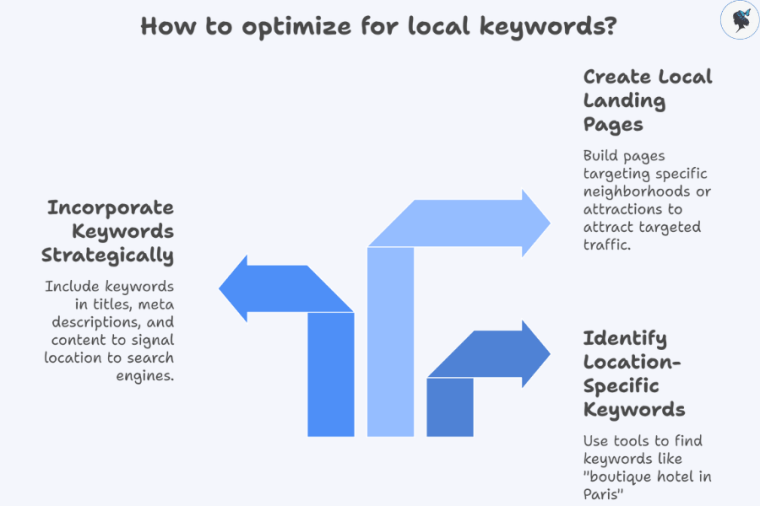
Focus on long-tail keywords: These are longer, more specific phrases that travelers use when closer to booking. Targeting long-tail keywords means you attract guests with clear intent and fewer competitors. Instead of “hotel in Paris,” optimize for “romantic boutique hotel near Eiffel Tower with breakfast included.”
Content optimization helps search engines understand what your website offers and makes your pages attractive to potential guests. By carefully incorporating keywords and presenting valuable information, you can improve your rankings and increase user engagement.
Key areas to optimize:
Page Titles & Meta Descriptions: Your page titles and meta descriptions are the first thing users see on search engine results pages (SERPs). Craft these to include your main keywords and entice clicks by highlighting unique benefits. Title: “Luxury Beach Resort in Maui | Oceanfront Paradise” Meta Description: “Experience a luxury beach resort in Maui with stunning ocean views, spa treatments, and family-friendly amenities. Book now for exclusive deals!”
Headers (H1, H2, H3): Headers help structure your content, making it easier to read and giving search engines clues about your page’s topics. Use your keywords naturally within headers to improve relevance. Use “Family-Friendly Amenities” as an H2 header to target families searching for kid-friendly hotels.
High-Quality, Engaging Copy: Write detailed and enticing descriptions of your rooms, services, and nearby attractions. Engaged visitors are more likely to book, and well-written content improves SEO rankings. “Our ocean-view suites offer private balconies and luxurious furnishings, perfect for a relaxing getaway.”
Images: Optimizing your images by using descriptive filenames and alt text helps search engines index your visuals and improves your chances in image search results. Filename: “maui-beach-resort-pool.jpg” Alt text: “Swimming pool at luxury beach resort in Maui.”
Additional Content: Regularly add blog posts, travel guides, and FAQs to keep your site fresh and expand keyword reach. This also positions your property as an expert in the local area. Blog post titled “Top 10 Things to Do Near Our Maui Beach Resort” attracts visitors planning activities.
Technical SEO ensures that your website operates efficiently and provides a seamless experience for users and search engines alike. It’s crucial because even the best content can struggle to rank if your site is slow, unsecure, or not mobile-friendly.
Key technical SEO factors:
Website Speed: Fast-loading pages reduce bounce rates and improve user satisfaction. Compress images, enable browser caching, and minimize JavaScript to speed up your site. Example: Use tools like Google PageSpeed Insights to analyze your site speed and follow recommended fixes.
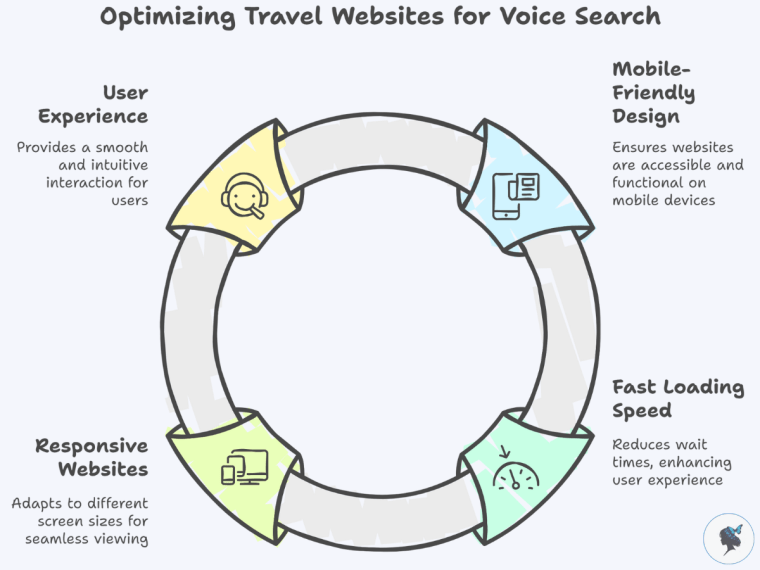
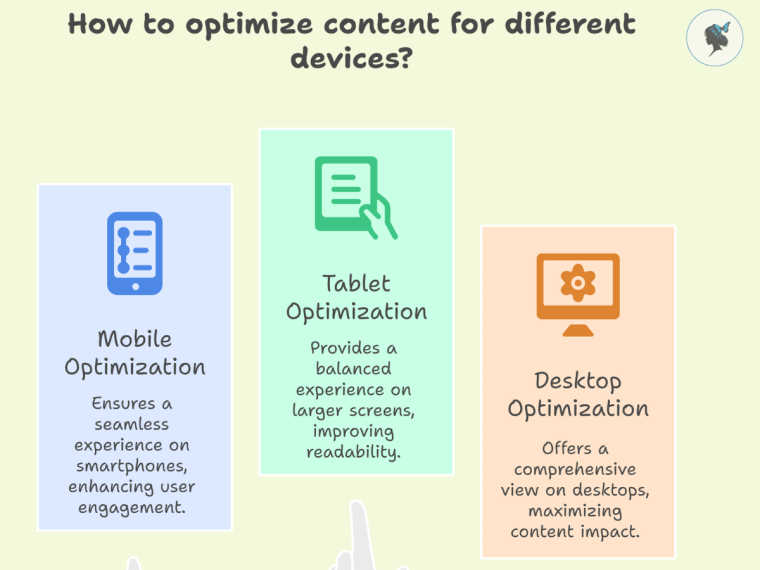
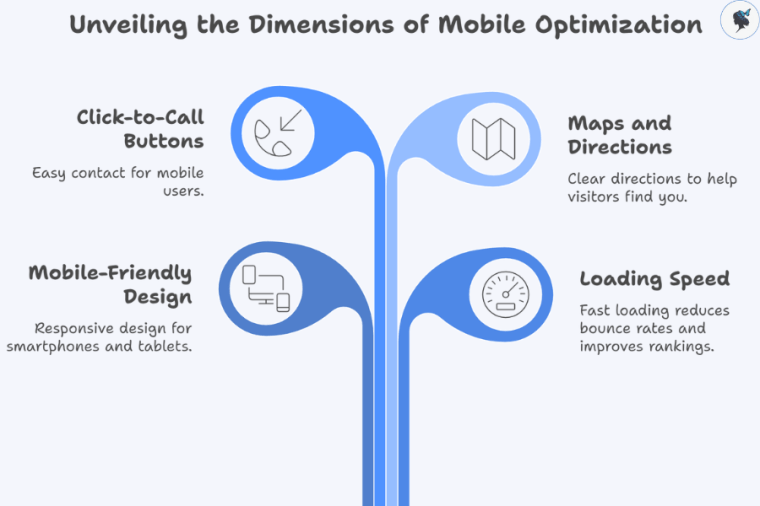
Mobile-Friendly Design: With many bookings made on smartphones, your site must display correctly on all screen sizes. Responsive design adapts your layout for mobile, tablet, and desktop. Example: Test your website using Google’s Mobile-Friendly Test tool and make adjustments as needed.
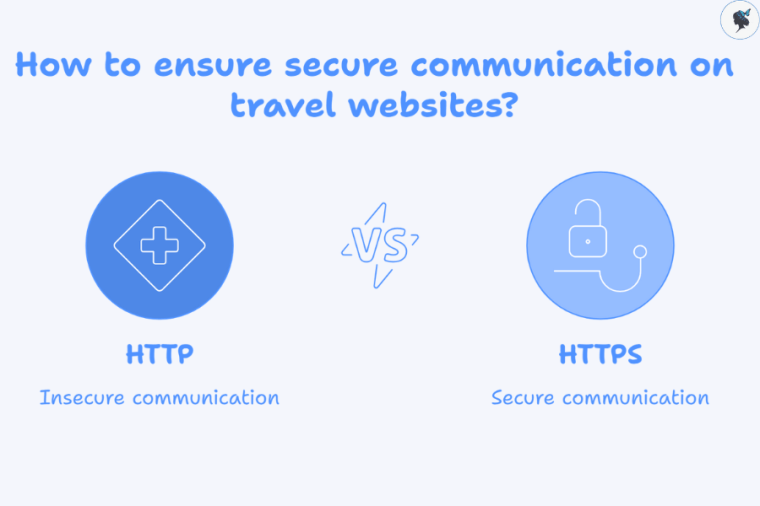
Secure HTTPS Protocol: HTTPS encrypts data and protects users during their booking journey. Google also gives a ranking boost to secure sites. Example: Install an SSL certificate on your website to switch from HTTP to HTTPS.
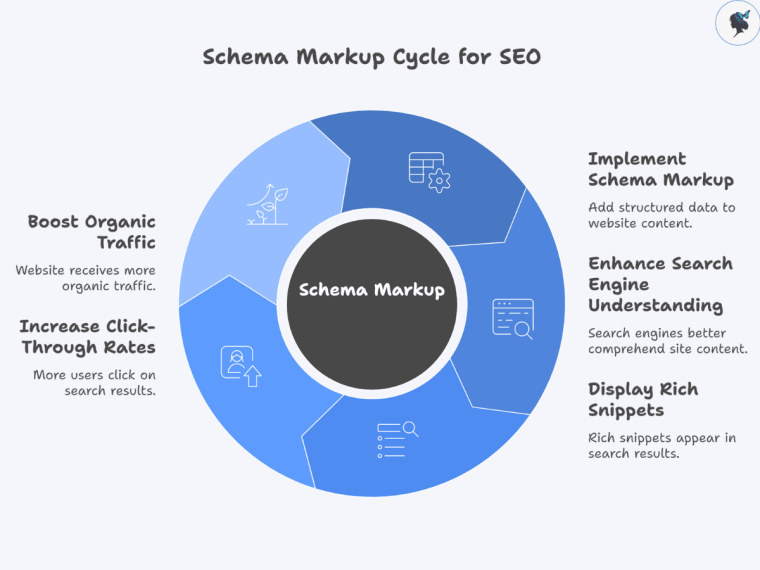
Structured Data & Schema Markup: Adding schema markup helps search engines better understand your content and display enhanced results with rich snippets such as pricing, availability, and reviews. Example: Use Google’s Structured Data Markup Helper to generate hotel schema and implement it on your booking pages.
Building Local SEO to Attract Nearby Guests
Local SEO focuses on optimizing your online presence to attract travelers searching for accommodations in your specific geographic area. This strategy is especially important for hotels and resorts because many bookings come from people already in or near your destination.
How to optimize local SEO:
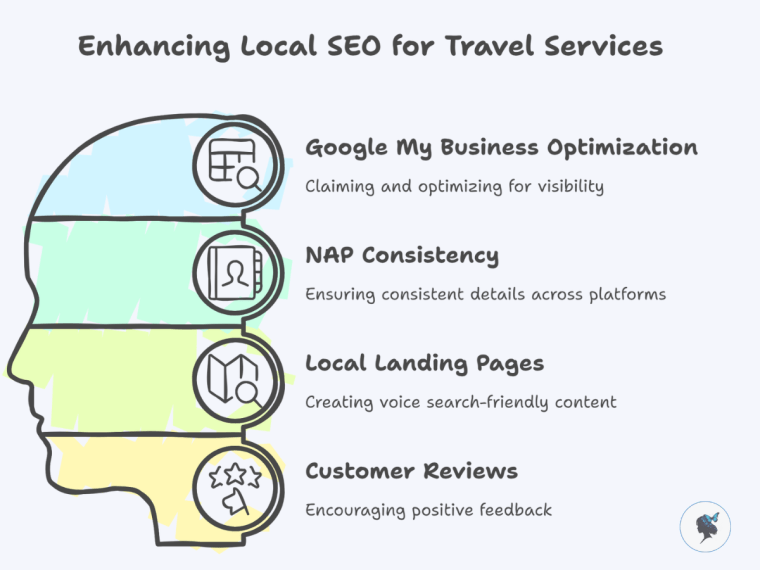
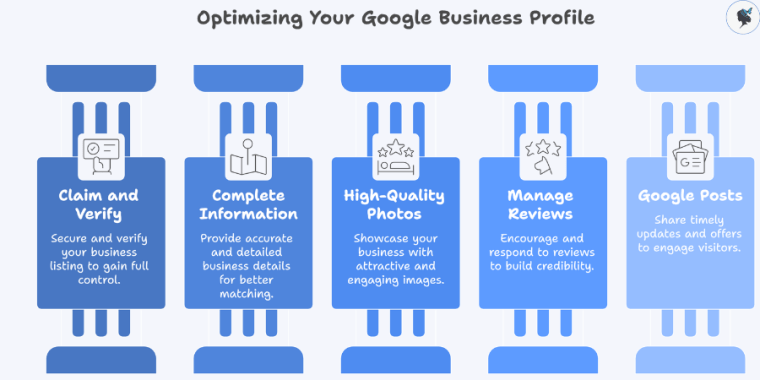
Google My Business (GMB): Claiming and optimizing your GMB profile helps your hotel appear in local map packs and Google searches. Keep your info accurate and regularly update photos and posts. Example: Upload high-quality images of your property and update your holiday hours to attract local searchers.
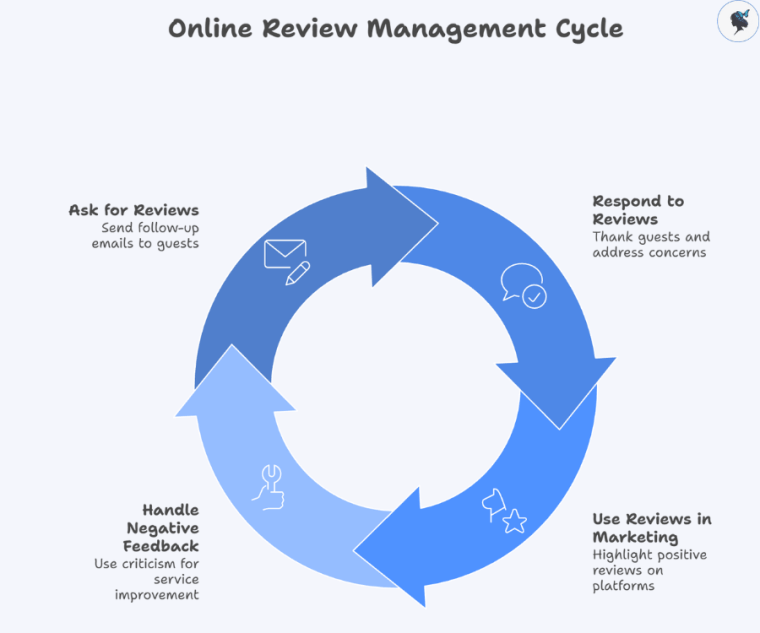
Guest Reviews: Positive reviews improve your online reputation and can boost rankings in local search results. Encourage guests to leave feedback and respond professionally to all reviews. Example: Send a follow-up email after checkout asking guests to review their stay on Google or TripAdvisor.
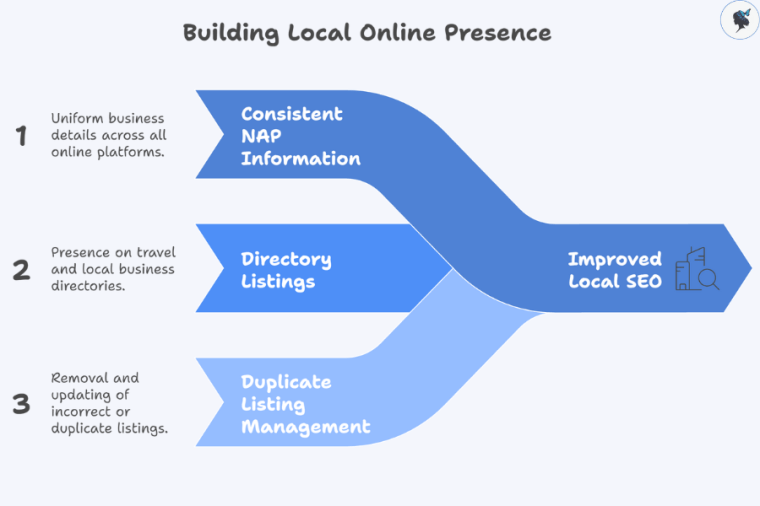
Local Citations and Directories: Listing your hotel consistently on local directories, tourism boards, and business listings helps improve your local search authority. Ensure your business name, address, and phone number (NAP) are consistent everywhere. Example: List your resort on the local chamber of commerce website with exact contact details.
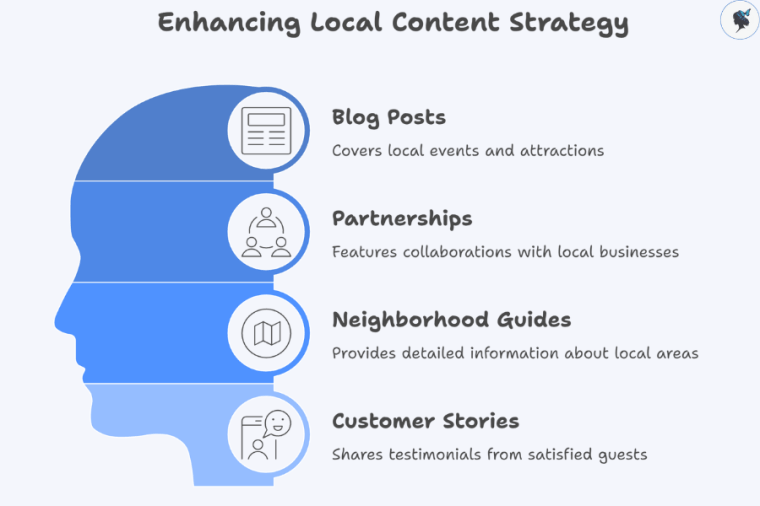
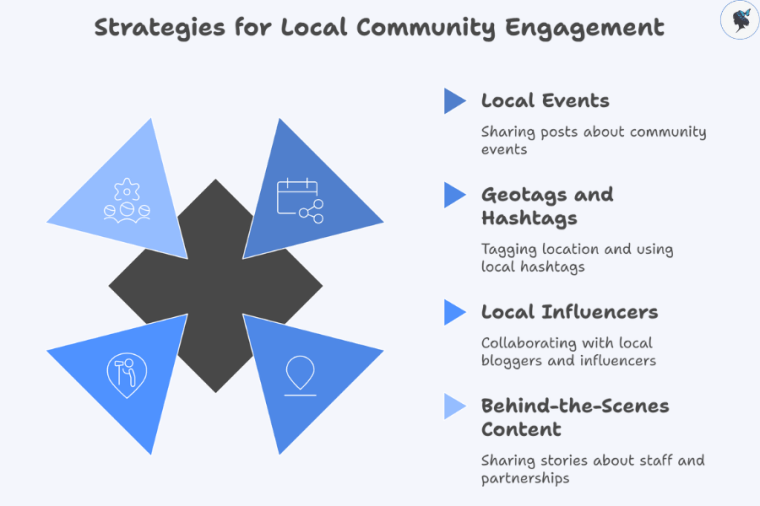
Local Content: Creating blog posts or guides about local attractions, events, or festivals attracts travelers looking to explore the area. Example: Publish a guide titled “The Best Wine Tasting Events Near Our Napa Valley Resort.”
While OTAs provide valuable exposure, they come at a cost. SEO-driven direct bookings mean higher profit margins and more control over your guest relationship. Use SEO to attract visitors directly to your website and persuade them to book there.
How to encourage direct bookings through SEO:
Create SEO-Optimized Landing Pages: Develop pages targeting high-intent keywords with exclusive offers to entice direct bookings. Example: A landing page for “Winter ski packages at Lake Tahoe resort” with clear calls to action and pricing.
Highlight Direct Booking Perks: Promote special benefits only available on your website, such as discounts, free upgrades, or loyalty points. Example: Use a banner stating, “Book Direct & Save 15% + Complimentary Breakfast!”
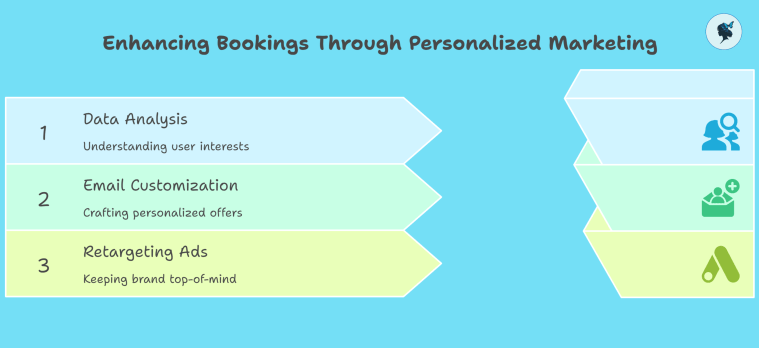
Use Retargeting and Email Campaigns: Combine your SEO efforts with remarketing ads and email newsletters to recapture visitors who didn’t book on their first visit. Example: Send an email with a limited-time offer to website visitors who browsed but didn’t book.
Tracking Performance and Continuous Improvement
SEO requires regular monitoring to understand what’s working and what needs improvement. By tracking key metrics and performance, you can optimize your strategy and stay ahead of competitors.
Tools to track your SEO efforts:
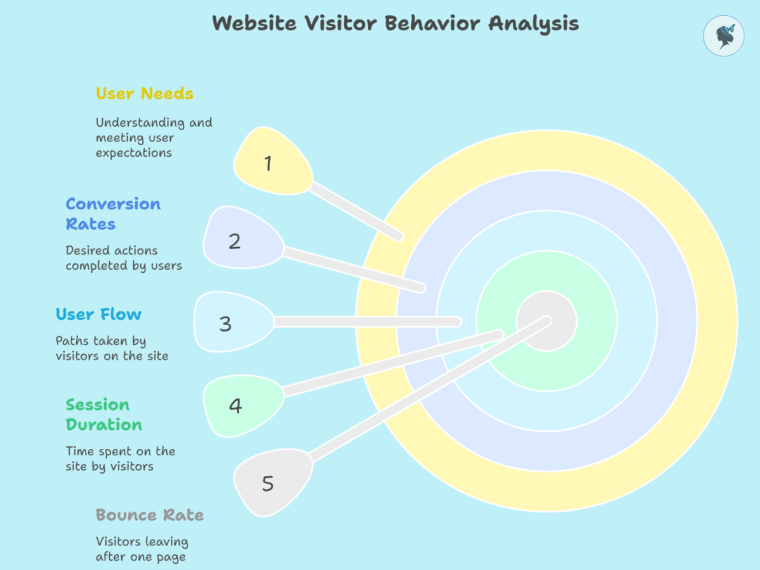
Google Analytics: Analyze visitor behavior, traffic sources, and conversions. Identify which pages drive bookings and where users drop off. Example: See that your blog post about local attractions generates lots of traffic but few bookings, prompting a redesign of the call-to-action.
Google Search Console: Monitor keyword rankings, impressions, click-through rates, and site health. Fix crawl errors and optimize underperforming pages. Example: Use Search Console to find that your “family suites” page has a high bounce rate and optimize content and layout.
Booking and Conversion Data: Compare traffic data with booking records to measure SEO’s impact on actual revenue. Use insights to prioritize high-performing pages. Example: Notice a spike in bookings after adding a “Special Offers” landing page and plan similar pages for other seasons.
Continuous optimization:
SEO is dynamic. Update content, add new keywords, fix technical issues, and adjust based on industry trends and traveler behavior.
Conclusion
By understanding and implementing these tailored SEO strategies, your hotel or resort can significantly boost its online visibility, attract more qualified traffic, and increase direct bookings. Start by researching the right keywords, optimize your content, and ensure your website is both user- and search-engine-friendly. Combine this with strong local SEO and ongoing performance tracking to build a sustainable digital presence.
The results? A growing stream of guests discovering your property organically, reduced dependency on OTAs, and a healthier bottom line.
Need help to boost bookings? Contact us today to see how we can help.
When it comes to Technical SEO, one of the most fundamental components for any website is ensuring that search engines can find, crawl, and index your content. For travel companies, this is especially crucial, as a significant portion of the business relies on organic search traffic. Without proper crawlability and indexability, even the most well-optimized content and marketing efforts could go unnoticed by search engines.
At Wander Women Strategies, we understand the importance of these technical elements for travel businesses. In this article, we’ll explore what crawlability and indexability mean, how you can perform an audit to ensure both are functioning optimally, and why this is so important for travel websites.
What is Crawlability and Indexability Review?
Before diving into how to assess these elements, it’s essential to understand what crawlability and indexability mean in the context of SEO.
Crawlability
Crawlability refers to a website’s ability to be discovered by search engine bots (such as Googlebot). These bots are responsible for exploring the internet, gathering content, and storing it in search engine databases. If a search engine can’t crawl your website, it won’t be able to retrieve your content to show in the search results.
For a travel website, ensuring crawlability is critical for getting your pages indexed and showing up for relevant search queries, whether for hotel bookings, flight comparisons, or travel experiences.
Indexability
Indexability is closely tied to crawlability but takes it one step further. Once search engine bots crawl a website, they analyze the content and decide whether to include it in the search engine’s index. The index is essentially the database of all content that search engines display in their results pages. A page may be crawled but not indexed if it’s deemed irrelevant, duplicated, or otherwise not suitable for indexing.
For travel companies, it’s essential that all key pages—like booking forms, destination pages, and hotel listings—are not just crawled but also indexed properly, so potential customers can find them via search engines.
How to Perform a Crawlability and Indexability Review
Performing a crawlability and indexability review involves using several tools and techniques to ensure that search engine bots can easily crawl and index your website. Here’s a step-by-step guide on how to conduct this review:
1. Use Google Search Console
Google Search Console is one of the most valuable tools for reviewing crawlability and indexability. It provides direct insight from Google on how they view your website.
How to Use Google Search Console:
Crawl Errors: Go to the “pages” section in Google Search Console to see any crawl errors. These errors may include pages that Googlebot can’t reach due to issues like broken links, server errors, or issues with your site’s robots.txt file.
Sitemap Submission: Ensure that your sitemap is submitted to Google Search Console and includes all important pages. This makes it easier for Googlebot to crawl your site efficiently.
URL Inspection Tool: Use this tool to inspect the status of specific pages. You can check whether the page is crawled and indexed and diagnose any potential issues preventing indexing.
2. Check Robots.txt File
Your robots.txt file instructs search engine bots on which pages they are allowed to crawl and which pages to avoid. This file is critical for managing the crawlability of your website, especially for preventing search engines from crawling duplicate content or internal pages that don’t need to be indexed (like login pages or thank-you pages).
How to Review:
Ensure Important Pages Are Accessible: Check that your robots.txt file is not blocking important pages from being crawled. For example, a travel company might want to block admin or checkout pages but should allow product or destination pages to be crawled.
Avoid Disallowing High-Value Pages: Sometimes, poorly configured robots.txt files accidentally block key pages, which means Google can’t crawl or index them. Be careful not to block pages that could help improve your search rankings.
3. Use Site Crawlers
Several SEO tools can crawl your website and identify issues that could hinder crawlability and indexability. Tools like Screaming Frog, Semrush, and Ahrefs offer in-depth crawling functionality to identify crawl issues.
How to Use Site Crawlers:
Crawl Your Site: Use a site crawler like Screaming Frog to identify pages that are not being crawled. It will also show you any redirects, broken links, and other issues that could affect crawlability.
Check for Duplicates: Site crawlers also help detect duplicate content on your site, which can hurt indexability. In the travel industry, this often happens with duplicate hotel listings, destination pages, or content that is copied from other sites.
4. Analyze Your XML Sitemap
An XML sitemap is a file that lists all of the important pages of your website. It’s essentially a roadmap for search engines, telling them which pages are most important to crawl. It’s essential that your sitemap is complete and up-to-date to maximize crawlability.
How to Review:
Ensure it’s Comprehensive: The XML sitemap should include all pages you want indexed by search engines, such as blog posts, service pages, and booking pages.
Submit to Google Search Console: Submit your updated sitemap through Google Search Console to ensure search engines can crawl and index all the necessary pages.
Remove Low-Value Pages: If you have pages with little or no SEO value (like privacy policy pages), remove them from the sitemap.
5. Inspect Meta Robots Tags
Meta robots tags are HTML elements that provide instructions to search engine crawlers about whether to index or follow a particular page. If these tags are not set correctly, it could prevent pages from being indexed.
How to Review:
Check for “noindex” Tags: Ensure that important pages are not mistakenly set with the “noindex” directive in their meta tags. This would prevent search engines from indexing the page.
Check for “nofollow” Tags: Similarly, check for “nofollow” tags that may prevent search engines from following valuable links on your pages.
Why is Crawlability and Indexability Important for Travel Companies?
Improve SEO Rankings
Without crawlability and indexability, search engines can’t discover and rank your pages. If your travel website’s pages aren’t being indexed, they won’t appear in search results, and potential customers won’t find you.
Increase Organic Traffic
As a travel company, your customers are most likely searching for destinations, flights, accommodations, and activities via search engines. Ensuring your pages are crawlable and indexable directly affects your organic search traffic, which is often one of the top sources of traffic for travel businesses.
Enhance User Experience
When your website is crawlable and all content is indexed properly, it ensures that users can find what they’re looking for easily and efficiently. This not only boosts SEO but also leads to higher user satisfaction, which can convert visitors into customers.
Avoid SEO Penalties
Incorrectly blocking or de-indexing important pages, or allowing search engines to crawl duplicate content, can result in penalties from Google. These penalties can significantly impact your rankings and traffic, making it harder to compete with other travel companies.
Stay Ahead of the Competition
In the travel industry, competition is fierce. By ensuring your website is fully optimized for crawlability and indexability, you can rank higher in search results, increasing your visibility and staying ahead of your competitors.
Contact Wander Women Strategies today to schedule your Crawlability and Indexability Review. Let us help your travel website soar in search rankings and attract more visitors!
In the competitive world of travel, your website needs to stand out to potential travelers who are searching for the very services you provide. Whether you’re a luxury hotel in Paris, a local tour company in Bali, or a destination-focused travel agency, your SEO strategy is crucial for visibility and success. One of the cornerstones of an effective SEO campaign is keyword prioritization and strategy.
In this article, we will explore the concept of keyword prioritization and how travel companies can build an SEO strategy that attracts more visitors, engages potential clients, and ultimately leads to increased bookings. If you’re looking to elevate your online presence and rank higher for the most relevant searches in the travel sector, Wanderlust Keywords can guide you every step of the way.
What is Keyword Prioritization and Strategy?
At its core, keyword prioritization refers to the process of determining which keywords are the most valuable to your business and then focusing your efforts on ranking for those keywords. Keyword strategy, on the other hand, is a broader approach that involves identifying, grouping, and targeting keywords that align with your business goals. Together, keyword prioritization and keyword strategy form the foundation of an SEO campaign that is both targeted and effective.
Keyword Prioritization
Prioritizing keywords means choosing the right keywords that will deliver the highest return on investment (ROI) in terms of traffic, conversions, and brand visibility. You can’t go after every keyword out there. Instead, you should focus on keywords that:
Have significant search volume
Align with user intent
Are achievable based on your website’s current authority (keyword difficulty)
Are most relevant to your niche or specific travel services
For example, if you’re a boutique hotel in Venice, you might want to prioritize terms like “luxury hotels near Rialto Bridge” over broad terms like “Venice hotels.” The latter is highly competitive, whereas the former offers a more specific, targeted audience who is looking for exactly what you offer.
Keyword Strategy
Keyword strategy is a comprehensive plan that defines how you will use prioritized keywords throughout your website and content. Your strategy should cover:
Keyword Research: Finding the right keywords to target based on search volume, intent, and competition.
Keyword Mapping: Assigning specific keywords to pages of your website (e.g., homepage, blog, landing pages).
Content Creation: Crafting blog posts, product pages, and other content pieces around these keywords.
On-Page Optimization: Using the keywords effectively in your meta tags, headings, body content, and URLs.
Link Building: Getting high-quality backlinks to improve your rankings for the selected keywords.
A solid keyword strategy ensures that your efforts are focused and organized, maximizing the impact of your SEO campaigns.
How to Do Keyword Prioritization and Strategy?
Now that we have a clear understanding of what keyword prioritization and strategy are, let’s dive into how to implement them effectively, especially for travel businesses.
Step 1: Understand Your Audience and Business Goals
Before diving into keyword research, it’s important to understand your target audience and business objectives. As a travel company, your target audience may vary widely depending on the services you offer. Are you targeting solo travelers, family vacationers, adventure seekers, or luxury travelers?
You should also define the goals of your SEO campaign. Are you trying to increase:
Brand visibility?
Direct bookings?
Traffic to your blog or landing pages?
Engagement with your social media or reviews?
By aligning your SEO strategy with business goals and customer intent, you will be able to identify keywords that are more likely to drive traffic and conversions.
Step 2: Perform Comprehensive Keyword Research
Once you’ve defined your audience and objectives, it’s time to conduct keyword research. This involves using keyword research tools like Google Keyword Planner, Semrush, or Ahrefs to find keywords that are relevant to your business.
Here’s how to approach it:
Start with seed keywords: Begin by thinking of broad terms related to your business. For example, “private tours in Rome” or “family vacations in Costa Rica.”
Expand your list: Use tools to generate variations, long-tail keywords, and related terms. For example, “best private tours in Rome for families” or “Rome city tours with kids.”
Consider user intent: Look at the search intent behind each keyword. For travel companies, user intent can be categorized into three main types:
Informational (e.g., “What are the best things to do in Rome?”)
Navigational (e.g., “Rome private tour company”)
Transactional (e.g., “Book private tour in Rome”)
Commercial (e.g., “The best private tours in Rome”)
Prioritize keywords that align with the specific action you want users to take—whether it’s booking a service or researching your offerings. For more about search intent, check out our post: Mastering Search Intent.
Analyze keyword difficulty and competition: You need to know how competitive a keyword is before deciding to target it. Tools like Semrush or Ahrefs give a difficulty score based on how hard it is to rank for specific terms.
Consider seasonality: Travel is highly seasonal, so make sure to research and track trends over time to understand which keywords peak during specific seasons. For example, “summer vacation in Paris” may be more relevant during the months leading up to the summer travel season.
Step 3: Organize and Prioritize Keywords
Now that you have a list of potential keywords, the next step is to prioritize them.
We do that based on the following criteria:
Search Volume: Higher volume keywords may bring more traffic, but they are also more competitive. Balancing high-volume keywords with long-tail, lower-volume keywords can yield the best results.
Relevance to Your Services: Choose keywords that reflect the specific services you offer. If you specialize in small group tours, prioritize terms like “small group tours to Italy” over broader terms like “Italy tours.”
Competition and Keyword Difficulty: Weigh the keyword difficulty against the authority of your site. If you’re just starting out or have a relatively low domain authority, it may be best to prioritize long-tail keywords or keywords with lower competition.
Conversion Potential: Focus on keywords that have the highest potential for conversion. For example, “luxury beach resorts in the Maldives” has a high conversion potential for someone ready to book their trip.
Step 4: Implement the Strategy Across Your Website
Now that you’ve prioritized your keywords, it’s time to implement your strategy across your site.
Here’s how to do it:
Create Optimized Pages: Optimize your homepage, landing pages, and blog posts with your selected keywords. Be sure to include them in title tags, headers, URLs, and meta descriptions. Make sure your content remains engaging and readable to users, rather than just being stuffed with keywords.
Optimize for Local SEO: For travel companies targeting specific destinations, be sure to incorporate location-based keywords into your content. For example, “family-friendly tours in London” or “best hikes in Colorado.”
Build Content Around Long-Tail Keywords: Long-tail keywords are less competitive and easier to rank for. Use these keywords in blog posts, FAQ pages, or resource guides. For instance, a blog post titled “10 Best Things to Do in Rome with Kids” could target long-tail phrases like “family activities in Rome.”
Track and Measure Performance: After implementing your strategy, use tools like Google Analytics and Google Search Console to track your keyword rankings, organic traffic, and conversions. Be prepared to adjust your strategy based on the results.
Why is Keyword Prioritization and Strategy Important for Travel Companies?
For travel companies, keyword prioritization and strategy play a pivotal role in driving qualified traffic and boosting conversions.
Here are a few reasons why this approach is so important:
1. Increases Visibility in Search Results
Properly prioritized keywords help your business appear at the top of search engine results pages (SERPs), making it easier for potential travelers to find you. When you optimize for the right keywords, you’ll show up in front of customers who are actively looking for what you offer, whether it’s a luxury resort, an adventure tour, or a cultural excursion.
2. Aligns Your Content with User Intent
Travelers use search engines to find information, plan trips, and book services. By prioritizing keywords that align with their search intent, you can craft content that answers their questions and provides valuable information. This increases your chances of driving traffic and earning trust, which can lead to conversions.
3. Attracts More Relevant, High-Converting Traffic
By targeting long-tail keywords and location-specific terms, you can attract traffic that is highly relevant to your business and services. For example, someone searching for “honeymoon packages in Bali” is more likely to convert than someone searching for “vacation packages.” The more targeted your keywords, the higher your conversion rates will be.
4. Improves ROI
Prioritizing the right keywords means you’re focusing your efforts on those that have the best chance of driving real business results. This leads to better return on investment (ROI), as you’re not wasting time or resources going after highly competitive, low-converting keywords.
Get Started with Wanderlust Keywords
If you’re ready to take your travel company’s SEO strategy to the next level with expert keyword prioritization and strategy, look no further than Wanderlust Keywords. Our team of SEO experts will help you identify, prioritize, and optimize the best keywords to boost your search engine rankings, increase visibility, and drive more bookings.
Initial Keyword Discovery: Top 5 Current Keywords: + position in SERPs, Monthly Search Volume, Organic Traffic and Competition of these Keywords & Top 5 Rising Keywords:+ position in SERPs, Monthly Search Volume, Organic Traffic and Competition of these Keywords
Long-Tail Keyword Identification: 20+ Long-Tail Keywords, divided into Search Intent: Informational, Navigational, Transactional, and Commercial
Local Keyword Focus: 20-30 Local Keywords, including Search Volume and Keyword Difficulty
Keyword Prioritization and Strategy: Local Keywords will be prioritized into Search Intent, 15 + Suggestions for new content (blogs, articles…) based on Keyword Research
If you’re ready to start attracting more travelers to your website, don’t wait—contact us today and let us help you craft an SEO strategy that works for your business!
In the competitive world of online travel marketing, ensuring your website is optimized for both search engines and users is essential. When it comes to on-page SEO, header tags—H1, H2, and H3—play a pivotal role in structuring your content and improving both visibility and readability.
For travel companies, optimizing these header tags is crucial not only to enhance SEO but also to provide a seamless user experience. A well-structured website that incorporates effective header tags makes it easier for potential travelers to navigate your content and find exactly what they’re looking for.
As part of our Wander-Ready Web package, we help you master header tag optimization to improve your website’s SEO performance and create a user-friendly structure. Let’s dive into what header tag optimization is and why it matters for your travel company’s website.
What is Header Tag Optimization (H1, H2, H3)?
Header tags, also known as HTML headings, are used to define the headings and subheadings in the content of your website. These tags help organize content, improve readability, and convey the hierarchy of information to both users and search engines.
H1 Tag: The Main Title
The H1 tag is typically the most important header tag and should be used to represent the primary heading of your page. It often describes the main subject of the page and appears prominently at the top of the content. There should only be one H1 tag per page to maintain clarity and prevent confusion for search engines.
For example, for a page offering vacation packages to Italy, an optimized H1 tag might be: Luxury Italy Vacation Packages for Unforgettable Experiences
H2 Tags: Subheadings That Organize Content
The H2 tags are used to break down your content into sections. These subheadings should be relevant to the content beneath them and help guide the reader to different sections of your page. You can use multiple H2 tags per page to organize and structure your content.
For example, subheadings like: Top Destinations for a Luxury Italian Tour Customizable Itineraries for Your Perfect Italian Getaway
H3 Tags: Further Subdivisions
The H3 tags are used to divide the content under H2 sections into smaller subsections. These are great for breaking down information into digestible chunks. You might have multiple H3 tags under each H2 for even further clarity.
For example, under the H2 “Top Destinations for a Luxury Italian Tour,” you could use H3 tags for specific cities or attractions like: Florence: The Heart of Renaissance Art Rome: Ancient History Meets Modern Luxury
How to Optimize Header Tags (H1, H2, H3) for Travel Websites
Header tag optimization is a straightforward but crucial part of on-page SEO. Here’s a step-by-step guide to optimizing these tags for better user experience and improved SEO:
Use a Clear, Descriptive H1 Tag
The H1 tag should accurately represent the main theme or purpose of the page. For travel websites, it should incorporate your primary target keyword (like “luxury Italy tours,” “best tropical vacations,” or “adventure travel in Africa”) while clearly conveying the page’s intent.
Be descriptive: The H1 tag should explain the topic of the page clearly. It’s the first thing users see, and it gives them an immediate idea of what your page offers.
Include keywords: Include relevant keywords that reflect the content of the page and what users are likely to search for.
Limit the length: Keep your H1 tag under 60 characters, as search engines tend to truncate longer titles in the search results.
For example: Book Your Dream European Vacation with Wander Ready Tours
Organize Content with H2 Tags
Once your H1 tag sets the stage for the page, use H2 tags to organize the content into meaningful sections. Each H2 should address a topic or subcategory related to the main theme.
Relevant to the content: Each H2 tag should reflect the content it introduces, making it easier for readers to find information quickly.
Use targeted keywords: Incorporate relevant secondary keywords or phrases that users may be searching for, such as “luxury vacations,” “adventure travel,” or “best vacation spots in Europe.”
For example, under the main theme of “European Vacation Packages,” H2 tags could be: Best Vacation Destinations in Europe, or Exclusive Travel Deals for European Tours
Utilize H3 Tags for Further Structure
Use H3 tags to break down the content under H2 headings into smaller, more specific subsections. This ensures that the content is organized logically and is easy to scan. These tags are especially useful when there are multiple ideas within a section that need to be clarified.
Make it scannable: When a user scans the page, they should be able to find the exact information they need by reading the H3 subheadings.
Provide details and examples: H3 tags can highlight individual cities, specific tour packages, or unique features of a travel experience.
For example, under the H2 tag “Best Vacation Destinations in Europe,” you could break it down into H3 tags like: Discover the Charm of Paris Uncover the Beauty of the Amalfi Coast Explore Barcelona’s Art and Culture
Step 4: Maintain a Hierarchical Structure
The key to effective header tag optimization is creating a logical, hierarchical structure. Start with an H1 tag that encapsulates the main topic, followed by H2 tags for major sections, and H3 tags for sub-sections. Avoid skipping header levels (e.g., going straight from H1 to H3), as this can confuse both users and search engines.
One H1 per page: There should only be one H1 tag to maintain focus and clarity.
Use H2 and H3 in a logical order: Don’t jump from H1 to H3 without an H2 in between.
Why Header Tag Optimization is Important for Travel Companies
Properly optimized header tags are critical for both SEO and user experience, especially for travel companies looking to attract tourists and travelers.
Here’s why:
1. Enhances Readability and User Experience
A well-organized website structure helps visitors quickly find the information they’re looking for. By using H1, H2, and H3 tags to structure your content, you create a user-friendly experience that keeps visitors engaged and reduces bounce rates.
2. Improves SEO and Keyword Relevance
Search engines like Google use header tags to understand the structure of a page and its relevance to search queries. Properly optimized H1, H2, and H3 tags can boost your page’s SEO by signaling keyword relevance and content organization. This helps your page rank higher for related search queries, especially in the competitive travel industry.
3. Supports Featured Snippets and Rich Results
In search engine results, properly structured header tags can help your content appear in featured snippets or rich results. Travel companies that use header tags effectively may have a better chance of securing prominent positions on the search results page, which can lead to more visibility and more clicks.
4. Drives Traffic and Conversions
When your website is organized and optimized with appropriate header tags, it makes it easier for potential customers to navigate your services, learn more about your travel packages, and ultimately make bookings. Clear, engaging headings encourage conversions and enhance the overall effectiveness of your content.
Maximize Your Website’s Potential with Wander-Ready Web
Optimizing header tags is just one part of creating a Wander-Ready Web for your travel business. At Wander Women Strategies, we take a comprehensive approach to on-page SEO, including header tag optimization, keyword strategy, and content structuring, to ensure that your website is fully optimized for search engines and visitors alike.
Keyword Optimization: We conduct keyword research to identify high-traffic, relevant keywords related to your travel services.
Meta Title & Description Optimization: We provide optimization suggestions for your top 5 pages focusing on best practices.
Header Tag Optimization: We provide suggestions for optimizing your header tags for the same 5 pages, with expert insights for future strategy to enhance readability and help search engines better understand your travel offerings.
Image Optimization & Alt Text: We provide tips for image optimization and alt text for 5 images from the same 5 pages, with expert advice for future image strategy.
Ready to optimize your meta title and description for higher rankings and more bookings?
Contact us today to get started and let us help you create compelling meta tags that drive results!
In a hyper-competitive digital travel marketplace, visibility equals viability. Whether you’re running a boutique hotel, tour operator, or destination marketing organization, showing up in the right search results can make the difference between a fully booked season and empty rooms. However, travel trends, search engine algorithms, and consumer behavior are constantly evolving. What ranked on page one last year might be buried on page three today.
That’s where regular SEO audits come in. Think of them as a health check-up for your website’s visibility, performance, and relevance. Just like your travelers wouldn’t set off on a multi-country adventure without some planning and route checks, your site shouldn’t go months without evaluating its path to traffic and conversions.
In this post, we’ll walk you through 10 compelling reasons why regular SEO audits are essential for long-term success in the travel industry. Plus, we’ll show how they tie directly into your bottom line and brand growth.
1. Algorithm Updates Can Instantly Impact Your Rankings
Search engine algorithms determine where your pages rank in search results, and updates to these algorithms can cause sudden changes in visibility. Search engines like Google update their algorithms frequently, and sometimes those changes are significant. A single update can alter how your pages rank, penalize outdated practices, or prioritize new ranking signals such as Core Web Vitals.
65% of marketers saw a significant impact on traffic due to algorithm updates. This indicates that relying on outdated strategies is risky—especially in fast-moving sectors like travel.
Use Google Search Console to monitor your site’s performance around algorithm updates. Log into your account and navigate to the Performance tab. Within the Pages section, you can pinpoint which URLs gained or lost visibility. Next, head to Indexing > Pages to uncover excluded or error-prone pages that may be affecting rankings. Finally, review the Core Web Vitals and Page Experience reports to assess if user experience metrics like load time or interactivity are dragging down your performance.
A luxury villa rental site in Bali saw a 35% drop in organic traffic after a Google core update emphasized mobile performance. An audit revealed poor mobile responsiveness on landing pages, which was quickly fixed, helping traffic recover within six weeks.
Regular audits ensure you adapt quickly to algorithm changes, avoiding sudden drops in visibility that can hurt your travel bookings.
2. Travel Trends and Keywords Shift Frequently
Keyword trends reflect what your audience is searching for, and these trends shift with seasons, news, and emerging destinations. People search differently throughout the year—”summer getaways” become “winter escapes”. Keyword trends also change as new destinations become hot spots and travel habits evolve.
A report from TravelPerk notes that 72% of travelers preferred to book their trips online. This shift towards digital platforms underscores the importance of online presence and searchability for travel businesses.
Use Google Trends to explore current keyword popularity in your region. Type in phrases like “remote travel” or “digital nomad destinations” and compare them across countries or time periods.
During the rise of “workcations,” a remote travel agency adjusted its content strategy based on audit insights to focus on long-stay and coworking-friendly destinations, increasing qualified leads by 40%.
Audits help you align your content with current traveler intent, giving you a better chance of being found at the right time.
You might be interested in Wanderlust Keywords, our keyword research package.
3. Broken Links and Redirect Errors Erode User Experience
Broken links and improper redirects confuse search engines and create poor user experiences, potentially causing traffic and ranking losses. Travel sites are often updated with new tours, hotels, or itinerary pages. Over time, outdated or deleted pages can lead to broken internal links or redirect chains, which frustrate users and hurt SEO.
A study by Semrush found that 42.5% of websites have broken internal links, identifying broken pages as one of the top technical SEO issues affecting performance.
Use Screaming Frog SEO Spider (free up to 500 URLs) to crawl your website and locate broken links and redirect chains. Download the report to prioritize high-traffic pages.
A UK-based walking tour operator discovered hundreds of broken links to seasonal pages no longer active. After cleaning up through an audit, bounce rate dropped by 19%.
Clean site architecture boosts both usability and rankings, making it easier for potential travelers to book with you.
4. Mobile Experience Is More Important Than Ever
Mobile usability includes load time, navigation, and content layout—all crucial for SEO and conversions. More than 70% of travel research and over half of bookings happen on mobile devices. An audit uncovers whether your site is mobile-optimized and if not, what’s causing performance issues.
Think with Google suggests that 67% of smartphone users are more likely to purchase from companies whose mobile sites or apps allow them to find answers quickly.
Use Google’s Mobile-Friendly Test to identify mobile issues. Simply enter your URL and get instant feedback on whether your page passes Google’s mobile criteria, along with suggestions for improvement.
A Costa Rican eco-lodge site optimized its mobile layout and reduced load time after audit findings, which led to a 28% increase in mobile bookings in two months.
Mobile audits are essential for conversion-focused design, especially when so many travelers are researching and booking on the go.
5. Page Speed Directly Impacts Conversions
Page speed measures how quickly content loads on your site and directly affects bounce rates and SEO rankings. Speed is a major Google ranking factor and a crucial part of user experience. Slow sites lead to lost opportunities—especially when users are planning their dream vacations.
A 1-second delay in load time can reduce conversions by 20%, which could mean thousands in lost revenue for travel sites.
Use Google PageSpeed Insights to identify and fix speed issues. Paste your URL and review suggestions under the “Opportunities” and “Diagnostics” tabs.
A Caribbean cruise site improved its average page load time by 3 seconds, leading to a 15% increase in bookings.
SEO audits pinpoint performance bottlenecks that cost you conversions, especially during peak travel planning seasons.
Duplicate content is identical or very similar content that appears on multiple pages, confusing search engines and weakening rankings. Travel sites often copy supplier-provided content or republish the same descriptions across multiple pages.
MoldStud suggests that approximately 29% of all websites suffer from some form of duplicate content, which can significantly impact SEO performance.
Use Siteliner to find duplicate content within your domain. Scan your site and export the report to identify pages that need rewriting.
A multi-destination trip planner was penalized for repeating the same itinerary blurbs across city pages. A content audit fixed this with unique, intent-aligned text.
Audits help identify and eliminate content that’s holding you back, giving each travel page its own unique SEO edge.
7. Local SEO Issues Block Visibility in Key Markets
Local SEO refers to optimizing your website to appear in geographically relevant searches, which is vital for location-based travel businesses. Regular audits assess NAP consistency, local citations, and optimization of your Google Business Profile.
Bright local consumer review survey found that 78% of local mobile searches lead to an offline purchase—crucial for hotels, tours, and attractions.
Use Moz Local (not a free tool) to check and fix local listing issues. Enter your business info and review consistency across directories like Yelp, TripAdvisor, and Google Maps.
A boutique hotel in Lisbon wasn’t ranking for key local searches until an audit uncovered inconsistent address listings across directories. Fixing these led to a 22% rise in local search visibility.
Local audits are critical for location-based businesses that rely on nearby travelers to discover and book services.
Competitor SEO analysis helps you identify what others in your niche are doing well and what opportunities you can capitalize on. Regular audits include competitive analysis to identify gaps, opportunities, and new content ideas that keep you ahead.
Use Ubersuggest (free version) to track competitors’ keywords and content. Enter a competitor’s domain to see which pages perform best and what keywords they rank for.
A safari tour company discovered that a competitor was outranking them using FAQ schema and user-generated content. After adopting a similar strategy, the company regained its top-3 ranking.
Stay proactive, not reactive, with competitive audits that reveal what’s working and what’s missing from your strategy.
Technical SEO includes elements like indexing, crawling, site structure, and metadata that support how well your site is understood by search engines. Issues like missing meta tags, improper hreflang implementation, crawl errors, or bloated sitemaps can limit your site’s performance without you realizing it.
A study by Conductor found that 44% of organizations reported over three high-impact SEO incidents on their most important pages in the last year. These incidents often go unresolved for weeks, potentially costing companies more than $10,000 in revenue.
Use Ahrefs Webmaster Tools (free account) to check for technical SEO issues. The tool flags crawl errors, missing metadata, and URL problems.
A travel blog with strong backlinks struggled to rank. An audit revealed conflicting canonical tags and blocked pages in the robots.txt file. Fixing these technical issues led to a 3x boost in traffic.
Even great content can fail without a healthy technical foundation, so audits keep your travel site structurally sound.
10. Consistent Audits Drive Long-Term Growth
Ongoing SEO evaluation ensures your site keeps up with digital changes, new competition, and evolving user behavior. SEO is not a set-it-and-forget-it tactic. The best travel brands treat it like a system—reviewing performance monthly or quarterly, acting on data, and optimizing iteratively.
7 Eagles report that regular SEO audits can boost organic traffic by as much as 61%, reduce bounce rates by up to 50%, and increase average time spent on site by 20-40%.
Set up automated monthly reports with Google Looker Studio (formerly Data Studio). Connect your Google Analytics and Search Console to monitor key KPIs.
A regional tourism board committed to quarterly SEO audits. In one year, they improved traffic by 87%, reduced their dependency on paid ads, and saw increased international bookings.
Growth compounds with consistent attention and action, and in travel, that consistency can lead to all-season success.
Conclusion
A travel website isn’t just a digital brochure—it’s your best salesperson, travel agent, and concierge rolled into one. But if it’s not regularly evaluated and optimized, you’re leaving opportunities on the table.
Regular SEO audits give you the insights and agility needed to respond to change, improve performance, and secure your position in a rapidly evolving travel market. From catching technical errors to seizing new keyword trends, audits are your map to sustainable growth.
Want to know how your travel website is really performing?
Wander Women Strategies offers free SEO audits specifically tailored for the travel industry. Our audits go beyond the basics to uncover hidden opportunities that drive bookings and build brand authority.
In the highly competitive travel industry, gaining visibility and establishing your brand as a trusted authority requires a multifaceted SEO strategy. While technical SEO, keyword research, and on-page optimization are important, outreach strategy development is a game-changer in building sustainable SEO success. Outreach is an essential component of link-building, content promotion, and brand awareness.
In this article, we’ll explore Outreach Strategy Development in detail and explain how travel companies can harness this tactic to build their SEO profile and drive more organic traffic to their websites. We’ll also introduce you to Wanderlinks, our all-in-one package designed to help travel businesses grow through targeted outreach and backlink building.
What is Outreach Strategy Development?
Outreach strategy development is the process of identifying, building, and nurturing relationships with relevant third-party websites, bloggers, influencers, journalists, and other content creators to promote your brand, gain valuable backlinks, and increase your reach. The ultimate goal of an outreach strategy is to create mutually beneficial partnerships that improve your website’s authority and visibility in search engines.
Effective outreach is not just about securing backlinks. It’s about building a reputation as a valuable and credible resource in your niche, sharing your content with the right audiences, and leveraging those relationships to boost your online presence.
The outreach process typically involves:
Identifying potential partners: Finding websites, influencers, and blogs relevant to your industry and audience.
Crafting compelling pitches: Reaching out to potential partners with personalized messages that emphasize the value of collaborating.
Building strong relationships: Engaging with your partners over time to foster trust and open communication.
Securing backlinks and mentions: Achieving the ultimate goal of gaining valuable backlinks, social media mentions, or guest post opportunities.
For travel companies, outreach is especially important as it helps establish credibility, fosters collaborations, and drives traffic from reputable sources in the travel industry.
How to Develop an Effective Outreach Strategy
An effective outreach strategy requires careful planning, research, and ongoing efforts. Follow these steps to develop a successful outreach strategy for your travel business:
Step 1: Set Clear Outreach Goals
Before launching an outreach campaign, define your goals. Are you seeking backlinks, guest post opportunities, social media mentions, or media coverage? Your goals will guide your outreach strategy and ensure you’re targeting the right people.
Some common outreach goals for travel companies include:
Building backlinks: Links from authoritative websites improve SEO rankings and increase your domain authority.
Promoting content: Increase visibility for new blog posts, destination guides, or promotional offers.
Partnerships and collaborations: Form partnerships with influencers, bloggers, or local businesses to boost brand exposure.
Media mentions: Gain media coverage from travel publications or influencers to establish credibility.
Clearly defined goals ensure that every outreach effort is purposeful and measurable.
Step 2: Identify Your Target Audience
The success of your outreach campaign depends on targeting the right websites, influencers, and content creators.
To identify the best targets for your outreach, consider the following:
Relevant industry websites: Look for travel websites, blogs, or tourism boards that share similar interests or cater to the same audience. For example, if you specialize in eco-tourism, focus on websites that emphasize sustainable travel or eco-friendly destinations.
Travel influencers and bloggers: Identify influencers in the travel niche who can amplify your message. You can use platforms like Instagram, X, or travel blogs to find influencers with high engagement rates and a genuine connection to their followers.
Travel-related media: Target journalists or writers from prominent travel publications such as Travel + Leisure, Lonely Planet, or National Geographic. Getting media coverage from these outlets can significantly increase your visibility and establish trust with your audience.
Competitors: Analyze your competitors’ backlinks to uncover their outreach targets. Use tools like Ahrefs, Semrush, or Moz to discover where your competitors are earning their links, and consider reaching out to the same websites for backlink opportunities.
Step 3: Craft Compelling Outreach Pitches
Once you’ve identified your outreach targets, it’s time to create personalized outreach pitches that will grab their attention. A well-crafted pitch is critical for establishing a connection and building a relationship.
Keep these tips in mind when crafting your outreach emails:
Personalize your message: Address the recipient by name and refer to specific content or topics that resonate with them. For example, if you’re reaching out to a travel blogger who recently posted about a destination you also offer tours to, mention that post and explain how your travel company could be a good fit for their audience.
Offer value: Be clear about the value you can offer to the recipient. Whether it’s guest blogging, sharing content, or a collaboration, make sure the pitch highlights how both parties will benefit from working together.
Be concise and clear: Don’t overwhelm the recipient with too much information. Keep your message concise, highlighting the key points of your outreach, such as the purpose of the collaboration and the benefits involved.
Include a call to action (CTA): Invite the recipient to take action, such as setting up a meeting, publishing a guest post, or linking to your content. A clear CTA ensures that the recipient knows exactly what you want from them.
Step 4: Build Relationships Over Time
Outreach is not just a one-time transaction; it’s about building lasting relationships. After your initial outreach, follow up with the recipient and engage with their content regularly.
You can:
Engage on social media: Share and comment on their posts, articles, and content to build rapport.
Offer value: If you come across content or a resource that would benefit the recipient, don’t hesitate to share it with them.
Stay in touch: Periodically check in with your outreach targets, offering new opportunities or content that might interest them. Keep the relationship positive and professional.
Step 5: Track Results and Adjust Your Strategy
An effective outreach campaign requires ongoing monitoring.
Track the success of your outreach efforts by measuring:
The number of backlinks acquired
Website traffic and engagement from outreach sources
Social media mentions or collaborations
The number of partnerships or media mentions secured
If certain tactics or outreach targets are working particularly well, double down on those efforts. If other strategies aren’t yielding results, adjust your approach to refine your outreach plan.
Why Outreach Strategy Development is Important for Travel Companies
An outreach strategy is crucial for travel companies for several reasons:
Improves SEO and Rankings
Backlinks remain one of the most important ranking factors for search engines. By securing backlinks from authoritative websites, travel companies can boost their domain authority and improve their SEO rankings. Outreach allows you to strategically build a backlink profile that will push your website higher in search results.
Increases Website Traffic
Outreach doesn’t just help with SEO; it can also drive direct traffic to your website. By partnering with bloggers, influencers, and media outlets, you increase the chances of your content being shared with their audiences, resulting in more traffic to your site.
Establishes Authority and Trust
Working with trusted websites and influencers helps build your reputation in the travel industry. When reputable sources link to your content or mention your business, it signals to both search engines and users that your website is credible and authoritative.
Expands Brand Awareness
A well-executed outreach campaign can expand your brand’s visibility. Whether through guest blogging, media coverage, or influencer mentions, outreach exposes your brand to new audiences, which can ultimately lead to more conversions and customers.
Fosters Long-term Partnerships
The connections made through outreach can lead to long-term partnerships that benefit your business in various ways. For example, forming relationships with influencers or travel media outlets can lead to ongoing collaboration, content opportunities, and brand advocacy.
How Wanderlinks Can Help with Outreach Strategy Development
At Wander Women Strategies, we specialize in helping travel companies develop and execute effective outreach strategies that drive results. If you want to ensure your backlink profile is clean, effective, and working for you, WanderLinks is the perfect solution for your travel company. Our WanderLinks package offers:
Backlink Audit: We complete a thorough backlink audit with actionable recommendations on your broken links.
Competitor Backlink Analysis: We identify your competitors, evaluate their backlinks, and provide valuable insight into backlink opportunities.
Outreach Strategy Development: We identify 10+ opportunities for guest posting and provide tips on best practices for your outreach strategy.
Local Link Building: We provide opportunities for local link building, including local tourism blogs & websites, local business partnerships, and local media.
By leveraging the insights and tools from WanderLinks, your travel company can create a more effective SEO strategy that attracts high-quality backlinks and drives more traffic to your website.
Let us help you harness the power of outreach to boost your SEO, increase website traffic, and grow your travel business. With Wanderlinks, you’ll have the tools and expertise to develop a winning outreach strategy.
Ready to Launch Your Outreach Strategy? Contact us today to get started with Wanderlinks.
In the digital age, travel decisions are made in moments. Potential customers scroll through dozens of travel websites before making a choice, and even the smallest barrier to booking can send them bouncing to a competitor. Despite spending considerable budgets on SEO, design, and advertising, many travel companies still see suboptimal conversion rates. Why? Because their websites aren’t optimized to convert traffic into actual bookings.
Conversion Rate Optimization (CRO) is the bridge between traffic and revenue. Without it, even the most beautifully designed travel site with compelling content can fall flat. This post outlines five of the most common conversion rate mistakes travel websites make and offers practical, actionable fixes for each. Backed by real-life examples and recent data, these insights are tailored specifically for travel brands looking to turn more clicks into customers.
Mistake #1: Slow Page Load Speeds
Why It Matters
Speed is no longer a luxury—it’s an expectation. Today’s travel consumers are used to instant results. When a travel site takes too long to load, users grow impatient and leave. This is especially problematic for sites filled with high-resolution images, videos, and interactive maps, which often bog down performance.
A study by Google and SOASTA found that “a 1-second delay in mobile load times can impact conversion rates by up to 20%”. That single second could be the difference between a sale and a lost opportunity.
A mid-sized adventure travel company in New Zealand struggled with high bounce rates. After optimizing their homepage load time from 5.3 seconds to 2.1 seconds using image compression and lazy loading, they saw an 18% increase in mobile conversions over two months.
How to Fix It
Compress and convert images to next-gen formats like WebP.
Use tools like Google PageSpeed Insights, GTmetrix, or Lighthouse for regular audits.
Implement lazy loading so that only on-screen content loads initially.
Utilize a Content Delivery Network (CDN) to serve content faster based on geographic location.
With over half of all travel bookings occurring on mobile devices, mobile optimization is non-negotiable. Yet, many travel sites are still primarily designed for desktop users. A poor mobile experience—like hard-to-click buttons or distorted layouts—can be incredibly frustrating for users and damaging to your bottom line.
According to Google, “Over 70% of travelers use mobile devices to research trips, and more than 50% complete bookings on mobile”.
A boutique hotel chain based in Italy revamped its website to prioritize mobile users. This included thumb-friendly buttons, simplified mobile booking forms, and responsive image scaling. As a result, direct bookings increased by 24% within three months.
How to Fix It
Design using mobile-first principles.
Use responsive design frameworks that adapt across all screen sizes.
Simplify navigation and eliminate unnecessary steps in the booking process.
Test regularly on various devices and browsers.
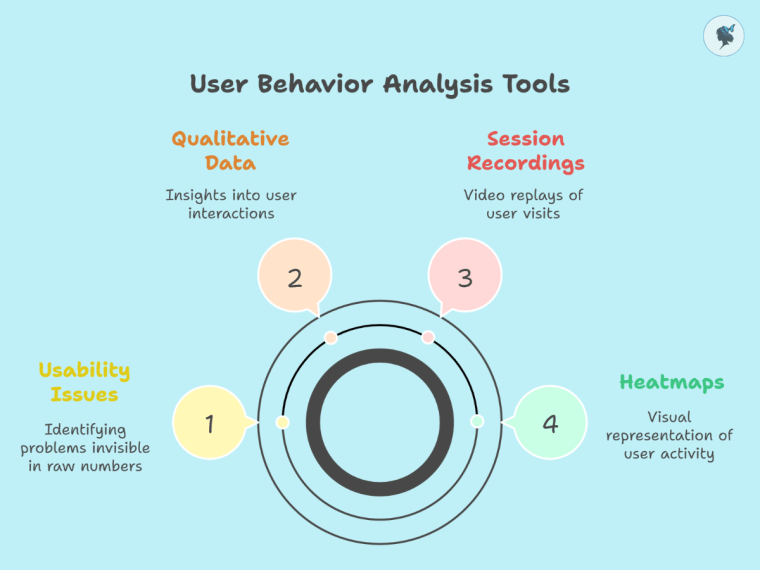
Use heatmaps and session recordings to identify mobile UX issues.
Mistake #3: Weak or Generic Calls-to-Action (CTAs)
Why It Matters
Your call-to-action (CTA) is one of the most powerful elements on your website. Generic phrases like “Click Here” or “Learn More” do little to entice a user to act. On travel websites, where emotion and aspiration play a big role, CTAs need to be dynamic, benefit-driven, and compelling.
HubSpot reports that “Personalized CTAs convert 202% better than generic ones”.
A travel agency specializing in Northern Europe tours A/B tested their CTAs. Replacing a generic “Learn More” button with “Plan My Iceland Adventure” increased form submissions by over 300% within a month.
How to Fix It
Use specific and benefit-driven phrases like “Get My Custom Itinerary” or “Start My Adventure.”
Align CTAs with the stage of the user journey (e.g., research vs. ready to book).
Use contrasting colors and strategic placement to make CTAs stand out.
Test different wording, design, and locations continuously.
Travel is a high-investment and high-trust purchase. If users feel unsure about the credibility of your site, they will abandon the process. Missing trust elements like testimonials, verified reviews, or security badges can erode confidence and cost you conversions.
BigCommerce reports that “92% of consumers read online reviews before making a purchase decision”.
A luxury safari company in South Africa integrated customer testimonials, Trustpilot ratings, and “As seen in” media logos across their landing pages. This boosted booking inquiries by 17% in just six weeks.
How to Fix It
Add real customer testimonials and verified reviews on key pages.
Highlight industry certifications, awards, and affiliations.
Display security badges on checkout pages.
Share traveler-generated content (photos / videos) for authenticity.
Make cancellation and refund policies transparent and easy to find.
Mistake #5: Ignoring SEO and Content Strategy Alignment
Why It Matters
Driving traffic to your site without aligning content to the right intent results in unqualified visitors who won’t convert. Travel sites often produce content that ranks but doesn’t resonate with the decision-making process of their ideal customer.
According to HubSpot, “61% of marketers say improving SEO and growing organic presence is their top inbound marketing priority”.
A destination marketing organization in Southeast Asia realigned their blog content strategy to match buyer intent—creating itineraries, seasonal guides, and comparison posts. Within three months, they saw a 32% increase in qualified leads and a 22% boost in average session duration.
How to Fix It
Map content to the buyer journey: awareness, consideration, decision.
Use tools like Semrush or Ahrefs to research intent-based keywords.
Create topic clusters that interlink around key themes (e.g., Bali travel guide, best time to visit, sample itineraries).
Regularly audit and refresh existing content to maintain ranking and relevance.
Add internal CTAs tailored to user stage (e.g., trip planner download, quote request).
Conclusion
In an industry driven by emotion, competition, and timing, optimizing your travel website for conversions is not just beneficial—it’s essential. From reducing page load times to refining your CTAs and aligning your content with search intent, each improvement has the potential to significantly impact your bottom line.
These five common mistakes often go unnoticed, yet they silently erode your revenue potential. The good news? Every one of them is fixable. Start with a simple audit of your current site against the points above, and prioritize changes based on impact.
If you need help identifying CRO opportunities or aligning your content with high-converting SEO strategy, our team specializes in helping travel companies turn traffic into bookings. Contact us today to see how we can help!
In the highly competitive travel industry, establishing a strong SEO strategy is critical to standing out from the crowd. One of the most effective ways to boost your search rankings is by conducting competitor backlink analysis. By understanding where your competitors are earning their backlinks, you can gain invaluable insights into how to improve your own SEO performance.
This process is part of the powerful suite of SEO services we offer at Wander Women Strategies: WanderLinks—a package tailored specifically for travel companies looking to strengthen their backlink strategy and enhance their overall online presence.
Let’s dive in and explore how competitor backlink analysis can provide a major SEO boost for your travel company!
What is Competitor Backlink Analysis?
Competitor backlink analysis is the process of evaluating the backlink profiles of your competitors to identify opportunities, gaps, and strategies you can adopt to improve your own SEO efforts. Backlinks (also known as inbound links) are one of the most significant ranking factors for search engines, such as Google. When authoritative websites link to your travel business, it signals to search engines that your site is credible, trustworthy, and relevant to the industry.
By conducting a competitor backlink analysis, you can:
Discover high-quality backlink opportunities that you may not have previously considered.
Understand which types of content attract the most backlinks in your industry.
Identify gaps in your own backlink profile and implement strategies to fill them.
Uncover your competitors’ link-building tactics and learn from their successes and mistakes.
In short, competitor backlink analysis is about strategically using data from your competitors to enhance your own backlink strategy and outperform them in search engine rankings.
How to Perform Competitor Backlink Analysis
Performing a competitor backlink analysis is a multi-step process that requires careful attention to detail and the right tools. Below is a step-by-step guide to help you conduct a thorough competitor backlink analysis for your travel company.
Identify Your Competitors
Before you can start analyzing your competitors’ backlinks, you need to identify who they are.
In the travel industry, your competitors may include:
Other travel agencies
Tour operators
Travel bloggers and influencers
Travel blogs and niche websites
Local businesses in your travel destinations
You can identify your competitors by searching for key travel-related terms and phrases on Google (e.g., “best tours in Bali” or “luxury hotels in Paris”). Take note of the websites that consistently appear at the top of the search results. These are the websites you will want to analyze.
Use SEO Tools to Collect Backlink Data
There are several powerful SEO tools that can help you gather data on your competitors’ backlinks. Some of the most popular ones include:
Ahrefs: Ahrefs offers a robust backlink analysis tool that allows you to view the backlinks of any website, including your competitors. It provides detailed reports on the quality, quantity, and source of backlinks.
Semrush: Semrush’s Backlink Analytics tool provides a comprehensive breakdown of your competitors’ backlinks, helping you identify high-value links, referring domains, and more.
Moz: Moz’s Link Explorer lets you view the backlink profiles of competitors, including domain authority, page authority, and the anchor text used in backlinks.
Majestic: Majestic’s backlink analysis tools allow you to examine the backlink profiles of your competitors, with detailed metrics such as Trust Flow and Citation Flow to assess link quality.
Once you’ve selected your tool, enter the URL of your competitors’ websites to start gathering their backlink data.
You can analyze specific metrics, such as:
Number of backlinks: How many backlinks does your competitor have?
Referring domains: How many unique domains are linking to your competitor’s website?
Anchor text: What anchor text is used in the backlinks? Is it relevant and natural?
Backlink quality: Are the backlinks from authoritative, trustworthy sites?
Analyze Backlink Quality and Relevance
Not all backlinks are created equal. When performing a competitor backlink analysis, it’s crucial to evaluate the quality and relevance of the backlinks.
Here’s what to look for:
High-authority websites: Backlinks from websites with high domain authority (DA) are more valuable and can improve your rankings significantly. Check the DA of the websites linking to your competitors using tools like Moz’s Domain Authority metric.
Relevant industry websites: Backlinks from websites that are related to the travel industry or your specific niche are more beneficial than links from unrelated sites. For example, a backlink from a popular travel blog or tourism board is much more valuable than a link from a general news website.
Dofollow vs. Nofollow: Dofollow backlinks pass on SEO value and help improve rankings, while nofollow backlinks do not directly impact SEO. While both types of backlinks are useful for driving traffic, prioritize dofollow links when possible.
Link placement: Where is the backlink placed? Is it within the body content of a relevant page, or is it buried in the footer or sidebar? Backlinks in the main content are typically more valuable.
Identify Backlink Opportunities
One of the most important aspects of competitor backlink analysis is identifying backlink opportunities. By understanding where your competitors are earning their backlinks, you can uncover high-quality sites that may be willing to link to your travel business as well.
Look for:
Guest posting opportunities: Is your competitor contributing guest posts to popular travel blogs? If so, consider reaching out to those blogs for similar opportunities.
Resource pages and directories: Many websites in the travel industry have resource pages or directories listing relevant travel businesses. Look for these pages and see if you can get your website listed.
Influencer partnerships: Travel bloggers and influencers often link to companies they work with or review. Look for opportunities to collaborate with influencers in your niche.
Broken link building: Identify broken links on your competitors’ websites and offer your own content as a replacement. This tactic can be highly effective in earning high-quality backlinks.
Develop Your Own Link-Building Strategy
After gathering insights from your competitor’s backlink profiles, it’s time to develop your own link-building strategy. The goal is to replicate your competitors’ successful strategies while also finding unique opportunities for your travel business.
Focus on:
Targeting high-authority websites in the travel industry.
Creating shareable content like infographics, destination guides, or travel tips to attract backlinks.
Engaging in guest posting on relevant blogs and publications.
Building relationships with industry influencers and bloggers.
Regularly tracking and optimizing your backlink strategy will keep your travel website ahead of the competition.
Why Competitor Backlink Analysis is Crucial for Travel Companies
Competitor backlink analysis is especially important for travel companies because:
It reveals your competitors’ link-building tactics: By learning where your competitors are getting their backlinks, you can adapt these tactics and refine them to create your own successful strategy.
It helps you spot industry trends: By analyzing the backlinks of successful travel websites, you can identify industry trends and create content that’s likely to attract links from other high-authority websites.
It saves you time and resources: Rather than starting from scratch, competitor backlink analysis lets you build on existing strategies that have already proven successful in the travel industry.
It drives more organic traffic: The more high-quality backlinks you acquire, the more likely your travel business is to rank higher in search results, attracting more organic traffic and increasing your chances of converting visitors into customers.
It boosts your online reputation: Earning backlinks from reputable and authoritative sites in the travel industry enhances your website’s credibility and reputation.
WanderLinks: our Backlink SEO package
At Wander Women Strategues, we offer a comprehensive backlink package designed to help your travel business stay competitive in the ever-evolving online space. Our WanderLinks package includes:
Backlink Audit: We complete a thorough backlink audit with actionable recommendations on your broken links.
Competitor Backlink Analysis: We identify your competitors, evaluate their backlinks, and provide valuable insight into backlink opportunities.
Outreach Strategy Development: We identify 10+ opportunities for guest posting and provide tips on best practices for your outreach strategy.
Local Link Building: We provide opportunities for local link building, including local tourism blogs & websites, local business partnerships, and local media.
Don’t let your competitors steal the spotlight. With Wanderlinks, you’ll gain a competitive edge and implement a robust backlink strategy that drives results.
Ready to Outperform Your Competitors?
Start your backlink analysis today with Wanderlinks. Our expert team will help you assess your competitors’ backlinks, uncover new opportunities, and build a powerful backlink profile that elevates your travel company’s SEO. Contact us now to get started!